The Casual Blog

Celebrating a wedding and a birthday

Sally and I went to Virginia Beach last weekend for the wedding of my niece Lauren. We were looking forward to seeing my siblings and their families, but there was also a slight feeling of dread. We were from a different tribe from most of this community, which is largely evangelical Christian Republican. We always wonder how we’ll deal with our deep differences, but we always finesse it. Despite our different political and other beliefs, there are a lot of things we have in common, and we focus on those.

I used to find weddings (except for mine) slightly strange, but as the years go by, I find them more and more moving. Young people bravely pressing into the unknown, full of hope and optimism, full of love. Lauren was a beautiful bride, and bouncing with excitement. Dustin, her betrothed, seemed sweet and committed. The ceremony contained various religious elements which meant nothing to me, but the uniting of these young people meant much. And afterwards, I loved seeing all their friends dancing and having fun.

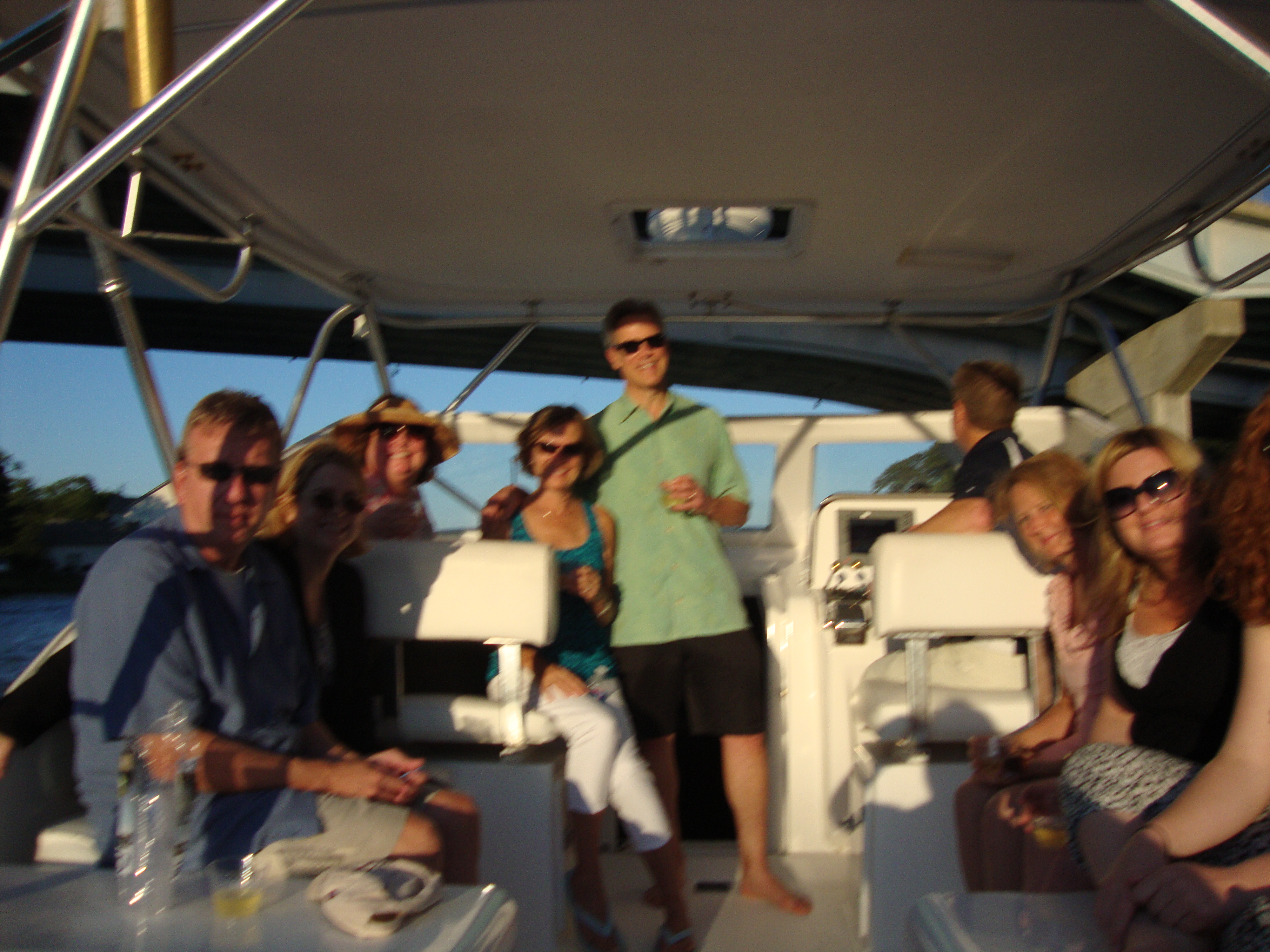
After the wedding, my brother Paul took us out on the Chesapeake in his 30 foot power boat. I took the helm for an hour or so, and found that keeping on course in choppy water was more work than I thought. It was sufficiently rough that there was some seasickness, and we aborted the longer journey we’d planned. But we found a group of at least a dozen dolphins, and got close to watch them play. We also cruised through the inlets and looked at the impressive homes and boats, and had some wine.

Lauren’s wedding day was also my 56th birthday. I don’t like making a big production out of birthdays, and was happy to have something to celebrate other than getting older. But over the weekend, I found myself thinking about this milestone, and how different it was from what I would have imagined. From the vantage point of Lauren (23 years old), I’d have assumed this would be a time of painful decline. But far from it. I feel full of life, full of passion, full of curiosity. There are so many things that I’ve just begun! So much beauty! So many possibilities!

A post-drive neck massage

The road trip last weekend was great fun, but the many miles of sport driving left me with a stiff neck. It was difficult to turn my head enough to back Clara out of her parking space. After three days, it was not much better. I got to early bird yoga early to ask Suzanne if she had a recommendation for a massage therapist. She did, and also was so kind as to take the class through some neck and shoulder stretches.

The next day I got the first appointment of the day with Meredith at Hands on Health. I was impressed with the professional atmosphere. The place seemed like a PT’s office, with a reception area, waiting room, and offices for several massage specialist. Meredith seemed friendly and chipper, and turned out to know a lot about neck problems.

She worked on my shoulders and lower back as well as my neck. In spite of her friendliness, she was not all sweetness and light. Parts of the work were amazingly painful. This was deep tissue work. She located muscular knots, and spent time digging into them. She’d given me permission to ask her to stop, but I wanted to get results. But it was a struggle. I worked on breathing deeply.

But afterwards I felt much better. Massage, like yoga, is a thing that I used to consider somewhat bogus, and have gradually come to think of as a wonderful gift.

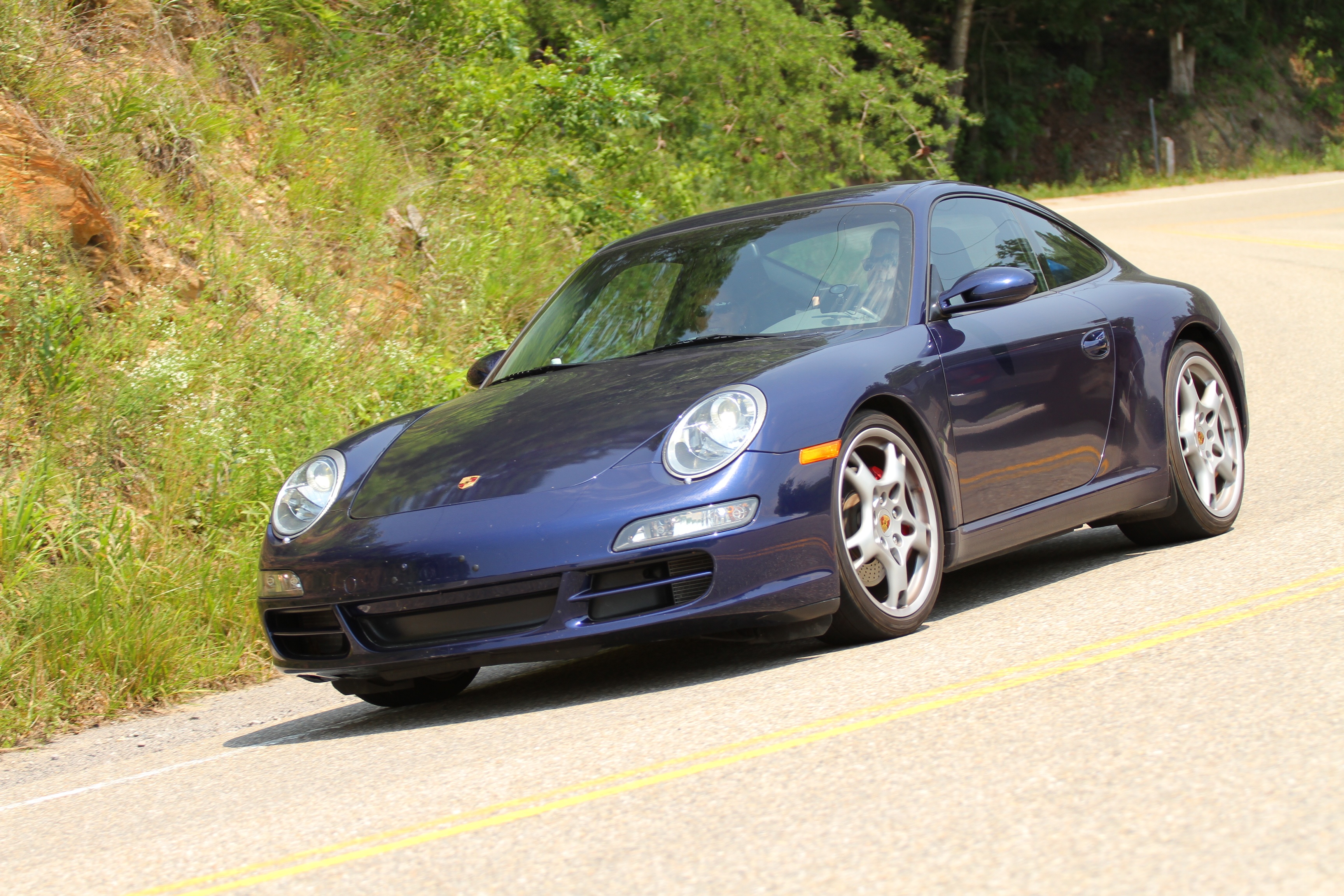
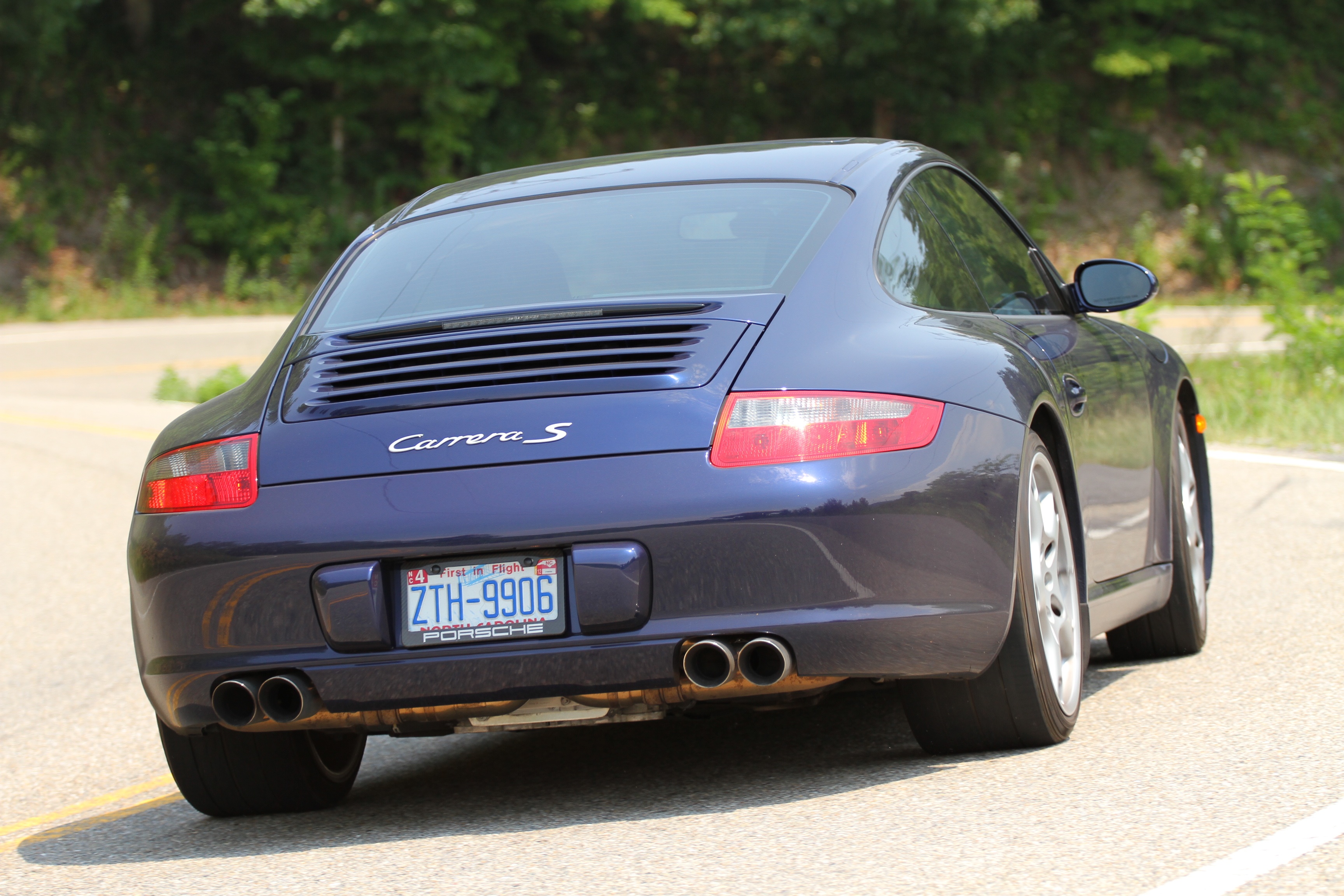
Thanks to killboy.com for the pictures of Clara on US 129, the Tail of the Dragon, on July 3, 2011.

A big road trip for the Fourth, including the Tail of the Dragon

For the Fourth of July weekend, I thought it would be fun to take a road trip to western North Carolina. It had been many moons since I spent time in the beautiful Blue Ridge mountains, and I’d never driven the serpentine roads in my beautiful Porsche. Sally was game, and so on Friday afternoon we loaded up and rolled out from Raleigh.

We spent that evening in Winston-Salem, where I grew up. We stayed downtown, and were surprised to find large numbers of young people eating at sidewalk tables and promenading. At our hotel, there was a convention of “greasers” into fifties/punk hair styles, big tattoos, and hot rods. I find big tattoos somewhat disturbing, but I found this group sort of cheering. These outsiders had some things to be happy about: something they really liked (cars and a certain look), the courage to come out proudly about their passion, and a community of like-minded people. It’s not easy being different.

We had dinner with my old old friend (since fourth grade) J and his wife N. J was my hero as a kid: great at things like throwing rocks, building model fighter jets, and finding discarded Playboy magazines in the woods. He’s become a successful construction supervisor for commercial projects, and pointed out some of his projects on the Winston-Salem skyline. It was good to refresh on our history and to catch up.

On Saturday we took Highway 421 to Boone, and once there decided to take 221 south. The road wound through the green mountains. During this stretch, I experienced a Zen-like connection to Clara and the road. No thought, just driving. Shifting to third, back to second, back to third, back to second, for miles. It was strange and wonderful to have no schedule and no place we had to be. We drank in the rolling mountain vistas.

We had lunch in Blowing Rock at Louise’s Rockhouse Restaurant, where we sat near a group of State Troopers in the motorcycle corp. The vegetarian options on the menu boiled down to one: a grilled cheese sandwich. But the service was friendly, and it was a perfectly fine sandwich.

We took the Blue Ridge Parkway south to Asheville, stopping now and again to enjoy the mountain views. In Asheville there were lots of street musicians and artsy looking folk, and no shortage of veggie friendly restaurants. We chose the Laughing Seed, where I had an interesting cocktail with ginger liqueur called East of Eden, and a mushroom risotto. We stayed the night in a B&B called Reynolds Mansion, which is an 1847 house that reminded me of the Addams Family’s place, but with beautiful rooms. The breakfast featured poached pears and eggs benedict, and the host told an elaborate ghost story about a portrait of a star-crossed plantation mistress.

After breakfast we drove west through Maggie Valley, Cherokee, and Bryson City, where we bought sandwiches at a Subway, then headed northwest toward Fontana Village. About 18 years ago, we had a week-long family vacation at Fontana, and remembered it happily. A significant memory of the trip was how difficult it was to get there on the windy mountain roads in the minivan, and it seemed like a good idea to try those roads again in a better vehicle. It turned out the roads had been widened to four lanes for most of the trip, and the only exciting part of the journey there was the last few miles. We ate our sandwiches at Fontana and recalled the happy vacation with little Gabe and Jocelyn — river rafting, horseback riding, swimming, ping pong, and shuffleboard.
Then we went north to US 129 and encountered the Tail of the Dragon. We’d heard of the road, but weren’t certain of the location until we came to Deal’s Gap and saw several dozens of Harleys in the parking lot of the motorcycle motel. So we drove it. It was like skiing black diamond moguls. It whipped back and forth, up and down through the Nantahala forest, never straightening for any length. Like a mogul run, it took total commitment and focus. We were fortunate to find long stretches with no one ahead or behind. 318 curves in 11 miles. A major dose of adrenaline. It was awesome. Awesome!

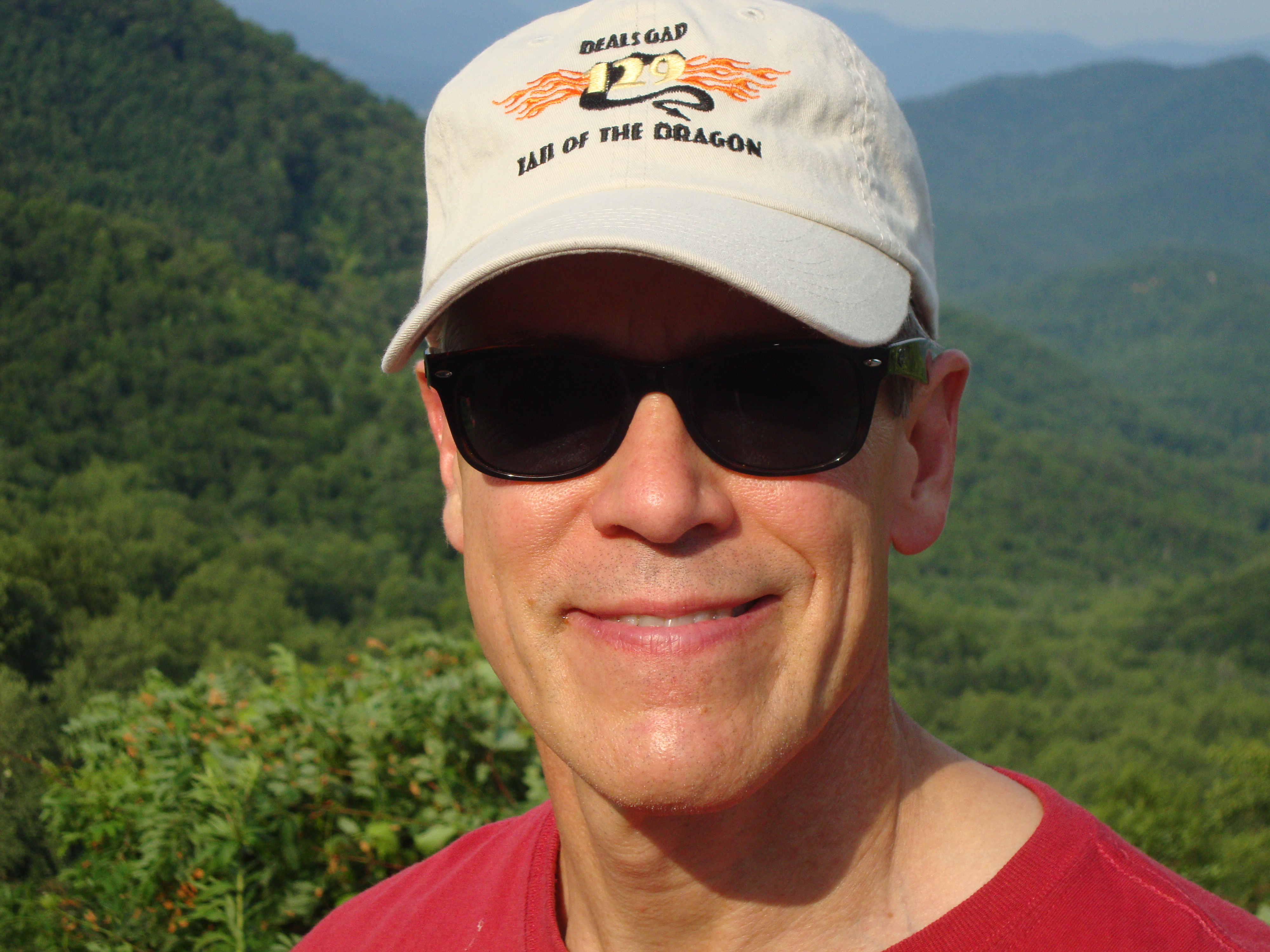
Returning, mentally exhausted, we stopped at Deal’s Gap and I bought a Dragon souvenir tee-shirt and hat. We sat around for a bit with the bikers, and noted the things we had in common and the things we didn’t. In common: love for vehicles and the road. Different: facial hair, cigarettes, tattoos. Some of them were scary looking. But I felt I understood much better what they were about after driving the Dragon. Like the greasers, these folks had embraced their differentness and found a kind of community.

Sally served as co-pilot and navigator throughout. She had no interest in taking the wheel, unless I threatened to fall asleep, which I never did. Amazingly, she was cheerful throughout. She never once expressed fear or even hesitation at the speed. She was game, and brave. We talked for periods, and were quiet and peaceful for periods. I realized, once again, that she was the girl for me.

For the most part, we navigated the old-fashioned way — with maps. I have a Garmin GPS, which is useful for getting from point A to B, but not for finding interesting byways. We missed our turns a couple of times as we headed back east (poor signage, we thought), but never worried excessively. We spent the last night in Franklin, then took US 64 back across NC. Total mileage for the weekend was just about 1,000. We couldn’t get over what a beautiful state this is.

A recording session at Manifold Studios with Michael Tiemann, John Q. Walker, and the ghost of Oscar Peterson

Last weekend I attended a recording session at Maniford Recording, my friend Michael Tiemann’s new recording facility in Chatham County near Jordan Lake. Michael’s been working on this project for four years, and it is clearly a labor of love. The setting is rural piedmont North Carolina, surrounded by farms and forest with lots of songbirds. (I heard a whippoorwill singing ardently for the first time this year or last.) The architect was inspired by Frank Lloyd Wright, and incorporated the golden ratio throughout the design. Michael explained his his purpose in terms of making great recordings with a total devotion to truthful sound. I noted that this is swimming against the tide of contemporary culture, which Michael conceded, but he noted that tides can turn.

The recording was done by software developed by Zemph, a company founded by John Q. Walker, who was also at the session. The objective was to reengineer a recording by Oscar Peterson (jazz pianist) and Ray Brown (bass) from 1949. A hundred-year-old Steinway that had once been at Carnegie Hall had been fitted out to play itself using Zemph’s software, and the Zemph folks had created a new instrument to reproduce the bass. The sound was uncanny. It was unsettling, but kind of moving, to see the piano keys moving, and the sound had authority.

I went through a long period of studying and really loving jazz. I still enjoy it from time to time. I particularly enjoy music from the big band era. But jazz sometimes gets more reverences than it deserves, based in part on the myth of improvisation. The non-musician perceives improvisation as a bold experiment, but it’s usually not. What improvisation mostly means is either variations on prior melodies or laying prefabricated riffs in various orders on top of fairly simple, repetitious chord structures. It can sometimes have energy and heart, but it can also be fairly boring. When I started to feel a little bored, I found my way back to the Western European musical tradition, in which composers wrote down ideas so rich that we still find, centuries afterwards, it interesting, and sometimes transcendently moving, to confront them. I don’t get that from Oscar Peterson.

John graciously allowed me try out the pianos after the session. I found the Carnegie Steinway a bit loose and diffuse, but the Hamburg Steinway was wonderful — brilliant colors and clarity. I worried that the reproduction equipment, including circuit boards attached to the keys, could affect either the sound or the action, but I couldn’t perceive any such effects. I played a bit of Chopin, including the Minute Waltz, and a bit of Debussy’s First Arabesque.

I enjoyed seeing the technology for recreating the performance, and the mixing session in the studio. And it was inspiring to see how passionate Michael and John were about the music. I have a soft spot for people that are absolutely passionate about art that will never win a popularity contest or make a dollar. It’s a reminder that art matters at the most intimate human level, and can inspire love so intense as surpass all rationality.

Discussing open source ballet with Robert Weiss

Do open source software and ballet have anything in common? Sure, they have some obvious differences. But they share an imperative to collaborate and a creative spirit. Anyhow, I’m a big fan of both, and I’ve been thinking about whether some of the lessons of open source could be applied to ballet. Last week got a chance to kick ideas on this around with a great choreographer, Robert Weiss.

Weiss, who goes by Ricky, is artistic director of the Carolina Ballet, which plays out of Raleigh, N.C. He spent the early part of his career as a dancer at the New York City Ballet with its famous director, George Balanchine. In more than a decade with the Carolina Ballet, he has been a prolific choreographer, producing dozens of ballets. He’s also recruited superbly talented dancers from around the world and melded them into an outstanding company. When we met last week, along with my friend CB Board Chair Melanie Dubis, at Buku for lunch, I thought, this must be close to the world’s greatest job — working every day with beautiful, talented, dedicated people to create art for the ages. What could be more wonderful?

When we met for lunch last week, it quickly became clear that it would be more wonderful to not be constantly worried about money. If only, he said, he had better funding, he could spend more time thinking about dance and less about fund raising. Ballet is an art form that entails numbers of dancers, all requiring paychecks, and the same for musicians, costume designers and costumers, set designers and sets, lighting designers and lights, stage management and crew, and of course, choreographers. As an art, it is capital intensive. There are inherent barriers to reaching a wide audience, including lack of exposure to the form and its traditions.

As Ricky described the process of creating a new work, it was plain that it was highly collaborative. When he choreographs a new work, it is created on specific dancers, and the work is shaped in view of their individual qualities. The work draws on a tradition that goes back to the Renaissance, with a large vocabulary of movements that are available for re-use. (As Ricky warmed to the subject, he stood up from the table and showed a couple of classical gestures, and his sudden transformation from regular person to dancer was electrifying.) And of course, there’s collaboration with the aforementioned costume designers, set designers, and many others. It is in general an art of great idealism and unselfishness, at least in the sense that almost no one expects to get rich from it, and many are prepared to subsist on a shoestring budget.

But in ballet as in most of our endeavors, there is an unexamined assumption that intellectual property protection is important. Thus copying of videoed performances is subject to the draconian penalties of copyright law. The dances are kept locked down, on the assumption that making them freely available could result in lost value. I raised the question with Rocky and Melanie whether this really makes sense. Is copyright protection actually increasing the value proposition of ballet, or is it lessening it?

As I explained, the open source software community has learned some lessons about this that the rest of the world is starting to apply. Open source innovators, whose projects are based on freely sharing their code, realized that the traditional approach to intellectual property would not work for them, and so they created new licensing models, such as the GPL, that encouraged sharing and re-use. That approach has led to incredible growth in open source software. The model is spreading outward to other creative endeavors with such tools as Creative Commons licensing.

Could it be that less IP protectiveness could expand the audience for ballet and bring in new funding? What if, instead of protecting ballet as carefully as possible with copyright, the product was unlocked and made available under a Creative Commons license? For example, if well-produced video of the Carolina Ballet was readily available on the internet without charge, couldn’t that introduce many more people to ballet, with some of them eventually becoming balletomanes?

Ricky noted that even the best video of ballet is only a pale reflection of the experience of live performance. But he also admitted that he knew of people who had had transformative personal experience through a recorded performance. He also noted that it would require funding to make video recordings of a quality that he’d be comfortable presenting in public. (Footnote: a couple of days after our meeting, I saw a documentary on the choreographer Jerome Robbins called Something to Dance About, which is great, and illustrates how video can communicate something meaningful about dance.)

Open source innovation generally involves experimentation. I noted that there could be approaches to video and to funding that none of us has thought of yet. We agreed to talk more about what might be possible. It may be that you have ideas or experience in applying open source methods to artistic endeavors. If you have ideas, please share them.

Piano v. synthesizer

After several lessons, Olga, my new piano teacher, recently departed for Rumania for the summer, leaving me with a lot of musical ideas, but with no particular urgency to practice up for the next lesson. And so I found a sliver of time and energy to explore an area I’d been curious about for a while: musical technology and synthesizers.

My computing devices contain synthesizers and virtual studios, and after some casual experimenting I realized there’s a lot of potential for musical fun. Without any particular effort or expenditure, I have at my disposal musical tools that would have cost tens of thousands of dollars thirty years ago. But figuring out how to make them more expressive takes some time and energy.

My first objective was to make some techno dance music. It’s odd, I know, for a person with predominantly classical tastes, but I sometimes enjoy listening to this stuff when driving for fun. GarageBand, an Apple program, includes prefab loops that can be used for this purpose, and I soon had some sonic space that was reasonably entertaining. I then got curious about what else could be done, and started to experiment with non-pre-fab elements. It was sufficiently fun that I bought a cheap MIDI keyboard and a little wireless auxiliary speaker.

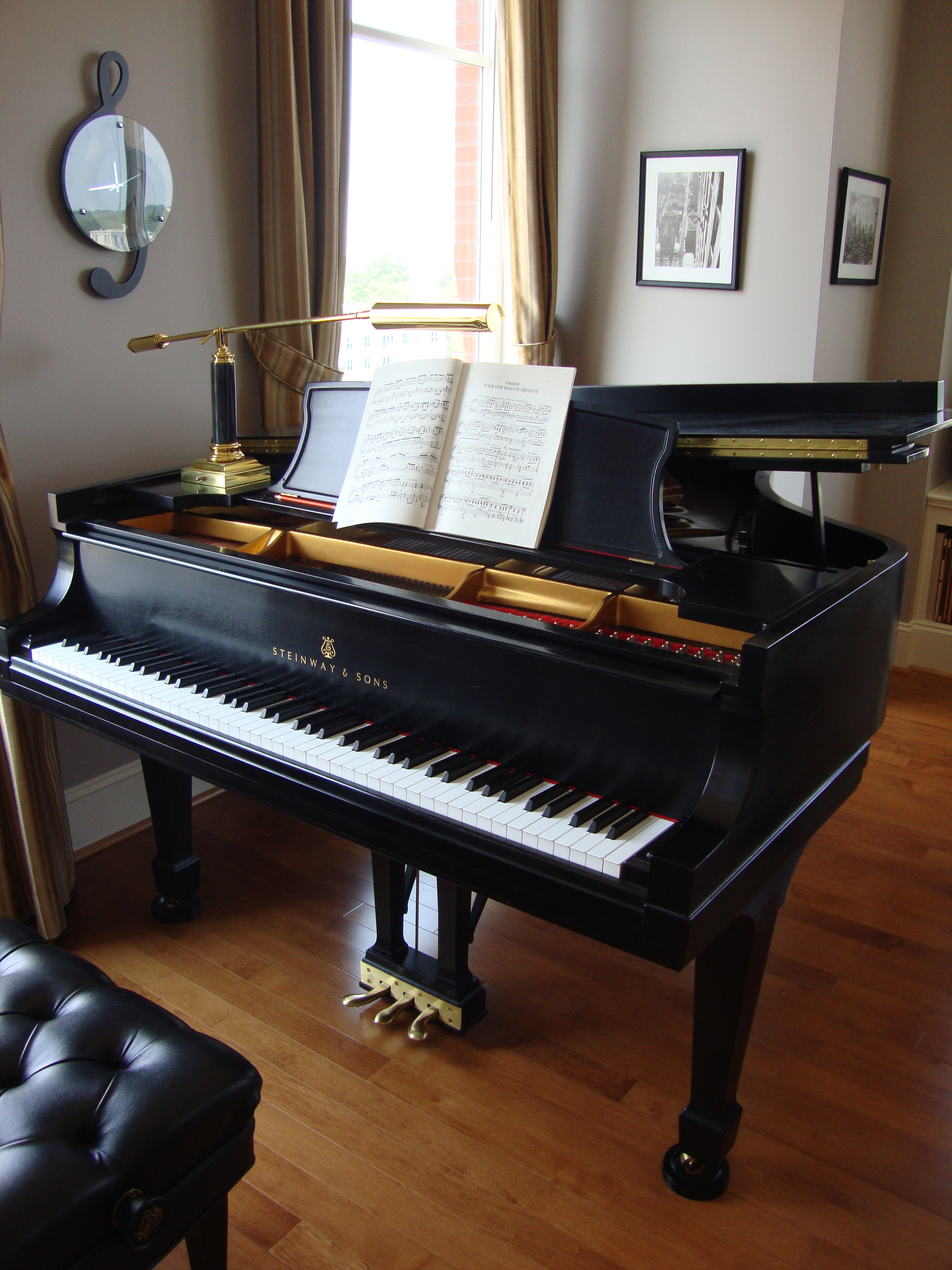
This was a significant step, because I have a strong prejudice against electronic keyboards. The interface looks like that of a real piano, which is deceptive, because the two instruments are very different. A great piano, like my Steinway grand, allows for a subtle connection between the human and the string. The basic technology is now antique (19th century), but still, they have thousands of parts and are said to be among the most complicated mechanical machines on earth. Each piano is also an individual, in a way that each electronic keyboard is not. The wood comes from particular trees that grew as they grew in a particular place during particular years.

A great piano has the capacity for nuance. I used to think of a key on the keyboard as similar to an on-off switch, but Olga persuaded me this is a mistake bordering on sacrilege. Her thing is to focus on nuances of touch and the associated nuances of sound. She hears details so tiny that it took a while for her to convince me they really existed, another period for me to begin perceiving them, and another period for me to begin to use them. It’s a little embarrassing to admit I was previously barely aware of this level of listening and touching, in spite of many years of making music.

Once you begin really listening hard at this level, the experience of music changes. There’s good news and bad news. It’s harder to reach a point of complete satisfaction with a performance, but at the same time the experience is richer and deeper. Anyhow, there’s no going back. Once your ears are opened, focused concentration on subtle nuances seems essential to any significant musical experience.

In revealing a level of this, Olga did a demonstration of various ways of touching C-5 for different colors of sound. One way she thinks of the touch is like dance, with the gesture of the hand choreographed to produce a particular color. Speaking of the subtle differences in sound produced by different gestures, she said (with a Russian accent), “I don’t know why it makes a difference. It just does. The piano is a mysterious instrument.”

Electronic keyboards are complicated, but somehow not mysterious. I have doubts that digital sound creation will ever be as personal and emotionally rich for me. But there is an amazing variety of things that the synthesizer can do. It’s different, and it’s good to change things up from time to time. So I’ll be experimenting, and see where it leads.

Emergency diving, cell phone woes, and a new gym

With almost a hundred logged dives under my belt, I’ve decided it’s time to improve my emergency and first aid skills. This is not to suggest that scuba is particularly hazardous, which ordinarily it’s not. But as with any human activity, accidents will happen. Understanding common accident scenarios is a great way to minimize risks. Plus, it would be a great thing to help a person out of a crisis — and a terrible thing to watch a serious accident unfold where help might make a difference, but be unable to help. I’ve signed up to take the PADI rescue diver course next month, and I’ve begun working my way through the materials.

There are a lot of risks we can’t do much about as individuals, including technology failure. It’s scary how dependent I am on my digital devices, though it isn’t usually noticeable. The dependency came into focus quickly for me this week, when my cell phone inexplicably quit working.

It turned out that it was not simple or stress free to get help from AT&T. I spent more time than I wanted scrutinizing their website, and couldn’t find a service phone number. I tried their online “chat” service, which took 10 minutes to get connected and 10 minutes to get questioned, after which I was disconnected as “timed out.” The next day at lunch time I drove over to the place where I’d bought the phone, only to find they’d closed the store. Since I didn’t have a cell service, I couldn’t find another store that day.

Yesterday I drove to the closest mall with an AT&T store (Crabtree), where there was one dude tending the sales kiosk. Fortunately, he figured out how to fix the thing. He asked me how my day was going, and I told him he’d made it a lot better.

After I got cell phone fixed, I went to check out the local YMCA. Since my neighborhood gym closed, I’ve been in a state of mild gym withdrawal. Sally’s tennis pro suggested she check out the downtown Y, and she delegated the task to me. It’s good! They’ve got an adequate collection of weight machines, aerobic machines, and spaces to do exercise classes. There’s a swimming pool. What was distinctive was the staff — they were unbelievably friendly! I signed up with enthusiasm, and then did my first Y workout: an upper body circuit, forty vigorous minutes on the elliptical machine listening to Mozart’s Cosi Fan Tutti, and some yoga stretching.

Improved propaganda and healthier diets

For all the money and energy we spend on health care, you’d think we’d be more focussed on eating practices that improved our health. But changing eating habits is difficult. The forces of advertising and tradition powerfully reinforce our bad habits. Thus I was pleasantly surprised to see the government’s replacement for the food pyramid this week.
It’s far from perfect, but it’s a significant improvement.

The pyramid was supposed to help us eat healthier, but it didn’t do that very well. The various versions of the pyramid were confusing where they weren’t downright misleading. In the past, the food industry has battled hard against changing the food pyramid, as well described in Food Politics by Marion Nestle. It would be interesting to know what happened to bring about the new symbol. Could it be Michelle Obama?

In any case, the new symbol emphasizes that half of your diet should be fruit and vegetables, and another significant portion should be whole grains. The other large chunk is dubbed protein.

The oddity, of course, is that there isn’t anything in the grocery store called protein. Many believe that eating meat is necessary to get adequate protein, although this is a myth. In fact, many plant foods (whole grains, legumes, vegetables, and nuts) are good sources of protein. It may be that the meat lobby figured that the meat-protein association is so firmly lodged in public consciousness that it will not be shaken loose any time soon, and so their markets won’t be threatened

The new graphic treats dairy products in a confusing way — a circle to one side of the main plate. This could be interpreted as a suggestion to drink lots of milk, but it could also mean that dairy is not entitled to the same status as the main dietary categories. This smacks of a political compromise with the dairy industry. There’s a growing body of evidence that cow’s milk is not good for humans, but the official new guidelines contain no hint of this. It’s good, though, that they recommend low-fat options.

Another subtle problem with the new graphic is that by depicting a plate completely covered with food groups, it reinforces our tendency to eat too much. Americans already have trouble not covering every square inch of their plates with food, and eating all of it. Our obesity epidemic proves the point. To be fair, the new web site (see link above) acknowledges the importance of reasonable serving sizes. Still, a better graphic would show that we should eat only as much as we really need to nourish ourselves, which for most of us means: eat less.

Processed and unprocessed food

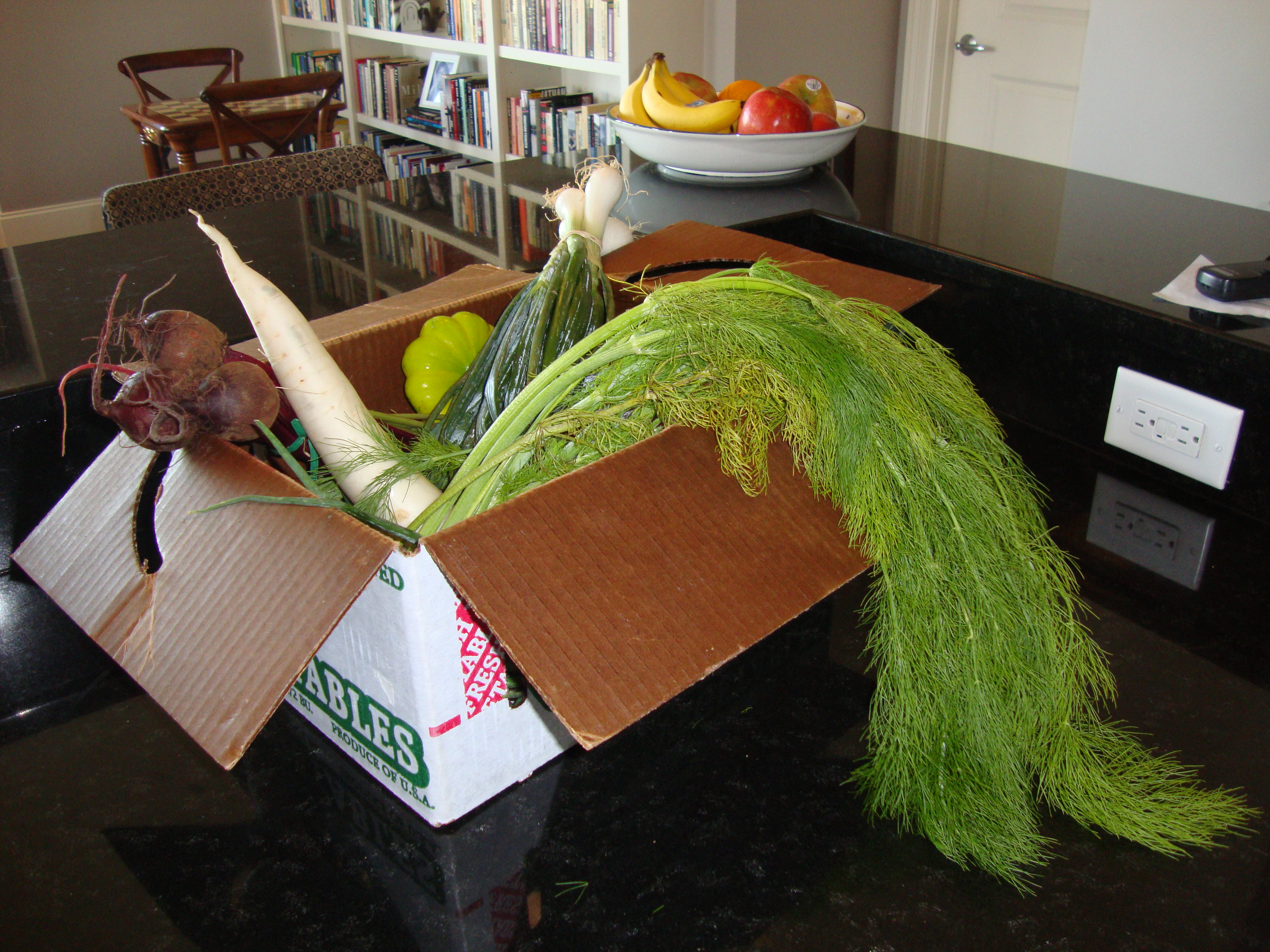
This week's Mid-Chatham CSA box

We’ve been eating lots of fresh organic local produce recently. Sally subscribed us to the Mid-Chatham Farmers’ Alliance CSA (Community Supported Agriculture), which furnishes a box filled with fresh produce once a week through the local growing season. The food has been amazing! There’s so much taste! Even some vegetables that I’ve long avoided, based on bitter early encounters, like beets and turnips, have been remarkable. With the various greens, I’ve made some fantastic green smoothies.

I was momentarily cheered when Red Hat served veggie hot dogs at a gathering this week. I appreciated some recognition of plant-food eaters, but when the crucial moment came, I couldn’t get myself to try one. I’ve gotten used to eating very little processed food, and now the idea of snacking on man-made chemicals is sort of disturbing. As it happened, I wasn’t very hungry anyway.

There was an interesting New Yorker article titled Snacks for a Fat Planet: PepsiCo takes stock of the obesity epidemic by John Brooks a couple of weeks back. Did you know that PepsiCo is the largest food company in the US, with $60 billion in annual revenues? Its Frito-Lay division is by itself enormous, and other brands include Tropicana and Quaker Oats. Its CEO, Indra Nooyi, is the first female, first Hindu, and first vegetarian to lead the company, and she sounds like a brilliant and dynamic leader. She also seems genuinely concerned about the health problems that are associated with some of the highly processed sugary or salty foods that have made PepsiCo vast quantities of money.

I don’t envy her, for she’s taken on an impossible job. It’s nice to work on making the fatty snacks on which PepsiCo has thrived less unhealthy. But the whole business of not only engineering snacks but also programming people to eat more and more processed junk is wrong. It contributes to vast numbers of premature deaths.

Our junk food culture is like the smoking culture, but before the Surgeon General’s report in 1964. We’re done something (though not enough) to address the health risks of tobacco, and we need to do at least as much to address the deadly culture of junk food. I realize this message is kind of depressing, and junk food purports to be, and is accepted as being, innocent fun. But that’s, in part anyway, the problem.

Facing facts — the car needed body work, and the planet does, too

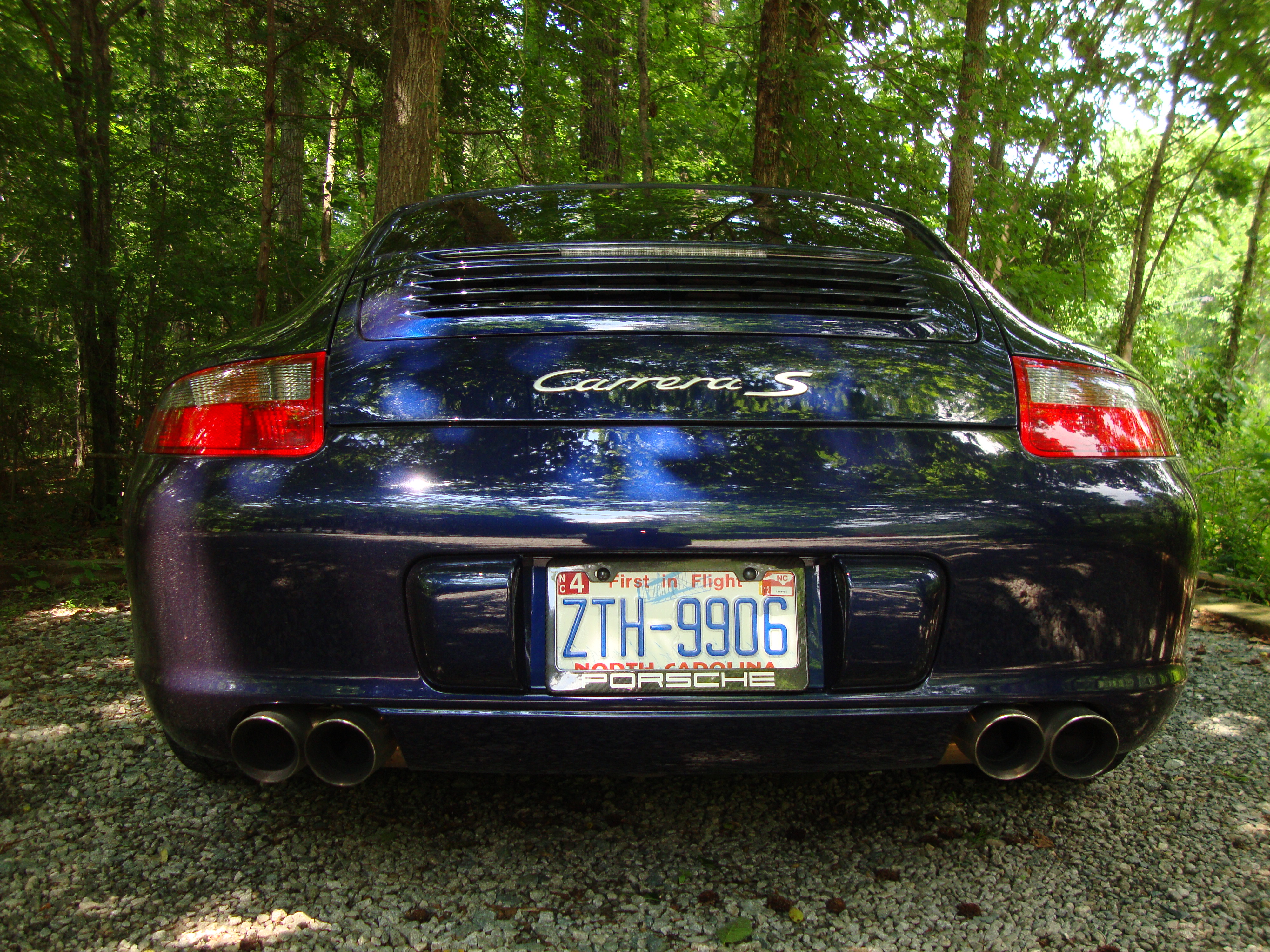
Clara restored in a moment of tranquility

Facing unpleasant facts is no fun, but you generally feel better after you’ve done it. And so I’m happy that I got my sports car repaired this week. I’d had not one but two embarrassing parking garage incidents recently. In one, I took a sharp a turn at an unfamiliar entrance, and hit an unusually high curb, producing a horrible scraping noise and an unsightly gouge. In the other, I (partially) woke up in the middle of the night, thought it was early morning, and headed out for a swim at Pullen Park. In my dazed state I backed into a neighbor’s parked vehicle. This broke a tail light on my car and produced lesser damage on his bumper, which he eventually determined was not worth repairing, in view of other prior dinks.

But part of what I enjoy about my car (Clara) is her beauty, and I knew I would never feel good trying to ignore the damage. So I contacted the good folks at State Farm insurance, and I found my way to Paragon Collision, which specializes in body work with loving care. The repairs took two weeks and two substantial deductibles, but it was worth it. Clara is gorgeous again.

I was sorry that my neighborhood gym, Rapid Fitness, closed this week. It was not a beautiful gym, but it was fabulously convenient — right across the street. And it was good enough to inspire me to regularly get up at 5:30 a.m. for a workout. It provided my introducing to spinning, which raised my heart rate to new heights. They are planning to open a less convenient replacement gym late in the summer. We’ll see.

Much more dramatic events were unfolding across the country this week, including floods on the Mississippi and killer tornadoes ranging across the country. On a quick trip to Dallas, I came in behind a massive hailstorm that totalled half the cars in the Hertz fleet at DFW and took a large number of planes there out of commission. The next day, when I was there, the skies were clear. The flight back was bumpy.

According to the NY Times, there is not a scientific consensus that the rash of bizarre weather disasters is associated with global warming, but you wonder, right? Anyhow, there is scientific consensus that global warming is occurring, and that absent dramatic change more disasters lie ahead. The News & Observer reported this morning that Republican presidential hopefuls, including those who have previously acknowledged the imperative of reducing greenhouse gas emissions, are now taking the position that science is wrong and there is no problem. One party operative said that a requirement for these Republican candidates to succeed is to oppose all solutions.

This is really appalling. To some extent we all step around hard problems, and kid ourselves about unpleasant realities. But this is huge — bigger even than mass catastrophe for the human race. We’re facing, or in the midst of, a mass extinction of species comparable to the end of the age of dinosaurs. Self-delusion is unacceptable, and willfully obscuring reality is reprehensible. We’ve got to face facts, and get to work on possible solutions.