The Casual Blog

Full Frame Documentary Film Festival — some highlights

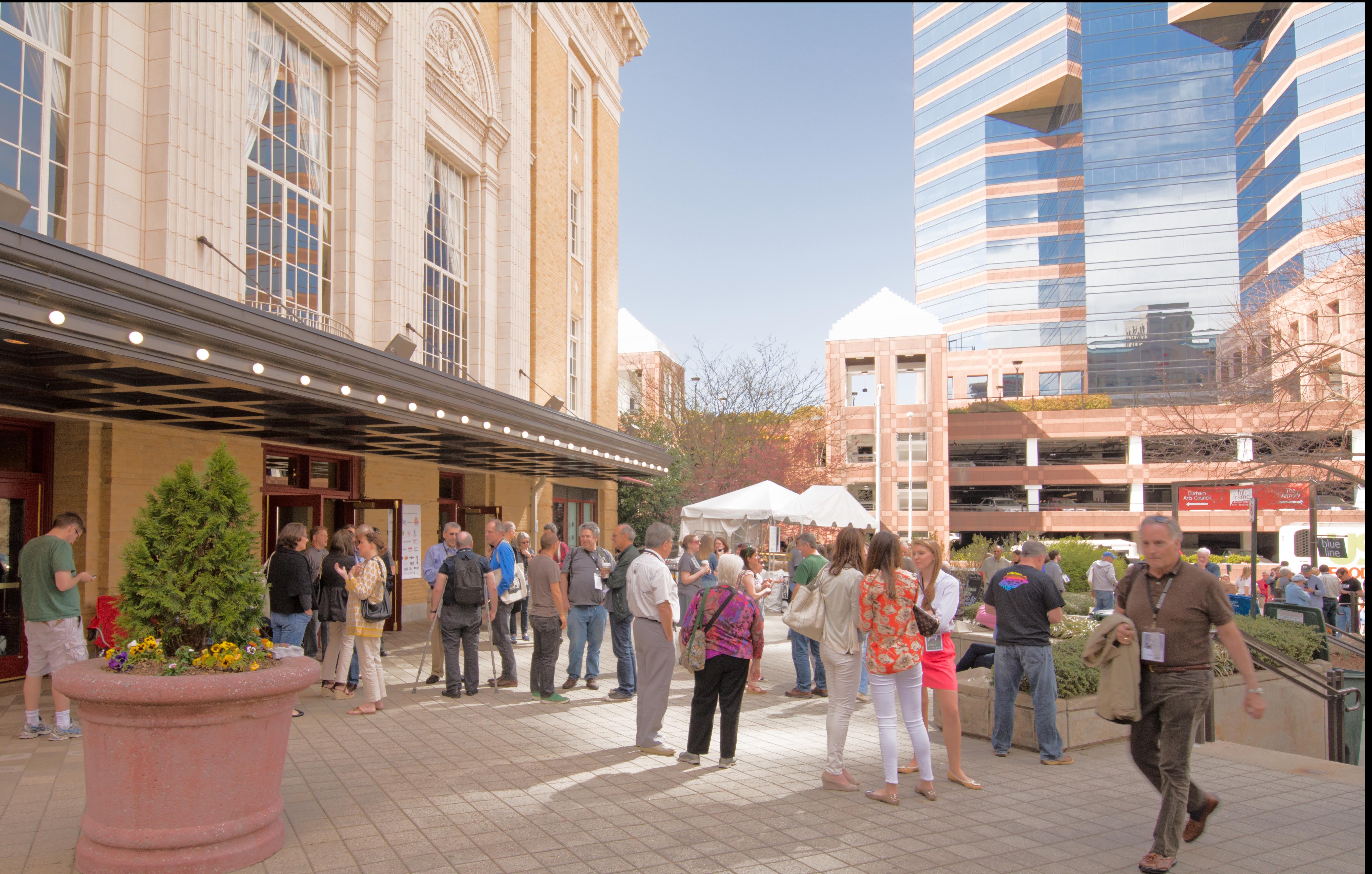
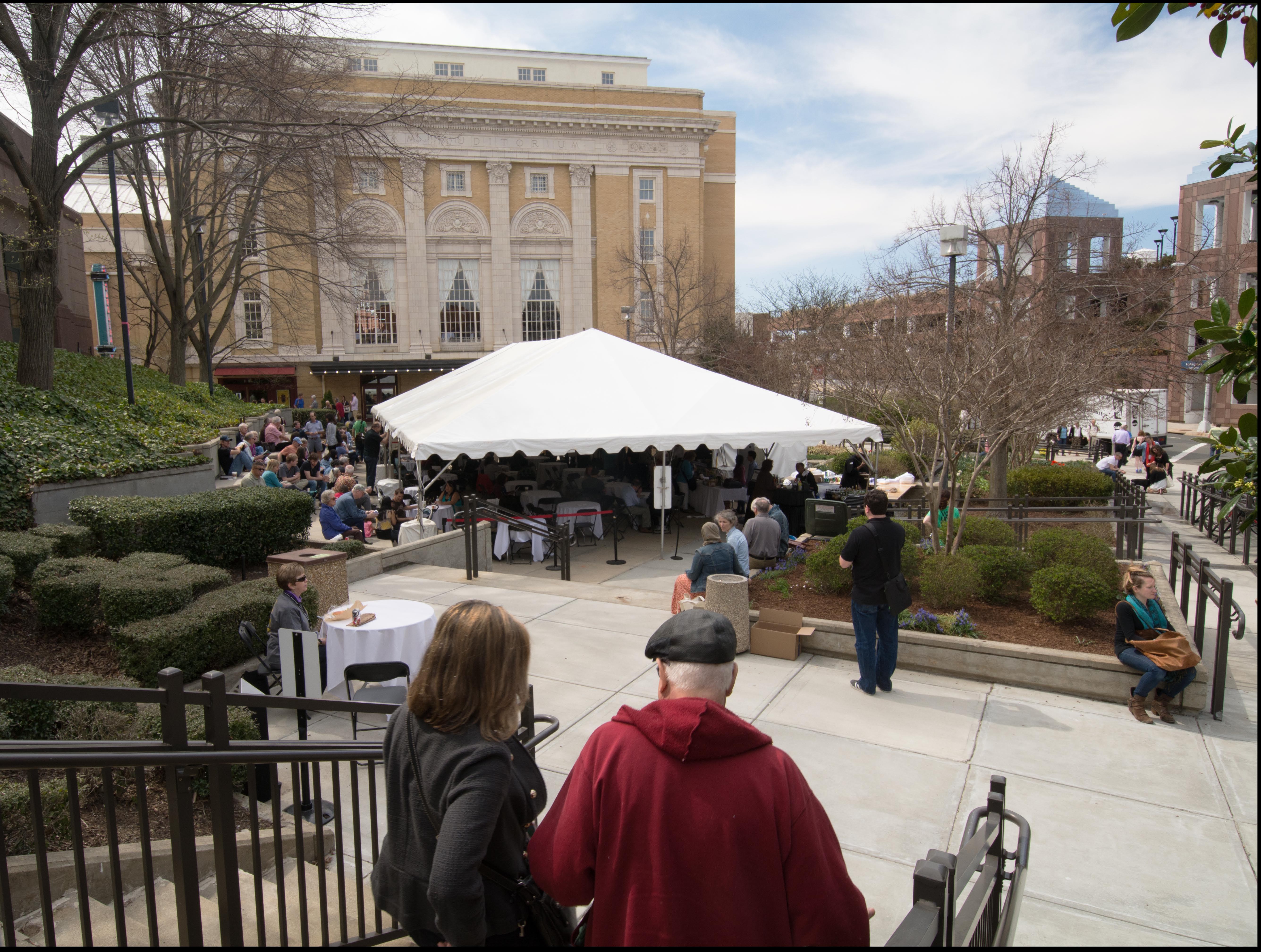
14 04 05_7994_edited-1Kudos to the Full Frame Documentary Film Festival which ran from last Thursday through the weekend in Durham, NC. The Festival had five main screens on which it screened more than 100 films. There were lots of helpful volunteers, and things ran on time and from what I saw, mostly glitch free. Many shows were sold out, and the crowds were enthusiastic.

I like documentaries most when the makers are passionate about the subject but also trying to maintain their critical distance and integrity. Documentary filmmakers, like all of us, have their blind spots and biases. Objectivity is a fine ideal, but I don’t think it’s possible to tell a coherent story based on reality in any medium without filtering, editing, and reworking; reality is just too messy to present raw. And no doubt some filmmakers are consciously manipulative. But a lot of documentary people seem to work hard to be truthful.

This was, I think true of all five films we saw, which covered a lot of artistic, social, and political ground. Here’s the list, in the order we saw them.

1. Afternoon of a Faun: Taniquil Le Clerq, by Nancy Buirski, is about the famous ballerina with the NY City Ballet. She married George Ballanchine and at her artistic peak contracted polio and never danced, or walked, again. This will be of most interest to other balletomanes, but I very much enjoyed the archival footage of Le Clerq and other great dancers and the interviews with Ballanchine, Jerome Robbins, Jacques d’Amboise, and others.

2. Whitey: The United States v. James J. Bulger, by Joe Berlinger, was organized around the criminal trial in Boston last year of Whitey Bulger, the crime boss who controlled South Boston for decades and then eluded capture for 16 years. You may recall from press reports that the trial was somewhat bizarre, in that Bulger didn’t deny many of the criminal acts that the government was trying to prove, but used the trial to deny that he was a government informant (“rat”) – which wasn’t an issue in the trial.

Bulger’s point seemed to be that a lot of state and federal law enforcement officials were working for him, rather than the other way around. There was ample proof that at least a couple of FBI agents were thoroughtly corrupt. This wasn’t so surprising – one expects that every barrel will have a few bad apples, – but there were indications that the officials working with Bulger were numerous and included some in high places (like the U.S. Attorney’s office). This could explain how he was permitted to run his operation for decades, murdering numerous people and destroying the lives of many others, while Italian Mafia competitors were arrested and convicted. The story was complicated, but the over all impression was that the law enforcement system came off the rails, and may not yet be back on them. It was truly shocking.
14 04 05_7997_edited-1

3. Freedom Summer, by Stanley Nelson, was about the struggle for Black voting rights in Mississippi, including the work by about a thousand mostly white college students who worked there in the summer of 1964. I knew these folks had been courageous and idealistic, but I hadn’t quite realized how harrowing things had been. The old guard racists were fire bombing and shooting at them, and killed three. The film was ultimately inspiring, reminding us that it may not be futile to work for political change in the face of difficult odds.

4. Ivory Tower, by Andrew Rossi, is about the structural problems of higher education in America, including dramatically risings costs, crushing student debt, deteriorating study habits, and confused mission (e.g. whether to get kids ready for the world of work, challenge them intellectually, or entertain them). I was particularly interested in the reporting new education models, incorporating MOOCs and hybrid approaches to teaching.

5. Rich Hill, by Tracy Droz Tragos and Andrew Droz Palermo, is an intimate look at the lives of three adolescent boys in a small Missouri town. The families were all working (at least at times) poor, and their situations were unsettled and frequently chaotic. With a lot of anger and despair, it was difficult to watch at times — almost too real, with no apparent good solutions.

In addition to the stimulating films, the food concession was good; I was very happy with my salad combo plate. There was an unfortunate postscript for me – I lost my iPad Air. I probably left it in the theatre on Saturday night. It has most of the books I’m reading on it, as well as many other things I care about. In short, it’s gotten to be more than just another computing device, but more like a little piece of me. I’m feeling a bit shaken to be missing it.
14 04 05_7987_edited-1

Buds, laughs, and cries, including Romeo and Juliet (the ballet)

14 03 22_7848
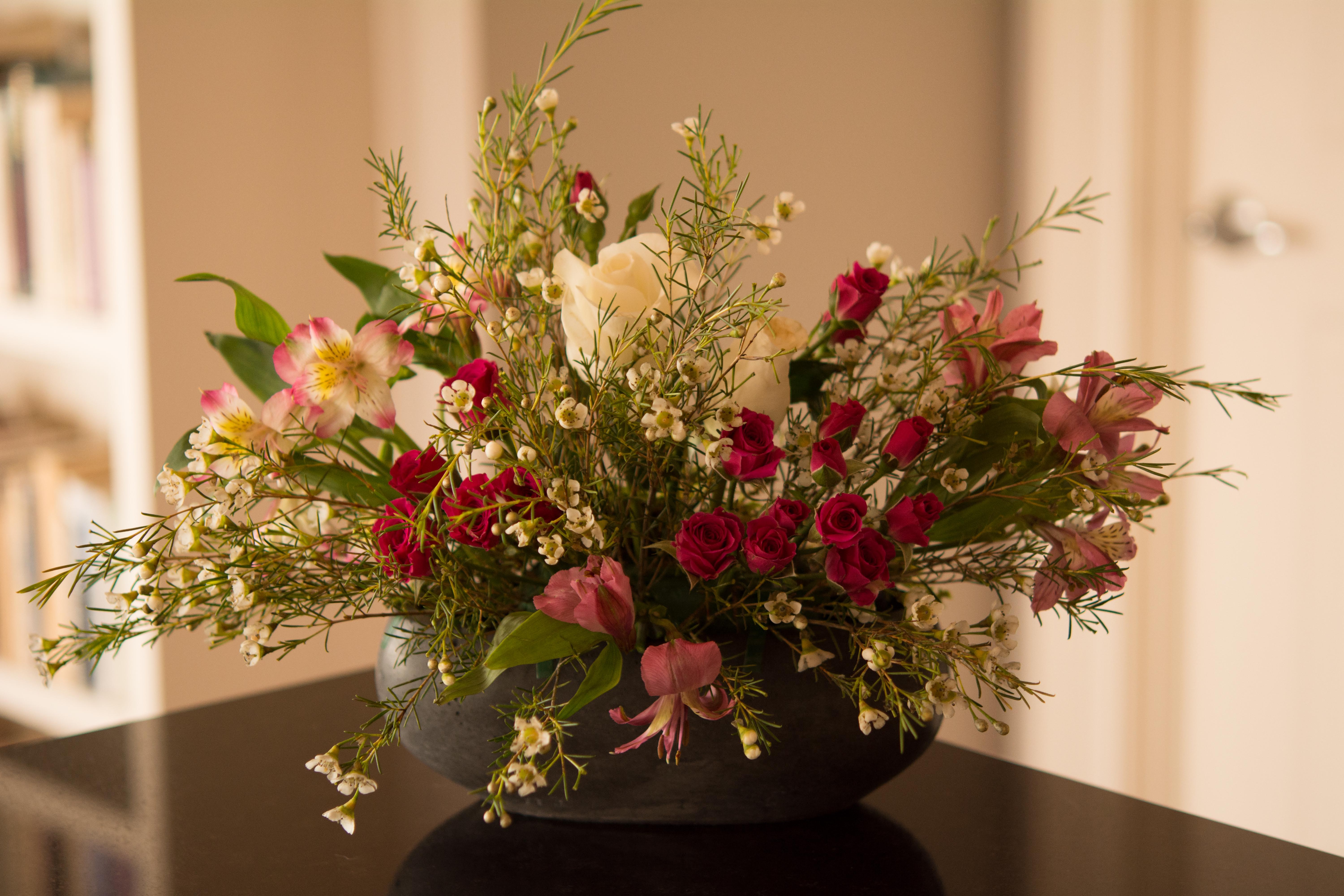
Sally’s taking a flower arranging class at Wake Tech, and here is her latest project, which I really liked. With spring officially here, I’m very much ready for the big blossoming , and took a Saturday morning walk through Fletcher Park and Raulston Arboretum to see what was up. They’re not here in numbers just yet. But it was fun to take a close look at some things on the point of bursting out.
14 03 22_7831
Is there anything more boring than people bragging about their marvelous kids? Perhaps hearing people complain about their aches and pains. But other people’s impressive kids are still a serious problem, conversation-wise. Why is it, then, that stories about my own kids are so interesting?

So, sorry, but here goes a proud papa: Jocelyn, having conquered the book publishing business in Manhattan (i.e. getting an entry-level job in ebooks at Macmillan), has now published her first professional writing. It’s a humorous essay about getting the fun of a good cry, which you may read at Quarterlette, a site for twenty-something women. The pay was not good (zero), but she was very excited to be a beginning author. Who knows what comes next? She’s got a piece on online dating in the works, and we kicked around ideas for a funny piece about the annoyances of Facebook.
14 03 22_7829

At an opposite extreme, there’s a piece in last week’s New Yorker by Andrew Solomon about Peter Lanza, the father of Adam Lanza. Remember Adam, the Sandy Hook killer, who took the life of 26 little kids, his mom, and himself? This is worse than a parent’s worst nightmare. I hadn’t known that he was a high functioning autistic kid who may also have been psychotic. We want to know why he did what he did or what might have made things unfold differently, but there are no full, satisfying answers. Nobody saw Adam’s potential for horrific violence, including the mental health professionals who examined him or his parents. I was moved by Peter Lanza’s struggle with both the pain of loss and profound guilt.
14 03 22_7816

There’s another good story about death and love called Romeo and Juliet, which the Carolina Ballet performed on Saturday night. We’ve seen Robert Weiss’s choreographed version several times over the past 15 years, and it’s one of my favorites. Shakespeare’s story, it turns out, works quite well without words. The language of ballet is fully sufficient to convey the richness of the trembling, tingling ecstasy of first love, and the explosive violence of feuding clans.

In this production, Margaret Severin-Hansen played Juliet with sweet innocence, and her Romeo, Sokvannara Sar, was strong and sensitive. Their balcony scene was complete, unmitigated, overwhelming love — love that obliterates everything else. Eugene Barnes was a smoldering, intimidating Tybalt. I thought the group sword fights could have used a bit more edge and brio, though I hesitate to say so – I wouldn’t want any dancers to actually get hurt.

Lindsay Turkel was radiant in the trio of gypsy street dancers. We were also happy to see Alyssa Pilger, a corps member and our pointe shoe sponsoree, get a high-profile solo as the Mandolin Girl. She rocked! I’d previously been struck by her beautiful technique, but last night she danced with amazing power, impassioned and electrifying.

Some pre-spring photography, and appreciating Diana Nyad, a swimmer for the ages

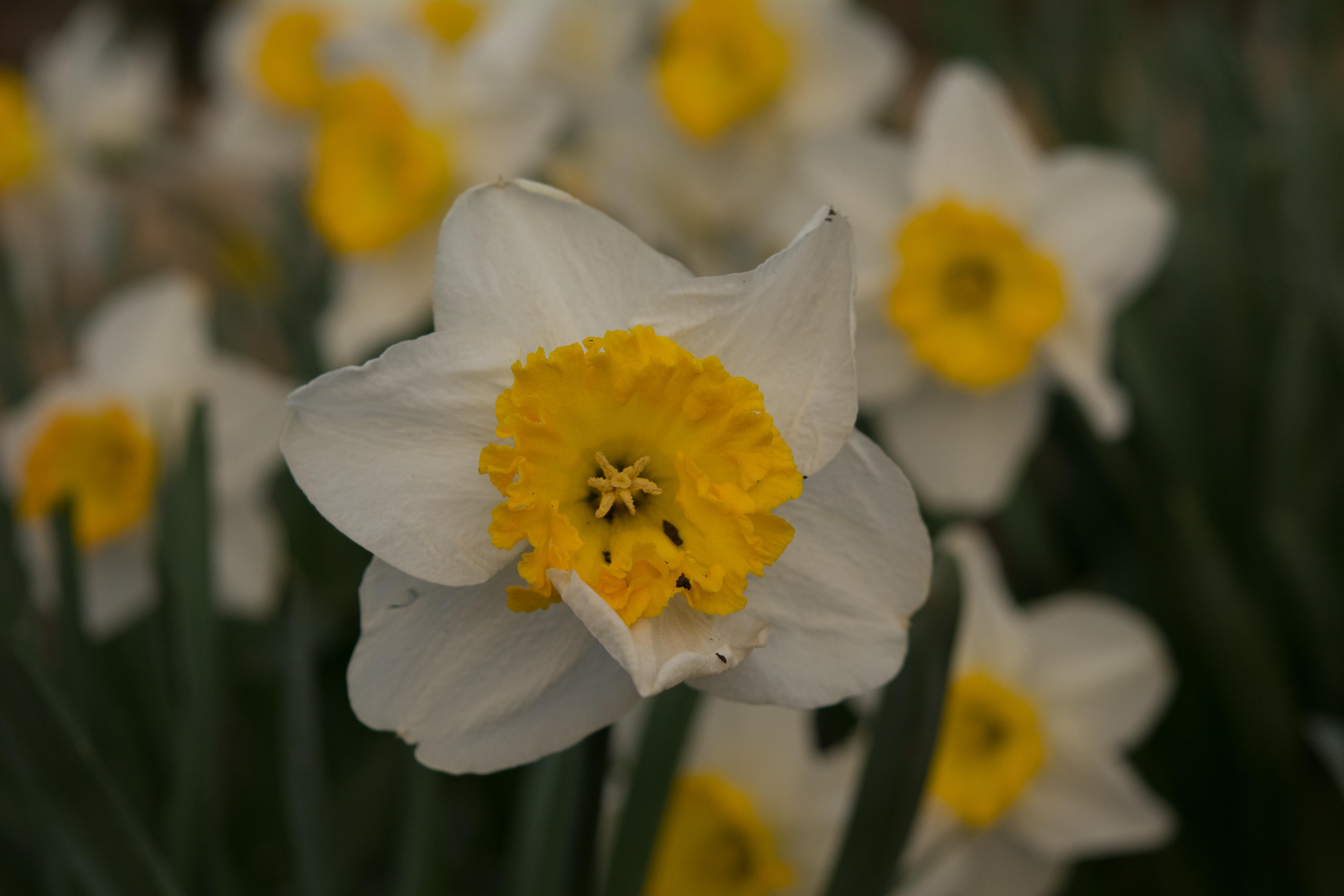
14 03 16_7805This week we had one day in the high 20s, and another in the low 70s. It’s been a roller coaster winter, and we’re all ready for spring. On Saturday morning after yoga, I went to Fletcher Park with my camera and checked for signs of emerging life. Daffodils had popped out, and tulips and others were getting ready. On Sunday I scouted Raulston Arboretum, which was mostly brown and gray (as in photo at bottom), but there were some delicate blooms and buds. Spring is getting close. We’ve just got to hang on!
14 03 16_7790

As I’ve been taking more pictures I’ve also been trying to figure out what it is I’m trying to do. Make a picture, of course, but there’s more to it. The camera subtly changes the way you see and feel. You look a little harder, and discover there are feelings associated with objects. You wonder, can they be captured, and can they be shared? Your relationship to the visual world has changed. Sure, there’s always a risk that the camera will distance you from the world, but I’m finding it can also draw you closer.
14 03 16_7782

So there’s a little voyage of discovery that happens in photographic outings, even when the output isn’t especially remarkable. It’s a type of meditation. And from time to time everything is right – the light and shapes and the colors – and none of the many things that can go wrong go wrong (you didn’t forget to take the lens cover off, or get a cat hair off the lens, or to adjust the white balance, ISO, aperture, etc.). At just the right second, you push the shutter, and everything clicks. Ah, happiness.
14 03 15_7740

It’s just a tiny fraction of a second (say, one six-thousandth). But it ‘s the culmination of many moments – years and years. It depends on your having looked carefully at your subject, but also your having looked for a long time at nature with intensity and affection. It also takes having looked at a lot of art, and considered how humans use images to represent things and communicate emotions. It also depends on your having learned your craft – how to hold the camera steady, how to frame the subject, how to choose the settings. It takes time. And usually there’s something a little off. There are so many not bad, almost-good, but ultimately useless, pictures. But you keep trying, and gradually get better.
14 03 15_7762

I’m crazy about my new Nikon D7100. Such marvelous engineering – a sensor with twenty-four million pixels! Fifty-one point auto-focus! The focus responsiveness is truly amazing. But I’m also a bit overwhelmed by the apparatus. Weeks into our relationship, I’ve got the basics, but I’m still finding new little buttons I hadn’t previously noticed. I seldom read users manuals, but for the D7100, I’ve felt moved to purchase two additional how-to books. Seriously, its complicated. But on the bright side, I don’t feel the equipment is holding me back. It’s more like I’m holding it back. So I’m daunted, but also inspired. I don’t want its brilliance to go to waste.

Also inspiring: Diana Nyad, who finally made the swim from Cuba to Florida at age 64 – a 53-hour, 110 mile swim, which she was the first to do without a shark cage. This is a feat of human endurance almost beyond imagination. I got round to reading Ariel Levy’s piece on her in the Feb. 10 New Yorker, which gave me a new appreciation for the amazing grit and relentlessness behind this feat. Nyad turns out to be at once a dreamer and a grinder, a brilliant, charming personality with considerable gaps and flaws. It soundss like she has OCD, relationship problems, and no money sense. She was horribly molested as a child. She has a drive that surpasses all known limits.

She started thinking about the Cuba-Florida swim when she was a little girl, and became a world-famous endurance swimmer in her twenties. After becoming the first to swim from the Bahamas to Florida (102 miles), she retired at age 30 and became a network sportscaster and did other things. Then she took up the quest for the Cuba to Florida at age 60. She failed. Then failed again. Then again. And each of these was physically harrowing – hours of nausea, shark worries (perhaps exaggerated, but understandable), and jelly fish stings. And then she did it. After two nights of swimming, she saw the lights of Key West, and knew she had 14 or 15 more hours to go. Which for her was a mere training swim.
14 03 16_7797

Our Stuart, some worries, a piano lesson, and a fine young violinist

14 03 08_7551The weather was dicey this week – wet and icy. With rain freezing on the street, I decided it was safer to walk to work than drive. This may have been true, but walking was also dicey – I had some bobbles and barely avoided falling. One day the temperature was 19 when I set out, and the wind blowing in my face was going about 20 mph, like little needles.

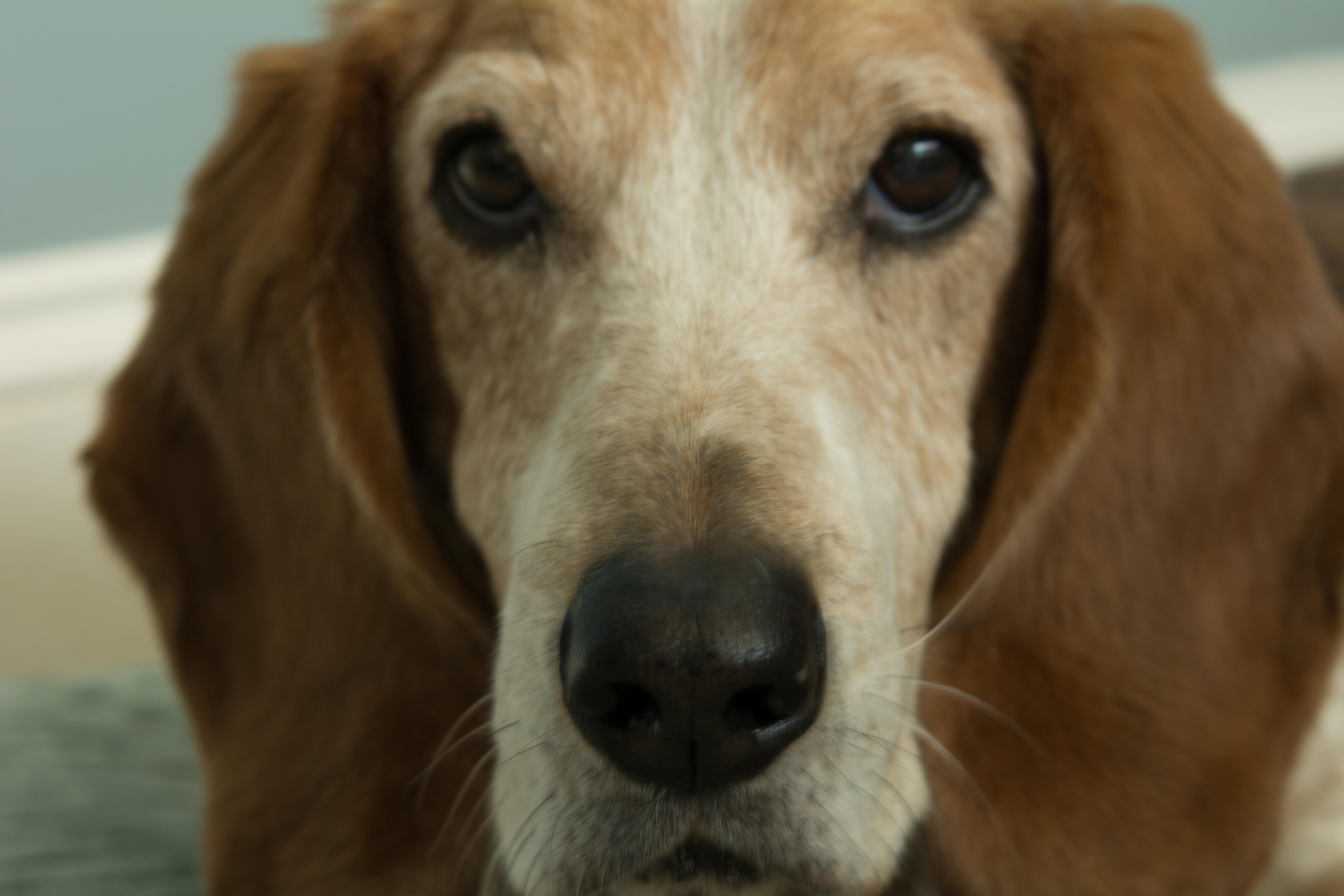
Stuart, our basset/beagle, trotted out to greet me at the door each day when I got home. He’s now twelve, and while still, in my opinion, the world’s greatest dog, he’s not as spry as in days gone by. But he remains a warm, sensitive, supportive little soul. He came around for a pet more than usual this week, nuzzling his snout against my leg, as though he sensed I needed a little extra support.
14 03 08_7545_edited-1

Which I did. Along with the usual daily stresses and strains, I was dealing with an extra load of physical pain from the ski trip to Colorado. My sunburned lip really hurt, which sounds minor, but actually seemed major – my face felt like a giant stinging throbbing lower lip. My left should was tender and bruised from a crash in the trees. So was my right leg, which had the mother of all bruises – a huge area of purple, brown, and yellow, shading to black. The leg bruise worried me a little, because I couldn’t remember a fall that could have caused it. It just appeared. Then came the lump.

On Wednesday morning in the shower I felt a lump the size of a golf ball in the inside part of my leg behind the knee. I immediately thought of my friend who’d recently survived a deep vein thrombosis – that is, a blood clot in a leg vein, which if untreated could have been fatal. He had a battery of tests and emergency surgery, followed by months of blood thinning medication – all complicated, time-consuming, and unpleasant, but he got through OK. I gave him a call and confirmed that my symptoms sounded similar, and quickly called my GP, only to learn he’d recently closed his practice. His answering machine suggested trying an urgent care facility.

At this point I felt sure I was going to have a very bad day involving multiple imaging tests, surgery, and possibly death. The more I thought about it, the more certain I was that this was the end. I’d miss the spring blossoms and butterflies in Raulston Arboretum, the migrating warblers, the Carolina Ballet’s Romeo and Juliet, diving in Dominica, and the new season of Railhawks soccer. I would never taste another one of Sally’s delicious margaritas. Oh woe.

Of course, it turned out to be nothing. An experienced nurse practitioner took a careful look and diagnosed it as either hematoma or lipoma, which would become clearer in a week or two. She was familiar with deep vein thrombosis, which she said would be in a different place on the leg. I felt resurrected! Before me was a good long stretch of the road of life (assuming no freak accidents, major diseases, or other catastrophes).
14 03 08_7563

I had another piano lesson with Olga Kleiankina on Saturday, and as usual, she was inspiring and challenging. I played a famous Brahms waltz (A flat major), a tender and touching thing which I heard on the radio recently and decided to work up. There are no serious technical challenges; the challenge is to make it musical and fresh. Olga’s approach was to work for different tonal colors for each hand. This takes a combination of extremely close listening and subtle muscle control (not just the hands, but even more the arms and back).

I also played Rachmaninoff’s Elegy, a lyrical and tragic piece which I thought sounded good — until she began to disassemble it. It seems I was playing it too much like Debussy, without enough firmness and depth. She was not persuaded that I really understood the structure of the piece, and encouraged me to practice the broken chords as block chords to get it under better control. The journey continues.
14 03 01_7606

I’ve been reading Play It Again, by Alan Rusburger, editor of the Guardian newspaper and an enthusiastic amateur pianist. His book is organized around his quest to learn Chopin’s first ballade (g minor) while at the same time publishing the Wikileaks leaks and performing other journalistic feats. It’s touching that he loves the Chopin piece so much, and I can relate, having also spent a good deal of effort working on it some years back. I was struck by the odd combination of musical sophistication with a certain naiveté. It was clear to me from the first few pages that he taking on a piece that was just too far beyond his capabilities, and was likely to spin his wheels for quite a while. But I admired his pluck, and was glad to learn of others like me who with no hope of gain or worldly honor pour a big part of themselves into this music and tradition.

On Sunday afternoon I went to a concert by the young American violinist Rachel Barton Pine, who was accompanied by Matthew Hagle on the piano. The concert included works by Schubert, Prokofiev, and Franck, and a selection of lullabies that Ms. Pine had collected after having a baby. She was an excellent musician, both poised and passionate, with lovely tone and interesting variety of tone. She also seemed like a friendly, down-to-earth person, to judge from her spoken introductions. She plays a famous violin made by Joseph Guarnerius del Gesu in 1742, which Brahms himself singled out for its beauty. For an encore, she played a funny but fiendishly difficult showpiece which I think she said was by Bezzeti. She tossed off with vigor and charm, earning a standing ovation. Kudos also to Mr. Hagle, who was also an excellent musician, and a sensitive collaborator.

Bluebird skiing in Telluride, a brief briefing, and reading The Second Machine Age

14 02 26_7309
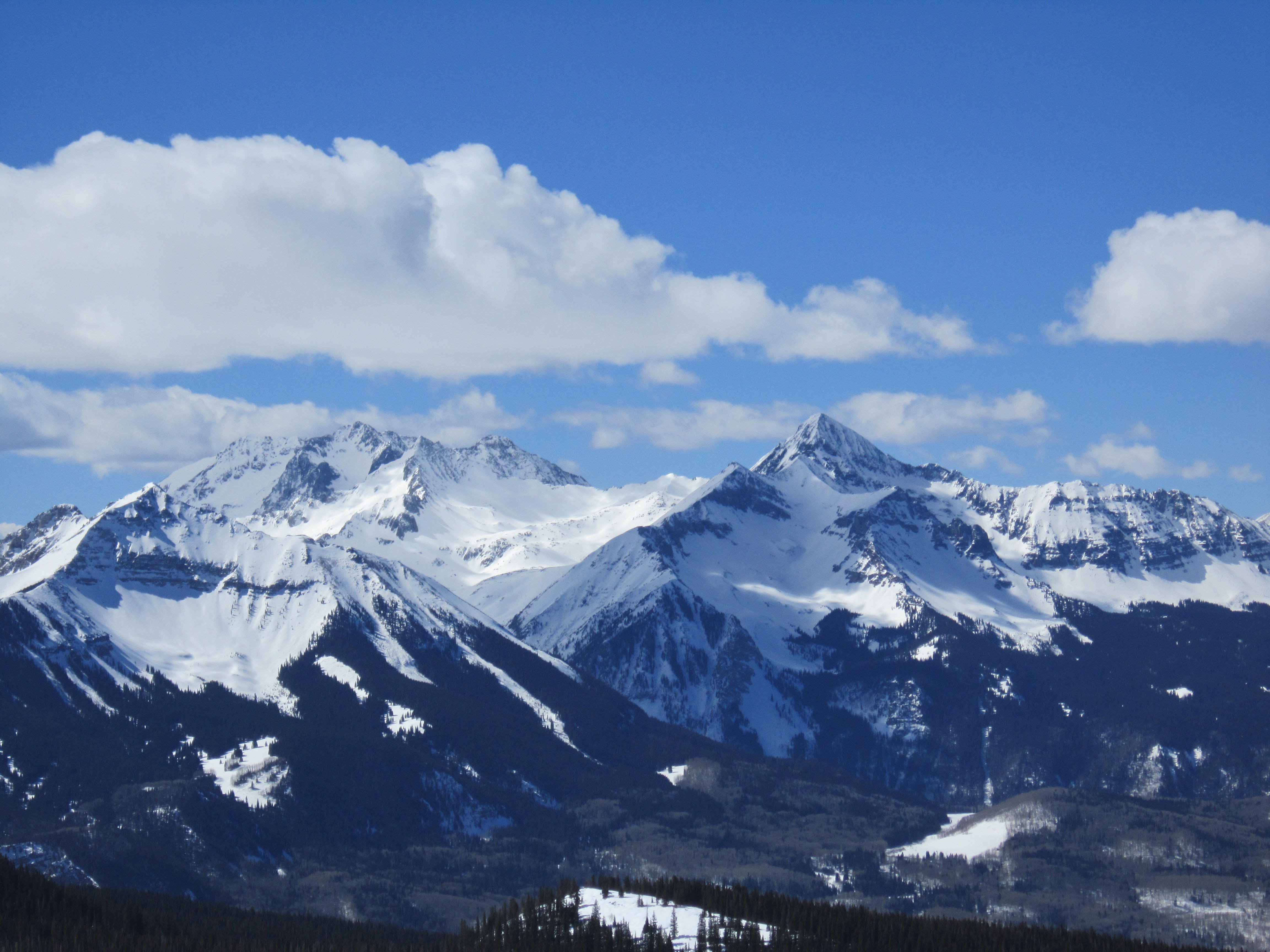
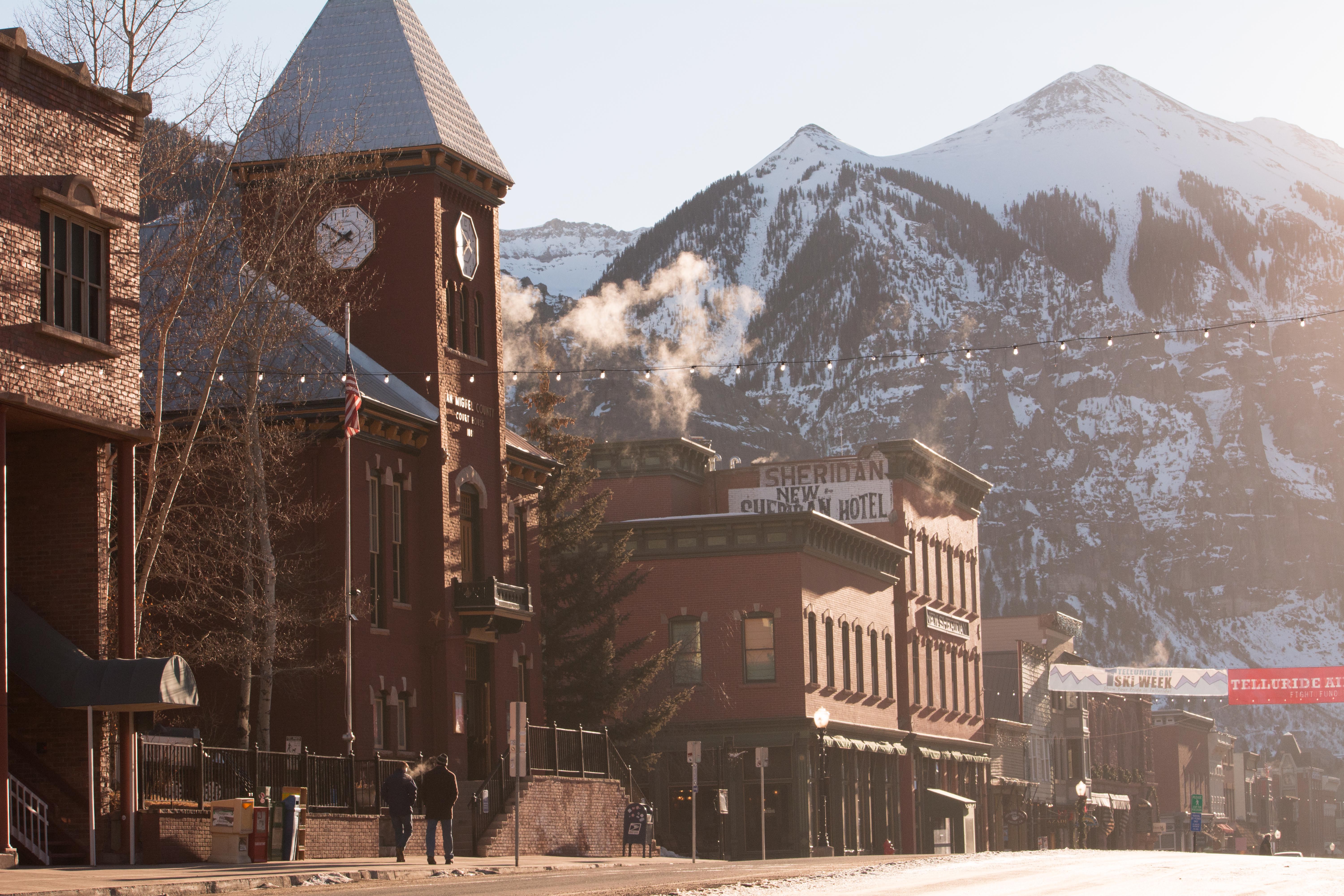
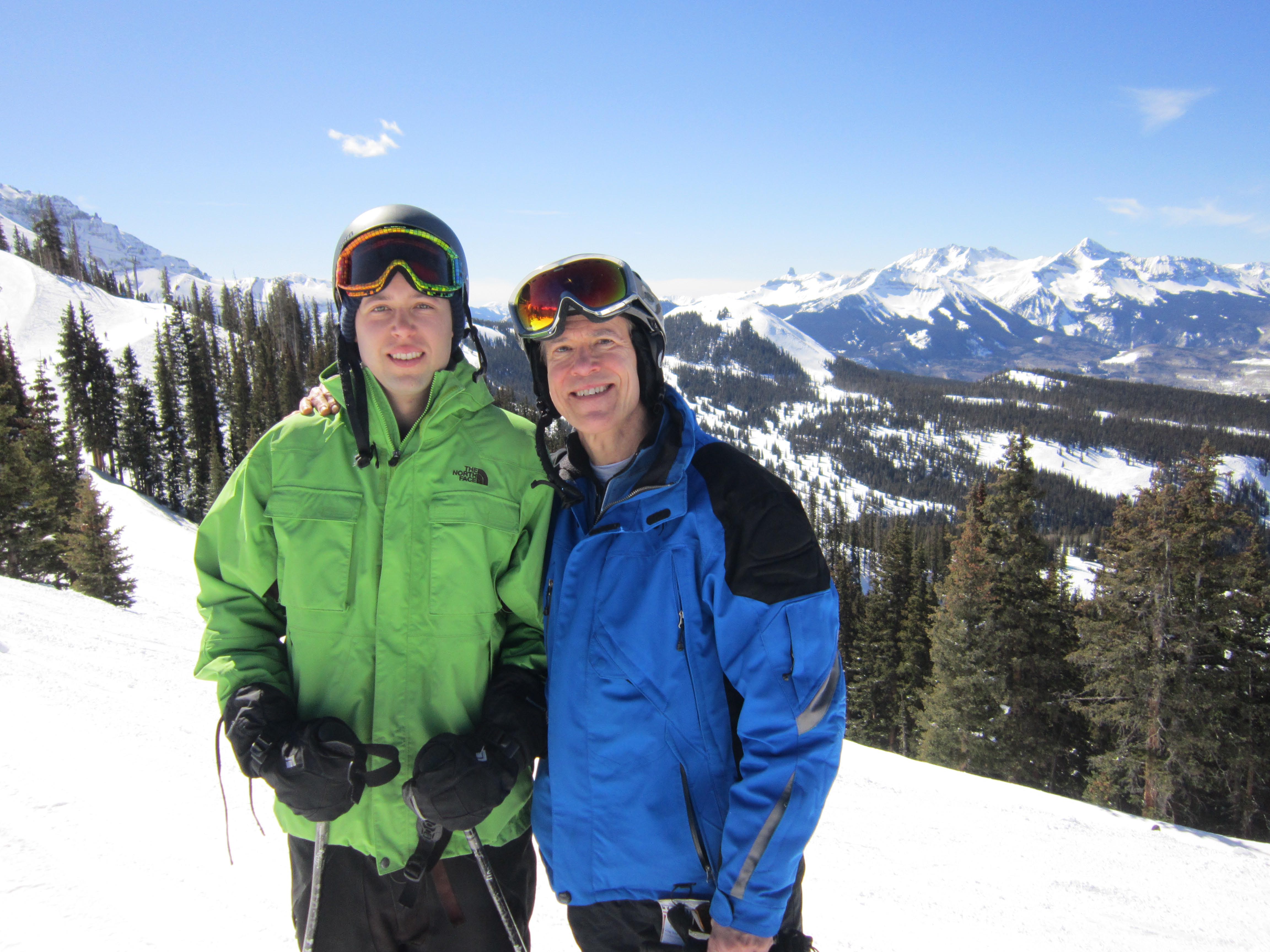
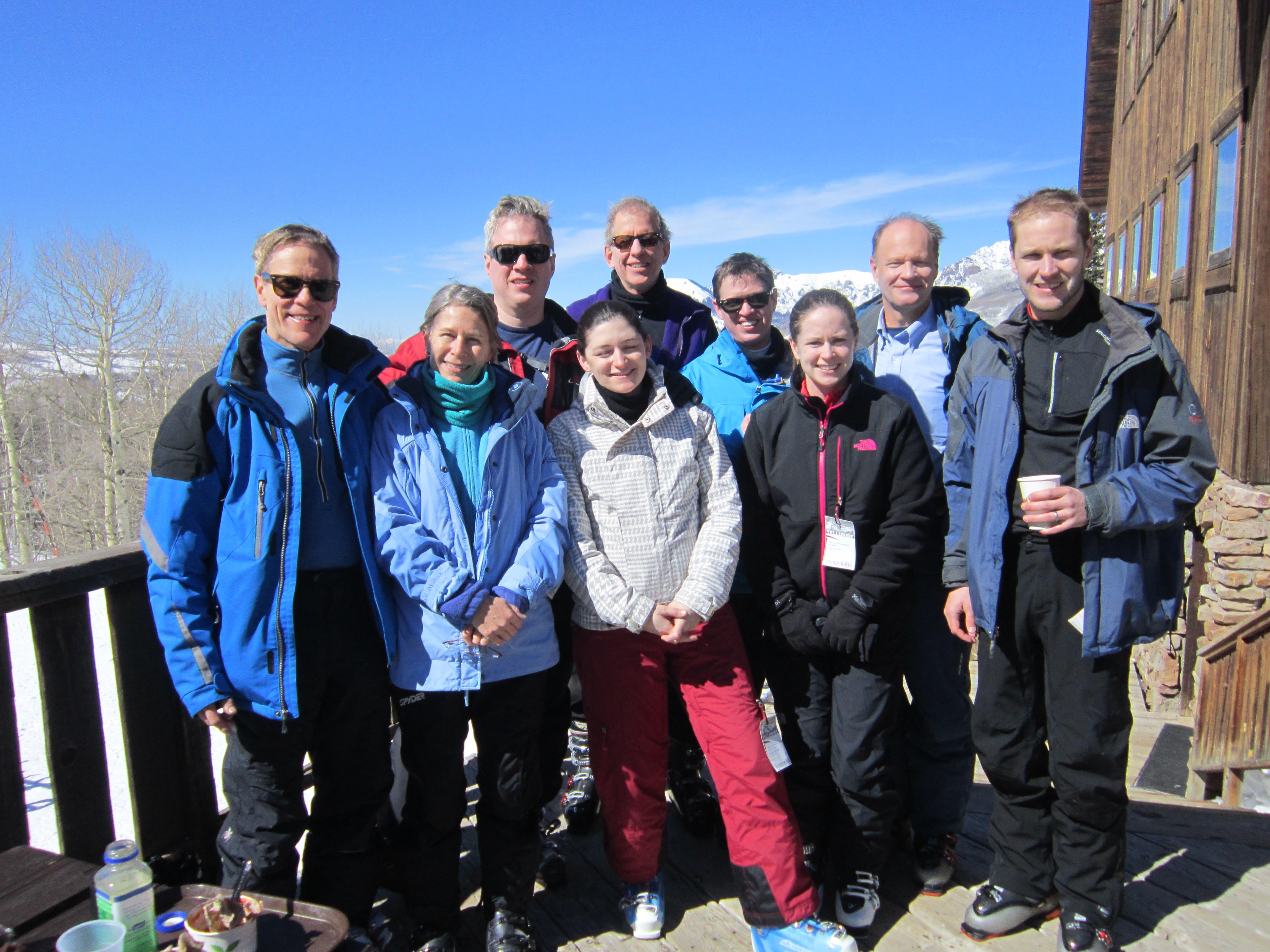
Last week Sally and I joined Gabe and several friends in Telluride, Colorado, for a few days of skiing, eating, and talking. When I describe Telluride, I always mention how beautiful it is, but when I got there, I realized I’d forgotten how massive and magnificent the mountains are. The craggy alpine vistas surround you, regal and timeless. And the town itself has a friendly, unassuming charm. I tried to capture some of these feelings, but was uncomfortable taking my D7100 onto the slopes, and so used my little Canon point-and-shoot up there.
14 02 25_7422_edited-1

Telluride has a lot of challenging terrain, and the question always is, can you handle it? Gabe Tiller has been living here five years, and he can answer that question with a yes. On our first day, he took me down a double black diamond mogul run called spiral stairs, which, once we were committed, he told me was “really steep.” He wasn’t kidding! He also led me into a tree run called Log Pile. These were pressing the outer edge of the envelope for me. Getting through in one piece was a great happiness!
14 02 26_7307
14 02 23_7352

Moguls — aka bumps, or areas of irregular snow that form in steep areas — are terrifying for beginners, frustrating for intermediates, and challenging in varying degrees for those more advanced. If you want to ski the steep wild places, you just need to figure out moguls, and there’s no simple solution. It’s like three-dimensional chess – or make that speed chess. We complimented Gabe on how smooth and strong he looked in the tough mogul runs, and he noted, with admirably humility, that it only took him five years of work.

There is no way I’ll ever reach Gabe’s level, but I got a bit stronger and more stylish this week. I averaged three falls a day, which I take as an indicator that I’m still pushing my limits and improving. I also found new joy in the gladed runs – basically moguls with trees. These require creativity and intense concentration. We did on called Captain Jack’s, which Gabe told me would get “kind of loggy.” Indeed. I had only one scary crash, after I saw Gabe flash by doing hyperspeed turns, and was inspired to give chase. I made the first three turns, but missed the fourth and ran into a tree. I did some minor damage to my left shoulder, but I think it will heal up OK. My worst injury was sunburn on my lips. I got everything except the lips protected with sunblock – a rookie mistake.
14 02 24_7340

Our four ski days were all remarkably clear and sunny, with pleasant ski temperatures in the mid-30s. The snow was generally good – not too hard and not too soft – Goldilocks snow. Of course, it’s always a treat to get fresh light powder, but if it doesn’t happen, I’ll take bluebird days and Goldilocks. We were on the lifts almost as soon as they opened at nine and went at it hard until 3:30 or so. Then hot tub, relaxing, cocktails, and dinner. We particularly enjoyed eating at the Telluride Bistro, Siam, 221, and Hongas.
14 02 25_7312

I had one important work project: an amicus brief in the U.S. Supreme Court in the case of Alice Corp. v. CLS Bank. The case involves a patent concerning financial intermediation, and presents the question of when software is patent eligible under 35 U.S.C. Section 101. I’ve thought about the paradox of software patents for a long time: how a system meant to foster innovation ends up hindering it. I was happy to take on the out-of-ordinary-course assignment of writing the brief myself, but the due date fell in the middle of the ski trip. With hard work, I got most of the writing done before the trip, and while my colleagues took care of cite checking and filing mechanics, I took responsibility for the needless worrying. In the end, I was reasonably happy with the brief, which I hope will help move the debate in the right direction. It can be downloaded here.
14 02 24_7333

For leisure reading, I made it most of the way through Brynjolfsson & McAfee’s new book , The Second Machine Age: Work, Progress, and Prosperity in a Time of Brilliant Technologies. Their subject is how robots and automation are dramatically changing the world. Technology tends to provide more and more extraordinary wealth for the lucky few and the risk of redundancy for the rest. It’s a good introduction to the subject. They explain with clarity and verve why technological change is accelerating, point up examples of the disruptive technologies just starting to take over human work, and play out some of the economic implications.

They seem determined to be optimistic about the future, with examples of how humans and machines can each complement the other. I didn’t think some of their policy prescriptions (e.g. improved education, improve infrastructure, immigration reform, IP reform ) matched up very well with the long-term risks they identified (that is, machines becoming better than humans at almost everything and destroying the labor market). They give some weight to the idea of a guaranteed basic income, which would serve the purpose of preventing mass starvation, but they worry that it might result in dysfunctional communities. The identify employment as a social good, and like the idea of a negative income tax, because it would subsidize and encourage employment. This seems worth thinking about.

A wintry mix, musical Mormons, and Wall Street wolves

14 02 13_7166_edited-1
It started to snow and sleet in Raleigh around noon Wednesday, and Red Hat and many other businesses shut down that afternoon. There were many who got stuck on the road and lost power, but I was able to walk home, which was cozy and warm. The next morning Larisa couldn’t make it to our personal training session, so I worked out in the little gym on our building’s top floor. Just after sunrise, I got some pictures of clouds and ice.
14 02 13_7181_edited-1

It was windy and cold, and the sidewalks were icy, when I walked to work on Thursday. The office was officially closed. It was pleasant to have some uninterrupted time to think, read, and write. I worked on an amicus brief for the Supreme Court concerning a complex legal and social problem, and felt the flow. I’d been scheduled to do a speaking engagement for the NC Bar on Thursday afternoon, but this was cancelled on account of weather, so I could make some good progress on the brief.
14 02 13_7162_edited-1

On Friday we went to see the musical The Book of Mormon in Durham. Diane, my mother-in-law, generously treated us to the seats. I was glad to see the show, which had some good laughs. But the things I thought were good were mostly in the dialog and lyrics. The music was almost willfully unoriginal. At its best, it sounded like a really good commercial for a new Ford. But I will say the soaring anthem, I am a Mormon (and a Mormon just believes) is, however derivative, a truly clever, and sort of moving, hoot.

I expected to feel a little guilty for being complicit in making fun of a minority religion, especially when there are people who I really like and respect who subscribe to it. But the Mormons actually come off as mostly likeable, responsible, and with high ideals, and with the same problems as everybody else. Of course, the doctrine seems bizarre to non-believers. But a lot of the barbs could easily be read as aimed at religion in general.
14 02 13_7222_edited-1

There was an interview with Leonardo DiCaprio in the Saturday NY Times about The Wolf of Wall Street, which we saw last weekend. While I didn’t think it was a movie for the ages, and did think it was too long, I also found myself thinking about it through the week which means it touched something.

The subject matter is the rise and fall of a penny stock boiler room fraudster, and the atmosphere is one of extreme excess – the biggest mansion, biggest yacht, most exotic cars, most beautiful prostitutes, and lots and lots of cocaine. LD is in almost every scene, and holds our interest, as a character with incredible drive and confidence, and an absolute indifference to the plight of the people he’s exploiting. He’s addicted, not only to drugs, but even more to money. He’s sick, but also recognizably human.

I suspected, and the interview tended to confirm, that Scorsese and DiCaprio viewed the penny stock king as emblematic of the more-difficult-to-dramatize Wall Street shenanigans of the mid-2000s leading up to the crash of 2008. Of course, pure stock fraud and financial engineering + speculation aren’t the same thing, but they both run on greed and require similar heedlessness and indifference to others.
14 02 16_7257_edited-1

Cityscapes, intelligent plants, and weight loss work and play

14 02 08_6991_edited-1
I got up a little after 6:00 on Saturday morning to allow time for walking Stuart, feeding him and the cats, breakfast, newspaper, and a little neighborhood photo safari at sunrise before yoga class. I’m still figuring out all the buttons, dials, numbers, icons, and graphs on my Nikon D7100, and experimenting with my new 10-24mm (wideangle) Nikkor lens. Adding to the challenge – wearing gloves. It was overcast, with temperature in the mid-30s.
14 02 09_7111_edited-1

My neighborhood in downtown Raleigh has some stylish, pretty spots, and my usual way of seeing is to pay the most attention to those. But this morning I forcefully looked at older, grittier thing, and their shapes, patterns, and textures. I always enjoy construction sites, where you can see the innards of a building-to-be, but it was interesting looking at the opposite – destruction sites, and places where humans had run out of money or just don’t care anymore how things look. In those places, there’s nature: plants competing with concrete, pushing into cracks and crevices, revealing and exploiting areas that humans neglect.
14 02 08_7015

I read an interesting article this week by Michael Pollan on recent research into plant biology, and specifically neurobiology – how plants sense their environment and exchange information. Plant biologists are sharply divided on whether to call these abilities intelligence. Some scientists insist there cannot be intelligence unless there’s a brain, while others define it in terms of the ability to solve problems, which plants can do. But there seems to be general agreement that plants have some remarkable perceptual abilities.

Pollan describes plants’ “unique existential predicament as their being rooted to the ground and therefore unable to pick up and move when they need something or conditions turn unfavorable. The ‘sessile life style,’ as plant biologists term it, calls for an extensive and nuanced understanding of one’s immediate environment, since the plant has to find everything it needs, and has to defend itself, while remaining fixed in place. A highly developed sensory apparatus is required to locate food and identify threats. Plants have evolved between fifteen and twenty distinct senses, including analogues of our five . . . .”

Plants have also developed some remarkable chemical methods of defending against marauding insects and communicating with others of their species regarding threats and food opportunities, and even recruiting other species to perform services. One researcher estimated that a plant has three thousand chemicals in its vocabulary. Researchers have also found examples of plant learning and memory. Most plant behavior is either invisible or happens too slowly for humans to perceive, but time-lapse photography is opening new windows.
14 02 08_6989_edited-1

One of the challenges of this research is the ethical implications. One scientist, Stefano Mancuso of the University of Florence, argues that “because plants are sensitive and intelligent beings, we are obliged to treat them with some degree of respect. That means protecting their habitats from destruction and avoiding practices such as genetic manipulation, growing plants in monocultures, and training them in bonsai.” Mancuso doesn’t go so far as to avoid eating them. He contends they have evolved to be eaten, which accounts for their modular structure and lack of irreplaceable organs.

Most of this research was news to me, but I didn’t find it hard to believe that plants have extraordinary abilities, or that humans might find this hard to accept. Some people have the same problem dealing with the existence of (non-human) animal intelligence. I guess it’s insecurity. To me, learning about and appreciating the abilities of other species of life makes the world that much more amazing.
14 02 09_7129_edited-1

In health news, I’m happy to say I finally got back to my fighting weight of 155 lbs this week (that’s a BMI of 22), after gaining 5 during our Xmas holiday travels. It is certainly harder to take them off than to put them on. I did it by working more interval training into my workouts, like jumping rope or rowing as part of a weight circuit, and lengthening my longer cardio work (elliptical, stairs, and such) from 30 to 40 minutes. Also, of course, eating sensible portions of healthy things (fruit, vegetables, legumes, and whole grains).

I also am grateful to my health and fitness guides, especially Larisa Lotz, who meets me each Thursday at 5:30 a.m. at Studio Revolution with several mind and body surprises. This week, for example, her latest workout creation had me lunging and twisting, slamming down a heavy medicine ball, squatting with a sandbag, old school dead lifts, rowing with kettle bells in plank position, and fast agility movements through a rope ladder, among several other aerobic and anaerobic activities. She didn’t have a new balance activity this week, but she’s got me working on several, including balancing on my knees on an exercise ball.

This week I also tried a new morning exercise class at O2 Fitness called Chisel. I’ve been enjoying/enduring the spinning class there on Fridays with Jenn, who is funny, inspiring, and relentless, and she told me I should give it a try. I hadn’t previously done gym classes other than spinning, in part because I’ve got plenty of other things I like to do, but also in part because of shyness – a little bit of fear of the unknown, of confusion and possible embarrassment.

But with Jenn’s encouragement, I showed up last Monday. She was, as usual tough and inspiring, and funny. The hour-long class involved a background of driving dance club music and foreground of intense intervals both with and without dumbbells. Hardest for me were the jumping lunges. I found it very sweat inducing, and after hanging on for dear life, I felt great afterwards – an endorphin surge.

On Saturday morning as usual I went to Blue Lotus Yoga for Yvonne Cropp’s open level Vinyasa class. This weekend is Blueversary – the seventh birthday for the studio – which made me particularly conscious of how grateful I am that it’s there. There were several new people in the class, which may have accounted for Yvonne’s keeping things relatively low-keyed, well within normal yoga conventions. It was good, as always, to really stretch and to breathe together with the class. Afterwards, there was a drawing for special prizes, and I won one – a basket with lavender-scented soap and such. I didn’t really need the lavender, but still, I felt lucky.

Picturing light snow, and thinking about privacy and our digital selves

14 01 29_6909
It snowed in Raleigh this week, which was kind of exciting and kind of annoying. I love the transformative quality of snow – all that clean white soft quietness. But moving about in a normal human way becomes difficult. When I tried to drive rear-wheel-drive Clara to work, we got stuck as soon as I cleared the door of the apartment building garage. Unable to get up the modest slope, we managed to back down to a lucky parking space, and I walked the mile or so into work – in 18 degree cold. Burrr!
14 01 29_6916-1

On the way, I used my new camera, a Nikon D7100 with a Nikkor 10-24mm lens, to get a few images of my snowy neighborhood. I forgot to adjust the ISO, which I’d previously set at 800, but it didn’t seem to cause noise problems. I’ve been reading a book titled Mastering the Nikon D7100, which sounds very boring, but doesn’t seem so at all – which suggests I’m becoming a photo nerd. Oh well. There really is a lot to learn about this camera, but it can do so much! It sounds a little weird, but I’m feeling warmly towards it – almost like a new friend.
14 01 29_6919_edited-1

Speaking of digital devices and friends, there was a lively essay by Colin Koopman in the NY Times this week about why we’re struggling so to grasp the nature of the problem with the NSA’s increasing intrusiveness into our lives. Koopman proposes that we should start viewing ourselves more as data (“info persons”). It is, after all, the way we’re viewed by our internet service providers (Google, Bing, Facebook,LinkedIn, Twitter, Amazon, eBay, Opentable, Angry Birds, etc. etc.).

Koopman proposes a simple thought experiment: imagine what would happen if all our digital data, from social security numbers to credit card accounts, medical records, school records, bank records, insurance records, search queries, book preferences, food preferences, porn preferences, avatars, Instagrams, Tweats, and posts – suddenly disappeared. Try it.
When I did, my stomach did a quick shimmy and I felt a bit of vertigo.

His point, I think, is that we have trouble grasping the privacy issue posed by mass electronic surveillance, because we have trouble grasping how our digital technology has transformed us, changed what a human being is. Our digital selves are an increasingly integral part of the human fabric. Because we still don’t quite get how they relate to the pre-digital revolution part of our lives, we tend to not notice them or downplay their significance.

But advertisers and spys have realized that, from another point of view, the digital self is a high value target, enabling the intruder to predict with a high degree of accuracy what we will buy on Amazon and view of Netflix tonight and do with ourselves tomorrow. The new Age of Information is transforming commerce and law enforcement, but it we haven’t evolved political or legal tools to address it.

Our privacy is closely related to our dignity, and to community. We all have imperfections or oddities that we prefer to keep concealed. They may be physical flaws, financial limitations, unusual appetites, or unpopular ideas. Our ability to maintain self-respect and to live in cooperative groups depends on a tacit mutual agreement to respect boundaries for these differences, and to not insist that they be exposed.

We didn’t realize until recently that just by using the new normal tools of communication and commerce, we had opened the door on our private selves. Once we know that our health problems, financial problems, sexual proclivities, and other traits are within view of strangers, we feel diminished and alienated. This is why, even leaving aside the risk of tyranny, data privacy matters.

Speaking of technology and transformation, on Friday we had a nice dinner at Capital Club 16 (an eclectic and vegetarian-friendly place) and went over to Mission Valley to see Her, starring Joaquin Phoenix, the voice of Scarlett Johansson, and the wonderful Amy Adams. It’s about a new sort of digital assistant app that is so human that humans fall in love with it – and it with them.

The premise didn’t seem farfetched to me. I thought it was touching and unsettling, though kind of slow toward the end. The next day I was still thinking about the themes: how prone to loneliness we are, how desperate to connect, how ecstatic in love, how despondent in loss, how changeable, and also how resilient.
14 01 29_6925_edited-1

Birds of paradise, Dvorak, and Puccini

On Saturday afternoon I walked over to the N.C. Museum of Natural Sciences to see the Birds of Paradise exhibit. I loved it! It was about the exotic and colorful species that live mostly in the rainforests of New Guinea and Australia. There were sections on early European encounters with the birds and the efforts of trailblazing naturalists, but the heart of the exhibit was gorgeous recent photos and videos by Tim Laman, who worked in partnership with ornithologist Edwin Scholes.

In 2004, these two brave souls undertook to document all 39 species of birds of paradise. This required numerous expeditions through dense forests and up into the mountains. Some of the species do their amazing displays in the treetops, so documenting them required building blinds high up in trees and sitting there for days at a time. Getting to the sites and getting the shots sounded more like the first ascent of Everest than a bird walk. This was high adventure. There’s a good web site about their work here. For an aspiring nature photographer, it was really inspiring.

And the birds are amazing! Some have iridescent colors, and others have wire like structures coming out of their tails. Some can transform their shapes into modernist sculptures. Their mating displays are hugely dramatic. It made me feel privileged to live on planet earth, where remarkable adventures are still possible, and such amazing creatures still exist.

We went to the N.C. Symphony that night, and heard Dvorak’s 7th Symphony. The orchestra was led by guest conductor Christian Knapp. Described in the program as “one of today’s foremost young conductor’s,” he seemed a bit shy and eccentric when he first appeared, and his gestural style seemed quirky and unathletic.

But he could play the orchestra! By that I mean, the orchestra was his instrument. He had a strong artistic vision, and the will to shape the music. His rhythmic flexibility was a welcome change from Grant Llewellan’s typically more foursquare approach. As Olga, my piano teacher, observed recently, the music is supposed to be interesting, not boring, and to make it interesting we have to find rhythmic solutions that go beyond the metronome.

On Sunday morning it was too chilly for golf. I took some pictures with my new wide angle lens, then went to O2 Fitness for a two-hour workout. I had success with my handstand (on the eleventh attempt)! I was focusing on doing a good variety of functional movements along with a lot of cardio: jumping rope, rowing, running, stairs, and elliptical. My average heart rate over the two hours was 135, with a high of 161, and I burned 1537 calories.

We had tickets to the Sunday afternoon performance by the N.C. Opera of Puccini’s La Boheme. I was planning to go mainly to give our local musicians some moral support, and wasn’t especially looking forward to it. In the past, I’ve found Puccini not quite to my taste – overly lush, with big, obvious emotions, and not much subtlety. But I also recognized that his music is dense and complex, and thought I might get him better if I listened more.

I’m so glad I didn’t skip it. This was a visually and musically spectacular production that was satisfying on every level. The sets by Peter Dean Beck were highly evocative (a long step up from NCO’s usual standard). The costumes were expressive and lively. The orchestra was a group of experienced professionals who sounded great. Guest conductor Robert Moody seemed to have a good feel for the music and good rapport with the singers.

The leads were all good, and tenor Eric Barry as Rodolfo was terrific. He did his big arias with great sensitivity and feeling, but he also had a sweet, funny presence, and good chemistry with his Mimi, Angela Fout. I enjoyed her singing, too, which I didn’t find quite as technically satisfying, but did find very expressive. Baritone Troy Cook as Marcello was also a fine singer and good actor. The chorus sounded good, the children’s chorus sounded good, and even the marching band sounded good. The crowd scenes were wonderfully staged – very lively. The English subtitles, projected above the stage, were also well done.

But the really amazing thing was how all these performers and technicians came together, melding into something that was, for 2:40, a complete world. This is the magic of opera. I really was drawn into Puccini’s vision of 1840s Paris and sweet, romantic, artistic Bohemians, and I cared about those dreamers. I got quite misty when poor Mimi died. It was a complete, powerful experience.

Skiing in Virginia, and considering, has the NSA ended privacy as we know it?

My nephews Josh and Adam, humoring me with a short pause on Sunday

My nephews Josh and Adam, humoring me with a short pause on Sunday

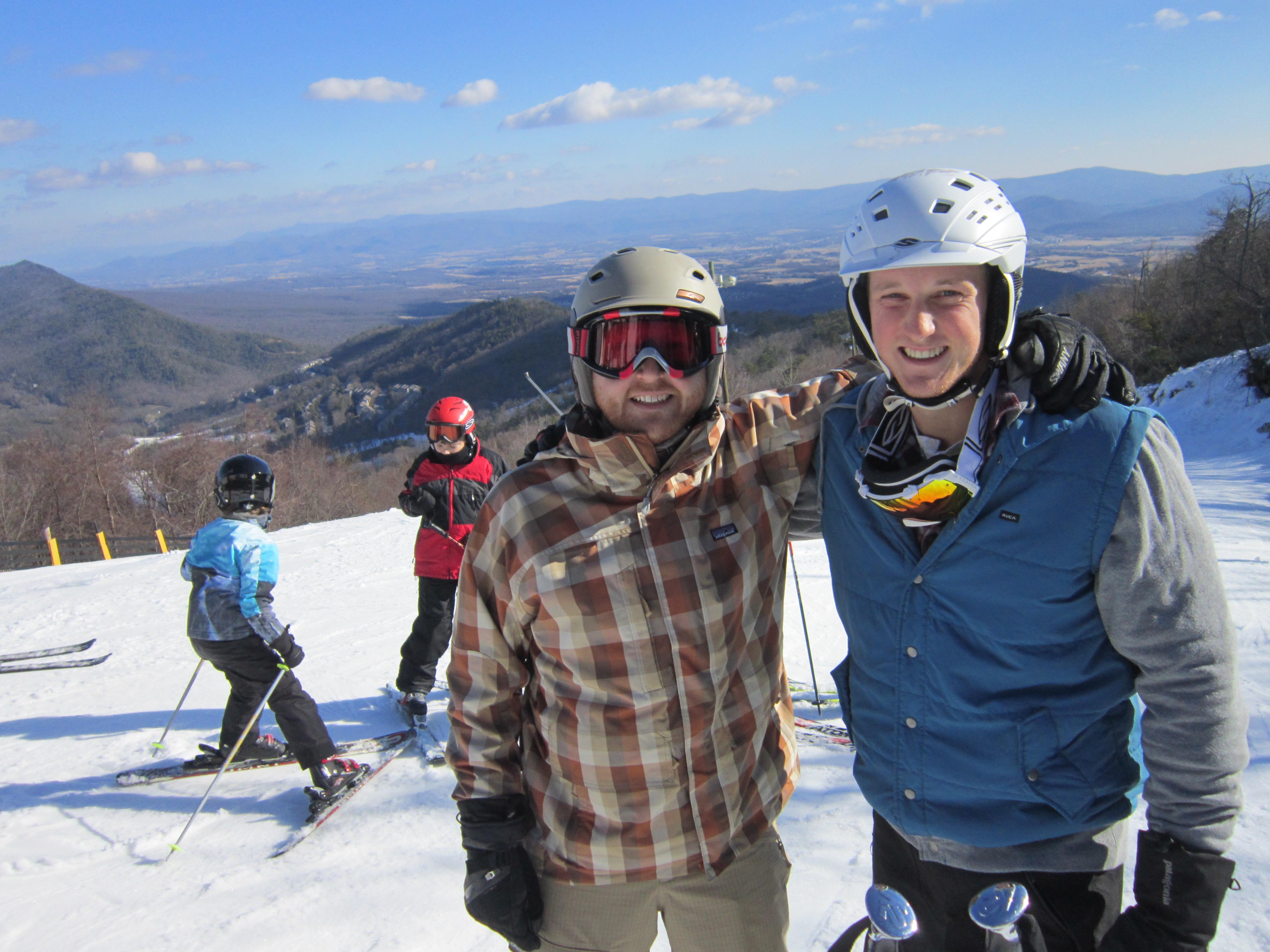
Last weekend I went skiing at Massanutten Resort, near Harrisonburg,l Virginia. I thought it would be good to see my brother and nephews, and have a little ski tune up before our Colorado trip in February. The drive up on Friday night was five and a half hours through fog and rain, and the ski conditions were far from optimal, but it was still well worth it.

On Saturday the weather report was for rain, and it did rain a bit, but the snow was pretty good. It was fun skiing with my nephews, both in their twenties and fast. They decided at lunch time to go to the movies, but my brother had ski patrol duty, and I decided to keep skiing with him on the advanced slope (number 6).

He had to leave for a period, and it got very foggy, with perhaps 50 feet of visibility. It rained a little. On the first run on my own, I noted that I didn’t see a single skier on the mountain. The same was true on the second, third – and fifth. It was the better part of an hour before a few other hardy souls ventured out.

Despite the fog, I enjoyed the skiing. I focused on sensing more of the ski edges, and making smooth, graceful turns. And I enjoyed the solitude of the trips up the mountain in the chair lift.

It occurred to later, though, that my smartphone was still sending out signals of my movements. My perception of privacy has been changing with the Snowden revelations, and I suspect I’m not alone. (LOL) Is it real so bad? I think it is, and have a concrete example.

A few weeks back, I wrote an email letter to the President. The gist of it was to commend him for commuting the sentences of some non-violent drug offenders, and to recommend that he expand that effort to help more of the thousands serving lengthy prison terms for minor drug crimes. As I prepared to send the email, I paused, thinking that this communication could easily mean a new NSA or other agency file would be opened on me, with unpredictable consequences.

Paranoid? Maybe. I sent the email anyway. But I expect that many citizens, now knowing how easily they can be monitored and how committed the spy bureaucracy is to expansive monitoring, might decide that expressing a political view just isn’t worth the risk of becoming a target.

There was a good piece in the New Yorker of a few weeks back by Ryan Lizza on the history of the NSA’s domestic metadata collection program, including efforts to establish a legal basis for it. It wasn’t surprising that a spy agency would tend to conceal its work, but it was surprising that agency representatives repeatedly lied to Congress and the FISA (special secret programs) court.

It raises the question, is this agency unconstrained by law? I expect most people involved in massive electronic surveillance are patriotic and well-intentioned, and not personally seeking world domination. But what if an agency with effectively unlimited resources and powers came within the control of a megalomaniac sociopath?Impossible? Remember J. Edgar Hoover?

If we’re lucky, we won’t become a police state in the Big Brother sense. But just knowing we’re subject to constant surveillance will probably change us. The interesting question is how much.

If the government forbade curtains on windows, we’d quit doing certain things within sight lines of the street. Maybe, without much discussion, we’ll get more guarded or stop discussing controversial topics using our electronic devices. Once that habit develops, it could extend to our face-to-face exchanges, or even our interior monologues. It wouldn’t happen all at once, but little by little. We might not even notice the change.

The justification for the government’s massive technology surveillance programs, of course, is prevention of terrorism. It’s hard to argue with that, since anything that grows the database of human activity could also increase information about terrorism. But is it possible that we’ve gone a little overboard with this fear-of-terrorism thing? Does it remind you a little of people preparing to end the world as we know with a nuclear conflagration it to prevent a takeover by communism?

There was a very interesting piece in Slate last week on the national hysteria over alleged sexual abuse and Satanic rituals in preschools back in the 80s. There were several of these cases in which little children testified that their preschool teachers molested them and also engaged in ritual murders and other bizarre and horrifying conduct.

Based almost exclusively on the testimony of the children, juries sent a number of these teachers to jail for lengthy terms. It slowly emerged that the abuse stories were fabrications produced by so-called therapists who essentially planted false memories in the children’s heads. Most of the teacher-victims eventually were freed.

In retrospect, the children’s stories seem way too bizarre to be believed – yet most of us believed. It’s a reminder of how our powers of reason and critical thinking are limited, and how they can be overwhelmed and defeated by sensational media and groupthink.

P.S. Needless to say, I paused again before publishing this post. But I think the danger of silence and retreat from dialog is even greater than the danger of surveillance run amok.