The Casual Blog

Category: Uncategorized

Getting through spine surgery and the impeachment trial

Get well flowers

It’s been an eventful week.  I had to get through both spine surgery and the Trump impeachment trial, and by golly, I did!  These photos show my get well flowers from Jocelyn and Kyle, which smell wonderful.  Here’s what happened.  

Last Wednesday at 5:15 a.m., I checked into Rex UNC hospital for an operation on the upper part of my spine called a cervical discectomy.  My neurosurgeon, Dr. Koeleveld, had determined that the disc between vertebrae C3 and C4 was deteriorated and pressing on the adjacent spinal nerves, and thought this explained the persistent tingling in my hands.  His proposed solution was basically to remove the damaged disc and bolt in a replacement.  

Dr. K was kind, smart, and very experienced, but even so, I  considered the possibility that he was mistaken, or that something completely unexpected could go wrong in surgery and make me a lot worse.  After learning what I could about the relevant biology and technology, I still wasn’t sure I knew the right answer.  But I had a reasonable basis for trusting the doc.  On the theory that that’s about the best you can do, trusting is what I did.

Of course, I was completely unconscious during the actual surgery, but I was groggily conscious not long afterwards.  The nurses and aides were cheerful, kind, and competent.  Dr. K said the operation had gone beautifully, but he wanted me to stay overnight in the hospital for observation.

I had a room to myself with a lot of machines and a painting of a flower.  My bed had lots of buttons to control the position and call for help, and it automatically adjusted when I moved one way or another.  There was also a TV.

It was about as good a day as possible to be stuck in a hospital room — cold and gloomy outside, and with some absorbing reality TV:  the historic second impeachment proceeding against Donald J. Trump, the disgraced former President (DFP).  Watching the  footage of the invasion of the Capitol gave me a new perspective on last January 6th.  At the time, I’d wondered why the Capitol police and others didn’t seem to be putting up much of a defense, but I learned that inside the building, they were plenty busy.  It looked like the battle scenes in Braveheart or Gangs of New York.  Kudos to those brave officers who protected lawmakers and showed remarkable restraint.  If they had not, and had instead used their firearms, there would have been many more deaths.

As a former lawyer, as I watched the video and listened to the lawyers’ explanations, I kept thinking of how the case was being presented, and whether I would have done it differently.  I thought the House Managers’ team was amazingly good — clear, concise, and powerful.  After years of Trump’s craziness and chaos, I was reassured that such competent and caring people were now helping lead our country.  

The DFP’s lawyers were like him:  loud, smug,  disorganized, angry, and apparently shameless.  They showed no hesitation in lying, even when it was completely obvious they were lying.  

As odious as the ex-President’s lawyer’s were, they raised a couple of interesting points.  As part of their hand waving attempts to distract from what the DFP had done, they showed a video montage of Democrats who had said things like “We’ve got to fight.”  Although it was obvious that the DFP’s statements about fighting were in quite a different context and led to serious violence, it was interesting to see how the same words could mean entirely different things.

In recent months I’ve been doing some reading on structuralism and deconstruction, and getting new insights into how language works and how it doesn’t.  The ambiguity of language is, it seems, an inherent property.  We may think we all know what we mean when we talk about fighting, but we actually mean many different things at different times.  If we keep talking, and observing each other’s activities in relation to the words, the degree of ambiguity may lessen, though it probably never disappears.

The DFP’s lawyers also argued that under the Constitution, only current, and not past, presidents could be impeached.  Although the great weight of scholarly opinion goes against this argument, I still thought it had some force.  If the lawyers hadn’t covered it up with layers of bogus arguments and slimey lies, it would have been easier to swallow.

In a way, I hoped that the DFP’s lawyers could give Senate Republicans a reasonable basis to vote for acquittal, which it appeared from the outset they were determined to do.  It’s depressing to think that most of the most powerful Republican politicians in the country are still in thrall to Donald J. Trump and his base.  Whatever their motives (probably including fear, opportunism, and tribalism), it is hard to understand their countenancing a deadly attack on Congress, including on themselves.  

Anyhow, we all owe a debt of gratitude to the House Managers and to the Senate majority who voted to convict the DFP, including seven brave Republicans.  Trump’s shameful betrayal of his office and our country is now clear beyond any reasonable doubt and a matter of public record.  With any luck, any future Trump headlines will be about his business failures and criminal liability.  Perhaps this will be the beginning of the end of our Trump political fiasco, and the start of a saner, more compassionate chapter for addressing our big challenges.

Last night we saw Time, a new documentary on Prime.  It’s about a Black family in which the father is in prison and the mother is determined to get him out.  It’s an intimate and moving story of strength and heroism that opened a new window on the tragedy of our mass incarceration system.  We liked it a lot.  

A few reasons to quit being a Trumpublican

President Biden has certainly hit the ground running, with executive orders and actions addressing aspects of some of our biggest problems, including the covid pandemic, climate change, racism, xenophobia, LGBTQ discrimination, a stagnant economy, inadequate health care, right wing terrorism, and the nuclear precipice.  His cabinet and other new top officials appear to be experienced and sensible.  There are good reasons to be hopeful, and I’m trying to be.

But I’m still very worried.  Lately, and especially since the January 6 attack on the Capitol, our democracy  has been looking as fragile it’s ever been, and it’s still under threat.  A significant part of the country continues to believe the despicable lie that the election was a fraud.  Shockingly, despite strong evidence that Trump and his cronies supported the insurrection, Republican leaders continue to support the ex-President.  


The hostile takeover of the Republican Party by Trump seems a fait accompli.  If Trump should go to his reward, Cruz, Hawley, or someone even slimier will race to step into his role.  There are still some traditional Republicans who aren’t happy about what has happened, but very few of them have found the necessary courage and gumption for opposition.  

But for traditional Republicans who still care about our country and are considering whether to leave the Trumpublican party, I would ask, what’s keeping you?  I understand you want to weigh the pros and cons of leaving.  And of course there are some cons, like parting ways with old comrades-in-arms and the risk of becoming a target of deranged right-wing hate groups.  But let me suggest some of the pros.

Patriotism.  If we don’t give way to Trumpism, we may yet work together to realize and sustain our finest traditional ideals, including free and fair elections, the rule of law, equality of opportunity, checks and balances, freedom of expression and of the press, and peaceful transfers of power.

Honesty.  Trump took corruption in government from an occasional lapse to standard operating procedure.  He constantly lied about everything, as did many of his cronies.  It was dirty.  Wouldn’t it feel good to get cleaned up?  

Decency.  Scapegoating disadvantaged minorities and whipping up fear of foreigners was once considered something no decent person would do. Actually, it still is.

Reason.  Trumpism made considerable headway in obliterating the distinction between reality and fantasy, but reality isn’t going away.  It’s reminding us of this in various ways, including the ongoing deadly pandemic, melting glaciers and rising sea levels, and species going extinct.  Denying science when it doesn’t fit with our fantasies has made a bad situation worse.  See also Honesty, supra.     

Personal safety.  There are many things that seriously threaten our safety that are beyond our personal control, from collapsing dams and bridges to the possibility of nuclear war.  In the old days, we counted on our government to mitigate such threats, rather than to ignore or increase them.  Wouldn’t it be great to go back to those good old days?    

Future generations.  We owe much to our forebears, without whom we wouldn’t be here.  Hopes for the happiness of our children, our grandchildren, and their successors are part of what gives meaning to our lives.  The earth that has given us so much is in serious peril, which puts at risk the lives of our successors.  We could choose to make it worse.  Or better.   

Compassion.  While concern for those less fortunate used to mean giving a helping hand, under Trump it meant figuring out how to make them more miserable.  But apart from Trump himself, most of us feel badly when we’re aware of people who are hungry, sick, or otherwise suffering, and wish we could do something.  We used to look to government to help in such situations.  We still can.

Self respect. This one is self explanatory.

Making history, as Trump goes bye bye

So we can scratch one major problem off the list:  Trump is history!  He left much as he arrived, as offensively as possible.  But fortunately, we’re still here, in one piece.  He left us with a lot of problems, some of which he made bigger.  But the day after our new president was sworn in, when I woke up, something felt different.  I thought at first it was just relief, and then I realized there was something else — hope.   

It was entirely in character that on their way out, Trump’s people pushed out a fake history effort they called The 1776 Project.  Their idea seems to have been to counter The 1619 Project , a NY Times series that shined light on our long history of slavery and how that affects us today.  According to news reports, The 1776 Project attempted to downplay slavery and compared progressives to fascists.  

I had read The 1619 Project with great interest, and I braced myself to read The 1776 Project.  However, President Biden, in his first day, took the thing down from the White House web site.  Now (as opposed to earlier in the week) you could say, it’s history.  

Rewriting history in an attempt to inculcate patriotism and discourage critical thought is nothing new.  As Trump’s failed 1776 Project shows, the whitewashing project continues, though less and less convincingly.  

If you’re historically inclined, I recommend Lies My Teacher Told Me, by James Loewen, which I recently reread.  Loewen spent several years analyzing widely used American history textbooks, and discovered that most of what our children are taught consists of heroic myths, scrubbed of difficult truths.  He gives several major examples, including Columbus, African enslaved people, and Native Americans, showing that most of us were taught a version of American history that had little to do with the facts.  He also shows that reality-based history, though sometimes painful, is far from boring.  

The storming of the Capitol by Trump supporters attempting to overturn the election is a strong reminder that there’s still a lot we need to figure out about our history and the new brand of right-wing fanaticism.  Some of the fanatical elements are familiar, like extreme racism, fascination with gun violence, and paranoia.  Even the bizarre conspiracy theories, like QAnon, are not entirely new.  But the coordinated involvement of lots of seemingly ordinary people in creating such violent conspiracy ideas is something we haven’t seen before.        

We already knew, from the mass-murdering authoritarians of the 20th century, headed up by Hitler, Stalin, and Mao, that brute force propaganda works.  Repeating false information over and over is effective, in the sense that it changes people’s beliefs, or in the alternative makes them understand they must keep quiet.  

These old time propaganda efforts were top down criminal projects. But the new thing is at least in part bottom up — DIY propaganda.  We’re seeing that there are large populations that not only won’t resist government lies — they’ll voluntarily and happily join in inventing them.  

Not long ago, we might have thought that almost no one would voluntarily sit in front of a screen for long periods to receive, embroider, and pass along right-wing falsehoods.  But it turns out that millions do, apparently happily.  With easy-to-use social media tools like Facebook, Twitter, and Parler, some of these millions become participants of what may feel to them like a computer game, book club, or craft project.  As they play, they garner likes and thumbs up, and feel like they’re part of a community. Gradually they disconnect from ordinary reality.  

We’ve arrived at a surreal moment with well over half of the once conservative Republican Party believing that voter fraud by Democrats wrongfully deprived Trump of victory.  News flash: this is a breathtakingly groundless lie.  This “conservative” group is the breeding ground for a smaller subgroup that believes that it is reasonable to defy such an “illegitimate” government with violent opposition.  The percentage of this subgroup prepared to act on such beliefs is still to be determined.  

A key part of the new rightwing alt-reality is that Democrats want to impose a dangerous alien ideology — socialism, or some other ism — that will destroy the American way of life.  This, too, is a groundless delusion.  It may be that the new administration’s calmer, gentler tone and practical public-spirited agenda will defuse some of this paranoia, and help some of these people return to ordinary reality.  

Let us hope so.  If their extreme fantasies and fears lead them to real violence, we will face another threat to our democratic aspirations — how to address radical right terrorism without unnecessary violence and without devolving into a surveillance-heavy police state.   

Trying to understand more about how human minds work is always interesting, and just now it seems time sensitive.  Along this line, I recommend Lisa Feldman Barrett’s short and fascinating new book, Seven and a Half Lessons About the Brain, which I just read for the second time.   Barrett, a neuroscientist at Northeastern University, summarizes recent research and presents some useful new ways of thinking about ourselves.  

For example, she argues convincingly that the primary function of the brain is energy management, rather than conscious thinking.  Behind the scenes, our brains keep the various  body systems running — heart pumping, lungs breathing, monitoring and attacking invading bacteria and viruses, and much else.  Whether to eat, sleep, or debate politics all depends on the brain exercising its professional judgment on resource management in processes we usually don’t perceive.

Barrett also shows that  what is happening when we’re perceiving and analyzing the world is different from what we suppose.  Our brains are shut away from the external world in a thick bone case, with only limited information from our sense organs to work with.  

We’re constrained by the physical structure of our neural networks, and also by our culture that has bequeathed us all kinds of assumptions and biases.  Yet with all these inherent limitations, our brains continuously spin up our reality and predict the immediate future.  Given the nature of our brain systems, it’s no wonder we make a lot of mistakes.  The amazing thing is we can learn from our mistakes, and can get some things right.

  • * * * * *

The pictures here are of Sally’s orchids, which look like they’ll be happily blooming for a while. 

What a not nice surprise: the radical right

I’m still struggling to get my head around what happened in Washington, D.C., last week.  The attack on the Capitol was only a few blocks from where we used to live on Independence Avenue.  When our kids were little, we took them to the Capitol grounds for picnics.  It’s a beautiful building, and a moving symbol of our democracy.

My first impression of the mob there was that it was hapless and disorganized.  But as more information has come in, the storming of the Capitol looks more like an insurrection intended to overthrow the government.  Right wing message boards had plenty of messages about plans for the attack, and some of those involved were wearing tactical gear.  

I was stunned when, right after the attack, 147 Republican congressmen and congresswomen got behind Trump’s ridiculous lie of election fraud and voted to reverse the election.  This week, I was restunned when 197 Republicans voted against impeaching him for sedition. Most of these 197 wisely decided not to try to speak in defense of their vote, but a few doubled down, claiming that the true victim was Trump, and the true wrongdoers were liberal Democrats.  

A handful of Republicans voted with the Democratic majority in favor of impeachment, so we know that rational thinking and honesty were not impossible for the 197.  What is going on?

Some Republican representatives have reported fearing that Trump supporters would kill them and their families if they voted for impeachment.  It’s chillingly plausible that some representatives fear becoming a target.  We seem to be seeing a radicalization of the Trump base that recalls the Islamic State, with passionate, confused people looking for a meaningful cause and getting comfortable with lynchings, shootings, and other shocking crimes.

When I first heard of QAnon, it sounded like a goofy-but-probably-harmless game, like Dungeons and Dragons.  Surely, I thought,  no one could actually believe that the government, already controlled by Trump with the backing of rich Republicans, was actually a dark conspiracy of Satanist pedophiles opposed to Trump and fated to be put down by him in a messianic triumph?  If people were spending hours every day on the internet reading about such fantasies, it seemed a little sad, but at least they weren’t hurting anybody, and it was hard to believe there could be many such people.

There’s still a lot we don’t know about the one six attack, but seeing those folks at the Capitol convinced me I had underestimated the seductive power of QAnon.  For some, it has become a religion, with fellowship services over social media.  It seems to be morphing into a big tent of right wingnut conspiracies.    

At any minimum, QAnon is a friendly neighbor in the extremist swamp that includes white supremacists, gun rightists, and anti-government militias.  It’s part of  an echo chamber that amplifies fear and hatred of foreigners and minorities.  The idea that the election was fraudulent and the presidency was stolen from Trump, though provably false, seems to have become an article of the QAnon faith.

ISIS demonstrated that feelings of religious righteousness and extreme violence can go hand in hand.  QAnon believers seem to feel that they are righteous, and are fighting against terrible evil.  They see dark forces threatening their America, which must be stopped by whatever means are necessary.

There’s no way to know how many of these folks are prepared to target perceived enemies to the right and left with AK-47s and blow them up with IEDs.  But recent events in D.C. indicate that the answer is more than a few.  

Thousands of National Guard members have been called to Washington, and the FBI is warning state capitols to be prepared for attacks.   Good luck to the Guardsman and local police charged with the frontline response.  May they be safe and avoid violence whenever possible.

Also, may the QAnon believers and similarly radicalized Americans avoid mayhem and find a path out of their paranoid fantasies.  May those of us with an opportunity to speak to them share a kind word of reason, decency, and compassion.  It’s unlikely any one person or conversation will change them, but we might plant a seed.  

Finally, it’s time for accountability all around.  That includes those who led the attack on the Capitol, those politicians who supported overturning the election and continue to repeat the lie that Trump won, and those in traditional and social media who amplified the long string of Trump’s lies.  It also includes the corporations that funded and are now defunding the politicians who supported the insurrection, and those that still need to stop that funding.  

There are a lot of problems underlying the one six attack, including opportunistic political leaders, dark money, seductive social media, economic stagnation and inequality, a pandemic, and deep seated racial prejudice.  The combination is  producing radicalized Americans at scale.  This is something new and dangerous.  We need to address it without delay.  

*******   

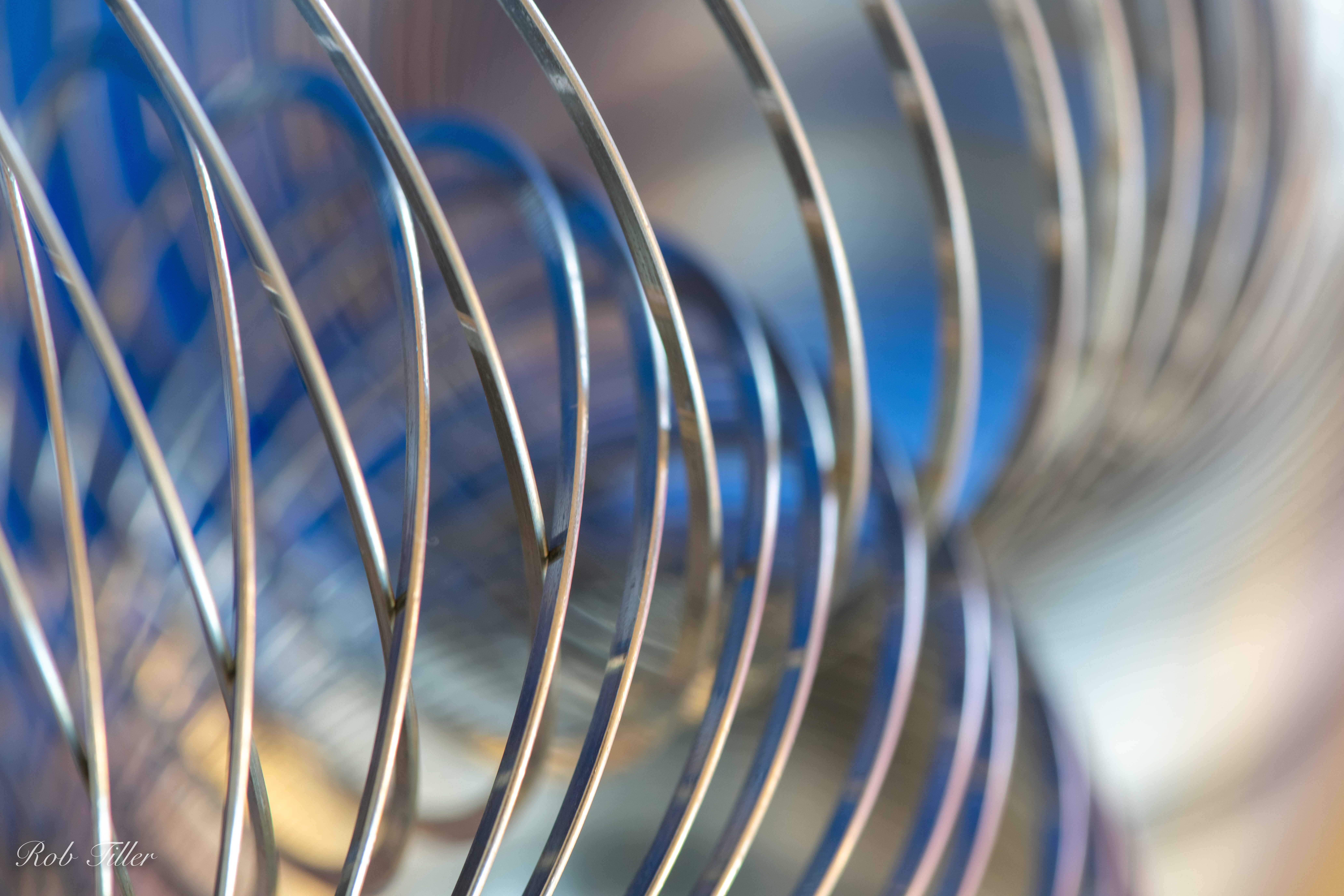
These photos are of my Slinkies.  I’d been thinking about photographing them for a while, and this week, I did it.  It was fun experimenting with camera settings, morning and artificial light, different background colors and textures, and different processing techniques.

Why Americans attacked the Capitol, and some budding orchids

Yesterday — January 6, 2021 — was a day that will live in infamy.  After a rally in Washington in which President Trump encouraged his supporters to keep fighting and never admit defeat, a group of them attacked the Capitol, where Congress was in the process of certifying his defeat.  The proceedings were halted and the legislators were evacuated.  The mob then vandalized the building.  There were several injuries and one shooting death.  

By the time I started watching on television, the mob was no longer inside the Capitol, and they seemed to have calmed down.  They lounged on the Capitol stairs, and milled about on the lawn.  I watched the show for several hours, trying to figure out who these people were.  Apart from Trump flags, Trump hats, and other Trump paraphernalia, they looked normal.  There were no visible symptoms of rampant mental illness or extreme emotional states.

Even some steadfast Trump supporters, including Pence and McConnell, spoke out in opposition to the violence.  Some of the right wing media, including figures who have spent years feeding the Trumpist movement, tried to distance themselves by blaming the attack on liberals and antifa.  This will not wash.  The mob may have been of the extreme extreme right, rather than simply the run-of-the-mill extreme right.  But their actions were a natural extension of several years of florid right-wing fantasies.  

One thing we can be fairly sure of:  the people that attacked the Capitol sincerely believed.  They swallowed the Trump line whole, and were convinced that evil liberals had stolen the election and were wrongfully taking over the country.  When every traditional, reputable source of information conflicted with Trump’s lies, they concluded that everything was fake news, except for the statements of one man.

These folks were particularly gullible, susceptible to propaganda, and prone to anger and hateful fantasy.   Still, they were in many ways normal Americans.  The America that produced them is our America, with its many problems still to be addressed.

The January 6 mob reminded us that, as Faulkner said, the past is not dead.  Our history is still with us.  The one-sixers, almost all white, included some who carried Confederate flags, glorifying our history of racial oppression.  Some of them raised banners with mystical evangelical sayings.  Their conspiracy theories, like QAnon, echoed earlier American strains of millennial authoritarianism.

And there were so many American flags!  It is a great paradox that those most inclined to throw out elections and end American democracy are often the ones who wave the American flag the most vigorously.  Few one-sixers wore covid masks.  There’s another great paradox:  those most susceptible to paranoia and groupthink are the loudest cheerleaders for idealized  freedom and individualism. 

It was a surreal day, but we got through it.  Against tough odds, Georgia completed the election of two democratic senators, enough to divide the Senate 50-50, with Vice President Harris in charge of tiebreaking.  Early this morning, the Congress finished addressing the last spurious election fraud charges, and certified the election of President Biden.  It’s a new day.      

The pictures here are of Sally’s orchids, which continue to grow beautifully. 

Starting a new year, with eagles and hope for renewing democracy

The last week of 2020 was mostly cold and cloudy here, with extended periods of rain.  I wanted to check on the eagles and other birds at Jordan Lake, but wasn’t sure the weather would work, or if I’d have the necessary willpower.  One morning, when it was still dark, I managed to drag myself out of bed, verified it wasn’t raining, put on long underwear, and drove out of town and down US 1.  Below Jordan dam, there were lots of big birds:  eagles, herons, vultures, and gulls.  

I found a promising spot to set up my tripod, directly across the river from a couple of young bald eagles perched in a pine tree, and hoped to get a shot of them catching fish.  One of them took a dive close to me — too close to shoot with the long lens — but they caught no fish while I was there.  Still, I liked the rushing water, and the many birds flying and calling.  

Last week I learned that one of my favorite nature writers, Barry Lopez, just died at age 75.   These last few months I’ve been reading some of his nonfiction writing on the Arctic and other challenging environments, as I planned my own trips to Alaska and Antarctica (postponed because of the pandemic to 2021).  

Lopez insists that these wild places matter, even when there are no humans in the vicinity.  He’s in favor of animals, rocks, ice, and wind. His writing has an austere beauty and clarity.  I was glad to see he got an admiring obit in the NY TImes, which compared him to Thoreau and Muir.  There was also an appreciative obit in the Economist of January 2d.

I was also pleased to see that another of my helpful sources, Heather Cox Richardson, got some mainstream recognition in the NY Times.  A few months back, Sally put me on to HCR’s daily email newsletter on political matters.  She basically gives a high level summary of the most worrisome news of Trumpworld, with the calm explanatory voice of a professor of American history.  She provides persuasive evidence that sanity persists.

A couple of months back I listened to HCR’s latest book, How the South Won the Civil War.  I expected the book to focus on the post-Reconstruction, Jim Crow era.  In fact, it’s a lively and dramatic overview of American history from colonization till now, with special attention to enslaved and indigenous people.

HCR’s discussion of Western settlement after the Civil War was particularly interesting, with persuasive evidence that both anti-Black and anti-Asian racism shaped the political framework.  She also traces the rise of Movement Conservatism, from Barry Goldwater, through Ronald Reagan, and to the Republican leadership today.  

Richardson shows that our current political system is closely related to the oligarchical and racist system of the antebellum South — a system that never really went away.  It’s a difficult and uncomfortable lesson.  

But she doesn’t seem to have given up on the democratic ideals that have also long been part of the American system.  I’m sure she’d agree, there’s still a chance we can make a better democracy.  With the inauguration around the corner, it could be a good time to renew our vows to build on what’s good in that system.  

A very Trumpy Christmas

We like Christmas, but didn’t do much celebrating this year.  For decorations, Sally put up some colored lights on our balcony rails, and that was it.  The other balconies we could see were even less festive.  Maybe we weren’t the only ones having a hard time getting in the holiday spirit.

The news of the day is mostly about continuing disease and death from covid-19, and the continuing grotesqueries of Trump.  He’s handing out presidential pardons right and left, some to his personal henchmen, some to criminal friends of friends, and some to mass murderers.  While continuing to insist that he actually won the election, he’s explored the possibility of declaring martial law and using the military to get a vote with a different outcome.    Another hare-brained-but scary-Trump idea is to get Congress to reject the electoral college results.  

Talk about a war on Christmas!  That would be the ultimate anti-gift:  Grumpy Trump and his Capitol Trumpettes Steal Democracy!

I don’t view that as likely.  Still, it’s depressing that something like 70% of Republican voters say they believe that Biden stole the election, and very few are speaking out against Trump’s reckless talk of a coup.  After having several years to observe Trump’s dishonesty, incompetence, and brutality, they love him as much as ever, and maybe more.  Most evangelical Christian voters are particularly firm in their commitment to this flagrantly un-Christian president.  About 80% of them voted for him.  

Many find this puzzling.  As an atheist and former evangelical, I’ve given this puzzle some thought, and have a theory that may help explain it.  For those with no religious background or one unrelated to evangelical Christianity (EC), I’ll share my own in-a-nutshell version of EC’s fundamental tenets.  

First, in heaven there is an all powerful, all knowing, entity named God, who is in charge of everything.  He listens to millions of prayers asking for things, which he ignores, and observes lots of earthly disasters (like hurricanes, floods, fires, earthquakes, spreading cancers, and little children on bikes getting run over), which he also ignores.  

God’s favorite non-work activity is being worshipped, and he gets quite grouchy if the worship is not to his liking.  In God’s view, all humans are sinners who deserve to be tormented in hell for all eternity, but he is prepared to give them full pardons and save them if (1) they confess to being sinners and (2) their worship of him is up to his standards.

I’m leaving out a lot of details, like the baby Jesus, the wise men, water turning into wine, and so on, but this is only a slight parodizing of evangelical ontology as it was taught to me.  It’s not hard to see how EC adherents find it easy to relate to Trump.  

Like God, Trump is big and has powerful weapons.  He’s authoritarian, but we need a strong leader.  He’s moody, and the best way to keep him happy is to keep telling him how great he is.  If you get on his enemies list, you may lose business, go to jail, or worse.  But if you manage to not do anything he doesn’t like and make him really happy, he may give you a pardon.  

So if you were someone who thought, God is a good fellow, someone who understands me and cares for my personal welfare and wants to torture and kill my enemies, you could easily think the same of Trump.  Their personalities and interests are surprisingly similar.  

But that’s not all.  Although being saved (that is, accepting Jesus as your personal savior, along with adopting the EC ontology already discussed), seems undemanding, in fact it requires developing a subtle, far-from-natural skill in mental gymnastics.

Being saved requires the unfortunate sinner to do a twisting back flip over the area of everyday thinking and land in a spot where the usual rules for processing reality do not apply.  In this landing area, there is no need for evidence, and indeed, curiosity and questioning are unwelcome. 

Of course the EC doctrine doesn’t make sense.  It’s not supposed to.  Accepting the absence of facts and logic is part of how believers define faith, and how they prove they have it.

I used to view EC thinking as simple, but I’ve come to realize that it’s actually not so easy.  Somehow the EC believer develops two kinds of brains that think in opposite ways.  There’s an EC brain, where things that otherwise make no sense are enthusiastically endorsed, and a non-EC brain, which covers holding down a 9-to-5 job, safely operating a vehicle, paying the bills, cooking, taking care of kids, and everything else in day-to-day reality other than EC rituals, including Republican politics.  

The EC brain professes an extreme level of certainty as to EC beliefs.  At the same time, that brain is very anxious, constantly on high alert for threats from enemies, and easily alarmed.   There is a strong and clear distinction between good and evil, with evil defined as anything not aligned with EC.  Enemies are evil, and evil must never be tolerated.

In ordinary times, the EC brain does not seem like such a big deal.  People, including non-religious people, believe all kinds of odd things, and they still generally function and get along together.  EC thinking doesn’t normally bother me, and I wouldn’t have thought it worth discussing here, if it were not for one problem. 

Trumpism has shown that groups that become expert in suspending rational thought are hazardous in certain situations, such as our current one.  The EC brain is fully primed to believe Trumpian statements that contradict facts or physical reality.  That brain is also much more likely to push the panic button when told that ordinary political opponents are evil enemies seeking destruction of our way of life. 

For example, EC mental gymnastics allow the believer to screen out and ignore all evidence that the presidential election was fair and valid, and all evidence that the president-elect is not a dangerous communist.  Our traditional reality-based correctives don’t work, once the believer accepts (as Trump maintains) that mainstream media is the enemy of the people and full of lies, and that only right-wing sources that support Trump are reliable.  

The EC believer can easily follow Trump’s lead and recategorize peaceful Black Lives Matter protests against police brutality to read that police are under attack by dangerous Black radicals who want to destroy our cities and then invade the white suburbs. On the other hand, after developing a fact-free-but-anxiety-filled operating system, the believer can more easily buy into anti-liberal conspiracy theories, like birtherism or QAnon.  

Of course, some EC believers are extremely intelligent and gifted, and some manage to stay in much closer touch to reality.  In their non-EC brains, some of these have good ideas and projects, including supporting equality for minorities, fighting climate change, and refusing to acquiesce in a Trump coup.  These believers will not be viewing the pandemic as a hoax or signing on for QAnon, and they might even support health care for all. 

I’m not so sure about that last thought.  In fact, it may be I’m off track on the EC thought process, which I once shared, but haven’t for many years.  But it certainly looks like Trump figured out how to make the most of the authoritarianism, reality-denialism, and anxiety that are part of EC culture, and Trumpism seems hard to explain without the support of EC.  

I am not proposing anything against EC, other than to challenge its ideas.  I’m strongly in favor of religious tolerance, both on principle and for reasons of self preservation. But I see no reason why EC shouldn’t be called to account and asked to explain its Trumpism.  As things stand now, a lot of EC believers seem ready to support the next Trump, and our poor system may not be able to survive another one.  

Still in the tunnel, trying to address pandemic denialism

On the news this week, there were a lot of shots of the first covid-19 shots, and it was surprisingly cheering. Nurses were sticking needles into shoulders.  At first I flinched at the sight, but I got over that in short order.  Developing safe and effective vaccines in record time was an extraordinary achievement, for which gratitude is in order.  There seems to be a light at the end of the pandemic tunnel.  

For the moment, though, the pandemic is still raging, and we’re still in the tunnel.  Especially in the short days and long nights of the holiday season, it’s difficult.  We miss getting together with friends and loved ones.  Masks and social distancing are still no fun.  Infection rates and death rates are still high, and we’re running low on good cheer.

There really doesn’t seem to be any reasonable choice except to press on with medically recommended safety measures, especially when it looks like there’s a good chance we’ll make it back to happier life.  That’s why it keeps surprising me that a good many Trumpists choose to refuse masks as a political statement and continue holding get-togethers as though they think the pandemic is a gigantic hoax.

At first I thought this might be caused by pure ignorance, and surely there’s some of that.  But for some, pandemic denialism seems to be tied to a fairly elaborate set of ideas that are woven into our culture.  It might help to tease them out.

Part of pandemic denialist thinking involves taking the idea of individual freedom to a perverse, though also  logical, conclusion.  The extreme idea that personal freedom should be completely unrestrained sees mask requirements as un-American tyranny.  The denialist feels that he or she is standing up for principle and resisting oppression.  

Preferring to symbolically defend an exaggerated, idealized notion of freedom rather than to avoid serious illness or death is hard to understand.  Denialist thinking must have some other drivers.  For one, there’s the frustration, sadness, and boredom many of us are experiencing.  Also, there’s economic pressure, including the urgent need to earn enough for gas, food, and rent, which are pressing problems for many, including some denialists.  At some point, a reasonable person might well choose the possibility of death from covid-19 over actual hunger.  

But for many mask opponents, there’s still food in the pantry, and starvation is not the issue.  Their pandemic denialism is closely connected to other kinds of denialism, including denial of man-made climate change and of racial equality.  These ideas all have in common a rejection of science and other expertise.  

This mindset seems self-defeating — indeed,  self-destructive — but it makes a strange kind of sense.  Accepting the authority of science and consensus views of experts would make it impossible to maintain certain parts of the denialist world view.  

For example, traditional views of racial hierarchies (with distinct races, and some understood to be inferior to others) are inconsistent with genetic research.  Similarly, the traditional view of nature  as limitless and existing solely to satisfy human appetites is undermined by ecology.  Likewise, creationism can’t comfortably co-exist with evolution.  

Even if pandemic denialists weren’t counter-science, they’d still be driven by polarization.  Extreme denialists have dug in on the notion that liberals are dangerous and not to be trusted on anything.  Denialists will be inclined to believe the opposite of whatever liberals say, simply because they think the source is not only wrong, but evil. 

So how do you have a discussion on pandemic safety with a denialist, if you’re not one?  Very carefully!  We don’t want to get them even more upset, and logic and facts just won’t work.  I’m still holding onto hope that respect and compassion, consistently applied, will eventually build understanding and trust.  In the meantime, it’s a good idea to  keep using masks and get in line as soon as possible for the vaccine. 

I took the pictures here one morning last week at Shelley Lake in Raleigh. 

Is Trumpist election-denialism really gaslighting?

We’re having a difficult holiday season.  The pandemic is still raging, as is Trump, who seems to be trying to vandalize our democracy on his way out of the White House.  I’ve been trying to stay positive and look forward to better, healthier times, but his antics are raising difficult questions.  

Are there some things that we can take for granted?  That is, are there certain things that we can safely assume we all agree about, where there’s no possibility of any argument — things we can call facts?

For most of my life I’ve assumed that there are a huge number of facts on which we almost all agree, with a much smaller number being things subject to debate.  Even in politics, I understood there was a large foundation of agreed-upon reality, with disagreements confined to relatively small areas.  Of course, I realized that there were people with completely nutty ideas, like the flat earthers and alien invasionists, but they seemed to be a small minority.  

Now I’m not so sure.  As of this writing, a majority of Republicans apparently still hold the view that Trump was the true winner of the last presidential election, and that the election was marred by a diabolically clever voting fraud.  There is overwhelming evidence that none of this is true, and that Biden won in the ordinary way by margins not subject to any reasonable doubt.  

For millions of Republicans to stand by Trump despite this evidence is not normal politics.  Trump has proposed, in broad daylight, to nullify the election and illegally take over the government based on an outrageous lie, and a majority of Republicans see no problem with that.  Their support has shaken my lifelong presumption as to most people’s sanity and rationality.  To put it directly, it seems like a huge number of otherwise normal Republicans either intentionally or unintentionally have taken leave of their senses.   

There is some possibility that this is just the biggest gaslighting of all time.  Under this theory, millions of Republicans are pretending that Trump won, knowing quite well that he didn’t, in order to drive the rest of us out of our minds.  Once we nonbelievers are certified as insane and safely locked in institutions, Republican elites can continue with whatever they’re planning, like eliminating all taxes for the rich, cutting all social programs for the poor, and destroying what remains of the natural world.  

It Trumpist election-denialism were gaslighting, it would be dastardly, but it would make some sort of sense.  But if, instead, the Trump deadenders are sincere and serious, we’ve got a really big problem:  a large fraction of our fellow citizens share a strong commitment to ending democracy as we’ve known it, paired with a determination to withdraw from our previously shared reality.

This is bad.  The Trump deadenders have gone out on a dangerous ledge, and really need our help.  But helping them off the ledge is tricky, because they don’t think they need any help, and they’re inclined to think that anyone who thinks otherwise is a dangerous enemy.

We need experts, including skilled  hostage negotiators.  This problem could use the talents of our most gifted psychologists, philosophers, economists, engineers, and politicians.  When we non experts are confronted with a desperate case, we can try to stay calm and project as much warmth and respectful concern as we can, and avoid making any sudden loud noises or alarming movements.     

I wish I had something more cheerful  to share, and in fact, I do.  As we’ve been holding on through this dreadful pandemic, we’ve been watching some really good TV.  Last night on Netflix we watched a fine documentary, titled Dolly Parton:  Here I Am.  I’ve always liked Dolly’s singing, but I hadn’t realized how hard she worked at songwriting and everything else.  Her persona looks comically simple but it’s not; she makes us laugh, feel, and think.  She’s amazing!    

For next Thanksgiving, some hope for peace

Bald eagles at Jordan Lake

Because of the pandemic, we had an extremely quiet Thanksgiving — leftover pasta, Netflix, and an extra glass of wine.  There were, as always, many things to be grateful for, including the hope that next Thanksgiving we’ll still be here and can do a big happy family gathering.

We’re also thankful that Joe Biden, Kamala Harris, and company were elected and will soon be taking over the presidency of the United States.  My anxiety level about politics has been falling, and I’m now able to go more than three hours without checking the headlines for a new Trumpian outrage or disaster.

Great blue heron at Jordan Lake

But Covid-19 is still rampant.  So far, the pandemic has killed enough Americans to depopulate a mid-size American city, or to fight a mid-size war.  Joe B has attempted to get and follow qualified scientific advice and model best practices on masking and social distancing, which is a big improvement over what’s his name.  With a true crisis in progress, it isn’t surprising that Joe has declared that we’re at war with the coronavirus.

But here’s a suggestion:  the war metaphor needs to be retired.  We’ve had the war on terror, which has killed many more people than any possible definition of terrorism, with no end in sight.  For generations, we’ve been fighting a war on drugs, which has cost billions of dollars and thousands of lives, and drugs are more popular than ever. We’ve also had wars on cancer, on poverty, and on crime, not to mention continuing culture wars.  In none has there been anything like victory.

Bonaparte’s gulls at Jordan Lake

Our tendency to default to war language suggests a deeper cultural assumption:  that addressing our serious problems usually requires something like intensive violence.  You don’t have to be a full on pacifist to question that.  With a little thought, it’s not hard to see other options, like negotiation or Niebuhrian considered acceptance.  And the horrendous losses in life and treasure from our more recent actual wars (like Vietnam, Iraq, and Afghanistan) suggest we should always look for a path of non-violence.

Apropos of Afghanistan, I recommend an op-ed piece this week by Timothy Kudo, a Marine who served in Afghanistan, about coming to grips with our disaster there.  After spending some $6 trillion and with more than half a million people dead, it is difficult to argue we accomplished anything.  There was, of course, valor and sacrifice by honorable soldiers, but to what end?

Hooded mergansers at Shelley Lake

The new Biden administration will have plenty of crises to address, including Covid-19 and getting our remaining troops out of Afghanistan with as little additional damage to them and others as possible.  Even though they’ll be busy, perhaps our new defense establishment can take a few minutes to read Kudo’s piece, and reflect on strategies for avoiding future needless, bloody wars.    

I took the pictures here in the last two weeks at Shelley Lake in Raleigh and Jordan Lake in Chatham County.  As always, I was grateful to have some time with the birds and their world.

Great blue heron at Shelley Lake