The Casual Blog

Category: travel

The diving Tillers do Belize
imagejpeg_2
We got home at about 4:00 a.m. Sunday from our trip to Belize. There were various minor setbacks and challenges, like weather, malfunctioning gear, and cancelled flights, but all in all it was a good trip.

One of the great satisfactions for me was getting the last member of our little family certified as a PADI open water diver. Jocelyn did the course in 2014, and Gabe decided to buckle down late in 2015, while juggling his grad school course work. He completed everything but the open water dive requirements with two days before the trip to spare.

Jocelyn flew in from NYC on Christmas Eve, full of energy and humor. As will happen this time of year, I felt the spell of Christmases past, and needed to read through some Christmas carols at the piano (Joy to the World! We Three Kings, What Child Is This, O Come, All Ye Faithful, Hark the Herald Angels, etc.). We listened to the Nutcracker during our present exchange.

But for our family reunion dinner, we listened to the Beatles, whose work had just become available on Spotify, Rhapsody, and other streaming services that day. Starting with I Want to Hold Your Hand, we worked through a good part of the canon. That music is densely evocative of adolescence for me, but it still has a cheery, lively power, too, and a lot of variety. We talked a lot about the Fab Four, and it turned out that Gabe and Jocelyn knew every song and a lot of the backstories.
IMG_4484
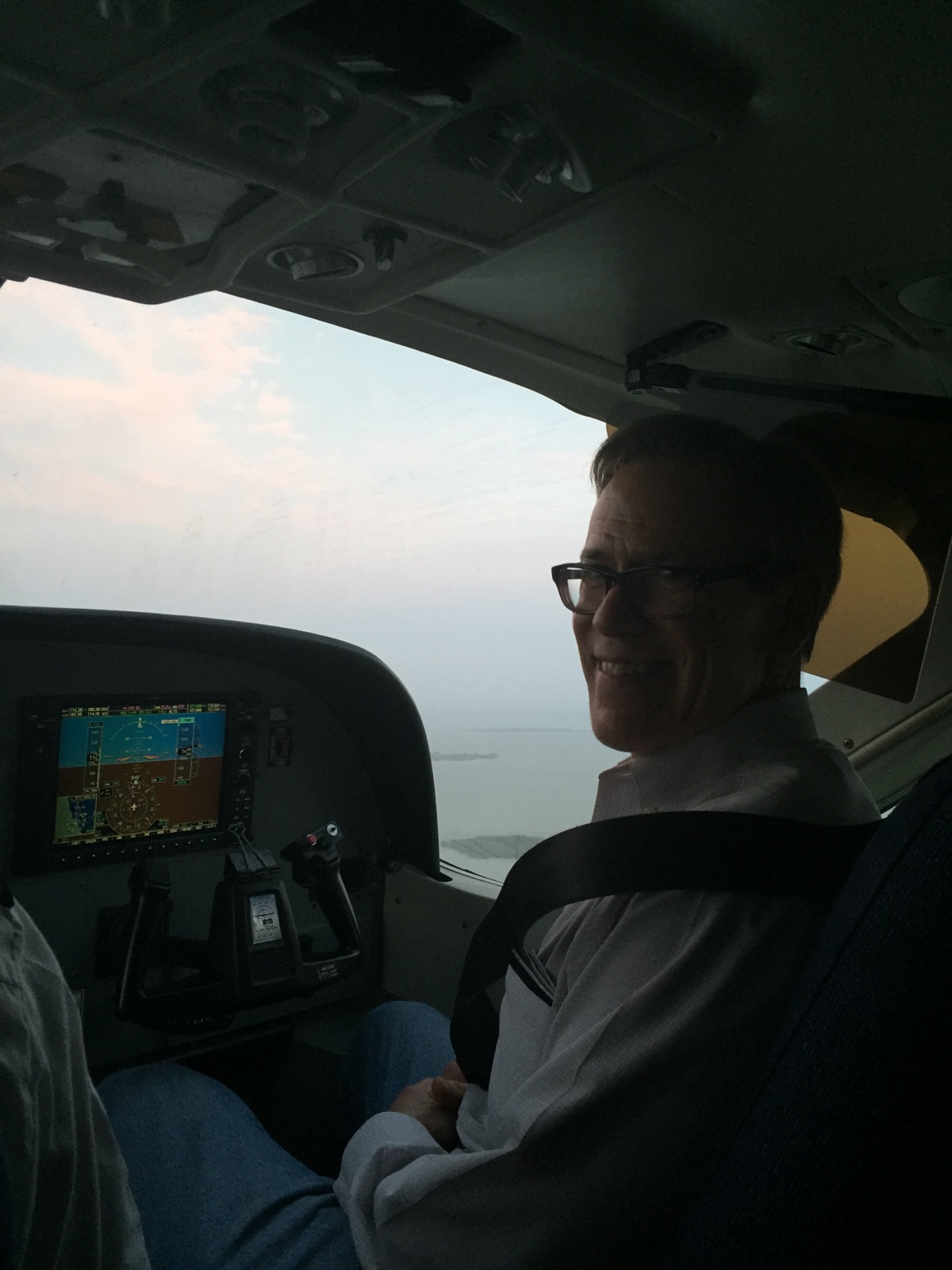
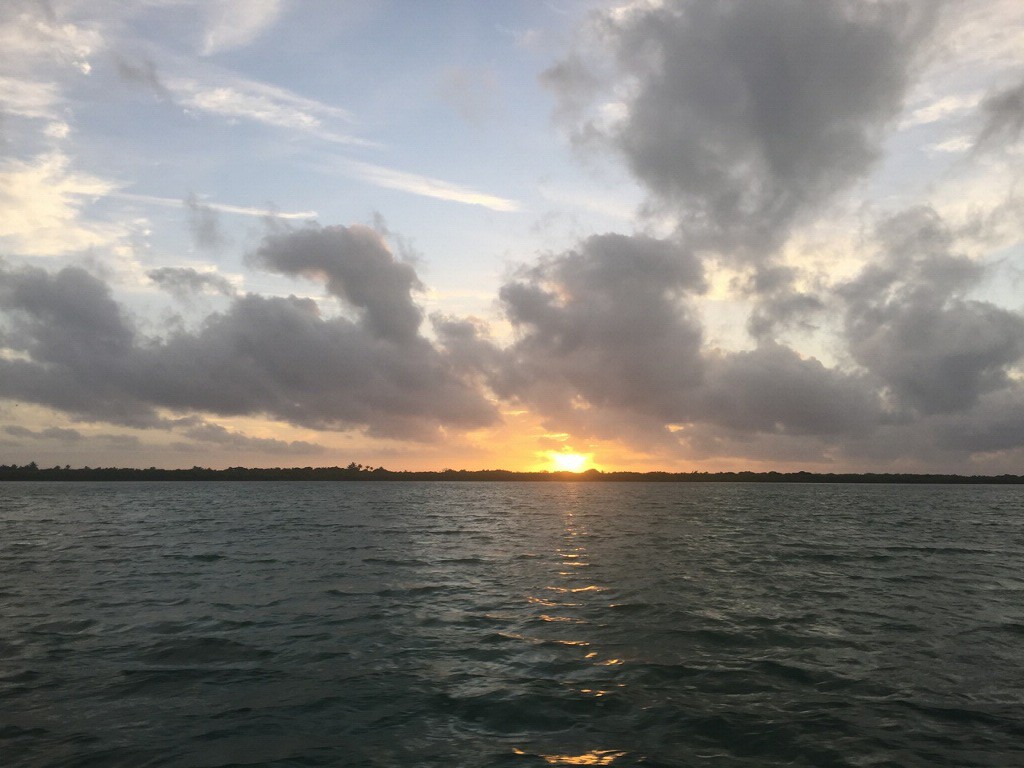
We left for the airport at 3:30 a.m. Our first flight took us to Houston, where we waited a while and then got a plane for Belize City, where we eventually got into a single engine plane for a 15-minute flight to Ambergris Caye. I got to sit next to the pilot and monitor the instruments, which was fun. We landed at sunset, then took a short cab ride to a nearby dock, where we and our stuff got loaded onto a speedy water taxi for a twenty-minute trip north.

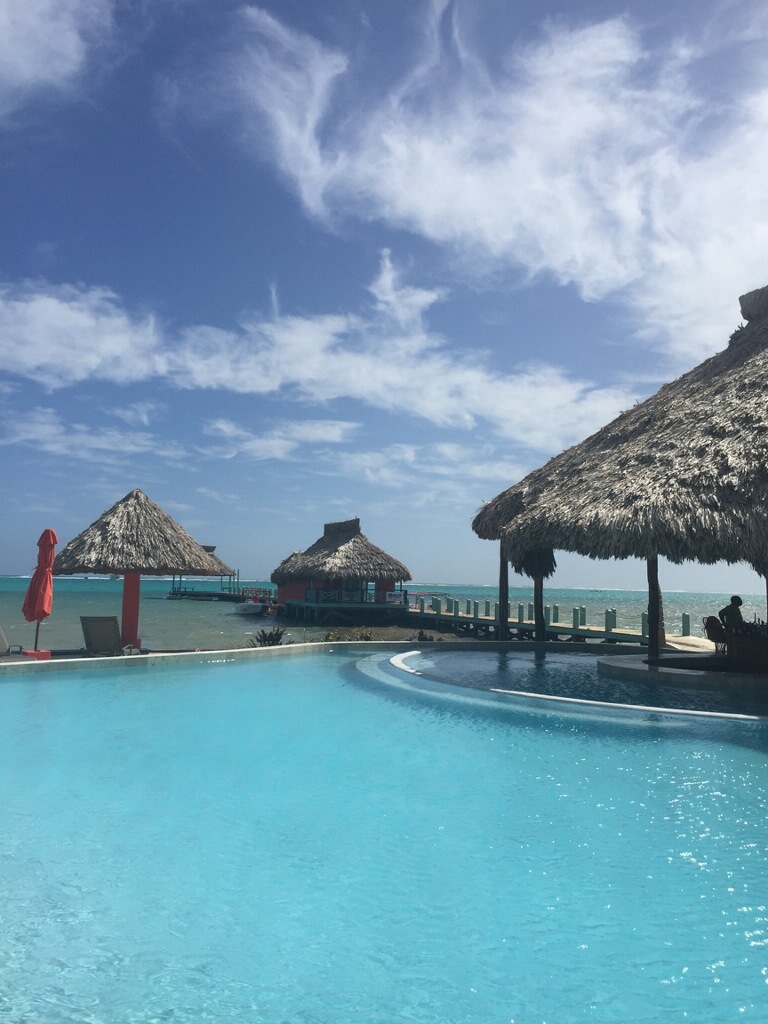
We stayed at Costa Blu Resort, which, we came to learn, had just opened for the first time two weeks earlier. We thought it was pretty, comfortable, and well situated for diving, with a dive center on the property, along with palm trees and swimming pools.

The next day the wind was blowing hard – perhaps 25 miles per hour – and so morning diving was cancelled. We came to learn that the wind had been going like that for the previous two weeks or so, and even old-timers couldn’t recall so long a stretch of hard wind at this time of year. The skies were mostly sunny. We got out in the afternoon for a shallow (12 foot) dive in the afternoon, and Gabe completed the first of his two open water certification dives. The weather the next day was the same, which meant the small boats at our dive operation could not get out beyond the reef, so we did another shallow dive nearby, and Gabe completed his course. We were so proud!

On Tuesday, we took a longer boat ride out to Turneff Atoll, and did three separate dives. The visibility was about 50 feet, and the water was a pleasant 82 degrees F. We saw the locally common tropicals, such as durgons, surgeonfish, parrotfish, blue wrasse, butterflyfish, yellowtail snappers, and three kinds of angelfish. There were lobsters, and a yellow ray. Our guide, Bernie, speared five or six lionfish, which are beautiful but very destructive for the ecosystem. The dive was fun, though I was a little disappointed not to see sharks or other larger creatures.
imagejpeg_3

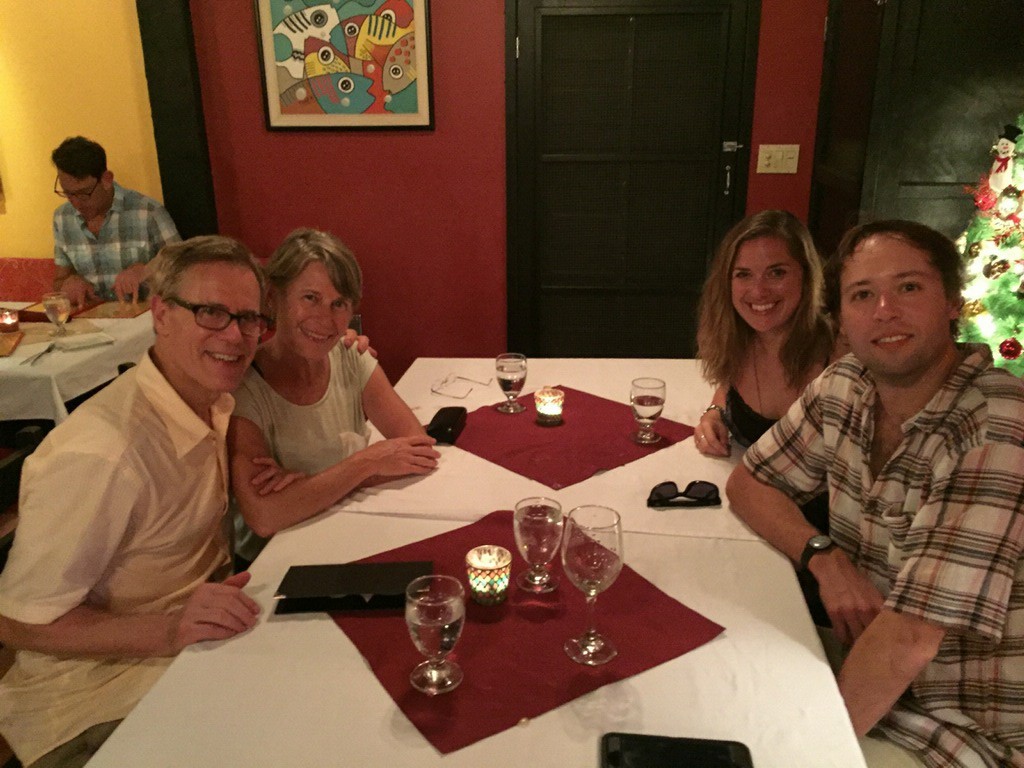
We’d found the restaurant at Costa Blu adequate. The food was good, and the service was friendly, but really really slow. We deduced that the staff was mostly very green, and just learning. Anyhow, we walked along the beach to Temple Run resort for dinner on Tuesday. The walk was a little tricky in the dark, and we had to make our way through thick sargassum and other flotsam on the beach, but the dinner was good.

It was still blowing hard on Wednesday, so we decided not to dive, and instead to explore the little town of San Pedro. This required a 20- minute water taxi trip, on a little boat that was speedy, and crowded. It started to rain hard for the first time that week during the short trip, and it looked like we might have a damp and bedraggled afternoon. But it stopped raining and the sun came out just as we pulled up to the dock. San Pedro proper is colorful though bit down at the heels, with rust and peeling paint, but its narrow streets are full of local people strolling and buzzing around in golf carts. We ate at Casa Picasso, a highly rated spot run by friendly expats from Connecticut. We loved their Carrot Chic cocktail, and my eggplant napolean entree was excellent.
imagejpeg_1
On Thursday, we tried to take a larger boat to the Blue Hole, the famous deep circular structure about three hours’ ride from San Pedro, and planned to do two other dives. The trip started badly, very early in the a.m., when we discovered that our equipment had not all been delivered to the boat, and we had to do last-minute rentals. Then, about 45 minutes into the trip, the boat developed engine trouble. We limped into a local village, and waited for a mechanic. The ultimate diagnosis was a blown gasket, which meant a blown trip.

But we did get in an afternoon shallow dive near Costa Blu at Mexican Reef with just us Tillers and our guide, Giovanni. We saw a pair of large sting rays that seemed to be courting, and a friendly green turtle that swam close enough to be petted. There was a large green moray eel, spade fish, and several nurse sharks, as well as many pretty small tropicals. It was especially sweet to be with my loved ones, and see our new divers keeping a good eye on their gauges.

Throughout the week, I’d been trying to get some pictures with my Canon G16 camera with an Ikelite housing. The equipment would work fine when I tested it out of the water, but under water there was one problem after another. On the Thursday dive, it worked fine when I took a few test shots, and then quit responding to any directions. I couldn’t even turn it off! It was disappointing to miss a lot of good shots. I couldn’t figure out why this equipment was so glitchy, but it was, and I made up my mind to get rid of it. I haven’t been able to find the camera (mislaid, or stolen from my bag?) so the problem may have resolved itself.

On Friday, the wind finally let up, and we were able to do three tanks outside the reef near Costa Blu in the morning. We got down to about 100 feet and admired the varied coral and tropicals, but didn’t see many larger creatures. I feel like we saw more marine life when we were last there in (I think) 2009. But we all know or should know that the long-term prospects for coral reefs all over the world are not good. For now, there’s still a lot of beauty to be savored.
Delicious pears and a magnificent Sugar Plum

Tiller6Bug 1
One of my favorite things in the holiday season is Harry and David’s Royal Riviera Pears. Every year, we get a box from Sally’s dear godmother (whom I’ve never met), and every year they are incredibly sweet and dripping with deliciousness. So it was this week. You may have seen the Harry and David’s ads and wondered whether a mere fruit could ever be an appropriate holiday gift. Well, my view is yes. They are amazing: the fruit of the gods!

The Nutcracker ballet is another great seasonal treat. It endures because there are a lot of things to like: a great Tchaikovsky score, a story with recognizable characters, a bit of naughtiness, and a lot of sweetness. The Carolina Ballet production has gorgeous costumes and sets. There are a lot of children in the production, who seemed particularly young and touching this year. But the main reason I go to see it is for the wonderful dancers in solos, small ensembles, and choruses.
Tiller6Bug 1-3

Saturday evening Alyssa Pilger, our pointe shoe sponsoree and friend, made her debut as the Sugar Plum Fairy on Saturday. As a dancer, Alyssa has a natural elegance about her. She seems at first delicate, but then there is also a quality that’s almost fierce. Her moments of stillness don’t seem like rests or pauses, but rather radiate energy. She has a musician’s musicality, which goes beyond just staying with the basic rhythmic framework, to understanding it deeply and realizing when and how it can be creatively opposed.

Sugar Plum is a big role. It makes little girls want to be ballerinas, while transporting the big boys and girls to transcendent place. Alyssa rose to the occasion. Her technique was impeccable, as fluent in adagio as in allegro. And there was that extra something, that expressive spark. I got goosebumps, and, I admit it, tears from both eyes. It was so beautiful!

It was, for me, Alyssa’s night, but I need to mention that Adam Crawford Chavis as her partner, the Cavalier, was also wonderful. He’s big and handsome, and amazingly poised and strong. Their pas de deux was intensely romantic. The crowd gave them long and loud hurrahs.
Tiller6Bug 1-5

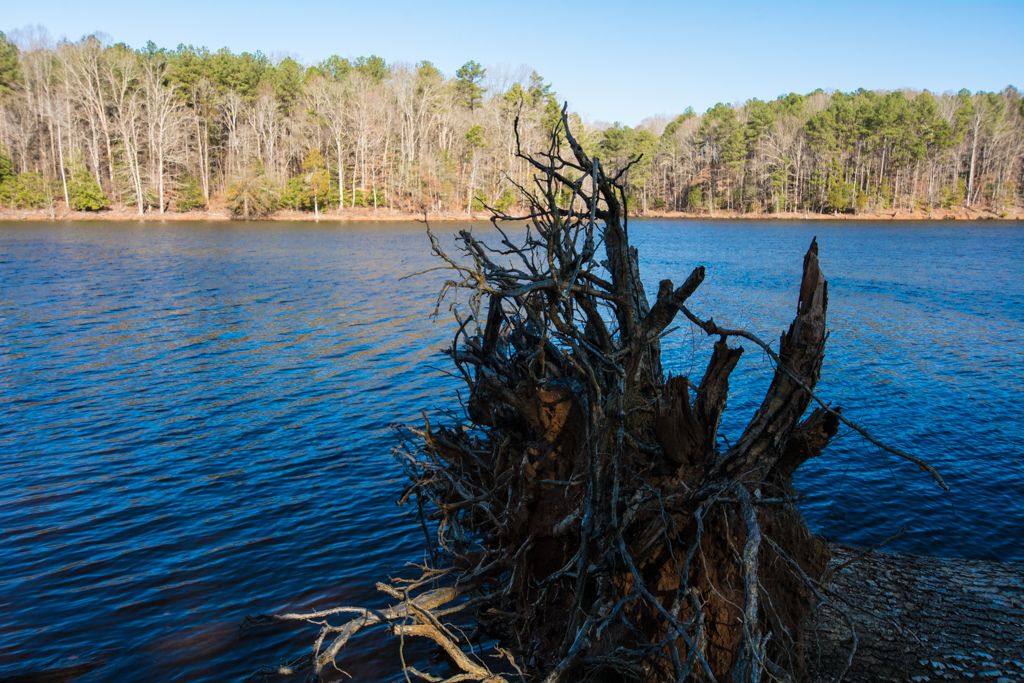
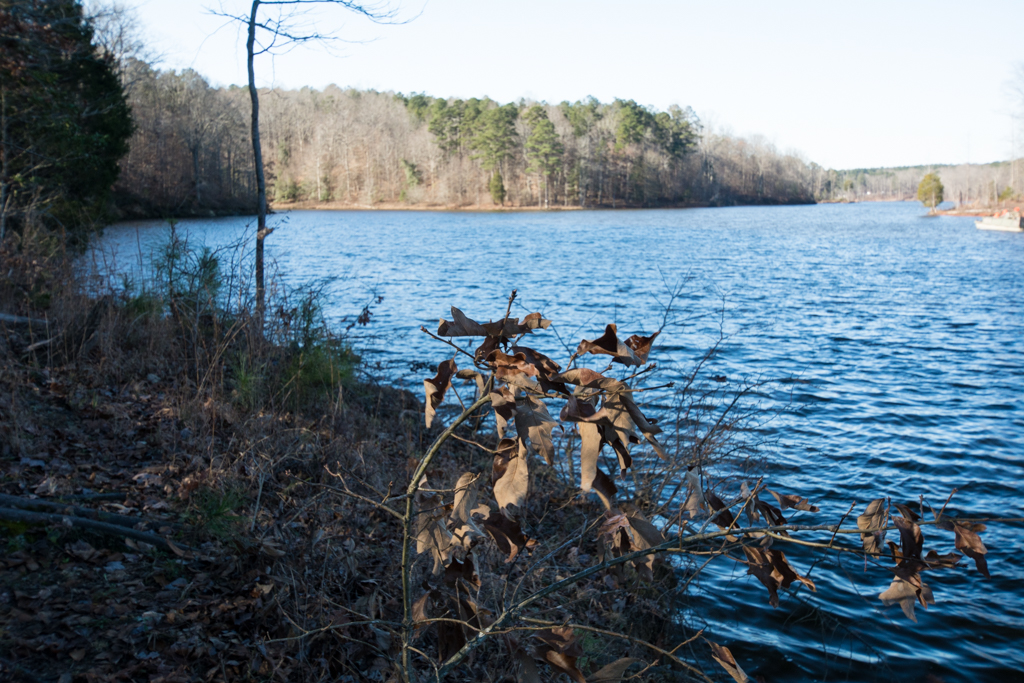
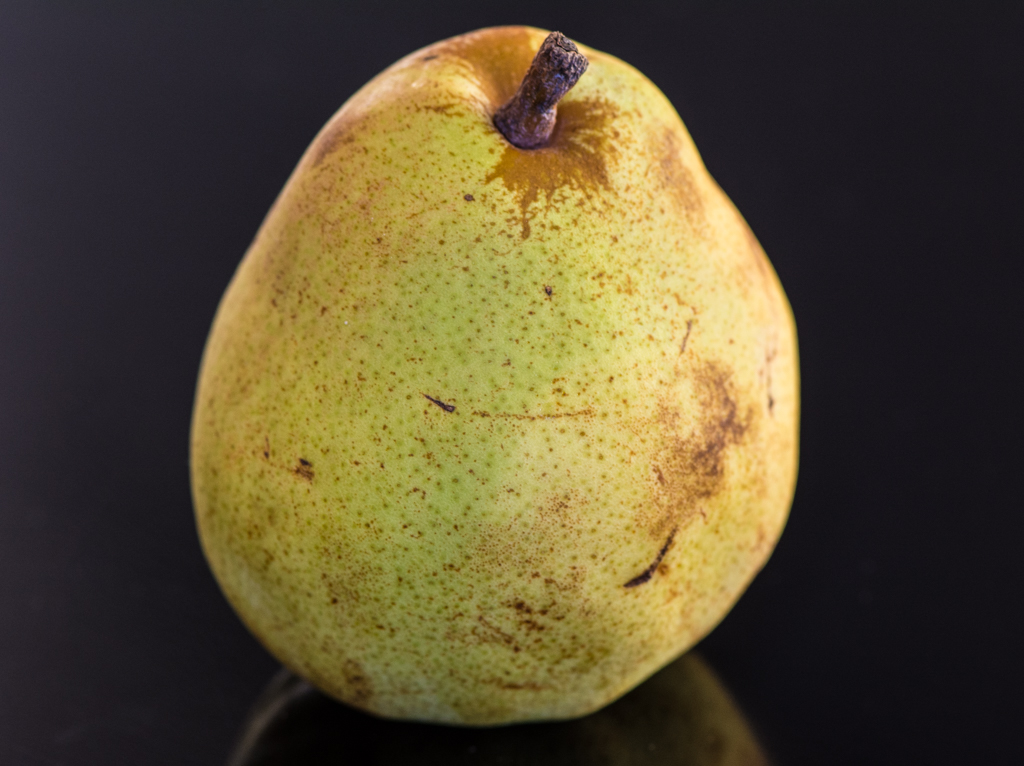
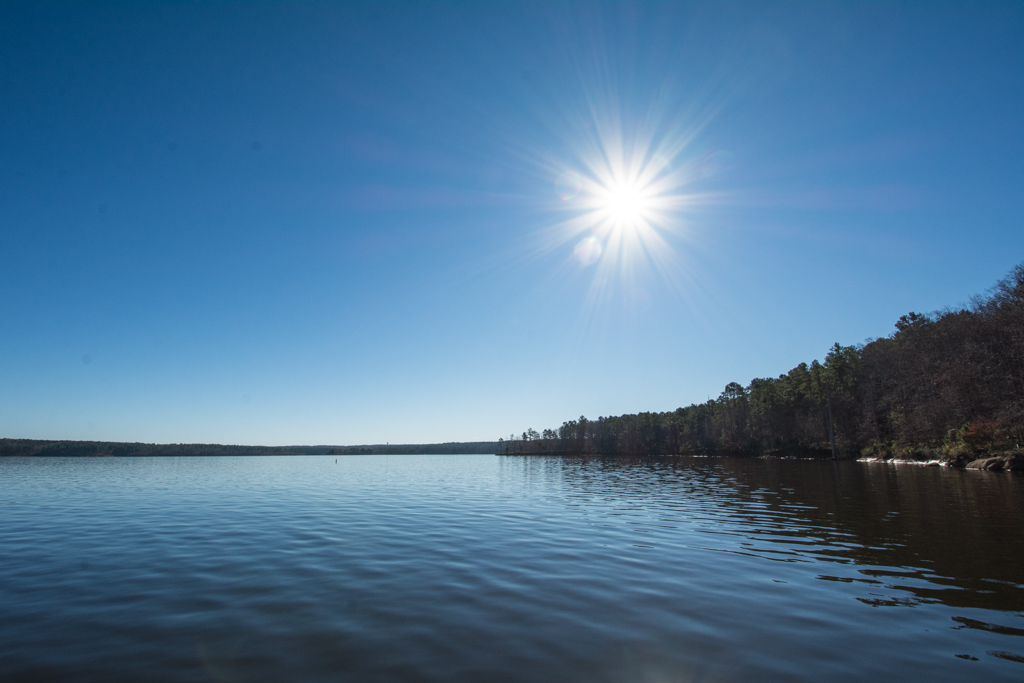
Re the pictures, this weekend I continued, and concluded for the year, my project of visiting and photographing local parks I didn’t already know well. I went up to Falls Lake on Saturday morning to Blue Jay Point, and then again on Sunday to Rolling View. It was clear and bright and cold both days, and there were almost no people. I also spent some time experimenting with my new Nikon SB910 speedlight in making the portrait here of a Harry and David’s pear sitting on my piano. Afterwards, I ate that pear, which was delicious.

The Casual Blog will be on a holiday break for the last couple of weekends, while we’re traveling. I’m hoping to have some pictures of pretty tropical fish when we return. For my dear readers who celebrate Christmas, I wish you a merry one.
Tiller6Bug 1-6

Raleigh parks, climate change hopes, and a treatment for Islamaphobia

Tiller6Bug 1
For the last several Saturdays, I’ve made a point of visiting the Raleigh parks that I did not already know well. There are several pretty lakes and miles of trails close by. When inspiration strikes, I take some pictures. But mostly I just walk and look, look and listen, listen and breathe deeply. It’s good for the lungs and the head.

This Saturday I drove north a little farther, to Falls Lake. It was mild and overcast when I arrived, but gradually cleared up. I did some hiking and took some pictures, including those here. I also enjoyed driving the long and winding country roads with Clara in sport mode.
Tiller6Bug 1-2

That afternoon there was word that 195 nations at the Paris climate conference had agreed on wording to address global warming. It’s good to know there’s acceptance among world leaders that global warming is real and humans can and must act to address it. Unfortunately, they only agreed to CO2 reductions amounting to half of what is widely accepted as necessary to prevent rising sea levels, droughts, more destructive storms, and widespread food shortages.

In other words, absent further progress, we’re still screwed. But there’s still a chance that we won’t utterly destroy human civilization and much of the rest of the natural world. Perhaps we’ll have a major technological breakthrough, like practical nuclear fusion. Fingers crossed.

One thing barely being discussed is population control. The population of the planet has quadrupled in the last 100 years. I guess this is politically sensitive. But really, isn’t overpopulation a big part of the climate change problem? If we don’t figure out a way to control population growth in a humane way, aren’t we likely to see it unfold in a horrifying way (desperate people fighting for survival against each other and perhaps us)? Viz. the refugee crisis unfolding right now.
Tiller6Bug 1-3

This week was full of anti-Muslim fear and panic, with calls for addressing terrorist threats by extreme measures, including monitoring mosques and barring all Muslims from the U.S. Even more moderate voices saw no alternative to escalating the war against ISIS and other radical groups, and those who questioned this course were increasingly at risk of being branded terrorist sympathizers. But there were a couple of articles pointing the other way, which I flagged on Twitter (@robtiller). There was one by Gwynne Dyer in, of all places, the Raleigh News & Observer of Dec. 10. That evening, when I went to get a link, it seemed to have vanished from the internet, but fortunately I still had the paper copy.

Dyer pointed out that for Americans, the panic at the terrorist threat does not have much basis. In the last 14 years, we’ve had an average of two people per year killed in the U.S. by Muslim terrorists. He calculated that “Americans are 170 times more likely to drown in the bath than to be killed by Islamist terrorists.” This is something public figures feel they can’t mention, because of the extreme dissonance with related facts: more than 6,000 U.S. soldiers killed in this period fighting terrorism, and a trillion dollars has been spent on the War on Terror. Dyer acknowledges that if you live in Arab countries, the terror threat is real and serious, and that western countries fighting ISIS might do some good for some Syrians. But it probably won’t reduce the already tiny risk of terrorist attacks here.
Tiller6Bug 1-4

In Boston, seeing Dutch masters, Four Big Ideas, and some problems in Afghanistan

Tiller5Bug 1
I was in Boston this week for the annual meeting of the Association of Corporate Counsel, where I was a presenter in a session on open source software licensing, and a student at various other continuing legal education sessions. Boston was having its first cold snap of the season, and I had neglected to bring a coat. Brrr!

I managed a quick visit to the Museum of Fine Arts, which I’d only visited once before a long time ago. It’s a really good museum! I was keen to see an exhibit called Class Distinctions, Dutch Painting in the Age of Rembrandt and Vermeer. I mainly wanted to see the two Vermeer works, A Lady Writing and the Astronomer. The Lady, who sits at her desk in a yellow fur-trimmed jacket, was ravishing. There were several excellent Rembrandts.

The exhibit was organized in sections according to the social classes depicted, starting with the nobility, through the merchants, and on down to the poorest. When they were made, the paintings served some of the same purposes as paintings today (e.g. status symbols for the high born), and sent elaborate social signals through the clothing, settings, and objects. My art history education was more oriented toward the formal properties of the works (color, line, texture, composition). This was instead approaching art more as anthropology, which seemed worthwhile.

One evening I met up with a couple of old friends from student days for a dinner at Puritan & Company on Cambridge Street. Through the years of career building and child raising, we’d almost lost touch. It was really gratifying to find that we could quickly reconnect. There was, naturally, news: jobs, travels, civic activities, kids, kids’ girl and boyfriends, parents, funny stories. The food (a southern, organic vibe) was good, too.

On the flight back, I was happy to see that I’d finally made it up the airline classification food chain at Delta to Zone 1 for boarding – that is, the first group (after families with children, business, first class, elite, diamond, service members, and others specially designated or needing special consideration). Well, it’s still good. I really like not having to worry whether there’s a place in the overhead bin for my carry on bag.

With some time for travel reading, I finished The Shape of the New: Four Big Ideas and How They Made the Modern World, by Scott L. Montgomery and Daniel Chirot, and I recommend it. The four ideas are the thought systems of Adam Smith (classical capitalism), Karl Marx (communism), Charles Darwin (evolution), and Thomas Jefferson and Alexander Hamilton (American democracy). Montgomery and Chirot do a good job giving lively short bios and summarizing the thought systems. They also give helpful context, including predecessors and successors. The second half of the book discusses the counter-enlightenment, including fascism, Christian fundamentalism, and Islamic fundamentalism. There’s a lot here to chew on.

Speaking of chewing, a few days ago, the President announced that instead of wrapping up the long war in Afghanistan, as previously promised, he’s sending more troops there. I was really sorry to hear this, as I’d say our Afghan adventure has been mainly a disaster, but my view seems to be in the minority. For anyone who cares to think more about this, I recommend a piece by Jeff Vaux in the Huffington Post, which is a bit of a rant, but not uncalled for.

Here are some excerpts: “After 14 years of fighting -at a cost of over 2200 American lives, 20,000 seriously wounded, countless mentally damaged and a trillion dollars – it is obvious that we cannot accomplish our stated objectives. The Taliban cannot be destroyed and the Afghan people will not support a US-imposed government. …

“Today the Taliban controls or is contesting more territory than at any time since the war began. Outside Kabul and a few other areas where mountains of our money buy molehills of temporary allegiance, the government’s army and police are hated for their oppression and human right abuses. Its courts are crooked and criminally unresponsive, while Taliban justice — although harsh — is swift, works without bribes and legal fees, and is honestly administered. Warlords, paid for and armed by the CIA and the Pentagon, indulge in brutal behavior toward their people, including a delight in raping children, which the US army orders its soldiers to ignore.”

Is this being unfair? Are we forgetting some benefits that could possibly justify all this wreckage and pain? Are we Americans (or anyone else) somehow safer, or have we just provided more inspiration and anger to those inclined to hate us?

Diving in Mozambique

Tiller4-8
Heading to Africa week before last, my dream was to dive with some really big creatures, including manta rays, whale sharks, and humpback whales. My research indicated that these and other species should all be present in October (spring) in southeastern Mozambique. The diving didn’t turn out as well as hoped, but I was not sorry we tried. We saw some amazing sights, and learned some things.

Our first dive destination was Zavorra, in Inhambane province. We stayed at Zavorra Lodge, a somewhat rustic hotel at the end of a long sandy road. It was very windy when we arrived, and we were warned that the wind was making the waters rough and murky. It was less windy when we went out early the next morning, but visibility was quite poor. And it was chilly (65 Farenheit). We saw medium and small fish, including a large group of barracudas, but no giants.

This was basically the story for the following two days – cold and dark. I had some suspicion that unregulated fishing had reduced the fish populations, based on some of the locals’ comments about government corruption and Chinese factory ships, but who knows? There could have been a lot of creatures that we didn’t see, since we didn’t often see more than 10 feet.

One afternoon we took a short walk to a nearby village, where there was a shaman who for cash purported to tell fortunes. We were surprised that most of our group of mostly Dutch tourists paid up and sat still for quite a bit of this nonsense. But it was interesting to see the local people, the grass roofed dwellings, goats, and chickens.
Tiller4-4

Our last afternoon we went horse riding on the beach. It was many years since I’d been on a horse, and my mount, a handsome white horse named Obsession, may have noticed this. We were behind Sally, and Obsession kept wanting to pass her, and I kept having to apply the brakes.

But it was lovely riding on the beach. For a bit. Then, when we were moving just inside the backwash of the waves, Obsession unexpectedly flopped onto his side. Happily, I got my bottom leg out from under him in time and didn’t get crushed, though I did get wet. Obsession went straight out into the breakers for a dip. Our guide finally got him to come out, and we found he’d lost one stirrup in the water. The guide gave me one of his, and we finished the ride.

Next we went to Tofo. This place has the widest white sand beach I’ve ever seen, and a lively little town. Here we learned how to launch a pontoon boat into the waves (push when they say push, and then hoist yourself up and in). The ride out on the little boat (30-45 minutes) was generally bumpy. Once at the dive site, we got into the water by rolling backwards on the count of three. At the end of the dive, we took off your heavy equipment and hand it up, then hoisted ourselves up into the boat.

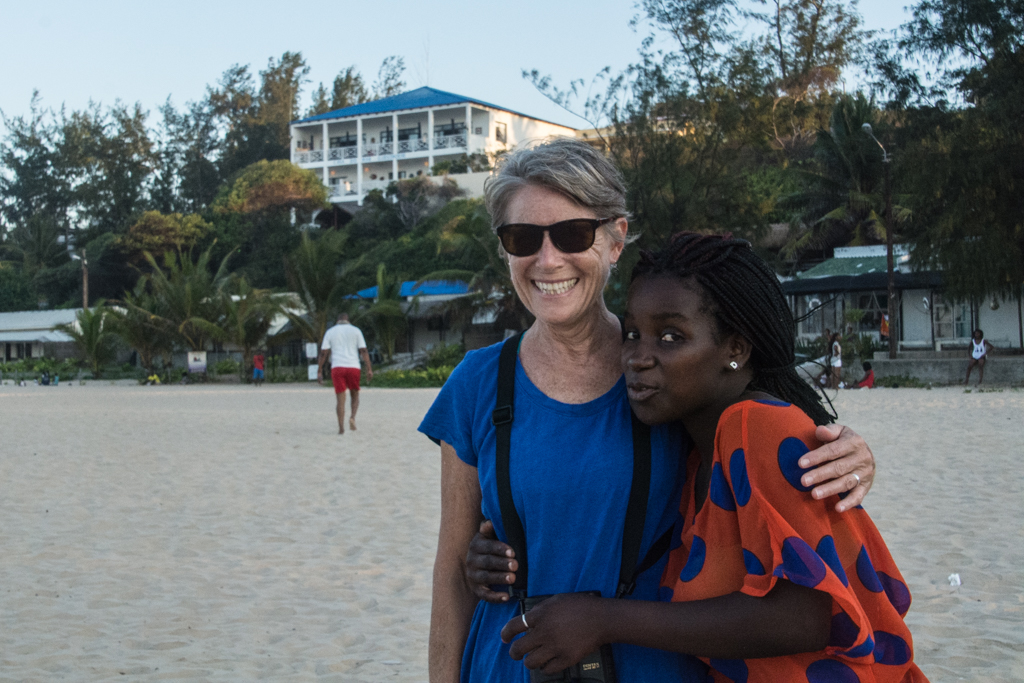
That's Caso do Mar in the background, and Sally with a young woman who rushed over to be photographed

That’s Caso do Mar in the background, and Sally with a young woman who rushed over to be photographed

Our first day out, the dive was down to about 100 feet. The current was quite strong, and we had to fight it to stay near the reef. Here, too, it was dark and chilly, with visibility less than 10 feet. We enjoyed seeing some pretty small tropicals. But this is not diving for the timid or out of shape.

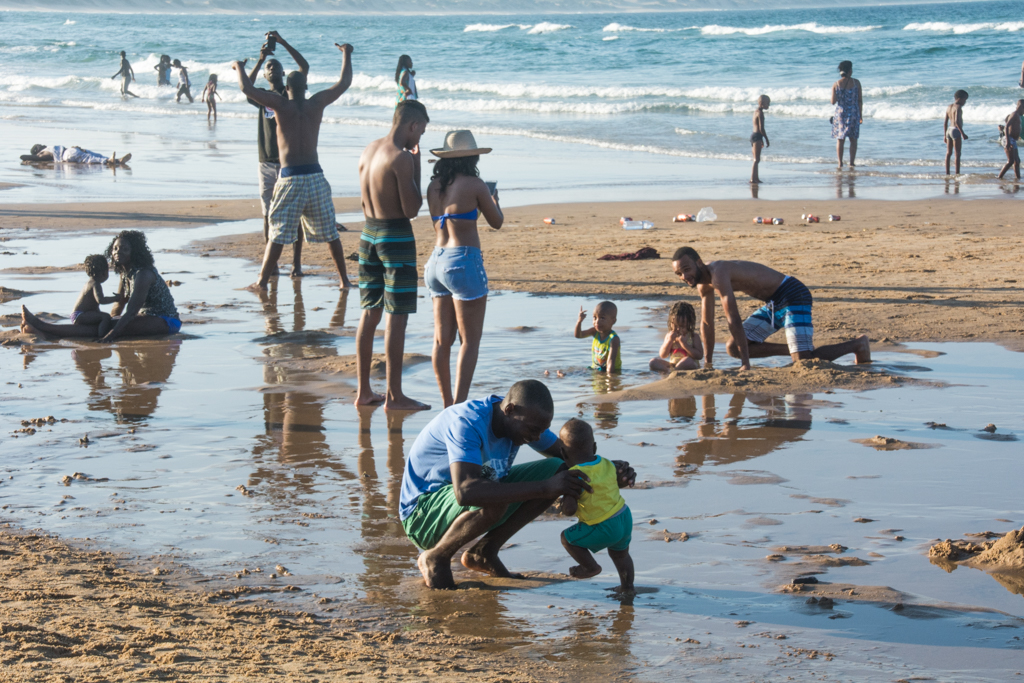
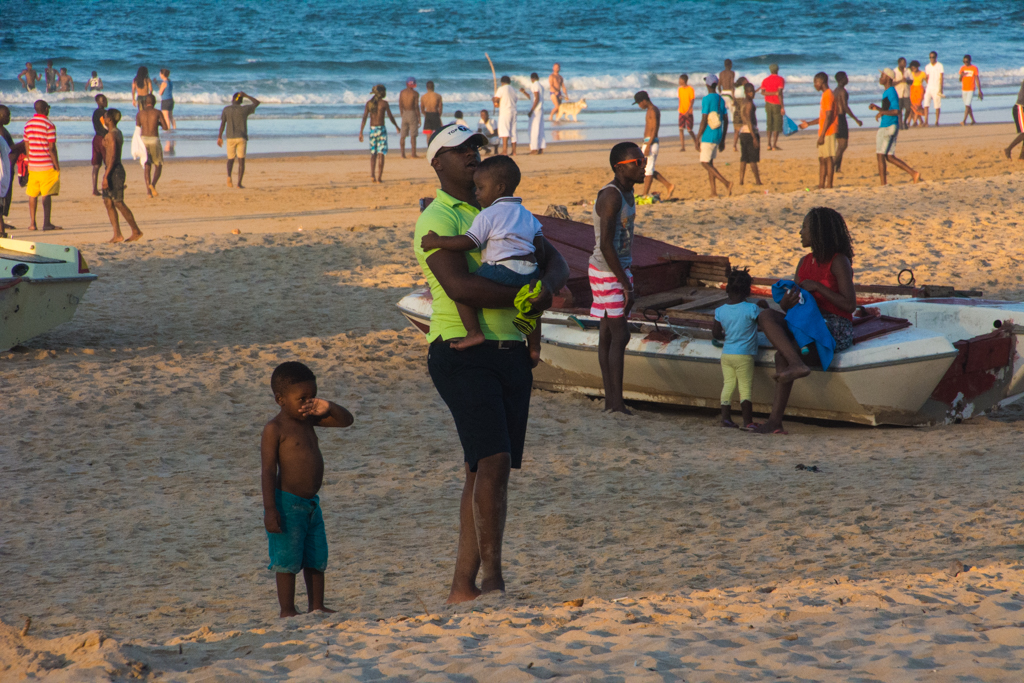
We liked our hotel, the Caso do Mar, and we liked the dive outfit, Peri Peri. Our main divemaster, Frieda, was unfailingly cheerful, and consistently safety minded. We had some good talks with her about great dives past, and ones we hoped to make. We liked walking on the beach as the young men played soccer and the young families played with their babies.
Tiller4

We saw a good number of humpback whales during our boat rides, and heard them singing when we were under water. We saw one white tipped shark, but no others, and a honey-combed moray eel. We never did see a manta.

But I finally realized my dream of swimming with a whale shark. Our skipper spotted the enormous animal near the surface, and we all slipped off the pontoon boat with snorkel gear. I found myself over the creature, just off its right side and perhaps 6 feet above. Even with murky water, I could see it clearly from tip to tail. My fellow snorkelers were not within view. The whale shark and I swam together for perhaps two minutes, and then it began to pull away. Soon all I could see was the tail, and then just dark water.

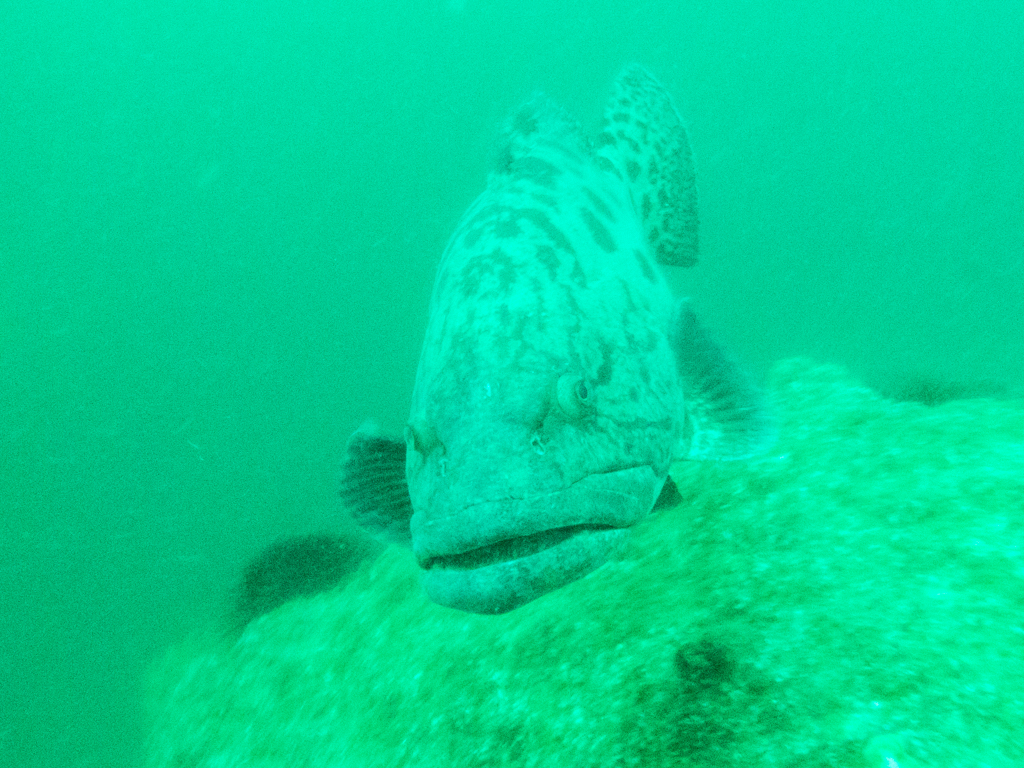
I spent a fair bit of money and energy getting ready to photograph the sea creatures of Mozambique, and it didn’t work out so well. There were various equipment problems (the strobes wouldn’t work, then the zoom wouldn’t work, etc.), but the biggest problem was the very limited visibility. So it goes; sometimes nature is uncooperative. I will surely be more appreciative the next time I’m in clearer waters.
Tiller4-7

Just in from Africa

Tiller4-3
After 30 hours of traveling, we got back this morning from a two-week African trip, our first. Not everything went according to plan, but it was an exciting adventure. In this post, I recount a few high points of our safari in South Africa, including being charged by rhinos, and next week I plan to post on scuba diving in Mozambique.
Tiller4-12

We stayed at Grand Kruger Lodge, in Marloth Park, on the south end of Kruger National Park, about half an hour from the Crocodile Bridge gate. Our room was a grass-roofed hut, with a deck for looking out on the monkeys, kudus, and warthogs. The service was especially friendly and responsive. They weren’t accustomed to hosting vegetarians, but they managed to feed us well.
Tiller4-13

Before sunrise each morning our guide would load us onto an open, elevated vehicle and take us into Kruger for several hours to look about. The first day we had good sitings of “the Big Five” — elephant, rhinoceros, water buffalo,lion, and leopard — as well as giraffes, zebras, hippos, crocodiles, impalas, kudus, wildebeests, warthogs, baboons, a python, hyenas, and others. At times the animals were really close. It was thrilling to see these animals in their native environments for the first time, but it also made me want to experience more.
Tiller4-9

Our guides were cheerful and knowledgeable, and seemed to enjoy watching the animals as much as we did. Gradually they got us to notice other things, like the gnarled trees, thorny bushes, and other plants equipped for the harsh, dry environment. We learned about various dung beetles and mound-building termites. They got us to look at elephant dung piles as an entire community of insects and other small creatures, and rhino dung pits as communication devices for rhinos who might visit from a neighboring territory.
Tiller4-2

On our second morning, we did a “bush walk,” or hike with two guides. Each carried rifles, and instructed us solemnly to stay together, keep quiet, and follow instructions. After walking for five minutes, we spotted two white rhinos through the trees about 50 yards out. We moved forward to get a better look, and the rhinos looked up. They started moving toward us, and suddenly started to charge at us. Our guides got us behind some sticks, and as the rhinos got close they shouted and threw logs. With about 20 yards left, the animals veered off. We listened for a while to the pounding of their hooves receding. My heart kept pumping hard for some time.
Tiller4-10

That evening we went out for an evening drive. Among other things, we saw a baby elephant who’d just been born that day, along with its mom and aunts. We saw a lion couple lying in the road, apparently resting between mating bouts. We had another close view of another white rhino, and more good views of giraffes, zebras, wildebeests, steenboks, and impalas.
Tiller4-7

Our third and last safari day, France, our driver, tried to locate a black rhino, without success. But we did see all the Big Five again, including a fine view of a leopard lounging, and a group of male lions in a row watching a couple of warthogs. We also saw some notable birds, including Verreaux’s eagle owls (a pair, close), a secretary bird, a pair of ostriches, fish eagle, saddle-billed stork, snake eagle, red-billed hornbills, and a kori bustard.
Tiller4-4

Listing the animals gives some sense of the varied environment, but it certainly does not do justice to the richness of the experience of being with them. I felt so happy to be close to the elephants having their lunch, and the kudus having theirs. That all these amazing creatures are still here, in spite of all, gives me hope.
Tiller4-5

Hitting the little white ball, the appalling debate, ocean concerns, and reading Hamilton

At Raulston Arboretum, September 18, 2015

At Raulston Arboretum, September 18, 2015

On Wednesday after work, I went over to Raleigh Country Club and practiced on the range for a bit. Lately I’ve been trying to get out to practice a couple of times a week, with a view to making prettier and longer parabolas. It looks so much easier than it is. The late afternoon was peaceful and mild.

Sally was waiting on the terrace looking out on hole number 10 when I finished, and we had dinner there. It was overcast, and looking west we couldn’t see the sun directly as it was setting. But suddenly the clouds lit up a bright orange-pink, and for a few minutes the colors were amazing.
Tiller1

After dinner, Sally had to go to her mom’s apartment to take care of Diane’s two greyhounds, and so I watched the Republican presidential debate alone. It was, of course, appalling, though also by moments fascinating. The eleven candidates were all, in their various ways, intelligent and well spoken, and also in varying degrees bizarre or utterly benighted. I watched a good chunk of the three-hour spectacle, and kept waiting for a serious treatment of the serious issue of climate change. From press accounts, it appears I missed a few brief comments on the subject, to the effect that either it’s a liberal conspiracy or there’s just nothing to be done about it, so there’s no point in thinking or talking about it. Appalling.

I read most of the World Wildlife Fund’s report this week on the state of the world’s oceans, and recommend it. The news, of course, is not good. About half the population of creatures that live in, on, and over the oceans have disappeared since 1970. Coral reefs, on which much ocean life depends, have likewise diminished, and may disappear by 2050. But the report presses the point that the situation is not hopeless. There are ways we can address the over fishing and climate change problems that largely account for the crisis.
Tiller4

Through diving dive on some of the world’s most beautiful coral reefs, I’ve developed a deep love for reef ecosystems, and will be seeing another one next week. Sally and I are leaving next Friday for a trip to see the reefs and animals of Mozambique. We’re hoping to see whale sharks, manta rays, humpback whales, and many other remarkable creatures. We’ll also be doing a land based photo safari in Kruger Park in South Africa. This trip has been a big dream, and has taken a lot of planning, but it should be amazing. Anyhow, I expect to be offline for a couple of weeks, but hope to have some good stories and pictures to post after that.

For this long trip, I’ll need some good books to read, and I’d expected I’d be working my way through Ron Chernow’s Hamilton, a biography of the Founding Father who was our first Secretary of the Treasury. But I’ve been so fascinated by the book that I may finish it before the trip. The Times review is here.

Hamilton, it turns out, was a brilliant, energetic, and passionate person, who accomplished an amazing amount in his short life. Among other things, he helped win the Revolutionary War as Washington’s most trusted aide-de-camp, played a primary role in fashioning the Constitution, wrote most of the Federalist to win passage of the Constitution, established a financial system for the new republic, and served as President Washington’s primary advisor. And he was handsome and well-liked by the ladies, and also the gentlemen. Of course, he had his flaws of character, and his enemies, including the sainted Thomas Jefferson and James Madison. The politics of the time were at least as ungentle as now. This is a remarkable and remarkably relevant book, which I highly recommend.
Tiller3

Farewell to Oliver Sacks, family health, witch trials and terror trials, and beautiful bugs

RTILLER5 (1 of 1)

Oliver Sacks, one of my heroes, died last week, and I’ve been thinking about what he bequeathed. In his many articles and books on psychological problems, oddities, and exceptionalities, he covered the extremes of human mental experience, from savants to the severely impaired. Reading about his subjects, I felt gratitude for being relatively normal and wonder at the range of human perceptual experience. He showed in his work and by his work that much more was possible than I’d thought.

Some months back I heard Sacks interviewed in a program about prosopagnosia, a rare condition involving the inability to recognize faces. Sacks had a severe version of the condition, such that he couldn’t recognize the faces of people he’d known for years. This made social interactions very challenging for him. It may have accounted in part for his amazing literary output, by keeping him home and working evenings rather than socializing.

Sacks, then 82, announced his terminal metastatic cancer seven months ago in the Times, and published additional reflections as recently as three weeks ago. Hes faced his end with calm dignity, intelligence, and gratitude for life, without metaphysics, and without bitterness at the reality of death. This was a wonderful final gift. RTILLER4 (1 of 1)

Diane got discharged from the hospital this week and was taken to a live-in rehabilitation facility for more therapy. She continues to struggle with weakness, dizziness, and confusion. Sally has been busy giving her support and being her advocate. A major problem was what to do with Diane’s two greyhounds, but with the help of the local greyhound rescue society she located a kind-hearted person willing to be a foster dog parent until Diane regroups.
RTILLER6 (1 of 1)

Jocelyn called early this week from Brooklyn during her walk to the subway. She reported that she’d improved her mile-run time (7:26, I think) and was finding longer runs more fun. She’s also eating healthy food and consciously avoiding junk. I was proud of her! This was a girl who seemingly had an allergy to exercise, and is now taking really good care of herself. I’ve tried to set a good example for her, and now she’s doing it for me.

On Friday morning I went to a spin class at Flywheel, where I achieved two of my three objectives. The Friday crowd is a fit-looking group, most of whom are my juniors by two or three decades. I was looking to: 1. not come in last in the men’s group (as happened last time), 2. hit 300 points, and 3. end the week at my target weight. I managed number one, though it was close: I was trailing the pack with 5 minutes to go, and had to push hard to edge ahead of the next guy. I didn’t achieve number two, finishing at 295 – which actually wasn’t bad. Finally, I made my weight goal of 155.
RTILLER8 (1 of 1)

The Salem witch trials have fascinated me since I was a kid. As you may recall, the Puritans in New England in 1692 tried, convicted, and executed 20 people based on the crime of witchcraft. The New Yorker had a piece last week on the event by Stacey Schiff that walked through the facts in a way that was engaging, even as the events were appalling.

There was a time, long ago, when I wondered whether there were true witches with magical powers, but I’ve long since concluded not. Since then, my interest in the witch trials has been in what it shows us about flawed thinking and group behavior. Some very smart, well-meaning people did some terrible things. The episode shows both the power of ideas and the danger that truly bad ideas may, at least temporarily, triumph.

Schiff’s piece doesn’t attempt to relate the witch trials to current events, but the piece seems timely. As religious fundamentalist groups like ISIS wreak violent havoc in the Middle East, we might reflect that we’ve had our own murderous fundamentalists right here in New England in days gone by. And eventually the fever broke, and the extreme craziness stopped.

At the same time, we’ve had something very like witch trials in living memory. The trials based on allegations of ritual Satanic abuse of children in the 1980s turned out to be products of children’s imaginations inspired and guided by quack therapists. But our tendency to attribute awesome diabolical power to various unfamiliar foes (immigrants, Communists, jihadists) is in some ways similar to the Puritans’ hysteria. We imagine scary ghosts and goblins attacking us when they’re doing nothing of the kind. As long as our leaders maintain that ISIS is an existential threat to America, and continue a campaign of brutal executions, the spirit of 1692 lives on.

There was a good piece in the NY Times magazine last week on Anwar al-Awlaki, an American citizen who became a popular Muslim cleric and was executed by drone. After the FBI discovered that he had an addiction to prostitutes, fearing exposure he fled the country and went to Yemen, where he became a became an Al Qaeda leader. Since his execution, he’s been hailed as a martyr, and his radical teachings are more popular now than in his lifetime. It seems that killing Awlaki was yet another self-inflicted wound in our war on terror.

This weekend we watched The Newburgh Sting, a documentary about an FBI sting operation centered on the Mosque of a poor community in New York. An undercover FBI agent offered some poor black guys an enormous amount of money ($250,000) to do some bomb attacks. There was no indication that the guys were radical, or even particularly religious, or that it had ever occurred to them to conduct a violent attack, or that the attack had any jihadist purpose. Apparently all that money was just too tempting for people that had almost none. Anyhow, this FBI operation was hailed as a great victory in the war on terror, and the guys were sentenced to 25 years. This is another data point suggesting that our anti-terror efforts have come off the rails.

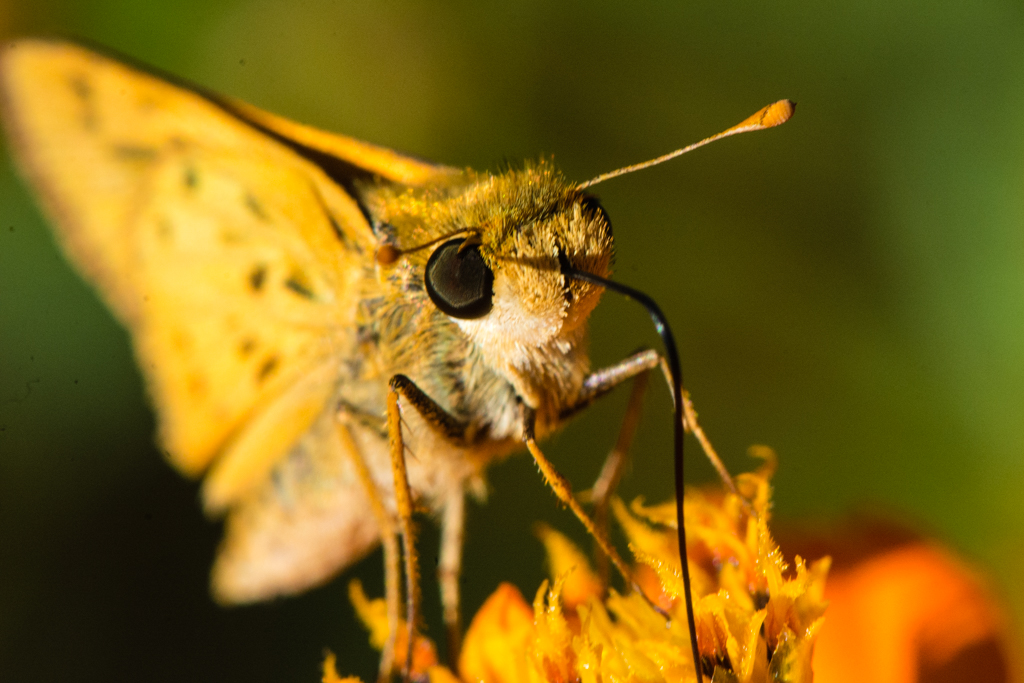
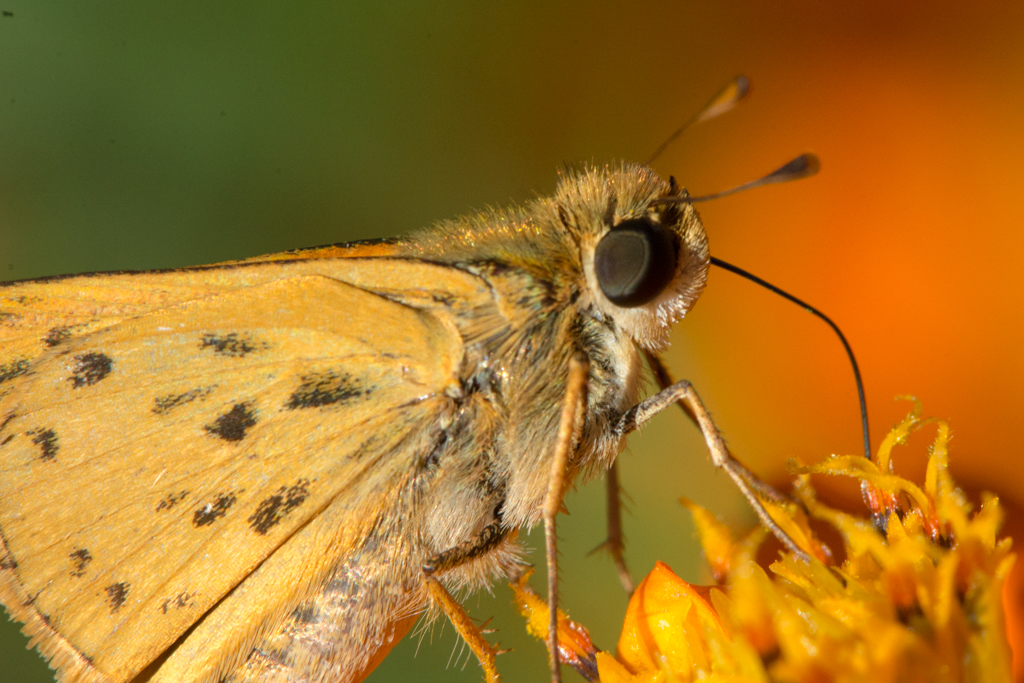
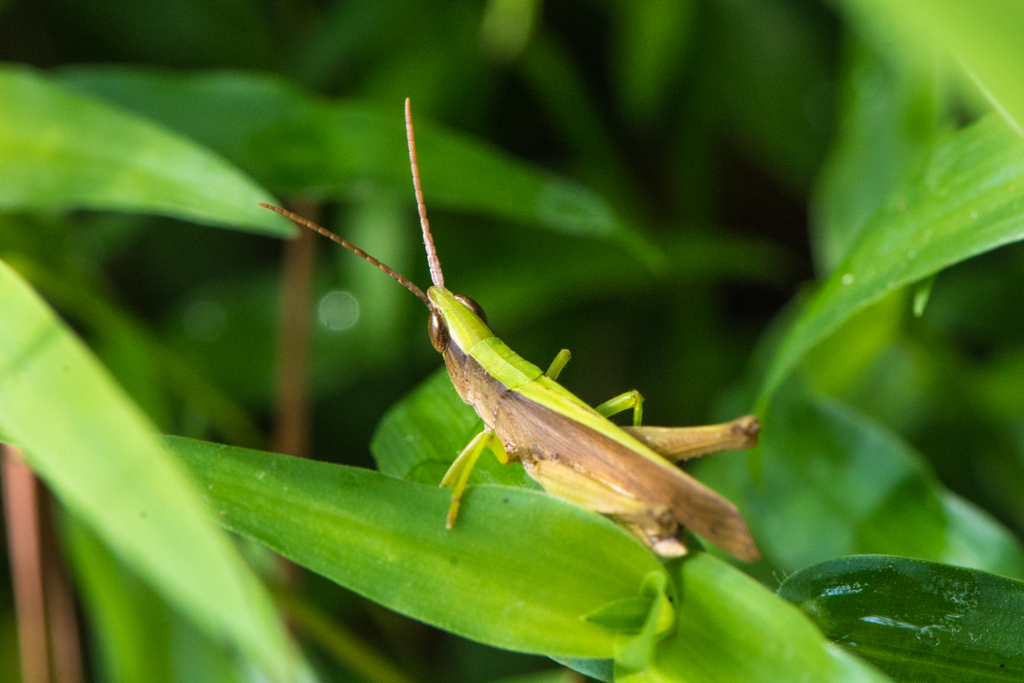
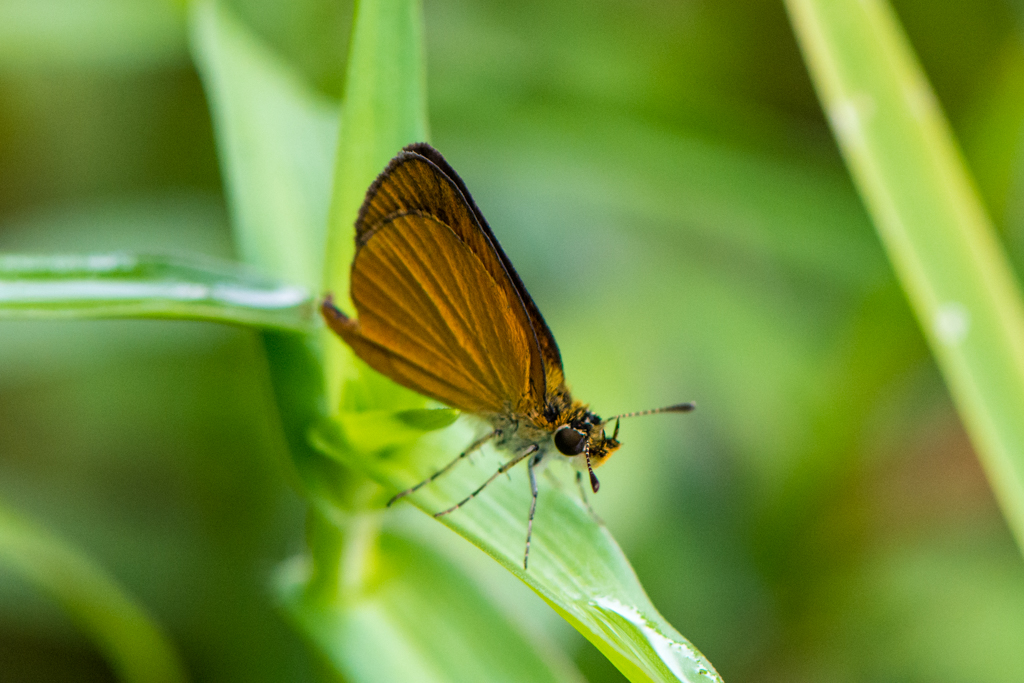
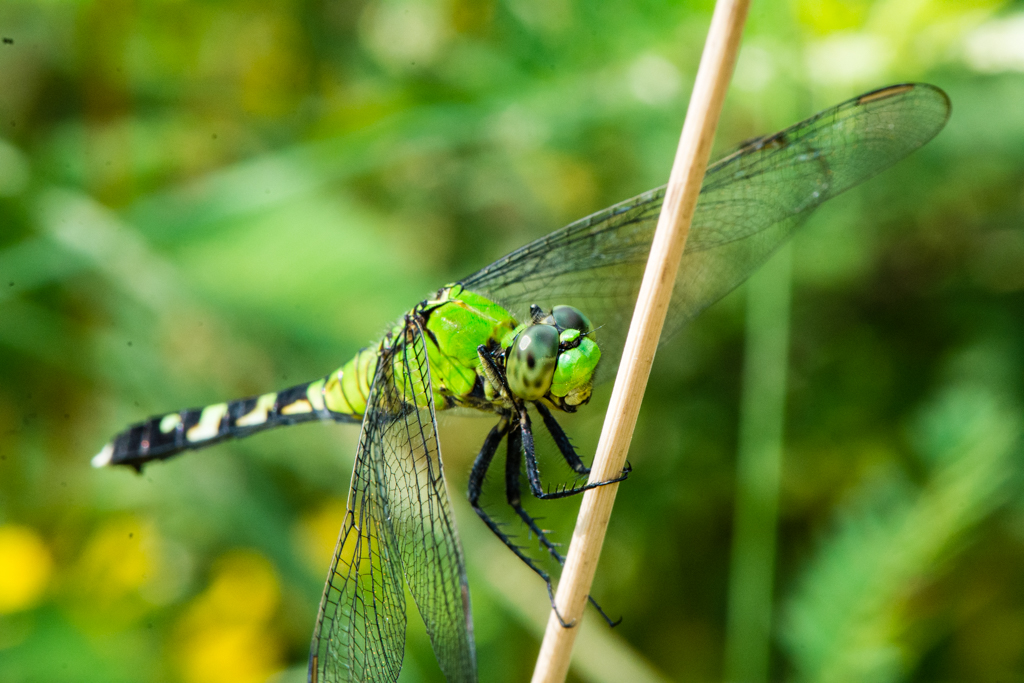
On Saturday, I went up to Durant Park with my camera and took a slow walk around the lower lake. I was especially on the look out for butterflies, dragonflies, and spiders. Most of the large butterflies were gone, but I got a few images of tiny (less than .5 inch wingspan) skippers. There were quite a few of the locally common dragonflies. Most were flying fast, but an Eastern Pondhawk posed for me. A few leaves were falling.

Our Fourth in Corolla

Corolla day three-0449My sister Jane invited us out to see her family for the 4th of July at their place on the Outer Banks, at Corolla. We drove out Thursday evening and made good time, arriving in just under 4 hours. Keith cooked a delicious vegetarian lasagna, and we caught up on family news.

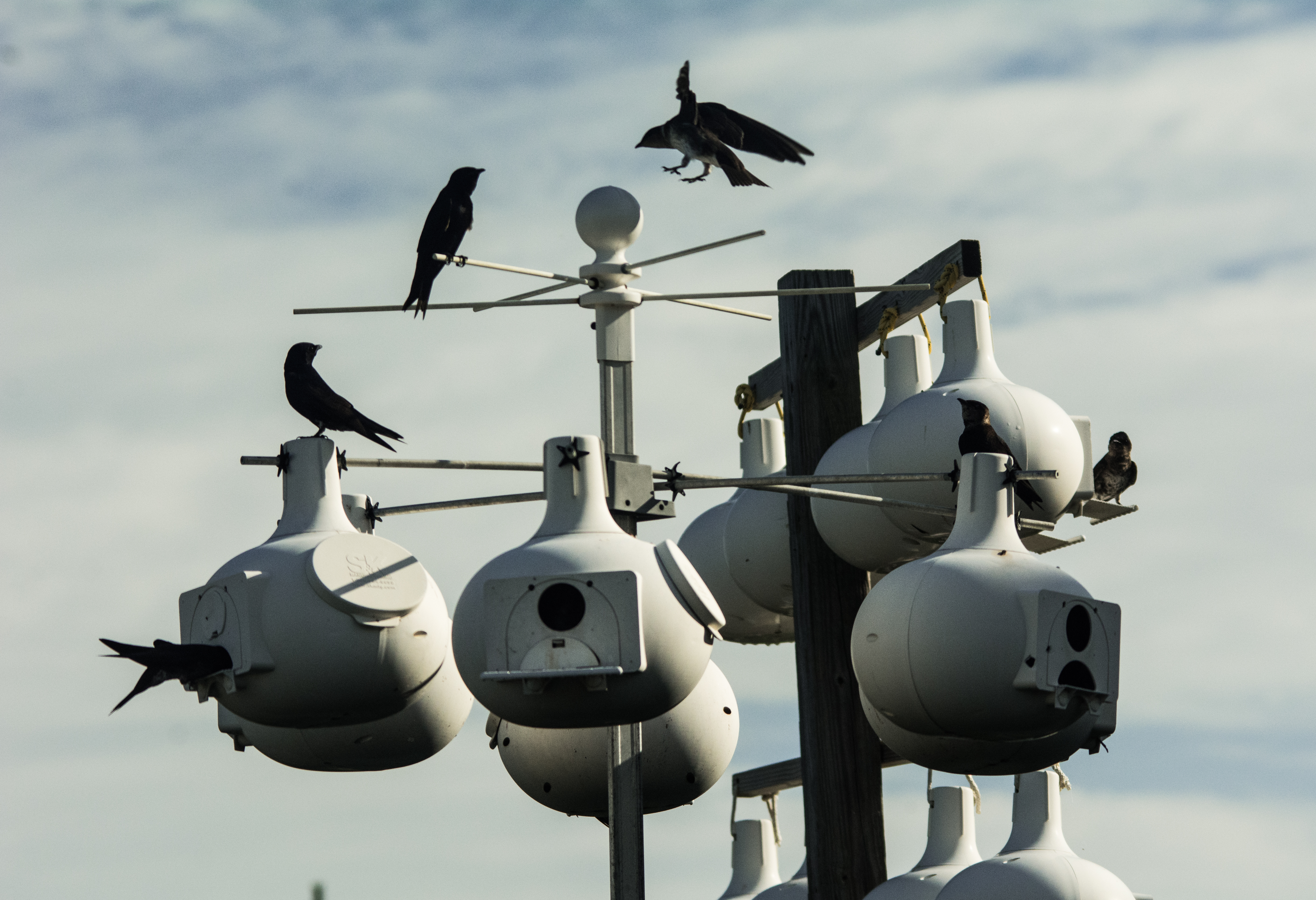
I brought along several lenses, including the heavy Sigma 150-500, in hopes of shooting sandpipers scurrying on the beach in the early morning. On Friday morning, I got out to the beach by 6:30, but sadly, there were no sanderlings. It was peaceful, though, walking on the beach at low tide. I shot a few ring-billed gulls. There were little ghost crabs that scuttled down their holes as I approached, and pelicans flying in formation. Just back from the dunes, there were lots of purple martins doing aerobatics.
Corolla day two-0356
Everyone was still asleep when I got back, so I had time for a run. The temperature was mild, and I moved along with reasonable pep for 40 minutes. My heart rate monitor gave me a peak reading of 167, and an average of 153. Keith made gluten-free popovers for breakfast, one of which I filled with blueberry jam.

It’s great to read at the beach. Over the next couple of days, I caught up with my backlog of magazines. Ever since my New Yorker days, I’ve had a thing for magazines, and I like it when they come in the mail, but it’s not easy to keep up with the in flow. I flipped through and read parts of: The New Yorker, The Atlantic, Golf, Scientific American, Sport Diver, The Economist, Outdoor Photographer, and Opera News.

I also got well into a new novel, Meatspace, by Nikesh Shukla. The narrator is a young Indian guy in London trying to make his mark as an author and social media savant. Gary Shteyngart (a wonderful writer) gave it a great blurb: “the greatest book on loneliness since The Catcher in the Rye.” It is both painful and funny.
Corolla day three-0515
Jane and Keith are much more conservative than we are. It’s not often that we hear views really different from ours, and it’s bracing – we should do it more. Anyhow, we all talked about some of our favorite gripes and worries (for J&K: government incompetence, IRS incompetence) (for R&S: the misbegotten wars on drugs and terror, global warming) and maybe benefitted from different perspectives. Anyhow, we’ve learned how to listen to each other and disagree with respect.

One afternoon, Jane took us on a walk through the nearby maritime forest park, an unusual ecosystem with tall pines and short scrubby hardwoods. We had hopes of sighting some of the Corolla wild horses there, but didn’t. We did see a heron, an egret, and lots of beautiful dragonflies.
Corolla day one-0318
On Sunday morning I had another go looking for birds to photograph on the beach, and again found almost none. I did another 40 minute run, going a bit slower, and did some stretching. We had another delicious breakfast (Belgian waffles with ice cream and blueberries), and soon after hit the road. We’d hoped to beat the island traffic, but didn’t: it took us a full hour to finish the 15 miles to Duck, and it stayed slow all the way to 158.

Our Memorial Day weekend in New York — great ballet, art, and ethnic food

The New York Palace (that's our place on the 32nd floor) and St. Patrick's Cathedral

The New York Palace (that’s our place on the 32nd floor) and St. Patrick’s Cathedral

For Memorial Day weekend, we went up to New York City to see our sweet Jocelyn and get an infusion of arts and food. I’d bought tickets to both the NYC Ballet and the American Ballet Theatre, and wanted to see the new Whitney Museum. We designated Jocelyn as the food concierge, and she booked us into some fun ethnic restaurants. After going back and forth, I decided not to lug along my big DSLR kit, and instead took my compact Canon G16, with the results shown here.

Sunset right after we checked in at the New York Palace

Sunset right after we checked in at the New York Palace

The flight up went smoothly (storage room remaining in the overhead bin, on time departure, seatmate not apparently infectious). I read a piece in the last New Yorker on Marc Andreessen, the famous Silicon Valley tech entrepreneur and venture capitalist. It was a good primer on what VC is and does, and seemed like a fair portrait of Andreesen and his firm (Andreesen Horowitz). He is, of course, intelligent and richer than Croesus, but, it turns out, sort of inexpressive and unadventurous in his personal life. (His likes watching television.) And for all his successful bets on where technology is about to go, he seems in complete denial about the big economic changes technology is bringing, like rising inequality and unemployment. Cognitive dissonance, perhaps?

We stayed at the New York Palace on Madison and 50th. This hotel opened in 1981, when we lived in Manhattan, and was known as the Helmsley Palace, with ads that featured a then-famous dragon lady named Leona Helmsley touting its remarkable luxuriousness in a loathsome way. Now rebranded (thank goodness), it is quite a fine hotel, and from our room on the 32d floor we had good views of Manhattan towers and a sliver of the East River.
IMG_0434
We had dinner in Curry Hill, the little Indian restaurant neighborhood at 28th and Lexington, at Chote Nawab. It’s a lively place, and the food was good, but our server was amazingly inattentive. Even so, we had fun catching up.

It was remarkably clear on Saturday morning and a bit chilly when we went down to the meat packing district to the new Whitney, which is situated on Gansevoort right where the High Line starts. It took a minute to absorb that the line to get in was a block long, and we kicked ourselves for not buying tickets in advance. But the line moved quickly, and we were inside in about 20 minutes. The place was crowded, but with a little patience we managed to get close to the pieces that interested us.

Eva Hesse's last work before her death at 34

Eva Hesse’s last work before her death at 34

The current exhibition is called America is Hard to See, which is so true, and is a loosely chronological survey of some of the key examples of the Whitney’s permanent collection. It starts on the eighth floor (the top) with the beginning of the 20th century, and comes down and toward the present. The works were given a good amount of space, and where there were narrative labels, they were helpful.

At this point in my own art historical education, Abstract Expressionism from the 50s seems more like an old friend than a shocker. But I found myself moved and shaken by some of the political art of the 60s (some of the big issues of that time are still big issues). I also engaged with the minimalism and conceptualism from more recent decades. It struck me that this was art intended to be discussed, to expand out into a social dialog. It wasn’t about just looking — it was also about talking.

The Whitney's decks

The Whitney’s decks

In addition to the fine display spaces, the new museum has large outdoor decks. We lucked out, with beautiful weather, and after each floor, we stepped out in the sun clear our heads and enjoy the wonderful cityscape views.

Looking south from the Whitney at the new Freedom Tower

Looking south from the Whitney at the new Freedom Tower

We’d thought of visiting some galleries in the area after the museum, but after two and a half hours at the Whitney I was more than sufficiently stimulated, and a bit wrung out. Jocelyn met us outside the museum, and we walked up to the Flatiron District, where we had good lunch at a Korean place called Barn Joo.

Then Jocelyn gave us a tour of her offices in the Flatiron Building. This iconic triangular building at 23d and Broadway, completed in 1902, was one of the first skyscrapers in New York. J’s employer, Macmillan Publishers, is now the sole tenant. The offices were nothing fancy, but still fun to see. It reminded me of our offices at The New Yorker in the late 70s. There was a great view of the Empire State Building from the northern point of the building.

The Flatiron Building

The Flatiron Building

We poked around in Eataly, a giant gourmet grocery and restaurants space, which was very crowded and fully of delicious smells. Jocelyn promoted the cookies at a bakery a few doors down as the best in New York, so we bought three and ordered coffee. The barista for some reason had trouble with our order, and took ten minutes to produce various beverages we had not ordered. We consumed them at a table near Madison Square Park. My cookie was a good mix of smooth and crunchy, and I enjoyed it very much.

The Empire State Building, from the Flatiron Building

The Empire State Building, from the Flatiron Building

We had dinner at Boulud Sud, a Mediterranean Restaurant at 64th St. near Lincoln Center. The place was bustling. There were no veggie options on the menu, but they proposed a gnocchi dish that was good.

We finished dinner with enough time (barely) to get to our seats at the Metropolitan Opera House to see the American Ballet Theatre perform Giselle. I was interested in Giselle in part for its historical significance as one of the oldest ballets still in the common repertoire. It was first performed in Paris in 1841, with Carlotta Grisi as Giselle and Lucien Petipa as Albrecht. It must have been astonishing at the time to see the women rise and hover en pointe.

This production had Stella Abrera as Giselle and Vladimir Shklyarov as Albrecht. Abrera was not previously known to me, but I will not forget her. She was sublime. Her gestures seemed somehow to be magnified and extended, with a remarkable emotional intensity, without being overstated. Shklyarov was also excellent. In the second act, the ethereal Wilis were spookily graceful, and when they tried to dance Albrecht to death, Shklyarov was so fervid that it seemed on the verge of real danger. The ovation was tremendous by New York standards, with the audience clapping for about 10 minutes. After I drafted this, I saw Alastair McCaulay’s review in the Times, which was a rave for Abrera.

The Metropolitan Museum of Art

The Metropolitan Museum of Art

On Sunday morning we took a taxi up to the Metropolitan Museum. I’d been looking forward to seeing an exhibit of the art of the plains Indians, but it had, unfortunately, closed. But there is always a lot to see at the Met. We started with a tiny exhibit of Van Gogh’s irises and roses, which had four paintings. The signs explained that the red pigment in the paintings had deteriorated and changed the colors of the paintings, and a video offered an interpretation of what they must have looked like. We spent time with the Lehman collection of Impressionists and Post-Impressionists, thirty or so great paintings that sum of the field amazingly well.

A Vermeer that just kills me

A Vermeer that just kills me

Then we made our way to the galleries with the Vermeers and Rembrandts. I listened to an interesting podcast the previous week with a debate on whether Rembrandt or Vermeer was the greater artist, and confirmed that I’m more of a Vermeer man. The Met has 5 of the 35 or so existing Vermeers, and I particularly love a couple of them. We also spent time looking at the pre-Colombian art, which is getting more and more interesting to me, and African art.
IMG_0605

We met Jocelyn for lunch on the West side at Nanoosh, a Mediterranean spot, and I had some delicious falafel. Then Jocelyn came with me to Lincoln Center to see the New York City Ballet perform La Sylphide. This was, again, for me partly about ballet history, since La Sylphide is another path-breaking early work, from 1834 by August Bournonville. Lauren Lovette was the Sylph, and Anthony Huxley was James. The corps of Sylphs in Act II was, like the Wilis in Giselle, all in diaphanous white tulle, and entrancing. Lovette danced beautifully.

Jocelyn outside the David H. Koch (aka "El Diablo") Theater

Jocelyn outside the David H. Koch (aka “El Diablo”) Theater

After the ballet we went down to the west Village, where we found an outside table and sipped wine, then had dinner at Pagani, an Italian restaurant. We liked our food, and the service was good until dessert time, when things suddenly came to a halt. The staff regrouped, though, and comped our tiramisu.

On Sunday morning we checked out and took a cab out to Jocelyn’s place in Fort Greene, Brooklyn. Her area seemed sort of Village-like, at least on a sunny Memorial Day holiday. We met up with our and J’s old friend Kathryn M, and ate at a South African restaurant called Madiba, which had a lot of funky charm, though it took a while to get a beer. I had the vegetable Durban curry, and liked it, and heard about Kathryn’s new admin job at Victoria’s Secret.

Then we went to the Brooklyn Botanic Gardens, where there were things that were blooming and things that were not. I didn’t see a great diversity of species, but the landscaping was pretty. We also took a stroll through some of Prospect Park. There were hundreds of Brooklynites picnicking, playing, and soaking in the sun.