The Casual Blog

Category: technology

Chilling with Robert Frost and a new camera
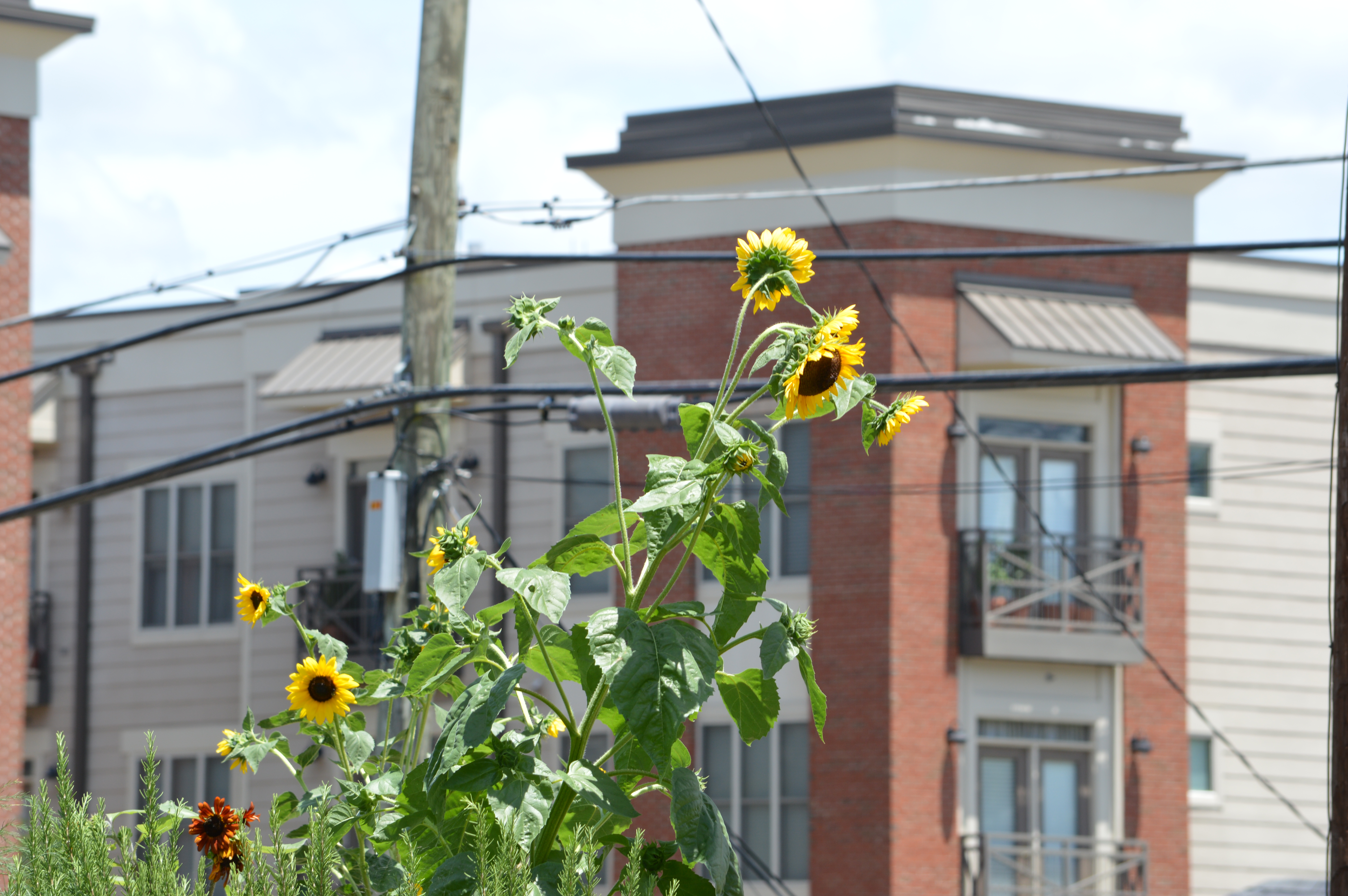
The hot weather finally broke last week, after setting a temperature record here in Raleigh for most consecutive days over 100 (6) and tying the all time high of 105. Most of the time, I’m in air-conditioned environments, but still, I usually try to spend some time in unprocessed air. During the recent heat wave, though, the idea of communion with the natural world seemed rash. The brutality of nature was in full display.
To cool off mentally, I refreshed on The Wood-Pile, a poem by Robert Frost. I memorized this chilly thing a while back for no good reason other than its stark strangeness. It begins, “Out walking in the frozen swamp one gray day, I …” The narrator at first sees nothing but “tall slim trees.” It seems matter of fact, but it’s completely strange! Who goes walking in a frozen swamp? Especially when the sky is gray and gloomy?

As with other great poems by Frost, what seems at first to be simple factual reporting turns out to raise question after question. The nominal focus of the poem is on a well-formed cord of wood incongruously left in the middle of the snowy swamp. The narrator has personal knowledge of the hard work required to cut so much maple with an ax, and is baffled and offended that anyone could invest such effort in a fine wood pile and leave it “far from a useful fireplace.” He speculates that such a person must be someone who “lived in turning to fresh tasks.” This is, from the narrator’s viewpoint, a strange and disturbing thing. And so we wonder more about the flinty narrator.

A woodchuck near the Buckeye Trail

Is it a bad thing to turn to fresh tasks? The poem make us wonder, but still I think, generally not. New challenges are, more often than not, good. I undertook one last week and bought my first digital SLR camera with the thought that I’d like to engage with the visual world a little differently and take better pictures. I’ve been drawn by photography since I was a kid, but in the pre-digital era was discouraged by the difficulty of working with film (dark rooms, chemicals, and so forth) and the expense.
I also worried about that the camera sometimes shuts off the photographer from experience. Think of gaggles of tourists taking snaps of the Grand Canyon — and forgetting to look at it. Direct experience of beautiful things, or even not-so-beautiful things, is a terrible thing to waste.

Balancing that risk, though, is the possibility of finding a different way of seeing, and also a different pathway for communication. I’ve enjoyed using my little point-and-shoot to share images with friends, and noticed that at times taking a picture created an interesting shift in my own visual perspective. A photograph is an abstraction from a larger visual reality, but being conscious of this can focus attention on the larger reality. Deciding whether something is worth snapping and how to snap can open things up.

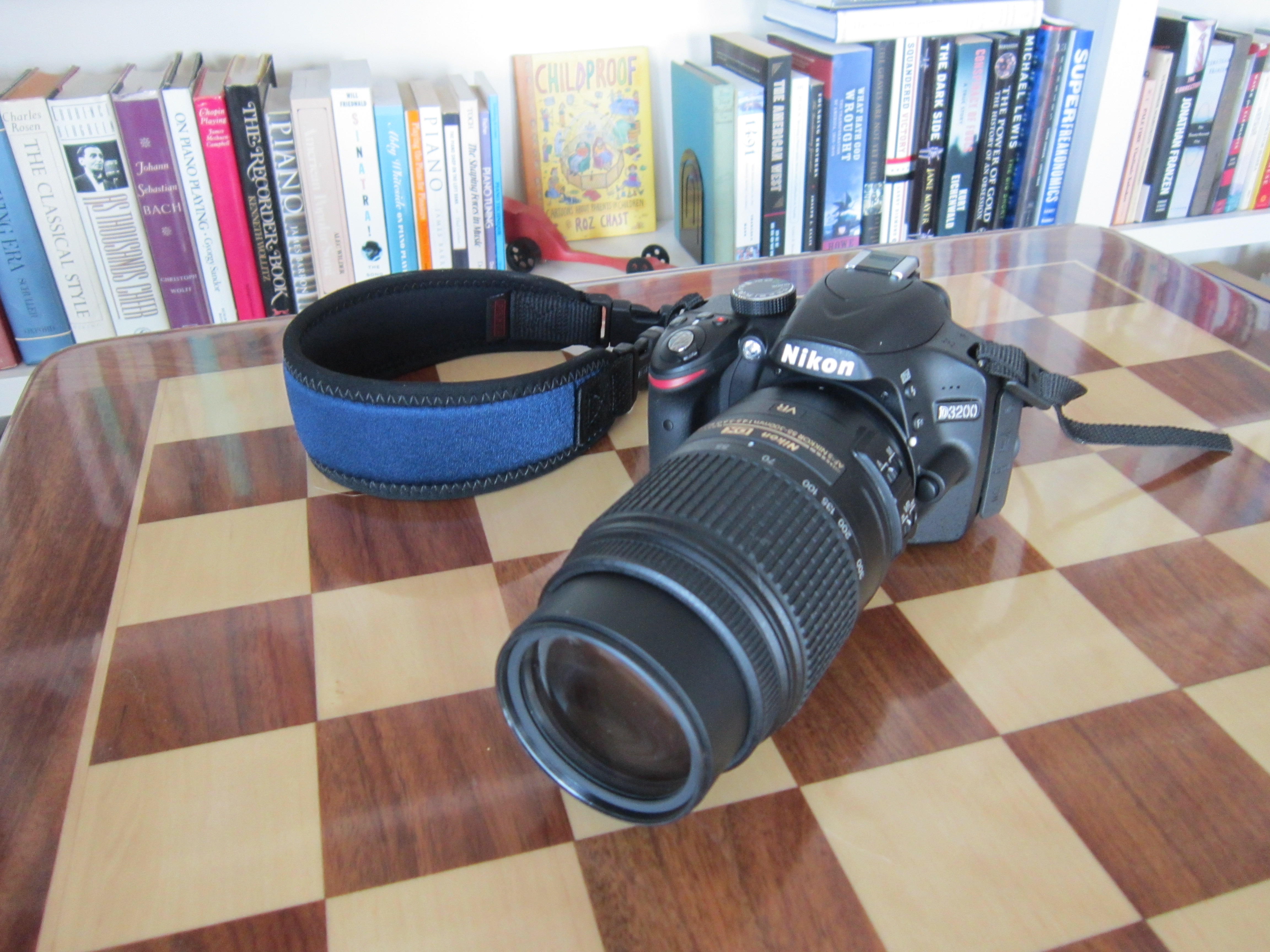
Anyhow, I got a Nikon D3200 with two Nikon lenses (an 18-55 zoom and a 55-300 zoom). Although the D3200 is an entry-level SLR, it is, to me, amazing technology. 24 million pixels! Four shots per second! ISO 100-6,400! Fast autofocus! A vibration reduction system! HD video with sound! And it fits my hands perfectly. All that it requires is knowledge, experience, and creativity.

I was thinking that it would be fun to photograph wildlife, and especially birds. I’m also interested in trying to look at human-built places that are not intended for show, places that happen as a by-product of other objectives, to see what we might be missing. Above and below are some of my first efforts.

Mallard ducklings at Lake Johnson


Science news — the Higgs boson, global warming, the nature of consciousness

I’ve been trying to follow the story of the search for the Higgs boson for a long time, and so I felt excited by reports this week that scientists at CERN have discovered a new particle that could be it. Quantum mechanics is not something I would ever aspire to have a deep grasp of, but even skimming the surface is mind bending. The subatomic world has different rules from ours.

I also really like the purity of the enterprise. It’s primarily driven by curiosity, rather than motives of profit or power. These scientists aren’t much interested in practical applications; they want the truth. (Of course, they also may want tenure, grants, Nobel Prizes, dates, etc.) It’s cheering that there is still, in some places, political and financial support that makes their (very expensive) experiments possible.

Another thing that’s particularly cool about the Higgs search is that it is a massive collaboration. Thousands and thousands of scientists are involved. According to the Times account, there were two teams of 3,000 physicists each analyzing the data from hundreds of trillions of proton collisions in the latest round of the CERN effort. They’ve found ways, which I’m sure involve the Internet and massive computing power, to share their knowledge and coordinate their efforts. This is very different from the model of scientific discovery I was taught as a kid, where individuals worked by themselves in their laboratories until their eureka moment. It’s encouraging that scientists are learning to collaborate better just as they take on ever larger problems.

The practicality of the Higgs work may be to the researchers’ advantage in making them a low-value political target. This contrasts sharply with global warming research. In my home state of North Carolina, a majority of our legislators (mostly Republicans) embarrassed themselves again this week by enacting legislation designed to suppress, or at least defer, scientific reports of rising sea levels caused by global warming.

The coastal development lobby seems to have been involved. As my friend and House representative Deborah Ross cleverly observed, putting our heads in the sand is not really doing property owners any favors — they need real information. I’d also note that the sea is not going to read the study anyway. It is both funny and scary that a significant portion of our political leaders (for now a majority in NC) are either willfully ignorant or cynically determined to oppose science where it conflicts with their self-interest.

Yet science hasn’t thrown in the towel yet, and I’ve got to think that the truth will out. Speaking a little more of science, I’ve been reading a new book by Michael Gazzaniga titled Who’s in Charge: Free Will and the Science of the Brain. It’s about recent discoveries and theories in neuroscience, and parts of it are mind boggling. Gazzaniga is a distinguished professor (University of California) and researcher in cognitive neuroscience who made ground-breaking discoveries in the area of split-brain research.

Gazzaniga covers a lot of territory, and I will not attempt to summarize (indeed, I’m not certain I completely grasp) his view of free will. For me, the most stimulating sections had to do with his his model of conscious thought. At least since the time of the Periclean Athens, we’ve thought of our conscious experience as objective — that is, what you see is what there is to see, what you hear is objectively present in nature, and so on as to other senses and perceptions. In everyday life, we experience all these sensations predictable and reliable, and have difficulty imagining them as error prone and misleading.

I’ve read several interesting books recently discussing research on this, including Jonathan Haidt’s, Daniel Kahneman’s, and Jonah Lehrer’s, but Gazzinaga seems to have the clearest theoretical model and best supported theory for why we can’t accept that our conscious perceptions are at best an incomplete and fallible approximation of physical reality. His model of the mind involves hundreds or thousands of modules working on, say, vision, and forwarding their data to a module in the left brain which he calls The Interpreter.

The Interpreter takes in what it can (not everything), makes some quick guesstimates as to what data is reliable and what should be tossed out, fills in any gaps in the data with best guesses, and presents the result to consciousness as reality. Despite all the guesswork and potential for errors, the result feels to us instantaneous, smooth, continuous, and objective. If there are glaring problems or inconsistencies, The Interpreter comes up with a narrative or story that “explains” them. We are, in a really fundamental sense, story-telling animals.

Another aspect of Gazzaniga’s model struck me as particularly thought-provoking was his discussion of emergence theory. While giving respect and consideration to the researchers working at the scale of neurons and brain structures, Gazzinaga deems it unlikely that that approach will never explain conscious experience. The brain is just too complex.

Emergence theory addresses itself to phenomena are matters that arise out of inputs so numerous as to be incalculable. Examples include snowflakes, traffic jams and weather, which are in the aggregate clearly products of much simpler phenomena (hydrogen atoms, carburetors and other auto parts, breezes etc.), but which contain too many variables to be predictable. The brain’s 100 billion neurons and vastly larger number of synapses far exceeds the complexity of our analytical tools.

Finally, I was intrigued that Gazzaniga suggests the possibility that the basic unit of analysis for the study of human consciousness should not be an individual brain, but rather, groups of brains. That is, intelligence may be best understood as emerging from humans interacting with each other. The individual brain in isolation knows nothing that we would call intelligence, but needs other brains to develop. Prisoners in prolonged isolation quite literally lose their minds. We’ve barely begun to consider consciousness in terms of systems of brains, rather than individual brains. It could change the way we approach education, law, and most everything else.

My Father’s Day trip to a new race track (CMP)

Last weekend, I took Clara down to Carolina Motorsports Park in Kershaw, S.C. for some track driving. My Garmin GPS guided us down country roads and through small Baptist towns. I’ve gotten to like as a companion the Garmin’s female voice, except when she says, “Recalculating.” This can be interpreted as, “Can’t you even follow a simple instruction!” I’d like to defend myself, for example, when she didn’t describe a particular turn clearly, but we cannot have a dialog — yet. Anyhow, this was a pleasant trip of just three hours.

CMP is a road track with 14 turns, and my first objective was to learn the line for each turn. Even with this clear commitment and my experienced teacher beside me, I found it challenging to memorize the exact turning points of the track. There’s so much kinetic sensation, so much noise. After a dozen or so laps, I started to build up a body of knowledge, but even then, I had a few lapses.

In addition to learning the track, I learned more about performance driving techniques, including rev matching, dealing with understeer, the beginnings of trail breaking, and assorted other bits of car stuff. Not surprisingly, almost everyone at the event was into cars, and some were clearly crazy for cars.

Car-philia seems to be less common today than in my youth, as young people adore their smartphones more than their wheels. I remember my dad talking to relatives, acquaintances, and strangers about their cars and his, Ford versus Chevy, this year’s models versus last year’s, and on and on, and remember wondering why adults were always so boring. But the worm has turned, and now I find it all enjoyable. Even technical discussions of specific engine problems that I know absolutely nothing about, which I used to make me feel incompetent and confused, now seem intriguing, even though part of me realize we’re talking about relatively ancient technology.

At this event, organized by the Tar Heel Sports Car Club, there were some cars like Clara, pretty street cars with lots of power and a racing heritage. A Lamborghini stood out as the exotic queen of this subgroup.

But there were also a fair number of cars that at first glance looked like sad junkers, and on closer inspection turned out to be highly elaborate racing machines. I began to see how it could be fun to have an ugly car for which the only concern would be track performance. It would be nice, in a way, to not worry that Clara’s beautiful body might be seriously maimed by a poorly judged turn followed by a high-speed encounter with the tire wall.


On the other hand, this would involve a significant investment in infrastructure: a trailer, a vehicle to tow a trailer, a place to stow the trailer and vehicle, more tires, tools, etc. And a lot more time to take care of it all. There’s the rub. This would be fun, but there’s an opportunity cost — other fun foregone, other thoughts unthought.

My teacher, John, was a friendly, funny guy who turned out to know not only a ton about driving and cars, but also a lot about contemporary technology. We had a great conversation about robotics and economics.

He predicted that in the not-distant future driverless cars would end the need to buy a personal car, as groups of people subscribe to a share of a fleet of driverless cars that can appear to convey them at any time. In his view, states will eventually put strict legal limits on human driving, on the grounds that driverless cars are so much safer and more environmentally sound. The driverless cars will go much faster safely, and work together in a network to police themselves. If one should go rogue, the others will cooperate to avoid being damaged and to deal appropriately with the offender.

I told John about a story the prior week in the WSJ about the bomb-squad robots of the US Army in Afghanistan. The robots have saved plenty of human lives, which is good. But the surprising thing was that the units get attached to their particular robots and treat them as companions. When a unit’s robot gets blown up, when feasible it is shipped to the robot hospital. Its companion soldiers at times are specific that they want their robot repaired and returned to the unit, rather than a replacement.

I stayed at the Colony Inn in Camden in a ground floor room that opened onto the parking lot. It featured the three c’s: clean, comfortable, and quiet, and entirely worth $65 dollars a night, even if they didn’t throw in breakfast. I watched some of the Master’s golf tournament on non-HD TV and sipped some wine from the Piggly Wiggly. At the urging of Larisa, my personal trainer, I’d bought some TRX portable trainer cables. In the morning, since the Colony had no gym, I hooked the the TRX systen to the door and got in a workout.

It is my custom in all hotels to leave a few dollars for the housekeepers, which I figure they can use and which may create good karma. I was glad that I followed this custom at the Colony. When I checked out I left behind my phone charger. The manager gave me a call to let me know, and I was able to retrieve the charger. This was excellent karma.

There was nothing remotely like healthy vegetarian food at the snack bar at the track, but happily I found a Subway sandwich shop a few miles down the road. Oh Subway, you are the best! In the ugly wilderness of industrialized and unhealthy fast food, so many times you have nourished me well. I ordered my usual: whole grain bread, a variety of greens and vegetables, and that delightful honey-mustard dressing. It was tasty. My Subway sandwich guy made eyes at Clara.

I did not have any serious driving errors on this trip, but as I increased my speeds I also increased the stress on my brakes, and learned what happens when brakes overheat. It is more exciting than desirable to have big speed approaching a tight turn, to hit the brake pedal hard, and find that it goes all the way to the floor with half the usual braking power. I somehow stayed on the track. John counseled me to take the last few laps of that session slower and to drive a few minutes afterwards to cool the brakes down.

On the trip back, I got a call from Jocelyn, who wished me a happy Father’s Day. I regard this holiday as even more synthetic than Mother’s Day, an occasion for retailers to encourage watch and tie consumption and, except to them, of little real value. Yet it was ever so sweet to hear her voice. As I told her, she was one of my two proudest achievements as a father.

She’s currently working her first retail job in a high-end sportswear store in Telluride. It doesn’t sound like her ideal career path, but at least it’s a job. She’s been going out with a cute guy, a river rafting and fly fishing guide whom she really likes. It seemed like she was doing OK.

Later I got a Father’s Day text from Gabe, which said I was the best dad, which I am sure is not true, but I was grateful for the thought.

A juicy yoga class and other educational experiences

As much as I really love yoga, I go back and forth on Yvonne’s once-a-month Juicy Flow class at Blue Lotus. I like doing a class on Saturday mornings, and I like Yvonne, but I have the same issue the first Saturday every month.

Rather than her usual hour-and-a-half of Vinyasa (which is a lot), Juicy Flow is two hours, with a lot of fast movements. It’s eclectic. She puts a lot of thought into the music mix, which can range from goofy 80s pop to the world. In terms of movement, it’s always different, and there’s always something lively and fun. But it’s always exhausting, and tends to make me sore for a couple of days afterwards.

I was particularly hesitant about Juicy Flow this week, because I’ve been having some issues with my shoulders, and the class ordinarily stresses those parts. But I decided to give it a go. As usual, she’d come up with some demanding variations of traditional asanas, and several three-minute-long Kriya sequences of fast, big movements, including shoulder turns, squats, rolling up and down, scissoring legs, and open palm punches. There was also some free-form dancing.

Like every good yoga class, it was a learning experience — finding out some new things about what my body can and cannot do, and what the possibilities are. It was sufficiently demanding that I was not thinking about much of anything other than Yvonne’s directions. The two hours went fast. It was sweaty and exhausting, but also fun, and left me feeling amazingly calm and relaxed.

I was pleased to see news reports this week that Harvard and MIT are starting a free online education initiative called EdX. I might be interested in some courses. In fact, I’ve been auditing Michael Sandel’s Harvard course on justice (i.e. theories of ethics) through iTunes U. I usually watch Sandel or a Ted Talk in the early morning while getting my heart rate up on an exercise machine. It gets my head going.

Opening up the Ivy ivory tower strikes me as a very good thing for society in general, and I hope a lot of people will use it for continuing their education. It’s worrisome that anyone could think of college as the completion of an education. Seriously, has there ever been anyone who is reasonably well-educated after four years of college? College is kindergarten for adulthood. Getting fairly well educated takes a long time, and even then, there’s always more to explore.

Strawberries, memory flaws, driverless cars, manufacturing, massage, and Il Trovatore

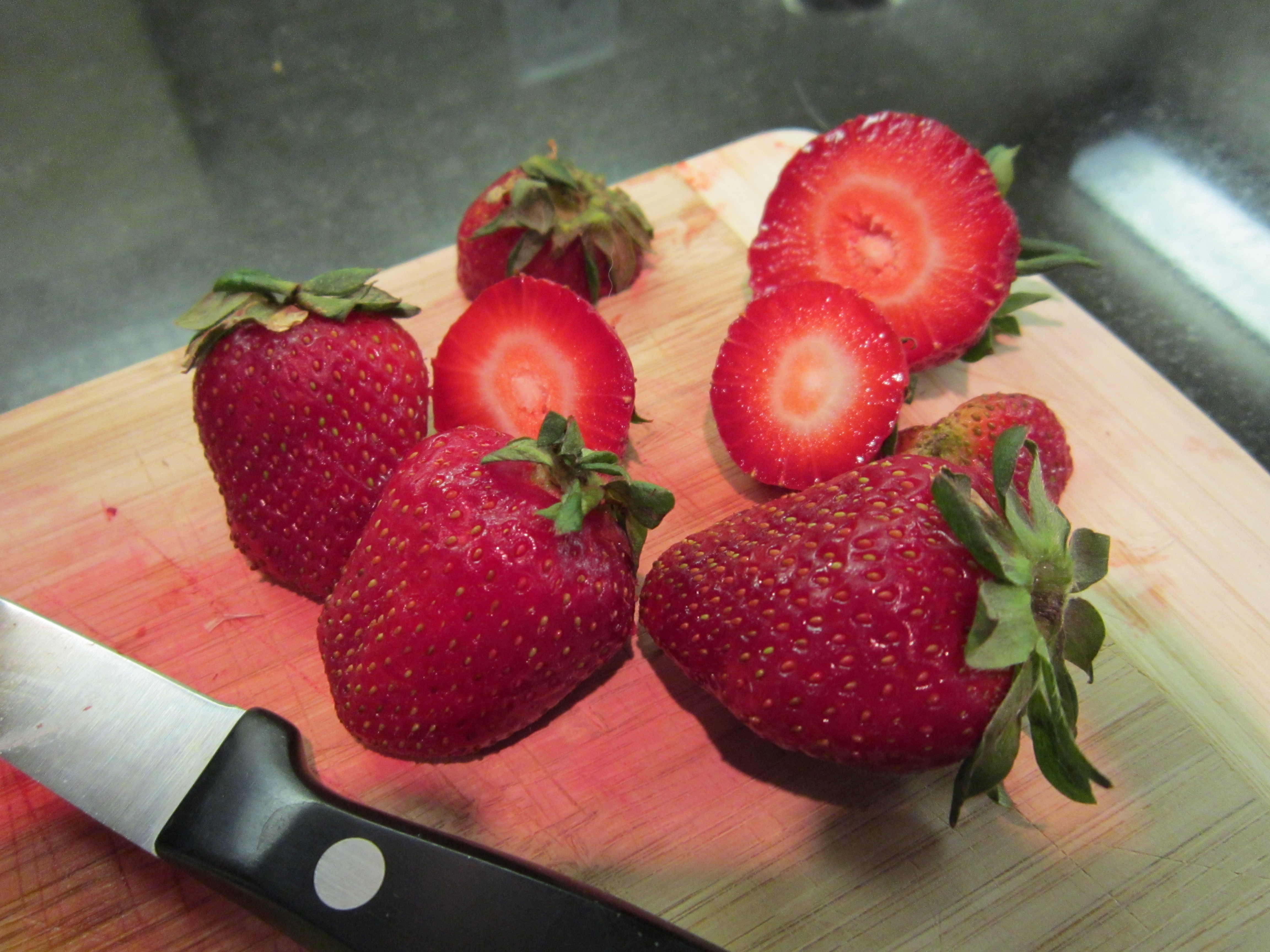
The strawberries from the Raleigh farmers’ market were good this week — firm but not too much so, and fairly juicy. I put quite a few in my breakfast smoothies (together with kale and other nourishing things), and also made a point to taste them in their unprocessed state. Still, I couldn’t help thinking that the strawberries of years ago were sweeter. Are strawberries losing their taste little by little, like tomatoes before them? Or is this just memory playing tricks?

It’s unsettling to think that memory is unreliable. It is such a vital part of our interior lives, of our concepts of our ourselves. But it is highly prone to error. Thousands of Americans “remember” being abducted by aliens. Many others recall, after extensive coaching by incompetent therapists but without any confirming evidence, being sexually abused by their parents. In Mistakes Were Made (But Not by Me), social psychologists Carol Tavris and Elliot Aronson take a swing at explaining these and other social-psychological debacles involving strongly felt, but completely wrong memories.

Tavris and Aronson explain that complex memories are not a literal or objective recordings of events. There is no place in the brain where everything that happens to us is stored. Our brains hold selected vivid highlights of events, which we mix together with other knowledge or impressions to construct storylines. These storylines can, especially when repeated many times, come to feel like literal truth. The “mistakes” of the book title refers to our tendency to construct the storylines according to our own biases and tendencies towards self-justification.

Tavris and Aronson give a lively, readable account of the theory of cognitive dissonance, which drives us to reduce internal discomfort by ignoring information that conflicts with strongly held beliefs. They convinced me that there are systematic flaws in our mental functioning, even when we are healthy and operating normally. This is, as I say, unsettling, but it is worth pondering. It may be that by understanding the likelihood of certain kinds of mistakes we can lessen their likelihood.

Humans do some ridiculous things, but also amazing ones: our machines keep getting better and better. The self-driving car was in the news this week, with Google, which has been road testing its design, announcing plans to commercialize, and with Nevada becoming the first state to legalize one. What does this mean for the future of human driving? The end is near. As a person who enjoys driving, I say this with some sadness, but our AI drivers will be much more reliable and efficient than we are. There will be fewer accidents and better fuel consumption. Human driving will become like horseback riding — a noble but slightly mannered hobby allowed only in special areas.

More on amazing machines in last week’s Economist: a feature headlined The Third Industrial Revolution which gave a valuable perspective on how manufacturing is changing, and those changes are starting to transform societies. Major players include more sophisticated robots, improved software, nanotechnology and 3D printing. The new factories use significantly fewer people. The U.S. has a manufacturing output worth about the same as China’s, but uses only ten percent of the workforce used by China. Amazing, right? 3D printing is making possible product customization to a remarkable degree, and lowering costs. So it sounds like we’ll get more remarkable products cheaper, but have fewer manufacturing jobs. What are all the excess people going to do? Especially once their cars no longer need them?

I have a couple of ideas. Number one: more massage. This is a no brainer. Massage is simply wonderful, and we should all get more and give more. I saw Meredith at Hands on Health this week to get some work on my shoulders. Meredith does therapeutic massage, which is designed not to relax you but to make you healthier, and it can involve some discomfort. There were moments when I was close to my pain redline. To cope, I did deep yoga breaths, and was very proud when she told me that my breathing had been “fantastic.” Afterwards I felt great. Meredith is seven months pregnant now, and doing just fine. She’s helped me a lot, and I’ll miss her while she’s on maternity leave.

Another idea: more art. Art is something humans really like to make and share, and they’ve been doing it for millinea. I worry about our artists and artistic institutions, but they’re not dead yet, and there are still endless possibilities.

I felt particularly optimistic Friday night after the N.C. Opera’s production of Verdi’s Il Trovatore (The Troubadour). They performed the work in a “semi-staged” fashion, with no scenery, and the singers moving in front of the orchestra. Il Trovatore has great music, and the soloists were very fine. Leah Crocetto as Leonora was excellent — an exceptional voice, a sensitive musician, and an expressive actress. But gosh, she’s heavy! I’ll say no more about it, except that it detracted from her effectiveness as an artist. But I just loved her singing, and think she could go far.

I was also impressed with tenor Noah Stewart, who was a powerful and sensitive Manrico. Another cheering point: casting an African-American as a romantic lead for a North Carolina audience has become completely uncontroversial. Liam Bonner was strong as the Count de Luna, and Robynne Redmon was a marvelous Azucena. Richard Ollarsabe as Ferrando had a wonderful bass voice. I was impressed with the sensitivity of the conducting of Timothy Myers. One cavil: the male chorus was raggedy. But this was on the whole a fine production, and made me very happy to be living in Raleigh at this moment in history

Skiing at Aspen

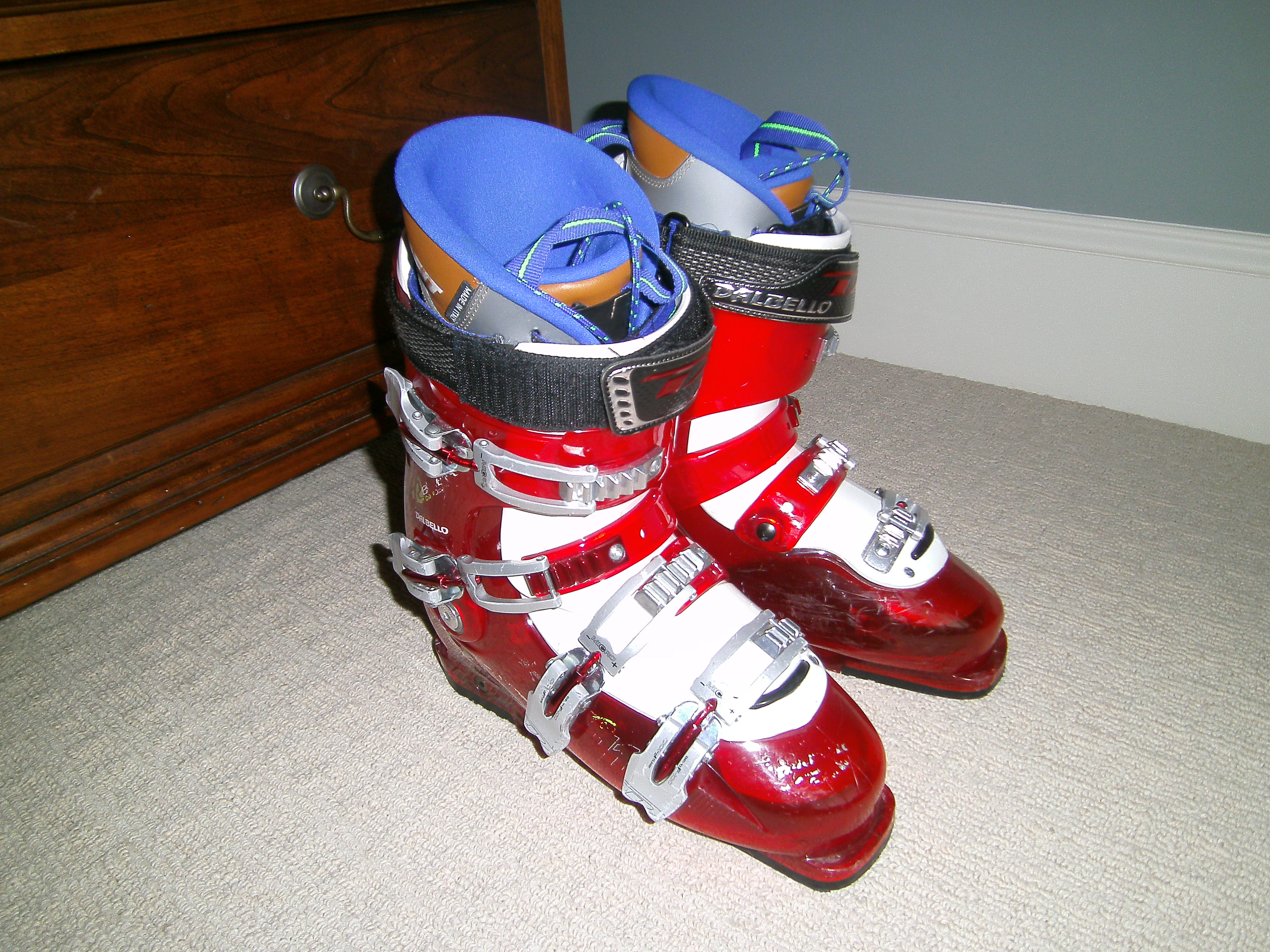
My trusty ski boots

Last Saturday I got a 6:00 a.m. flight out of Raleigh, made the connection in Houston (barely), arrived in Aspen at 10:15, checked into the hotel, rented skis, bought a lift pass, and got onto the lift at Aspen Mountain at 12:15. It was a clear, cold day, and so windy that many of the lifts were closed. I spent the afternoon working off of the A-1 lift. The snow was good. Toward the end of the afternoon, I was charging down a bump run with rhythm and confidence, right under the lift, and I had the thought: this is how mogul skiing is supposed to look and feel. After years of trying, I had finally got it! And just then, at the bottom of the run, caught an edge and crashed. As the Bible says, pride goeth before a fall.

On Sunday I met up at Aspen Highlands with a couple of friends who live in Colorado and are strong skiers. They knew the mountain well, and took me down some of the most challenging terrain. I felt a new level of confidence, and only an occasional spasm of fear. After lunch, they began referring to taking “a little hike.” I finally figured out they were talking about the hike up the ridge to Highlands Bowl — a trek that took all my strength to finish a couple of years ago. This time was difficult, but not agonizing. When we reached the summit (12,392 feet), the sky was clear, and the view of the jagged surrounding peaks was awesome.

Monday morning Gabe Tiller joined our group at Ajax. His skiing was strong, and I worked hard to keep up. But I was not pathetic! Gabe called it a day mid-afternoon, because of a bad night’s sleep, but I hung in there until the lifts closed. Chuck and I took the gondola up with a fellow who was at least 80 (he’d started out as a ski instructor in 1950) and spent much of his life at Aspen. As Chuck noted later, if we’re still skiing in our 80s, this will have been the early part of our ski career.

We ate Italian that evening at L’Hostaria, where Jocelyn and Gabe sat to my right and left. They were entertaining, and the food was excellent. Tuesday we had ten inches of fresh, slightly heavy snow at Snowmass. My demo skis were DPS Wailer 99s, which were wide and had rocker tip and tail. They floated beautifully. I was flowing, and not wearing out my legs. It had taken a long time, but with several seasons of practice and new ski technology, I was skiing powder with true joy.

Wednesday it snowed some more, and we had first tracks on the virgin snow at Highlands. It was quiet and beautiful and exhilarating.

I’m sorry to say my Sony point-and-shoot expired, presumably as a result of one of my falls that left some snow in the circuits. It was a good little camera. My Aspen photos were casualties. The picture of my trusty Dalbello boots was taken with my SeaLife DC1400, an underwater camera. The boots are now four seasons old. They are hell to get on, and hell to get off, but communicate well with my edges and ski great.

Beautiful Miami, and the social requirements for innovation

My room at the W in South Beach

My little burgundy Briggs & Riley roll aboard has been getting a work out these last few weeks. It was barely aired out from our trip to B’s memorial in New York before it got repacked and reloaded on American flight 1541 for Miami, where Red Hat hosted a management summit.

We stayed at the W, where I had a room with a balcony overlooking the beach. I never actually made it onto the beach (too busy), but I got a few deep breaths of ocean air and on the way to lunch by the pool glimpsed some pretty girls in bikinis. The room was hyper modern, black and off white, with mirrors, reflective metal, white granite, black wood, and many different textures. The shower was bounded with clear glass on one side and translucent glass on the other, with water jets arranged at the normal head level, along with chest level and thigh level. When I finally figured out that the hot and cold indicators were reversed, I had a great shower.

We had sessions with leading economists, business analysts, management experts and others about technology trends and best practices. We were also urged during breaks and meals to mingle and network. As a moderate introvert by nature, where the assigned mission is to make contacts in large groups of strangers and then having interesting conversations, I always feel a certain dread, which can verge on panic. What if can think of nothing to say? Or the new acquaintance has nothing to say?

Over the years, I’ve gotten more adept at handling or avoiding such social emergencies, and usually end up, despite the initial dread, talking with nice people and having a good time. And so it was in South Beach, where I met a lot of interesting and friendly Red Hatters, including some who shared some of my personal enthusiasms (such as sports cars, skiing, and music) or had surprising enthusiasms of their own (such as sailing, flying, and triathlon). Of course, everyone was very bright. I felt privileged to be associated with all those gifted people and with the mission of Red Hat.

Speaking of useful interactions, on the plane ride back, I read an interesting piece in the current New Yorker by Johah Lehrer called Groupthink: The Brainstorming Myth. (The link has only a blurb; payment is required for the entire article.) Lehrer recognizes that today creativity and innovation are generally the products of group collaboration. He notes that important scientific or technical problems are incredibly hard, and researchers are specialized, “because there’s only so much information one mind can handle.” As one scholar put it, “A hundred years ago, the Wright brothers could build an airplane all by themselves. . . . Now Boeing needs hundreds of engineers just to design and produce engines.” Because of complexity, “people must either work together or fail alone.”

Lehrer goes on to discuss the classic strategy for coming up with new ideas — brainstorming, or having groups quickly generate ideas while prohibiting all criticism. He provides scholarship showing that, despite being widely practiced, brainstorming isn’t very effective. More effective than simply encouraging ideas is allowing room for conflict and dissent. He also explores the optimum degree of social intimacy for producing a Broadway hit (moderate) and the kind of physical space that produces groundbreaking science (Building 20 at MIT). It’s worth reading.

Farewell and thank you, Steve Jobs

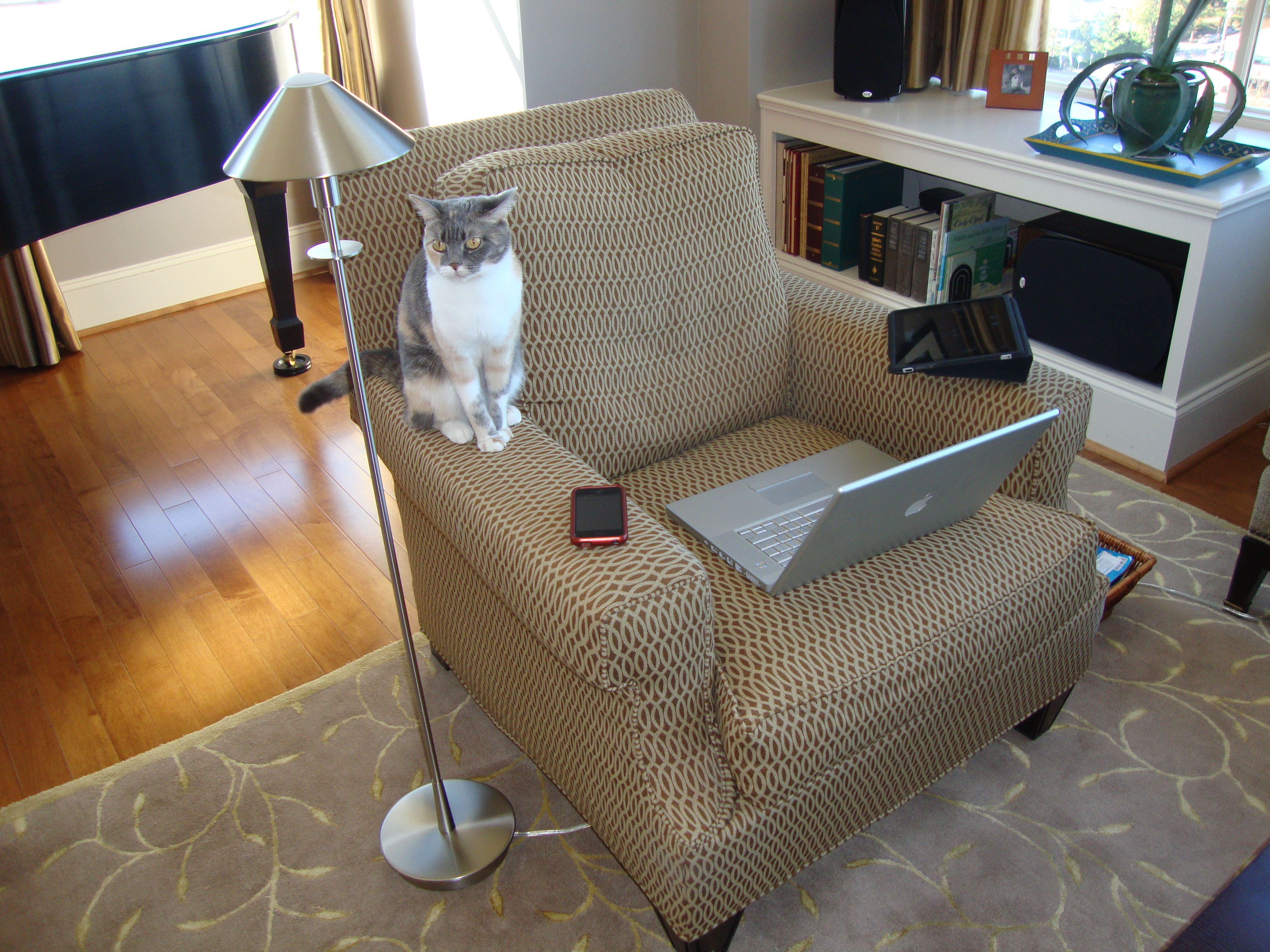
Rita with marvelous Apple devices

Appropriately enough, I got the sad news of Steve Jobs’s death from one of his devices. I was at home reading the news in El Pais on my MacBook Pro, with my iPad on one arm of the easy chair tuned to a Spanish-English dictionary and my iPhone on the other arm. (My iPod was recharging.) I don’t consider myself a huge Apple fanboy, but I cannot deny that these devices are marvelous and delight me every day. And so, like millions of others, I have a life that was changed in a positive way by Steve Jobs.

Jobs was just five months older than me, which brings to mind more-than-usual intimations of mortality. His killer, pancreatic cancer, was the same that killed my mother, so I’ve known for years that it’s a bad one. After her diagnosis, she was gone in four months. Watching Jobs’s string of successes over the last five years, I’ve been amazed at his tenacity and courage. Knowing that death was staring him in the face, he just kept on creating. This was one tough hombre.

Driving home the next day, I heard an excerpt on the radio of his 2005 Stanford commencement speech in which he set forth the following test. Every morning, he said, he asked himself, if this day were his last, would he want to spend it doing what he was planning to do. If the answer was consistently no, he changed course. I almost believe it. In any case, it’s courageous to attempt it.

A bit more of his remarkable Stanford speech:

“No one wants to die. Even people who want to go to heaven don’t want to die to get there. And yet death is the destination we all share. No one has ever escaped it. And that is as it should be, because Death is very likely the single best invention of Life. It is Life’s change agent. It clears out the old to make way for the new. Right now the new is you, but someday not too long from now, you will gradually become the old and be cleared away. Sorry to be so dramatic, but it is quite true.

“Your time is limited, so don’t waste it living someone else’s life. Don’t be trapped by dogma — which is living with the results of other people’s thinking. Don’t let the noise of others’ opinions drown out your own inner voice. And most important, have the courage to follow your heart and intuition. They somehow already know what you truly want to become. Everything else is secondary.”

In the Stanford speech, Jobs tells of taking a calligraphy course after dropping out of Reed College, and then a decade later finding that what he’d learned gave him direction in designing the first Mac. He clearly thought like an artist — perhaps even more than like an engineer. He’s quoted in the NY Times obit as saying that great products were a triumph of taste, of “trying to expose yourself to the best things humans have done and then trying to bring those things into what you are doing.” Amen.

A recording session at Manifold Studios with Michael Tiemann, John Q. Walker, and the ghost of Oscar Peterson

Last weekend I attended a recording session at Maniford Recording, my friend Michael Tiemann’s new recording facility in Chatham County near Jordan Lake. Michael’s been working on this project for four years, and it is clearly a labor of love. The setting is rural piedmont North Carolina, surrounded by farms and forest with lots of songbirds. (I heard a whippoorwill singing ardently for the first time this year or last.) The architect was inspired by Frank Lloyd Wright, and incorporated the golden ratio throughout the design. Michael explained his his purpose in terms of making great recordings with a total devotion to truthful sound. I noted that this is swimming against the tide of contemporary culture, which Michael conceded, but he noted that tides can turn.

The recording was done by software developed by Zemph, a company founded by John Q. Walker, who was also at the session. The objective was to reengineer a recording by Oscar Peterson (jazz pianist) and Ray Brown (bass) from 1949. A hundred-year-old Steinway that had once been at Carnegie Hall had been fitted out to play itself using Zemph’s software, and the Zemph folks had created a new instrument to reproduce the bass. The sound was uncanny. It was unsettling, but kind of moving, to see the piano keys moving, and the sound had authority.

I went through a long period of studying and really loving jazz. I still enjoy it from time to time. I particularly enjoy music from the big band era. But jazz sometimes gets more reverences than it deserves, based in part on the myth of improvisation. The non-musician perceives improvisation as a bold experiment, but it’s usually not. What improvisation mostly means is either variations on prior melodies or laying prefabricated riffs in various orders on top of fairly simple, repetitious chord structures. It can sometimes have energy and heart, but it can also be fairly boring. When I started to feel a little bored, I found my way back to the Western European musical tradition, in which composers wrote down ideas so rich that we still find, centuries afterwards, it interesting, and sometimes transcendently moving, to confront them. I don’t get that from Oscar Peterson.

John graciously allowed me try out the pianos after the session. I found the Carnegie Steinway a bit loose and diffuse, but the Hamburg Steinway was wonderful — brilliant colors and clarity. I worried that the reproduction equipment, including circuit boards attached to the keys, could affect either the sound or the action, but I couldn’t perceive any such effects. I played a bit of Chopin, including the Minute Waltz, and a bit of Debussy’s First Arabesque.

I enjoyed seeing the technology for recreating the performance, and the mixing session in the studio. And it was inspiring to see how passionate Michael and John were about the music. I have a soft spot for people that are absolutely passionate about art that will never win a popularity contest or make a dollar. It’s a reminder that art matters at the most intimate human level, and can inspire love so intense as surpass all rationality.

Discussing open source ballet with Robert Weiss

Do open source software and ballet have anything in common? Sure, they have some obvious differences. But they share an imperative to collaborate and a creative spirit. Anyhow, I’m a big fan of both, and I’ve been thinking about whether some of the lessons of open source could be applied to ballet. Last week got a chance to kick ideas on this around with a great choreographer, Robert Weiss.

Weiss, who goes by Ricky, is artistic director of the Carolina Ballet, which plays out of Raleigh, N.C. He spent the early part of his career as a dancer at the New York City Ballet with its famous director, George Balanchine. In more than a decade with the Carolina Ballet, he has been a prolific choreographer, producing dozens of ballets. He’s also recruited superbly talented dancers from around the world and melded them into an outstanding company. When we met last week, along with my friend CB Board Chair Melanie Dubis, at Buku for lunch, I thought, this must be close to the world’s greatest job — working every day with beautiful, talented, dedicated people to create art for the ages. What could be more wonderful?

When we met for lunch last week, it quickly became clear that it would be more wonderful to not be constantly worried about money. If only, he said, he had better funding, he could spend more time thinking about dance and less about fund raising. Ballet is an art form that entails numbers of dancers, all requiring paychecks, and the same for musicians, costume designers and costumers, set designers and sets, lighting designers and lights, stage management and crew, and of course, choreographers. As an art, it is capital intensive. There are inherent barriers to reaching a wide audience, including lack of exposure to the form and its traditions.

As Ricky described the process of creating a new work, it was plain that it was highly collaborative. When he choreographs a new work, it is created on specific dancers, and the work is shaped in view of their individual qualities. The work draws on a tradition that goes back to the Renaissance, with a large vocabulary of movements that are available for re-use. (As Ricky warmed to the subject, he stood up from the table and showed a couple of classical gestures, and his sudden transformation from regular person to dancer was electrifying.) And of course, there’s collaboration with the aforementioned costume designers, set designers, and many others. It is in general an art of great idealism and unselfishness, at least in the sense that almost no one expects to get rich from it, and many are prepared to subsist on a shoestring budget.

But in ballet as in most of our endeavors, there is an unexamined assumption that intellectual property protection is important. Thus copying of videoed performances is subject to the draconian penalties of copyright law. The dances are kept locked down, on the assumption that making them freely available could result in lost value. I raised the question with Rocky and Melanie whether this really makes sense. Is copyright protection actually increasing the value proposition of ballet, or is it lessening it?

As I explained, the open source software community has learned some lessons about this that the rest of the world is starting to apply. Open source innovators, whose projects are based on freely sharing their code, realized that the traditional approach to intellectual property would not work for them, and so they created new licensing models, such as the GPL, that encouraged sharing and re-use. That approach has led to incredible growth in open source software. The model is spreading outward to other creative endeavors with such tools as Creative Commons licensing.

Could it be that less IP protectiveness could expand the audience for ballet and bring in new funding? What if, instead of protecting ballet as carefully as possible with copyright, the product was unlocked and made available under a Creative Commons license? For example, if well-produced video of the Carolina Ballet was readily available on the internet without charge, couldn’t that introduce many more people to ballet, with some of them eventually becoming balletomanes?

Ricky noted that even the best video of ballet is only a pale reflection of the experience of live performance. But he also admitted that he knew of people who had had transformative personal experience through a recorded performance. He also noted that it would require funding to make video recordings of a quality that he’d be comfortable presenting in public. (Footnote: a couple of days after our meeting, I saw a documentary on the choreographer Jerome Robbins called Something to Dance About, which is great, and illustrates how video can communicate something meaningful about dance.)

Open source innovation generally involves experimentation. I noted that there could be approaches to video and to funding that none of us has thought of yet. We agreed to talk more about what might be possible. It may be that you have ideas or experience in applying open source methods to artistic endeavors. If you have ideas, please share them.