The Casual Blog

Category: scuba

Thanksgiving in Nassau with sharks and Proust
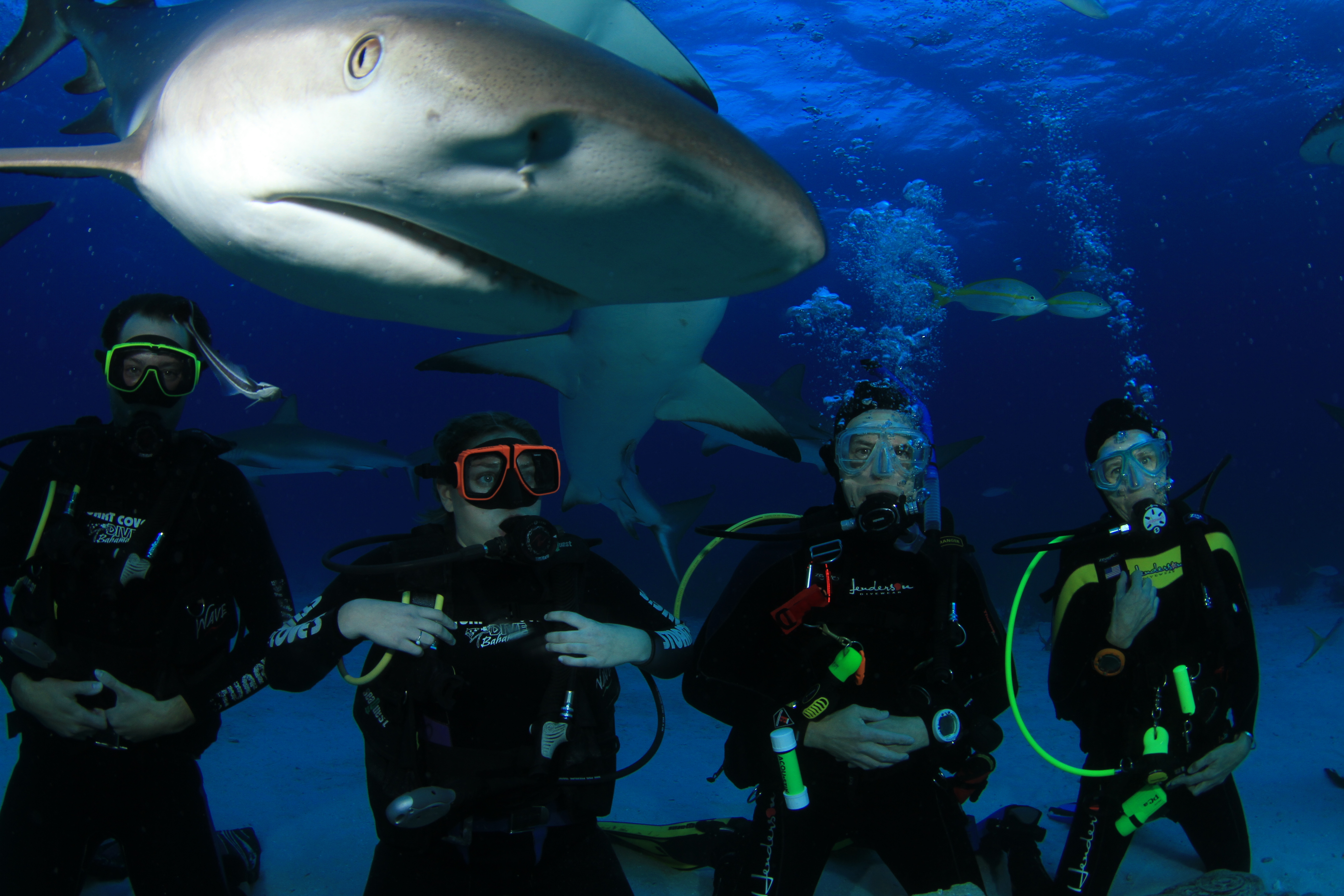
Gabe, Jocelyn, reef shark, Rob, and Sally

For Thanksgiving we went down to Nassau, Bahamas, and did some scuba diving with sharks. I was looking forward to some time with Sally, Gabe, and Jocelyn, and also to the palm trees, beaches, and beautiful turquoise water. But we chose the destination in large part because of the abundance of reef sharks.

For those with long exposure to anti-shark hysteria (Jaws, cheesy nature channel specials), this probably sounds crazy. In fact, people do these dives safely every day. For me, there was some element of facing down an irrational inner fear, but the bigger driver was curiosity and a desire to experience a particularly beautiful force of nature.

We stayed at the Sheraton on Cable Beach, a large hotel with a white sandy beach, lots of curvaceous pools with waterfalls, palms, and plenty of deck chairs. The staff seemed friendly, though slightly shy. Restaurant service both in the hotel and elsewhere was surprisingly slow (except for Luciano’s, where the food and service were both excellent). One bummer: the food was much more expensive than I expected — about three times the price of equivalent meals at home. There was a casino, which we walked through, and where no one looked like an extra for Bond film. I tried, unsuccessfully, to comprehend why these people couldn’t find something more fun to do than just throw away their money.
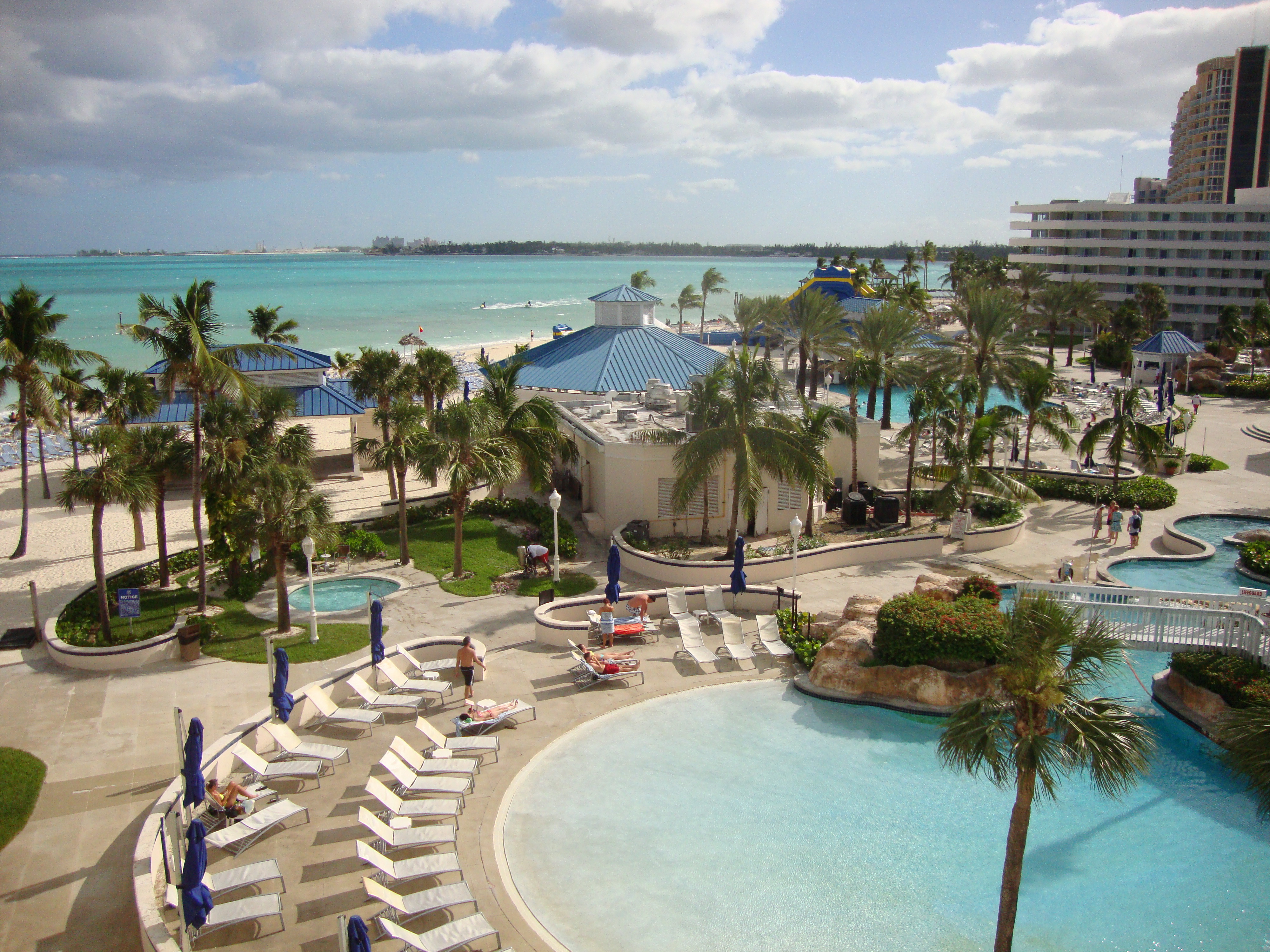
Sheraton Hotel, Nassau, Bahamas -- our view

But there is no accounting for taste, and no explaining some of the strange things people like to do. Which brings me back to the sharks. Humans kill around 100 million of them a year (a substantial number of those by torture — cutting off fins for shark fin soup and leaving the fish to drown), whereas unprovoked sharks around the world account for around four human deaths a year. Of those exceedingly rare deaths, the perpetrators are only four of the 360 species (great white, oceanic whitetip, bull, and tiger). It is simply a myth that sharks are mindless killing machines. Some species are highly social and demonstrate problem solving skills, curiosity, and play.

Some species of modern sharks reached their current form about 100 million years ago, in the age of dinosaurs. Species come and go (for mammals, the average species lasts about a million years), but the sharks have remained. The basic, gorgeous design has clearly stood the test of time.

We dove with Stuart Cove’s dive operation, which was generally well run with cheerful young dive leaders and staff. Sally and I did ten dives and all. Gabe and Jocelyn were not certified divers, but after refreshing on their skills with a resort course, they came with us on four dives with an instructor, a smart, well-travelled (including a stint diving in Mozambique, which she recommended highly), and good-humored young Englishwoman named Ruth.
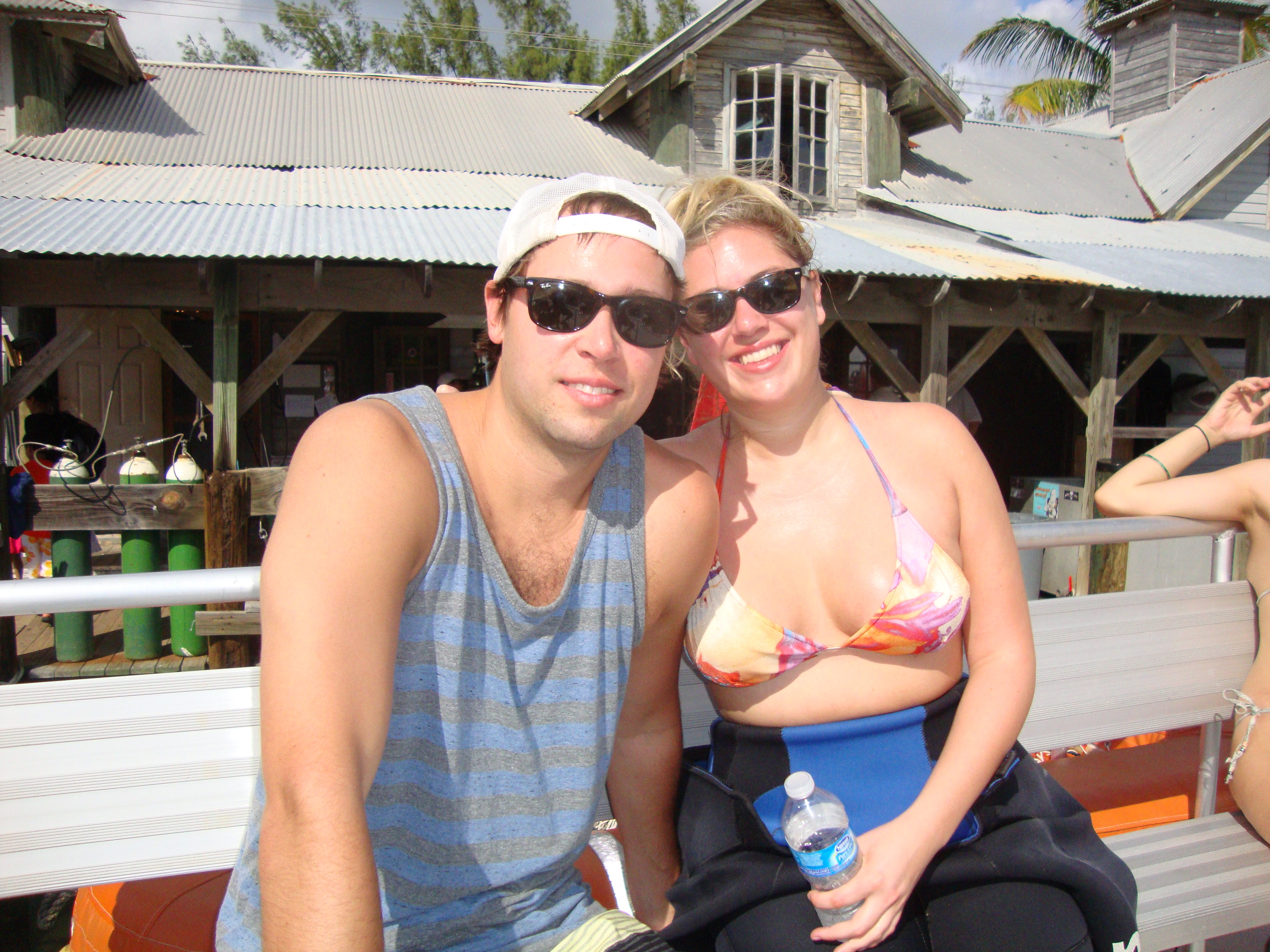
Gabe and Jocelyn at the start of a shark dive

The climax of our diving was Thanksgiving day, when we did an area called Runway Wall, where Sally and I swam at about 70 feet (with G and S shallower) along a wall that goes down to a depth of 5,000 feet. Beside us, in front of us, and behind us were reef sharks. I counted 15. At times they swam quite close (inches), coming up on us from behind, or heading straight for us. We also got to within a few feet of a large sea turtle (probably a loggerhead), and saw a few Atlantic spadefish, a spotted drum, a spotted moray eel, and a Goliath grouper, along with many smaller fish.

After a surface interval, we descended again and sat in a circle in a sandy area. One of the staff, Rich, had donned a chain mail body suit, hood, and gloves, and brought down a cage with chum. The sharks increased in number (perhaps 20-25 showed up), and began swimming faster and closer to the cage. Rich would take a thin metal pole, spear a steak-size piece of chum, and whip it upward quickly, and the closest shark would instantly bite and swallow it. Rich would position himself in front of each diver and do some feeding while the staff took photos and videos.

I had mixed feelings about feeding sharks (or any wild animal), out of concern that it might lead to dependency or otherwise disrupt the ecosystem. I also wasn’t crazy about the emphasis on photography. But in the end I put those ideas to one side and was simply overwhelmed by the experience: about 50 minutes of a close encounter with prehistory. The distance between us got down to zero (I was bumped a few times). After a few minutes, I began to distinguish individual differences among the sharks. One had a mouth that gaped on one side, another had a fish hook in his back. They would swim in lazy circles, and then suddenly accelerate toward the food, sometimes colliding. All told, I was deeply moved by their power, grace, and beauty.

We did not dive on our last day before flying home to decrease the risk of decompression illness. We spent much of the day lounging on the beach or by one of the pools reading our various books. It was windy, sometimes cloudy, but sometimes sunny. It was lovely to see our kids reading for hours. I used to worry that they’d end up as hopeless TV addicts. But they didn’t!
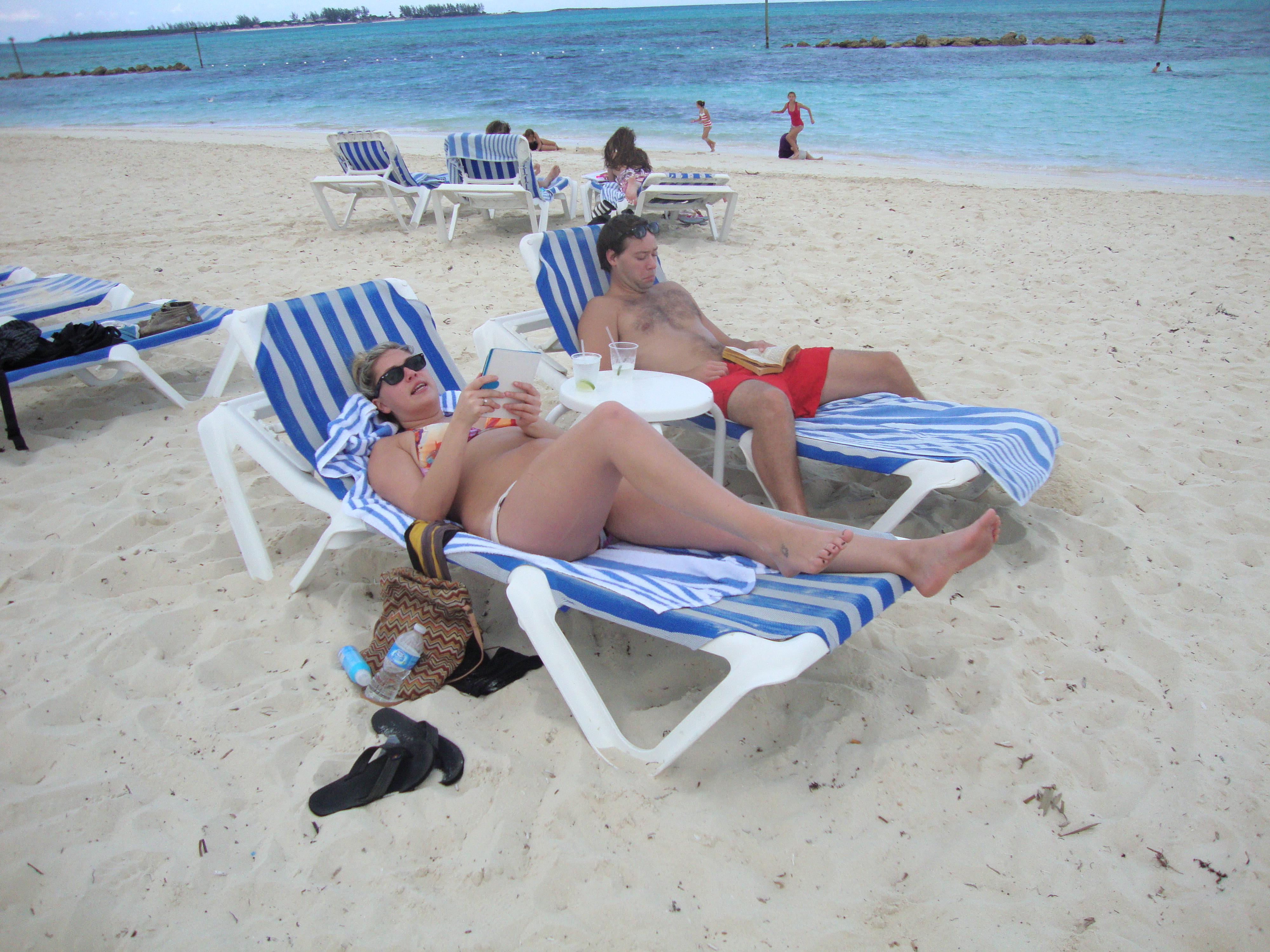
I began rereading Swan’s Way, this time in a translation by Lydia Davis. Many years ago, I read the entirety of Remembrance of Things Past, and have from time to time returned to sections of it, but the length of the work is daunting in these frantic times. I found the Davis translation much more graceful and lively than the Moncrieff and Kilmartin. It may be that accumulating more life experience makes the book itself better. In any event, I was struck once again by the strange hypnotic beauty of the prose.

For the first time, I saw how the apparently casual, improvised sound of the early part of the book includes a lot of delicate prefiguring of people and events that will gradually come into sharp focus. There is so much richness in the book. It makes us realize how rich our own lives can be in perception and feeling, and makes us want to use our memories and our eyes, ears, noses, touch, and taste buds better. But it is not a self-help book; there’s something magical about it. I had the odd, strong feeling as I was reading that the book was my own consciousness coming into being. Of course, it’s only a novel — or is it?

More shark photos:


Track driving at VIR and chamber music

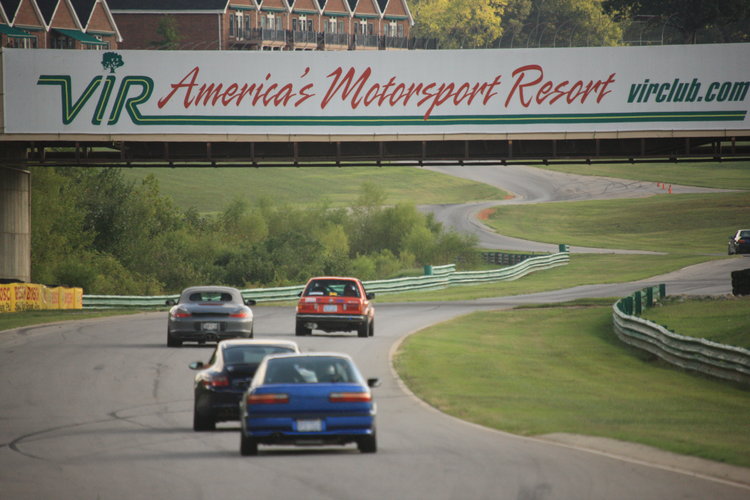
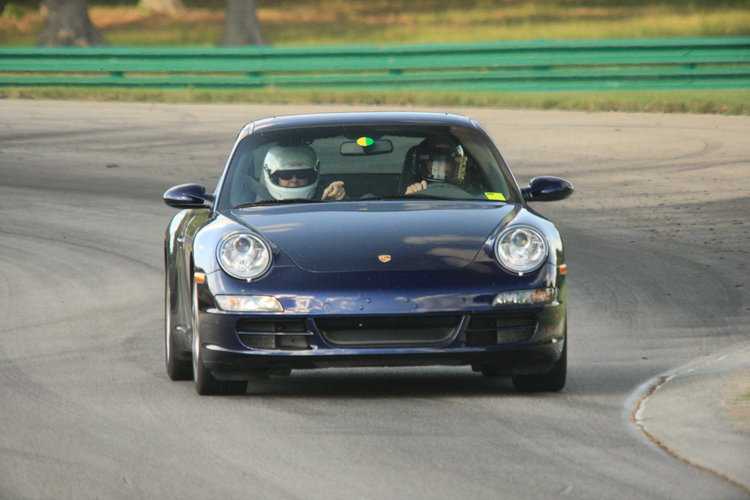
Clara and friends at VIR on 10 September 2011

We had plans to go to the North Carolina coast for some wreck diving this weekend, but the trip was cancelled because of rough (eight-foot!) seas. I was a little disappointed, but also a little relieved. The last couple of weeks have been turbo-charged at work, and on top of that I’ve had lots of extracurriculars. Today is gray, drizzly, and chilly — a great day to relax and reflect.

Last weekend was exciting, but not relaxing. I took Clara, my 911S, out for two days of hard track driving at Virginia International Raceway. She’s a great car, and did almost everything I asked. The weather was pleasantly warm and clear. My instructor, M, was very experienced and initiated me into some new aspects of track driving.

M gives a pointer

M stressed that the key to faster laps is smoothness and consistency — threshold braking at the same spot, hitting the same apex, coming into the throttle and tracking out all the way to the same track edge. It sounds like consistency could get boring, but for me it didn’t — perhaps because it’s so hard to do. As I got better in a particular difficult turn, it required throttle and brake adjustments for the following turns, which were seldom perfect. I had a couple of hair-raising moments, including a skid off the track and into the field (too much speed into turn 1), but no damage was done. There was plenty of exhilaration, and over all I felt an increase in competence.

This week I had two meetings with the Raleigh Chamber Music Guild, which recently elected me to its board of directors. I’ve loved chamber music, especially string quartets, since high school, and I’m pleased to be able to lend a hand to sustaining this great tradition. The RCMG is 70 years old, and has brought many world-class ensembles to this area. From what I’ve seen so far, the board seems like a good group. I’ve tried to make peace with the fact that some people don’t like chamber music (though I confess I cannot understand why), and just be grateful for the music and the people who enjoy it. They tend to be an educated, articulate demographic. But it isn’t easy for these music lovers to find each other or communicate about the music. It’s partly normal shyness, and also the difficulty of translating music and related feelings into words. RCMG may be a good venue for me and others to make some of these connections.

Another night this week I had a class on wreck diving, in preparation for diving on the Hyde and the Markham. Penetrating wrecks involves a higher level of risk than reef diving that we generally do, and it requires some training and careful preparation. I learned about various safety measures, including hazard assessment, redundant equipment, and laying a guide linet. I’m hoping to do the dives in late October.

Why do people engage in even mildly perilous situations, and imagine themselves in dire ones, when they don’t have to? People do it, at least to some degree, all the time — in sports, amusement parks, and scary movies. We’re funny animals, for sure, and we do some stupid things, but theres some sense to it. Maybe we confront manageable risks in play to prepare ourselves for real dangers. It could help develop some reserves of courage. And risk takes us out of our daily routine and out of ourselves. We forget ourselves, and feel more alive.

Getting better (scuba rescues)

If I like doing something, I like getting better at it. In fact, I probably won’t like it for long if I can’t get better at it. They would mean doing the same thing over and over, and why would anyone want to do that?

I’ve recently been improving at several things I like, including playing the piano, golf, and scuba diving. This weekend, I took a big step forward in scuba when I took the PADI rescue diver course.

As I’ve noted in a prior post, I really like the idea of having enough first aid skills to help save a life, and so this project was particularly meaningful to me. The reading and classroom sessions gave me a greater knowledge base on the various things that could go wrong for careless or unlucky divers — equipment problems, encounters with venomous plants and animals, or underlying medical conditions. In each of these situations, there are ways to help, even if there are not complete solutions.

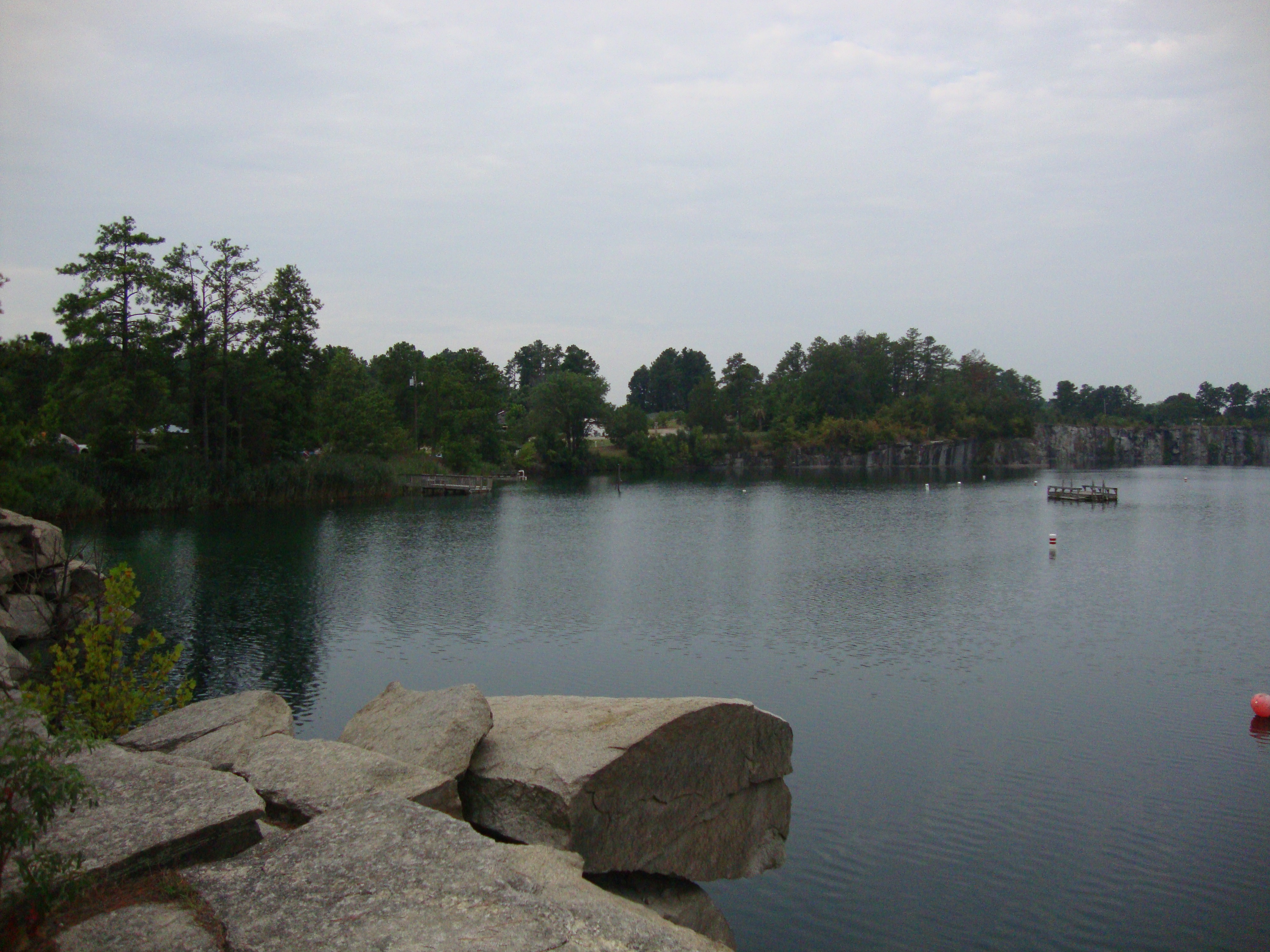
In the two-day skills class at Fantasy Lake Scuba Park (a former quarry), I was fortunate to have an experienced teacher (Nikki) with three able assistants, and a class (counting me) of four. There was a lot of individual attention. My fellow students were experienced divers who were focused and good humored. Charlie, a UPS driver, was particularly impressive in his emergency problem solving skills.

We were tasked with various stressful problems. A tired diver. A panicked diver. A missing diver. And many others. The required skills were many. We dealt constantly with situations that were novel and unsettling. This was, of course, tiring, but also stimulating.

There were physical challenges. I cut a finger, got stung by a yellow jacket on another finger, and got a bruise on an arm. Propelling a victim in while giving rescue breaths and removing equipment was complicated and exhausting.

There were also psychological challenges. I particularly dreaded trying to find a missing diver underwater; the combined problems of navigation in low visibility and a potential fatality were anxiety producing. I also dreaded the issues of rescue breathing for an unconscious diver in the water. The physical intimacy of face to face contact (even, as we did it, with simulated mouth-to-mouth breaths) with a relative stranger, even in the practice situation, was something I would rather have avoided. But in the end, it was manageable, thanks to my teacher and the assistants. With the benefit of the practice, I have a high degree of confidence I could actually take a run at helping someone in dire distress.

The exercise inspired thoughts of mortality, and life. I felt happy to be as healthy as I am. My regular morning exercise routine paid major dividends in the physically demanding parts of the course. My careful eating with an emphasis on things that are good for my body gave me good energy and balance. It worked out well. I would be very happy never to have to use these new skills, but I feel like I can do it, if necessary.

Emergency diving, cell phone woes, and a new gym

With almost a hundred logged dives under my belt, I’ve decided it’s time to improve my emergency and first aid skills. This is not to suggest that scuba is particularly hazardous, which ordinarily it’s not. But as with any human activity, accidents will happen. Understanding common accident scenarios is a great way to minimize risks. Plus, it would be a great thing to help a person out of a crisis — and a terrible thing to watch a serious accident unfold where help might make a difference, but be unable to help. I’ve signed up to take the PADI rescue diver course next month, and I’ve begun working my way through the materials.

There are a lot of risks we can’t do much about as individuals, including technology failure. It’s scary how dependent I am on my digital devices, though it isn’t usually noticeable. The dependency came into focus quickly for me this week, when my cell phone inexplicably quit working.

It turned out that it was not simple or stress free to get help from AT&T. I spent more time than I wanted scrutinizing their website, and couldn’t find a service phone number. I tried their online “chat” service, which took 10 minutes to get connected and 10 minutes to get questioned, after which I was disconnected as “timed out.” The next day at lunch time I drove over to the place where I’d bought the phone, only to find they’d closed the store. Since I didn’t have a cell service, I couldn’t find another store that day.

Yesterday I drove to the closest mall with an AT&T store (Crabtree), where there was one dude tending the sales kiosk. Fortunately, he figured out how to fix the thing. He asked me how my day was going, and I told him he’d made it a lot better.

After I got cell phone fixed, I went to check out the local YMCA. Since my neighborhood gym closed, I’ve been in a state of mild gym withdrawal. Sally’s tennis pro suggested she check out the downtown Y, and she delegated the task to me. It’s good! They’ve got an adequate collection of weight machines, aerobic machines, and spaces to do exercise classes. There’s a swimming pool. What was distinctive was the staff — they were unbelievably friendly! I signed up with enthusiasm, and then did my first Y workout: an upper body circuit, forty vigorous minutes on the elliptical machine listening to Mozart’s Cosi Fan Tutti, and some yoga stretching.

Caribbean diving in Honduras

Yesterday Sally and I returned to Raleigh after a week of scuba diving in Roatan, Honduras. We explored the second longest barrier reef in the world and were overcome by the incredible beauty under the water. It was intoxicating: thousands of luminous fish, enormous sea turtles, exquisite sea horses, exotic invertebrates, and vast coral structures in rainbow colors, I highly recommend it, though I hope not too many people go, particularly if they’re careless divers. The reef is ancient but fragile, still teeming with life, but threatened by human activity.

We stayed at CoCo View Resort, an establishment designed for divers. There’s no casino, no television, and little in the way of shopping or other entertainment. The focus is scuba. The hotel is on a small island that’s a short swim from the edge of the reef, and a number if prime locations are within a ten-minute boat ride. They have convenient, well-organized lockers a few steps from the boat docks, and the boats are well set up for diving. Our captain, known as Gringo, and divemaster, Mark, were friendly, knowledgeable, and hard-working. They took us on four boat dives a day, and most nights we went on an additional dive off the shore. My total of dives for the week was 24, while Sally did 21. This meant that most of our time was either preparing to dive, diving, and preparing to dive again, with short intervals for eating and sleeping. I did manage to sneak in a bit of reading and a couple of naps in the hammock on our balcony that overlooked the bright green water of the bay.

Personal highlights included ten sea turtles in one day, including one that I spotted while swimming in for a close look at a pair of queen angelfish. We saw almost as many sea horses in one day, several scorpion fish, and four species of eels. On one night dive we saw three octopuses, including one that we watched for several minutes as it changed colors and shapes in a brilliant attempt to camouflage itself against various backgrounds. On our last day we saw our first ever squids, a pair that hovered near us for a couple of minutes, than swam almost close enough to touch.

There were also, unfortunately, lionfish in greater abundance than we’ve previously seen. This fast-multiplying invasive species is disrupting reef ecosystems across the Caribbean. Mark had a license to kill these destructive predators, and at one point executed six in two minutes. Another time, after an execution, he offered the remains to a spotted eel, which emerged from its hole for the snack. Mark confirmed that the lionfish seemed to have cut into the populations of other creatures. I wondered if the lack of sharks and rays (we saw only one southern sting ray) was a consequence.

We went with a group of about a dozen other divers organized by Dan P. and Down Under Surf and Scuba. Most of the other divers were very experienced. We learned more about diving and new species from them, and enjoyed their company. The vibe was friendly and relaxed.

It was fantastic to swim with large schools of small, brightly colored fish, and also to hunt for hidden treasures — well camouflaged and bizarre creatures. As the week went on, I found it more and more satisfying to focus directly on the coral. The variety of structures was remarkable. There were species that resembled various plants and ones that looked like rocky organisms. Late in the trip, I used my flashlight to inspect the coral at 70 feet, and discovered that species I’d first taken to be dull gray or brown were quite colorful — burgundy, lime, mauve.

And as I spent more hours underwater, I felt more peaceful, less distracted, more focussed. There were only a couple of painful moments. I got stung by fire coral on my hand, which felt like a burn, and stung by an unseen creature on my lip, which felt like a wasp. But mostly I felt deeply happy. I wondered, as we prepared to leave, whether, with more time, I’d keep getting better at looking at tiny things, and enjoy them even more.

A scuba Xmas in Bonaire

Bonaire is a small island is in the southern Caribbean about 60 miles north of Venezuela. It does not have pretty beaches or glitzy nightlife. It does, however, have a thing that make it world famous among scuba divers — fantastic coral reefs. Sally and I spent Xmas doing lots of diving there, and I can affirm, the coral is healthy and gorgeous.

This is no small thing. Coral all over the world is under stress from global warming with rising ocean temperatures and acidification, as well as pollution, industrial fishing, and various poorly understood diseases. At the same time, a significant percentage of creatures in the ocean life depend directly or indirectly on the reefs for food and shelter. They are the rainforests of the ocean. From a human perspective, they have an additional important attribute — incredible beauty.

It is hard to believe that simple, tiny animals do what coral do. Over long periods they form large structures of great complexity, with each new generation building on top of its predecessors, layer upon layer. The structures have many colors, textures, and shapes. They may resemble cacti, ferns, mushrooms, pillars, antlers, flowers, bowls, or giant brains. In Bonaire, there is a band of coral reefs around the entire island that starts in water about 20 feet deep and goes down below 100 feet.

The reefs of Bonaire are teeming with thousands upon thousands of tropical fish and other creatures. From time to time, we were engulfed in enormous schools. We brought along our copy of Reef Fish Identification, and identified a number of species new to us. Many of them are not at all shy, and some are actually interested in examining humans. On one of our night dives, there were five tarpon that followed us about like large, curious dogs, circling and gliding up from behind close enough to touch.

Close encounters with so much exuberant life was inspiring, though not without some drama. We did some dives from boats run by the operation at our hotel, Divi Flamingo, which generally were delightful. The water was a pleasant 81-82 degrees, and visibility around 60 feet. This visibility is not especially good by Bonaire standards, but we were not complaining.

We had more drama on the shore dives, for which Bonaire is famous in dive circles. Sally and I served as our own guides and safety checks for these, and generally there were no other divers nearby. I enjoyed the solitude, but it also increased the risk level. The reefs are generally only a short swim from shore. However, getting to the water over the uneven volcanic rock with heavy dive equipment can be difficult. At times the ocean surge makes entry and exit dangerous. We got stung by jellyfish and fire coral and sustained minor bruises, cuts, and scrapes from being tossed about on the shallow rocks. Once we made a navigation error because of a strong current, got lost, and I ran uncomfortably low on air. But it was all worth it for the amazing beauty.

Out of the water, we saw flamingos, magnificent frigatebirds, parrots, and various warblers. There were also wild donkeys. The predominant European language of the island is Dutch, followed by Spanish and English. The vibe of the island residents had a strong dose of Dutch reserve along with the Caribbean relaxedness. We were sometimes surprised at the slowness of restaurant and hotel service, and equally surprised that the dive boats always left on schedule, or earlier. Among the tourists the Dutch were predominant. They seemed unusually handsome as a group, though unfortunately a surprising number of them smoked cigarettes.

Bonaire has character and charm, and, as I say, those incredible coral reefs. We’ll likely go back, but I hope next time we can find direct flights. Getting there went smoothly, but getting home ended up taking 31 hours, rather than 9 we’d expected. The customs process in Curacao was amazingly slow, and so we missed our flight to Miami. So, stuck on Curacao, we found a cheap hotel near the airport, took a cab into Willemstad for a walkabout, and ate a good meal. The next day we finally made it back to Raleigh to find snow on the ground.

Diving Key Largo

Sally and I just got back from a four-day mini-vacation diving out of Key Largo. I’m a bit battered. My hands got sliced in several places from razor clams, my wrists itch from some sort of bites, my neck got stung by fire coral, I bruised my thigh climbing into the boat in rough water, and something took a slice of skin off my left ankle. I had a low air/decompression scare (apparently a computer malfunction). We spent quite a few hours moving fast on small boats in up to three-foot seas, and early on I had a couple of bouts of sea sickness. But it was fantastic.

I did thirteen dives (only four without Sally), including two deepish wrecks (the Spiegel Grove and the Duane), a night dive (at the Benwood), and a lot of shallow coral reefs (including Molasses Reef, Elbow Reef, North Dry Rocks, Eagle Ray Alley, North North Dry Rocks, Christ of the Abyss, and Horseshoe Reef). I got certified on nitrox the week before, and used it for the first time on several dives. The trip included my fiftieth logged dive.

The reefs were really beautiful. There were thousands of reef fish, including quite a few new to me. Among many other fish, we saw several schools of barracuda, a goliath grouper, a nurse shark, green and spotted morays, and such exquisite creatures as gray and queen angelfish. The coral and plant life were also incredibly varied and amazing. It was really cheering to see the reef looking healthy.

We had our moments of anxiety (wondering, where are we, and where’s the boat?). At times there was current or surges to contend with. Visibility was not always great. But most of the time it was so peaceful. Floating weightless. And more and more, my body seems to know how to maneuver in the water with very little effort. There’s a feeling of wonderful freedom.

We went with a group of sixteen or so other divers organized by Dan P. and Down Under Scuba. The price was amazingly cheap, and it was great not to have to worry about the flights, hotels, and such. It was also good to spend some time with experienced divers, who were generally good folks who shared interesting tips. Dan was an inspiration, as a diver and a person, and we’ll look forward diving with him again.

Freedom, my Provo novel, and TCI diving

I used to think of reading novels as a basic necessity, like food, water, and shelter. Novels were also my friends. Some were fun, some were wise. Reading novels was necessary, I thought, to build a conscious mind.

Beginning in my mid-teens, I took on, in no particular order, a lot of big classics, including Russians (viz Tolstoy, Dostoyevsky), Brits (Austen, Dickens, Trollope, Elliot, Hardy, Joyce, Woolf), French (Proust), Germans (Mann), and Americans (Twain, Melville, Hawthorne, Conrad, Fitzgerald, Hemingway, Wharton, James, Wolfe, Faulkner, Salinger). In the seventies and eighties, I read many great books of the previous or current generation, including Nabokov, Roth, Updike, Heller, Cheever, Naipaul, Pynchon, Bellow, Vonnegut, Stone, DeLillo, Gardner, Kennedy, Davies,and Millhauser. At times I had enthusiasms for genres, including espionage (Le Carre), hard boiled (Chandler), mysteries (Christie), sci fi (LeGuin), historical (P. O’Brien), and horror (King). And on and on.

And then it was over. I didn’t suddenly stop reading, but at some point it was no longer necessary for me to have a novel near to hand. No, it was worse than that: I lost my faith in novels. I was no longer sure they were a good investment. Perhaps it was because of new circumstances in my life (too busy? but I was always busy), or maybe the change reflected a shift in the larger culture. Could the era of literature be ending? I’m not sure. But in bookshops, when I looked at the fiction shelves, instead of seeing endless exciting possibilities, as I used to do, I was struck by the opposite — masses of books that, I felt, would probably do nothing for me.

I shifted my non-professional reading diet to mostly history, biography, science, and journalism, along with poetry. I began applying a tough filter for taking on fiction: only books that I thought might be transformative or unforgettable make the cut. I continued to find such ones from time to time (McEwan, T. Wolfe, M. Amis, Spencer, Roth, Eugenides, Shteyngart, Yates). But not every day — or week, or month.

A couple of weeks ago I found another. For Labor Day weekend, Sally and I took a diving trip to Providenciales, Turks and Caicos. I’d just read the first rapturous reviews of Jonathan Franzen’s Freedom, and decided to pick it up in an airport bookshop. On the trip down, it was nowhere to be found (though it was in the front of all airport bookstores by the following weekend). Therefore, I went to Plan B. As soon as we got to Provo, I downloaded it onto the iPad — my first contemporary enovel.

It is a great book for a long sandy beach with palm trees, blue skies, and turquoise water, but also a great book for a long plane trip, or extended insomnia. It contains multiple lives, with problems you know well (like painful family relationships, loneliness, global environmental disasters), in settings you know well (various American cities) but have never seen from these angles. It requires no conscious effort, though you pause now and again to note the incredible craftsmanship (no visible strings or joints). Reading it is like living a different life. And when you emerge, it makes you grateful to have your own life.

On our diving days in Provo we left the Royal West Indies hotel at 8:00 a.m. and returned around 3:00, after two dives and a good number of nautical miles. Then, exhausted, we’d sit on the beach or by the pool and read for long periods. From time to time, we’d take a dip to cool off or have a rum drink. It was sweet.

Of course, not perfect. My new reading technology, the iPad, did not work in direct sunlight, so I read some paper books as well. I also had to address some diving technology glitches. On day two, I decided to try to perfect my weighting, which required obtaining more lead from the boat, which required swimming against the current, which led to falling behind the group and working to catch up, which led to over exertion, overuse of oxygen, mild narcosis at 100 feet, problems reading gauges, an out-of-air emergency, sharing air with Sal, and, back on the boat, loss of all stomach contents. On another dive my octo malfunctioned and started rapidly dumping air. We had to abbreviate that dive, but had some good sightings.

We had close and rewarding encounters with several reef sharks, sea turtles, barracuda, and countless luminous small fish. Unfortunately, we saw many lion fish, which are spectacular looking but poisonous and horribly destructive of the reef ecosystem. In areas, the coral was dead, a ghostly white. But there were large, healthy areas, with bizarre shapes and bright colors of otherworldly beauty.

Greetings from St. Croix

Last July 4 weekend Sally and I decided to burn a vacation day to make a four-day  trip to St. Croix.  The main objective was to dive some of the largest coral reefs in the hemisphere.  We were eager to try out some new diving equipment and see some exotic flora and fauna.  The program we settled on involved a night dive, four daytime dives, and a snorkeling trip.

The diving was rewarding.  The reefs were reasonably healthy, and there were luminous tropical fish in abundance.  We saw our first spotted eagle ray, a magnificent and haunting creature.  We had our first see horses, first spotted moray eel, and first rock beauty.  We saw two large sea turtles and barracuda. Especially on the night dive, we saw many bizarre critters whose names we didn’t know.  It’s hard to do justice to the beauty of  reef diving.  The visibility was not great by Caribbean standards – around 40 feet most of the time – but we could see a lot.   So much life, in so many shapes and colors, some shy, some friendly, some intimidating.

Along with the diving, we had several unusually rewarding talks with various travel companions.  On the flight down, we met a 22-year-old guy working on Wall Street with a hedge fund.  One of our divemasters was a guy from Indianapolis, another from New Zealand, and another from northern Virginia.  They all had interesting personal stories.

I’ve been thinking recently about the way we each create and embody stories.  Constructing them is part of the work of being human, and communicating them is a defining characteristic of our species.  That is, to be complete, actualized humans, we need to tell our stories to each other.  On this theory, I’ve been more conscious of encouraging people to tell their stories, particularly if it seems they might be at all interesting.  I’m usually not disappointed.  Often stories that I expected to be ordinary turn out to be unusual and absorbing.

I used to have an aversion to the clichéd expressions of small talk, but fortunately I got over that. I’m now convinced that these clichés serve a very important purpose as tools for encouraging story telling.  “Where are you from?” is an invitation to begin a narrative.   The same goes for “How are you doing?”  From there, the story can go in any direction.

We had our setbacks and frustrations.  My regulator malfunctioned when we first tried a night dive at the Fredricksted pier, so we had to scrub that attempt.  The next night we made the intimidating jump from the pier to the dark water below, but got separated halfway through the dive.  The travel home involved painfully slow gate agents and customs agents, and a connection in Miami that was too close for comfort.  But we made it, and it was worth the trouble.

Liberation — death, sorrow, life

The Gulf of Mexico oil spill has been a big news story these last few weeks, but the news reports have given little coverage to the fact that millions of sea creatures that will die.  Our scuba experiences in the last couple of years have made us more conscious of the teeming life in the oceans, the unbelievable profusion, a cornucopia of bizarre, beautiful life.  The loss of life now taking place is impossible to fully grasp, and painful to consider.  I think it’s good, though, to try grasping it, and accept the pain of it.

We humans are generally deathophobes.  At the same time, it’s obvious that death is a fundamental part of life.  It’s in front, behind, and all around us, and avoiding it is really not possible.  We may as well have a little courage and honesty and figure out how to think about it.

I keep coming back to the line by Wallace Stevens in his poem Sunday Morning:  “Death is the mother of beauty.”  When I first read it, I thought he was just being provocative, but I now see he was struggling with something profound.  It isn’t that death itself is beautiful.  But it is an integral part of the natural cycle of change, which is a defining characteristic of life.  In Sunday Morning, Stevens asks, “Is there no change of death in paradise?  Does ripe fruit never fall?”  The Talking Heads got at the same idea with the funny line, “Heaven/ is a place/ where nothing/ ever happens.”  Such a paradise would be inhuman.  And very boring.

But coming to terms with this part of reality is not just a matter of working through the ideas.  It’s also accepting some unpleasant feelings, like grief and sorrow.  It seems natural to avoid such things, but it won’t work.  Those feelings are integral to the human experience; they’ll always be there.  We may as well face them with honesty and courage.  Opening ourselves to those feelings makes us more human.  It’s liberating.

Sally had a harsh and sad confrontation with one animal’s death this week.  She was monitoring her blue bird boxes at the Lochmere golf course for new for baby blue birds, which is usually a cheering thing.  She came upon  a young Canada goose that had had a horrible accident that destroyed its beak and left it bloody and mutilated.   It could still move, but was plainly suffering and unable to survive long.  The poor thing needed to be euthanized, but there was no practical way to capture it without making matters worse.  She had no confidence that the animal control service would be able to assist without increasing the animal’s fear and pain.  There was no solution, other than nature itself.

Sally began to cry as she told the story, and continued to wonder whether there was something else she could have done.  She is a tender-hearted soul, and I love her for it.  I was reminded of the time years ago when she arrived home in tears at having run over a little frog as she was parking her car.  I knew then, once again, that she was the girl for me.