The Casual Blog

Category: restaurants

Sensationalizing homophobia, engaging with aging, and testing mindful eating

Coming back yesterday from a short trip to Manhattan, I had a few minutes to spare in the crowded Delta terminal at LaGuardia. There were no seats near my departure gate, but I found one three gates away, and flipped through The New Yorker magazine. With only a few minutes, I purposely chose a story I expected to be relatively uninteresting — a piece by Ian Parker titled A Reporter at Large: The Story of a Suicide: Two College Roommates, a Webcam, and a Tragedy.

The story keyed off a widely reported incident at Rutgers University in 2010 in which a student spied on his roommate with a webcam and tweeted that he’d spotted homosexual behavior. The ensuing mediathon developed the story line that a heartless homophobe had posted video on the web that caused a vulnerable closeted gay student to kill himself — an emblematic hate crime.

In Parker’s reexamination, the popular media story turns out to be a gross distortion. Dharun Ravi, the surviving roommate, is now facing a criminal trial on vague charges with the potential of years in prison. Ravi created an extensive record of tweets, texts, and other communications that seem stupid and immature, but not unusually so for a 17-year-old. There turned out to be no web cast of video. The suicide victim was actually out of the closet. Ravi’s juvenile online socializing comes across as frenetic and somewhat pathetic. He seems smart, selfish, insecure, and not all that unusual.

I got a few a columns into the story before I decided with boarding time approaching I needed to position myself closer to my gate. I wheeled my possessions a hundred yards or so. Somewhere in that process, my New Yorker disappeared. I retraced my steps, but it had vanished. How annoying! I hope whoever recovered it enjoyed it. After I got home, I managed to download the piece to my iPad and finished it.

It’s too bad, in a way, that the facts don’t support the story line of a bullied gay martyr. Homophobia plainly exists, and violence against gays exists, and those things need to be publicly condemned and appropriately punished. Tyler Clementi’s suicide was unquestionably a tragedy. But, as Parker’s story shows, the cause is unknown, and probably complex. There’s no simple way to assign blame for it. The media’s hype and erroneous reporting fed hysteria and calls for revenge, and now comes a criminal trial that will at a minimum scar a second life.

As an alumnus of the editorial staff of The New Yorker, I enjoy flipping through it every week, though I admit to reading less of it than in days gone by. Last week I read with intense pleasure in the January 23d issue a piece by Donald Hall titled Out the Window: The View in Winter.

The 83-year-old poet has written about getting old. He now needs a wheelchair and has various physical problems. He’s conscious of being “a separate form of life,” treated with either indifference or too much solicitude. He spends a lot of time looking out the window at his bird feeder and the countryside beyond. The outline of his life sounds sad and dull.

This is the amazing thing, though: his life is full of incredible beauty! His descriptions of the drama at his bird feeder are marvelously clear and vivid. He writes of the sequential blossoming of spring flowers with rhythmic, muscular prose. To think that this depth of perception and power of expression can be part of growing old is inspiring.

I’d like to become more conscious of ordinary sensory experience, and to reduce, if only a little, the percentage of each day lived on autopilot. It’s challenging, though, to engage with the present. There are distractions inside and out. Art, like Hall’s essay, can help. I find yoga is also helpful. I hadn’t really thought of meal time as a possible aid, but was inspired by a column this week in the NY Times headed Mindful Eating as Food for Thought.

The basic notion is to focus carefully and completely while eating on the sensations of eating — the flavors, smells, and textures, down to tiny details. The way I normally eat involves talking to people, reading, listening to music, thinking about things, and sometimes combinations of these, jumping from one to the next, hardly noticing the food. Mindful eating is the opposite — quiet and slow.

According to the column, this approach to food is an antidote to over eating and helps with distractedness. It also could lead to greater pleasure. I was reminded of my old friend Tom, now departed many years, a casualty of AIDS, who considered great cooking to be an art entitled to no less respect than painting or music. Accordingly, he had an enthusiasm for high-end restaurants at a time when neither of us could well afford them. He once used part of his Watson fellowship money to treat me to a meal in a four-star restaurant in Paris. His only request was that we not talk while we ate. We enjoyed the incredible meal in perfect silence.

More recently, on an average day I have a hard time focusing for half an hour on anything, and that includes eating. But at least now I’m thinking about it. So far, I’ve managed to eat only a few mindful bites at the beginning of a meal, but I’m going to keep trying.

Thanksgiving in Nassau with sharks and Proust

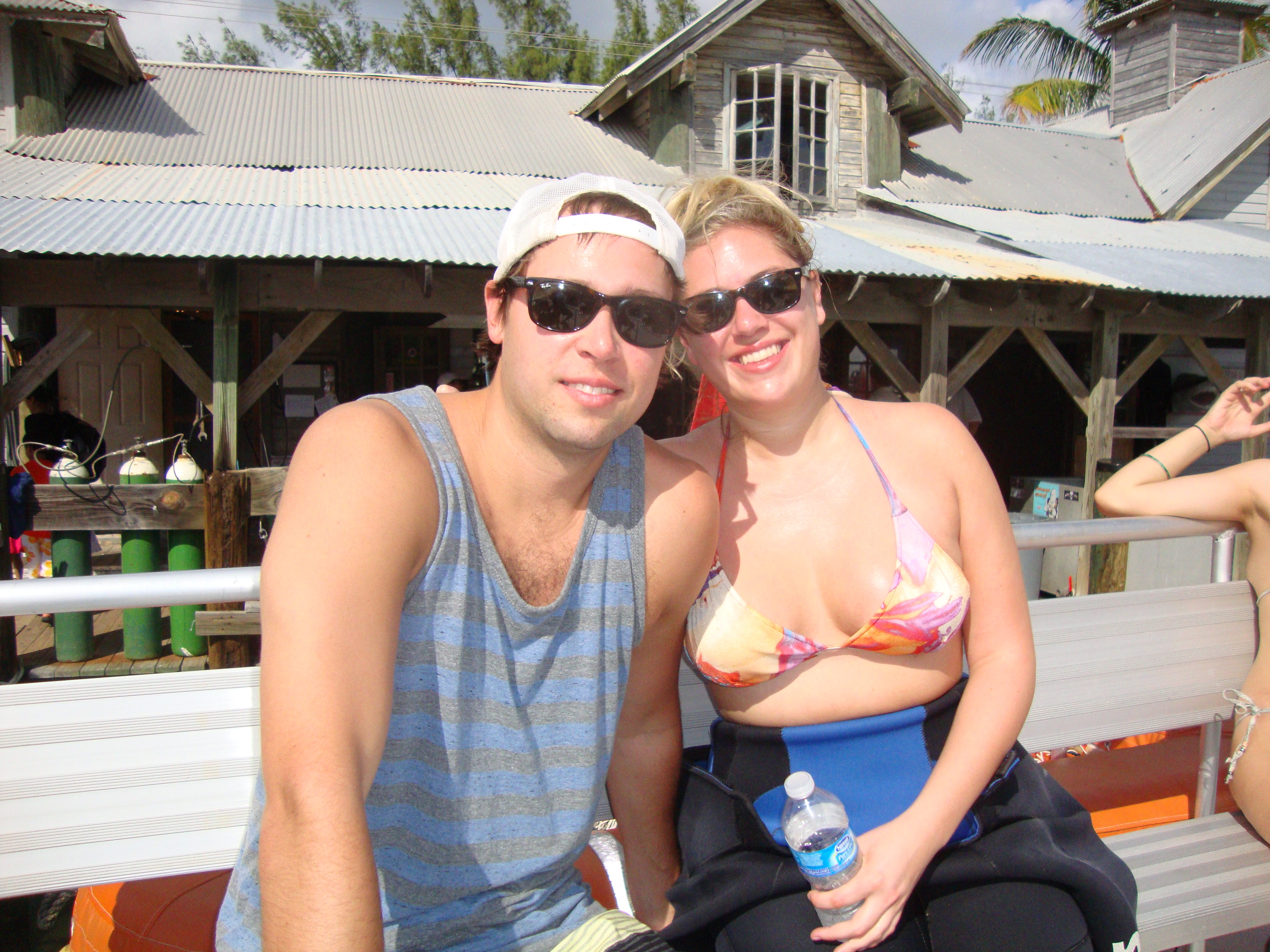
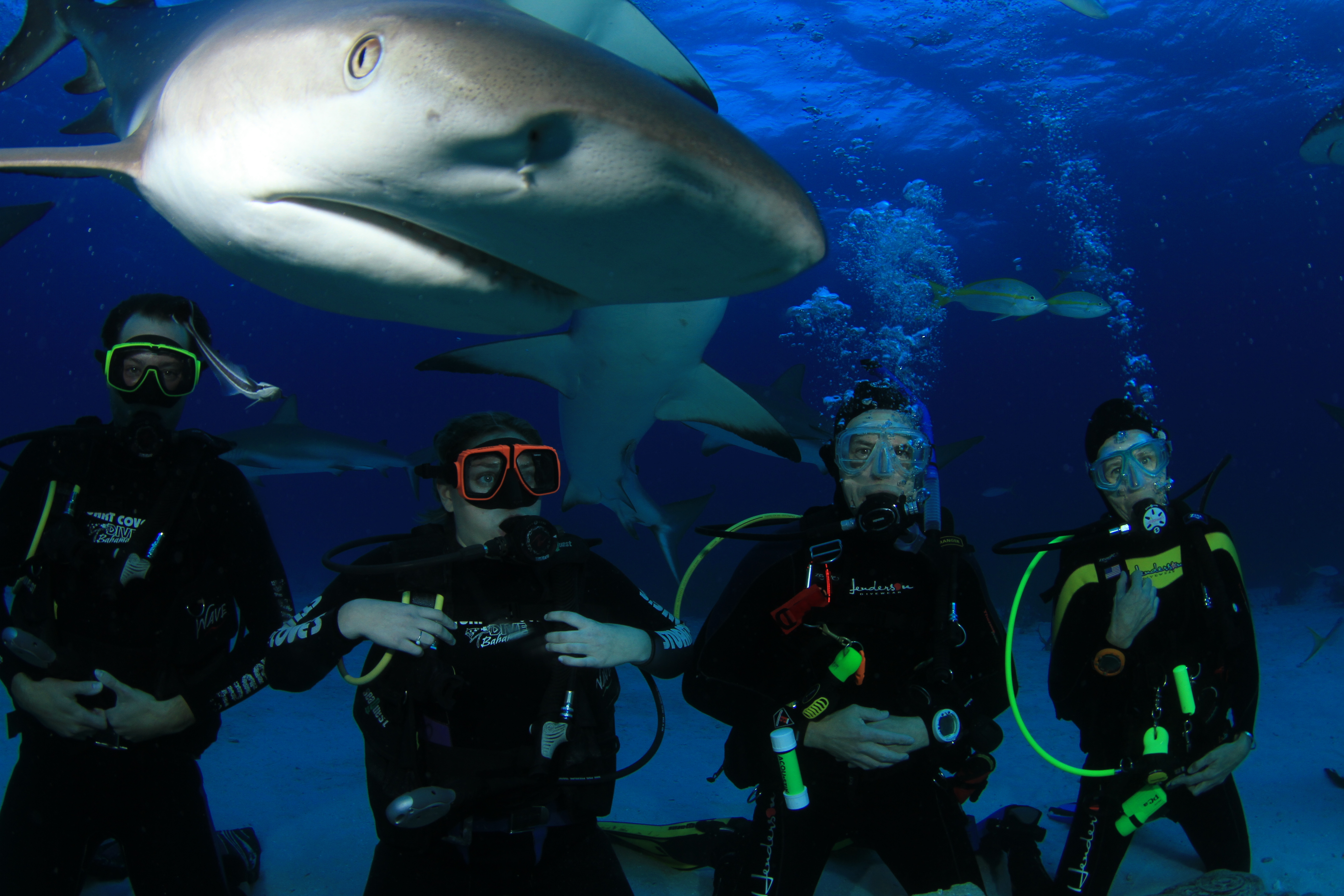
Gabe, Jocelyn, reef shark, Rob, and Sally

For Thanksgiving we went down to Nassau, Bahamas, and did some scuba diving with sharks. I was looking forward to some time with Sally, Gabe, and Jocelyn, and also to the palm trees, beaches, and beautiful turquoise water. But we chose the destination in large part because of the abundance of reef sharks.

For those with long exposure to anti-shark hysteria (Jaws, cheesy nature channel specials), this probably sounds crazy. In fact, people do these dives safely every day. For me, there was some element of facing down an irrational inner fear, but the bigger driver was curiosity and a desire to experience a particularly beautiful force of nature.

We stayed at the Sheraton on Cable Beach, a large hotel with a white sandy beach, lots of curvaceous pools with waterfalls, palms, and plenty of deck chairs. The staff seemed friendly, though slightly shy. Restaurant service both in the hotel and elsewhere was surprisingly slow (except for Luciano’s, where the food and service were both excellent). One bummer: the food was much more expensive than I expected — about three times the price of equivalent meals at home. There was a casino, which we walked through, and where no one looked like an extra for Bond film. I tried, unsuccessfully, to comprehend why these people couldn’t find something more fun to do than just throw away their money.

Sheraton Hotel, Nassau, Bahamas -- our view

But there is no accounting for taste, and no explaining some of the strange things people like to do. Which brings me back to the sharks. Humans kill around 100 million of them a year (a substantial number of those by torture — cutting off fins for shark fin soup and leaving the fish to drown), whereas unprovoked sharks around the world account for around four human deaths a year. Of those exceedingly rare deaths, the perpetrators are only four of the 360 species (great white, oceanic whitetip, bull, and tiger). It is simply a myth that sharks are mindless killing machines. Some species are highly social and demonstrate problem solving skills, curiosity, and play.

Some species of modern sharks reached their current form about 100 million years ago, in the age of dinosaurs. Species come and go (for mammals, the average species lasts about a million years), but the sharks have remained. The basic, gorgeous design has clearly stood the test of time.

We dove with Stuart Cove’s dive operation, which was generally well run with cheerful young dive leaders and staff. Sally and I did ten dives and all. Gabe and Jocelyn were not certified divers, but after refreshing on their skills with a resort course, they came with us on four dives with an instructor, a smart, well-travelled (including a stint diving in Mozambique, which she recommended highly), and good-humored young Englishwoman named Ruth.

Gabe and Jocelyn at the start of a shark dive

The climax of our diving was Thanksgiving day, when we did an area called Runway Wall, where Sally and I swam at about 70 feet (with G and S shallower) along a wall that goes down to a depth of 5,000 feet. Beside us, in front of us, and behind us were reef sharks. I counted 15. At times they swam quite close (inches), coming up on us from behind, or heading straight for us. We also got to within a few feet of a large sea turtle (probably a loggerhead), and saw a few Atlantic spadefish, a spotted drum, a spotted moray eel, and a Goliath grouper, along with many smaller fish.

After a surface interval, we descended again and sat in a circle in a sandy area. One of the staff, Rich, had donned a chain mail body suit, hood, and gloves, and brought down a cage with chum. The sharks increased in number (perhaps 20-25 showed up), and began swimming faster and closer to the cage. Rich would take a thin metal pole, spear a steak-size piece of chum, and whip it upward quickly, and the closest shark would instantly bite and swallow it. Rich would position himself in front of each diver and do some feeding while the staff took photos and videos.

I had mixed feelings about feeding sharks (or any wild animal), out of concern that it might lead to dependency or otherwise disrupt the ecosystem. I also wasn’t crazy about the emphasis on photography. But in the end I put those ideas to one side and was simply overwhelmed by the experience: about 50 minutes of a close encounter with prehistory. The distance between us got down to zero (I was bumped a few times). After a few minutes, I began to distinguish individual differences among the sharks. One had a mouth that gaped on one side, another had a fish hook in his back. They would swim in lazy circles, and then suddenly accelerate toward the food, sometimes colliding. All told, I was deeply moved by their power, grace, and beauty.

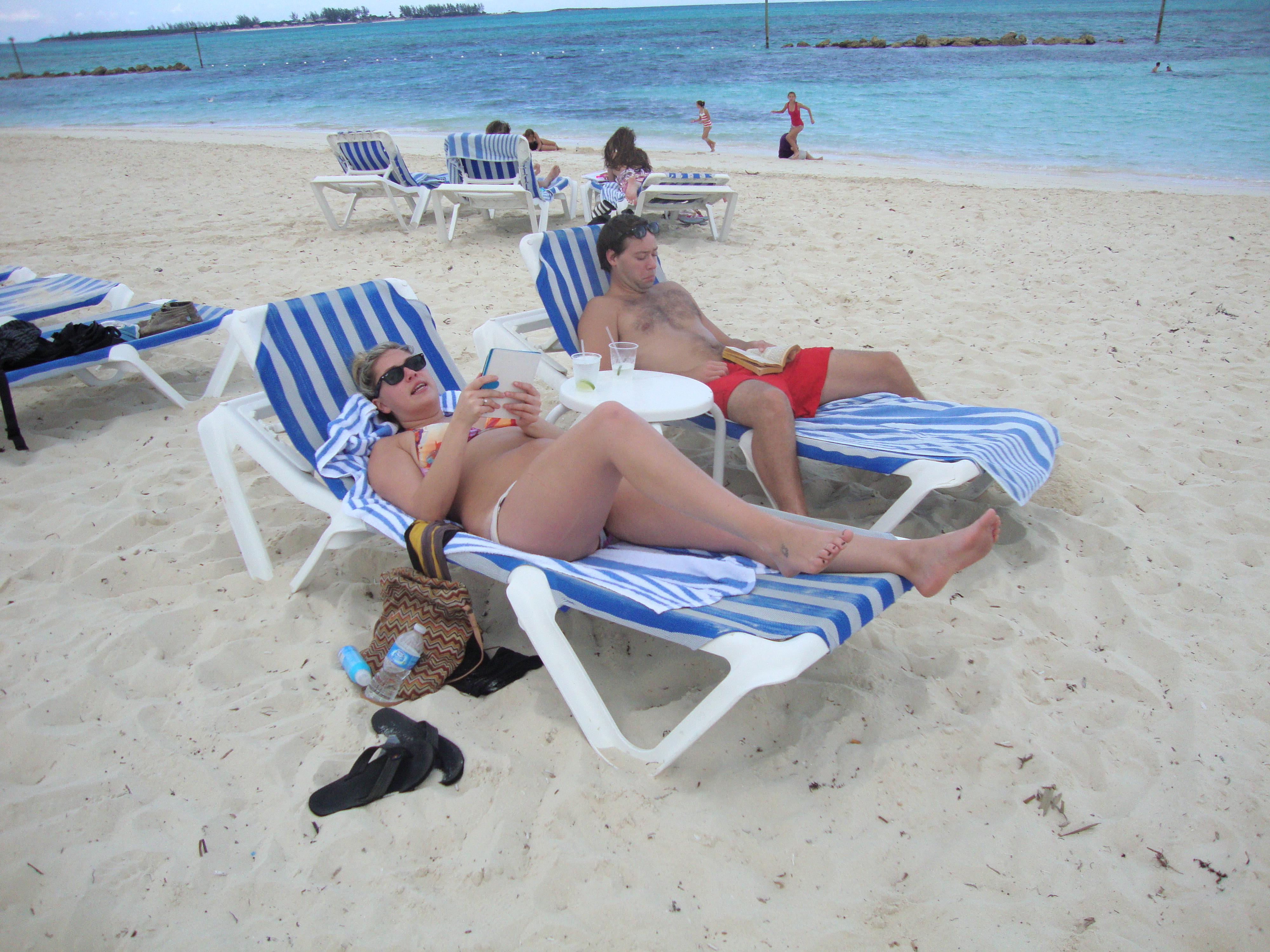
We did not dive on our last day before flying home to decrease the risk of decompression illness. We spent much of the day lounging on the beach or by one of the pools reading our various books. It was windy, sometimes cloudy, but sometimes sunny. It was lovely to see our kids reading for hours. I used to worry that they’d end up as hopeless TV addicts. But they didn’t!

I began rereading Swan’s Way, this time in a translation by Lydia Davis. Many years ago, I read the entirety of Remembrance of Things Past, and have from time to time returned to sections of it, but the length of the work is daunting in these frantic times. I found the Davis translation much more graceful and lively than the Moncrieff and Kilmartin. It may be that accumulating more life experience makes the book itself better. In any event, I was struck once again by the strange hypnotic beauty of the prose.

For the first time, I saw how the apparently casual, improvised sound of the early part of the book includes a lot of delicate prefiguring of people and events that will gradually come into sharp focus. There is so much richness in the book. It makes us realize how rich our own lives can be in perception and feeling, and makes us want to use our memories and our eyes, ears, noses, touch, and taste buds better. But it is not a self-help book; there’s something magical about it. I had the odd, strong feeling as I was reading that the book was my own consciousness coming into being. Of course, it’s only a novel — or is it?

More shark photos:


Hitting balls at the country club and watching chimney swifts

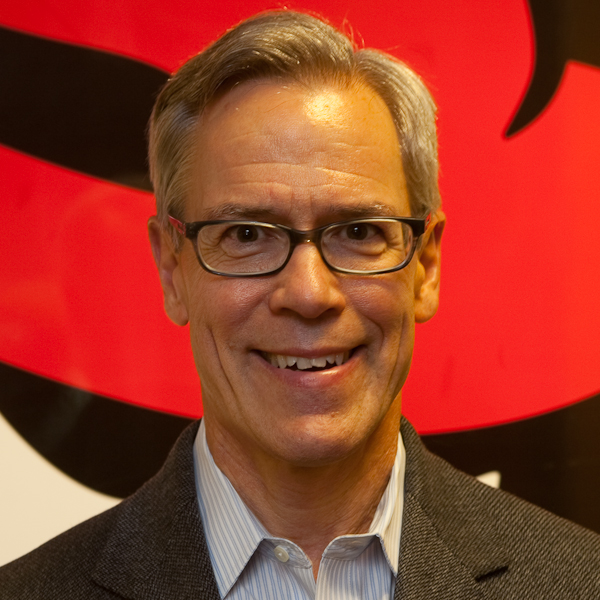
On Friday one of my Red Hat colleagues took some pictures of me for our website. In recent years I’ve got over some of the awkward self-consciousness of being peered into by a camera, though it is still slightly embarrassing. Anyhow, here is one of the pictures.

After work, I went over to Raleigh Country Club to practice at the driving range. I became a member at RCC a few weeks back. This is primarily a wonderful thing for which I am deeply grateful, but at the same time I have some cognitive dissonance. I do not come from a country club background. As a kid, I had friends who belonged and ones who didn’t, and didn’t see any systematic differences. But at some point I formed a view of country clubs as islands of unearned privilege, and of country clubbers as shallow, selfish snobs — people whose main political driver was paying less in taxes. Over time, I’ve known plenty of people who put the lie to that stereotype, but I still had trouble picturing myself wanting to join (to paraphrase Groucho Marx) any club that would have me as a member.

What changed? The most important thing was a deepening appreciation of golf. And the golf course at RCC is special. It’s the last course of Donald Ross, the legendary Scottish designer. The land rises and falls in a pleasing rhythm, with lakes and streams and bunkers, and mature trees, bushes, and flowers. It is beautiful, and also quite challenging. And it is less than 10 minutes from my apartment.

The staff has been really welcoming and friendly, as have most of the members. I really enjoy hitting balls on the driving range. When I hit a bad one, I just tee up another. I am playing with the concept that a more beautiful swing makes a more beautiful ball flight, and some of mine are flying well. But every now and again, I have an anxious moment when I feel out-of-place, and wonder if someone is about to quietly ask me to leave.

After hitting my quota at the range, I drove downtown and met Sally at the corner of Salisbury and Hargett Streets. She’d seen a story in the News and Observer about chimney swifts roosting in the Oddfellows Building there. We climbed the stairs of a parking garage across the street and looked upward.

Shortly before 7:00 pm, we saw the first few swifts appear from the northwest, and then there were more. Ultimately there were hundreds and hundreds, swarms of chimney swifts. They fluttered and veered, catching insects and making a high-pitched chatter. It was amazing. There was a kestrel that perched on the logo sign at the top of the Wachovia Building and occasionally swooped down, but the flock would counterattack. We’d hoped to see the swifts go down the Oddfellows Building chimney, but did not have a good angle to view the chimney. Finally it got dark, and we walked a couple of blocks to Dos Taquitos for dinner.

A big road trip for the Fourth, including the Tail of the Dragon

For the Fourth of July weekend, I thought it would be fun to take a road trip to western North Carolina. It had been many moons since I spent time in the beautiful Blue Ridge mountains, and I’d never driven the serpentine roads in my beautiful Porsche. Sally was game, and so on Friday afternoon we loaded up and rolled out from Raleigh.

We spent that evening in Winston-Salem, where I grew up. We stayed downtown, and were surprised to find large numbers of young people eating at sidewalk tables and promenading. At our hotel, there was a convention of “greasers” into fifties/punk hair styles, big tattoos, and hot rods. I find big tattoos somewhat disturbing, but I found this group sort of cheering. These outsiders had some things to be happy about: something they really liked (cars and a certain look), the courage to come out proudly about their passion, and a community of like-minded people. It’s not easy being different.

We had dinner with my old old friend (since fourth grade) J and his wife N. J was my hero as a kid: great at things like throwing rocks, building model fighter jets, and finding discarded Playboy magazines in the woods. He’s become a successful construction supervisor for commercial projects, and pointed out some of his projects on the Winston-Salem skyline. It was good to refresh on our history and to catch up.

On Saturday we took Highway 421 to Boone, and once there decided to take 221 south. The road wound through the green mountains. During this stretch, I experienced a Zen-like connection to Clara and the road. No thought, just driving. Shifting to third, back to second, back to third, back to second, for miles. It was strange and wonderful to have no schedule and no place we had to be. We drank in the rolling mountain vistas.

We had lunch in Blowing Rock at Louise’s Rockhouse Restaurant, where we sat near a group of State Troopers in the motorcycle corp. The vegetarian options on the menu boiled down to one: a grilled cheese sandwich. But the service was friendly, and it was a perfectly fine sandwich.

We took the Blue Ridge Parkway south to Asheville, stopping now and again to enjoy the mountain views. In Asheville there were lots of street musicians and artsy looking folk, and no shortage of veggie friendly restaurants. We chose the Laughing Seed, where I had an interesting cocktail with ginger liqueur called East of Eden, and a mushroom risotto. We stayed the night in a B&B called Reynolds Mansion, which is an 1847 house that reminded me of the Addams Family’s place, but with beautiful rooms. The breakfast featured poached pears and eggs benedict, and the host told an elaborate ghost story about a portrait of a star-crossed plantation mistress.

After breakfast we drove west through Maggie Valley, Cherokee, and Bryson City, where we bought sandwiches at a Subway, then headed northwest toward Fontana Village. About 18 years ago, we had a week-long family vacation at Fontana, and remembered it happily. A significant memory of the trip was how difficult it was to get there on the windy mountain roads in the minivan, and it seemed like a good idea to try those roads again in a better vehicle. It turned out the roads had been widened to four lanes for most of the trip, and the only exciting part of the journey there was the last few miles. We ate our sandwiches at Fontana and recalled the happy vacation with little Gabe and Jocelyn — river rafting, horseback riding, swimming, ping pong, and shuffleboard.

Then we went north to US 129 and encountered the Tail of the Dragon. We’d heard of the road, but weren’t certain of the location until we came to Deal’s Gap and saw several dozens of Harleys in the parking lot of the motorcycle motel. So we drove it. It was like skiing black diamond moguls. It whipped back and forth, up and down through the Nantahala forest, never straightening for any length. Like a mogul run, it took total commitment and focus. We were fortunate to find long stretches with no one ahead or behind. 318 curves in 11 miles. A major dose of adrenaline. It was awesome. Awesome!

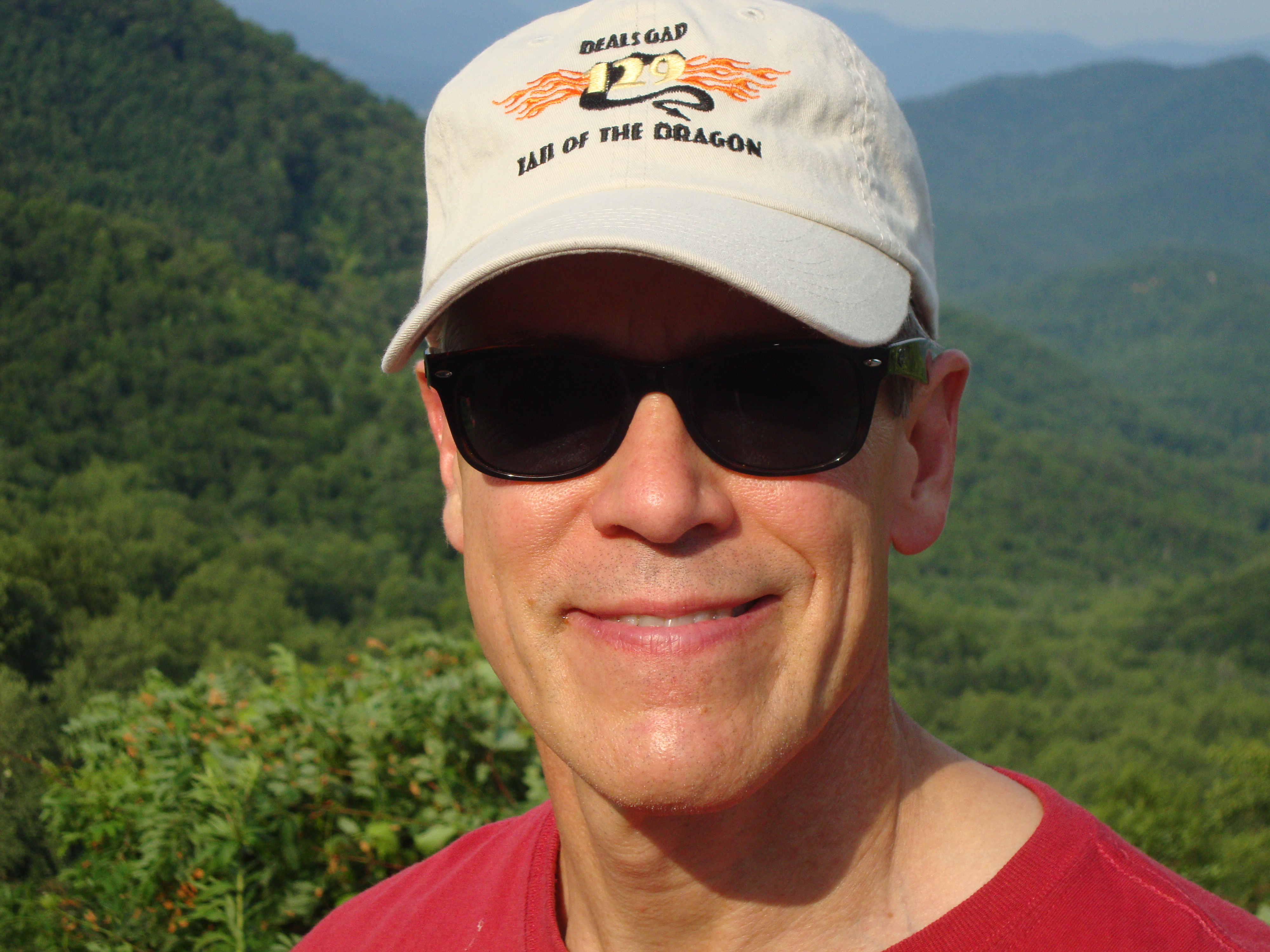
Returning, mentally exhausted, we stopped at Deal’s Gap and I bought a Dragon souvenir tee-shirt and hat. We sat around for a bit with the bikers, and noted the things we had in common and the things we didn’t. In common: love for vehicles and the road. Different: facial hair, cigarettes, tattoos. Some of them were scary looking. But I felt I understood much better what they were about after driving the Dragon. Like the greasers, these folks had embraced their differentness and found a kind of community.

Sally served as co-pilot and navigator throughout. She had no interest in taking the wheel, unless I threatened to fall asleep, which I never did. Amazingly, she was cheerful throughout. She never once expressed fear or even hesitation at the speed. She was game, and brave. We talked for periods, and were quiet and peaceful for periods. I realized, once again, that she was the girl for me.

For the most part, we navigated the old-fashioned way — with maps. I have a Garmin GPS, which is useful for getting from point A to B, but not for finding interesting byways. We missed our turns a couple of times as we headed back east (poor signage, we thought), but never worried excessively. We spent the last night in Franklin, then took US 64 back across NC. Total mileage for the weekend was just about 1,000. We couldn’t get over what a beautiful state this is.

Open source ballet

A good conversation over a fine dinner is one of life’s true pleasures. Sally and I went out with our ballerina, Lola Cooper, for dinner at Solas last night and had a great time. By virtue of our donations to Carolina Ballet, we’ve become the sponsors of Lola’s pointe shoes, an essential tool for classical dance. We’ve talked with her several times, but hadn’t had a chance to break bread together before. Happily, Solas has a special menu for vegetarians, which they will produce if you ask.

Lola, it turns out, in addition to being a rising star, is a lively and interesting young woman. Ballet dancers are almost by definition highly focused individuals. The form demands a lot from its embodiers: years of rigorous training, physical stress, competitive pressure, performance anxieties, and unremitting discipline. In exchange, dancers get a shot at transcendence. It’s hard to be a great dancer and a scholar, for example. Not impossible, certainly, as I’ve been reminded recently in reading Apollo’s Angels, a history of ballet by Jennifer Homans, a former dancer. But challenging.

Anyway, Lola’s pursuing a bachelor’s at N.C. State and keeping her intellectual side engaged. We talked about travelling in South America, organic food, painting, yoga, and families. All interesting and fun. And dance, of course. She told us about some of her personal challenges with a grueling rehearsal and performance schedule. I told her the short version of my idea for open source ballet.

The idea is to adapt some of the concepts of open source software to dance. Open source software developers hold that the best way to make great software is to freely share code and ideas in a collaborative way. They use internet tools to leap over barriers of geography. Instead of holding onto the copyright in their work, they use open source licenses to encourage use of the code by others. As this methodology has spread through the tech world in the last three decades, it has resulted in an astonishing amount of creativity and innovation in software development.

How does this apply to dance? Dance is in part a collaborative art that draws on the creativity of others. Choreography uses a vocabulary of movement that has been developed by prior generations and that continues to be enriched by artists today. Although the sharing of movement ideas is not always acknowledged, it is a fundamental part of how ballet is made. Of course, each real artist makes work that is also in important ways original. But it is hard to conceive of a new ballet that owes nothing to ballets that came before.

So there’s an aspect of ballet that is already collaborative. In general, though, there’s a concern in ballet with trying to protect the intellectual property rights associated with a new dance work by limiting recording and forbidding copying of recordings. The background assumption is that the creative work could be stolen to the detriment of the owner. But is that likely? It might well be that videos of a ballet would proliferate, but this would only be bad if it hurt the market for recordings (which is negligible), or the market for live performance of the work. In fact, it would probably expand the audience for the work and enhance the reputation of the choreographer and performers.

This open source approach flies into the face of conventional intellectual property ideas. Those ideas are so familiar that they seem natural, and it seems unnatural to give up certain intellectual property rights and encourage free use. But open source has worked for software, and it’s being adopted in science, education, and the arts.

The ballet application could be tried as an experiment on a limited basis, even with a single DVD of a single performance. A license that allowed free copying and a marketing campaign that encouraged such activity could put the work into the hands of new potential dance fans and supporters. It could help ticket sales and budget challenges. And it would let the artists do more of what they’re good at: transcendence, and sharing transcendence.

Technology, new art forms, food, and ballet

I’m fortunate to have a ring side seat as information technology is transforming the world, but it doesn’t always look pretty. It makes me wonder, at times, whether, as machines get smarter, humans on average are becoming more and more like the race depicted in the wonderful animated picture Wall-E: fatter, lazier, and dumber. But I haven’t given up all hope, and there are some signs pointing the other direction.

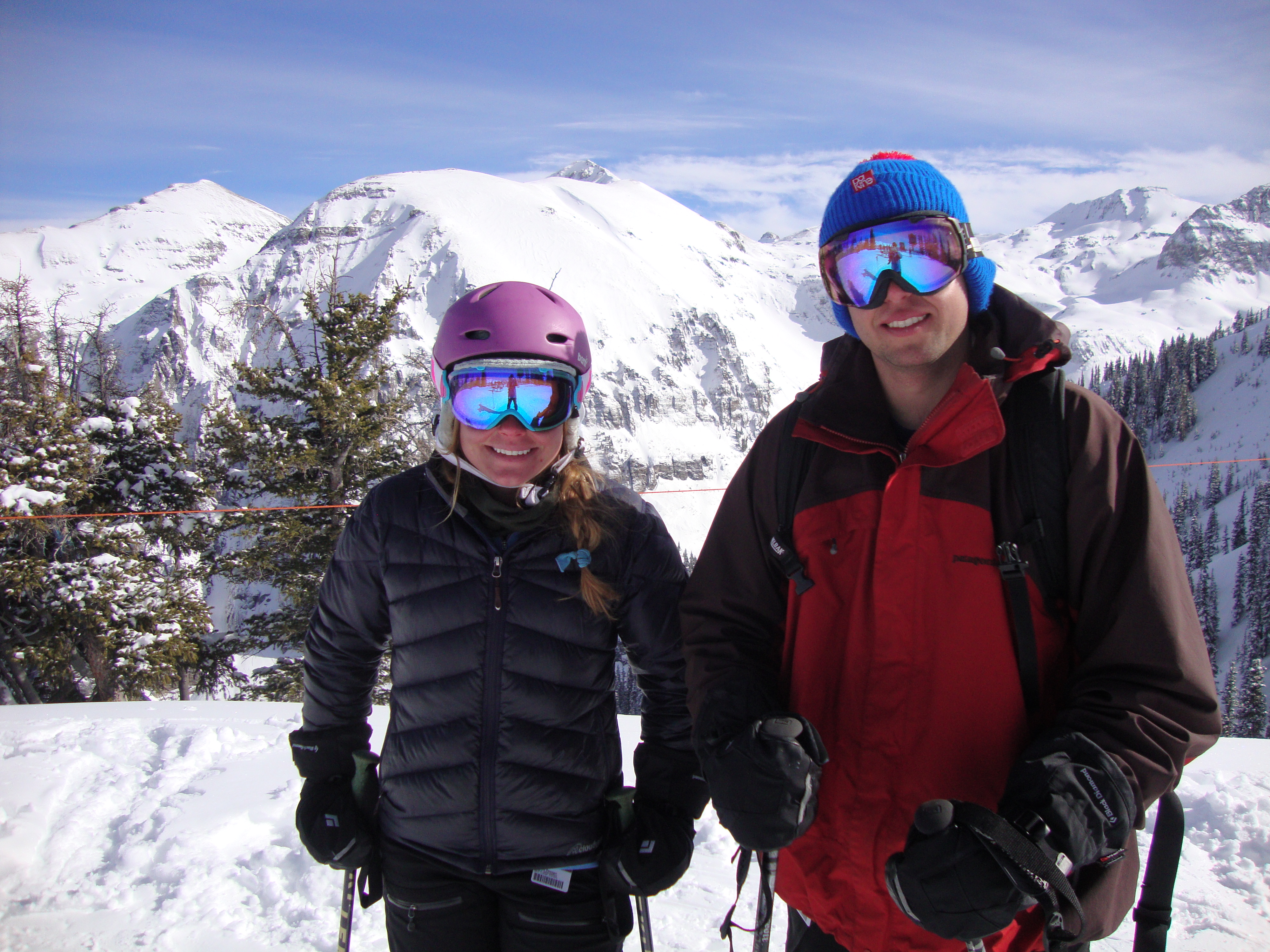
A case in point: this week when my son Gabe (pictured here at Alta last week) sent along his first self-produced short video, which is here. He shot it with a tiny body cam over the course of 3 days skiing in Telluride, CO. The finished product reminded me strongly of some of the beautiful skiing we did together. It’s hard to describe the complex sensations and emotions of skiing far from away from the crowd when its steep and deep, but Gabe managed to convey some of it. The flamenco score heightens the sense of edginess — wild joy with stabs of fear.

Good skiing sometimes seems like art, almost like dance, but the work is seldom shared with other humans by the skier-creator. Until recently, filming the experience was a costly and difficult undertaking. In the past couple of years, though, video cameras have gotten much cheaper as well as tinier, and easier to use, and the software for recording and editing has become highly accessible. The tools for communicating the work instantly and almost cost-free over the internet now exist. The learning curve for use of all this technology is short. And so a new class of artist is being born — the skier-auteur. Technology advances are likewise enabling new types of musical expression, and undoubtedly many other artistic expressions. Perhaps the day will come when everyone will be an artist.

Is food art? I argued about this years ago with my friend Tom, a gourmand who took a strong position that great chefs were artists. Over the years, I’ve moved closer to his position. A great restaurant is a multi-media experience, with sets, lighting, sound, and actors, and also smells and tastes.

Last night Sally and I tried a new Thai restaurant off of Moore Square — Fai Thai. It has replaced the Duck & Dumpling, an Asian fusion spot that was one of our favorites, and that we were sad to see close. The emphasis is less on standard Thai fare than on local ingredients and variety. The decor changes involved colorful parasols and lanterns, which were engaging. The menu had fewer vegetarian options than we hoped, but enough to get started. We found the three dishes we tried each quite different and delicious. The spiciness hit the Goldilocks point — not too much, not too little. Our waiter was friendly and attentive, and the manager took some time to talk to us about the aspirations of the place. He appeared to take on board our suggestions for more attention to vegetarians. Thai food fans should try it.

After dinner, we saw the Carolina Ballet perform Carmen. This is the third time we’ve seen the company do Weiss’s ballet, which is one of our favorites in the repertory. Bizet’s music is unforgettable, and the story is sort of perfect for ballet — love, jealousy, death. For all my admiration of Peggy Severin-Hansen’s great talent, I had my doubts about her as Carmen, who is a sensual, cynical heartbreaker. Peggy’s long suit is purity and innocence — the perfect Firebird. Her Carmen was sweeter than normal, not completely cynical, but this turned out to give the tragedy a new bit of bite — more tragic in a way. Richard Krusch as the Toreador was highly serious, and convincing. He’s a fine dancer who keeps getting better. As always, the story ended with a violent shock, but the production was wonderful.

A difficult but ultimately satisfying swim, beautiful blossoms, and some good news regarding veggie burgers

It seems that the greater the struggle to swim some laps, the better I feel afterwards. At 6:00 a.m. this morning, I got to the pool with a plan to swim 40 lengths of freestyle (more than half a mile), and felt my heart racing uncomfortably after the first 4. But I struggled along, finished the 40, and then did 8 kickboard laps, 8 backstroke, and 8 breaststroke, and then 15 minutes of yoga. The endorphins were excellent! Driving home, I just couldn’t get over how beautiful everything looked! Blossoming dogwoods and cherry trees, blooming azaleas, and thousands of dewy green buds.

For breakfast I made myself a green smoothy in the blender with rainbow chard, apple, and banana, with some orange juice and soy milk. It tasted earthy — not delicious, exactly, but satisfying as a kindness to the body. And, reading the NY Times, along with frightening and disturbing news (nuclear plant catastrophe in Japan, mayhem in Libya), I found a cheery story: veggie burgers are getting better and more popular. http://tiny.cc/p97hm Admittedly, veggie burgers have a checkered history, but the ones in the Times story sounded delicious. According to the story, there was a 26 percent increase in menu items labeled vegetarian or vegan between the late 2008 and late 2010. That’s a remarkable increase.

I’ve been a committed plant food eater for about 15 years now, and my personal experiment has been highly successful in this respect: I feel happier and healthier than I did 15 (or even 30) years ago. But as a social matter, the veggie life has been a challenge. My non-veggie friends don’t get the point, and there’s way too much friction in figuring out ways to eat out together. It’s cheering to think that help may be on the way, in terms of increasing numbers of veggie menu items. Cheering also to think more people are eating plant-based diets that will help them be healthier.

New dancers, and a new restaurant

On Saturday afternoon we went to the Carolina Ballet to see the same show we saw three weeks back, but with different dancers. The first work, the Ugly Duckling, by Lynn Taylor-Corbett, is a bright, jazzy ballet. It’s plainly engineered with children in mind, but the sweetness is balanced by stabs of darkness and menace. We saw Lara O’Brien, the original UD, at the beginning of this run, and on Saturday saw Lindsay Purrington in the title role. It was an interesting contrast. Lara was both regal and comic. There was never a question, though, that she was a swan. Lindsay brought to the surface more of the pathos of the story — the moments of confusion, hurt, and fear — and her transformation into a swan was a difficult journey. I found it surprisingly touching.

Margaret Severin-Hansen and Richard Krusch performed a pas de deux entitled Flower Festival in Genzano. It was very classical, and very beautiful. For moments the law of gravity seemed to be suspended, and the dancers seemed to be impossibly light, almost floating. Peggy is such an awesome technician that she makes you forget about technique, and get to the essence. She projected innocence, charm, and love.

Robert Weiss’s newest ballet is entitled Grieg: Piano Concerto. I played a version of the piece as a young piano student, and have never been overly fond of it since. But Weiss has put its somewhat diffuse Romanticism to good use. The ballet is in parts fast and furious, with dancers shooting about both horizontally and vertically. The allegro ensemble sections seem almost frighteningly complex. There are some wonderful quiet, tender moments as well. On Saturday, Lara O’Brien, Jan Burkhard, and Lola Cooper took the principal female roles, and were lovely. Lola performed the role created for Melissa Podcassy, which includes a long adagio solo. She radiated confidence.

After the performance, we talked for a while with Lola and her father, Brian, who was visiting from New York. She described days of five-hour rehearsals for the next show followed by a two-hour performance in the evening, and then the same again the next day. Grueling, clearly. But she wasn’t complaining.

That evening we ate for the first time at Market, a relatively new restaurant in Raleigh’s Mordecai neighborhood. It features fresh, local ingredients, and has a simply furnished dining room that makes you think organic. The service was friendly and helpful. The had the sweet potato latkes and the vegetarian stir fry, neither of which were like anything I’d ever eaten and both of which were delicious. We split a piece of pumpkin cheesecake, which was also unexpectedly delightful. We liked the place.

Ups and downs in Telluride

My life is full of technology and intense mental activity, and I’m glad of it, but from time to time I crave an interlude of pure natural beauty and physical activity. And so for a long President’s Day weekend, we skied Telluride, Colorado, where the San Juan mountains look something like the Alps — jagged and imposing, yet peaceful in a way.

Set a human body sliding down the snowy slopes, and interesting things happen. Exhilaration at the speed, microbursts of fear, quick happy recoveries, or minor disasters. I had my most dramatic fall on Bushwacker, reportedly the steepest groomed run in America, where I’d got off the groomed terrain and into the bumps. Tips crossed, I launched over the top of my skis, which came off the boots as designed, but rather than stopping I then found myself sliding fast downhill headfirst and accelerating. I eventually managed to flip over, spin around, and dig my boot heels into the snow to brake. By this time, one ski was 200 yards below me and one pole was 50 yards above (a classic yard sale). I am always happy to rely on the kindness of strangers, and gratefully accepted assistance of one who picked up my pole and another who helped me resituate on one ski. Then I lowered myself inelegantly down the slope to retrieve the other.

A couple of my colleagues at Red Hat have written about failing fast and often as a means to success, which in skiing translates as falling fast and often. It entails some moments of embarrassment. But by golly, I’ve really improved this year. I took on steep, deep powder runs, glades, and double black moguls, as well as carving on high-speed cruisers, all with great joy (and occasional terror).

We had fresh snow falling our first day and night, and a classic powder day the second day. I insisted that our group (Sally, Charles, Chuck, and later David and Kimberlie) move out early to try for first tracks. We found lots of beautiful light snow and varied terrain. Those first two days I stayed well within my comfort zone and had great fun. Each night we ate in good restaurants, (Excelsior, Rustico, Honga’s, and Siam), and one night had delicious pizza served by my sweet Jocelyn at the Brown Dog. The group included old familiar friends and lively new ones, and there was good conversation and laughter.

On day three the skies had cleared, and Gabe and Lindsey, who live in Telluride, had days off and came out to play. They knew the mountains well, and managed to locate pockets of non-skied-out powder. For the first time I felt reasonably comfortable on steep gladed runs. I was inspired by their beautiful skiing, and proud that I could more or less keep up with them. Riding up the long chair lifts, we caught up on things in general, considered the state of the world, and got to be better friends.

So long, Krispy Kreme, and hello health

It was bittersweet to learn last week that the Krispy Kreme store in downtown Raleigh was closing due to lack of business. When a business fails, individuals suffer hardships. As a downtown Raleigh resident, I’m particularly eager to see businesses here succeed.

And Krispy Kreme and I go way back. As a boy I was a patron of the first Krispy Kreme store, in Winston-Salem. There you could sit at the counter and eat hot glazed doughnuts while watching more fresh ones coming off the conveyer belt. It was one of the few places in town open 24 hours. After finishing my paper route at 5:30 a.m., I’d sometimes stop in there for a delicious sugary treat. It was also a favorite late night spot for teenage munchie runs. Good times.

But in recent years I’ve come to associate Krispy Kreme doughnuts and similar sweet products with less cheerful things, like obesity, diabetes, heart disease, and death. The products are more like cigarettes than food. The nutritional content is minimal, and the high sugar and fat content are unhealthy. This is not exactly big news. In a sense, everyone knows that too much fat and sugar are bad for you. But it continues to be a difficult fact for people to face and do something about. That much is obvious from our obesity epidemic.

We’ve made slow but meaningful progress in the last 50 years addressing the deadly public health effects of smoking. We’ve substantially reduced smoking rates, and therefore smoking deaths. The basic facts about smoking and cancer are now common knowledge, as a result of government requirements for warnings on cigarette labeling and restrictions on cigarette advertising. We have not done anything like this with risky sweet food products that kill people.

If anything, we’ve headed in the opposite direction. Information about nutrition is obscured by industry and federal agencies. Our government transfers our tax dollars to agribusinesses as large subsidies for production of excess corn, which is processed into high fructose corn syrup and added to many common food items. Thus healthy unprocessed food seems unusual and, by comparison, expensive. Thousands of advertisements have convinced us that sweet, fatty food products produce good feelings of love and fun.

Sure, it’s possible to get sound nutrition information and it’s possible to eat in a healthy way, but our culture makes it quite challenging. People who make a point of trying to avoid unhealthy food are viewed with puzzlement and sometimes anger. It’s no fun being ridiculed as a food nut. It’s easier to go along with the crowd.

Lifetime Fitness gym recently published an article by Pilar Gerasimo titled “Being Healthy is a Revolutionary Act,” That’s putting it too strongly, but it is certainly an act that defies settled conventions. The related web site does a good job of putting in bumper-sticker form some home truths about health and nutrition. http://revolutionaryact.com/ The first home truth gets down to business: “The Way We are Live Is Crazy,” based on our rates of obesity and chronic illness. But, it says, we can change.

Maybe so. If Krispy Kreme is doing less business, it probably isn’t because their doughnuts don’t taste good. They taste too good! It’s possible that more people are facing the fact that we can’t go on eating like this.