The Casual Blog

Category: restaurants

Ballet paintings, fossils, and a piano recital

Light on One’s Feet by Nicole White Kennedy

Last Thursday Sally and I had lunch at the Remedy Diner, where my sandwich was the Tempeh Tantrum, then went to a gallery to to look at paintings by Nicole White Kennedy. Kennedy, a local artist, paints in an Impressionist/Post Impressionist style that I once thought of as old hat. My early art education stressed the triumph of modernism and abstraction. But over the years I’ve really enjoyed Kennedy’s landscapes and cityscapes in her husband’s fine Italian restaurant, Caffe Luna. I’ve gradually gotten past my prejudice in favor of the modernist aesthetic. Artists show us multiple ways to see the world, and it’s fun to try different ones.

Anyhow, I was intrigued to learn that Kennedy had worked up a show of works featuring dancers from the Carolina Ballet. We really liked the show. No doubt it helped that we came to it as balletomanes, and that we could recognize some of our favorite ballerinas. But she unquestionably had a feel for the interiors and exteriors of the dancers and their work places.

I was conscious that the works owed a debt to Degas, both in their behind-the-scenes intimacy and the juxtaposition of ethereal sweetness and stark angularity, but I didn’t find this bothersome. Artists always borrow ideas from other artists and build on them, just like scientists and inventors. We were particularly touched by the paintings above and just below, and bought them.
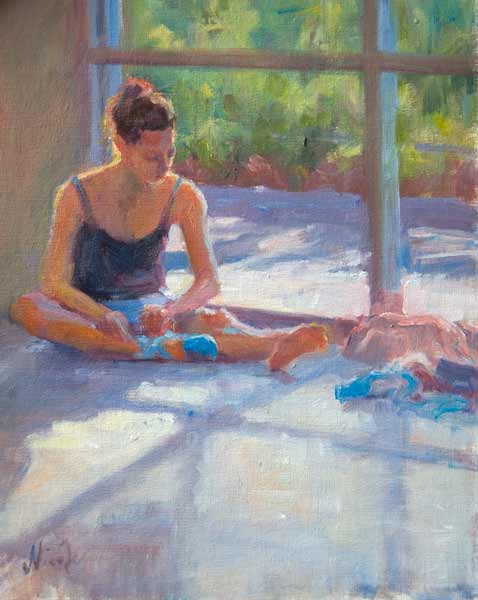
Dancer Removing Turquoise Points by NWK

The next day I flew up to DC for a gathering at the Supreme Court in honor of my old friend Justice Elena Kagan, which was highly nostalgic and which I will try to write about soon. But as post-election therapy, I’m focusing just now on art. With my free morning I sampled the Smithsonian museums, which always make me proud and happy to live in the USA.


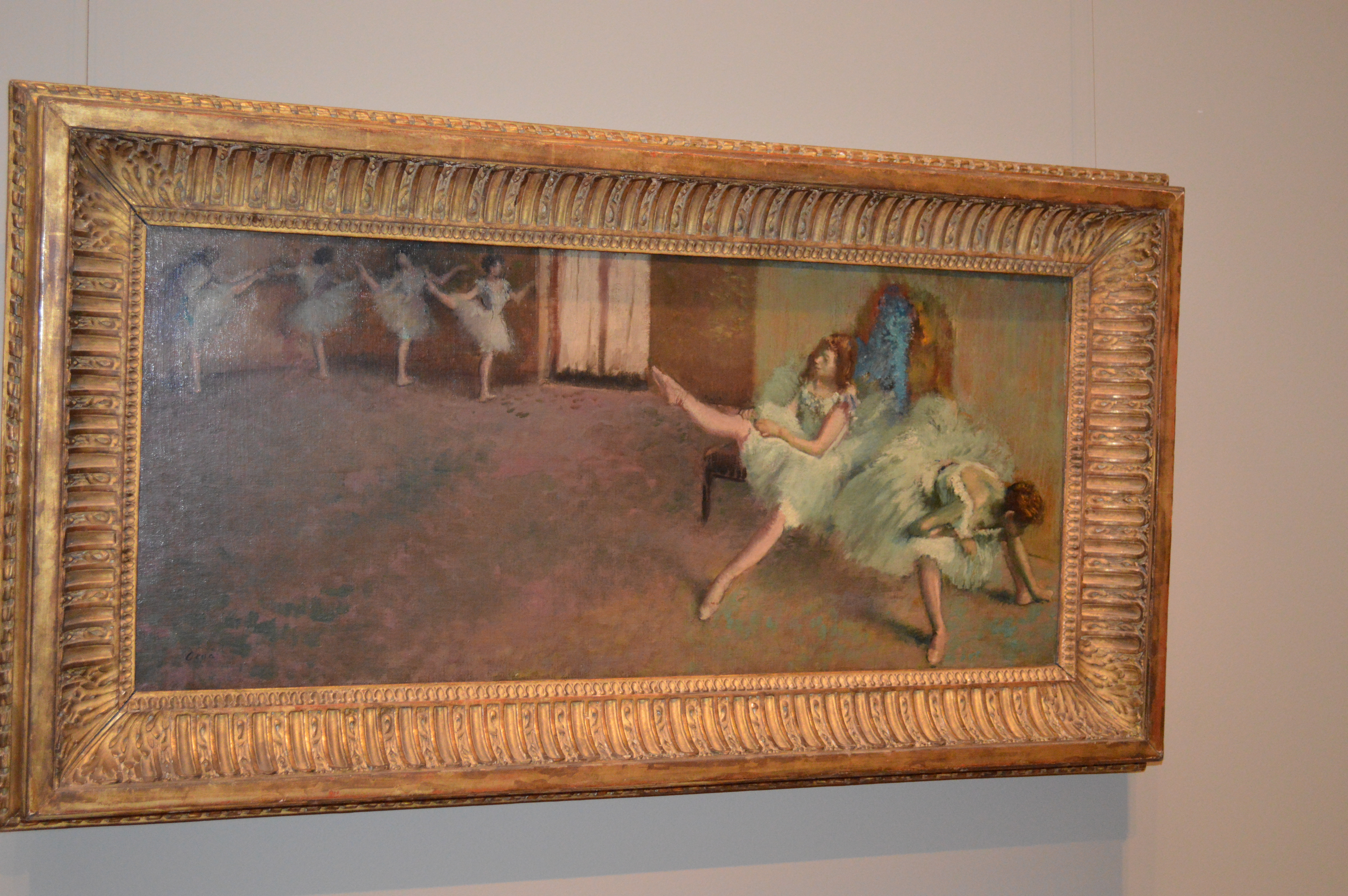
First I visited some of my favorite works at the National Gallery. These included the Rembrandts and other Dutch masters, including especially the two exquisite Vermeers, as well as the French Impressionists. Still thinking about dancers and art, I paid particular attention to the Degas paintings and sculptures of dancers. He clearly loved the subject, and it touched me. But I must say, his dancers are not as lithe and athletic as the Carolna Ballet ones.
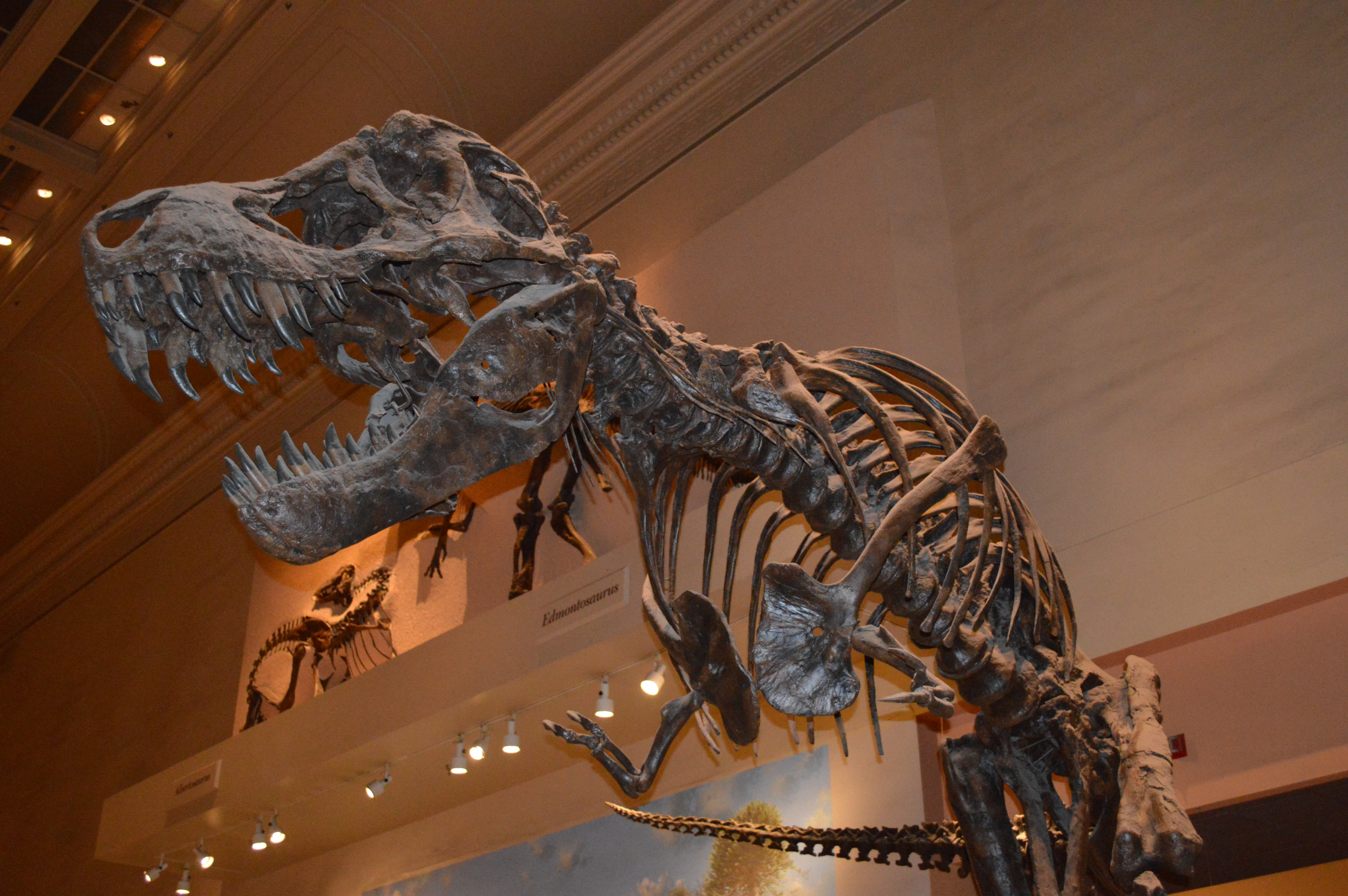
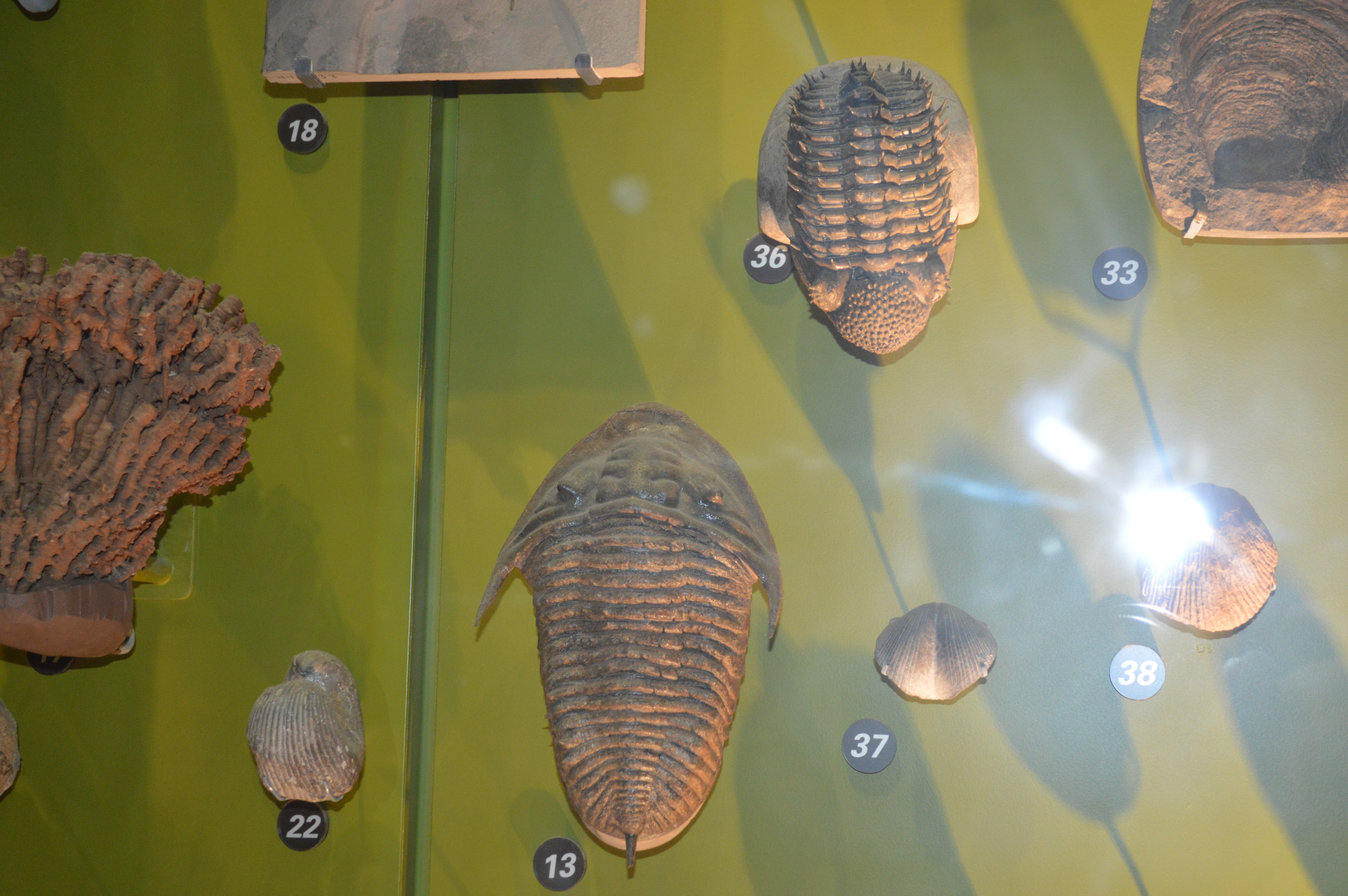
Next, I walked down the Mall to the Museum of Natural History. As always, I enjoyed looking at the dinosaur fossils, but I wanted to have a close look at the trilobites, which are much much older than dinosaurs.
Trilobites were marine arthropods that began their run around 520 million years ago. They developed an amazing variety of body types during the 270 million years (give or take) that preceded their extinction. RIP. Nature has done a lot of amazing experiments!
I returned to Raleigh on Sunday afternoon in time to go to the recital of my piano teacher, Olga Kleiankina. Her program, like her, was Russian: Alexandr Scriabin (1872-1915), Nikolai Medtner (1880-1951), and Sergai Rachmaninoff (1973-43). She played brilliantly. She’d told me a couple of weeks ago that she was struggling with memorizing the Medtner piece (the Tempest Sonata), and I was feeling a little anxious for her, but she seemed completely in command. The piece was very dense, and at first I was a bit bewildered, but then I got my bearings. I particularly enjoyed the Scriabin Black Mass sonata. From our work together, I know how intensely she focuses on sound colors, and now that I’ve learned to hear some of those things, the music took on a new dimension.

There was a good piece on the Sunday NY Times about the sense of hearing, and the difference between hearing and listening. According to Seth Horowitz, we react to auditory signals 10 times faster than visual ones. Hearing is an early warning system, among other things. He notes that close listening is hard in a world where there are endless distractions, but that we can get better at it. I concur.

Great N.C. wreck diving, compassion for sea creatures, and collective intelligence


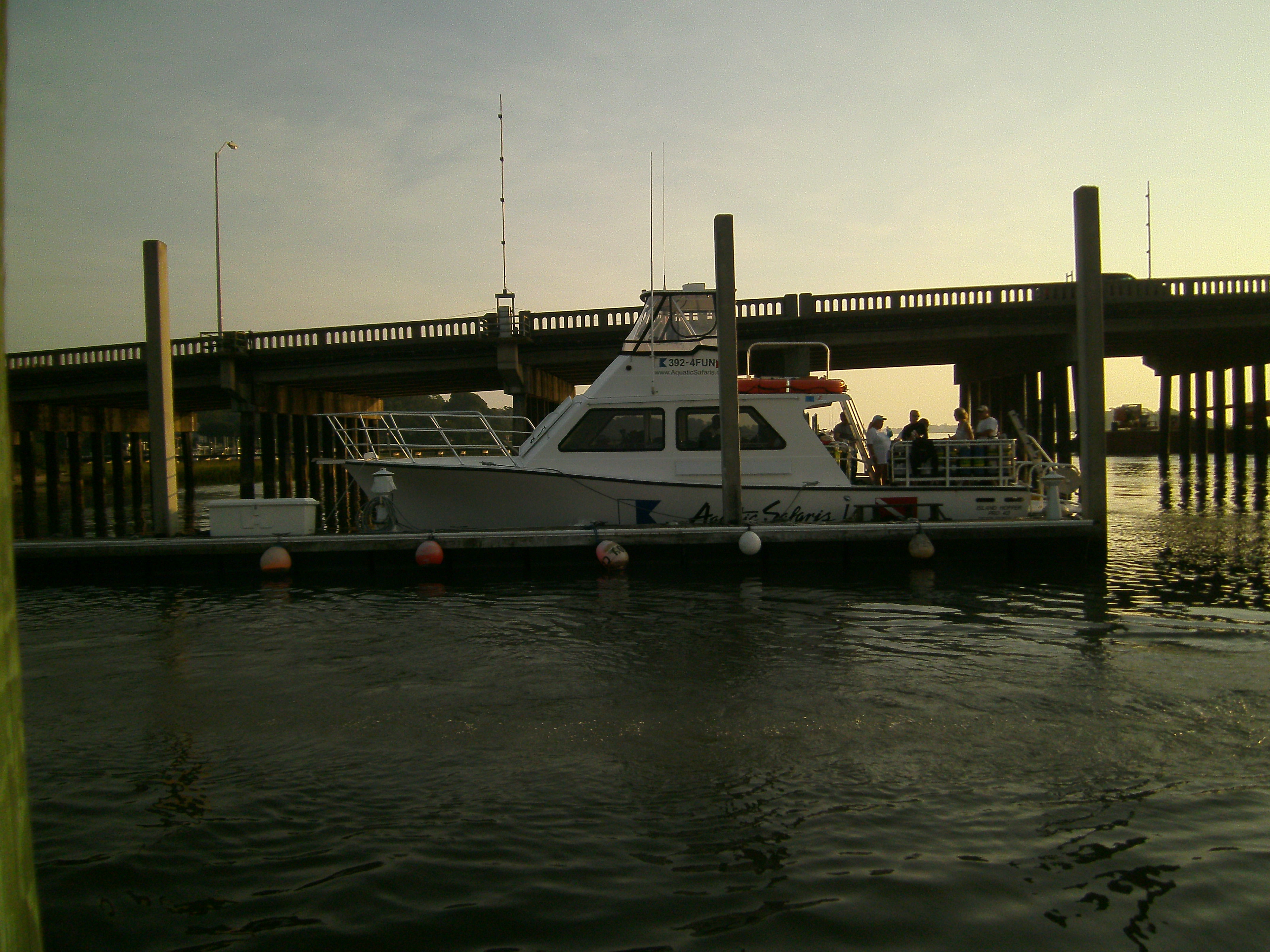
For Labor Day weekend, Sally and I went down to Wrightsville Beach, NC, for some wreck diving and extended our lucky streak of exceptional coastal dives. Our trip was organized by our friends at Down Under Surf and Scuba, and we went out on the Aquatic Safaris I. The 48-foot boat I carried 19 divers.

Saturday was warm and clear, with mild breezes and fairly calm seas. We dove the City of Houston, a passenger-freighter that foundered in a storm in 1878. She lies about 50 miles from Wrightsville. It took two and a half hours of hard traveling to get there. Shortly after we anchored and I visited the head, I felt queasy and promptly got sick. Then I felt mostly better, and we jumped in and headed down the anchor line to the wreck.

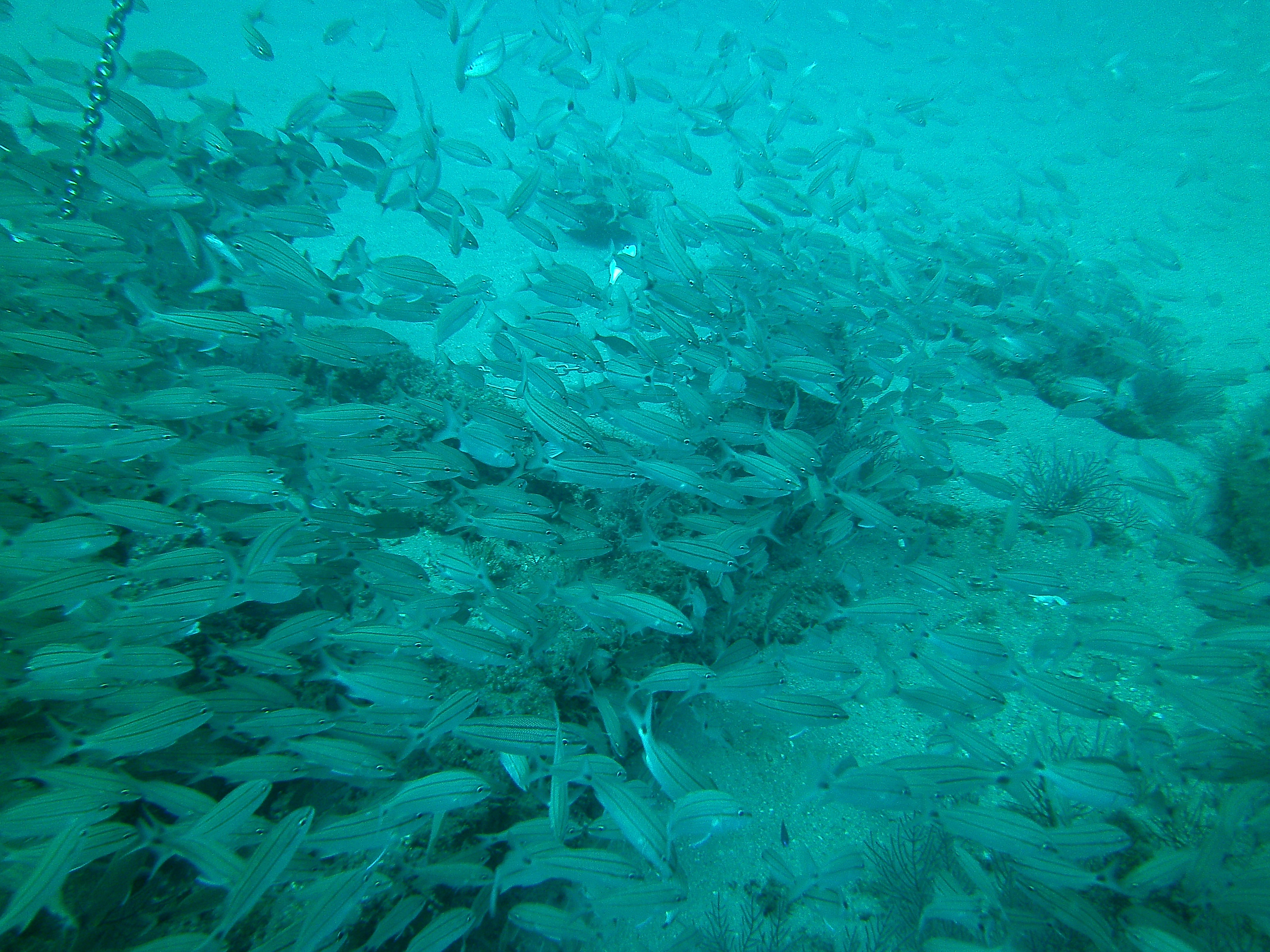
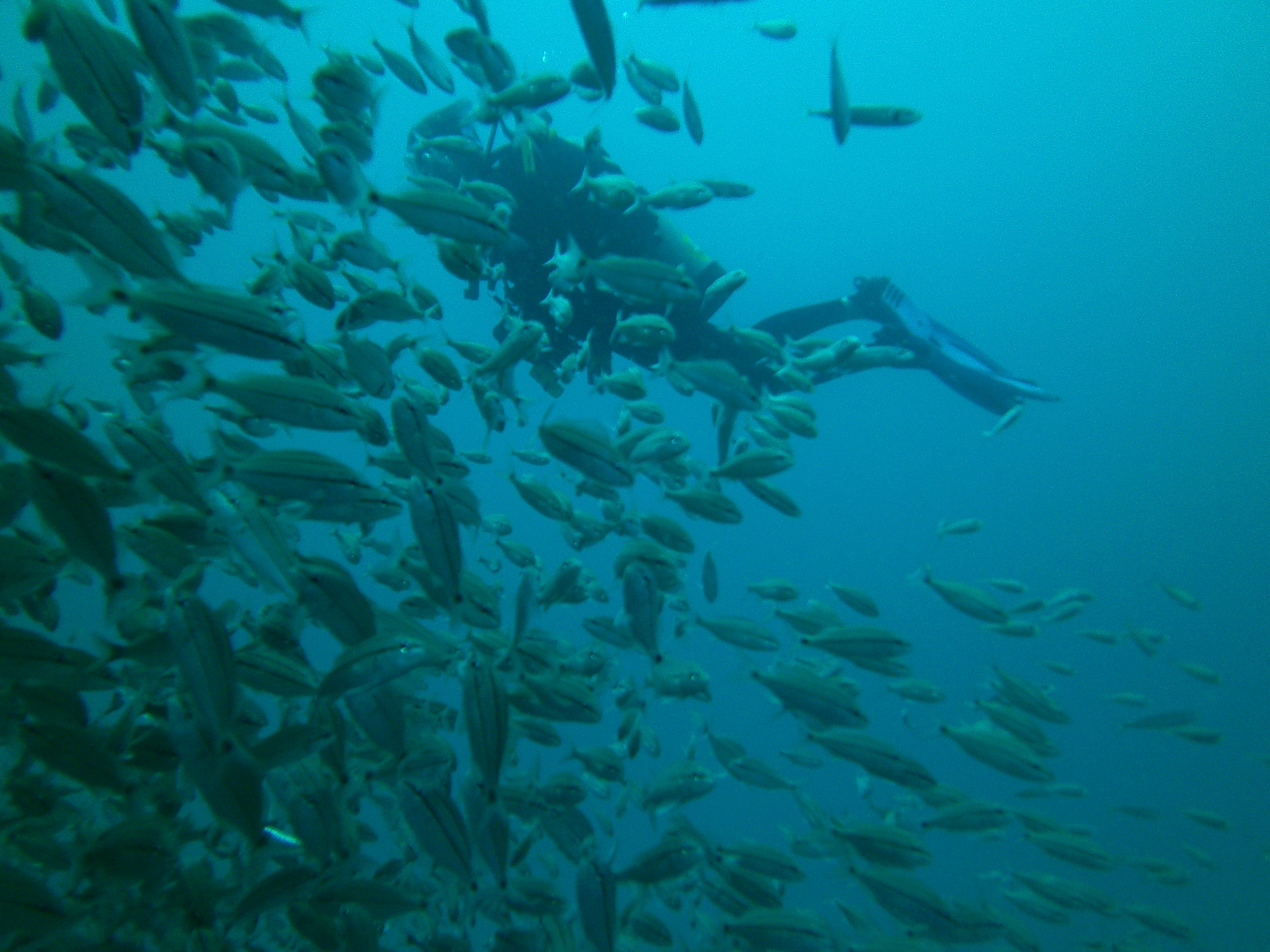
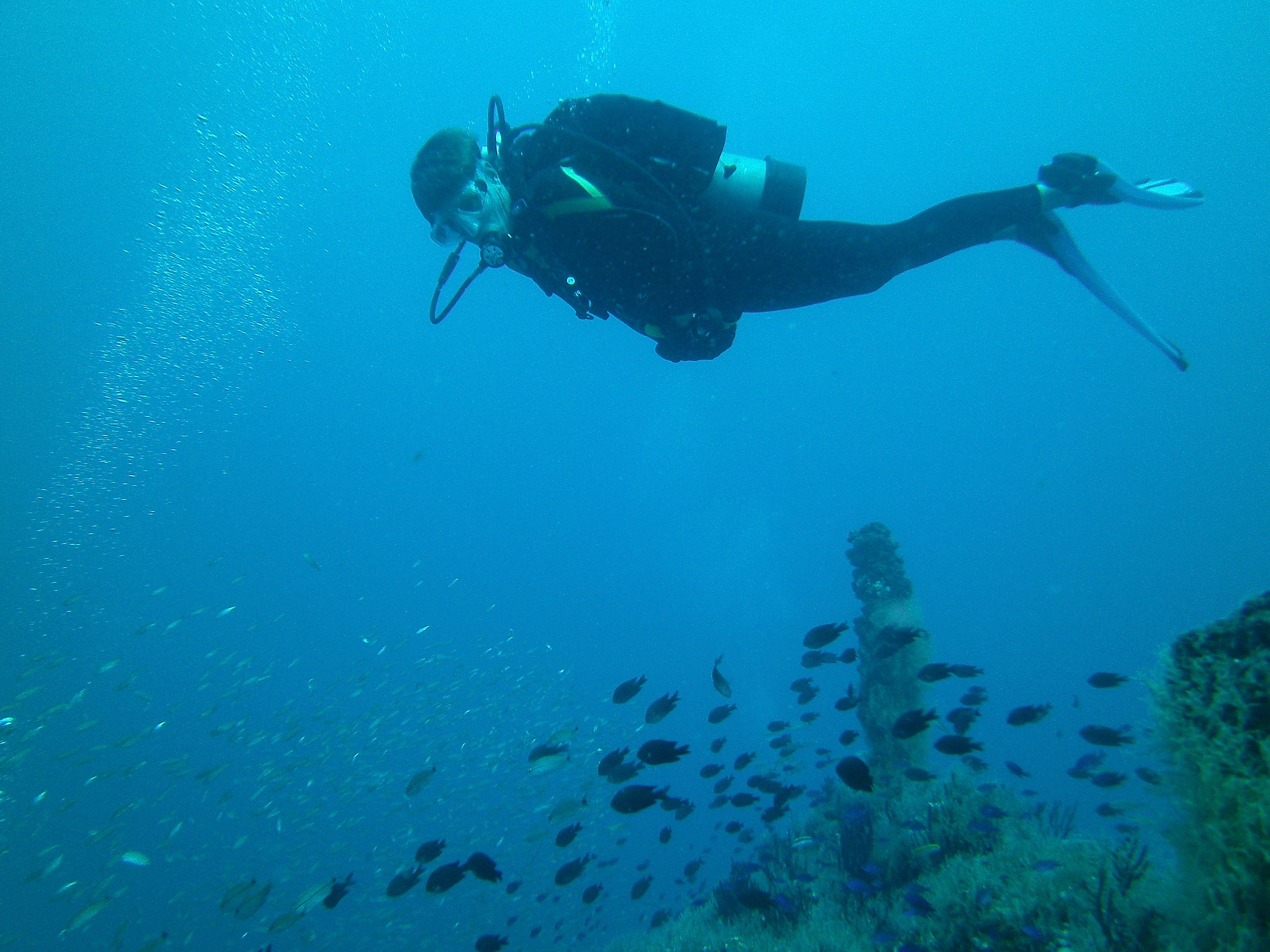
The Houston lies at about 95 feet down. Visibility was good (perhaps 60 feet) and the water temperature was a comfortable 82 degrees. There was a mild amount of current on the bottom. There were thousands of small fish. Our most dramatic sighting of the day was a goliath grouper, an enormous fellow, almost six feet long. My camera battery gave out when I tried to get a picture. I did, however, get some other pictures, including Sally examining something tiny with her magnifying glass (above) and great clouds of small fish.

After a second dive on the Houston, we headed in. Our seats were metal benches along the sides, in front of our tanks, so we couldn’t lean back and sleep. Some of our dive mates stretched out and slept on the deck, so it was difficult to move about as the boat sped along at a quick 25-knot pace. Diving sometimes takes fortitude.

We had a good Italian dinner with Sally’s sister in Wilmington at Nicola’s. There were a number of appealing vegetarian offerings. I had the eggplant rollatini with pink sauce, which was quite tasty. We had a lively conversation about, among other things, the automation of higher education, and how it is threatening the traditional university.

On Sunday we went out again on the Aquatic Safaris I, this time for a two-hour trip to the Normannia, a Danish freighter that foundered in 1924. The seas were calm and the trip went smoothly. I didn’t get sick. The wreck is about 115 feet deep. Like the previous day, the visibility was about 60 feet and the water was comfortable.

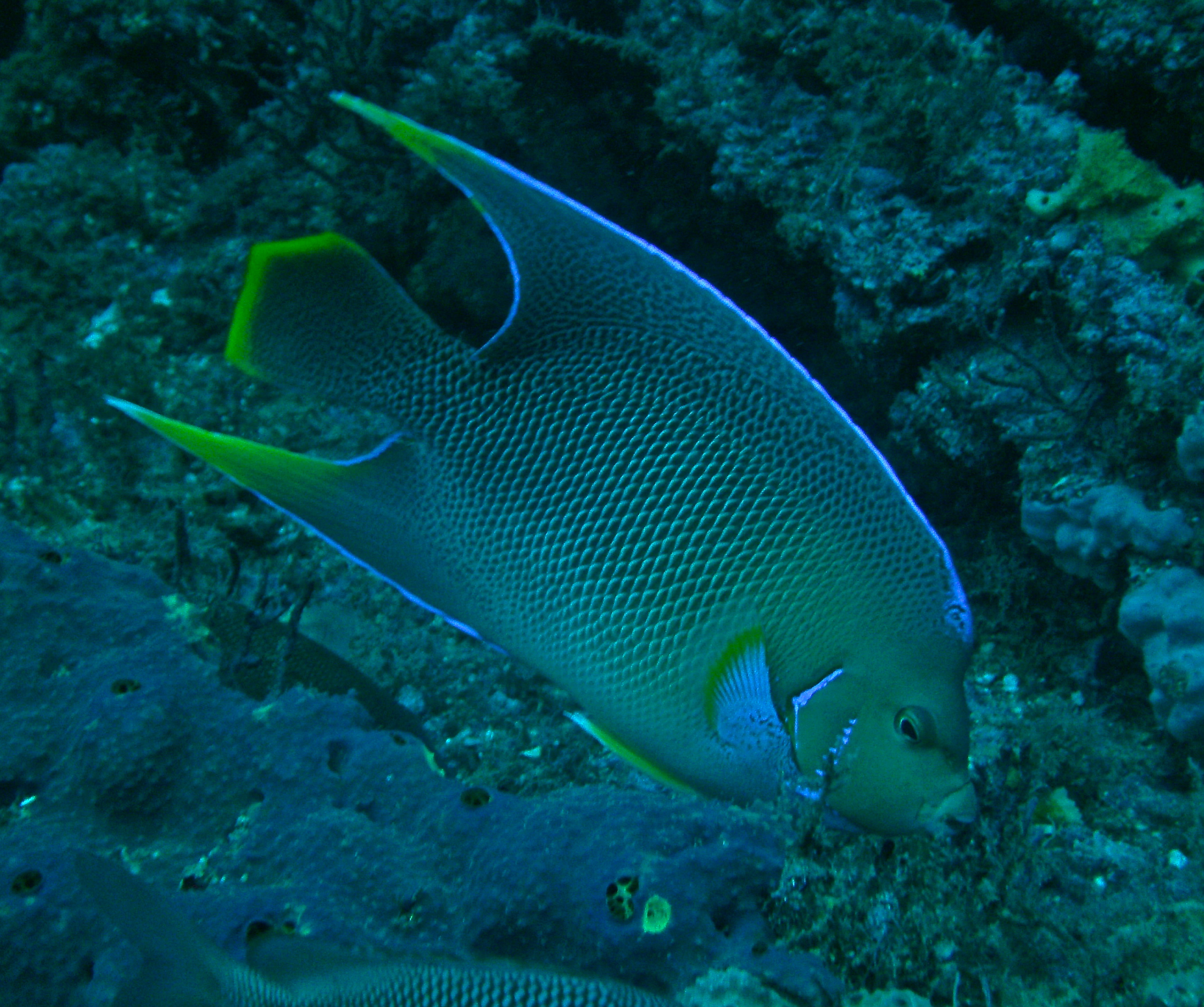
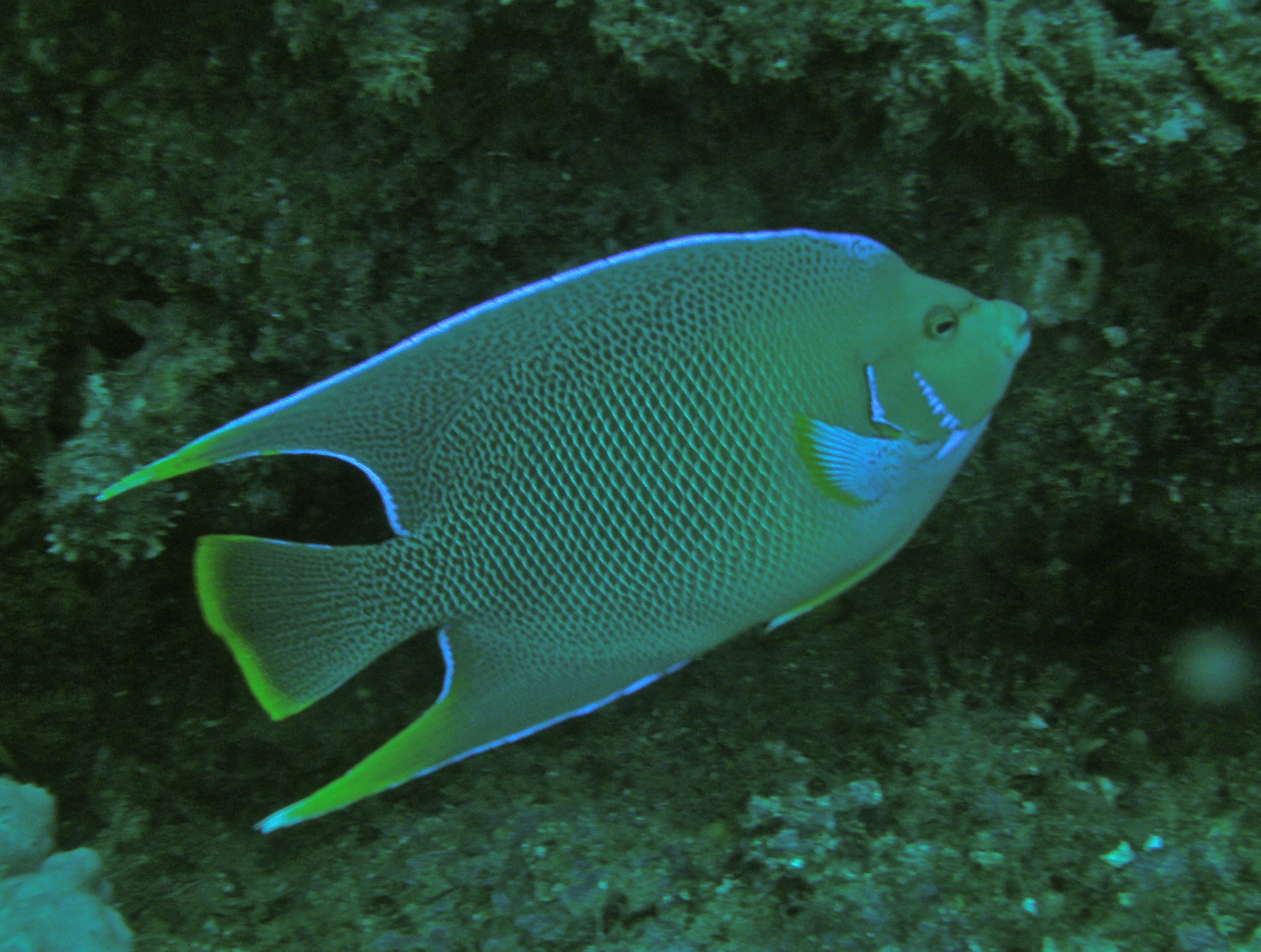
Even more than at the Houston, the Normannia had an amazing profusion of life. Along with thousands of small fish, we saw barracuda, a couple of gigantic lobsters, a well camouflaged frogfish, and my favorite, queen angelfish (several). I went to some trouble trying to get a good picture of one, and though these don’t really do it justice, they were the best I could do.

It is such a great pleasure to swim among fish. At times we were completely surrounded by thousands of small ones, and at times we swam alongside large ones. As I dive more, I feel increasingly touched by their beauty. They are amazingly varied in size, shape, color, and ways of moving about. Recent research indicates that they are much smarter than we’ve thought. For example, some can very quickly learn complex topography of a reef environment.


As I’ve spent more time with these creatures, I’ve come to consider them sentient beings worthy of respect and compassion. I regret to say I’m in a minority on this point. Among my fellow divers were some with spear guns and one who was capturing lobsters. I found it really painful to see him take an enormous lobster, perhaps decades old, and break off its antenna and shove it into an ice chest to suffocate.

My shipmate seemed otherwise a decent and friendly fellow. I’m certain he was not trying to torture the creature, though that was what he did. He didn’t derive pleasure from being cruel. He simply couldn’t comprehend that the animal was capable of suffering. I think he and others would find that expanding the circle of compassion to more animals is a happier and more fulfilling way to live.

Speaking of intelligence, I read recently that the human brain was unlikely to get larger in the normal course of future evolution, because it would serve no purpose. Brains working in isolation are not how things get done. Instead, as E.O. Wilson has pointed out, it’s humans’ ability to connect their individual brains that has been the secret to their evolutionary success. We keep getting better at that, developing over the millenia the tools of gesture, spoken language, and written language, with the internet being the latest game-changing technology.

In the midst of the depressing mendacity and nonsense of the Republican convention, I find it somewhat consoling to look at intelligence as potentially expanding through better networks. The Republicans are profoundly mistaken in thinking that entrepreneurs act primarily as fully independent rugged individualists. It’s more accurate, and also more useful, to look at achievement in terms of groups cooperating and competing. Our future success, and perhaps our survival, depends on our ability to improve our systems of cooperation, including our politics.

Make way for Segways, Scouting intolerance, and speaking of ear protection


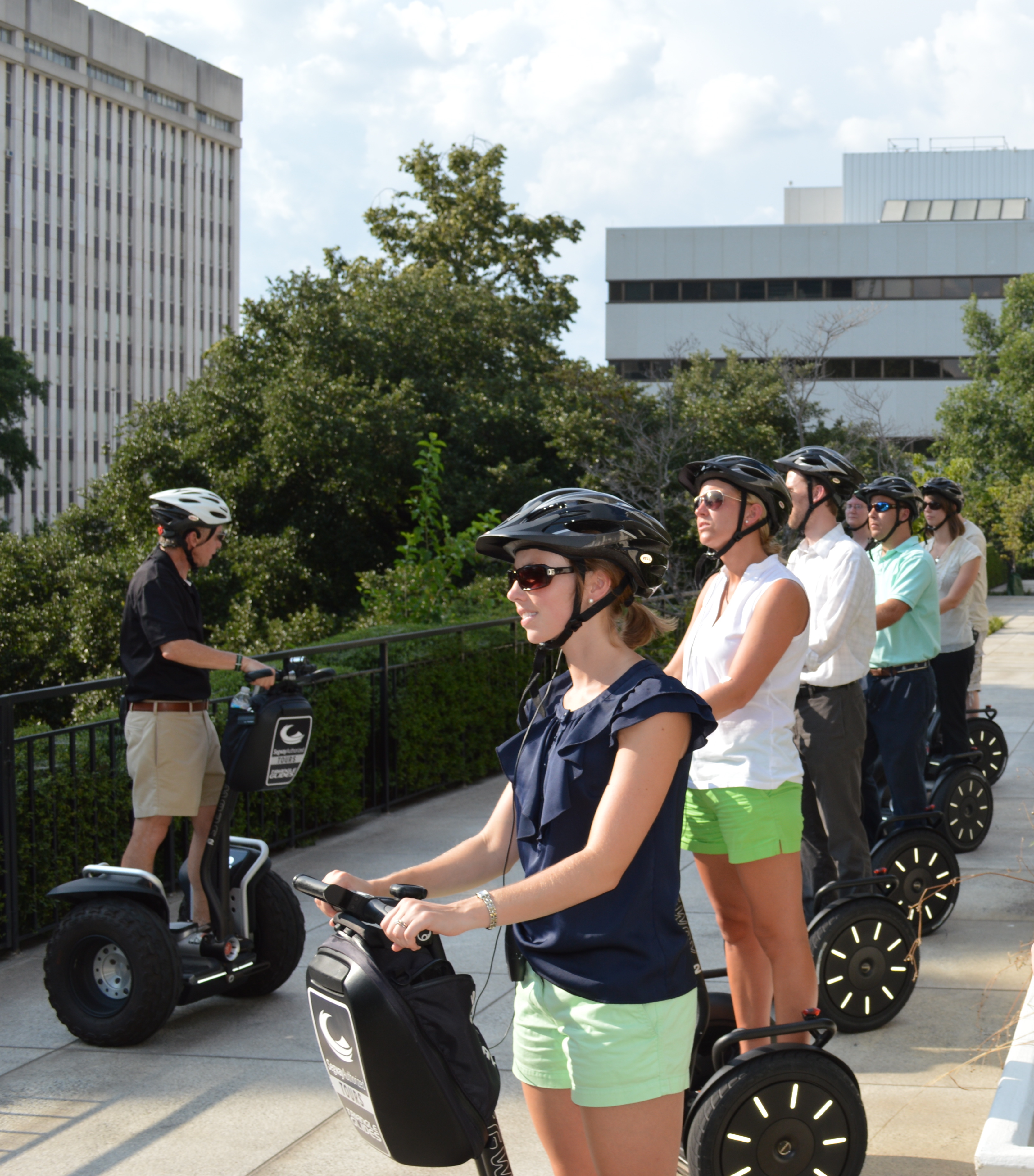
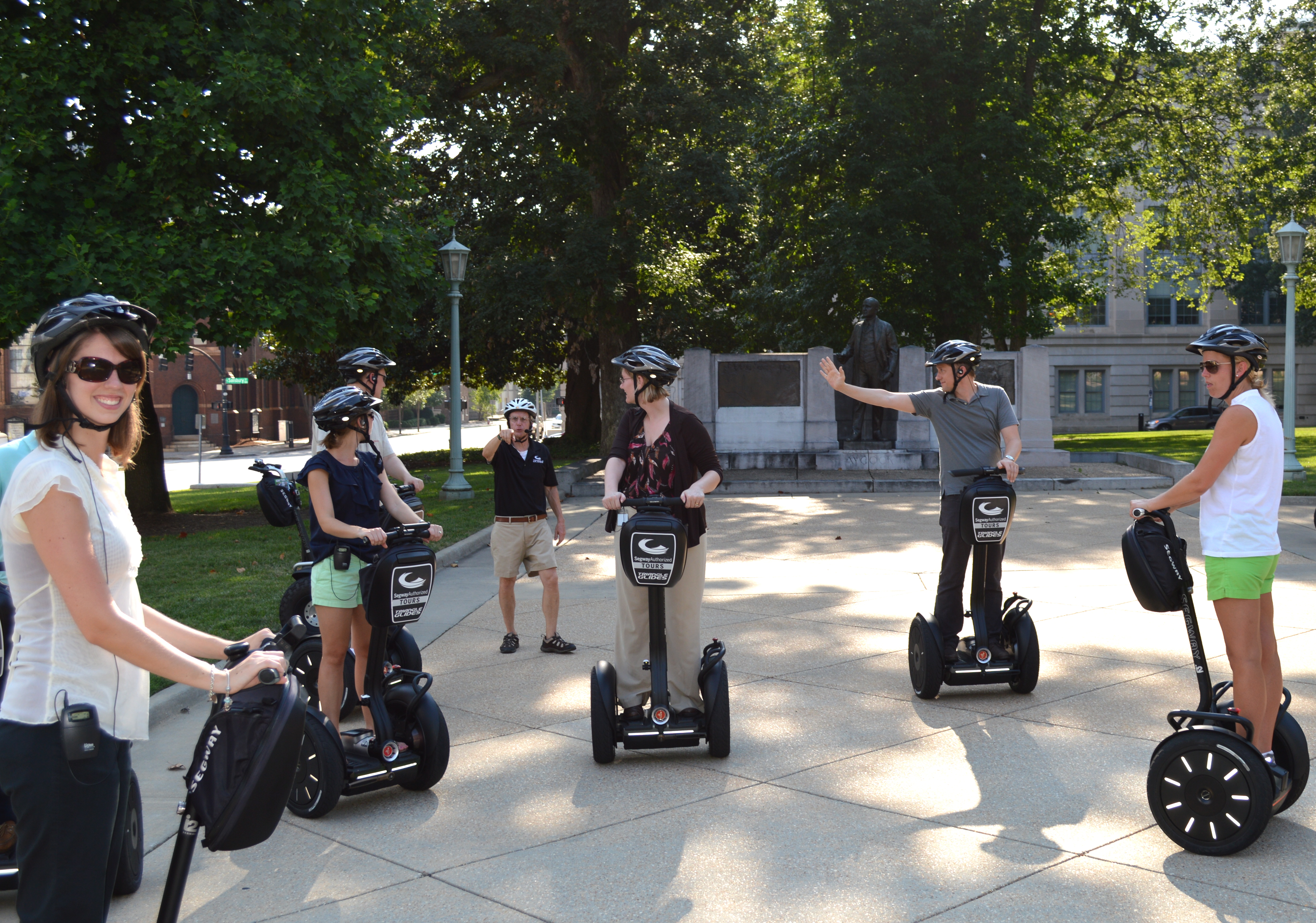
This week a group of us took an hour-long tour of downtown Raleigh on Segways, those self-balancing two-wheeled scooters. I learned that several Raleigh street names were the names of councilmen who approved the purchase of farmland for the city in 1792, and other similar facts. But more important, I learned how to move forward, backward, and turn. It takes approximately 5 minutes to learn, and 5 more to feel reasonably confident. A few minutes later at the old Capitol I was wondering how fast the thing would go, and the guide was begging me to slow down. I felt like one of the Jetsons.

When I think of fun adventures, I still think of my early years with the Boy Scouts. Even at the time, I thought the uniforms were a bit goofy, but I valued the friends I made and our close encounters with the natural world while camping, hiking, and canoeing. With this happy history, it pains me that the Scouts decided last week to reaffirm their ban on gay members. The Scouts instilled in me a highly serviceable code of conduct: a scout is “trustworthy, loyal, helpful, friendly, courteous, kind, obedient, cheerful, thrifty, brave, clean, and reverent.”

But there’s at least one cardinal virtue missing from the list: tolerance. Willingness to tolerate and accept differences is vital for individual and collective happiness. It doesn’t come easily or naturally, and it needs continual tending and encouragement. The Scouts should be promoting it without exception. As much as I was a committed Scout, as long as they have a policy of intolerance of gays and non-believers, I cannot support them.

At times it’s unclear whether unhealthy behavior is the result of ignorance or wilfulness. I’ve generally assumed that exposure to dangerous noise levels was an issue of ignorance. But a story in the NY Times last week suggested that some noise polluters had something close to a criminal mindset. Certain retailers, restaurants, and clubs have raised noise levels to the point where hearing loss is almost inevitable, and have done so with a view to attracting youthful customers to buy and drink more, and to repelling oldsters. If this is done knowingly, it’s despicable!

Young people, and indeed most people, assume that businesses and governments wouldn’t knowingly expose them to serious harm. It reminds me of marketing that used to hook kids on cigarettes, and still hooks them on sugary cereals and fatty fast food. According to the Times story, employees of noisy businesses have hearing and other problems, but regulations are almost never enforced, and few people complain. Here’s a thought — let’s start complaining.

Stuart, who had his tenth birthday this week, says, “Protect your precious ears!”

My Father’s Day trip to a new race track (CMP)

Last weekend, I took Clara down to Carolina Motorsports Park in Kershaw, S.C. for some track driving. My Garmin GPS guided us down country roads and through small Baptist towns. I’ve gotten to like as a companion the Garmin’s female voice, except when she says, “Recalculating.” This can be interpreted as, “Can’t you even follow a simple instruction!” I’d like to defend myself, for example, when she didn’t describe a particular turn clearly, but we cannot have a dialog — yet. Anyhow, this was a pleasant trip of just three hours.

CMP is a road track with 14 turns, and my first objective was to learn the line for each turn. Even with this clear commitment and my experienced teacher beside me, I found it challenging to memorize the exact turning points of the track. There’s so much kinetic sensation, so much noise. After a dozen or so laps, I started to build up a body of knowledge, but even then, I had a few lapses.

In addition to learning the track, I learned more about performance driving techniques, including rev matching, dealing with understeer, the beginnings of trail breaking, and assorted other bits of car stuff. Not surprisingly, almost everyone at the event was into cars, and some were clearly crazy for cars.

Car-philia seems to be less common today than in my youth, as young people adore their smartphones more than their wheels. I remember my dad talking to relatives, acquaintances, and strangers about their cars and his, Ford versus Chevy, this year’s models versus last year’s, and on and on, and remember wondering why adults were always so boring. But the worm has turned, and now I find it all enjoyable. Even technical discussions of specific engine problems that I know absolutely nothing about, which I used to make me feel incompetent and confused, now seem intriguing, even though part of me realize we’re talking about relatively ancient technology.

At this event, organized by the Tar Heel Sports Car Club, there were some cars like Clara, pretty street cars with lots of power and a racing heritage. A Lamborghini stood out as the exotic queen of this subgroup.

But there were also a fair number of cars that at first glance looked like sad junkers, and on closer inspection turned out to be highly elaborate racing machines. I began to see how it could be fun to have an ugly car for which the only concern would be track performance. It would be nice, in a way, to not worry that Clara’s beautiful body might be seriously maimed by a poorly judged turn followed by a high-speed encounter with the tire wall.


On the other hand, this would involve a significant investment in infrastructure: a trailer, a vehicle to tow a trailer, a place to stow the trailer and vehicle, more tires, tools, etc. And a lot more time to take care of it all. There’s the rub. This would be fun, but there’s an opportunity cost — other fun foregone, other thoughts unthought.

My teacher, John, was a friendly, funny guy who turned out to know not only a ton about driving and cars, but also a lot about contemporary technology. We had a great conversation about robotics and economics.

He predicted that in the not-distant future driverless cars would end the need to buy a personal car, as groups of people subscribe to a share of a fleet of driverless cars that can appear to convey them at any time. In his view, states will eventually put strict legal limits on human driving, on the grounds that driverless cars are so much safer and more environmentally sound. The driverless cars will go much faster safely, and work together in a network to police themselves. If one should go rogue, the others will cooperate to avoid being damaged and to deal appropriately with the offender.

I told John about a story the prior week in the WSJ about the bomb-squad robots of the US Army in Afghanistan. The robots have saved plenty of human lives, which is good. But the surprising thing was that the units get attached to their particular robots and treat them as companions. When a unit’s robot gets blown up, when feasible it is shipped to the robot hospital. Its companion soldiers at times are specific that they want their robot repaired and returned to the unit, rather than a replacement.

I stayed at the Colony Inn in Camden in a ground floor room that opened onto the parking lot. It featured the three c’s: clean, comfortable, and quiet, and entirely worth $65 dollars a night, even if they didn’t throw in breakfast. I watched some of the Master’s golf tournament on non-HD TV and sipped some wine from the Piggly Wiggly. At the urging of Larisa, my personal trainer, I’d bought some TRX portable trainer cables. In the morning, since the Colony had no gym, I hooked the the TRX systen to the door and got in a workout.

It is my custom in all hotels to leave a few dollars for the housekeepers, which I figure they can use and which may create good karma. I was glad that I followed this custom at the Colony. When I checked out I left behind my phone charger. The manager gave me a call to let me know, and I was able to retrieve the charger. This was excellent karma.

There was nothing remotely like healthy vegetarian food at the snack bar at the track, but happily I found a Subway sandwich shop a few miles down the road. Oh Subway, you are the best! In the ugly wilderness of industrialized and unhealthy fast food, so many times you have nourished me well. I ordered my usual: whole grain bread, a variety of greens and vegetables, and that delightful honey-mustard dressing. It was tasty. My Subway sandwich guy made eyes at Clara.

I did not have any serious driving errors on this trip, but as I increased my speeds I also increased the stress on my brakes, and learned what happens when brakes overheat. It is more exciting than desirable to have big speed approaching a tight turn, to hit the brake pedal hard, and find that it goes all the way to the floor with half the usual braking power. I somehow stayed on the track. John counseled me to take the last few laps of that session slower and to drive a few minutes afterwards to cool the brakes down.

On the trip back, I got a call from Jocelyn, who wished me a happy Father’s Day. I regard this holiday as even more synthetic than Mother’s Day, an occasion for retailers to encourage watch and tie consumption and, except to them, of little real value. Yet it was ever so sweet to hear her voice. As I told her, she was one of my two proudest achievements as a father.

She’s currently working her first retail job in a high-end sportswear store in Telluride. It doesn’t sound like her ideal career path, but at least it’s a job. She’s been going out with a cute guy, a river rafting and fly fishing guide whom she really likes. It seemed like she was doing OK.

Later I got a Father’s Day text from Gabe, which said I was the best dad, which I am sure is not true, but I was grateful for the thought.

Our thirtieth anniversary celebration

Sally and I celebrated our thirtieth anniversary last weekend. Thirty years! This struck us as a considerable milestone, and we considered taking a major trip to commemorate it. Because of work and other commitments, we couldn’t make that happen. Instead, we decided a weekend getaway to Fearrington Village.

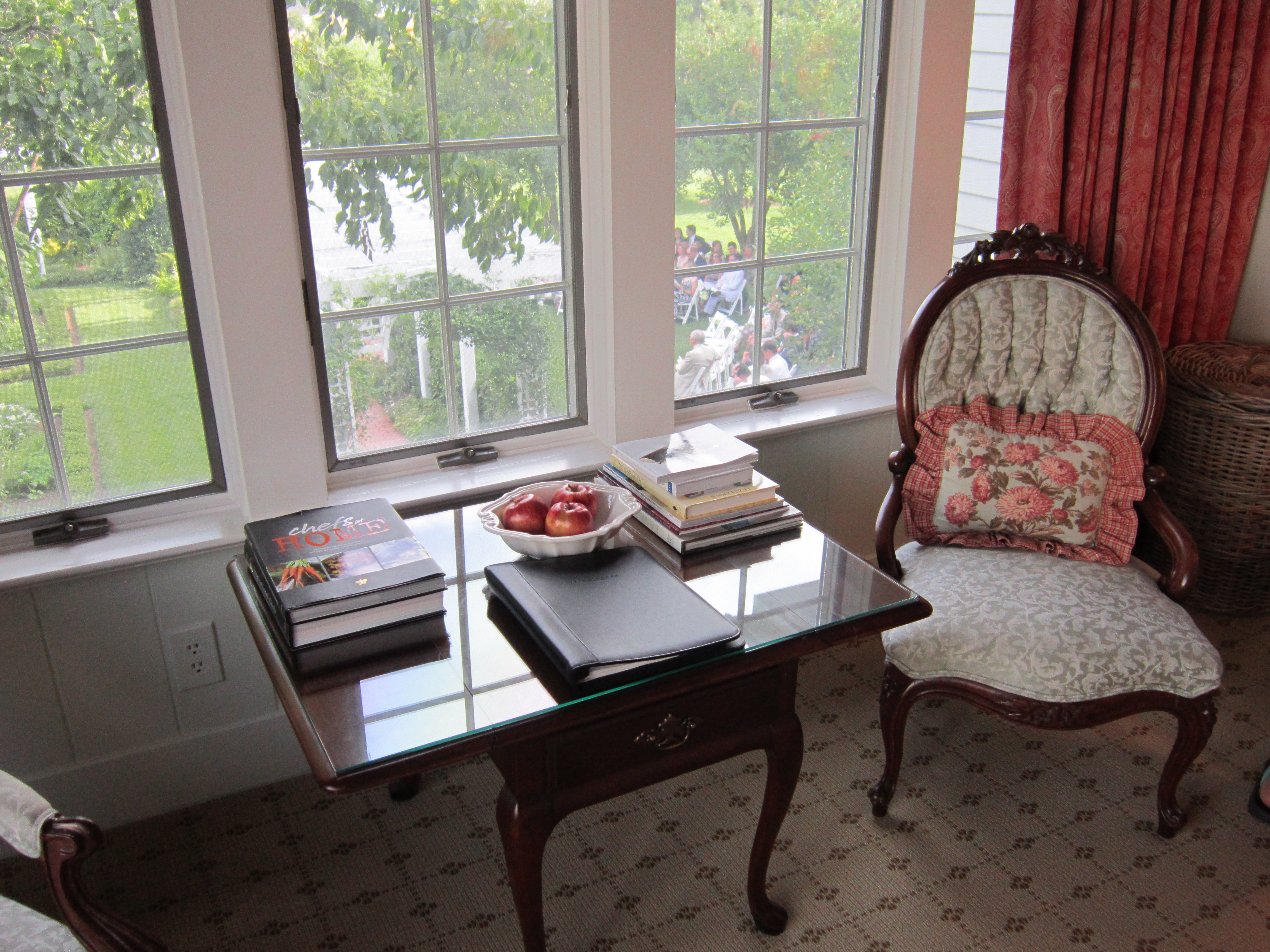
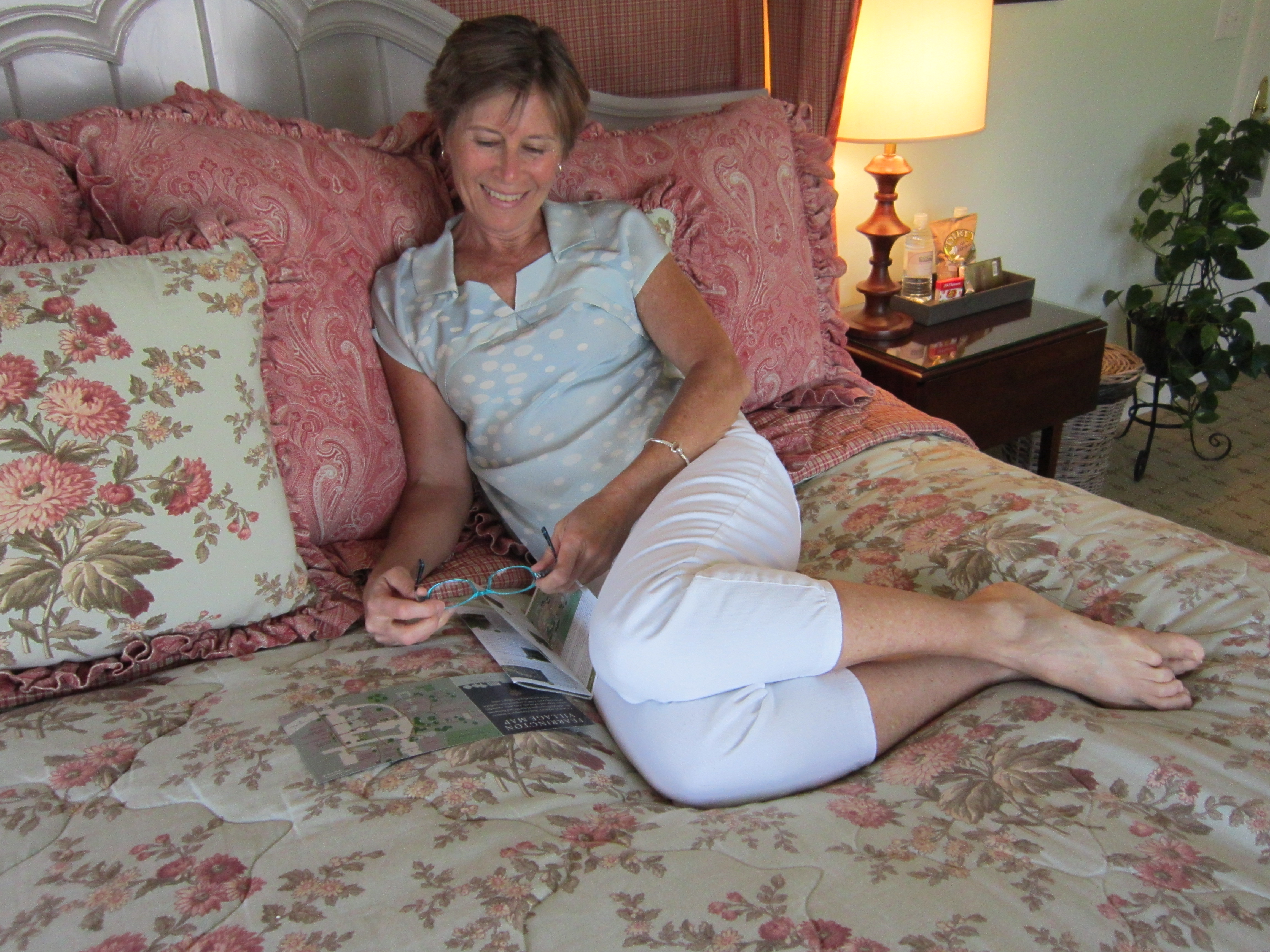
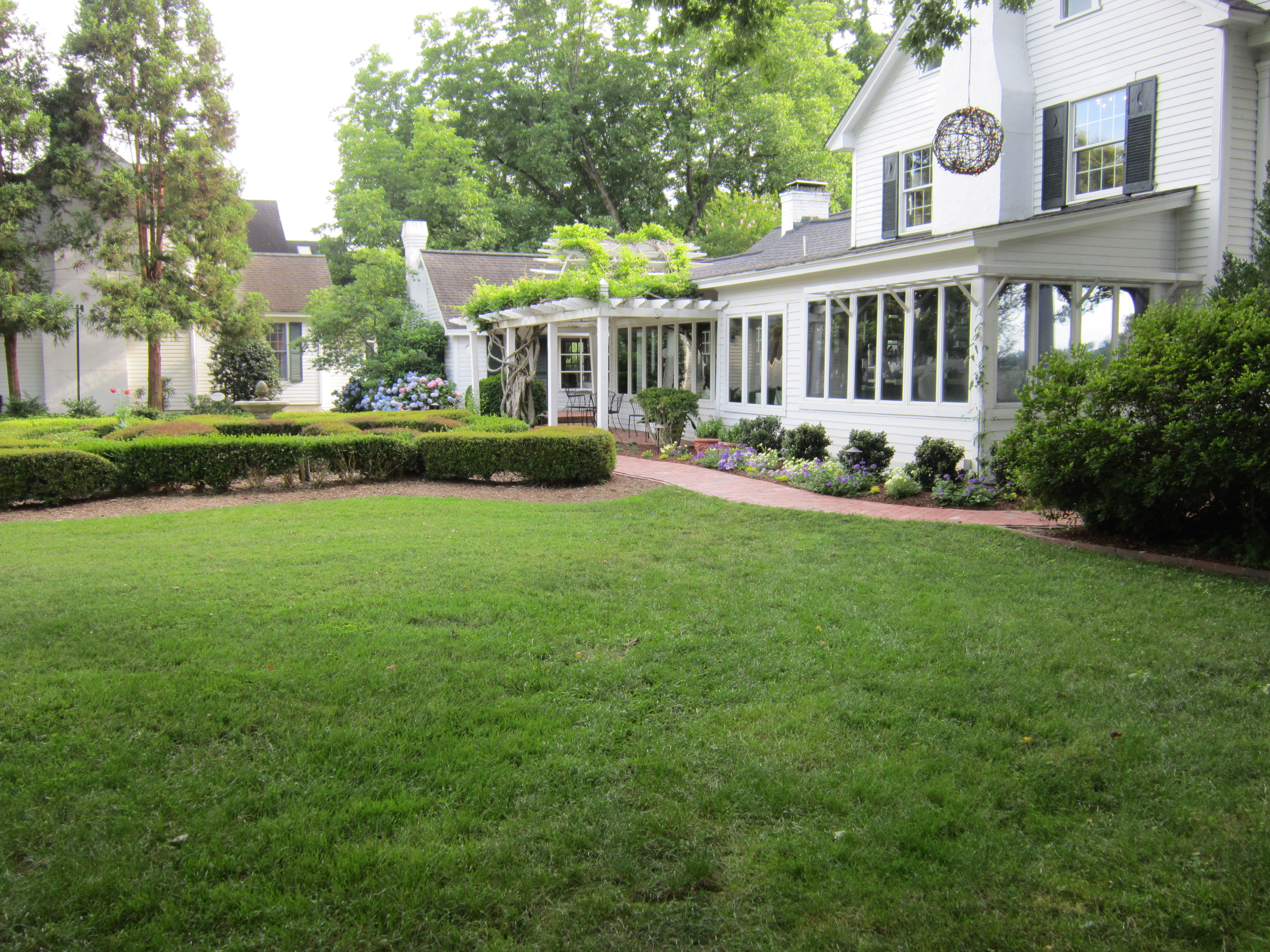
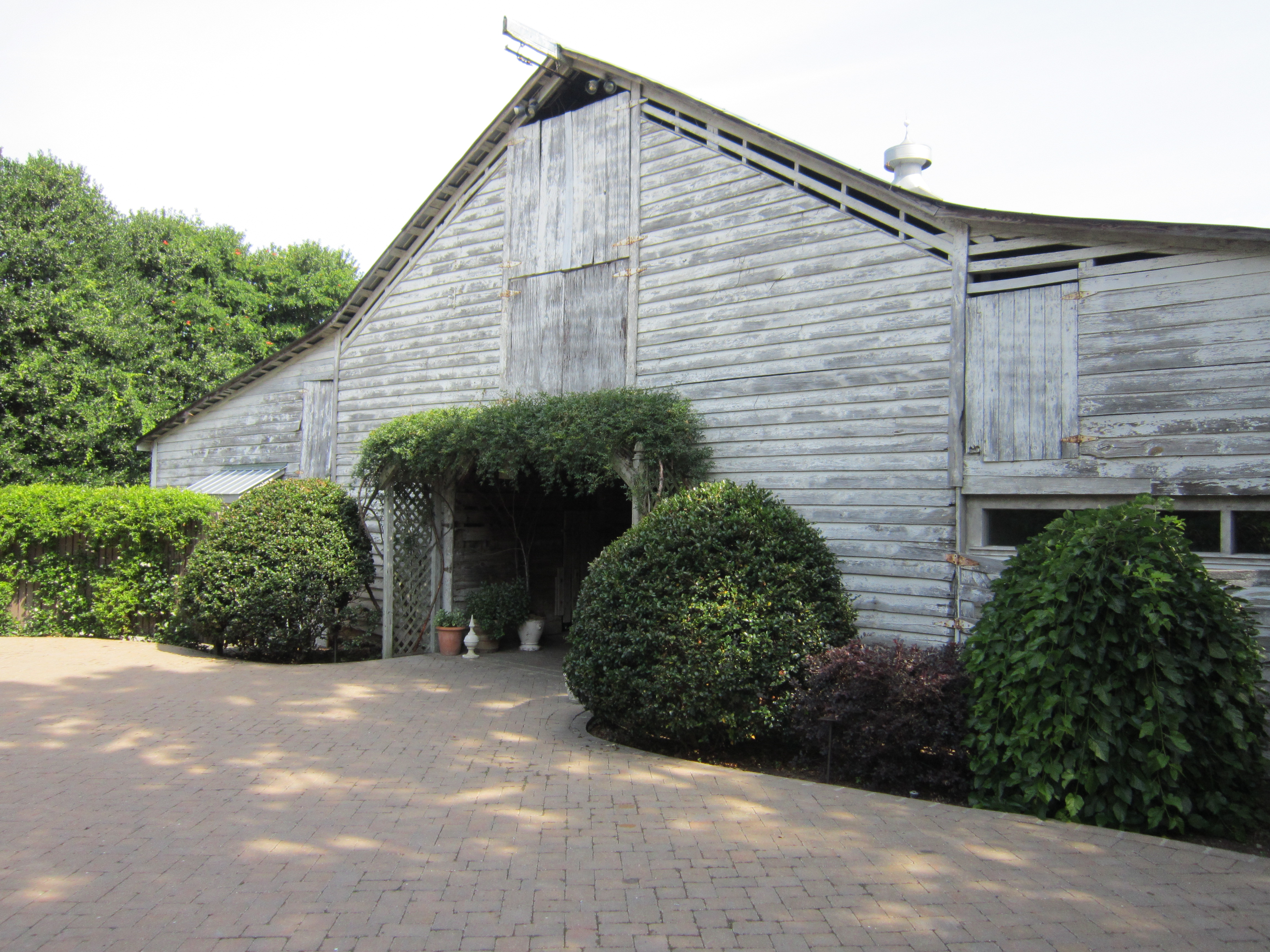
Fearrington is in Chatham County, one county over from us — about a forty minute drive from Raleigh. It was once a working farm, and still has a barn, a silo, and some pastures with unusual oreo-striped cows. It also has a few shops and our destination, the Fearrington Inn, where we had a sumptuous and charming room. It had a bowl of fresh fruit, and a bar of dark chocolate. After settling in, we walked across the square to the Spa, and had a couples massage — our first ever! It was extremely relaxing. Afterwards, we went into a housewares shop and perused the glassware and various objets, and smelled the floral candles.

When we got back to the second-floor room, we looked out the window and saw a wedding just beginning on the lawn below. The bride looked lovely. We talked about our wedding day, when we said our vows before family and close friends in Diane’s apartment on East 63rd Street, and then went downtown for the reception with a large group of family and friends. It was a happy day.

How wonderful it is to fall in love, and build a friendship that deepens with the years. We’ve had many remarkable chapters, and are looking forward to many more. The marriage contract involves a tacit NDA (corporate-speak for a non-disclosure agreement) that makes possible a special level of trust and confidence between the married persons. It creates a zone of safety where we can be something closer to our true selves.

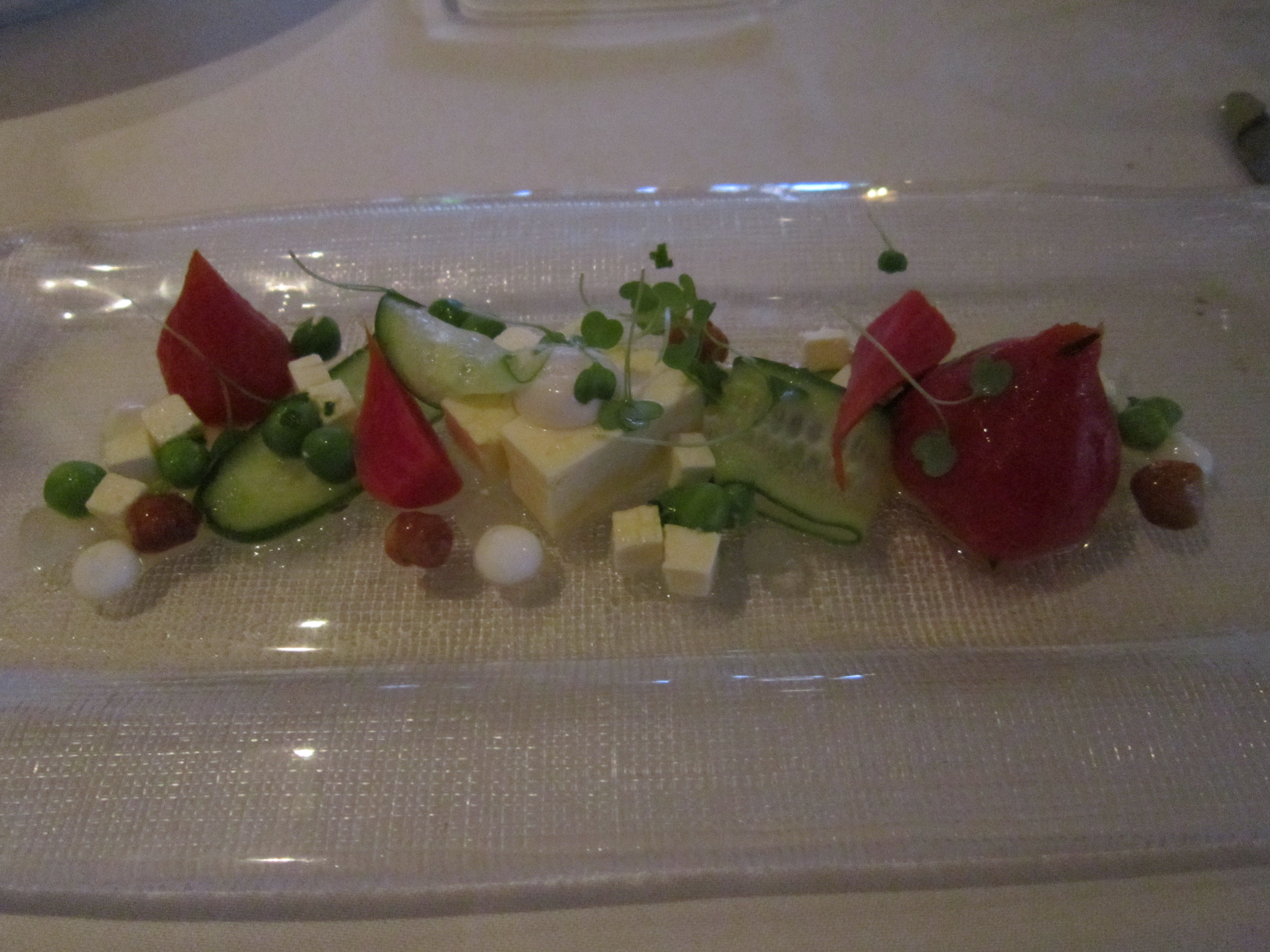
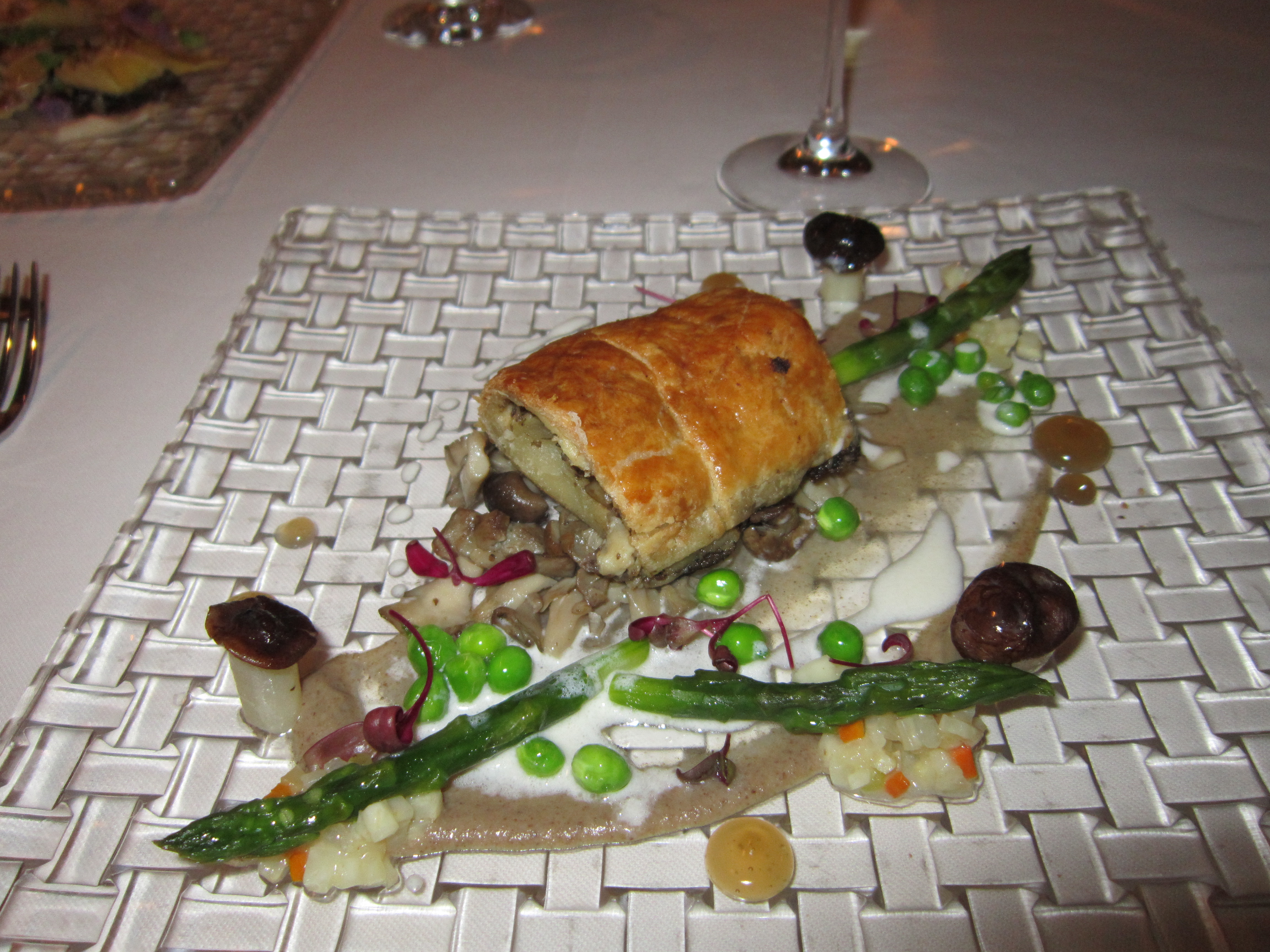
In view of Sally’s and my NDA, I will not be writing about certain intimacies of our weekend, except for this sentence. That evening we ate at the Fearrington Inn, one of the finest restaurants in the region. When last we were there, several years ago, I’d found the food excellent but the service mannered and fussy. But that was not my impression this time: the food was excellent, and the service was both professional and friendly.


On Sunday morning I went for a run, then came back and read most of the Times before Sally got up. We had a breakfast with excellent coffee at the Inn, and then walked through the little village. There were dozens of barn swallows nesting in the barn. The parent shot in and out and rested near to the their nests, letting us get quite close to them and their babies.

Then we went over the McIntyre Books. It’s a bookstore with charm and taste. I was pleased to see a lot of books I’d cared about displayed as though someone else cared about them. Bookstores like McIntyre’s were never common, but now they’re vanishingly rare. To show a little support, I bought the fourth volume of Robert Caro’s biography of Lyndon Johnson, which I’ve been looking forward to reading since I finished volume 3, ten years ago.

We took a circuitous route home along the beautiful country roads of Chatham County, across Jordan Lake, and through the farmland and forests.

Cutting wood, not fingers, trying a good new Italian restaurant, and enjoying the Carolina Ballet’s Carmina Burana, but worrying about the dancers’ low pay

On Friday afternoon a group from the Red Hat legal department worked on a Habitat for Humanity house in eastern Raleigh. It was a warm, sunny day. I managed to work up a good sweat nailing boards together, and pulling apart ones I didn’t line up properly before I nailed them.

I also spent some time cutting boards with a circular saw. My father was a passionate woodworker, and the sound of the power saw brought back childhood memories — of trying to watch TV and not being able to hear it because of the power saw. Dad was always worried that his or someone else’s children would hurt themselves with his power tools. He did not generally encourage visits to his wood shop, and managed to implant in me the idea that little fingers can be sliced off very easily. This is a particularly horrifying thought for a pianist. Thus I was probably a more deliberate sawer than most.

Afterwards, after knocking off some of the sawdust, a few of us had a beer at Sammy’s, a sports bar. We learned that Barrett is coming into the home stretch towards his wedding day, with a Caribbean honeymoon in St. Lucia to follow, and Madeline had decided that her next vacation will be in Curacao. I encouraged them to try some scuba diving. Madeline said that she had some claustrophobia issues and a dread of fish bites, and so she was not overly keen, but Barrett seemed game.

That evening Sally and I tried Tuscan Blu, a new Italian restaurant in the warehouse district. We got there at 6:20 with a view to finishing in good time for the ballet by 8:00, and were the first ones there. It was empty, but we quickly got a good vibe from the friendly staff. When we asked about wine, our server summoned the owner, a big, gray-headed, Italian guy, who, instead of discussing the matter, brought us out a bottle of Italian chardonnay that he said we would like. We did. People began to come in, and the place started buzzing. The olive oil in the salad dressing was excellent, as was the pear and ricotta fiochhi. We’ll be going back.

The Carolina Ballet featured a revival of Carmina Burana and three short new works inspired by a local exhibit of the art of Alexander Calder. This was our fourth Carmina, and I’ve liked it better each time. It is a rich, complex work. Lynn Taylor-Corbett’s choreography melds with Carl Orff’s powerful, strangely ancient-yet-modern choral music in a way that seems organic: it feels as though the music and dance were created together, instead of sixty some years apart. . The performance on Friday had a quasi-orchestra (two pianos and percussion) and the 140-voice Raleigh Chorale, well conducted by Al Sturges, made a big, pleasing sound.

The work opens with a group of male dancers in business suits with leather briefcases, which is both humorous and disconcerting. We quickly realize that it’s about our society, with a range of characters from Wall Street operators at the top to laborers at the bottom. The theme is the power of the goddess Fortuna — in other words, luck. Characters from all walks of life excitedly scratch lottery tickets, and are disappointed, and scratch again. Suddenly, one wins! And his life and the group’s is reorganized. One lover is discarded, another appears, then a child, who a moment later is a young woman. Temptations (lust, greed, etc.) arrive, and corruption develops, followed by pain and loss. The wheel keeps turning, with more rounds of the lottery, and eventually, there’s a new winner.

Yevgeny Shlapko played the Man Who Wins (the first lottery winner) with grace and maturity, and stylish athleticism, and paired well with Melissa Podcasy, who had beauty and depth as Woman Who Yearns. Their Daughter Who Dreams was played for the first time that night by Lola Cooper, who was both funny and graceful in conveying the excitement and storms of adolescence, including having a first cigarette. Marcelo Martinez was Man of Darkness, a personification of evil that was both frightening and seductive. I was very happy to see Alicia Fabry back after her injury as A Lost Soul, a role in which (against type) she projected a tragic neuroticism.

The first half of the program had works by Timour Bourtasenkov (a principal in the company), Zalman Raffael (a member of the corps), and Tyler Walters (now on the faculty at Duke). I particularly enjoyed Lindsay Purrington and Yevgeny Shlapko in Raffael’s piece, The Ghost, with music by Darius Milhaud. Walters’ I Mobile to music by Prokofiev was an intricate, modernist work that connected well to the mobile idea.

Afterwards, we met Lola at Humble Pie and caught up. She told us that there had not been much time to put together Carmina Burana, and she hadn’t had a chance to rehearse with the orchestra. She said she hadn’t tried smoking until the night before, and worried that she might have a coughing problem in performance. We talked about the problem of the extremely low salaries of the dancers, and particularly those in the corps.

This is something that has bothered me for a long time. These extremely gifted young people have spent most of their lives in sustained dedication to their art, and have overcome enormous odds to join the few who are paid professionals. They’re incredibly successful — sort of. They get the satisfaction of practicing their art at the highest level, but get paid at a level that is ridiculously low. Paying for the rent, the car payment, and groceries is difficult, or perhaps just not possible without a second job (which is very difficult to put on top of the time demands of the company) or help from parents or elsewhere. If we care about dance, we need to care about the dancers, and figure out a way to pay them a living wage.

Discovering Amsterdam

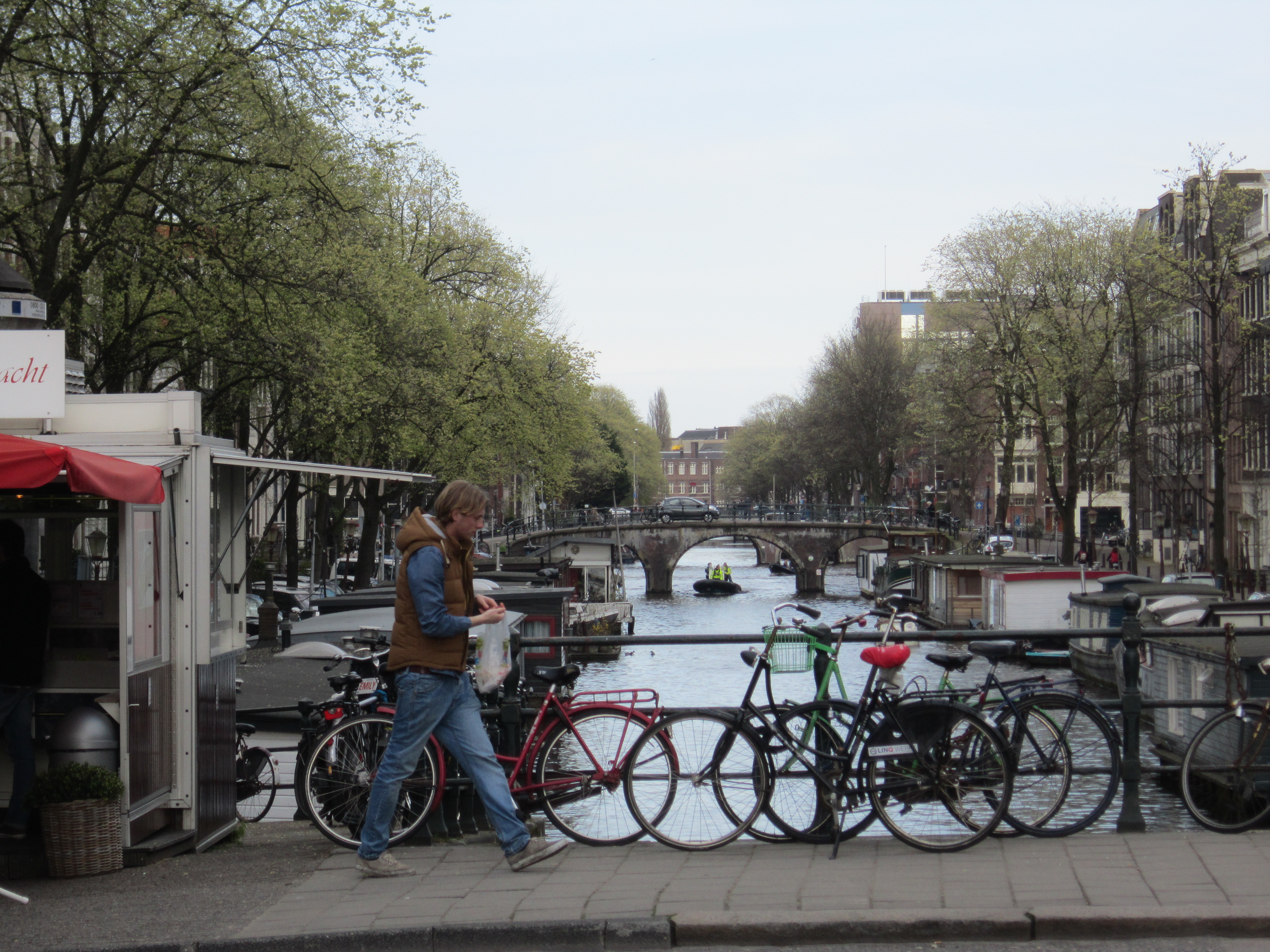
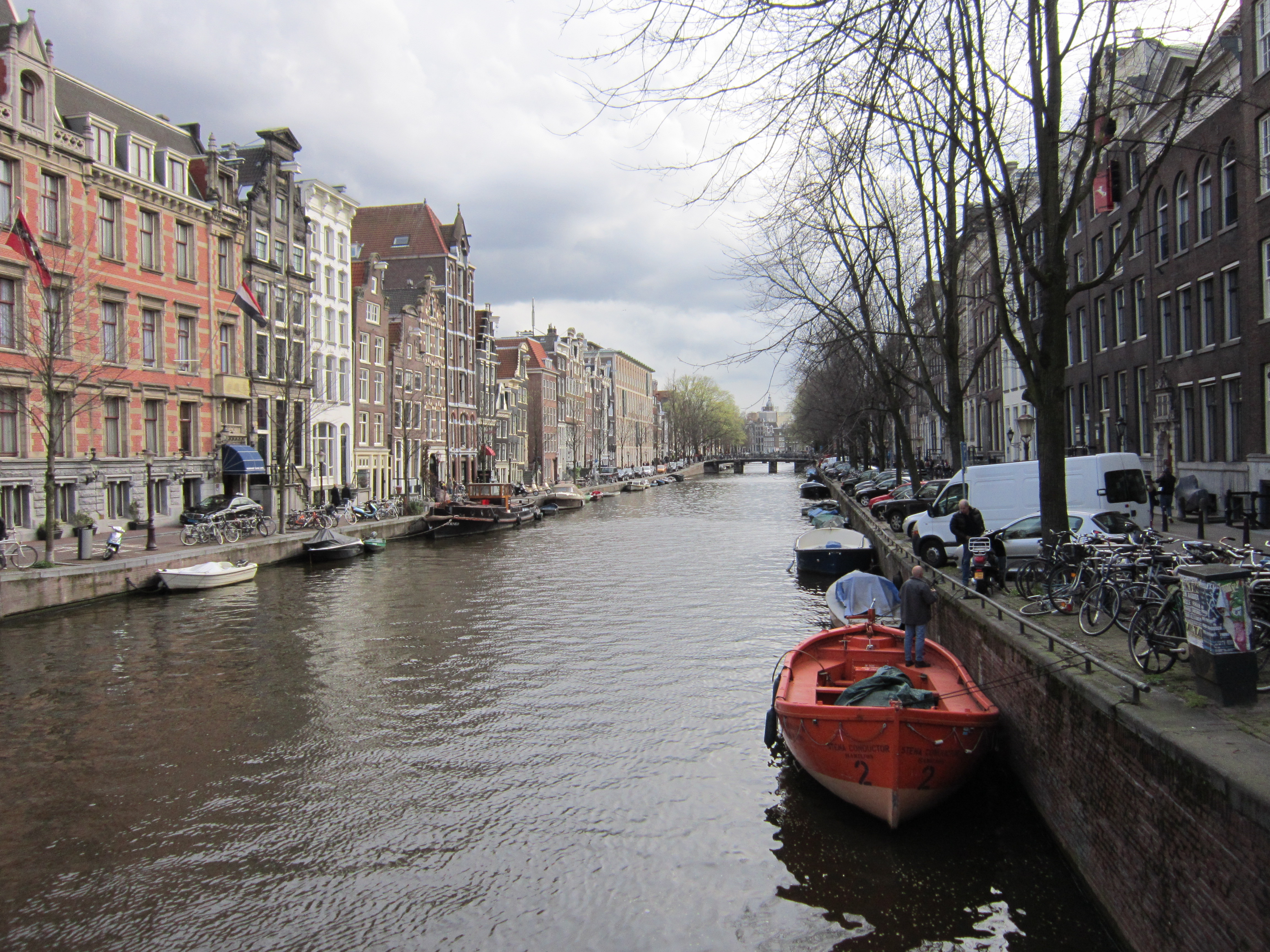
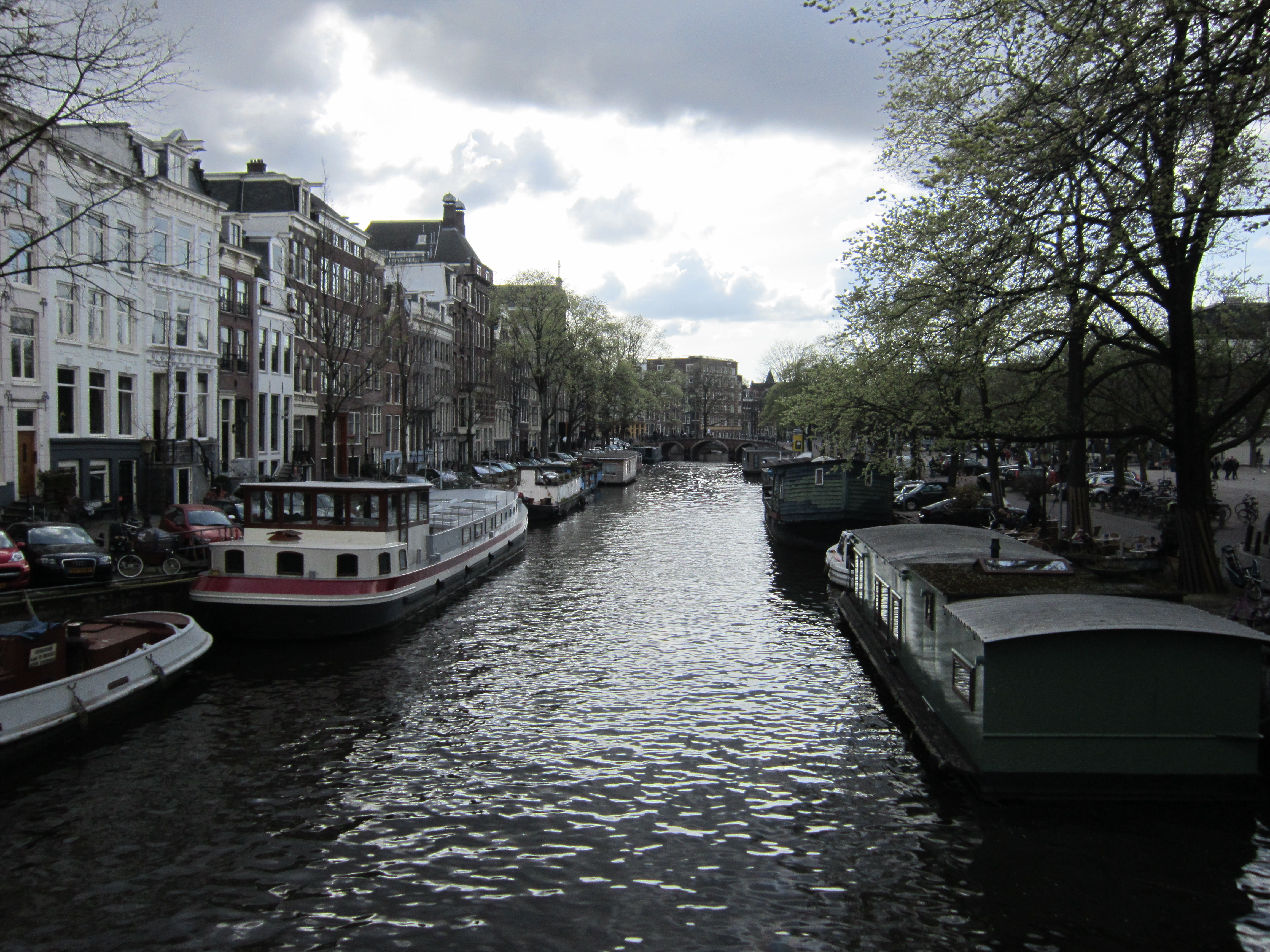
Last week I went to Amsterdam for the Free Software Foundation–Europe legal conference, and got in a bit of sightseeing as well. Sally and I stayed in the Krasnapolsky, a large, older hotel within walking distance of the railroad station, museums and several interesting neighborhoods.

Amsterdam is lovely city. Its row houses, streets, and canals are an ensemble that suggests a real community, with shared values and history. It seems well-organized and clean. But very lively! We’d heard that there were more bikes than cars, which is true, but hadn’t realized that heavy bike traffic can be hazardous to pedestrians. We had some close calls, and I eventually began to start at tinkling bicycle bells as though they were blaring car horns.

We found the Dutch to be polite and helpful, though reserved with strangers. Almost no one asked us where we were from, which was nice, in a way. They seemed lively and affectionate with their friends. Everyone we dealt with spoke English at least adequately, and many were absolutely colloquial. Sally noted that from our street level few, there was little interest in fashionable dressing, with most dressed in a casual, comfortable way. There were fewer overweight people — perhaps because of all the bicycling.

We were particularly eager to see the Van Gogh Museum and the Rijksmuseum. The VG was quite crowded, but the collection of VVG’s art was spectacular. There were also great impressionist works by Monet, Pissaro, and others, which put VVG in context. I also enjoyed an exhibit of fin de siècle print making, which had some of the great work of Toulouse-Lautrec, one of my great favorites.

The Rijksmuseum is undergoing renovations, but fortunately there was a substantial exhibition of its masterpieces from the 17th Century. The high point for me was Vermeer’s The Milkmaid. I’d seen it three years ago as part of a traveling exhibit in New York, and was overjoyed to see it again. She’s so quiet, entirely in her own dreamlike world. Yet she and the scene are somehow full and complete.

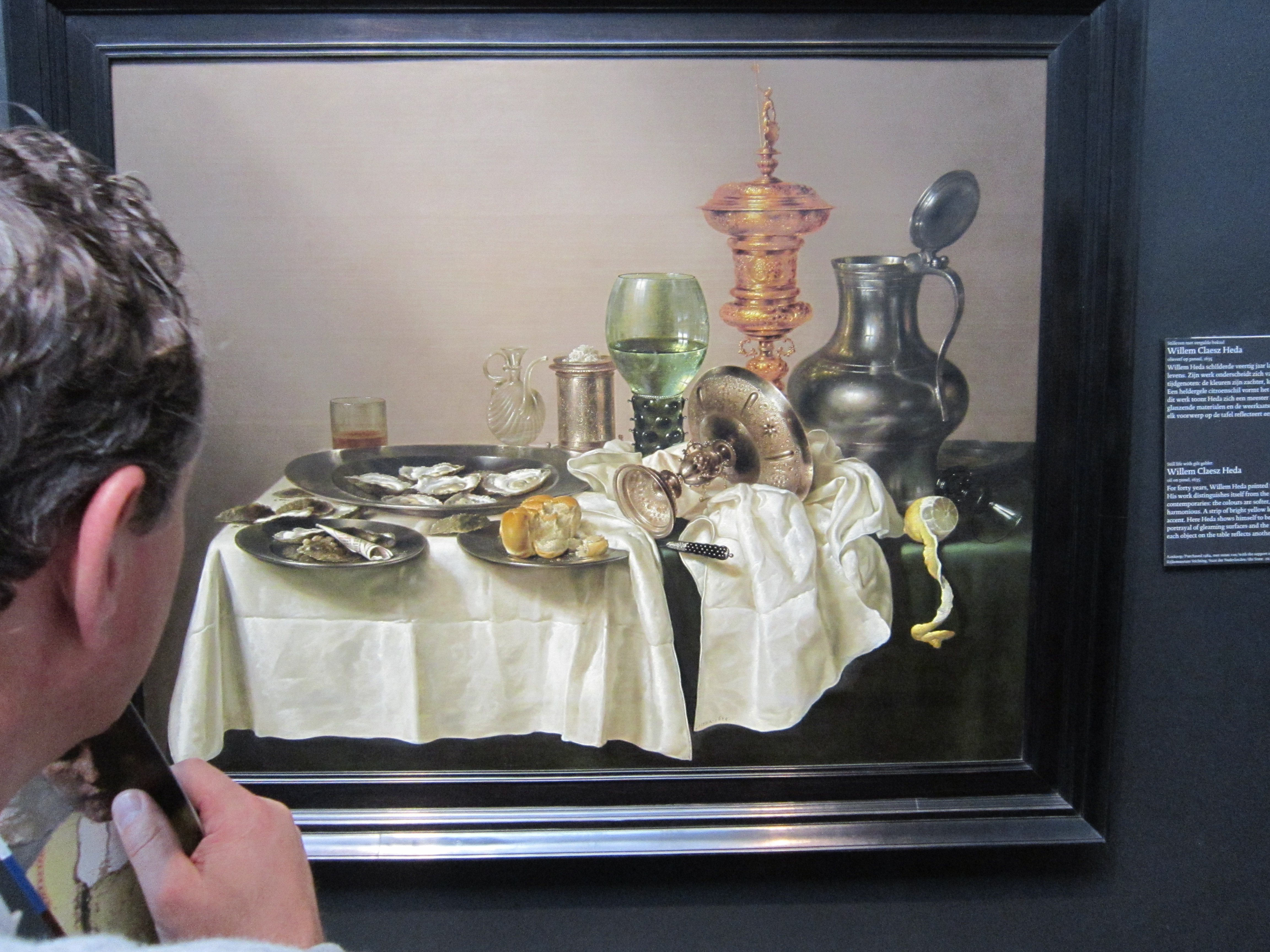
I also especially loved this still life by Willem Claesz Hedda. The realism of detail is astonishing. Looking hard at such paintings makes you wonder what you might see if you looked at everyday objects harder.

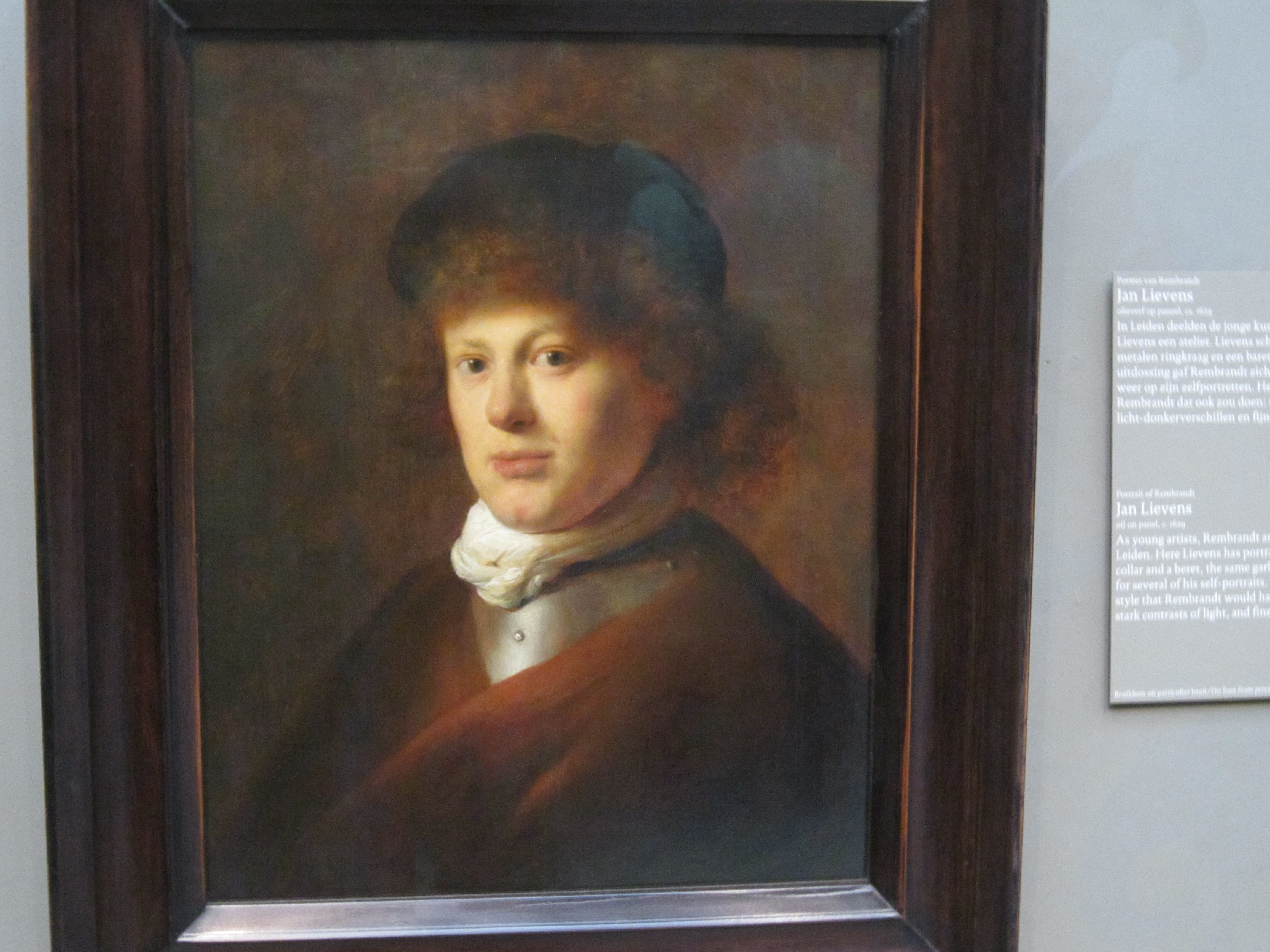
There were several great Rembrandts. Also, I was particularly moved by this portrait of a young Rembrandt by Jan Lievens, with whom he shared a studio early in his career. A youth with a bright future!

We enjoyed walking by the canals and squares, through the old Nine Streets district, the theatre district, and the Jordaan shopping area. We also had fun visiting the famous red light district. I’d imagined it would be at least a bit seamy and sinister, but not really. Yes, there were prostitutes in bikinis displayed in windows (some quite beautiful), porno theaters, and shops of sex paraphernalia, but also many cafes, bars, and restaurants. There were large crowds of cheerful people promenading. We had some delicious Thai food.

Sharing piano music, buying a painting, and going to a new ballet

Stuart is not overly excited about our new painting

What does art mean to life? I’ll take a strong position, and say, simply, everything.

My brother, Paul, and sister-in-law Jackie were passing through last week, and we convened for dinner at Zely and Ritz. But first, they came up to our apartment to see the view and have a cocktail. I wanted to play some piano music for them, but hesitated to propose it. Sharing serious music just isn’t something people normally do in these modern times.

I also recognize that for some people it would be an imposition. I think my playing is thoughtful and nuanced, but it isn’t perfect. Even if I were a seasoned professional concert artist, it would still be true that my nineteenth and early twentieth century repertoire would not be to the taste of everyone. Although it amazes me, I understand that some people find it bewildering or boring. I hope this is mostly because of lack of education and exposure — which is one reason I think it’s important to share it.

Fortunately, Paul and Jackie studied music in college and enjoy various genres. And so I played for them some Chopin (the Nocturnes in c-sharp minor and D flat) and Debussy (the First Arabesque). They sounded good, though maybe a little stiffer than when I play for myself alone. Playing for someone else dramatically changes the sensation of making music. Perhaps it’s from adding adrenalin. Things that seemed settled can become unsettled. Sometimes new beauty emerges, and sometimes things fall to pieces. This is one of the reasons I was happy to have these family listeners — without listeners, it’s impossible to learn how to communicate the music. Paul and Jackie seemed to enjoy it, and were very gracious.

At lunch time on Wednesday, Sally and I met at the Adam Cave gallery to look at some paintings. Sally had followed up on a review she’d read with investigation on the Internet, and come up with some works that might work for us by Byron Gin. Adam, the proprietor of the gallery, had agreed to pull together his stock of Gin works, and told us more about the artist. We both felt excited about Three Birds and a Cup, and discussed it more over a lunch at the Remedy Diner (great veggie sandwiches and rock music). The next day, we decided to take him up on his offer to take the painting home and see how it looked before committing.

Three Birds and a Cup, by Byron Gin

I think it’s a touching, slightly funny and engaging painting. The house sparrows look like quizzical house sparrows, but the space looks vibrant blue and gold paint. The yellow cup looks like a cup. The eye and mind shift back and forth between the birds and the cup, and the natural and human world. I find it nourishing and stimulating.

Friday night, we ate at Buku before going to the ballet. It was unseasonably mild, so we sat outside at dinner. Buku has increased its vegetarian offerings, and the ones we tried were good: baba ghanoush, arepas, and lentil wat. I also had the flight of three half glasses of Chilean wines, which were quite delicious.

At Fletcher Hall, we heard choreographer Lynne Taylor-Corbett speak on the new work to be performed that evening, The Little Mermaid. We’ve liked many of LTC’s works, including Carmina Burana and Carolina Jamboree. She’s a very engaging personality, and articulate and down-to-earth about what she’s trying to do.

She didn’t put it this way, but The Little Mermaid seems designed for ballet newcomers and kids. This was somewhat true of her The Ugly Duckling, but I found Duckling more elegant and touching. Jan Burkhard as the mermaid was lovely and girlish, and fun to watch, and Randi Oseteck as the sea witch was a great villain. And I particularly liked Lindsay Purrington as the sly village girl who tricks the prince. She made the part more sympathetic than the story might have suggest, so that I was sorry when she got her comeuppance. The costumes were mostly delightful. But I found the music intensely cloying, and the narration at times plodding.

The second half of the program was duets of a serious and more classical nature. I particularly enjoyed Lara O’Brien in an intensely tragic Weiss pas de deux with music by Gustav Mahler (one of the true greats). Peggy Severin-Hanson and Marcelo Martinez were powerful and delightful in Le Corsaire pas de deux. It was great to see this significant chapter in ballet history brought intensely to life.

I recently finished reading Apollo’s Angels, a history of ballet by Jennifer Homans. I found some of it heavy going, particularly the early stages, but it was worth it all for the last couple of chapters, including her writing on Balanchine, which was full of insight. It’s unfortunate that she ends the book on a sour note in which she opines that ballet is dying. From where I sit, there’s still a lot of life. I just checked the repertoire list of the Carolina Ballet, and noted that they’ve presented versions of many of the works that Homans discusses and treats as high points of the art. I’m so glad they’re here.

My latest piano lesson, a new Indian restaurant, and some good news in the Sunday Times

At home with Stuart and the Sunday New York Times

On Saturday morning I had my first piano lesson with Olga in several weeks. I played the second Scriabin prelude, Debussy’s Reverie, Chopin’s etude in c minor op. 25, no. 12, and Liszt’s Un Sospiro. We continued to talk about subtle aspects of touch and tone. In slow lyrical passages, she asked me to keep listening closely to tones as they decay all the way to the next note — a more intense kind of listening. She got me focused on my elbow as a tool in shaping a long melodic line. In the etude, she coached me on how to make it really loud and fast. After I played the Liszt for her last time, she was inspired to learn the piece, and this time she taught me some of the tricks she’d developed for the tricky places. By the end, I felt exhausted but inspired.

That night Sally and I had dinner at a new Indian restaurant in our neighborhood called Blue Mango. I usually like Indian food as food, but as a restaurant dining experience is often lackluster. Many dishes that I like arrive in the form of brown goop; the emphasis is not on the presentation. Mantra, another Indian restaurant close to us that opened a few months back, departed from this stereotype and presented food that was pleasant to look at as well as to eat. Blue Mango’s dishes were not as pretty, but the restaurant had a cool vibe, and the food was very tasty. Service was friendly but still getting the kinks out. The veggie samosas were excellent.

We ate early with a view to seeing an 8:00 movie at the Blue Ridge, a second run theatre where tickets cost $2. We who are normally so lucky were not so at the Blue Ridge. Every parking spot in the place was taken. We drove around for 10 minutes looking, and finally came home. We ended up watching Trading Places with Eddie Murphy and Dan Aykroyd, which was kind of funny.

Early Sunday morning is the time to get a paper copy of the New York Times and a cup of coffee, and start with the front page. With the sections properly sorted and ready for perusal, I find spending some time with the paper soothing, even when the news of the day involves various disasters. The Times makes mistakes, but it never gives up, and from time to time it is enlightening. Also, it is a sort of barometer of ideas that are getting solidified in public consciousness, and thus a leading indicator of possible social change.

Today I was happy to see a front-page story on solitary confinement in U.S. prisons. Erica Goode writes that the supermax prison model that has grown in the last three decades and kept prisoners in nearly complete isolation has resulted in increased prison violence, increased recidivism, and, for the prisoners, increased mental illness — all at enormous expense to the government (i.e. your and my tax dollars at work). There was an excellent piece on psychological costs of solitary confinement by Atal Gawande in the New Yorker some months back. Anyhow, Goode reports good news: several states have been reducing the numbers of prisoners in solitary confinement. The motivation appears to be more cost savings in tough budget times than humanitarian concerns, but still, progress is progress.

On the cover of the Sunday Review section is a piece by Mark Bittman on the problems of eating chickens, and alternatives to doing so. Bittman asks, “Would I rather eat cruelly raised, polluting, unhealthful chicken, or a plant product that’s nutritionally similar or superior, good enough to fool me and requires no antibiotics, butting off of heads or other nasty things?” Or putting it another way, “If you know that food won’t hurt your body or the environment and it didn’t cause any suffering to an animal, why wouldn’t you choose it?” According to the story, there are new fake chicken products that are perfectly fine. That sounds like good news for the chicken species, and for humans.

Also in the Review section, Tom Friedman writes about the greatest non-natural resource a country can have — a good education system. He cites a recent study comparing the wealth of countries according to their natural resources such as oil and metals and the education level of their citizens. More oil resources do not lead to higher levels of knowledge and skills, but knowledge and skills are tied to countries’ economic success. Friedman is surely right that education should take pride of place as a societal focus.

One story I expected to see in the Review section, but didn’t, was the report earlier in the week that the televangelist Pat Robertson had spoken in favor of legalization of marijuana. My comment on Twitter (see @robtiller) was: Pigs fly! Robertson’s positions are generally consistent with the “conservative” “Christian” “family values” camp, and I would have guessed that even if he privately concluded that prohibition was a failure, he would be the last person to speak out on the subject. But he has acknowledged that the war on drugs has failed, after enormous expenditures and a huge toll of imprisoned victims. He proposes that we treat marijuana like we treat alcohol. It pains me to say so, but for once, I strenuously agree with the man. The important question, though, is will his followers?

Skiing at Aspen

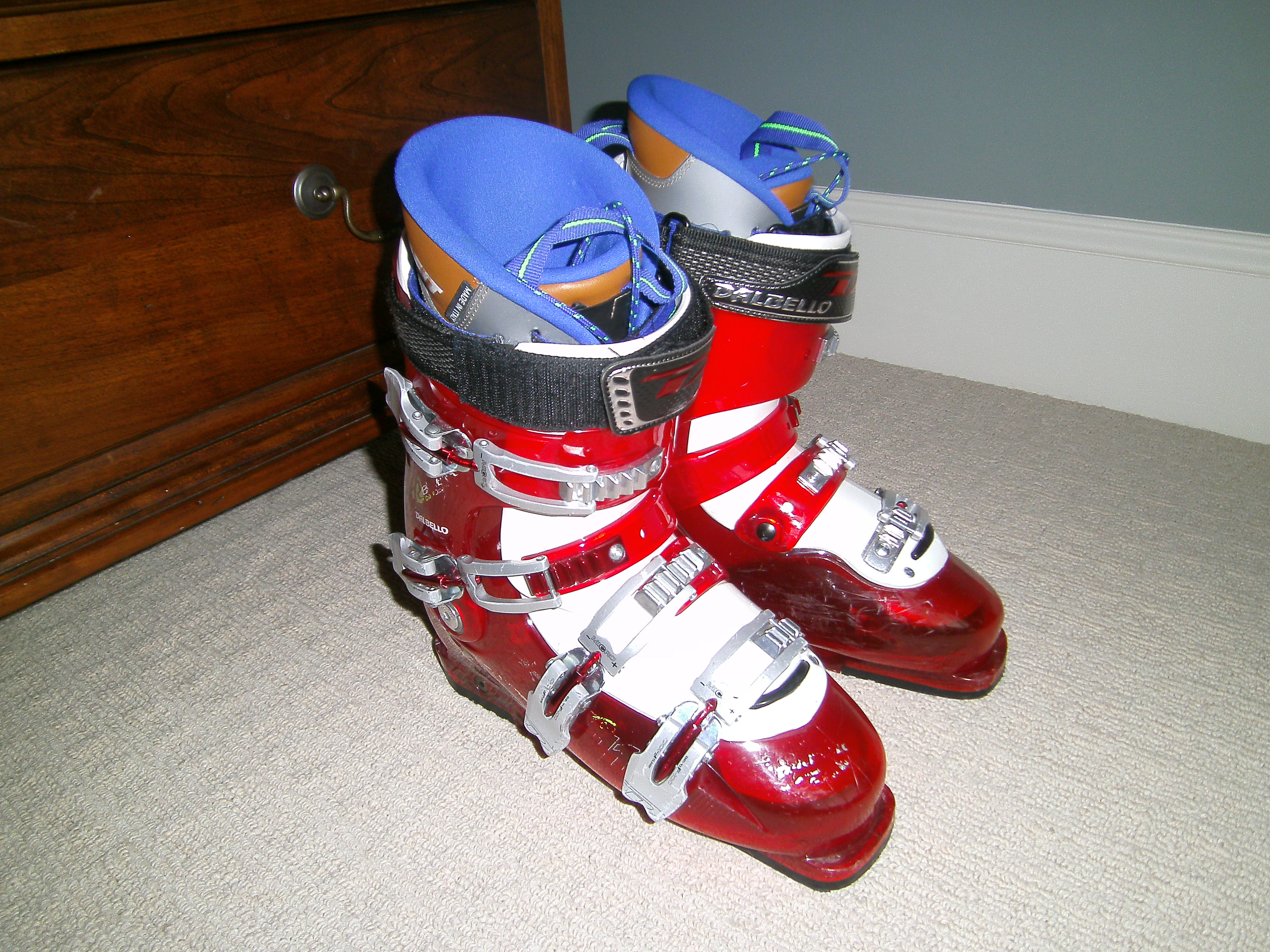
My trusty ski boots

Last Saturday I got a 6:00 a.m. flight out of Raleigh, made the connection in Houston (barely), arrived in Aspen at 10:15, checked into the hotel, rented skis, bought a lift pass, and got onto the lift at Aspen Mountain at 12:15. It was a clear, cold day, and so windy that many of the lifts were closed. I spent the afternoon working off of the A-1 lift. The snow was good. Toward the end of the afternoon, I was charging down a bump run with rhythm and confidence, right under the lift, and I had the thought: this is how mogul skiing is supposed to look and feel. After years of trying, I had finally got it! And just then, at the bottom of the run, caught an edge and crashed. As the Bible says, pride goeth before a fall.

On Sunday I met up at Aspen Highlands with a couple of friends who live in Colorado and are strong skiers. They knew the mountain well, and took me down some of the most challenging terrain. I felt a new level of confidence, and only an occasional spasm of fear. After lunch, they began referring to taking “a little hike.” I finally figured out they were talking about the hike up the ridge to Highlands Bowl — a trek that took all my strength to finish a couple of years ago. This time was difficult, but not agonizing. When we reached the summit (12,392 feet), the sky was clear, and the view of the jagged surrounding peaks was awesome.

Monday morning Gabe Tiller joined our group at Ajax. His skiing was strong, and I worked hard to keep up. But I was not pathetic! Gabe called it a day mid-afternoon, because of a bad night’s sleep, but I hung in there until the lifts closed. Chuck and I took the gondola up with a fellow who was at least 80 (he’d started out as a ski instructor in 1950) and spent much of his life at Aspen. As Chuck noted later, if we’re still skiing in our 80s, this will have been the early part of our ski career.

We ate Italian that evening at L’Hostaria, where Jocelyn and Gabe sat to my right and left. They were entertaining, and the food was excellent. Tuesday we had ten inches of fresh, slightly heavy snow at Snowmass. My demo skis were DPS Wailer 99s, which were wide and had rocker tip and tail. They floated beautifully. I was flowing, and not wearing out my legs. It had taken a long time, but with several seasons of practice and new ski technology, I was skiing powder with true joy.

Wednesday it snowed some more, and we had first tracks on the virgin snow at Highlands. It was quiet and beautiful and exhilarating.

I’m sorry to say my Sony point-and-shoot expired, presumably as a result of one of my falls that left some snow in the circuits. It was a good little camera. My Aspen photos were casualties. The picture of my trusty Dalbello boots was taken with my SeaLife DC1400, an underwater camera. The boots are now four seasons old. They are hell to get on, and hell to get off, but communicate well with my edges and ski great.