The Casual Blog

Category: public policy

Our Outer Banks weekend
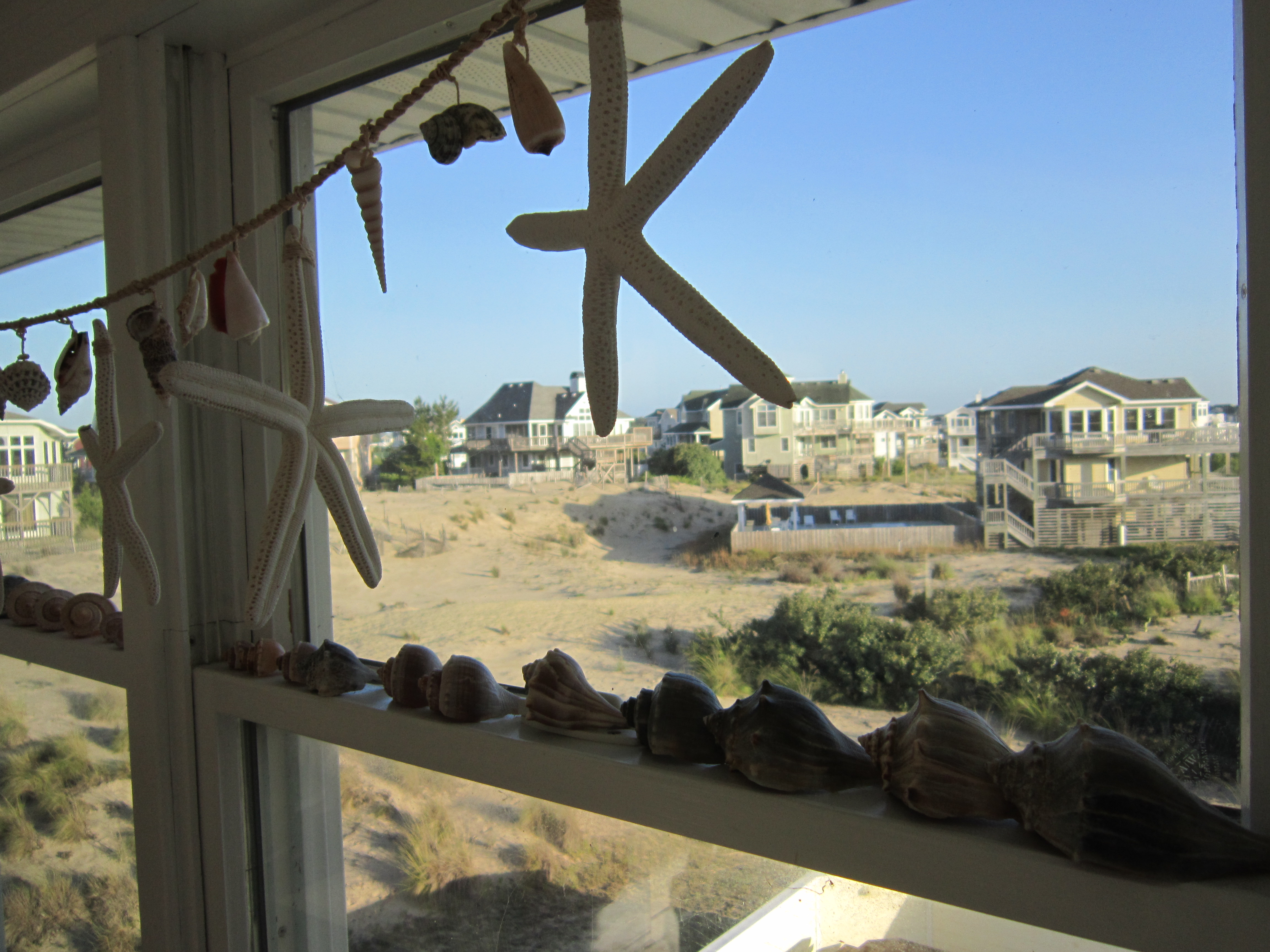
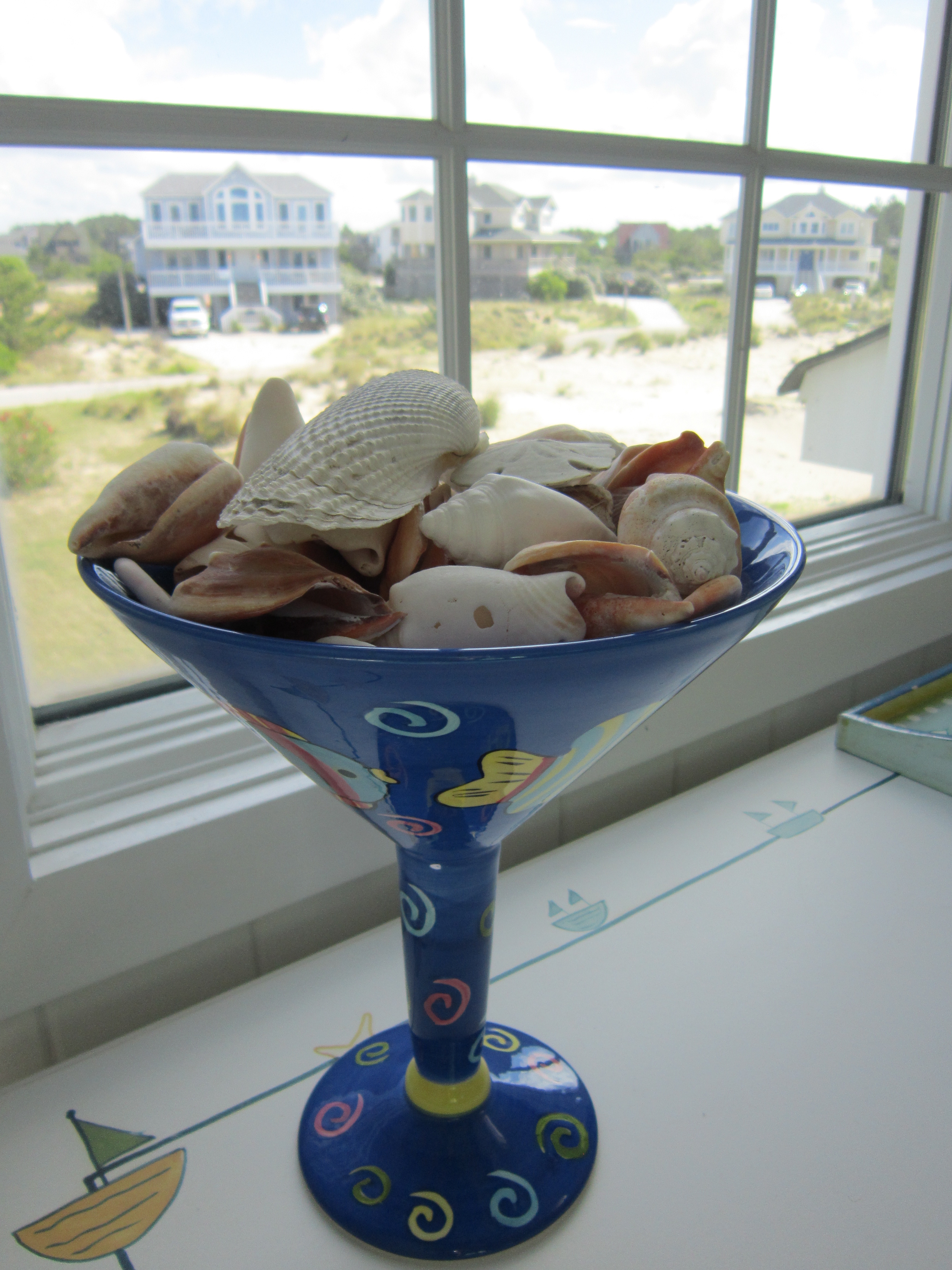
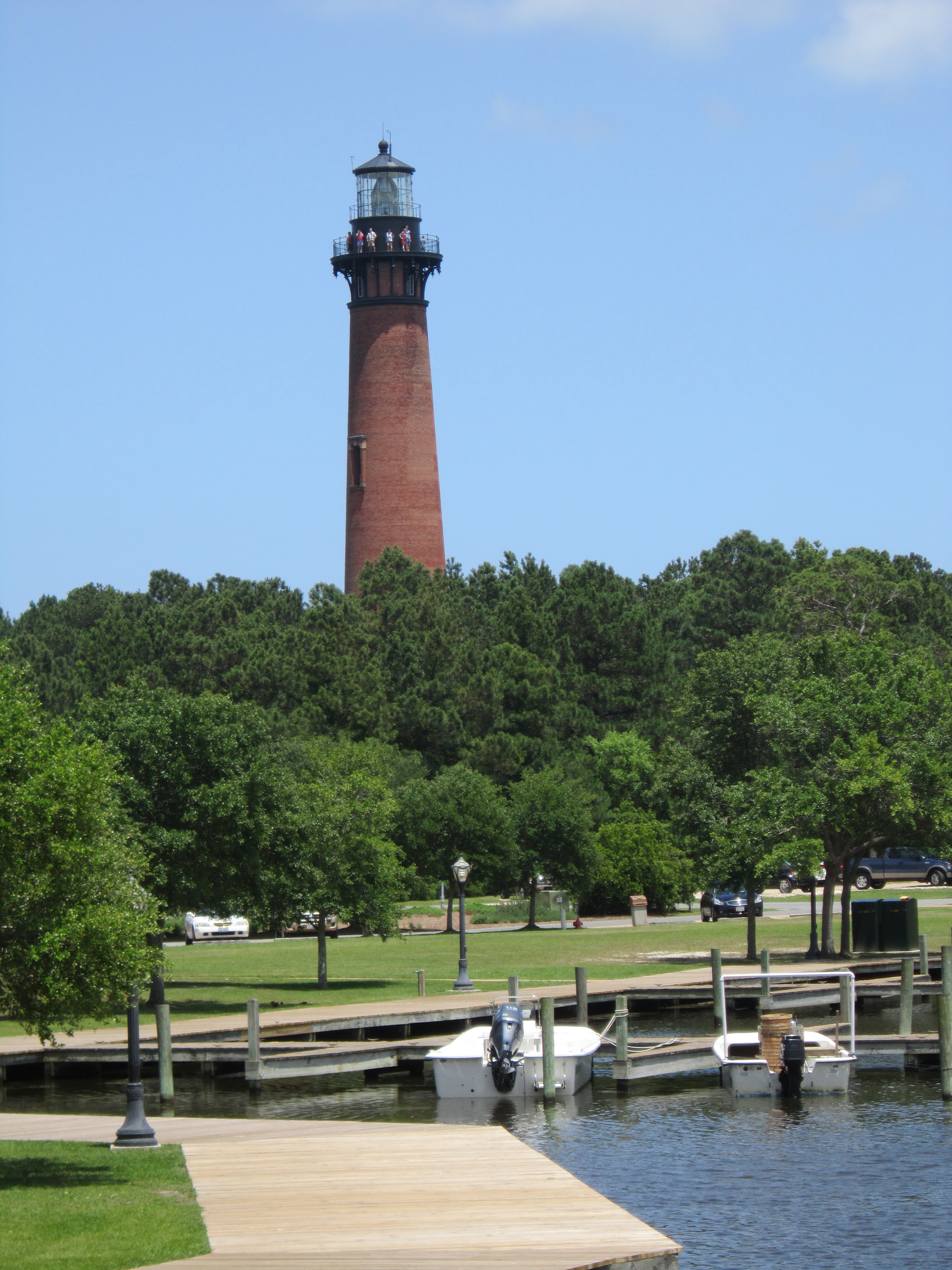
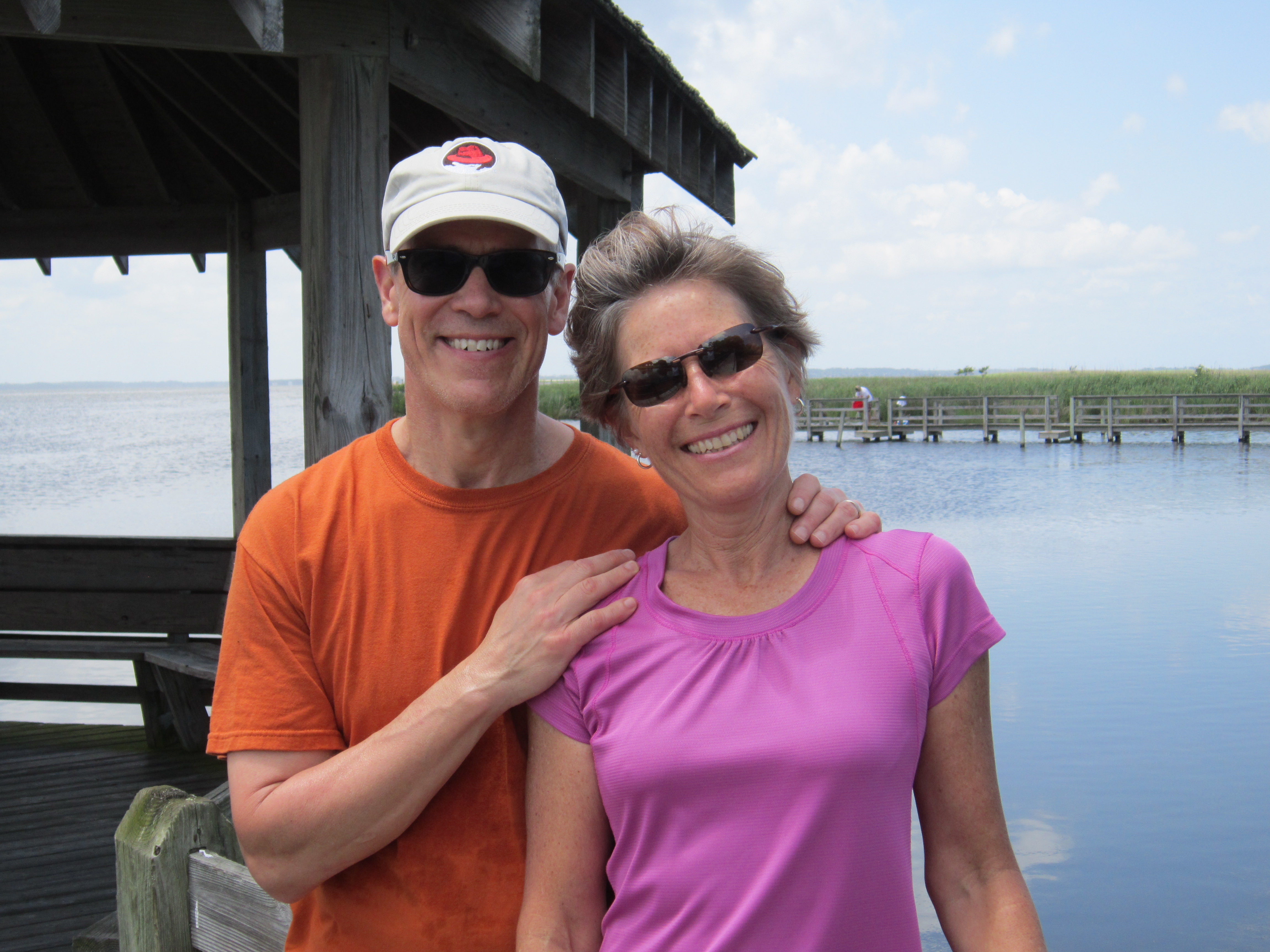
For Memorial Day weekend we drove to the Outer Banks to visit my sister Jane and her family. Their beach house in Corolla was comfortable and relaxing, with lots of seashells and board games. There were family dramas to discuss, as well as books to read, food to eat, and wild horses, shore birds, and other beach creatures to see. I also had a few new thoughts on economics and employment, as noted below.

My brother Paul and his wife Jackie came out from Virginia Beach on Saturday afternoon. Paul, in training for a marathon, ran the last seven miles, and arrived looking thinner than he has for at least a decade. The next morning I did my first outside run in a long time, a three-mile run along US 12. After persistent knee problems a few years back, I finally quit running and switched to low-impact activities like elliptical machines and stationary bikes. But I’ve recently seen running is good for bone density, and so have begun running a bit on the treadmill. The run along US 12 went well for a half hour, until I got a cramp in my calf.

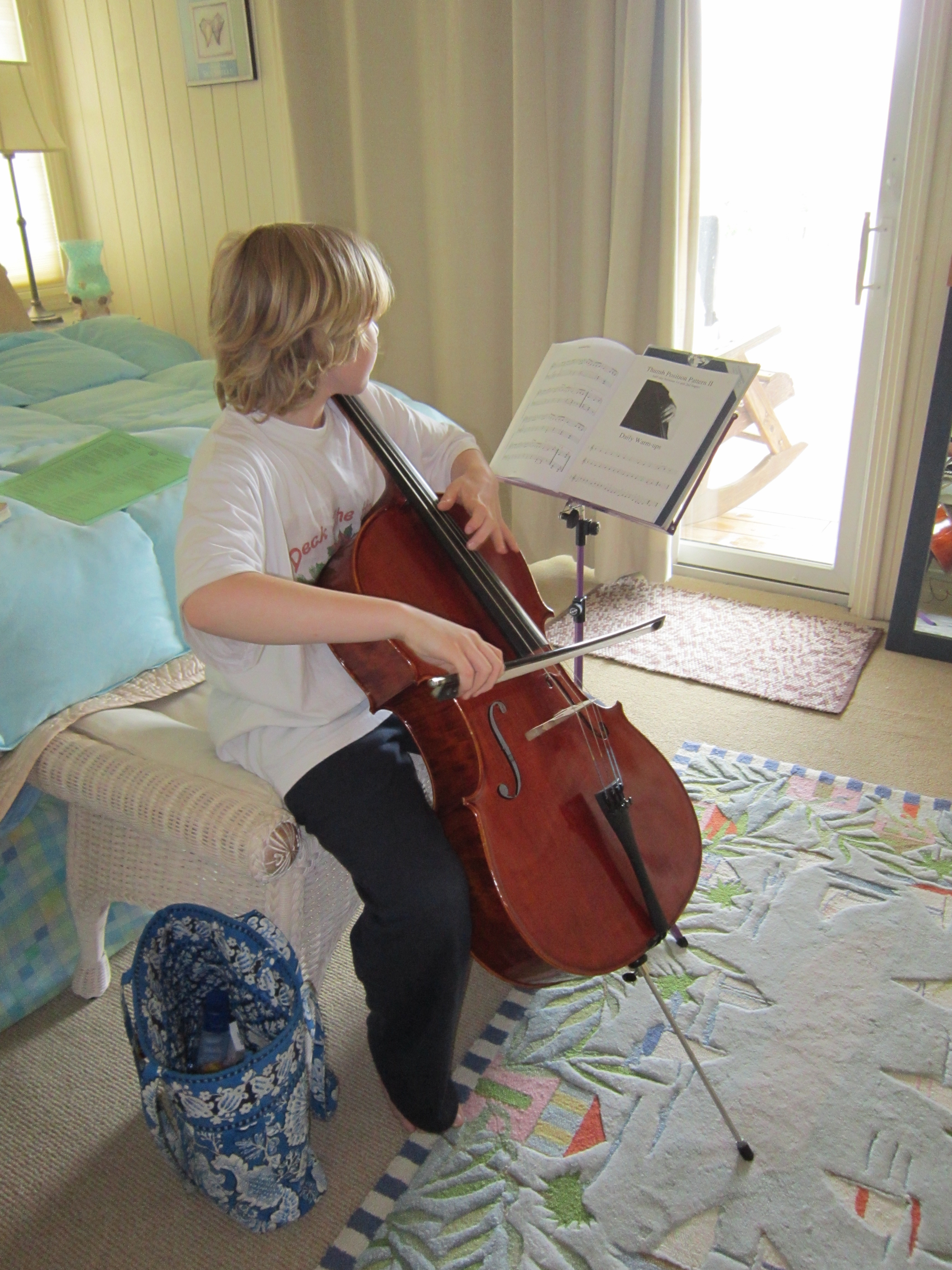
I took a break from practicing the piano, but enjoyed the musical activities of the rest of the family. Kylie is making good progress on the violin, as is David on the cello, and Jane has just started teaching herself piano. Paul is quite accomplished on the banjo, and played his version of the Star Spangled Banner in honor of memorial day.
Keith cooked non-stop all weekend. On Saturday morning, he cooked gluten-free waffles with blueberries and strawberries, which were marvelously light. Soon after we cleaned up, he started to work on lunch, wonderful grilled vegetable sandwiches, and soon after that, he got to work on a vegetarian Mexican dinner, which was a complete success. The man loves to cook, and he’s really creative. We were all grateful.

In the Sunday Times, there was an op ed piece by Tim Jackson about how the drive for ever-increasing productivity was resulting in increased unemployment. This was a different lens on a problem I’ve pondered before — what should humans do when computer brains and robots render them redundant? Jackson proposes that the answer is to forget about increasing productivity and embrace lessening productivity.

Jackson broached a critical problem. As I’ve noted before, although we’ve hardly noticed it, robots and artificial intelligence are transforming the human world in fundamental ways. More and more of the manufacturing work that people used to do is now done by robots, and AI is starting to impinge on areas that we used to think of as forever and irreducibly human, such as medicine, law, and education. This is big. As far out in the future as we can see, we will need fewer and fewer people to make our products and perform our services.

We once thought of this as utopia: a world of plenty which required less and less labor to produce goods and services. We assumed it would result in more and more pleasant leisure. But this vision failed to take into account that we aren’t comfortable paying wages to people who aren’t working in a way that contributes meaningfully, and those without work do not feel at leisure.

Jackson suggests reorienting away from simple increases in productivity and towards activities involving caring, craft, and cultural activities, like art. This sounds promising. These are activities that humans have done as long as the species has existed. Once our ancestors had taken care of food, clothing, and shelter, they made jewelry, painted on cave walls, beat on drums, played lacrosse, or otherwise entertained each other. Caring for each other, making things, and making art are things we like to do. But we need to figure out how to associate these activities with fair wages.

On Sunday afternoon we went four-wheeling northward to look for wild horses. Driving on the beach is fun, though I feel a bit guilty at what people like us do to the beach and its creatures. We saw lots of sanderlings and grackles in the shallows, and flying pelicans, gulls, terns, and one snowy egret. We drove through the narrow sandy pathways that wind through the marine forest, working our way around occasional pools of standing water. We finally found three groups of horses, and got close views of two of them.

We sat on the porch for a while and read and talked. Over the weekend, I dipped into the following books: I Am a Strange Loop, by Douglas Hofstadter, This Is Your Brain on Music, by Daniel Levitin, The Short Game Bible, by Dave Pelz (golf), Indignation, by Philip Roth, Winner Take All Politics, by Jacob Hacker, and The Social Conquest of Earth, by Edwin O. Wilson.

Sunday evening Sally mixed cocktails for the adults using cucumber vodka, ginger infused simple syrup, lime juice, and elderberry liquor. Keith made gluten-free vegetarian lasagna, which he had to complete with penne pasta because there were no lasagna noodles, but which turned out great. He’d also made vanilla ice cream and peach-and-blueberry cobbler. We played a game called “left right center” which involved rolling dice and losing or acquiring chips. It was a game requiring no skill, but gave the enjoyment of possible good fortune without exacting much pain for bad fortune. There was merriment. After dinner, we lit sparklers and set off some fireworks rockets.
A lovely Friday cocktail, Bill Cunningham, the anti-gay vote, David Brooks’s The Social Animal, learning to listen while playing the piano


How nice it is to have a cocktail and relax at home on Friday evening! Of course, strong drink must be handled with care. A glass of wine with dinner is certainly a pleasure, but the habit can sneak up on you, and a glass of wine can so easily turn into three.

A few weeks back, Sally and I decided to limit drinking to weekends. Among other good effects, this makes the Friday evening drink particularly delightful. Last night, Sally made us margaritas with fresh lime. For the first time in years, I had a sudden urge to listen to Stevie Wonder hits from the seventies, which we now can easily stream from Rhapsody. I dedicated my streaming of the wonderful Signed, Sealed, Delivered to my sweet Sally.

We watched a documentary called Bill Cunningham New York. Cunningham is a photographer whose specialty is candid shots of New Yorkers wearing interesting clothes. He has a feature in the Sunday NY Times style section in which he shows this week’s street fashion trend, which, although I’m far from a fashion person, I always enjoy looking at. But I didn’t know him by name, and would have missed the documentary but for Sally’s putting it at the top of the Netflix queue.

It was sweet and kind of inspiring. Cunningham is in his mid-80s. He’s still snapping pictures all the time (using 35 mm film), publishing weekly in the Times, and travelling by bicycle on the streets of Manhattan. Age may have slowed him down a bit, but he’s still passionately creative. He’s got a great, boyish smile.

We voted in the North Carolina primary this week, which involved primary races for governor, secretary of agriculture, and various other offices, and an amendment to the state constitution to ban gay marriage. Why a gay marriage ban? It’s mysterious, and bizarre. I am stunned that it passed by a 20-point margin. Raleigh, the part of North Carolina in which I spend most days is multi-cultural and tolerant, with a visible and completely uncontroversial gay population. (I blogged about this visibility a while ago.) But most of the state is rural. What is going on in the heads of homophobes? I’d like to understand, but I don’t get it. It’s a different culture. I believe that that culture is eventually going to change, but for now it’s still alive and kicking.

Speaking of culture, I’ve been reading The Social Animal, by David Brooks, the NY Times conservative columnist. Brooks has collected recent ideas on psychology and culture, including those of Daniel Kahneman and Jonathan Haidt, and woven them into a readable and, in places, intriguing book. The theme, which is getting considerable attention lately, is that people are primarily driven by unconscious perceptions and desires, rather than rational thought.

But Brooks views this in a positive light, arguing that although our brains make all kinds of mistakes, they work better than a completely rational system running in real time could. He argues that behavior is best viewed as a function of those around us and our surrounding environments rather than of individual intelligence, and proposes that we think about meaning more in terms of relationships and cultural systems. I don’t much like his device of two imaginary characters who gradually discover or rub up against the various theories he explores; the characters never really come to life. But I think it’s worthwhile — I’m more than half way through, and likely to finish.

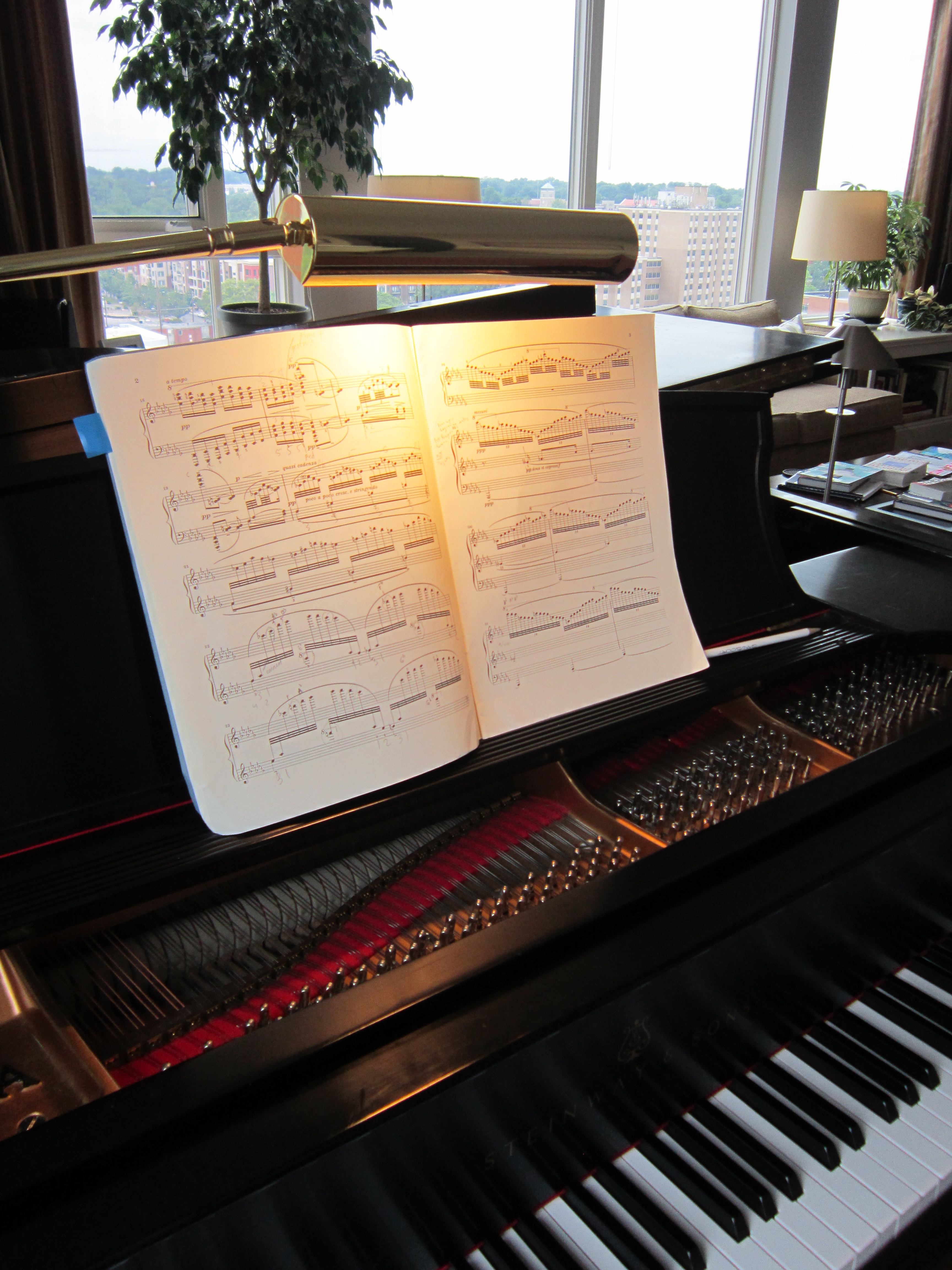
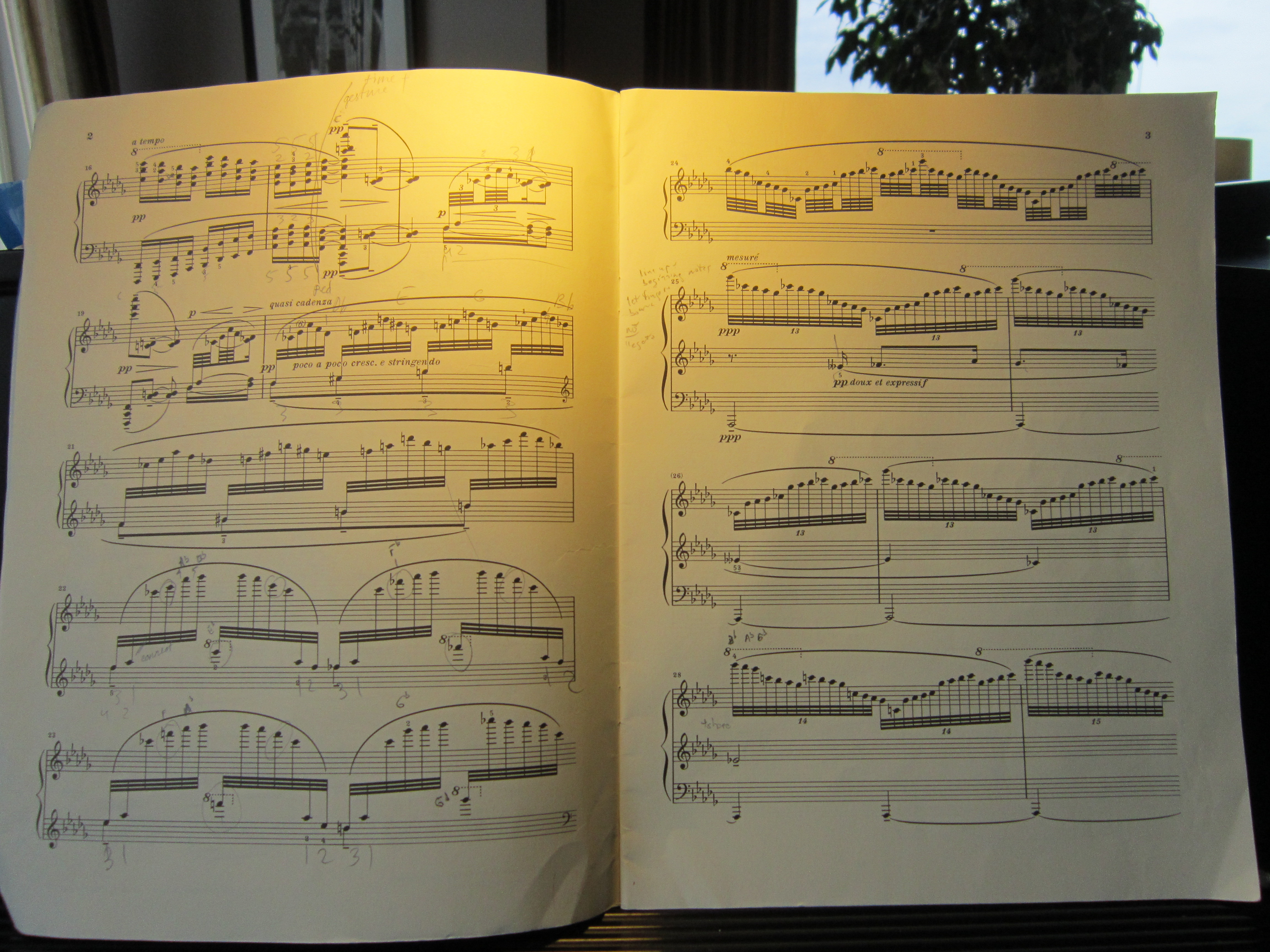
On Saturday I had my last piano lesson of the season with Olga Kleiankana, who’s headed to Moldova for the summer. We talked about some Rachmaninoff and Scriabin pieces for me to work on over the summer, and then worked on Scriabin’s second prelude (op. 11). Olga admitted that it sounded significantly better, but pointed out places where the tone seemed flat. She continued to emphasize the importance of gesture in sound production and expression, and when pedaling problems emerged she taught me how to test out pedaling improvements.

Then I played Debussy’s Second Arabesque for her for the first time. She pointed out that I seemed to be reading note by note, when many of the elements were repeated with slight variations. As she went through a quick score analysis, I had a eureka moment: score analysis was not designed to torture hapless students, but rather to make it possible to understand and learn music more quickly and effectively.

Finally I played Debussy’s Reflets dans l’eau, from Images, premiere serie. This is a gorgeous impressionist piece that calls to mind (especially after hearing the title) reflections in water. It has dazzling effects, some of which are difficult. Olga noticed that I got tense in my shoulders in the fast 32nd-note passages, and advised me that that could be fixed by breaking the passages into simple parts for practice. We also talked about the relationship of touch and tone color. At one point, I played a simple chord, and she said, with a pained expression, “Don’t just play the notes! You need to always think before you touch the keys!”

And she was serious. She listens with a level of concentration that’s almost scary, and expects me to at least try to do the same. I’m having occasional glimmerings of what this might be like. The sound seems richer, with more depth and detail. It’s like hearing in 3D. Of course, little flaws, like unbalanced chords or inappropriate accents, are more jarring. But when a musical statement works, it touches more deeply.

A juicy yoga class and other educational experiences

As much as I really love yoga, I go back and forth on Yvonne’s once-a-month Juicy Flow class at Blue Lotus. I like doing a class on Saturday mornings, and I like Yvonne, but I have the same issue the first Saturday every month.

Rather than her usual hour-and-a-half of Vinyasa (which is a lot), Juicy Flow is two hours, with a lot of fast movements. It’s eclectic. She puts a lot of thought into the music mix, which can range from goofy 80s pop to the world. In terms of movement, it’s always different, and there’s always something lively and fun. But it’s always exhausting, and tends to make me sore for a couple of days afterwards.

I was particularly hesitant about Juicy Flow this week, because I’ve been having some issues with my shoulders, and the class ordinarily stresses those parts. But I decided to give it a go. As usual, she’d come up with some demanding variations of traditional asanas, and several three-minute-long Kriya sequences of fast, big movements, including shoulder turns, squats, rolling up and down, scissoring legs, and open palm punches. There was also some free-form dancing.

Like every good yoga class, it was a learning experience — finding out some new things about what my body can and cannot do, and what the possibilities are. It was sufficiently demanding that I was not thinking about much of anything other than Yvonne’s directions. The two hours went fast. It was sweaty and exhausting, but also fun, and left me feeling amazingly calm and relaxed.

I was pleased to see news reports this week that Harvard and MIT are starting a free online education initiative called EdX. I might be interested in some courses. In fact, I’ve been auditing Michael Sandel’s Harvard course on justice (i.e. theories of ethics) through iTunes U. I usually watch Sandel or a Ted Talk in the early morning while getting my heart rate up on an exercise machine. It gets my head going.

Opening up the Ivy ivory tower strikes me as a very good thing for society in general, and I hope a lot of people will use it for continuing their education. It’s worrisome that anyone could think of college as the completion of an education. Seriously, has there ever been anyone who is reasonably well-educated after four years of college? College is kindergarten for adulthood. Getting fairly well educated takes a long time, and even then, there’s always more to explore.

My latest piano lesson, a new Indian restaurant, and some good news in the Sunday Times

At home with Stuart and the Sunday New York Times

On Saturday morning I had my first piano lesson with Olga in several weeks. I played the second Scriabin prelude, Debussy’s Reverie, Chopin’s etude in c minor op. 25, no. 12, and Liszt’s Un Sospiro. We continued to talk about subtle aspects of touch and tone. In slow lyrical passages, she asked me to keep listening closely to tones as they decay all the way to the next note — a more intense kind of listening. She got me focused on my elbow as a tool in shaping a long melodic line. In the etude, she coached me on how to make it really loud and fast. After I played the Liszt for her last time, she was inspired to learn the piece, and this time she taught me some of the tricks she’d developed for the tricky places. By the end, I felt exhausted but inspired.

That night Sally and I had dinner at a new Indian restaurant in our neighborhood called Blue Mango. I usually like Indian food as food, but as a restaurant dining experience is often lackluster. Many dishes that I like arrive in the form of brown goop; the emphasis is not on the presentation. Mantra, another Indian restaurant close to us that opened a few months back, departed from this stereotype and presented food that was pleasant to look at as well as to eat. Blue Mango’s dishes were not as pretty, but the restaurant had a cool vibe, and the food was very tasty. Service was friendly but still getting the kinks out. The veggie samosas were excellent.

We ate early with a view to seeing an 8:00 movie at the Blue Ridge, a second run theatre where tickets cost $2. We who are normally so lucky were not so at the Blue Ridge. Every parking spot in the place was taken. We drove around for 10 minutes looking, and finally came home. We ended up watching Trading Places with Eddie Murphy and Dan Aykroyd, which was kind of funny.

Early Sunday morning is the time to get a paper copy of the New York Times and a cup of coffee, and start with the front page. With the sections properly sorted and ready for perusal, I find spending some time with the paper soothing, even when the news of the day involves various disasters. The Times makes mistakes, but it never gives up, and from time to time it is enlightening. Also, it is a sort of barometer of ideas that are getting solidified in public consciousness, and thus a leading indicator of possible social change.

Today I was happy to see a front-page story on solitary confinement in U.S. prisons. Erica Goode writes that the supermax prison model that has grown in the last three decades and kept prisoners in nearly complete isolation has resulted in increased prison violence, increased recidivism, and, for the prisoners, increased mental illness — all at enormous expense to the government (i.e. your and my tax dollars at work). There was an excellent piece on psychological costs of solitary confinement by Atal Gawande in the New Yorker some months back. Anyhow, Goode reports good news: several states have been reducing the numbers of prisoners in solitary confinement. The motivation appears to be more cost savings in tough budget times than humanitarian concerns, but still, progress is progress.

On the cover of the Sunday Review section is a piece by Mark Bittman on the problems of eating chickens, and alternatives to doing so. Bittman asks, “Would I rather eat cruelly raised, polluting, unhealthful chicken, or a plant product that’s nutritionally similar or superior, good enough to fool me and requires no antibiotics, butting off of heads or other nasty things?” Or putting it another way, “If you know that food won’t hurt your body or the environment and it didn’t cause any suffering to an animal, why wouldn’t you choose it?” According to the story, there are new fake chicken products that are perfectly fine. That sounds like good news for the chicken species, and for humans.

Also in the Review section, Tom Friedman writes about the greatest non-natural resource a country can have — a good education system. He cites a recent study comparing the wealth of countries according to their natural resources such as oil and metals and the education level of their citizens. More oil resources do not lead to higher levels of knowledge and skills, but knowledge and skills are tied to countries’ economic success. Friedman is surely right that education should take pride of place as a societal focus.

One story I expected to see in the Review section, but didn’t, was the report earlier in the week that the televangelist Pat Robertson had spoken in favor of legalization of marijuana. My comment on Twitter (see @robtiller) was: Pigs fly! Robertson’s positions are generally consistent with the “conservative” “Christian” “family values” camp, and I would have guessed that even if he privately concluded that prohibition was a failure, he would be the last person to speak out on the subject. But he has acknowledged that the war on drugs has failed, after enormous expenditures and a huge toll of imprisoned victims. He proposes that we treat marijuana like we treat alcohol. It pains me to say so, but for once, I strenuously agree with the man. The important question, though, is will his followers?

Why I am a vegetarian

Being a vegetarian is, in my view, a wonderful thing. Otherwise I would have eaten a plant-based diet for the last 15 years. But it is by moments challenging. One of the challenges is dealing with a question that comes up all the time, usually when I’m eating with people I don’t know well. At the worst possible moment — just as the food arrives — my companion asks, “So, why are you a vegetarian?” This is awkward. If you’re not already familiar with the issues, it could make you a bit uncomfortable, and spoil your appetite.

But as long as we’re not eating, let me satisfy the curious who wonder, Why be so difficult? Why not just enjoy a steak? I’ve tried to boil it down, and have ended up with three main reasons: better health, concern for other living creatures, and care for the environment.

I’ll start with good health, on the grounds that it is our most valuable possible possession — more than any number of mansions, yachts, and planes. It’s worth some time and effort to improve your odds for having a healthy life.

A simple way to improve those odds is eating a plant-based diet. Vegetarians typically have lower cholesterol, lower blood pressure, and a lower body mass index. They consume less dietary fat, which is associated with heart disease and cancer. They’re less exposed to the excessive antibiotics and hormones fed to farm animals. Studies have shown that they have a reduced risk of the big killer diseases of our society: heart disease, diabetes, obesity, and several forms of cancer.

At the same time, eating fruits and vegetables gives you the health benefits of antioxidants, including carotenoids, Vitamin C, and Vitamin E, and a wonderfully complete collection of other nutrients. It gives you more than enough protein, from such sources as whole grains, beans, nuts, and some vegetables.

Now, it is possible to have an unhealthy vegetarian diet. You could, for instance, subsist on Snickers and Cokes. To benefit from a veggie diet, you need to eat less processed food and sugar, and more whole grains, fruits and vegetables. Especially in the beginning, that takes some conscious effort. But there’s impressive evidence that it’s worth it, in terms of a healthier, and therefore happier, life.

My second main reason for not eating meat has to do with what meat is. Let me put this as delicately as possible. A hamburger is a cow that has passed on, and barbecue is a pig that has gone on to its reward. These animals are members of one of the great kingdoms of life — the kingdom animalia. Like humans. Farm animals have social structures, solve problems, and feel pleasure and pain. I believe their lives that are entitled to respect, and we make our lives nobler by giving that respect.

We generally recognize the worth of at least some non-human animals. Take my little dog, Stu, the sweetest dog in the world. He loves taking walks and being petted, and he makes strangers smile. I wouldn’t consider eating Stu, and I feel pretty much the same way about eating cows, pigs, and chickens. There’s hardly any difference, from a biological point of view. Most of the genes of Stu and farm animals are the same.

Most of us are revolted by wanton cruelty to animals. For me, it’s hard to ignore the cruelty associated with a steak or plate of barbecue. Most of the farm animals turned into food endure wretched lives filled with what amounts to torture before they are slaughtered. If you have any doubts about this, I recommend that you to watch the documentary Food, Inc., on factory farming and industrial slaughterhouses. Or read the Wikipedia article on factory farming. It is deeply disturbing.

My third reason for a plant-based diet is both ethical and practical: the meat industry is bad for the earth and the humans on the earth. Factory farming causes a host of environmental problems, including pollution of soil, water, and air, overuse of pesticides and herbicides, and habitat destruction.

Meat is a highly inefficient food. It takes 30 pounds of grain to make one pound of meat. We could feed 50 percent more people if we switched to a vegetarian diet. By eating meat, we waste a lot of energy, and burn a lot more fossil fuels. This contributes to global warming, which is an existential threat to the human race.

So there are my three main reasons for a plant-based diet – a healthier and happier life, respect for other living creatures, and taking better care of the environment. There’s actually one other reason, which is more selfish but also important. Taste! There are so many tasty plant foods, and so many textures and tastes that you start to notice when you eat less meat. Ancient cultures have developed exquisite cuisines based largely on plant foods. Think of Indian food, Thai food, and the Mediterranean diet.

Anyhow, those are my reasons for eating a plant-based diet. From now on, I can refer my interlocutors to my blog.

Sensationalizing homophobia, engaging with aging, and testing mindful eating

Coming back yesterday from a short trip to Manhattan, I had a few minutes to spare in the crowded Delta terminal at LaGuardia. There were no seats near my departure gate, but I found one three gates away, and flipped through The New Yorker magazine. With only a few minutes, I purposely chose a story I expected to be relatively uninteresting — a piece by Ian Parker titled A Reporter at Large: The Story of a Suicide: Two College Roommates, a Webcam, and a Tragedy.

The story keyed off a widely reported incident at Rutgers University in 2010 in which a student spied on his roommate with a webcam and tweeted that he’d spotted homosexual behavior. The ensuing mediathon developed the story line that a heartless homophobe had posted video on the web that caused a vulnerable closeted gay student to kill himself — an emblematic hate crime.

In Parker’s reexamination, the popular media story turns out to be a gross distortion. Dharun Ravi, the surviving roommate, is now facing a criminal trial on vague charges with the potential of years in prison. Ravi created an extensive record of tweets, texts, and other communications that seem stupid and immature, but not unusually so for a 17-year-old. There turned out to be no web cast of video. The suicide victim was actually out of the closet. Ravi’s juvenile online socializing comes across as frenetic and somewhat pathetic. He seems smart, selfish, insecure, and not all that unusual.

I got a few a columns into the story before I decided with boarding time approaching I needed to position myself closer to my gate. I wheeled my possessions a hundred yards or so. Somewhere in that process, my New Yorker disappeared. I retraced my steps, but it had vanished. How annoying! I hope whoever recovered it enjoyed it. After I got home, I managed to download the piece to my iPad and finished it.

It’s too bad, in a way, that the facts don’t support the story line of a bullied gay martyr. Homophobia plainly exists, and violence against gays exists, and those things need to be publicly condemned and appropriately punished. Tyler Clementi’s suicide was unquestionably a tragedy. But, as Parker’s story shows, the cause is unknown, and probably complex. There’s no simple way to assign blame for it. The media’s hype and erroneous reporting fed hysteria and calls for revenge, and now comes a criminal trial that will at a minimum scar a second life.

As an alumnus of the editorial staff of The New Yorker, I enjoy flipping through it every week, though I admit to reading less of it than in days gone by. Last week I read with intense pleasure in the January 23d issue a piece by Donald Hall titled Out the Window: The View in Winter.

The 83-year-old poet has written about getting old. He now needs a wheelchair and has various physical problems. He’s conscious of being “a separate form of life,” treated with either indifference or too much solicitude. He spends a lot of time looking out the window at his bird feeder and the countryside beyond. The outline of his life sounds sad and dull.

This is the amazing thing, though: his life is full of incredible beauty! His descriptions of the drama at his bird feeder are marvelously clear and vivid. He writes of the sequential blossoming of spring flowers with rhythmic, muscular prose. To think that this depth of perception and power of expression can be part of growing old is inspiring.

I’d like to become more conscious of ordinary sensory experience, and to reduce, if only a little, the percentage of each day lived on autopilot. It’s challenging, though, to engage with the present. There are distractions inside and out. Art, like Hall’s essay, can help. I find yoga is also helpful. I hadn’t really thought of meal time as a possible aid, but was inspired by a column this week in the NY Times headed Mindful Eating as Food for Thought.

The basic notion is to focus carefully and completely while eating on the sensations of eating — the flavors, smells, and textures, down to tiny details. The way I normally eat involves talking to people, reading, listening to music, thinking about things, and sometimes combinations of these, jumping from one to the next, hardly noticing the food. Mindful eating is the opposite — quiet and slow.

According to the column, this approach to food is an antidote to over eating and helps with distractedness. It also could lead to greater pleasure. I was reminded of my old friend Tom, now departed many years, a casualty of AIDS, who considered great cooking to be an art entitled to no less respect than painting or music. Accordingly, he had an enthusiasm for high-end restaurants at a time when neither of us could well afford them. He once used part of his Watson fellowship money to treat me to a meal in a four-star restaurant in Paris. His only request was that we not talk while we ate. We enjoyed the incredible meal in perfect silence.

More recently, on an average day I have a hard time focusing for half an hour on anything, and that includes eating. But at least now I’m thinking about it. So far, I’ve managed to eat only a few mindful bites at the beginning of a meal, but I’m going to keep trying.

Climate changing and improving decision-making

It was unseasonably warm this week in central North Carolina. Some daffodils and forsythia are starting to bloom. They’re beautiful, of course, but there’s something that doesn’t feel right. They’re not supposed to be here for another month or so. It’s hard not to think about climate change (a/k/a global warming) and be worried.

At least, hard for some of us. There’s a vocal minority of climate change-deniers that somehow keep grabbing the spotlight and the microphone. They create enough of a stir to prevent any serious political discourse on the most serious global environmental problem humankind has ever faced. It’s bizarre.

Yesterday’s NY Times reports that Tea Party activists are fighting local efforts to conserve energy on the grounds that such efforts are part of a United Nations-led conspiracy. Fox News is also involved in spreading of this lunacy. What is wrong with these people? There should be no debate about whether or not to pay attention to overwhelming body of scientific evidence establishing global warming and its potentially disastrous consequences — but there is.

Our species is headed towards the edge of a cliff. We should be focusing enormous resources on minimizing CO2 and other emissions. This should be our new Apollo program — to land our grandchildren on a planet that’s sustainable.

We’ve really got to get this effort started. I suggest as a first step we agree that the opinions of science-deniers be subjected to appropriate brief ridicule and then ignored. Yes, everyone’s entitled to their opinions, but not every opinion is entitled to be taken seriously. Whether the source is ignorance, greed, or mental illness, opinions that have no basis in factual reality are at best a waste of time. In this case, they’re also increasing the risk of mortal peril. Basta!

For step two, or maybe step one-and-a-half, we should read Thinking, Fast and Slow, by Daniel Kahneman. I’m about two-thirds of the way through, and I’m confident it will be in my list of top thought-provoking books of 2012. Kahneman is a Nobel-prize-winning psychologist and founding father of behavioral economics. His most recent book summarizes the research he, Amos Tversky, and others have done in the last few decades into the psychology of decision-making.

Kahneman divides judgment into two main parts: intuitive processes (thinking fast) and rational ones (thinking slow). The fast part plays a much greater part in our decisions that we think. We all rely on heuristics and biases to simplify complex matters. This mode of thinking is important — without it we’d be paralyzed — but it also sometimes leads to very bad decisions. Understanding more about the points of failure of our ordinary thought processes may help us avoid some errors and make better decisions. I hope.

My budget solution: end the wars (Iraq, Afghanistan, and Drugs)

Yesterday the newspapers reported that the last U.S. soldiers would be out of Iraq by the end of this year. When the U.S. invaded Iraq eight years ago, I thought it was a terrible mistake, and everything I’ve learned about it since has strengthened that conviction, as thousands of U.S. soldiers and tens of thousands of Iraqis lost their lives, and as we increased our exposure to financial collapse by spending more than 800 billion borrowed dollars.

It’s good news that it’s over, and I wish I could feel happier about it. We’ve wreaked a lot of havoc in Iraq, and now we’re stopping. Have we learned anything? That’s doubtful. As a society, we’ve hardly thought about it at all.

As an undergraduate at Oberlin College, I had a concentration in political theory. I read Plato, Aristotle, Augustine, Aquinas, Montesqieu, Machiavelli, Hobbes, Locke, Rousseau, Adams, Marx, Nietzche, Bentham, Mill, Arendt, Rawls, and a lot of other interesting and challenging thinkers. For a long time, though, I had my doubts as to whether I’d learned anything at all useful.

Eventually, I came to the view that I learned one very useful thing: critical thinking. Engaging with lots of powerful ideas that were all, at least to some degree, wrong or unworkable helped develop a mental toolbox. This toolbox is useful in recognizing the weak points in arguments, discarding unfounded assumptions, and sometimes in making better decisions.

War is powerfully attractive at certain times and places. I am not immune to that attraction. Like lots of kids, I’m fascinated by weaponry (especially tanks and fighter jets), and I find military history interesting. But something in my moral education left me with the settled view that killing sentient beings is deeply tragic, and in most cases morally wrong.

Add this ethical orientation to a skeptical turn of mind, and maybe I can see through the attractions of war to the underlying horror more easily than most. Or perhaps I’m kidding myself. In any case, I have a high degree of confidence on the right way to go on this. While we’re wrapping things up in Iraq, let’s also quit sending our kids to kill and be killed in Afghanistan. There is no good reason for that war, either. We’ve spent more than $450 billion on it. Let’s stop the physical and financial bleeding.

Ditto on the war on drugs. This week’s (Oct. 17) New Yorker has a piece on the subject by Michael Specter. (Unfortunately only the first few paragraphs are available without charge online.) It starts with a discussion of Portugal’s experience of decriminalizing drugs ten years ago and treating addiction as a medical problem. “In most respects, the law seems to have worked: serious drug use is down significantly, particularly among young people; the burden on the criminal-justice system has eased; the number of people seeking treatment has grown; and the rates of drug-related deaths and cases of infectious diseases have fallen.”

Specter gives a balanced account of Portugal’s experience, and including quotes from critics of the change. Their criticisms seem mostly based on their belief that drugs are evil. Fine. But in Portugal lots of law enforcement and political leaders have given up on the idea that treating drug use as a crime can possibly succeed.

There was another good anti-drug-war piece this week by Doug Bandow, a fellow at the conservative a Cato Institute published in Forbes and republished by the Huffington Post.
According to Bandow,

Perhaps the most obvious cost of enforcing the drug laws is financial. Government must create an expansive and expensive enforcement apparatus, including financial and military aid to other governments. At the same time, the U.S. authorities must forgo any tax revenue from a licit drug market.According to Harvard’s Jeffrey A. Miron and doctoral candidate Katherine Waldock, in the U.S. alone “legalizing drugs would save roughly $41.3 billion per year in government expenditure on enforcement of prohibition” and “yield tax revenue of $46.7 billion annually.”

This cost is appalling, and it doesn’t even count such costs as ever expanding prison systems, corruption of law enforcement and government, breeding organized crime, and of course the human costs of broken families and lives.

But I see a little ray of hope. The national debt problem has come to be viewed as both serious and impossible to solve. However true that may be, it has created a sense of desperation in Washington. It’s just possible that drug war diehards could come to accept drug legalization as a necessary revenue-generating measure. This was part of what led to the repeal of Prohibition — the realists won the argument that we needed the tax revenues from liquor. Legalization, combined with a sensible regulation and taxation system, could make a significant dint in our budget shortfalls. Add that to ending unnecessary wars, controlling excessive military costs, cutting farm subsidies, getting health care costs under control, and voila!

Republicans and science

Last week Paul Krugman departed from his usual subject matter (the economy) to present the case that Republicans are becoming the anti-science party. His argument included a quote from a Republican official accusing a conspiracy of scientists of fabricating global warming data to promote their own careers.

It would be nice if such lunacy could be dismissed as a fringe phenomenon. But the speaker was the current governor of Texas and a leading candidate for President. And according to Krugman only 21% of Iowa Republican voters believe in global warming, and only 35% of them believe in evolution. Holy Toledo!

Is it possible that we could elect as President a person who opposes factual analysis and critical thought generally? As unbelievable as it sounds, the answer, apparently, is yes. At any rate, none of the current Republican candidates is prepared to stand up for rational thought over patent nonsense when their potential supporters prefer the nonsense.

I’ve never considered it particularly heroic to acknowledge factual reality or base action on the best available data. I thought this was what people ordinarily did. There have always been people who were disconnected from reality, but traditionally we either feared or pitied them. No sane person would consider taking their views seriously. So how is it possible that the anti-science Republicans (surely, or at least I hope, still a minority among Republicans) have developed into a political force? This is crazy!

Now, I have nothing against people who prefer their fantasies to hard reality. It’s OK if they want to believe, for example, that it’s possible to have public services without paying taxes, or that climate change is nothing to worry about. But it would be folly to let such people have serious responsibility for anything. Just as we don’t let young children drive cars, we don’t want the anti-science people making important decisions. As opponents of science, they just don’t have the tools necessary for good decision-making. Why would we even consider trusting them?

Post-Enlightenment thinking and Michelle Bachmann

Is there any question that science, logic, and reason are excellent tools for problem solving? OK, these systems aren’t perfect, and they don’t apply to every problem. But can any thoughtful person fail to recognize their power to transform civilization and improve lives?

The answer is yes. Some people rely primarily on myth and magic as thought systems. But I normally think of these people as a not-very-significant minority. It may be, though, that that minority is getting more significant.

A column in the NY Times today by Neal Gabler posits that we live in a post-Enlightenment society that has gone backward intellectually to a method that does not employ rational thought. Gabler takes this as settled, and argues that it’s even worse: that we are moving into a post-idea world, where thinking is simply no longer done. Instead, we exchange undigested facts. As evidence, he cites social media such as Twitter and Facebook.

I’m not persuaded that social media is killing ideas, or even that the post-Enlightenment has arrived. But anti-rationalism is alive and well. Exhibit A: Michelle Bachmann. Yesterday Bachmann won the Iowa straw poll. In this week’s New Yorker, Ryan Lizza discusses the ideas that shaped her thinking.

Bachmann comes out of a tradition that believes the Bible is the literal, infallible, and unerring word of God. She claims to have a personal relationship with Jesus Christ, and believes that he controls her life. She’s also been influenced by various fundamentalist thinkers who have some disturbing notions, including a revisionist view of slavery that holds that it was not all that bad.

It strikes me as implausible that Bachmann could be a serious contender for the presidency, but her style of thinking is having an impact on public policy. It’s hard to understand how the Tea Partiers could refuse to discuss the issue of tax rates, and be prepared to insist on this point at the cost of economic catastrophe. But if you believe that your ideas are coming directly from God, how could you question them? Why would you care to listen to opposing views? Why would you consider compromise? Thus usually harmless nonsensical beliefs become dangerous.