The Casual Blog

Category: music

Ecstasy and agony: a sweet homecoming, my first handstand, a good massage, a difficult dental appointment, and some beastly Brahms
13 11 10_5168_edited-1-1

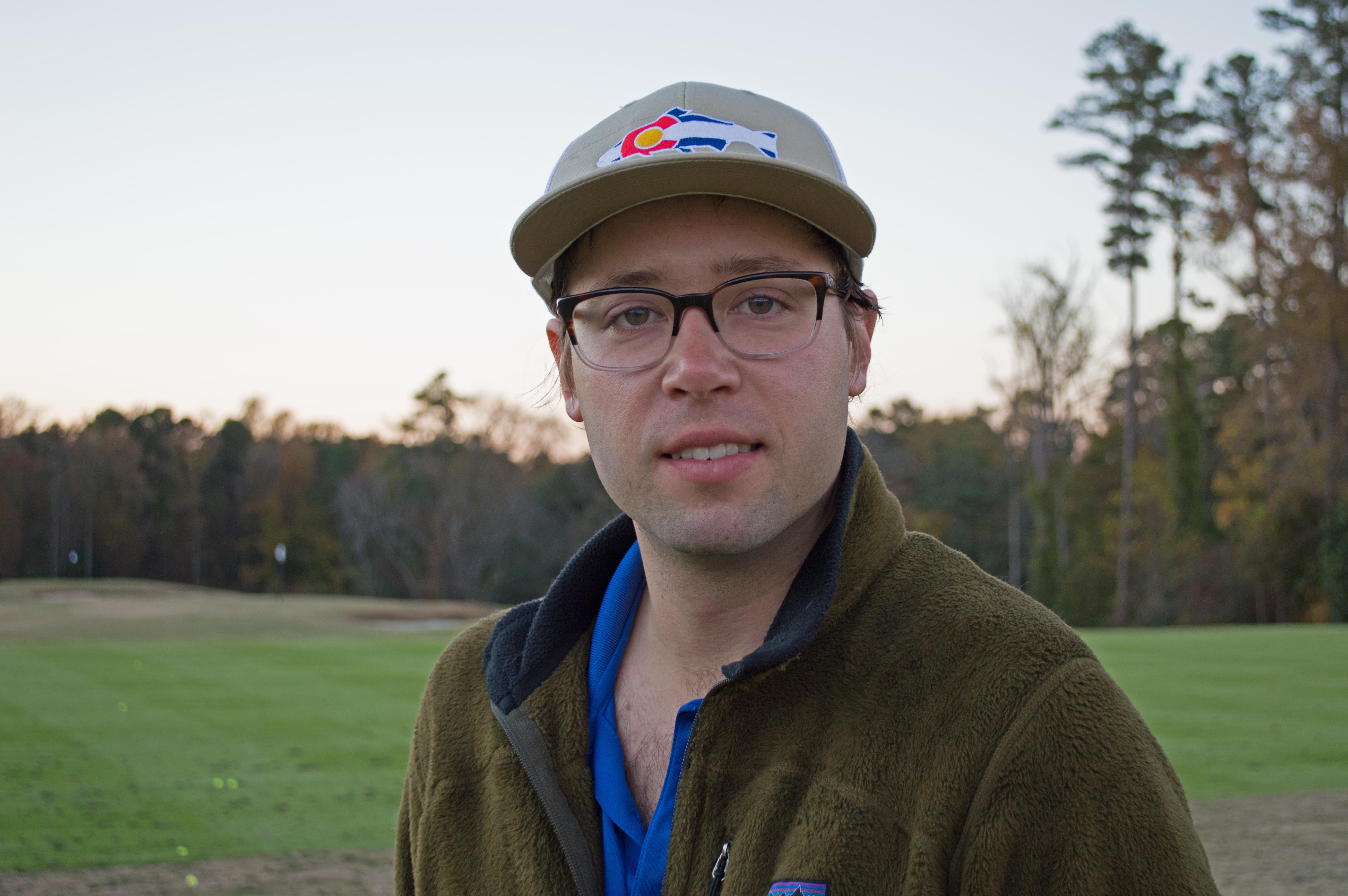
Happy birthday to Gabe! He’s 29 today, and his mumsy and popsy are proud as can be. He came out from Telluride to visit us for a few days, and it’s been good to catch up.

He’s working hard on his music, experimenting and doing some recording with his band mates. In high school, he got to be a strong drummer, but then lost interest. But he’s come back to making music! All those music lessons were not wasted! And he’s learned the secret of getting better at his instrument (and other things): practice, practice, practice.

Along with his music, Gabe has been experimenting with photography using his iPhone and Snapseed. He starts with something straightforward and does various color processes for a new look. It’s lively and interesting. He’s also following others on Instagram, including someone called yoga_girl. He showed me a couple of yoga_girl’s yoga feats, which included some extraordinary handstand variations.

I hadn’t mentioned that I’d made up my mind to learn how to do a handstand against a wall. I’d gotten a short lesson from Larisa, my wonderful functional fitness trainer, and also gotten Suzanne, my wonderful yoga teacher, to show me her approach after a recent class. And I’d given it several serious tries, which were close – but no cigar.

But after seeing Gabe and yoga_girl, the next morning I had my 5:30 a.m. session with Larissa, and amidst her other challenges, requested another handstand lesson. She suggested approaching it like a cartwheel. We worked on cartwheels for a bit, with some improvement, and then tried again. And I did it! Thanks, Larisa!

When I told Gabe of my milestone the next evening, he was of the view that I also owed some thanks to him and yoga_girl. True enough. He was inspired to try his own handstand. Without a wall. He was there by the third try. That’s my boy!
13 11 09_5117

The same day I did my first handstand, at lunchtime, I had my first massage with Kirsten Bachmann. After a massage hiatus, I’d decided to audition some new massage talent, and possibly get a regular routine for taking care of that part of my make up. I liked Kirsten. She started out with this surprisingly effective machine called the Thumper, which gives you a good Thumping. She did some great work on my right shoulder, which needed it. I look forward to our next session.

13 11 09_5111

But not all my experiences with new technology this week were as wonderful. I was two months late for my six-month tooth cleaning, and drew a new hygienist who used a device called the Cavitron. The tool vibrates at a high frequency, which, she said, “blasts the bacteria.” Maybe. But my it also caused my tooth nerves to vibrate at a frequency resembling a root canal. I like to think that I have a fairly high pain threshold, and tried hard to bear up, but finally had to say, no mas.

Also unpleasant was the piano soloist at the N.C. Symphony on Friday night. Beforehand we had tasty empanadas and margaritas at Calavera, and we enjoyed the first half of the program, which featured Sibelius’s moody and quirky Third Symphony.

But the second half of the concert, Brahms’s First Piano Concerto, featured a Finnish pianist named Olli Mustonen, who was almost comically bad. For the first few minutes, I thought perhaps I was simply not understanding his radical conception, or was just put off by his ridiculously broad gesticulating and other affectations.

But I ultimately concluded that he wasn’t listening to the orchestra, or even to himself. At times he shrugged off the conventions of normal musical phrasing and shaping, and what was left was just not musical. To me, it was painful. I should note, though, that many in the audience apparently found his waving, swaying, banging, and jumping around exciting, since a majority stood up and clapped at the end.

An eye update, and a very musical weekend

13 09 21_4585

It was quite a musical weekend, with three concerts, but before I get to that, for those kind souls following my eye surgery saga, a brief update: my one week postop checkup was last Tuesday. While Dr. M was away speaking at a conference, I got examined up by Dr. S, one of his fellows. I did substantially better on the chart test, seeing part of three rows (up from zero the previous week). But things were still very foggy. Dr. S detected corneal edema, which sometimes happens after surgery, and likely would clear up in a few weeks. From what he could see of the retina, he thought it was doing OK.

Friday evening was mild and clear, and we sat outside for dinner at Buku. Their pad thai may be the best in town In any case, it was delicious. I tried the flight of three wines from Naples, which were worth trying. For dessert we got two spoons and one apple tart with cinnamon ice cream, which was a treat, then walked three blocks to hear the N.C. Symphony.

It was our first symphony concert of this season, and I was looking forward to it. The highlight of the evening was Ravel’s Rhapsodie Espagnol, a piece with rich colors and textures that featured sectional solos from most subgroups of the orchestra. The sound was fantastic. I was particularly struck by the warmth and vibrancy of the strings, which made me think of the famous Philadelphia sound. Conductor Grant Llewelleyn always looks great, but at times he’s struck me as too rhythmically literal and rigid. Not last night – there was a lot of rhythm flexibility as well as high energy. It was a brilliant performance worthy of a great ensemble.

Also featured on the program was a young Korean pianist named Joyce Wang, who played Cesar Frank’s Symphonic Variations and Manuel De Falla’s Nights in the Gardens of Spain. I liked the de Falla, and I really liked her. She was unquestionably a real musician — sensitive, imaginative, and willing to take risks. And she had a spectacular silver shimmering gown, which fit her nicely.

Does it matter how a pianist looks? I’d like to think that the sound is ultimately what matters, but a recent short piece in the Economist points strongly the other way. Experts and musical amateurs tried to rank the three top finishers in a piano competition based on either sound alone or video alone. With sound alone, the amateurs didn’t get close to agreeing with the original judges – but neither did the experts. With video, both amateurs and experts came much closer to the actual results, and agreed together. This suggests that showmanship is a big part of what we enjoy about a musical performance, and how we distinguish one player from another.

On Saturday night Diane, my mother-in-law, and I went to the N.C. Opera’s new production of Mozart/da Ponte’s Cosi Fan Tutte. I’d enjoyed listening to it on my iPad during my morning workouts, but had never seen it. It was a really good show! The set was classically elegant, and the period costumes almost sumptuous. English subtitles were projected above the stage. The six principles were all musically and comically gifted. And Mozart’s music is sublime. So much melody, so natural but so inventive and surprising!

The plot device is oddly dissonant to a non-eighteenth-century audience: it is a comedy on the theme of women’s (but not men’s) inconstancy in love. There are moments that seem harshly cynical and misogynistic. But the meta message is more cheerful: human attraction is unquenchable, touching, and also at times very funny.

On Sunday afternoon Sally and I went to a concert by the Jerusalem Quartet, which played Mozart, Shostakovich, and Dvorak. They were four intense young men in dark suits and ties, and they were excellent. This is really a world-class ensemble, with a brilliant first violinist. I

How to touch a piano key, and enjoying some dissonant music

13 08 23_3962
Last week I had my first piano lesson of the new school year. Olga was back from concertizing in Moldova and serving as artist-in-residence at a piano camp in Tennessee, and ready to get to work.

We started with Debussy’s Second Arabesque. I learned the flowing First Arabesque a few years back and continue to discover new aspects of it, and thought it would be fun to add the Second, which is ripply and jumpy, to my repertoire. Here’s a link to an interesting recording of the piece by master himself.

Olga thought there were some fundamental problems. We ended up working for perhaps forty-five minutes on how to touch the keys and play a single short phrase. It was difficult! Not difficult to make the basic tones, but rather to play them with exactly the right weight and color.

For starting the sound, we talked about leaning in with the body, the action of the wrist, the positioning of the elbow, the role of the index finger and the middle finger, the role of the thumb, starting to sink into the key, finding the bottom — all with exactitude. We also discussed ending the sound with similar precision. It was daunting. You might have thought, as I did, that I should have learned the best way to touch a piano key long ago. But then I had a minor epiphany: it takes years to get the foundational physical and mental skills to play one note on the piano really well. So I’m finally really getting started.
13 08 25_3939

We also worked on a section of Rachmaninoff’s Elegy, a hauntingly melancholy piece, and began Chopin’s famous Fantaisie-Impromptu. The FI is a show piece, with a fast beginning section based on a 6 (left hand) against 8 (right hand) polyrhythm. The slow middle section is one of Chopin’s most luxurious melodies. Here’s a link to a performance that I liked by Horowitz. I got Olga to play it for me to get some new ideas of the kind of rhythmic flexibility that might be possible.

Later in the week I read a piece by my friend Michael Tiemann on opensource.com (where I am also a moderator and contributor) promoting open source music. Michael is passionate about music and open source, but I didn’t think his analogy to open source software really worked. Music in the great European tradition has always been open, in the sense that anyone can get the score and fashion their own interpretation. Each musician has access to the composer’s code. It’s hard to get much freer (in the sense of liberty, not beer).

In other musical news, for months I’ve been filling my ears with Mozart’s operas when I travel and each morning when I exercise. But it’s good to try new things. Recently my friend John G gave me a CD of Arnold Schoenberg’s piano music performed by Pollini. Schoenberg was a pathbreaking modernist with his 12-tone system that largely eliminated conventional melody and assured extreme dissonance, which I have always found more interesting in theory than in listening.

But I really liked a lot of the piano music. It is dissonant, but also very expressive – not completely different from Debussy’s later work. Here’s a link to Pollini playing Op. 11, No. 2.

In fact, I ordered the sheet music for Drei Klavierstucke Op. 11, and read through some of it. It would take a lot of work to really play this music, and even after that, a lot of listeners would hate it. I’ve got plenty of other musical projects at the moment, including Liszt’s gorgeous Benediction de Dieu dans la Solitude, to keep me busy, but I may take on some Schoenberg one of these days.
13 08 24_3952

Farewell to Cory Monteith of Glee, and a new pop science book on the unconscious

13 07 26_2802
Last week I was greatly saddened to hear of the death of Cory Monteith, the actor who played Finn in the TV show Glee. For a couple of years (though less so recently), Glee was one of my happiest guilty pleasures, a sweet spot on the largely mindless and boring TV firmament. I wouldn’t care to defend Glee as wholly original. It is, at one level, mostly about recycled pop songs, dance video conventions, and predictable plot lines. But they sing and dance with more than just precision. The total effect is of youthful energy and exuberance. Pop music that I never much cared for when it was new becomes fun and sometimes even moving.
13 07 26_2796

The existence of gays who were sweet, talented, and creative has been a major point of Glee, and it has pressed for tolerance for gays as a central value. How much has this affected the American zeitgeist? Some, I’ve got to think. The poll numbers of Americans supporting gay marriage have gone from negative to positive during the show’s run. Gay marriage is legal in several states, and the Supreme Court has gotten on board. Making anti-gay jokes and comments is becoming less socially acceptable. This is progress.
13 07 26_2815

Cory Monteith was probably the least flashy of core Glee cast in terms of good looks and song-and-dance talent. But he served as the anchor, allowing those around him to emote without floating into outer space. His relative normalcy gave the show more texture and sweetness than a simple music video. He was a point of stability.
13 07 26_2830

It was surprising, at least to me, to learn in his obituary that he “struggled with substance abuse,” and his death was attributed to a combination of alcohol and heroin. Plainly, he was a talented and hard-working actor. It simply is not possible to put out a weekly TV show without lots of hard work, and the supercharged Glee production numbers have got to be incredibly taxing on actors and crew alike. Monteith performed consistently at a high level, so it seems safe to say that he was not completely controlled by addiction. I don’t know more than that about his back story, and I won’t speculate. As I said, I’m sad such a talented young actor is gone.

I hope his death will encourage others to avoid addiction to dangerous drugs, but I also hope it will nudge forward the shift from a moralistic view of addiction. The “struggling with addiction” language in the news reports suggests a more medical view of the problem, instead of the traditional junkies-are-evil-zombies view. Glee reruns will give testimony for years to come that Monteith was so much more than that.
13 07 26_2848

There’s still a lot we don’t understand about our brains, but also so much we’re learning. I just finished a new book on this fascinating subject this week: Subliminal: How Your Unconscious Mind Rules Your Behavior, by Leonard Mlodinow. Mlodinow, a physicist by training, covers some of the same territory as Kahneman and Gazzaniga, taking an evolutionary perspective on the brain and describing research into conscious versus unconscious processes and the social nature of the human brain. But his emphasis is different, and in some ways more practical.

For example, he spends little time lamenting how little of our lives are lived at a conscious, rational level, instead emphasizing how useful and efficient our unconscious processes are. Yet we normally overlook this part of life or deny the extent to which it is critical. We trust our reasoning processes without noting their common biases and errors. We rely on our memories without accounting for their imprecision and shifts. Even our most basic perceptions and emotions are prone to manipulation and error. But Mlodinow is not a pessimist. Like Kahneman, he is ultimately hopeful that understanding how prone we are to mistakes and delusions can help us improve our lives.
13 07 26_2855

The photos above are from my latest photo safari to Raulston Arboretum on Saturday morning. As usual, there were new things blooming, including some spectacular lilies. Also there were quite a few butterflies, including a gorgeous tiger swallowtail.
13 07 26_2841

My eye outlook, a tuba reminiscence, and enjoying some Mendelssohn and Wagner

I saw Dr. Mruthyunjaya for an eye checkup last week,and the news was basically good. The eye test results were mixed — with my injured left eye I couldn’t see any letters on the chart, but I could tell how many fingers the PA held up.

By now I’m thoroughly acclimated to the check routine — getting pressure tested, dilated, photographed, and poked, prodded, and peered into. I used to think of the eye as sort of a delicate thing, but now not so much. Anyhow, after giving me a thorough going over, Dr. M. said those words I longed to hear: “I like what I’m seeing.” My retinal scarring had not gotten substantially worse. My cataract was larger, but he says that’s relatively easy to address. We’ll likely do the surgery in September. I’m optimistic that I’ll be seeing better.

Sally and I drove over to Greensboro on Friday for the opening concert of the Eastern Music Festival. We had dinner with friends beforehand at the Green Valley Grill, where we enjoyed their potato leek soup and cauliflower steak. I talked about being a student musician at EMF as a rising high school senior, when I played the tuba in the student orchestra.

Why the tuba? I remember Mr. Shelton, my first band teacher, asking if any of the trumpet players wanted to switch to tuba, because the band needed one. I liked the look of the big horn, and liked the idea of doing something others didn’t. Other ideas came later: the tuba as a unique voice, as bass French horn, as brass cello. But the start was mainly out of curiosity. It seemed like it might be fun. Which it was.

Getting back to the Guilford College campus brought back happy memories of friends and wonderful music. The concert was the first event of the EMF season by the faculty orchestra conducted by Gerard Schwarz. The first work of the evening was by Schwarz, and featured a choir of boy sopranos. They looked like normal goofy boys, and sounded completely gorgeous.

The highlight was Joshua Bell performing the Mendelssohn violin concerto. It’is a brilliant, gorgeous piece, and Bell was fantastic. Within the first few notes, it was clear that he was a master musician, and he’d considered many possibilities for every note. Along with the logic was a lot of passion and excitement. He played a solo encore that seemed to be variations on Yankee Doodle Dandy in the style of Paganini. The double stops and harmonics were amazing!

The last work of the evening was excerpts from Wagner’s Götterdämmerung, including Siegfried’s Rhine Journey, Siegfried’s Funeral March, and Brunhilde’s Immolation. This is amazing music, elemental in its force. The soft parts were a bit tentative, but the loud parts were thrilling!

Is it 1984, with the NSA as Big Brother, or will Watson come to the rescue? Plus notes on a birthday, an anniversary, a soccer game, and an opera documentary

13 06 09_1924_edited-1What to make of the federal government’s massive program for gathering telephone and social media data? My first reaction was fear and horror. Is 1984 finally here? Is the Fourth Amendment a quaint artifact of a bygone era? Of course, we don’t actually know very much about the program, which is still classified. Is it like Big Brother, or more like the airport security services of the TSA, which inconvenience millions and accomplishes little?

As for the TSA, no doubt it’s supposed to make us feel more secure about flying, but for me the predominant emotion is frustration, with additional notes of anger and humiliation when my property and person are touched by uniformed strangers. And we’re afraid that if we complain, we may get put on the do not fly list and subjected to even more frustration and humiliation. Dear NSA analyst, if you’re reading this, I swear I’m not going to cause any mayhem – please please don’t put me on the do not fly list.

I’m kidding, of course (no I’m not – I want to stay off that list). I seriously doubt humans look at more than an infinitesimal fraction of this data, which is sufficiently massive as to defy all hope of human comprehension. It may be that this is why the program continues to exist: it’s become so big and complicated that no one can understand it. The computer doing the heavy lifting has almost certainly surpassed its minders in the complex skills at the core of this program. So who can reasonably make a judgment as to whether it’s a useful or safe project. The computer?

I realize this sounds a bit science fictiony, but if it isn’t already true, it probably will be soon. Remember, IBM’s Watson didn’t just win at Jeopardy, he or it trounced the strongest human players to ever have played the game. The Times reported this morning that the NSA and CIA have been testing Watson for intelligence purposes the last couple of years. He’s already way better at quickly analyzing massive amounts of data than any human ever will be, and he’s likely getting smarter and smarter.

In some ways this is comforting. I greatly doubt that Watson or his peers in artificial intelligence mean us any harm. Good AI is, at least so far, not complicated by the emotions that drive human behavior, including those that make us behave badly. Watson is not greedy, or prejudiced, or power mad. Once he gets this security thing well in hand, maybe he can take on more governmental responsibility. Could this be the way out of partisan gridlock? Watson for president?

Speaking of technological transformations, I recommend an essay in today’s NY Times by Jaron Lanier called Fixing the Digital Economy. Lanier is wrestling with an issue I’ve also written about: what happens to the economy (i.e. us) as human labor is increasingly replaced by robots and AI? He suggests that the source of both increasing decentralization of power and increasing disparities in wealth is computing power, and that the most powerful players are the ones with the most server power. I think he’s wrong to emphasize giant computers as primary sources of wealth, but he’s thrown out some provocative ideas. Here’s one: let’s revamp the economy so that those who take your digital data pay you for it. We could set up market in which Google, Facebook, the NSA and other data miners send out quarterly checks to all of us who provide the data.

Speaking of data and devices, Sally had a birthday this week, and I got her an iPad mini. She was thrilled! I got it at the Apple store at the Crabtree Valley Mall, which as usual was packed, and where I had a completely satisfactory buying experience. My salesman was knowledgeable and funny in a dry way. There are things to dislike about Apple as an organization, but they are really good at customer service. And their devices are designed with emphasis on a pleasant, intuitive human-machine interface, so non-specialists can enjoy them.

We also had our 31st anniversary this week, and celebrated with a fancy dinner at St. Jacques. The restaurant sits in a common strip mall, but inside it manages to convey the joie de vivre of fine French cuisine. I love that they have a special vegetarian menu. It took a little too long to get a visit from the sommelier, but eventually he gave us his full attention. A true and expressive Frenchman, he dissuaded us from getting the chardonnay that we additionally asked about, and with a dramatic explanation of the food flavors and wine flavors at issue persuaded us to try a sauvignon blanc. It worked beautifully. We savored every bite and sip.
13 06 08_1940

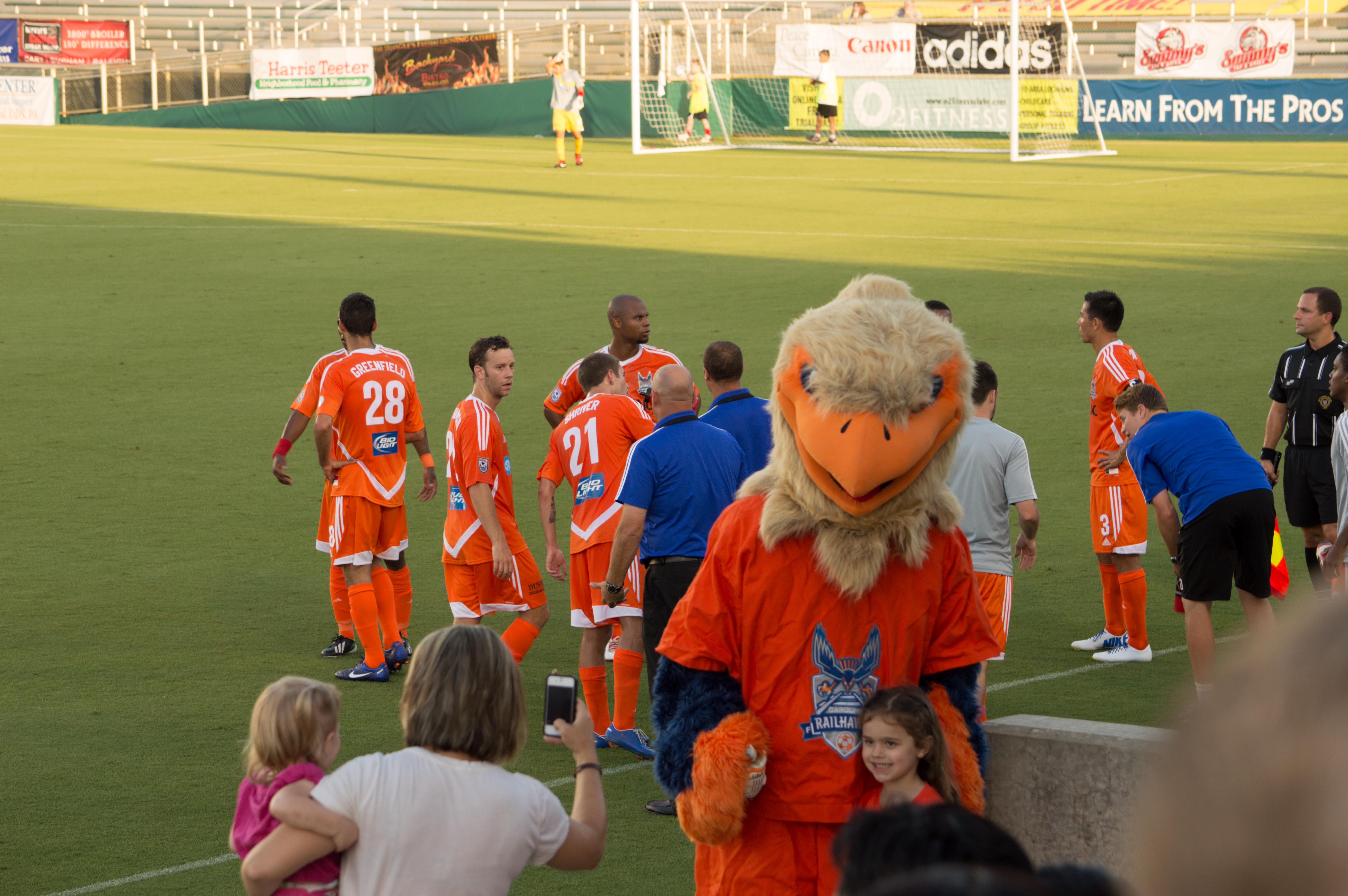
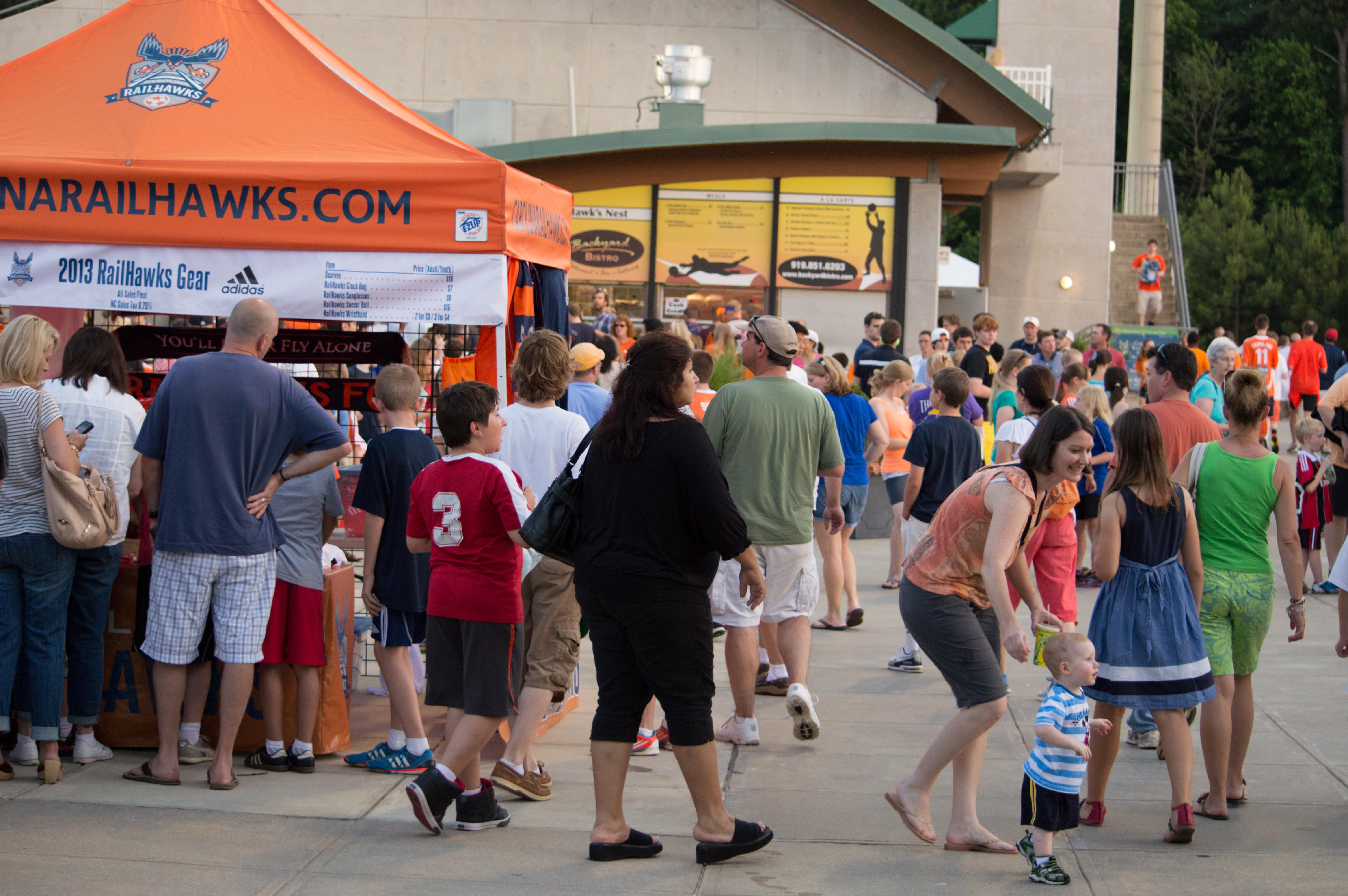
On Saturday night we went out to Cary to see a soccer game – the Carolina Railhawks played the Tampa Bay Rowdies. It was a clear, mild evening. We took along a couple of veggie subs at Jersey Mike’s, because last year we’d learned there wasn’t much in the way of healthful nourishment at the soccer stadium. But we were pleased to see they had improved their beer selection since last year. The field looked green and immaculate. We had good seats near centerfield on row G, and had a pleasant picnic there.
13 06 08_1967

The teams came into the game tied for the lead in the league and seemed well matched. I thought the Railhawks seemed sharper and less thuggish than last year. There were moments of skill and excitement, but no scoring until the 87th minute, when Tampa Bay took advantage of a defensive let down to put in a goal. When time expired there was an additional four minutes. During that time, the Railhawks proceeded to score, and then score again. We won!
13 06 08_1953

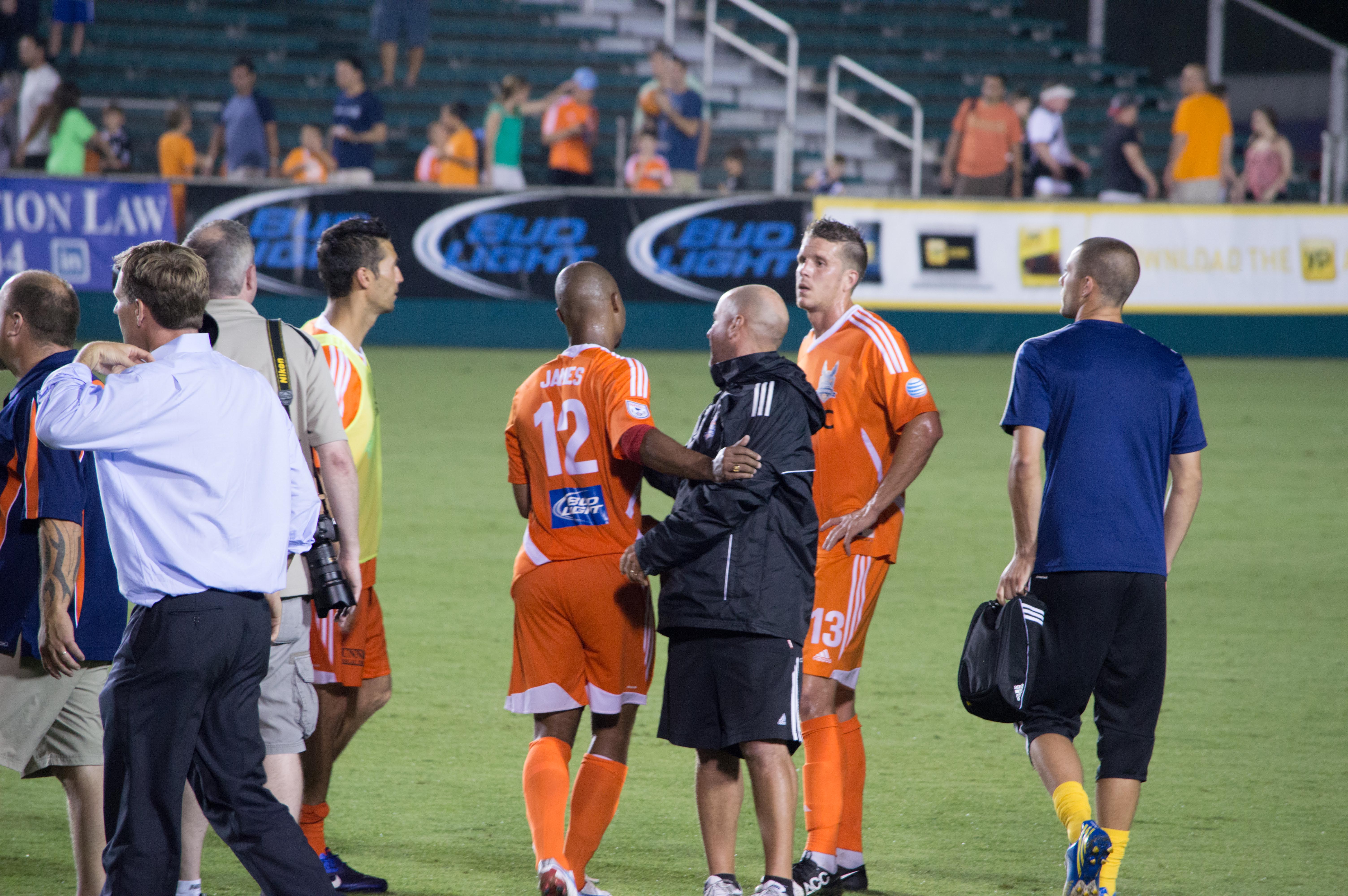
One of the Railhawks, Brian Ackley, is an old friend of Jocelyn’s going all the way back to middle school. We’d texted Jocelyn that we were going to the game, who’d texted Brian, and so he was prepared when we hailed him after the game and had a word. He’d played the last part of the game and had almost scored on a header. He’s a fine athlete and warm human being, and it was nice to see him.

Brian victorious (the Railhawk on the right)

Brian victorious (the Railhawk on the right)

When we got home, we watched a fine short documentary on HBO On Demand about Renee Fleming doing a master class for four aspiring young opera singers. The basic format, as with all master classes, is for a student to perform in front of other students and the master, and then receive criticism from the master. Here the students were all thrilled to have the opportunity to sing for Fleming, who is unquestionably one of our greatest singers. She was warm, generous, and a great listener. She gave some very specific advice on producing good vocal sounds, and spoke frankly about things like pre-concert nervousness. She gives a window into how difficult it is to be a great singer, but at the same time how wonderful.

No illusions, but not disillusioned

DSC_0034
At my post-surgery eye checkup on Thursday, after being scanned, poked and peered at, I was happy to hear Dr. Mruthyunjaya declare, “I like what I’m seeing.” My retina was back where it was supposed to be. This doesn’t mean everything will be just fine. Vision in my left eye is quite blurry now, and it will be some months before we’ll know how much there will finally be. The likeliest answer is substantially less than before. But as Dr. M’s fellow, Dr. Martell, pointed out, even if there’s a lot of blur, it could still help with peripheral vision, and serve as a backup in the event of a right eye catastrophe.

Anyhow, it is what it is. The Nigerian novelist Chinua Achebe died this week at age 82. I have not read his work, but the Times obit made me think I might like it. It quoted Nadine Gordimer as saying he was “a writer who has no illusions but is not disillusioned.” A good way to be.

I was also happy that Dr. M cleared me to resume exercising, though he suggested I wait another week before my next killer spin class. So early Friday morning, my usual spinning day, I happily did a functional fitness routine and a half hour on the escalator stairs. The stairs are a relatively new machine at O2 Fitness, and they are remarkably effective at pushing up your heart rate. As usual, while sweating away I listened to some opera (the incredible second act of Mozart’s Marriage of Figaro) with my MP3 device and read on my tablet device.

I reread some on the ideas of Jonathan Haidt in The Righteous Mind: Why Good People Are Divided by Religion and Politics, whose name is pronounced “Hite,” as I learned this week when I heard him give a lecture at Duke. My earlier thoughts on Haidt’s theory are here, but I’m still processing his big ideas, which point dramatically away from traditional political theory and its reliance on rationality. His TED talk on the differences in ethical systems between liberals and conservatives is a nice introduction to his theory.

As Haidt observes in the TED talk, there are two types of people: those who like new ideas and experiences and those who prefer the safe and familiar. He notes that the latter are the people who like to eat at Applebee’s.

On Thursday Sally and I tried for the second time to eat at a new restaurant in our neighborhood, Dos Taquitos, and again failed. The place was cheerily hopping but the wait time was too long for us, so we went down Glenwood Avenue to the uncrowded Blue Mango for some Indian food. We had a delicious meal featuring masaledar allo gobhi (cauliflaur and potatos) and eggplant bhartha. We couldn’t finish it, and I asked for a take-home box, which I carefully prepared and then accidentally left on the table. Darn!

For more new musical ideas, I had a piano lesson with Olga on Saturday morning. It was invigorating! I played Liszt’s Liebestraum (Dream of Love) No. 3, a famously beautiful piece (here played wonderfully by Evgeny Kissin). She gave me a massive compliment, and I quote: “Wow!” She thought I’d vastly improved, and was getting a richer sound. But of course, it can always be better. We worked on getting a more stable connection between the body and the instrument, including not just the fingers, but also the back and the core. She showed me on a type of touch involving a very relaxed hand with mostly arm movement. She also gave me some new ideas on pedaling, including using a slow, slightly delayed release. As she noted, it makes magic.
DSC_0039

An eye exam, a veggie burger, and a new ballet

It was a busy week at work, with many new issues popping up as I tried to address the existing backlog. I also made a visit to the Duke Eye Center for an exam in preparation for my eye surgery next week. My ophthalmologist, Dr. Prithvi Mruthyunjaya, seems both brilliant and humane, but his patients have to spend an awfully long time in the waiting room. This was also true of Drs. Denny and Casey. Is this a retinological tradition? Are damaged retina patients more-than-usually patient? Dr. M. described my prognosis as “guarded.” At a number of levels, I felt not so great.

On Friday Sally and I did dinner and a ballet. For dinner, we made our first visit to Chuck’s, a new place on Wilmington Street that features in gourmet hamburgers. We quit eating cows many years ago, and so initially assumed Chuck’s was not for us, but then were told on good authority that they made the best veggie burger in town. It was, in fact, really good. It had flavor and pleasing, chewy consistency. And it didn’t fall to pieces.

The Carolina Ballet led off with a new work called A Street Symphony by Zalman Raffael. It was set to hip hop music, which, as almost everyone knows, is music emphasizing pulsing polyrhythms and rhyming gritty lyrics, and deemphasizing melody and harmony. I developed a taste for hip hop a few years back, when I found the Sirius radio hip hop channels, and found it to be good music for driving a sports car. I liked the raw immediacy and experimental transgressiveness. It is also, of course, good dancing music, but hip hop dancing seems worlds away from the ballet tradition.

Combining radically different movement vocabularies could be a banal experiment or a disaster, but Raffael succeeded brilliantly. His work Rhapsody in Blue, presented earlier this season, was soundly designed and had some marvelous flashes, but seemed more the work of a skilled apprentice than a master. With A Street Symphony, he has arrived, with a strong sense of architecture and humor.

The work is made up of seven songs, with the dancers arrayed in solos, couples, and ensembles. The set and costumes are minimalist, with the women wearing gauzy tutus of various colors pulled above their tights. In the beginning, the pounding rhythm is unsettling, and the first piece, Clockwork, uses a robotics theme that is fairly familiar. But Alicia Fabry’s replicant is both energized and vulnerable, with limbs shooting about at amazing speeds and a startled doe-eyed gaze.

I also really liked Jan Burkhard and Yevgeny Shlapko in Best of Me. Jan is a dancer with an sensual quality, and here she was fearless. Classical dance walks a fine line with respect to sex: it candidly reveals dancers’ bodies and deals with intimate subject matter, but almost never references the act itself, and is careful not to push the red button. But hip hop is sexy, and Jan embraced it. So did Eugene, who had a rangey freedom that recalled the hood.

Lindsay Purrington was really touching and beautiful in Cry Me a River. She did various transformations, including a streetwise tough and a Swan Lake swan. At one point her tutu started to fall to pieces, which added an unplanned degree of tension to the performance, but she dealt with the issue with grace, eventually ditching the thing stage right, and strutting boldly forward. Adam Crawford Chavis lifted her magnificently overhead.

This was unquestionably ballet, with pointe shoes and the traditional vocabulary, but augmented with exciting movements from urban street culture. The most successful dancers seemed to personalize their roles, though some stuck close to the familiar classical lines. For one, Margaret Severin-Hansen, who is a fantastic classical technician, was sharp and intriguing, but seemed to me to hold back a bit from the street. On the other hand, I thought Sokvannara Sar, Nikolai Smirnov, and Cecilia Ilieusiu all found interesting individual ways of combining the upmarket and downmarket.

Anyhow, I really liked A Street Symphony, and also Robert Weiss’s new work Idyll, set to Richard Wagner’s lovely Siegfried Idyll. It featured three couples and flowing lines. I was looking forward to The Rite of Spring, but it came after the second intermission, and I was just too tired to take it all in. Sally thought it too was wonderful.

It’s time to subscribe to next year’s ballet season. We’ve been going on Friday nights for fourteen years and have excellent front-center orchestra seats, but I think we’ll switch to Saturdays. On Fridays I often find myself tired after a busy week that includes 5:30 a.m. workouts, and not always able to hang in there intently for a full evening of beautiful performances. Our NC Symphony subscription has been on Saturdays, and so we’ll have to manage some conflicts, but it seems worth it.

Thanks to Joni Mitchell and my Supreme Court co-clerks


Happy Thanksgiving! I’m so thankful for Joni Mitchell, whose beautiful album Blue we listened we listened to last night. I’m still new enough to Spotify to find it marvelous to have instant access to such gorgeousness.

Blue is a unique shade of blue. Our experience of art depends on what we bring to it, of course, and my experience of Blue is rich in nostalgia for Paris, where I first heard it my friend Greg’s place in the Latin Quarter on his little cassette tape player. But I loved it just as much when it was new.

Notes of sadness, loneliness, and longing are balanced with joy and exhilaration. Yet it doesn’t seem calculated. It seems like a soul that’s seeking another soul, completely and almost frighteningly honest. Joni seems so vulnerable, and takes so many risks, that it’s unsettling. At the same time, it’s so sweet and true. Truly, I’m thankful for Joni and Blue.

Apropos of nostalgia and gratitude, I had another heavy dose week before last when I reunited in D.C. with my fellow Supreme Court clerks at the Court to honor one of our number, Justice Elena Kagan. In 1987, when I was one year out of law school, I won the lottery and got picked to join this extremely gifted group as a clerk for Justice Antonin Scalia.

The clerkship was a great honor, but also terrifying. Clerks are tasked with constantly and quickly mastering new areas of law without glitches that could lead to major policy errors or loss of life. This is not hyperbole. The death penalty docket involved review of cases a few hours before scheduled executions, which carries with it a level of responsibility that can cause severe sleeping problems.
During that year, the coin of the realm was legal knowledge and reasoning, and in these my co-clerks were often brilliant in a way I often found humbling. Fortunately my class was not only fearsomely bright but also distinguished by a high rate of decency, fellow feeling, and good humor.

Saturday afternoon, Justice Kagan led a tour of the Court for a dozen or so of us. As she observed, the Court was the same, or at least much the same. It was fun catching up on everyone’s doings. As we were entering the courtroom, I asked Elena if Justice Scalia was treating her all right, and she told me about going hunting with him. In her chambers, the technology seemed upgraded, and she had three computer screens. However, she said she could only use two of them at a time. Elena has a great smile and a great laugh, and was full of warmth and charm.
We had dinner that night at the Court, where more old friends showed up. Teresa Roseborough, who was our wonderful organizer-in-chief, had a slide show of us looking younger, and asked us each to stand up and give a story about our time at the Court.

There were many good stories. I reminisced about the basketball games on the highest court in the land. I was one of the less skilled players, but was still made to feel welcome. I noted that Elena and I had once scrambled for the same loose ball and our two heads had collided hard. It really hurt! Fortunately we didn’t sustain any serious damage. To think that I could have caused a head injury that would have changed the course of history!

Ballet paintings, fossils, and a piano recital

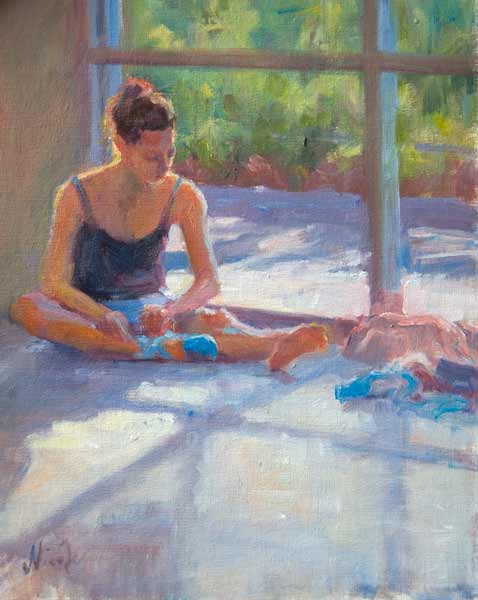
Light on One’s Feet by Nicole White Kennedy

Last Thursday Sally and I had lunch at the Remedy Diner, where my sandwich was the Tempeh Tantrum, then went to a gallery to to look at paintings by Nicole White Kennedy. Kennedy, a local artist, paints in an Impressionist/Post Impressionist style that I once thought of as old hat. My early art education stressed the triumph of modernism and abstraction. But over the years I’ve really enjoyed Kennedy’s landscapes and cityscapes in her husband’s fine Italian restaurant, Caffe Luna. I’ve gradually gotten past my prejudice in favor of the modernist aesthetic. Artists show us multiple ways to see the world, and it’s fun to try different ones.

Anyhow, I was intrigued to learn that Kennedy had worked up a show of works featuring dancers from the Carolina Ballet. We really liked the show. No doubt it helped that we came to it as balletomanes, and that we could recognize some of our favorite ballerinas. But she unquestionably had a feel for the interiors and exteriors of the dancers and their work places.

I was conscious that the works owed a debt to Degas, both in their behind-the-scenes intimacy and the juxtaposition of ethereal sweetness and stark angularity, but I didn’t find this bothersome. Artists always borrow ideas from other artists and build on them, just like scientists and inventors. We were particularly touched by the paintings above and just below, and bought them.

Dancer Removing Turquoise Points by NWK

The next day I flew up to DC for a gathering at the Supreme Court in honor of my old friend Justice Elena Kagan, which was highly nostalgic and which I will try to write about soon. But as post-election therapy, I’m focusing just now on art. With my free morning I sampled the Smithsonian museums, which always make me proud and happy to live in the USA.


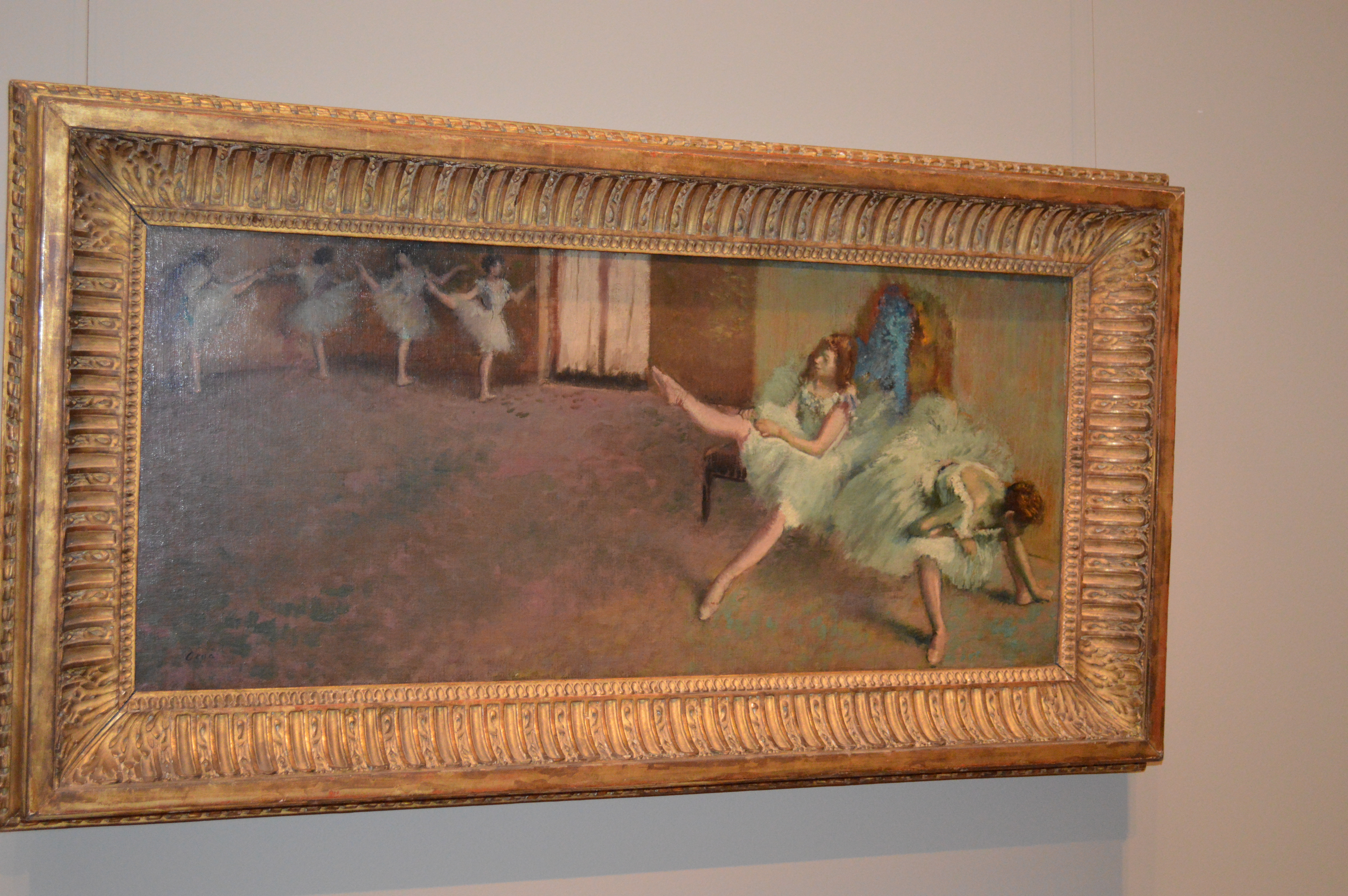
First I visited some of my favorite works at the National Gallery. These included the Rembrandts and other Dutch masters, including especially the two exquisite Vermeers, as well as the French Impressionists. Still thinking about dancers and art, I paid particular attention to the Degas paintings and sculptures of dancers. He clearly loved the subject, and it touched me. But I must say, his dancers are not as lithe and athletic as the Carolna Ballet ones.

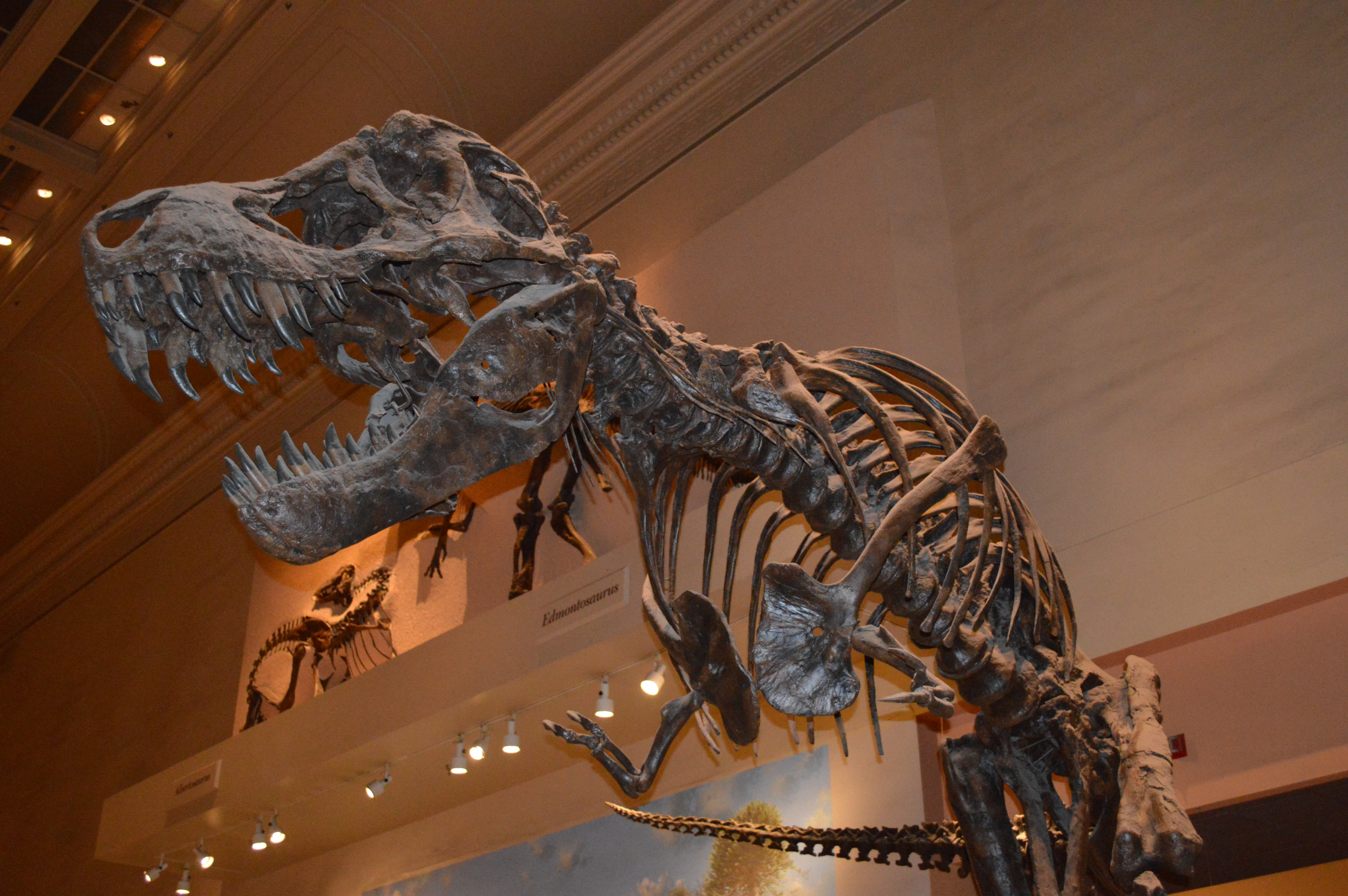
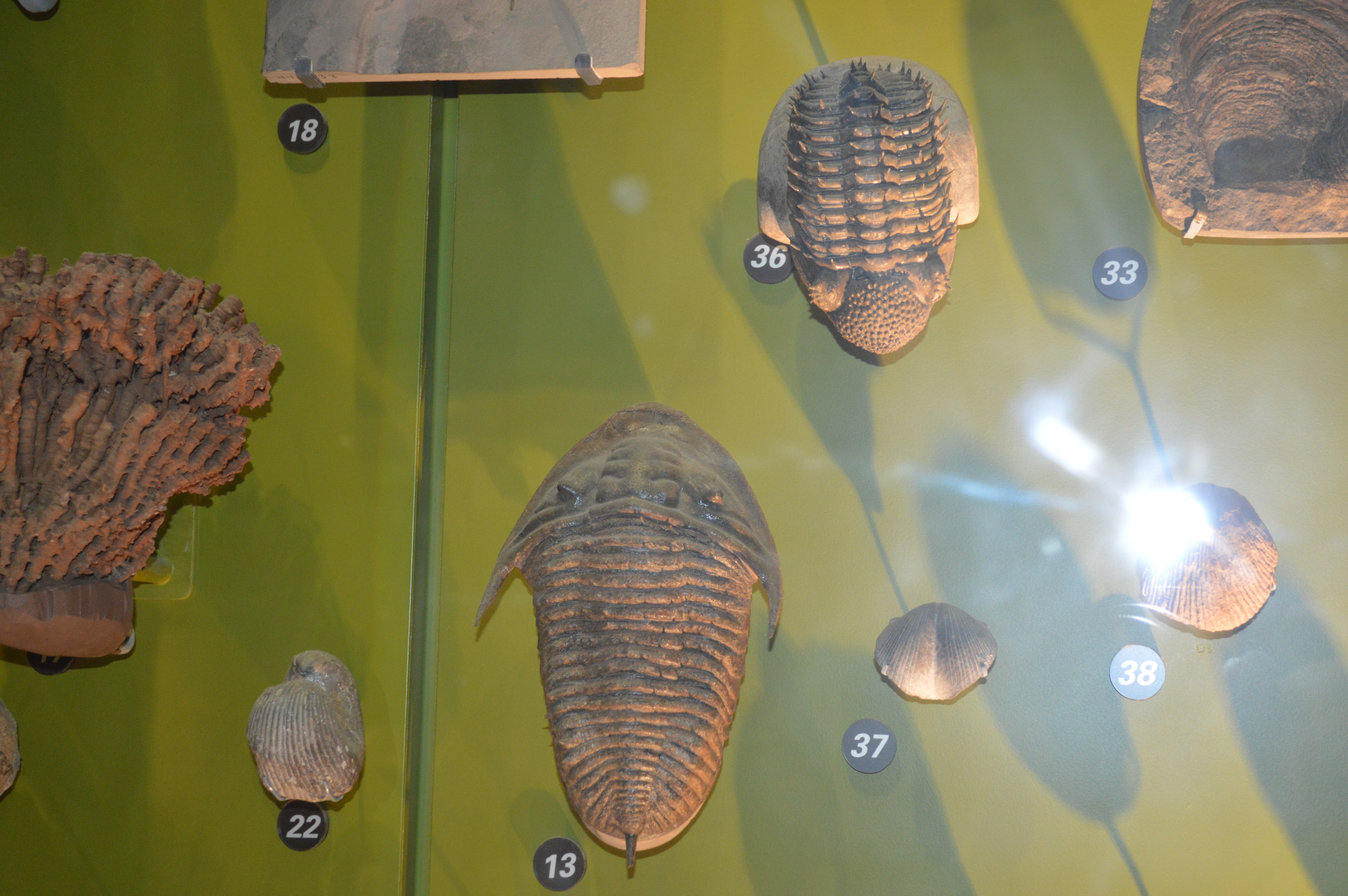
Next, I walked down the Mall to the Museum of Natural History. As always, I enjoyed looking at the dinosaur fossils, but I wanted to have a close look at the trilobites, which are much much older than dinosaurs.

Trilobites were marine arthropods that began their run around 520 million years ago. They developed an amazing variety of body types during the 270 million years (give or take) that preceded their extinction. RIP. Nature has done a lot of amazing experiments!

I returned to Raleigh on Sunday afternoon in time to go to the recital of my piano teacher, Olga Kleiankina. Her program, like her, was Russian: Alexandr Scriabin (1872-1915), Nikolai Medtner (1880-1951), and Sergai Rachmaninoff (1973-43). She played brilliantly. She’d told me a couple of weeks ago that she was struggling with memorizing the Medtner piece (the Tempest Sonata), and I was feeling a little anxious for her, but she seemed completely in command. The piece was very dense, and at first I was a bit bewildered, but then I got my bearings. I particularly enjoyed the Scriabin Black Mass sonata. From our work together, I know how intensely she focuses on sound colors, and now that I’ve learned to hear some of those things, the music took on a new dimension.

There was a good piece on the Sunday NY Times about the sense of hearing, and the difference between hearing and listening. According to Seth Horowitz, we react to auditory signals 10 times faster than visual ones. Hearing is an early warning system, among other things. He notes that close listening is hard in a world where there are endless distractions, but that we can get better at it. I concur.