The Casual Blog

Category: fitness

My handstand near disaster, re-reading Shteyngart, and seeing Captain Phillips

13 11 15_5181
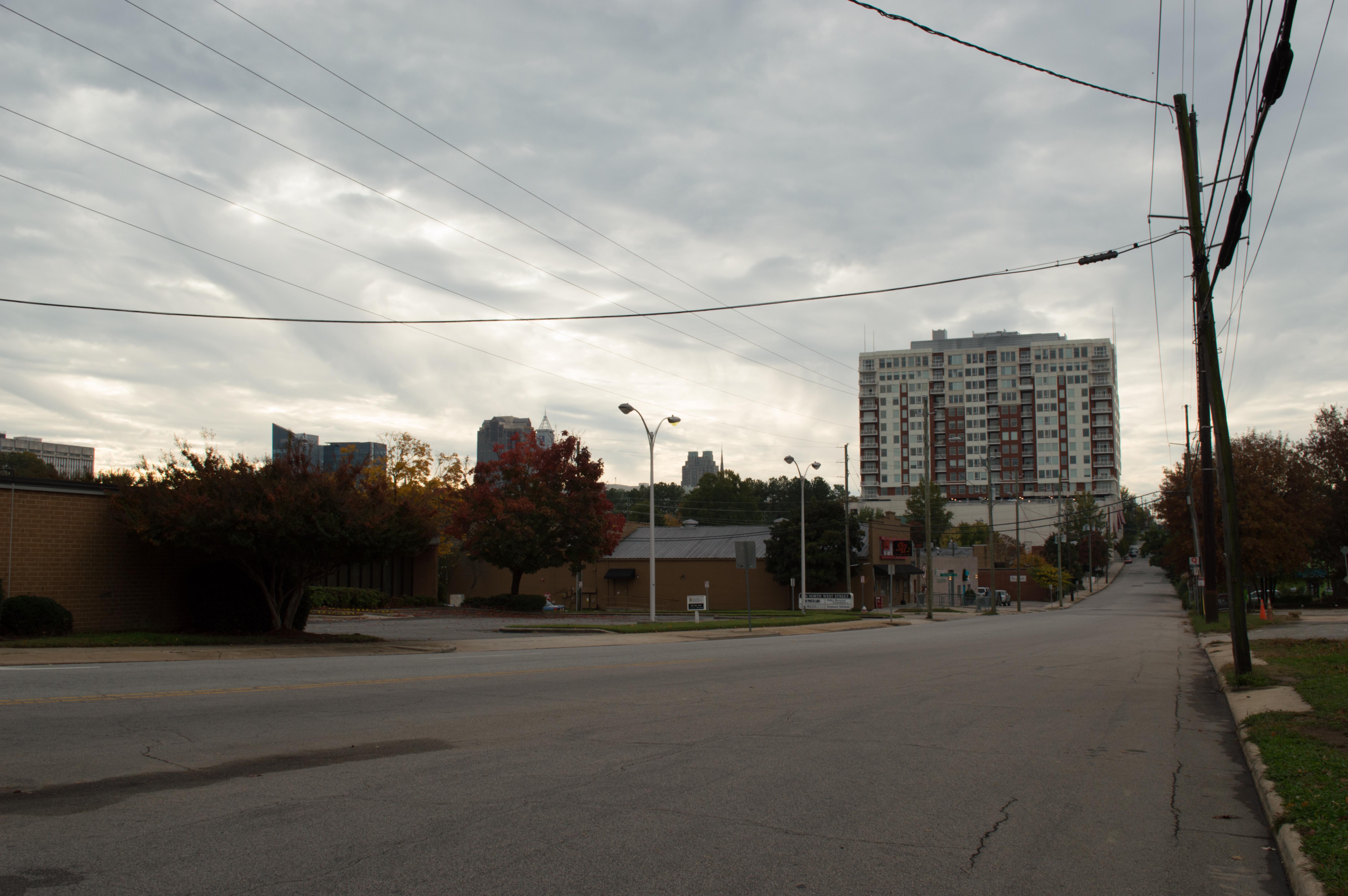
That’s the crane for the new Citrix office in the Raleigh warehouse district as viewed from our balcony on Saturday morning. Below is the new apartment building going up facing us from Boylan Avenue. It’s good to see construction all around. Things are happening!

13 11 15_5188

As was probably evident last week when I mentioned doing my first handstand, I was fairly proud to finally get it. From the first time I saw another boy in my neighborhood do one, a small part of me secretly yearned for this skill. Why? I’m not entirely sure. It’s different, and it’s good to be a little different. I like to turn things upside down and see how they look. I also like to dial in to another aspect of bodily control and strength. There’s also something bracing about facing down a bit of fear.

So I looked forward to mastering the handstand skill against a wall, and perhaps eventually unassisted. After my initial success, I did a few more over the weekend. On Monday morning I went up for a workout in the small gym on the top floor of our building. No one else was around. After a half hour on the elliptical machine, still breathing hard, I attempted another handstand. Something went wrong. My right shoulder gave way, and unable to lean quickly, I fell straight down. I tucked my chin and hit hard on my neck and shoulder.

It hurt a lot. I lay in a heap, and wondered if this was what a broken neck felt like. After a bit, I tried to wiggle my toes and fingers, and noted with relief that they seemed to be working. I rolled over and tested my neck, which throbbed, but could still move. I felt stunned, but more or less OK. I was sore for the rest of the week, and a bit shaken. I decided to give the healing process a few days before forging ahead with handstand work.

Super Sad, Funny Shteyngart

This week I finished re-reading Super Sad True Love Story: A Novel, by Gary Shteyngart. A couple of years ago I left my original copy in a hotel room with just 60 pages left, and found that I kept thinking about the world it created. After the mild disappointment of reading The Circle, I decided to download the ebook version of Super Sad, and realized this time around that it’s not only an entertaining read, but a feat of Nabakovian brilliance.

It’s hard to categorize. It’s set a bit in the future, like science fiction, but I wouldn’t call it science fiction, because the world and its technology are not very different from ours. It’s sort of a comedy, and at times hilarious, but also keenly observant, dark, and shocking. With an ease that conceals virtuosity, Shteyngart exposes a underside to our fun technology, and shows it transforming society in a way that not only seems believable, but prophetic. Keep in mind that it was published in 2010, before Occupy Wall Street and before the U.S. first threatened to default on its debt.

A quick note on the subject matter: Lennie is a 39-year-old nebbishy, smart guy who works for an outfit selling life extension services to super High Net Worth individuals. He falls in love with Eunice, a 25-year-old Korean-American who seems to spend most of her time surfing on GlobalTeens shopping sites on her apparat and obsessing over luxury brands like Juicy Pussy handbags and Onionskin jeans. They live in New York City, where there is extreme income inequality, with unemployed veterans of the war with Venezuela and other Low Net Worth individuals camped out in the parks opposing the one-party surveillance state, which is financially teetering and close to being taken over by China.

There are technologies that signal your credit score on surrounding Media Poles and also show your sexual desirability rank in any grouping (“RateMe Plus” technology). Along with new apps there’s new youth slang, which is marginally cruder than our youth slang. Recent college graduates are mostly unemployed and trying to get a job either in Media (a very long shot) or Retail (just a long shot).

Lennie is a bibliophile in world where books and reading are socially toxic. Cool people have mostly stopped reading, and paper books are considered bad-smelling. Colleges teach skimming in place of reading. At one point there’s a blackout, and Lennie and Eunice read some from Milan Kundera’s Unbearable Lightness of Being (as it happens, a favorite of mine, as it clearly is of Shteyngart’s). Eunice can’t at all follow the complex ideas, and even Lennie finds his ability to understand a literary text has grown dim.

A large part of the pleasure is not just the ideas or the plot, but the texture and quirky beauty of the language. Shteyngart is a writer’s writer. I’ll just add that the title will discourage some people who would enjoy the book, but it really is, in part, a love story, in the sense of dealing with human feelings, and with how those feelings are transformed by technology and social context. Obviously I loved it.

In a postscript that would have pleased Shteyngart, when I finished the Kindle version of the book on my iPad, my Twitter account appeared with a tweet that said, “I just finished reading Super Sad True Love Story.” I did not write those words, nor did I want to send such a tweet. And I didn’t. But I could imagine just pushing send, since the message was completely accurate, and something I wouldn’t mind sharing (though not on my professionally-oriented Twitter account). It gave me a slight chill. Is this the first bomb to fall in a new phase of post-literacy, where your machines not only correct your spelling and grammar but actually do your thinking and writing?

Captain Phillips

On Friday night we saw Captain Phillips, the new movie about Somali pirates taking a cargo ship with Tom Hanks. It was not what I expected, but much better. With remarkable directness and economy, it establishes the desperate and impoverished lives of the young men who become pirates, such that they can never be viewed as pure evil. Hanks has made a long career as a leading man who’s not particularly good-looking playing normal people confronted with outsize problems or puzzles (WWII, mental retardation, shipwreck, adolescence, etc.). Here, he does so again with seeming utter naturalness.

As the captain, Phillips seems a decent guy who doesn’t aspire to much more than doing a solid job transporting goods. But under attack, he turns out to have above-average grit and resourcefulness. Trying to manipulate the pirates, he seems like a bad liar, but good enough to fool these guys, who are not diabolically clever. But both the pirates and Phillips and his crew are by moments astonishingly courageous. This is an action movie with true feeling and heart, and also a lot of adrenaline.
Find out your fitness age

13 11 03_5107
Jocelyn came home for a visit on Thursday, and she was glowing. After six months in New York, she’d (1) learned her way around, (2) found good friends, and (3) got a job she really liked. Also, she’d joined a gym and started working out regularly, and gotten focussed on nourishing herself in a healthy way.

This was music to my ears! My messaging on healthy habits, which I realize can be annoying, has not been all in vain. I’m delighted that my beloved offspring (including also Gabe) are taking good care of themselves.

That same day I came across an article in the online NY Times about assessing your “fitness age,” defined with reference to peak oxygen intake, which apparently is a strong predictor of future health. A large-scale Norwegian study examined oxygen intake levels at ages between 20 and 90, and also developed a tool using indicators including resting heart rate, waist size, and activity levels to determine fitness age.

The article had a link to the fitness age calculator. Needless to say, I gave it a shot. My fitness age? 28! Not bad for a guy born in 1955, right? But I soon began considering how I might get it down to 27.
13 11 01_5047

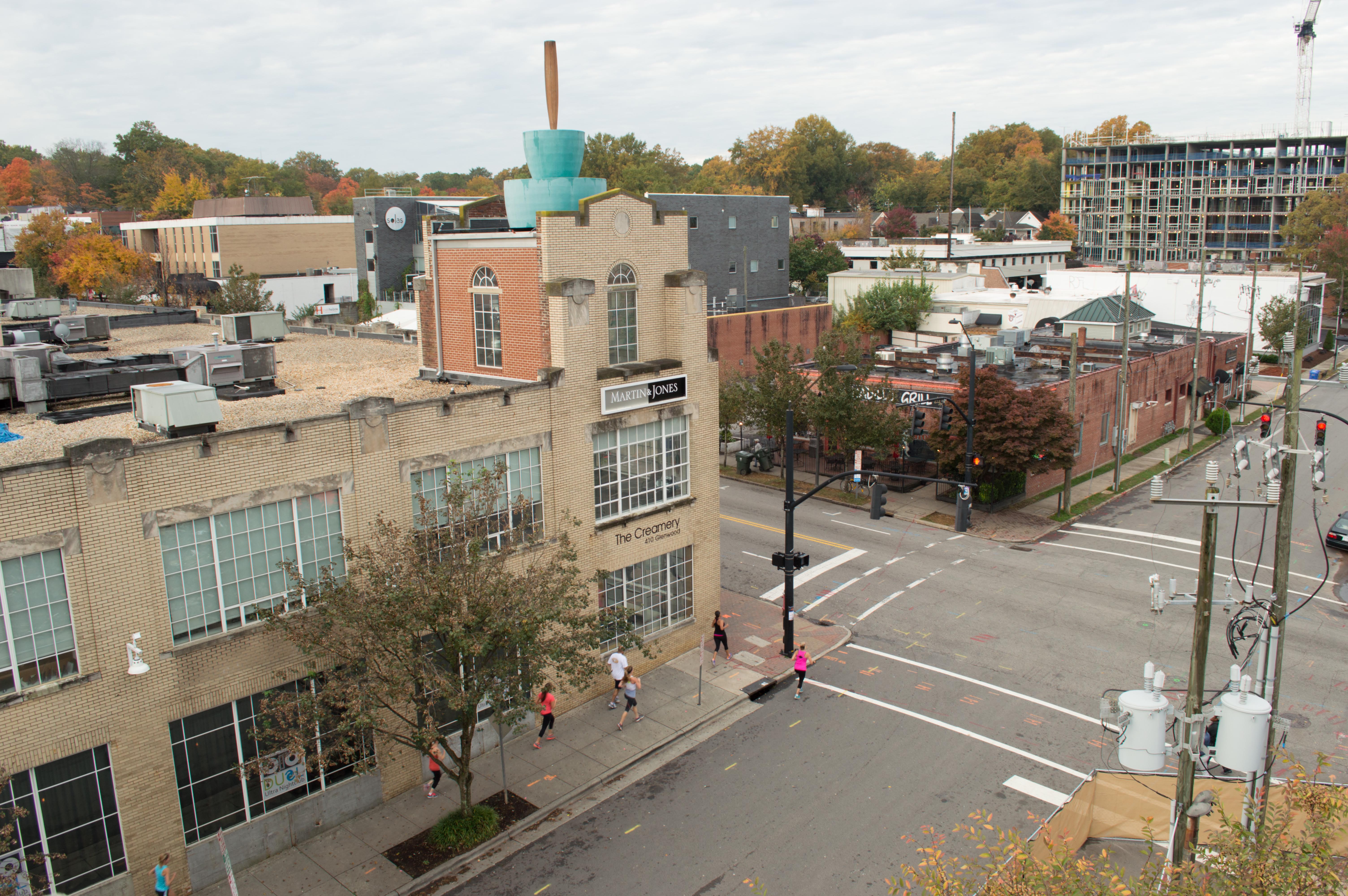
In our neighborhood, Glenwood South, there’s been a fair bit of construction, and also some destruction. Sally told me that an unattractive building on Glenwood across from the Creamery and catty-corner to the Armadillo Grill that had just been demolished, and I went over to inspect the site on Saturday morning. They’d walled off the site, but I got a good view from the adjacent parking deck. Sure enough, all that was left was rubble. It was overcast, but there was still a nice quality to the light, and I took some other pictures of the neighborhood on my walk over to the gym.

13 11 01_5036

13 11 01_5078
13 11 01_5083
13 11 01_5084-1

More cute cats (sorry), improving vision, getting fitter, web retail news, and tech trends

Isabel -- the mysterious one

Isabel

This week Sally spotted this bumper sticker: Life is a little better with a cat. That isn’t a very grand claim, which is what makes it appealing. “A little” seems about right. Our three (Phoebe, Isabel, and Rita) have been good sports in serving as my models.

Rita

Rita

I’m happy to report that my vision, while still blurry in the left eye, really improved this week. That eye is actually providing some useful signals for the first time in a long time. Also, my eye doc cleared me to resume normal exercise, and I happily did so.

Phoebe

Phoebe

After consultation with the ski friends, we agreed this week that the big ski event of 2014 would be a return to Telluride, Colorado, in February, where I’ll try to keep up, or semi-keep up, with young Gabe. And so at my early morning gym sessions I began focusing on some ski-oriented activities – lunges, side lunges, side kneel lunches, squats, with weights one-legged extension balances, duck walk with two big bands, step up onto medium table and balance, and jump up (landing softly) on the medium table.

I bought a speed jump rope and doing a few dozen speedy jumps between these activities, then worked on core matters with various species of crunches, reverse crunches, planks, and side planks. Finally, half an hour of straight cardio. I’ve been doing 10 minutes on the treadmill (with an incline), a few minutes on the ski (sideways push) machine, a few on the stairs (escalator type), and then some intervals on the elliptical. If there’s time after that, I’ll do 10 minutes of stretching and foam rolling.

I like using a heart rate monitor during work outs, which can confirm that I’m working hard, or at times show I’m not working as hard as I think. I got one when I began going to spinning classes, when I worried that keeping up with super fit young teachers could cause me to drive my poor heart into an extreme and dangerous state. But it’s gratifying to take it up into the red zone from time to time, which for me is in the 160s. I usually feel great afterwards.

My Polar heart rate monitor finally wore out this week For some months it had been behaving erratically, but I didn’t feel good about throwing it out while it was still sometimes working, so I was glad when it finally quit. I immediately went Googling to vet the options. I had some interest in finding a model that didn’t require a band around the chest, but learned that such models are not as accurate and do not give continuous read outs. I settled on a relatively cheap one, a Timex T5K541Personal Trainer, that did the two basic functions that I needed (tell the time and tell how fast my heart is going). I bought on Amazon, where as a Prime member I get free shipping, and had it two days later.

This isn’t quite instant gratification, but it’s close. I put this type of Internet retail plus efficient delivery in the pantheon of life-sweeting innovations, right up there with pay-at-the-pump gas, cash machines, and the lickless stamp. Amazon is now familiar, but we tried a similar new service for the first time last week called drugstore.com.

It does exactly what you’d expect. It has most of our preferred consumer products at normal drugstore prices, and can get them to us in two days. Shipping is free for orders of $35 or more. A bottle of Crew shampoo that I ordered had leaked a little in transit, but everything else arrived in a proper and timely manner. Ordering online made me realize I don’t particularly like chain drugstores, with all their household goods, toys, cards, and snack food. I’m perfectly happy to stay out of those places and just send out for the stuff. (For actual medical stuff, I do like my little neighborhood drugstore, Hayes Barton Pharmacy, where you still get the personal touch.)

Speaking of the constantly new, there’s a piece in the current New Yorker about the young tech entrepreneur scene in San Francisco. For those interested in tech business trends, this is a must read. (This link worked for me, but I’m afraid that non-subscribers will not be able to get it without paying.) The piece, by Nathan Heller, describes people who are starting one new business after another and working with a rock band, doing something arty, or going on meditation retreats in between their ventures. The very shape of business and finance is being transformed, getting smaller and faster. At the same time, the entrepreneurs are not only making money, but also having fun, and asking good questions about what makes life meaningful.

Stuart -- the best dog

Stuart — the best dog

Saturday: the Farmers’ Market, the gym, physical therapy, and SparkCon

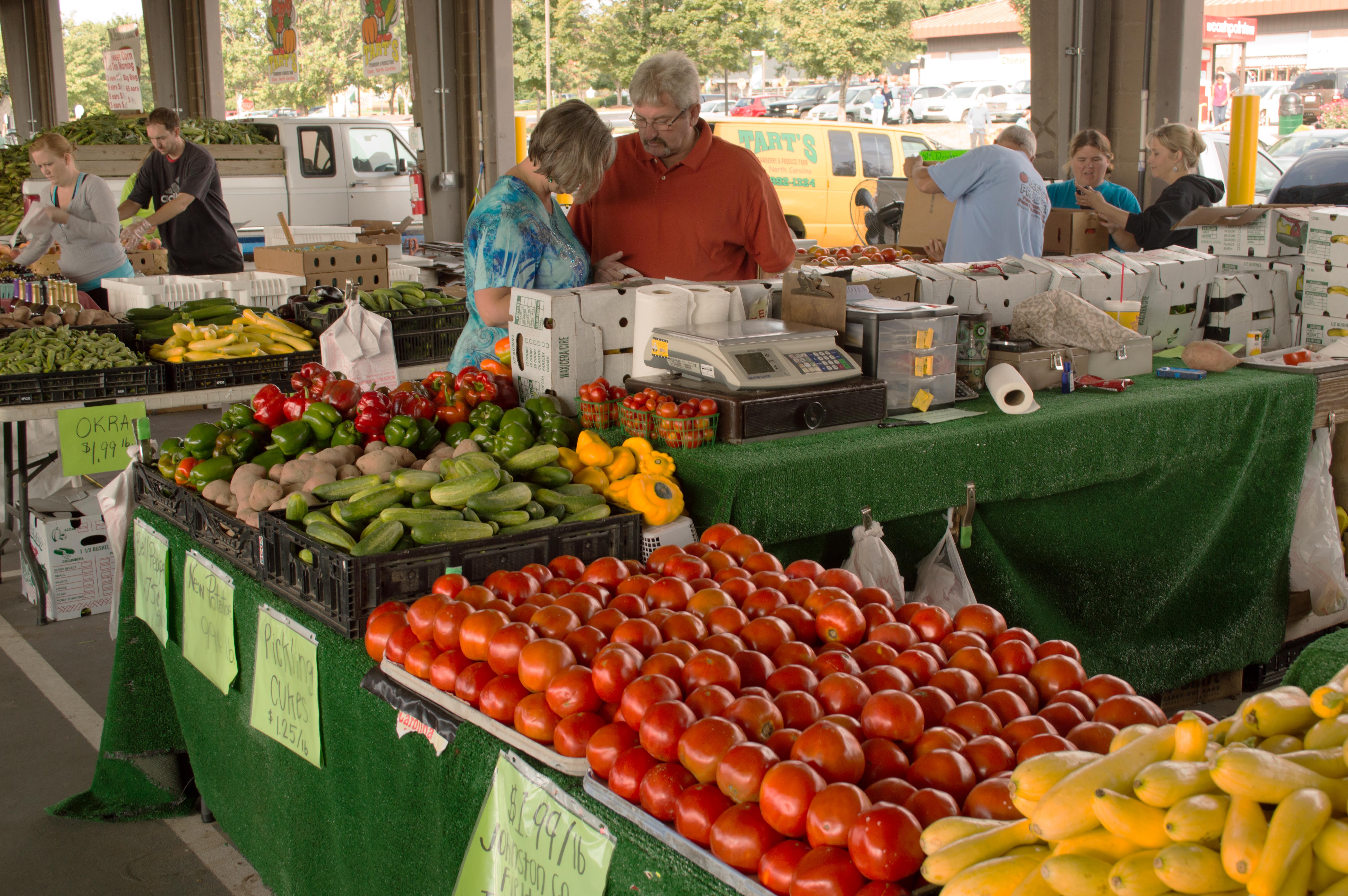
13 09 13_4296It was a particularly intense week at work, and I was glad we hadn’t planned any major travel adventures for the weekend. The weather turned cooler on Friday night, and Saturday morning was sunny when I went over the N.C. farmers’ market. It was colorful, with gorgeous squash, peppers, beans, tomatoes, and apples. I bought some kale and collard greens for smoothies and a basket of peaches.
13 09 13_4302_edited-1

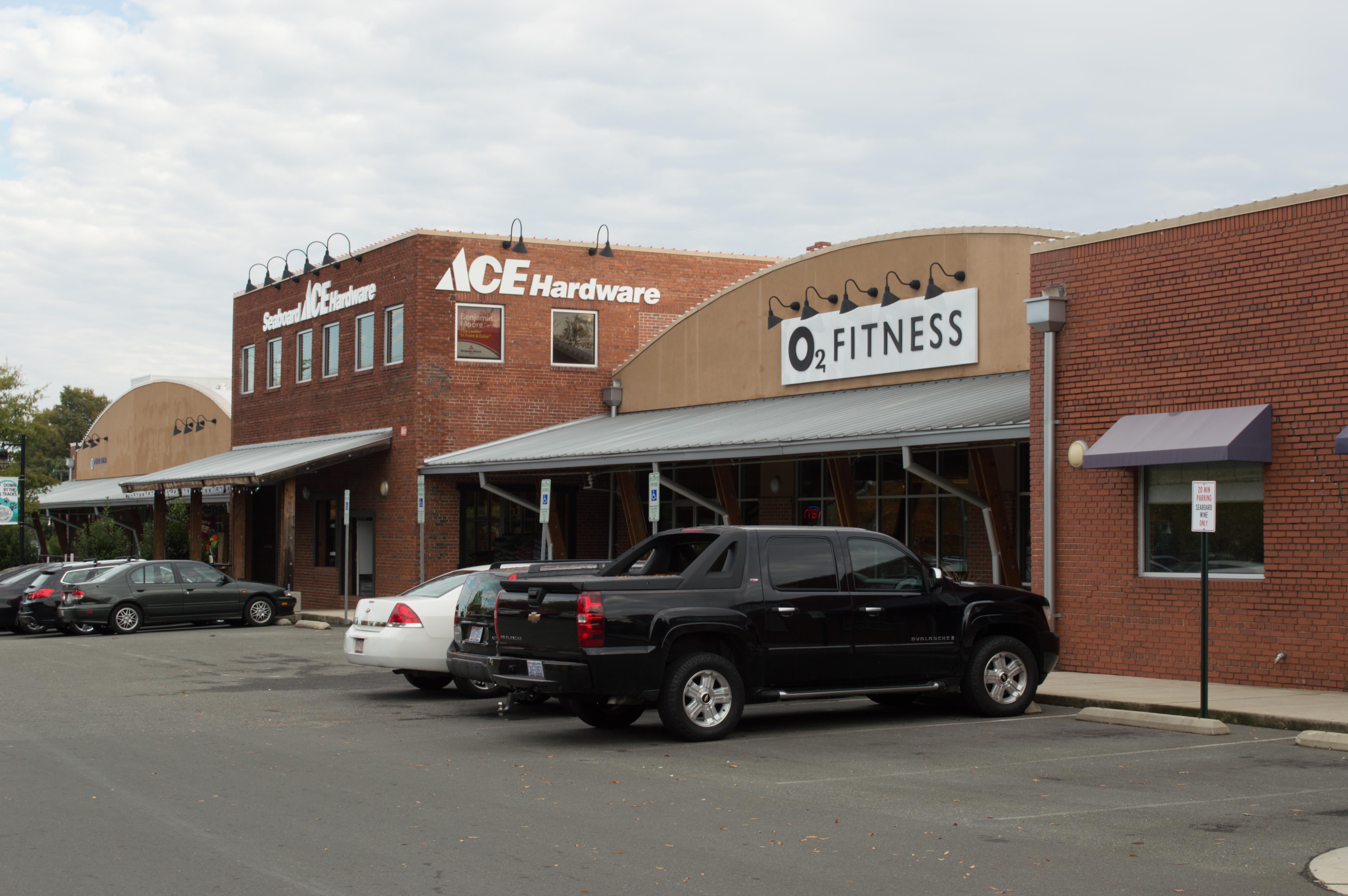
After that I went to O2 Fitness, where I did a work out inspired by my session earlier in the week with Larissa. Along with a variety of lunges, bends, squats, hops, balances, twists, pulls, and pushes, I worked in some high intensity rowing (two-minute intervals) and jump roping. I rigged my TRX cord device to a chin up bar, put my feet in the grips, and did some side planks, level planks, and a complex core series including pikes. Then 10 minutes on the treadmill and 20 minutes on the escalator-style stairs. The stairs device looks ridiculously retro but gets the heart to seriously pumping. Then stretching, and finally some foam rolling. All this took a little over two hours, during which I listened to most of The Marriage of Figaro. I felt really good afterwards.
13 09 13_4291_edited-1.

Good health is a fundamental element of happiness, and you can’t take it for granted. It’s a moving target, and it can get away from you quickly. My right arm has been feeling not so good in recent months, and my various attempted home remedies (rest, ice, stretching) were not successful. Twisting and lateral movements were particular problems. As it got worse, I began to have some trouble turning the steering wheel when driving and lifting a fork from plate to mouth. This caused an intimation of mortality, and reflections on how life would be much more difficult without the ability to use arms for, say, eating, dressing, driving, typing, golfing, piano playing, hugging, etc.

Larissa, probably tired of hearing that she had to take it easy on my arm, referred me to Jeff Vajay at Impact Orthopaedics, a physical therapist with a specialty in arms. I’ve had good luck with physical therapy, which I mention because I suspect there are many people who have no idea it can be so effective. There is a species of physical problem that MDs have no idea what to do with, and well-trained, experienced physical therapists do. I’ve had complete long-term cures to lower back and rotator cuff injuries. It took an investment of time in each case, and a continuing commitment to special exercises, but it was a small price to pay.

Anyhow, Jeff ultimately diagnosed my problem as muscle related, and he worked on it with some intense massage and dry needling. The needing involves using small needles to penetrate muscles and release tension. In places it hurt a bit. But the results were positive. Now, after three weekly visits, I feel 90 percent cured and optimistic about the last 10 percent.
13 09 14_4320_edited-1

In the afternoon I practiced the piano with a view to getting ready for a lesson on Sunday with Olga. I considered playing a few holes of golf, but didn’t leave quite enough time, so intead I walked over to Fayetteville Street to see the SparkCon street fair. There were several musical groups performing, the loudest of which were, wouldn’t you know, the worst. There was a circus group and various craft and food stalls. My favorite part was the chalk sidewalk art. It’s not so much about artistic profundity as energy and life. Most of the artists were done by the time I got there, but a couple were still at work.
13 09 14_4325

Stuart’s and my birthdays, a yoga class, a new green smoothie, and Beautiful Whales

13 07 14_2716

It was Stuart’s eleventh birthday on Tuesday. This is not ancient, but in dog years it is getting up there. It seems fitting to note that he is still the best little doggie ever. Sure, he’s grayer, but he still loves going on walks and being petted, and gets excited (drools) at meal time. He used to love to play with other dogs, but now, he doesn’t. But he’s very skilled at that greatest of dog skills: figuring out what his humans are feeling and making them feel better. He tolerates Rita, Isabel, and Phoebe (the cats).
13 07 14_2730
13 07 14_2726
13 07 14_2723

The next day was my own fifty-eighth birthday. I normally keep a low profile on birthdays. It just seems awkward, unfair in a way, to get extra affectionate attention for something that demands no skill beyond bare survival. And as will happen, those birthday numbers have gotten bigger. One of my coping mechanisms is to start thinking in the months running up to, say, the 58th birthday, that I’m about 58. Then when the day arrives, I initially think, good God, I’m 59. Then I realize I’m actually only 58, and feel a little better. I won’t be 59 for another whole year!

I don’t think I’m unusually fearful of death, but I’m still keenly interested in postponing it for as long as possible. Regular readers know that I have an interest in taking care of my physical self in a way that, if I observed it in a person I disliked, I might view as wacky. But if you’re in your later fifties, either you’re fighting the forces of entropy or you’re going downhill. I’m still getting up early almost every day and either going to the gym, swimming, doing a yoga class, seeing a personal trainer, or taking a spin class. And amazingly, I enjoy it! I wish I’d discovered how good it makes me feel when I was in my salad days.

Tuesday morning was my usual day for Early Bird Yoga at 6:30 with Suzanne. One of the things I like about Suzanne’s class is it’s always different, and usually fresh and lively.  Suzanne is inspired by ancient Vedic texts, which are not a particular interest of mine, but I’m glad they inspire her, because she inspires me. Her voice is sweet and low, with a lovely Trinidadian British accent. I just clear out my head, listen and do whatever she says to do. It’s simple, in a way, though not easy.

This week she had us go quickly through a typical flow (planks, chatarangas, cobras, down dogs, warrior ones, steps to the front of the mat, rising up, folds, half lift, fold, repeat, repeat again, etc.), then started throwing in side movements, twists, back bends, leg raises, and a series of one-legged balance poses. Then a few lovely minutes of complete relaxation in savasana. After considerable stress, I felt pleasantly calm at the end, and ready for an active day.

After crossing the street and taking the elevator back home, I made myself my usual weekday breakfast, a green smoothie. Each one is a little different. This one had kale and dandelion greens, a little orange juice and soy milk, a little flaxseed oil, a scoop of Vega One protein shake powder, strawberries, blueberries, and a banana. A little ice for coolness and texture. My restaurant grade blender is still working well, though I wish it were not so noisy. The smoothie was, as usual, dark green. I put it in the refrigerator to chill while I took a hot shower.

Back home after work, Sally gave me a birthday card with a male and female cardinal (birds that have strong couple bonds), and three presents: some workout shorts, a portable scales for luggage, and a book. I appreciated the new shorts and will find the scales useful for avoiding excess luggage fees, but I loved the book: Beautiful Whale, by Bryan Austin. It is an oversize coffee table volume with large photos of humpback, sperm, and other whales. One of my big dreams is to swim with these amazing creatures. The book is about as close to that experience as a book will get. The images are indeed beautiful and moving.

Home alone with the animals and our new doggy portrait

13 05 31_1866
Sally went to Ashville with her tennis team to compete in the state finals this week. They’ve had success this year competing at the 4.0 senior level, and Sally’s feeling good about her game. I was happy for her, but a little melancholy to be home alone. I missed her.

So did the animals. The first day they spent time sitting by the front door waiting for her. The cats showered me with affection that they would normally give to her, and Stuart was much more excited than usual when I came home from work. Our routine called for a pee walk outside and dinner, which are certainly high points of any dog’s day, but even after dinner he wanted extra petting.
13 05 31_1862_edited-1
Stuart was immortalized recently in a drawing by Sally’s cousin, Alison (Muffy) Brush. Muffy turned out to be really talented, and we were very pleased with the work. It’s based on some of my photographs, but captures his essence much better than the photos did. As our dance friends will note, he has beautiful turnout. I think Sally’s frame selection really works.

Stuart is 10 now, and showing his age. He’s a basset-beagle mix – a bagle, or perhaps a beset. He still likes people and being petted – he’s met many people during elevator rides and is quite popular in the building – but unlike in his younger days, he’s wary of other dogs. Anyhow, as we often say, he’s a good dog. Handsome, too, I think.

I was somewhat the worse for wear from our trip to the Outer Banks last weekend. For the first time in many moons, I went for a substantial run – four miles – on Sunday. It was a lovely day, sunny and mild, and I felt fine, even when I got my heart rate up to the low 160s. Only hours later did I begin to feel pain in my knee, and more and more soreness in my quadriceps. The next day I was so sore I could barely walk.

Also, according to my usual pre-morning-shower weigh-ins, I somehow gained 6.8 pounds between Friday and Tuesday. This was a shock! Did I really eat that much? I enjoyed Keith’s food, but I consciously kept from stuffing myself – no second helpings, for example. I snacked on pistachios, which were kept in a bowl that somehow never emptied out, and that may have had something to do with it.

Anyhow, I was gimpy and heavy, but things improved over the course of the week. On Friday, I got to the gym when it opened at 5:30 a.m. and got in a mega-workout: 30 minutes of lunges, squats, step-ups etc. a 50-minute spin class (a major aerobic accomplishment), 25 minutes of upper body work, 10 minutes of core exercises, and 10 minutes of stretching. By the time of my morning weigh-in, I had lost 3 pounds from the previous day, and six for the week.

On the drive back from Corolla, Sally and I talked about possibilities for our next adventure. We try to do something fun outside the usual routine every month or so, and the next four week interval brings us almost to the July 4 week. The Fourth is on Thursday, so if I can get off that Friday, presto, we’ve got a four-day weekend. We’ve been wanting to visit Gabe in Colorado, and also wanting for a long time to visit some of the beautiful country in southern Utah, which is within driving distance of Telluride. I took on the job of researching the possibilities of fitting this into a July 4 trip.

Saturday morning I decided to skip yoga and go on a little photo safari to see what was blooming at Raulston Arboretum. There were some beautiful flowers, and it was quiet and calm. I made a few images I liked. 13 05 31_1883
13 05 31_1885
13 05 31_1900
13 05 31_1911
13 05 31_1888
13 05 31_1892
13 05 31_1917

No illusions, but not disillusioned

DSC_0034
At my post-surgery eye checkup on Thursday, after being scanned, poked and peered at, I was happy to hear Dr. Mruthyunjaya declare, “I like what I’m seeing.” My retina was back where it was supposed to be. This doesn’t mean everything will be just fine. Vision in my left eye is quite blurry now, and it will be some months before we’ll know how much there will finally be. The likeliest answer is substantially less than before. But as Dr. M’s fellow, Dr. Martell, pointed out, even if there’s a lot of blur, it could still help with peripheral vision, and serve as a backup in the event of a right eye catastrophe.

Anyhow, it is what it is. The Nigerian novelist Chinua Achebe died this week at age 82. I have not read his work, but the Times obit made me think I might like it. It quoted Nadine Gordimer as saying he was “a writer who has no illusions but is not disillusioned.” A good way to be.

I was also happy that Dr. M cleared me to resume exercising, though he suggested I wait another week before my next killer spin class. So early Friday morning, my usual spinning day, I happily did a functional fitness routine and a half hour on the escalator stairs. The stairs are a relatively new machine at O2 Fitness, and they are remarkably effective at pushing up your heart rate. As usual, while sweating away I listened to some opera (the incredible second act of Mozart’s Marriage of Figaro) with my MP3 device and read on my tablet device.

I reread some on the ideas of Jonathan Haidt in The Righteous Mind: Why Good People Are Divided by Religion and Politics, whose name is pronounced “Hite,” as I learned this week when I heard him give a lecture at Duke. My earlier thoughts on Haidt’s theory are here, but I’m still processing his big ideas, which point dramatically away from traditional political theory and its reliance on rationality. His TED talk on the differences in ethical systems between liberals and conservatives is a nice introduction to his theory.

As Haidt observes in the TED talk, there are two types of people: those who like new ideas and experiences and those who prefer the safe and familiar. He notes that the latter are the people who like to eat at Applebee’s.

On Thursday Sally and I tried for the second time to eat at a new restaurant in our neighborhood, Dos Taquitos, and again failed. The place was cheerily hopping but the wait time was too long for us, so we went down Glenwood Avenue to the uncrowded Blue Mango for some Indian food. We had a delicious meal featuring masaledar allo gobhi (cauliflaur and potatos) and eggplant bhartha. We couldn’t finish it, and I asked for a take-home box, which I carefully prepared and then accidentally left on the table. Darn!

For more new musical ideas, I had a piano lesson with Olga on Saturday morning. It was invigorating! I played Liszt’s Liebestraum (Dream of Love) No. 3, a famously beautiful piece (here played wonderfully by Evgeny Kissin). She gave me a massive compliment, and I quote: “Wow!” She thought I’d vastly improved, and was getting a richer sound. But of course, it can always be better. We worked on getting a more stable connection between the body and the instrument, including not just the fingers, but also the back and the core. She showed me on a type of touch involving a very relaxed hand with mostly arm movement. She also gave me some new ideas on pedaling, including using a slow, slightly delayed release. As she noted, it makes magic.
DSC_0039

More eye surgery, healthy habits, a gay marriage revelation, a new veggie restaurant, and the shame of the processed food industry

This week I had eye surgery to repair the effects of scar tissue from my previous eye surgery, with the understanding that there would probably be more surgery needed in future. And so in the space of a few weeks I’ve gone from an adult in remarkably good health with no history of hospitalization to a fairly experienced consumer of modern American medicine. There are, of course, some negatives, such as worry, fear, and pain, but I’m trying to stay positive. It’s a learning experience.

Most of my healthcare team at the Duke Eye Center, including nurses, orderlies, anesthesiologists, and doctors were surprisingly cheerful and supportive. The anesthesia was designed to keep me partially conscious, which it did, and so I was able to listen to the conversations of the team and the music they listened to (vintage rock, unfortunately). I was instructed to let them know if things hurt, and I did speak up a couple of times when it got fairly intense.

The operation involved removing scar tissue from my left retina and eye wall and reattaching the retina to the wall. It was an extremely delicate procedure and took about three hours. When Dr. Mruthyunjaya checked me the next day, he was pleased with the initial results, but noted that it would be some months before we’ll know how much vision I’ll have with that eye. At some point I’ll need cataract surgery as well. But that day I was able to see the top couple of lines of the eye chart, which was an enormous improvement from last check, when I couldn’t make out any letters at all.

Healthy Habits

I was banned from all strenuous exercise for at least a couple of weeks and possibly more. I’m not sure Dr. Mruthyunjaya appreciated that this was a fairly harsh sentence for a person like me, with a big exercise habit. Getting to the gym or other physical activity most every morning is something I just do. It makes me feel better for the rest of the day and is part of the long-term plan of staying healthy and happy. But I don’t think about the pluses and minuses at 5:15 a.m., which would be way too much work. It’s taken a long time to get to the point where exercise is almost automatic, and does not feel like dreary work. I don’t want to lose the habit.

With this partly in view, I decided to recommence my computer programming studies during the newly freed up early morning. I signed up with Codeacademy for their free online Python course. It should keep me in the habit of getting up early. So far, it’s been interesting and mostly fun, though also frustrating at occasional junctures when I get stuck. I’m thinking of it as a lot like learning Spanish: an exercise that at a minumum serves to stimulate the brain in a healthy way, and could turn into a skill that could come in handy.

Gay Marriage Switcheroo

Speaking of brains, in the news this week was a report that Senator Rob Portman, a Republican, had decided to switch from an opponent to a backer of gay marriage. His reason? His son came out as gay. I had two reactions to this:

1. good
and
2. you’ve got to be kidding me!

As to 1, I’m happy that Senator Portman has seen the light, and come to view gay people as entitled to the same civil rights as everyone else. But as to 2, coming to this view really shouldn’t depend on having a gay child!

All of us place special weight on the welfare of our loved ones, but that isn’t a very reliable starting place for broader moral reasoning or policy making. Otherwise, those with healthy families would have no concern for the less abled, and those in a majority race would ignore the rights of minorities. This would be a morality with severe myopia. I wonder how much conservative family values blather is accounted for by such myopia.

I don’t mean to be too hard on Senator Portman, who must surely possess more-than-usual courage to take issue with the conventional and rabid views of his party. We could all benefit from exercising our empathy muscles. Here’s a suggestion: what if we all spent five minutes a day imagining that a specific human in a group we generally dislike is our dearly beloved child? Our imaginations could extend the diameter of our circle of caring and feeling. This would be a good thing. I’ll go first, and try to think loving thoughts about a rightwing fringe Republican.

Trying a New Vegetarian Restaurant

Last night Sally and I tried Fiction Kitchen, Raleigh’s new vegetarian restaurant on Dawson Street. It was full when we got there, with a wait time of 45 minutes, which would exceed our usual supply of patience, but we found a place to stand near the bar and had some Chardonnay. The vibe was hip-funky, similar to Poole’s, but with a younger, edgier crowd — think tatoos, grad students, gays and lesbians, interracial couples, and even a few babies. Oh, and one middle-aged guy with a strangely red left eye swollen half-shut. The place hummed with the sound of many conversations.

The food was creative, with an emphasis on local seasonal ingredients. For appetizers, we had the wintery spring rolls with spicy peanut sauce and seasonal fritters, which had NC apples, spices, and bourbon-agave. We split two entrees, the sweet potato sushi rolls with sashimi tofu and braised tempeh with pesto grits. Every bite was tasty.

Shameful Goings on in the Processed Food Industry

It was really cheering to see a new vegetarian business in Raleigh doing so well. As regular readers know, I’m a big proponent of healthy, ethical eating, which is another habit that’s good for humans, and also fun. But there are powerful forces promoting unhealthy food. For evidence, see an op ed piece in today’s NY Times, by Michael Mudd, a former honcho with Kraft Foods, titled How to Force Ethics on the Food Industry.

As a former insider, Mudd seems credible when he characterizes the business of large food processors as “enticing people to consume more and more high-margin, low-nutrition branded products.” He describes how “relentless efforts were made to increase the number of ‘eating occasions’ people indulged in and the amount of food they consumed at each.”

According to Mudd, “Even as awareness grew of the health consequences of obesity, the industry continued to emphasize cheap and often unhealthful ingredients that maximized taste, shelf life and profits. More egregious, it aggressively promoted larger portion sizes, one of the few ways left to increase overall consumption in an otherwise slow-growth market.”

Mudd also describes the food industry’s clever PR efforts to deflect attention and regulation, such as attributing the obesity epidemic to other factors. There are, of course, multiple factors, but none with the same despicable level of conscious intent. At the same time, they contend they are giving the victims “what they want.” These wants, of course, are the product of advertising and food engineering. (There was a very interesting piece in the Times magazine by Michael Moss a couple of weeks ago on the dark art of synthesizing junk foods that are almost irresistible.)

For solutions, Mudd proposes federal and state taxes on sugared beverages and snacks that undermine health, which would generate funds for education programs and subsidize healthy foods for low-income people. He also recommends mandatory federal guidelines for marketing foods to children and better food labeling. This makes sense.

Beyonce’s Pepsi cluelessness, and a note on foam rolling

Rita, ready for her closeup

Rita, ready for her closeup

I’ve got nothing against Beyoncé, and in fact have for her the sort of warm feelings one has for overwhelmingly beautiful females one is unlikely ever to meet. Thus I was a little sorry to see her attacked in the press for her rich new deal to lend more of her celebrity to the cause of getting people to drink more Pepsi. Her critics noted that Pepsi and similar sweet fizzy drinks are a major cause of the obesity epidemic and related diseases such as diabetes. Why would a smart,creative, caring person with no desperate need for cash do such an awful thing?

Though a little sorry, I was also cheered that this issue was raised in mainstream publications. Of all the ways we might choose to make ourselves ill, drinking lots of Pepsi and similar drinks is surely one of the silliest. Just as with cigarettes, we’ve come over time to understand that the risks are serious, but even with that understanding, the evil brilliance of Madison Avenue advertising overwhelms logic. Beautiful celebrities can do a lot of damage along this line.

This all seems fairly obvious, but it was one of those things that, as recently as last week prior to the Beyoncé brouhaha, it was hard to say without seeming like a fanatical kook. The ad campaigns, pursued over generations now with increasing sophistication, have really worked — they’ve taken over our brains. Countless millions believe they need and enjoy their sodas, and the same goes for chips. Suggestions to the contrary can excite hostility. Recently I suggested to a friend that it would be a good idea to label salty crunchy fried products with some sort of warning — say, a skull and crossbones. He looked at me like I must have completely lost my mind!

Breaking the junk food and drink habit is not easy. The products have been formulated to satisfy some primal urge to slurp and crunch. If that weren’t enough, the endless advertisements overwhelm all logic and lots of attempts at self-control. Plus, the stuff is pervasive. Entire aisles of stores, and even entire stores (where you buy gas) are devoted to purveying junk food, sodas, and tobacco. And everywhere are people apparently enjoying it. We are social animals, and we enjoy doing as others do. So how can we resist?

It can be done. There are some hints in Charles Duhigg’s book dealing with breaking bad habits, which I wrote about recently. In a nutshell, you substitute good habits for bad ones. You identify the cue for the behavior, the routine, and the reward. If the cue is thirst, experiment with another routine, like having a glass of filtered water or a cup of green tea instead of a soda. If it’s wanting to be close to Beyoncé, watch her on YouTube.

On the subject of trying to live healthier, Larissa Lotz, my personal trainer, suggested recently that my thoracic spine could use some help, and recommended massage therapy with Brian Hagan. He’s the MT for the Carolina Hurricanes, who no doubt need a strong dose of massage therapy now and again. I got in to see him this week.

Brian was friendly, and seemed knowledgeable and skilled, and also really enthusiastic about the health benefits of massage. In addition to working on my T-spine, he give me an extensive lesson on foam rolling. He predicted it would be transformative in loosening muscles and increasing flexibility. I thought that sounded good, and agreed to give it a shot.

Left to right:  Phoebe, Foam Roller, Isabelle

Left to right: Phoebe, Foam Roller, Isabelle

How to eat and sleep better, and a brief report on my golfing

Sally and I stayed up late sipping wine with friends on Saturday night, and I overslept and almost missed my golf game at Raleigh Country Club on Sunday morning. I normally like to get to the course early and warm up before a round, but that didn’t work out. The day was sunny and mild, though breezy.

I walked the course with my push cart. My first drive was weak, and the succeeding drives were mostly shorter than my average.The rough was so thick that three balls disappeared never to be found, and those I found were difficult to liberate. These misfortunes and others caused several triple bogies and a disappointing net score of 103. Yet I hit some gorgeous approach shots. I sank three long putts (20-30 feet). But I missed three or four short ones (three to four feet). Golf is a beautiful but frustrating game.

Back in my New York days, everyone I knew read the Sunday New York Times. You had to read it too if you wanted to know what people were talking about and join in the conversation. I’ve kept the habit, though the original reason for it has largely gone by the wayside. Inasmuch as some of my best informed friends no longer read the Times, I will note two articles published today worth reading.

1. How to improve your health with food. An article by Dean Ornish, a professor of medicine at University of California, San Francisco, provides clinical support for the kind of eating I’ve been doing in the last few years. Ornish says “patients who ate mostly plant-based meals, with dishes like black bean vegetarian chili and whole wheat penne pasta with roasted vegetables, achieved reversal of even severe coronary artery disease. . . . The program [which included moderate exercise and stress management techniques] also led to improved blood flow and significantly less inflammation” and lowered risk of various types of cancer. The program also resulted in sustained weight loss.

According to Ornish, “Your diet needs to be high in healthful carbs like fruits, vegetables, whole grains, legumes, soy products in natural, unrefined forms and some fish, like salmon. There are hundreds of thousands of health-enhancing substances in these foods. And what’s good for you is good for the planet.” In contrast, he cites and large Harvard study that shows that consumption of red meat “is associated with an increased risk of premature death as well as greater incidence of cardiovascular disease, cancer and Type 2 diabetes.”

“About 75 percent of the 2.8 trillion in annual heath care costs in the United States is from chronic diseases that can often be reversed or prevented altogether by a healthy lifestyle. If we put money and effort into helping people make better food and exercise choices, we could improve our health and reduce the cost of health care.”

Ornish doesn’t say this, so I’ll say it: a vegetarian diet results in increased happiness. At least it does for me. There are so many delicious things to eat that also make you feel good. I mean physically and mentally, leaving aside the ethical dimension. But to be clear, the diet needs to include the kinds of foods noted above (though I take exception to the inclusion of fish on the list).

2. Rethinking Sleep. This article by David K Randall calls into question the standard wisdom that we all should be getting eight straight hours of sleep a night. It notes that much of the world today sleeps in other ways, such as millions of Chinese workers who stop for after-lunch naps. It also notes historical references to alternate sleep cycles, including from Chaucer, separating “firste sleep” and subsequent sleep. The article cites a current study in which a common pattern was for patients to wake up a little after midnight, stay up a couple of hours, and then go back to sleep.

This was of particular interest to me, because this happens to me a lot: I wake up in the middle of the night and can’t get back to sleep. I usually read something, and sometimes write. I enjoy the quiet time. But based on the received wisdom regarding how much sleep is generally needed, I’ve thought of it as sort of a health problem, and worried about it a bit. Now I’m wondering if the eight-hour sleep prescription is yet another instance of folk wisdom masquerading as medical science.

It’s reasonably clear that sleep serves some important functions for brain health, and that getting too little sleep can impair performance. But there’s evidence that power napping works well for some people. I’m hoping it gets to be more socially acceptable.