The Casual Blog

Category: books

Sensationalizing homophobia, engaging with aging, and testing mindful eating

Coming back yesterday from a short trip to Manhattan, I had a few minutes to spare in the crowded Delta terminal at LaGuardia. There were no seats near my departure gate, but I found one three gates away, and flipped through The New Yorker magazine. With only a few minutes, I purposely chose a story I expected to be relatively uninteresting — a piece by Ian Parker titled A Reporter at Large: The Story of a Suicide: Two College Roommates, a Webcam, and a Tragedy.

The story keyed off a widely reported incident at Rutgers University in 2010 in which a student spied on his roommate with a webcam and tweeted that he’d spotted homosexual behavior. The ensuing mediathon developed the story line that a heartless homophobe had posted video on the web that caused a vulnerable closeted gay student to kill himself — an emblematic hate crime.

In Parker’s reexamination, the popular media story turns out to be a gross distortion. Dharun Ravi, the surviving roommate, is now facing a criminal trial on vague charges with the potential of years in prison. Ravi created an extensive record of tweets, texts, and other communications that seem stupid and immature, but not unusually so for a 17-year-old. There turned out to be no web cast of video. The suicide victim was actually out of the closet. Ravi’s juvenile online socializing comes across as frenetic and somewhat pathetic. He seems smart, selfish, insecure, and not all that unusual.

I got a few a columns into the story before I decided with boarding time approaching I needed to position myself closer to my gate. I wheeled my possessions a hundred yards or so. Somewhere in that process, my New Yorker disappeared. I retraced my steps, but it had vanished. How annoying! I hope whoever recovered it enjoyed it. After I got home, I managed to download the piece to my iPad and finished it.

It’s too bad, in a way, that the facts don’t support the story line of a bullied gay martyr. Homophobia plainly exists, and violence against gays exists, and those things need to be publicly condemned and appropriately punished. Tyler Clementi’s suicide was unquestionably a tragedy. But, as Parker’s story shows, the cause is unknown, and probably complex. There’s no simple way to assign blame for it. The media’s hype and erroneous reporting fed hysteria and calls for revenge, and now comes a criminal trial that will at a minimum scar a second life.

As an alumnus of the editorial staff of The New Yorker, I enjoy flipping through it every week, though I admit to reading less of it than in days gone by. Last week I read with intense pleasure in the January 23d issue a piece by Donald Hall titled Out the Window: The View in Winter.

The 83-year-old poet has written about getting old. He now needs a wheelchair and has various physical problems. He’s conscious of being “a separate form of life,” treated with either indifference or too much solicitude. He spends a lot of time looking out the window at his bird feeder and the countryside beyond. The outline of his life sounds sad and dull.

This is the amazing thing, though: his life is full of incredible beauty! His descriptions of the drama at his bird feeder are marvelously clear and vivid. He writes of the sequential blossoming of spring flowers with rhythmic, muscular prose. To think that this depth of perception and power of expression can be part of growing old is inspiring.

I’d like to become more conscious of ordinary sensory experience, and to reduce, if only a little, the percentage of each day lived on autopilot. It’s challenging, though, to engage with the present. There are distractions inside and out. Art, like Hall’s essay, can help. I find yoga is also helpful. I hadn’t really thought of meal time as a possible aid, but was inspired by a column this week in the NY Times headed Mindful Eating as Food for Thought.

The basic notion is to focus carefully and completely while eating on the sensations of eating — the flavors, smells, and textures, down to tiny details. The way I normally eat involves talking to people, reading, listening to music, thinking about things, and sometimes combinations of these, jumping from one to the next, hardly noticing the food. Mindful eating is the opposite — quiet and slow.

According to the column, this approach to food is an antidote to over eating and helps with distractedness. It also could lead to greater pleasure. I was reminded of my old friend Tom, now departed many years, a casualty of AIDS, who considered great cooking to be an art entitled to no less respect than painting or music. Accordingly, he had an enthusiasm for high-end restaurants at a time when neither of us could well afford them. He once used part of his Watson fellowship money to treat me to a meal in a four-star restaurant in Paris. His only request was that we not talk while we ate. We enjoyed the incredible meal in perfect silence.

More recently, on an average day I have a hard time focusing for half an hour on anything, and that includes eating. But at least now I’m thinking about it. So far, I’ve managed to eat only a few mindful bites at the beginning of a meal, but I’m going to keep trying.

Climate changing and improving decision-making

It was unseasonably warm this week in central North Carolina. Some daffodils and forsythia are starting to bloom. They’re beautiful, of course, but there’s something that doesn’t feel right. They’re not supposed to be here for another month or so. It’s hard not to think about climate change (a/k/a global warming) and be worried.

At least, hard for some of us. There’s a vocal minority of climate change-deniers that somehow keep grabbing the spotlight and the microphone. They create enough of a stir to prevent any serious political discourse on the most serious global environmental problem humankind has ever faced. It’s bizarre.

Yesterday’s NY Times reports that Tea Party activists are fighting local efforts to conserve energy on the grounds that such efforts are part of a United Nations-led conspiracy. Fox News is also involved in spreading of this lunacy. What is wrong with these people? There should be no debate about whether or not to pay attention to overwhelming body of scientific evidence establishing global warming and its potentially disastrous consequences — but there is.

Our species is headed towards the edge of a cliff. We should be focusing enormous resources on minimizing CO2 and other emissions. This should be our new Apollo program — to land our grandchildren on a planet that’s sustainable.

We’ve really got to get this effort started. I suggest as a first step we agree that the opinions of science-deniers be subjected to appropriate brief ridicule and then ignored. Yes, everyone’s entitled to their opinions, but not every opinion is entitled to be taken seriously. Whether the source is ignorance, greed, or mental illness, opinions that have no basis in factual reality are at best a waste of time. In this case, they’re also increasing the risk of mortal peril. Basta!

For step two, or maybe step one-and-a-half, we should read Thinking, Fast and Slow, by Daniel Kahneman. I’m about two-thirds of the way through, and I’m confident it will be in my list of top thought-provoking books of 2012. Kahneman is a Nobel-prize-winning psychologist and founding father of behavioral economics. His most recent book summarizes the research he, Amos Tversky, and others have done in the last few decades into the psychology of decision-making.

Kahneman divides judgment into two main parts: intuitive processes (thinking fast) and rational ones (thinking slow). The fast part plays a much greater part in our decisions that we think. We all rely on heuristics and biases to simplify complex matters. This mode of thinking is important — without it we’d be paralyzed — but it also sometimes leads to very bad decisions. Understanding more about the points of failure of our ordinary thought processes may help us avoid some errors and make better decisions. I hope.

Beautiful Miami, and the social requirements for innovation

My room at the W in South Beach

My little burgundy Briggs & Riley roll aboard has been getting a work out these last few weeks. It was barely aired out from our trip to B’s memorial in New York before it got repacked and reloaded on American flight 1541 for Miami, where Red Hat hosted a management summit.

We stayed at the W, where I had a room with a balcony overlooking the beach. I never actually made it onto the beach (too busy), but I got a few deep breaths of ocean air and on the way to lunch by the pool glimpsed some pretty girls in bikinis. The room was hyper modern, black and off white, with mirrors, reflective metal, white granite, black wood, and many different textures. The shower was bounded with clear glass on one side and translucent glass on the other, with water jets arranged at the normal head level, along with chest level and thigh level. When I finally figured out that the hot and cold indicators were reversed, I had a great shower.

We had sessions with leading economists, business analysts, management experts and others about technology trends and best practices. We were also urged during breaks and meals to mingle and network. As a moderate introvert by nature, where the assigned mission is to make contacts in large groups of strangers and then having interesting conversations, I always feel a certain dread, which can verge on panic. What if can think of nothing to say? Or the new acquaintance has nothing to say?

Over the years, I’ve gotten more adept at handling or avoiding such social emergencies, and usually end up, despite the initial dread, talking with nice people and having a good time. And so it was in South Beach, where I met a lot of interesting and friendly Red Hatters, including some who shared some of my personal enthusiasms (such as sports cars, skiing, and music) or had surprising enthusiasms of their own (such as sailing, flying, and triathlon). Of course, everyone was very bright. I felt privileged to be associated with all those gifted people and with the mission of Red Hat.

Speaking of useful interactions, on the plane ride back, I read an interesting piece in the current New Yorker by Johah Lehrer called Groupthink: The Brainstorming Myth. (The link has only a blurb; payment is required for the entire article.) Lehrer recognizes that today creativity and innovation are generally the products of group collaboration. He notes that important scientific or technical problems are incredibly hard, and researchers are specialized, “because there’s only so much information one mind can handle.” As one scholar put it, “A hundred years ago, the Wright brothers could build an airplane all by themselves. . . . Now Boeing needs hundreds of engineers just to design and produce engines.” Because of complexity, “people must either work together or fail alone.”

Lehrer goes on to discuss the classic strategy for coming up with new ideas — brainstorming, or having groups quickly generate ideas while prohibiting all criticism. He provides scholarship showing that, despite being widely practiced, brainstorming isn’t very effective. More effective than simply encouraging ideas is allowing room for conflict and dissent. He also explores the optimum degree of social intimacy for producing a Broadway hit (moderate) and the kind of physical space that produces groundbreaking science (Building 20 at MIT). It’s worth reading.

A Philip Glass opera and remembering B Berkeley

Sally and Jocelyn at the Mill House Inn, East Hampton, New York

Thursday night I went with friends to see the NC Opera’s production of Les Enfants Terrible by Philip Glass. I was interested for three reasons: I like some of Glass’s minimalist music, I like to support the NC Opera, and this production was billed as a dance opera. Ricky Weiss, artistic director of the Carolina Ballet, choreographed and directed the production.

I liked it. The story is a strange, surreal, dark tale of a brother and sister who are close — too close. The music is both driving and dreamlike. Each character had two physical bodies — a singer and a dancer — and each body expressed part of the emotional reality. This opened up interesting expressive possibilities. Opera fans are familiar with the enormous range of emotional possibilities from singing plus acting, and adding dance in as a vital element was fascinating.

One problem, though, was that the dancers could so easily steal their scenes, without meaning to. They are so much more graceful and expressive than ordinary humans, and even more than trained actors. At times it was difficult to give equal weight to the non-dance parts of the action, because the dancers were so compelling. The singing was rather good, particularly the soprano Jessica Cates as Lise. But her dancer twin, Lara O’Brien, had tremendous emotional range, and a kind of wildness. I thought the idea of the singer-dancer pairs was great, and worth exploring further.

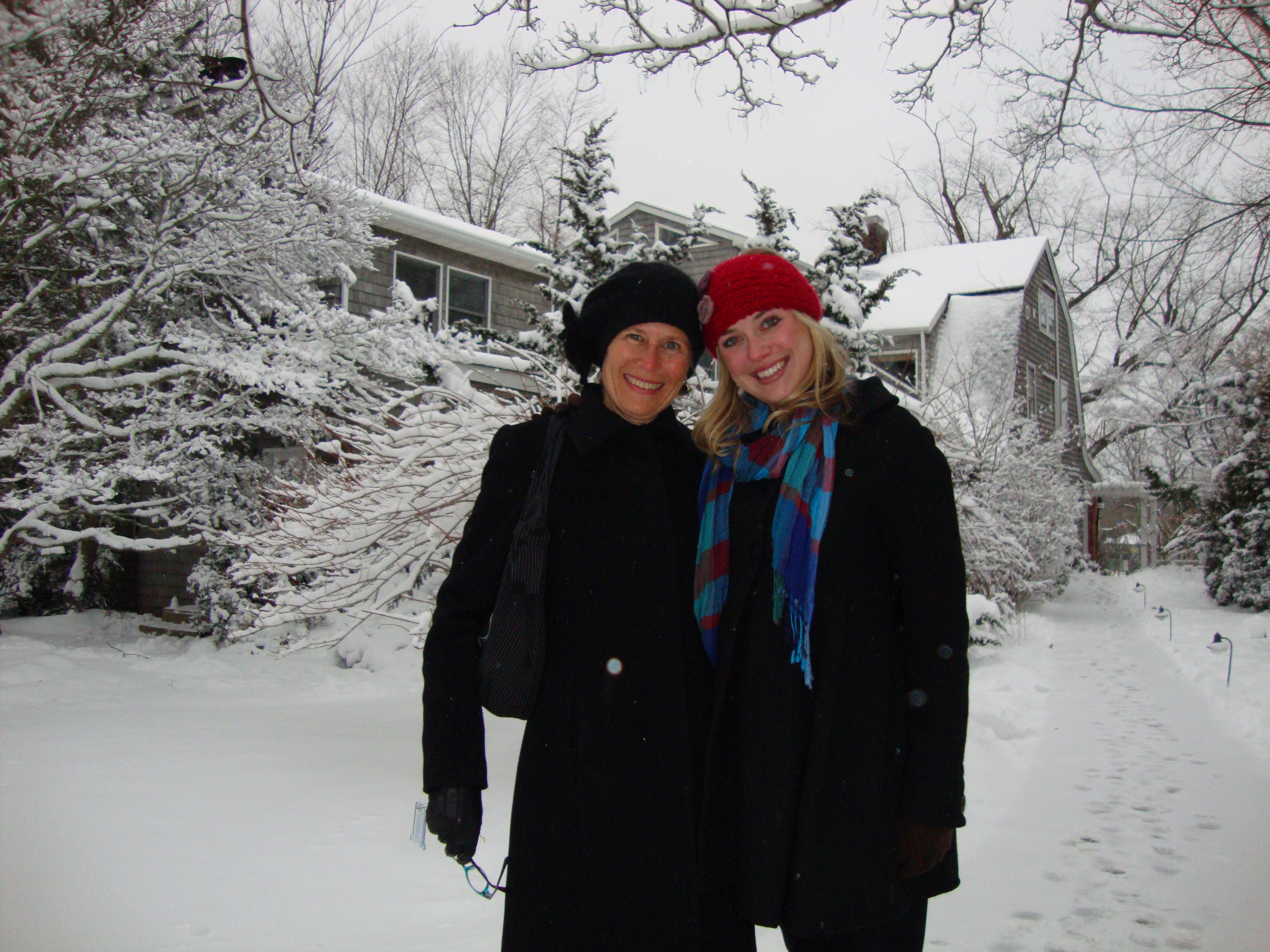
The next day Sally and I flew to New York to attend the memorial service for her father, Norborne Berkeley, Jr., affectionately known to my generation as B. Gabe and Jocelyn flew in from Colorado and we rendezvoused at a hotel near La Guardia, then drove out to East Hampton. I was so happy to see the kids! We stayed in a lovely bed and breakfast called The Mill House Inn. It was good to see the Berkeley side of the family, and revive happy memories of East Hampton from our younger days.

We drove by the old Berkeley place in Bridgehampton and did a little shopping in East Hampton. I bought Gabe a pair of corduroy pants and The Unbearable Lightness of Being by Milan Kundera, on the sole condition that once he finished it he tell me his impressions. Such a rich book, and I know too few people who have read it. It snowed six inches that night.

The service on Saturday was in an Episcapol church and was well attended despite the snow. It had a heavier religious component than I expected from this relatively unreligious family. But Bill Berkeley did a fine job in his eulogy recognizing the strengths and accomplishments of B, and the good qualities we’ll want to remember. B meant a great deal in my own life, and I’ll miss him.

Thanksgiving in Nassau with sharks and Proust

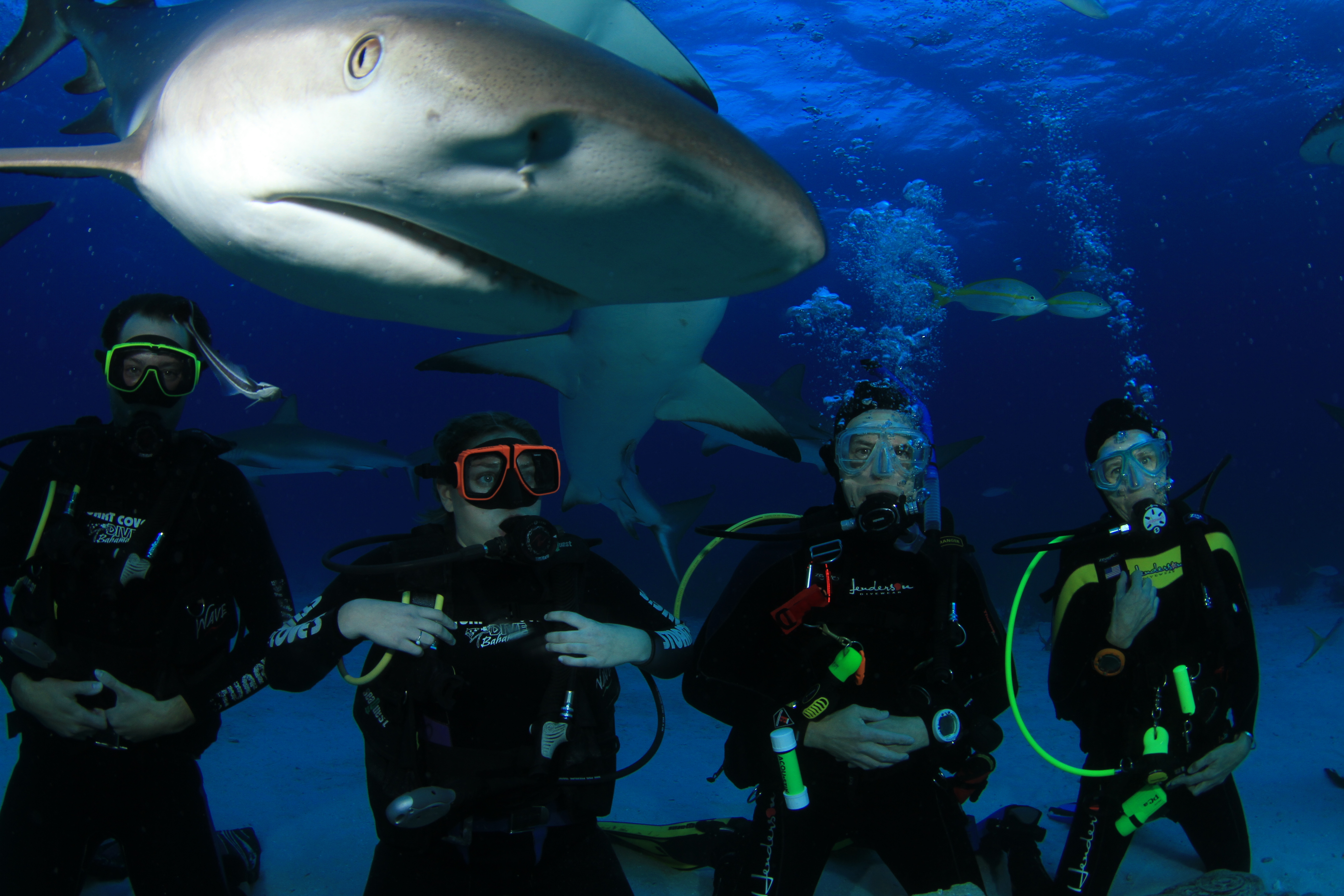
Gabe, Jocelyn, reef shark, Rob, and Sally

For Thanksgiving we went down to Nassau, Bahamas, and did some scuba diving with sharks. I was looking forward to some time with Sally, Gabe, and Jocelyn, and also to the palm trees, beaches, and beautiful turquoise water. But we chose the destination in large part because of the abundance of reef sharks.

For those with long exposure to anti-shark hysteria (Jaws, cheesy nature channel specials), this probably sounds crazy. In fact, people do these dives safely every day. For me, there was some element of facing down an irrational inner fear, but the bigger driver was curiosity and a desire to experience a particularly beautiful force of nature.

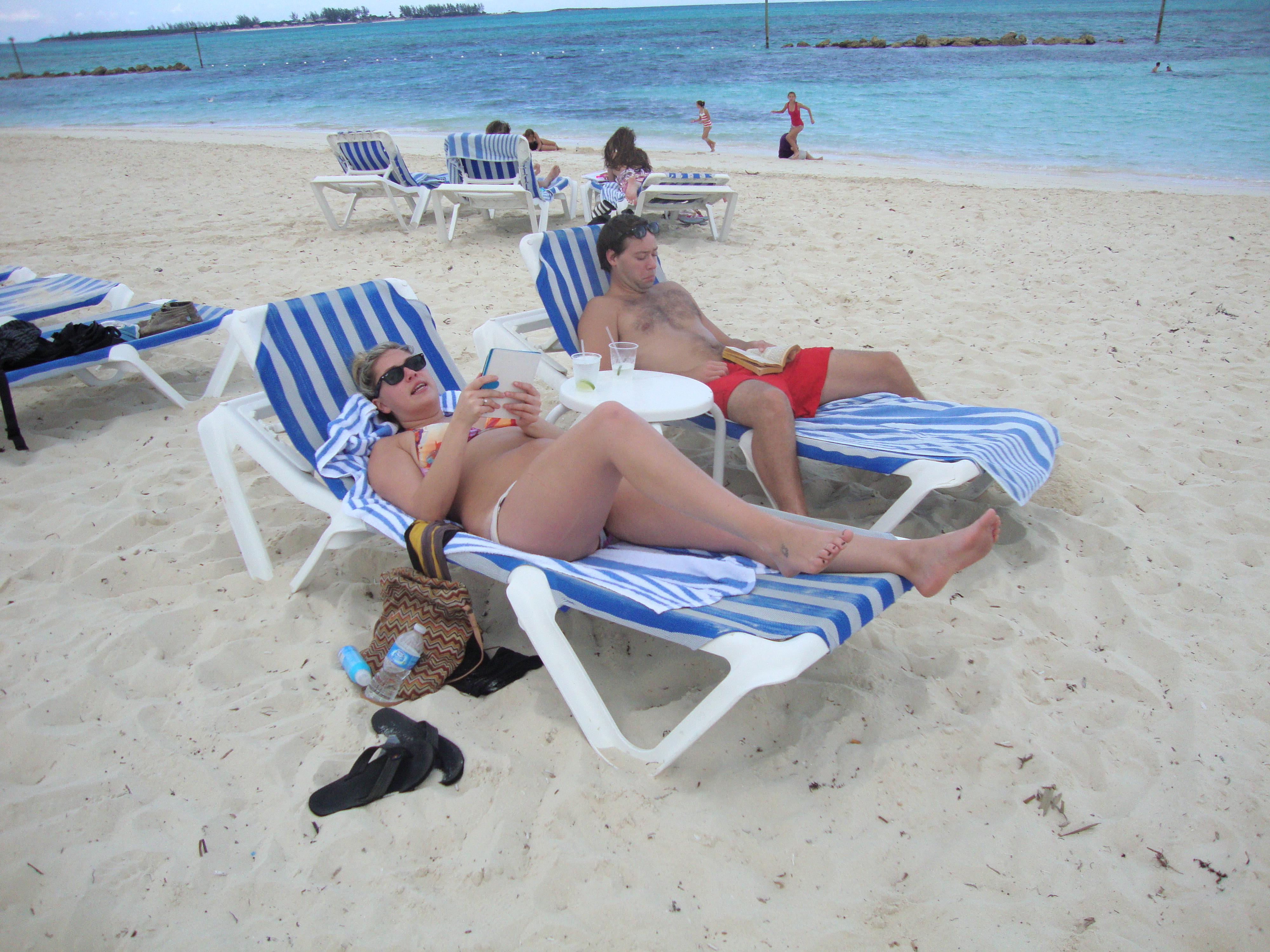
We stayed at the Sheraton on Cable Beach, a large hotel with a white sandy beach, lots of curvaceous pools with waterfalls, palms, and plenty of deck chairs. The staff seemed friendly, though slightly shy. Restaurant service both in the hotel and elsewhere was surprisingly slow (except for Luciano’s, where the food and service were both excellent). One bummer: the food was much more expensive than I expected — about three times the price of equivalent meals at home. There was a casino, which we walked through, and where no one looked like an extra for Bond film. I tried, unsuccessfully, to comprehend why these people couldn’t find something more fun to do than just throw away their money.

Sheraton Hotel, Nassau, Bahamas -- our view

But there is no accounting for taste, and no explaining some of the strange things people like to do. Which brings me back to the sharks. Humans kill around 100 million of them a year (a substantial number of those by torture — cutting off fins for shark fin soup and leaving the fish to drown), whereas unprovoked sharks around the world account for around four human deaths a year. Of those exceedingly rare deaths, the perpetrators are only four of the 360 species (great white, oceanic whitetip, bull, and tiger). It is simply a myth that sharks are mindless killing machines. Some species are highly social and demonstrate problem solving skills, curiosity, and play.

Some species of modern sharks reached their current form about 100 million years ago, in the age of dinosaurs. Species come and go (for mammals, the average species lasts about a million years), but the sharks have remained. The basic, gorgeous design has clearly stood the test of time.

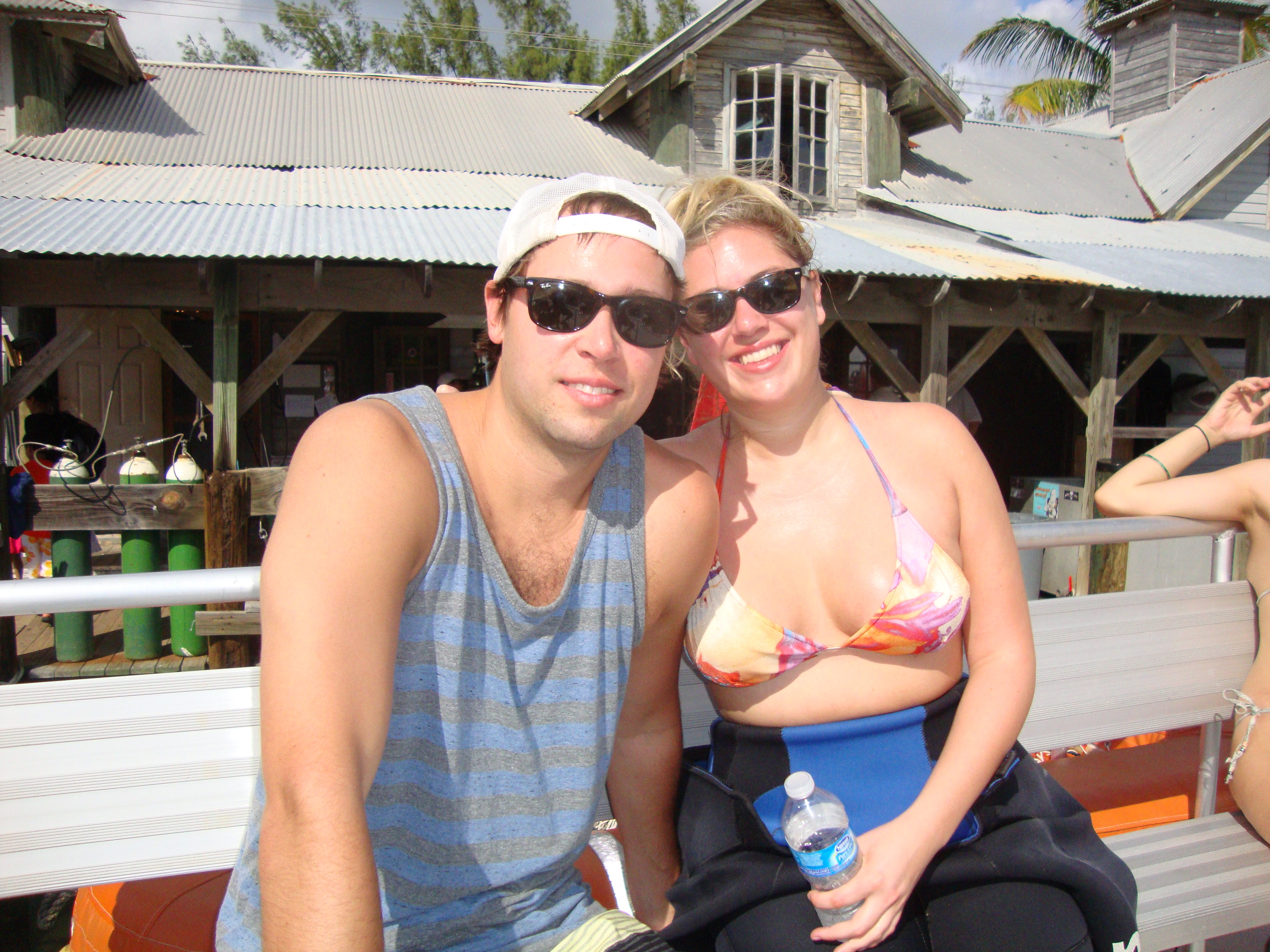
We dove with Stuart Cove’s dive operation, which was generally well run with cheerful young dive leaders and staff. Sally and I did ten dives and all. Gabe and Jocelyn were not certified divers, but after refreshing on their skills with a resort course, they came with us on four dives with an instructor, a smart, well-travelled (including a stint diving in Mozambique, which she recommended highly), and good-humored young Englishwoman named Ruth.

Gabe and Jocelyn at the start of a shark dive

The climax of our diving was Thanksgiving day, when we did an area called Runway Wall, where Sally and I swam at about 70 feet (with G and S shallower) along a wall that goes down to a depth of 5,000 feet. Beside us, in front of us, and behind us were reef sharks. I counted 15. At times they swam quite close (inches), coming up on us from behind, or heading straight for us. We also got to within a few feet of a large sea turtle (probably a loggerhead), and saw a few Atlantic spadefish, a spotted drum, a spotted moray eel, and a Goliath grouper, along with many smaller fish.

After a surface interval, we descended again and sat in a circle in a sandy area. One of the staff, Rich, had donned a chain mail body suit, hood, and gloves, and brought down a cage with chum. The sharks increased in number (perhaps 20-25 showed up), and began swimming faster and closer to the cage. Rich would take a thin metal pole, spear a steak-size piece of chum, and whip it upward quickly, and the closest shark would instantly bite and swallow it. Rich would position himself in front of each diver and do some feeding while the staff took photos and videos.

I had mixed feelings about feeding sharks (or any wild animal), out of concern that it might lead to dependency or otherwise disrupt the ecosystem. I also wasn’t crazy about the emphasis on photography. But in the end I put those ideas to one side and was simply overwhelmed by the experience: about 50 minutes of a close encounter with prehistory. The distance between us got down to zero (I was bumped a few times). After a few minutes, I began to distinguish individual differences among the sharks. One had a mouth that gaped on one side, another had a fish hook in his back. They would swim in lazy circles, and then suddenly accelerate toward the food, sometimes colliding. All told, I was deeply moved by their power, grace, and beauty.

We did not dive on our last day before flying home to decrease the risk of decompression illness. We spent much of the day lounging on the beach or by one of the pools reading our various books. It was windy, sometimes cloudy, but sometimes sunny. It was lovely to see our kids reading for hours. I used to worry that they’d end up as hopeless TV addicts. But they didn’t!

I began rereading Swan’s Way, this time in a translation by Lydia Davis. Many years ago, I read the entirety of Remembrance of Things Past, and have from time to time returned to sections of it, but the length of the work is daunting in these frantic times. I found the Davis translation much more graceful and lively than the Moncrieff and Kilmartin. It may be that accumulating more life experience makes the book itself better. In any event, I was struck once again by the strange hypnotic beauty of the prose.

For the first time, I saw how the apparently casual, improvised sound of the early part of the book includes a lot of delicate prefiguring of people and events that will gradually come into sharp focus. There is so much richness in the book. It makes us realize how rich our own lives can be in perception and feeling, and makes us want to use our memories and our eyes, ears, noses, touch, and taste buds better. But it is not a self-help book; there’s something magical about it. I had the odd, strong feeling as I was reading that the book was my own consciousness coming into being. Of course, it’s only a novel — or is it?

More shark photos:


Cultural diversity: yoga, Gambia, Lucretius, hockey, and Wagner

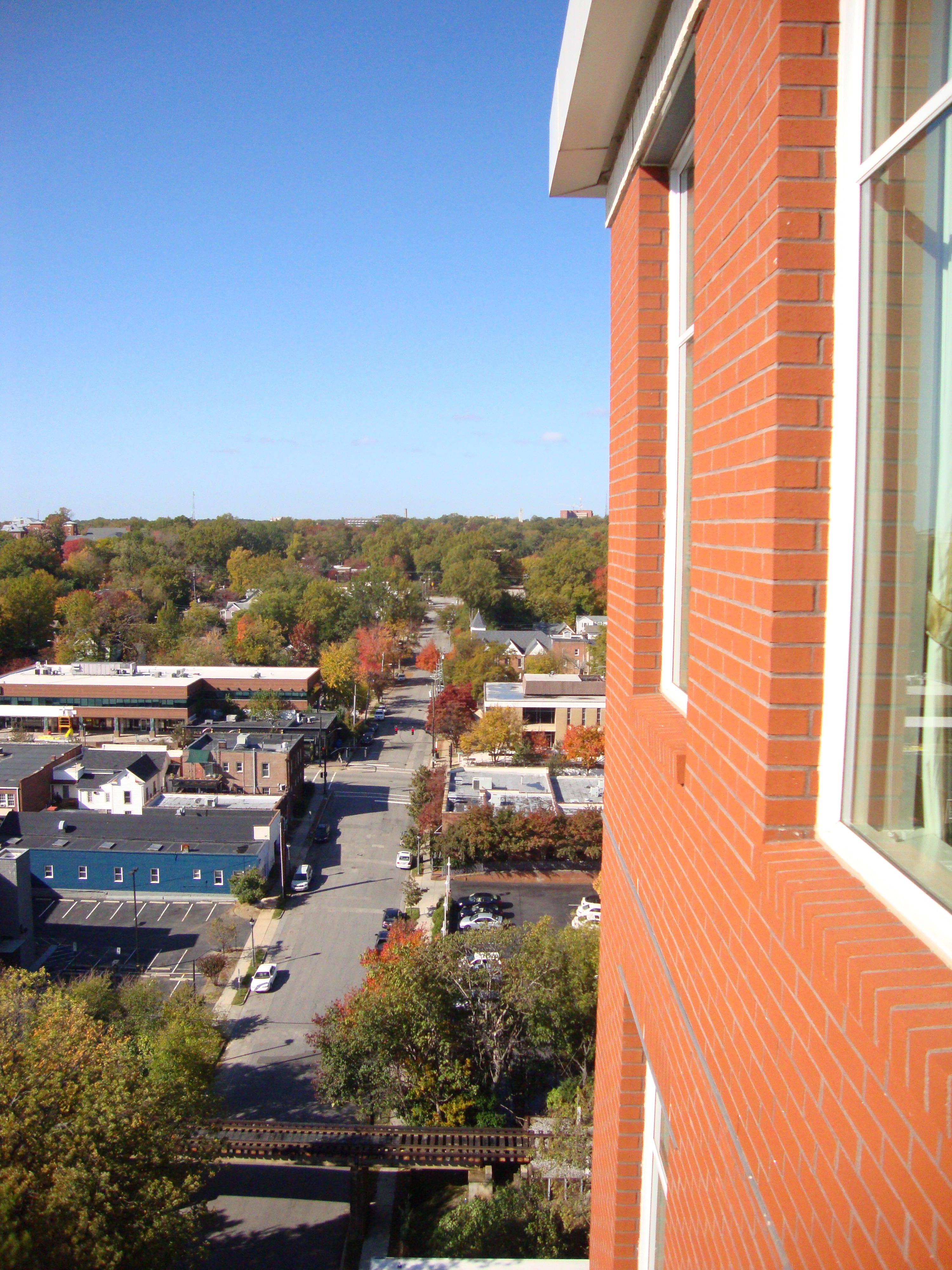
Looking west from the balcony

Daylight savings time ended this morning, and so we gained back the hour we lost in the spring. It’s strange that hours can be moved from one season to another. Anyhow, the leaves are changing, with yellows, oranges, and reds, and the temperatures are cooler. It’s fall.

Tuesday is my usual day for the Early Bird Yoga class at Blue Lotus with Suzanne. I normally get up at 5:30, do half an hour of interval work on the elliptical machine in my building, change out of my sweaty tee shirt into a fresh one, grab my yoga mat, and get to the 6:30 class in good time. Some yoga breathing, lowering, lifting, balancing and stretching is a good way to start the day.

Suzanne’s instructions are direct and clear, and her strength and grace are beautiful and inspiring. Each class is different, and lately she’s been taking us noticeably beyond our comfort zone. She seemed really pleased last week when she got us all up in tripod headstands. This week she had us all try side crow. This did not work at all for anyone (except her). Lately I’ve been working on front crow, and making progress, so perhaps we’ll do side crow one day.

Early Wednesday morning (5:40) I got in a cab to go to the airport. The cab driver was winded, and said he’d been doing jumping jacks to stay awake while waiting for me. It was better, he said, not to drink too much coffee. I agreed. He asked me where I was going, and I told him the bare fact (Boston), thinking I’d rather not get involved in a chat. There’s effort involved, and no guaranteed reward. But after a couple of minutes of silence, I relented. I figured I would try to be a decent chap and throw a lifeline to a lonely soul, so I asked him where he was from. Answer: Gambia, a tiny country in west Africa which I knew almost nothing about, and which he dearly loved.

He was a lively guy, and much more interesting than NPR. He described the government in terms that sounded benign though authoritarian, and improvements in roads, schools, and hospitals. He said that most people were at least part-time farmers and described how they stored crops in their own warehouses. When I asked him about his languages, he said he spoke seven, including three from Gambia and French, Spanish, and German. His English was accented but just fine.

The weather was clear and mild in northern Massachusetts, but there was still snow on the ground from an early season storm that had left many thousands without power. I did a bunch of meetings in Westford and then went down to Cambridge for more. On the flight back I read How to Read Montaigne by Terence Cave. Montaigne (1533-1592) is a startlingly original, modern thinker.

I was inspired to start exploring Montaigne by a few comments in an excellent book I finished a couple of weeks back: The Swerve: How the World Became Modern, by Stephen Greenblatt. The Swerve recounts the discovery in a monastery in 1417 of a copy of an ancient Roman manuscript, and explains how that discovery changed history. The discoverer, Poggio Bracciolini, was a former apostolic secretary for a deposed Pope with a classical education and passion for finding and saving ancient books. The book that was almost lost, On the Nature of Things, was written by Lucretius about 50 BCE. It’s an epic poem that describes the philosophy of Epicureanism. Greenblatt covers a lot of ground, from the philosophers of Greece and Rome, the creation of libraries, the fanaticism of early Christianity, the preservation of books in medieval monasteries, the intrigues of the popes, religious wars, the intellectuals of the Renaissance (including Montaigne), and onward.

In addition to a lot of lively history, there’s a pithy account of the ideas of Epicurus (b. 342 BCE), including the notion that the entire universe is constructed of tiny indivisible building blocks called atoms. This carried with it a view of the world as a natural phenomenon, not something magical created and controlled by gods. Epicurus espoused freedom from superstition and the pursuit of pleasure.

By pleasure he meant not pursuit of wealth or debauchery, but something more nuanced that included a sense of wonder at the beauty of the natural world.. According to Philodemus, a follower of Epicurus, “It is impossible to live pleasurably … without living prudently and honourably and justly, and also without living courageously and temperately and magnanimously, and without making friends, and without being philanthropic.” The Epicureans celebrated friendship, emphasized charity and forgiveness, and were suspicious of worldly ambition.

According to Greenblatt, Epicureans, including Lucretius, believed that the gods existed, but that they couldn’t possibly be concerned with human beings. Along with atoms, Lucretius’s ideas encompassed the notion that living beings have evolved through a long process of trial and error, that the world exists for reasons that have nothing to do with humans, that humans are not unique but rather linked to all other life forms and to inorganic matter, there is no afterlife, that religions are superstitious delusions based on longings, fears, and ignorance, and that by fashioning gods humans became enslaved to their own dreams. Happiness could be attained through discarding delusions through reasons, looking squarely at the true nature of things, and discovering a sense of wonder.

These ideas were, of course, not congenial to early Christians, who almost succeeded in stamping them out. But somehow a copy survived, which Poggio discovered and copied, and which is recopied many times, and ultimately influenced thinkers in subsequent generations up to our own. Greenblatt’s book is a true pleasure.

We saw some professional hockey on Friday night: the Caroline Hurricanes vs. the Washington Capitols. I’d learned from my new assistant about a free bus that runs between downtown and the hockey games, and it turned out that it made a stop right at our building. The bus arrived on time, with many cheerful fans dressed in Hurricanes red and white. We had a good view from box seats.

The Hurricanes started strong but collapsed in the third period and got trounced. As long as the game was close, it was fun. As with soccer, the more hockey I watch, the more I see and appreciate the incredible athleticism. The drama is simple, but effective: there’s a surge of great joy at every goal our team makes, and stab of pain at a goal of the opponents. The bus trip back home seemed slower and much less cheerful.

On Saturday we saw quite a different sort of drama, Siegfried, the third opera of Wager’s Ring cycle, broadcast live from the Metropolitan Opera to all over the world, including the North Hills Cinema. I know the music well from CDs, and love it, but had some qualms about the amount of sitting required: five and a half hours. Wagner is musically dense, and that’s a lot of Wagner. It was, it turned out, for us, incredibly powerful.

The story is about courage. Siegfried is a callow young hero who forges a magic sword and uses it to slay a dragon and an evil dwarf, then travels though a ring of fire to save and win a beautiful maiden. In pre-broadcast comments, Renee Fleming (a great soprano who would know) described Siegfried as the most difficult tenor role in the world. Our Siegfried was Jay Hunter Morris, a relative unknown who subbed in at the last moment and had a total of three performances under his belt when he performed before a worldwide audience of many thousands yesterday. This took true courage. Morris gave a performance for the ages, vocally powerful but nuanced throughout. The entire cast was superb, and the technical effects (especially the ring of fire) were impressive. Fabio Luisi conducted brilliantly. The famous horn solo, the exciting few bars that horn players test and polish their whole lives, was perfect.

This Siegfried, the opera, moved me deeply (tears). Driving home afterwards, I felt wrung out but exhilarated. Sally also loved it, and announced that she was now a Wagnerian. I found this very cheering.

Good conversations

One of my favorite movies is My Dinner with Andre. The 1981 movie is about as simple in concept as possible: two old friends have a conversation in a restaurant. It starts out like a typical conversation, though livelier and wittier than most, and gradually begins to soar and swoop. It’s like a duet, or a dance in words. The friends are having fun, but are also creating something. It sets a high bar for a great conversation, but it’s also inspiring. It shows that a good conversation is a work of art.

This week at Red Hat we had a meeting of our entire legal department, including colleagues from our foreign offices. I had five business dinners in a row, not to mention five business lunches and multiple impromptu encounters between meetings. There were plenty of conversations. A number of my colleagues were inspired talkers, and knew a lot about their subjects.

Some of our conversations were fairly ambitious: talking with Monica about European IP law; with Amanda about race in America; with Madeline and Kathal about blogs and the future of literature; with Mei about refusing membership in the Chinese Communist party; with Richard about the future of open source licensing, with Winston about conservative politics; and with Patrick about religion in Utah. There were many good stories: e.g. Eric on playing tennis with Andre Agassi; Emily on working with her personal trainer; and Jean on working as a flight attendant for Singapore Airlines.

It was varied and fun, and I felt grateful to be associated with a group of such interesting and stimulating people. But as Myra and I discussed, socializing in large doses is depleting. I felt really tired and ready to relax when we finished our meetings Friday afternoon. When I got home, I did some yoga, and then played some Chopin and Debussy. It always amazes me how half an hour of immersion in making music can refresh the mind and produce great happiness.

Sally mixed us basil gimlets (one of her signature drinks) and cooked a tofu curry while we listened to a Pandora mix of contemporary Indian music. At dinner we talked about some big subjects, including global warming and species extinction, which we both worry about. The topics are, of course, anxiety producing and sometimes depressing, and depression may lead towards hopelessness. And loneliness. These issues can be friend repellents: who wants to be with a depressing person who makes you depressed? This is another reason it is good to have a committed loving partner: you can talk about serious things.

We also talked about art and science. Recently I read The Wild Life in Our Bodies, by Rob Dunn (a professor at N.C. State), which discusses evolution of humans as a story that cannot be understood without appreciating our symbiotic microbes (fact: they’re more numerous in our body than human cells), parasitic worms (which may prevent disease), our former prey and predators, and other aspects of the natural world. The book is uneven, but the vision is sweeping and fascinating. It is my latest piece of evidence for the theory that scientific intuition and artistic intuition are very much alike, and they can be thrilling in much the same way.

Open source ballet

A good conversation over a fine dinner is one of life’s true pleasures. Sally and I went out with our ballerina, Lola Cooper, for dinner at Solas last night and had a great time. By virtue of our donations to Carolina Ballet, we’ve become the sponsors of Lola’s pointe shoes, an essential tool for classical dance. We’ve talked with her several times, but hadn’t had a chance to break bread together before. Happily, Solas has a special menu for vegetarians, which they will produce if you ask.

Lola, it turns out, in addition to being a rising star, is a lively and interesting young woman. Ballet dancers are almost by definition highly focused individuals. The form demands a lot from its embodiers: years of rigorous training, physical stress, competitive pressure, performance anxieties, and unremitting discipline. In exchange, dancers get a shot at transcendence. It’s hard to be a great dancer and a scholar, for example. Not impossible, certainly, as I’ve been reminded recently in reading Apollo’s Angels, a history of ballet by Jennifer Homans, a former dancer. But challenging.

Anyway, Lola’s pursuing a bachelor’s at N.C. State and keeping her intellectual side engaged. We talked about travelling in South America, organic food, painting, yoga, and families. All interesting and fun. And dance, of course. She told us about some of her personal challenges with a grueling rehearsal and performance schedule. I told her the short version of my idea for open source ballet.

The idea is to adapt some of the concepts of open source software to dance. Open source software developers hold that the best way to make great software is to freely share code and ideas in a collaborative way. They use internet tools to leap over barriers of geography. Instead of holding onto the copyright in their work, they use open source licenses to encourage use of the code by others. As this methodology has spread through the tech world in the last three decades, it has resulted in an astonishing amount of creativity and innovation in software development.

How does this apply to dance? Dance is in part a collaborative art that draws on the creativity of others. Choreography uses a vocabulary of movement that has been developed by prior generations and that continues to be enriched by artists today. Although the sharing of movement ideas is not always acknowledged, it is a fundamental part of how ballet is made. Of course, each real artist makes work that is also in important ways original. But it is hard to conceive of a new ballet that owes nothing to ballets that came before.

So there’s an aspect of ballet that is already collaborative. In general, though, there’s a concern in ballet with trying to protect the intellectual property rights associated with a new dance work by limiting recording and forbidding copying of recordings. The background assumption is that the creative work could be stolen to the detriment of the owner. But is that likely? It might well be that videos of a ballet would proliferate, but this would only be bad if it hurt the market for recordings (which is negligible), or the market for live performance of the work. In fact, it would probably expand the audience for the work and enhance the reputation of the choreographer and performers.

This open source approach flies into the face of conventional intellectual property ideas. Those ideas are so familiar that they seem natural, and it seems unnatural to give up certain intellectual property rights and encourage free use. But open source has worked for software, and it’s being adopted in science, education, and the arts.

The ballet application could be tried as an experiment on a limited basis, even with a single DVD of a single performance. A license that allowed free copying and a marketing campaign that encouraged such activity could put the work into the hands of new potential dance fans and supporters. It could help ticket sales and budget challenges. And it would let the artists do more of what they’re good at: transcendence, and sharing transcendence.

Golfing at Pinehurst and Paradise Lost

This week I finished reading Paradise Lost and played a round of golf on the storied Pinehurst Number 2. Both were challenging, and at times vexing. And both were, in the end, unique and beautiful.

The experiences actually tie together more than I expected. The beautiful garden of Eden from which the poem derives its name is a feast for the senses, like Number 2, and most every golf course — they’re special purpose gardens. And the work of Adam and Eve is, before the fall, uncomplicated, playful, and fulfilling, which is, at times, like golf. Needless to say, things in paradise changed dramatically, after Satin tempted the happy couple, and the human condition grew complicated in painful ways. So it sometimes goes with golf.

In recent years, I’ve generally abandoned books when the enjoyment quotient dipped into negative territory. Paradise Lost was certainly no walk in the park, but I decided to stay with it. Like most modern humans, I do not typically read syllable by syllable, savoring the language, and I’ve never attempted to do so on the epic scale of Milton’s great work. But I did get better at it as I went along. At the end, I experienced a deep, long, powerful aesthetic shiver.

Finishing Number 2 was not as dramatic, but was also deeply satisfying. I was the happy beneficiary of a business golf outing, with a caddie who knew the course and the game well. We walked, which is the proper way to play. The course has recently been restored to reflect its original design, which involves more native species and waste areas in place of rough. I found it much more playable than formerly. I made enough good shots to keep me hopeful, and did not lose a single ball.

Paradise Lost — surviving air travel with some good books

On plane rides to and from Dallas this week, I experienced above average travel headaches — absurdly slow security checks, bumpy air, noisy talkers all around, and somebody who had beans for lunch. But the fast metal tube is a good place to read, and I made substantial progress on Paradise Lost. John Milton’s great poem is intimidating in several ways – long, complex, and religious. But sweet Jocelyn had spoken of it with animation during her studies, which inspired me to sample it in Harold Bloom’s poetry anthology. It was beautiful, and so I decided to begin at the beginning.

It creates a world that is at times fantastically vivid. And there is a powerful music to the language. Parts of it are part of our vernacular, and it’s pleasant to come upon them. Other parts are highly obscure, and challenging in their complex syntax. But it moves forward with confident, powerful authority, telling a really big story, bejewelled with glittering details.

I thought I might be put off by the religious subject matter, because I generally have a strong allergic reaction to such ideas. It’s true that Milton uses the Genesis story for his basic material, but he makes it into something much more dramatic and thought-provoking than the original. His transformation of early religious writings into drama is similar to what Wagner did in the Ring cycle with the Norse myths. The Creator is just one character in the drama, and hardly the most interesting one.

I also spent some time reading A Culture of Improvement by Robert Freidel. Freidel traces the elements of technology that transformed ancient and medieval life. I used to think that technology changed little between the Romans and the eighteenth century, but there are all sorts of interesting things that happened earlier. His chapter on medieval cathedrals addresses both why and how they got built. Lots of trial and error — like technology today.

My kick back book was Sabbath’s Theater by Phillip Roth. I think Roth is the best living American writer of fiction (and I know of no better in other languages), and I was pleased to see that President Obama honored him with the National Humanities medal this week. Sabbath’s Theater is a masterpiece of a dyspeptic sort. Sabbath is an aging former puppeteer and theater director who has left his callings and devoted himself primarily to seducing women. His enthusiasm for each new female is at first humorous, but it gradually becomes clear that he is deeply disturbed. It’s like Portnoy’s Complaint as King Lear. I would not recommend Sabbath’s Theater as an introduction to Roth, or to anyone uncomfortable with sexual subject matter. But for some readers, it will open doors.