The Casual Blog

Category: art

Our Outer Banks weekend
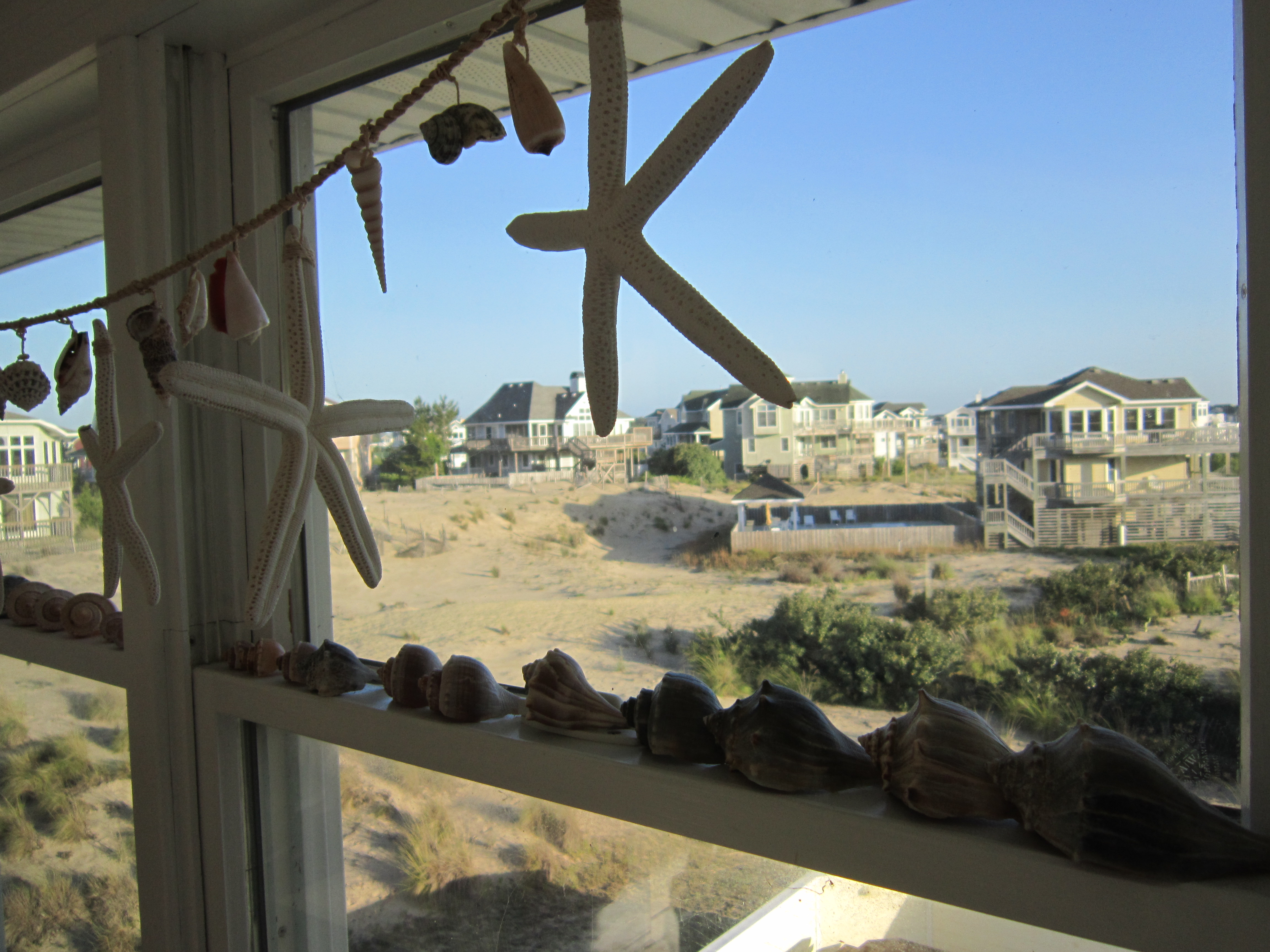
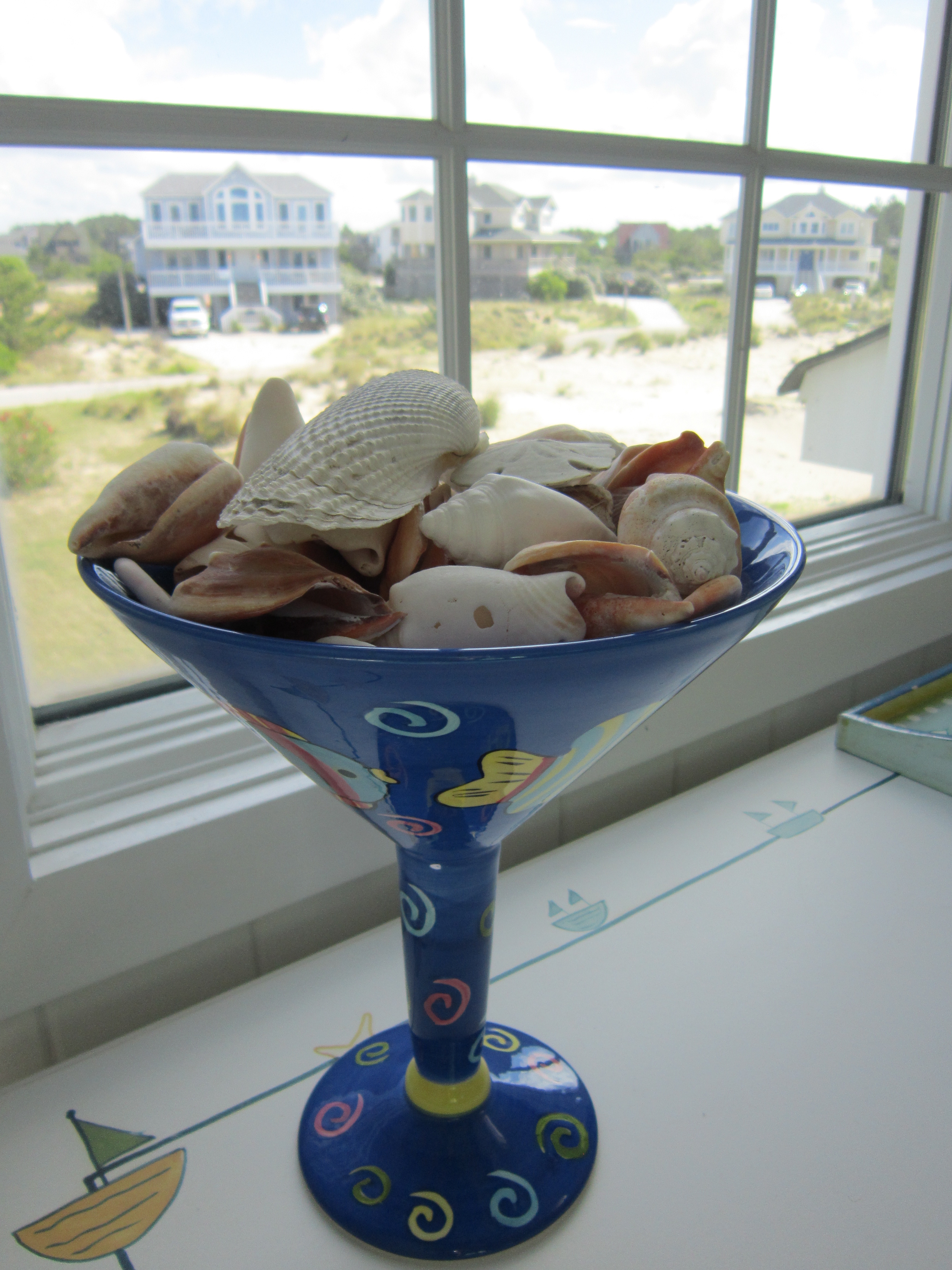
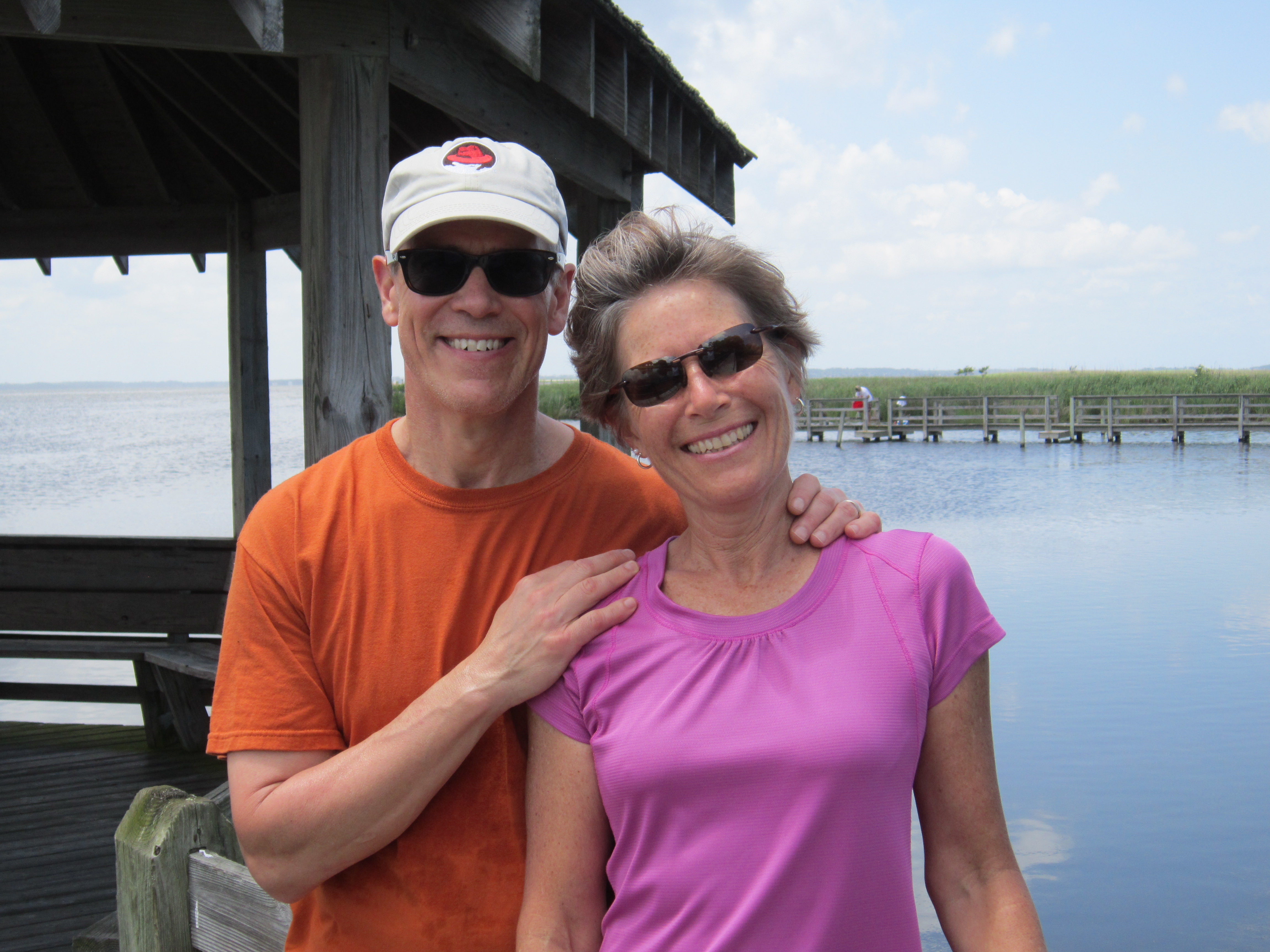
For Memorial Day weekend we drove to the Outer Banks to visit my sister Jane and her family. Their beach house in Corolla was comfortable and relaxing, with lots of seashells and board games. There were family dramas to discuss, as well as books to read, food to eat, and wild horses, shore birds, and other beach creatures to see. I also had a few new thoughts on economics and employment, as noted below.

My brother Paul and his wife Jackie came out from Virginia Beach on Saturday afternoon. Paul, in training for a marathon, ran the last seven miles, and arrived looking thinner than he has for at least a decade. The next morning I did my first outside run in a long time, a three-mile run along US 12. After persistent knee problems a few years back, I finally quit running and switched to low-impact activities like elliptical machines and stationary bikes. But I’ve recently seen running is good for bone density, and so have begun running a bit on the treadmill. The run along US 12 went well for a half hour, until I got a cramp in my calf.

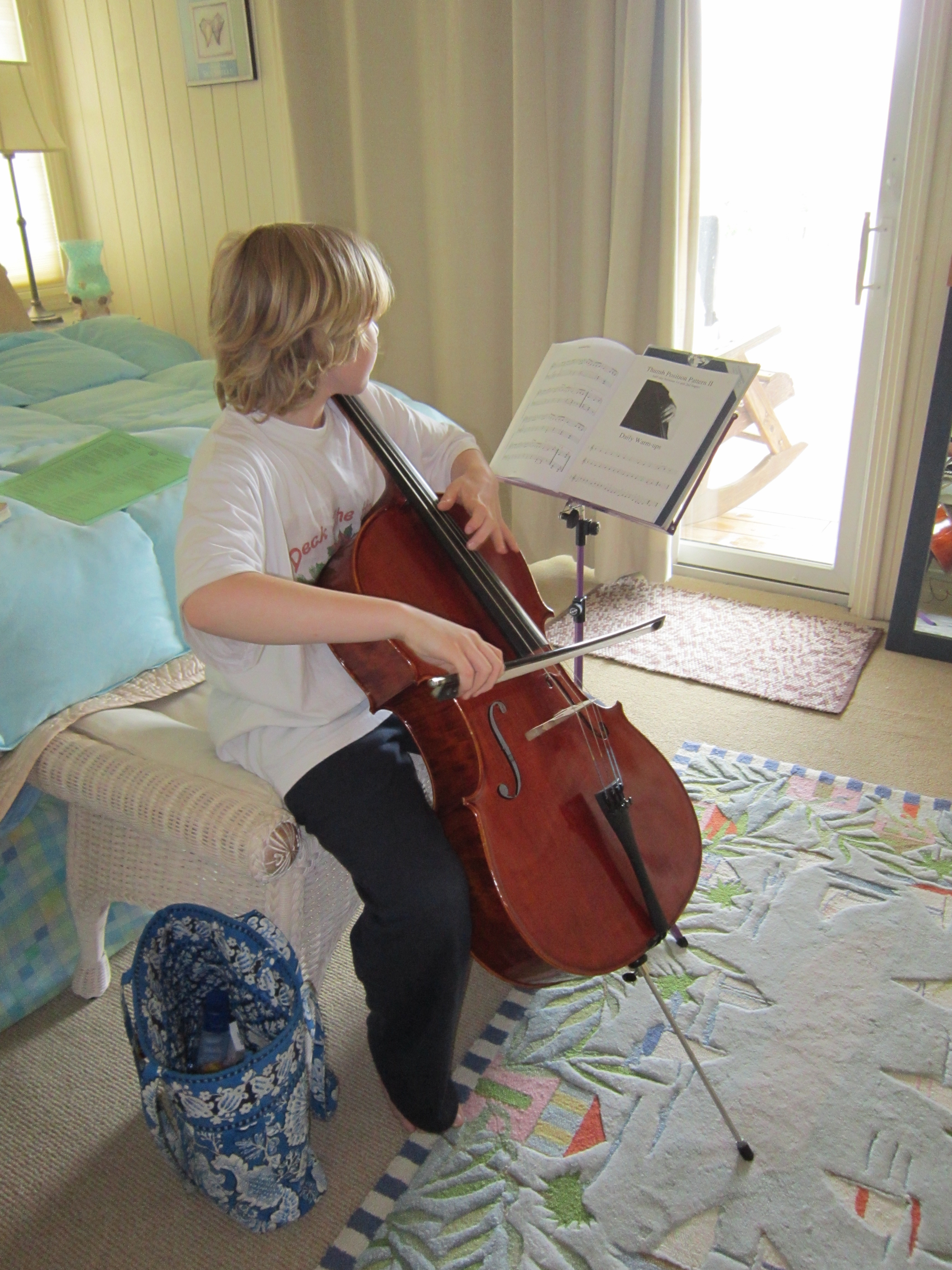
I took a break from practicing the piano, but enjoyed the musical activities of the rest of the family. Kylie is making good progress on the violin, as is David on the cello, and Jane has just started teaching herself piano. Paul is quite accomplished on the banjo, and played his version of the Star Spangled Banner in honor of memorial day.
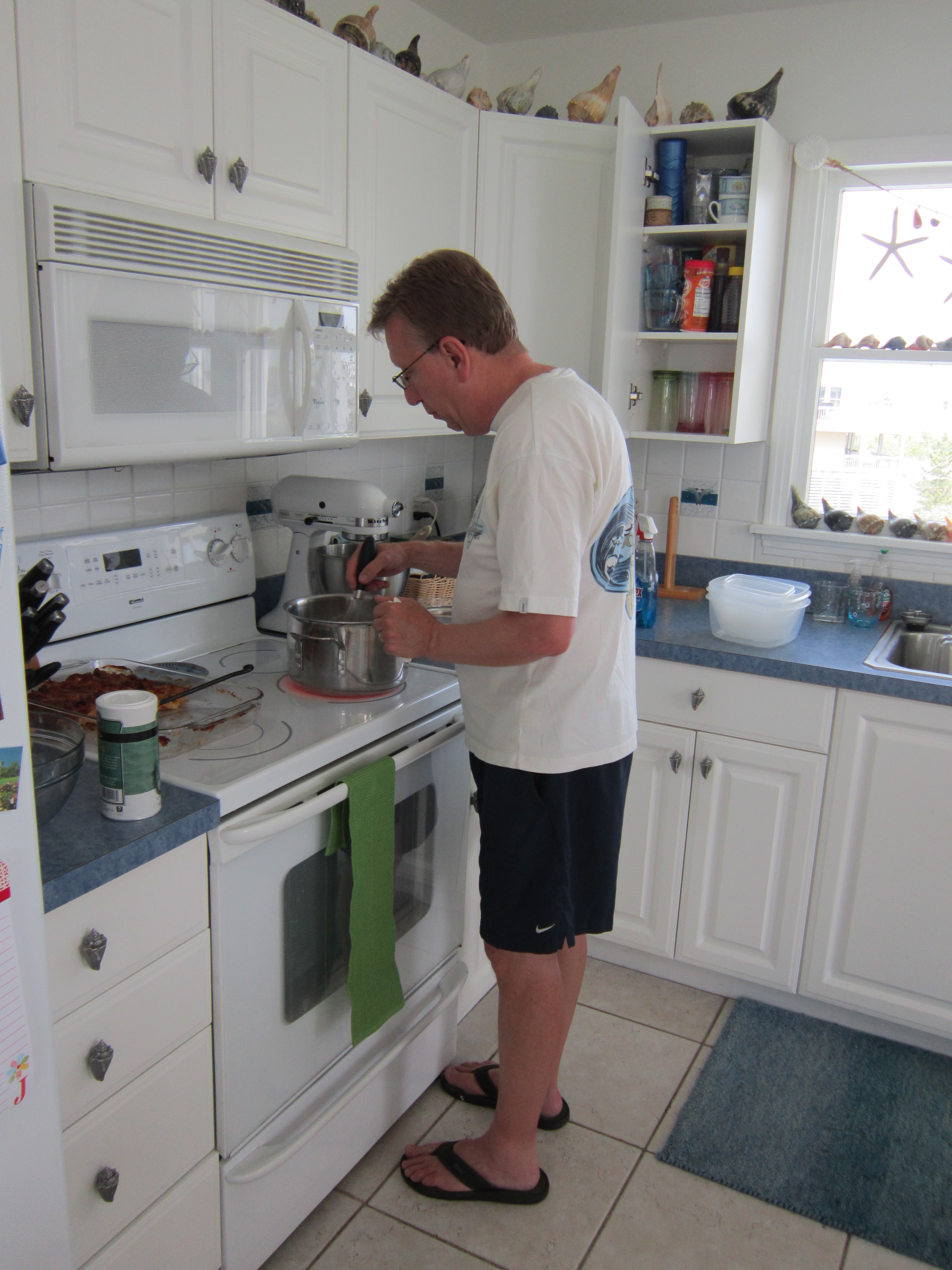
Keith cooked non-stop all weekend. On Saturday morning, he cooked gluten-free waffles with blueberries and strawberries, which were marvelously light. Soon after we cleaned up, he started to work on lunch, wonderful grilled vegetable sandwiches, and soon after that, he got to work on a vegetarian Mexican dinner, which was a complete success. The man loves to cook, and he’s really creative. We were all grateful.
In the Sunday Times, there was an op ed piece by Tim Jackson about how the drive for ever-increasing productivity was resulting in increased unemployment. This was a different lens on a problem I’ve pondered before — what should humans do when computer brains and robots render them redundant? Jackson proposes that the answer is to forget about increasing productivity and embrace lessening productivity.

Jackson broached a critical problem. As I’ve noted before, although we’ve hardly noticed it, robots and artificial intelligence are transforming the human world in fundamental ways. More and more of the manufacturing work that people used to do is now done by robots, and AI is starting to impinge on areas that we used to think of as forever and irreducibly human, such as medicine, law, and education. This is big. As far out in the future as we can see, we will need fewer and fewer people to make our products and perform our services.

We once thought of this as utopia: a world of plenty which required less and less labor to produce goods and services. We assumed it would result in more and more pleasant leisure. But this vision failed to take into account that we aren’t comfortable paying wages to people who aren’t working in a way that contributes meaningfully, and those without work do not feel at leisure.

Jackson suggests reorienting away from simple increases in productivity and towards activities involving caring, craft, and cultural activities, like art. This sounds promising. These are activities that humans have done as long as the species has existed. Once our ancestors had taken care of food, clothing, and shelter, they made jewelry, painted on cave walls, beat on drums, played lacrosse, or otherwise entertained each other. Caring for each other, making things, and making art are things we like to do. But we need to figure out how to associate these activities with fair wages.
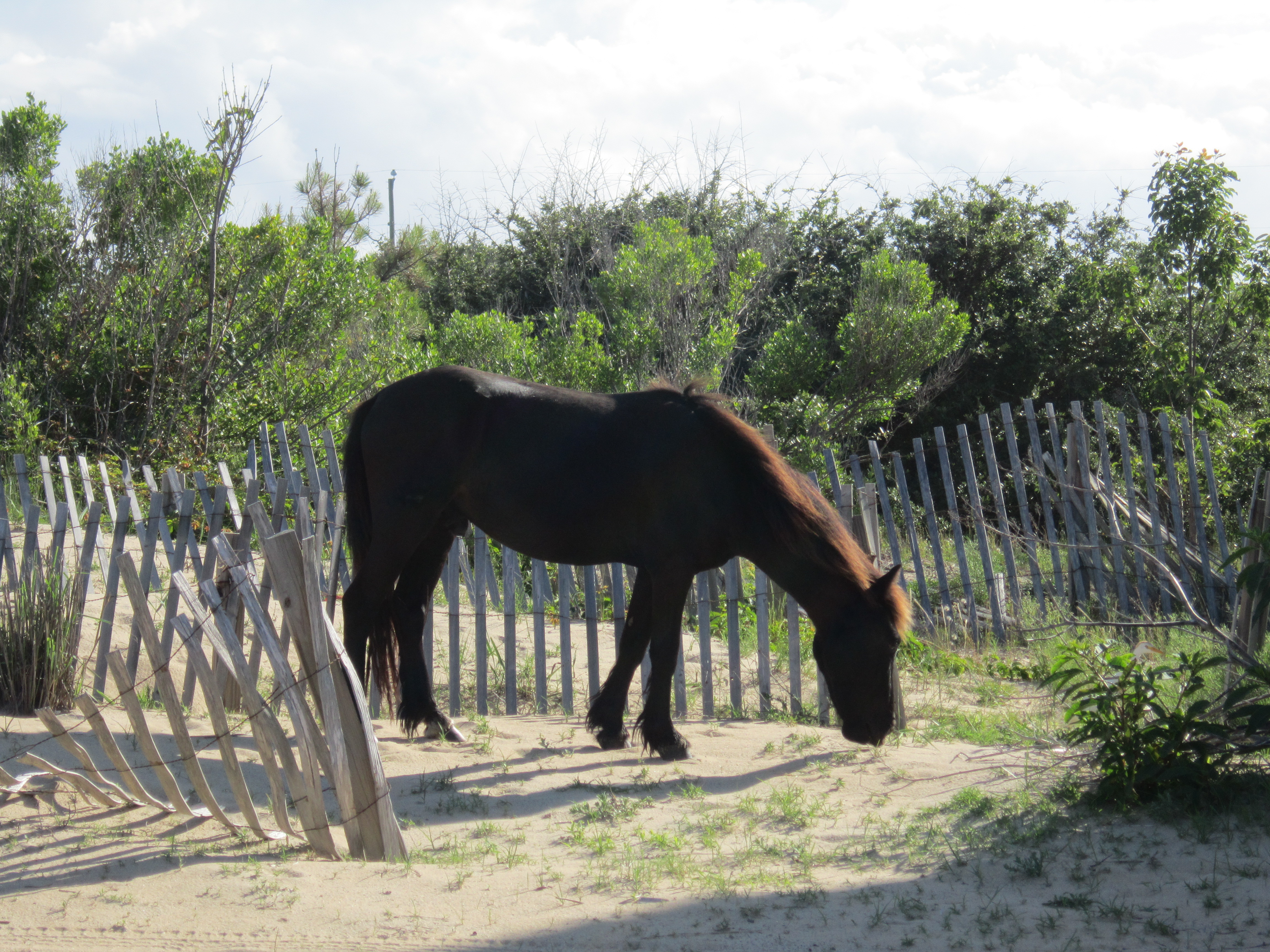
On Sunday afternoon we went four-wheeling northward to look for wild horses. Driving on the beach is fun, though I feel a bit guilty at what people like us do to the beach and its creatures. We saw lots of sanderlings and grackles in the shallows, and flying pelicans, gulls, terns, and one snowy egret. We drove through the narrow sandy pathways that wind through the marine forest, working our way around occasional pools of standing water. We finally found three groups of horses, and got close views of two of them.

We sat on the porch for a while and read and talked. Over the weekend, I dipped into the following books: I Am a Strange Loop, by Douglas Hofstadter, This Is Your Brain on Music, by Daniel Levitin, The Short Game Bible, by Dave Pelz (golf), Indignation, by Philip Roth, Winner Take All Politics, by Jacob Hacker, and The Social Conquest of Earth, by Edwin O. Wilson.

Sunday evening Sally mixed cocktails for the adults using cucumber vodka, ginger infused simple syrup, lime juice, and elderberry liquor. Keith made gluten-free vegetarian lasagna, which he had to complete with penne pasta because there were no lasagna noodles, but which turned out great. He’d also made vanilla ice cream and peach-and-blueberry cobbler. We played a game called “left right center” which involved rolling dice and losing or acquiring chips. It was a game requiring no skill, but gave the enjoyment of possible good fortune without exacting much pain for bad fortune. There was merriment. After dinner, we lit sparklers and set off some fireworks rockets.

Strawberries, memory flaws, driverless cars, manufacturing, massage, and Il Trovatore

The strawberries from the Raleigh farmers’ market were good this week — firm but not too much so, and fairly juicy. I put quite a few in my breakfast smoothies (together with kale and other nourishing things), and also made a point to taste them in their unprocessed state. Still, I couldn’t help thinking that the strawberries of years ago were sweeter. Are strawberries losing their taste little by little, like tomatoes before them? Or is this just memory playing tricks?

It’s unsettling to think that memory is unreliable. It is such a vital part of our interior lives, of our concepts of our ourselves. But it is highly prone to error. Thousands of Americans “remember” being abducted by aliens. Many others recall, after extensive coaching by incompetent therapists but without any confirming evidence, being sexually abused by their parents. In Mistakes Were Made (But Not by Me), social psychologists Carol Tavris and Elliot Aronson take a swing at explaining these and other social-psychological debacles involving strongly felt, but completely wrong memories.

Tavris and Aronson explain that complex memories are not a literal or objective recordings of events. There is no place in the brain where everything that happens to us is stored. Our brains hold selected vivid highlights of events, which we mix together with other knowledge or impressions to construct storylines. These storylines can, especially when repeated many times, come to feel like literal truth. The “mistakes” of the book title refers to our tendency to construct the storylines according to our own biases and tendencies towards self-justification.

Tavris and Aronson give a lively, readable account of the theory of cognitive dissonance, which drives us to reduce internal discomfort by ignoring information that conflicts with strongly held beliefs. They convinced me that there are systematic flaws in our mental functioning, even when we are healthy and operating normally. This is, as I say, unsettling, but it is worth pondering. It may be that by understanding the likelihood of certain kinds of mistakes we can lessen their likelihood.

Humans do some ridiculous things, but also amazing ones: our machines keep getting better and better. The self-driving car was in the news this week, with Google, which has been road testing its design, announcing plans to commercialize, and with Nevada becoming the first state to legalize one. What does this mean for the future of human driving? The end is near. As a person who enjoys driving, I say this with some sadness, but our AI drivers will be much more reliable and efficient than we are. There will be fewer accidents and better fuel consumption. Human driving will become like horseback riding — a noble but slightly mannered hobby allowed only in special areas.

More on amazing machines in last week’s Economist: a feature headlined The Third Industrial Revolution which gave a valuable perspective on how manufacturing is changing, and those changes are starting to transform societies. Major players include more sophisticated robots, improved software, nanotechnology and 3D printing. The new factories use significantly fewer people. The U.S. has a manufacturing output worth about the same as China’s, but uses only ten percent of the workforce used by China. Amazing, right? 3D printing is making possible product customization to a remarkable degree, and lowering costs. So it sounds like we’ll get more remarkable products cheaper, but have fewer manufacturing jobs. What are all the excess people going to do? Especially once their cars no longer need them?

I have a couple of ideas. Number one: more massage. This is a no brainer. Massage is simply wonderful, and we should all get more and give more. I saw Meredith at Hands on Health this week to get some work on my shoulders. Meredith does therapeutic massage, which is designed not to relax you but to make you healthier, and it can involve some discomfort. There were moments when I was close to my pain redline. To cope, I did deep yoga breaths, and was very proud when she told me that my breathing had been “fantastic.” Afterwards I felt great. Meredith is seven months pregnant now, and doing just fine. She’s helped me a lot, and I’ll miss her while she’s on maternity leave.

Another idea: more art. Art is something humans really like to make and share, and they’ve been doing it for millinea. I worry about our artists and artistic institutions, but they’re not dead yet, and there are still endless possibilities.

I felt particularly optimistic Friday night after the N.C. Opera’s production of Verdi’s Il Trovatore (The Troubadour). They performed the work in a “semi-staged” fashion, with no scenery, and the singers moving in front of the orchestra. Il Trovatore has great music, and the soloists were very fine. Leah Crocetto as Leonora was excellent — an exceptional voice, a sensitive musician, and an expressive actress. But gosh, she’s heavy! I’ll say no more about it, except that it detracted from her effectiveness as an artist. But I just loved her singing, and think she could go far.

I was also impressed with tenor Noah Stewart, who was a powerful and sensitive Manrico. Another cheering point: casting an African-American as a romantic lead for a North Carolina audience has become completely uncontroversial. Liam Bonner was strong as the Count de Luna, and Robynne Redmon was a marvelous Azucena. Richard Ollarsabe as Ferrando had a wonderful bass voice. I was impressed with the sensitivity of the conducting of Timothy Myers. One cavil: the male chorus was raggedy. But this was on the whole a fine production, and made me very happy to be living in Raleigh at this moment in history

Discovering Amsterdam

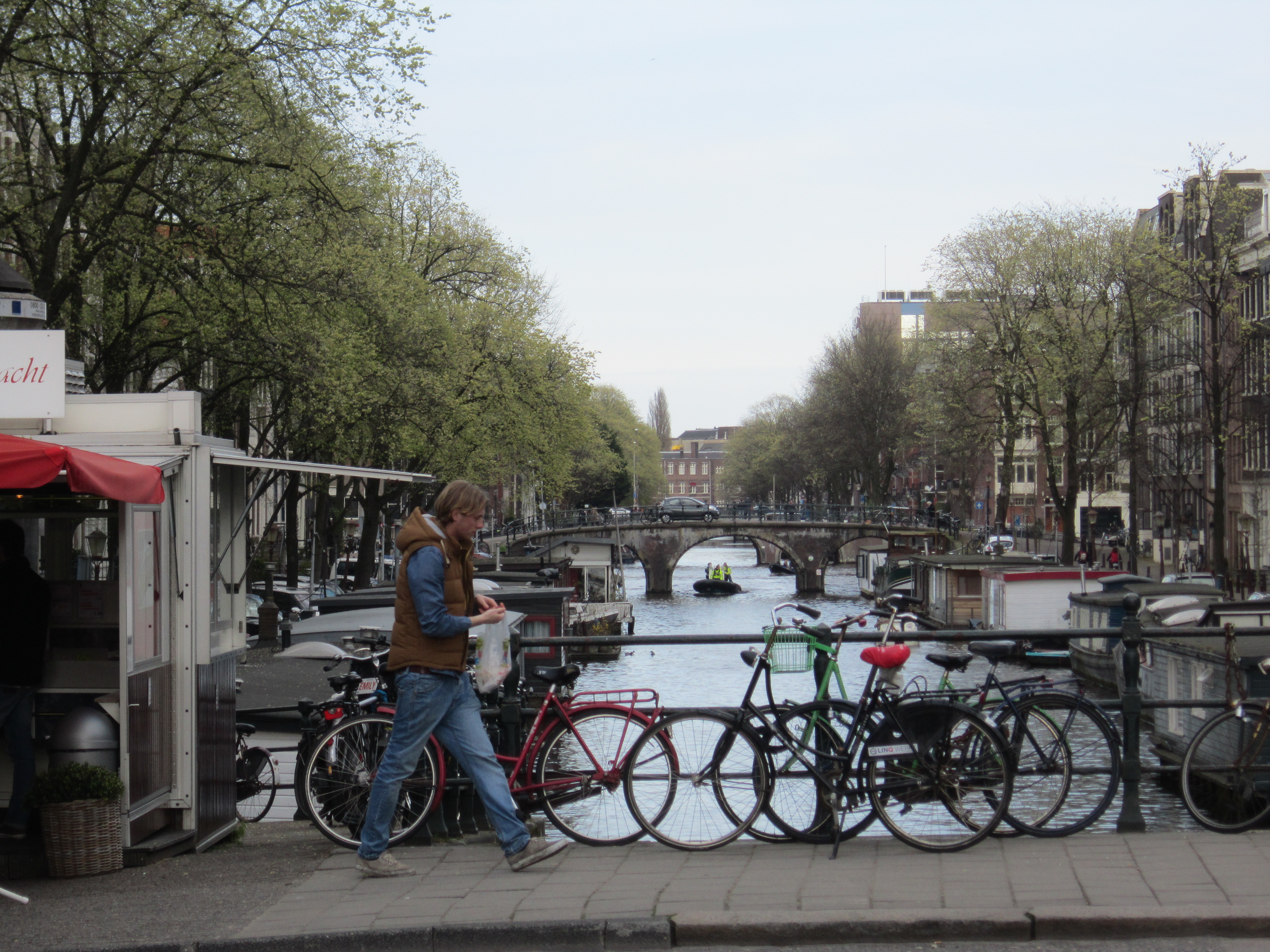
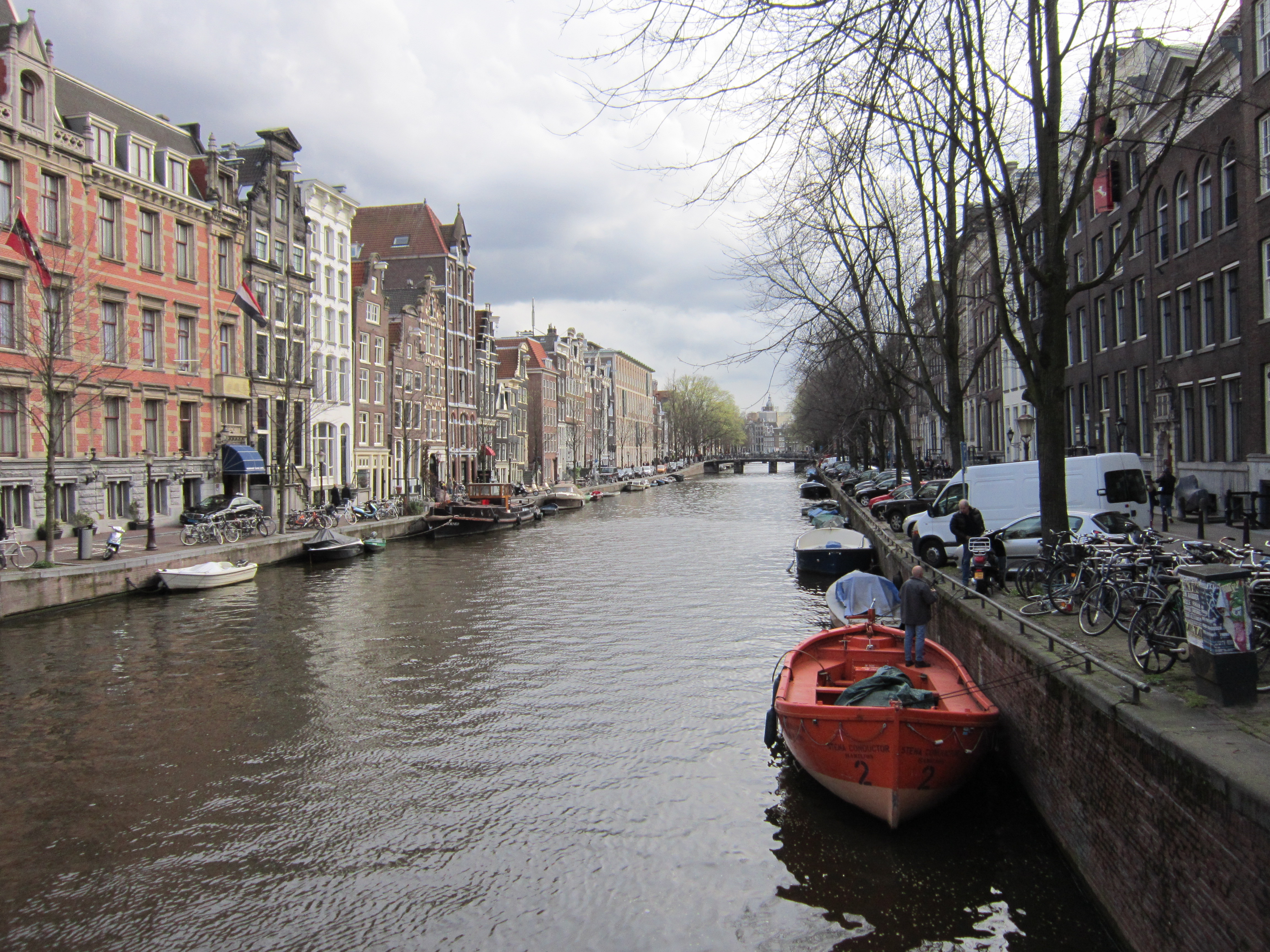
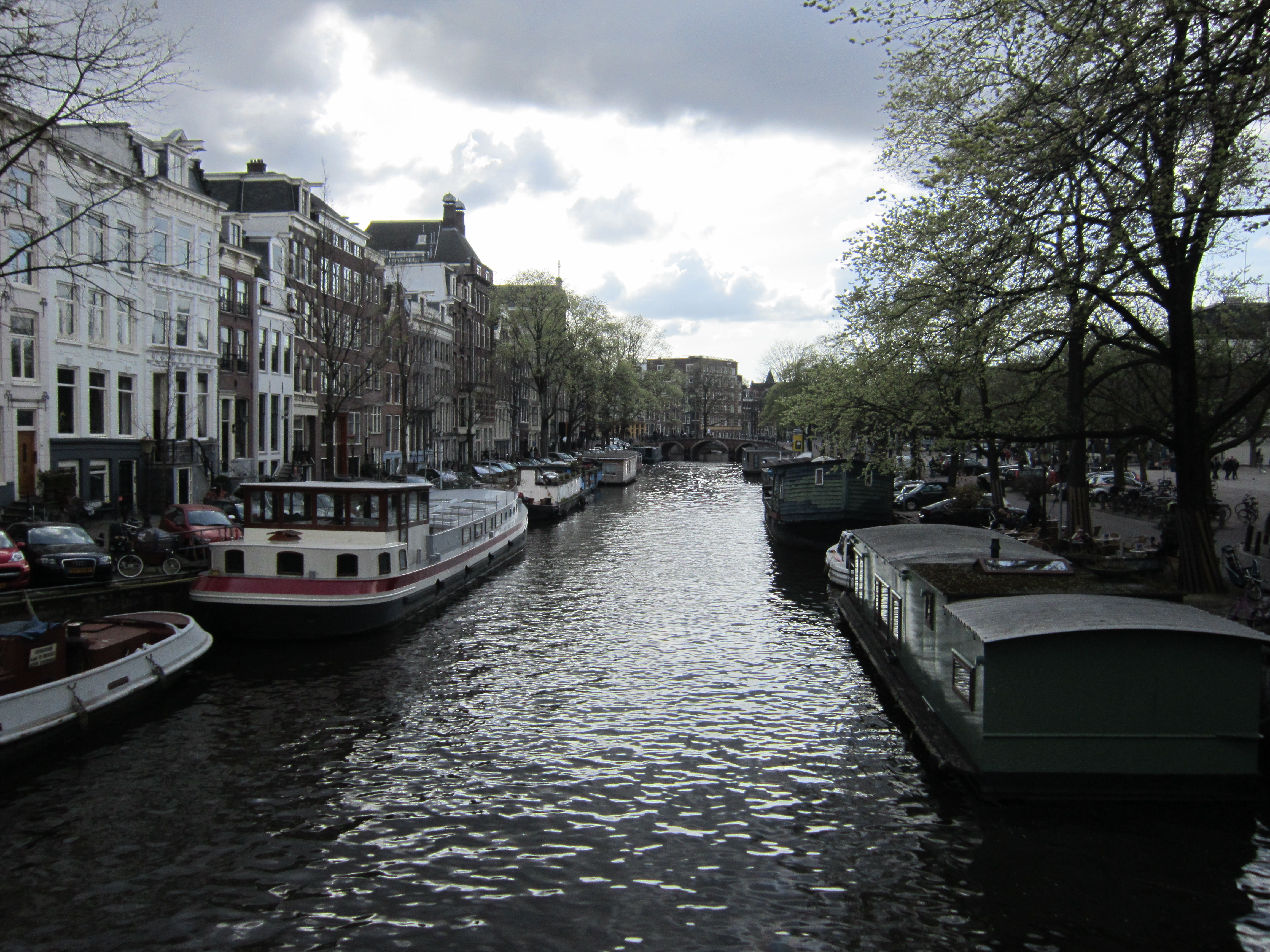
Last week I went to Amsterdam for the Free Software Foundation–Europe legal conference, and got in a bit of sightseeing as well. Sally and I stayed in the Krasnapolsky, a large, older hotel within walking distance of the railroad station, museums and several interesting neighborhoods.

Amsterdam is lovely city. Its row houses, streets, and canals are an ensemble that suggests a real community, with shared values and history. It seems well-organized and clean. But very lively! We’d heard that there were more bikes than cars, which is true, but hadn’t realized that heavy bike traffic can be hazardous to pedestrians. We had some close calls, and I eventually began to start at tinkling bicycle bells as though they were blaring car horns.

We found the Dutch to be polite and helpful, though reserved with strangers. Almost no one asked us where we were from, which was nice, in a way. They seemed lively and affectionate with their friends. Everyone we dealt with spoke English at least adequately, and many were absolutely colloquial. Sally noted that from our street level few, there was little interest in fashionable dressing, with most dressed in a casual, comfortable way. There were fewer overweight people — perhaps because of all the bicycling.

We were particularly eager to see the Van Gogh Museum and the Rijksmuseum. The VG was quite crowded, but the collection of VVG’s art was spectacular. There were also great impressionist works by Monet, Pissaro, and others, which put VVG in context. I also enjoyed an exhibit of fin de siècle print making, which had some of the great work of Toulouse-Lautrec, one of my great favorites.

The Rijksmuseum is undergoing renovations, but fortunately there was a substantial exhibition of its masterpieces from the 17th Century. The high point for me was Vermeer’s The Milkmaid. I’d seen it three years ago as part of a traveling exhibit in New York, and was overjoyed to see it again. She’s so quiet, entirely in her own dreamlike world. Yet she and the scene are somehow full and complete.

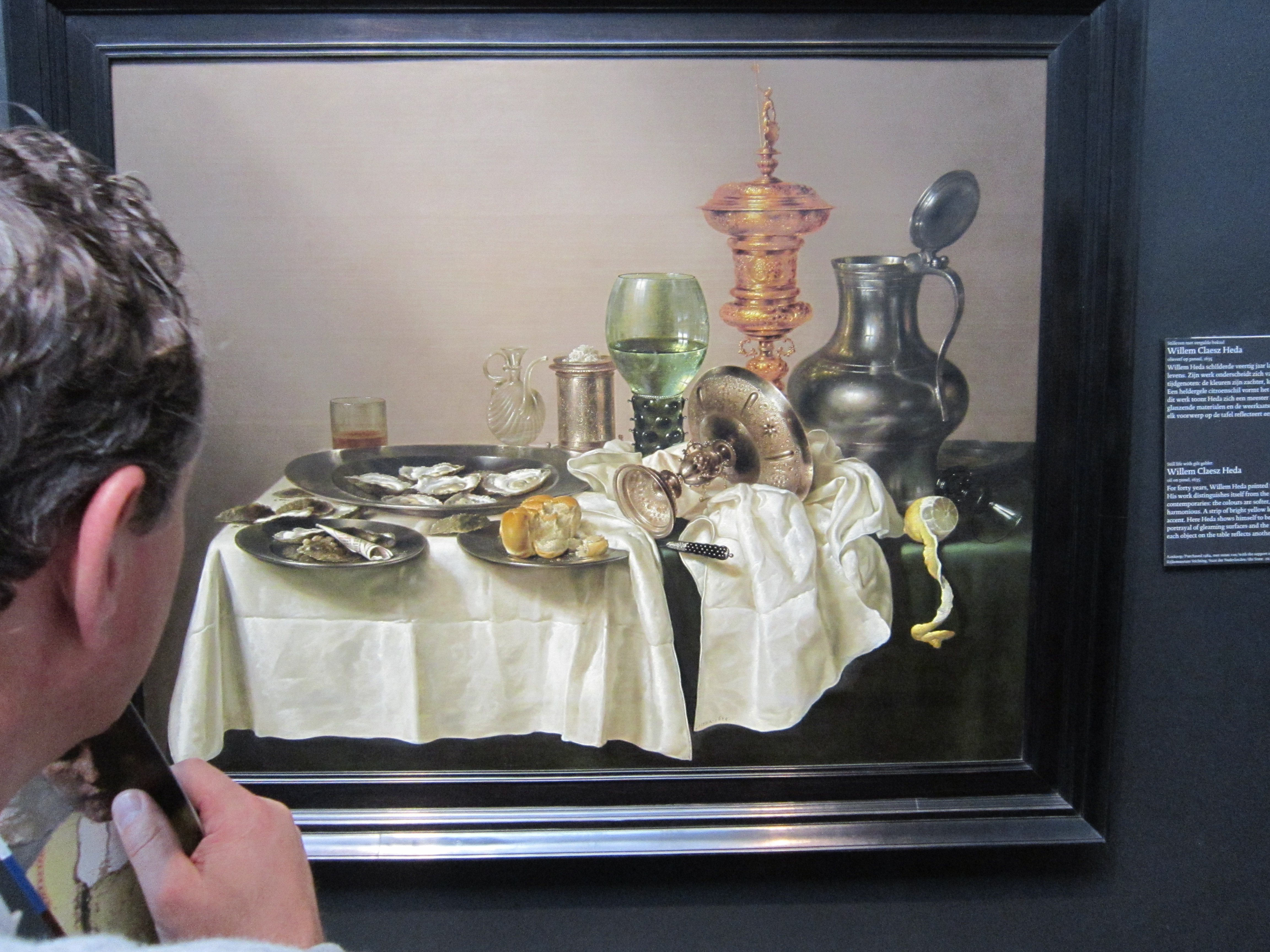
I also especially loved this still life by Willem Claesz Hedda. The realism of detail is astonishing. Looking hard at such paintings makes you wonder what you might see if you looked at everyday objects harder.

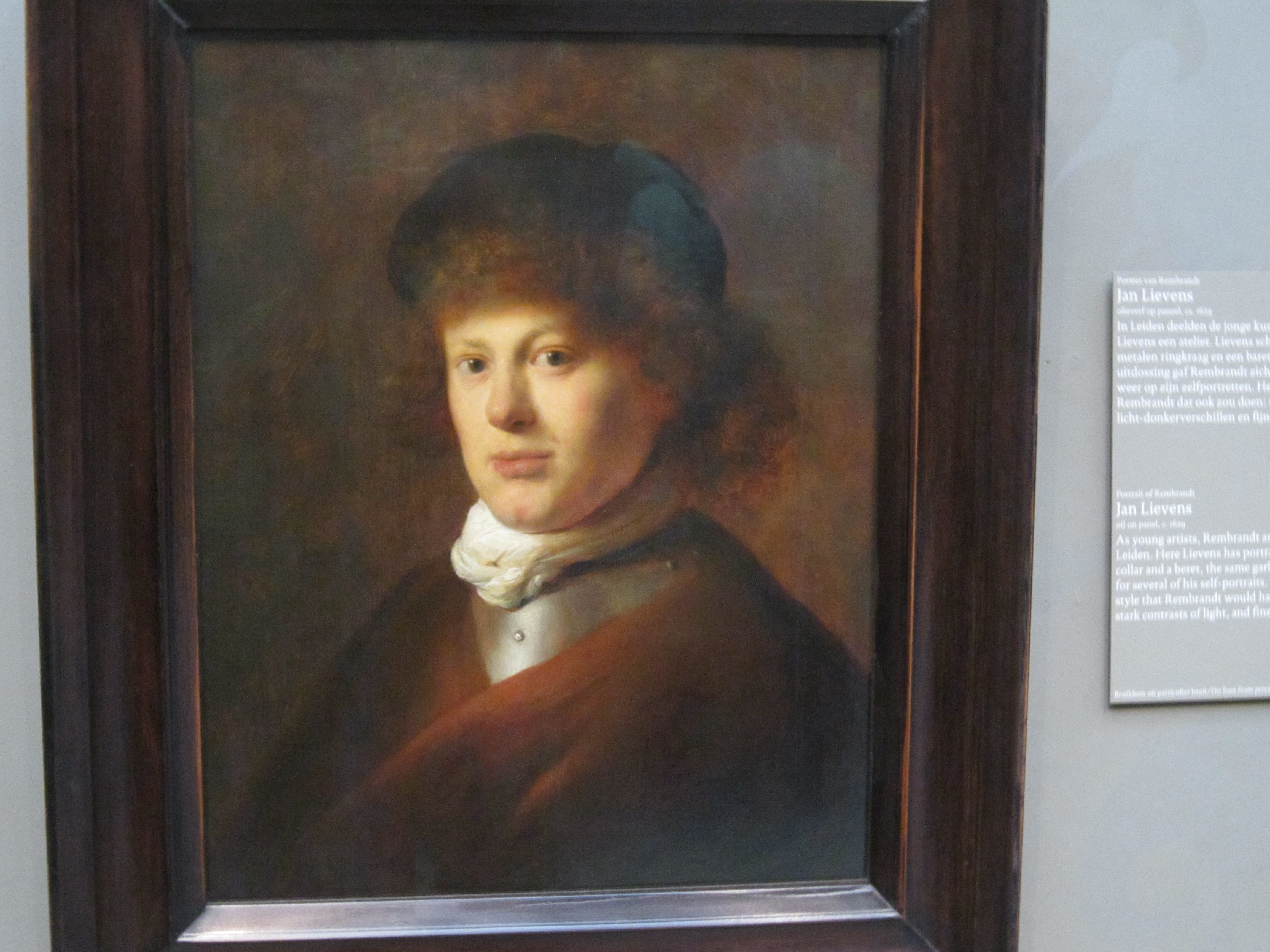
There were several great Rembrandts. Also, I was particularly moved by this portrait of a young Rembrandt by Jan Lievens, with whom he shared a studio early in his career. A youth with a bright future!

We enjoyed walking by the canals and squares, through the old Nine Streets district, the theatre district, and the Jordaan shopping area. We also had fun visiting the famous red light district. I’d imagined it would be at least a bit seamy and sinister, but not really. Yes, there were prostitutes in bikinis displayed in windows (some quite beautiful), porno theaters, and shops of sex paraphernalia, but also many cafes, bars, and restaurants. There were large crowds of cheerful people promenading. We had some delicious Thai food.

Sharing piano music, buying a painting, and going to a new ballet

Stuart is not overly excited about our new painting

What does art mean to life? I’ll take a strong position, and say, simply, everything.

My brother, Paul, and sister-in-law Jackie were passing through last week, and we convened for dinner at Zely and Ritz. But first, they came up to our apartment to see the view and have a cocktail. I wanted to play some piano music for them, but hesitated to propose it. Sharing serious music just isn’t something people normally do in these modern times.

I also recognize that for some people it would be an imposition. I think my playing is thoughtful and nuanced, but it isn’t perfect. Even if I were a seasoned professional concert artist, it would still be true that my nineteenth and early twentieth century repertoire would not be to the taste of everyone. Although it amazes me, I understand that some people find it bewildering or boring. I hope this is mostly because of lack of education and exposure — which is one reason I think it’s important to share it.

Fortunately, Paul and Jackie studied music in college and enjoy various genres. And so I played for them some Chopin (the Nocturnes in c-sharp minor and D flat) and Debussy (the First Arabesque). They sounded good, though maybe a little stiffer than when I play for myself alone. Playing for someone else dramatically changes the sensation of making music. Perhaps it’s from adding adrenalin. Things that seemed settled can become unsettled. Sometimes new beauty emerges, and sometimes things fall to pieces. This is one of the reasons I was happy to have these family listeners — without listeners, it’s impossible to learn how to communicate the music. Paul and Jackie seemed to enjoy it, and were very gracious.

At lunch time on Wednesday, Sally and I met at the Adam Cave gallery to look at some paintings. Sally had followed up on a review she’d read with investigation on the Internet, and come up with some works that might work for us by Byron Gin. Adam, the proprietor of the gallery, had agreed to pull together his stock of Gin works, and told us more about the artist. We both felt excited about Three Birds and a Cup, and discussed it more over a lunch at the Remedy Diner (great veggie sandwiches and rock music). The next day, we decided to take him up on his offer to take the painting home and see how it looked before committing.

Three Birds and a Cup, by Byron Gin

I think it’s a touching, slightly funny and engaging painting. The house sparrows look like quizzical house sparrows, but the space looks vibrant blue and gold paint. The yellow cup looks like a cup. The eye and mind shift back and forth between the birds and the cup, and the natural and human world. I find it nourishing and stimulating.

Friday night, we ate at Buku before going to the ballet. It was unseasonably mild, so we sat outside at dinner. Buku has increased its vegetarian offerings, and the ones we tried were good: baba ghanoush, arepas, and lentil wat. I also had the flight of three half glasses of Chilean wines, which were quite delicious.

At Fletcher Hall, we heard choreographer Lynne Taylor-Corbett speak on the new work to be performed that evening, The Little Mermaid. We’ve liked many of LTC’s works, including Carmina Burana and Carolina Jamboree. She’s a very engaging personality, and articulate and down-to-earth about what she’s trying to do.

She didn’t put it this way, but The Little Mermaid seems designed for ballet newcomers and kids. This was somewhat true of her The Ugly Duckling, but I found Duckling more elegant and touching. Jan Burkhard as the mermaid was lovely and girlish, and fun to watch, and Randi Oseteck as the sea witch was a great villain. And I particularly liked Lindsay Purrington as the sly village girl who tricks the prince. She made the part more sympathetic than the story might have suggest, so that I was sorry when she got her comeuppance. The costumes were mostly delightful. But I found the music intensely cloying, and the narration at times plodding.

The second half of the program was duets of a serious and more classical nature. I particularly enjoyed Lara O’Brien in an intensely tragic Weiss pas de deux with music by Gustav Mahler (one of the true greats). Peggy Severin-Hanson and Marcelo Martinez were powerful and delightful in Le Corsaire pas de deux. It was great to see this significant chapter in ballet history brought intensely to life.

I recently finished reading Apollo’s Angels, a history of ballet by Jennifer Homans. I found some of it heavy going, particularly the early stages, but it was worth it all for the last couple of chapters, including her writing on Balanchine, which was full of insight. It’s unfortunate that she ends the book on a sour note in which she opines that ballet is dying. From where I sit, there’s still a lot of life. I just checked the repertoire list of the Carolina Ballet, and noted that they’ve presented versions of many of the works that Homans discusses and treats as high points of the art. I’m so glad they’re here.

Work, Pilates, Bjork, and musical play time

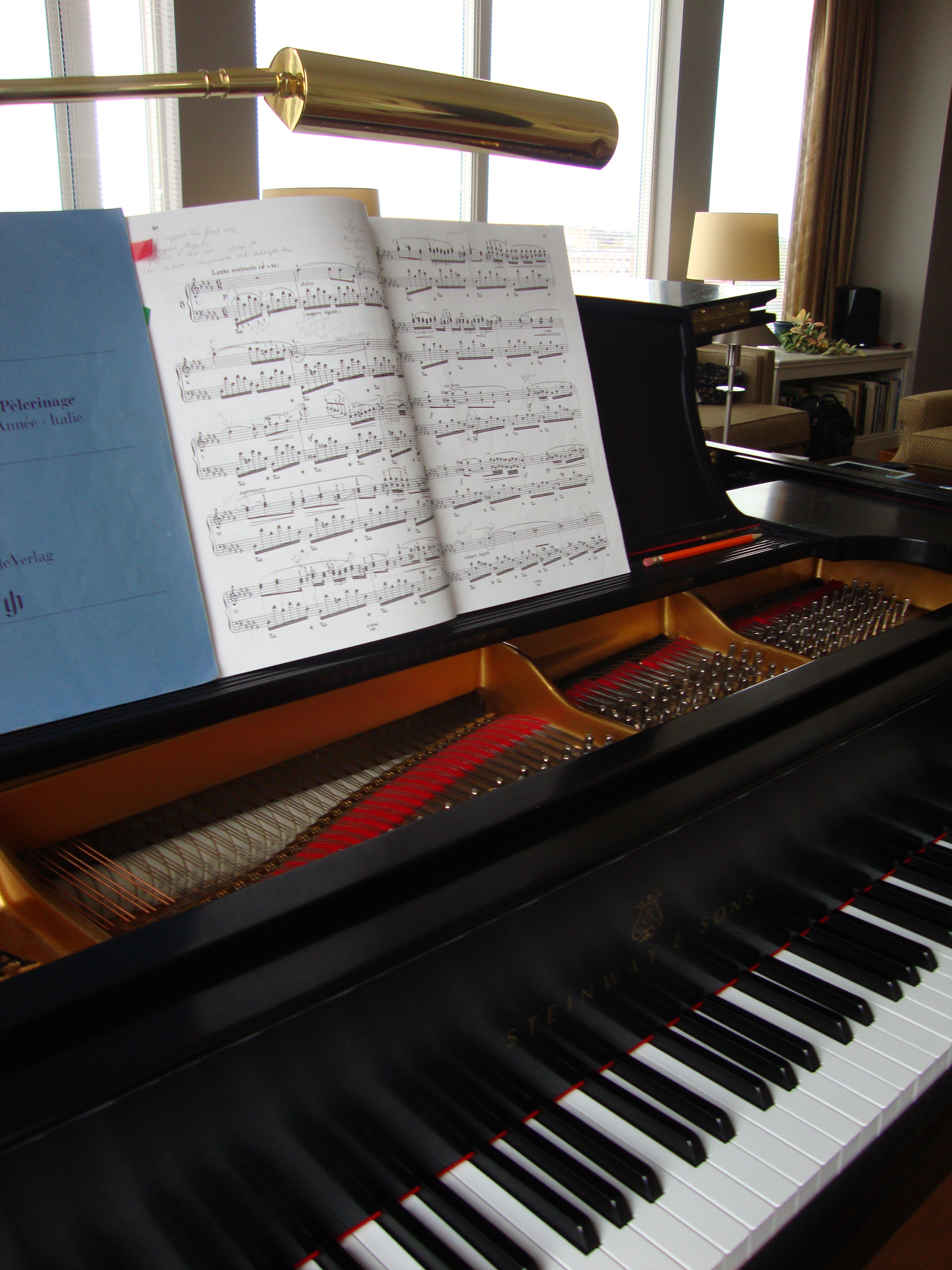
Nocturne in D flat major by Frederic Chopin

It was another busy week of many meetings, calls, and issues, with business dinners almost every night, and my email backlog continuing to pile up. But interesting, always interesting. On Friday I was scheduled to go to the coast for two days of wreck diving, but bad weather arrived and the trip was cancelled. I was not heartbroken. It was good to get some down time.

On Saturday morning it was cold and rainy. I thought of taking Yvonne’s open level Vinyasa yoga class at Blue Lotus, but learned from the web site that someone else was filling in for her. I check for alternatives, and found an early Pilates class at the Y. And so it was that I had my first Pilates experience. It was similar to yoga, with its emphasis on breathing throughout a series of exercises with unusual stretches and contractions. I found this particular class less strenuous than my normal yoga classes, and also less serenity-inducing. Still, I would do it again, especially if there’s no yoga available.

Other new things: earlier in the week I read a news story about Biophilia, the new multimedia production of Bjork, the Icelandic singer-songwriter, and downloaded the work to my iPad. Biophilia is in part a collection of songs about nature and science, but rather than being an album, it’s something we don’t have a word for yet. Bjork worked with scientists and artists to make interactive productions that allowed the listener to participate actively in the music by adding notes and altering images. After a few minutes of experimenting, I could make a bit of music with the tools provided, and participate in some of Bjork’s visions of microscopic, geologic, and celestial phenomena.

The idea of sharing a vision this way — not just providing passive entertainment, but inviting participation as a way of inspiring and teaching — is exciting, and the NY Times story took the view that it was ground breaking. For me, the experience was intriguing but not really thrilling. I liked being allowed to work with Bjork’s electronic instruments and play with her, but the musical possibilities were narrowly circumscribed and not expressive enough to satisfy me.

For example, by using the touch screen, in various songs you can add to Bjork’s fairly simple musical backdrop more harp notes or more synth notes, and play faster or slower, but so far as I could figure out without taking any new harmonic direction. The videos were in some cases beautiful, but the songs themselves were more performance art than either art music or dance music. Still, I liked the ideas, and I will probably play some more with Biophilia.

Phoebe, Holtkotter lamp, and music technology

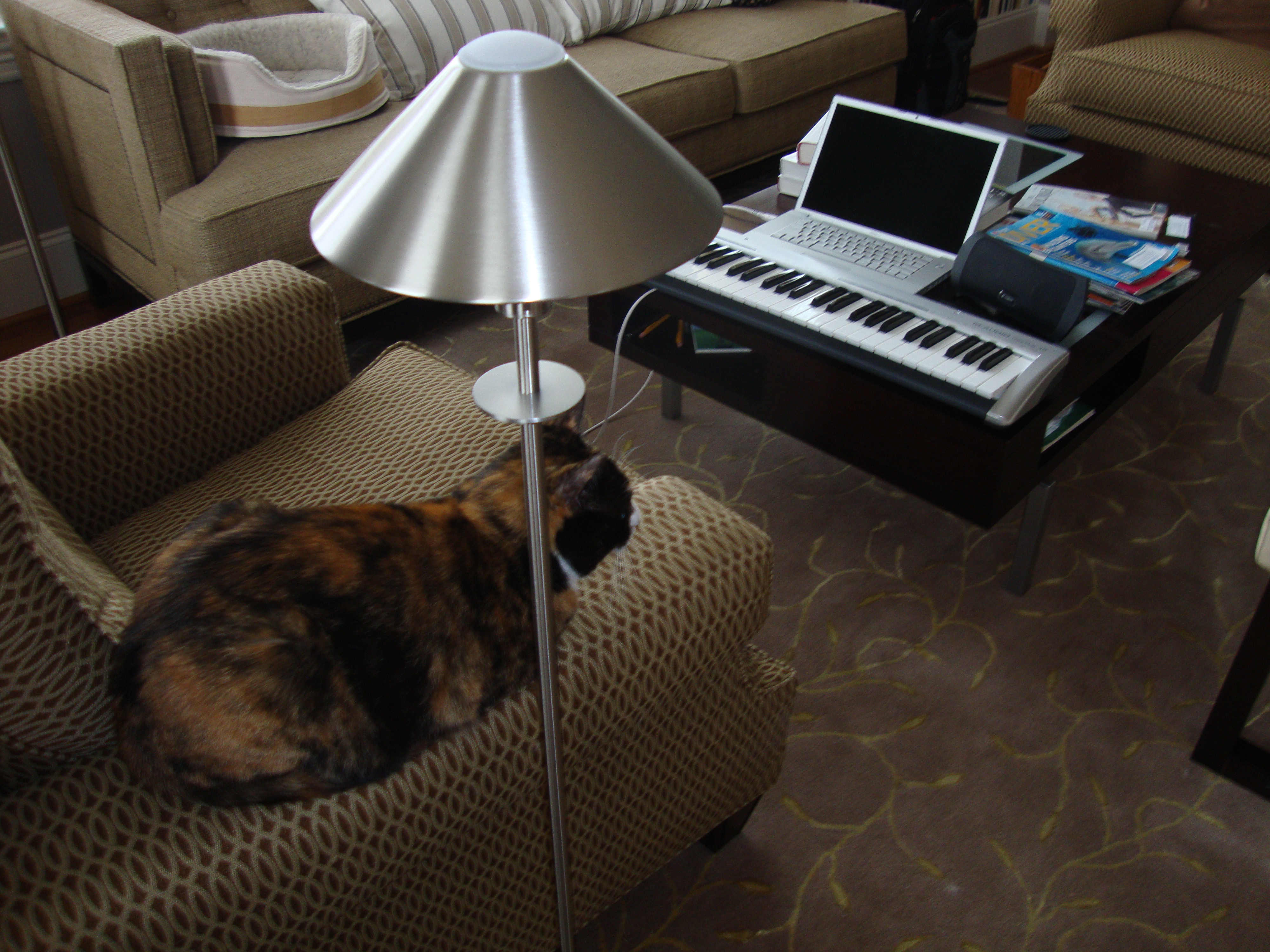
The idea of using technology to express new musical thoughts has interested me for a while. This past spring, I began playing with the instruments built into GarageBand (a Mac application), and eventually purchased a cheap electronic keyboard and a cheap auxiliary speaker to experiment with. One of my ideas was to translate early music (1500s) through synthesizer voices to see what new things emerged. The sheet music came with a lot of interpretive problems, so I didn’t get far on the vector. But I had fun improvising with various synthesizer personalities using various systems, like Greek modes and pentatonic scales. I thought of it as playing, in the sense of playing a game. It’s a different kind of musical outlet.

Bjork’s idea of engineering a collaboration with an unknown audience has a distinguished heritage. It’s what we do when we open a volume of Chopin nocturnes and start to play. Chopin left us the architectural drawings, which the pianist uses to create musical in real time, while at the same time personalizing the structure with thousands of unwritten details according to the pianist’s experience, intelligence, and feelings.

This system — master composer, written music, trained pianist — has worked amazingly well for a couple of hundred years. It does, however, depend on musical education — there has to be a support system for training pianists, and also listeners. For music with the harmonic complexity of the great Western tradition, you have to learn a lot before you can interpret it, and you have to learn a fair bit to get deep enjoyment from listening to it. It is worth the effort.

I sometimes worry that there is a long historic curve in which our music devolves from the complex and brilliant to the simple and sweet, and from there to the just plain dumb. The traditional system of classical music education and performance is not in good health. But perhaps humans are just getting started in discovering what music can do. Who knows where it goes? We have to keep experimenting, keep creating. That’s what Bjork is doing, and good for her.

Farewell and thank you, Steve Jobs

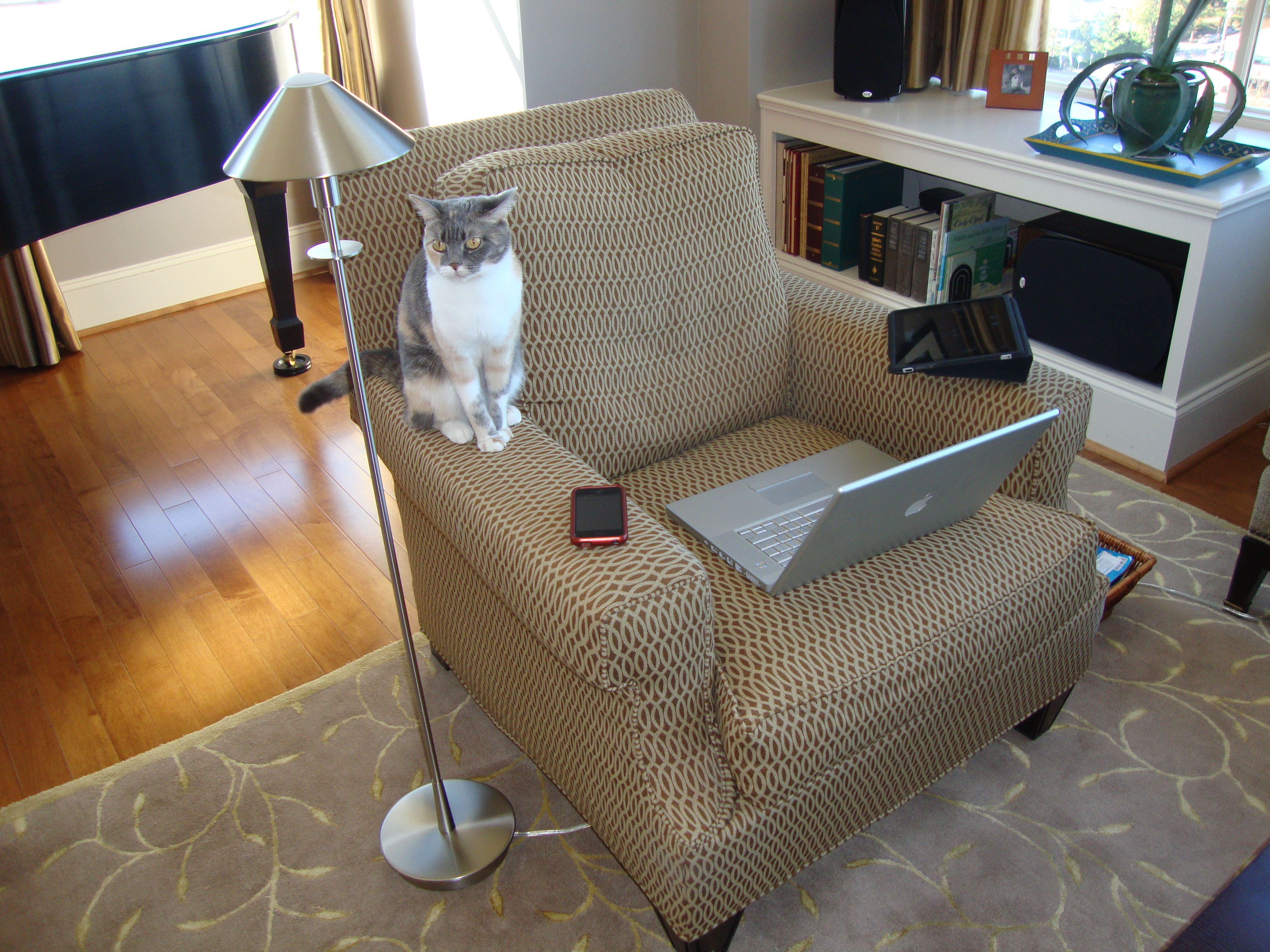
Rita with marvelous Apple devices

Appropriately enough, I got the sad news of Steve Jobs’s death from one of his devices. I was at home reading the news in El Pais on my MacBook Pro, with my iPad on one arm of the easy chair tuned to a Spanish-English dictionary and my iPhone on the other arm. (My iPod was recharging.) I don’t consider myself a huge Apple fanboy, but I cannot deny that these devices are marvelous and delight me every day. And so, like millions of others, I have a life that was changed in a positive way by Steve Jobs.

Jobs was just five months older than me, which brings to mind more-than-usual intimations of mortality. His killer, pancreatic cancer, was the same that killed my mother, so I’ve known for years that it’s a bad one. After her diagnosis, she was gone in four months. Watching Jobs’s string of successes over the last five years, I’ve been amazed at his tenacity and courage. Knowing that death was staring him in the face, he just kept on creating. This was one tough hombre.

Driving home the next day, I heard an excerpt on the radio of his 2005 Stanford commencement speech in which he set forth the following test. Every morning, he said, he asked himself, if this day were his last, would he want to spend it doing what he was planning to do. If the answer was consistently no, he changed course. I almost believe it. In any case, it’s courageous to attempt it.

A bit more of his remarkable Stanford speech:

“No one wants to die. Even people who want to go to heaven don’t want to die to get there. And yet death is the destination we all share. No one has ever escaped it. And that is as it should be, because Death is very likely the single best invention of Life. It is Life’s change agent. It clears out the old to make way for the new. Right now the new is you, but someday not too long from now, you will gradually become the old and be cleared away. Sorry to be so dramatic, but it is quite true.

“Your time is limited, so don’t waste it living someone else’s life. Don’t be trapped by dogma — which is living with the results of other people’s thinking. Don’t let the noise of others’ opinions drown out your own inner voice. And most important, have the courage to follow your heart and intuition. They somehow already know what you truly want to become. Everything else is secondary.”

In the Stanford speech, Jobs tells of taking a calligraphy course after dropping out of Reed College, and then a decade later finding that what he’d learned gave him direction in designing the first Mac. He clearly thought like an artist — perhaps even more than like an engineer. He’s quoted in the NY Times obit as saying that great products were a triumph of taste, of “trying to expose yourself to the best things humans have done and then trying to bring those things into what you are doing.” Amen.

Good conversations

One of my favorite movies is My Dinner with Andre. The 1981 movie is about as simple in concept as possible: two old friends have a conversation in a restaurant. It starts out like a typical conversation, though livelier and wittier than most, and gradually begins to soar and swoop. It’s like a duet, or a dance in words. The friends are having fun, but are also creating something. It sets a high bar for a great conversation, but it’s also inspiring. It shows that a good conversation is a work of art.

This week at Red Hat we had a meeting of our entire legal department, including colleagues from our foreign offices. I had five business dinners in a row, not to mention five business lunches and multiple impromptu encounters between meetings. There were plenty of conversations. A number of my colleagues were inspired talkers, and knew a lot about their subjects.

Some of our conversations were fairly ambitious: talking with Monica about European IP law; with Amanda about race in America; with Madeline and Kathal about blogs and the future of literature; with Mei about refusing membership in the Chinese Communist party; with Richard about the future of open source licensing, with Winston about conservative politics; and with Patrick about religion in Utah. There were many good stories: e.g. Eric on playing tennis with Andre Agassi; Emily on working with her personal trainer; and Jean on working as a flight attendant for Singapore Airlines.

It was varied and fun, and I felt grateful to be associated with a group of such interesting and stimulating people. But as Myra and I discussed, socializing in large doses is depleting. I felt really tired and ready to relax when we finished our meetings Friday afternoon. When I got home, I did some yoga, and then played some Chopin and Debussy. It always amazes me how half an hour of immersion in making music can refresh the mind and produce great happiness.

Sally mixed us basil gimlets (one of her signature drinks) and cooked a tofu curry while we listened to a Pandora mix of contemporary Indian music. At dinner we talked about some big subjects, including global warming and species extinction, which we both worry about. The topics are, of course, anxiety producing and sometimes depressing, and depression may lead towards hopelessness. And loneliness. These issues can be friend repellents: who wants to be with a depressing person who makes you depressed? This is another reason it is good to have a committed loving partner: you can talk about serious things.

We also talked about art and science. Recently I read The Wild Life in Our Bodies, by Rob Dunn (a professor at N.C. State), which discusses evolution of humans as a story that cannot be understood without appreciating our symbiotic microbes (fact: they’re more numerous in our body than human cells), parasitic worms (which may prevent disease), our former prey and predators, and other aspects of the natural world. The book is uneven, but the vision is sweeping and fascinating. It is my latest piece of evidence for the theory that scientific intuition and artistic intuition are very much alike, and they can be thrilling in much the same way.

Golfing at Turnberry, Scotland

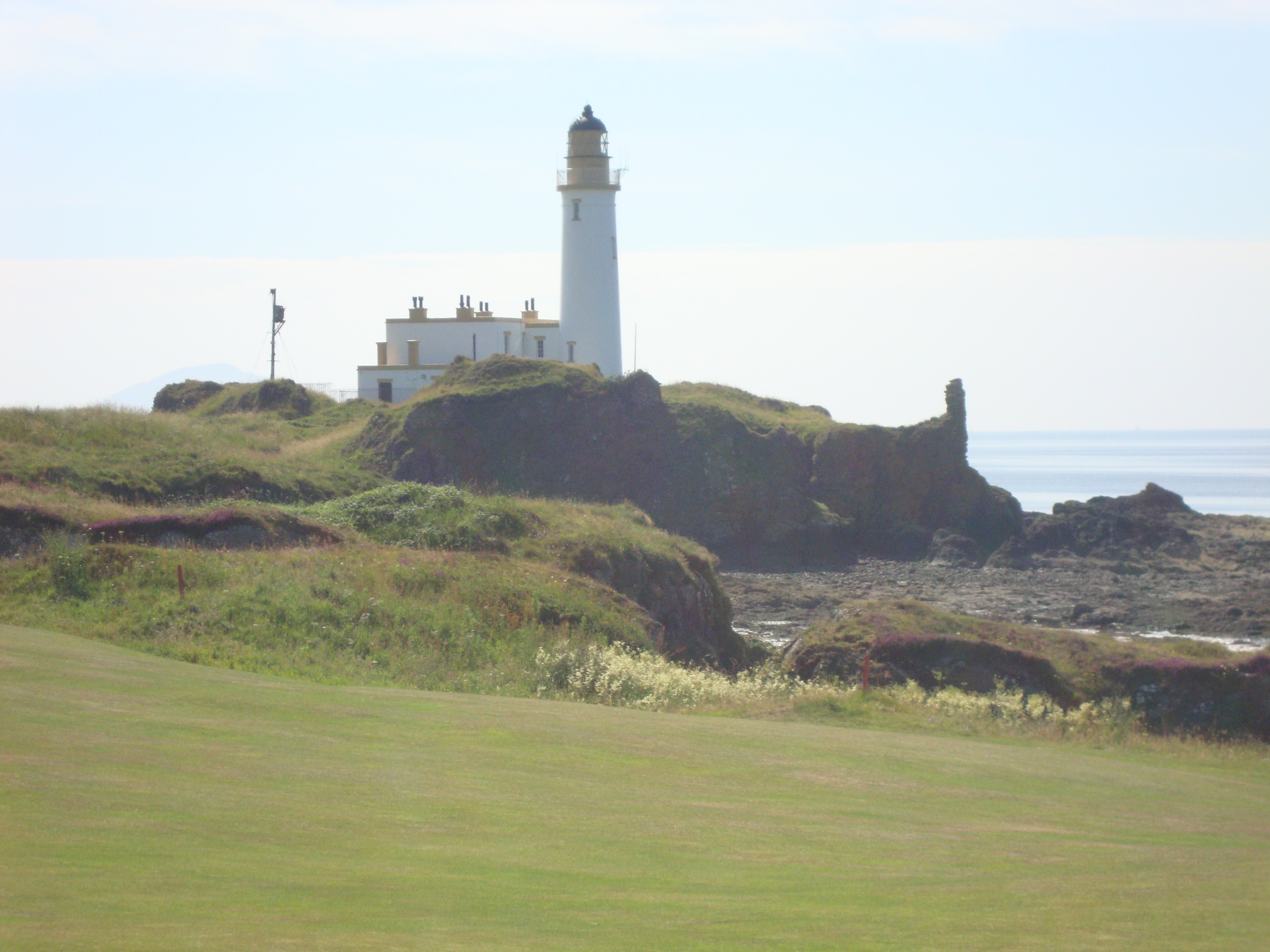
Turnberry, Scotland (Kintyre)

Last week I played golf at Turnberry, Scotland, rated the number one course in the British Isles, and the site of numerous British Opens. Is it really so great? In a word, yes. It was golf nirvana.

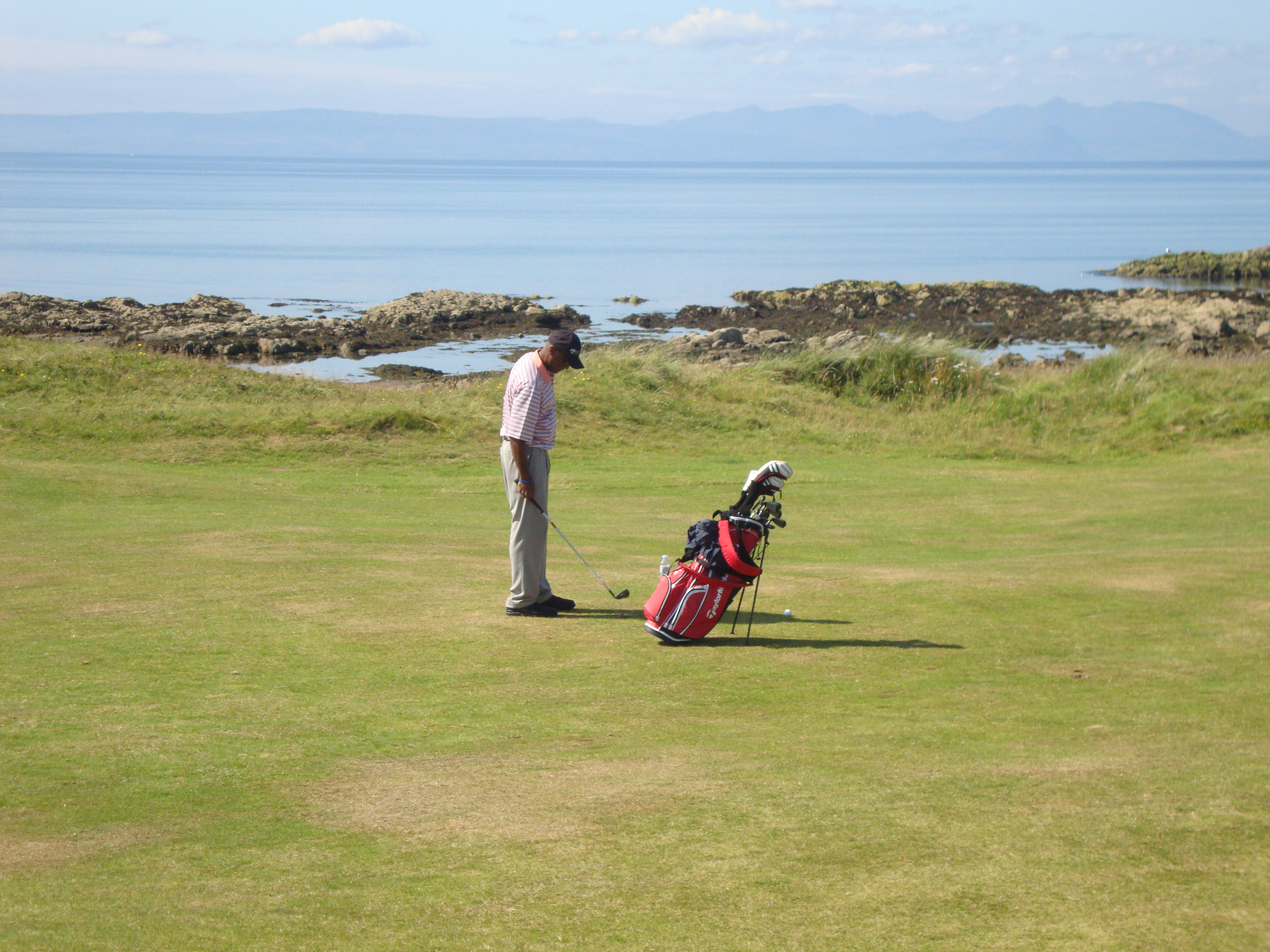
I played the famous Ailsa course the day I arrived, immediately after traveling all night. The day was sunny and mild — possibly too pleasant for a representative experience. At almost every hole, I had a shiver at the beauty. It had a raw, untamed quality, but I gradually realized that it brilliantly combined the natural contours of the terrain with a deep understanding of the essence of golf. Its authors and keepers loved the land, and the game.

It demanded constant vigilance and focus. The hazards were, in golfing terms, serious — deep bunkers with walled backs, knee-high grass, spiny gorse, and water. I had one disastrous descent into a bunker, costing four strokes to get out. But I generally controlled the ball well, with a handful of excellent shots. I did not putt particularly well till the end, when I finished with a flourish — sinking a thirty-footer on 18 for a birdy. I ended up with a 92.

I played the Kintyre course the next day. The skies were overcast, threatening (but never quite delivering) rain, and there were gusty winds — proper Scottish golfing weather. The ocean is a bigger element in this course, and the bunkers less. It seemed less imposing than Ailsa, with views of the surrounding hills and pastures, but the level of difficulty was challenging enough. I played reasonably well for me on the first nine (46), but had a couple of bad blow ups in the second and finished with a 99.

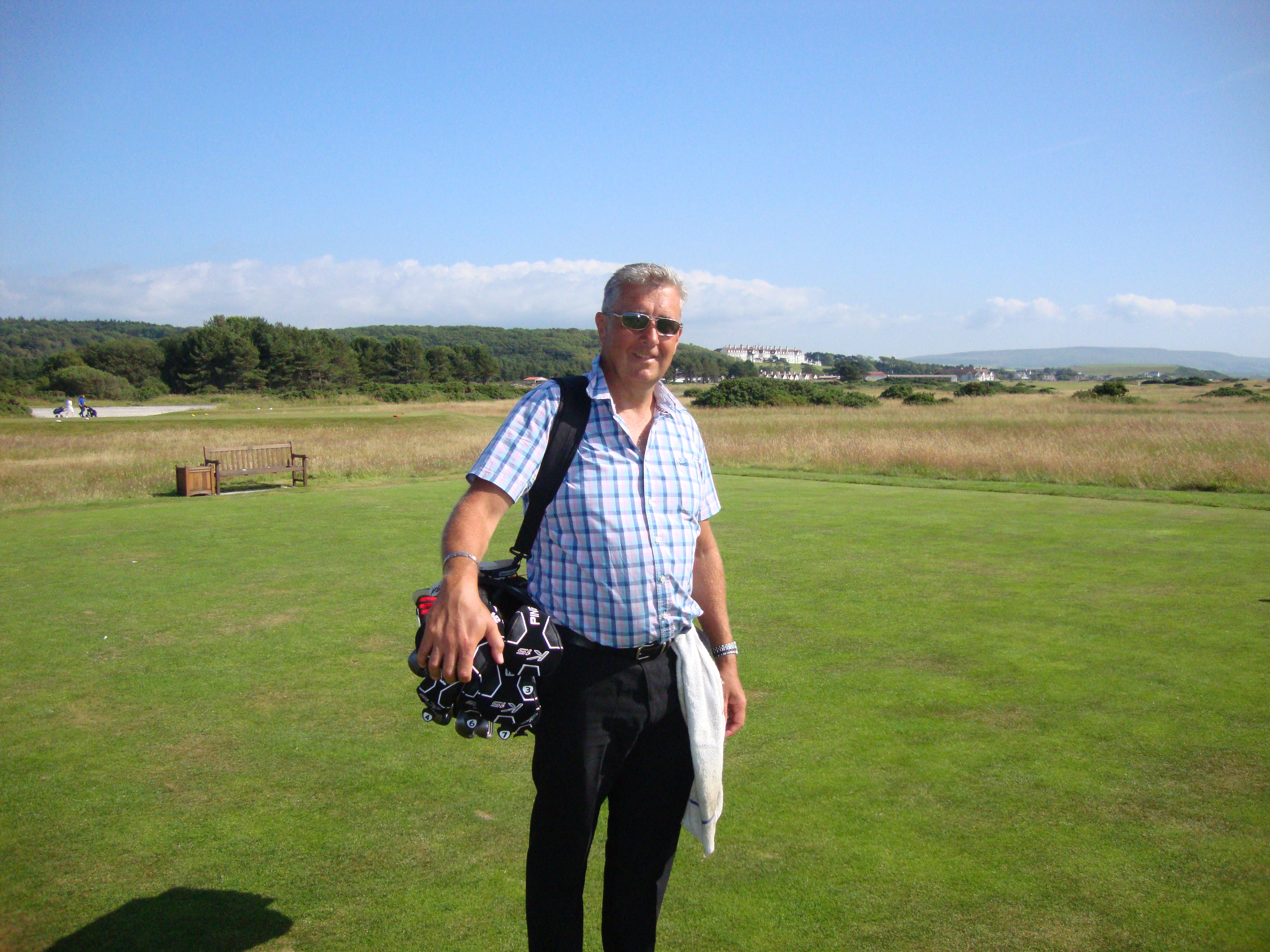
Jim, my caddie, and a Linux fan

There is something about Scotland that spoke to me powerfully. The people seemed friendly, but practical and tough and very proud of their country. The countryside was rolling and rugged. I got a lesson in single malt whiskey, and learned that it a dash of water loosens it up.

After finishing my meetings, I had a few hours to walk about in Glasgow, and found it a lively, modern city with Victorian charm. I made a stop at the Gallery of Modern Art to see works of several contemporary artists, and also visited the Kelvingrove Museum. Their collection of Impressionists and Post Impressionists is quite good, and I also liked their collection of 16th century armor. There were lots of people out in Kelvingrove Park, which reminded me of Central Park in New York, but with grass tennis courts and lawn bowling.

The trip back was long — about 19 hours all told. It started with a 5 hour delay because of weather in Newark, and the 7 air hours were bumpy. One good word for Continental — they provided surprisingly tasty curry as part of my requested vegetarian meal. I ran out of electricity on both my iPod and iPad, and came close to running out of other reading material (horrors!).

The Newark to Raleigh leg was uneventful until near the end, when the pilot suddenly pulled up from the final approach and banked to circle around. My first thought was that I might have a rookie pilot, but he explained that there was a local thunderstorm with microbursts of wind. A few minutes later we made the final approach, and the plane began bucking and shimmying. I focused on deep calming yoga breaths.

A recording session at Manifold Studios with Michael Tiemann, John Q. Walker, and the ghost of Oscar Peterson

Last weekend I attended a recording session at Maniford Recording, my friend Michael Tiemann’s new recording facility in Chatham County near Jordan Lake. Michael’s been working on this project for four years, and it is clearly a labor of love. The setting is rural piedmont North Carolina, surrounded by farms and forest with lots of songbirds. (I heard a whippoorwill singing ardently for the first time this year or last.) The architect was inspired by Frank Lloyd Wright, and incorporated the golden ratio throughout the design. Michael explained his his purpose in terms of making great recordings with a total devotion to truthful sound. I noted that this is swimming against the tide of contemporary culture, which Michael conceded, but he noted that tides can turn.

The recording was done by software developed by Zemph, a company founded by John Q. Walker, who was also at the session. The objective was to reengineer a recording by Oscar Peterson (jazz pianist) and Ray Brown (bass) from 1949. A hundred-year-old Steinway that had once been at Carnegie Hall had been fitted out to play itself using Zemph’s software, and the Zemph folks had created a new instrument to reproduce the bass. The sound was uncanny. It was unsettling, but kind of moving, to see the piano keys moving, and the sound had authority.

I went through a long period of studying and really loving jazz. I still enjoy it from time to time. I particularly enjoy music from the big band era. But jazz sometimes gets more reverences than it deserves, based in part on the myth of improvisation. The non-musician perceives improvisation as a bold experiment, but it’s usually not. What improvisation mostly means is either variations on prior melodies or laying prefabricated riffs in various orders on top of fairly simple, repetitious chord structures. It can sometimes have energy and heart, but it can also be fairly boring. When I started to feel a little bored, I found my way back to the Western European musical tradition, in which composers wrote down ideas so rich that we still find, centuries afterwards, it interesting, and sometimes transcendently moving, to confront them. I don’t get that from Oscar Peterson.

John graciously allowed me try out the pianos after the session. I found the Carnegie Steinway a bit loose and diffuse, but the Hamburg Steinway was wonderful — brilliant colors and clarity. I worried that the reproduction equipment, including circuit boards attached to the keys, could affect either the sound or the action, but I couldn’t perceive any such effects. I played a bit of Chopin, including the Minute Waltz, and a bit of Debussy’s First Arabesque.

I enjoyed seeing the technology for recreating the performance, and the mixing session in the studio. And it was inspiring to see how passionate Michael and John were about the music. I have a soft spot for people that are absolutely passionate about art that will never win a popularity contest or make a dollar. It’s a reminder that art matters at the most intimate human level, and can inspire love so intense as surpass all rationality.

Technology, new art forms, food, and ballet

I’m fortunate to have a ring side seat as information technology is transforming the world, but it doesn’t always look pretty. It makes me wonder, at times, whether, as machines get smarter, humans on average are becoming more and more like the race depicted in the wonderful animated picture Wall-E: fatter, lazier, and dumber. But I haven’t given up all hope, and there are some signs pointing the other direction.

A case in point: this week when my son Gabe (pictured here at Alta last week) sent along his first self-produced short video, which is here. He shot it with a tiny body cam over the course of 3 days skiing in Telluride, CO. The finished product reminded me strongly of some of the beautiful skiing we did together. It’s hard to describe the complex sensations and emotions of skiing far from away from the crowd when its steep and deep, but Gabe managed to convey some of it. The flamenco score heightens the sense of edginess — wild joy with stabs of fear.

Good skiing sometimes seems like art, almost like dance, but the work is seldom shared with other humans by the skier-creator. Until recently, filming the experience was a costly and difficult undertaking. In the past couple of years, though, video cameras have gotten much cheaper as well as tinier, and easier to use, and the software for recording and editing has become highly accessible. The tools for communicating the work instantly and almost cost-free over the internet now exist. The learning curve for use of all this technology is short. And so a new class of artist is being born — the skier-auteur. Technology advances are likewise enabling new types of musical expression, and undoubtedly many other artistic expressions. Perhaps the day will come when everyone will be an artist.

Is food art? I argued about this years ago with my friend Tom, a gourmand who took a strong position that great chefs were artists. Over the years, I’ve moved closer to his position. A great restaurant is a multi-media experience, with sets, lighting, sound, and actors, and also smells and tastes.

Last night Sally and I tried a new Thai restaurant off of Moore Square — Fai Thai. It has replaced the Duck & Dumpling, an Asian fusion spot that was one of our favorites, and that we were sad to see close. The emphasis is less on standard Thai fare than on local ingredients and variety. The decor changes involved colorful parasols and lanterns, which were engaging. The menu had fewer vegetarian options than we hoped, but enough to get started. We found the three dishes we tried each quite different and delicious. The spiciness hit the Goldilocks point — not too much, not too little. Our waiter was friendly and attentive, and the manager took some time to talk to us about the aspirations of the place. He appeared to take on board our suggestions for more attention to vegetarians. Thai food fans should try it.

After dinner, we saw the Carolina Ballet perform Carmen. This is the third time we’ve seen the company do Weiss’s ballet, which is one of our favorites in the repertory. Bizet’s music is unforgettable, and the story is sort of perfect for ballet — love, jealousy, death. For all my admiration of Peggy Severin-Hansen’s great talent, I had my doubts about her as Carmen, who is a sensual, cynical heartbreaker. Peggy’s long suit is purity and innocence — the perfect Firebird. Her Carmen was sweeter than normal, not completely cynical, but this turned out to give the tragedy a new bit of bite — more tragic in a way. Richard Krusch as the Toreador was highly serious, and convincing. He’s a fine dancer who keeps getting better. As always, the story ended with a violent shock, but the production was wonderful.