The Casual Blog

Tag: wild horses

A week at the beach, dogs vs pigs, and the communist menace

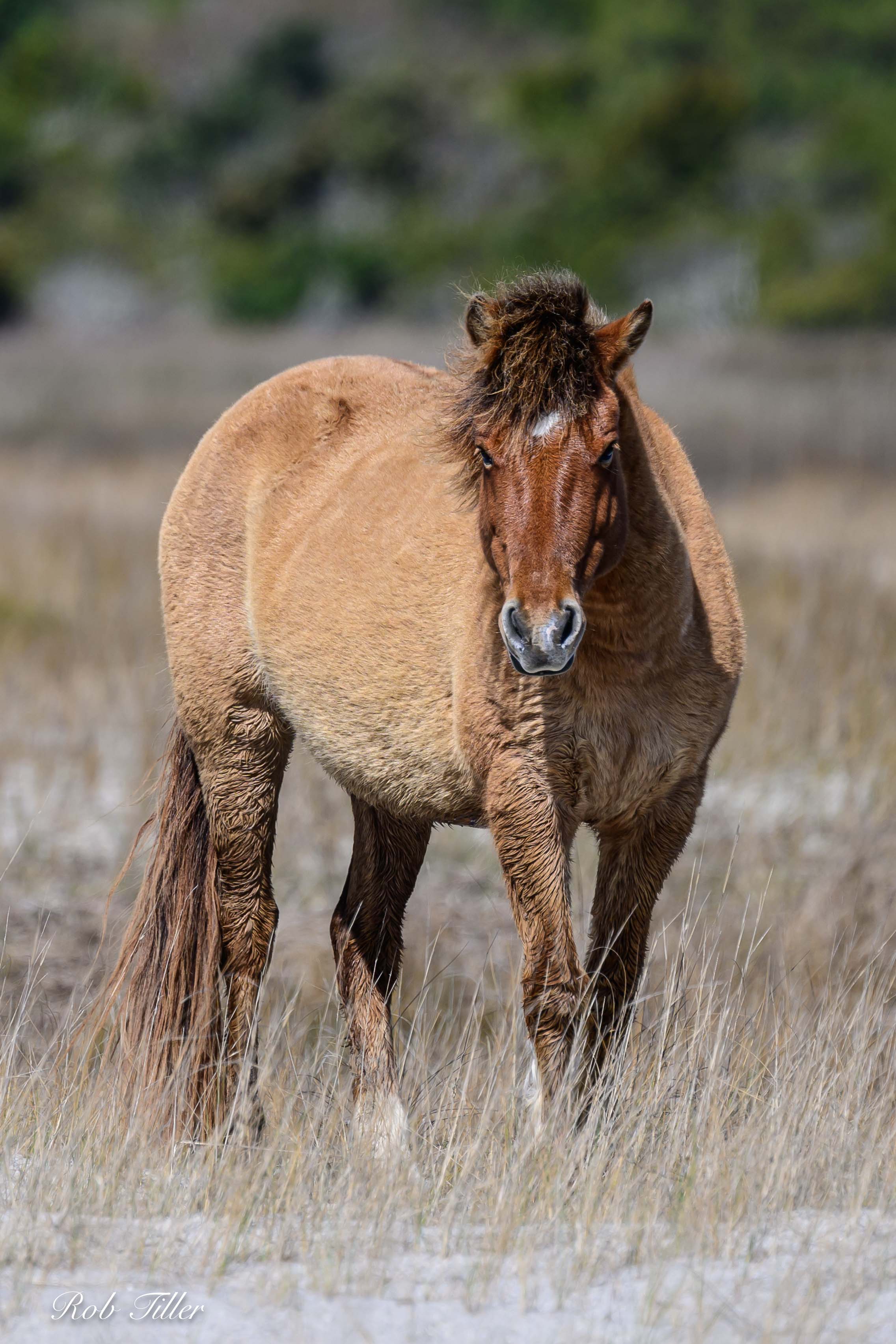
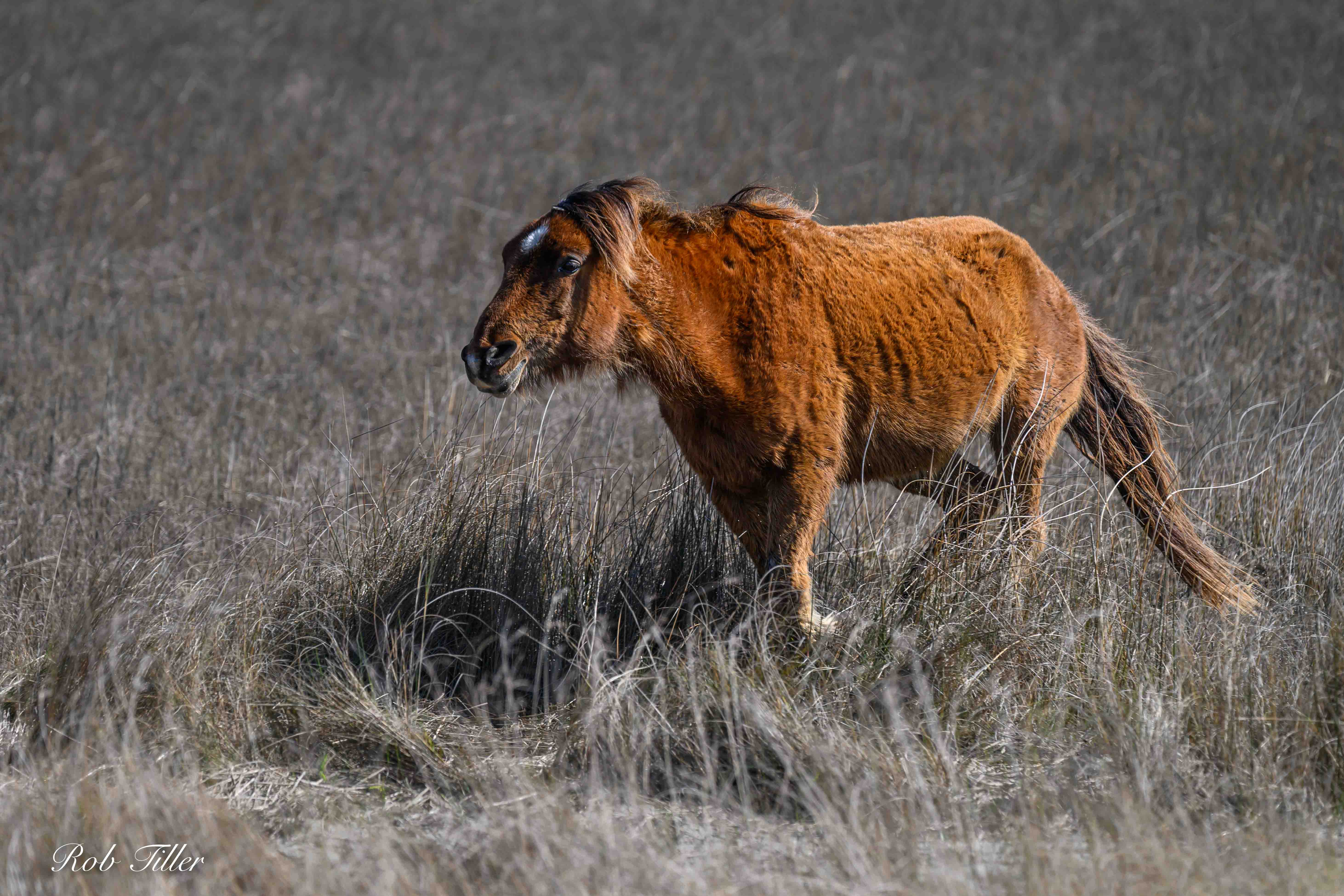
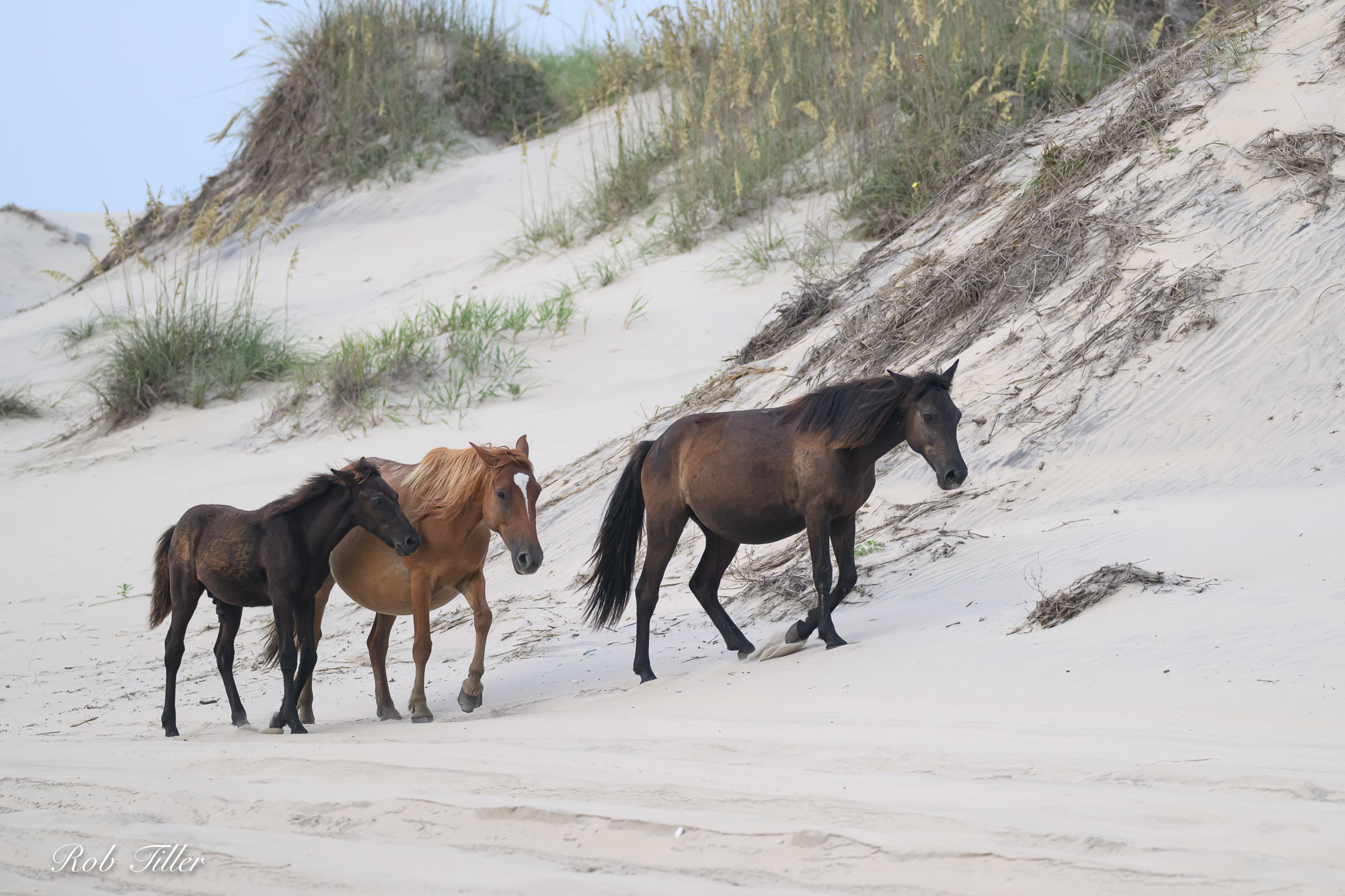
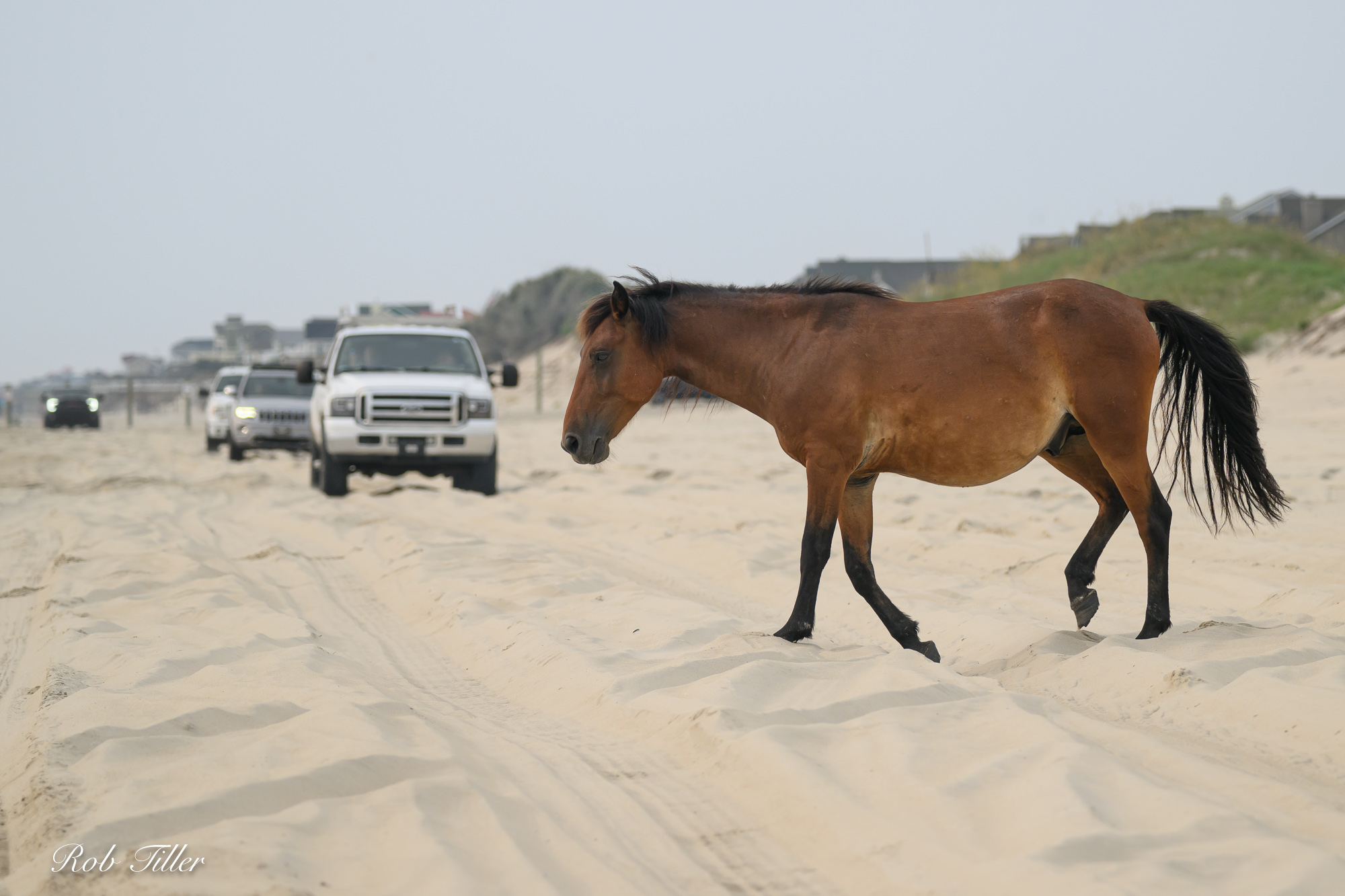
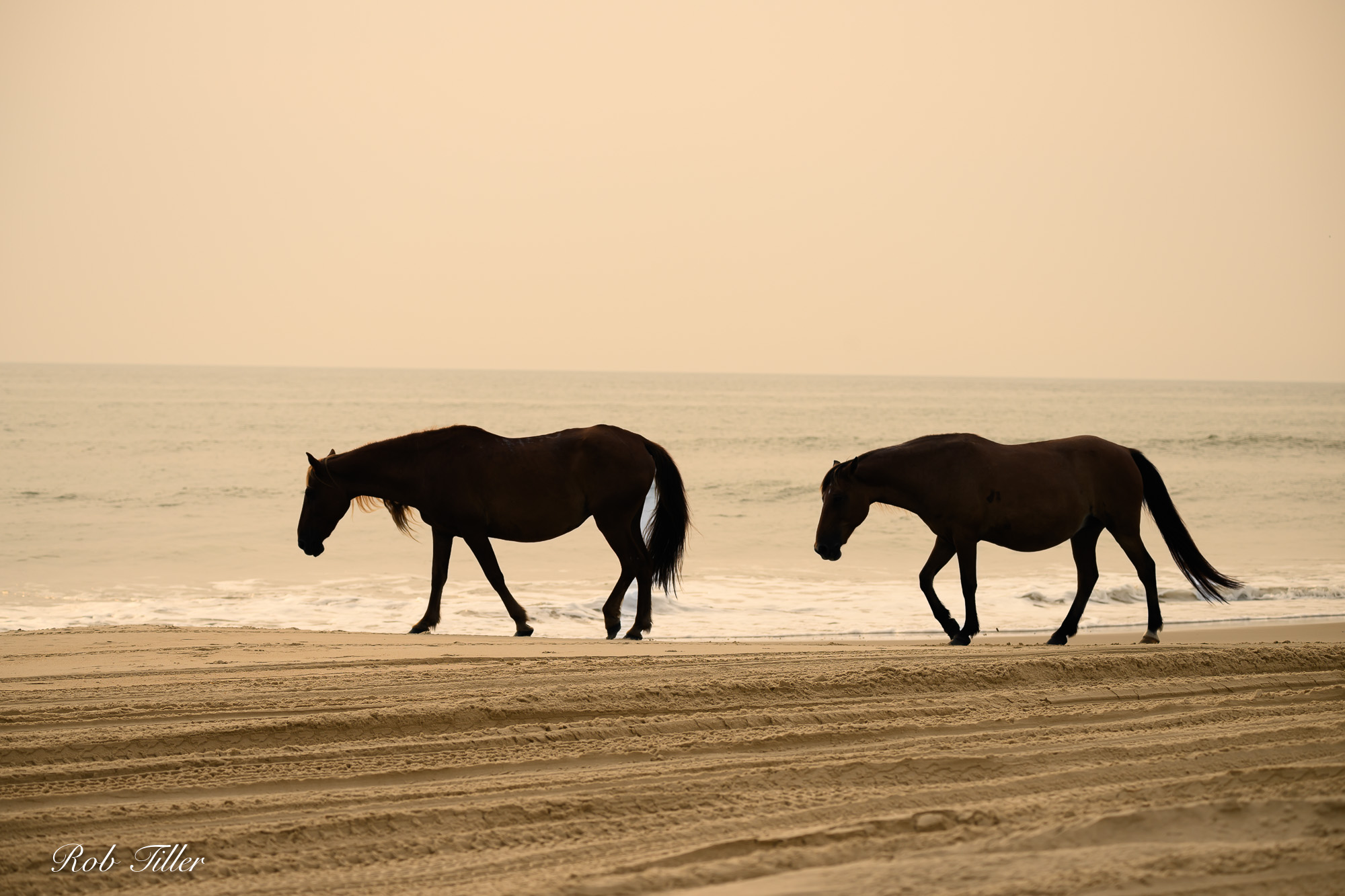
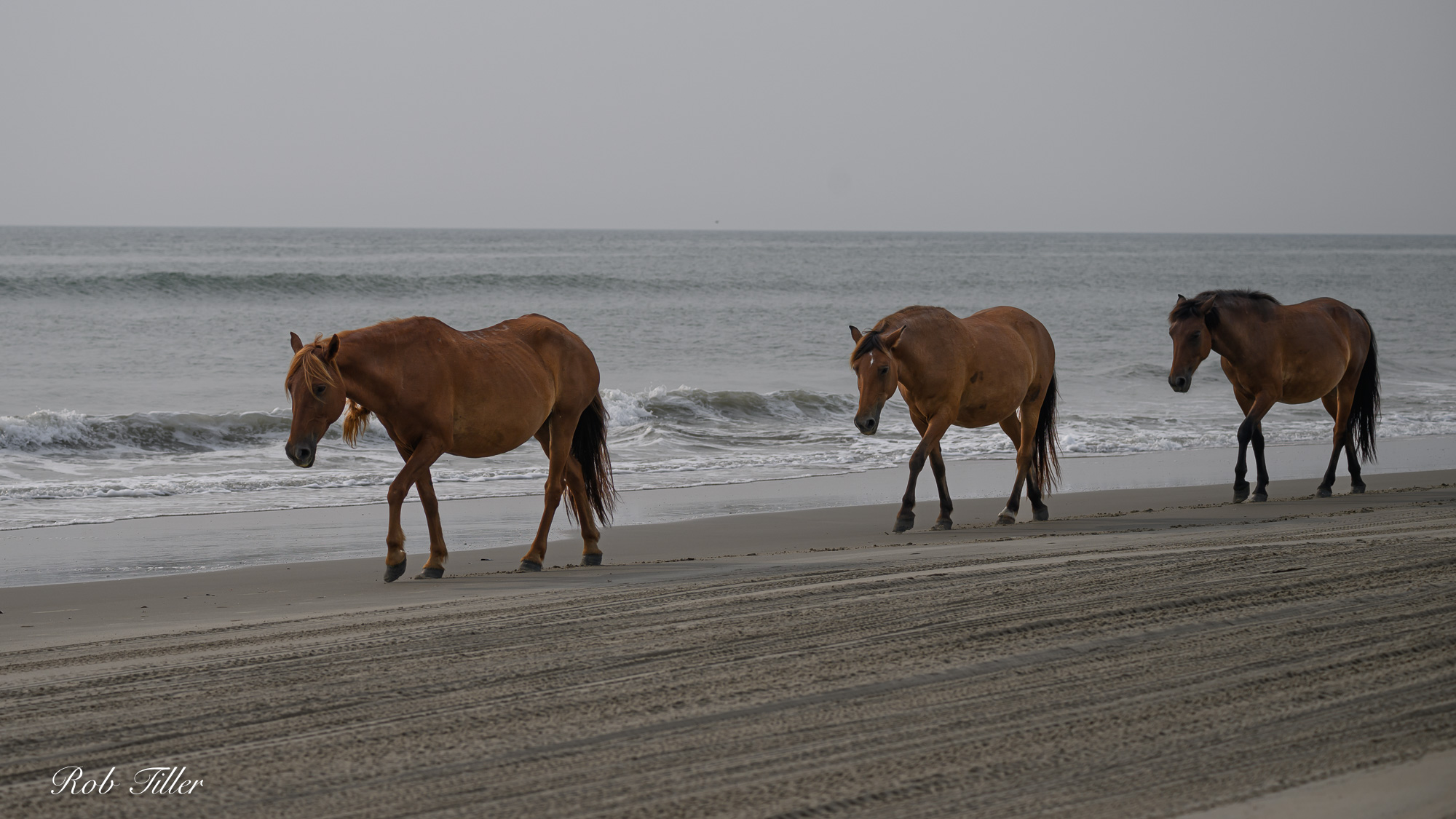
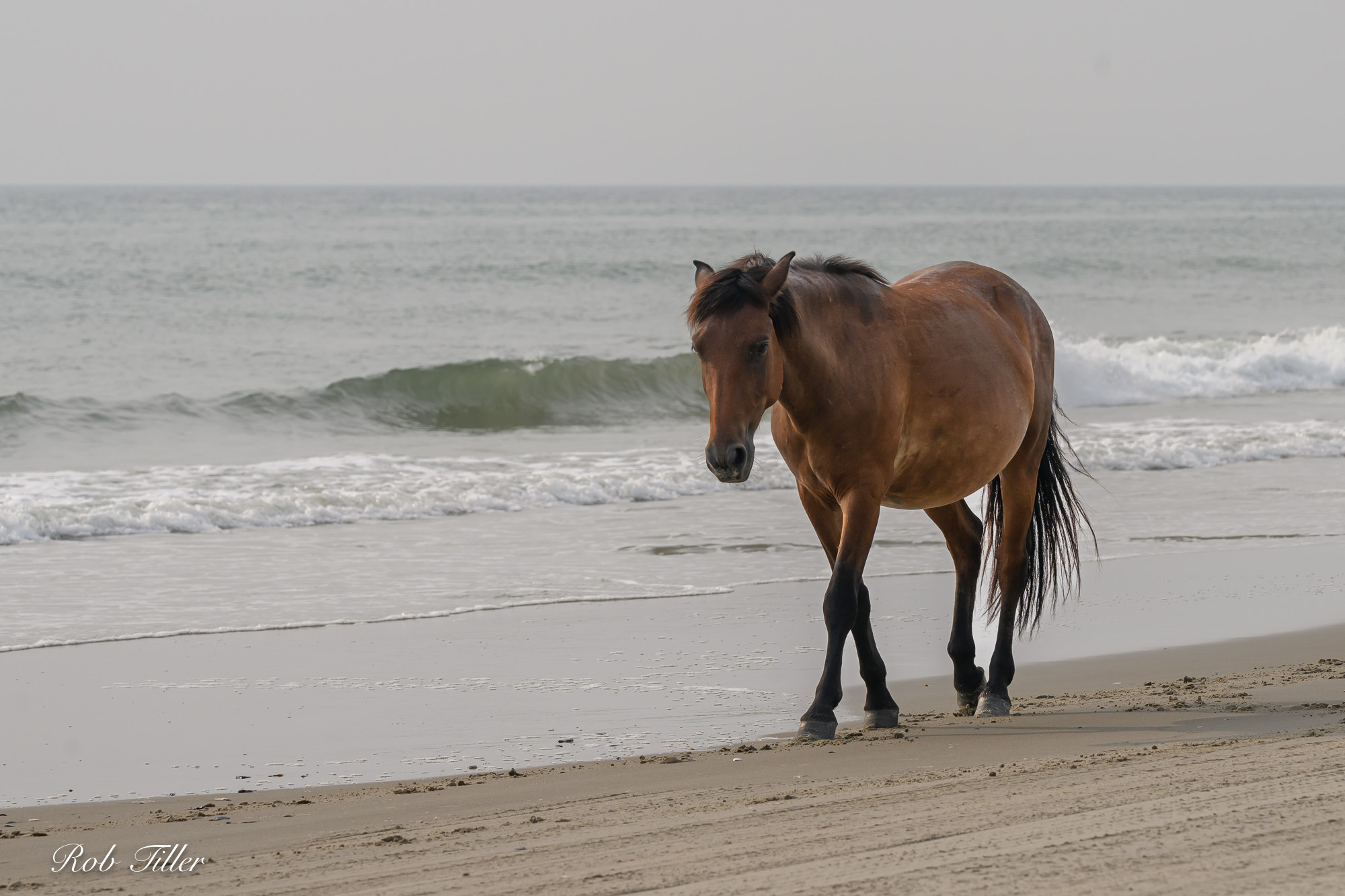
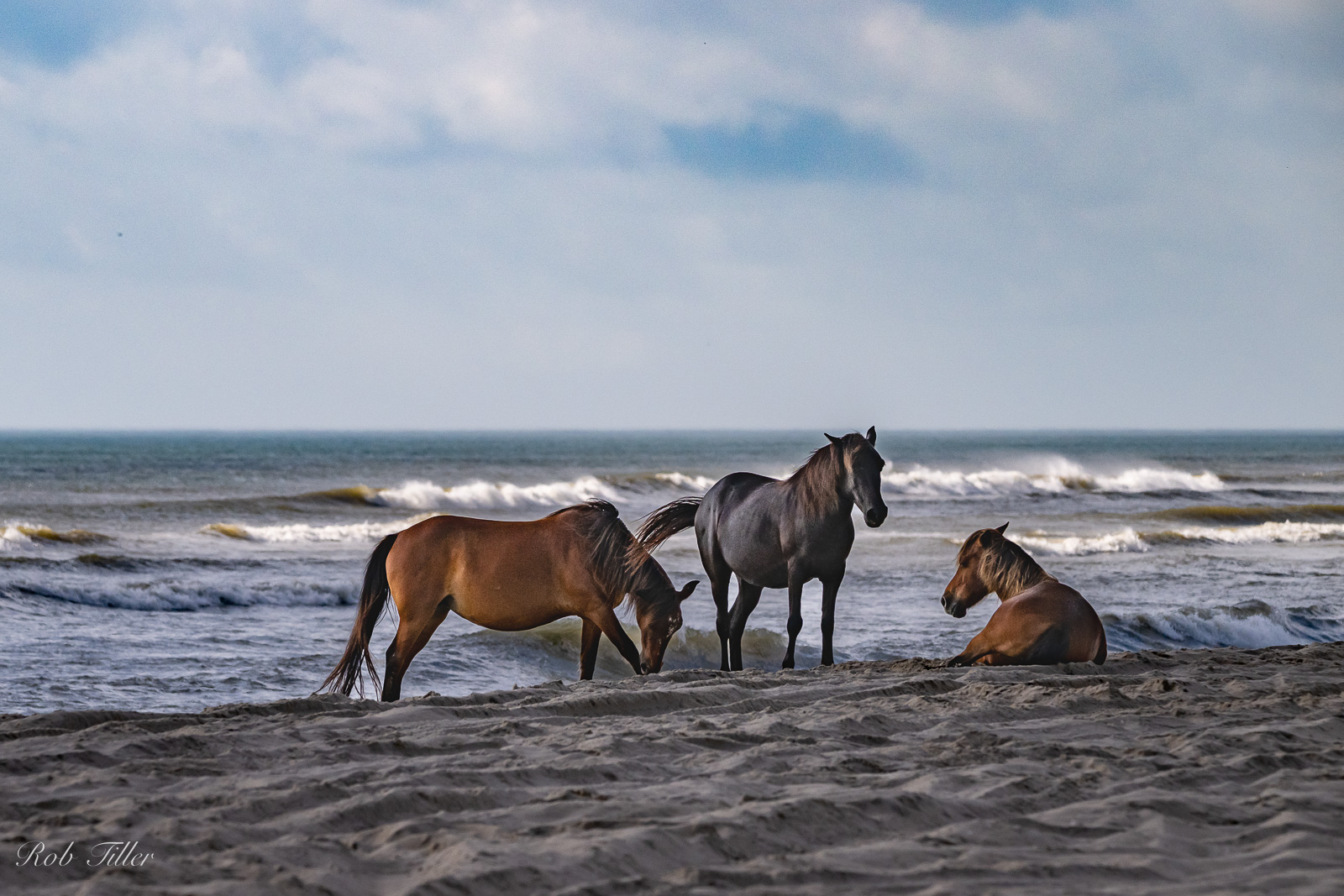
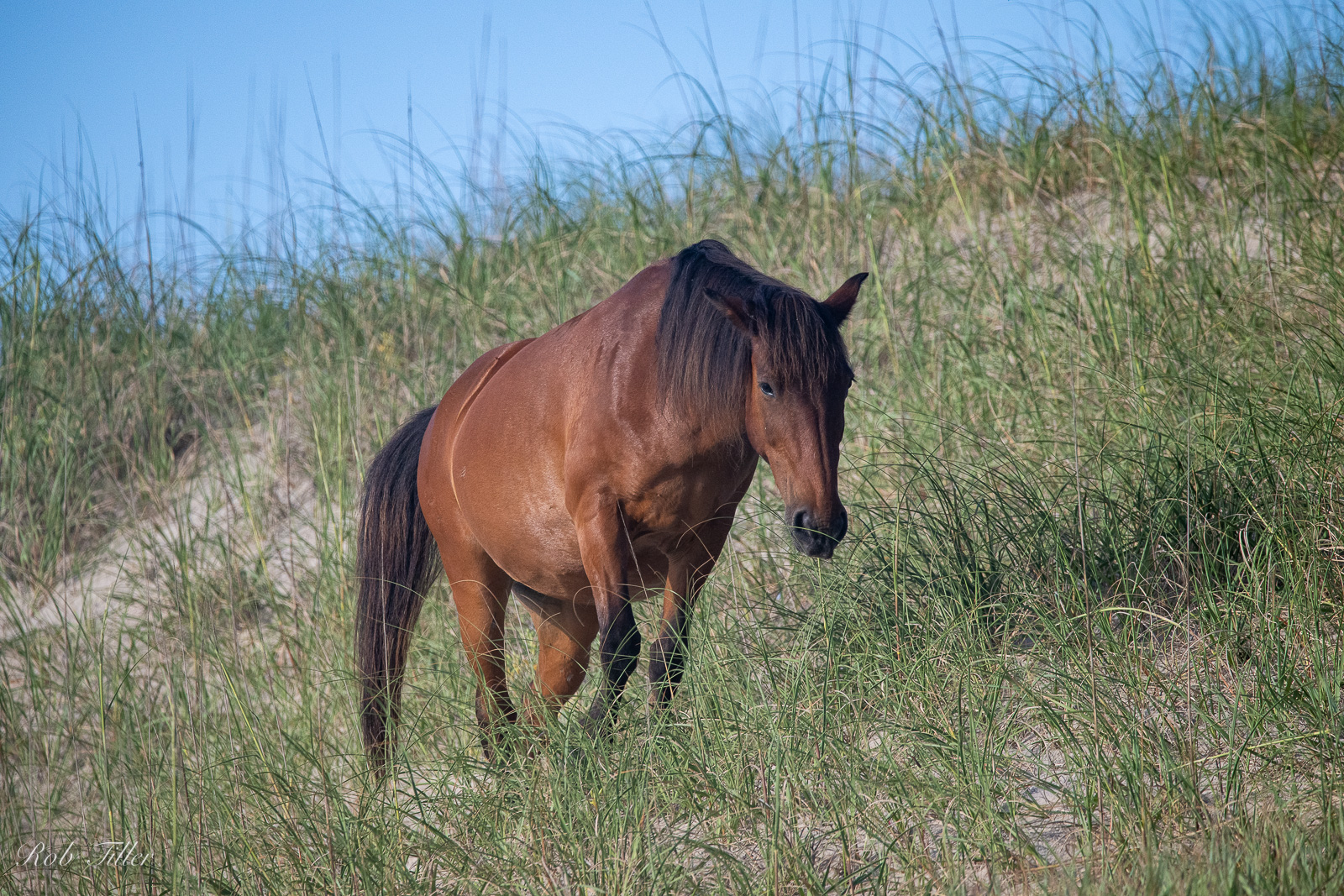
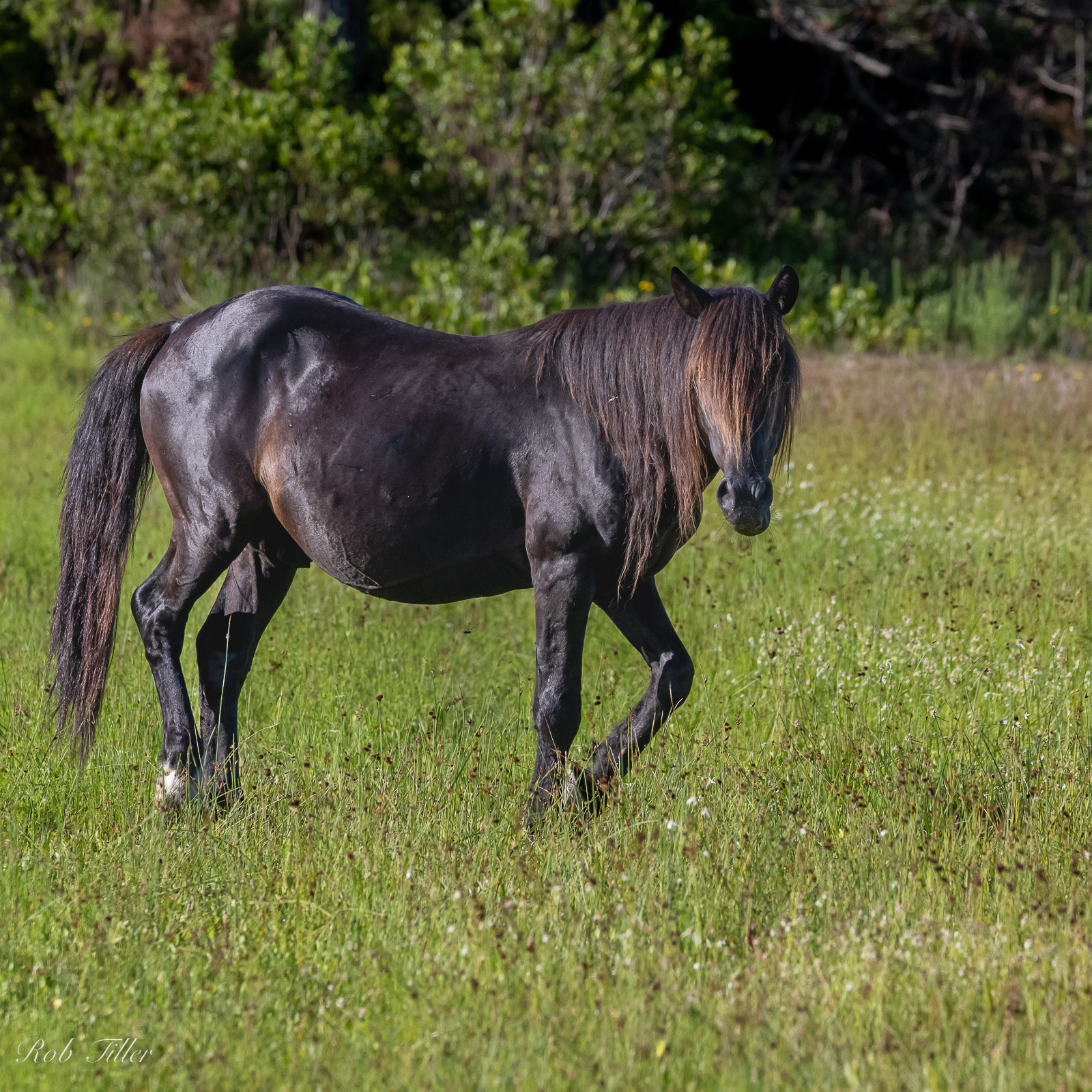
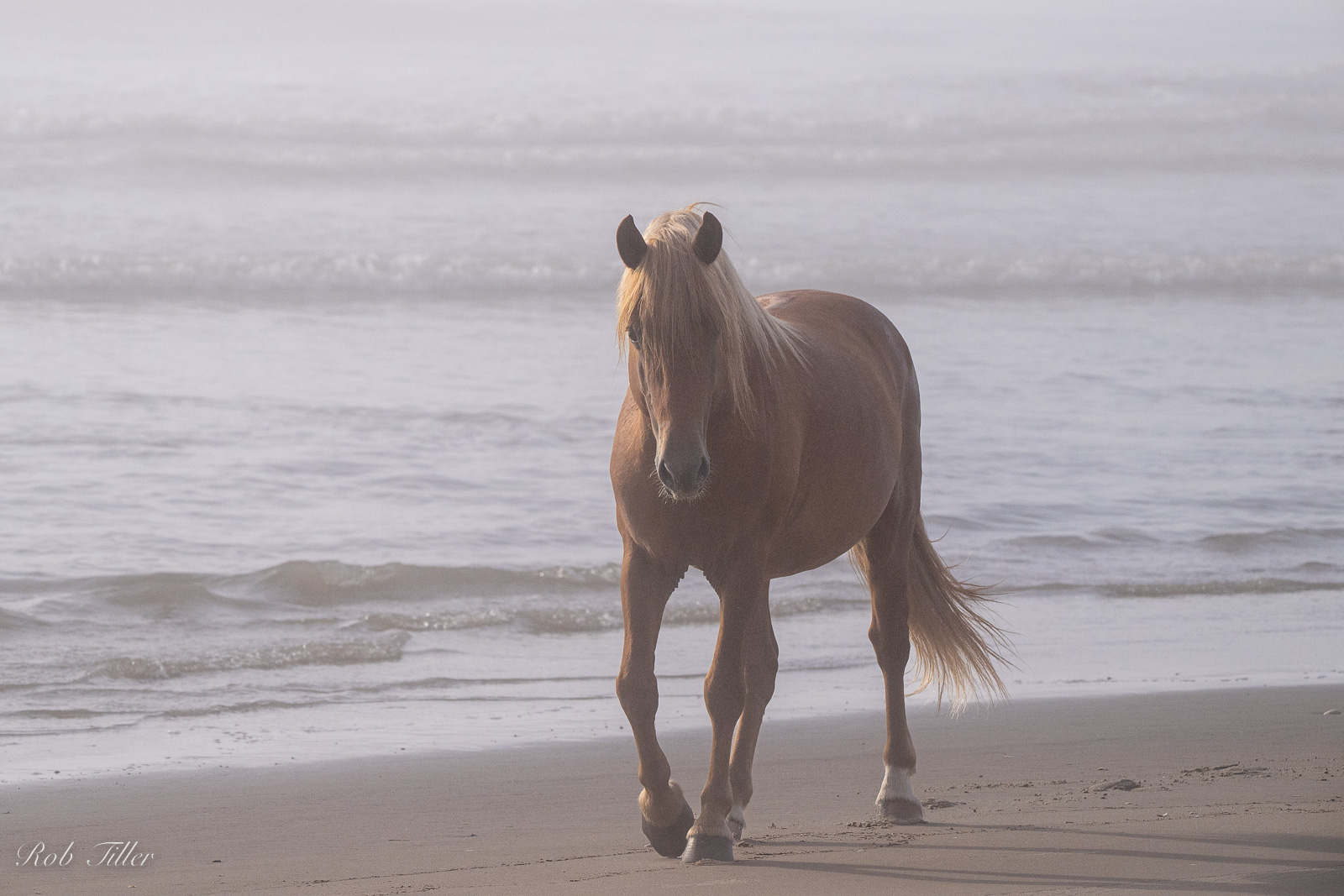
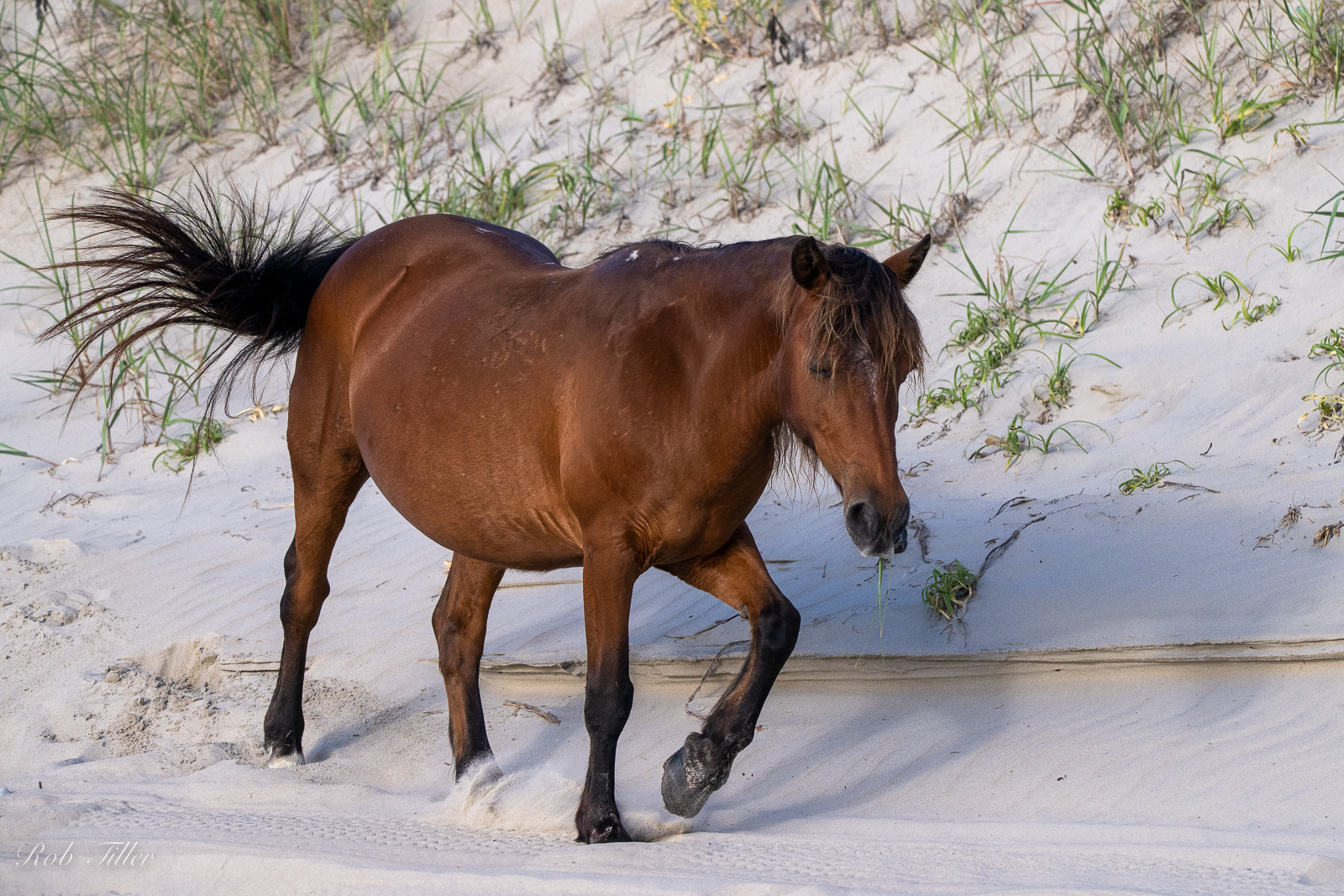
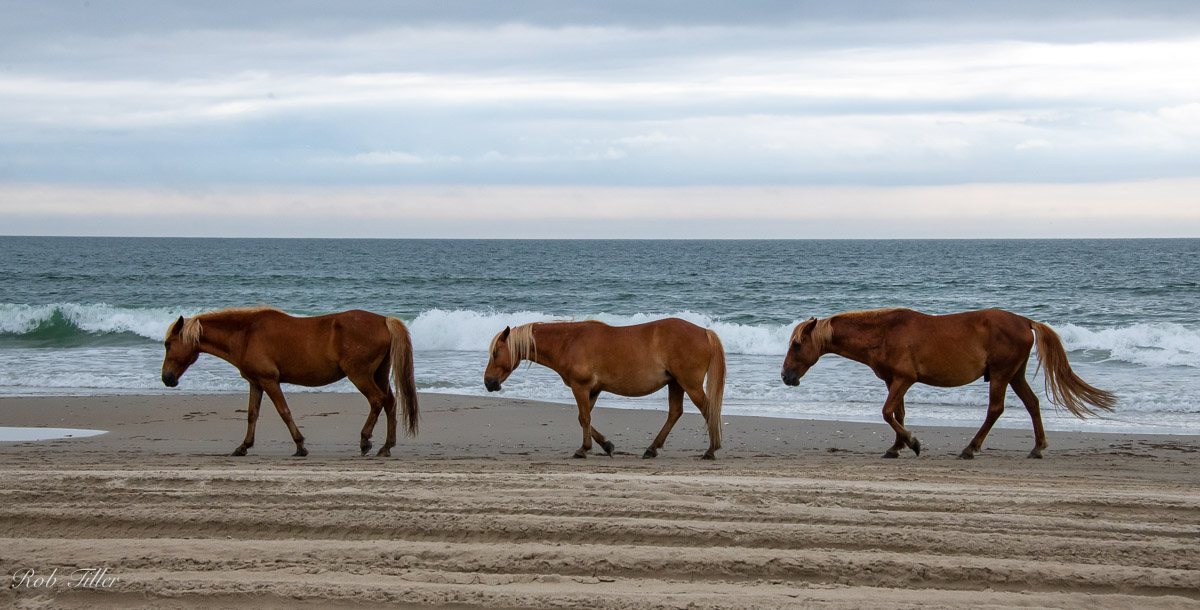
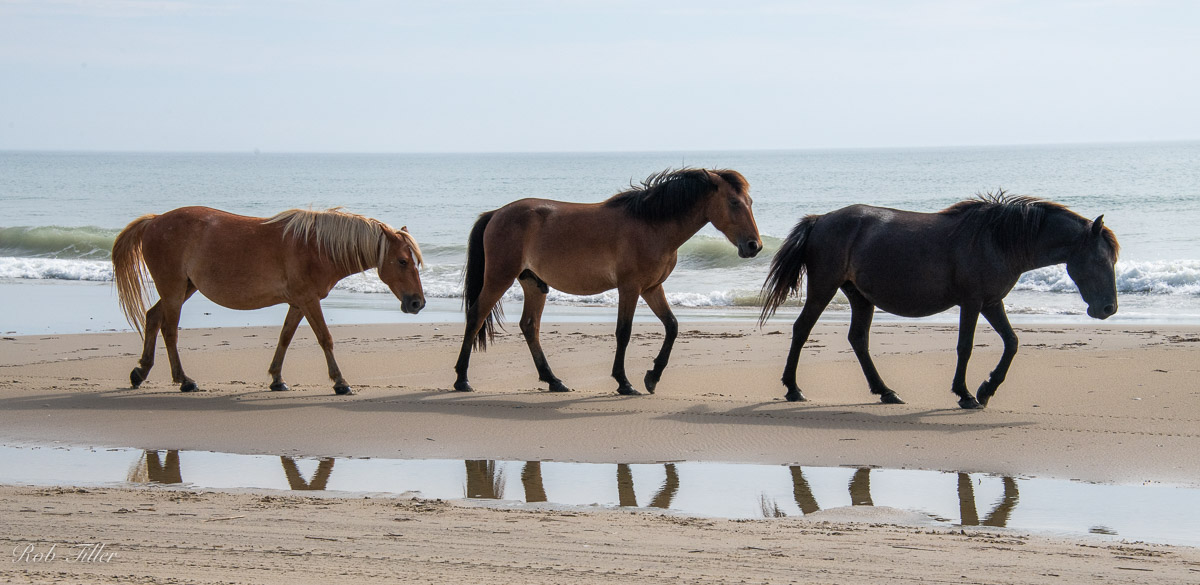
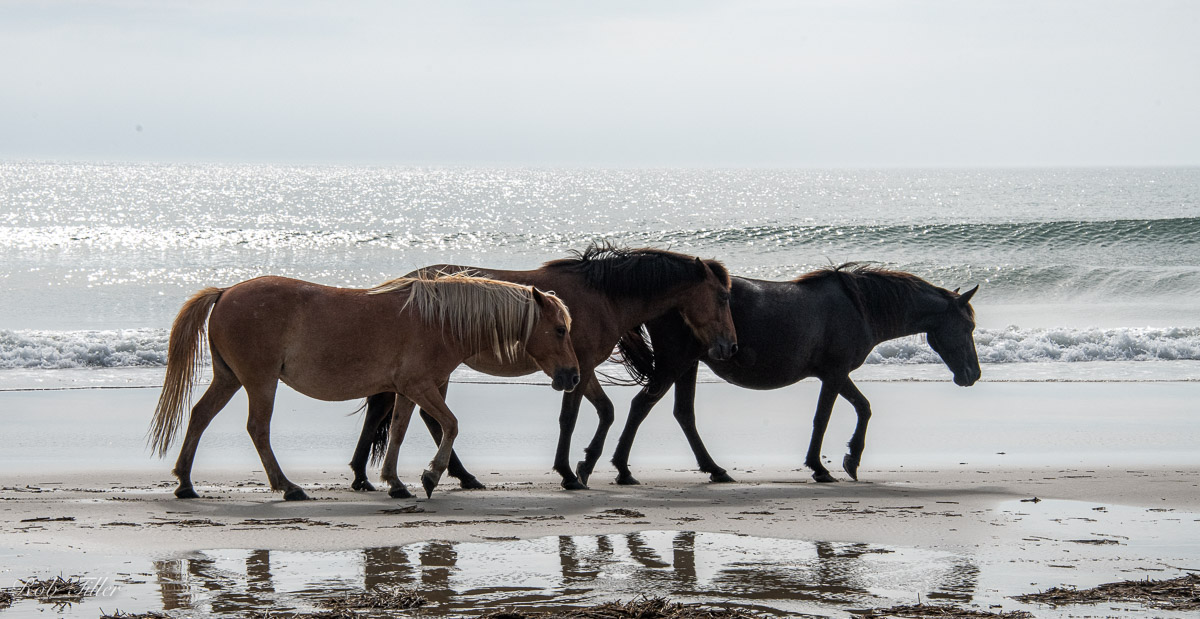
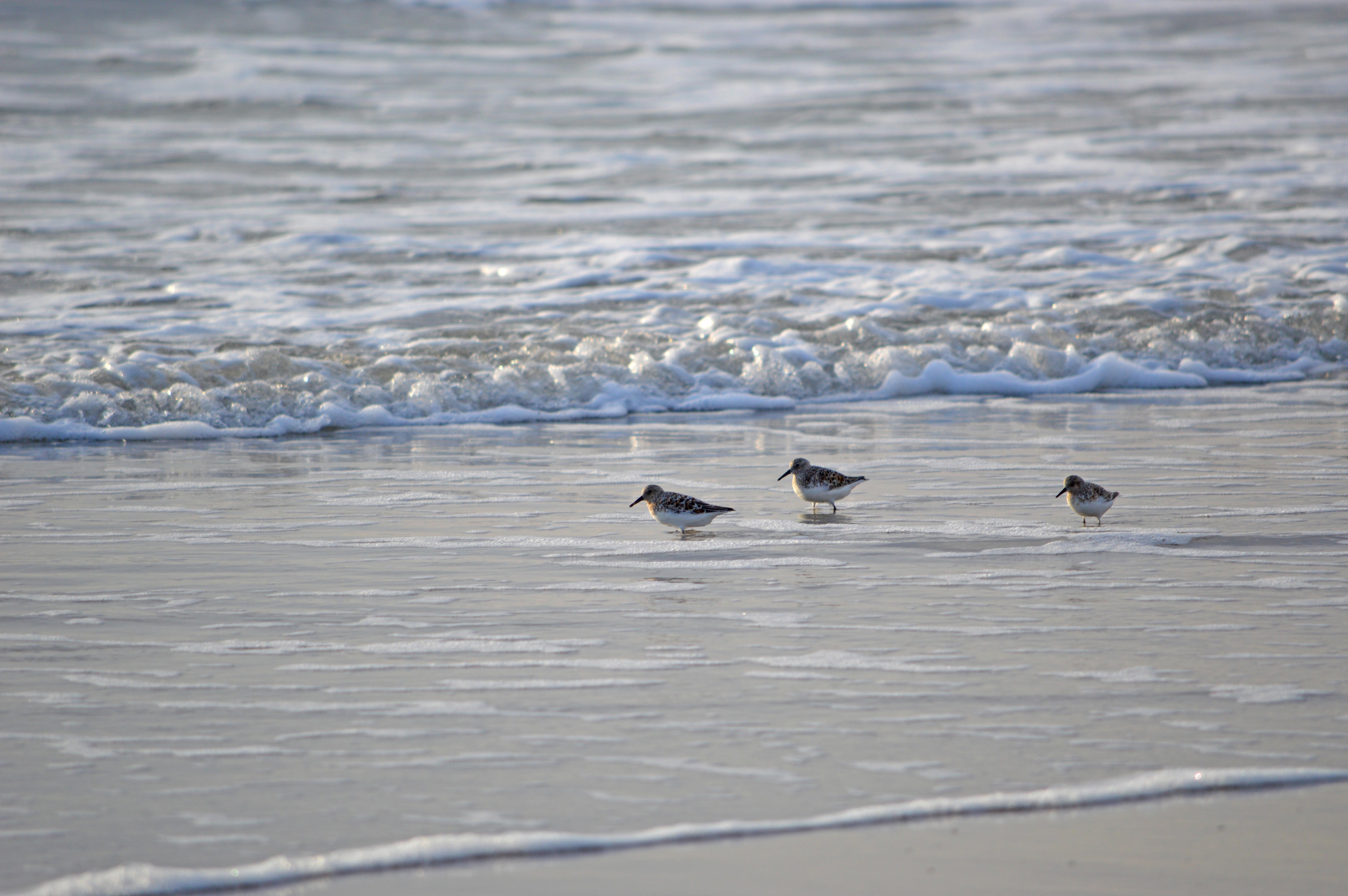
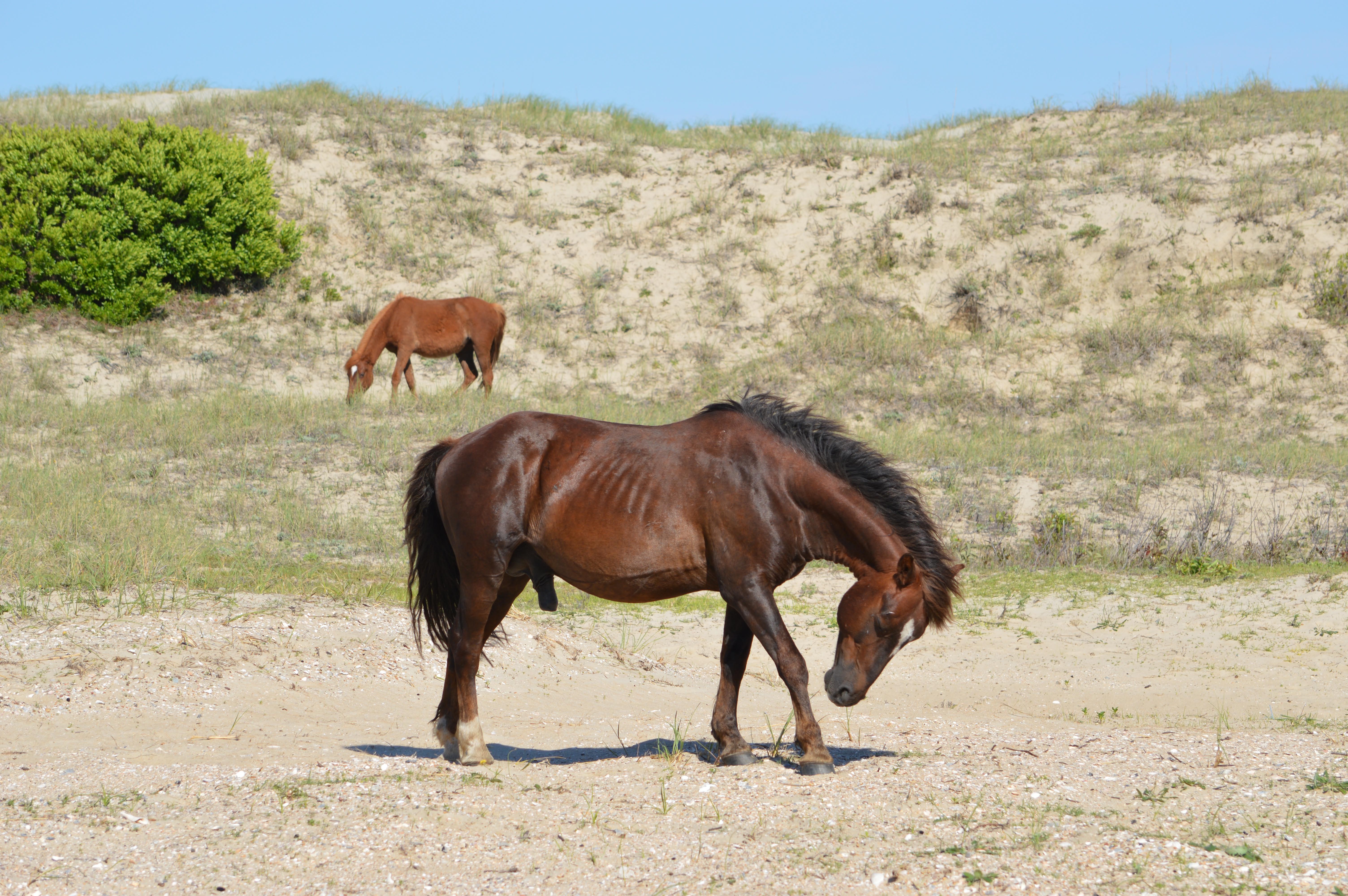
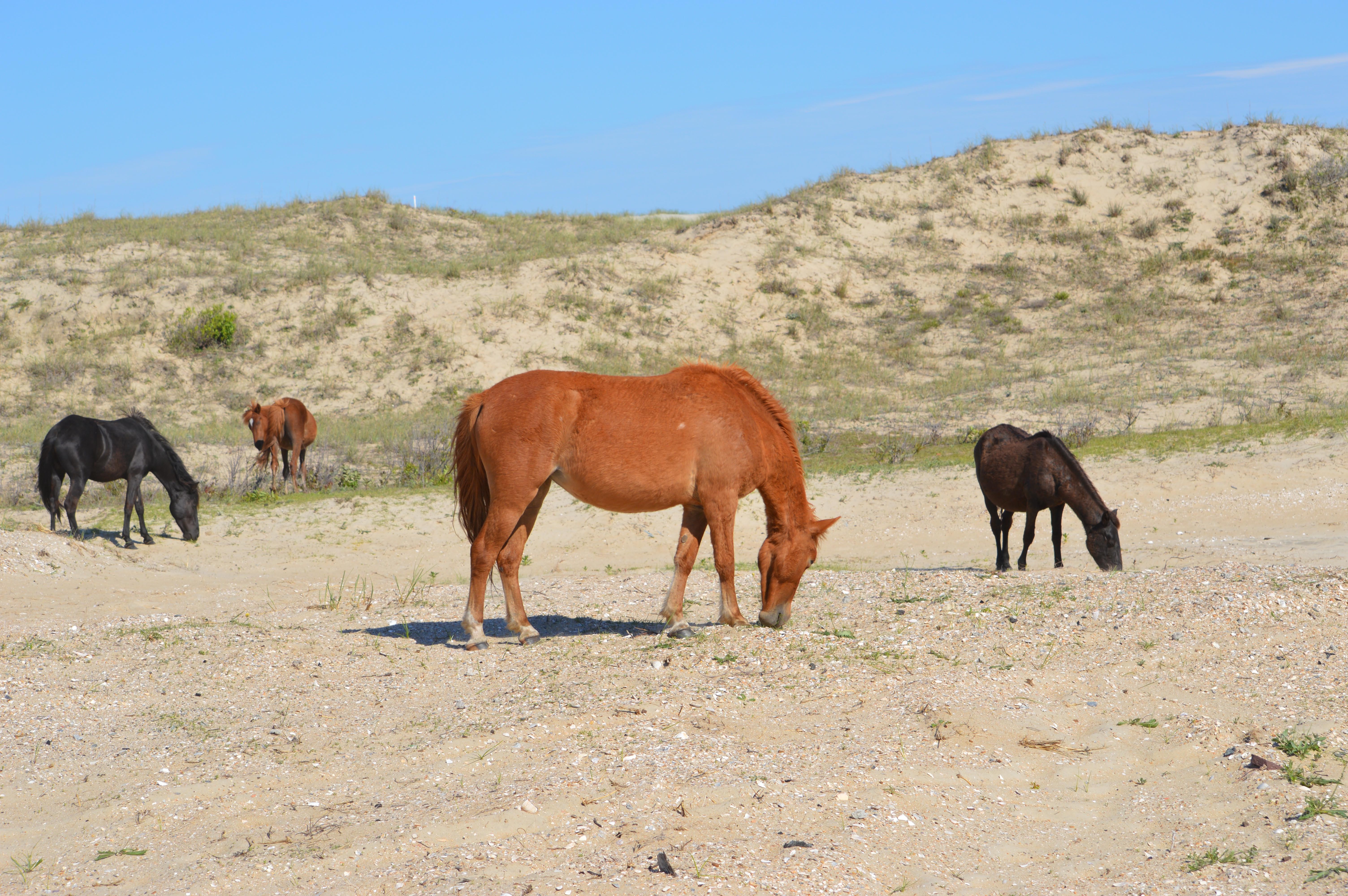
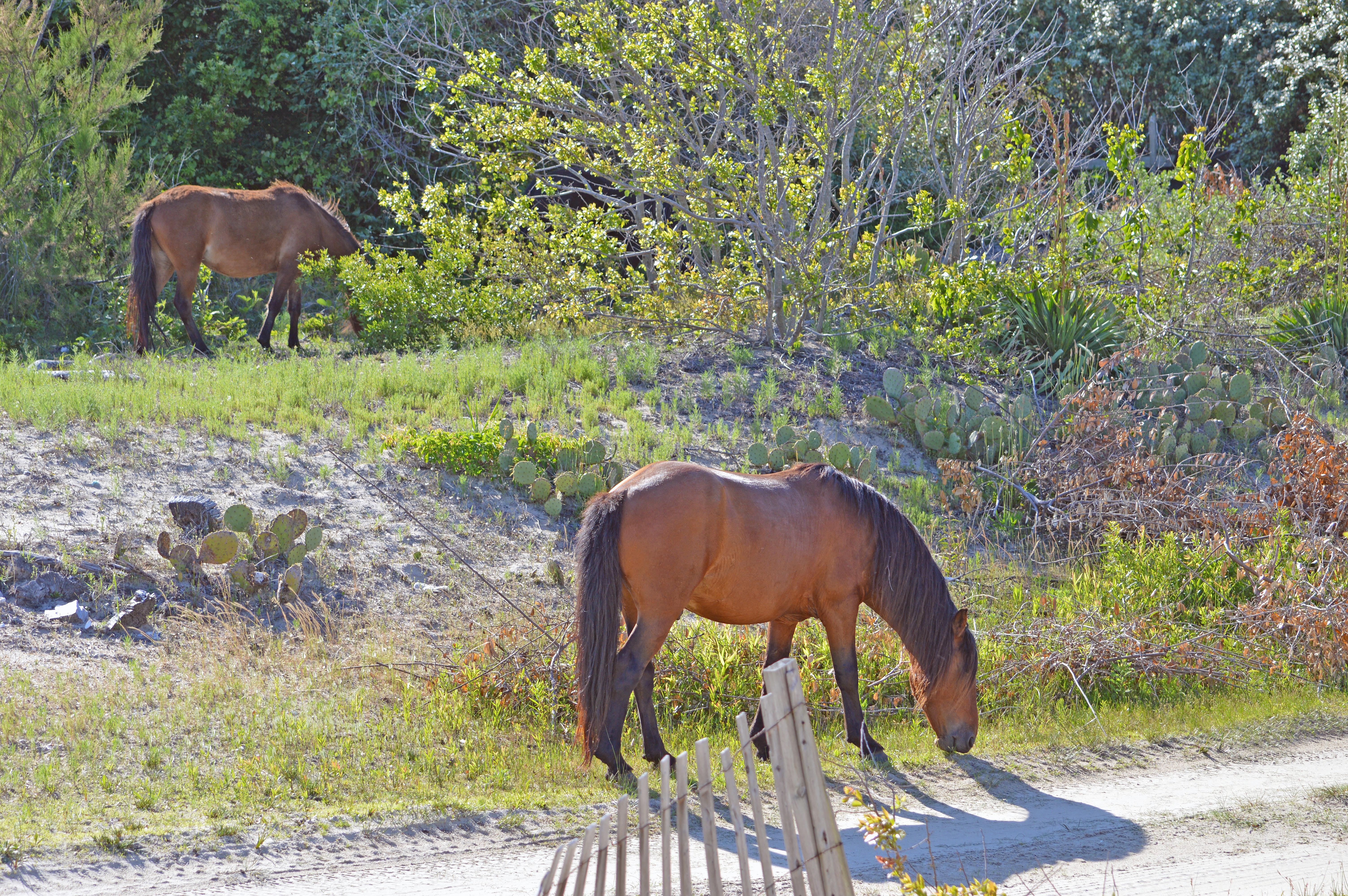
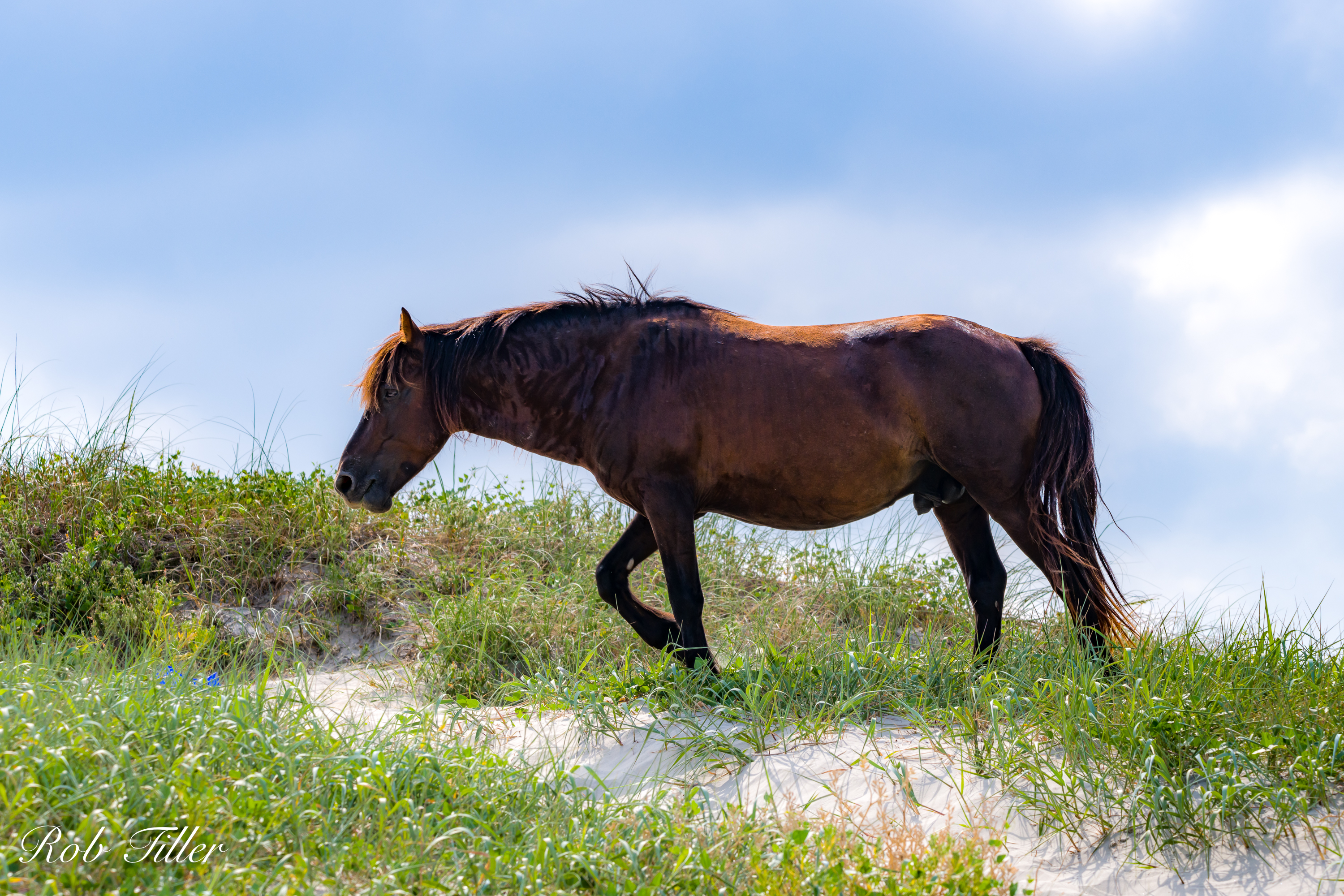
Last week we rented a house at the Outer Banks and had a family gathering.  We walked on the beach, played in the pool, rode bikes, read books, watched the Olympics, and enjoyed each other’s company.  I also took some pictures of wild horses at Carova and shore birds at Corolla, a few of which are here.

In photographing the wild horses, I generally try to catch them in natural-looking settings, and avoid showing roads and structures.  But that’s misleading, in a way.  A lot of the time the horses are grazing in front yards and walking along the sandy roads.  They’re really part of everyday human life in that part of the Outer Banks.  It was good to see most of them looking healthy, and some had new foals. 

Some mornings I walked on the Corolla beach looking for sanderlings and other shore birds.  In places there were good-sized flocks of the little sandpipers running away from the waves, then speeding back and probing for edibles with their sharp beaks.  Some of them were not at all shy of me.  But they’d fly off when a jogger got too close, or a dog came bounding toward them.  

Speaking of dogs, Nicholas Kristof had a thought-provoking column recently about dogs and pigs.  He noted how much we love our dogs, which is great, but also odd, considering how cruel we are to farm animals.  The similarities between these mammals seems pretty obvious – indeed, pigs are smarter than dogs – but somehow we’ve worked them into disconnected ethical categories.  We would never eat our dogs, but many of us are quite comfortable eating pigs.  

Kristof put it bluntly:

Just as today we wonder how people like Thomas Jefferson could have been so morally obtuse as to own and abuse slaves, our own descendants will look back at us and puzzle over how 21st-century humans could have tolerated factory farming and the systematic abuse of intelligent mammals, including hogs.


“Farmed animals are just as capable of experiencing joy, social bonds, pain, fear and suffering as the animals we share our homes with,” Leah Garcés, the president of Mercy for Animals, told me.

This is a lot more that could be said about this issue, but I’ll leave it there for now.  Except for noting, I used to think people mostly agreed on the key differences between right and wrong.  But Kristof reminds us that, at least in some important areas, such as animal rights, people differ amazingly in their basic morality.  Another example of surprising differences on basic morality concerns human rights and the rule of law. 

I used to take it for granted that almost everyone in the U.S. had high regard for our traditional constitutional rights (like privacy and freedom of speech and religion), fair elections, and equality under the law.  The various authoritarian alternatives that empower a charismatic strongman leader and silence dissent, such as fascism and Soviet-style communism, were, I assumed, generally viewed as bad.

But with the ascendance of Trump, this assumption is now highly questionable.  Trump has boldly declared his support for measures that are characteristic of authoritarian systems.  These include his intention to pervert the legal system to reward friends and punish enemies, to use the military to quash political protests, vilifying minorities, dehumanizing immigrants, otherizing gender non-typicals, and attacking women’s bodily autonomy.  

His support in the presidential election is currently around 50 percent.  I’m hopeful that some of that 50 percent have not got round to examining what he actually stands for and will reconsider their support.  But a significant portion plainly have no problem with his racism, his xenophobia, his transphobia, his rejection of fair elections, and his calls for violence.  They may be fine people in certain regards, but they have very surprising views on right and wrong.  

I just finished listening to a recent podcast series called Ultra (season 2) that puts our situation in a helpful perspective.  Produced and narrated by Rachel Maddow, it concerns the aftermath of WWII, and focuses on the rise of Joe McCarthy and his movement.  

Most of us were taught that McCarthyism was centered around an exaggerated fear of communism and false claims that communists were taking over the country.  We might know that in the mid 1950s McCarthy as a U.S. Senator rose to power by leading an effort to persecute ordinary people for sympathizing with communism, and in fact destroyed careers and lives.  But McCarthyism seemed relatively short lived.   We, or at least I, didn’t know, before listening to Ultra, that it was a mass movement that was driven in part by Nazi sympathizers and ideology, and its spirit is still with us.

McCarthy was a corrupt politician, a compulsive liar, and a remorseless bully, and his dishonesty and brutality were plain to see at the time.  But there were apparently millions who didn’t mind any of that.  They considered him a great leader and supported his looniest ideas.  Shortly before he died, a project began to move him into the presidency through subverting the election of 1956.  

Ultra doesn’t bother pointing up the parallels between McCarthy and Trump, presumably because they’re so obvious (the lies, the corruption, the sedition).  It is particularly striking that Trump and his team have been trying to label the Harris team as communists.  Alarmist and baseless name-calling is standard operating procedure in Trumpworld, and sometimes, as in McCarthy’s time, it works.  

But somehow I doubt it will work this time.  For anyone not already deeply infected with the Trump virus, any acquaintance with  Harris and Walz will put the lie to Trump’s attempt to label them as communists or otherwise wildly radical.  It remains to be seen whether the great start of their campaign will hold up.  It’s by no means clear that they will win.  But things look more hopeful than they have for a long time. 

Spring, wild horses, and some thoughts on immigration

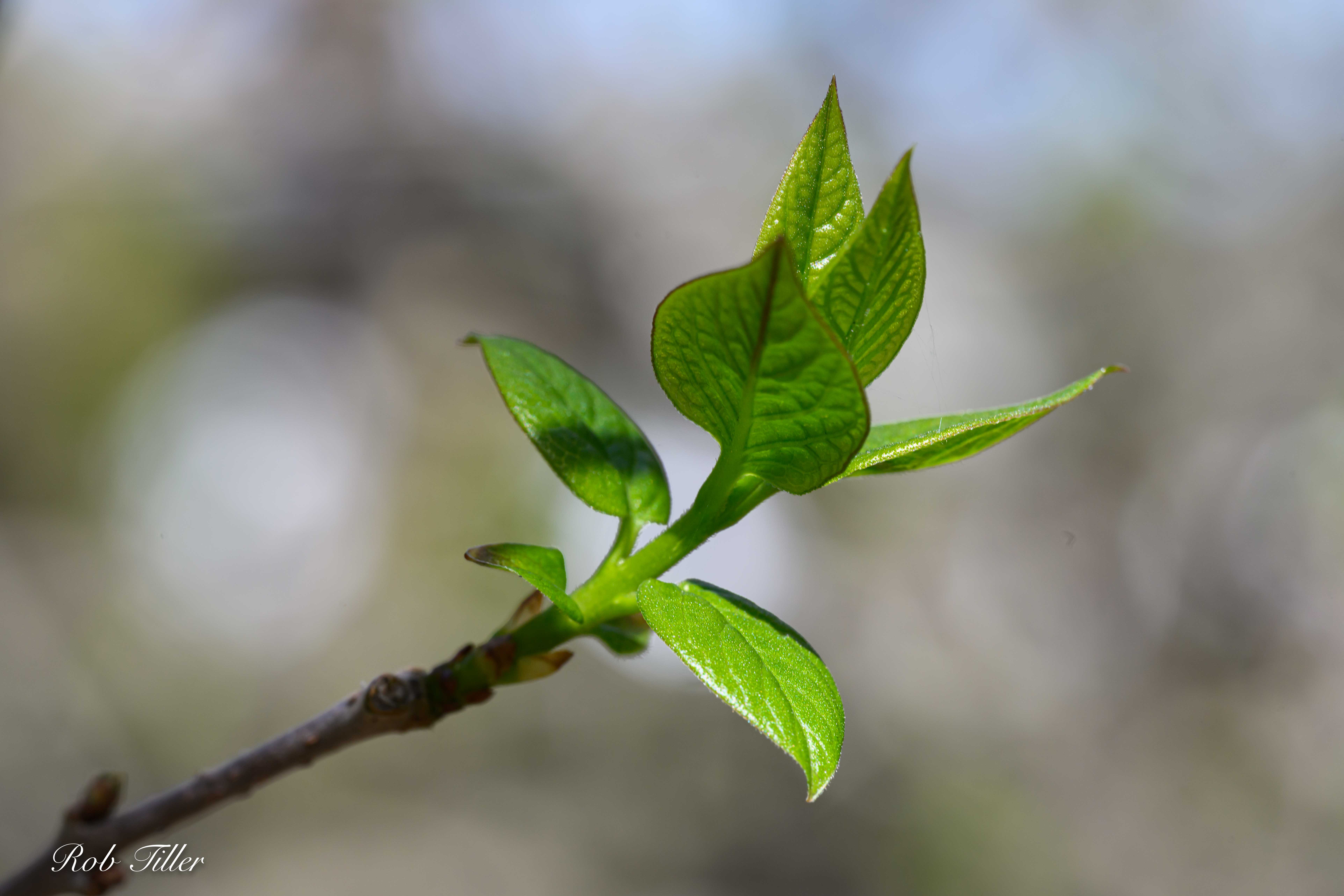
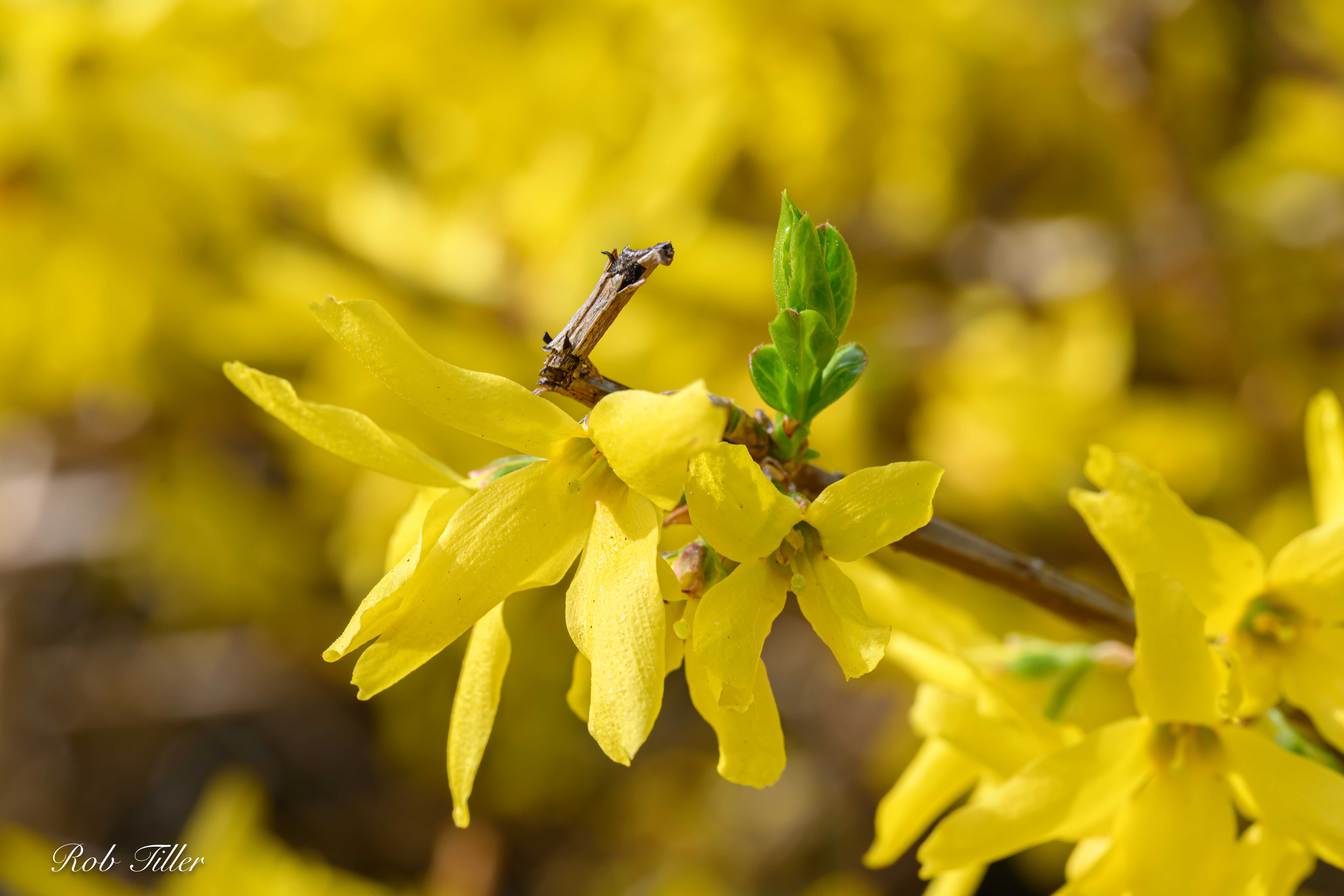
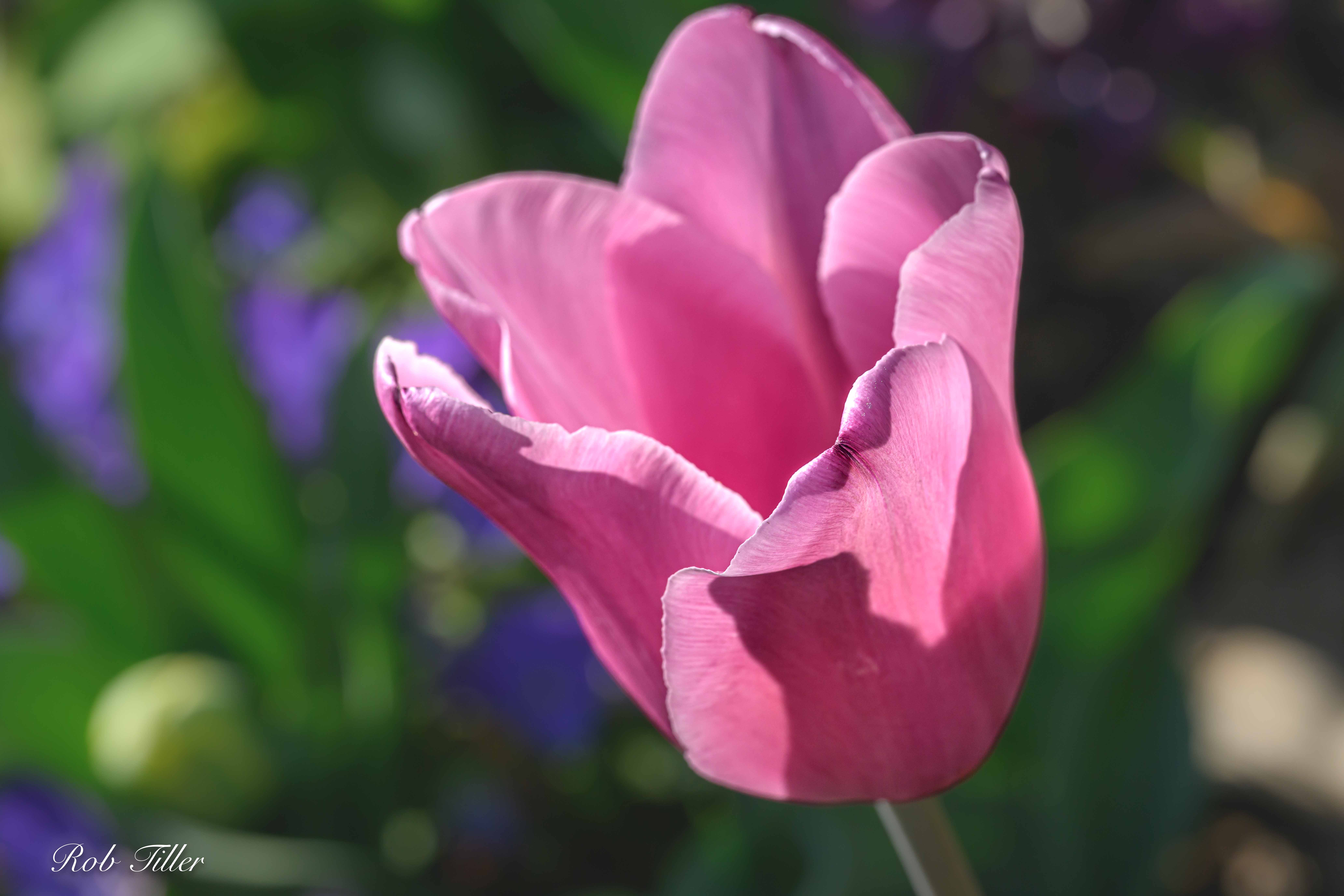
Spring is finally here, I’m happy to say.  We visited our loved ones at beautiful Beaufort, N.C., a couple of weeks ago and saw some of the wild horses there.  In Raleigh, the trees are starting to leaf in, and the early flowers have popped up, seemingly out of nowhere, with vivid colors.  I enjoy them every year, but this year is especially good.  The flowers below were from Raulston Arboretum, Fletcher Park, and the backyard of casa Tiller.  

This week we watched The Zone of Interest, which won the Oscar for Best Foreign Film and is now streamable on Prime.  I highly recommend it.  The story concerns a family living a normal happy life right next to the Auschwitz death camp.  It raises some tough and timely questions about human behavior and ethics.  I expect we’ll be thinking about it for a long time.    

Our immigration situation also raises some tough and timely questions.  These days it’s often referred to as the immigration crisis, which is certainly true from the perspective of people desperately fleeing violence and poverty.  But there’s a massive misunderstanding of the situation, as shown in a recent Gallup poll. Immigration was most frequently cited as America’s biggest problem, and the number of Americans who think that has gone up.  

This is both understandable and absurd.  Fear of foreigners is nothing new, and has long been exploited by leaders for political advantage .   But we truly are a nation of immigrants.  They are running some of our most successful corporations, as well as building our houses, manning our hospitals and factories, picking our crops, and taking care of our children.  If there’s energy and creativity required, we rely a lot on immigrants, just as we rely on them to do a lot of unpleasant work that we want to be sure is done well.  

It should be obvious, but apparently needs saying, that we’ve always been a multi-racial, multi-ethnic, multi-religious country.  The majority of us have ancestors that came from some other country not so long ago.  And we have friends, neighbors, and service providers who have different skin colors, different languages, and different customs.  We’ve got lots of problems, but our diversity is not a problem.  It’s a strength.   

With all the actual problems we’re facing, it’s really disturbing that the non-problem of immigration has become a central flash point of  our politics.  Whipping up more fear of immigrants was and is one of Trump’s main tactics; it’s hard to imagine his succeeding without it.  But even mainstream Democrats now believe we have a border crisis that is not of our own making, and that we somehow have to prevent more foreigners from getting in.

Franklin Roosevelt had a famous line in his inaugural address in 1933:  “The only thing we have to fear is fear itself.”  He probably meant to reassure a nation in the throes of a financial depression with the thought that fears weren’t themselves likely to be fatal, and economic problems were solvable.  

But Roosevelt’s words have a different resonance now.  We truly have good reason to be afraid of the current panic about immigrants, because it is perilous, both for ourselves and others.  I’m thinking of three serious risks.

First, it could lead to the end of democracy as we know it.  Hard as it is to believe, there is a real possibility that Donald Trump could become the next president.   Trump has proudly declared his intention to become a dictator, to persecute his political enemies, to shoot peaceful protesters, to take away rights from women and minorities, and to fundamentally alter the constitutional order.  He undermines the rule of law with his claims to be immune from prosecution for any crime and pardons for his convicted criminal pals.  Again, his appeal is based in large part on his demagoguery about immigrants, whom he viciously and groundlessly characterizes as criminals, rapists, and animals.  

Second, our draconian limitation on immigration is a self-inflicted wound, in that we need immigrant workers.  The idea that  immigrants cause harm by taking Americans’ jobs is mistaken.  They pay more in taxers than they use in services. Many of them start businesses and create new jobs.  As noted, they do a lot of the most important high-level work we have, as well as some of the most difficult and dangerous jobs.  For example, without them, our food supply chain doesn’t work, or our cutting edge AI tools.  We have a labor shortage, and with an aging population, that problem is getting worse.  We need more immigrants.

Third, there’s morality:  treating immigrants with disrespect and cruelty diminishes us.  Refusing to respond to the needs of desperate people fleeing war, violence, and grinding poverty is a stain on our own humanity.  It takes work to get rid of our natural compassion for people in need, but some of our political and thought leaders have pulled us along that path.  They whip up our ordinary caution about people we don’t yet know into anger, hatred, and panic.  

In considering what we owe immigrants, it’s worth noting that we in the U.S. bear substantial responsibility for some of the problems that are driving people from their countries of birth.  We’ve done more than our share to create the worldwide climate crisis, with the rising heat, drought, fires, and storms that make some areas inhospitable or uninhabitable.  

Driven by greed and fear of Communism, we’ve also played a role in creating the chronic violence that drives emigration out of some countries, including El Salvador, Nicaragua, Guatemala, Honduras, Venezuela, Haiti, and Cuba, not to mention the Middle East and Southeast Asia.  We have a lot to atone for.  

The solution is not simple.  The system we’ve constructed for our border is deeply flawed, and fixing it will not be easy.  We don’t have the necessary plans or resources in place to implement the current problematic laws.  More fundamentally, we need to rethink certain assumptions, including notions of what a great nation is and what borders are for, and that will take time.  

But it’s obvious that we need to stop panicking about immigrants.  We need to start seeing them as people and learning about their situations.  We need to have conversations about what the options are for helping them.   We need to rediscover our natural compassion, generosity, and love.  People in dire need offer us an opportunity to be more compassionate and generous.  Let us be thankful for that opportunity, and take it.  

Wild horses, and a proposal for new thinking about animals

Last week we had a family vacation at Corolla, a community on the Outer Banks of North Carolina.  Early every morning I went for a drive on the beach to look for the wild horses that live there.  Most days I didn’t see any, but one day I did.  Here are a few images of them.  

I wanted to share a few more of my photos of bears and other creatures from my recent Alaska trip, so I made a short (4 minute) slide show of some of my favorites and put it on YouTube.  You can find it here.

One of the things I value about wildlife photography is getting to know the animals better.  Of course, it’s very rewarding to spend time in the field with other creatures.  But also, reviewing the still images, I always get some new insights into the lives they live, and I hope others do, too.

Non-human animals have hard lives, and in general humans make their existence harder.  Part of the problem, I think, is the widespread failure to see members of other species as more than mere objects to be exploited.  I hope my photography helps to challenge that view, and suggests how we might see each creature as worthy of respect and compassion.  

I’m afraid that in general, people don’t have much interest in non-human animals, unless they can be eaten or exploited for profit or amusement.  This has been true for a long time.  This way of thinking is problematic for people as well as other animals, and I’ve been thinking a lot about why it is so pervasive, and how it might change. 
It seems natural to enjoy being with other creatures, and indeed, young children bond easily with them.  But from an early age, we are taught that they are essentially different from us, and inferior.  The lesson is pounded in, over and over:  humans are not animals, and animals are inferior to humans.

The idea that humans are not animals is not only questionable – it’s wrong.  It has nothing in science or reason to back it up.  Darwin debunked it more than a century and a half  ago, and his basic theory has been repeatedly tested and confirmed.  From an evolutionary perspective, all living animal species, including homo sapiens, are closely related to each other.  

Moreover, as scientific knowledge has expanded, it’s obvious that non-humans have many similar sensory capacities to humans, and some have vision, hearing, smell, touch, or other unusual senses that are vastly more acute.  

There have been various qualities we once supposed made humans unique, including reasoning ability, memory, tool use, planning, and problem solving.  But one by one, with more studies of more species, those ideas have turned out to be the product of our ignorance, as first one and then many creatures demonstrate such capacities in various degrees.  

So why do homo sapiens persist in believing that we’re separate and apart, and superior?  It’s plainly a flattering thought – we’re number one!  And if we’re confident that non-humans are vastly inferior, we can justify eating them and otherwise treating them with indifference and terrible cruelty.  It’s convenient.

But I’m coming to think that the notion that privileges humans over non-human animals is part of a pervasive, and deeply flawed, thought system.  Our various ideas of inherent superiority and inherent inferiority are interconnected and mutually reinforcing.  They form a powerful network that limits our appreciation of each other and the natural world.     

Beliefs that one race is superior to another, that men are superior to women, or that straight is superior to gay, are all without any scientific basis.  The same is true for holding Ivy League grads to be fundamentally superior to non-Ivies, white collars over blue collars, or homeowners over homeless.  The list of our arbitrary and baseless hierarchical gradations goes on and on.

Nevertheless, they are so deeply ingrained in our consciousness as to seem part of nature.   Like the belief in the superiority of humans over other animals, they’re part of our habitual way of thinking – that is, our culture.  

Hierarchical thinking – deeming one group inferior to another – is more advantageous to some than others, but even those lower in the caste system accept at least some of it as natural and good.  An example is poor working whites, who historically have found solace in the baseless notion that they are at least superior to Blacks.  And racial and religious minorities have their own within-group grading systems based on skin color, wealth, education, and other factors.

As for non-human animals, almost all humans put them at the bottom of their hierarchies.  They are still the standard metaphor for those who are most frightening and least deserving, as in “those awful [insert group name here] are  animals”!  We rank some animals over others, such as our dogs over pigs, but even the favored species members are usually deemed expendable objects, rather than beings with inherent dignity.   

The fundamental problem with such hierarchical thinking is that it is divisive.  Human hierarchies divide us from each other, and make it difficult to appreciate and bond with others.  Even those high up in hierarchies are emotionally limited and morally depleted by the system.  The hierarchies foster defensiveness, paranoia, and hate.  At the same time, they lessen the opportunities for loving connection. 

Our delusions of natural hierarchies do enormous damage, but they haven’t destroyed all our intuitions of fairness or our ability to perceive  individuals.  Though deeply embedded, those notions are subject to change.  

In my lifetime, we’ve managed to revise for the better some of our worst prejudices on race, patriarchy, and minority sexuality.  There’s even been progress in seeing animals as more than mere objects.  For example, we’ve reduced the slaughter of whales, elephants, and certain other creatures, and acknowledged the injustice of our driving various species to extinction.

But there’s a lot of work still to be done, both for disfavored humans and non-humans.  I don’t have a comprehensive solution, but I do have an idea for where to start:  respect and compassion.  These are attitudes we all know something about.  Most all of us have respect and compassion for at least a few others, and to get started we can build on that.

I propose the following experiment.  For each being we encounter, let us try saying to ourselves, “Although we are different, I respect you as an individual and wish you well.”  This reorientated attitude would change us, in a small way, and multiplied enough times, would make a vast change.  

I’ve been doing this experiment, and I think it has changed me and my surroundings a bit for the better.  Recently a family of deer with two spotted fawns has been quietly visiting our yard to graze.  While admiring their beauty and grace, I’ve been consciously seeing them as individuals with their own concerns.  It’s hard to tell what they think, but they’ve certainly noticed me, and don’t run away.  They definitely like our grass.

Our holiday weekend — wildlife and books

Wild horses at Corolla, NC

We had a happy July 4 family gathering at the Outer Banks.  There are a lot of stress inducers in the news these days, and it was good to unload some stress.  It helped to spend some time walking on the beach and some time reading. 

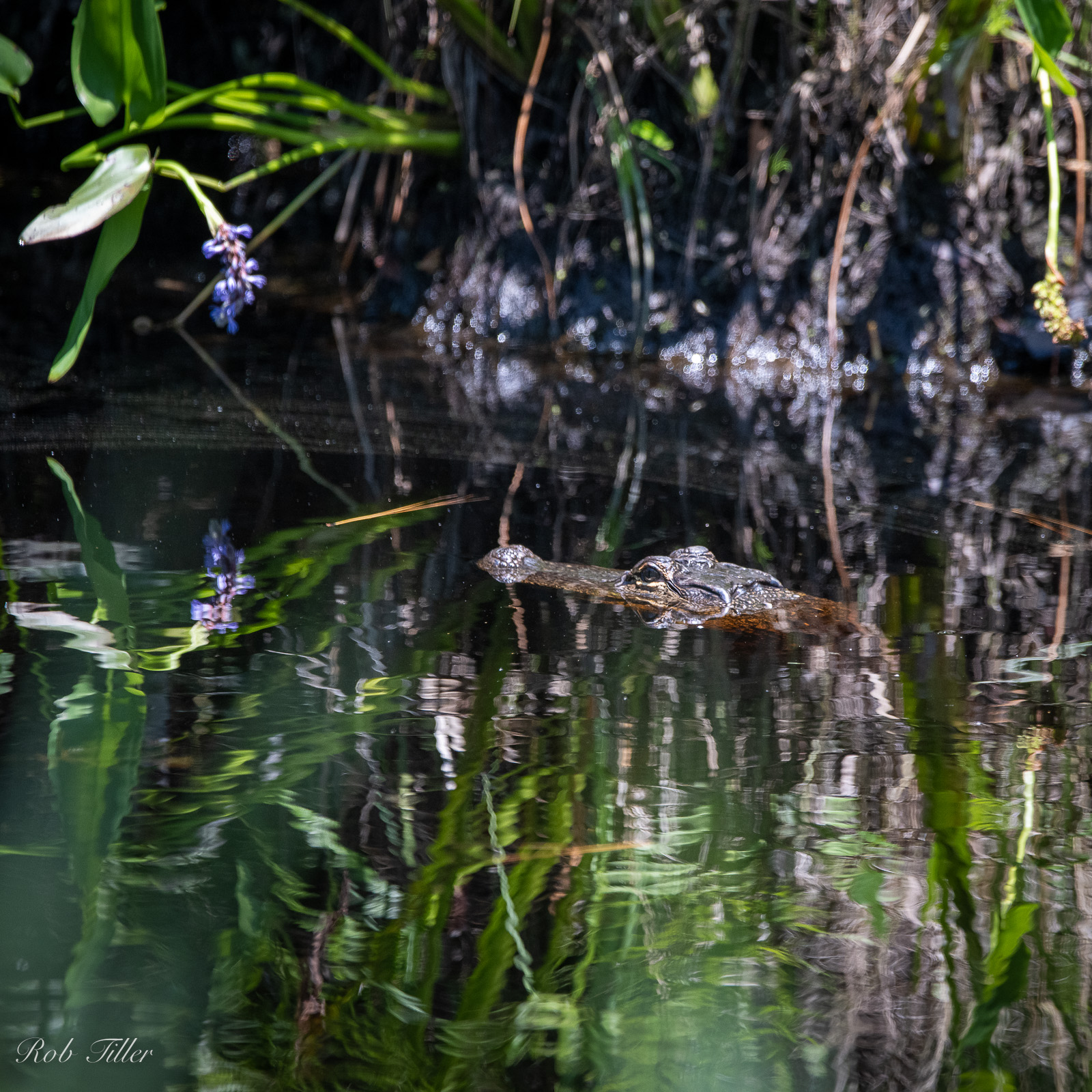
I also brought along my new camera, the Nikon Z9, and started getting comfortable with it.  There is definitely a learning curve, but I was pleased with some of the results, a few of which are here.  It was fun seeing the wild horses at Corolla, which mostly seemed in good health.  We also stopped at Alligator River wildlife refuge on the way and saw a few bears, owls, and (a first for us!) alligators.  

Alligator at Alligator River National Wildlife Refuge

Speaking of animals, I highly recommend a lively short essay by Ed Yong titled How Animals See Themselves.  Yong highlights some of the amazing sensory capabilities of non-human animals, including not just extraordinary sight, smell, and hearing, but also abilities like echolocation which we can barely conceive of.  Appreciating the umwelt (a term he promotes) of these animals makes our own lives richer, and potentially more compassionate.  I’ve downloaded Yong’s new book on this subject, An Immense World.

On a related subject, NPR had a great little piece this week on octopuses and how they operate.  I hadn’t realized that the receptors in the suckers of an octopus are vastly more numerous than the nerves in our fingers, and each sucker has not only a sense of touch, but also of taste and smell.  Instead of processing information in a centralized brain, most of their neurons are associated with their suckers.  Scientists are starting to figure out how all their mini-brains work together so that, for example, they can unscrew jars from the inside and perform astonishing feats of camouflage.  I’ve seen a a few of these creatures on diving trips in the Caribbean, and they are truly amazing.   


Meanwhile, while recovering from covid, I finished a big book: Anna Karenina, by Leo Tolstoy.  It had been some forty years since I last read this famous work, but I still remembered some of it.  Besides being long, it is notable for its scope, which is both narrow (a few months in the lives of a handful of Russian aristocrats) and broad (Russian society in the process of major changes).  Having learned some history over the last few decades, I was better positioned to appreciate Tolstoy’s insights and also his blind spots.  

Some of the book, which was written in the mid-1870s was visionary, or at least a magnificent struggle for a vision.  There is insight into the emotional lives of the characters, including their most creative and destructive emotions.  At times Tolstoy’s consciousness seems to merge with the lives of animals and plants, and evokes the grandeur of nature.  But at other times he seems to regard peasants as useful but inferior, like horses, and other animals as merely good targets for shooting.

Part of Anna Karenina deals with the severe depression suffered by its title character, and also by Levin, who most represents Tolstoy himself.  Tolstoy doesn’t use anything like the modern vocabulary for describing psychological problems, but he evokes them with power.  It is not comfortable to enter into these experiences, but they are definitely timely.

Our depolarized Outer Banks reunion, with some wild horses

Last week we had a family reunion at Corolla, on the Outer Banks of North Carolina.  All told, there were 29 Tillers and their close connections, from several states, ranging in age from a few weeks to 69.  We took up three beach houses and gathered together to go to the beach, have dinner, and play games.

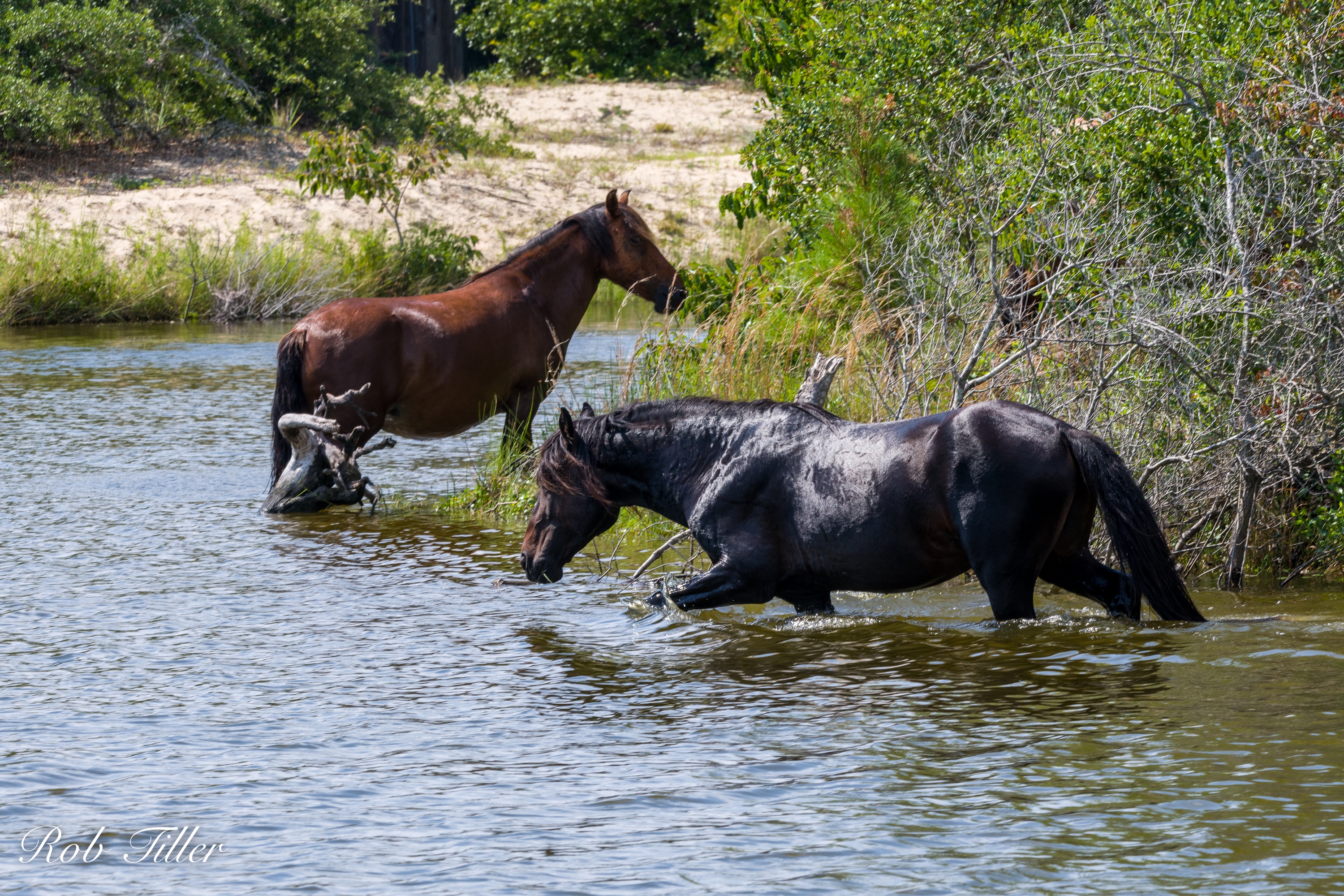
We had pleasant weather, and the water was warm enough for swimming, though some straw had washed up on the beach during a previous storm.  Just north of Corolla, the beach is open to four wheel drive vehicles, and I took mine up  there to look for the resident wild horses.  I made these pictures, among others.  It was cheering to see these big animals making their own way and looking calm and reasonably healthy.  

There was a sort of elephant in the room at this family reunion, which was a strong divergence of political views.  As regular readers have probably noted, my politics are far from conservative, as are those of a few other relations.  Probably a majority of the other Tillers identify strongly as conservatives.  In this time of extreme political polarization, with many primed to see politics in terms of a battle of good versus evil, some wondered, how would we get along?

The answer, it turned out, was just fine.  We found plenty of things in common, like kids, jobs, food, sports, houses, and family memories.  There was a lot of laughter.  It’s easy to overemphasize the significance of political differences, and to forget how much of our lives has little to do with our political allegiances.  Our reunion was a good reminder:  we all (Tillers, and of course, others too) are closely tied, and those ties are important.

The reunion also reminded me that there are plenty of differences of opinions among those on the conservative side.  The loudness and shrillness of right-wing media is misleading in many ways, including giving the impression of a conservative monolith.

I don’t mean to suggest that political differences are unimportant, especially now.  The transformation of the Republican party into the party of Trump, with its gloves-off program to seize power is still happening.  Republican leaders all across the country are passing new laws to increase the likelihood that they won’t lose future elections.  They’re also passing laws to prevent schools from teaching about topics that inspire questions about the existing social order, like our history of slavery and continuing racism.  

But there is a lot of political movement in the opposite direction, addressing some of our biggest problems, including climate change, economic fairness, health care, institutionalized violence, and education.  In the face of radical Trumpism, President Biden is boring in a good way — practical and down to earth.  Perhaps this is the storm before the calm. 

Speaking of earth and hope, two cheers for the President’s 30 by 30 initiative:  conservation of 30 percent of our land and water by 2030.  So far, this hasn’t made big headlines, but it should help in addressing both global warming and the biodiversity crisis.  Some fifty other countries are working on this same goal.    Non-human animals are usually ignored as humans pursue their goals, to their and our great loss.  While I tend to go with E.O. Wilson, who has advocated a target of protecting 50 percent, it’s a good start. 

My new Trailhawk, sandcrabs, sunflowers, and busing

Yates-4271

My new slightly used ride down the hill from the sunflowers at Dorothea Dix park

When I was in Maine at the and of June, I had a rental car I really liked:  a 2019 Jeep Cherokee Trailhawk. It was about the same size as my Mazda CX-5, and drove similarly on the highway.  But there were things I liked more about the Trailhawk: its seats, which fit me well, and its instrumentation, including a big touchscreen.  I liked its off-road capabilities, including a locking rear differential and towhooks to get pulled out of the mud. Also, I really liked the color:  velvet red pearlcoat. 

So I read some reviews and did some market research, and the day after I got home I traded in my Mazda for a red Trailhawk.  Later that week we took it to the Outer Banks to visit sister Jane and her family. We watched the 4th of July fireworks at the Currituck lighthouse from their deck, and shot off a few Roman candles.  I got up before sunrise with a plan to take pictures of sanderlings and other shorebirds at first light, but didn’t find the necessary birds.  

Yates-3286

Sandcrabs at Corolla, NC

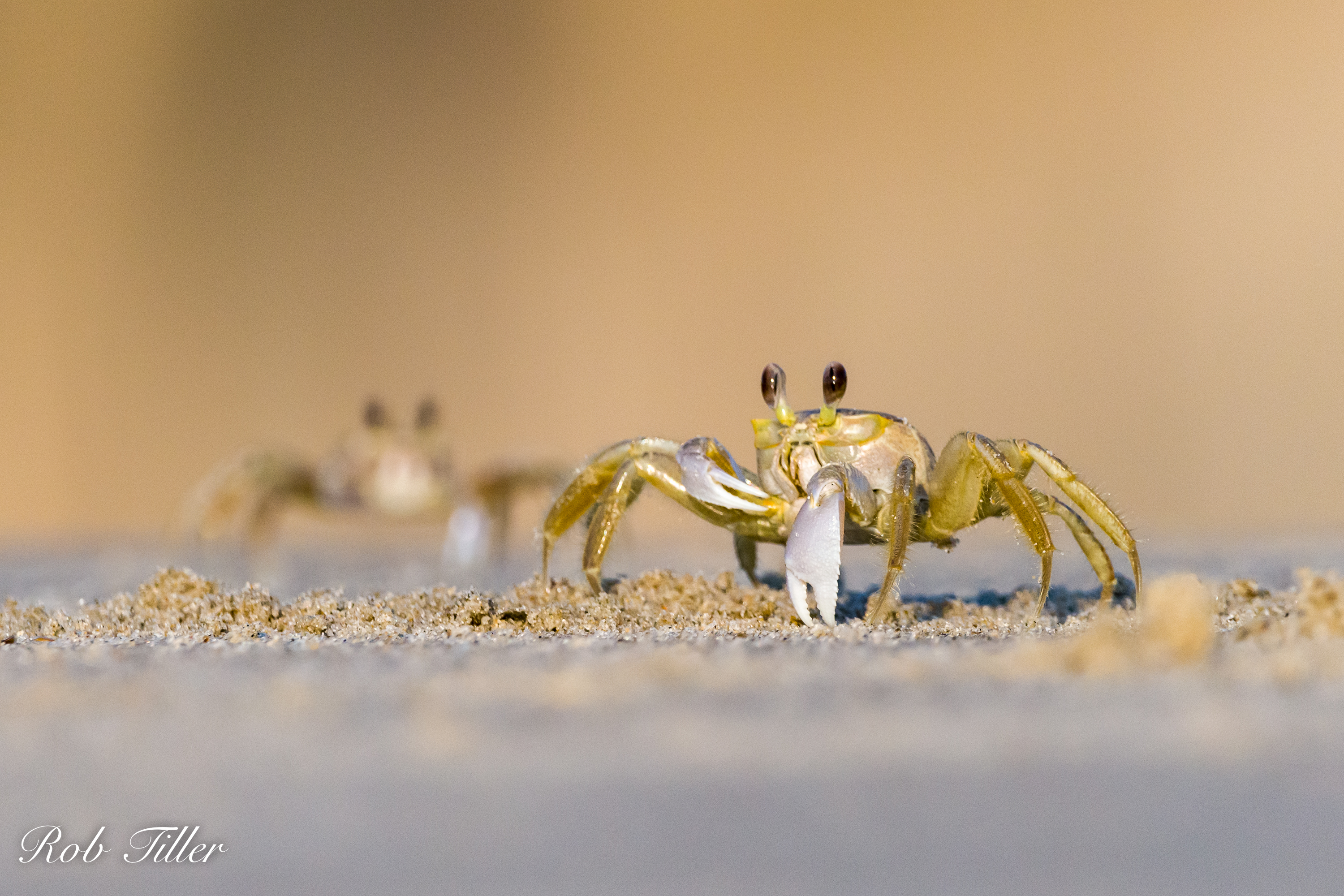
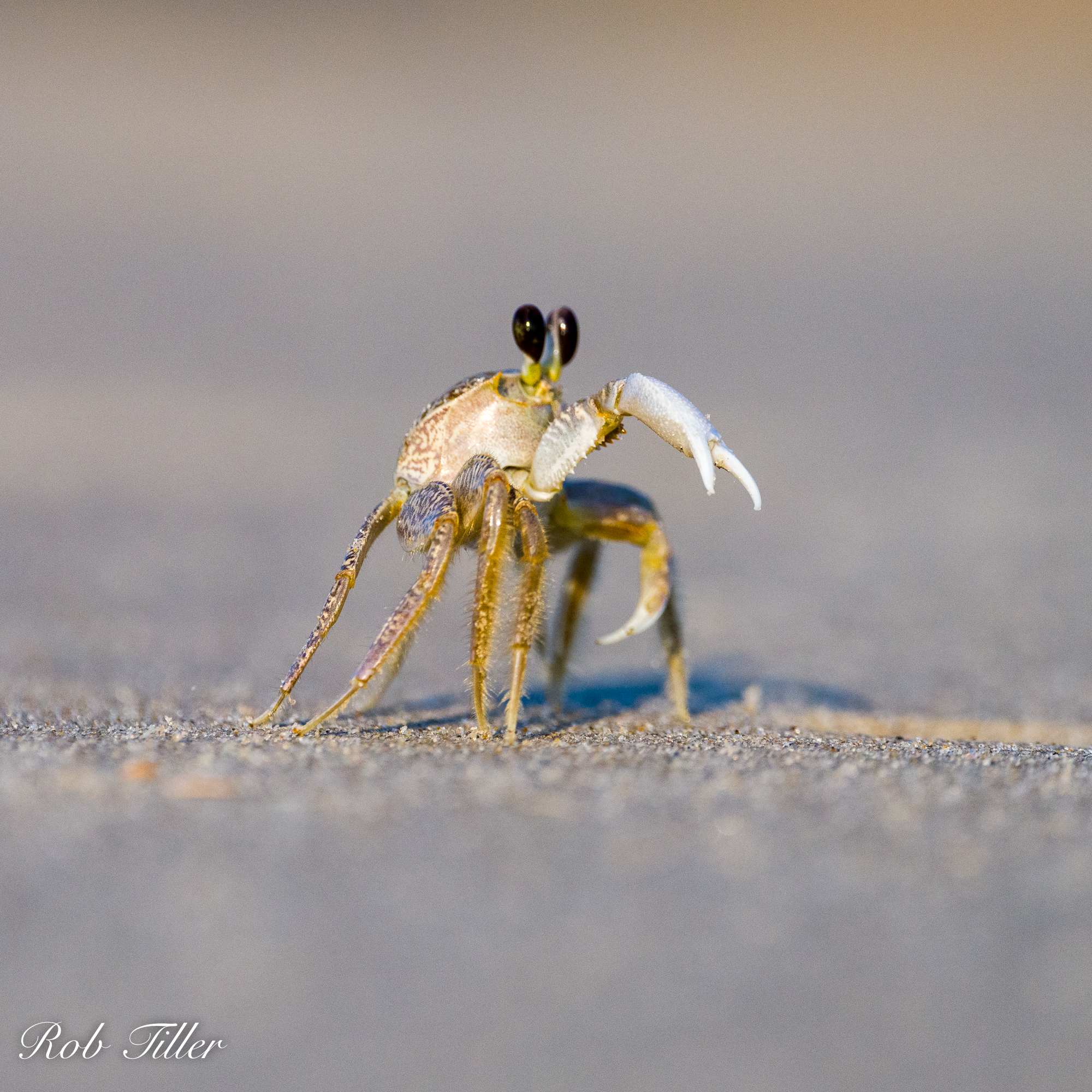
I did, however, see a lot of sandcrabs.  They’re small and well camouflaged, and they can skitter quickly.  In places where I glimpsed a couple, I got down on my belly with my large zoom, and waited for them to get comfortable with me.   
Yates-3271

I’m sure the families walking by  on the beach thought I was a strange bird as I lay there.  But it was worth it. Eventually the tiny crabs came out of their holes, and I saw them working on different projects, like finding food and scaring off their enemies.  Though I wouldn’t call them beautiful, they are fascinatingly complex.  
Yates-3300.jpg

I was reminded of a sweet essay in the Times a few weeks ago my Margaret Renki titled Praise Song for the Unloved Animals.  Renki writes of the hard work by some of nature’s relatively unphotogenic pest controllers and garbagemen, like opossums, vultures, bats, and field mice.  She even finds a kind word for mosquitoes who are food for chimney swifts and tree swallows. She appreciates the complex interconnectedness of life. I’m sure she’d be happy to add sandcrabs into her list.  Yates-3812.jpg

We took the Trailhawk up to the beach area where cars are permitted, and verified that it will go on the sand without getting stuck.  We hunted for the wild horses that live there, and managed to spot eight of them.  

Yates-3878.jpg

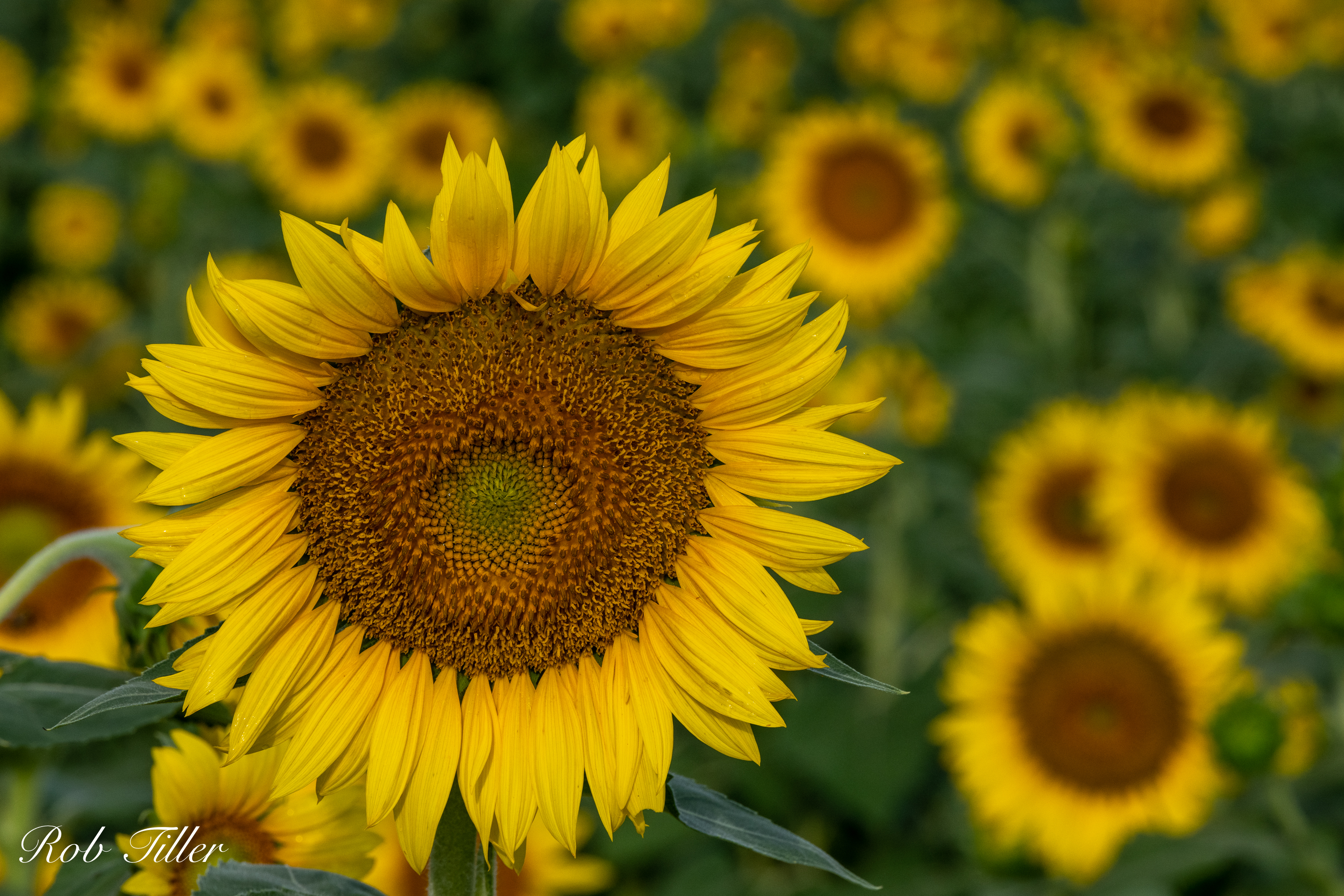
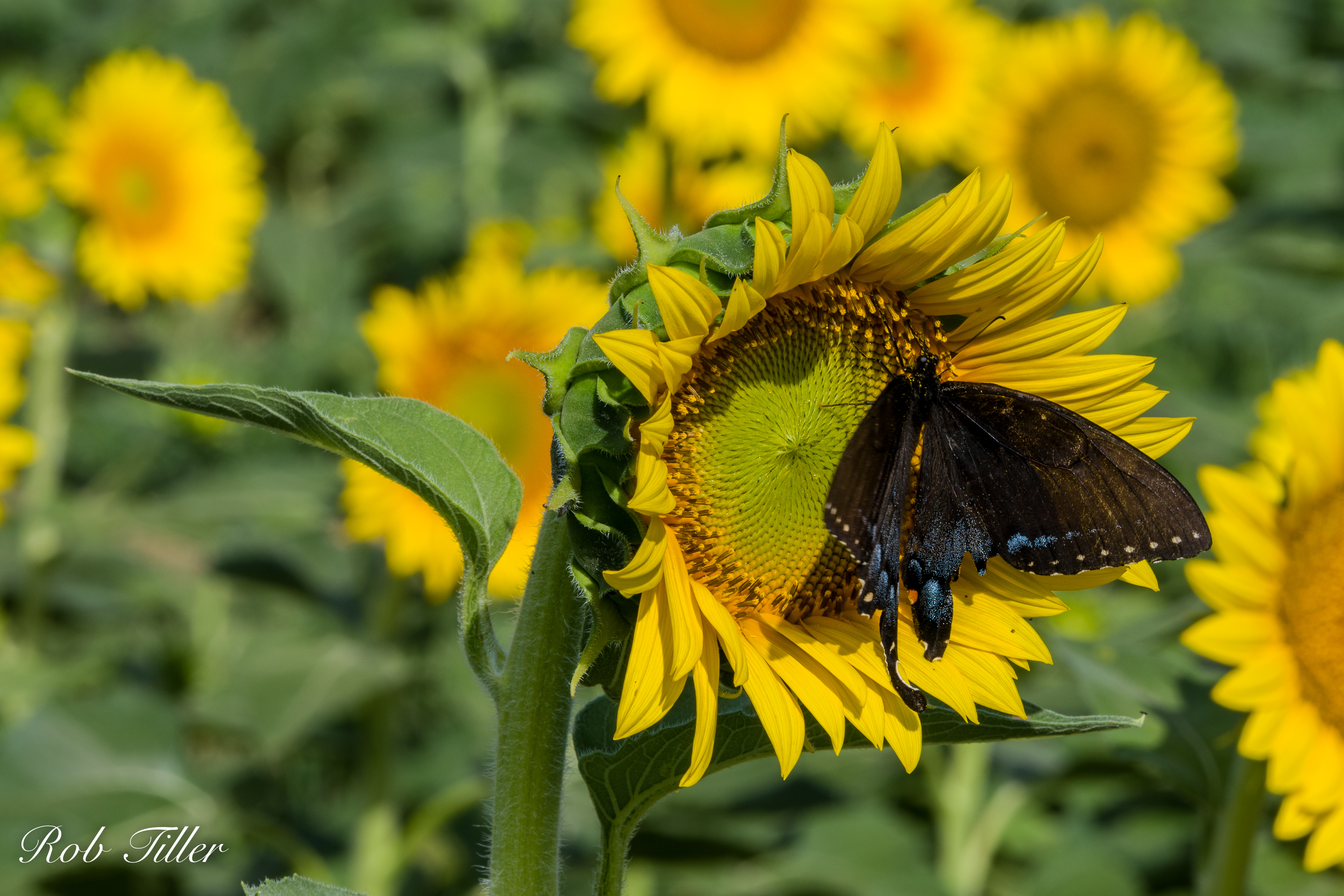
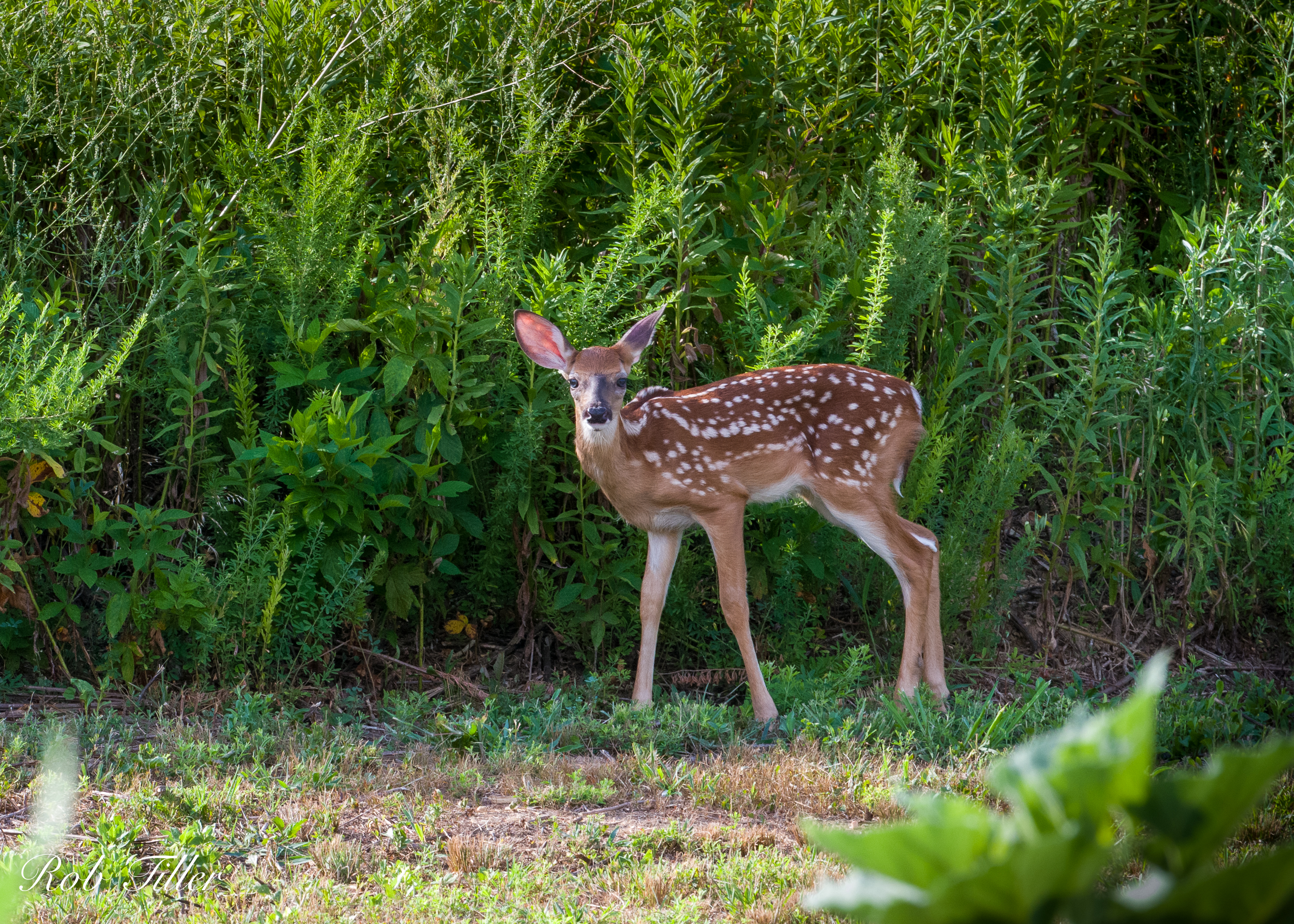
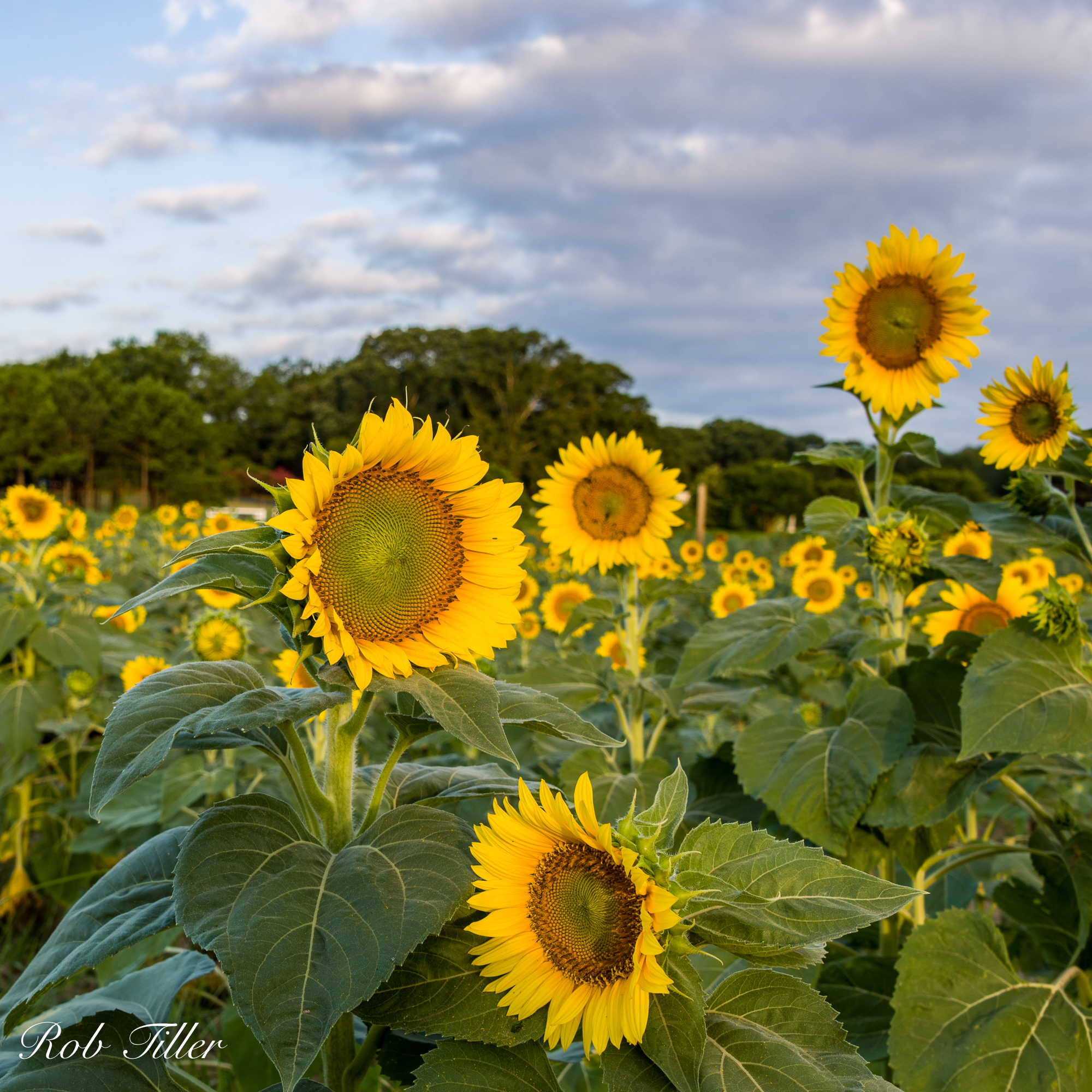
Back in Raleigh, I got up early three mornings this week to check on the sunflowers at Dorothea Dix park.  There were many of them! I tried to look at them in different ways. These pictures were my favorites.   I also got a shot of a little fawn on the edge of the sunflower field.  It was bleating loudly for its mommy.   It watched me for a long moment, then started to run towards me, perhaps thinking I could help find her.  I waved my arms and told it I didn’t know where mommy was, and the fawn turned and ran into the woods.  

Yates-4066

I never particularly thought of myself as a sunflower person.  And definitely never thought of myself as a Jeep person, or a person who liked red cars.  But if we’re attentive, we sometimes discover things about ourselves we didn’t know, and get past our prejudices.  

Yates-4343.jpg

Speaking of prejudices, there was a very fine essay in the Times yesterday  by Nikole Hannah-Jones about school busing.   Hannah-Jones has a great short summary of US system of separating black kids from white ones in our schools, which we still haven’t fixed.  She also decodes the political language. Back in the sixties, and now, Instead of saying, we don’t want our white kids going to school with black ones, we said, we don’t like school busing.  Using the language of “busing” allowed us to conceal from ourselves our racial prejudice, of which we are — and should be — ashamed.

Yates-4260.jpg

Hannah-Jones points up that busing was pretty effective in places and at times in undoing some of our legacy of segregation.  I think schools are only one part of repairing the damage of that system. Facing up to extreme inequality in income, jobs, housing, and health care are still on the to-do list.  But desegregating our schools is important, and doable. It is likely to involve buses.   

Yates-4209.jpg


A fun Memorial Day weekend on the Outer Banks — eating, talking, running, looking at wild horses and birds, and reading

Jane and Keith's beach house in Corolla, NC

Jane and Keith’s beach house in Corolla, NC

Again this year, my sister Jane invited us out to the Outer Banks for Memorial Day weekend, and we happily accepted. The beach is a good place to relax and restore. After weighing the pros and cons, we decided to drive out in Clara, who with her sporting heritage rides rougher than the Suburu Outback, but is also prettier and more exciting. Traffic wasn’t bad. We went at the speed limit plus 9, and the heavy complement of state troopers along I-64 tolerated the overage.

Charlie the Boogle

Charlie the Boogle

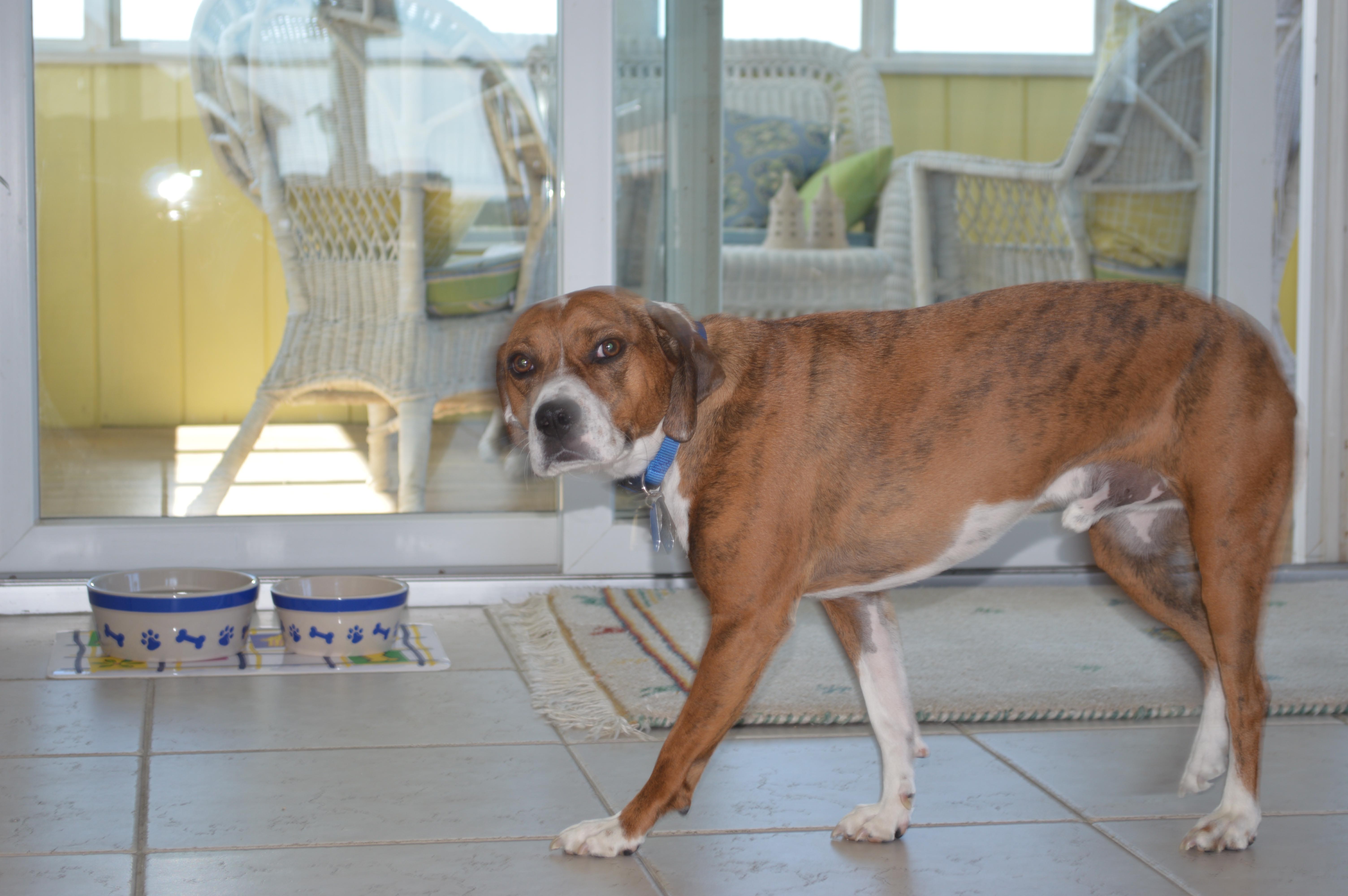
We got to Corolla about 9:30 p.m., and everyone was up and happy to see us. We enjoyed a glass of Keith’s merlot before bed. We also met their new dog, Charlie, a friendly beagle-boxer, or boogle. The camera made him a little nervous.

The next morning was sunny but chilly and windy. Keith prepared an egg casserole and fruit salad for breakfast, and we caught up on family news.
13 05 24_1703
We also talked a bit about technology and biology. I briefed them on some of the progress on understanding the human microbial community, which I read more about in the piece by Michael Pollen in last Sunday’s NY Times. Pollen wrote, “It turns out that we are only 10 percent human: for every human cell that is intrinsic to our body, there are about 10 resident microbes . . . . To the extent that we are bearers of genetic information, more than 99 percent of it is microbial. And it appears increasingly likely that this ‘second genome,’ as it is sometimes called, exerts an influence on our health as great and possibly even greater than the genes we inherit from our parents.”

This is mind-blowing, paradigm-shifting stuff. One researcher says “we would do well to begin regarding the human body as ‘an elaborate vessel optimized for the growth and spread of our microbial inhabitants.’” We’re just starting to understand some of the links between human health and microbial health. It’s a huge mistake, which most of us have previously made, to think of all germs as things that should be exterminated. Certain bacteria are essential to health, and problems in the microbiome appear to relate to chronic disease and some infections. Human health can be thought of as “a collective property of the human-associated microbiota . . . that is, as a function of the community, not the individual.”

The Pollen article is a great introduction to this subject, which is also discussed in The Wild in Our Bodies by Robert Dunn.
13 05 25_1642_edited-2

After breakfast, I went out for a run with my nephew David, now 13 and growing fast. David has fallen in love with lacrosse and is getting lots of playing time as his team’s goalie, so I figured he would probably run me into the ground. Instead, he developed a major cramp problem, and so we did more walking than running. I learned about his prize-winning science fair project, which involved growing and measuring characteristics of a fast growing plant called brassica rapa.
13 05 25_1640_edited-1
13 05 26_1751

Keith cooked an amazing lunch – cucumber soup and pasta asparagus salad. Then we loaded up in the 4WD sport ute, and drove north on the beach looking for wild horses. Past the lifeguard station, we turned left into the sand roads through the gnarled trees and bushes of the maritime forest. We found several horses. It’s cheering somehow that these big animals can make their own way in small wild areas surrounded by development. We also saw a fox.
13 05 25_1571
13 05 25_156013 05 25_1608_edited-1

I had time for some reading in the afternoon, and got a good start on Things Fall Apart by Chinua Achebe, the Nigerian writer who died recently. This is his first and most famous book, and perhaps the most famous work of African literature to date. I was immediately hooked. The prose combines the muscular economy of Hemingway at his best with the vision of Faulkner, with an overarching tenderness and humanity. The story is about African village life, which, it turns out, has many of the same emotional components as our lives.

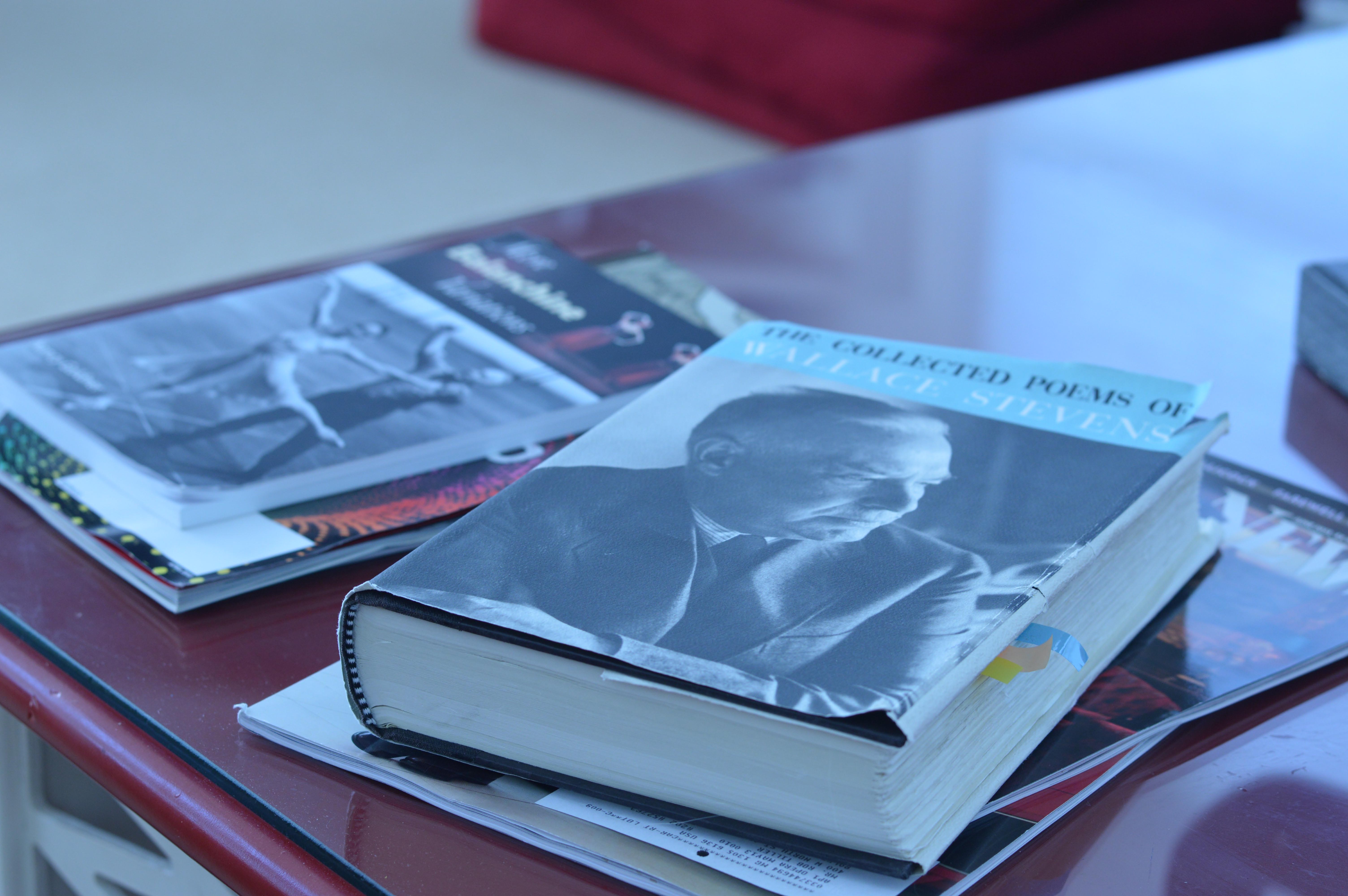
I also read more of More Balanchine Variations by Nancy Goldner, which is a book about various Balanchine ballets. Goldner is a generous-hearted critic, and she loves her subject. It’s so hard to bring dance to life other than by dancing, but she comes close.
13 05 25_1678

One other major bit of reading was chunks of the complete poems of Wallace Stevens. I came close to reading them all last year, before shelving the project some months back. Stevens is challenging, and not uniformly great – some of the poems seem mannered or even mad. But the greatest poems are both beautiful and profound. My favorite is still Sunday Morning, which is a sly, subversive, arresting, sensual, and humorous. I memorized it, and it still gives me goosebumps at the end, with its powerful image of “casual flocks of pigeons make/ ambiguous undulations as they sink,/ downward to darkness, on extended wings.”

Stevens proposes this joy in nature as an answer to religious asceticism, and it works for me. It also makes me look at the world with different eyes. For example, in back of Jane and Keith’s beach house, purple martins are still numerous, and still flying fast feeding on insects. It was a pleasure to watch them.

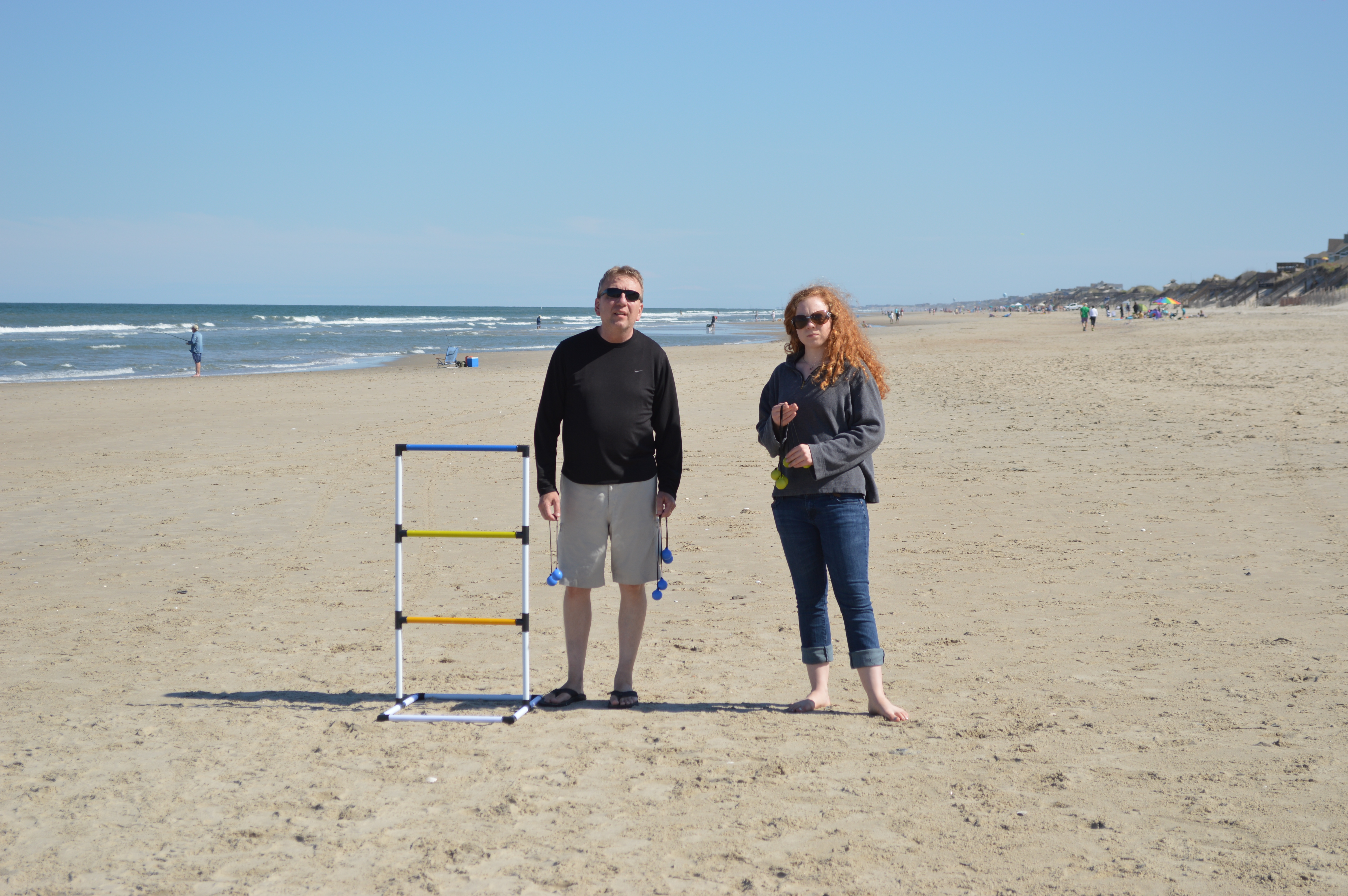
We played a new beach game on Sunday afternoon. It’s one of the many variations on horse shoes, but a good one. Points are scored by throwing a string with weighted balls on each end around a bar. They couldn’t remember the name of it, but no matter. It was fun!
13 05 26_1763

13 05 26_1759