The Casual Blog

Tag: white supremacy

Skiing in Canada, and trying to articulate some of the problems with Trump
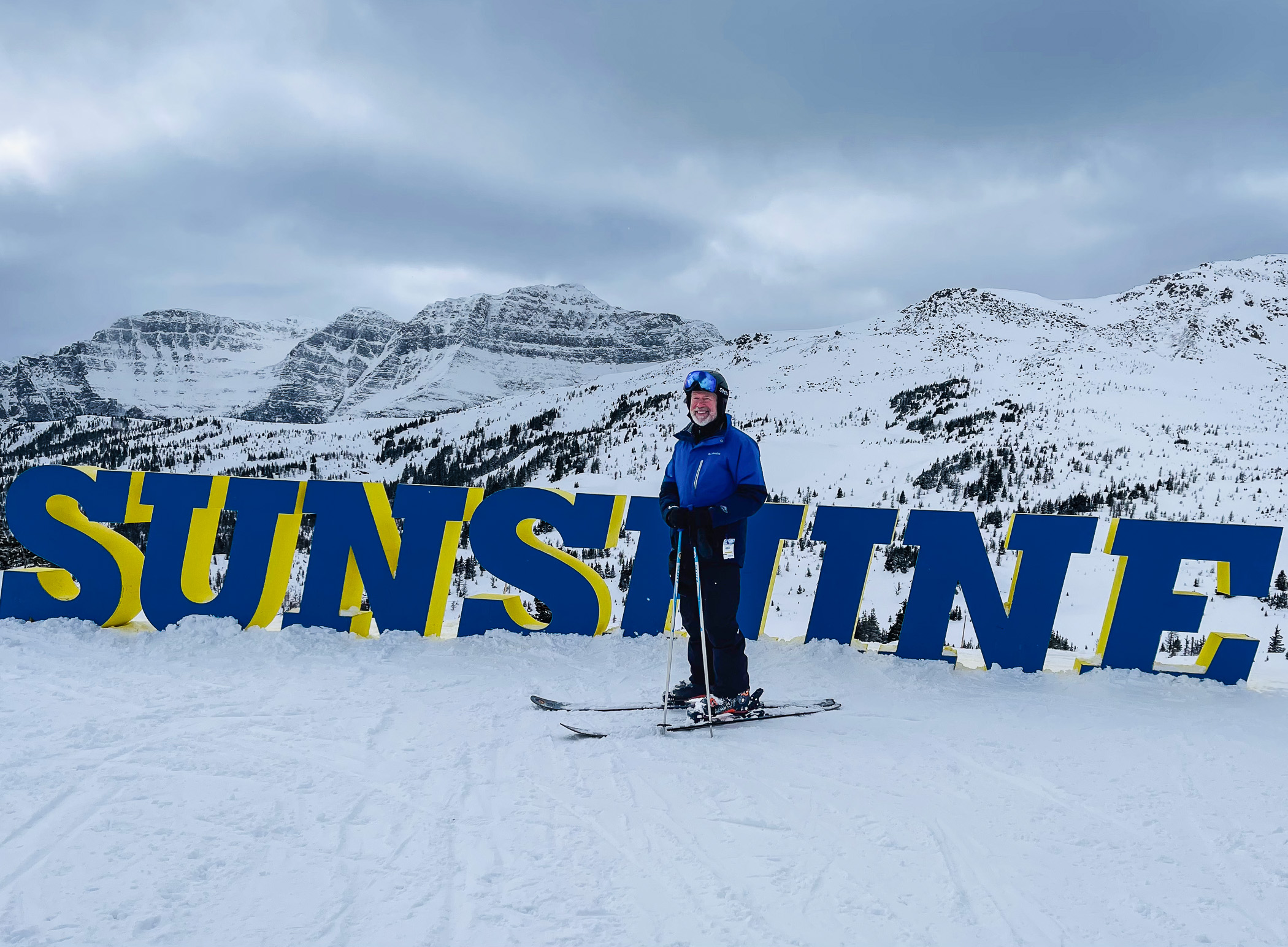
Last week I got to ski in Banff National Park in Alberta, Canada.  It was amazingly beautiful there, with vistas that rivaled the Alps.  There had been less-than-average snowfall, but there was enough coverage for many excellent runs through varied and challenging terrain.  I sampled the Lake Louise area, and spent the majority of my time at the Sunshine resort.

The trip was organized by the Raleigh Ski and Outing Club, which I recently joined.  As a new member, I found the group friendly and welcoming.  There were quite a few very good skiers, and it helped my skiing to hang with them.  

I was a little worried that the Canadians would be upset with American visitors, because of the recent threats by Trump to punish the country economically and possibly take it over.  Happily, the Canadians we met were nice as could be, though I’m sure that a lot of them are distressed at the new Trump policies.  

Since returning to the USA, I’ve been spending a lot of time with the news, trying to understand what’s happening to my country.  There’s so much to process that it can be overwhelming.  

It feels as though we’ve had a coup, with a small group seizing power and upending the existing order.  This is not extraordinary, in the sense that it has happened in many countries before.  What’s unusual is that we (that is, a bare majority of us) elected the coup instigators, and this is the USA, which has a long history of political stability.

The new Trump administration has moved with lightning speed to dismantle the existing framework of government and put in place values and policies antithetical to our laws and traditions.  Recent polls show that a lot of these initiatives are not supported by the majority, but there’s still a substantial minority that continues to approve of Trump. 

The remaining support for Trump confirms that, despite being stupid in many ways, he has a remarkable talent for propaganda.  He labels his ideas very simply and keeps repeating them.  It matters not if his labels distort or reverse the original meaning of words.  The constant repetition, like water on rock, tends to erode critical thought.

To successfully resist the new Trump program, we resistors need to call out the distortions, and also to communicate better by simplifying our language.   Where possible, we need to be direct and uncomplicated.  With that in mind, I’m offering the following seven-question quiz to highlight a few of the most alarming new initiatives, including some words in boldface that might serve as touchstones.

QUIZ – ARE YOU OK WITH TRUMP?

  1. Are you in favor of tanking the economy?  Prices of groceries and other necessities are going up, as Trump is driving us toward an economic disaster with his bizarre tariffs.  The stock market has dropped like a rock.  Business leaders are scared of what he’s doing and scared to object.  
  1. Do you support corruption in government?  Trump has fired officials who served as watchdogs for government misconduct and has declared a non-enforcement policy for anti-bribery laws.  This makes sense if one intends to loot the state and reward cronies by allowing them to do likewise, as authoritarian regimes often do.  Likewise, Trump is encouraging business fraud and corruption by shuttering the Consumer Finance Protection Board.  See Sen. Murphy’s recent speech for more on this:  https://youtu.be/hycoCYenXls?si=CJqnRPXx5OUaqw6J
  1. Are you opposed to free speech?   Trump is threatening and punishing traditional media that displease him.  Media outlets are writing him checks to settle his baseless lawsuits (see previous question on corruption) and toning down their critical coverage.  He’s previously proposed to shoot peaceful protestors.  His people have just arrested a foreign-legal resident for protesting the Israeli slaughter of Palestinians.  He has promised there will be more arrests to come.  
  1. Are you in favor of white supremacy?  The Trump initiative to suppress diversity, equity, and inclusion is simply a rebranding of old-fashioned racism, misogyny, and xenophobia.  Repeat:  his anti-DEl program is really barely disguised pro-racism, pro-misogyny, and pro-xenophobia.  Trump’s DEI bans, blaming airline disasters on DEI, and his firing of accomplished black and female military leaders shows that this initiative is both serious and crazy.  
  1. Do you prefer cruelty to decency and kindness?  Trump has cut off aid to starving children.  He’s stopping medical care for HIV and other patients.  He is gutting agencies that serve those less fortunate.  He is imprisoning migrants who have lived productive lives here for years or decades.  He is denying the humanity – indeed, the very existence – of transgender people.  
  1. Do you think it is better to address serious problems based on ignorance or science?  Trump is declining to endorse vaccines to prevent preventable serious diseases.  He’s shutting down scientific research into fundamental health issues.  He denies the reality of climate change that threatens civilization.  Indeed, he is pushing for producing and using more fossil fuels that will accelerate global warming.  
  1. Do you support brutal autocrats and the betrayal of democratic allies?  Trump has withdrawn support for Ukraine and threatened to withdraw from NATO.  He’s threatened to seize territory in Canada, Panama, and Greenland.  Meanwhile, he expresses continued affection for kleptocratic war criminal Vladimir Putin.  

END   

Pencils down.  How did you do?  Of course, this list doesn’t hit every Trump disaster currently in progress, but you get the idea – the indecency and outrageousness of a lot of the Trump initiatives can be stated in pretty simple terms.  

There are also some Trump initiatives that are harder to simplify, like upending the constitutional order by refusing the directives of Congress and the courts, undermining the rule of law through baseless pardons and baseless prosecutions, and decimating the federal workforce that’s foundational to our system of justice, our defense, protection of our environment, and many basic services.  But for those too, simpler is better, at least as a starting point.  

Admittedly, it will probably never be possible to persuade committed MAGA-ites that Trump’s program is disastrous.  There are those whose minds are made up, and sadly for them, they’re likely to be among the first to face serious adverse consequences from their leader.  But there are still plenty of folks who voted for him who will consider changing horses at the next opportunity.  Let’s see if we can improve our communications to help them see that changing is a good idea.  

What a not nice surprise: the radical right

I’m still struggling to get my head around what happened in Washington, D.C., last week.  The attack on the Capitol was only a few blocks from where we used to live on Independence Avenue.  When our kids were little, we took them to the Capitol grounds for picnics.  It’s a beautiful building, and a moving symbol of our democracy.

My first impression of the mob there was that it was hapless and disorganized.  But as more information has come in, the storming of the Capitol looks more like an insurrection intended to overthrow the government.  Right wing message boards had plenty of messages about plans for the attack, and some of those involved were wearing tactical gear.  

I was stunned when, right after the attack, 147 Republican congressmen and congresswomen got behind Trump’s ridiculous lie of election fraud and voted to reverse the election.  This week, I was restunned when 197 Republicans voted against impeaching him for sedition. Most of these 197 wisely decided not to try to speak in defense of their vote, but a few doubled down, claiming that the true victim was Trump, and the true wrongdoers were liberal Democrats.  

A handful of Republicans voted with the Democratic majority in favor of impeachment, so we know that rational thinking and honesty were not impossible for the 197.  What is going on?

Some Republican representatives have reported fearing that Trump supporters would kill them and their families if they voted for impeachment.  It’s chillingly plausible that some representatives fear becoming a target.  We seem to be seeing a radicalization of the Trump base that recalls the Islamic State, with passionate, confused people looking for a meaningful cause and getting comfortable with lynchings, shootings, and other shocking crimes.

When I first heard of QAnon, it sounded like a goofy-but-probably-harmless game, like Dungeons and Dragons.  Surely, I thought,  no one could actually believe that the government, already controlled by Trump with the backing of rich Republicans, was actually a dark conspiracy of Satanist pedophiles opposed to Trump and fated to be put down by him in a messianic triumph?  If people were spending hours every day on the internet reading about such fantasies, it seemed a little sad, but at least they weren’t hurting anybody, and it was hard to believe there could be many such people.

There’s still a lot we don’t know about the one six attack, but seeing those folks at the Capitol convinced me I had underestimated the seductive power of QAnon.  For some, it has become a religion, with fellowship services over social media.  It seems to be morphing into a big tent of right wingnut conspiracies.    

At any minimum, QAnon is a friendly neighbor in the extremist swamp that includes white supremacists, gun rightists, and anti-government militias.  It’s part of  an echo chamber that amplifies fear and hatred of foreigners and minorities.  The idea that the election was fraudulent and the presidency was stolen from Trump, though provably false, seems to have become an article of the QAnon faith.

ISIS demonstrated that feelings of religious righteousness and extreme violence can go hand in hand.  QAnon believers seem to feel that they are righteous, and are fighting against terrible evil.  They see dark forces threatening their America, which must be stopped by whatever means are necessary.

There’s no way to know how many of these folks are prepared to target perceived enemies to the right and left with AK-47s and blow them up with IEDs.  But recent events in D.C. indicate that the answer is more than a few.  

Thousands of National Guard members have been called to Washington, and the FBI is warning state capitols to be prepared for attacks.   Good luck to the Guardsman and local police charged with the frontline response.  May they be safe and avoid violence whenever possible.

Also, may the QAnon believers and similarly radicalized Americans avoid mayhem and find a path out of their paranoid fantasies.  May those of us with an opportunity to speak to them share a kind word of reason, decency, and compassion.  It’s unlikely any one person or conversation will change them, but we might plant a seed.  

Finally, it’s time for accountability all around.  That includes those who led the attack on the Capitol, those politicians who supported overturning the election and continue to repeat the lie that Trump won, and those in traditional and social media who amplified the long string of Trump’s lies.  It also includes the corporations that funded and are now defunding the politicians who supported the insurrection, and those that still need to stop that funding.  

There are a lot of problems underlying the one six attack, including opportunistic political leaders, dark money, seductive social media, economic stagnation and inequality, a pandemic, and deep seated racial prejudice.  The combination is  producing radicalized Americans at scale.  This is something new and dangerous.  We need to address it without delay.  

*******   

These photos are of my Slinkies.  I’d been thinking about photographing them for a while, and this week, I did it.  It was fun experimenting with camera settings, morning and artificial light, different background colors and textures, and different processing techniques.

Getting ready for bears, finding butterflies, more mass shootings, and how racism affects us


Next week I’ll be going to Klemtu, British Columbia for a photography workshop involving bears.  I’m excited, but also a little daunted, since there’s a lot I don’t know about bears. This week I’ve been shopping for expedition clothing and equipment.  I’d like to thank Peace Camera, my local photo shop, for their patience and good advice, and REI, Great Outdoor Provision Co., and L.L. Bean for their high quality products and friendly service.    

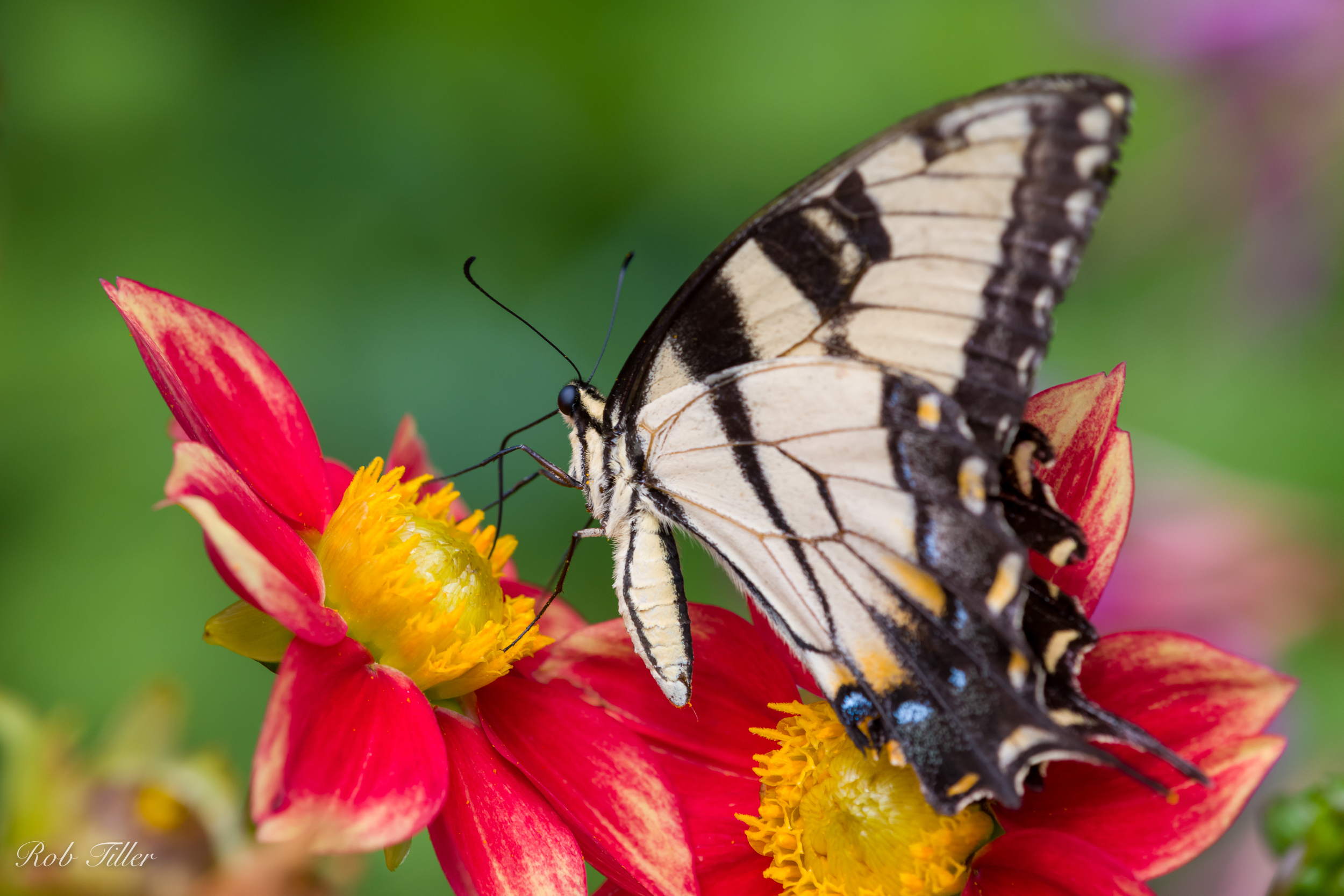
Trying to get ready for the bears, I got outside a few times with my camera, but the only photogenic animals I saw were butterflies.  Those here were in Raulston Arboretum, where they were working hard in the flowers. Though they had no interest in posing for me, they didn’t seem to mind my shooting them.  Anyhow, there were many shots I didn’t get, but I did get these which I liked.  

I’m generally hesitant to refer to taking pictures as shooting, because the term is ambiguous, and I’m definitely not referring to using guns.  Mass shootings were once again in the news this week, causing fresh horror and renewed calls for reasonable gun control. It is sad and remarkable that our politics prevents fixing this relatively simple problem.   

I’ve been reading a lot lately about racial bias and wondering how much of our gun proliferation problem relates to our racism problem.  There’s a lot of evidence that white people unthinkingly and wrongly associate black people with negative qualities, including criminality.  How much of the drive to own firearms comes from an irrational fear of black criminals? A goodly amount, I’d wager. To judge from the crowds at Trump rallies, the folks most enthusiastic about guns are the ones that are most supportive of Trump’s racism.  They may well think they need guns to fend off black criminals.  

I think it’s a mistake to blame Trump for our racism.  His incitement of racist violence is revolting and scary, but the American system of white supremacy was in place long before he was born. And to fathom it requires looking well beyond the President’s outrages.  I even give Trump credit for a possible silver lining: his grotesque and overt racism takes the issue out from under the covers and makes it somewhat easier to see and work on.  

I used to think that the main problem with white racism was the disadvantages it created for black people.  Those disadvantages, from limiting job, housing, and educational opportunities on down to emotional and physical violence, are wrong, and we need to fix them.  But our traditional racism has ripple effects that are related to a host of other problems.  

The meta problem is our political polarization, which makes it almost impossible to work on other major problems (like gun control, population control, deindustrialization, fair elections, the social safety net, health care, and climate change).  This polarization is in large part a product of our racism.  

Nixon’s “southern strategy” in 1968 was to use racist dog whistles and fearmongering to get southern Democrats to vote Republican, and succeeding generations of Republican politicians have followed the same playbook with varying degrees of subtlety.  As Sahil Chinoy pointed out in the NY Times this week, race and attitudes toward race are a strong predictor of whether we call ourselves Republicans or Democrats.

Unless you just arrived here from outer space or Honduras, you probably know that Republicans are a mostly white party, and Democrats are a more racially mixed party.  This division wouldn’t necessarily be a problem if we viewed race as merely a physical difference, like height or eye color.  But we’re deeply conditioned to associate blackness with fearsome things. The political party that doesn’t much care for blacks not only disagrees with the other party; it believes it to be dangerous.  It’s hard to work cooperatively with people you think are a threat to peace and order.  

So a lot of our political disagreements that seem to have nothing to do with race are the progeny of racism.  I should note that I’m talking here about systems and tendencies. I don’t at all mean to suggest that all Republican individuals are racists, or that all Democrats are not.  On the contrary, I think a lot of us in both parties think that racism is wrong and want to end it.  But not a lot of us fully appreciate how thoroughly our racist culture has conditioned us, how much our lives today are affected by that culture, and how much work we have to do, both as individuals and as a society, for real change.      

By way of advancing the discussion, I’ve been reading, and hope others will read, White Fragility:  Why It’s So Hard for White People to Talk about Racism, by Robin DiAngelo. DiAngelo’s message is particularly important and helpful for white people who consciously support racial equality but don’t realize how they too have been deeply conditioned by a racist system.  She pulls no punches, and makes a convincing case that those of us who consider ourselves progressives as to racial matters still have a lot of interior work to do.  

I’m also reading and recommending Biased: Uncovering the Hidden Prejudice That Shapes What We See, Think, and Do, by Jennifer Eberhardt.  Eberhardt is a black social psychologist whose work involves studying racial bias. The book is part autobiography and part science. With moving and personal stories, she shows how deeply seated racism is in our culture, and how much work it will take to undo it.