The Casual Blog

Tag: spring

Spring, wild horses, and some thoughts on immigration
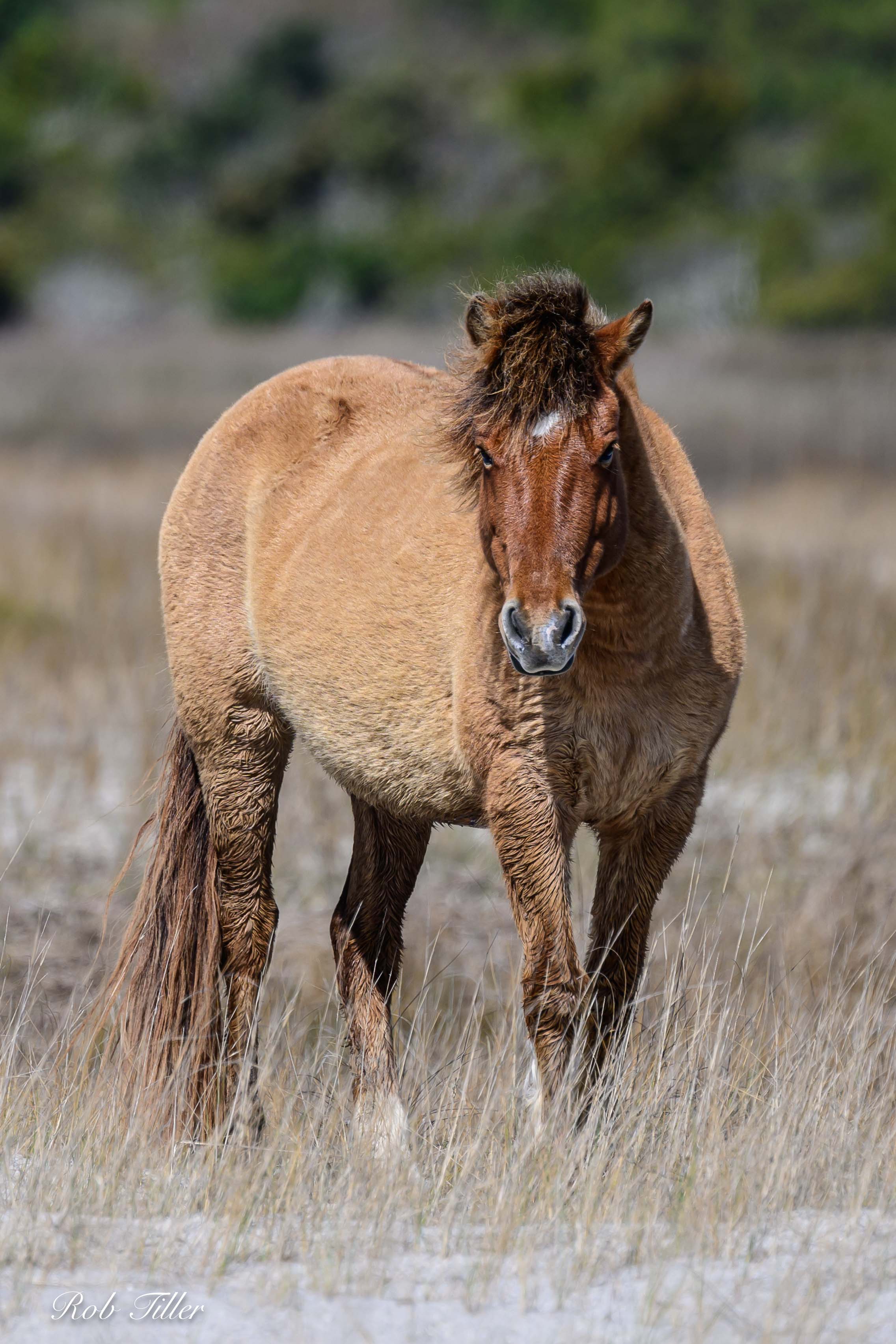
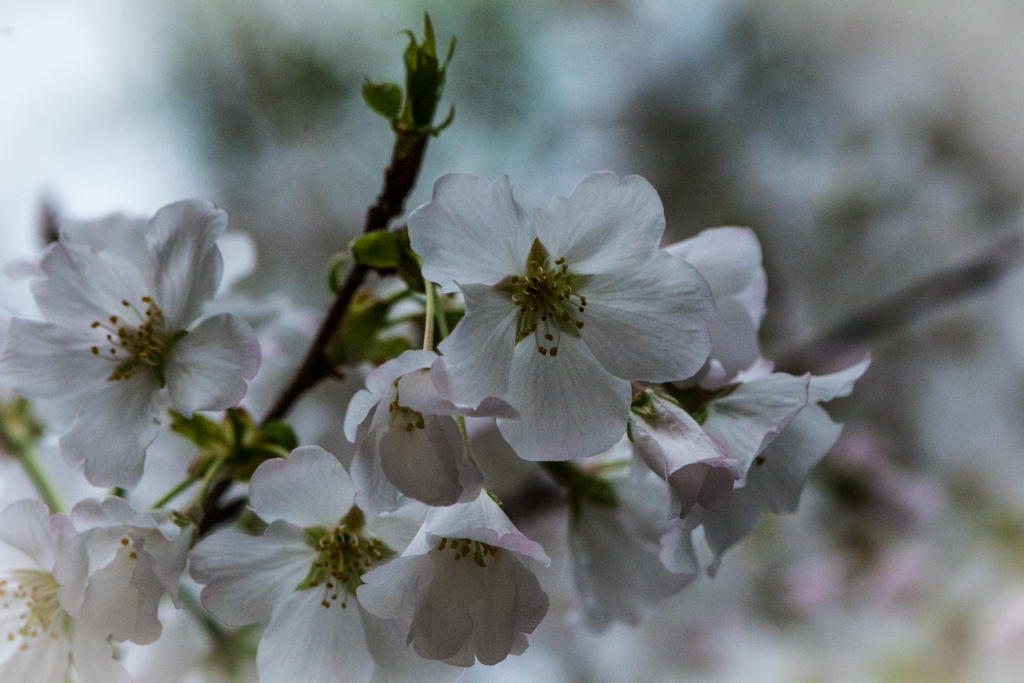
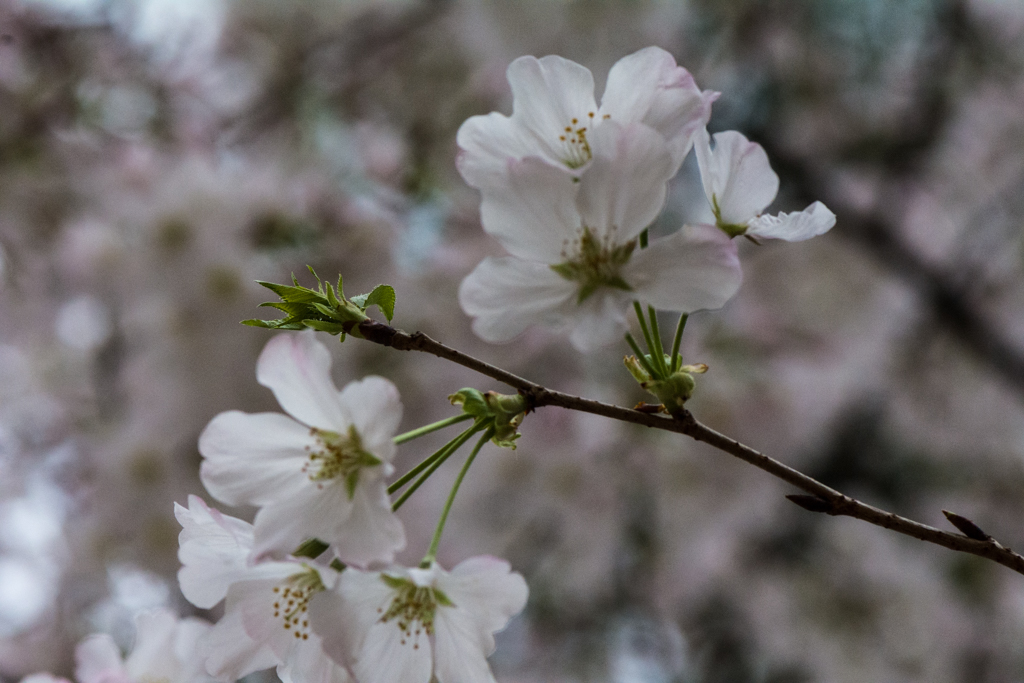
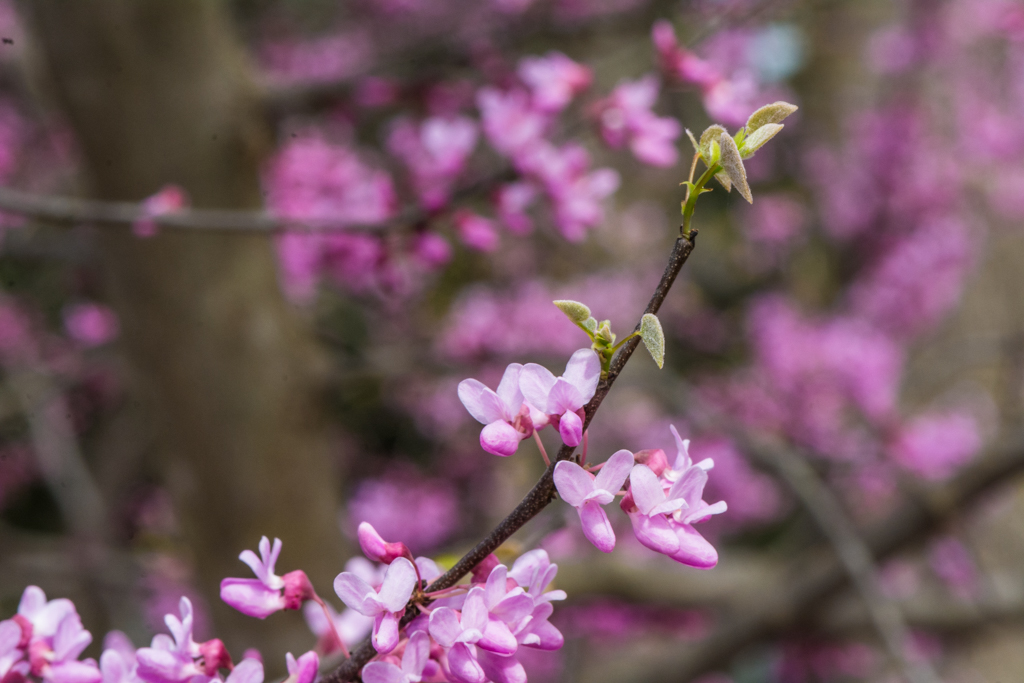
Spring is finally here, I’m happy to say.  We visited our loved ones at beautiful Beaufort, N.C., a couple of weeks ago and saw some of the wild horses there.  In Raleigh, the trees are starting to leaf in, and the early flowers have popped up, seemingly out of nowhere, with vivid colors.  I enjoy them every year, but this year is especially good.  The flowers below were from Raulston Arboretum, Fletcher Park, and the backyard of casa Tiller.  

This week we watched The Zone of Interest, which won the Oscar for Best Foreign Film and is now streamable on Prime.  I highly recommend it.  The story concerns a family living a normal happy life right next to the Auschwitz death camp.  It raises some tough and timely questions about human behavior and ethics.  I expect we’ll be thinking about it for a long time.    

Our immigration situation also raises some tough and timely questions.  These days it’s often referred to as the immigration crisis, which is certainly true from the perspective of people desperately fleeing violence and poverty.  But there’s a massive misunderstanding of the situation, as shown in a recent Gallup poll. Immigration was most frequently cited as America’s biggest problem, and the number of Americans who think that has gone up.  

This is both understandable and absurd.  Fear of foreigners is nothing new, and has long been exploited by leaders for political advantage .   But we truly are a nation of immigrants.  They are running some of our most successful corporations, as well as building our houses, manning our hospitals and factories, picking our crops, and taking care of our children.  If there’s energy and creativity required, we rely a lot on immigrants, just as we rely on them to do a lot of unpleasant work that we want to be sure is done well.  

It should be obvious, but apparently needs saying, that we’ve always been a multi-racial, multi-ethnic, multi-religious country.  The majority of us have ancestors that came from some other country not so long ago.  And we have friends, neighbors, and service providers who have different skin colors, different languages, and different customs.  We’ve got lots of problems, but our diversity is not a problem.  It’s a strength.   

With all the actual problems we’re facing, it’s really disturbing that the non-problem of immigration has become a central flash point of  our politics.  Whipping up more fear of immigrants was and is one of Trump’s main tactics; it’s hard to imagine his succeeding without it.  But even mainstream Democrats now believe we have a border crisis that is not of our own making, and that we somehow have to prevent more foreigners from getting in.

Franklin Roosevelt had a famous line in his inaugural address in 1933:  “The only thing we have to fear is fear itself.”  He probably meant to reassure a nation in the throes of a financial depression with the thought that fears weren’t themselves likely to be fatal, and economic problems were solvable.  

But Roosevelt’s words have a different resonance now.  We truly have good reason to be afraid of the current panic about immigrants, because it is perilous, both for ourselves and others.  I’m thinking of three serious risks.

First, it could lead to the end of democracy as we know it.  Hard as it is to believe, there is a real possibility that Donald Trump could become the next president.   Trump has proudly declared his intention to become a dictator, to persecute his political enemies, to shoot peaceful protesters, to take away rights from women and minorities, and to fundamentally alter the constitutional order.  He undermines the rule of law with his claims to be immune from prosecution for any crime and pardons for his convicted criminal pals.  Again, his appeal is based in large part on his demagoguery about immigrants, whom he viciously and groundlessly characterizes as criminals, rapists, and animals.  

Second, our draconian limitation on immigration is a self-inflicted wound, in that we need immigrant workers.  The idea that  immigrants cause harm by taking Americans’ jobs is mistaken.  They pay more in taxers than they use in services. Many of them start businesses and create new jobs.  As noted, they do a lot of the most important high-level work we have, as well as some of the most difficult and dangerous jobs.  For example, without them, our food supply chain doesn’t work, or our cutting edge AI tools.  We have a labor shortage, and with an aging population, that problem is getting worse.  We need more immigrants.

Third, there’s morality:  treating immigrants with disrespect and cruelty diminishes us.  Refusing to respond to the needs of desperate people fleeing war, violence, and grinding poverty is a stain on our own humanity.  It takes work to get rid of our natural compassion for people in need, but some of our political and thought leaders have pulled us along that path.  They whip up our ordinary caution about people we don’t yet know into anger, hatred, and panic.  

In considering what we owe immigrants, it’s worth noting that we in the U.S. bear substantial responsibility for some of the problems that are driving people from their countries of birth.  We’ve done more than our share to create the worldwide climate crisis, with the rising heat, drought, fires, and storms that make some areas inhospitable or uninhabitable.  

Driven by greed and fear of Communism, we’ve also played a role in creating the chronic violence that drives emigration out of some countries, including El Salvador, Nicaragua, Guatemala, Honduras, Venezuela, Haiti, and Cuba, not to mention the Middle East and Southeast Asia.  We have a lot to atone for.  

The solution is not simple.  The system we’ve constructed for our border is deeply flawed, and fixing it will not be easy.  We don’t have the necessary plans or resources in place to implement the current problematic laws.  More fundamentally, we need to rethink certain assumptions, including notions of what a great nation is and what borders are for, and that will take time.  

But it’s obvious that we need to stop panicking about immigrants.  We need to start seeing them as people and learning about their situations.  We need to have conversations about what the options are for helping them.   We need to rediscover our natural compassion, generosity, and love.  People in dire need offer us an opportunity to be more compassionate and generous.  Let us be thankful for that opportunity, and take it.  

Spring flowers, golfing again, and a new question: is nuclear war good for us?

It is well and truly spring!  I highly recommend getting outside and looking at what’s blooming.  These pictures are ones I took on Saturday at Duke Gardens in Durham.  In the native plants area, the wildflowers did not disappoint!  The tulips were a little past their peak, but still riotously colorful.   


I read recently that learning new sports could slow down the inevitable mental decline of aging.  The idea seemed to be that new physical activities would stimulate new brain activity.  It sounded plausible, but time-consuming and potentially embarrassing.

It might be more productive and fun to improve at a sport at which you are currently mediocre.  Anyhow, that’s my working theory, as a new golf season beckons.  The last few months I played very little, owing to a series of minor injuries and uncongenial weather.  But this week I resumed my golf lessons with Jessica at GolfTec, and started practicing again, ever hopeful.


It’s a shame that Trump is such an avid golfer; it reflects badly on the game.  But the game will survive, and so will we.  I hope.  My confidence was somewhat shaken by recent reporting by Jane Mayer on the Trump circle. Her recent New Yorker piece  focused on Robert Mercer, a hedge fund billionaire with wacky right-wing ideas and enthusiasm for politics.  He and his family funded Bannon and Breitbart News, assumed a leading role in Trump’s presidential campaign, and are now directly involved in presidential decision-making.  

It’s not surprising that there are super rich people with nutty ideas, but this seems new:  super rich loonys more or less controlling the presidency.  The Mercers have promoted the “science” ideas of a bizarre figure named Arthur Robinson who champions the nonsense of climate change denialism.  Again, we know such people exist.  But new to me was his idea that nuclear war could be beneficial to human health.

In an interview on Fresh Air (transcribed here), Mayer said that Robinson and Mercer believe that nuclear radiation is good for people, and actually benefitted the Japanese who were subjected to the first nuclear attacks.  

In this political season, we’ve learned that there is no idea so crazy that it cannot be adopted by certain large groups of Americans.  So there may already be a significant  subpopulation that believes that nuclear war might be a good thing after all, with some of them in the White House.  That’s scary!  We need to reread  Hiroshima by John Hersey, and discuss the reality of the nuclear peril, and try to contain this existentially bad idea before it spreads.  


Duke blossoms, rising ballerinas, AlphaGo’s victory, and the Age of Artificial Intelligence

Tiller7Bug 1-6
On Saturday morning it was overcast and threatening to rain when I drove over to Durham to see what was blooming at Duke Gardens. Did you know it’s one of the top 10 public gardens in the U.S.? It is certainly a treasure. There were new cherry blossoms, tulips, and many other delights. I shot 234 closeup images with my Nikkor 105 MM macro lens before it began to drizzle. I got a few that revealed aspects I’d never looked at as closely before, and expressed some of my own joy of the season. The images here are all from Duke, except for the daffodils, which I took late Friday afternoon at Fletcher Park.
Tiller7Bug 1-4

That evening we saw the Carolina Ballet with new works by Zalman Raffael and Robert Weiss. Raffael’s new piece was set to Rachmaninoff’s Rhapsody on a Theme by Paganini. As it launched, I worried a little that 24 variations to this familiar music could easily bog down, but far from it: this was a lively, kinetic work that developed organically with continual surprises. Working in the Balanchine tradition, like Weiss, Raffael makes ballets that are abstract but intensely expressive. He’s so accomplished and assured already, and so young!

In the performance we saw, some of the younger company members who normally are in the background stepped into the spotlight, and performed beautifully. I very much enjoyed the subtle elegance of Courtney Schenberger and Rammaru Shindo in Balanchine’s Valse Fantaisie. Ashley Hathaway, with Adam Crawford Chavis, was really sensual and powerful in the adagio Meditation from Thais. Amanda Babayan was a lovely Miranda in Weiss’s Tempest Fantasy. So much talent, developing quickly, like those blossoms. It’s a privilege to receive their art.
Tiller7Bug 1-3

Speaking of surprising progress, this week AlphaGo finished its five game Go match with a popular Korean grandmaster in Seoul, in which it prevailed 4-1. It was a significant moment in the advance of artificial intelligence. I learned the rudiments of Go a few years back. It seems so simple at the very beginning, as you take turns laying single stones, black or while. But it is massively more complex than chess. There are more possible moves than there are atoms in the universe.

Anyhow, I tweeted congratulations to the Google team, though with mixed feelings. The Age of AI is on its way, and the prospects are both good and bad. Computers are mastering tasks that we thought impossible for them a few years ago, like driving, reading MRIs, and reviewing legal documents. In the new Age of AI, there will be safer cars, more reliable medical care, and cheaper legal services. On the down side, a lot of jobs are going to disappear forever. We’re going to need to figure out what to do about having a lot of redundant humans. We’ll probably need to come up with a system with a guaranteed minimum wage, which seems impossible at present from a political perspective.
Tiller7Bug 1-2

But maybe the AI on the way can help with some of our political and mental problems. I’m thinking particularly of our magical thinking – areas where our biases and received ideas prevent us from seeing what’s right in front of us. The drug war is an example. After several decades of being taught that particular plants and chemicals are inherently evil and threatening, and that we need to fight those drugs, we have trouble conceiving of any alternative. It makes no difference that the drug war never moves any closer to victory, and that the human collateral damage is enormous. The facts that do not fit with our long held beliefs are suppressed or ignored.

Climate change denialism is another example of magical thinking. Another one: the Republican mainstream belief that cutting taxes will lead to increased growth, higher tax revenues, and balanced budgets. The New Yorker had a good essay by James Surowiecki this week explaining that decades of evidence now show that, as you might initially expect, cutting taxes leads to lower tax revenue. But current Republican leaders and followers, like those before them, devoutly and streadfastly deny the obvious.
Tiller7Bug 1

The WSJ had a must-read essay this week by David Gelernter on AI. Gelernter, a professor of computer science at Yale, argues that the intelligence of our machines will inevitably surpass our own, and we cannot reliably predict what will happen after that. Thinks of machines with IQs of 500, or 5000. They could be dangerous, perhaps viewing us as we view houseplants. Gelernter suggests that in experimenting we exercise the kind of caution we use with biological weapons.

But hey, assuming that the machines do not decide to enslave or kill us, they could really be helpful. They would almost surely see more possible moves in addressing difficult problems, like global warming. Perhaps it would be so obvious that they’re reliable authorities that we would give up on magical thinking. Then again, such thinking is almost perfectly hermetic and impervious.
Tiller7Bug 1-5

Spring, some explosive questions, including a nuclear one, and hope

Tiller7Bug 1
More harbingers of spring arrived in Raleigh this week: forsythia, red buds, and more daffodils started blossoming. Those colorful little flowers will cheer you right up. Look closely and you can see more buds getting ready. The flowers do not last long, so to enjoy them you need to get outside quickly and focus intently. They remind us that life is such a precious, precarious thing.
Tiller7Bug 1-2

Last week a white policeman in Raleigh shot and killed a young black man. I felt very sad, and also concerned about possible damage, physical and mental, to our community. I’d like to think the race relations and police-black community relations here are much better than, say, Ferguson Missouri. But it’s also fair to say that there could be big problems that people like me just don’t know about. One thing I’ve learned from Black Lives Matter, Ta-Nehisi Coates, Alice Goffman, and others is that while I almost never see it in its raw form, racism is real, and being black in this society is still a big health risk.

Soon after the shooting, hundreds of people marched in the street in protest. There were some traffic problems, but there was no reported harm to persons or property. Also no reports of police in military armor and tanks.
Tiller7Bug 1-4

The first descriptions of the incident featured a fleeing suspect getting shot several times in the back. The official police description differed greatly, saying the man who was killed tried to shoot the officer and was wanted for drug crimes. We tend to see these things in the way that fits most comfortably with our preconceptions. Most white people I’ve discussed this with are inclined to accept the police account as true, despite eyewitnesses who say otherwise. But just as insidious racism can shape perceptions, it’s possible that eyewitnesses who fear and distrust police conformed their memories to fit their larger life narrative. I’m consciously uncertain. Either way, any time a person is killed in the course of our misbegotten war on drugs, it’s an avoidable tragedy. We need to keep working on ending prohibition.
Tiller7Bug 1-3

Also last week, the U.S. killed 150 new recruits of al Shabaab in Somalia. Using bombs from drones and manned aircraft, we caught them standing in formation, perhaps graduating from terror school. According to Pentagon sources, they were going to be part of an imminent attack in Somalia on African soldiers and a few U.S. advisors. This is very similar to the bombing of possible terrorist recruits in Libya recently, so it seems to now be a thing – mass execution of young men who could potentially attack people we don’t know much about. Are we really sure this killing was justified? Is there no possible non-fatal way of addressing such threats? Could we be increasing the chaos and the risk of more mayhem through such attacks?

We don’t have a good track record in using our military in a carefully calibrated way, or in telling the truth about our attacks. See Vietnam, Cambodia, Laos, Iraq, Afghanistan, and Syria. Now Libya and Somalia. Tomorrow?
Tiller7Bug 1-5

You may have missed the story, which I did not see in a major U.S. newspaper, of the trial of the Marshall Islands lawsuit in the International Court of Justice seeking to stop nuclear proliferation. The Marshall Islands were used by the U.S. as a test site for 67 nuclear explosions in the 40s-60s, which devastated the area and sickened and killed part of the population. The lawsuit is about the lack of compliance with the Nuclear Non-Proliferation Treaty of 1968, in which some nuclear powers agreed to work in good faith towards disarmament. Apparently the suit is seeking a declaration that this hasn’t been done, and must be done.

For quite a while I’ve been thinking about whether there’s any way nuclear arsenals can be justified. They need a strong justification, because the risks are extremely high – accidental explosions, theft by crazed terrorists, escalating counterattacks, all out annihilation and the end of the world as we know it.

Here’s my current view: no political dispute could possibly justify killing thousands or millions of innocent people, which is the intended purpose of our most powerful nuclear weapons. No sane person would willingly subject the planet to nuclear winter, when much of the animal and plant life that initially survived a major nuclear war would die. Deterrence only works if an adversary is sane and rational (it doesn’t work on madmen), so deterrence is either unnecessary (as to the sane), or ineffective (as to the mad). So we cannot reasonably support the state’s creating and maintaining the risk of nuclear war. That leaves disarmament as the only credible, ethical strategy.

You may agree or disagree, but in either case, why aren’t we talking about this? Perhaps we assume that there’s nothing that can be done, or that it’s something we as individuals can’t effect. The Marshall Islands, a very small country, has challenged that stance. It’s election season, so let’s ask the candidates: what steps will you take to lower the risk of a nuclear holocaust and move towards a nuclear-free world?

On Friday, Bernie Sanders was speaking at noon at Memorial Auditorium in Raleigh, which is just a couple of blocks from where I work. It was a mild, sunny day, and so I thought it would be nice to see him, and perhaps ask him his view on the nuclear risk. By the time I got there, the line was very long. It took me ten minutes to walk to the end of it, by which time I realized there was no chance I was getting into the hall. But it was nice to see the crowd. They were very young! And, I’m guessing, hopeful. Anyhow, it made me hopeful.
Tiller7Bug 1-7