The Casual Blog

Tag: software patents

Speaking of software patents, alarming smoke alarms, and computer upgrading
_DSC8190Last week I spoke at a symposium on patent law and digital technology in Winston-Salem sponsored by the Wake Forest University Law Review. I used my air time to raise some questions about the value of software patents and the premises of the patent system. You never know when a seed may sprout. The audience seemed engaged, and the comments I got were appreciative.

It was nice to get back to my childhood stomping grounds, and nice to have a chance to see my oldest friend (going back to fourth grade), Jim P. Even as a child, he had a remarkable talent for building things, whether model planes, cars, or forts in the woods. He found his calling as a builder, and among other things has built major structures for Wake Forest U, including Farrell Hall, which he showed me around. He was in the midst of building an addition to Reynolds Gym, and I got to see the architectural and engineering drawings and scheduling boards.
_DSC8178_edited-1

It is not often that I undertake a household upgrade or repair more complicated than hanging a picture. But I’ve had to raise my game a couple of times this week.

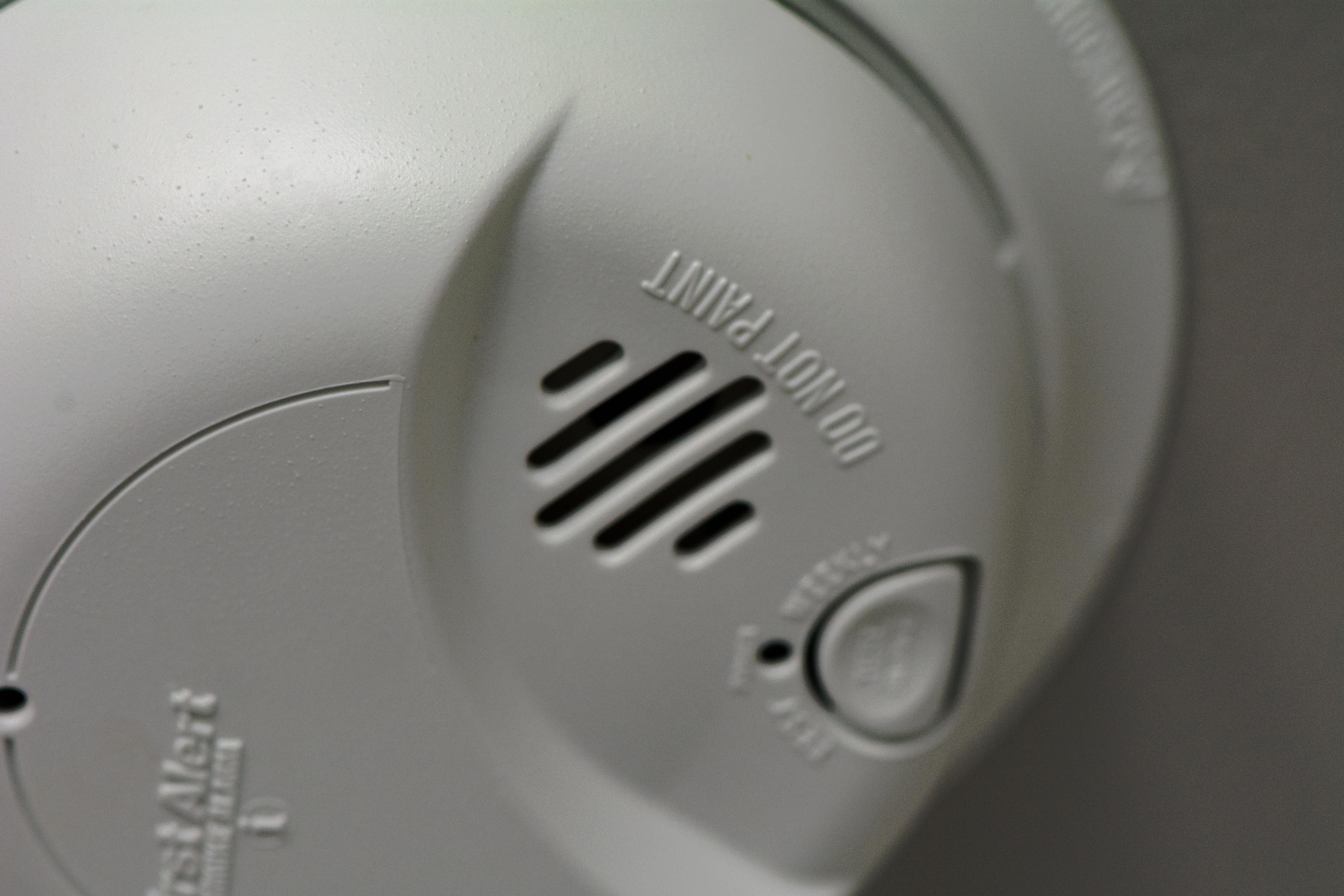
When I got home on Friday evening, the smoke alarm began making a very loud high-pitched squeak, signalling that it needed a new battery. Sally, who had dealt with this issue before, was away visiting her sister. I got out the step ladder, climbed up, and reached high, wondering how long it would be before someone found me if I fell off. I managed to unscrew the device from the ceiling but couldn’t locate the battery, even after considerable pushing, twisting, and prodding. So I called Sally, and she gave me a couple of crucial tips.

_DSC8179_edited-1

Eventually I got the 9 volt battery out and a replacement battery in. But I put it in the wrong way, and had a tough time getting the hatch open again. After that was all done, I heard another loud squeak. It turned out I’d repaired the wrong alarm, and had to do another one. Then it turned out that that also was the wrong one, and I had to do a third one (in which I put the battery I took out of the first one).

I was quite technically proficient at smoke alarm battery replacement by the end of this process. If you have problems with a First Alert smoke detector, I may be able to help.
_DSC8193

In fact, I’ve been on a bit of a roll with repairs and upgrades. After concluding recently that my MacBook Pro laptop needed more RAM, my first thought was to find a repair shop, but I couldn’t find one that looked self-evidently reliable. After consulting with friends and colleagues, I ordered 16 gigs of RAM from Amazon, watched a YouTube instruction video, read a couple of sets of instructions, and unscrewed the back. I wondered, would I destroy the computer? I would not! There were a few moments of pushing and poking, and then it slipped into place. I felt fairly competent. The computer seemed noticeably zippier.

I also upgraded from Adobe Photoshop Elements 11 to Photoshop Elements 13. I’ve come to respect the editing algorithms of version 11. I used to think of the auto functions as a less-than-honorable crutch, but I’ve come to view these tools as sort of a partner in making good photos from RAW format images. I’m still testing the new version, but am generally pleased so far.
Business + pleasure at the Grove Park Inn, including the spa and the Blue Ridge Parkway

14 06 22_0095_edited-1
On Friday Sally and I took Clara from Raleigh to Asheville for a business + pleasure trip. I’d been invited to speak at the Federal Circuit’s Bench and Bar conference, which was being held at the famous Grove Park Inn, and after that ended we thought we’d do a little hiking near the Blue Ridge Parkway and get a treatment at the spa.

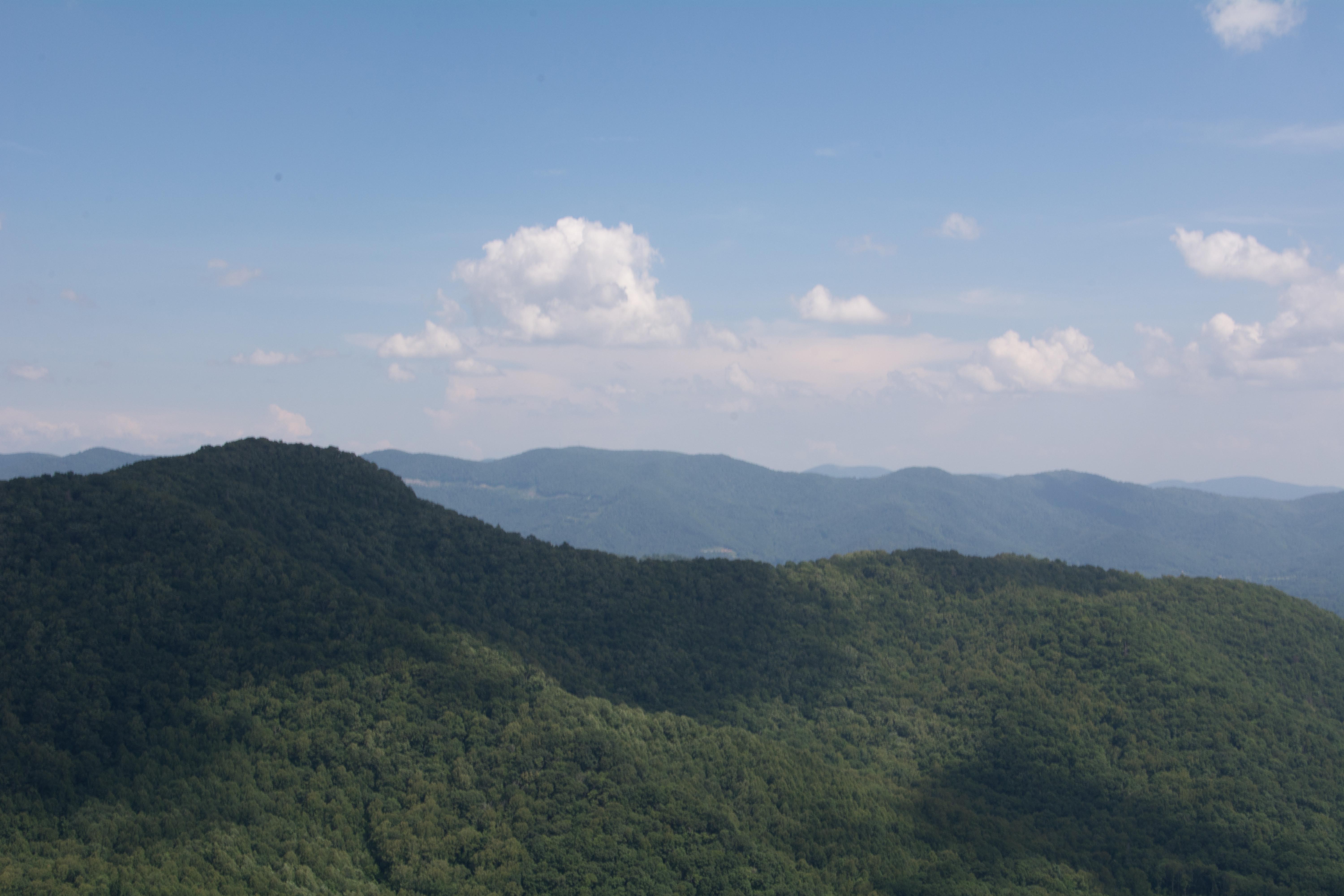
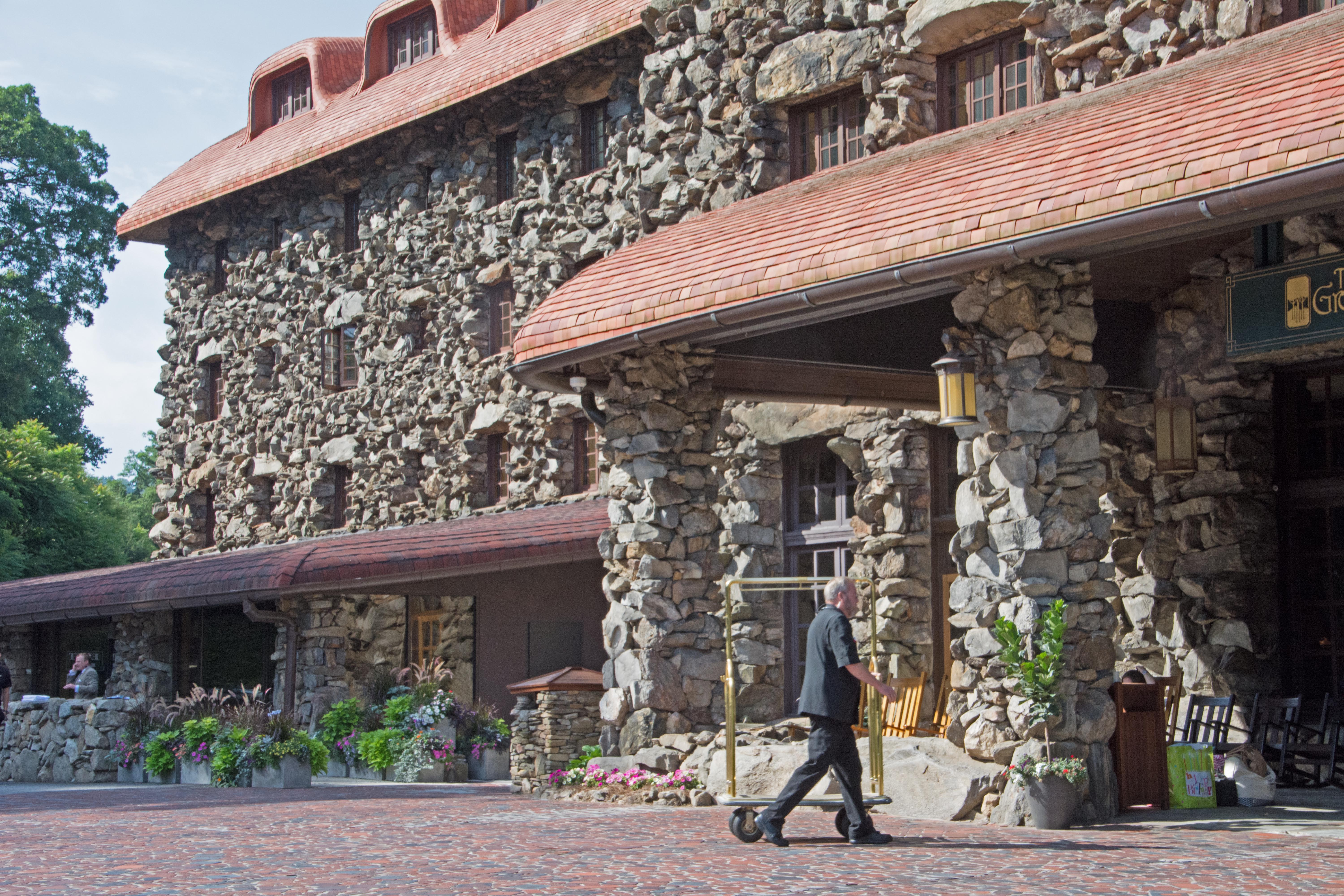
The Grove Park Inn is an odd but appealing place, with lovely views of the Blue Ridge mountains. It has massive stone masonry walls inside and out. It turned 100 last year, and is proud of its history. We found our room perfectly fine, and the service at the hotel, the various restaurants, and the spa to be attentive and exceptionally friendly.
14 06 21_0117_edited-1

As usual for me with professional speaking engagements, I enjoyed the actual doing of it, though I felt a certain dread in the last few days beforehand. I was one of four panelists, and it was far from clear even shortly beforehand how it was going to go. Fortunately, all were seasoned veterans, and it went fine. I had a chance to point up some of the serious problems with software patents, and give the conference an open source perspective on other issues. I gave my perspective that the patent system is seriously dysfunctional, and was happy that it sparked some debate, and I didn’t get run out of town on a rail.

That afternoon, we did a bit of driving on the Blue Ridge Parkway and took a pleasant hike at Craggy Gardens. When we returned, we went down to the spa to prepare for our massage.
14 06 21_0120

I’m a late convert to spa-ing. Until recently, I really could not see the point, and considered it a waste of valuable time. Both at work and play, I am normally a busy person, with more to do than there is time to do it. Workwise, the challenges are never ending. A lot of my leisure activities, like playing the piano and playing golf, demand a lot of commitment to improve, and that commitment requires time. And there are so many things I’m curious to know more about, and learning also requires time. Time is so valuable, and I try very hard not to waste it.

But I’ve gradually come to consider massage as valuable to good health, both physical and mental, and wanted to share a couples massage with Sally. Other than massage, I wasn’t quite sure what the Grove Park spa involved.

I’m here to tell you, it’s very nice. It carries forward the stone masonry motif of the Inn. There are numerous pools of different sizes and carefully graded temperatures, some with little waterfalls and some with big waterfalls. There was a eucalyptus infused steam room, pared with a whirlpool and a cold dunking tank. I was persuaded to go from the hot sweatiness of the steam room to a plunge in the cold tank, and it was definitely a shock — almost agonizing, but also refreshing.

After soaking in various pools inside and out, we repaired to a lounge and sat quietly for a few minutes in plush chairs next to a big fireplace. Then our massage therapists arrived, introduced themselves, and debriefed us on our health issues and massage likes and dislikes. My therapist, Sarah, was very good. She described her technique as basically Swedish massage, but she was very responsive to my request for firmer pressure, and attentive to the various knots and tensions of my body.

An aspect of the treatment was scented lotions and oils, as well as scents generally – aromatherapy, as they call it. I experienced something described as detoxifying citrus, with oils of lemon, orange and petitgrain (no idea what that is), and various other exotic substances. Did they do anything significant for my health and well-being? It’s hard to say. But it was very pleasant, and I certainly wouldn’t mind doing it again.

We felt quite wonderful after our massages, and though we had a dinner reservation pending, didn’t want to leave the spa immediately. Sarah helped us get the reservation pushed back, and we did some more soaking in the hot tub and other pools. It was delicious.

We eventually made our way to the Sunset Terrace restaurant, where they gave us a great seat on the edge of the porch looking out toward the mountains. So many restaurants try to seat you in the less desirable spaces unless you push back, but they did not try that on us at the Inn. They had a vegetarian entrée involving tofu, and it was fine. Afterwards, we sipped the last of our wine and listened to a local flamenco quartet. The musicians seemed quite fine, and their singer, a blonde Swedish-looking gringo, sang in Spanish that sounded appropriately tragic and passionate. It was an unexpected pleasure.
14 06 22_0116_edited-1
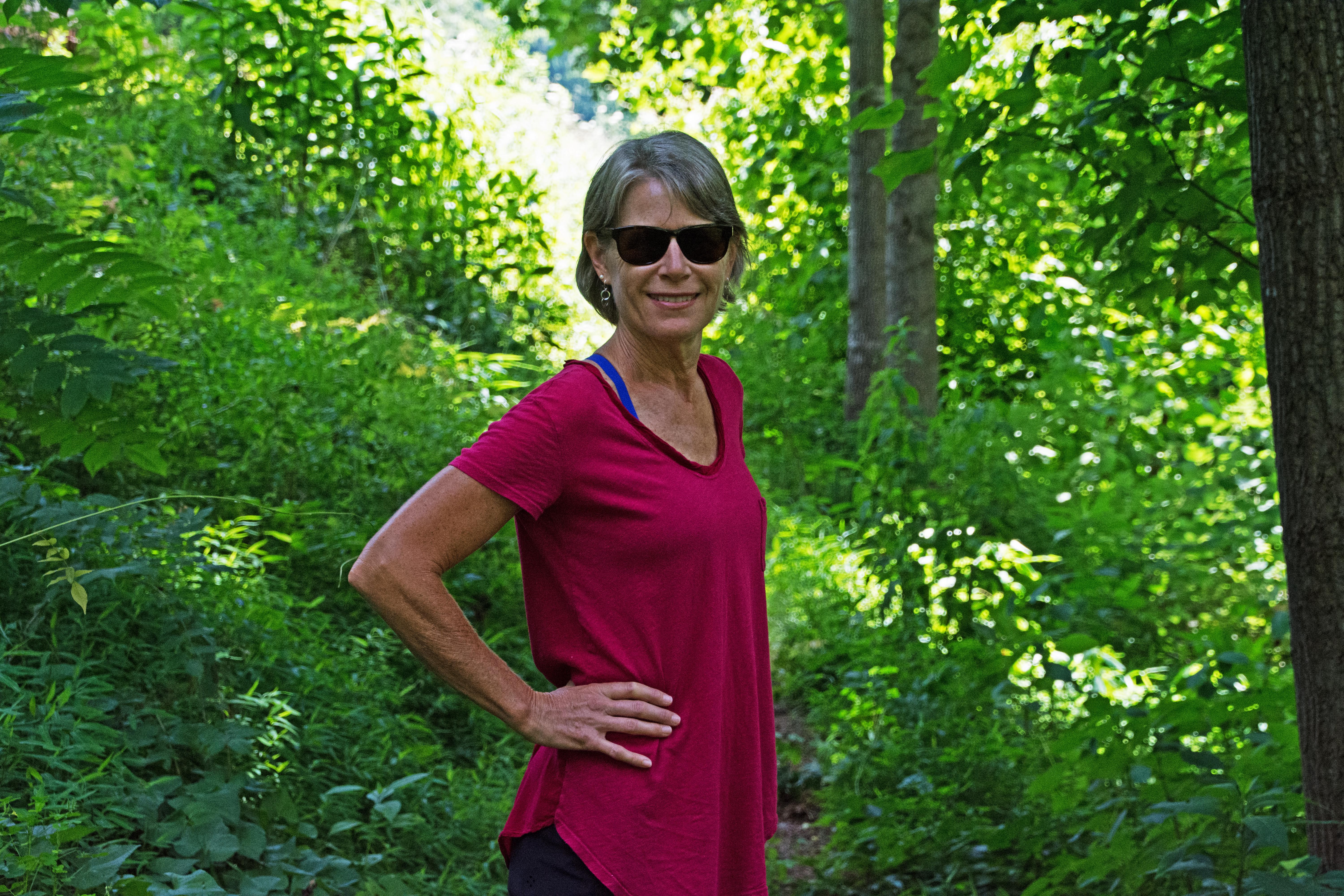
On Sunday, we did a little more driving on the Blue Ridge Parkway. It really is a national treasure – a road that exists for the pure beauty and pleasure of driving. It winds and twists along ridges with views of adjacent mountains and valleys. For a few miles, there was no one in front of us, and Clara could stretch her legs a little.
14 06 21_0140

Clara catching her breath

Clara catching her breath

Copyright and musical creativity

One of the great things about my job as an intellectual property lawyer in a software company is that I get to play with some big ideas. Sometimes it’s fun. But I also have to deal head on with complex legal constructions that cause confusion and mischief. I’m thinking particularly of aspects of patent and copyright law. I’ve written a number of times, including this week on opensource.com, about the problem of bad software patents that hinder innovation. Another concern is the expansion of copyright law in a way that inhibits creativity.

I was fortunate to hear a lecture this week at Duke Law School by Jennifer Jenkins, who discussed aspects of copyright law as applied to music. She ambitiously took on the entire western tradition, starting with Plato, and was entertaining to boot. Although Jennifer didn’t summarize it like this, her examples suggested that copying has always been a part of the creative process in music. Laws against copying music are relatively recent, and they’re expanding and being applied at a more and more granular level. This blocks an important part of creative activity.

Viewing imitation and copying as creative forces is not the traditional way of thinking about creativity. But the traditional notion that technical innovation is principally the work of lone geniuses makes is largely a myth. There is no single inventive or creative act that does not actually incorporate a long series of preceding inventions or creations. If you look over the shoulders of James Watt, Eli Whitney, Thomas Edison, or the Wright Brothers, the inventions for which they are famous incorporated both many generations of preceding technology and the work of contemporaries. Brian Arthur, in The Nature of Technology looks at this process through the lens of evolutionary biology.

The same is true with music. Each creative musician takes the tools of preceding generations (scales, tunings, harmonic systems, instruments, notation systems, electronics, etc.) and tries to express something that’s both personal and universal. In some musical traditions, literal copying is an accepted procedure. This is certainly true in jazz and blues. It is difficult to imagine how either form could have developed unless later musicians borrowed from earlier ones. The same is true in the classical tradition, where composers borrow from other composers, and musician’s take the composer’s written text and performance norms of predecessors.

Jenifer threw out the idea that social control of music and reining in dangerous new sounds was a continuing theme of western civilization, from the Greeks, through the efforts of the Church in the middle ages, to the lawsuits against sampling by hip hop artists in our time. She pointed out that sampling technology made possible new forms of creativity, which our copyright system has quashed without any careful thought. Our repeated expansion of the term of copyrights has diminished the amount of material that our artists have to work with even as technology has expanded creative possibilities. Expanded copyright assures a wealth transfer from society at large to those with significant copyright assets, but serves no larger purpose. This policy really makes no sense as social engineering. And to the extent that it actually discourages and diminishes creativity, it’s just plain wrong.

The only consoling thought is that no amount of regulation will entirely stop the musical creativity. It is a fundamental human activity, like as eating and talking. If music were outlawed entirely, it would go underground, like alcohol in the prohibition era, or recreational drugs in our time. This may already have happened with certain genres of hip hop.

Until Jennifer’s talk, I hadn’t thought to consider myself particularly lucky that most of the music I work with is old enough to be in the public domain, so I’m not directly encumbered by the copyright problem. I refer to the great European piano music of the eighteenth, nineteenth, and early twentieth centuries. Although the music is written, there are many aspects of it that are unwritten. The tradition is passed along from teacher to student. It is a thoroughly unmodern, untechnological process. It’s a pleasing counterpoint to my highly modern day job.

For example, I got over to Durham again yesterday for a piano lesson with my teacher, Randall Love. Randy is an associate professor in the music department at Duke, and, like me, a graduate of Oberlin. (He was a year ahead of me, but our paths never crossed.) He has a speciality in fortepiano, and I originally went to him with a view to getting deeper into Bach. And I did. But in the past few years, he’s taken me much deeper into my current main interests: Chopin, Liszt, and Debussy. Our lessons are at irregular intervals, which I schedule when I feel it’s time to get significant feedback on a piece I’ve fallen in love with and tried to make my own. They usually last more than two hours. Although we begin by catching up on each other’s news, most of the lesson involves intense concentration and effort.

At the lesson yesterday, I departed from our recent pattern (no Liszt or Debussy) and brought Robert Schumann’s Arabeske Op. 18 and Chopin’s prelude in C. The Arabeske begins as a light, lyrical game but has sections of brooding and dreaming. I thought I played it rather well the first time through, but Randy found many aspects in need of closer examination, such as various ways to treat the appoggiatura. Although we mainly discussed musical issues, such as balance and phrasing, Randy had some interesting ideas relating to technique involving the wrist and arm. He recommended that I consider more arm focus when playing extremely soft.

After I’d played the music I’d prepared, Randy played for me one of Chopin’s most famous concert works, the third ballade. It’s a gorgeous piece of music, and I enjoyed his interpretation. It was a well modulated, thoughtful approach to the musical ideas, with ample sonority in the big parts. What a rare treat to get a personal performance by a concert artist.

Ebooks and charity ideas

This week I went to Dallas and back twice. I will not complain, except to note that long periods confined in small seats do not get easier as the hours pass. I sat next to a fifteen year old kid on the way back, who, by the end of the flight, was writhing in discomfort, and I remembered how this was even tougher when I was younger.

I spent some of the seat time reading my first ebooks on my iPad. As a confirmed bibliophile, I doubted I would really like ebooks, but my compulsion to have handy several books when I travel has created problems with weight limits, and pushed me towards trying this lightweight solution. Using the Kindle software, it took me just a few minutes to fall in love with the format. I like the typeface and type size, the ability to highlight and annotate, and the light weight.

My first ebook was Against Intellectual Monopoly, by Michele Boldrin and David K. Levine, an against-the-grain discussion of the problems with our patent and copyright systems. I was gratified to see a discussion of Red Hat as a primary example of why patents don’t achieve anything close to their intended purpose in the software area.

It’s interesting how ideas can seem particularly interesting during cross-country flights, and how frequently new ones pop up. I found myself thinking about an NPR story from last week about individuals who commission new pieces of music or plays. The point of the story was that the cost could be shared with others and spread over time, so that being a patron and bringing a new piece of art into the world could be more affordable than you’d think.

I really liked the idea of contributing in a direct and immediate way to new art. If I can’t be a composer, perhaps I could help in the creation of music by funding one. So, how about a web site to allow composers, choreographers, or others to propose commission-worthy projects, and donors likewise to seek suitable artists? Sort of an arts-funding Craigslist. Sure, it could be there’s just not sufficient interest, but then, not so long ago Craigslist sounded like a fantasy.

The web today is a big part of my life, and of the lives of most people I know. In almost no time it’s gone from a novelty to a utility, and now I take it for granted much like the interstate highway system. Yet we may have just begun to scratch the surface of what it can do — things that go way beyond shopping and entertainment. Facebook and Twitter haven’t really inspired me, but they point in the direction of more immediate and wide-ranging connections that have more human meaning. It could reduce the barriers to charitable giving by making needs and resources easier to see and connect.

For example, it’s hard for me to visualize the enormous suffering from the current flooding in Pakistan, and hard to feel like there’s much I can personally do about it. But if I could connect with a person who’s lost everything and understand their story using web multimedia, it could help me, and I suspect others to open their hearts and wallets. People who’ve lost everything can’t easily get online, of course, but the tools that could get them there already exist. It would take some thought and energy. This could be an open source project.

Another speech, with normal anxieties

Some months back, I agreed to do a talk on software patents for the NC Bar Association’s IP Section annual meeting.  When I accepted the invitation, I thought of the task as something of a public service.  I also thought there was plenty of time to do it, which there was.  By last weekend, though, there was not plenty of time; the talk was less than a week away.  My plate was overloaded with time sensitive matters, and there was no room in the schedule for philosophical reflection.  In the middle of the week, I finally carved out a bit of time to work on some slides, and I used the drive to Greensboro for the event as my one and only practice session.

In days gone by, I would get more anxious about this sort of situation.  It’s been a long time since I experienced a full dose of the terror of public speaking, but there’s always a concern that it might be lurking with a view to one more attack.  These days, my worries are more about whether my audience will find my talk interesting, meaningful, and helpful.  Or at least not boring.  And of course, I’m hoping the audience won’t think badly of me.

In the talk on Friday, I shared the stage with a very fine lawyer, Tom Irving.  I knew coming in that Tom was a very experienced speaker, with views quite different from mine on the issues at hand, and more than enough intellectual firepower to make my task uncomfortable.  In the event he was  gracious and personable.  In fact, our presentations were an interesting contrast of views and styles.  Our audience of perhaps 100 seemed interested, asked questions, and applauded.

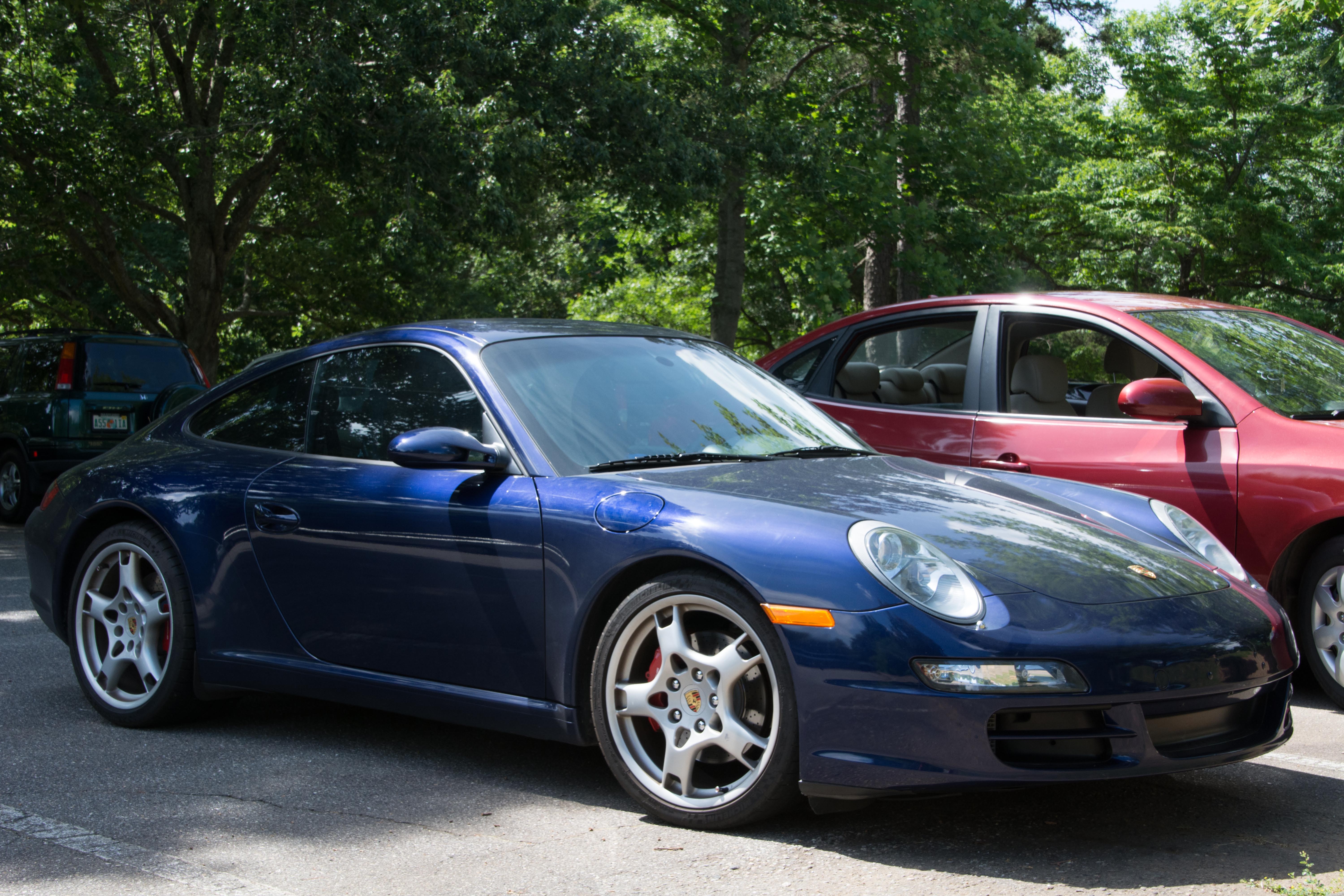
As usual, after the varying worries, I enjoyed doing the presentation.  Also as usual, it was a great feeling to have it behind me.  It was a beautiful warm spring day when I climbed into my 911 to return to Raleigh.  I enjoyed the drive.