The Casual Blog

Tag: science

Skiing in Canada, and trying to articulate some of the problems with Trump
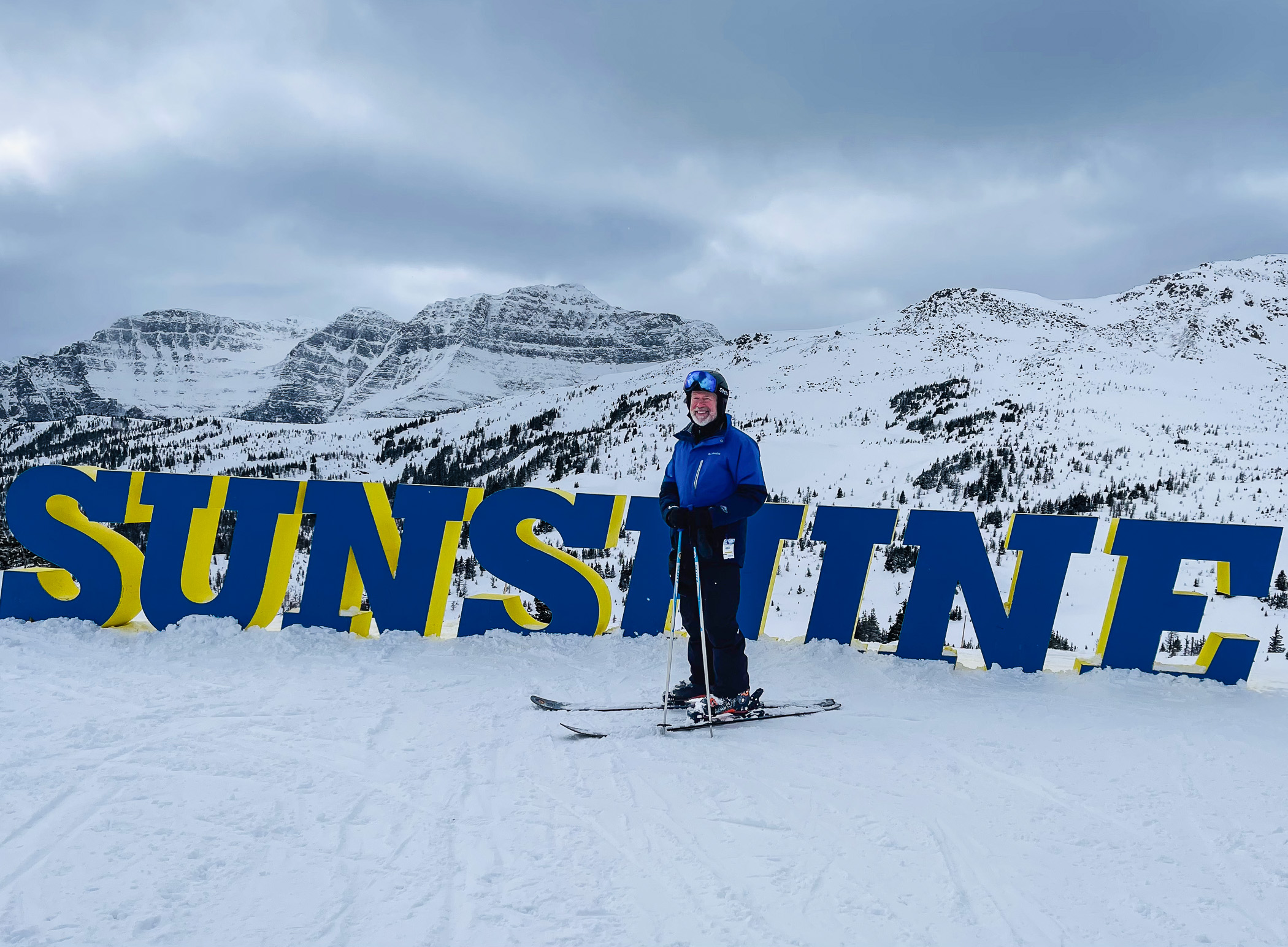
Last week I got to ski in Banff National Park in Alberta, Canada.  It was amazingly beautiful there, with vistas that rivaled the Alps.  There had been less-than-average snowfall, but there was enough coverage for many excellent runs through varied and challenging terrain.  I sampled the Lake Louise area, and spent the majority of my time at the Sunshine resort.

The trip was organized by the Raleigh Ski and Outing Club, which I recently joined.  As a new member, I found the group friendly and welcoming.  There were quite a few very good skiers, and it helped my skiing to hang with them.  

I was a little worried that the Canadians would be upset with American visitors, because of the recent threats by Trump to punish the country economically and possibly take it over.  Happily, the Canadians we met were nice as could be, though I’m sure that a lot of them are distressed at the new Trump policies.  

Since returning to the USA, I’ve been spending a lot of time with the news, trying to understand what’s happening to my country.  There’s so much to process that it can be overwhelming.  

It feels as though we’ve had a coup, with a small group seizing power and upending the existing order.  This is not extraordinary, in the sense that it has happened in many countries before.  What’s unusual is that we (that is, a bare majority of us) elected the coup instigators, and this is the USA, which has a long history of political stability.

The new Trump administration has moved with lightning speed to dismantle the existing framework of government and put in place values and policies antithetical to our laws and traditions.  Recent polls show that a lot of these initiatives are not supported by the majority, but there’s still a substantial minority that continues to approve of Trump. 

The remaining support for Trump confirms that, despite being stupid in many ways, he has a remarkable talent for propaganda.  He labels his ideas very simply and keeps repeating them.  It matters not if his labels distort or reverse the original meaning of words.  The constant repetition, like water on rock, tends to erode critical thought.

To successfully resist the new Trump program, we resistors need to call out the distortions, and also to communicate better by simplifying our language.   Where possible, we need to be direct and uncomplicated.  With that in mind, I’m offering the following seven-question quiz to highlight a few of the most alarming new initiatives, including some words in boldface that might serve as touchstones.

QUIZ – ARE YOU OK WITH TRUMP?

  1. Are you in favor of tanking the economy?  Prices of groceries and other necessities are going up, as Trump is driving us toward an economic disaster with his bizarre tariffs.  The stock market has dropped like a rock.  Business leaders are scared of what he’s doing and scared to object.  
  1. Do you support corruption in government?  Trump has fired officials who served as watchdogs for government misconduct and has declared a non-enforcement policy for anti-bribery laws.  This makes sense if one intends to loot the state and reward cronies by allowing them to do likewise, as authoritarian regimes often do.  Likewise, Trump is encouraging business fraud and corruption by shuttering the Consumer Finance Protection Board.  See Sen. Murphy’s recent speech for more on this:  https://youtu.be/hycoCYenXls?si=CJqnRPXx5OUaqw6J
  1. Are you opposed to free speech?   Trump is threatening and punishing traditional media that displease him.  Media outlets are writing him checks to settle his baseless lawsuits (see previous question on corruption) and toning down their critical coverage.  He’s previously proposed to shoot peaceful protestors.  His people have just arrested a foreign-legal resident for protesting the Israeli slaughter of Palestinians.  He has promised there will be more arrests to come.  
  1. Are you in favor of white supremacy?  The Trump initiative to suppress diversity, equity, and inclusion is simply a rebranding of old-fashioned racism, misogyny, and xenophobia.  Repeat:  his anti-DEl program is really barely disguised pro-racism, pro-misogyny, and pro-xenophobia.  Trump’s DEI bans, blaming airline disasters on DEI, and his firing of accomplished black and female military leaders shows that this initiative is both serious and crazy.  
  1. Do you prefer cruelty to decency and kindness?  Trump has cut off aid to starving children.  He’s stopping medical care for HIV and other patients.  He is gutting agencies that serve those less fortunate.  He is imprisoning migrants who have lived productive lives here for years or decades.  He is denying the humanity – indeed, the very existence – of transgender people.  
  1. Do you think it is better to address serious problems based on ignorance or science?  Trump is declining to endorse vaccines to prevent preventable serious diseases.  He’s shutting down scientific research into fundamental health issues.  He denies the reality of climate change that threatens civilization.  Indeed, he is pushing for producing and using more fossil fuels that will accelerate global warming.  
  1. Do you support brutal autocrats and the betrayal of democratic allies?  Trump has withdrawn support for Ukraine and threatened to withdraw from NATO.  He’s threatened to seize territory in Canada, Panama, and Greenland.  Meanwhile, he expresses continued affection for kleptocratic war criminal Vladimir Putin.  

END   

Pencils down.  How did you do?  Of course, this list doesn’t hit every Trump disaster currently in progress, but you get the idea – the indecency and outrageousness of a lot of the Trump initiatives can be stated in pretty simple terms.  

There are also some Trump initiatives that are harder to simplify, like upending the constitutional order by refusing the directives of Congress and the courts, undermining the rule of law through baseless pardons and baseless prosecutions, and decimating the federal workforce that’s foundational to our system of justice, our defense, protection of our environment, and many basic services.  But for those too, simpler is better, at least as a starting point.  

Admittedly, it will probably never be possible to persuade committed MAGA-ites that Trump’s program is disastrous.  There are those whose minds are made up, and sadly for them, they’re likely to be among the first to face serious adverse consequences from their leader.  But there are still plenty of folks who voted for him who will consider changing horses at the next opportunity.  Let’s see if we can improve our communications to help them see that changing is a good idea.  

A PB spin, Goode piano, Sapiens and science, and an operatic pearl

Blooming this week at Raulston Arboretum

I had an epic personal best spin class at Flywheel on Friday morning, with a score of 360.  That’s big!  The second place finisher’s score, 342, would also have been a PB.  It was like expecting to run a 10k in 43 minutes and finishing in 33.   I’d like to thank my teacher Matt, and the other fine spin teachers over the years (Vashni, Heather, Jen, Will) who helped me along the way.   

I wish I knew for sure what produced all that energy, so I could bottle it.  It might have been a good dinner the night before (Sally’s Blue Apron Thai cauliflower rice).  It might have helped that I woke up early and did some pre-class foam rolling to loosen the muscles.  Doing more interval work recently at the gym probably contributed.  Also, there were several pretty girls in the class, which tends to increase peppiness.  And it’s possible I drew a recently serviced and well-oiled bike.  In any event, I will not be sharing the number of that bike, as I hope to get it next week.

That night we went over to Duke’s Baldwin Auditorium for a concert by master pianist Richard Goode.  He performed Bach’s sixth partita and three late Beethoven sonatas (Ops. 101, 109, and 110).  These works are well known to aficionados, but they’re also deep and mysterious.  Even after two centuries, the interpreter can still find new things, and bring new life.  Goode communicated the power and cohesiveness of the rich musical ideas, and also sang — literally!   This was musicianship of the highest order, and I felt privileged to share the experience.

At the gym, I’ve been listening to Sapiens: A Brief History of Humankind, by Yuval Noah Harari.  Harari challenges a lot of widely shared assumptions about our origins, such as the notion that we were the sole human species on earth when we arose some 200,000 years ago.  What happened to the Neanderthals, Denisovans,  and other non-sapien human cousins?  There are various theories, including the possibility that our ancestors exterminated them, as they killed off most of the existing species of large animals.

Harari points up that homo sapiens’ ruthless success as a species is attributable to our brilliance at social organization, and he accounts for this in part by our use of religious, economic, and other social myths. This is thought-provoking stuff, though Harari doesn’t always distinguish between matters of wide scientific consensus and ideas that are much more speculative.

I wouldn’t expect Harari to get everything right, since no one ever does.  A recent edition of the You Are Not so Smart podcast (not yet posted at the web site) noted that medical students are now taught that half of what they learn in medical school will eventually turn out to be wrong. Science is always a work in progress.  Fortunately, the scientific system is built for testing and error correction.

Not so long ago, I’d have thought the value of science was self evident and not in need of advocacy.  Was I ever wrong!  I expect that, barring nuclear catastrophe, science and reasonableness will prevail in the long run, but at the moment, we’re in trouble, with unreason ascendant on urgent questions of the environment, health, and social issues.

Raulston viewed from the Tiller quadcopter

On Sunday afternoon we went to the N.C. Opera’s production of Bizet’s The Pearl Fishers.  It was a new opera for us, and we found the melodies very beautiful.  The principal singers were excellent, as usual, and the chorus was particularly strong.  The orchestra had a rich sonority and tonal variety.  Conductor Timothy Myers is a brilliant musician, and also a wizard, to conjure all this in little ole Raleigh, NC.  We’re really sorry he’s leaving us for bigger things next year.  It was touching when, in the final curtain call, the company threw roses at him.

Code Orange: Superstorm Sandy, climate change, and security threats

When Superstorm Sandy devastated the northeast earlier this week, Sally, Gabe, and Jocelyn were caught in New York City. Their planned short fun visit turned into a week-long ordeal. They were staying in SoHo when the storm hit and their hotel lost power and water, and stores, restaurants, and transportation systems all closed down. Thousands of flights, including theirs, were cancelled.

My sweet Tillers eventually made their way to the upper West Side and found a down-market hotel to stay in until LGA came back online and they could get flights out. As I write this, millions are still without electricity, water, food, and transportation, and dealing with enormous personal and financial losses.

I expected that the superstorm would get climate change and what to do about it onto the front page. Could there be any more dramatic example of what rising seas and increasingly severe storms could do to our coastal population centers? Wouldn’t the climate change-deniers find it impossible to deny the reality of such a catastrophe?

But the superstorm showed once again how difficult it is to get this difficult conversation going. It is not an issue politicians or editors, or ordinary people for that matter, usually like to talk about. Why? Because it is disturbing and depressing. We don’t have a comprehensive solution, but we can be pretty sure addressing it will require massive funding and considerable sacrifice. Some are receptive to voices that tell us we don’t need to sacrifice, because science is not 100% certain (which it never is). Humans in general, and Americans in particular, are usually good at recognizing and addressing emergencies like sinking ships and burning buildings. But if we’re not entirely convinced there’s a real emergency that has a direct impact on us, we generally prefer to kick the can down the road, and think about more cheerful things.

While New York was in the midst of the huge storm, it struck me that this disaster could be compared to a terrorist attack, and that it might be a good idea to use that comparison as a conceptual tool. It seems reasonable to think of climate change as a security issue. Massive storms threaten our lives and economy in much the way that bombs do. In terms of financial loss and dislocation, Sandy was far worse all of the terrorist attacks we’ve ever seen.

And the vocabulary of security seems to be one that gets people’s attention and inspires action. We’ve probably gone overboard in exaggerating the threat of terrorist attacks, as I’m reminded every time I get on an airplane, but that doesn’t mean we don’t have to address it.

To be sure, as to climate change, an important part of the worry is about the well-being of future generations, and it’s likely that most people give greater weight to the lives of living humans than to future ones. But as Superstorm Sandy showed dramatically, it’s also affecting us today.

Another thing that might help is basic science education. A lot of people don’t understand that science is in an important sense probabilistic. The most accurate conception we can ever form of nature includes a considerable range of uncertainty. There will never be a day when we can say with certainty that climate change was the sole or primary cause of a particular weather event, because of the inherent complexity of the ecosystem. But probabilities are also realities. Once the probability of rain gets high enough, we’ll take along an umbrella. If we can get a reasonable level of scientific literacy, we won’t use lack of complete certainty as an excuse for kicking the can down the road.

Republicans and science

Last week Paul Krugman departed from his usual subject matter (the economy) to present the case that Republicans are becoming the anti-science party. His argument included a quote from a Republican official accusing a conspiracy of scientists of fabricating global warming data to promote their own careers.

It would be nice if such lunacy could be dismissed as a fringe phenomenon. But the speaker was the current governor of Texas and a leading candidate for President. And according to Krugman only 21% of Iowa Republican voters believe in global warming, and only 35% of them believe in evolution. Holy Toledo!

Is it possible that we could elect as President a person who opposes factual analysis and critical thought generally? As unbelievable as it sounds, the answer, apparently, is yes. At any rate, none of the current Republican candidates is prepared to stand up for rational thought over patent nonsense when their potential supporters prefer the nonsense.

I’ve never considered it particularly heroic to acknowledge factual reality or base action on the best available data. I thought this was what people ordinarily did. There have always been people who were disconnected from reality, but traditionally we either feared or pitied them. No sane person would consider taking their views seriously. So how is it possible that the anti-science Republicans (surely, or at least I hope, still a minority among Republicans) have developed into a political force? This is crazy!

Now, I have nothing against people who prefer their fantasies to hard reality. It’s OK if they want to believe, for example, that it’s possible to have public services without paying taxes, or that climate change is nothing to worry about. But it would be folly to let such people have serious responsibility for anything. Just as we don’t let young children drive cars, we don’t want the anti-science people making important decisions. As opponents of science, they just don’t have the tools necessary for good decision-making. Why would we even consider trusting them?