The Casual Blog

Tag: raven

Skiing at Vail

I thought I’d share a few more pictures from my Yellowstone trip in January, and a brief account of my trip last week in Vail, Colorado, where I took no pictures but did a lot of skiing.

Vail is enormous:  5,317 acres and 3,450 feet of vertical.  The longest run is four miles.  There are some 26 lifts, and navigating the area is demanding.  They don’t hand out maps any more, so you need to get their app with the layout and learn to use it.  

I met my old friend John A. out there, and we stayed at the Grand Hyatt in West Vail. The hotel was attractive and comfortable, and had its own ski shop and a ski lift just outside the back door. I brought my own boots, but rented skis –Volkyl Mantra XXs, a good, versatile ski, but a bit stiffer than my ideal.  It snowed the night I arrived.   
It continued to snow all that day, which was exciting, but visibility was very limited.  At one point I fell while going down a steep mogul field that I hadn’t realized was a steep mogul field.  I was exhausted by the time I got down to the lift, and then I realized I’d lost my goggles somewhere up the mountain.  I’d forgotten to bring my contact lenses, and my glasses iced up, making it hard to see anything.  My legs got tired.  It was a tough day.  

But the next two days were sunny and clear, with just the right chilliness for the snow.  I got some new goggles. What a joy skiing is when everything clicks! We cruised on the cruiser runs and worked the less difficult black runs in the back bowls. It wasn’t crowded, and it was beautiful. Happiness!
John and I ate well and had some good arguments.  It seems like these days many of us are afraid of arguments, and hesitate to express ourselves when there could be conflict.  But it really is a good idea to talk with people who don’t agree with you about everything.  Sometimes you learn things!  

When I wasn’t skiing, eating, or talking, I did some reading, including an interesting new book, The Case for Open Borders, by John Washington.  The southern U.S. border has been the subject of much alarm and controversy recently, and I thought it would be good to get a new perspective on the issue.  

Washington proposes that we rethink the whole subject of borders, which he argues are artificial constructs that do more harm than good.  He presents evidence that immigration is a positive force for the receiving country, both economically and morally.  
It’s unfortunate that a lot of people are fearful of people who look different, speak another language, or have different customs.  That common fear has been made much worse by some cynical politicians, who characterize them as dangerous criminals and thieves stealing jobs.  In fact, the opposite is closer to the truth. 
In fact, the NY Times had an article last week about the positive economic contributions of immigrants.  They helped our economy recover from the pandemic quicker than expected by filling necessary jobs. They continue to help us get work done, and help support their relatives back home.
As climate change makes it harder to grow food in some areas and causes floods, fires, and other disasters, there will continue to be a lot of people who have no choice but to flee.  America is still a land of opportunity, and there’s an opportunity here for us:  to be more compassionate and to help those who desperately need help.

I’ll mention one other thing that isn’t usually a welcome dinner table topic:  the increasing risk of nuclear war.  I’ve long thought that our unwillingness to look squarely at what a nuclear conflict would mean increases the chance it will happen.  With arms racing again picking up speed and war in Europe raging, it’s high time to think again about how to lower this terrifying risk. The Times started a series this week on this topic, and the first piece was appropriately arresting. I hope a lot of people will read it.
Winter wildlife in Yellowstone

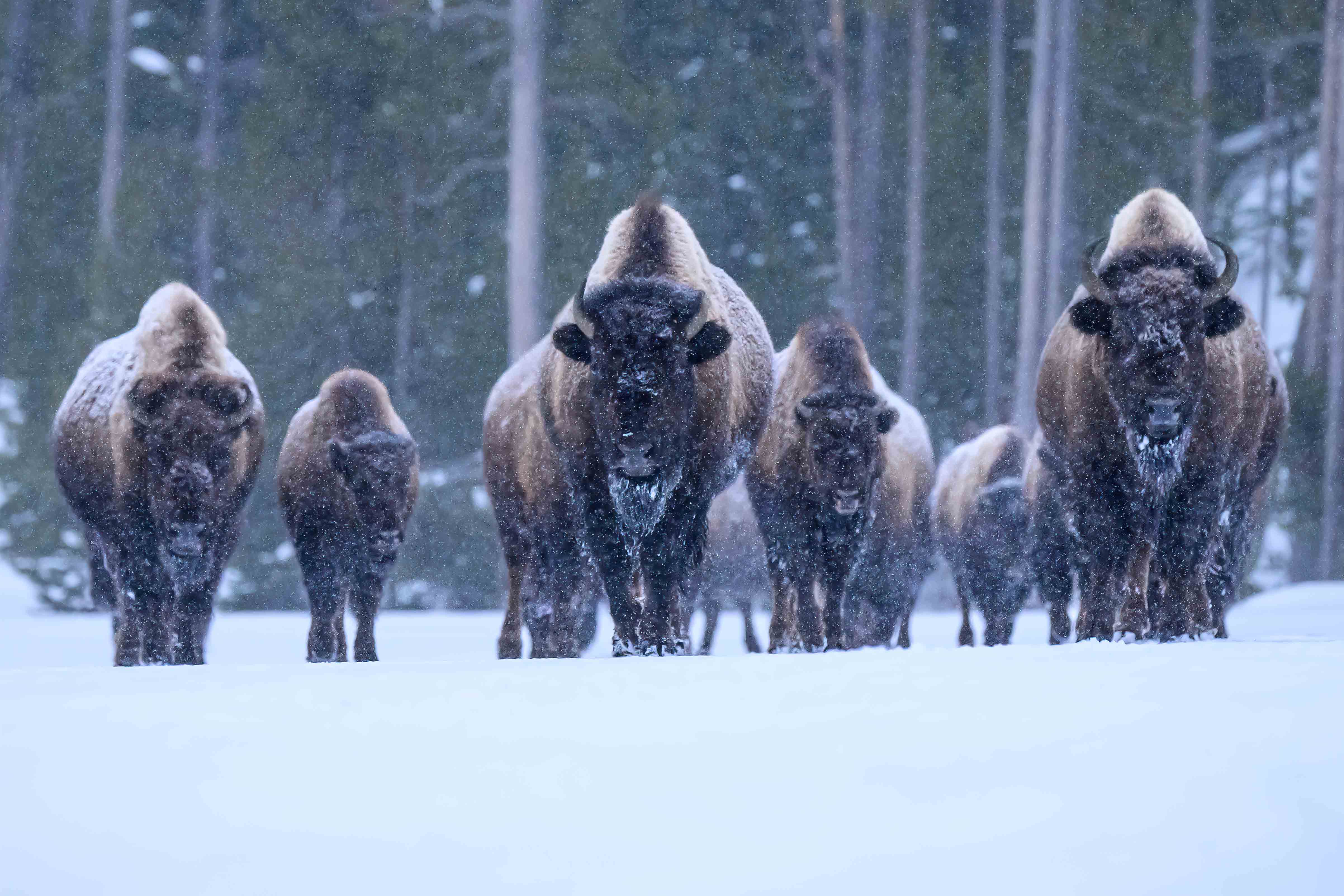
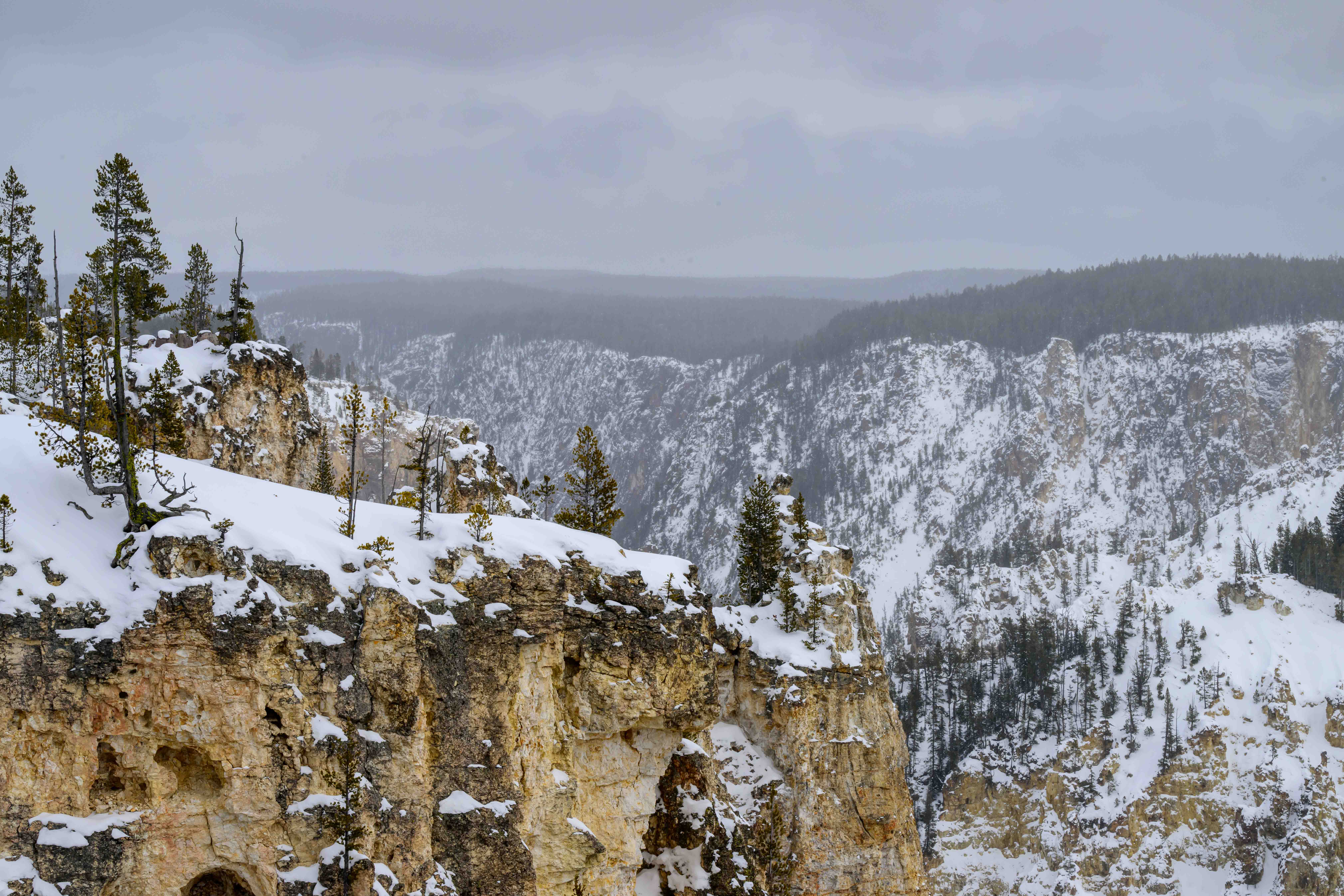
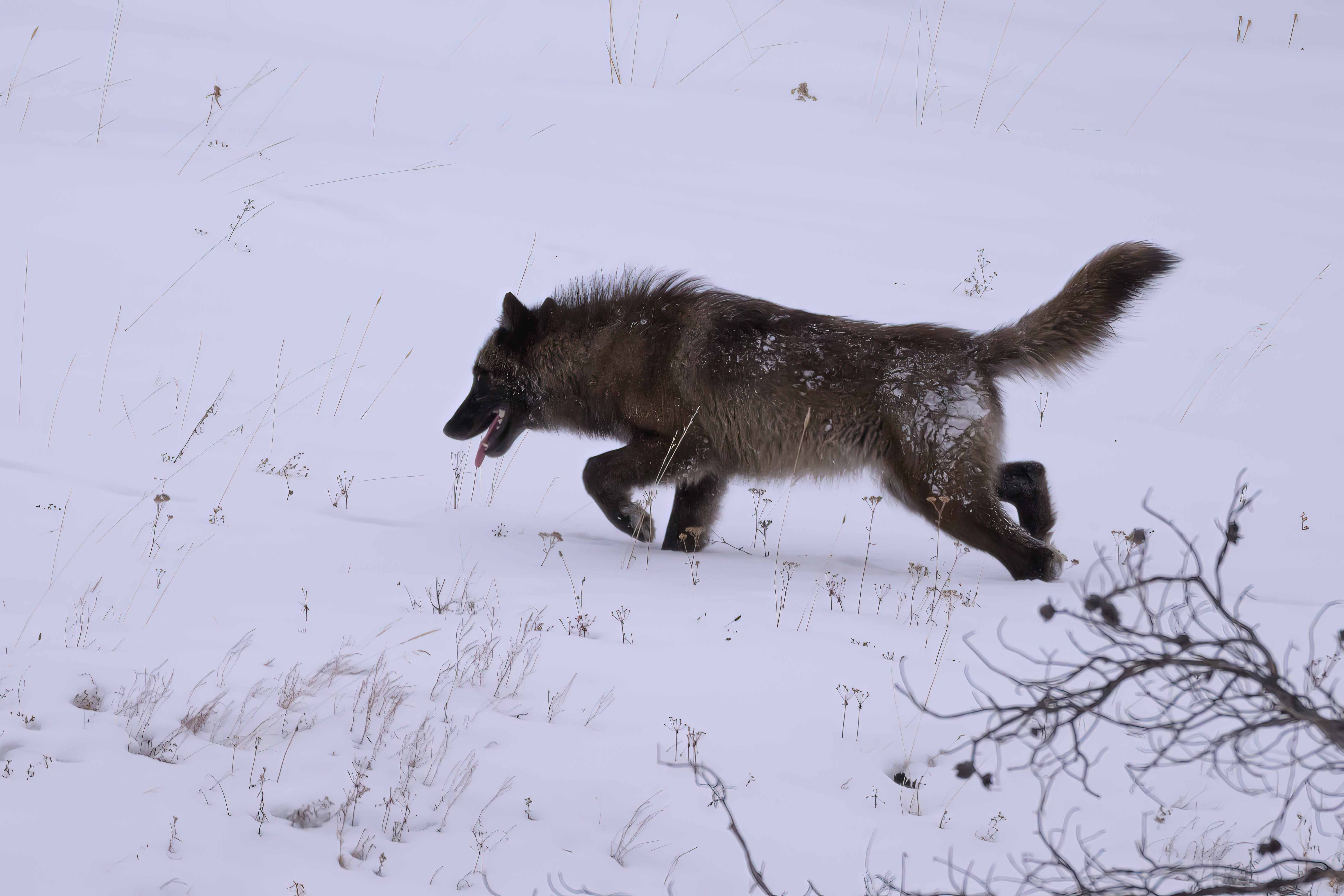
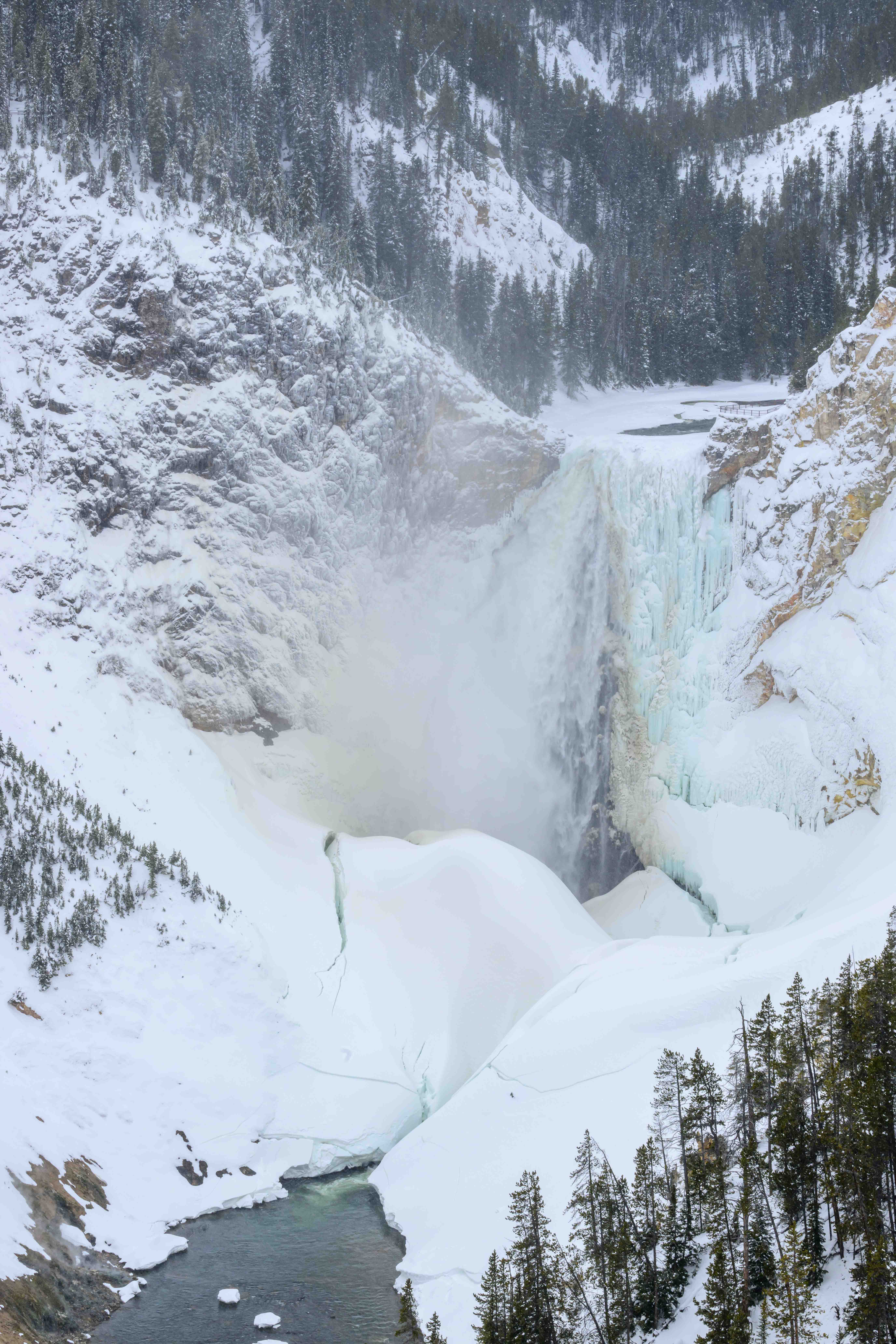
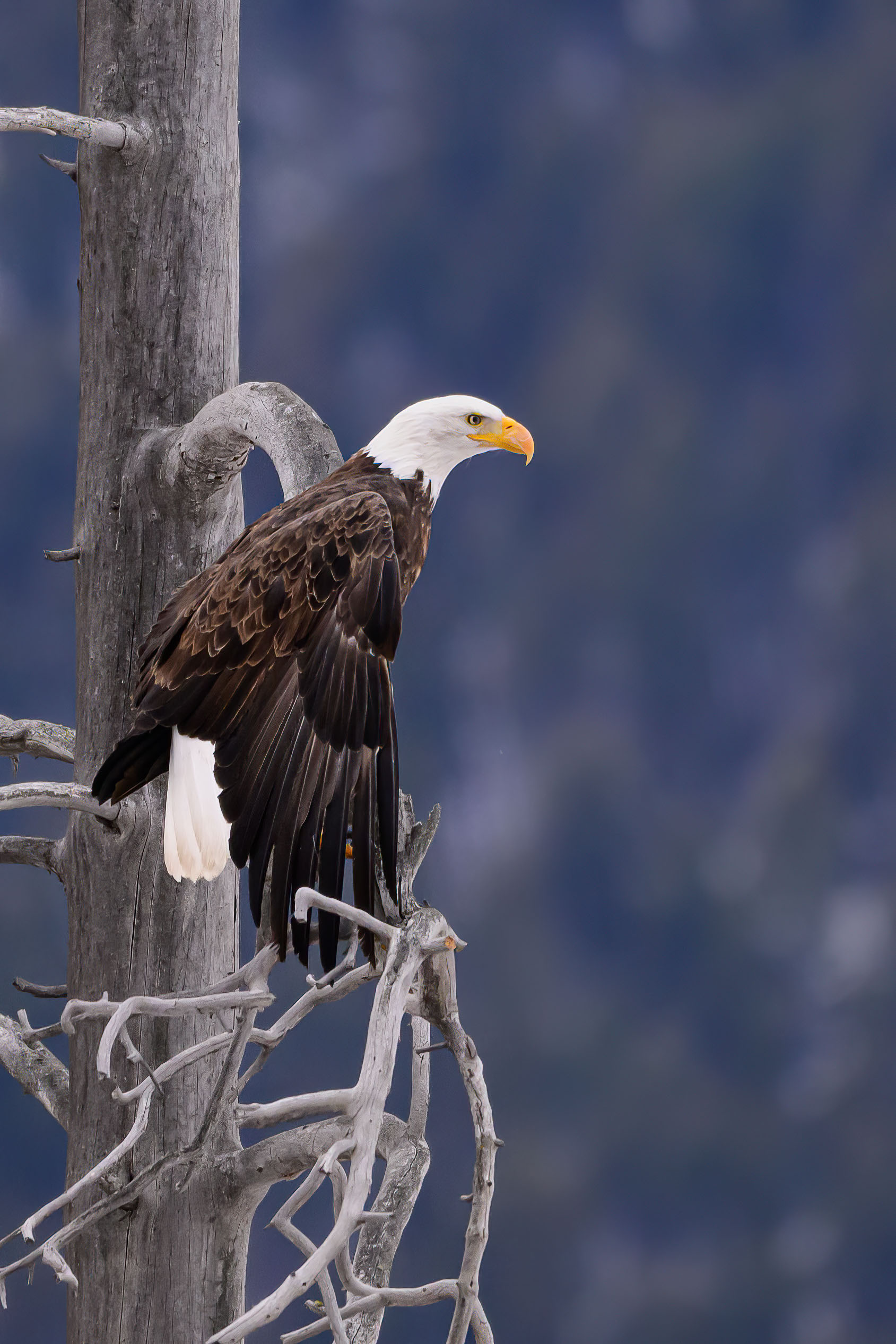
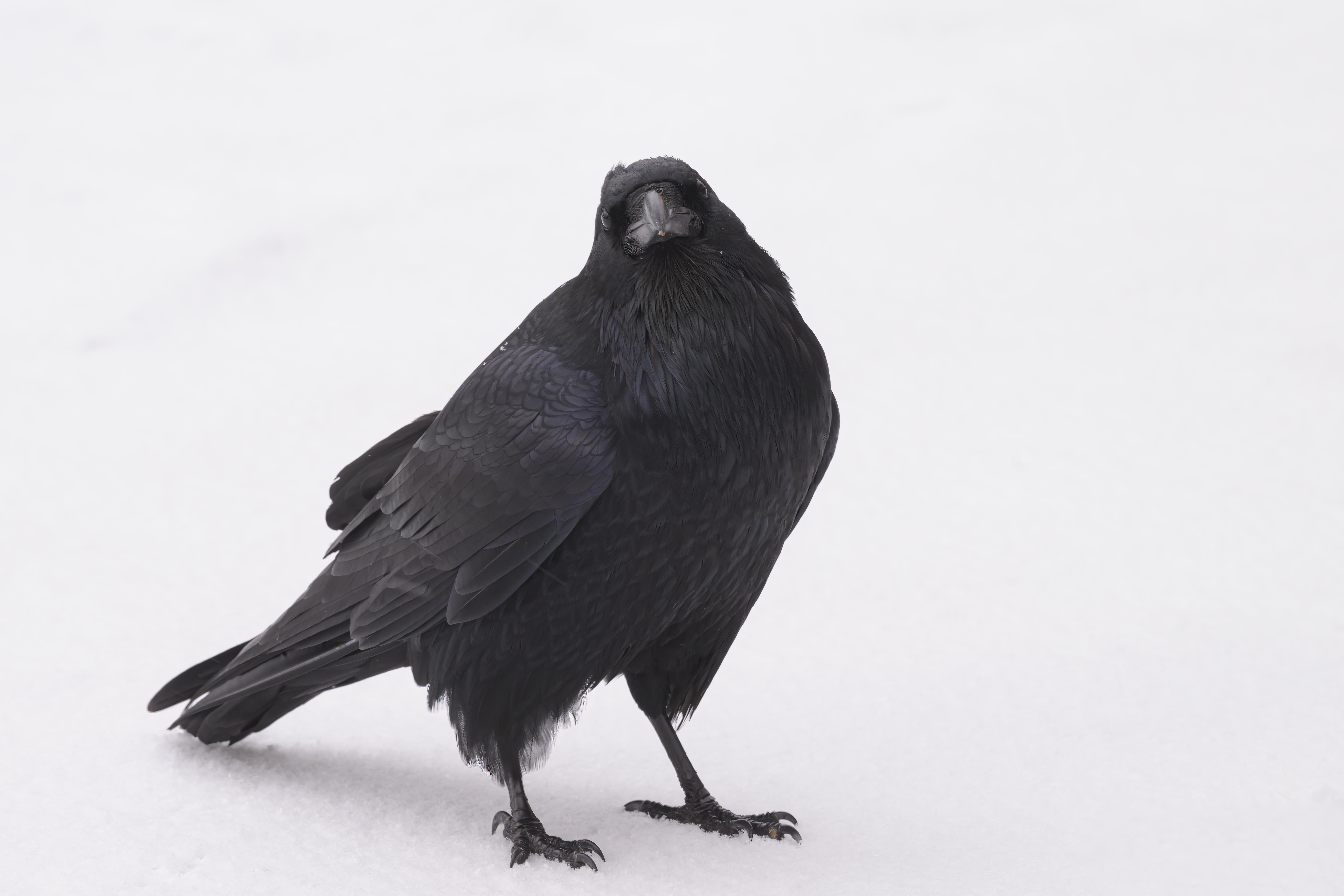
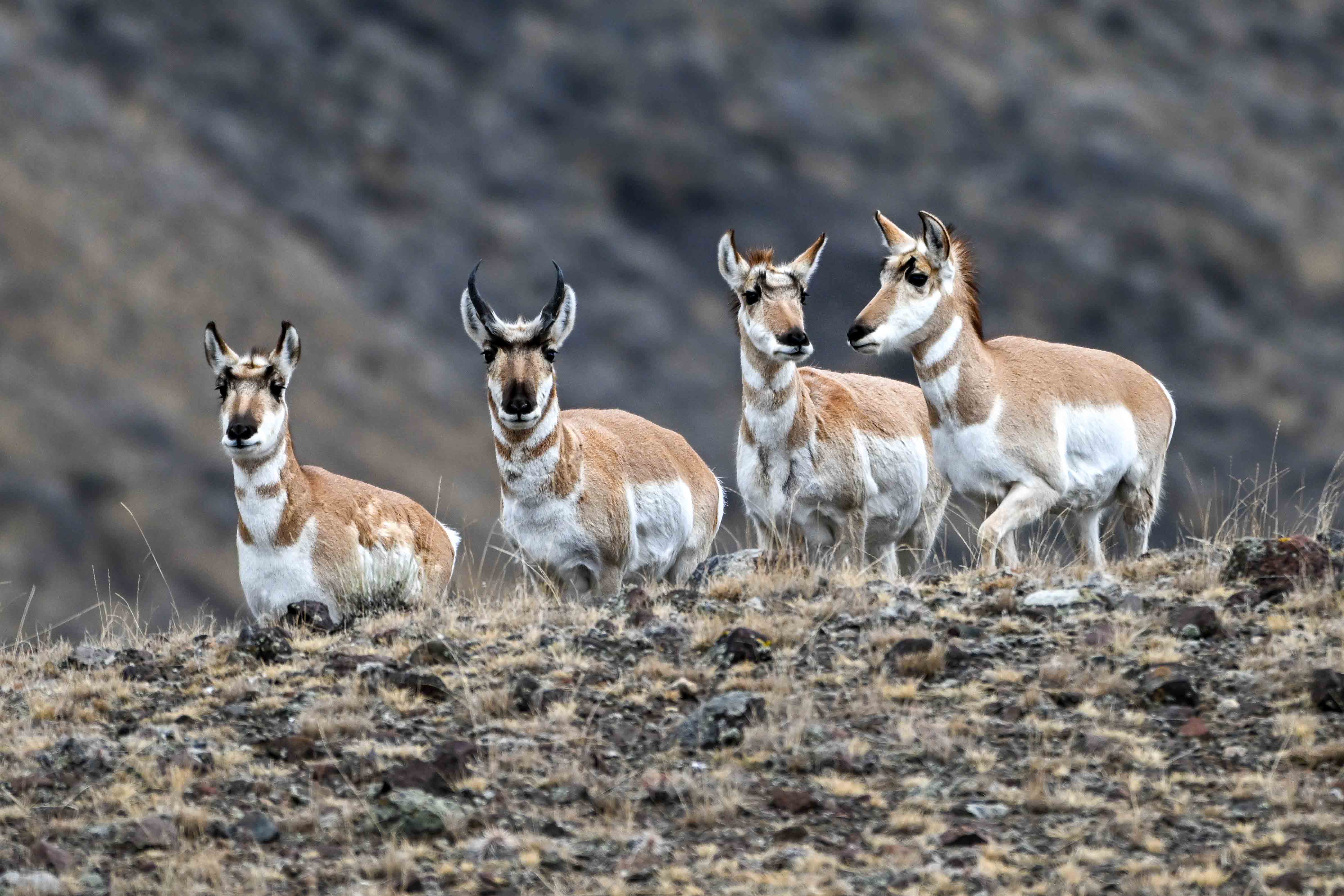
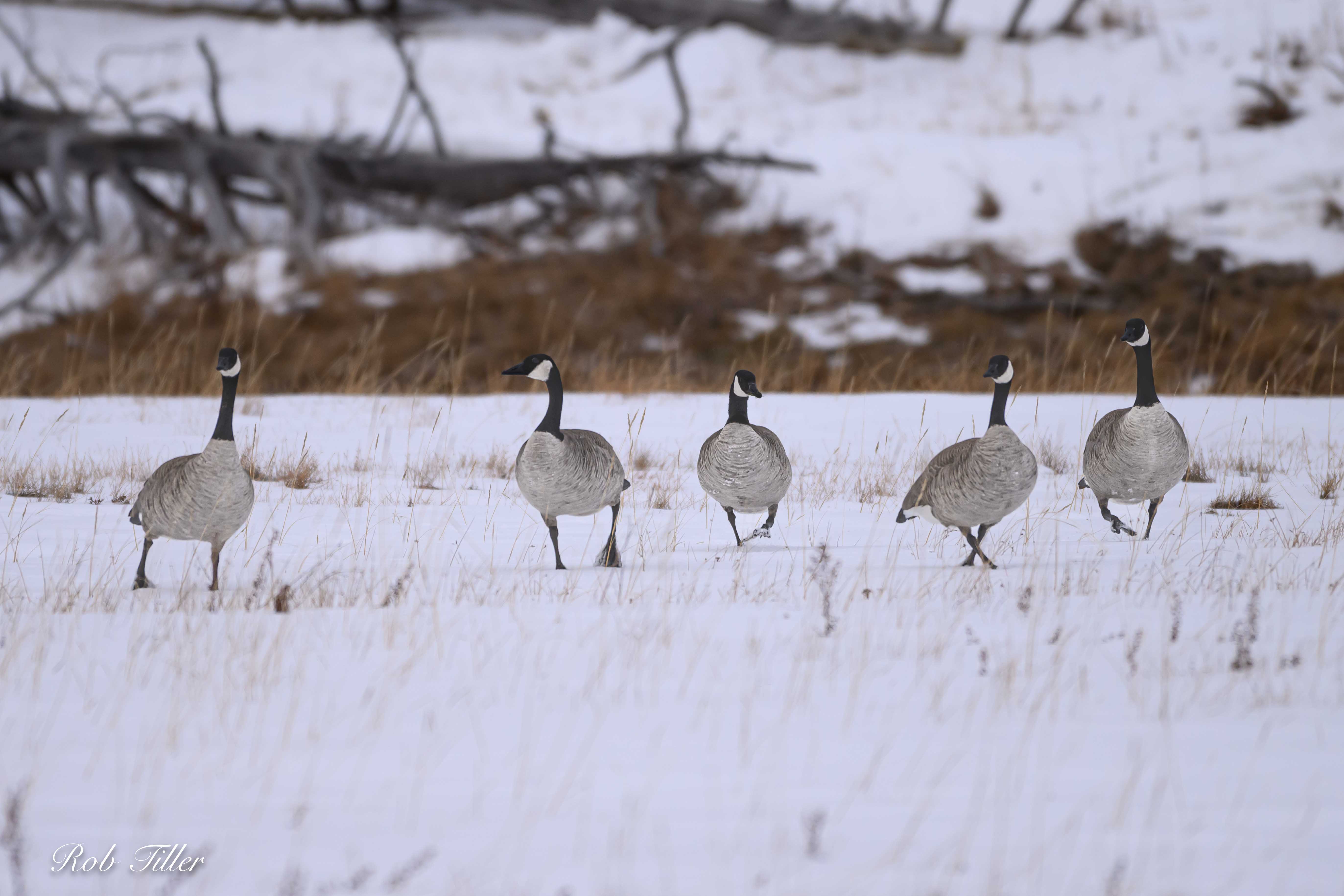
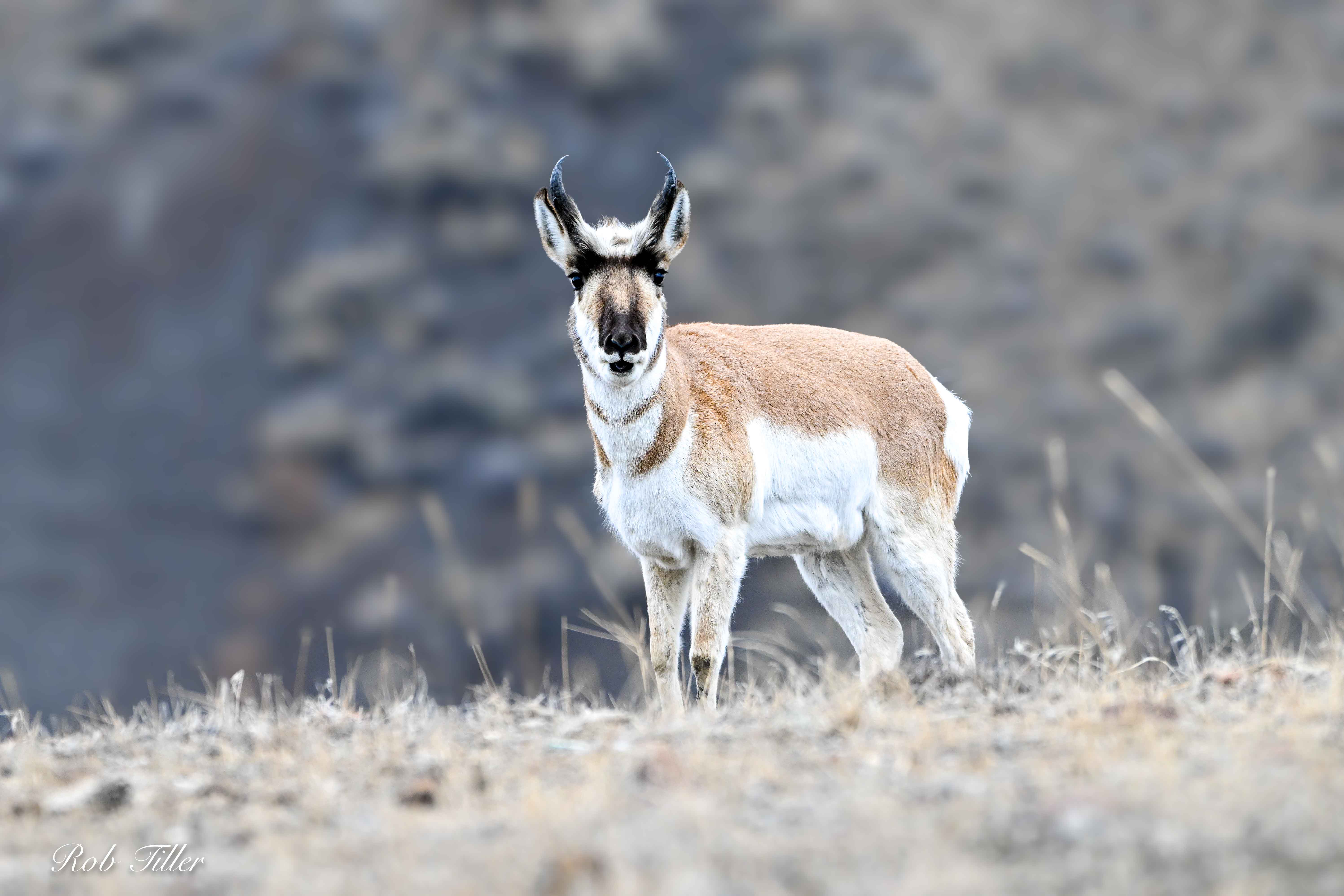
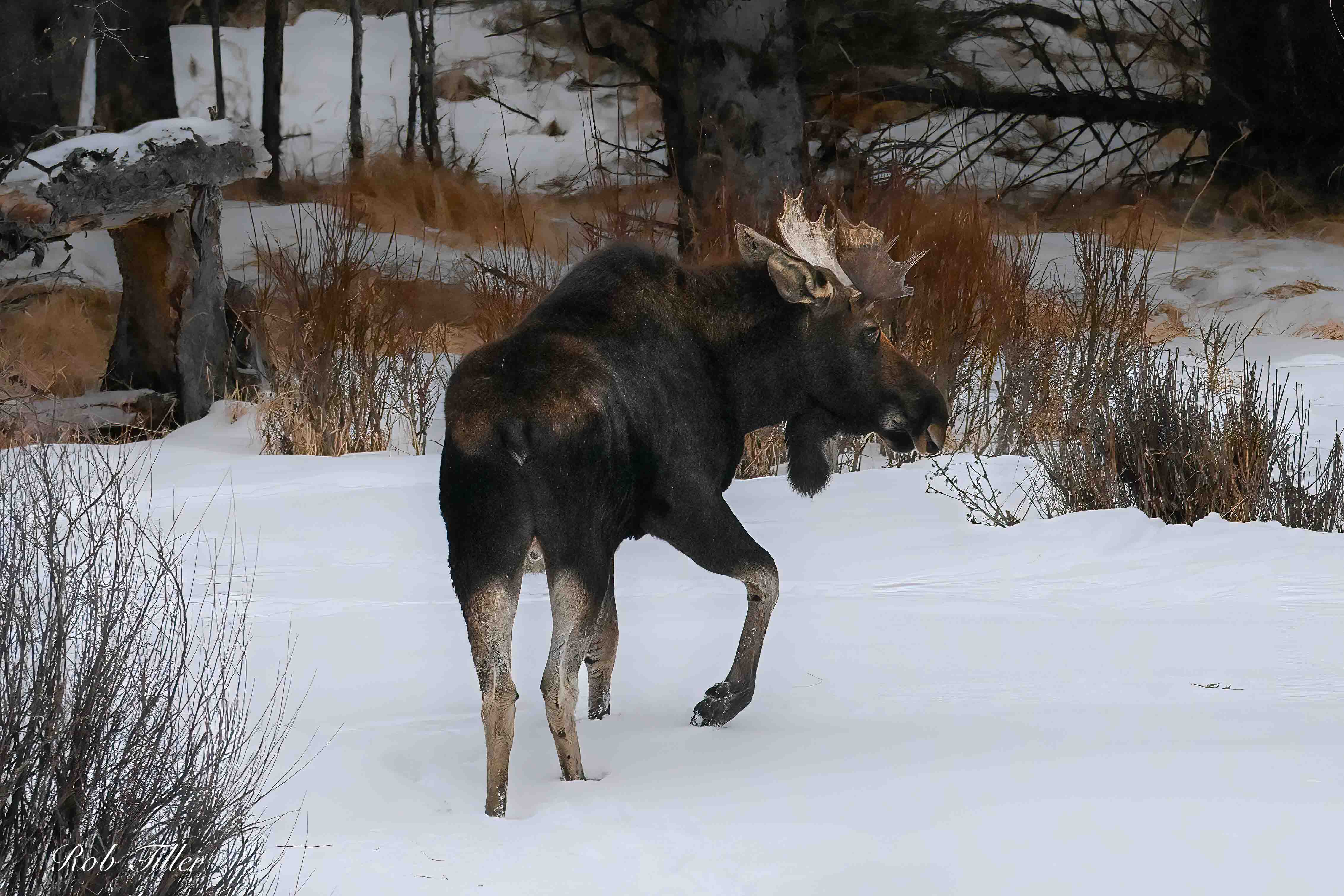
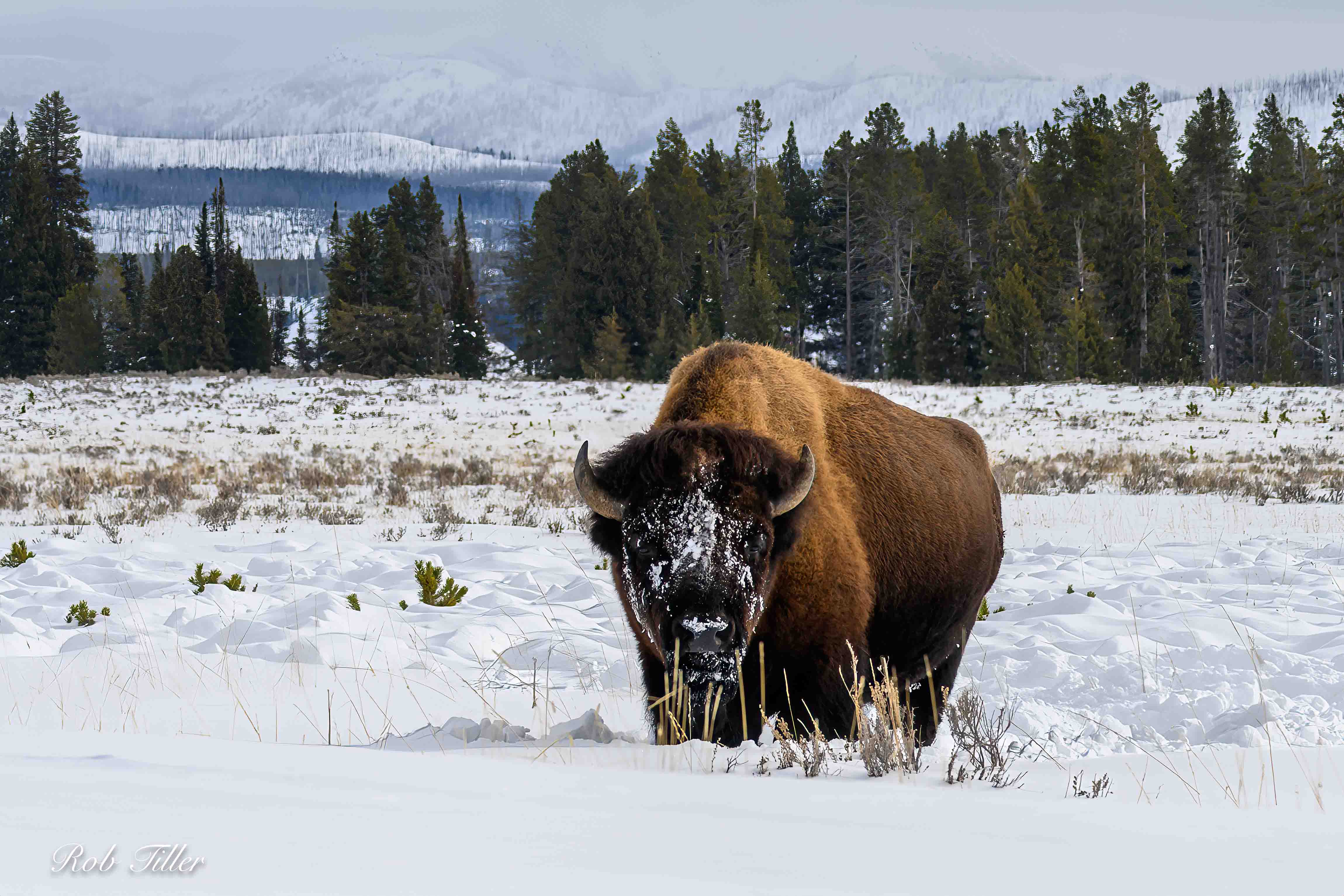
Toward the end of January I was in Yellowstone National Park, where I saw quite a few animals and took a lot of photographs.  I’m still sorting and weeding them, but here are some I thought were worth sharing.  Looking at the images reminds me of what an amazing world we live in, and makes me want to get back out into nature.  

Yellowstone is a unique and beautiful place.  It’s centered on a dormant super volcano (a caldera) and has over half the world’s geysers.  It has high mountains, canyons, lakes, and waterfalls, as well as unusual hydrothermal features.  It is famous for its megafauna, including wolves, bison, coyotes, pronghorn, elk, and moose. 

Normally Yellowstone is very cold and snowy in January, but this year it wasn’t as cold and not so snowy.  This meant it wasn’t as physically tough on the photographer, but also not quite as beautifully otherworldly as most years.  

Still, I had a great time and had some excellent wildlife encounters.  For three days, I was with a group organized by NANPA venturing out of West Yellowstone, and then I went with my friend Barry W. for three more days based in Mammoth Hot Springs Lodge.  

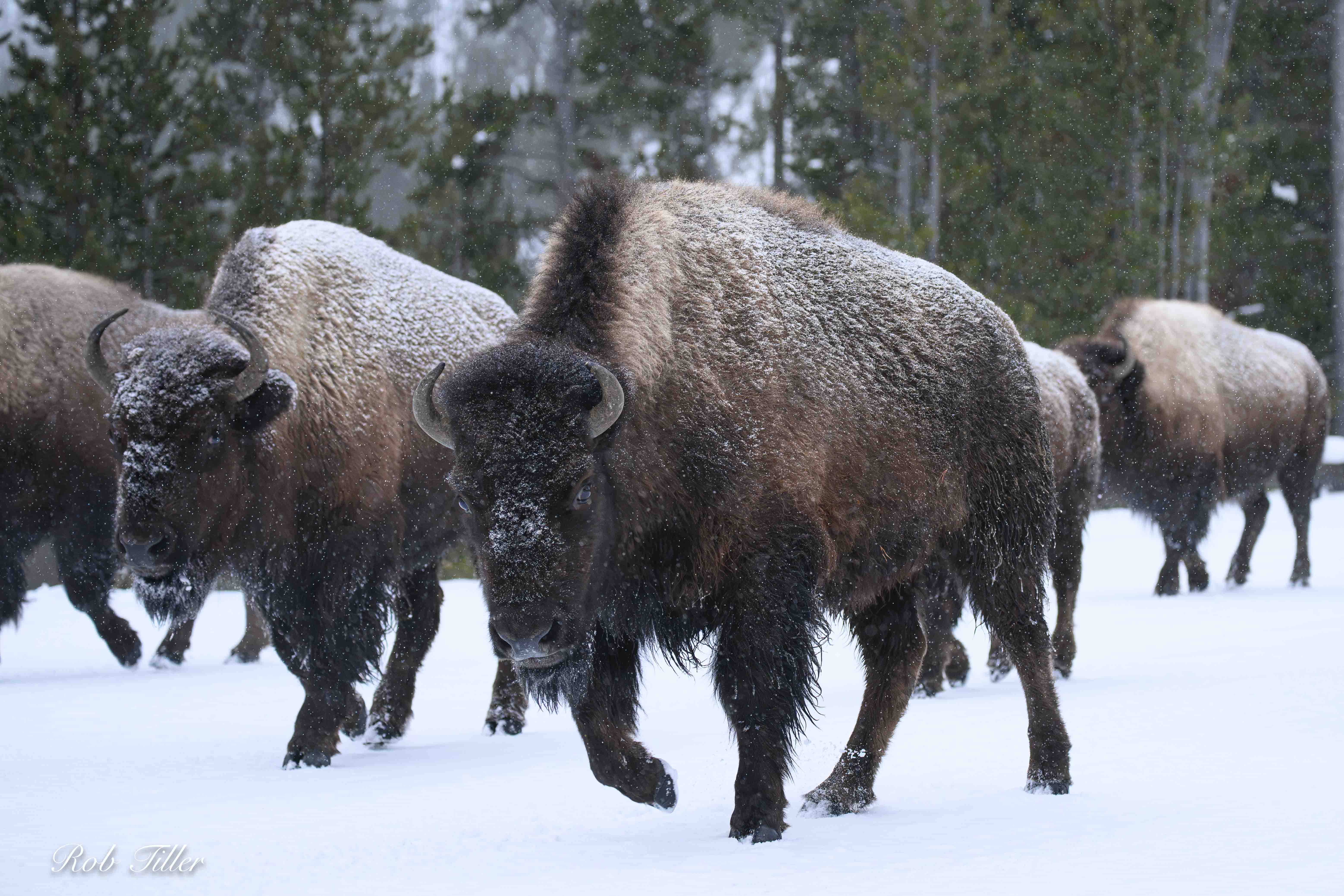
Among the highlights were some close encounters with bison, which are numerous there.  These big, powerful icons of the West were usually grazing peacefully, but could be skittish.  And of course, they could be dangerous if provoked.  

At one point in the Lamar Valley, Barry and I were photographing a large herd, and didn’t notice until too late that some of them had gotten between us and our vehicle.  For a few minutes we were wondering about how to escape, but when another car came along, we jogged behind it as the bison got out of the way.  

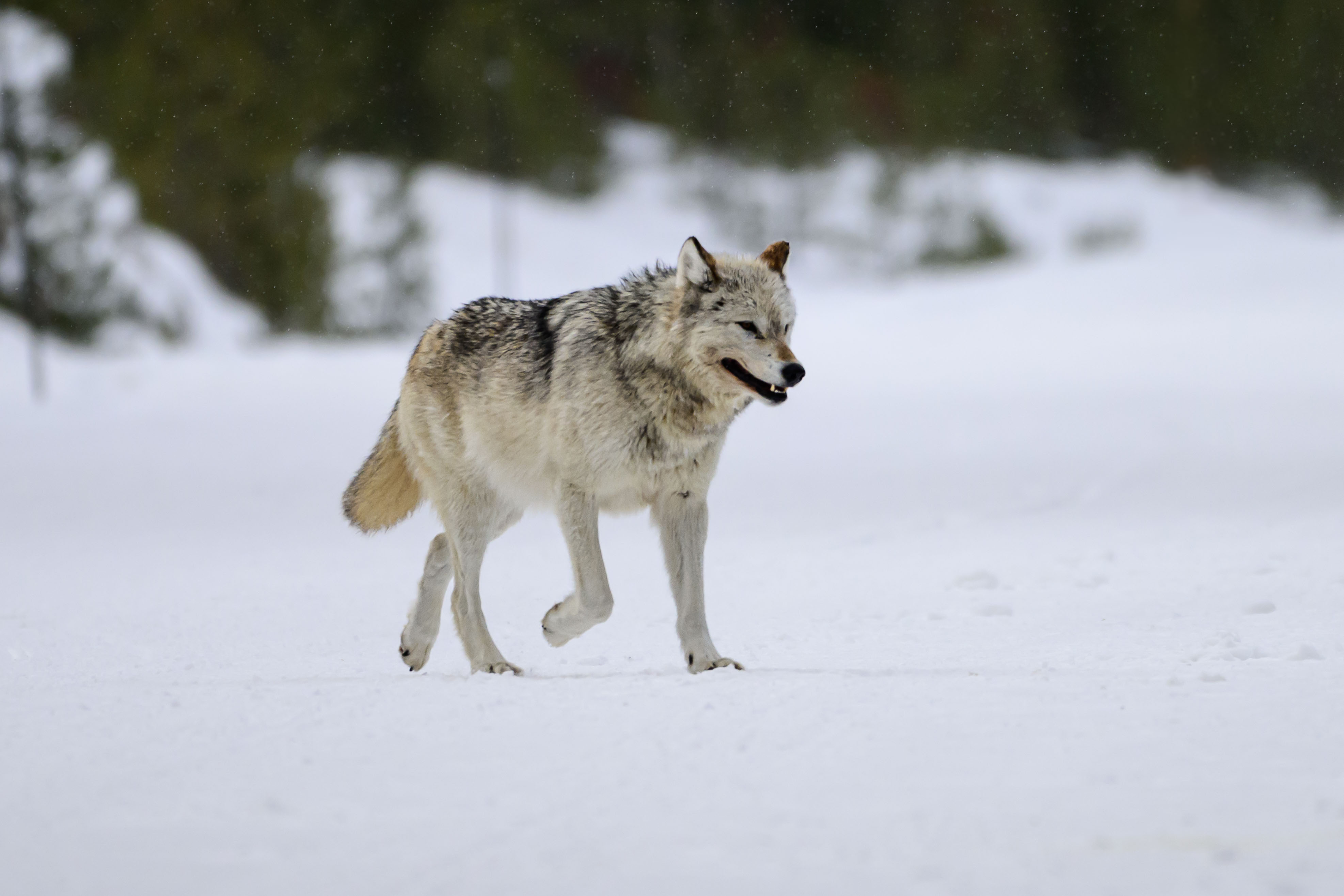
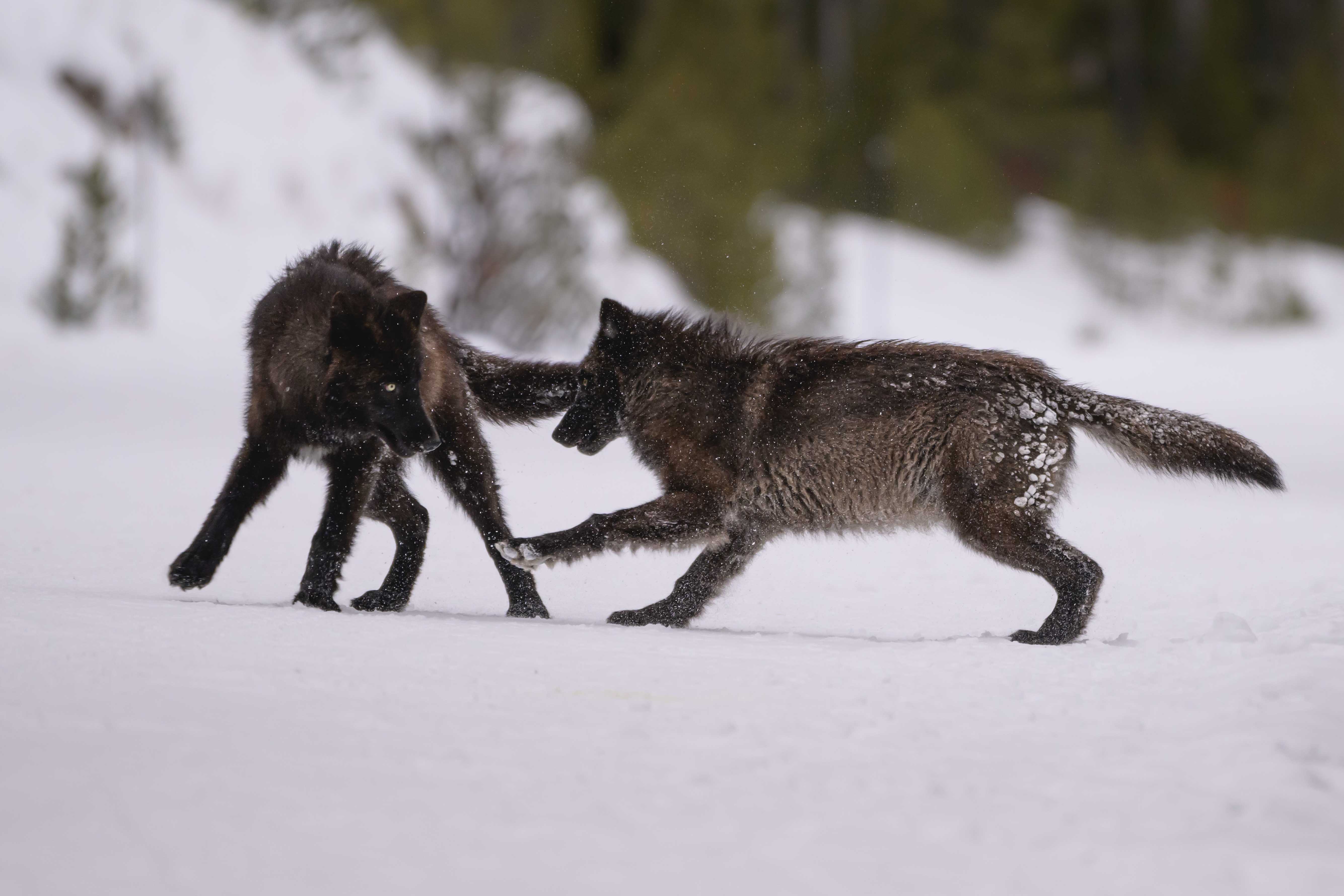
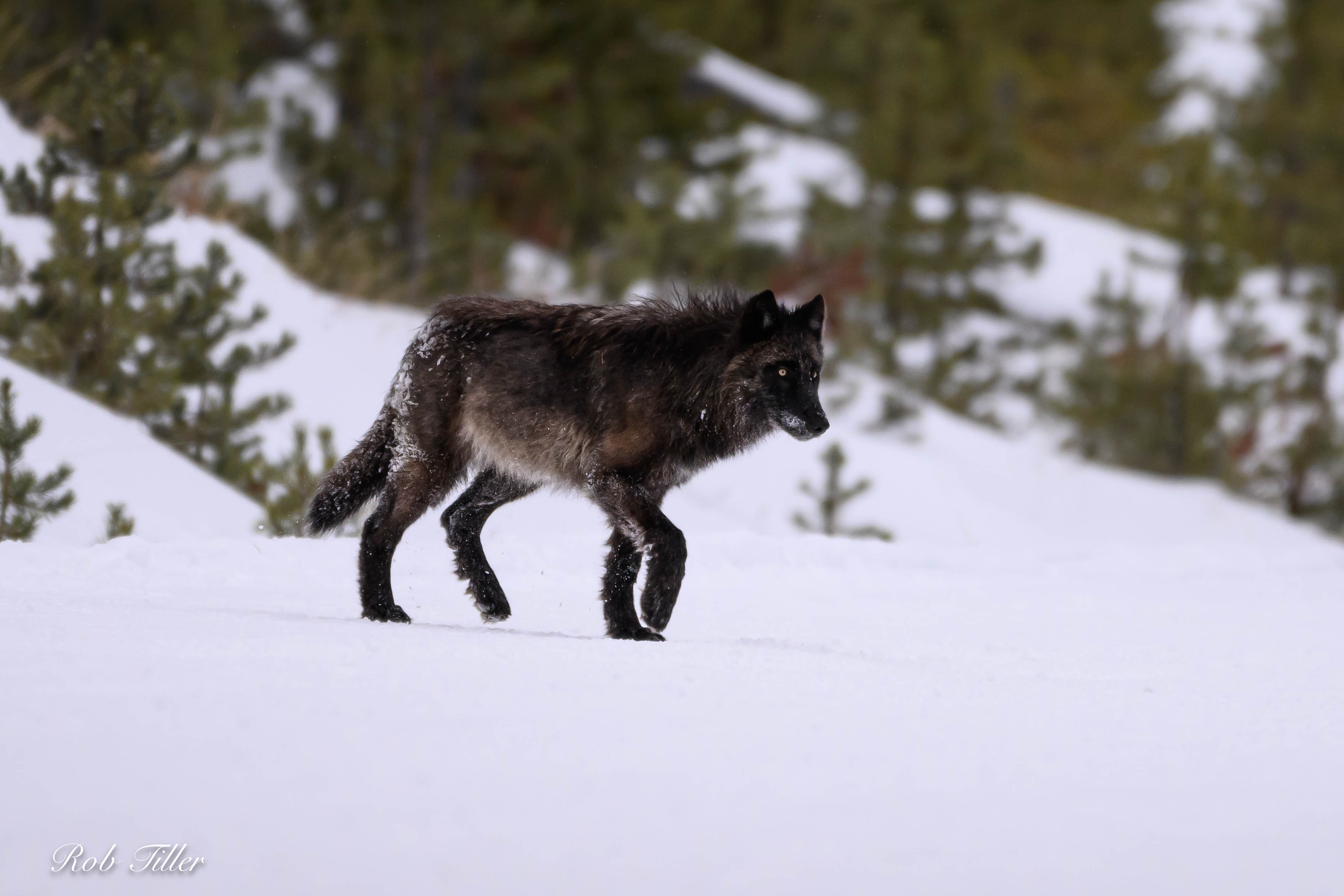
We were privileged to see a dozen or so of the resident gray wolves (some of which are black), which are usually not easy to find.  Wolves have a bad rap as scary beasts, drummed into us from childhood by stories like little red riding hood, the three little pigs, and the boy who cried wolf. In fact, wolf attacks on humans are very rare.  

On the other hand, humans are highly threatening to wolves.  We very nearly caused their extinction in the last century, and continue out of ignorance, perversity, or greed to kill them and destroy their habitats.  Still, there’s a wider understanding now that as apex predators, wolves are important contributors to their ecosystems.  For example, gray wolves keep elk, moose, and deer populations in check, preventing overgrazing by the ungulates and providing nourishment to other species.  

The NY Times had a good summary of the current controversies surrounding wolves.   The anti-wolf movement involves the interests of ranchers, who don’t like it when wolves kill their cattle.  One of the solutions to that problem is a program for the state to pay ranchers for animals killed by wolves, which apparently lessens the conflicts, but not perfectly.  

It seems to me self-evident that wolves are not just inconvenient objects to be subjugated, but sentient beings entitled to respect.  They have interests, families, and friends.  We have started to learn how to live alongside them and work out human-wolf conflicts, and I’m hoping we’ll continue that process, and continue enjoying their mysterious beauty.  

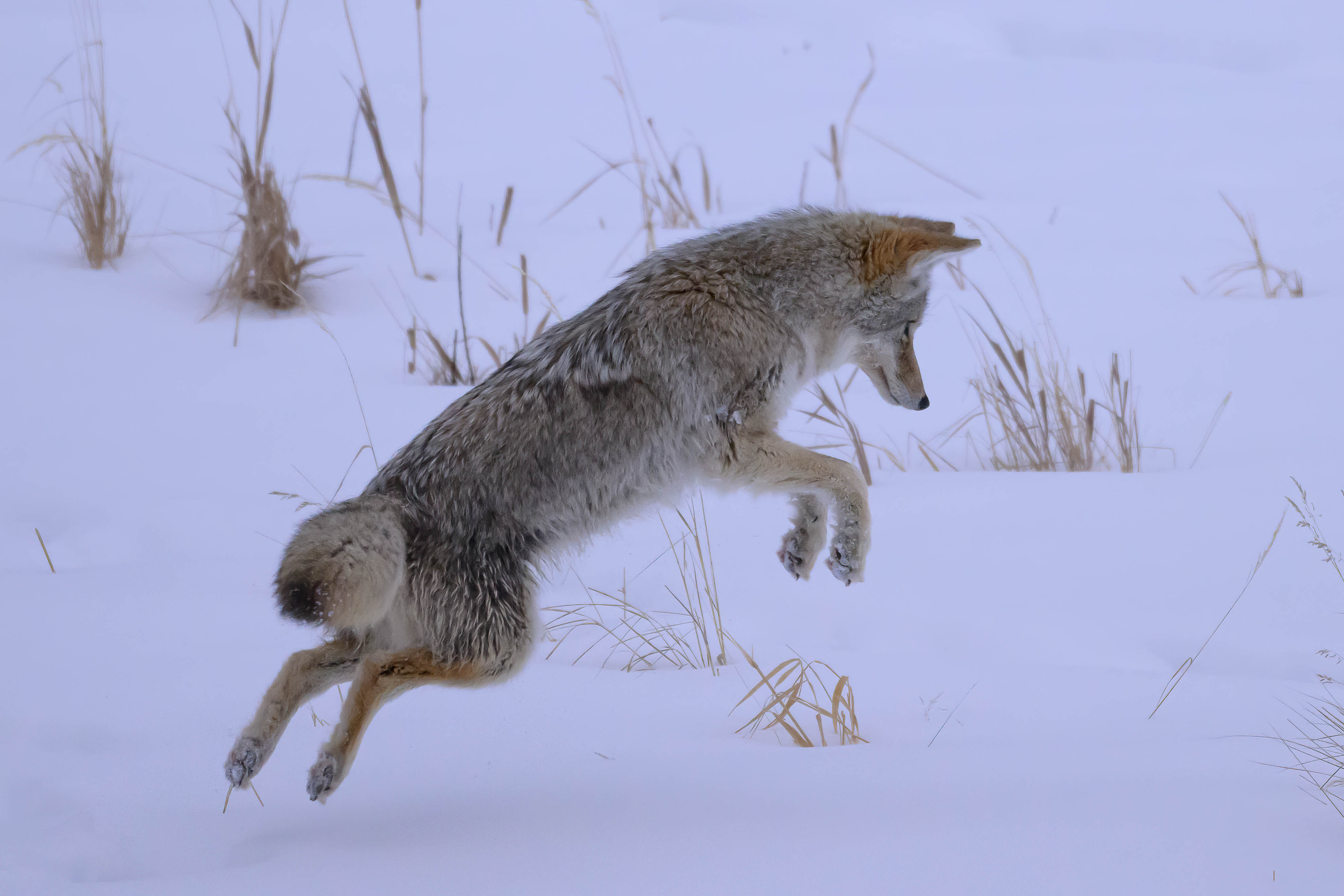
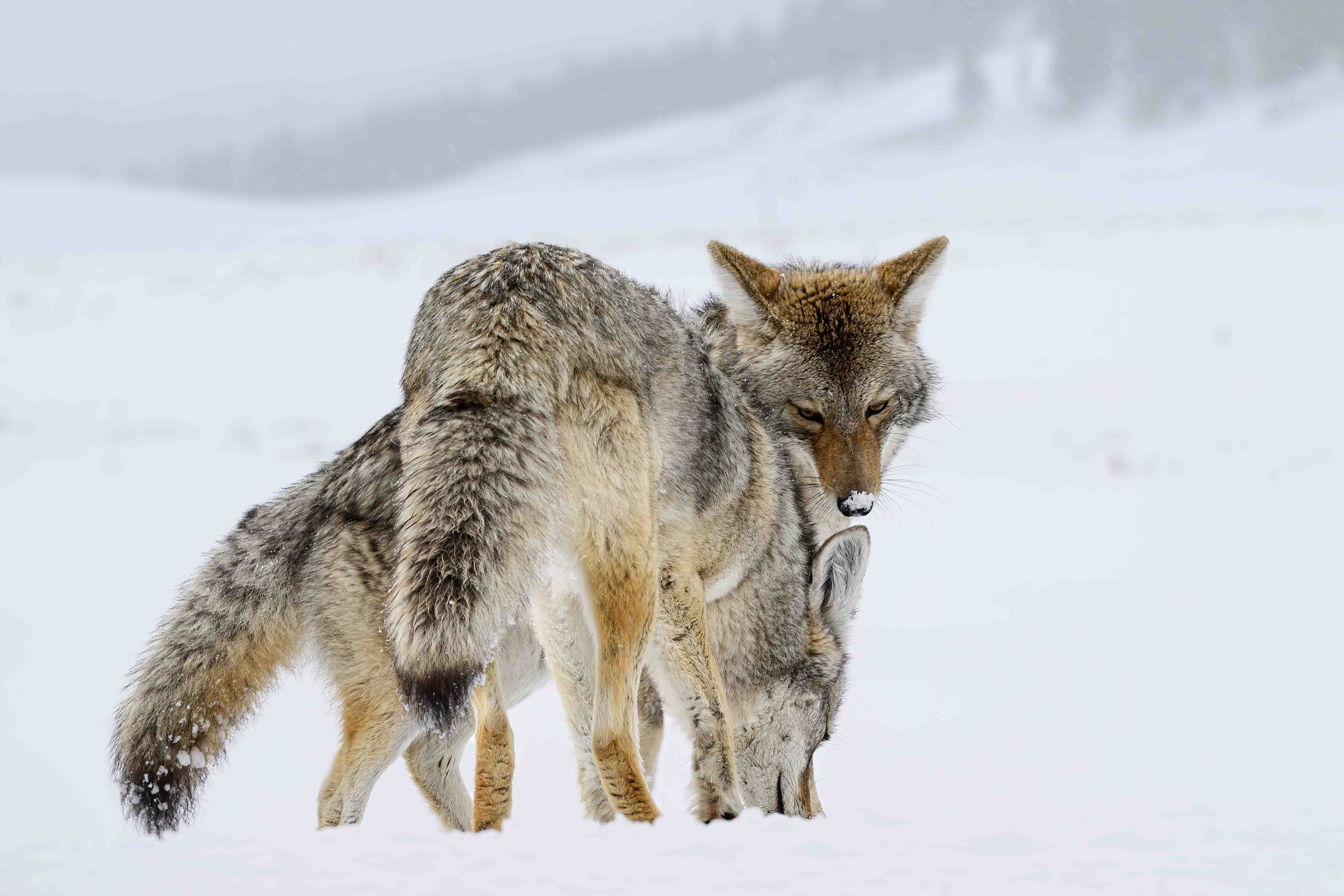
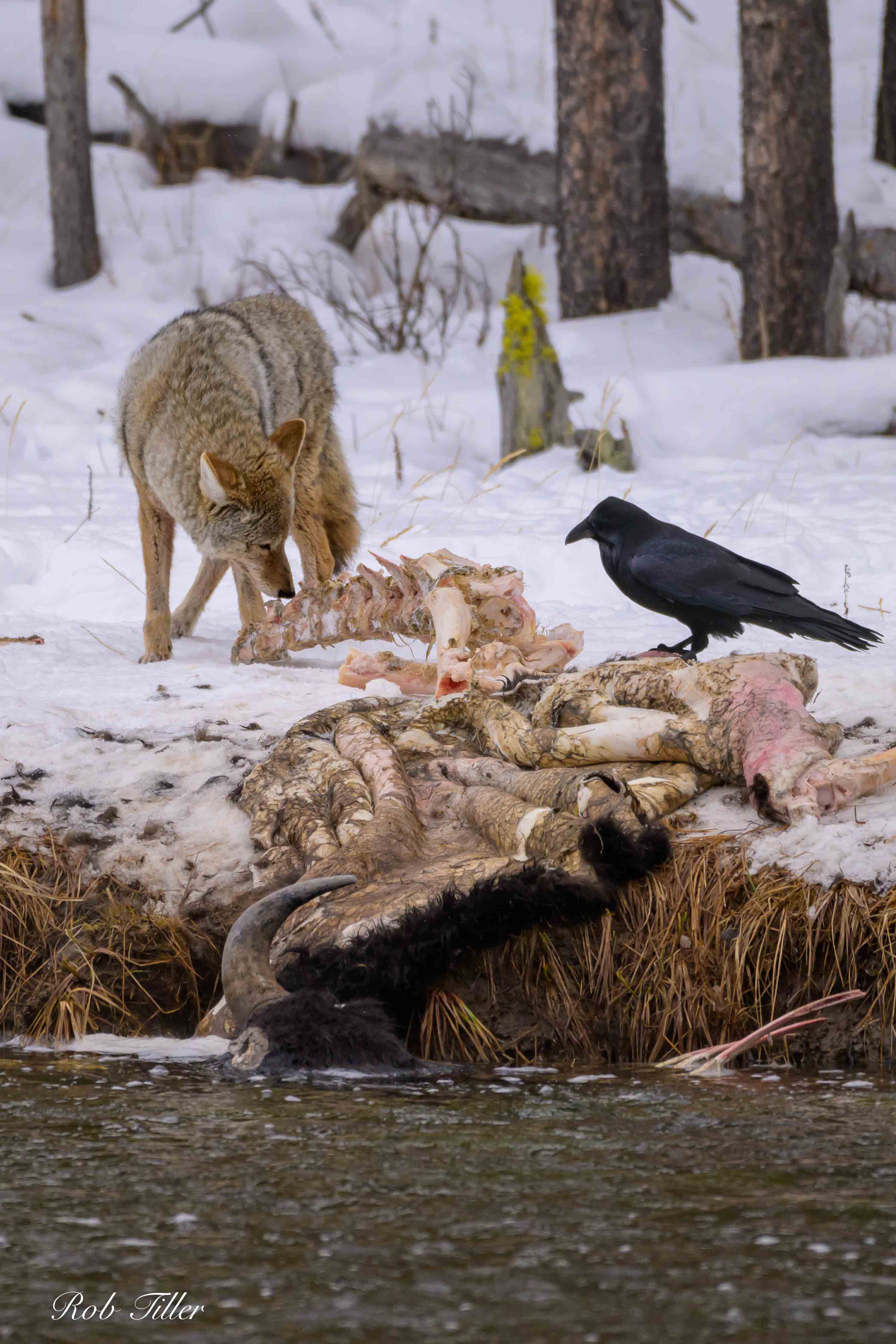
Among nature enthusiasts, coyotes don’t inspire as much excitement as wolves, but I was still excited to see several of them in Yellowstone.  They are close relatives to wolves and look a lot like them, but smaller, with narrower features and larger ears.  

It’s hard to argue they’re less pretty than wolves, so their poor PR probably has to do with their being relatively common.  Their prey includes mice, which they can hear tunneling under the snow, and catch by leaping on them.  I got one shot of a leap, which yielded no mouse, and also saw a pair of them flirting.  

One thing I like about a long trip is having a good block of time to read.  I’ve really been enjoying rereading the first few Aubrey-Matarin novels by Patrick O’Brian, and finished the fourth one in Yellowstone.  These are historical novels about life in the British Royal Navy around 1800, when Britain was fighting hard to rule the waves.  O’Brian was clearly passionate about getting the history right, but also brilliant in his depictions of navy life and the inner lives of his characters. 

In the twenty-five or so years since I first read O’Brian’s series, I’ve learned some things about the history of the British empire and its depredations, including violent exploitation of entire civilizations, slavery, piracy, and drug dealing.  These, though not discussed by O’Brian, were part of the mission of the Royal Navy.  But those sailors also embodied more admirable objectives and virtues, such as scientific research, artistic expression, decency, honor, and courage.  Like us, they were complicated.

Speaking of the arts, David Brooks recently had a good column in the NY Times making the case for reading literature and welcoming other cultural experiences.  He made a good argument for the liberal arts as vehicles for greater self understanding.  Great novels, for example, deepen our understanding of the inner lives of others and ourselves.  

“Artistic creation is the elemental human act. When they are making pictures or poems or stories, artists are constructing a complex, coherent representation of the world. That’s what all of us are doing every minute as we’re looking around. We’re all artists of a sort. The universe is a silent, colorless place. It’s just waves and particles out there. But by using our imaginations, we construct colors and sounds, tastes and stories, drama, laughter, joy and sorrow.

“Works of culture make us better perceivers. We artists learn from other artists. Paintings, poems, novels and music help multiply and refine the models we use to perceive and construct reality.”

These thoughts are particularly timely as universities across the U.S. are cutting their liberal arts programs, apparently on the theory that the only point of higher education is to prepare young folks to do a particular kind of job.  As a former liberal arts student myself, I have a bias, but I think treating education as purely instrumental is a disservice to students, both materially and spiritually. 

With advancing technology, including AI, many technical skills that are valuable today will be useless down the road, and students with only those skills will be in trouble.  They’ll need a broader base, including the meta skill of quickly learning new skills.  Meanwhile, without exposure to the world of the arts and ideas, they may miss so much that makes life meaningful and rewarding.