The Casual Blog

Tag: penguins

Meeting penguins in the Falkland Islands, reading Trollope, and Trump’s downward trend

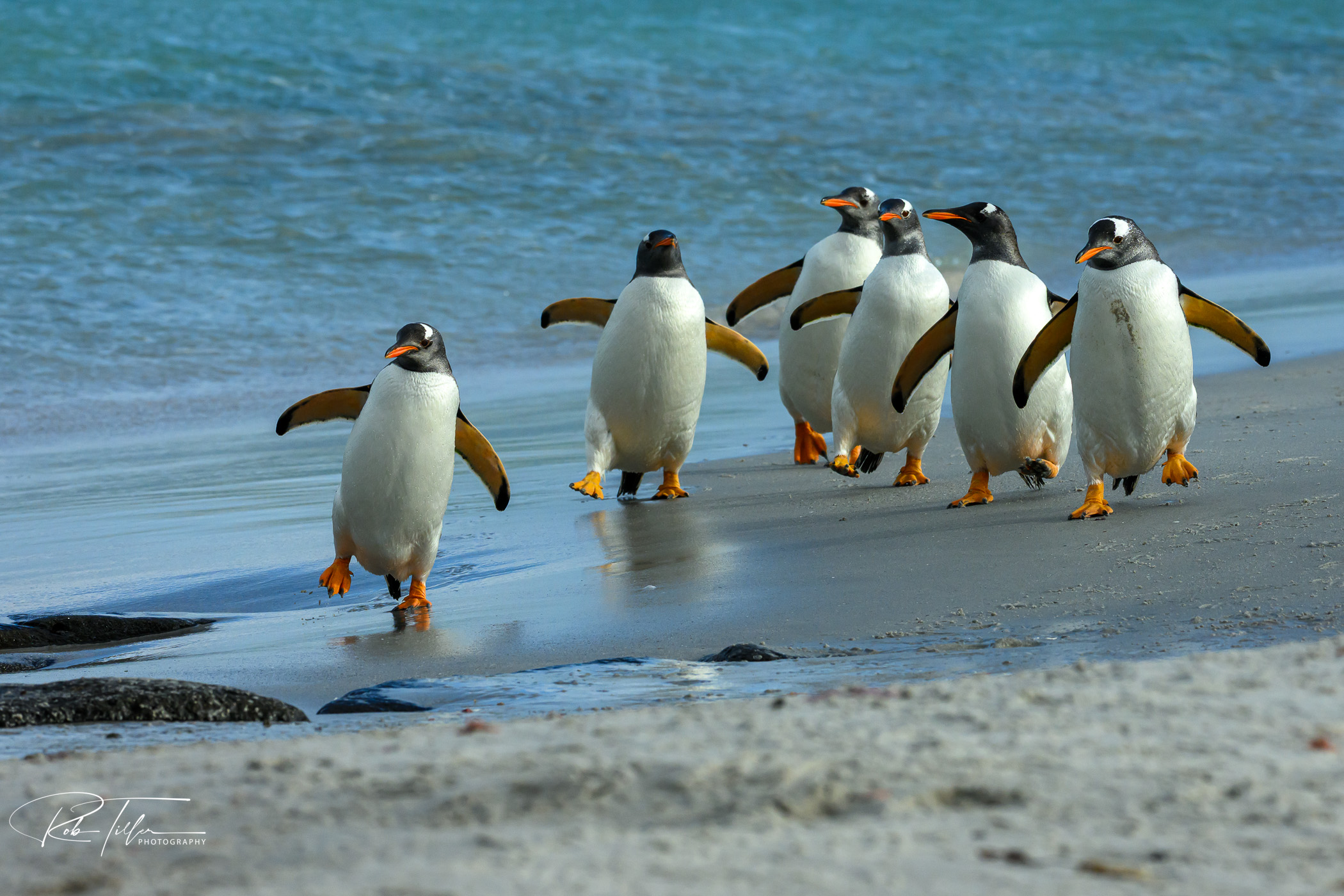
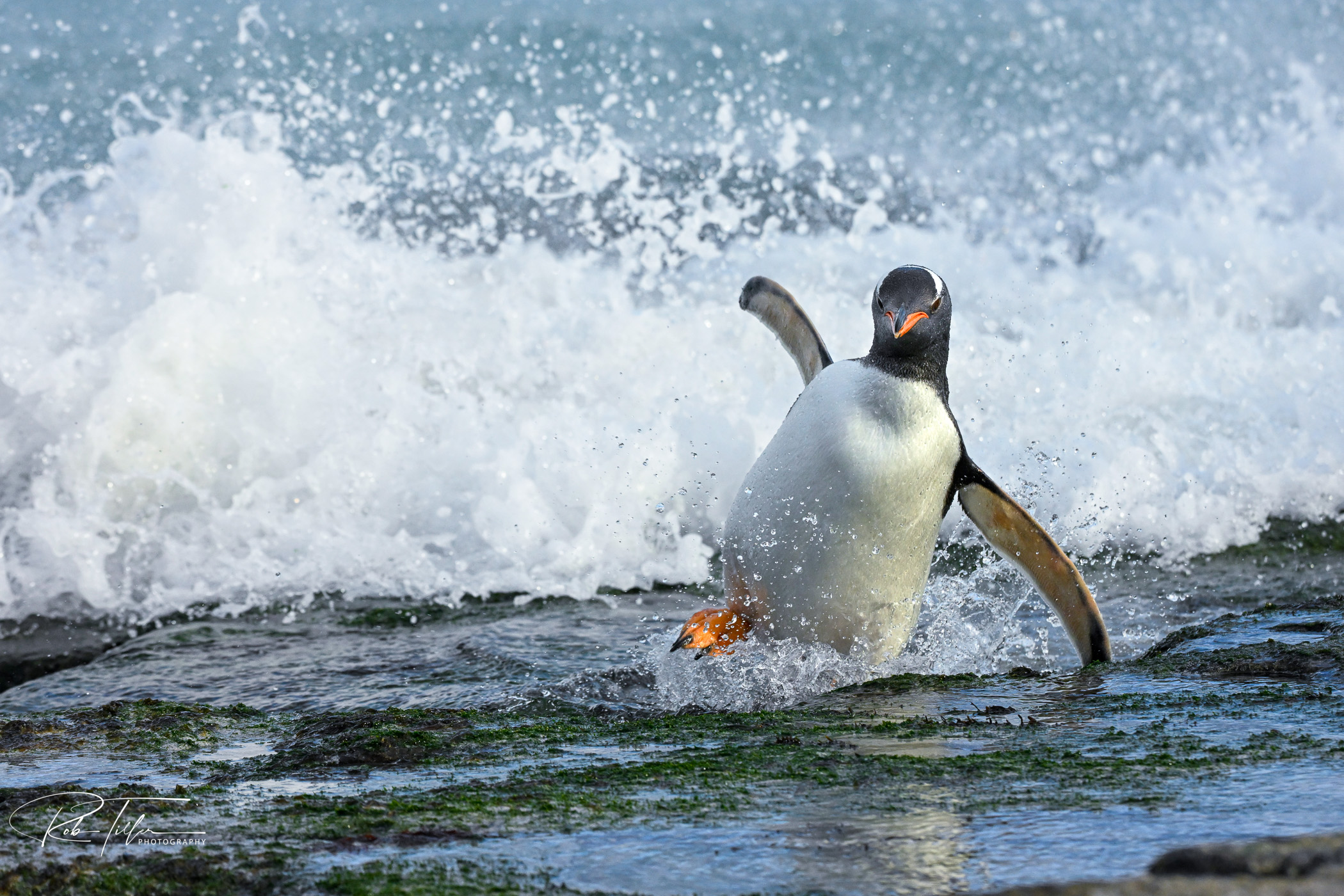
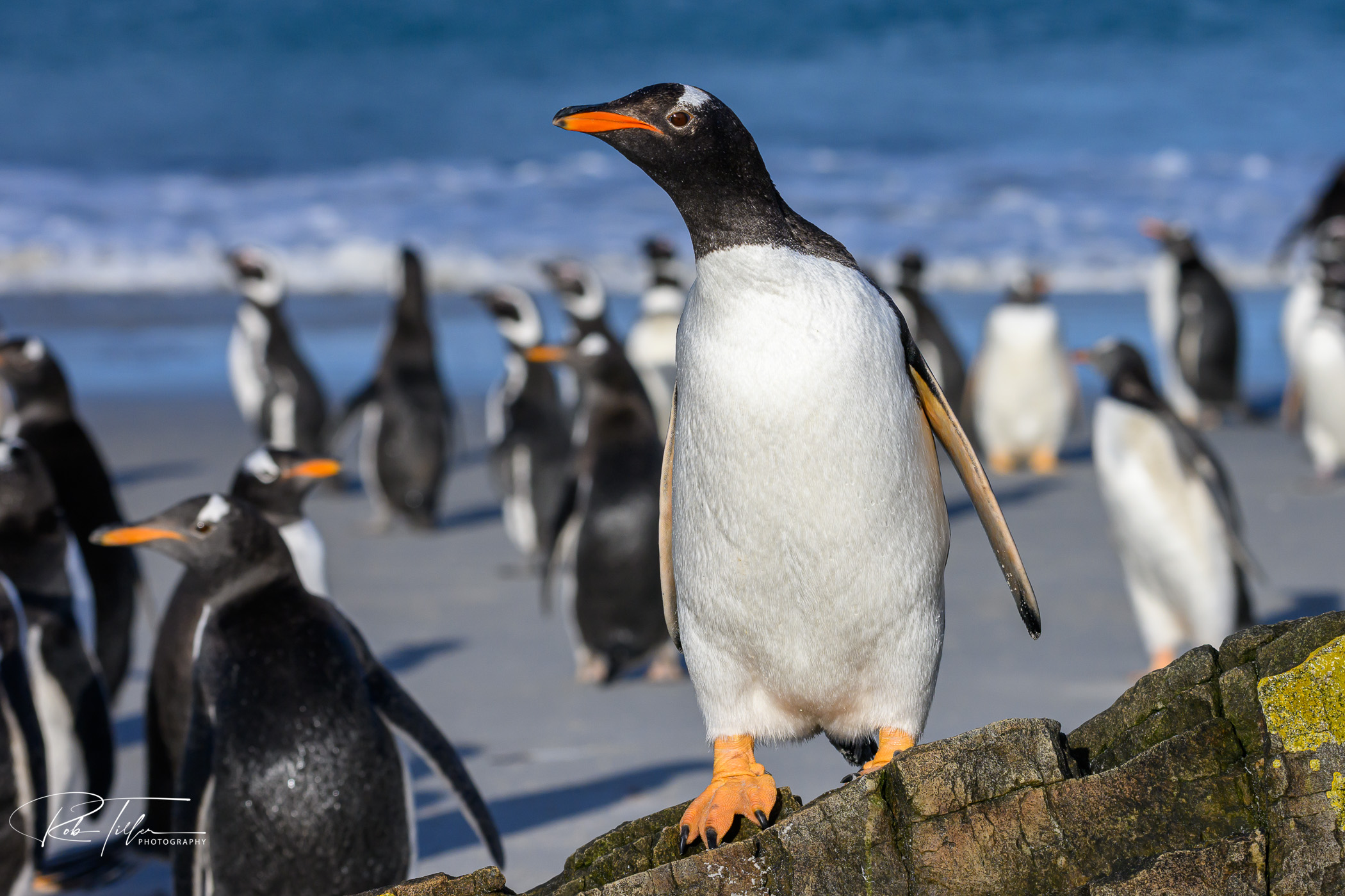
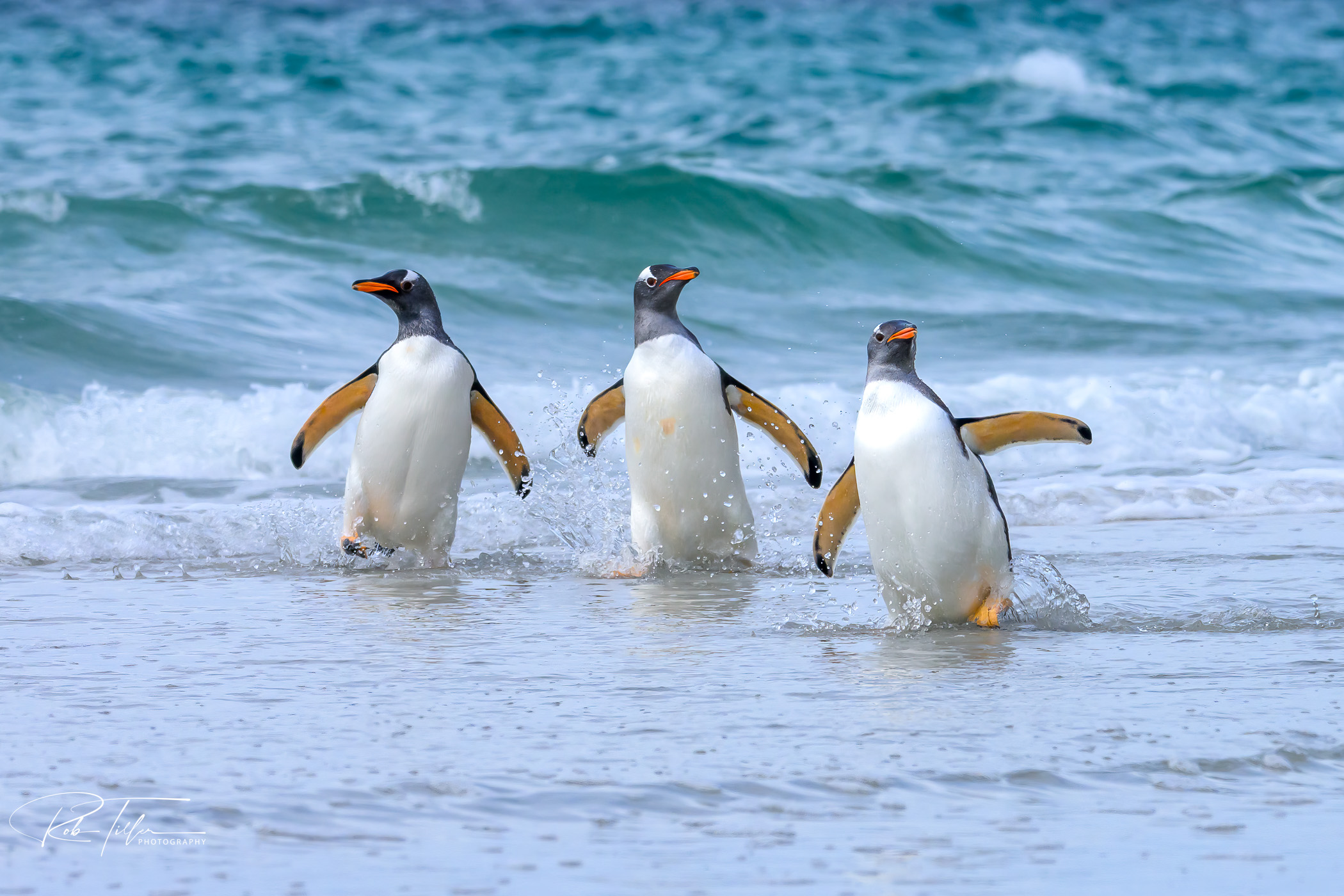
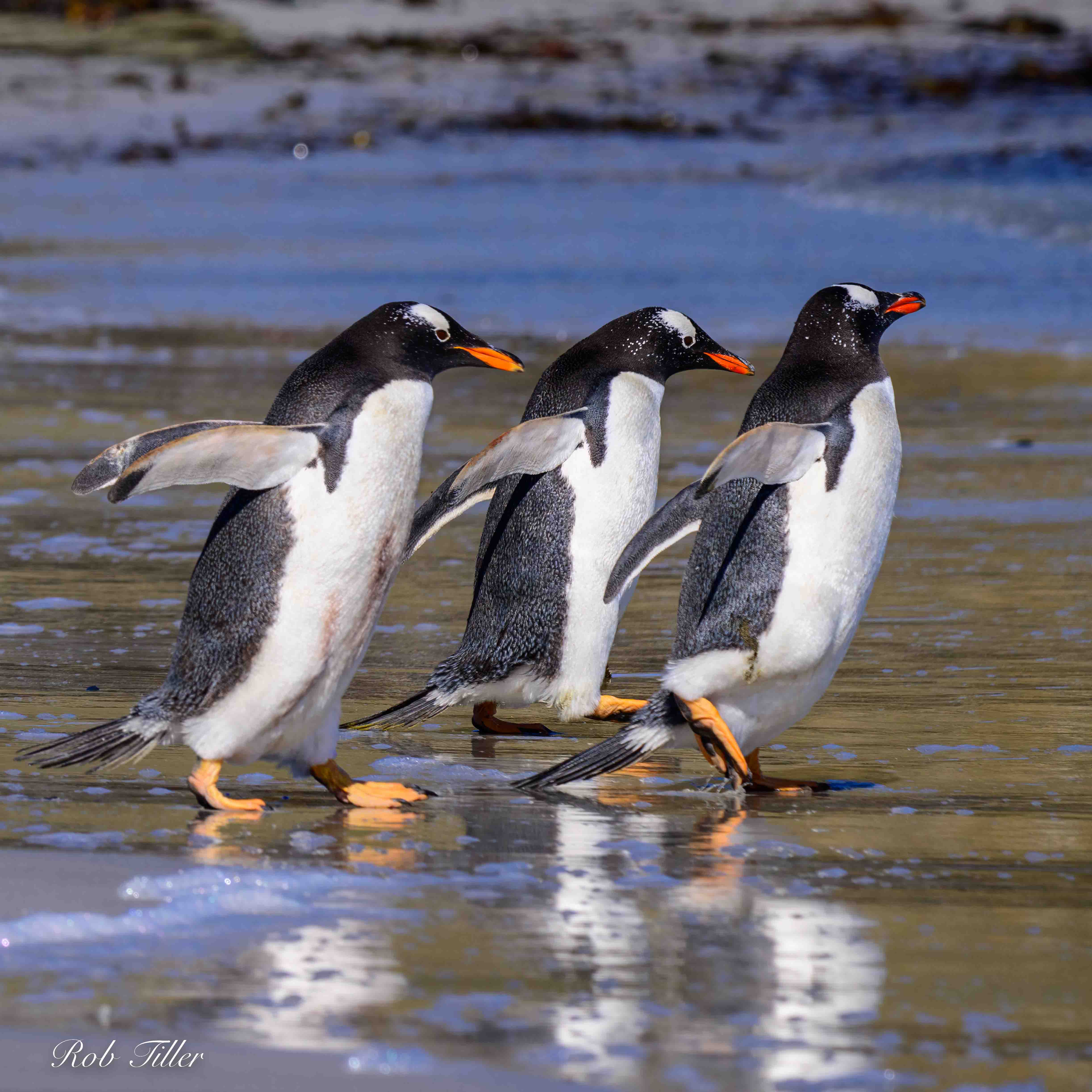
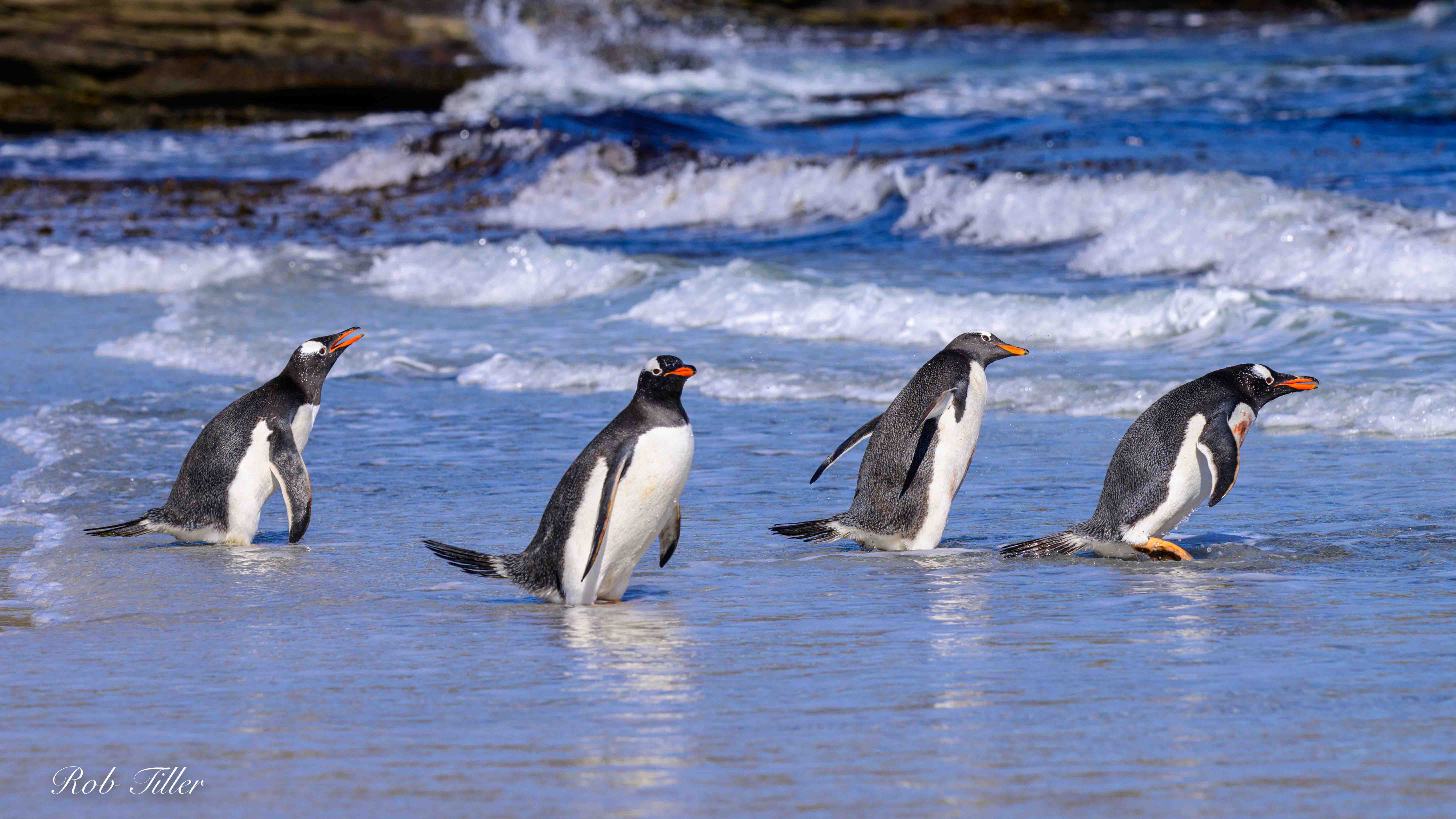
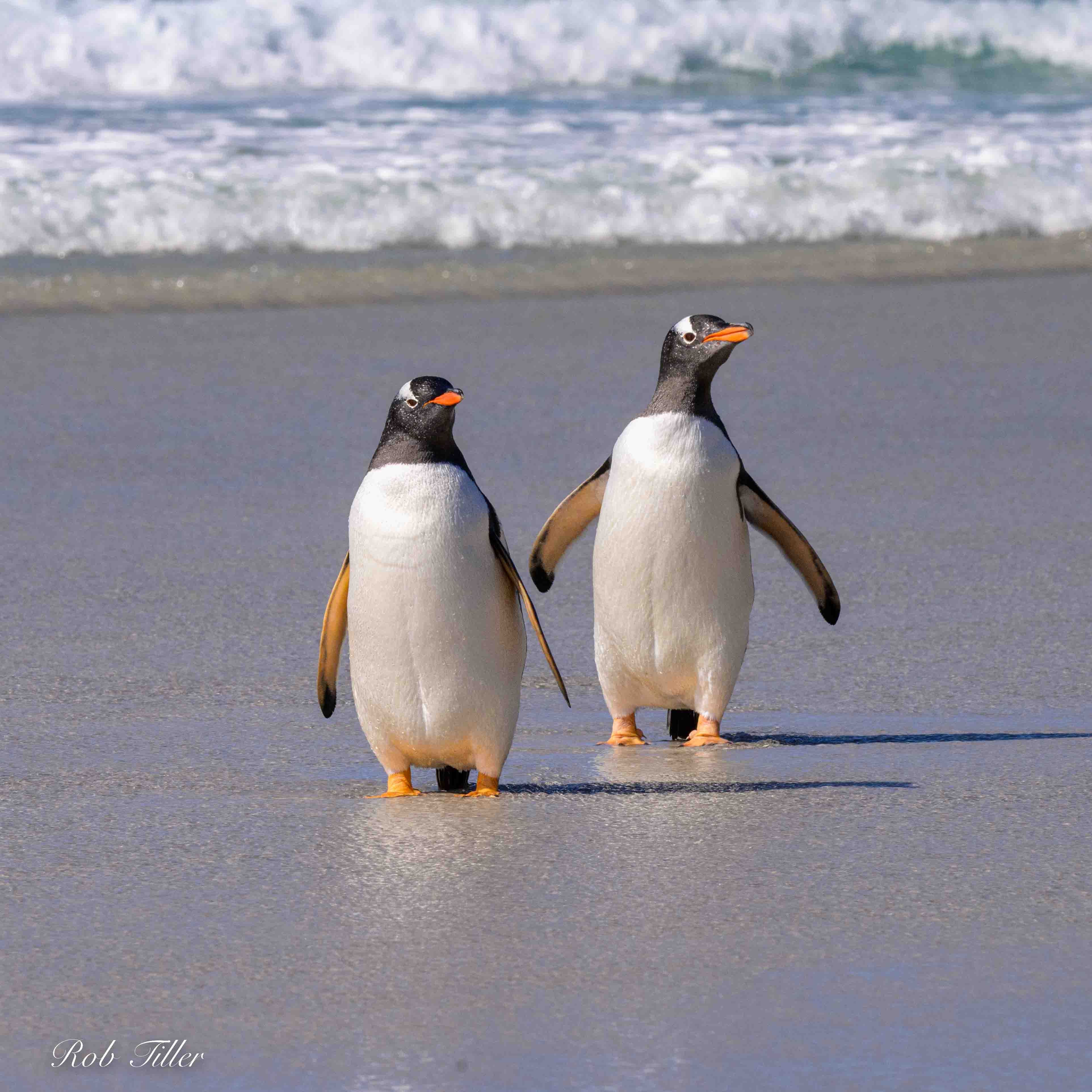
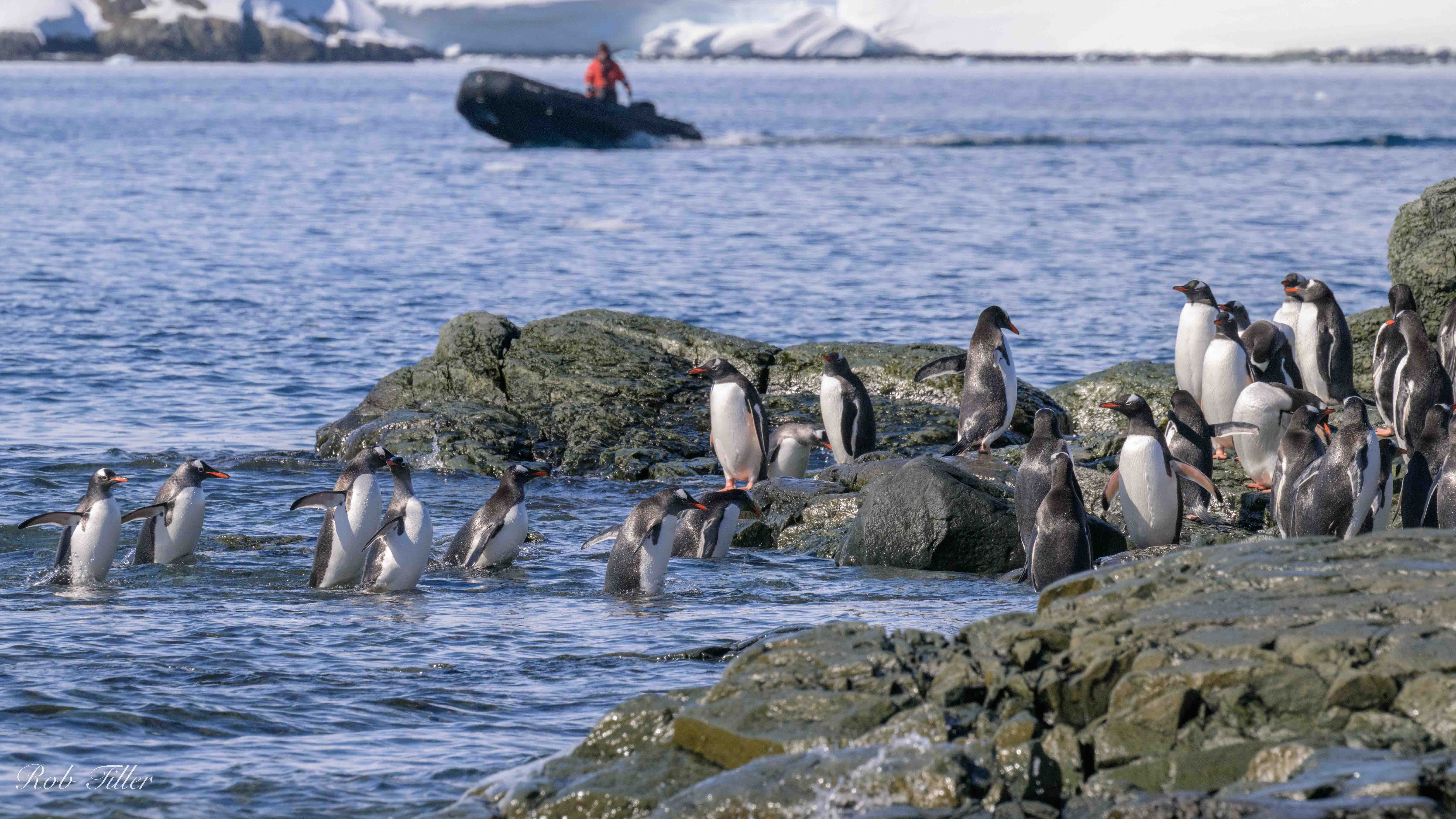
Gentoo penguins

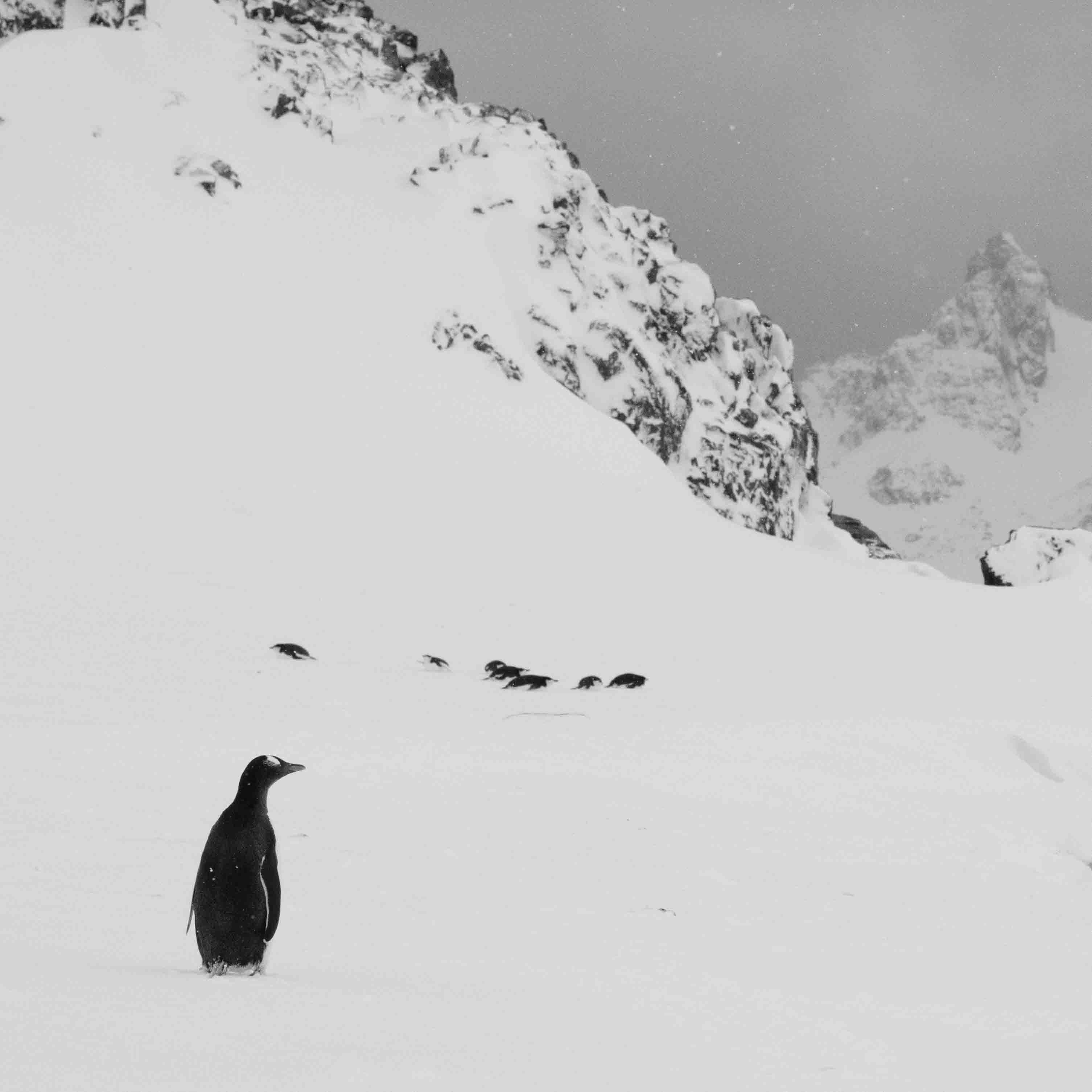
In December I made a three-week trip  to the Falkland Islands.  The Falklands are in the Atlantic east of the bottom of South America.  There are two main islands and more than 700 others, of which we spent time on  five:  Saunders, Pebble, Sea Lion, Bleaker, and Carcass, as well as Volunteer Point on East Falkland.  The photos here are from this trip.

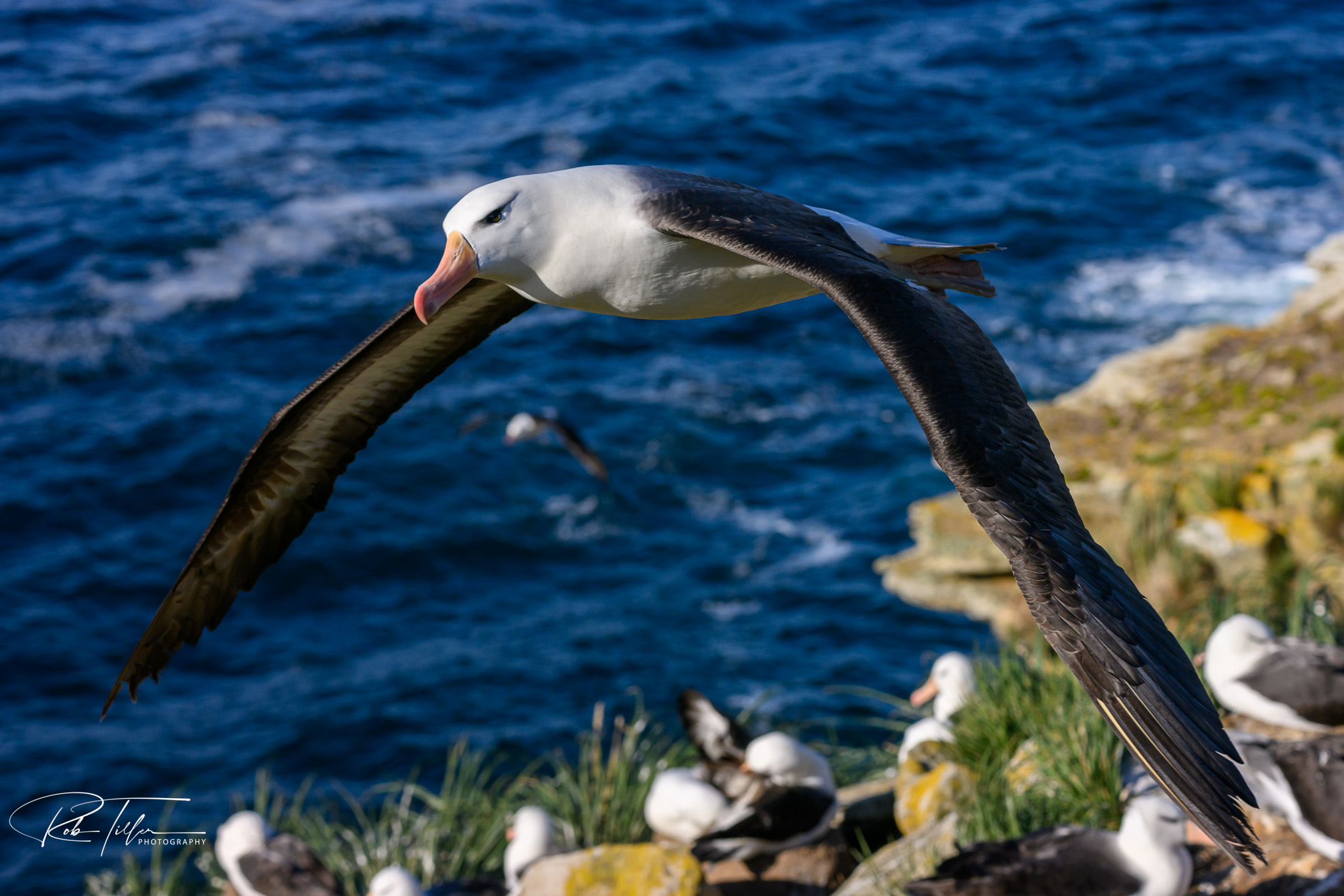
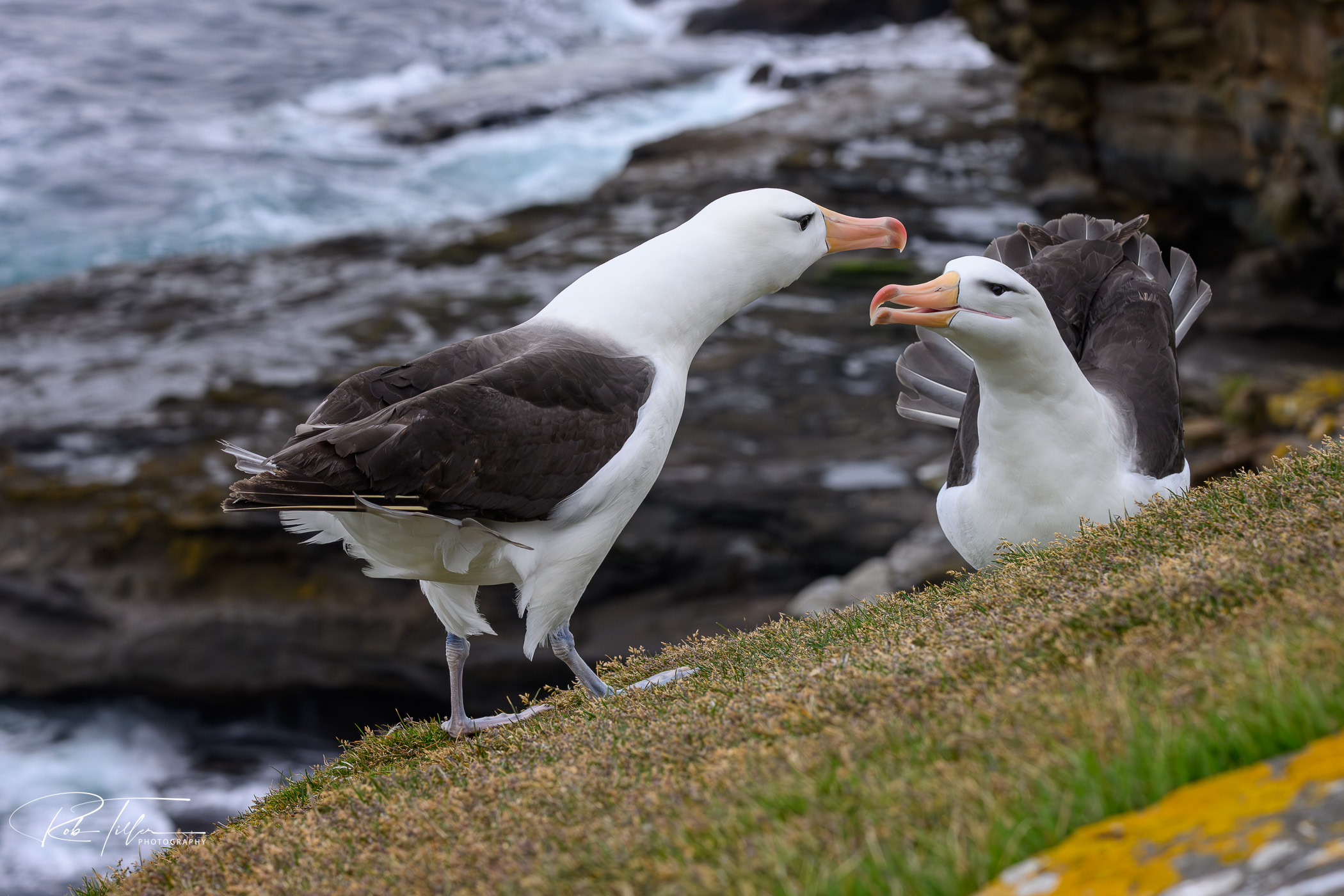
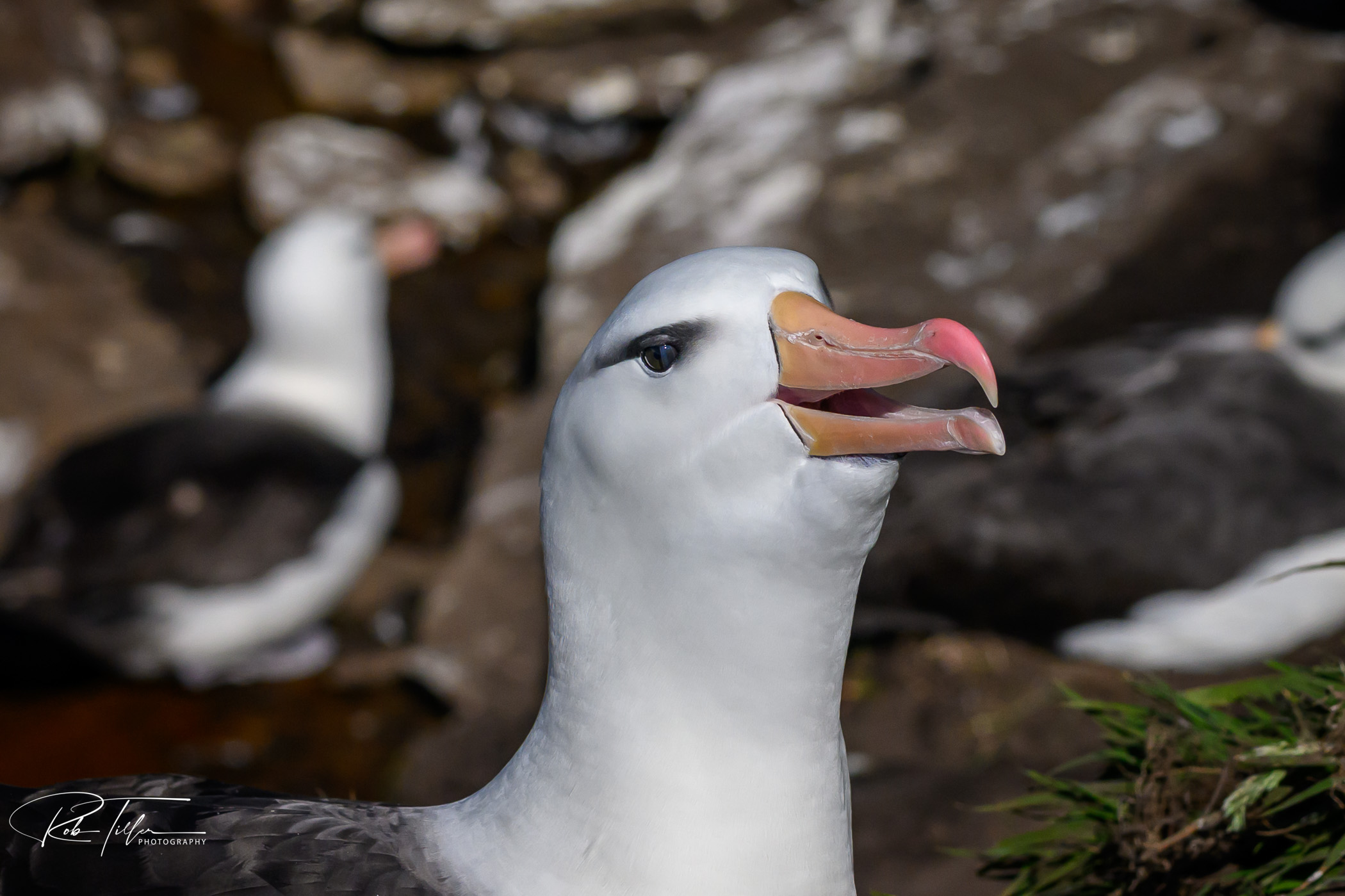
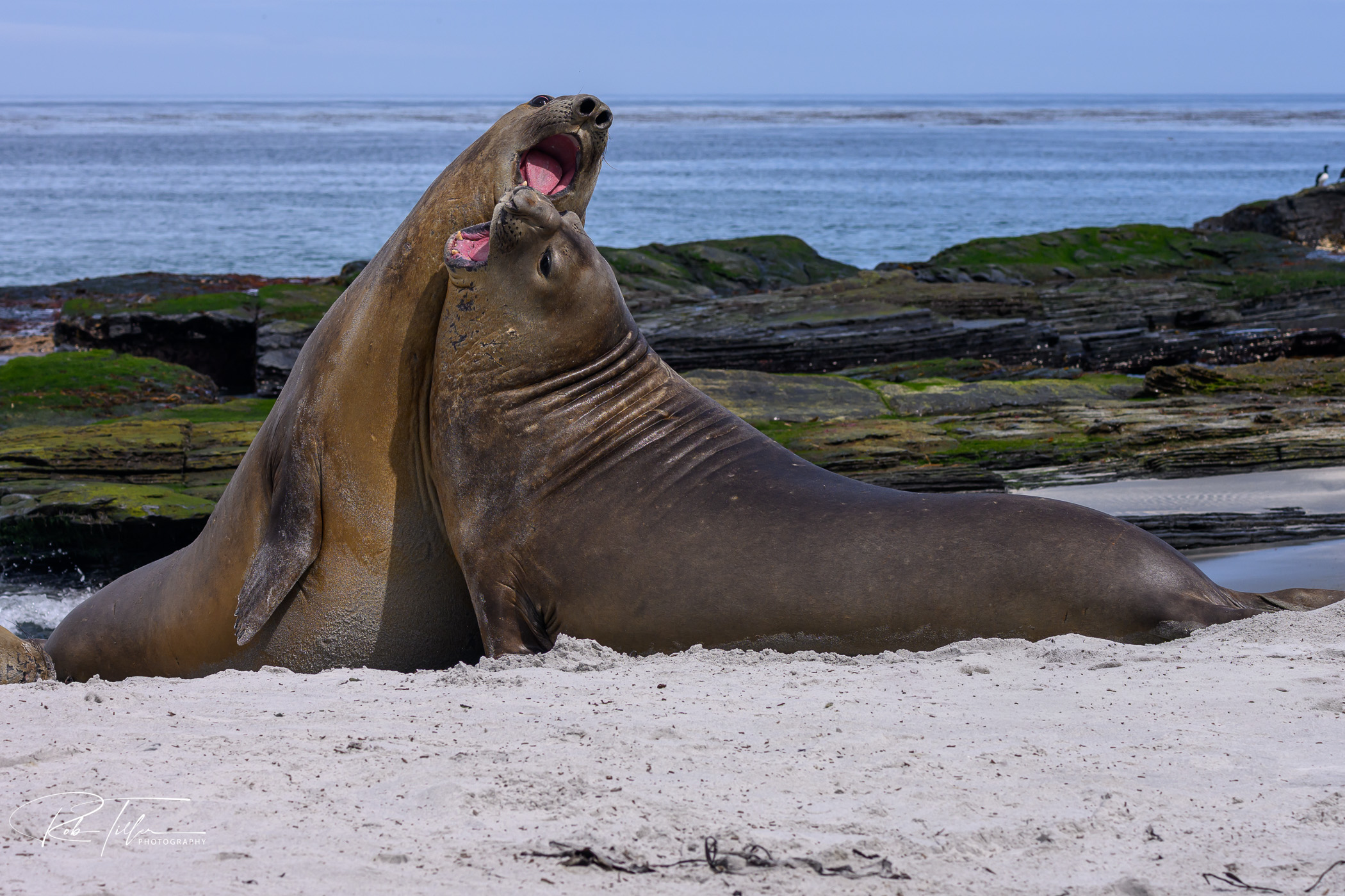
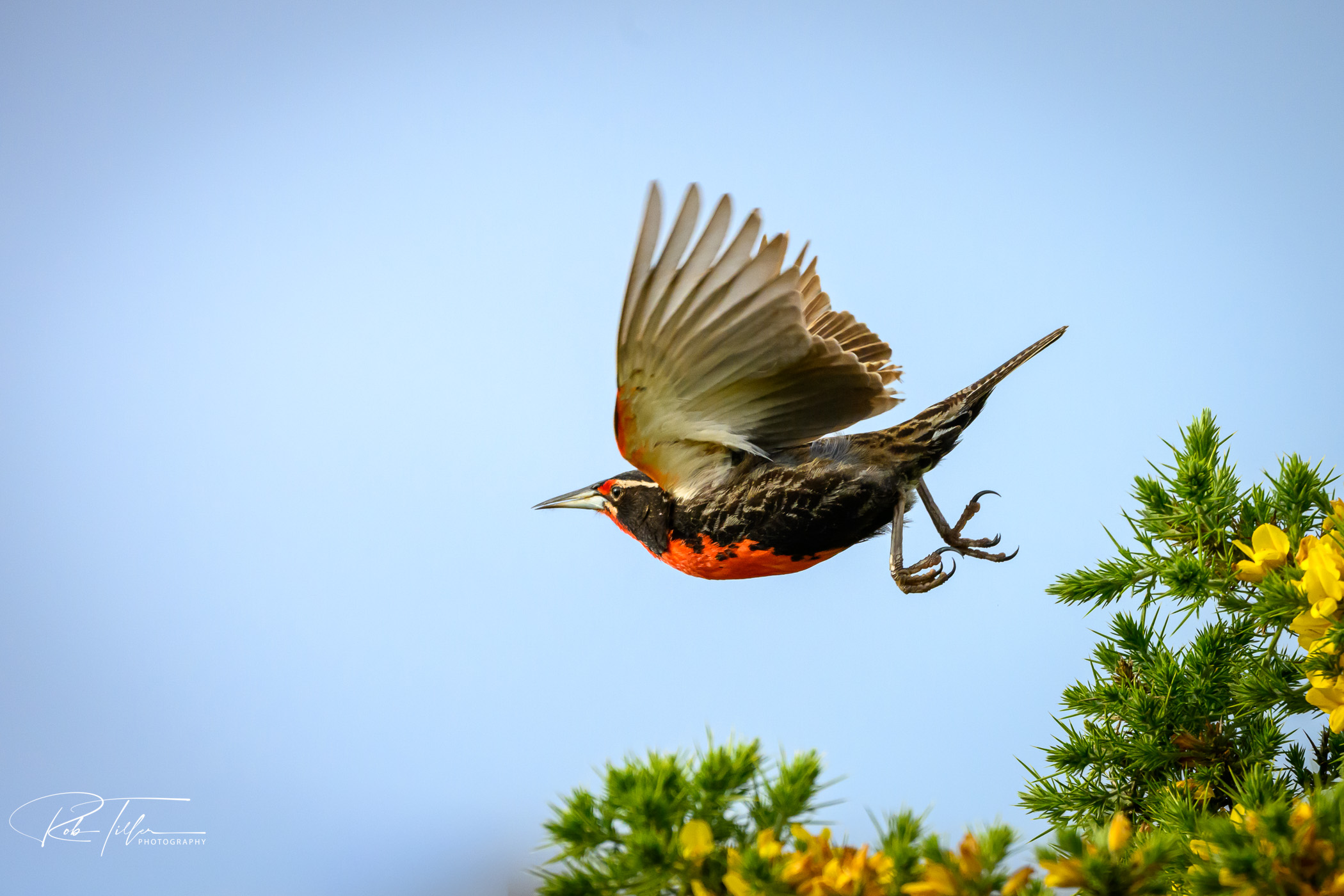
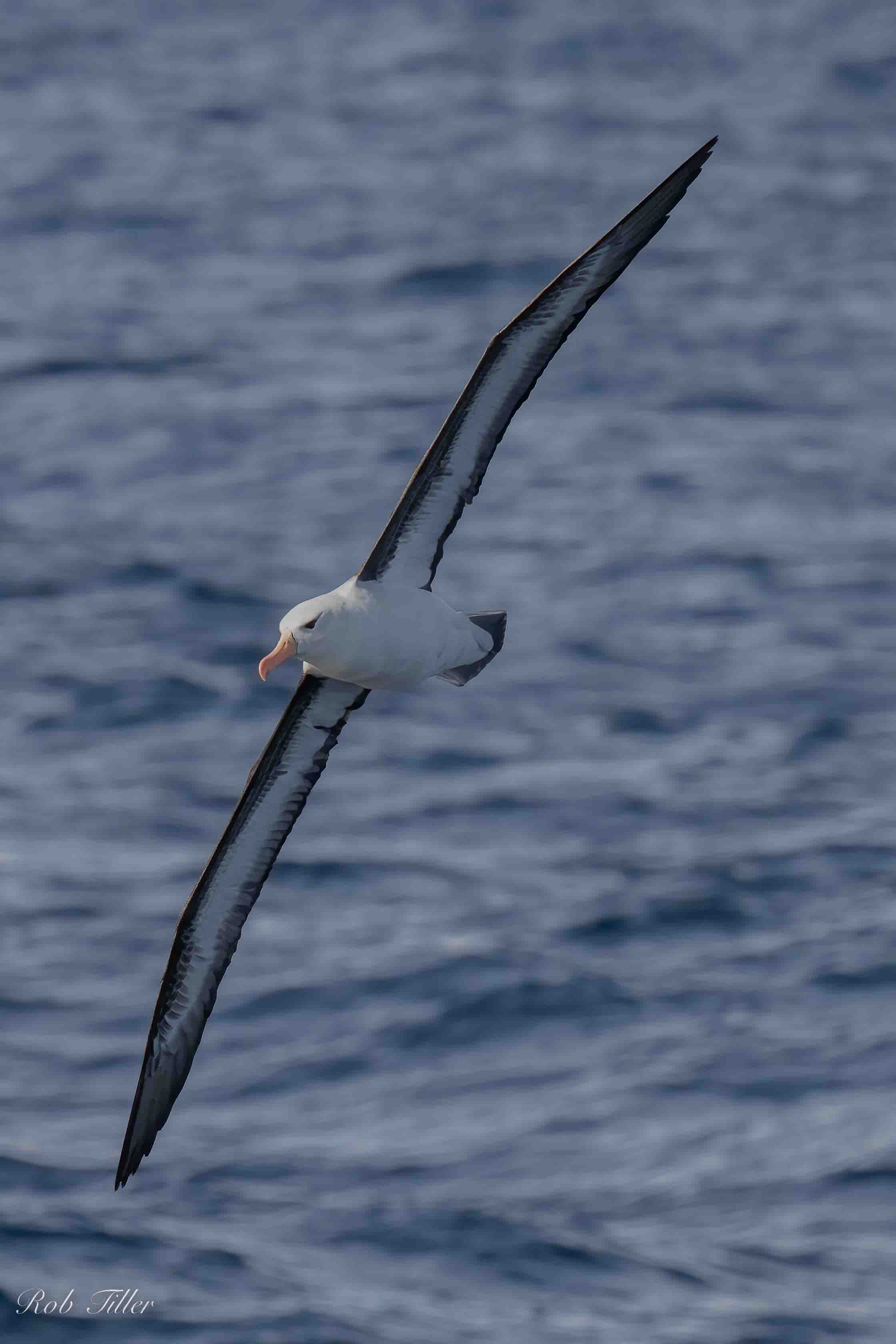
My group of six skilled photographers was led by master photographer Chas Glatzer.  Chas has mentored me in the craft for several years now, and he’d made many trips to this remarkable place.  Falkland Islands Holidays assisted with travel and lodging arrangements.  We saw thousands of penguins, as well as sea lions, elephant seals, whales, orca, dolphins, caracaras, black-browed albatrosses, imperial cormorants, giant petrels, upland geese, and many smaller birds.  There were also a lot of sheep.

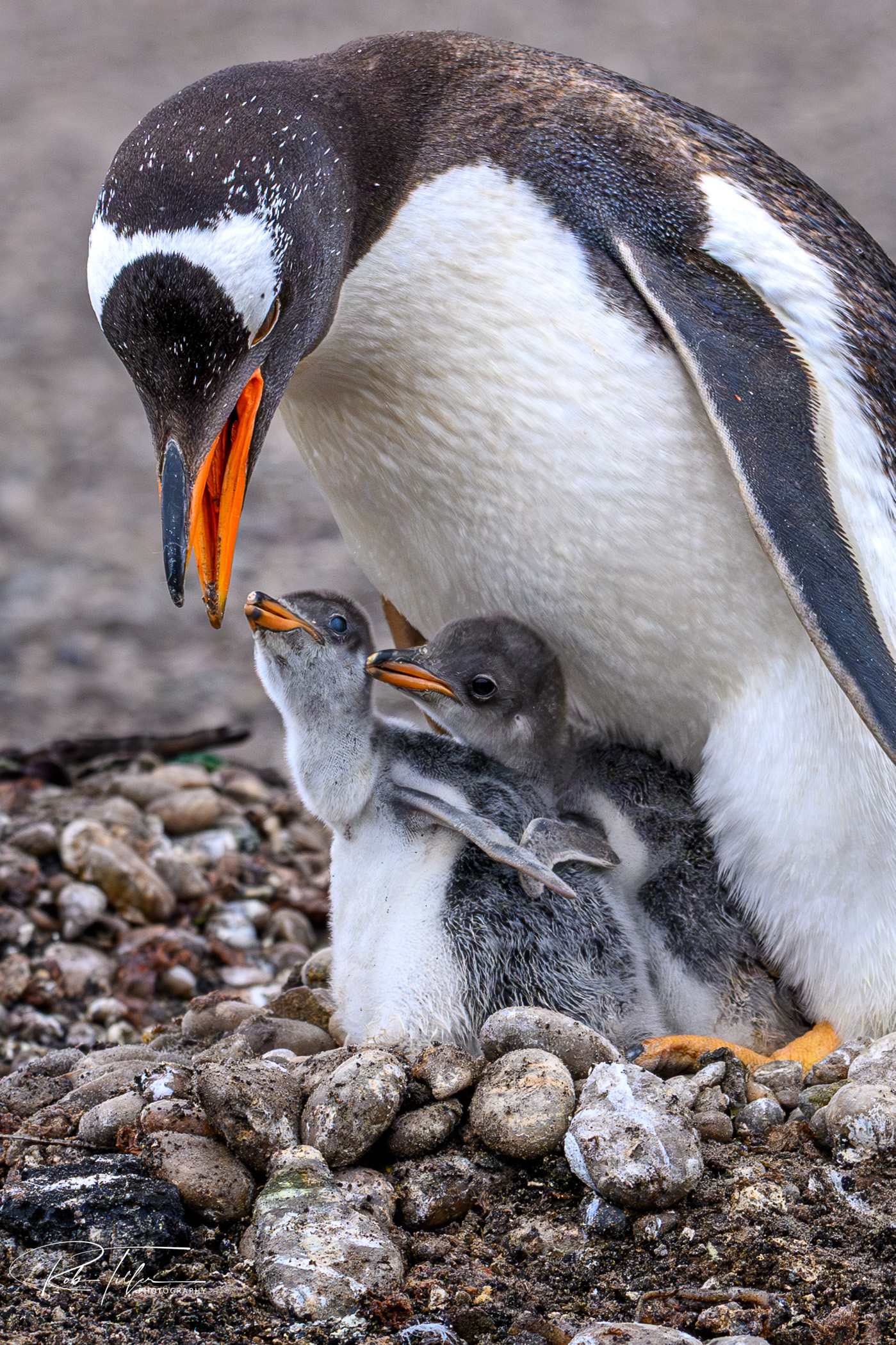
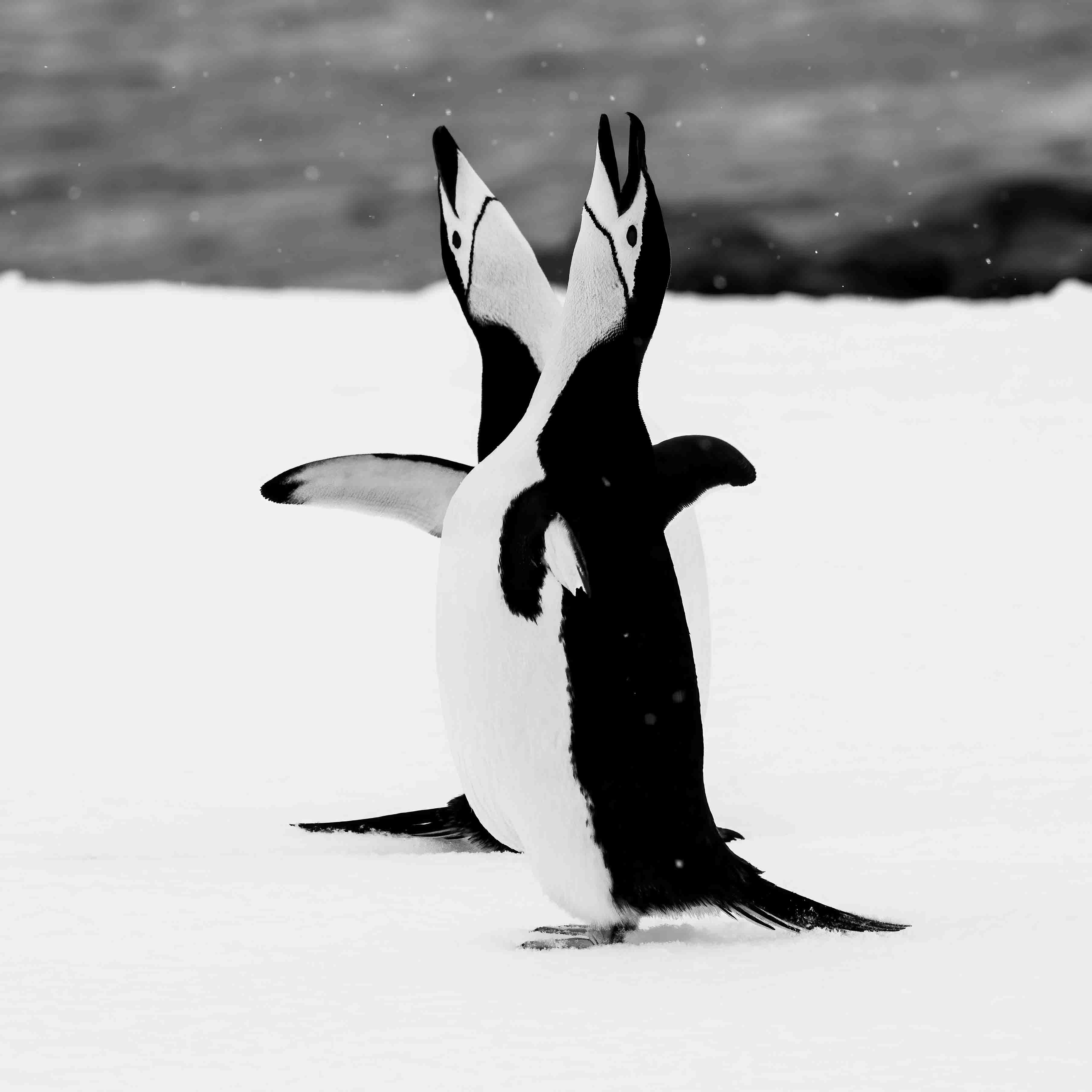
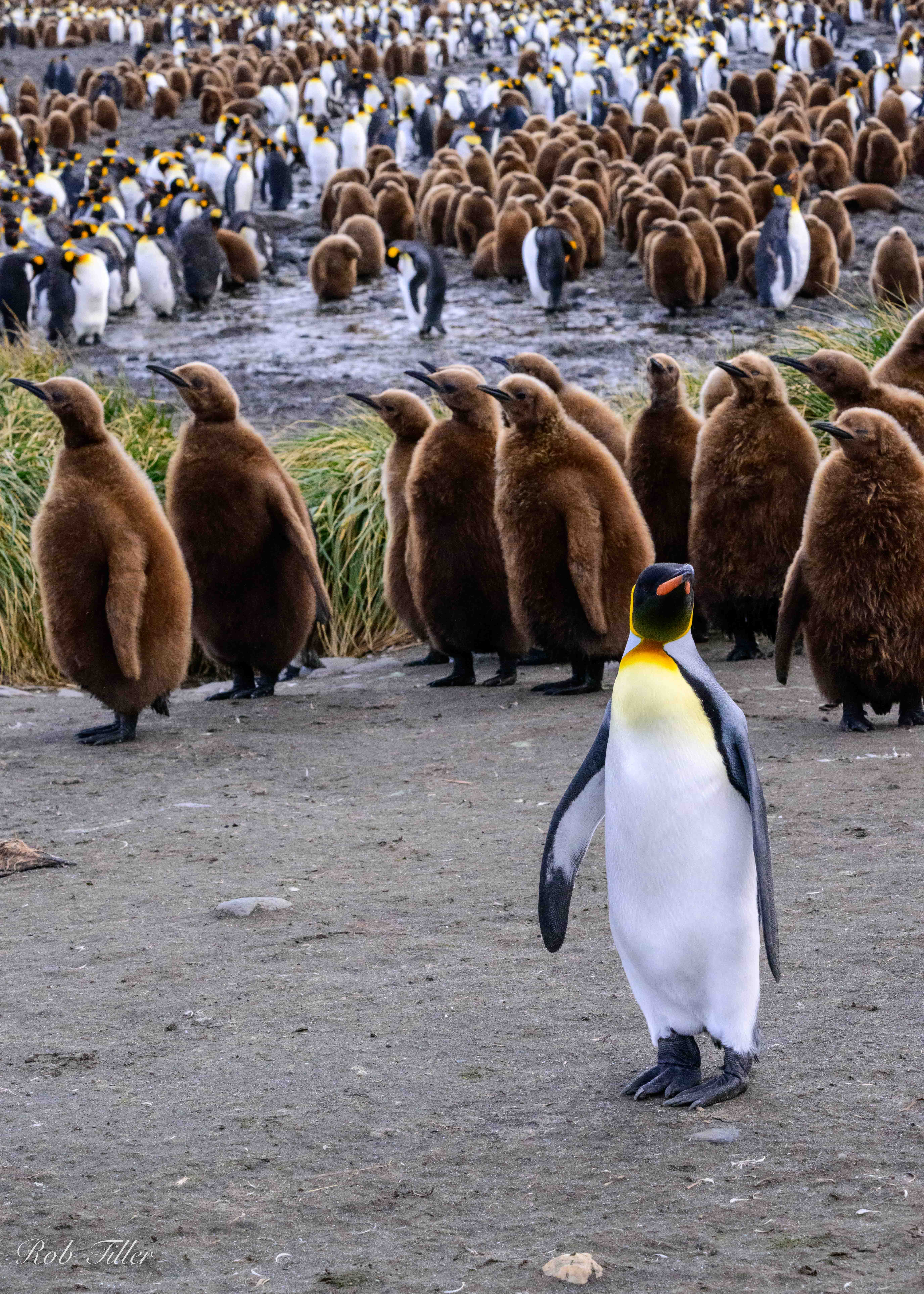
The penguins were my favorites, and so I’m sharing them here first.  They look very cute, of course, especially when they waddle or hop.  But they have other intriguing qualities.  I liked their curiosity and their sociability.  I admired their bravery as they headed out to hunt in the dark cold sea where orcas and other predators lurk.  I respect their loyalty to their mates and colonies, and their devotion to their chicks. 

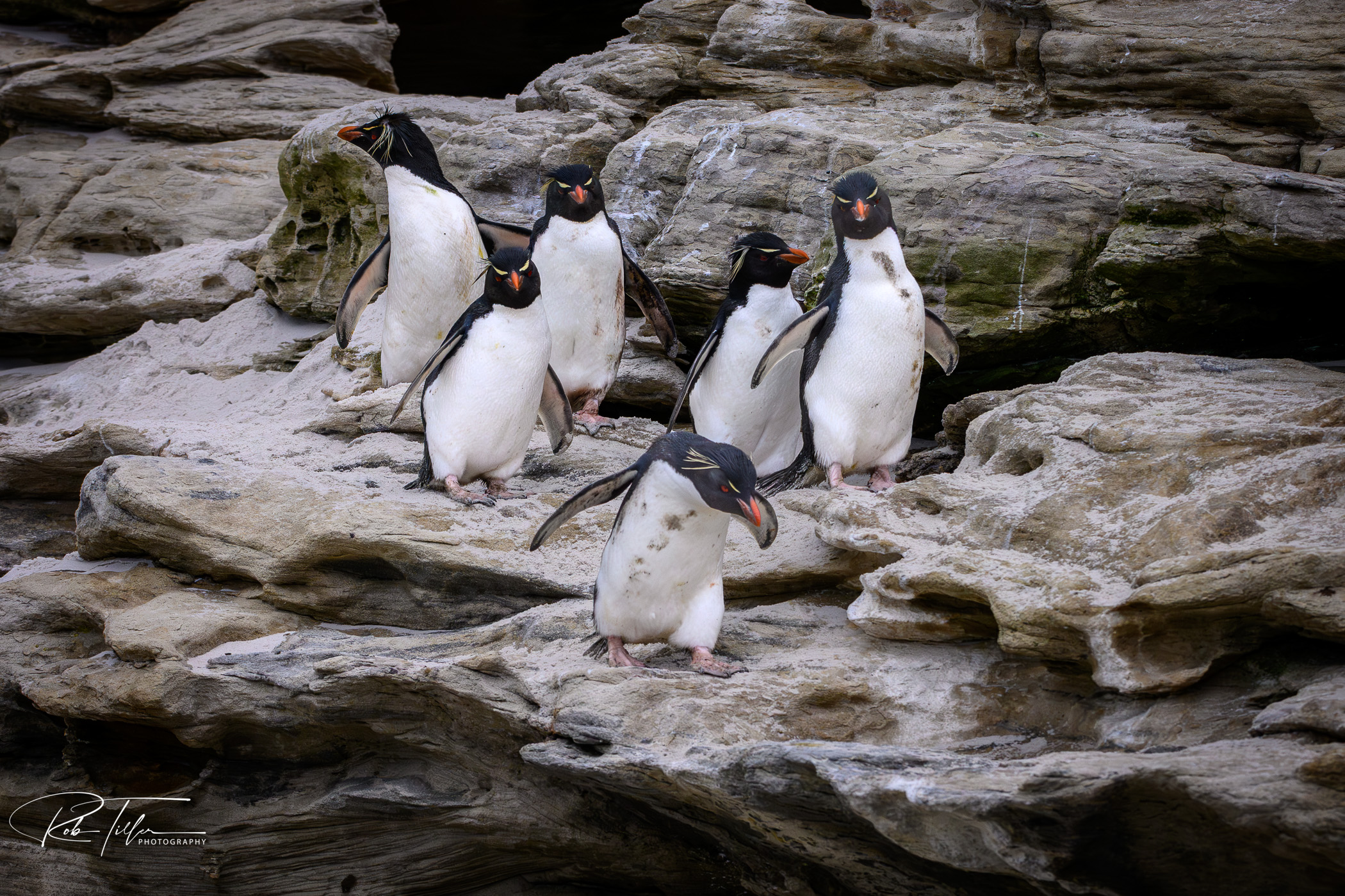
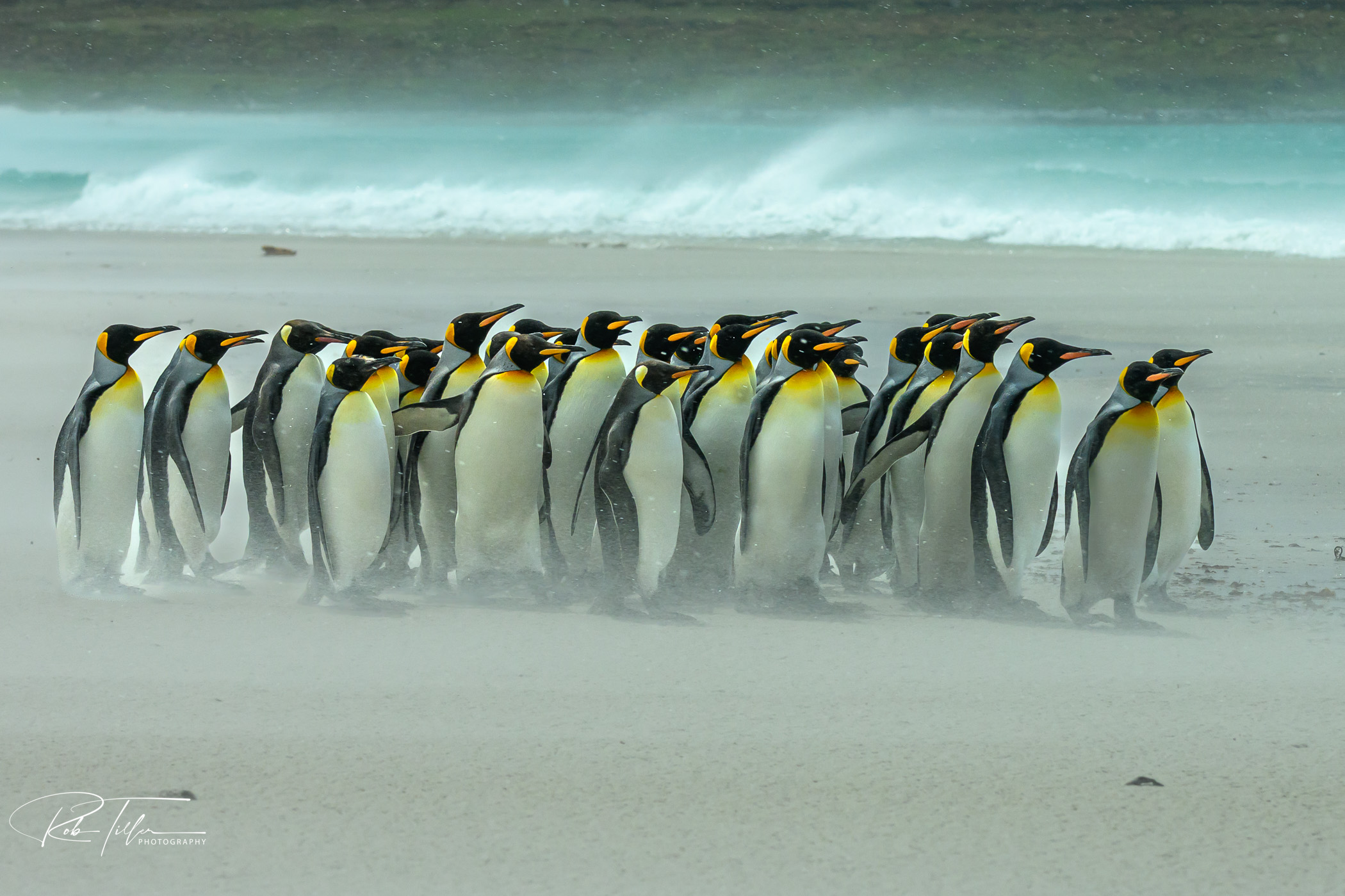
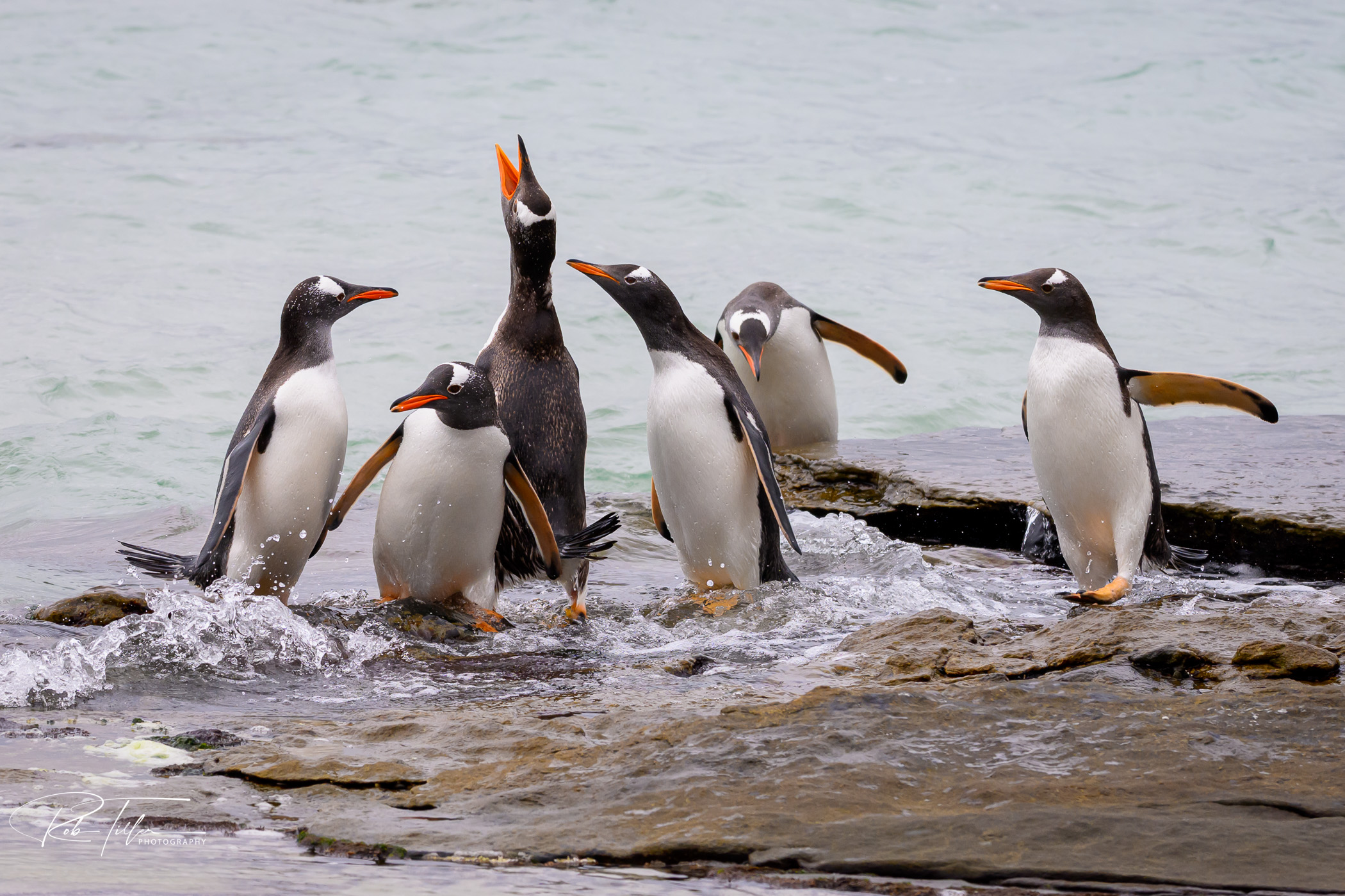
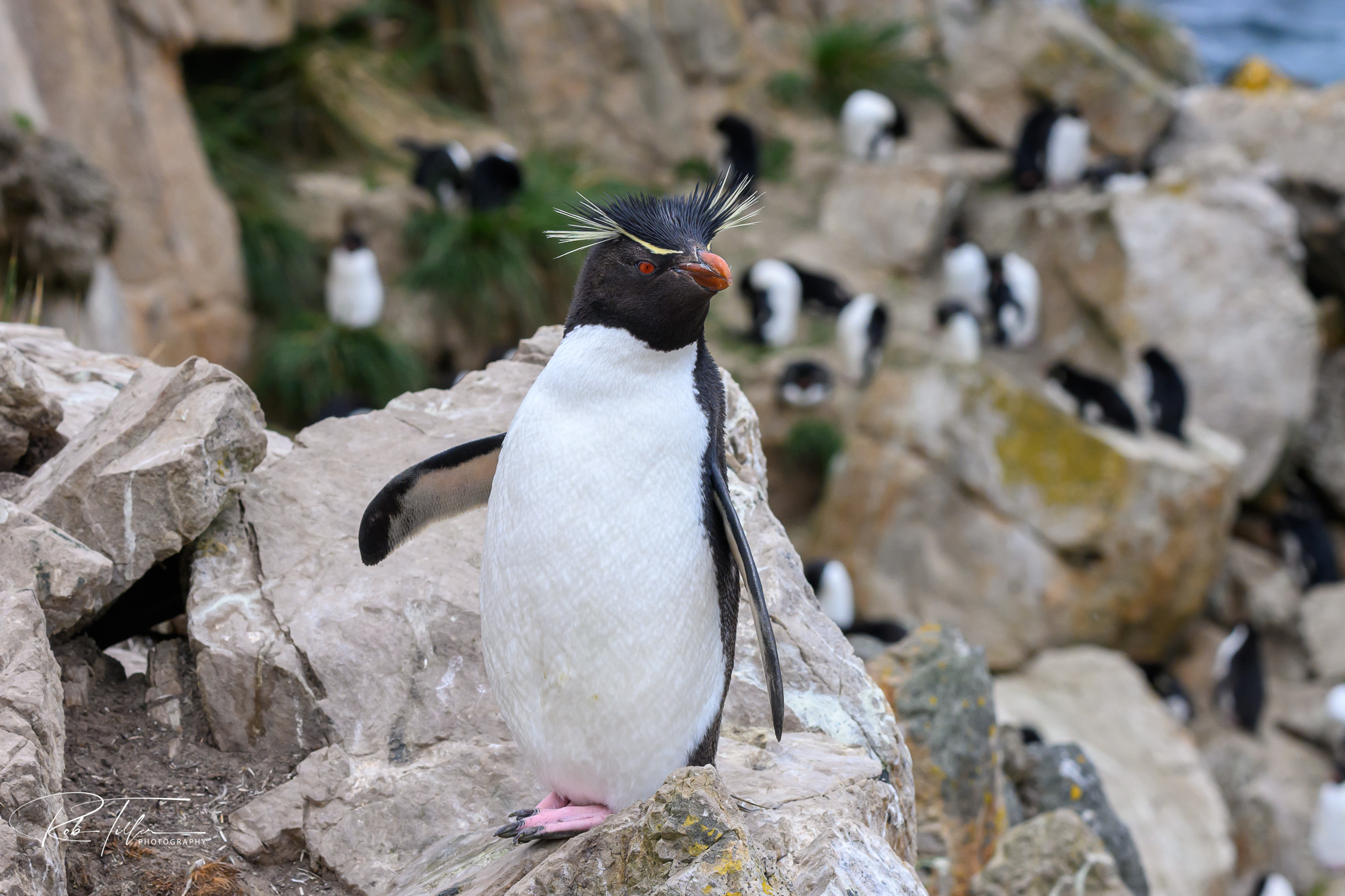
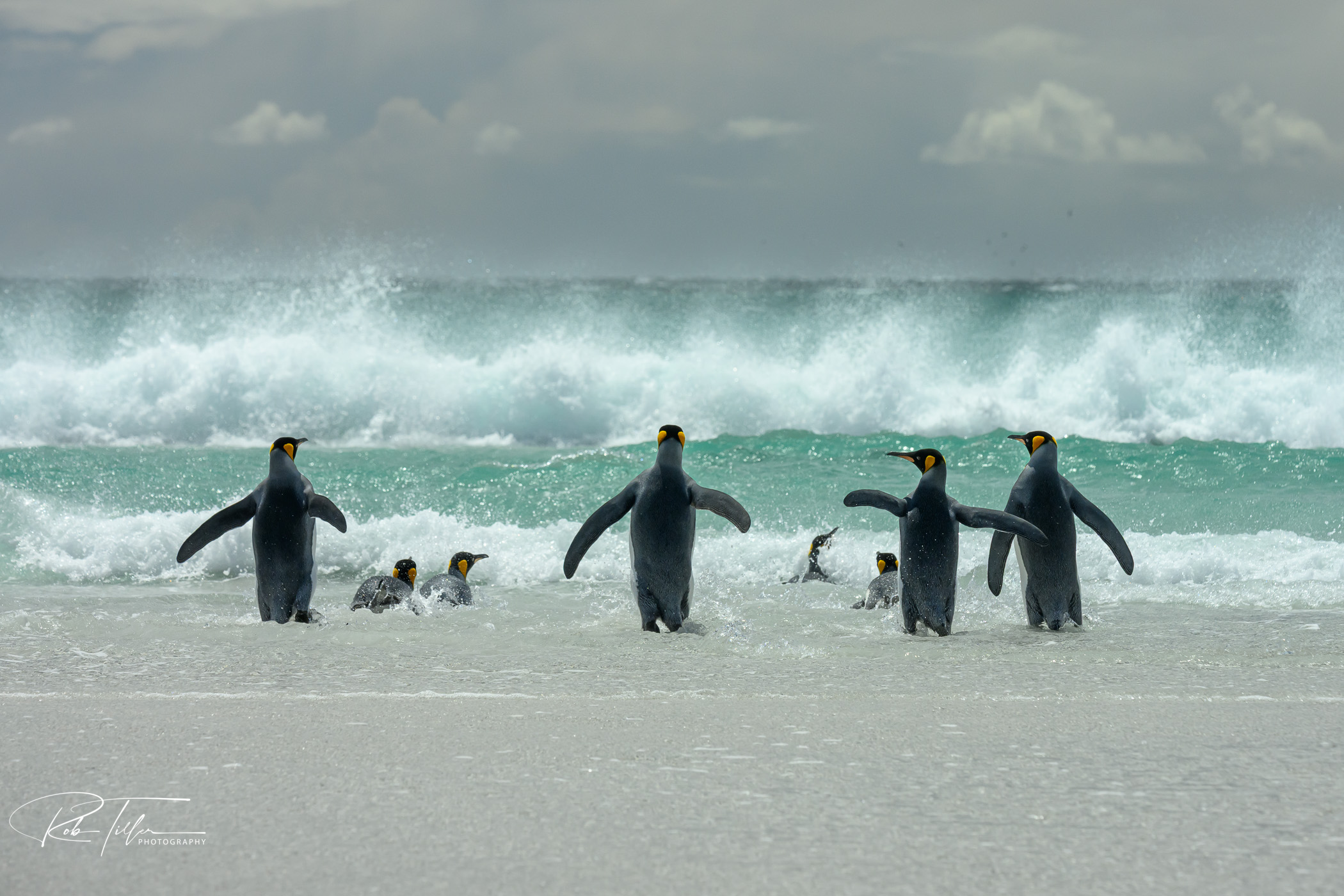
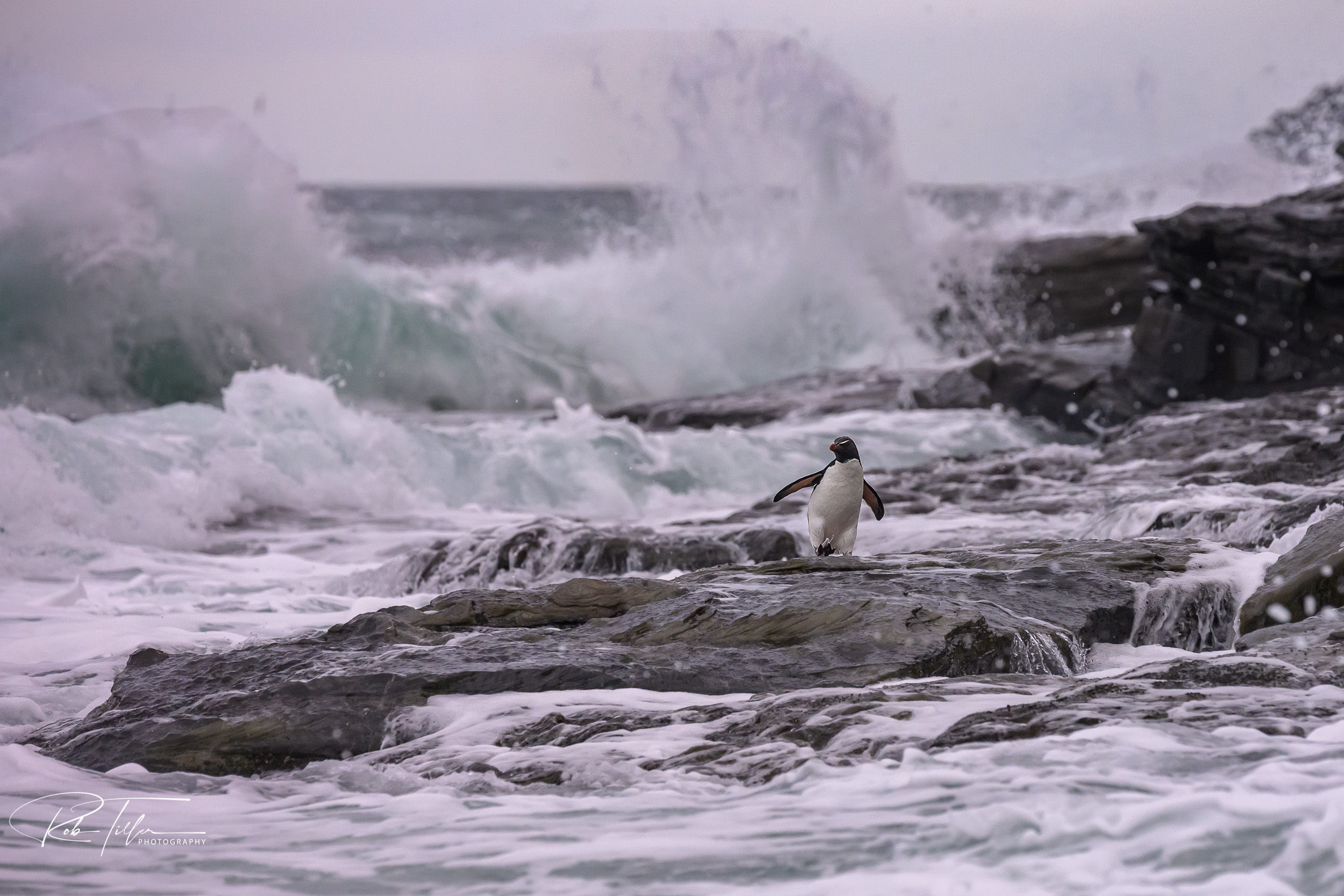
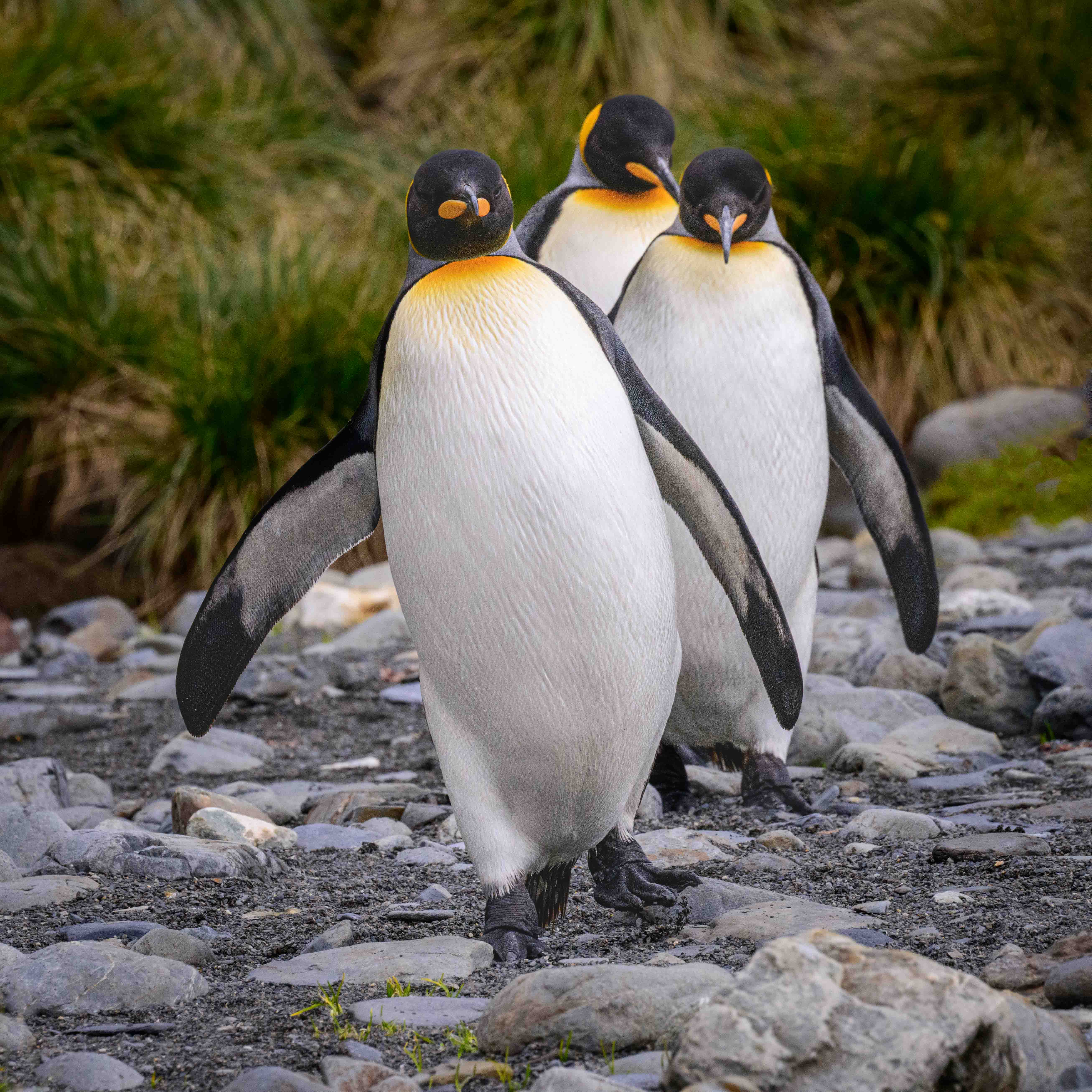
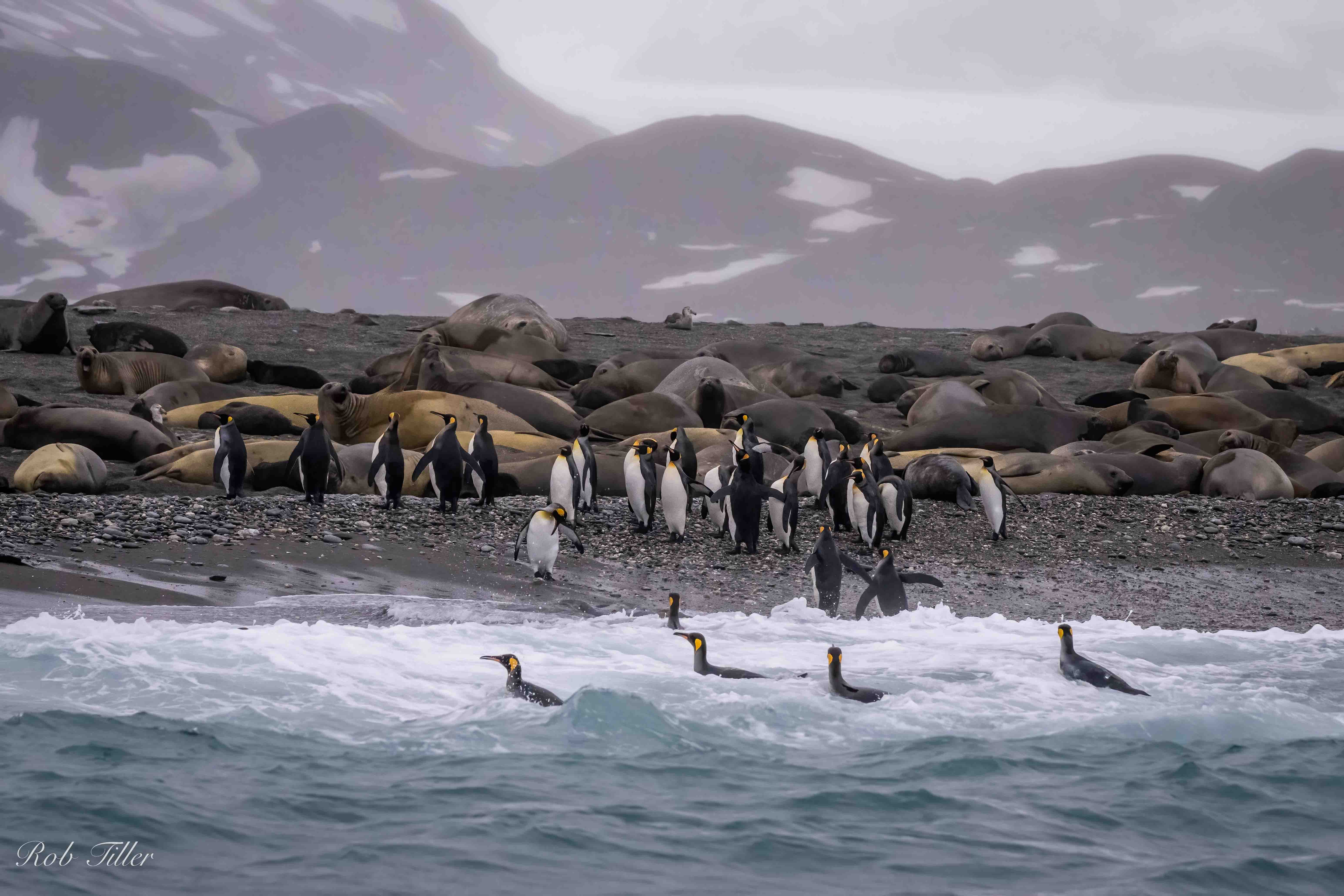
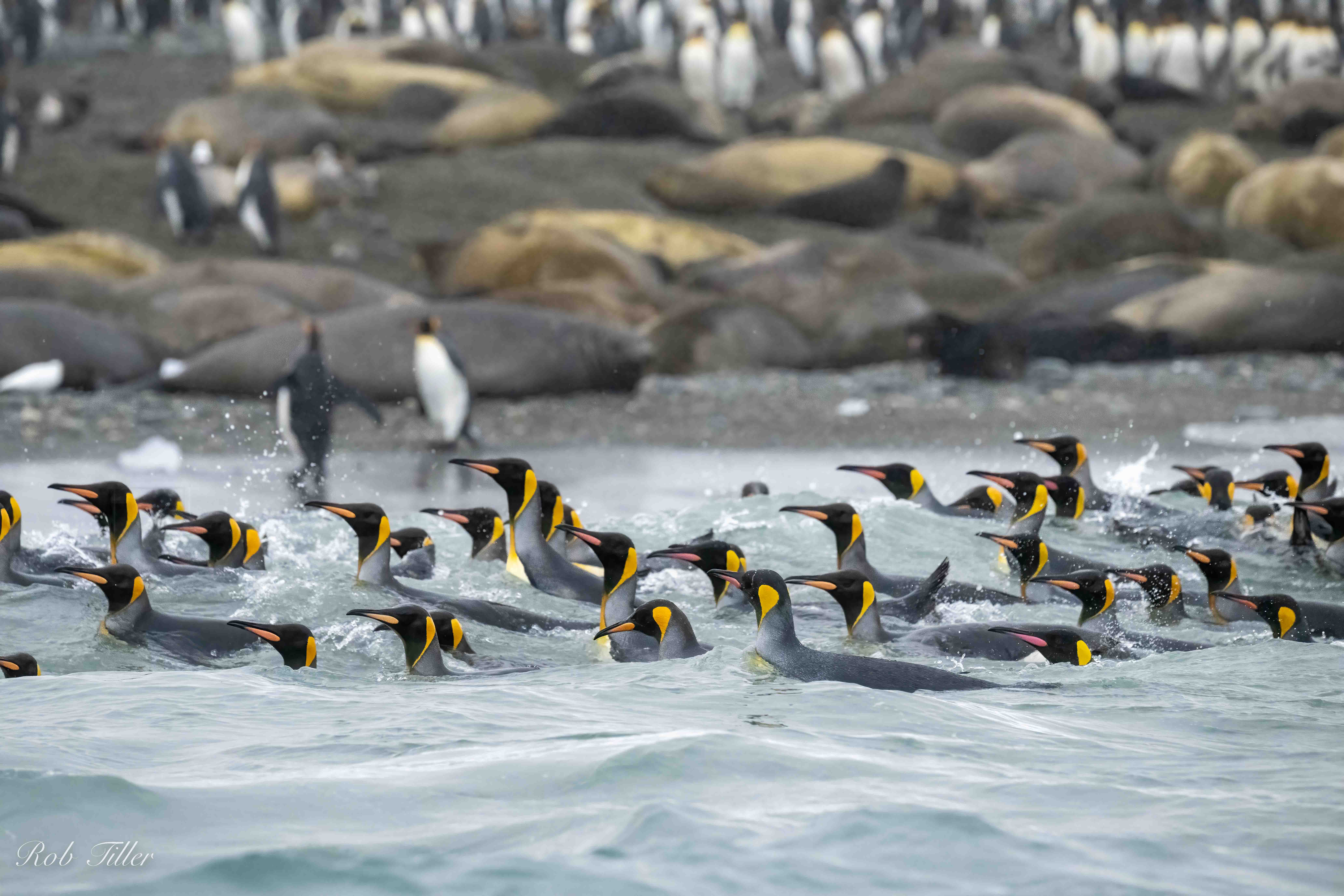
We saw penguin groups get organized and waddle down to the beach, then launch themselves into the surf.  Some of them would fish for hours, and others for many days before returning to the colony.  I also was amazed at their athleticism.  Those little birds can jump out of the driving surf onto rocks and climb up and down cliffs. We saw five penguin species:  gentoos, magellanics, southern rockhoppers, macaronis, and kings.  The macaronis were the rarest – I saw only three individuals. 

Macaroni penguin with southern rockhoppers

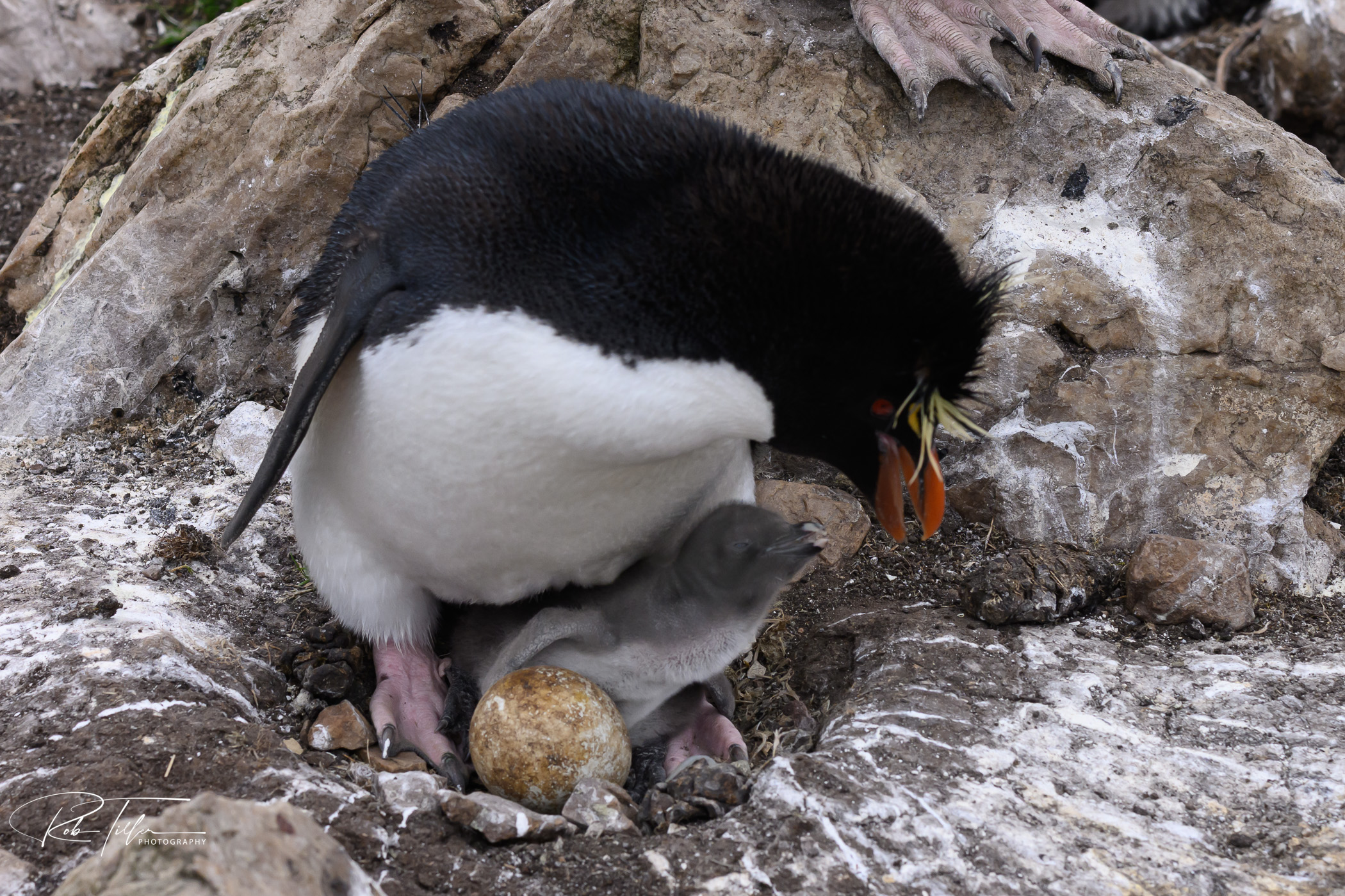
Most of the penguins had no fear of humans, and some were quite curious about us.  We were able to watch in their large colonies as they incubated eggs and nursed chicks, chased off predatory birds,and cleaned their feathers.  When their mate returned from a fishing expedition, they’d screech with joy and gesture excitedly.  There were friends, and there were rivals.  The birds squealed and pecked at others who violated their space.  They were quite noisy.

We traveled between islands in small planes of the national airline, FIGAS, which adjusted their schedules according to the weather.  It was sometimes rainy, and usually very windy – we did some of our photography in winds of 50 MPH.  Some of the trips involved long and very bumpy off-road rides.  

Although the penguin population of the Falklands numbers in the hundreds of thousands, the human population is about 3,700.  On some of the islands we visited, the permanent residents numbered in the single digits.  We found all our guides and hosts very supportive and friendly. 

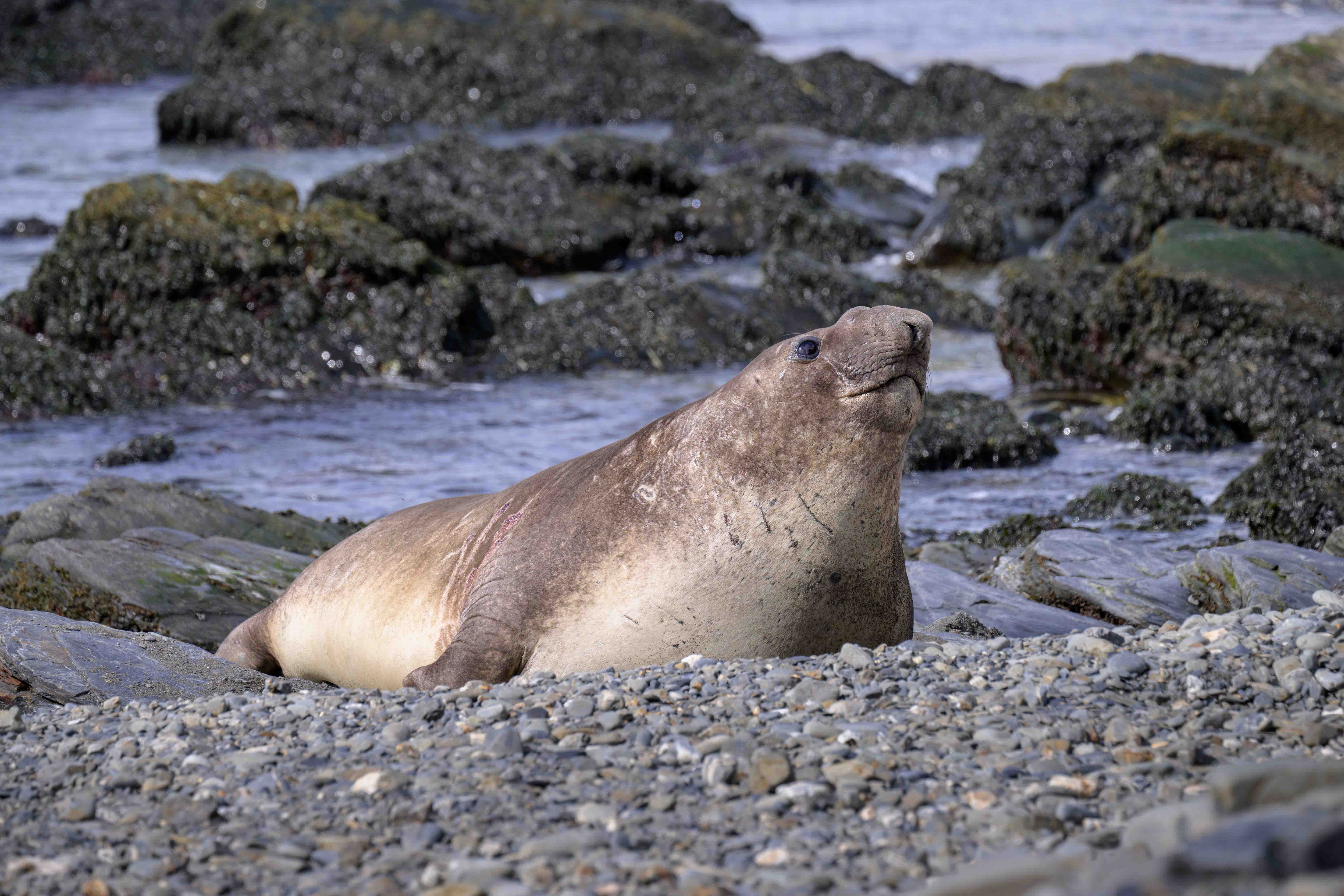
I did have one unfriendly bird encounter. Early one morning on Sea Lion Island on the way to the beach to look for orcas I managed to get lost in tall tussock grass. As I worked my way out, I got a blow to the back of the head. It felt like a coconut hit me, but there were no trees. A minute later, it happened again, and I got a glimpse of the attacker: a striated caracara. I figured I might have gotten near its nest, and hastened along, but it hit me again. And again — six times in total. I eventually made it to the beach, where the caracara left off the attack, but there I nearly tripped on a young elephant seal.

Striated caracara

When not in the field and not eating, sleeping, or editing photos, I re-read The Way We Live Now, by Anthony Trollope.  It was a great pleasure!  Published in 1875, the story takes place in London and various English country houses and revolves around a financial scam about shares in a new railroad.  
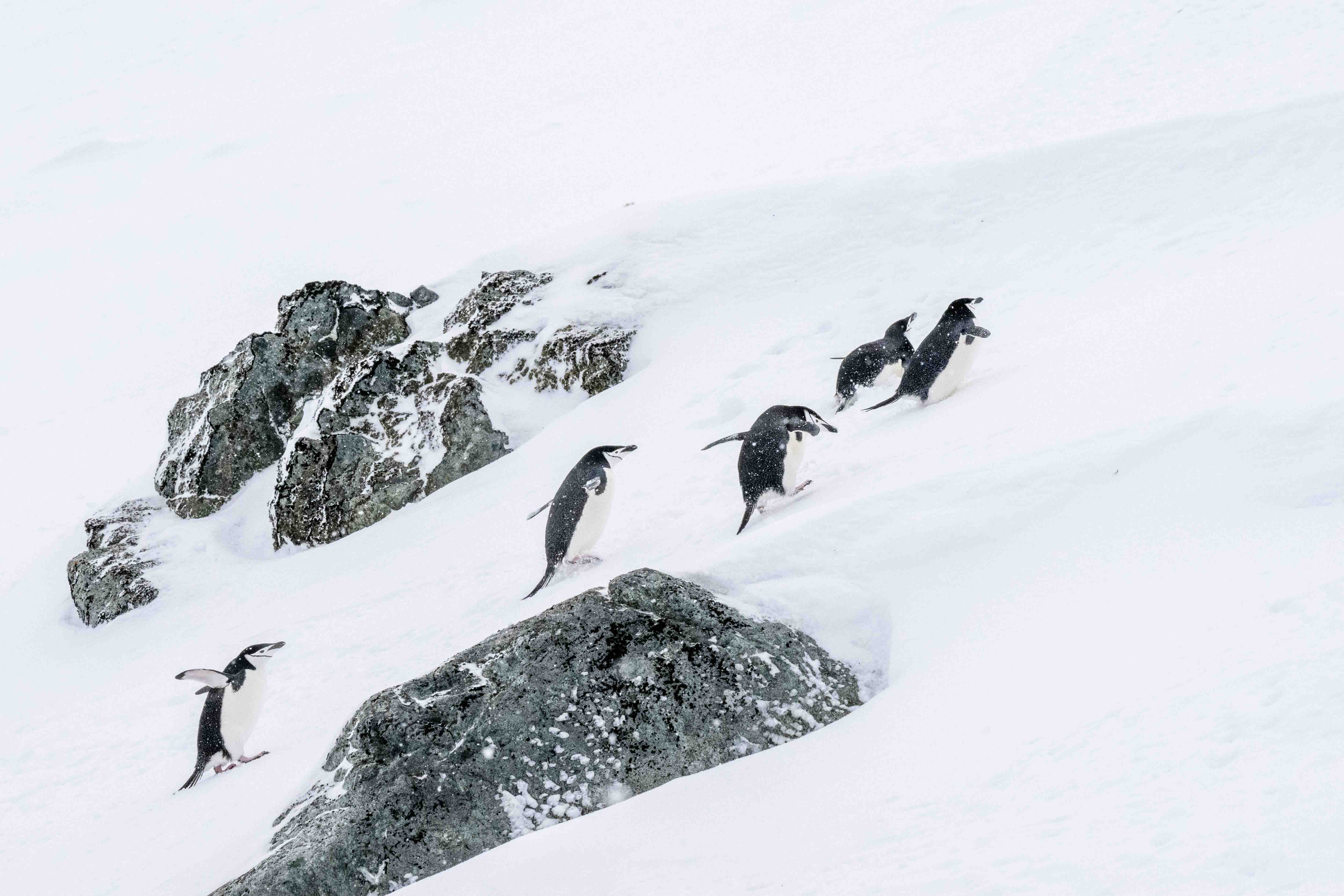
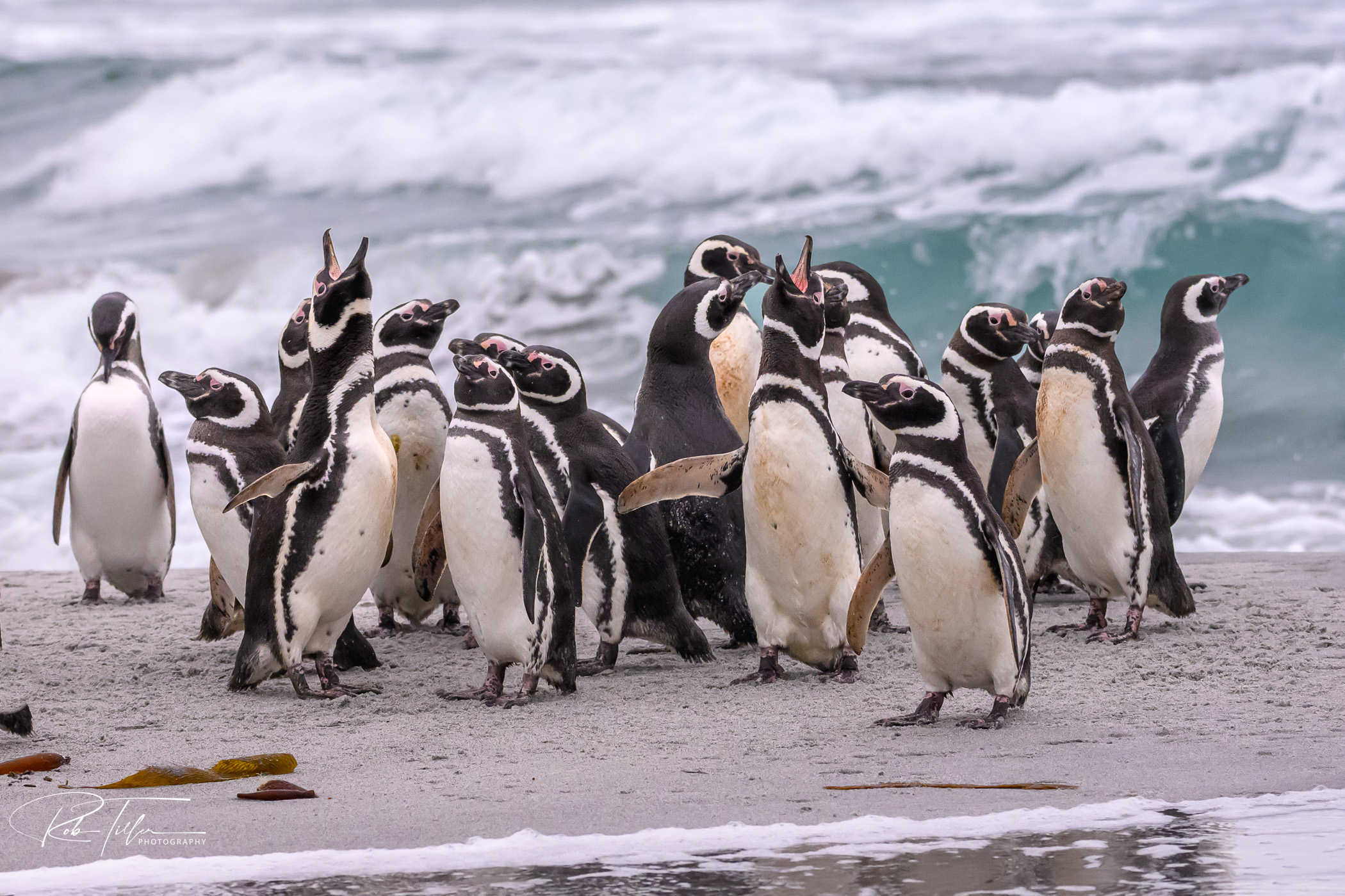
Magellanic penguins

At the center is a fraudster who manages to insinuate himself into upper-crust society and take gobs of their money, and even gets elected to Parliament.  Trollope refrains from moralizing, but he reflects the importance of values in social and political life.  Some of the story is comic, but the drama of flagrant lying and corruption resonates powerfully with our time.

As we come to the end of year one of the last (I hope!) Trump presidential term, I’ve been reflecting on the educational value of the MAGA experience.  It strikes me that Trump might have unintentionally taught us some valuable lessons.

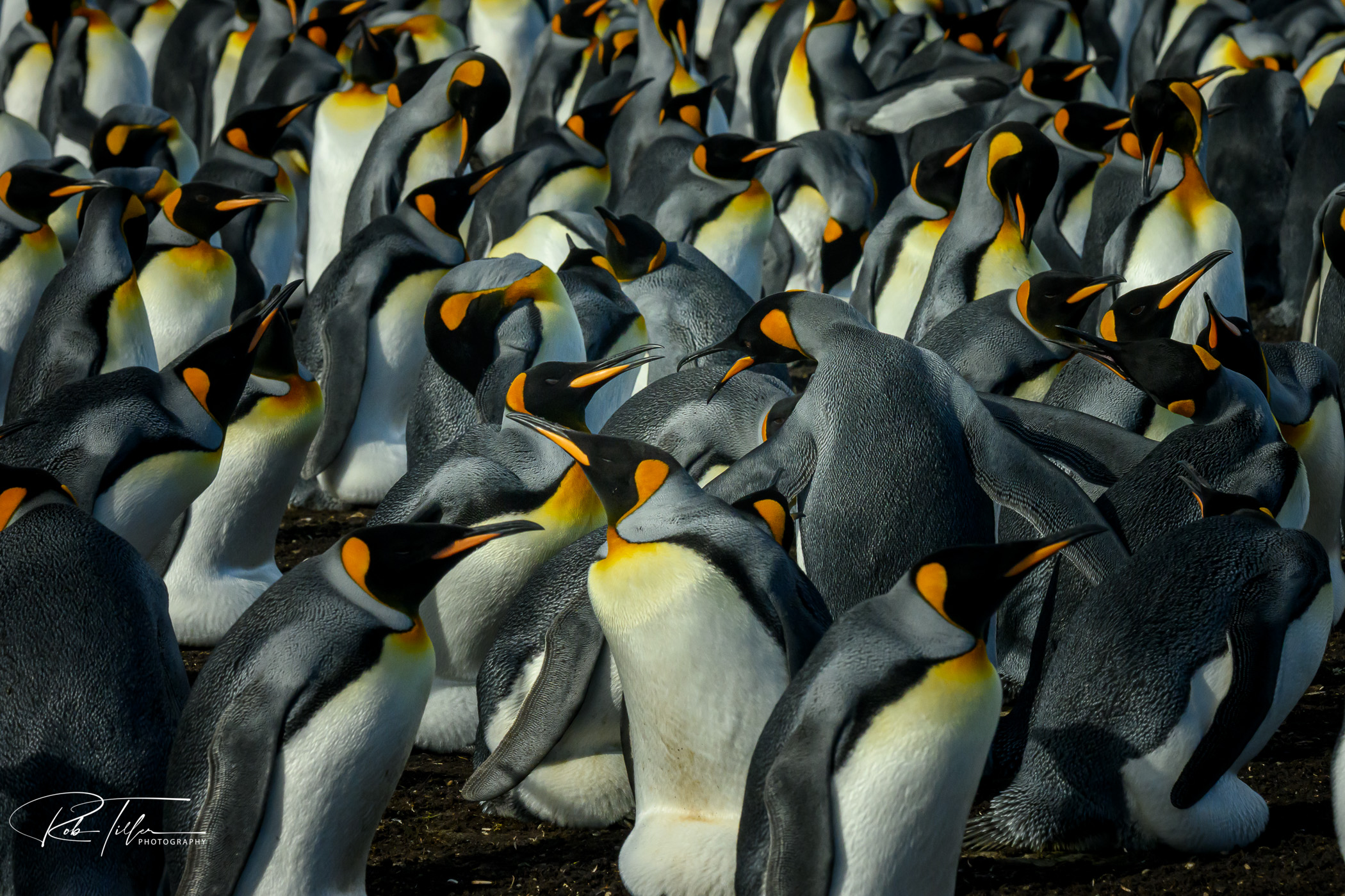
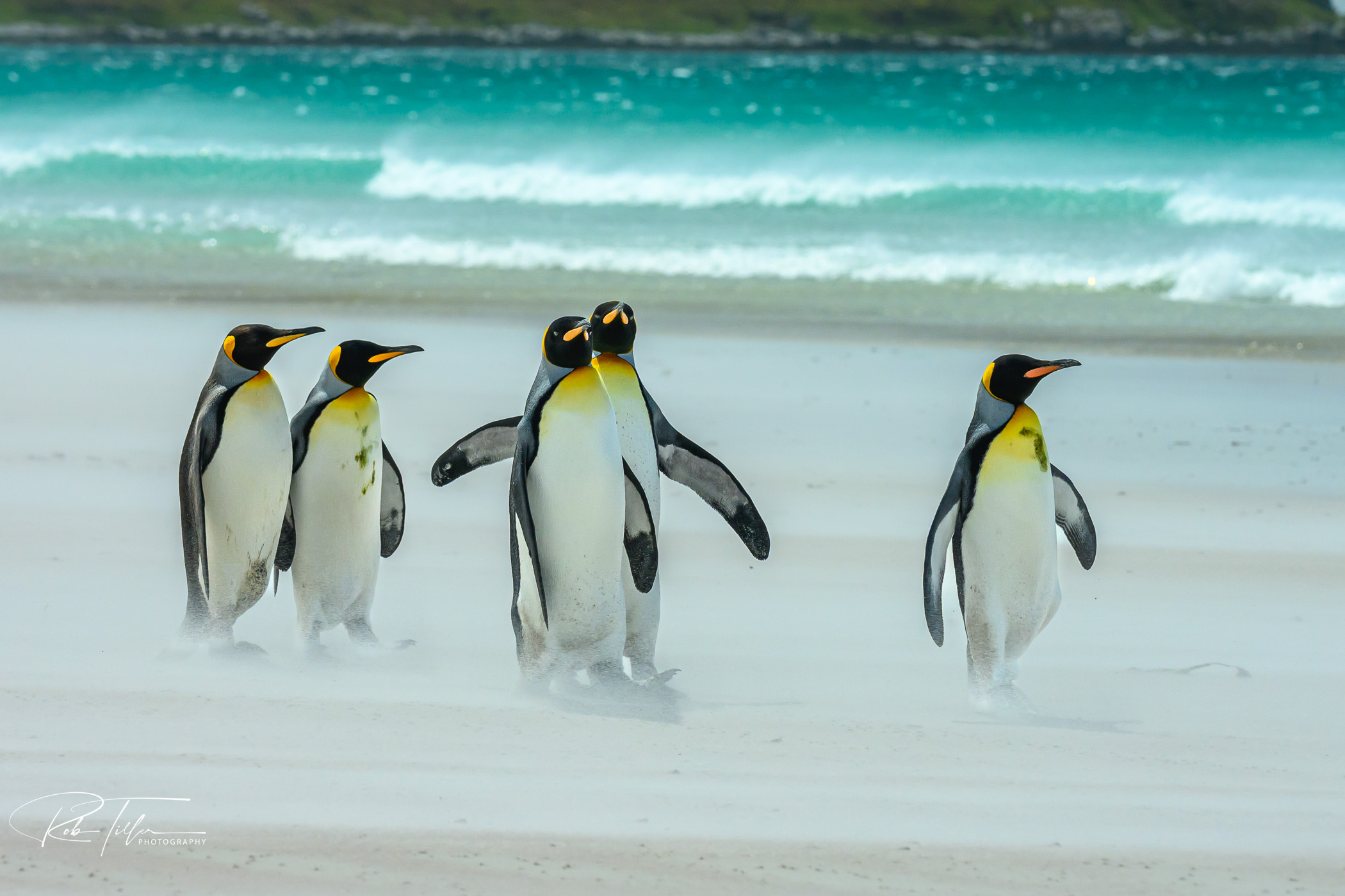
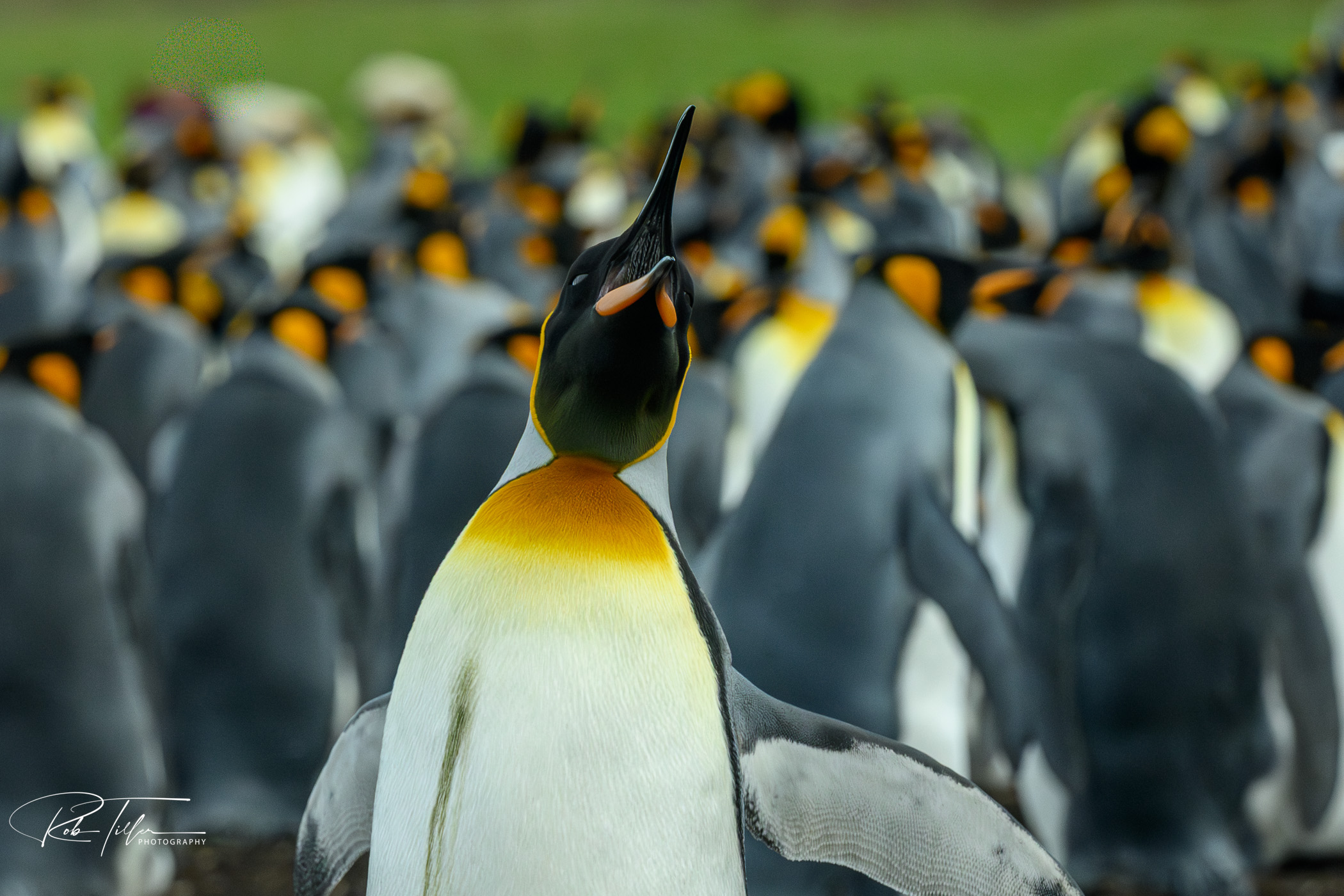
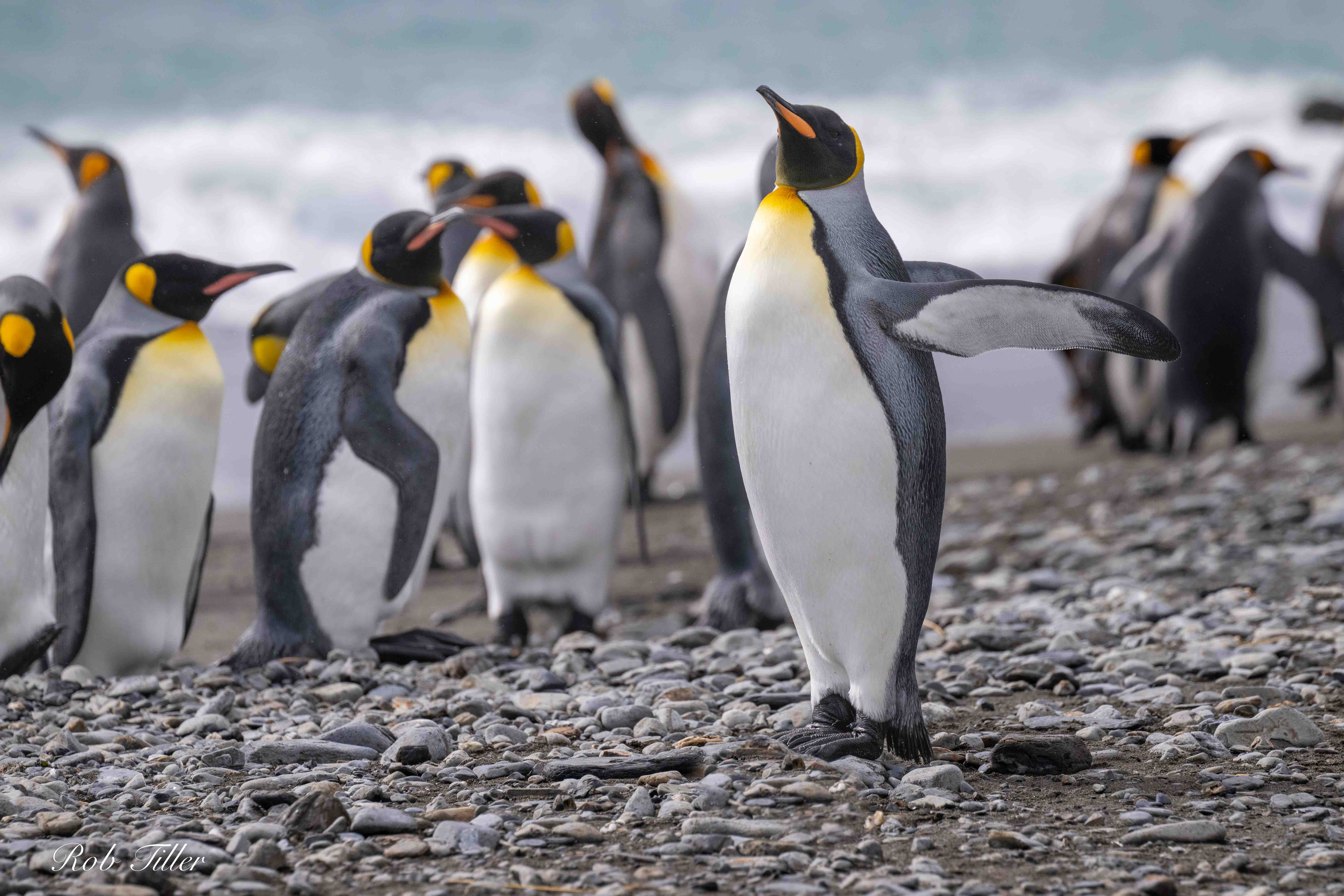
King penguins

Trump’s value system is hardly unique – it’s deeply embedded in the American psyche – but he is a vivid and extreme example of it.  The core belief is simple:  greed is good.  That is, the point of life is acquisition and domination.  Lies, cruelty, and corruption are acceptable, and even laudable, in the service of gaining ever more money, luxury goods, and fawning followers.  

Because Trump’s dishonesty, greediness, and corruption are so extreme, he makes it easier to see how empty and ultimately unsatisfying this system is.  No matter how many billions he gets, he needs more.  No matter how much flattery he gets, he needs more.  And it’s a moral certainty that further huge additions to his extreme wealth will never make him happy and content.  He’ll want more.  

Many of us are prone to the illusion that more wealth and power would make us happier.  But most of us aren’t completely selfish and amoral, and our dreams of wealth are tempered with other values.  We value family and community.  We value justice and fairness.  We value honesty and integrity.  We try to treat others with respect and compassion.  

I probably don’t need to prove that these values are good ones, since we already generally teach them to our children, and all societies have always had them to some degree.  But Trump and MAGA are proof positive that lacking them is a huge problem.  Running a government suffused with corruption and cruelty is a recipe for disaster.

Almost daily, we get reports of more governmental incompetence.  As the MAGA leaders have fired experts and experienced bureaucrats, the normal business of government is becoming more and more confused and error prone.  Whether it’s sending out Social Security checks, collecting taxes, or investigating serious crime, we count on the federal government to take its job seriously and get things right.  

Our federal justice system is a shambles, and our health department is assuring more death from preventable diseases.  The economy works well only for the well-off; for everyone else, affordability is a problem.  Trump and his minions are not only morally bankrupt – they’re failures at just taking care of business.  

Today we learned that Trump ordered US forces to invade Venezuela and abduct its President.  This drama has just started unfolding, but one thing we know already:  it’s a clear violation of US and international law.  Like other lawless invasions by the US and other countries around the world, it will probably result in a lot of misery and death.  

The justifications for this, as stated by Trump, keep changing.  First it was a continuation of the absurd and never ending war on drugs, no longer in metaphorical terms.  Then it was about seizing the oil resources of the country.  It’s impossible to take seriously Trump’s claim that these resources are rightfully ours.  This is about as raw as criminality by a sovereign state can get.  

One other thing that is a virtual certainty:  this war may be popular with oil industry executives, but if it goes forward almost everyone else is going to oppose it.  Even the MAGA base will not be keen on sending American kids to die to enrich the oil industry.  It may be that this will further erode Trump’s waning popularity, and hasten the end of the MAGA regime.  We can hope. 

Starting to miss Antarctica and its animals

Looking back through the photographs I made on my Antarctic trip, I’m still reflecting on how challenging the voyage was.  But I’m starting to think about how much I want to go back.  It was uniquely beautiful, and thought provoking.

I came away with an enriched conception of non-human animals, and how humans can relate to them.  It reinforced my view that there’s no inherent right for us to use them without considering them as communities and individuals.  Even though it’s generally accepted, there’s something deeply misguided in our conception that non-human animals are inferior to humans such that they may be exploited as we see fit.

In rough Antarctic waters, the cooks and wait staff of the Ushuaia did a surprisingly good job of feeding us three meals a day, including providing something for the vegetarians on board.  Both lunch and dinner included dessert, which I and my shipmates ate, sometimes because it tasted so good, and sometimes just to pass the time.  

Anyhow, this all added up to a lot of desserts.  The result was that now, weeks after the end of the trip, I still have no interest in anything sweet.  My life-long sweet tooth has changed, which is probably a good thing. 

Eating involves a lot of choices.  I continue to think that a plant-based diet, involving little or no killing or exploiting animals, is best.  It seems self-evident to me that needlessly and cruelly killing other creatures is wrong – fatal to them, and also demeaning to us.  

The health benefits of a plant-based diet are also well documented. These include looking and feeling better, and lower risk of the common major diseases associated with eating animals, including heart disease, colon cancer, and Type 2 diabetes.  If decency and health weren’t reasons enough, it’s becoming more widely understood that animal agriculture is a major contributor to global warming and all the destruction that comes with climate change.

These facts seem vitally pertinent to me, but most people manage to ignore them.  It’s strange, but then again, it’s extremely common for people to carry around beliefs that have no relation to reality, and to tolerate risks that seem to me very worrisome. Fortunately, most of the time, an individual’s ideas don’t do much harm to the individual or to others.

However, I think our ideas about eating animals are more consequential, which is why I think they’re worth discussing.  At the same time, I don’t want to pointlessly add to the general angst and feelings of hopelessness. Fortunately, the situation with animals is far from hopeless. In fact, moving away from eating animals and eating a healthier plant-based diet is not that hard. Lots of people are doing it.

Apropos of animals and food, this week I heard a new podcast with a focus on the lives of farm animals and industrialized farming. Leah Garces, president of Mercy for Animals, speaks with Ezra Klein about how the low cost of meat is not really such a good thing.  The system is extremely profitable for a few producers, subsidized by taxpayers and protected by law, miserable for most of the farmers involved, and of course, horrific for the animals.  

This food system seems fully entrenched, long supported by political and economic power.  But, as with our changing climate, the chickens are coming home to roost:  industrial animal agriculture is causing more deadly pollution, increased antibiotic resistance, animal-based pandemics, exhaustion of arable land, loss of rainforests, and of course, the psychological trauma of complicity in massive animal suffering.  Again, the word is getting around.  

On a different note, I’m continuing my project of reading “classic” novels that I encountered as a youth, and just finished one that intersects with issues of animals and food:   The Jungle, by Upton Sinclair.  

This is a book some of us were forced to read in high school as one of the “great books.”  I finished it last week, and didn’t think it was exactly great. The writing was sometimes clunky, and the shape ungainly.  But it was undeniably powerful and brave in its account of industrialized animal slaughter in early 20th century, and the brutal exploitation of the immigrants who did most of the dirty work. 

Is The Jungle still relevant?   Well, the meat industry has gotten a number of states to pass “ag-gag” laws, which make it a crime to document what goes on in the slaughter houses that supply our grocery stores and restaurants.  It makes you wonder what they don’t want anyone to see.   I’d bet that they think, rightly, that a close up view of modern industrial slaughter operations would be very bad for business.

Of course, I very much doubt our modern slaughter houses are anywhere close to as filthy and disease-ridden as what Sinclair described, but, as Leah Garces explains in the recent podcast, they are still full of misery.  Garces’s organization is working to help animal farmers transition to growing other products.  She thinks (and I agree) that if we don’t like the system, criticizing it is not enough:  it’s important to find and support better alternatives.   

Polar creatures and some of their problems

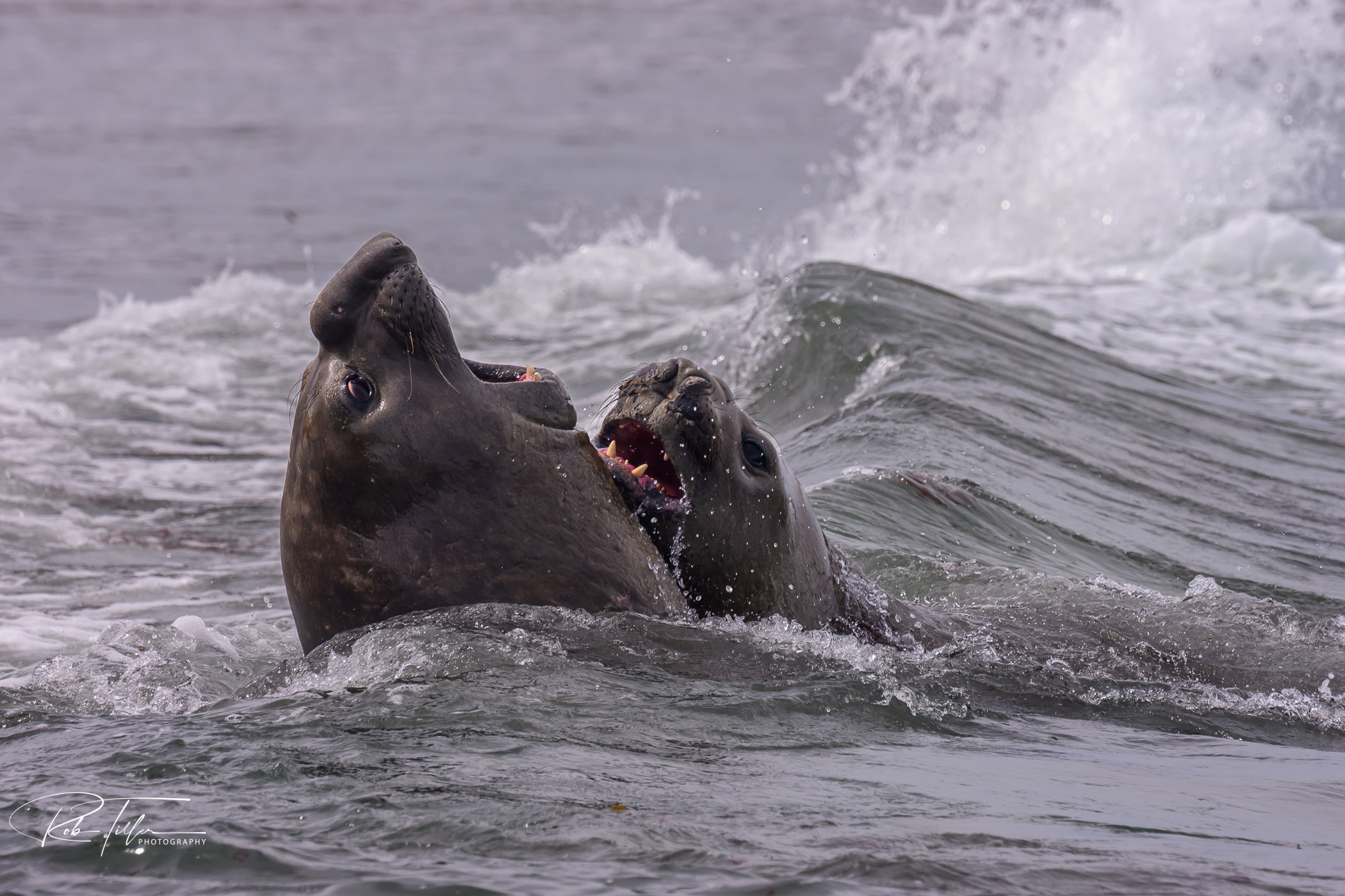
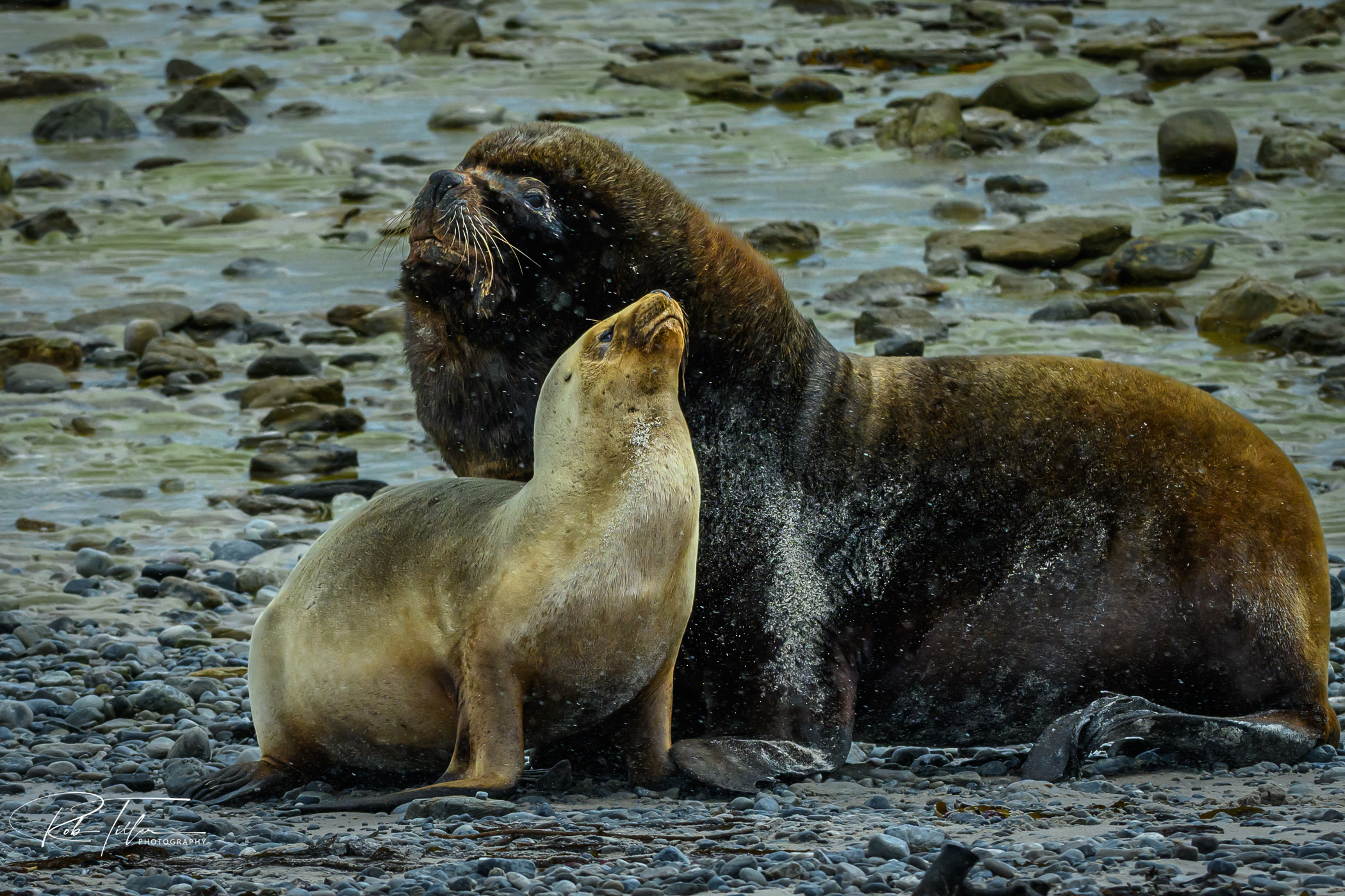
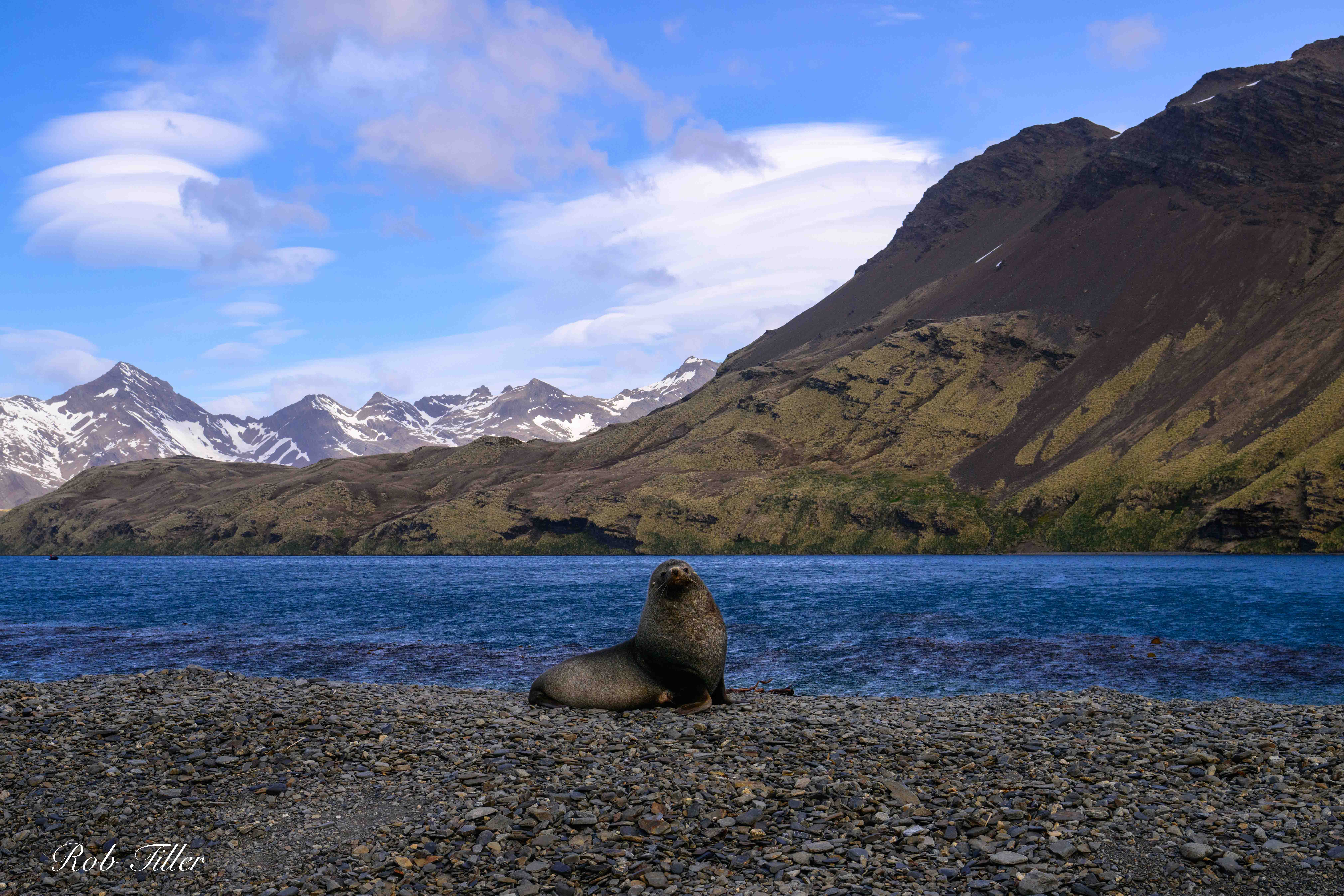
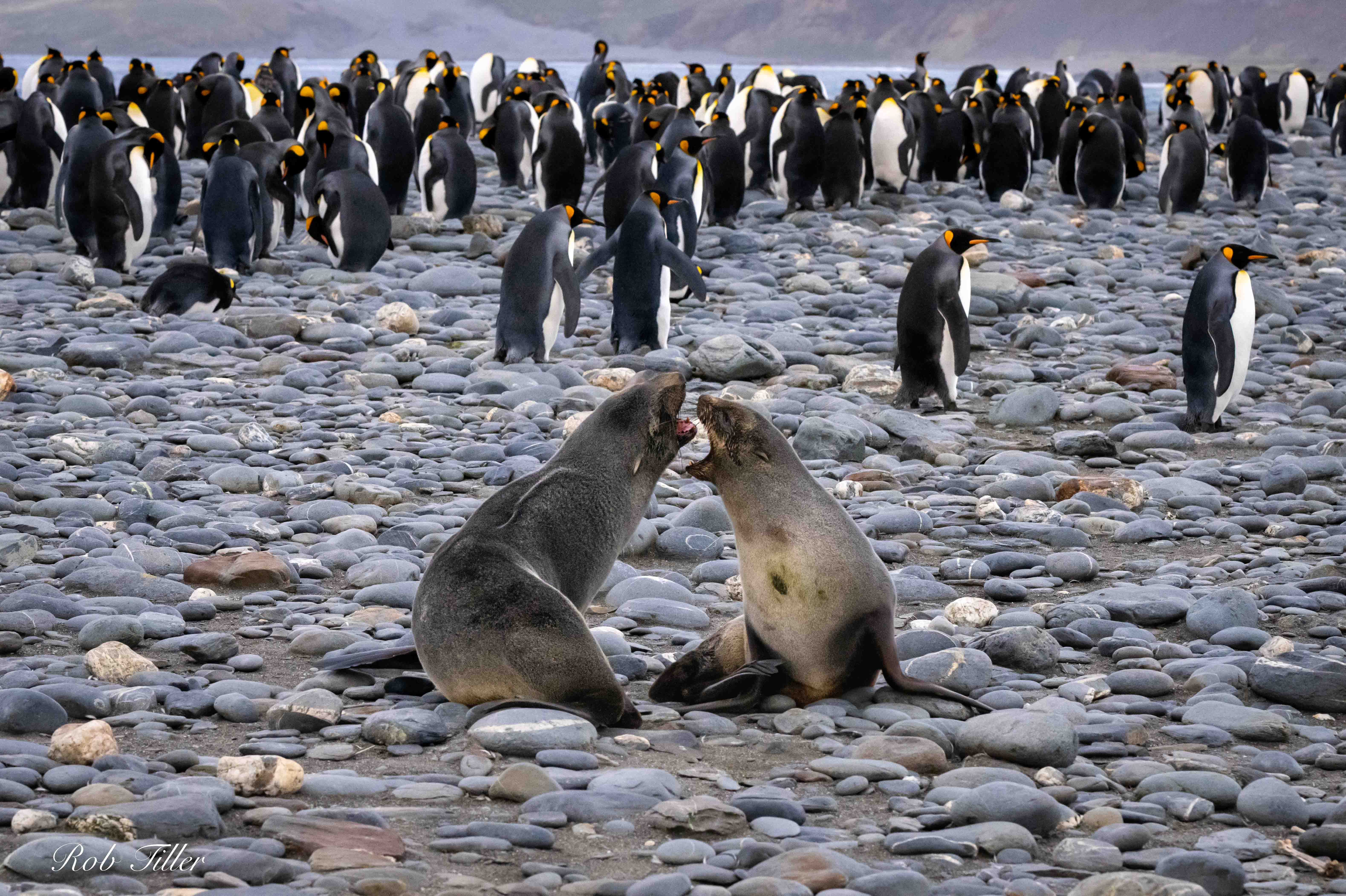
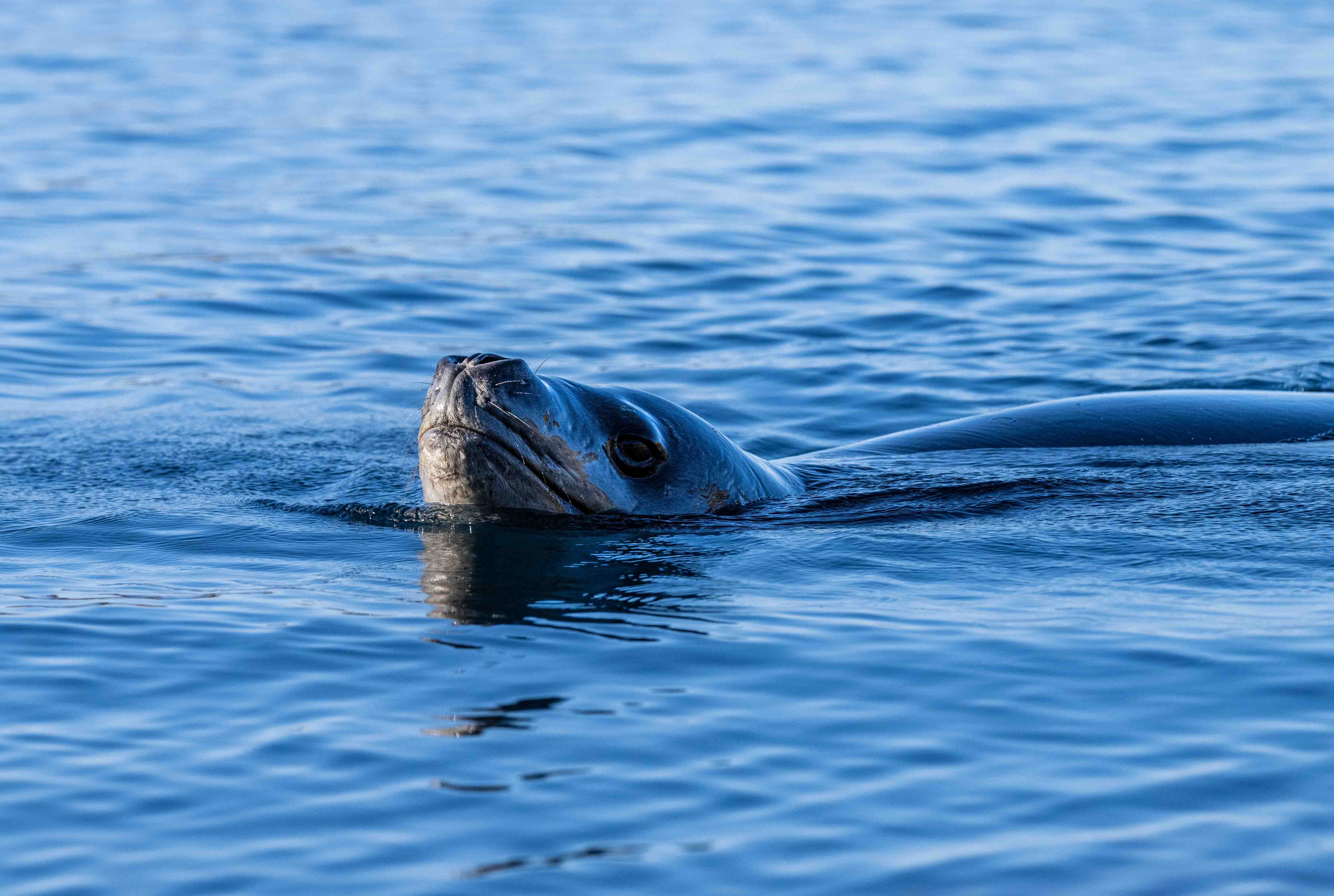
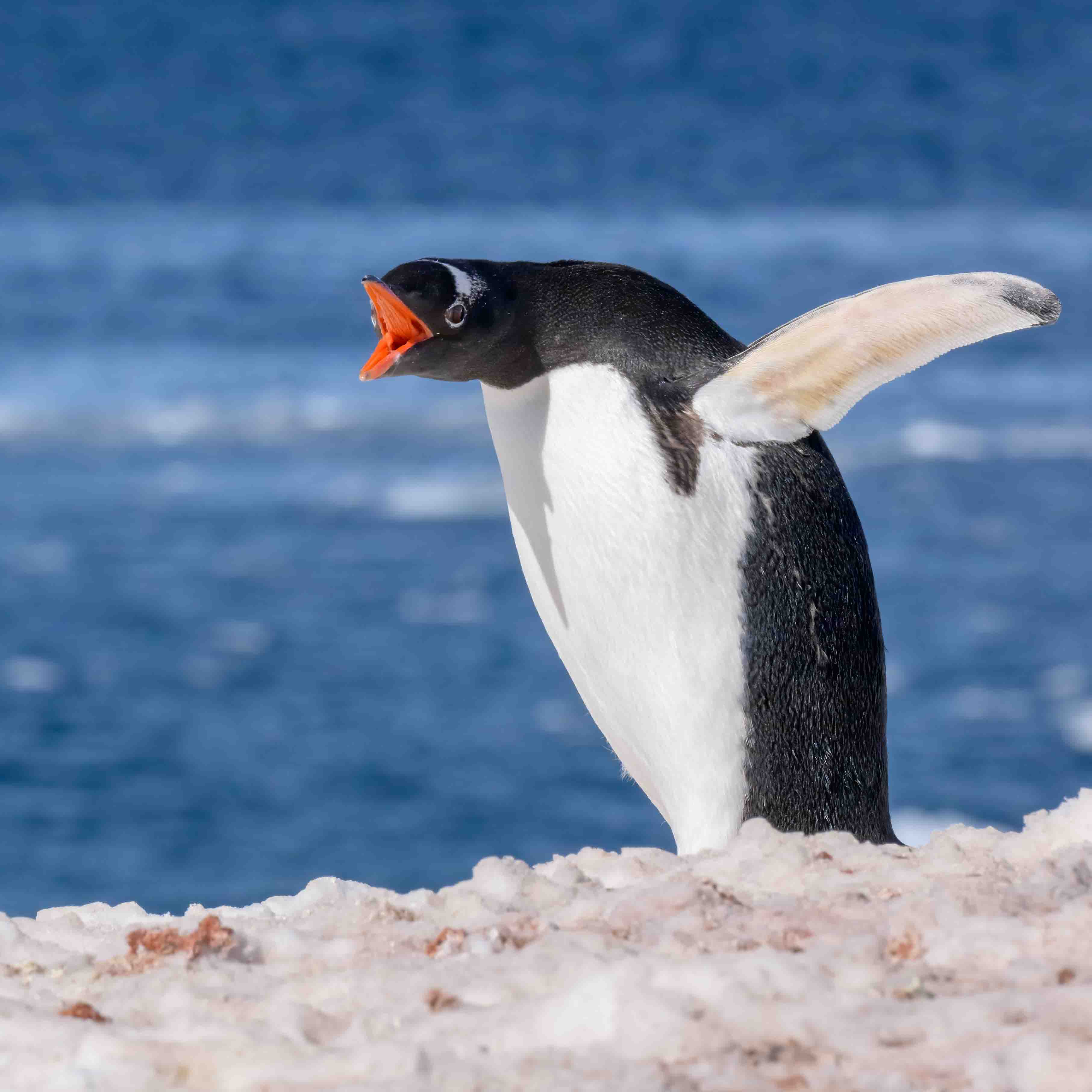
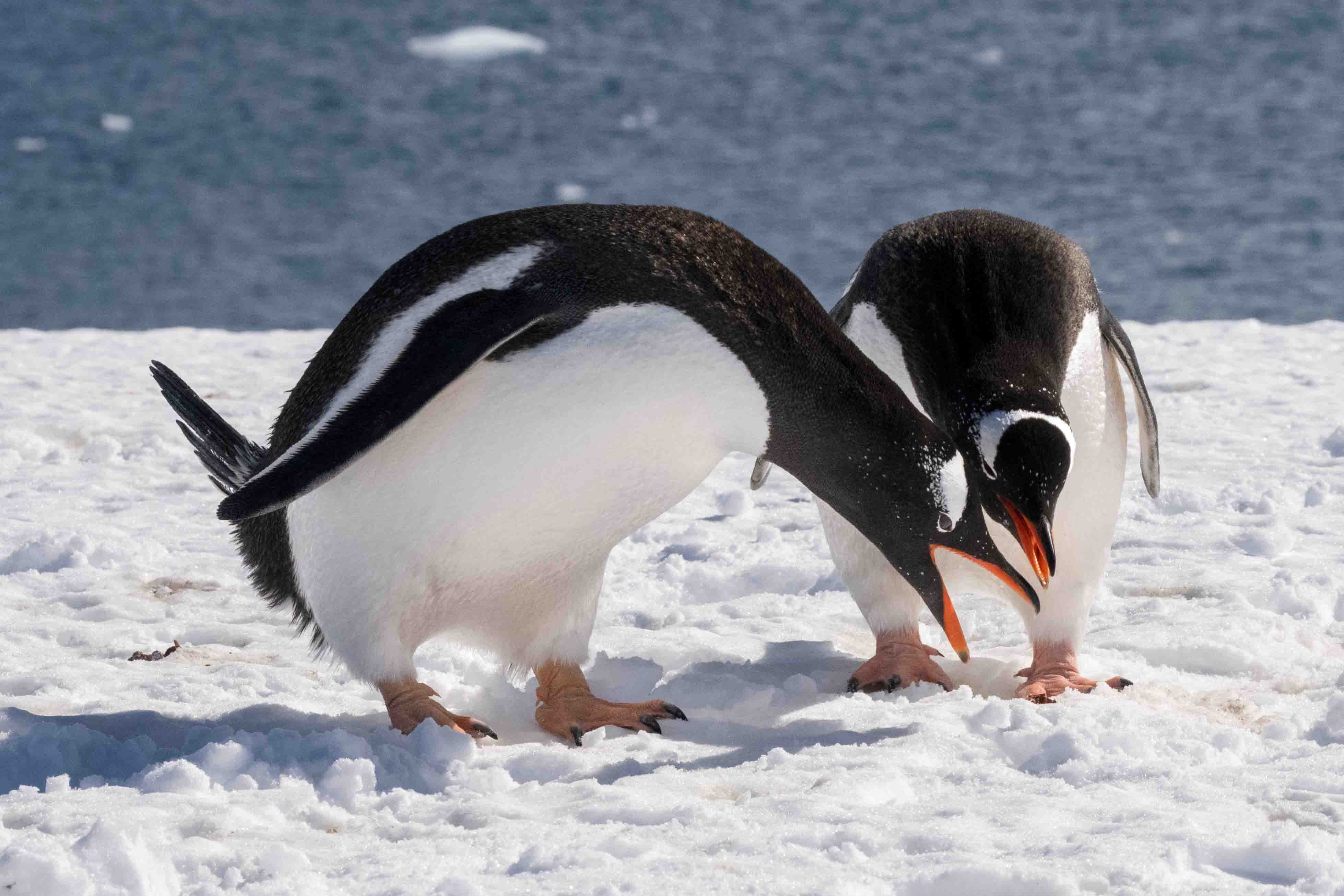
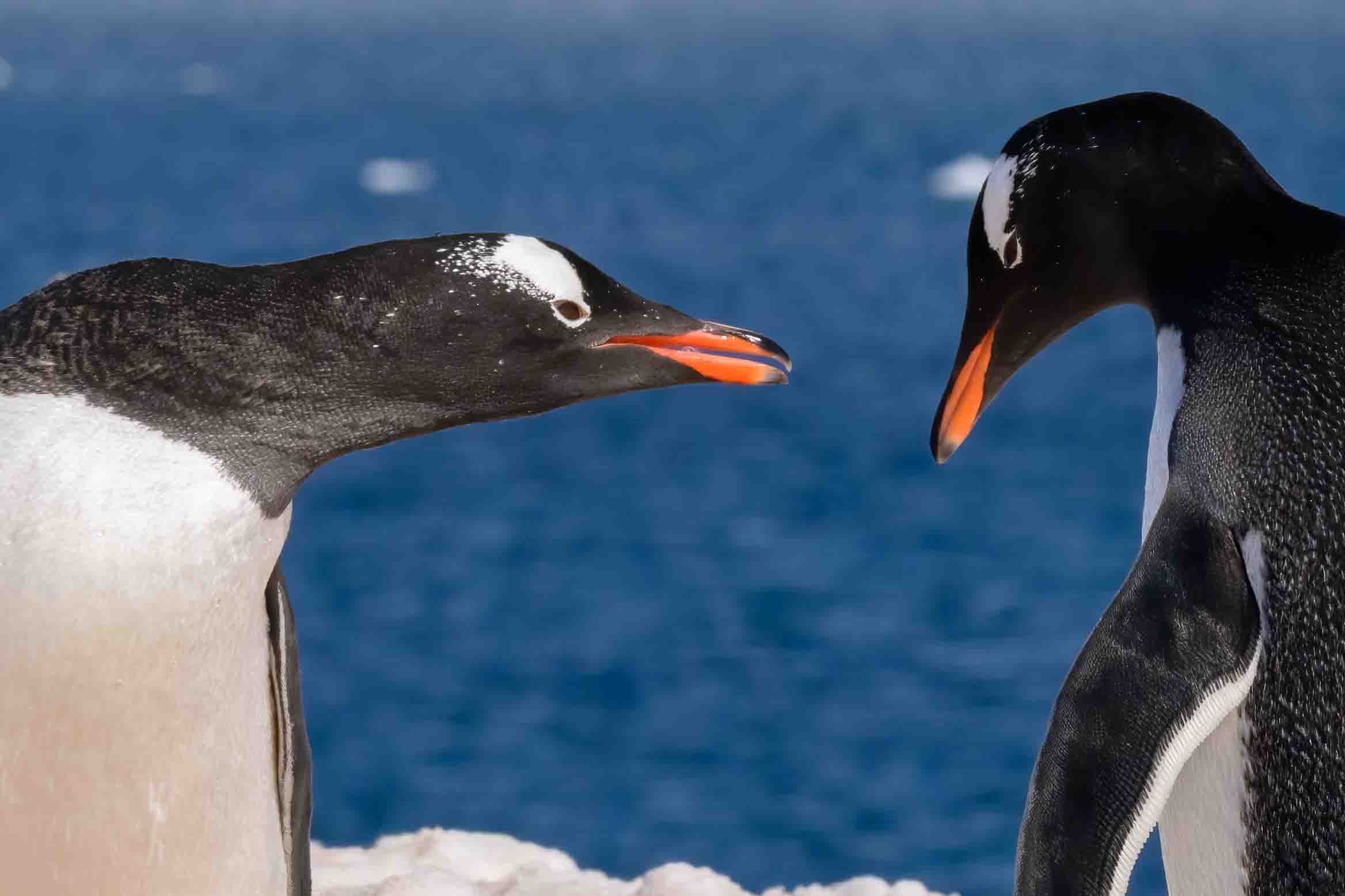
When I got home from Antarctica, I felt like I’d aged about 30 years.  I was very tired and weak for more than a week.  But I’m happy to say, I’m feeling back to normal, and maybe even better.  In fact, I’m starting to think about another trip there to see these beautiful creatures and their unique habitat. Anyhow, I wanted to share a few more pictures I made of penguins, an elephant seal, fur seals, and a leopard seal. I was trying to capture aspects of their personalities, customs, and environments.

As you may know, but many people don’t, Antarctica is in  big trouble from climate change.  Higher temperatures there are changing the habitats of the animals that live on and around the continent, and the collapse of giant ice shelves and melting glaciers are lifting sea levels.  The situation is dire, and has global implications.

But I’ve really been trying to stay positive, and given so many sources of fear and anxiety, would like to avoid making your and my fear and anxiety still worse.  Getting depressed is not going to help.  But it’s tough to keep learning more about what is happening to our planet and not be tempted to throw in the towel.

And so I almost skipped a couple of podcasts on climate change last week that I’m glad I didn’t.  I recommend both as antidotes for hopelessness put out by respected and trustworthy journalists.

David Wallace-Wells wrote what may well be the most detailed and gory account of what’s in store if we don’t change course in burning fossil fuels, The Uninhabitable Earth, in 2017,  But in an interview on Fresh Air last week, he explained that technology and market forces have made the worst-case scenarios he described back then much less likely.  We still stand a chance of putting in place the green energy infrastructures that would greatly mitigate disaster.  He made these same points in a recent NY Times magazine piece

Likewise, Bill McKibben has been a path-breaking writer on climate change, authoring among other things The End of Nature.  (Long ago, I worked with McKibben when he was a young reporter and I was a fact checker at the New Yorker.)   In an interview with Ezra Klein, McKibben said the long history of humans surviving by burning things will, one way or another, come to a conclusion, and it may be not be as terrible as we were recently expecting.  

McKibben explained that the lower cost of solar panels and storage technologies is changing the energy equation, as the persistence of climate activists has finally gotten through to more people.  The cost of renewables has fallen hugely, and is now lower than fossil fuels.  Now it doesn’t make economic sense not to switch to green technology.  L

Unfortunately, the fossil fuel companies aren’t admitting this and they’re not giving up, so there’s still a lot of work to be done.  McKibben continues to encourage activism, including in a new initiative called Third Act especially for those over 60.  He thinks we should continue to press for fossil fuel divestment by their biggest bankers, which unfortunately, are all banks I do or have done business with:  Bank of America, Citi, JP Morgan Chase, and Wells Fargo.  He also articulated these points in a New Yorker piece

Before my Antarctic journey, I started rereading Bleak House, the epic novel by Charles Dickens.  The hard back edition I had was a brick, at more than a thousand pages.  To save weight while traveling, I tried switching to a free e-book version.  This edition was full of bizarre errors, which I assume arose from relying on non-human editorial bots.  

Anyhow, I resumed making my way through my paper copy when I got home.  This year I’ve discovered, or rediscovered, that rereading can be extremely rewarding.   In many cases, I took on heavy duty literature when I was young that I was ill-equipped to understand.  The ordinary experiences of growing up — learning things, making a living, having friends and family, and everything else were transformative for me (as they are for everyone).  I’m now 67 (almost the age when my father died), and a different person in many ways  than I was at 15, or 25, or 35.  Or 55, for that matter.

Certainly I’m much better equipped for the adventure of reading a masterpiece like Bleak House.  On this, my fourth reading, I got much more from it, even as I better understood some of its shortcomings.  I easily grasped Dickens’s great love for humanity, his humor, and his anger at injustice.

Now, after having had a career in the American legal system and experience with the British, French, Indian, Argentinian, and other legal systems, I can better appreciate Dickens’s bitter critique of the English courts of equity of his time.  I now know a lot more about the history of colonialism and imperialism, and have a better frame of reference for the military and commercial struggles that happen offstage in his story.

Dickens was knowledgeable and critical of the ravages of early capitalism and industrialization, including extreme inequalities of wealth.  He had a wonderful flair for sniffing out and satirizing hypocrisy and moral posing, including poorly thought out philanthropy.  

Yet he was  oblivious to problems with various other hierarchies, like race, gender, and species.  The book has some of his most gorgeous writing, and also passages that feel like they were recycled on a tight deadline.  Some of his characters are memorable and touching (I still adore Esther Summerson) or comic (Old Turveydrop), though others, like John Jarndyce, are more generous than any known human.  

Apropos of climate change, Bleak House is also about what industrialization means for the environment, such as horrific and deadly pollution.  His description of London fog and iron factory emissions are fascinating and disturbing.  He also can be brutally honest in describing the struggles of enslaved animals, such as horses who fall while trying to pull a coach through the snow and mud.  

Apropos of non-human animals and efforts to better understand their lives, I wanted to pass along a link to a thought-provoking story about pigs, which humans generally greatly underestimate and devalue as a species. Research reported by Leo Sands in the Washington Post indicated that pigs’ social lives have surprising dimensions. For example, when two pigs have a serious fight, a third pig will sometimes help resolve the dispute by nuzzling or similar touching. That is, some pigs are concerned about the unhappiness of other pigs, and know how to calm anger and increase happiness. Of course, humans also sometimes try to defuse tensions and resolve disputes, though we could do a lot better. Perhaps the pigs’ nuzzling approach would help.

My Antarctic Adventure

Last weekend I got back from an epic trip down to the southern tip of South America and from there to the Falklands, South Georgia, and the Antarctic Peninsula.  I’m still sorting through the pictures I took, but here are some of them.  

The expedition was led by Muench Workshops, with a view to wildlife and landscape photography.  Our ship was the Ushuaia, a 278-foot-long vessel built in 1970 either as a research vessel or a spy ship, depending on which story you believed.  I understood it was outfitted for the challenges of rough icy seas, and it did in fact get us down and back.    

We were at sea for 21 days, and it was a rough ride a times.  Winds were more than 50 knots, and waves more than 15 meters.  Dishes slid off the dinner table a couple of times, and books came out of the book cases.  Our expedition leader said the winds were the highest she’d seen in 26 years.  

Walking from one place to another on ship was challenging. From early on I used a medication called Scopolamine to counteract seasickness, which did a good job, though it made my mouth dry.  There was a Covid outbreak soon after the start of our voyage, and several people had to quarantine for a few days in their cabins.  Happily, I was not infected, but we had to wear masks on board after that, which didn’t help socializing.   

My primary objective for the trip was to have some time with the unique animals, and especially various species of penguins.  They had convened in South Georgia by the thousands, along with elephant seals, fur seals, leopard seals, albatrosses, and other amazing creatures.  We went ashore at several points using inflatable vessels called Zodiacs.  

I’d known very little about South Georgia before the trip, except that polar explorer Ernest Shackleton had reached it as part of his epic survival story of 1914-17.   Among other stops there, we visited Grytviken, a former whaling station where Shackleton was buried.  

We had a toast at his grave, and afterwards, as I made my way along the beach to one of the Zodiacs, I got charged by a massive bull elephant seal.  I quickly retreated by some yards, and he, dignity satisfied, left off.  

As much as I was delighted by the penguins, I was disturbed by the whaling industry remnants.  The equipment, red with rust, used for processing whale oil and other whale products was on a much bigger scale than I imagined.  

Grytviken had a small museum that valorized the courage and endurance of the whale workers, which, of course, was real.  But there didn’t seem to be any recognition or apology there for the whale holocaust in the 19th and 20th centuries, when millions of our fellow mammals were hunted to the verge of extinction. 

I read several good books on the trip, including Margaret Atwood’s The Handmaid’s Tale, an it-could-happen-here depiction of resistance in a misogynist theocracy.  

I also liked Melanie Challenger’s recent How to Be Animal.  Challenger’s book takes on the big question of how humans fit into the world.  She focuses on the strange reality that modern humans still generally decline to recognize that  they themselves are animals –  a delusion which can blind them to the rich connectedness of life.  She proposes that all animals be treated as inherently worthy of respect.

I also finished An Immense World, a new book by Ed Yong.  It’s about   the different ways that different animals perceive the world, and how their senses are integral to what Yong terms their umwelt, or their way of experiencing the world.  

Yong goes through some exceptional non-human versions of the senses we know (like smelling, seeing, and  hearing) and some that are foreign to us (like echolocation and magnetic and electrical sensing).   The book was a good reminder that the human senses, marvelous as they are, are far from the most powerful, and that the non-human animal world is dense with fascinating other ways of being.