The Casual Blog

Tag: nuclear war

Sunflowers, and reconsidering nuclear war

A couple of weeks ago, I spent some time with the sunflowers at Dix Park.  It’s been ungodly hot in Raleigh, so I went early in the morning to avoid the heat.  Even then, I worked up a good sweat just walking around and taking pictures.  Happily, the sunflowers and a cooperative tiger swallowtail butterfly cheered me up.  

In other news, I finally published my first novel.  The title is The Book of Bob, the author is Rob Tiller (unaided by either other human or artificial intelligence), and it’s available on Amazon as an ebook.  It’s a semi-autobiographical novel in the form of short essays, which is to say it is not easy to categorize by genre.  I hesitate to recommend it to the world at large, because some will find parts of it disturbing.  But you might like it.   It’s intended to be engaging, funny, easy to read, and meaningful.  

Among other things, my book reexamines some bad ideas that have big impacts.  Since today is the 80th anniversary of the world’s first attack with a nuclear weapon (the US attack on Hiroshima), it seems like a good time to think about an existentially bad idea of our age:  the need to stand ready for nuclear war.  

We live in a world where there are some 12,000 nuclear warheads – many more than enough to end the world as we know it.  Nations with those weapons are now  building still more, and some without weapons are working to join them.  The nuclear powers are not visibly working on continuing and expanding arms control agreements.  Last week, the President took offense at a Tweet from a Russian politician and threatened Russia with a nuclear attack by submarine.  Almost certainly Russia raised its defcon threat level in response, bringing us that much closer to World War III.  

The prevailing theory for having these weapons is known as mutually assured destruction.  The basic idea is that our enemies won’t use them against us because we might reciprocate by incinerating their entire populations.  We would take this horrific step even though it would likely be followed by their revenge – incineration of our entire population.  That is, across much of the planet, entire populations, including citizens of the US, are forced to serve their own governments as hostages and human shields.  The objective of our balancing on this narrow precipice is – guess what?  Preventing nuclear war.  

There are, to be sure, some other ideas about nuclear warfare that are slightly less crazy.  Nuclear powers sometimes imagine that their weapons will allow them to dominate lesser powers.  But that never works.  The initial US monopoly on nuclear weapons didn’t stop the Soviet Union from taking control of eastern Europe for decades.  

More recently, Russia thought that the threat of nuclear annihilation would bring Ukraine to heel.  Of course, it didn’t.  Israel’s nuclear weapons have not subjugated its enemies.  India’s and Pakistan’s nuclear weapons have not prevented their continuing conflicts. The massive nuclear arsenal of the United States didn’t prevent us from losing wars in Korea, Vietnam and Afghanistan, or discourage our adversaries in Cuba, Iran, Iraq, Serbia, Syria, or any other of our military actions since WWII.   

So, it’s doubtful whether nuclear weapons have ever achieved any realpolitik objectives.  What is not doubtful is that, even assuming the humans managing them are sensible, moral, and careful, accidents will happen.  There have been several widely reported incidents of mistaken reports of nuclear attacks, communications breakdowns, plane crashes, submarine collisions, and other events that could have caused a massive disaster.  Unless we can find our way to nuclear deescalation, a disastrous accident is all too likely.

Finally, if our situation weren’t already dire enough, the control of the US nuclear arsenal is in the sole and complete control of a single individual – the President.  Without getting into the inadequacies of the current President, we can probably agree that even the best of us are subject to intellectual and moral failures.  We all make mistakes, especially under intense pressure.  In the event of a nuclear crisis, the President would have as little as 15 minutes to make a decision on whether to end the world.       

A tiny bit of good news:  There has been some good journalism on our nuclear peril recently, including in the Washington Post, which published this good overview and a description of a hypothetical nuclear crisis.  There’s even been activity in Congress.  Bills have been introduced in the House that, even if they aren’t likely to become law, show that some people are working on the problem.  

H.R. 1888 is titled “A bill to direct the United States to sign the Treaty on the Prohibition of Nuclear Weapons and convert nuclear weapons industry resources and personnel to purposes relating to addressing the climate crisis, and for other purposes.”  As the title indicates, this bill would have the US would join the dozens of nations that have already agreed to the prohibition treaty, and would spend the vast resources now wasted on nuclear weapons to mitigate the climate crisis.

In addition, there’s H.R. 669, titled the “Restricting First Use of Nuclear Weapons Act of 2025.”   This one addresses the problem of a runaway president by restricting his or her ability to authorize a first-use nuclear strike.  It would require a declaration of war by Congress before such an action can be taken.   

Finally, House Resolution 317 “calls on the President to … actively pursue a world free of nuclear weapons as a national security imperative; and … lead a global effort to move the world back from the nuclear brink, halt and reverse a global nuclear arms race, and prevent nuclear war ….”  Trump seems like an unlikely guy to do this, but he really wants a Nobel Peace prize, and accomplishing this would surely put him in the running.  So who knows?

H.R. 1888, H.R. 669, and H. Res. 317  are all pending in House committees.  If you’re in touch with your Congressperson, please consider him or her them to support these measures.


Being with geese, The Dawn of Everything, and what to do about nukes

It’s been a busy travel year for me, which has been great, but wearing, so I’ve been enjoying not traveling in these last weeks of the year.  To keep up my photography skills, I’ve been dragging myself out of bed when it’s still dark and cold and taking my gear down to Shelley Lake.

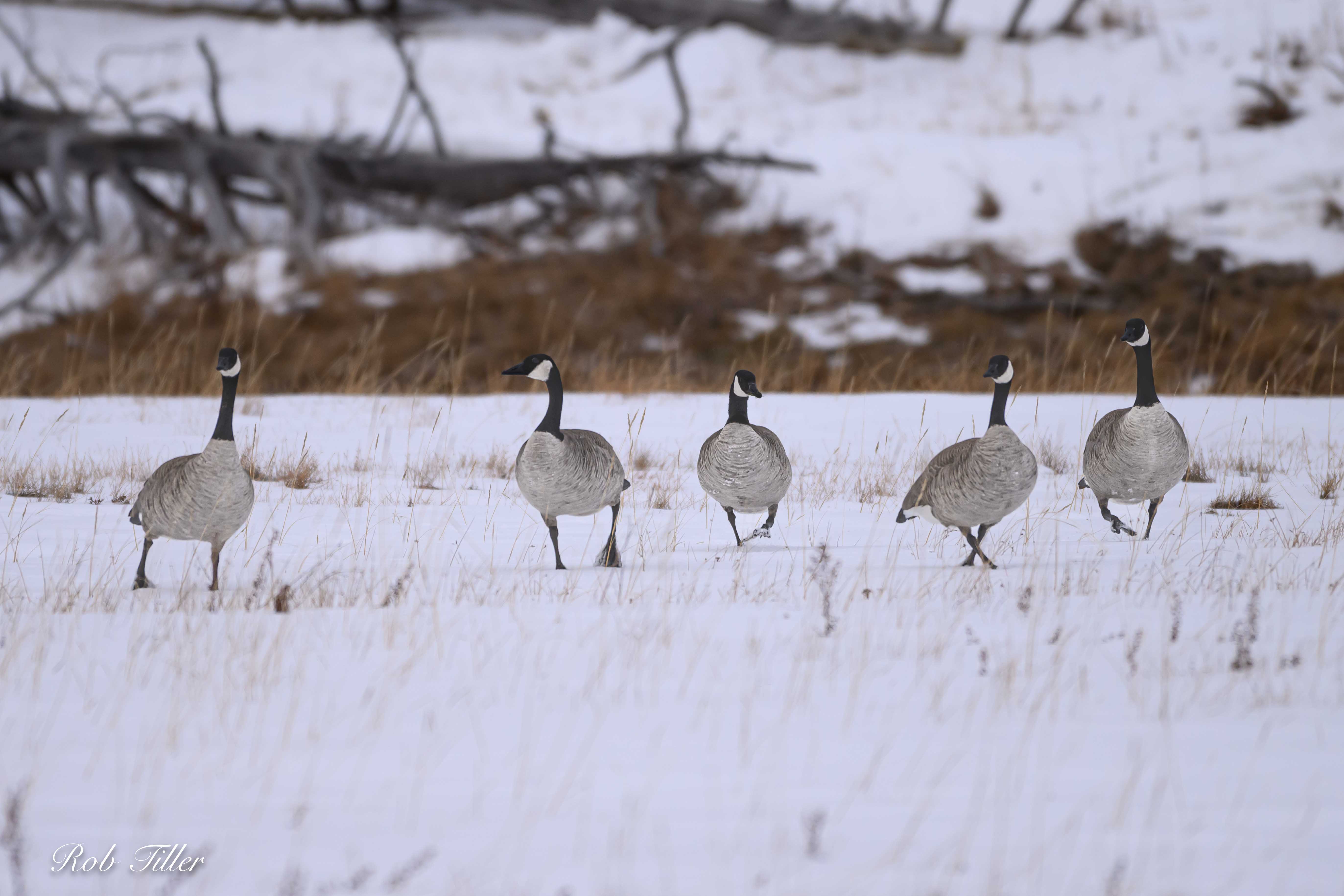
I like sitting there with the Canada geese as they paddle about, honk, and eventually take off for their morning flying exercises.  I’ve been trying to capture the wildness of their take offs and landings, with only limited success.  The actual events are really exciting, but for photographic purposes the birds are usually too far away, heading in the wrong direction, or in suboptimal light.  Or I commit one of a thousand possible operator errors.  Anyhow, I’ve yet to get the perfect shot, but here are a few that I liked.  

We’ve had a happy holiday season with family gatherings, and I’m conscious of many things to be grateful for.  In the background, though, I’ve been struggling with how to think about our new political reality.  It feels like we’re entering into a dark period.

One of the gifts of reading history (or for me more recently, listening to history podcasts) is perspective: our species has made it through many dark periods. We know that the Romans had a good number of terrible rulers, as did medieval Europe. The same is almost certainly true of more ancient civilizations. In spite of everything, we’re here.

For more perspective, I heartily recommend The Dawn of Everything by David Graeber and David Wengrow, which I’ve been re-reading (actually, listening to). The main subject is the development of human civilizations beginning around 10,000 years ago.  The book draws on recent scholarship to challenge the standard narrative that there was a linear progression from hunter gatherers to early farmers to urban settlements to the modern world, with increasing levels of hierarchy and authority at each stage.

Instead, Graeber and Wengrow draw on specialist research to demonstrate that there were early societies that organized without relying mainly on farming and without settled hierarchies.  Other societies adopted authoritarian forms and later abandoned them.  They show that, at least until relatively recently (as in, say, the last three hundred years), the nation state was not the primary form of societal organization.  Rather, societies experimented with many different systems.  

This analysis has a hopeful aspect.  Although some of our prehistoric ancestors were cruel and violent, people continued to innovate.  Our food production system and other technologies do not necessarily dictate a certain type of political organization.  Fundamental change is possible.  

A plausible understanding of the election of Donald Trump is that there is deep dissatisfaction with our existing system and a hunger for change.  It seems unlikely to me that Trump will satisfy that hunger.  It may be that we will eventually find our way to a new era of social innovation, with better solutions to our serious challenges.

One of those pressing challenges is what to do about nuclear weapons.  I know this is not a pleasant topic, but it’s vitally important that we deal with it.  The possibility of accidental nuclear accidents and nuclear war is very real.  Indeed, as a recent article pointed out, a highly classified U.S. war game in the 1980s found that any nuclear war scenario inevitably led to escalation and finally  annihilation. 

On this score, I want to highlight a recent opinion piece in the NY Times by Beatrice Fihn, former executive director of the International Campaign to Abolish Nuclear Weapons.  She fully recognizes the strength of the common belief that nuclear weapons are, if not sensible, an inevitable fact of life, but she effectively challenges that belief.  

Fihn writes, 

Contrary to popular belief, nuclear weapons are remarkably inefficient tools of war. They are clumsy, expensive, and lack practical military utility. Their use would result in catastrophic destruction, potentially wiping out hundreds of thousands of innocent civilians and spreading radioactive contamination across borders and generations. It is hard to envisage a scenario in which a state would be better off choosing to use a nuclear weapon over a conventional weapon, given the significant harm it would cause both to that nation and to its allies. Even nuclear-armed nations openly acknowledge that these weapons should never be used.

Change is possible, as Fihn demonstrates.   The international order has largely reached consensus on banning chemical weapons, and nuclear stockpiles have been greatly reduced since the Cold War.  Most nations have chosen not to create nuclear weapons, and most have signed the United Nations’ Treaty on the Prohibition of Nuclear Weapons.  But we stand at a moment when the United States, Russia, and China seem to be committing to a new nuclear arms race.  

Fihn contends that we as individuals can meaningfully contribute to addressing this terrible situation.  She writes,

So how can individuals contribute? First, recognize your power. A key tool is to change the way we talk about nuclear weapons. Instead of thinking of them as magical tools, we should talk about them as being irrational and useless for any real life military situation. Instead of discussing nuclear weapons in terms of abstract theoretical concepts like strategic stability and mutually assured destruction, we should center conversations on the facts and scientific evidence of what happens when these weapons are used or tested. We can all start questioning common assumptions that these weapons are designed to keep us safe and expose the irrationality of a national security strategy based on threatening to commit collective global suicide.

If you’re a student, organize campus discussions. If you’re a professional, engage through your networks. If you are an artist, use your skills to address these issues.

Get in touch with your elected representatives but don’t forget to also engage with city councils, state representatives and community groups. Cities and local authorities are becoming more involved in statecraft and diplomacy. Getting your city or state on board with the growing number of local authorities that are taking action on this can help build a new generation of political leaders taking on this issue.

Fihn also proposes confronting the major corporations that are responsible for nuclear weapons, including Boeing, Lockheed Martin, and Northrop Grumman.  She cites the divestment campaigns against big tobacco and fossil fuel companies as possible models.  

For Fihn, the path off of the nuclear precipice requires a change of attitude, and that can only happen through “persistent, collaborative effort.”   We might as well give that a shot.

Skiing at Vail

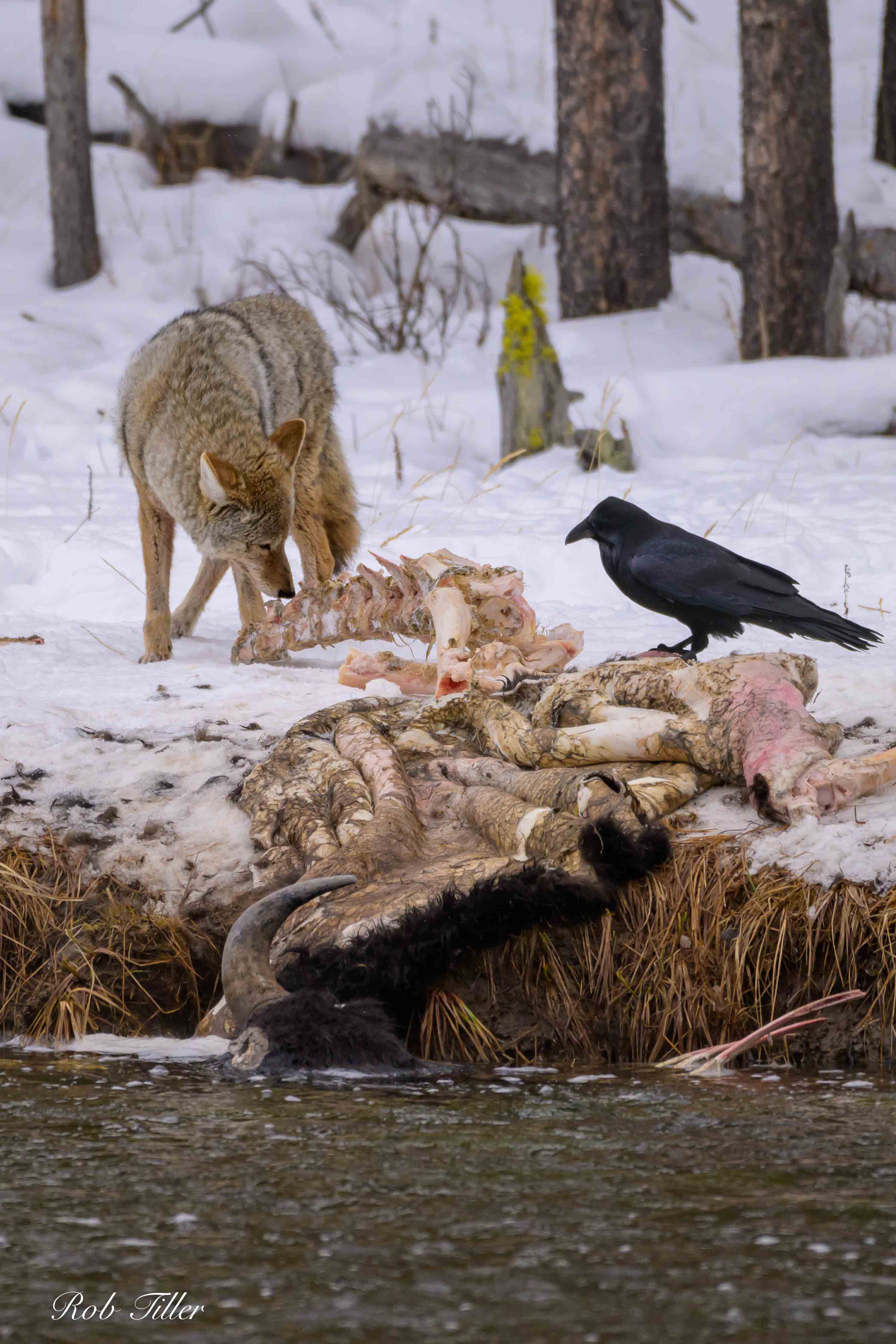
I thought I’d share a few more pictures from my Yellowstone trip in January, and a brief account of my trip last week in Vail, Colorado, where I took no pictures but did a lot of skiing.

Vail is enormous:  5,317 acres and 3,450 feet of vertical.  The longest run is four miles.  There are some 26 lifts, and navigating the area is demanding.  They don’t hand out maps any more, so you need to get their app with the layout and learn to use it.  

I met my old friend John A. out there, and we stayed at the Grand Hyatt in West Vail. The hotel was attractive and comfortable, and had its own ski shop and a ski lift just outside the back door. I brought my own boots, but rented skis –Volkyl Mantra XXs, a good, versatile ski, but a bit stiffer than my ideal.  It snowed the night I arrived.   

It continued to snow all that day, which was exciting, but visibility was very limited.  At one point I fell while going down a steep mogul field that I hadn’t realized was a steep mogul field.  I was exhausted by the time I got down to the lift, and then I realized I’d lost my goggles somewhere up the mountain.  I’d forgotten to bring my contact lenses, and my glasses iced up, making it hard to see anything.  My legs got tired.  It was a tough day.  

But the next two days were sunny and clear, with just the right chilliness for the snow.  I got some new goggles. What a joy skiing is when everything clicks! We cruised on the cruiser runs and worked the less difficult black runs in the back bowls. It wasn’t crowded, and it was beautiful. Happiness!

John and I ate well and had some good arguments.  It seems like these days many of us are afraid of arguments, and hesitate to express ourselves when there could be conflict.  But it really is a good idea to talk with people who don’t agree with you about everything.  Sometimes you learn things!  

When I wasn’t skiing, eating, or talking, I did some reading, including an interesting new book, The Case for Open Borders, by John Washington.  The southern U.S. border has been the subject of much alarm and controversy recently, and I thought it would be good to get a new perspective on the issue.  

Washington proposes that we rethink the whole subject of borders, which he argues are artificial constructs that do more harm than good.  He presents evidence that immigration is a positive force for the receiving country, both economically and morally.  

It’s unfortunate that a lot of people are fearful of people who look different, speak another language, or have different customs.  That common fear has been made much worse by some cynical politicians, who characterize them as dangerous criminals and thieves stealing jobs.  In fact, the opposite is closer to the truth. 

In fact, the NY Times had an article last week about the positive economic contributions of immigrants.  They helped our economy recover from the pandemic quicker than expected by filling necessary jobs. They continue to help us get work done, and help support their relatives back home.

As climate change makes it harder to grow food in some areas and causes floods, fires, and other disasters, there will continue to be a lot of people who have no choice but to flee.  America is still a land of opportunity, and there’s an opportunity here for us:  to be more compassionate and to help those who desperately need help.

I’ll mention one other thing that isn’t usually a welcome dinner table topic:  the increasing risk of nuclear war.  I’ve long thought that our unwillingness to look squarely at what a nuclear conflict would mean increases the chance it will happen.  With arms racing again picking up speed and war in Europe raging, it’s high time to think again about how to lower this terrifying risk. The Times started a series this week on this topic, and the first piece was appropriately arresting. I hope a lot of people will read it.

Some new flowers, and a plea that we reconsider our nuclear stance

I’ve resisted the urge to post my various recent musings in an effort not to increase planetary anxiety, or my own.  I’ve also had to work my way through some health issues that took up a lot of bandwidth.  Sorry about that, and about this.  

Spring has been arriving in Raleigh in fits and starts, but the early blooms are out now.  I was happy to see the new tulips at Fletcher Park and daffodils at Raulston, and wanted to share a few pictures.  May they give a little peace.

I also wanted to share a few thoughts on the possibility of nuclear war starting in Ukraine.  As dreadful as that prospect is, there could be a silver lining:  it may help us understand the nuclear peril we face and inspire us to work for a peaceful solution.  

This week there was an op ed piece in the NY Times by Steven Simon and Jonathan Stephenson (S&S) titled Why Putin Went Straight for the Nuclear Threat.  I ended up responding to the piece with a comment in the Times’ electronic edition.  Afterwards, when I then started skimming the hundreds of other comments on the piece, I assumed my views were shared by plenty of others.  

But no.  It’s nice, in a way, to get some proof that your thinking is not entirely conventional.  It was deeply disturbing, though, to find that there were a great many Times commenters who accepted and even welcomed the prospect of nuclear war with Russia. I decided it might be worthwhile to explain a little more what I was trying to say.

S&S’s premise is that nuclear weapons are generally a good thing, in that they provide a “delicate balance of deterrence.”  That is, S&S posit an underlying rationality to the existing nuclear power arrangement in which a small group of leaders may at any time for any reason launch nuclear weapons powerful enough to end civilization.  

In the recent Times piece, S&S are concerned that this “delicate balance” may be disturbed by the U.S. announcing that it does not intend to enter into a nuclear war.  They appear to believe that Putin is bluffing with his nuclear cards, and that we should call the bluff.

Nuclear war, however, is different from poker.  In poker, an erroneous guess about a bluff may, depending on the stakes, cost a lot of money.  In nuclear war, it may mean the end of millions or billions of human lives, if not outright extinction, as well as the end of most other life on Earth.  

This catastrophic risk has been with us in varying degrees since the enormous build up of nuclear forces in the 1960s.  There have been periodic discussions of the risks of nuclear accidents,  unintentional nuclear escalations, or planned attacks.  At times, thinkers have noted the peril of keeping nuclear weapons on hair trigger alert, with one head of state entitled at any moment and with no explanation to unleash their devastating power.  

But these short spells of sanity are mostly quickly forgotten, as other policy matters seem more pressing.  The conventional narrative of “nuclear deterrence” is seldom called on to explain and defend itself.  But it should be.  In spite of its shadowy but powerful supporters – the arms manufacturers, politicians, generals, think tank scholars, and multiple layers of  bureaucracy – there is no reason to think it is at all rational.  In fact, it is both irrational and deeply immoral.       

Part of the foundational idea for nuclear forces is that they deter other nuclear powers from attacking with their nuclear weapons.  This is, of course, circular reasoning, in that it relies on the premise that nuclear weapons must exist and cannot be eliminated.  If we reduce and eventually eliminate all nuclear weapons through verifiable treaties, there would be no need for this sort of deterrence. 

Moreover, there’s no reason to think that this deterrence notion is what really accounts for the lack, so far (except for the U.S. atomic bombing of Japan), of nuclear aggression.  It seems at least as likely that nuclear nations avoid nuclear attacks from a combination of various feelings and ideas, such as compassion, horror at the prospect of mass slaughter, and fear that any nuclear attack will escalate and cause a nuclear winter that will kill almost everything.  

Here, as in most human problems, it’s impossible to know exactly why people do what they do, or what they may eventually decide to do.  Rationality seldom guides our behavior.  This lack of predictability is another reason to work diligently to find a way to back off the nuclear precipice.

The other foundational idea at the heart of nuclear strategy is that having the most powerful weapons will deter non-nuclear fighting.  This deterrence idea has been repeatedly debunked by history.  

The US superiority in nuclear weapons did not deter Soviet aggression in eastern Europe or prevent national liberation movements in former colonial lands.  It did not deter Korea or Vietnam.  It did not deter Iraq or Afghanistan, or ISIS.  These and other movements won their gamble that the US  was unwilling to conduct wholesale nuclear slaughter even when fiercely opposed.

The same, of course, was true for the Soviet Union as its empire fell to pieces:  its nuclear arsenal, purchased at great cost, was useless.  Now we are seeing that this is true of Ukraine.  As the Ukrainians attack seemingly mighty Russian armored columns with small drones and shoulder-fired antitank weapons, they are betting that Putin will not respond with a devastating nuclear attack.

It may be that Putin believes he could intimidate Ukraine and its supporters with a small nuclear weapon that does only limited damage.  He may believe that such a smaller weapon would not be viewed as a nuclear attack requiring a response, and therefore be less likely to trigger a nuclear escalation that ends all civilization.  

Of course, to the extent Putin thinks rationally, he would recognize that he cannot positively know what either Ukrainians or the nuclear-armed western powers would do, just as they cannot know what he would do.  Heck, none of these players know what they themselves would do!  

All the actors in the nuclear drama are humans, prone to confusion, fear, and panic.  Faced with a nuclear onslaught, it is most likely they would act irrationally.  A head of state with a nuclear button could easily be as irrational as the rest of us.  Meanwhile, in a crisis, a field commander with a tactical nuclear weapon is all too likely to fire it, starting the final conflagration.  

Assuming we avoid nuclear catastrophe over Ukraine, this crisis may help us understand the urgency of resolving our perilous situation.  Policies that reduce the risk of accidental nuclear war and arms control treaties that over time eliminate nuclear weapons should be back at the top of our domestic and international agenda.  

I learned this week of Back from the Brink, a group that  advocates for these and related measures, and made a donation to support their work.  Their website is preventnuclearwar.org. 

Happy New Year! But there’s some bad news

Here are a few more shorebird pictures from our wonderful wedding celebration at Atlantic Beach, NC. Clark, our new daughter-in-law, exceeded all expectations!  I also enjoyed spending time on the beach with the birds, and interpreting these images. As noted below, I, and probably you, can definitely use more of the beauty and peace of nature.

As we start a brand new year, it’s hard not to feel overwhelmed with dire problems:  the resurgent pandemic, mass shootings, fires, tornadoes, droughts, melting ice caps, and the list goes on.  There’s a lot to deal with.  As part of my meditation practice, I try to make some time every day for conscious gratitude and compassion, including self-compassion.

Given all our other problems, it’s obviously not a great time to discuss the possible end of American democracy. We’re already exhausted.  But we need to buck up and find our second wind.  Our system has been much weakened and may fail entirely.  If we want to save it, we have to act soon.  

Besides worry overload, another reason I hesitate to raise the subject is that there is so much wrong with American-style democracy.  Its most valuable ideals – free elections, equality before the law, free speech and other civil liberties – have never been fully realized. Meanwhile, this system has given us extreme inequality, embedded racism, misogyny, homophobia, and xenophobia.  

We have the world’s largest rate of incarceration, and an endless war on drugs that keeps prisons full and sustains worldwide criminal organizations.  Our military brings death and chaos to remote areas of the globe, while maintaining hair-trigger readiness to end civilization in a nuclear war.  For many, there is not adequate food, housing, transportation, or medical care.  For non-human beings, it’s even worse.  In short, our political processes have not produced what we would reasonably expect of a wealthy, enlightened nation, and they’ve done a lot that we cannot be proud of.  

But for all our shortcomings and failures, American democracy still provides one thing that is extremely valuable:  the possibility of change.  We have a tradition of fair elections and peaceful transitions of power.  Our votes almost always get counted and determine the winner.  Exceptions are vanishingly rare.

If the governing party loses, it peacefully concedes and allows the business of government to continue.  The new government might improve things, and at any rate, it is generally agreed that it is entitled to take a shot.  This has been true for a long time, and it’s hard to conceive that it could be otherwise.  But it easily could.  

Now, more than a year after the last presidential election, a substantial majority of Republicans have been persuaded that the election was stolen, and that Joe Biden is not the legitimate president.  They reject the overwhelming weight of the authorities – court decisions, officials, scholars, and news media – that contradict that view.   

Republican leaders at the national and state level, with very few exceptions, continue to support the big lie that the true winner in 2020 was Donald Trump, and to refuse to support or cooperate with investigations into the illegal attempts to nullify the victory of President Biden.

Republican legislators in some 19 states have already passed laws to make future Democratic victories less likely by making it more difficult for some groups to vote.  Several Republican-dominated states are getting rid of their non-partisan election officials who refused to assist in overturning the last presidential election and installing supporters of the big lie.   

In other words, many states are putting in place a system to stack the deck against Democrats and then, if that doesn’t work, nullify election results. In addition, dozens of states have enacted new laws criminalizing various acts of protests, including ones that would likely occur after a stolen election. Meanwhile, the courts have been stacked with Republican judges.  

While all this is happening, repeating the big lie prepares the psychological ground.  If enough people are convinced, wrongly, that election fraud is common, they may also be convinced that their own cheating isn’t so bad.  Cynicism, apathy, and fear could be paralyzing, or at least keep many people from protesting.  

These forces could in short order leave us with an authoritarian, neo-fascist system.  That is, a system with all of our current problems, minus the machinery to allow for political change to address those problems, and minus long-standing institutional restraints on repressive violence and corruption.

I know this is no fun to think about, but fortunately, it’s not hard to understand intellectually.  The challenge is to fix it.  As to Republicans who understand the big lie and disapprove of it, they need to show some backbone, and tell the truth.   Democrats who understand it need to get to work educating others on what’s happening.  And they need to get involved, volunteering, making phone calls, watching the polls, and so forth – all the no-fun jobs that are part of free and fair elections.  

Although I think saving our democracy will be tough, our ancestors have won long-odds fights for rights before.  In the last century, women fought hard to win the right to vote, and African Americans won the right to be treated as full citizens.  The forces that have brought us to this point – fear, hatred, ignorance, greed – are nothing new, and we already have the tools to counter them:  kindness, compassion, and love.  But hope alone won’t get the job done.  We need to get to work.  

Looking on the bright side — how to fix our nuclear problem

This week Trump has been threatening to start a nuclear war against North Korea, which got me rattled.  So far, the sun has come up every morning, and with each additional day with no mushroom clouds it seems more likely that those threats are just bombast.  His continuing along on his golfing vacation is also reassuring, if ridiculous.  But how could anyone with the slightest clue as to what nuclear war would do even talk like that?  And how could anyone think it a good idea to explore what happens when you provoke a nuclearized,  paranoid dictator with threats of ultimate destruction?   

Let’s keep our fingers crossed that Kim Jong-Un is only pretending to be crazy,  Trump’s impulsivity is contained, and we survive.  Even so, the threats will have done real damage.  Markets have been roiled.  In the community of nations, our government is viewed as even more irresponsible and unpredictable.  At the personal level, my own mood has been darker than normal, tense and uncertain, and I’m surely not the only one.  Our mental health is not good.

I usually try to find the bright side of dark situations, so I’ll take a swing at it here. If we’re lucky and avoid disaster, we might finally wake up, realize we’ve long been on the edge of the nuclear precipice, and carefully back away.  Nuclear risks are not something anyone likes to think about, which in part accounts for why we are where we are.  But we can’t not think about them now, with the threat so clear and close.  We might take this as an opportunity to reconsider received ideas and correct some mistakes.    

We thought initially  that nuclear weapons could assure our safety by terrifying others into submission.  When that didn’t work, we raced to build still more weapons, with ever more destructive force, until we could in a matter of hours destroy the world several times over.  We put the weapons on hair-trigger alerts, and the risks of accidents and miscalculations increased.  

In the past decades, there have been several nuclear accidents and close calls that could have killed thousands or sparked an all-out conflagration. In  Command and Control, Eric Schlosser  recounts a number of these, and there was a quick overview last week in the HuffPost .  Our engineering is imperfect, and always will be.  Maintaining large numbers of weapons on hair-trigger alert is incredibly dangerous.   

In addition to the risk of system accidents, we live each day with the risk of human failure.  People make mistakes in the use of violence for any number of reasons — lack of knowledge, lack of sleep, intoxication, mental illness, etc.  And people’s reasoning powers are frequently overwhelmed by  powerful emotions.  It’s far from impossible that fear or anger could cause a nuclear attack that results in a counter attack and the end of the world as we know it.  

The worst possible way to manage this risk is the one we’ve adopted:  give one person with no training or qualifications complete power to launch the missiles.  The dependence on the good judgment of a single individual with no constraints is inherently dangerous.  Even the best of us from time to time make poor decisions when angered or confused.  To put it mildly, Trump is not the best of us.  

So is the situation hopeless? No.  It’s not hard to imagine international agreements that greatly reduce nuclear forces and the risk of total annihilation.  Indeed,  the START treaties accomplished a lot.  The new U.N. treaty banning nuclear weapons adopted by 120 countries shows that more is possible.  It’s not hard to imagine doing away with the hair trigger and engineering in more time for analysis before launching.  Likewise, we could put in place checks and balances on the executive, as we do in other areas.  

But we need to start with adjusting our thinking, and recognizing that the nuclear risk is intolerable.  We need to treat this problem as time-sensitive and high priority.  If we do nothing . . . well, it’s unthinkable.

Spring flowers, golfing again, and a new question: is nuclear war good for us?

It is well and truly spring!  I highly recommend getting outside and looking at what’s blooming.  These pictures are ones I took on Saturday at Duke Gardens in Durham.  In the native plants area, the wildflowers did not disappoint!  The tulips were a little past their peak, but still riotously colorful.   


I read recently that learning new sports could slow down the inevitable mental decline of aging.  The idea seemed to be that new physical activities would stimulate new brain activity.  It sounded plausible, but time-consuming and potentially embarrassing.

It might be more productive and fun to improve at a sport at which you are currently mediocre.  Anyhow, that’s my working theory, as a new golf season beckons.  The last few months I played very little, owing to a series of minor injuries and uncongenial weather.  But this week I resumed my golf lessons with Jessica at GolfTec, and started practicing again, ever hopeful.


It’s a shame that Trump is such an avid golfer; it reflects badly on the game.  But the game will survive, and so will we.  I hope.  My confidence was somewhat shaken by recent reporting by Jane Mayer on the Trump circle. Her recent New Yorker piece  focused on Robert Mercer, a hedge fund billionaire with wacky right-wing ideas and enthusiasm for politics.  He and his family funded Bannon and Breitbart News, assumed a leading role in Trump’s presidential campaign, and are now directly involved in presidential decision-making.  

It’s not surprising that there are super rich people with nutty ideas, but this seems new:  super rich loonys more or less controlling the presidency.  The Mercers have promoted the “science” ideas of a bizarre figure named Arthur Robinson who champions the nonsense of climate change denialism.  Again, we know such people exist.  But new to me was his idea that nuclear war could be beneficial to human health.

In an interview on Fresh Air (transcribed here), Mayer said that Robinson and Mercer believe that nuclear radiation is good for people, and actually benefitted the Japanese who were subjected to the first nuclear attacks.  

In this political season, we’ve learned that there is no idea so crazy that it cannot be adopted by certain large groups of Americans.  So there may already be a significant  subpopulation that believes that nuclear war might be a good thing after all, with some of them in the White House.  That’s scary!  We need to reread  Hiroshima by John Hersey, and discuss the reality of the nuclear peril, and try to contain this existentially bad idea before it spreads.