The Casual Blog

Tag: Metropolitan Opera

Cultural diversity: yoga, Gambia, Lucretius, hockey, and Wagner
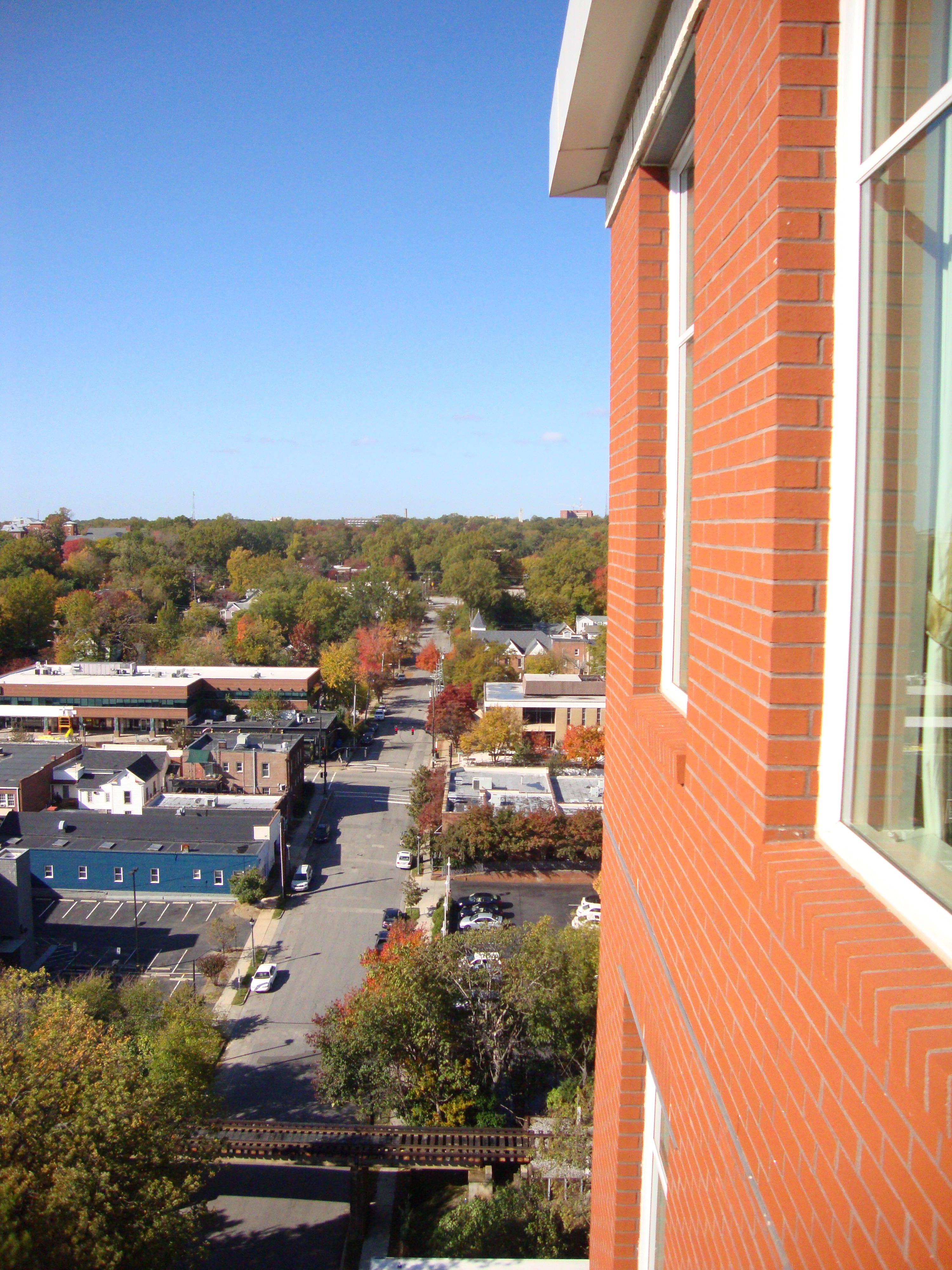
Looking west from the balcony

Daylight savings time ended this morning, and so we gained back the hour we lost in the spring. It’s strange that hours can be moved from one season to another. Anyhow, the leaves are changing, with yellows, oranges, and reds, and the temperatures are cooler. It’s fall.

Tuesday is my usual day for the Early Bird Yoga class at Blue Lotus with Suzanne. I normally get up at 5:30, do half an hour of interval work on the elliptical machine in my building, change out of my sweaty tee shirt into a fresh one, grab my yoga mat, and get to the 6:30 class in good time. Some yoga breathing, lowering, lifting, balancing and stretching is a good way to start the day.

Suzanne’s instructions are direct and clear, and her strength and grace are beautiful and inspiring. Each class is different, and lately she’s been taking us noticeably beyond our comfort zone. She seemed really pleased last week when she got us all up in tripod headstands. This week she had us all try side crow. This did not work at all for anyone (except her). Lately I’ve been working on front crow, and making progress, so perhaps we’ll do side crow one day.

Early Wednesday morning (5:40) I got in a cab to go to the airport. The cab driver was winded, and said he’d been doing jumping jacks to stay awake while waiting for me. It was better, he said, not to drink too much coffee. I agreed. He asked me where I was going, and I told him the bare fact (Boston), thinking I’d rather not get involved in a chat. There’s effort involved, and no guaranteed reward. But after a couple of minutes of silence, I relented. I figured I would try to be a decent chap and throw a lifeline to a lonely soul, so I asked him where he was from. Answer: Gambia, a tiny country in west Africa which I knew almost nothing about, and which he dearly loved.

He was a lively guy, and much more interesting than NPR. He described the government in terms that sounded benign though authoritarian, and improvements in roads, schools, and hospitals. He said that most people were at least part-time farmers and described how they stored crops in their own warehouses. When I asked him about his languages, he said he spoke seven, including three from Gambia and French, Spanish, and German. His English was accented but just fine.

The weather was clear and mild in northern Massachusetts, but there was still snow on the ground from an early season storm that had left many thousands without power. I did a bunch of meetings in Westford and then went down to Cambridge for more. On the flight back I read How to Read Montaigne by Terence Cave. Montaigne (1533-1592) is a startlingly original, modern thinker.

I was inspired to start exploring Montaigne by a few comments in an excellent book I finished a couple of weeks back: The Swerve: How the World Became Modern, by Stephen Greenblatt. The Swerve recounts the discovery in a monastery in 1417 of a copy of an ancient Roman manuscript, and explains how that discovery changed history. The discoverer, Poggio Bracciolini, was a former apostolic secretary for a deposed Pope with a classical education and passion for finding and saving ancient books. The book that was almost lost, On the Nature of Things, was written by Lucretius about 50 BCE. It’s an epic poem that describes the philosophy of Epicureanism. Greenblatt covers a lot of ground, from the philosophers of Greece and Rome, the creation of libraries, the fanaticism of early Christianity, the preservation of books in medieval monasteries, the intrigues of the popes, religious wars, the intellectuals of the Renaissance (including Montaigne), and onward.

In addition to a lot of lively history, there’s a pithy account of the ideas of Epicurus (b. 342 BCE), including the notion that the entire universe is constructed of tiny indivisible building blocks called atoms. This carried with it a view of the world as a natural phenomenon, not something magical created and controlled by gods. Epicurus espoused freedom from superstition and the pursuit of pleasure.

By pleasure he meant not pursuit of wealth or debauchery, but something more nuanced that included a sense of wonder at the beauty of the natural world.. According to Philodemus, a follower of Epicurus, “It is impossible to live pleasurably … without living prudently and honourably and justly, and also without living courageously and temperately and magnanimously, and without making friends, and without being philanthropic.” The Epicureans celebrated friendship, emphasized charity and forgiveness, and were suspicious of worldly ambition.

According to Greenblatt, Epicureans, including Lucretius, believed that the gods existed, but that they couldn’t possibly be concerned with human beings. Along with atoms, Lucretius’s ideas encompassed the notion that living beings have evolved through a long process of trial and error, that the world exists for reasons that have nothing to do with humans, that humans are not unique but rather linked to all other life forms and to inorganic matter, there is no afterlife, that religions are superstitious delusions based on longings, fears, and ignorance, and that by fashioning gods humans became enslaved to their own dreams. Happiness could be attained through discarding delusions through reasons, looking squarely at the true nature of things, and discovering a sense of wonder.

These ideas were, of course, not congenial to early Christians, who almost succeeded in stamping them out. But somehow a copy survived, which Poggio discovered and copied, and which is recopied many times, and ultimately influenced thinkers in subsequent generations up to our own. Greenblatt’s book is a true pleasure.

We saw some professional hockey on Friday night: the Caroline Hurricanes vs. the Washington Capitols. I’d learned from my new assistant about a free bus that runs between downtown and the hockey games, and it turned out that it made a stop right at our building. The bus arrived on time, with many cheerful fans dressed in Hurricanes red and white. We had a good view from box seats.

The Hurricanes started strong but collapsed in the third period and got trounced. As long as the game was close, it was fun. As with soccer, the more hockey I watch, the more I see and appreciate the incredible athleticism. The drama is simple, but effective: there’s a surge of great joy at every goal our team makes, and stab of pain at a goal of the opponents. The bus trip back home seemed slower and much less cheerful.

On Saturday we saw quite a different sort of drama, Siegfried, the third opera of Wager’s Ring cycle, broadcast live from the Metropolitan Opera to all over the world, including the North Hills Cinema. I know the music well from CDs, and love it, but had some qualms about the amount of sitting required: five and a half hours. Wagner is musically dense, and that’s a lot of Wagner. It was, it turned out, for us, incredibly powerful.

The story is about courage. Siegfried is a callow young hero who forges a magic sword and uses it to slay a dragon and an evil dwarf, then travels though a ring of fire to save and win a beautiful maiden. In pre-broadcast comments, Renee Fleming (a great soprano who would know) described Siegfried as the most difficult tenor role in the world. Our Siegfried was Jay Hunter Morris, a relative unknown who subbed in at the last moment and had a total of three performances under his belt when he performed before a worldwide audience of many thousands yesterday. This took true courage. Morris gave a performance for the ages, vocally powerful but nuanced throughout. The entire cast was superb, and the technical effects (especially the ring of fire) were impressive. Fabio Luisi conducted brilliantly. The famous horn solo, the exciting few bars that horn players test and polish their whole lives, was perfect.

This Siegfried, the opera, moved me deeply (tears). Driving home afterwards, I felt wrung out but exhilarated. Sally also loved it, and announced that she was now a Wagnerian. I found this very cheering.

Nixon in China

Saturday afternoon Sally and I made it to North Hills Cinema to see the Metropolitan Opera’s simulcast of Nixon in China by John Adams. I’d been looking forward to the event all season. Although I’d never seen NIC, I’m a big fan of Adams’s music for orchestra. It builds on the spare vocabulary of American minimalism both rhythmically and harmonically towards something that I think of as edgy romanticism.

The idea of an opera about Nixon going to China seemed at first outrageous and possibly hopeless. For those of us who observed Nixon in his lifetime, he seems a most unlikely hero. In retrospect, he looks a lot more moderate, responsible, and intelligent than we liberals thought at the time, particularly in comparison with today’s leading so-called conservatives. But even after giving extra credit, Nixon simply does not fit any standard opera hero template. At his very best, he was awkward, unsexy, and egotistical in an almost comic way.

Nixon in China takes all that and works with it. There is a comic and ironic aspect to the work, but that’s only one of many levels. The historical events are treated with some respect, and the humanity of the characters is acknowledged. But the music takes this material in surprising directions. Along with the simple storyline (the Nixons go to China) are several individual story lines that have the gauzy jumpy quality of dreams.

Adams himself conducted the performance on Saturday. At one intermission, he referred to the Met orchestra as a Ferrari of an orchestra — one of the best in the world — which I think is true. As Nixon, James Maddalena captures something of the weird contradictions of the man, though he seemed to have some difficult moments vocally. Janis Kelly was surprisingly touching as Pat Nixon, and had the vocal strength of a Wagnerian soprano. Kathleen Kim was funny but also terrifying as Madame Mao. It was good to hear the interviews with Peter Sellars, who’s both brilliant and comic, and Mark Morris, who’s brilliant as well.

I liked the music a lot, but I didn’t think this was necessarily the ultimate Nixon production. The Mark Morris dance sections were wonderful, but elsewhere big chunks of Sellars’s staging were surprisingly static. I thought the sets were in places too literal and in places too conceptual. But I would definitely watch it again, and I will be thinking about it for a while.

Thanksgiving in New York

There’s just something electric about New York City! Flying in last Wednesday, I passed close to the Statue of Liberty. Liberty! Then the splendid dense verticality lower Manhattan, and the gleaming skyscraping icons of midtown. It’s Oz!

The original plan for the Tiller clan to meet up for an urban Thanksgiving got off to a rocky start because Stuart, our dog, appeared to be dying. He threw up all over the apartment for a couple of days, and then spent several days in the animal hospital unable to eat. Exploratory abdominal surgery failed to yield a clear diagnosis, but made him weaker still. The day before we were scheduled to leave for NYC, Sally declared she couldn’t stand the thought of his being miserable and alone at the end. He’d been a beloved friend to us for eight years. So she decided to bring him home for hospice care. She urged me to proceed with the plan to meet the kids, who were already there, and so I headed north, with mixed feelings. (P.S. Stuart started improving the day after Sally brought him home and is still with us, frail but looking perkier every day.)

Wednesday afternoon I rendezvoused with Gabe and Jocelyn at the Hotel @ Times Square, a modestly priced (by NYC standards) but clean establishment at a great midtown location. Jocelyn was just back from two months backpacking in Columbia, Ecuador, and Peru, and I was delighted and relieved to see her. Not a day went by during her trip when I didn’t worry about her being kidnapped or worse. She seemed very chipper and glad to be back to the land of flush toilets and hot showers. Gabe came in from Colorado looking handsome, hale and hearty.

I was so glad to see them, and so glad to be back in NYC! When I lived there in my twenties, I could ordinarily not afford taxis, and it was satisfying to take many cab rides with the kids to share some of my favorite places. We went to the Metropolitan Museum and I introduced them to some of my favorite paintings, including the Vermeers. We checked out the amazing holiday windows in the shops on Fifth Avenue, and maneuvered through the mobs of people at Times Square.

On Thanksgiving morning, we’d planned to go to the Macy’s parade, which was passing just a block and a half to the west, but Jocelyn’s left eye was hurting badly, possibly from an infection. We watched a couple of big balloons (including Horton) go by, and then we went looking for medical care. With my iPhone I located an urgent care clinic close by, but it was closed, and the next one we tried was closed as well. We ended up in the emergency room of NYU Bellevue. I expected an endless wait, but it was not so bad. They got us in and out in a couple of hours, and Jocelyn started to feel better soon after.

For Thanksgiving dinner, we went to the upper west side and shared a fine meal with Sally’s brother Bill, his wife Mary Jane, and their daughter Carmen. Everyone was in high spirits, and I was most grateful that they provided delicious non-meat food. Bill was eager to hear more of Jocelyn’s South American journey, and she had some good stories of jungle adventures with snakes and spiders and marathon bus rides. Carmen, now thirteen, seemed amazingly grown up and well spoken. She’d just applied to an arts high school for both acting and piano performance, and played her audition piece, a Haydn sonata.

On Friday, we got a personal tour of the trading floor of the New York Stock Exchange and ate lunch in Chinatown. Late that afternoon, Gabe and I went to the Museum of Modern Art. Gabe was interested in Picasso and Van Gogh, and I never get tired of them. I also spent some time with the J. Pollocks. The big big drip painting finally clicked for me (goose bumps). We met Jocelyn and her friend Pam at a little Italian restaurant on the east side. Pam is an art world person and aspiring critic, and amazingly articulate, warm, and friendly. Gabe mentioned Andy Warhol, and it turned out Pam had some dense but fascinating ideas about him.

On Saturday afternoon, I took the kids to their first live opera at the Met, where we saw Carmen with Elina Garanca in the title role. She was smoking hot! Everything was truly wonderful — singing, sets, costumes, orchestra. And the story is still a bloody shocker. I was a little worried beforehand that the kids might not like it, which, especially in view of the ticket prices, would have been a bummer, but was not — they enjoyed it.

Gabe and Jocelyn had an early flight to Colorado on Sunday, so I was on my own for the last day. I went back to the Met in the morning and spent some time with the Greek and Roman antiquities, looked in on an exhibit of the work of Jan Gossart (Dutch Renaissance), and looked in again at the beloved Vermeers. Then I went to Lincoln Center to see the City Ballet’s Nutcracker.

After many Nutcrackers, I thought I was pretty much nutcrackered out for life, but it turned out not. Somehow it hit the sweet spot of pure joy and wonder. The dancing was delightful, the stagecraft was impressive, and the orchestra sounded great. The child dancers had more-than-usual charisma. Jennifer Ringer as the Sugarplum Fairy seemed a little flat at first, but was gorgeous in the pas de deux. Ashley Bouder was an exquisite Dew Drop. A few weeks earlier I’d ordered a piano version of the Tchaikovsky score and played through parts of it for fun, so I was particularly attentive to the music. It is a masterpiece.

After the ballet, I took a cab to 46th and 12th and visited the aircraft carrier Intrepid, the submarine Growler, and the Concorde. Impressive machines! The Intrepid is a proud veteran of WWII that played a significant role in the Pacific theater and survived some kamikaze hits. The sun was setting at the end of my tour, and the view of Manhattan was beautiful.

Accessing a delightful comic opera

On Saturday I went to my first live opera in a movie theatre: Don Pasquale, transmitted live in HD from the Metropolitan Opera at Lincoln Center to Raleigh’s North Hills Shopping Center (among hundreds of other theatres around the globe). When I lived in New York, I sometimes bought the best tickets I could afford for the Met, which were for standing room. There were always people who left after act one, so it was usually possible to get a good orchestra seat for the rest of the show. And so I learned that the Met is a magical place, with some of the most incredible singing on the planet, and also some of the most astonishing stagecraft. It was great to be back.

I put my interest in opera on the back burner after leaving New York for law school, and with the normal pressures of career and parenthood it fell off the priority list. I’ve come back to it recently with fresh enthusiasm. Part of the reason was my passion for the piano music of Chopin. He enjoyed what we know as the bel canto repertory (Donizetti, Bellini, Rossini), and I started listening to that music to better understand his musical thinking. It’s a kind of time travel, a visit to another culture that’s both submerged and still alive. A lot of bel canto music is not particularly deep, but it is charming and at times brilliant.

Sally took her tennis team to the state finals in Winston-Salem this week, and so was not able to go to Don Pasquale. Diane, Sally’s mom, is a big opera buff, and we went to the show together. I sent an email to the Red Hat local employees’ list offering her ticket for free, and Roger H. accepted. I had not reckoned on how difficult it would be to find parking at North Hills, and we ended up running late. Roger came to the rescue. As we circled the parking lot, he called my cell, and said he was saving good seats for us.

James Levine conducted. The camera faced him as he did the overture. He was very expressive, at times smiling, at times heroic, and full of enthusiasm. He’s had many health problems recently, and I felt privileged to see him, especially in this revealing aspect. He’s a national treasure.

Don Pasquale, which was new to me and to others I talked to, is the 64th of Donizetti’s 66 operas, first produced in 1843 (when Chopin was 33). It’s a comedy that concerns young lovers’ efforts to overcome the aged don, who fancies himself a young lover, and unite. The plot is not especially intricate or elegant, but the main characters are funny and lively, and the music is a masterpiece of the tuneful bel canto genre. Anna Netrebko was fabulous as Norina — flirtatious and sexy, even if she had put on a few pounds, and with an amazingly powerful and flexible voice. Barry Banks was Ernesto, her lover, and though his character was less interesting, his singing was very musical. John Del Carlo was hilarious as the Don. The photography was skillful, with varied angles and close-ups, and the sound quality was good. There were English subtitles. The music was delightful throughout.

Between scenes, the broadcast showed the work backstage on scene changes. I love backstage views, and getting a close up of how the magic works at this state-of-the-art theatre was fascinating. There were also good-natured interviews by Susan Graham with the principals. We also had a chance to get to know Roger, who grew up in Hong Kong, and briefed us on the music scene there. He said he really enjoyed the show.

Opera is an acquired taste. Once acquired, it’s incredibly enjoyable, but initially, it can seem mannered, strange, or boring. The audience for opera has always been limited, partly because it’s been so difficult to try it out and get accustomed to its conventions. It’s wonderful that the Met is using HD simulcasts of high quality to multiply by orders of magnitude the opportunities to experience this great art. I expect there will be many who try it and like it. I’m looking forward to seeing many more.