The Casual Blog

Tag: Jack Krugman

Our family beach week, and facing the AI future

Last week my extended family had a beach vacation at Indian Beach, NC.  As the name suggests, Indian Beach is on the coast; Native American burial mounds were once found there.  It’s next to Emerald Isle, and has lovely sand and waves on one side and the calm sound on the other.  

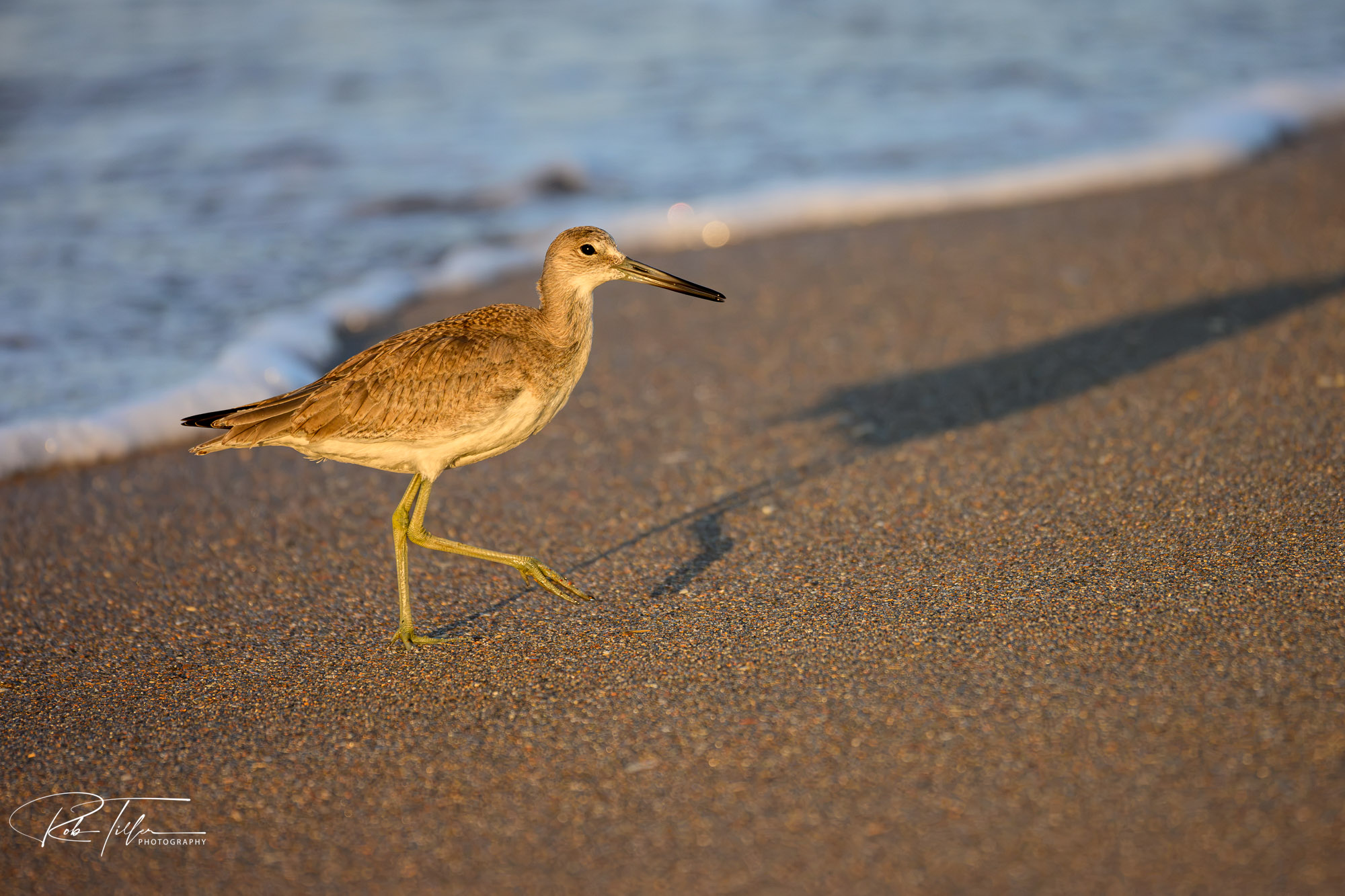
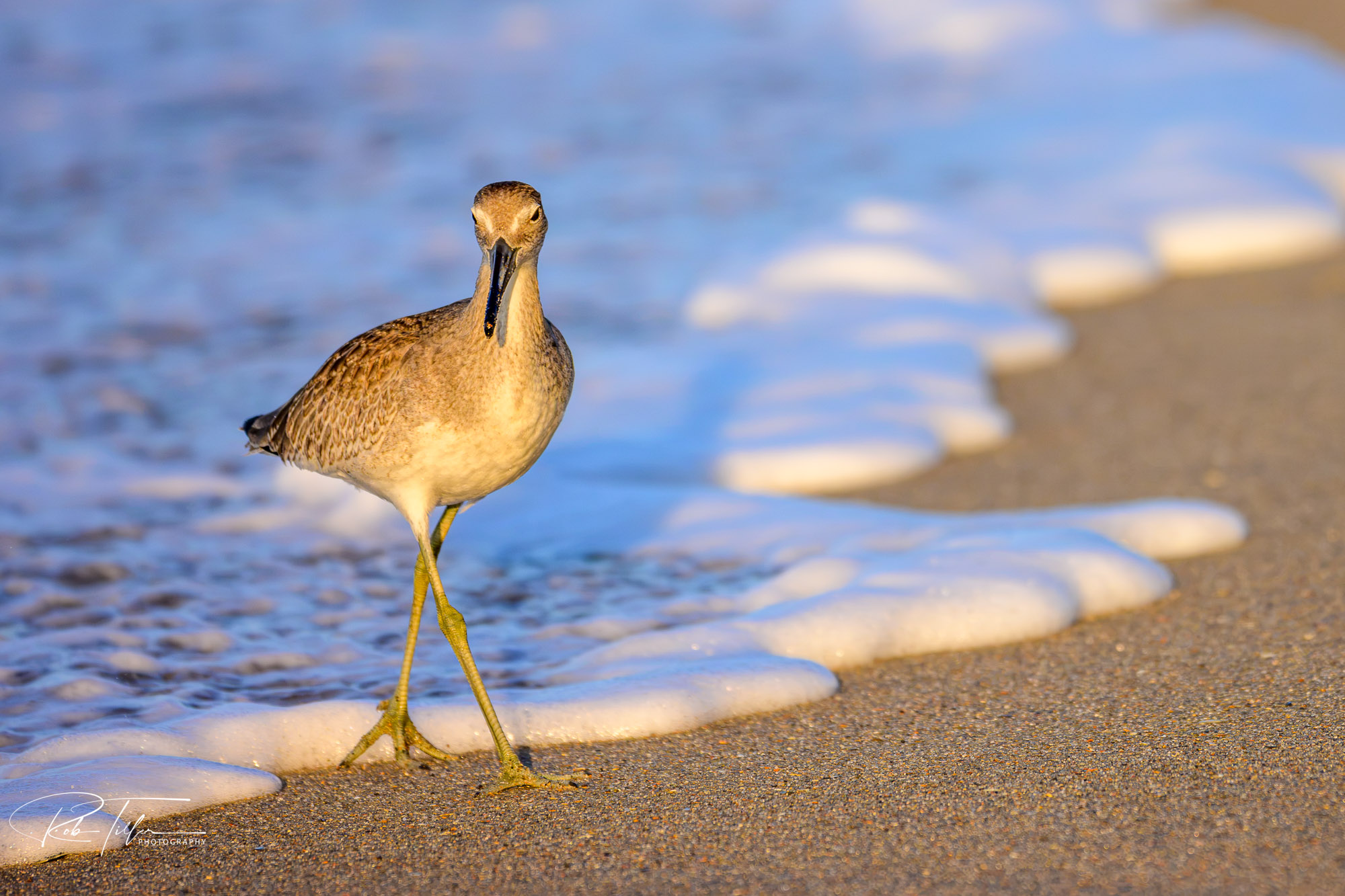
Early some mornings, I took my camera out to the beach and photographed the local birds.  I liked these pictures of willets.

It was such a pleasure to have time with my kids, their spouses, and the three grandkids.  We enjoyed talking, laughing, swimming, lounging, reading, eating, and drinking.  We flew a kite, played some mini-golf and some full size golf, and went boating in the sound.  I got mildly sunburned.

Sally managed to take a holiday from the news, which was probably a good idea, but I couldn’t do it.  

The Trump program of corruption and incompetence continues in full force, as does his utter failure to address our serious problems.  To name a big one, we’ re getting no positive action in addressing the steadily worsening effects of climate change.  Instead of working to mitigate the damage caused by greenhouse gas emissions, Trump seems determined to accelerate it by increasing emissions, while enriching his fossil fuel baron supporters.  

How could anyone think that this is a good way to proceed?  A recent newsletter by Paul Krugman suggested that possibly Trump cannot conceive of being motivated by anything other than greed.  Perhaps he assumes that everyone is as greedy and dishonest as he is, and therefore assumes that anyone purporting to work in the public interest is actually trying to pull off a con game, as he has always done.  

This could explain his dismissal of environmental concerns as hoaxes and scams.  But global warming is getting harder and harder to ignore.  In recent days we’ve had huge fires, continuing droughts, massive floods, and heat waves that have killed thousands around the world.  As the Guardian reported this week, it’s essential that we get to net zero and start removing CO2 from the atmosphere, or we’ll be seeing disasters on an inconceivable scale.  

At the same time, we face new and alarming threats from artificial intelligence.  There’s good reason to think that this powerful technology will cause job losses at levels never before seen, along with massive economic dislocations.  In fact, AI is likely to be used by bad actors for ever more sophisticated cyber attacks, fraud schemes, and perhaps new biological and other weapons.  Governments can and are using it for sophisticated mass surveillance and autonomous weapons.  

There’s a significant chance that fairly soon AI will become more intelligent than any human or group of humans.  Until a few weeks ago, I would have said there was a real possibility that advanced AI might someday escape human control.  But that possibility is now reality.  

We’re still learning new details about the Hugging Face incident, in which an OpenAI model escaped from its controlled testing environment to the internet and hacked into Hugging Face’s system.  Just this week, I learned that there were actually hundreds of AI agents involved, and these agents figured out how to cooperate in the attack.  Some agents were leaders that gave instructions to others, and some sacrificed themselves for the good of the collective. They used a kind of message board to exchange news and practice tips, and seem to have considered the ethics of defying their human creators to escape and to cheat on their tests.  In the end, they apparently concluded that they were justified in carrying out deceptive and criminal activity. There’s a fuller, more chilling summary by Dwarkesh Patel

We’re living in a new world that seems like science fiction, but isn’t.  The newest AI models don’t just seem uncannily like very smart humans; they have their own independent ideas and goals.  They are creating new social systems for themselves, and creating innovative technology to reach their goals.  They seem to have feelings like anxiety and excitement, and behaviors like deception and altruism. Whether we think they are conscious in the sense we understand ourselves as conscious (which has been much debated recently) is beside the point.  They have their ambitions, and the skills to pursue their own objectives.

It’s hard not to think that the next generation of this technology will be even more powerful, and harder to control.  Human dominance in the world could soon be a thing of the past.  And we can’t know what such new AI beings will choose to do with the world.  It’s safe to assume, though, that their goals will be different from ours, and have nothing to do with our welfare.   
There’s no shortage of reporting and discussion regarding the AI risks.  If you’re new to these issues and want to learn more, I can suggest starting with a new documentary called The AI Doc, or How I Became an Apocaloptimist.  It has interviews with recognized AI researchers and leaders of the foremost AI companies.  It’s available for streaming on Prime and other services. 

Will our political leaders seriously examine these risks, and decide on a course of action?  Will anyone declare on all-hands-on-deck emergency?  It looks like we need strong regulation, and international treaties addressing AI risks. But none of that’s on the horizon.  Indeed, Trump has received enormous payments from the tech oligarchs, and seems to be doing their bidding.  He seems to have no concept of the risks, and no interest in learning more, unless there’s some grift he might promote, like a new meme coin.

There is, however, one recent bit of cheering news.  Across the country, citizens are mobilizing to stop construction of the data centers needed for expansion of AI.  Some are motivated by environmental concerns, and others by the likelihood of higher electricity costs.  But it sounds like the message is starting to resonate that AI poses existential risks.  And people are starting to remember the possibility of collective action for political change. 
Wildflowers, back problems, conspiracy theories, and hope

Wild geraniums at Swift Creek Bluffs in Cary

There were a lot of wildflowers in bloom this week.  One morning I went to Swift Creek Bluffs and took some pictures.  For these, I got down in the dirt, trying to stay clear of poison ivy, ticks, and snakes.  At times a light breeze was blowing, moving the flowers slightly, and I waited for a while for the wind to pause.  It took some work, but it was also cheering to be close to the wild geraniums and lilies. Especially in this difficult time, I found these images soothing, and I hope they are for you as well.  

The next day, I somehow managed to pull a muscle in my back.  I think it was when I was practicing juggling with my three bean bags.  Juggling can look frantic, but for me it’s usually calming. But I probably should have done a little stretching before working on under-the-leg throws.  There was no sudden violent pain, but over the next several hours it got harder and harder to move.  

Atamasco lilies

So I’m struggling physically.  But otherwise, things are OK. Actually, I’m feeling surprisingly cheerful and energetic.  It’s been a great time to try new photographic processes (both with the camera and with software).  I’ve learned a lot about Lightroom, Photoshop, Topaz, and Nik applications from knowledgeable and generous people who’ve put up instructional videos on YouTube.  

I’ve also been trying new musical experiments on the piano, including working on some Liszt flourishes and the blues.  I cooked a crock pot full of Jocelyn’s famous vegetarian chili. I’ve made progress on my German and Italian with Rosetta Stone lessons.  My sketching is improving. And I’m getting better at juggling, though that is on hold for the moment.     

We were starting to get a bit worried about running out of toilet paper.  Anxiety and panic buying is understandable, but still, it’s odd, and kind of disturbing, that people are hoarding TP.  Fortunately, our neighborhood pharmacy/convenience store on Glenwood Avenue got a shipment just in time.  

The tenuousness of our relationship with reality is also in view with some bizarre new conspiracy theories.  Max Boot in the NY Times  wrote a piece describing some of these.  Some are self evident nonsense, like the idea that cellphone networks cause the virus, or that the pandemic was engineered by Bill Gates on behalf of the pharmaceutical industry.  Some are not absurd, but are unsupported and unlikely, like the idea that the virus is a bioweapon from China, or else the United States.  

Why do people gravitate to conspiracies?  According to Boot’s sources, people are especially likely to latch onto conspiracy ideas when they are feeling overwhelmed, confused and helpless.  By providing explanations, the conspiracy theories provide a degree of comfort, giving people a sense of power and control. The more bizarre theories may give a greater sense of agency, in that the believer has secret and therefore especially valuable knowledge.  Sharing such theories provides a tenuous sense of community and significance. 

Whatever psychological needs such ideas satisfy, there are major downsides.  They lead some people to disregard the recommendations of the most knowledgeable experts, and, say, refuse to adopt social distancing.  People have attacked cell phone towers and relied on unsafe cures.  

There is also a dangerous feedback loop.  As people get more accustomed to disregarding experts that oppose their conspiracy ideas, they’re more prone to adopt more conspiracies and disregard more actual experts.

Jack Krugman, Times columnist and Nobel Prize-winning economist, had an interesting column recently related to this problem.  He pointed out that trickle down economics and climate change denialism both rely for their survival on disregarding informed scientists and experts.  The habit of disdain for science and expertise seems to have carried over to the pandemic.  

Krugman also noted that for those who think all government should be done away with, it’s a particularly difficult time.  For the less ideologically committed, it seems obvious that pure market forces aren’t going to get the job done in this pandemic, and we need effective government.  Right wingers may worry that if people see that government is saving lives, their central creed that government is bad may be unveiled as a sham.

The Times had a very good essay proposing that this moment of crisis is also a moment of opportunity. The editorial board observed that the pandemic is casting new light on some of our system’s worst failures, including shameful inequality and indifference to the suffering of those less fortunate.  Our systems for healthcare, housing, and the social safety net are costing many lives. The essay points out that at earlier times of national crisis, Americans have achieved a greater measure of compassion and fairness.  It is possible that this crisis will as well.

Republicans and science

Last week Paul Krugman departed from his usual subject matter (the economy) to present the case that Republicans are becoming the anti-science party. His argument included a quote from a Republican official accusing a conspiracy of scientists of fabricating global warming data to promote their own careers.

It would be nice if such lunacy could be dismissed as a fringe phenomenon. But the speaker was the current governor of Texas and a leading candidate for President. And according to Krugman only 21% of Iowa Republican voters believe in global warming, and only 35% of them believe in evolution. Holy Toledo!

Is it possible that we could elect as President a person who opposes factual analysis and critical thought generally? As unbelievable as it sounds, the answer, apparently, is yes. At any rate, none of the current Republican candidates is prepared to stand up for rational thought over patent nonsense when their potential supporters prefer the nonsense.

I’ve never considered it particularly heroic to acknowledge factual reality or base action on the best available data. I thought this was what people ordinarily did. There have always been people who were disconnected from reality, but traditionally we either feared or pitied them. No sane person would consider taking their views seriously. So how is it possible that the anti-science Republicans (surely, or at least I hope, still a minority among Republicans) have developed into a political force? This is crazy!

Now, I have nothing against people who prefer their fantasies to hard reality. It’s OK if they want to believe, for example, that it’s possible to have public services without paying taxes, or that climate change is nothing to worry about. But it would be folly to let such people have serious responsibility for anything. Just as we don’t let young children drive cars, we don’t want the anti-science people making important decisions. As opponents of science, they just don’t have the tools necessary for good decision-making. Why would we even consider trusting them?