The Casual Blog

Tag: Harris

Visiting Yosemite, and some thoughts on lies in America
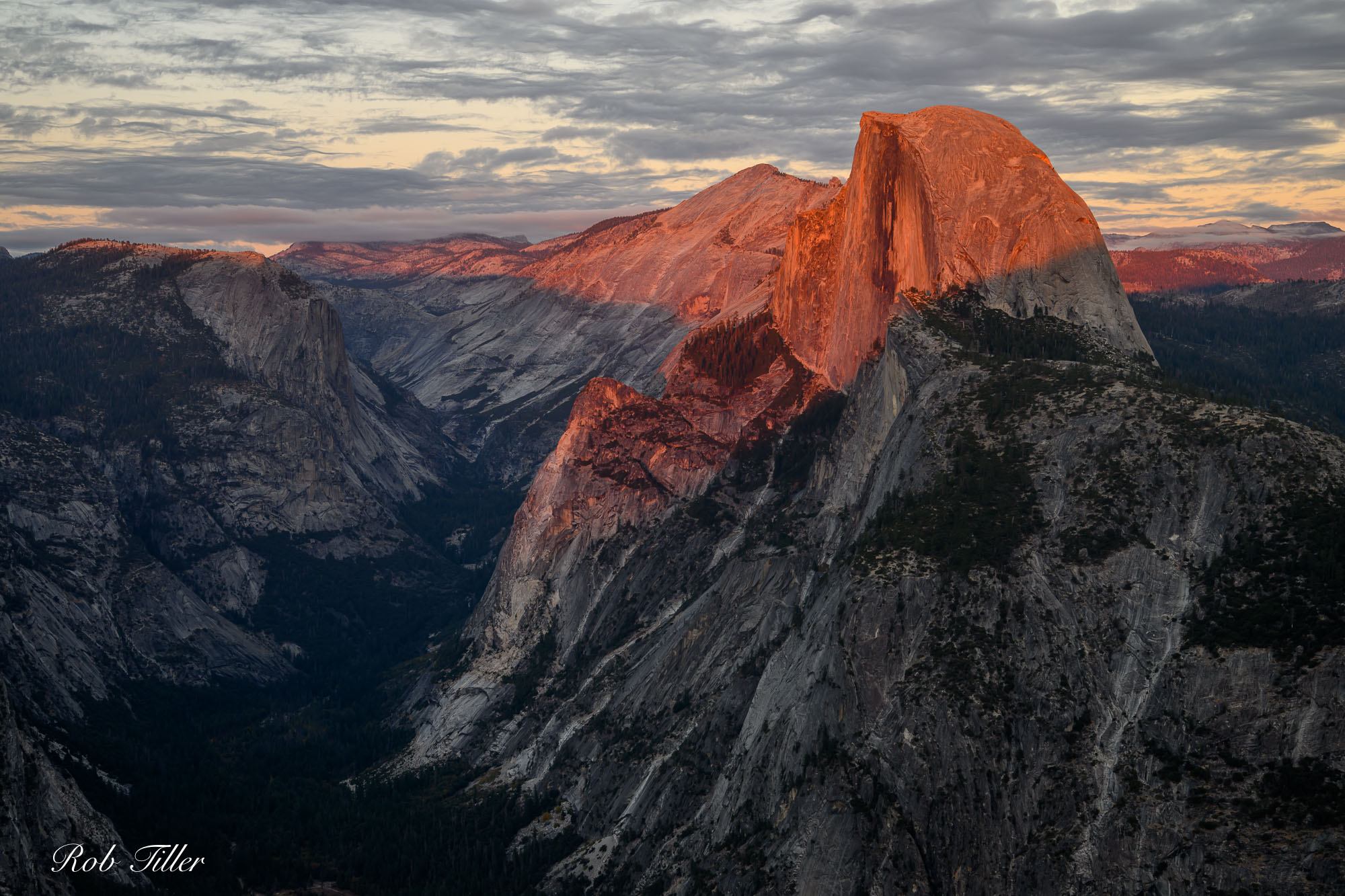
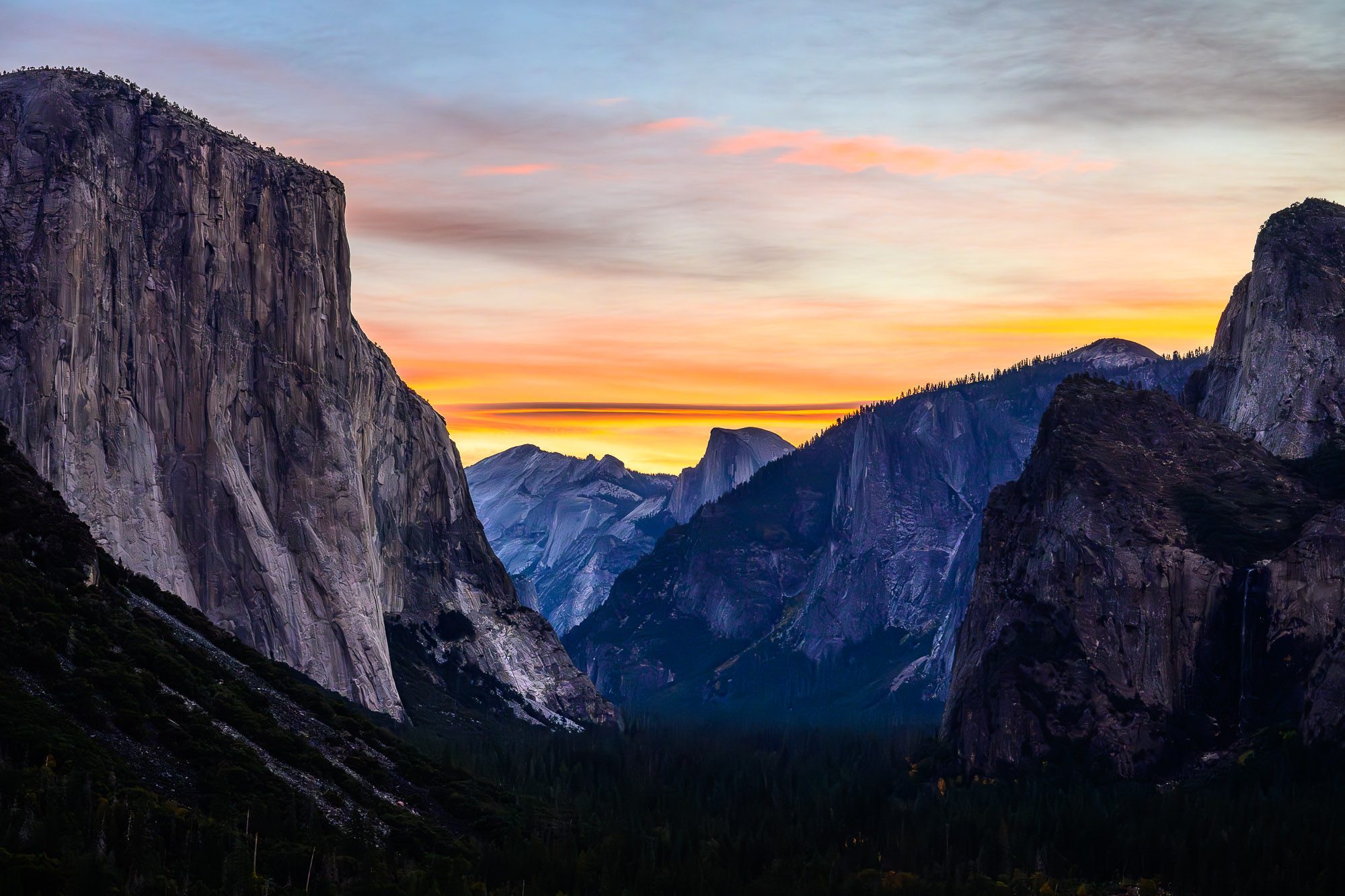
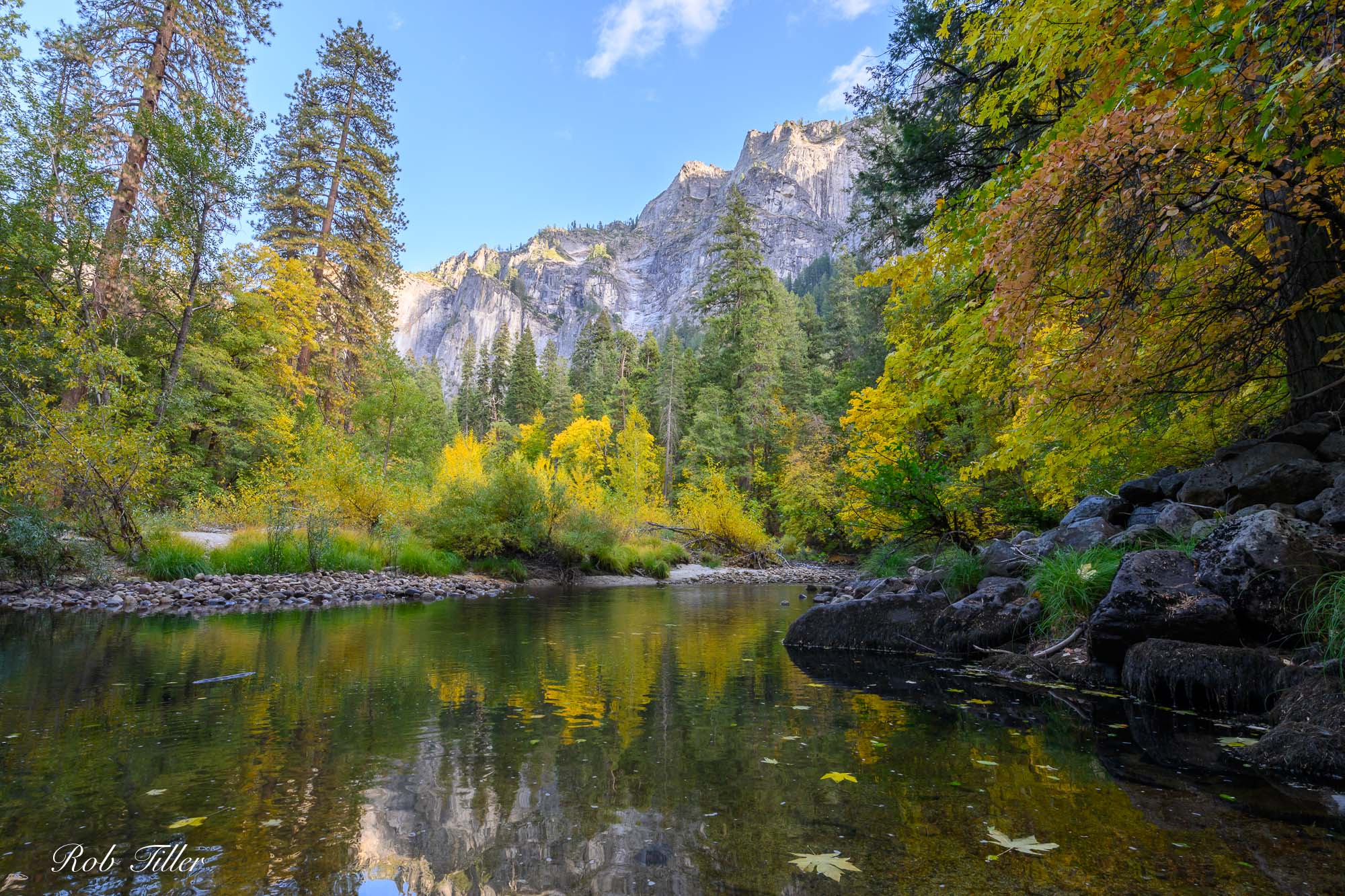
Last week I visited Yosemite National Park, which had resplendent fall colors beneath its towering granite peaks. There I was part of a photography group led by Gary Hart.  Gary was the nicest guy, and he did a great job directing us to some beautiful places and helping us improve our work.  Then I went by myself to Sequoia National Park and Kings Canyon to see the giant sequoia trees and mountain vistas.  The pictures here are a few of the ones I liked.  

My flight from Los Angeles to Raleigh was a red eye that arrived the morning of election day.  I was tired and jet lagged, and underprepared for the election of Trump.  I’d done some phone-bank work for Harris, and managed to convince myself that most likely she would win.  But, of course, she didn’t.  It was a painful disappointment.
The pain is still raw, but I’m trying to be mindful and curious as to how a majority of American voters could have decided that Trump was the better choice.  The pundits I’ve been reading and hearing have various theories, and no doubt there are many factors at play.  But so far I haven’t heard much about what looks to me like the most important one.

There seems to be general agreement that a big part of the Trump success was serious dissatisfaction with the current establishment.  The price of groceries, gas, and housing made people unhappy.  It wasn’t surprising that people wanted those problems addressed.

But why would anyone think that Trump would be the guy to do it?  His prior handling of the economy and other real world problems was erratic and inept.  His policy statements in this campaign were either extremely vague or kooky.  His mental capacity, never great, showed signs of major deterioration.  He was not only untrustworthy; he was constantly and shamelessly dishonest.  

Amazingly, though, Trump’s shameless dishonesty accounted for much of his success. His lack of any sense of shame made him immune to criticism, and willing to lie on a massive scale that overwhelmed all efforts at rational thought.  

Of course, some people felt insecure and frustrated about their economic circumstances.  But Trump managed to turn those understandable feelings into fear and rage.  He relentlessly presented the message that America was a hellscape of economic failure and crime.  Just as relentlessly, he blamed those supposed problems on invading immigrants, whom he characterized as criminals and rapists.  

This was all a preposterous lie.  Crime rates are down from the Trump years, and the economy has by most measures improved.  Immigrants are not invading en masse, and those who are here are more law-abiding than the native born.  Indeed, immigrants are a big part of our economic success story, and that has been true throughout our history.  

So how did the lie work?  Most of us are suspicious of those who look and sound different from us.  Our natural suspicion as to differences in skin color, language, and customs is usually manageable.  After all, we live in a multi-racial, multi-cultural society which in many regards works well.  But Trump stoked normal anxieties into a raging fire of  xenophobia and racism, and proposed a wonderfully simple solution to all those unpleasant feelings – get rid of the scapegoats.

This was certainly not a new idea.  Through the last five hundred years, Jews have been treated as scapegoats by various demagogues.  And of course, various other out groups have been treated as sacrificial victims to solve political problems.  

Indeed, Trump made clear enough that immigrants were not his only scapegoats.  There were scapegoats to fit with a potpourri of resentments and prejudices:  people of color, Jews, Muslims, women, gays, journalists, scientists, lawyers, teachers, liberals, government bureaucrats, and anyone who opposed him were attacked directly or indirectly as enemies of the state.  

Possibly the saddest and most ridiculous scapegoating was on our tiny minority of trans people.  Could anyone actually believe that trans folks were a serious threat?  The Trump people clearly thought so, since they spent many millions of dollars on anti-trans political advertising.  Watching those ads playing over and over, I assumed that most people would see through them as cruel and absurd.  I’m afraid, though, that a lot of people didn’t.  
We live in an age of misinformation that we haven’t yet understood how to correct for.  A great many of our traditional newspapers are no longer in business.  Right-wing media, such as Fox News, the Sinclair Broadcast Group, certain podcasts, and talk radio in the vein of Rush Limbaugh have become the primary news sources for many.  By and large, they amplify Trumpist lies and stay silent as to the truth.

At the same time, social media such as Twitter/X, TikTok, and Facebook are virulent sources of conspiracy theories and confusion.  Traditional, fact-based journalism has a hard time competing.  It’s hard for unwelcome truths to compete with exciting lies.  

Trump’s people appear to have grasped the value of these new opportunities for spreading big lies.  They also learned from twentieth century fascist movements that even obvious and transparent lies may come to be seen as true if repeated often enough.  

To begin to address Trumpism, we can start by calling out the big lies, rather than pretending that all this is normal and acceptable.  It was disheartening that the Harris campaign failed to do this with Trump’s dystopian immigration narrative, and instead adopted a dialed down version of that narrative.  Perhaps they concluded that correcting that scapegoat narrative couldn’t be done in the short time before the election.  In any case, there’s no doubt that it would have been difficult.  Big lies are powerful.   

Now we’ve got a large population infected with the culture of Trumpian lies.  They view actual journalism as fake news, and Trump opponents as Satanist pedophiles.  Arguing with them probably won’t help.  We can and should give them respect, compassion, and kindness.  We should gently and gradually reassure them that we are not Satanists or pedophiles.  Will that, plus measured doses of actual truth, be enough?  

We won’t know for a while.  Given that Trump lies about everything, it’s possible he won’t follow through on his deportation program, locking up his enemies, and the other Project 2025 ideas that would likely crash the economy and cause enormous misery.  If he does, it’s nearly certain that MAGA folks will experience bitter disillusion and massive voters’ remorse.  Perhaps a new and better politics will emerge from the ashes.   

A week at the beach, dogs vs pigs, and the communist menace

Last week we rented a house at the Outer Banks and had a family gathering.  We walked on the beach, played in the pool, rode bikes, read books, watched the Olympics, and enjoyed each other’s company.  I also took some pictures of wild horses at Carova and shore birds at Corolla, a few of which are here.

In photographing the wild horses, I generally try to catch them in natural-looking settings, and avoid showing roads and structures.  But that’s misleading, in a way.  A lot of the time the horses are grazing in front yards and walking along the sandy roads.  They’re really part of everyday human life in that part of the Outer Banks.  It was good to see most of them looking healthy, and some had new foals. 

Some mornings I walked on the Corolla beach looking for sanderlings and other shore birds.  In places there were good-sized flocks of the little sandpipers running away from the waves, then speeding back and probing for edibles with their sharp beaks.  Some of them were not at all shy of me.  But they’d fly off when a jogger got too close, or a dog came bounding toward them.  

Speaking of dogs, Nicholas Kristof had a thought-provoking column recently about dogs and pigs.  He noted how much we love our dogs, which is great, but also odd, considering how cruel we are to farm animals.  The similarities between these mammals seems pretty obvious – indeed, pigs are smarter than dogs – but somehow we’ve worked them into disconnected ethical categories.  We would never eat our dogs, but many of us are quite comfortable eating pigs.  

Kristof put it bluntly:

Just as today we wonder how people like Thomas Jefferson could have been so morally obtuse as to own and abuse slaves, our own descendants will look back at us and puzzle over how 21st-century humans could have tolerated factory farming and the systematic abuse of intelligent mammals, including hogs.


“Farmed animals are just as capable of experiencing joy, social bonds, pain, fear and suffering as the animals we share our homes with,” Leah Garcés, the president of Mercy for Animals, told me.

This is a lot more that could be said about this issue, but I’ll leave it there for now.  Except for noting, I used to think people mostly agreed on the key differences between right and wrong.  But Kristof reminds us that, at least in some important areas, such as animal rights, people differ amazingly in their basic morality.  Another example of surprising differences on basic morality concerns human rights and the rule of law. 

I used to take it for granted that almost everyone in the U.S. had high regard for our traditional constitutional rights (like privacy and freedom of speech and religion), fair elections, and equality under the law.  The various authoritarian alternatives that empower a charismatic strongman leader and silence dissent, such as fascism and Soviet-style communism, were, I assumed, generally viewed as bad.

But with the ascendance of Trump, this assumption is now highly questionable.  Trump has boldly declared his support for measures that are characteristic of authoritarian systems.  These include his intention to pervert the legal system to reward friends and punish enemies, to use the military to quash political protests, vilifying minorities, dehumanizing immigrants, otherizing gender non-typicals, and attacking women’s bodily autonomy.  

His support in the presidential election is currently around 50 percent.  I’m hopeful that some of that 50 percent have not got round to examining what he actually stands for and will reconsider their support.  But a significant portion plainly have no problem with his racism, his xenophobia, his transphobia, his rejection of fair elections, and his calls for violence.  They may be fine people in certain regards, but they have very surprising views on right and wrong.  

I just finished listening to a recent podcast series called Ultra (season 2) that puts our situation in a helpful perspective.  Produced and narrated by Rachel Maddow, it concerns the aftermath of WWII, and focuses on the rise of Joe McCarthy and his movement.  

Most of us were taught that McCarthyism was centered around an exaggerated fear of communism and false claims that communists were taking over the country.  We might know that in the mid 1950s McCarthy as a U.S. Senator rose to power by leading an effort to persecute ordinary people for sympathizing with communism, and in fact destroyed careers and lives.  But McCarthyism seemed relatively short lived.   We, or at least I, didn’t know, before listening to Ultra, that it was a mass movement that was driven in part by Nazi sympathizers and ideology, and its spirit is still with us.

McCarthy was a corrupt politician, a compulsive liar, and a remorseless bully, and his dishonesty and brutality were plain to see at the time.  But there were apparently millions who didn’t mind any of that.  They considered him a great leader and supported his looniest ideas.  Shortly before he died, a project began to move him into the presidency through subverting the election of 1956.  

Ultra doesn’t bother pointing up the parallels between McCarthy and Trump, presumably because they’re so obvious (the lies, the corruption, the sedition).  It is particularly striking that Trump and his team have been trying to label the Harris team as communists.  Alarmist and baseless name-calling is standard operating procedure in Trumpworld, and sometimes, as in McCarthy’s time, it works.  

But somehow I doubt it will work this time.  For anyone not already deeply infected with the Trump virus, any acquaintance with  Harris and Walz will put the lie to Trump’s attempt to label them as communists or otherwise wildly radical.  It remains to be seen whether the great start of their campaign will hold up.  It’s by no means clear that they will win.  But things look more hopeful than they have for a long time. 

The virus is still here, except in Trump’s fantasyland

Having watched almost the entire Democratic Convention, I wanted to give equal time to the Republicans, so I watched their Convention.  Well, I should say, I tried, until I couldn’t take it anymore, and then I read about it the next day.  My tolerance for the alternative reality and fear mongering in real time was generally about 20 minutes.    

Though I don’t understand it, I accept  that there are people who are going to vote for Trump, and I was hoping to get a better grasp of why.  I assume a lot of Trump voters are decent and well meaning, with things in their life experience and psychology that net out to belief in MAGA.  

At the Convention, there were many normal-looking, normal-sounding people singing the praises of Trump.  Some told anecdotes about Trump’s being helpful to particular industries or being nice to particular people, some of which could have been true, though after four years of his nonstop lying, who knows?

I felt like I’d somehow wandered into an alternative universe, where the last four years hadn’t happened.  Everything Trump had done was kind and good, while his cruelty, corruption, and incompetence had disappeared.  It was disorienting, but somehow familiar.  Then I realized where I actually was:  the Fox News universe, a media bubble where Trump  is a god-like being receiving unquestioning adoration, and his impulsiveness and crack pot ideas are lauded as genius.

Some of the character references could have been viewed as ordinary political puffery.  But there were some claims and positions that were dangerous and so flagrantly false that it’s difficult to see how anyone could agree to say them, much less believe them.

A prime example is the Covid-19 pandemic, which Trump and other speakers spoke of in the past tense as having been successfully addressed by Trump.  It pushes the limits of the human capacity for denial and delusion to think either that the pandemic is over or that Trump did a good job handling it.  

As of this writing, the United States is seeing around 40,000 new cases per day, with a total of around 180,000 deaths so far.  The US is the world leader in active cases and total deaths.  Many of these deaths would not have happened under an ordinary, competent president, as shown by the lower infection and fatality rates in other countries.  Trump still has no plan for handling the pandemic, other than trying to distract attention from it and promoting miracle cures, like ingesting bleach.  

In fact, Trump continues to push in exactly the wrong direction by discouraging masks, modeling non-social distancing, and encouraging people to get back to work.  For his speech at the White House on the final night, he showed his profound selfishness and recklessness by having thousands of worshippers crammed together, with no testing and almost no masks.  They may have believed the lie that the pandemic was over.  In any case, with the President’s encouragement, they effectively risked their lives.  What kind of person would do that to his followers?  

As with the pandemic, in other areas the Republican Convention challenged America:  are you going to believe us, or your lying eyes?  With millions unemployed and thousands of businesses shuttered, the Republicans praised Trump for a fantastically successful economy.  He claimed to have kept every promise, and declared victory on health care, job creation, building the wall, foreign relations, building new infrastructure, and other areas in which he has accomplished almost nothing.  He did not attempt to defend his support for Russian interference in our affairs, his energy rules that will worsen the climate crisis, his tax cuts for the wealthy, the criminal conduct of his close advisors, or his own corruption.  

With police shootings continuing and Black Lives Matters protesters still calling for an end to racist police violence, Trump persuaded a few Black supporters to say he’s not a racist.  But he continued to claim that Black people are threatening to burn down our cities and invade the suburbs if he loses.  He did not explain his proposed solution to this imaginary problem, other than to keep repeating the phrase law and order.  Based on his recent activity, this seems to be shorthand for meeting protesters with tear gas and bullets and locking them up.

All this was unsettling, especially when combined with fear mongering about liberals.  Trump and his acolytes warned loudly and absurdly that Joe Biden and the Democrats embodied a dangerous alien ideology (such as communism or socialism) and would turn America into a hellhole.  There were a few quick nods to non-white people, but no acknowledgement or apologies for Trump’s ongoing support of white supremacists, his tear gassing protesters to get a photo op, his Muslim ban, and his putting immigrant children in cages and then losing them.  At least he didn’t threaten to lock up Joe and Kamala — yet.  

How do we know what is reality?  In general, we have a look at the people around us and try to figure out what they agree on.  This usually works well enough for us to stay out of big trouble, but as the Republicans have shown, not always.  Last month, Naomi Oreskes, a history professor at Harvard, wrote a short piece in Scientific American about the intellectual foundations of science, which I thought was so intriguing that I bought and read her new book, Why Trust Science?    

In the SA piece, Oreskes noted that one common reason for rejecting scientific knowledge is that people don’t like information that conflicts with their existing beliefs.  Thus there are many people who deny scientific consensus findings on climate change because they require responses that are inconsistent with their faith in markets and opposition to government, or just with their rosy picture of the world.  

In her new book, Oreskes argues that what is distinctive about science is not that it is always correct (it isn’t), but that it involves a social methodology involving trained and specialized experts that in the usual course corrects errors and leads to improved understanding.  She points out that when we need specialized knowledge to fix a problem, we turn to experts, whether they are plumbers, electricians, or doctors.  Scientists are our experts on the natural world, and they assist and correct each other.  Like all other experts, they sometimes get things wrong, but on the whole they do better than non-experts.  

Anyhow, it isn’t surprising that Trumpists often don’t care to engage when scientists are trying to communicate unwelcome news.  But that’s a big problem with the coronavirus pandemic.  Many if not most of us know people who have been seriously ill or died from the virus.  Adopting the Trump position that the pandemic is no longer of serious concern is a mistake of epic proportions that will lead to a lot more deaths.  We’re at a new frontier in propaganda and politics:  a presidential message that all those deaths are of no consequence, with a political party prepared to advance it.