Duke blossoms, rising ballerinas, AlphaGo’s victory, and the Age of Artificial Intelligence
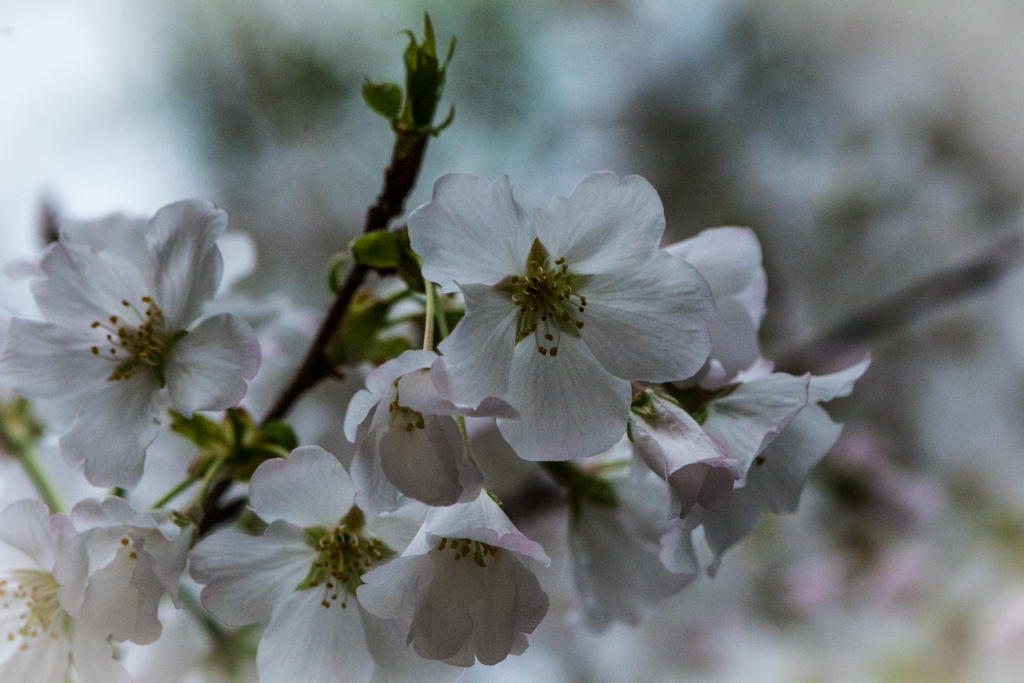
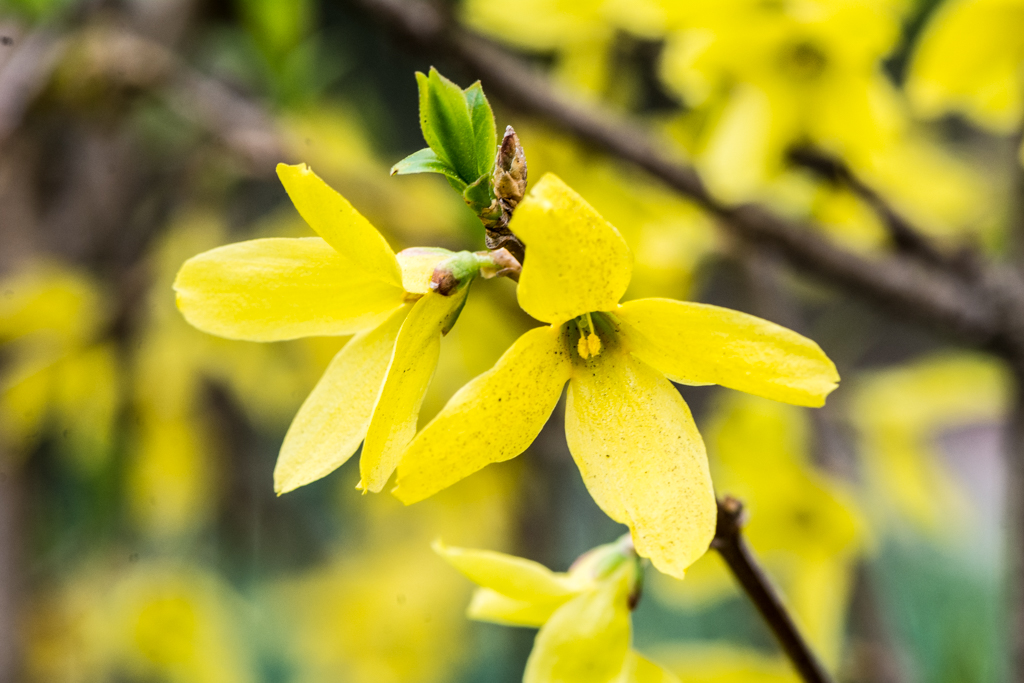
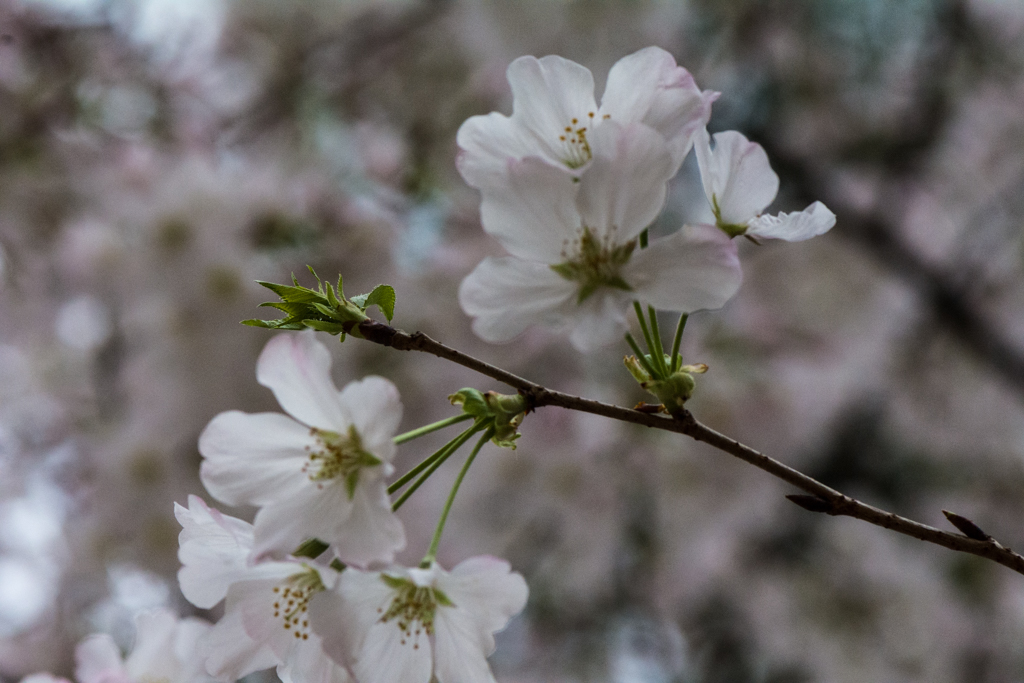
On Saturday morning it was overcast and threatening to rain when I drove over to Durham to see what was blooming at Duke Gardens. Did you know it’s one of the top 10 public gardens in the U.S.? It is certainly a treasure. There were new cherry blossoms, tulips, and many other delights. I shot 234 closeup images with my Nikkor 105 MM macro lens before it began to drizzle. I got a few that revealed aspects I’d never looked at as closely before, and expressed some of my own joy of the season. The images here are all from Duke, except for the daffodils, which I took late Friday afternoon at Fletcher Park.
That evening we saw the Carolina Ballet with new works by Zalman Raffael and Robert Weiss. Raffael’s new piece was set to Rachmaninoff’s Rhapsody on a Theme by Paganini. As it launched, I worried a little that 24 variations to this familiar music could easily bog down, but far from it: this was a lively, kinetic work that developed organically with continual surprises. Working in the Balanchine tradition, like Weiss, Raffael makes ballets that are abstract but intensely expressive. He’s so accomplished and assured already, and so young!
In the performance we saw, some of the younger company members who normally are in the background stepped into the spotlight, and performed beautifully. I very much enjoyed the subtle elegance of Courtney Schenberger and Rammaru Shindo in Balanchine’s Valse Fantaisie. Ashley Hathaway, with Adam Crawford Chavis, was really sensual and powerful in the adagio Meditation from Thais. Amanda Babayan was a lovely Miranda in Weiss’s Tempest Fantasy. So much talent, developing quickly, like those blossoms. It’s a privilege to receive their art.

Speaking of surprising progress, this week AlphaGo finished its five game Go match with a popular Korean grandmaster in Seoul, in which it prevailed 4-1. It was a significant moment in the advance of artificial intelligence. I learned the rudiments of Go a few years back. It seems so simple at the very beginning, as you take turns laying single stones, black or while. But it is massively more complex than chess. There are more possible moves than there are atoms in the universe.
Anyhow, I tweeted congratulations to the Google team, though with mixed feelings. The Age of AI is on its way, and the prospects are both good and bad. Computers are mastering tasks that we thought impossible for them a few years ago, like driving, reading MRIs, and reviewing legal documents. In the new Age of AI, there will be safer cars, more reliable medical care, and cheaper legal services. On the down side, a lot of jobs are going to disappear forever. We’re going to need to figure out what to do about having a lot of redundant humans. We’ll probably need to come up with a system with a guaranteed minimum wage, which seems impossible at present from a political perspective.

But maybe the AI on the way can help with some of our political and mental problems. I’m thinking particularly of our magical thinking – areas where our biases and received ideas prevent us from seeing what’s right in front of us. The drug war is an example. After several decades of being taught that particular plants and chemicals are inherently evil and threatening, and that we need to fight those drugs, we have trouble conceiving of any alternative. It makes no difference that the drug war never moves any closer to victory, and that the human collateral damage is enormous. The facts that do not fit with our long held beliefs are suppressed or ignored.
Climate change denialism is another example of magical thinking. Another one: the Republican mainstream belief that cutting taxes will lead to increased growth, higher tax revenues, and balanced budgets. The New Yorker had a good essay by James Surowiecki this week explaining that decades of evidence now show that, as you might initially expect, cutting taxes leads to lower tax revenue. But current Republican leaders and followers, like those before them, devoutly and streadfastly deny the obvious.

The WSJ had a must-read essay this week by David Gelernter on AI. Gelernter, a professor of computer science at Yale, argues that the intelligence of our machines will inevitably surpass our own, and we cannot reliably predict what will happen after that. Thinks of machines with IQs of 500, or 5000. They could be dangerous, perhaps viewing us as we view houseplants. Gelernter suggests that in experimenting we exercise the kind of caution we use with biological weapons.
But hey, assuming that the machines do not decide to enslave or kill us, they could really be helpful. They would almost surely see more possible moves in addressing difficult problems, like global warming. Perhaps it would be so obvious that they’re reliable authorities that we would give up on magical thinking. Then again, such thinking is almost perfectly hermetic and impervious.














 The Casual Blog