The Casual Blog

Tag: dogs

A week at the beach, dogs vs pigs, and the communist menace

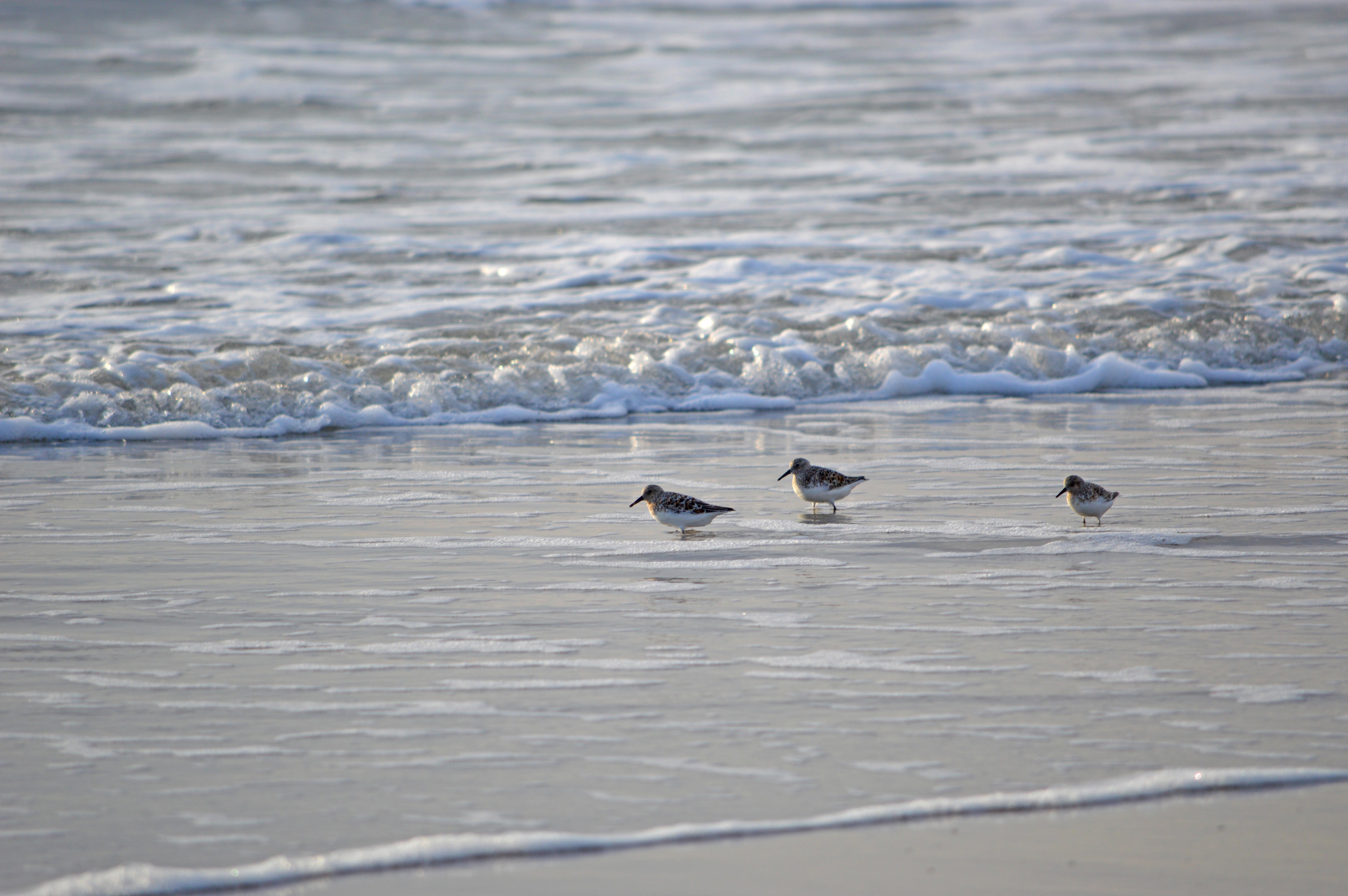
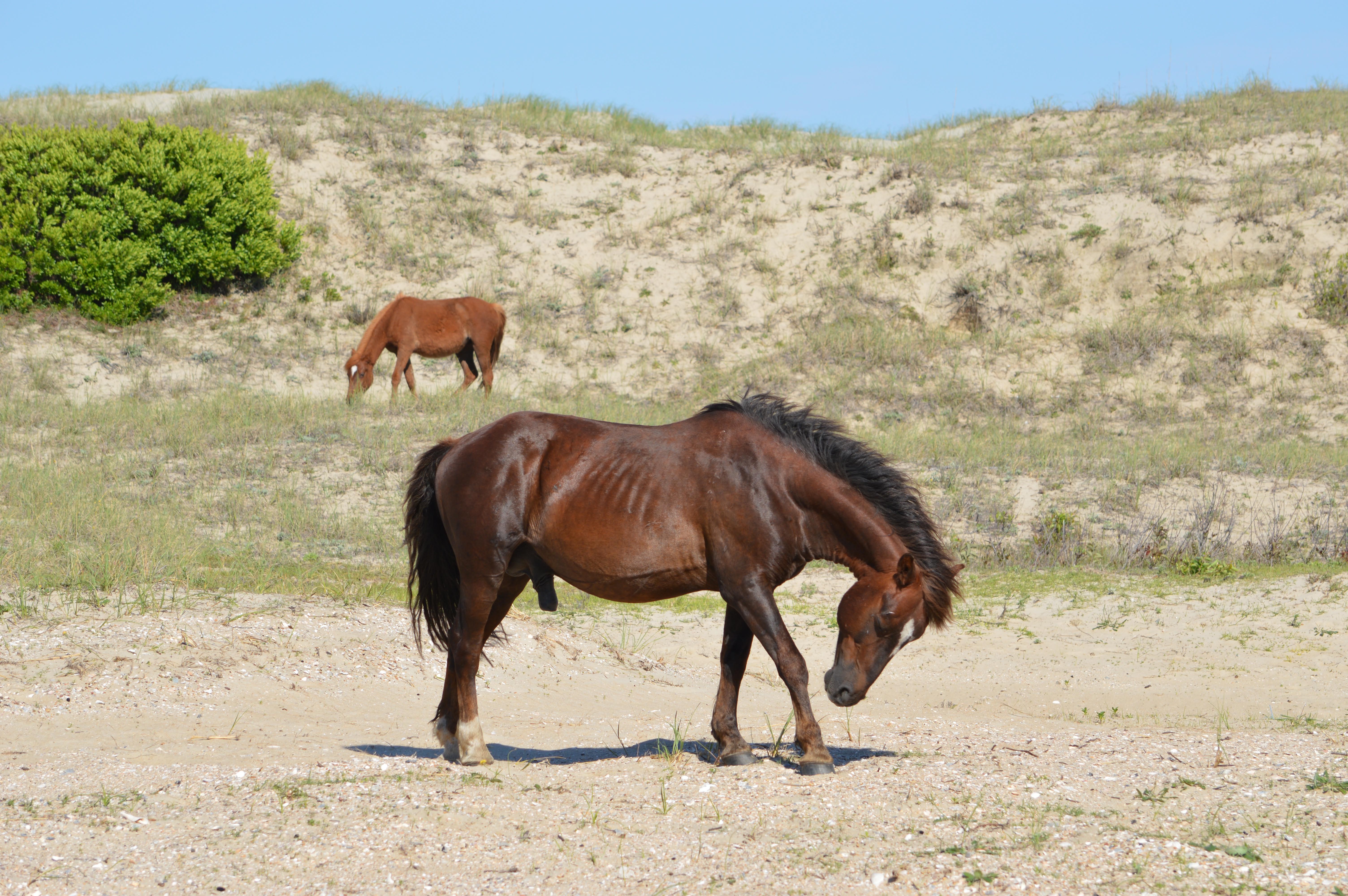
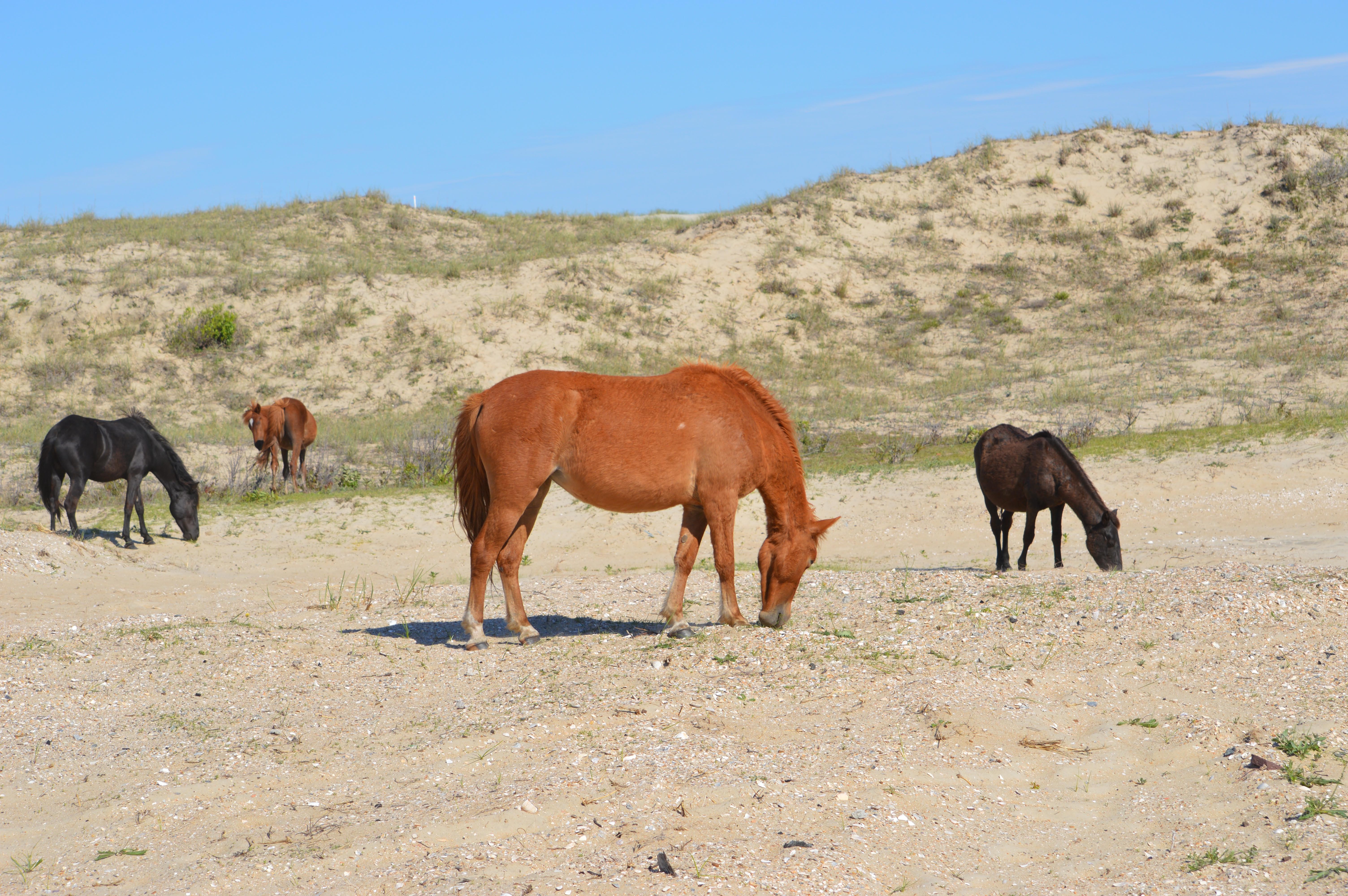
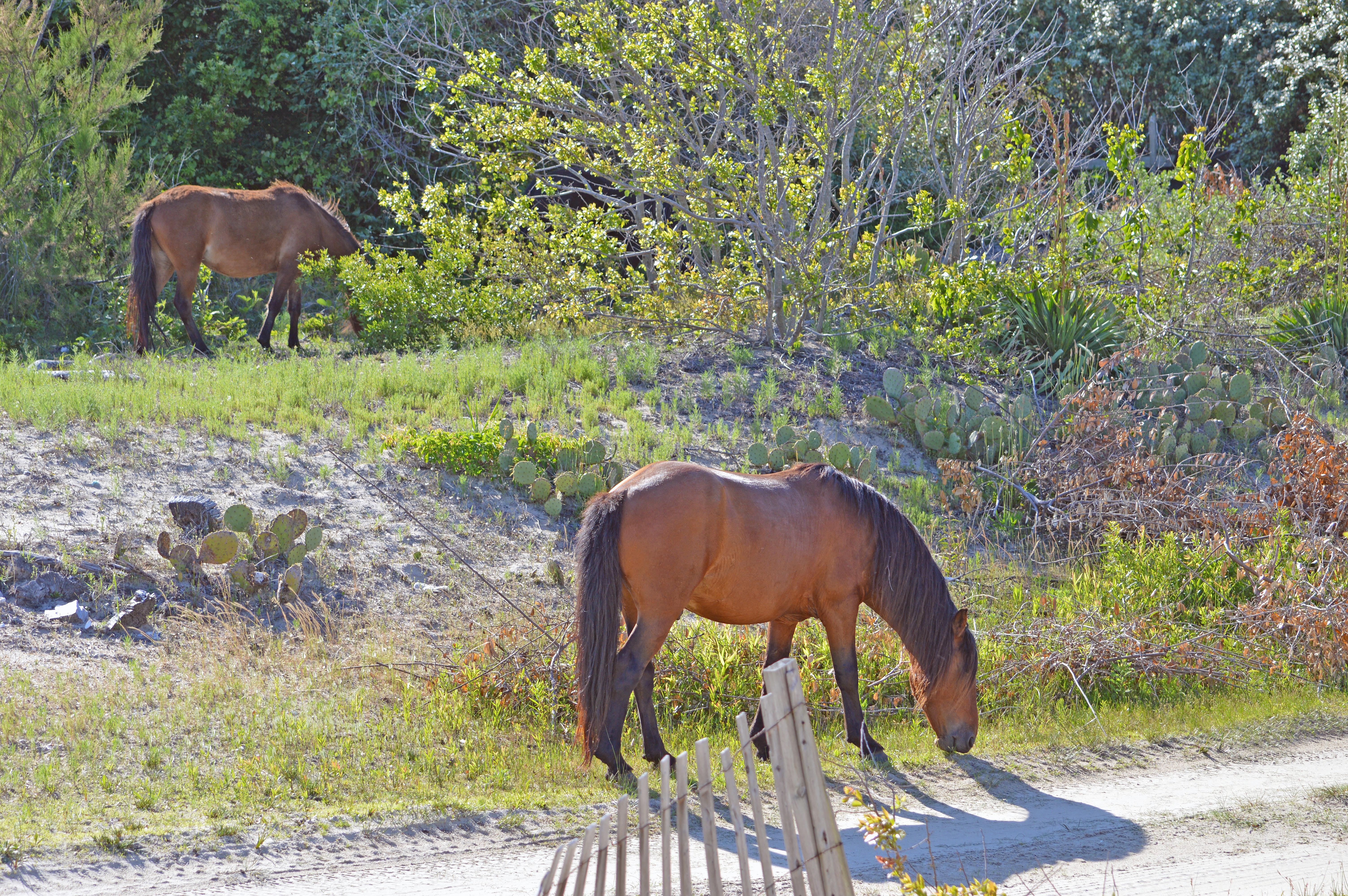
Last week we rented a house at the Outer Banks and had a family gathering.  We walked on the beach, played in the pool, rode bikes, read books, watched the Olympics, and enjoyed each other’s company.  I also took some pictures of wild horses at Carova and shore birds at Corolla, a few of which are here.

In photographing the wild horses, I generally try to catch them in natural-looking settings, and avoid showing roads and structures.  But that’s misleading, in a way.  A lot of the time the horses are grazing in front yards and walking along the sandy roads.  They’re really part of everyday human life in that part of the Outer Banks.  It was good to see most of them looking healthy, and some had new foals. 

Some mornings I walked on the Corolla beach looking for sanderlings and other shore birds.  In places there were good-sized flocks of the little sandpipers running away from the waves, then speeding back and probing for edibles with their sharp beaks.  Some of them were not at all shy of me.  But they’d fly off when a jogger got too close, or a dog came bounding toward them.  

Speaking of dogs, Nicholas Kristof had a thought-provoking column recently about dogs and pigs.  He noted how much we love our dogs, which is great, but also odd, considering how cruel we are to farm animals.  The similarities between these mammals seems pretty obvious – indeed, pigs are smarter than dogs – but somehow we’ve worked them into disconnected ethical categories.  We would never eat our dogs, but many of us are quite comfortable eating pigs.  

Kristof put it bluntly:

Just as today we wonder how people like Thomas Jefferson could have been so morally obtuse as to own and abuse slaves, our own descendants will look back at us and puzzle over how 21st-century humans could have tolerated factory farming and the systematic abuse of intelligent mammals, including hogs.


“Farmed animals are just as capable of experiencing joy, social bonds, pain, fear and suffering as the animals we share our homes with,” Leah Garcés, the president of Mercy for Animals, told me.

This is a lot more that could be said about this issue, but I’ll leave it there for now.  Except for noting, I used to think people mostly agreed on the key differences between right and wrong.  But Kristof reminds us that, at least in some important areas, such as animal rights, people differ amazingly in their basic morality.  Another example of surprising differences on basic morality concerns human rights and the rule of law. 

I used to take it for granted that almost everyone in the U.S. had high regard for our traditional constitutional rights (like privacy and freedom of speech and religion), fair elections, and equality under the law.  The various authoritarian alternatives that empower a charismatic strongman leader and silence dissent, such as fascism and Soviet-style communism, were, I assumed, generally viewed as bad.

But with the ascendance of Trump, this assumption is now highly questionable.  Trump has boldly declared his support for measures that are characteristic of authoritarian systems.  These include his intention to pervert the legal system to reward friends and punish enemies, to use the military to quash political protests, vilifying minorities, dehumanizing immigrants, otherizing gender non-typicals, and attacking women’s bodily autonomy.  

His support in the presidential election is currently around 50 percent.  I’m hopeful that some of that 50 percent have not got round to examining what he actually stands for and will reconsider their support.  But a significant portion plainly have no problem with his racism, his xenophobia, his transphobia, his rejection of fair elections, and his calls for violence.  They may be fine people in certain regards, but they have very surprising views on right and wrong.  

I just finished listening to a recent podcast series called Ultra (season 2) that puts our situation in a helpful perspective.  Produced and narrated by Rachel Maddow, it concerns the aftermath of WWII, and focuses on the rise of Joe McCarthy and his movement.  

Most of us were taught that McCarthyism was centered around an exaggerated fear of communism and false claims that communists were taking over the country.  We might know that in the mid 1950s McCarthy as a U.S. Senator rose to power by leading an effort to persecute ordinary people for sympathizing with communism, and in fact destroyed careers and lives.  But McCarthyism seemed relatively short lived.   We, or at least I, didn’t know, before listening to Ultra, that it was a mass movement that was driven in part by Nazi sympathizers and ideology, and its spirit is still with us.

McCarthy was a corrupt politician, a compulsive liar, and a remorseless bully, and his dishonesty and brutality were plain to see at the time.  But there were apparently millions who didn’t mind any of that.  They considered him a great leader and supported his looniest ideas.  Shortly before he died, a project began to move him into the presidency through subverting the election of 1956.  

Ultra doesn’t bother pointing up the parallels between McCarthy and Trump, presumably because they’re so obvious (the lies, the corruption, the sedition).  It is particularly striking that Trump and his team have been trying to label the Harris team as communists.  Alarmist and baseless name-calling is standard operating procedure in Trumpworld, and sometimes, as in McCarthy’s time, it works.  

But somehow I doubt it will work this time.  For anyone not already deeply infected with the Trump virus, any acquaintance with  Harris and Walz will put the lie to Trump’s attempt to label them as communists or otherwise wildly radical.  It remains to be seen whether the great start of their campaign will hold up.  It’s by no means clear that they will win.  But things look more hopeful than they have for a long time. 

Saying farewell to our best dog

This week we said goodbye for the last time to Stuart, our beloved family dog. He was a long-eared, short-legged Beagle-Basset mix with soulful eyes and a waggly tail.  Stu was with us a long time — from puppyhood to almost 15 (about 100 in dog years).  In his younger days, he was playful and athletic, always eager for walks, and relishing every meal.  He was a sweet, friendly little guy who greatly liked being petted, and he made many friends in our building during elevator rides.  

In these last months, he lost almost all of his hearing and much of his eyesight, and with hip problems he found it increasingly painful to walk. His tail wagged less and less.  

Now Stu’s suffering is over, and I’m glad for that.  In this regard, we often treat our pets better than our fellow humans, accepting death as a reality and helping our animals to have a good death.  But it’s hard.  He added sparkle to the world.  We loved him, and he loved us.  In that way, he became part of us, and changed us for the better.  I keep thinking he’s here, just in the next room, and then remember with a sharp pang that he’s gone.

Speaking of complex emotions, I recommend the edition from last week of the podcast This American Life .   The first of its three stories related to a former physicist talking about Fermi’s Paradox, which raises the question of why, given the evidence we have that complex life can arise, we haven’t encountered any evidence of it elsewhere in the universe.  The reporter felt sadness in thinking we’re existentially alone, and discovered that those around him couldn’t relate to that sadness.  

The second story related to a couple in couple’s therapy with serious problems who discovered that talk was not the primary solution.  The third was about a delightful 9-year-old girl who kept asking her father annoyingly big questions about the world.  He worked on long scholarly answers, only to find that what she was really looking for was to connect with him.  In short, three explorations of the modes of loneliness and possible paths to redemption.  

A fun Memorial Day weekend on the Outer Banks — eating, talking, running, looking at wild horses and birds, and reading

Jane and Keith's beach house in Corolla, NC

Jane and Keith’s beach house in Corolla, NC

Again this year, my sister Jane invited us out to the Outer Banks for Memorial Day weekend, and we happily accepted. The beach is a good place to relax and restore. After weighing the pros and cons, we decided to drive out in Clara, who with her sporting heritage rides rougher than the Suburu Outback, but is also prettier and more exciting. Traffic wasn’t bad. We went at the speed limit plus 9, and the heavy complement of state troopers along I-64 tolerated the overage.

Charlie the Boogle

Charlie the Boogle

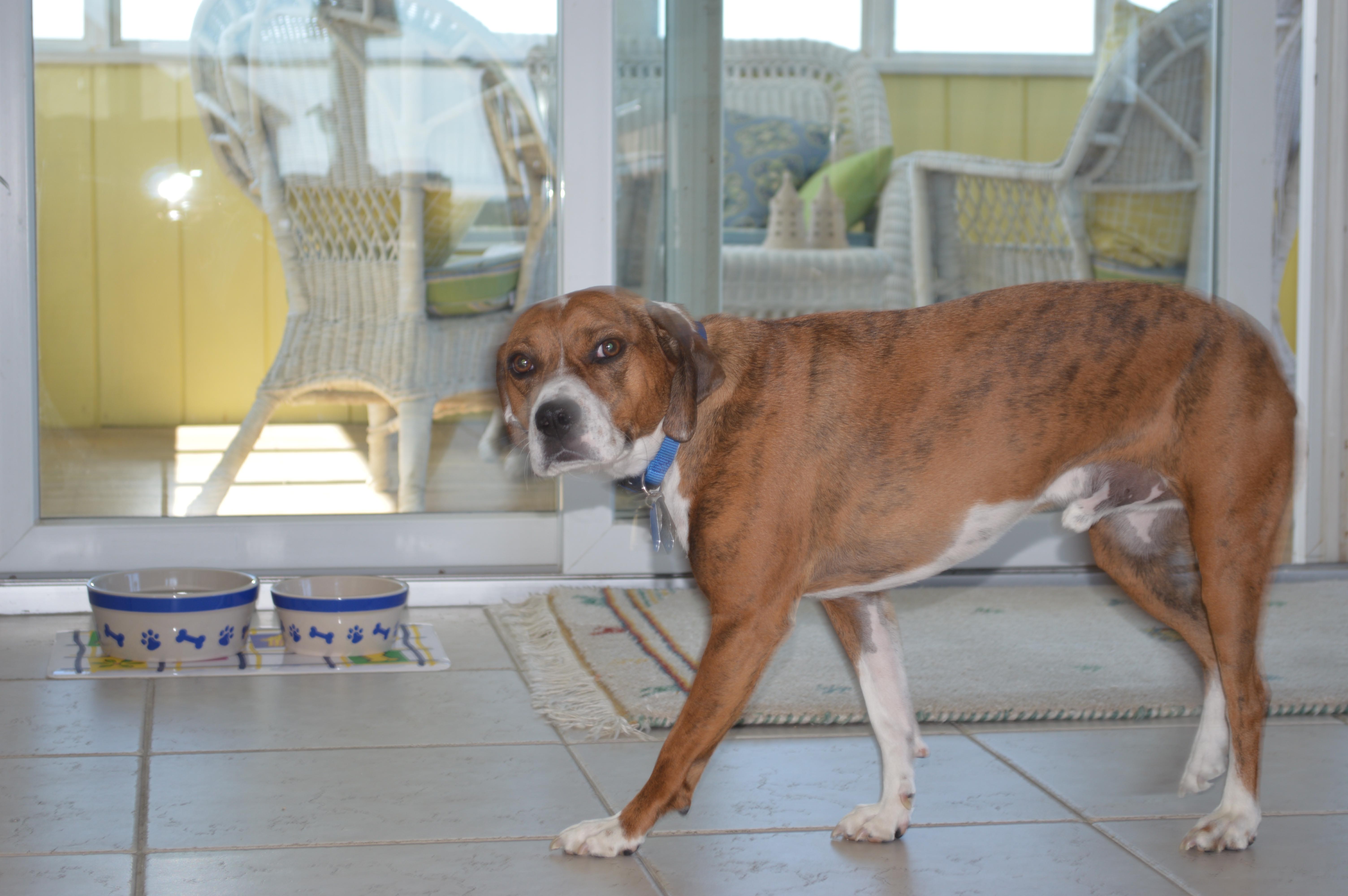
We got to Corolla about 9:30 p.m., and everyone was up and happy to see us. We enjoyed a glass of Keith’s merlot before bed. We also met their new dog, Charlie, a friendly beagle-boxer, or boogle. The camera made him a little nervous.

The next morning was sunny but chilly and windy. Keith prepared an egg casserole and fruit salad for breakfast, and we caught up on family news.
13 05 24_1703
We also talked a bit about technology and biology. I briefed them on some of the progress on understanding the human microbial community, which I read more about in the piece by Michael Pollen in last Sunday’s NY Times. Pollen wrote, “It turns out that we are only 10 percent human: for every human cell that is intrinsic to our body, there are about 10 resident microbes . . . . To the extent that we are bearers of genetic information, more than 99 percent of it is microbial. And it appears increasingly likely that this ‘second genome,’ as it is sometimes called, exerts an influence on our health as great and possibly even greater than the genes we inherit from our parents.”

This is mind-blowing, paradigm-shifting stuff. One researcher says “we would do well to begin regarding the human body as ‘an elaborate vessel optimized for the growth and spread of our microbial inhabitants.’” We’re just starting to understand some of the links between human health and microbial health. It’s a huge mistake, which most of us have previously made, to think of all germs as things that should be exterminated. Certain bacteria are essential to health, and problems in the microbiome appear to relate to chronic disease and some infections. Human health can be thought of as “a collective property of the human-associated microbiota . . . that is, as a function of the community, not the individual.”

The Pollen article is a great introduction to this subject, which is also discussed in The Wild in Our Bodies by Robert Dunn.
13 05 25_1642_edited-2

After breakfast, I went out for a run with my nephew David, now 13 and growing fast. David has fallen in love with lacrosse and is getting lots of playing time as his team’s goalie, so I figured he would probably run me into the ground. Instead, he developed a major cramp problem, and so we did more walking than running. I learned about his prize-winning science fair project, which involved growing and measuring characteristics of a fast growing plant called brassica rapa.
13 05 25_1640_edited-1
13 05 26_1751

Keith cooked an amazing lunch – cucumber soup and pasta asparagus salad. Then we loaded up in the 4WD sport ute, and drove north on the beach looking for wild horses. Past the lifeguard station, we turned left into the sand roads through the gnarled trees and bushes of the maritime forest. We found several horses. It’s cheering somehow that these big animals can make their own way in small wild areas surrounded by development. We also saw a fox.
13 05 25_1571
13 05 25_156013 05 25_1608_edited-1

I had time for some reading in the afternoon, and got a good start on Things Fall Apart by Chinua Achebe, the Nigerian writer who died recently. This is his first and most famous book, and perhaps the most famous work of African literature to date. I was immediately hooked. The prose combines the muscular economy of Hemingway at his best with the vision of Faulkner, with an overarching tenderness and humanity. The story is about African village life, which, it turns out, has many of the same emotional components as our lives.

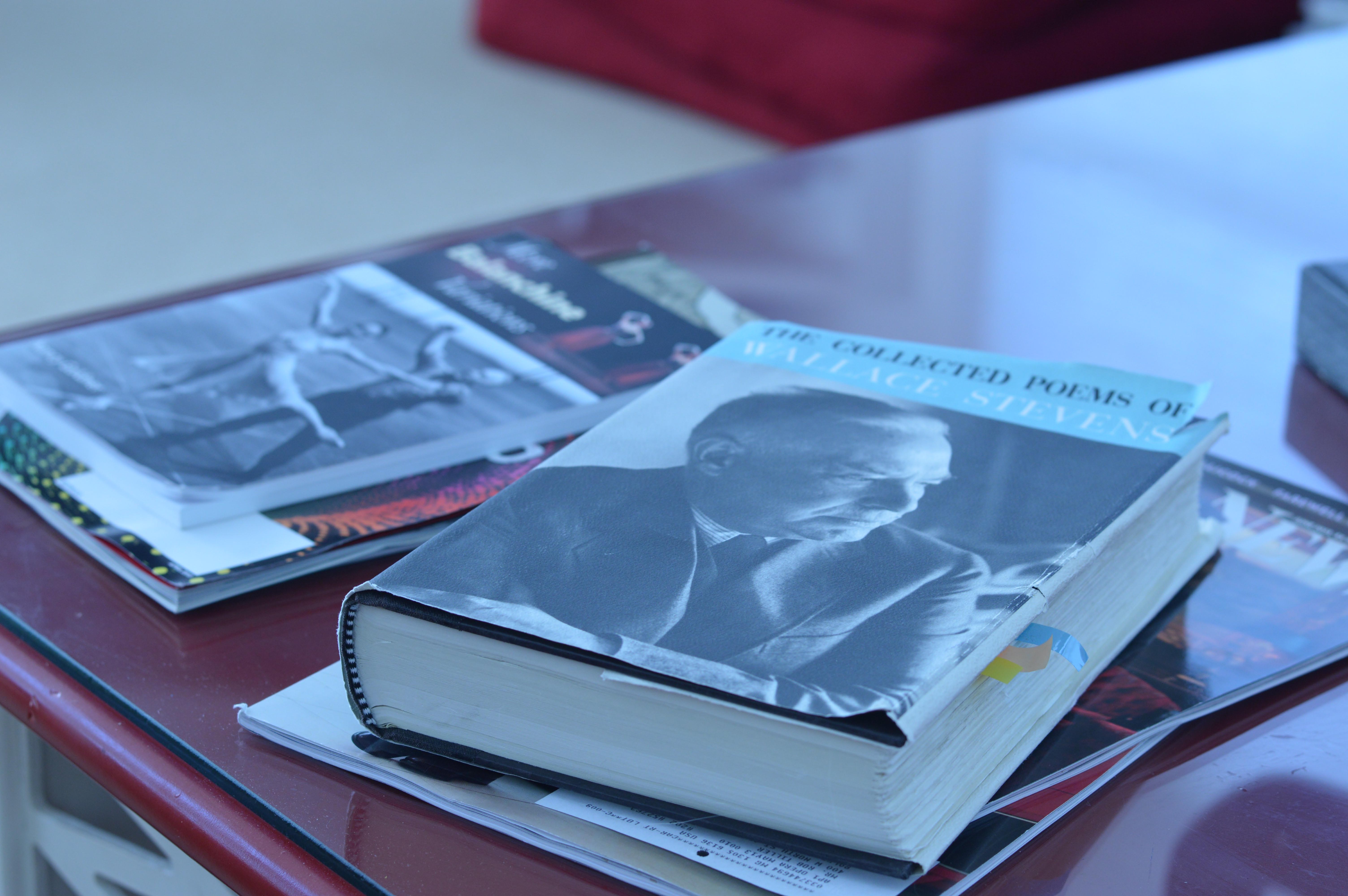
I also read more of More Balanchine Variations by Nancy Goldner, which is a book about various Balanchine ballets. Goldner is a generous-hearted critic, and she loves her subject. It’s so hard to bring dance to life other than by dancing, but she comes close.
13 05 25_1678

One other major bit of reading was chunks of the complete poems of Wallace Stevens. I came close to reading them all last year, before shelving the project some months back. Stevens is challenging, and not uniformly great – some of the poems seem mannered or even mad. But the greatest poems are both beautiful and profound. My favorite is still Sunday Morning, which is a sly, subversive, arresting, sensual, and humorous. I memorized it, and it still gives me goosebumps at the end, with its powerful image of “casual flocks of pigeons make/ ambiguous undulations as they sink,/ downward to darkness, on extended wings.”

Stevens proposes this joy in nature as an answer to religious asceticism, and it works for me. It also makes me look at the world with different eyes. For example, in back of Jane and Keith’s beach house, purple martins are still numerous, and still flying fast feeding on insects. It was a pleasure to watch them.

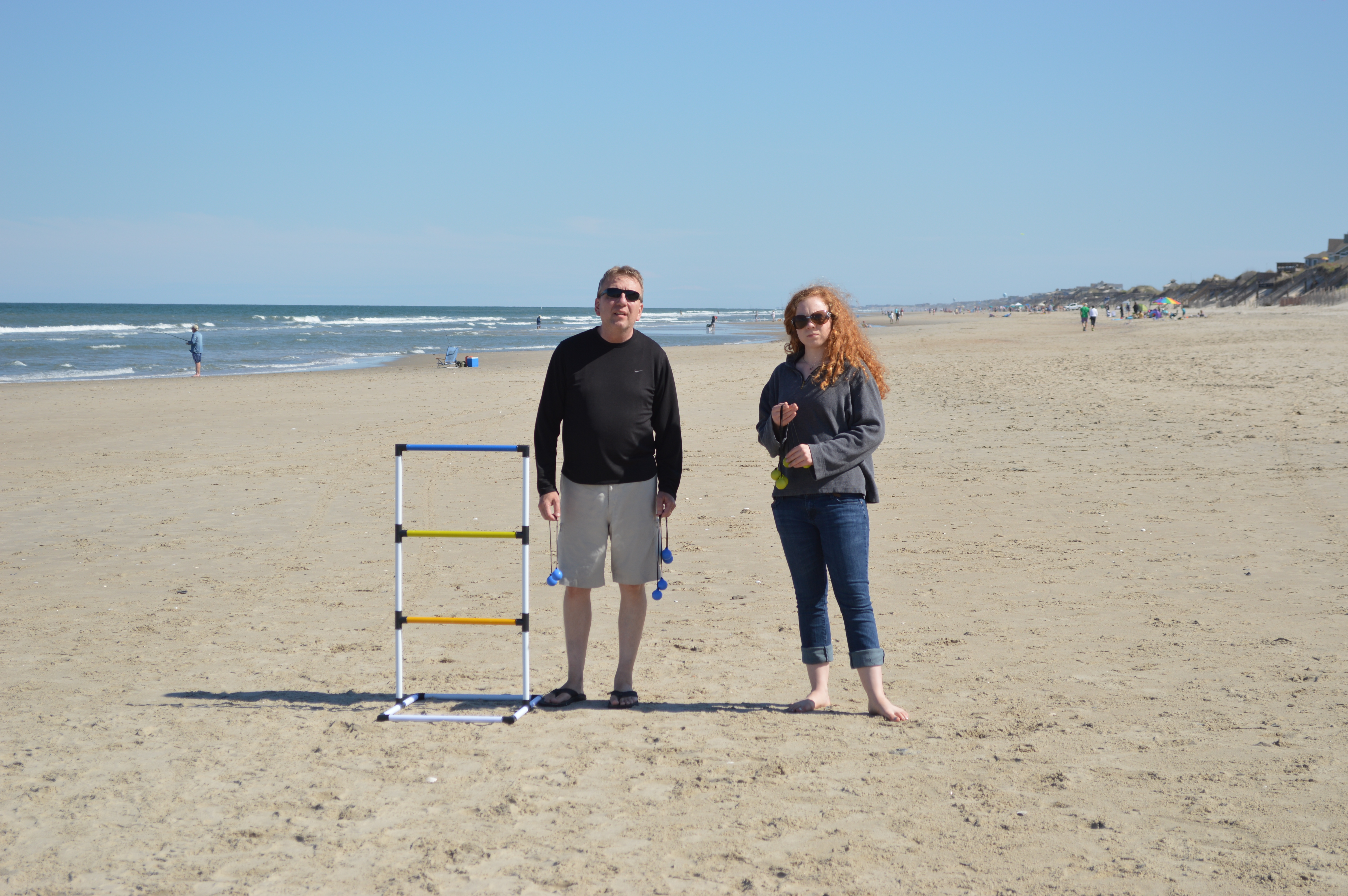
We played a new beach game on Sunday afternoon. It’s one of the many variations on horse shoes, but a good one. Points are scored by throwing a string with weighted balls on each end around a bar. They couldn’t remember the name of it, but no matter. It was fun!
13 05 26_1763

13 05 26_1759