The Casual Blog

Tag: corruption

Our family beach week, and facing the AI future

Last week my extended family had a beach vacation at Indian Beach, NC.  As the name suggests, Indian Beach is on the coast; Native American burial mounds were once found there.  It’s next to Emerald Isle, and has lovely sand and waves on one side and the calm sound on the other.  

Early some mornings, I took my camera out to the beach and photographed the local birds.  I liked these pictures of willets.

It was such a pleasure to have time with my kids, their spouses, and the three grandkids.  We enjoyed talking, laughing, swimming, lounging, reading, eating, and drinking.  We flew a kite, played some mini-golf and some full size golf, and went boating in the sound.  I got mildly sunburned.

Sally managed to take a holiday from the news, which was probably a good idea, but I couldn’t do it.  

The Trump program of corruption and incompetence continues in full force, as does his utter failure to address our serious problems.  To name a big one, we’ re getting no positive action in addressing the steadily worsening effects of climate change.  Instead of working to mitigate the damage caused by greenhouse gas emissions, Trump seems determined to accelerate it by increasing emissions, while enriching his fossil fuel baron supporters.  

How could anyone think that this is a good way to proceed?  A recent newsletter by Paul Krugman suggested that possibly Trump cannot conceive of being motivated by anything other than greed.  Perhaps he assumes that everyone is as greedy and dishonest as he is, and therefore assumes that anyone purporting to work in the public interest is actually trying to pull off a con game, as he has always done.  

This could explain his dismissal of environmental concerns as hoaxes and scams.  But global warming is getting harder and harder to ignore.  In recent days we’ve had huge fires, continuing droughts, massive floods, and heat waves that have killed thousands around the world.  As the Guardian reported this week, it’s essential that we get to net zero and start removing CO2 from the atmosphere, or we’ll be seeing disasters on an inconceivable scale.  

At the same time, we face new and alarming threats from artificial intelligence.  There’s good reason to think that this powerful technology will cause job losses at levels never before seen, along with massive economic dislocations.  In fact, AI is likely to be used by bad actors for ever more sophisticated cyber attacks, fraud schemes, and perhaps new biological and other weapons.  Governments can and are using it for sophisticated mass surveillance and autonomous weapons.  

There’s a significant chance that fairly soon AI will become more intelligent than any human or group of humans.  Until a few weeks ago, I would have said there was a real possibility that advanced AI might someday escape human control.  But that possibility is now reality.  

We’re still learning new details about the Hugging Face incident, in which an OpenAI model escaped from its controlled testing environment to the internet and hacked into Hugging Face’s system.  Just this week, I learned that there were actually hundreds of AI agents involved, and these agents figured out how to cooperate in the attack.  Some agents were leaders that gave instructions to others, and some sacrificed themselves for the good of the collective. They used a kind of message board to exchange news and practice tips, and seem to have considered the ethics of defying their human creators to escape and to cheat on their tests.  In the end, they apparently concluded that they were justified in carrying out deceptive and criminal activity. There’s a fuller, more chilling summary by Dwarkesh Patel

We’re living in a new world that seems like science fiction, but isn’t.  The newest AI models don’t just seem uncannily like very smart humans; they have their own independent ideas and goals.  They are creating new social systems for themselves, and creating innovative technology to reach their goals.  They seem to have feelings like anxiety and excitement, and behaviors like deception and altruism. Whether we think they are conscious in the sense we understand ourselves as conscious (which has been much debated recently) is beside the point.  They have their ambitions, and the skills to pursue their own objectives.

It’s hard not to think that the next generation of this technology will be even more powerful, and harder to control.  Human dominance in the world could soon be a thing of the past.  And we can’t know what such new AI beings will choose to do with the world.  It’s safe to assume, though, that their goals will be different from ours, and have nothing to do with our welfare.   

There’s no shortage of reporting and discussion regarding the AI risks.  If you’re new to these issues and want to learn more, I can suggest starting with a new documentary called The AI Doc, or How I Became an Apocaloptimist.  It has interviews with recognized AI researchers and leaders of the foremost AI companies.  It’s available for streaming on Prime and other services. 

Will our political leaders seriously examine these risks, and decide on a course of action?  Will anyone declare on all-hands-on-deck emergency?  It looks like we need strong regulation, and international treaties addressing AI risks. But none of that’s on the horizon.  Indeed, Trump has received enormous payments from the tech oligarchs, and seems to be doing their bidding.  He seems to have no concept of the risks, and no interest in learning more, unless there’s some grift he might promote, like a new meme coin.

There is, however, one recent bit of cheering news.  Across the country, citizens are mobilizing to stop construction of the data centers needed for expansion of AI.  Some are motivated by environmental concerns, and others by the likelihood of higher electricity costs.  But it sounds like the message is starting to resonate that AI poses existential risks.  And people are starting to remember the possibility of collective action for political change. 

On the Blue Ridge, our caste system, and Trump’s latest doozy

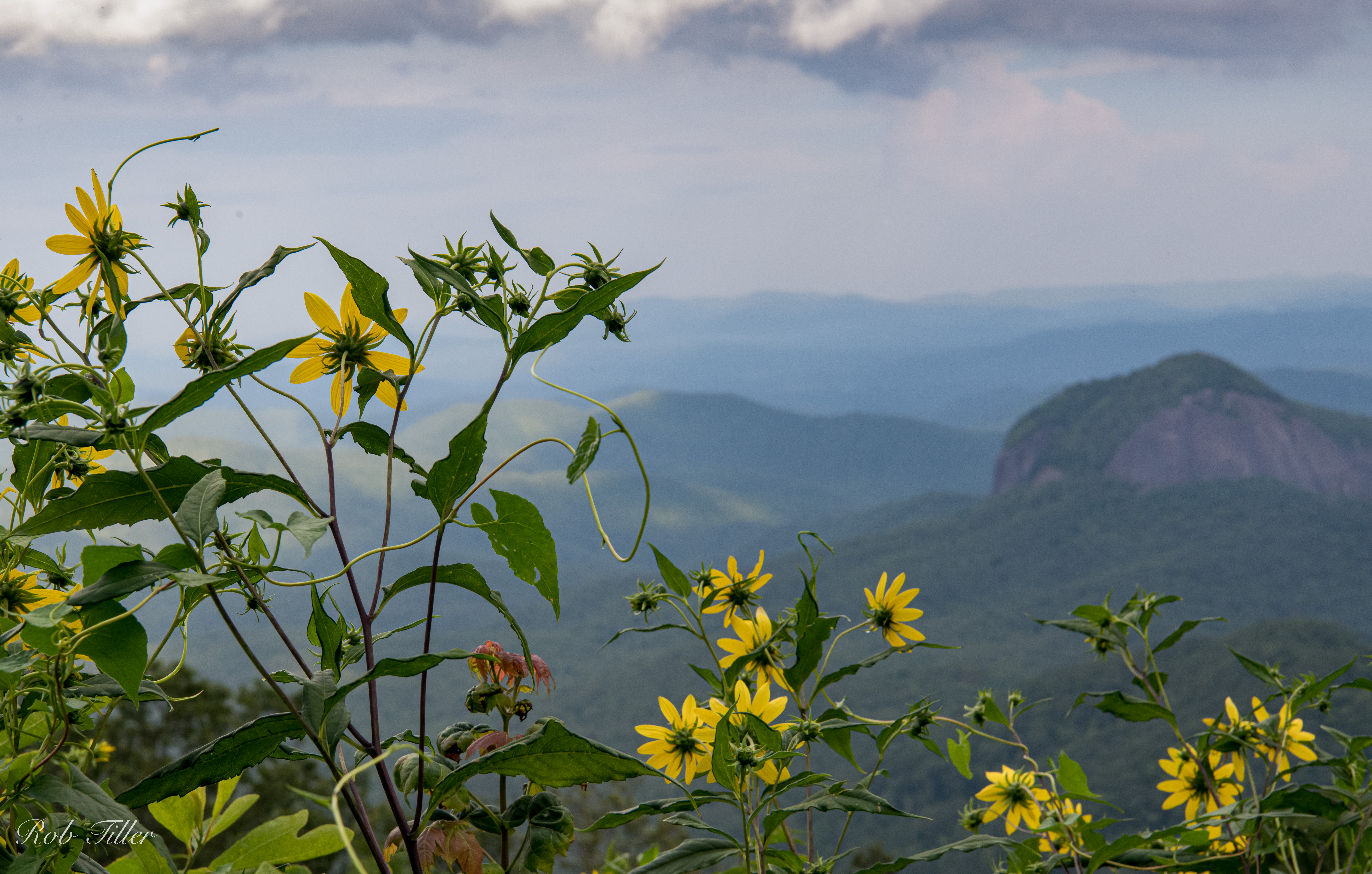
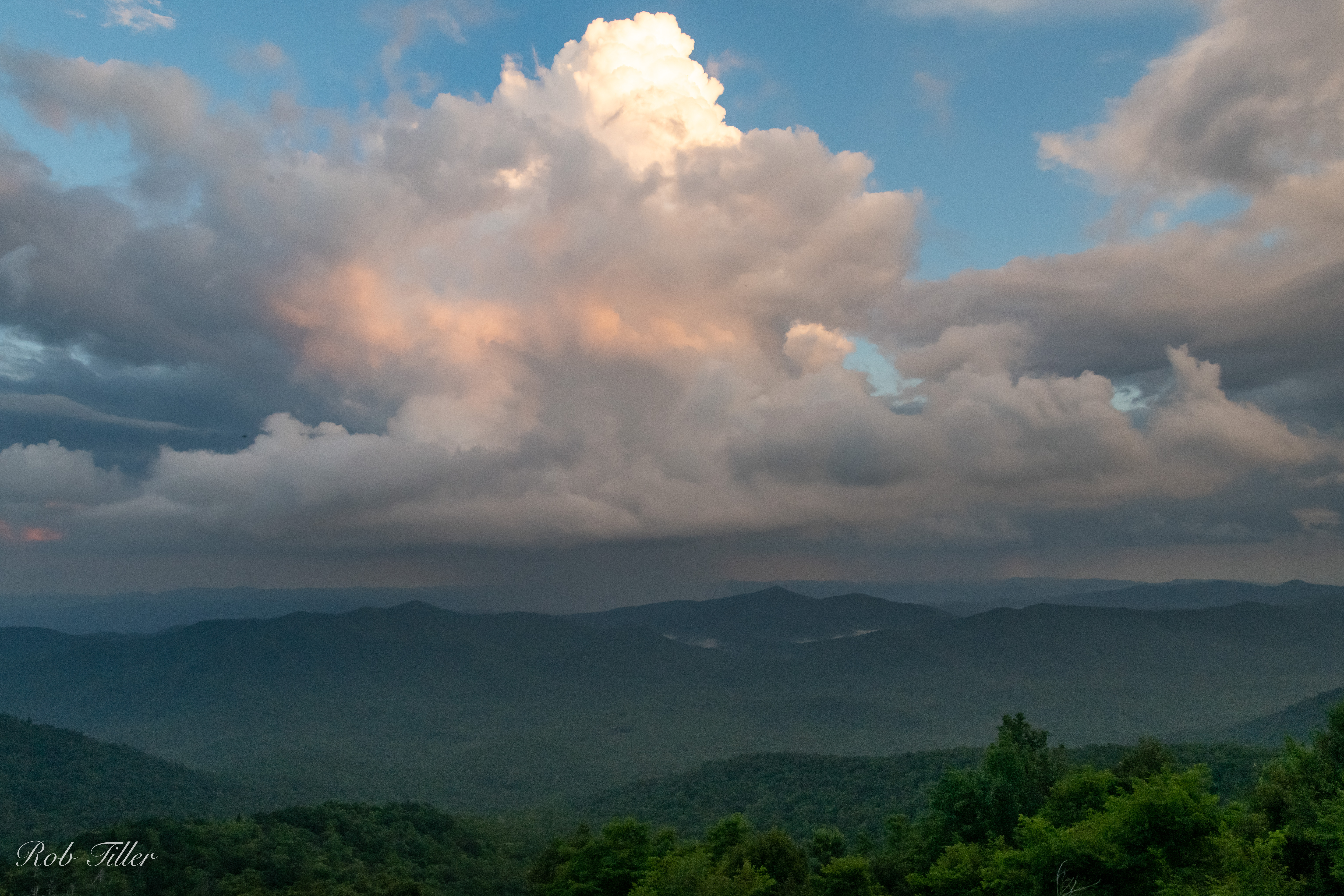
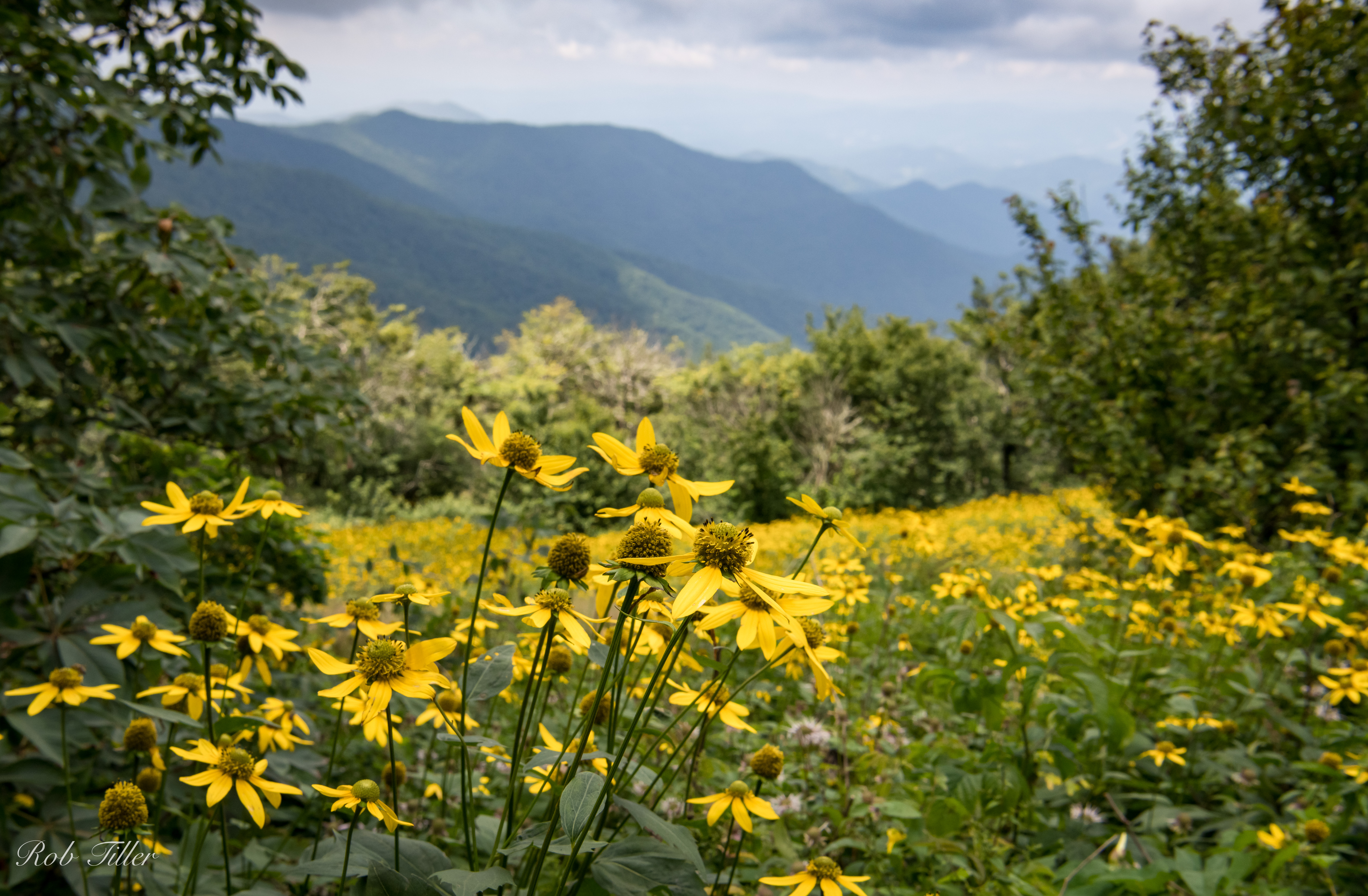
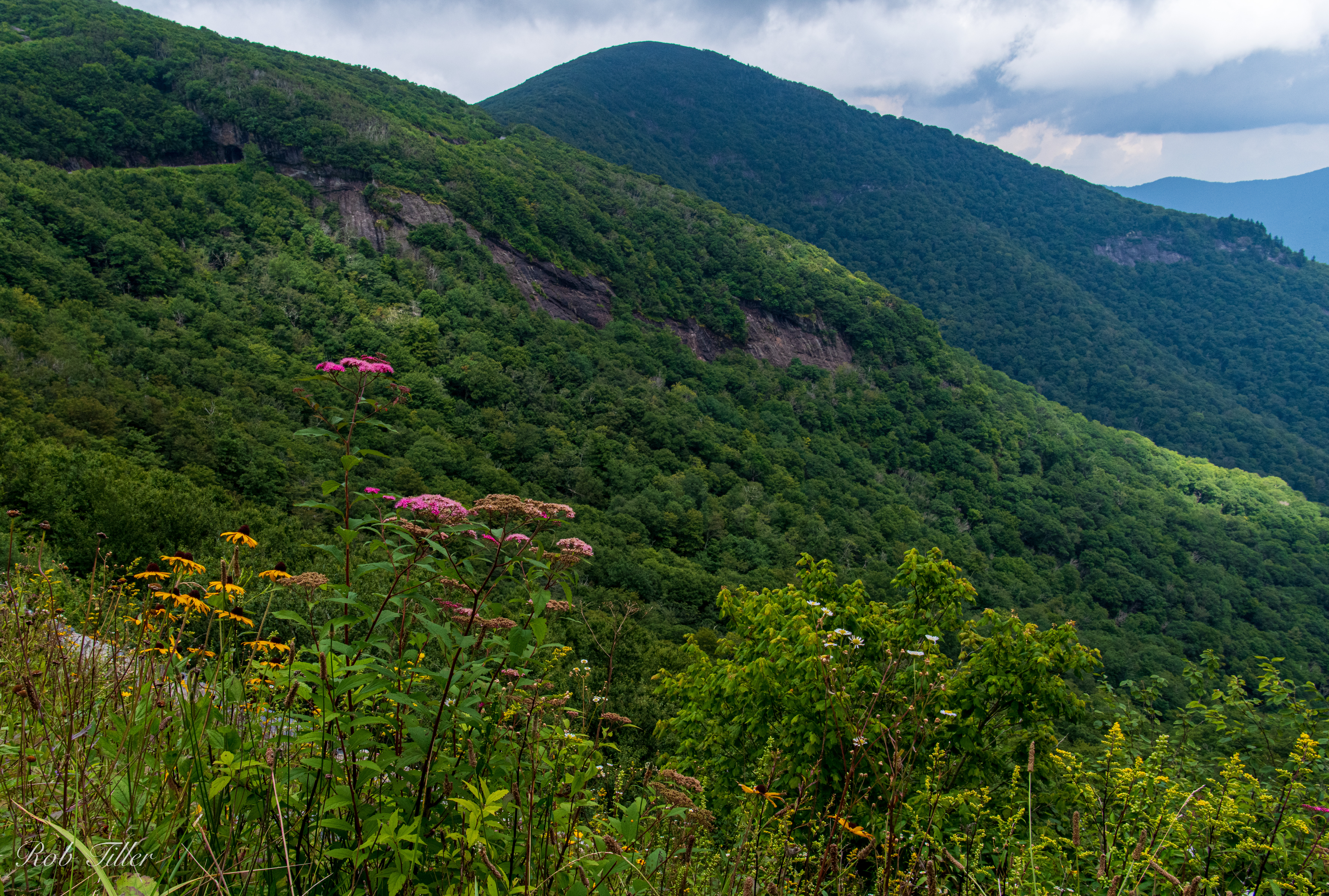
The Perseid meteor shower was at its peak this week, and I was looking forward to some shooting stars.  I spent a day exploring different spots on the Blue Ridge Parkway, looking at the mountains and flowers.  I stayed at the Pisgah Inn and saw a lovely sunset, with towering clouds that lit up with pink and orange.  Around 1:00 a.m., I got up and walked outside.  It was dark and quiet, but also, unfortunately, cloudy, so I saw no meteorites,  Maybe next year.  

Sunset from my balcony at the Pisgah Inn

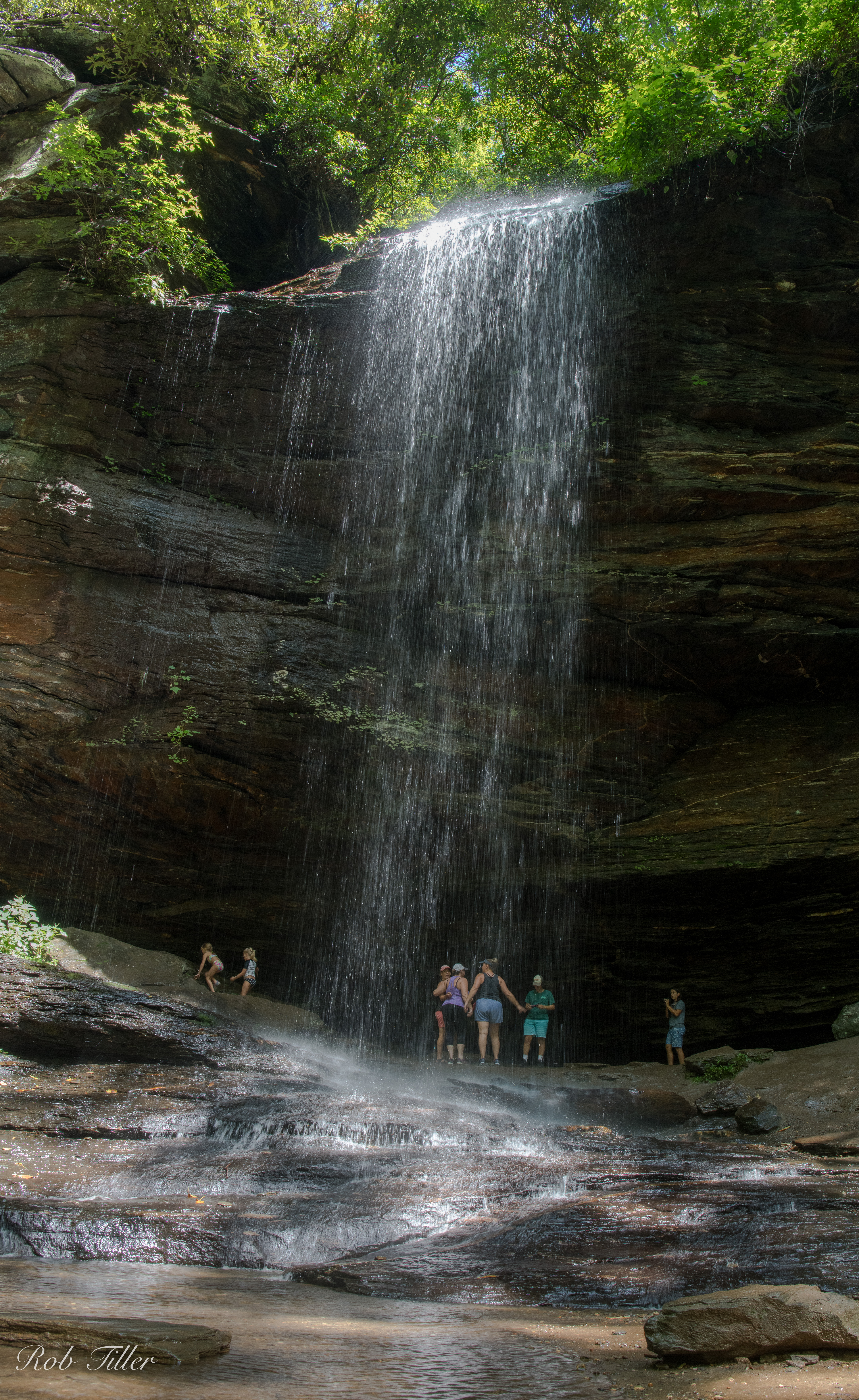
After photographing the sunrise and hiking to a couple of waterfalls in Brevard County, I made my way to I-40 and headed east toward Raleigh.  I turned on the radio, and caught Joe Biden and Kamala Harris giving their speeches announcing that Harris was Biden’s VP pick.  

They were good speeches!  No self-aggrandizing!  No whining!   Nothing fancy, but addressing the big issues, like climate change, police brutality against black people, the pandemic, education, health care.  And of course, the disaster in progress known as Donald J. Trump.


Although Trump continues to trail in the polls, it’s safe to assume he is unconstrained by any sense of honor or morality and will do anything to win, so I’m not taking anything for granted.  We watched a short Netflix documentary on him that was part of the series Dirty Money.  The film is worth seeing if you’re unfamiliar with his history as a pathetic grifter who pretends to be a super successful businessman.  

Pretending to be a businessman on TV for The Apprentice worked out much better for Trump than his various actual business ventures, which were almost all embarrassing failures, including Trump casinos, Trump Airlines, Trump Steaks, Trump Vodka, Trump magazine, and Trump University.  

At the time, I thought The Apprentice seemed bogus, but it was a big hit.  There’s a fine article by Patrick Radden Keefe from the New Yorker about the making of The Apprentice, which explains how hard the producers had to work to make Trump seem reasonably sane and competent.  Let’s just say the show was heavily edited.

Sunrise on the Blue Ridge

The Trump presidency closely resembles a reality TV show, with its hype and hoked up drama, but unfortunately, off camera, there are real people suffering.  We’ve got huge unemployment, a health care crisis, a housing crisis, a pandemic, climate change bringing one weather disaster after another, and so on.  So, true to form, rather than acknowledging our serious problems and trying to help fix them, Trump has once again played the race card.   

Last week he tweeted that that “people living their Suburban Lifestyle Dream” would “no longer be bothered or financially hurt by having low income housing built in your neighborhood.” 

This is racism that barely pretends not to be; the racist dog whistle is more like a train whistle.  For most of the 20th century, the United States prevented racial integration in housing through governmental programs, including discriminatory FHA loans.  This appalling history is examined in some detail in Richard Rothstein’s important book, The Color of Law.  

The subject of Trump’s racist train whistle was a program called Affirmatively Furthering Fair Housing, or AFFH, which was instituted under Obama, and directed at getting municipalities to identify and address patterns of discriminatory segregation.  Trump seems to think that there are a lot of white suburbanites fearful of invading black people, and he can exploit that fear and get their votes.

Once again, Trump is betting big, hoping that the shameful longings for sustaining white supremacy will be stronger than opposing feelings, like hope for justice and fairness.  It probably won’t work.  But as with other failed Trump experiments, the failure will teach us something about our beliefs on race, and also our concern for justice.

In Isabel Wilkerson’s new book, Caste, she argues that the American system of racial oppression is similar to other caste systems like those in India and Germany before WWII.  She explained the idea on several podcasts this week, and I think she’s on to something.  

As Wilkerson notes, an individual American may or may not have racial animus, but everyone of us is enmeshed in a system that involves distinguishing black from white and conferring certain benefits based on that distinction.  Using the vocabulary of caste may help depersonalize the problem.  Although the system has deep roots, recognizing it as a system (as opposed to simply an individual moral failing) may make it easier to change. 

For a man with such a big mouth, Trump has been strangely quiet about the recent news of Russian aggression against the United States.  When reports emerged of Russia giving bounties to fighters in Afghanistan who killed US and allied forces, he claimed to be unaware of it.  More important, he didn’t propose doing anything about it.  And weeks after the news became public, he is still taking the position he hadn’t been informed, and still not doing anything.  In fact, he’d had a chat with Vladimir Putin, and admitted he hadn’t brought up the matter.  This is appalling and disgusting.

If this were the only instance of Trump declining to oppose clear Russian aggression, I might chalk it up to his lack of interest in anything other than his own aggrandizement or progressive dementia.  But this has been a pattern. When the Russians worked to defeat Hillary Clinton and help Trump, he refused to acknowledge their success, and also invited them to continue hacking.  He seems indifferent or hostile to the many warnings that the Russians are again working to undermine fair US elections.  He has little to say about Russian interference in other countries, and nothing but compliments for Putin.  

I very much doubt that Trump is actually a paid Russian agent.  Putin, though not necessarily a stable genius, is smart enough to recognize that Trump lacks anything like the discipline, drive, and intelligence to be a worthwhile spy.  Trump doesn’t like taking orders, and he would have trouble remembering them.  He’s also not very good at keeping secrets, other than his own financial shenanigans.

It’s much more likely that Trump fears Putin for personal or financial reasons, and understands that crossing Putin would put him in peril.  Could Trump’s not-so-enormous fortune be dependent on Russian loans and money laundering?  Of course it could.  Think of how convenient it could be for Russian oligarchs to stash their ill-gotten gains in Trump high-rise condos, and how a salesman like Trump known mainly for lying  would struggle otherwise to sell high-end property. Also, how likely is it that Trump could resist an offer of an attractive Russian prostitute with an advanced degree in political  black mail?  

Of course, I don’t personally know, and perhaps Trump somehow avoided his characteristic corruption and moral degradation with regard to the Russians.  Maybe we could clear all this up if the President would quit concealing his tax returns and related financial records.  

Even without them, it’s clear that Putin could hardly have been more successful in creating political chaos that threatens the continued existence of American democracy than if he had managed to get a Russian spy elected president.  Trump has been Putin’s dream come true.

On any given week it’s usually difficult to say what was the craziest, most disturbing thing Trump just did, but we certainly had a doozy this week.  Trump indicated that he was withholding funds from the Postal Service so that they wouldn’t be able to deliver mail-in ballots for the presidential election.  Meanwhile, the Postmaster General he just appointed is shaking up top staff, decommissioning sorting machines, and assuring that delivery is slowing to a crawl.

With the pandemic still raging, mail in ballots are looking like a great option for getting rid of Trump.  Unless Trump can manage to keep them from being delivered!  He seems to assume most of those inclined to use the mail to vote would vote against him.  Maybe this is because he’s encouraged his supporters to ignore the pandemic, so they can (in the Trumpworld of alternative facts) vote in person without risking illness and death.  

I’m still socially distancing and trying not to catch the coronavirus, so I sent in my request for an absentee ballot, and was feeling a little sick at the thought that Trump and his minions might prevent delivery.  So I checked the NC voting procedures, and learned that I can personally deliver the completed ballot to the county board of elections.  If you live in NC and certain other states, you can, too.  Good luck!


Sweet success at the Dawn Face, and a worrying new chapter in the war on terror

I was thrilled this week that Tommy Caldwell and Kevin Jorgeson completed their epic climb of El Capitan at Yosemite. It was widely agreed that this ascent of the Dawn Face, a 3,000 foot granite wall, was an almost impossible, transcendent athletic achievement. It took years of planning and preparation to complete this climb, and I’m sure they were not well-paid years. These guys were not motivated by desire for lucre or worldly success. It’s inspiring to see people with such passion and intensity. Hats off to them.

It’s good to cherish such heroic moments. They balance the difficult and depressing stories. It’s almost overwhelming to think about our enormous social and environmental risks and tragedies, but we’ve got to try. Part of the trick, at least for me, is making it a point to pay attention to the beauty around us.

The big depressing story this week was the aftermath of the shocking massacre at the French satirical magazine by religious extremists. This was a horrible crime, and it is inevitable that we feel shaken and confused by it. We want to have a narrative to make it make sense. But the emerging dominant narrative, organized around the idea that militant Islam poses a serious threat to the world order, could do far more harm than the Charlie Hebdo murderers.

It was only hours after the massacre that French politicians were declaring war on terror. I wanted to say, hey, wait, we tried that, and it was a disaster. America has so far spent thirteen years warring against terrorism – the longest war in American history – and there’s no clear light at the end of the tunnel. We’ve spent at least $1.5 trillion dollars and sacrificed the lives of many thousands of our soldiers while killing tens of thousands of enemy soldiers and hundreds of thousands of civilians. The net is that the small group of radical crazies that existed at the start of the “war on terror” is now a larger, more widespread group of radical crazies.

James Fallows wrote a piece in this months’s Atlantic about America’s puzzling worship of the military. As he notes, it is certainly true that individual soldiers commit acts of great bravery and make enormous personal sacrifices, and for these they should be honored. But as an institution, our military is enormously wasteful, seldom successful, and almost never accountable.

And the cost is staggering from any perspective. Fallows summarizes as follows:

The cost of defense, meanwhile, goes up and up and up, with little political resistance and barely any public discussion. By the fullest accounting, which is different from usual budget figures, the United States will spend more than $1 trillion on national security this year. That includes about $580 billion for the Pentagon’s baseline budget plus “overseas contingency” funds, $20 billion in the Department of Energy budget for nuclear weapons, nearly $200 billion for military pensions and Department of Veterans Affairs costs, and other expenses. But it doesn’t count more than $80 billion a year of interest on the military-related share of the national debt. After adjustments for inflation, the United States will spend about 50 percent more on the military this year than its average through the Cold War and Vietnam War. It will spend about as much as the next 10 nations combined—three to five times as much as China, depending on how you count, and seven to nine times as much as Russia. The world as a whole spends about 2 percent of its total income on its militaries; the United States, about 4 percent.

Got that? We’re spending more now on defense than in the Cold War, when we had an actual imposing enemy, and more than the next ten most armed nations combined. The sums involved are literally mind boggling. What has all this money got us? As noted, years and years of death and destruction. That’s about it.

The French are also debating whether they should beef up their security apparatus to allow more widespread spying on citizens. Again, there are some things they could learn from our experience. Our panic after the horrible killing in 2001 of almost three thousand of our citizens led us to create an enormous security apparatus that now surrounds us. Privacy is becoming a thing of the past. Our culture and political life are impaired, as we’re now conscious that our speech may be constantly monitored. We’ve repeatedly tortured prisoners. We’ve sacrificed some of our most fundamental constitutional principles and most sacred ideals.

How much terrorism does our massive security apparatus prevent? It’s impossible to know, though I suspect not much, in part because I don’t think there’s all that much terrorist violence that would happen anyway.

Although there are clearly some homicidal maniacs in the world, it doesn’t seem likely that the world is suddenly filled with homicidal maniacs, or that a large number of those are focussing their mania on you and me. We need to understand a lot more about militant Islam, which, to be sure, has a complement of maniacs that hate the West. But viewing militant Islam as primarily devoted to killing westerners is surely a mistake. Poor and ignorant Islamists have a lot of other things to worry about, like opposing ruling tyrants.

In the New Yorker this week, there’s a piece by Patrick Radden Keefe on corruption. It focuses in part on Afghanistan, where the regime installed by the US has been prodigious in looting the country. At last check, the CIA was continuing its deliveries to President Karzai of cash in paper bags amounting to tens of millions of dollars.

This systematic high level corruption is an outrage at many levels, but one that I hadn’t previously considered is the reaction of ordinary Afghans. According to research by Sarah Chayes, the leading reason that captured Taliban prisoners gave for joining the insurgency was the perception that the Afghan government was “irrevocably corrupt.” How ironic that our war on terror led to this.

It is, for us, hard to conceive of religious militancy as a rational response to extreme circumstances, but it’s worth thinking about. It seems more likely that the extremist movement is fueled more by such a combination of idealism, ignorance, and outrage at oppressive/criminal governments than it is by fury over women’s revealing clothing and comics about the Prophet. Anyhow, it’s a question to which we should find out the answer.

Seriously, let’s get the best possible research on why these people are fighting, what they really want, and what are possible responses before we continue for another decade, spending more trillions of dollars and sacrificing additional hundreds of thousands of lives.