Swimming with sharks and other remarkable creatures: our scuba trip to Honduras

For Christmas week, our family did a scuba diving trip to Roatan, Honduras. We saw a lot of beautiful sea creatures, and had fun hanging out together. I managed to lose my prescription sunglasses on the way down, and was quite bummed. Returning to Raleigh around midnight, after 13 hours of travelling, I left my iPad and book on the plane. I’ve been in touch with American Airlines’ lost-and-found bot, which says it’ll let me know whether they can find them within 30 days. Argh!

But we really liked staying at Coco View Resort, which is on the east side of Roatan. Coco View is perfectly arranged for diving, with rooms just a short walk from the equipment lockers and docks. Their dive staff was friendly and knowledgeable, and the dive boats were large and comfortable.
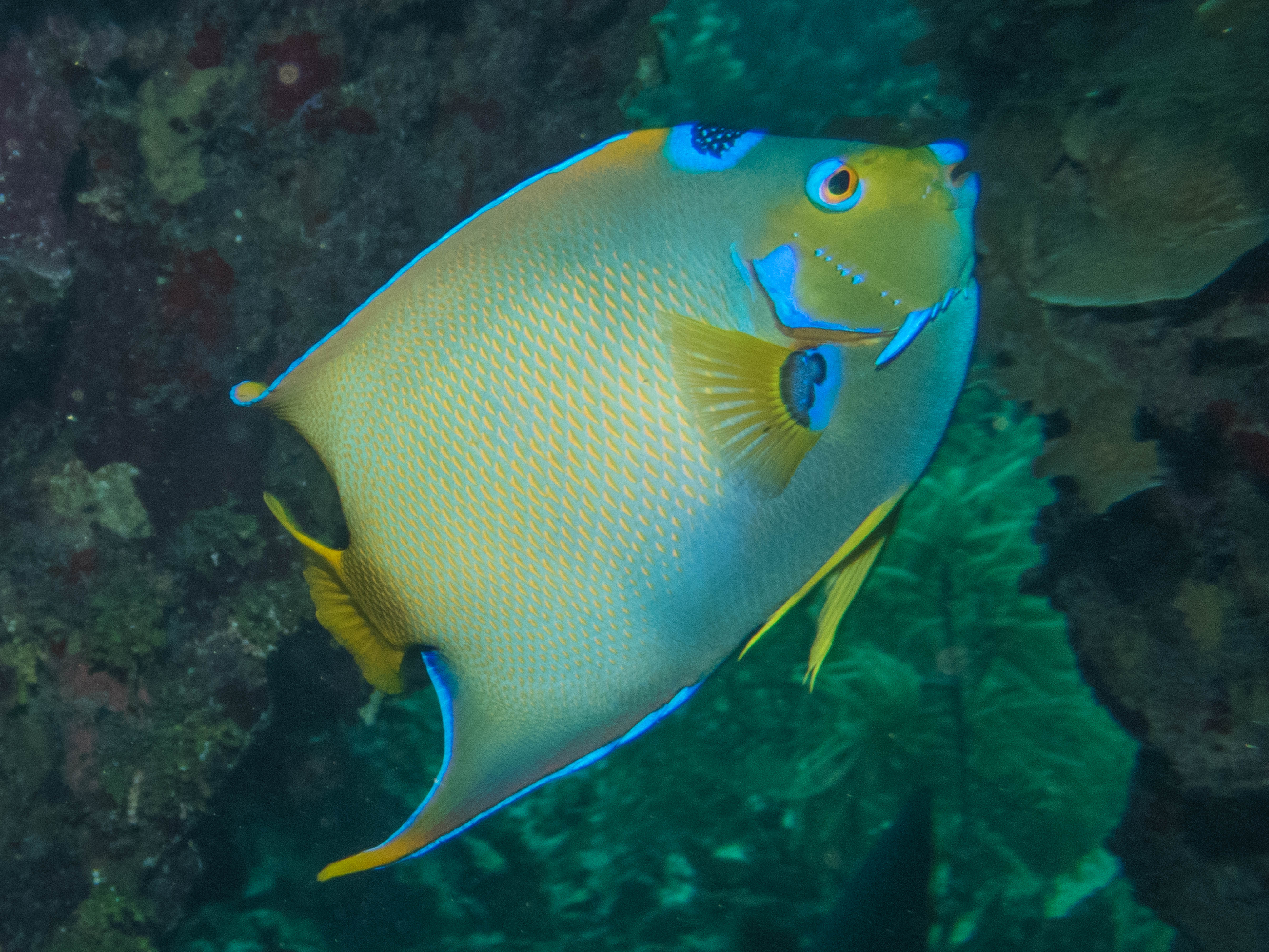
A queen angelfish
The dive sites were easy to get to with boat trips of only 10-20 minutes. We went out with the boats after breakfast and after lunch, and did two dives each trip. Our deepest dives were around 90 feet, but more typically at 60-70 feet. The second dive was usually a drop off near a wall, and we’d work our way back to the resort.
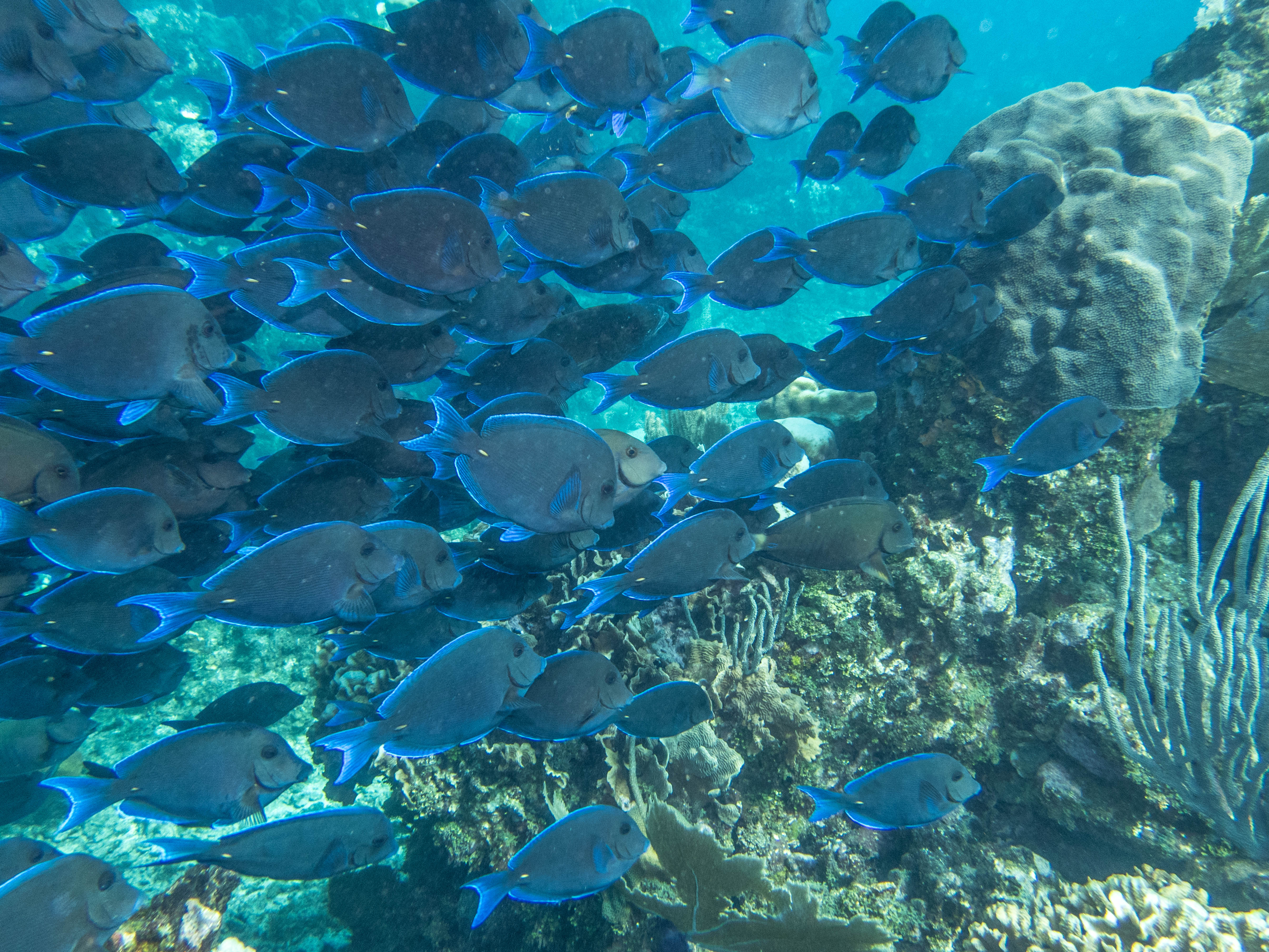
A school of blue tang
The waters were mostly calm, with little current and only occasional surges. The bottom temperatures were around 81 degrees F. Visibility was generally around 40 feet. It rained heavily at times, though mostly at night. The locals said the visibility was worse than normal because of an unusually intense rainy season.

A banded coral shrimp
We didn’t see as many big animals around Coco View as we had hoped, but there were some good ones: two spotted eagle rays, green moray eels, a hawksbill turtle, many lobsters and crabs, some scorpionfish, and some large Nassau groupers, among others. There were schools of smaller tropicals, and occasionally one of the glamour residents, like French, gray, and queen angelfish, butterflyfish, scrawled filefish, trunkfish, trumpetfish, and porcupinefish. We also spotted some sea horses and interesting tiny shrimp. We didn’t spot any sharks at Coco View.

A scorpionfish
But one morning we took a special trip to a neighboring resort to look for Caribbean reef sharks. We knelt on the bottom while the sharks came in. Fourteen or so females showed up, and they gradually swam in closer and closer, getting close enough to touch. Then we swam with them for a few minutes. For the final act, we hunkered down, and the guides gave the sharks a large closed paint bucket with some fish inside. The sharks worked the top off the bucket, and then there was a short but intense feeding frenzy. It was awesome.
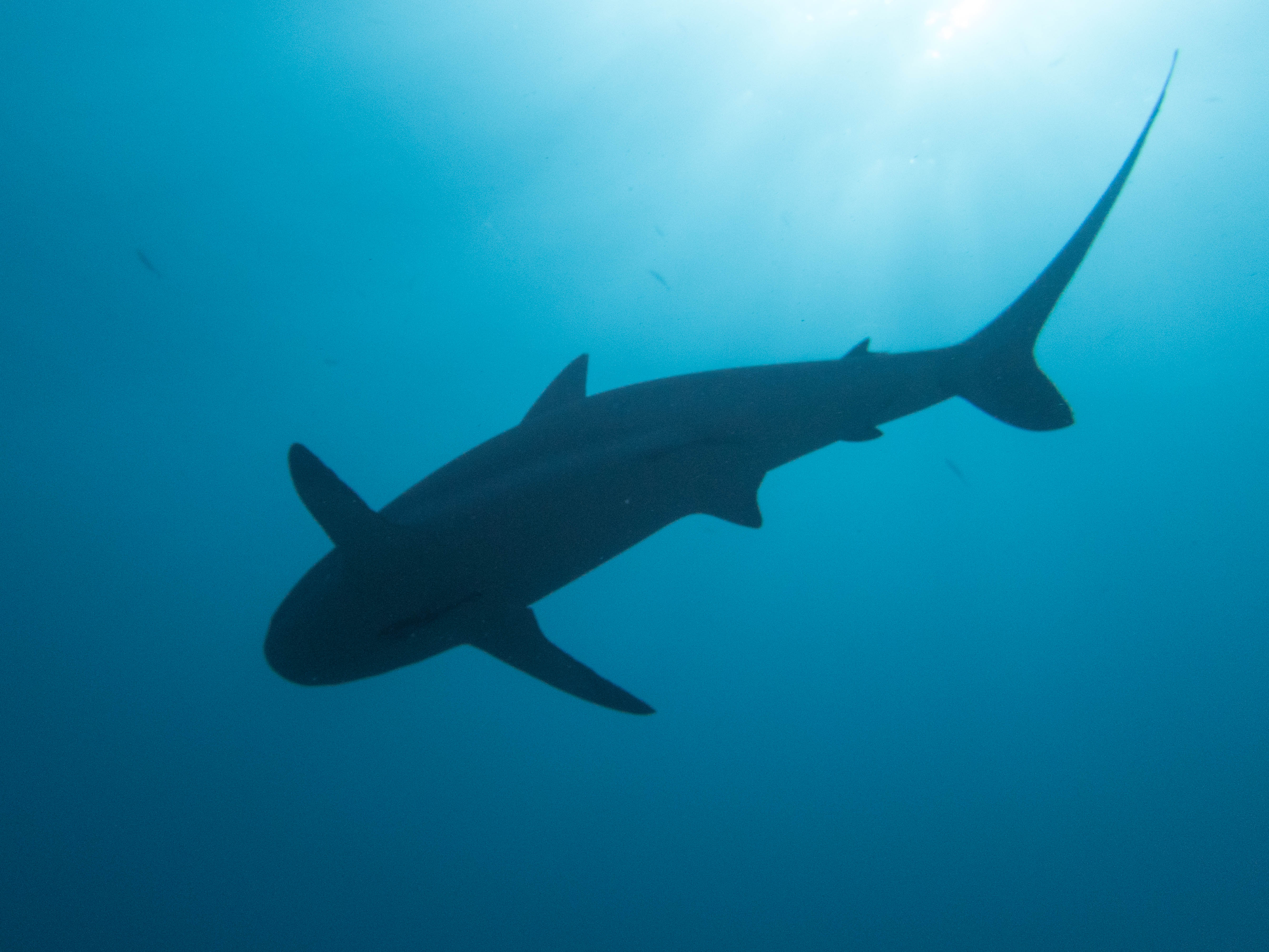
A Caribbean reef shark
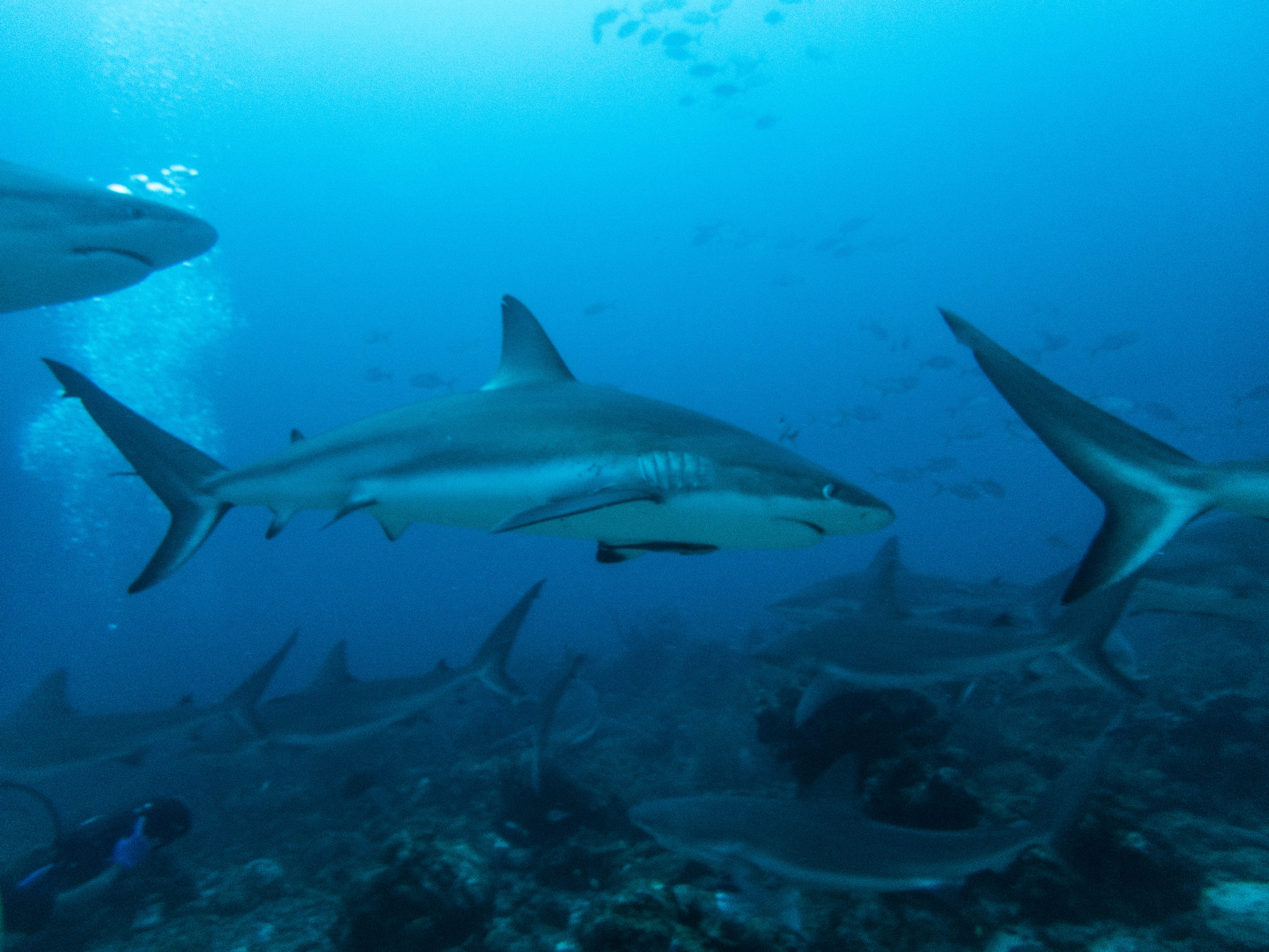
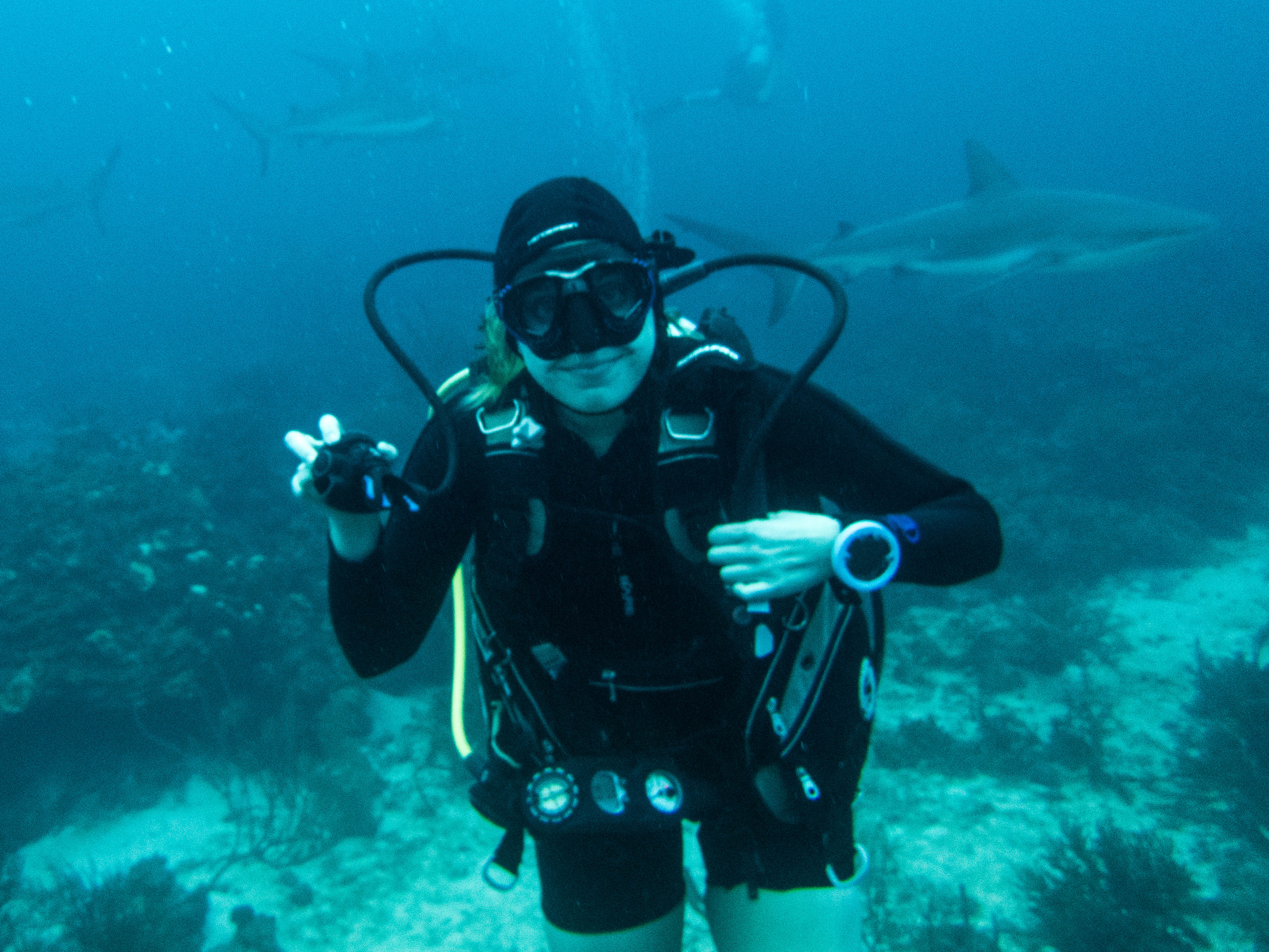
Jocelyn with the reef sharks

We worried, of course, that the reefs and resident creatures would be struggling and declining because of rising ocean temperatures, acidification, agricultural run off, or other problems. We did see some coral bleaching and what might have been algae (fuzzy brown stuff) coating some areas. The locals said there had been a major bleaching episode earlier in the year, but much of the coral had recovered. They hadn’t detected a general drop in fish life, though they noted that the fish seem to go elsewhere when the water is murky.

A crab
As always, there were minor equipment problems and physical challenges. Sally’s low pressure inflater hose went into free flow when she was starting a dive, and needed an emergency repair. Gabe’s BC (inherited from me) didn’t fit very well. Jocelyn’s computer was balky at one point. My fin straps (a spring-type) were too loose, and so my fins came off a couple of times when I hit the water. On one dive I couldn’t get my BC to inflate (probably from a poor hook up job) and was sinking too deep, so I took out my regulator and inflated with my mouth. Sally got a lot of bites by some insect (perhaps sand fleas) and got miserably itchy.
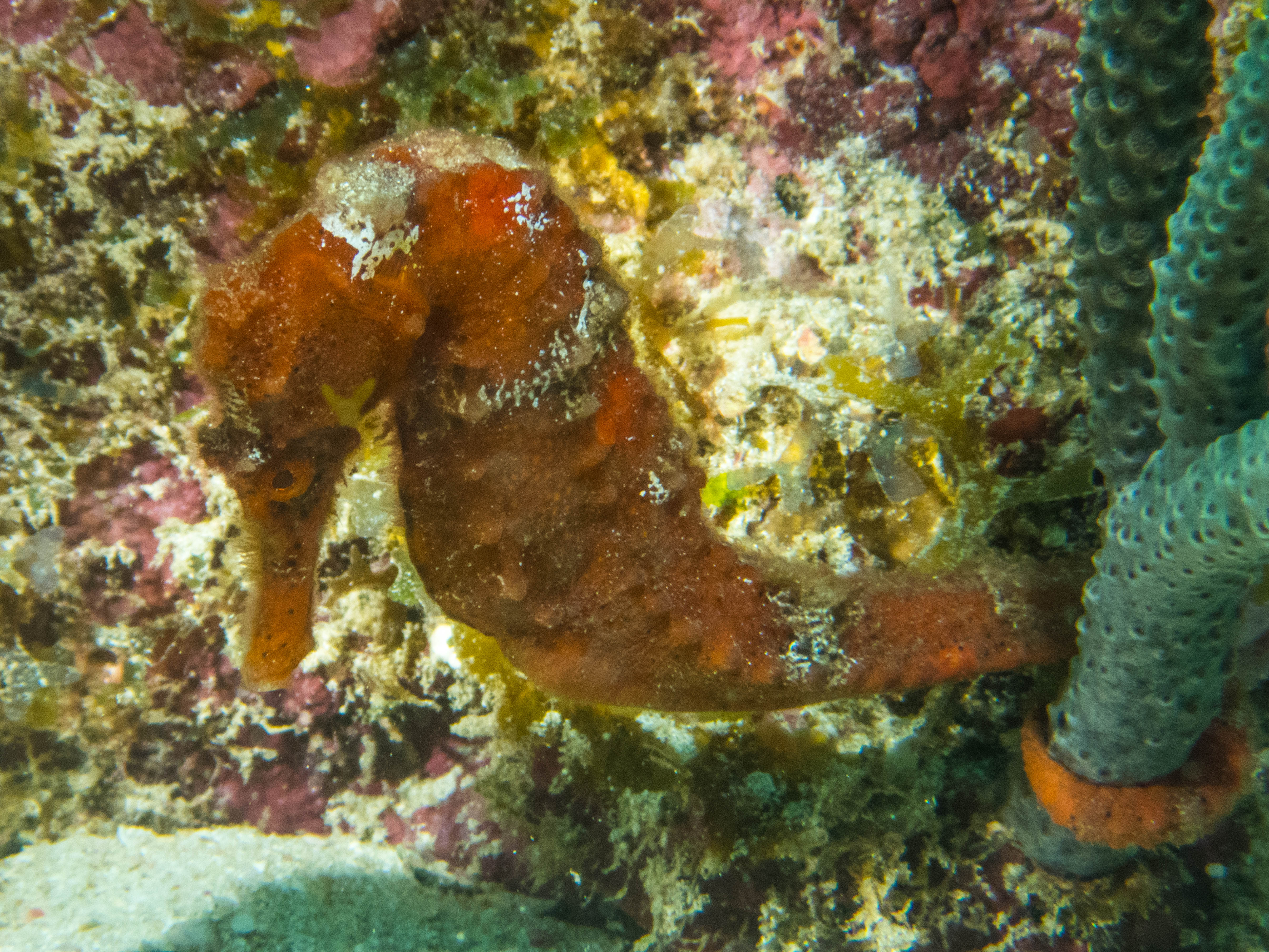
A seahorse
Sally, Gabe, Jocelyn, and I got better at staying together as the week went on, and had progressively fewer moments of wondering if we’d lost someone. I got worrisomely low on air on one of the early dives, and Jocelyn sweetly checked from time to time after that to make sure I had a good supply. Sally, Gabe, and Jocelyn all developed keen eyes for some of the tiny exotics, like arrow crabs, banded coral shrimp, and brittle stars. We had a lot of fun.
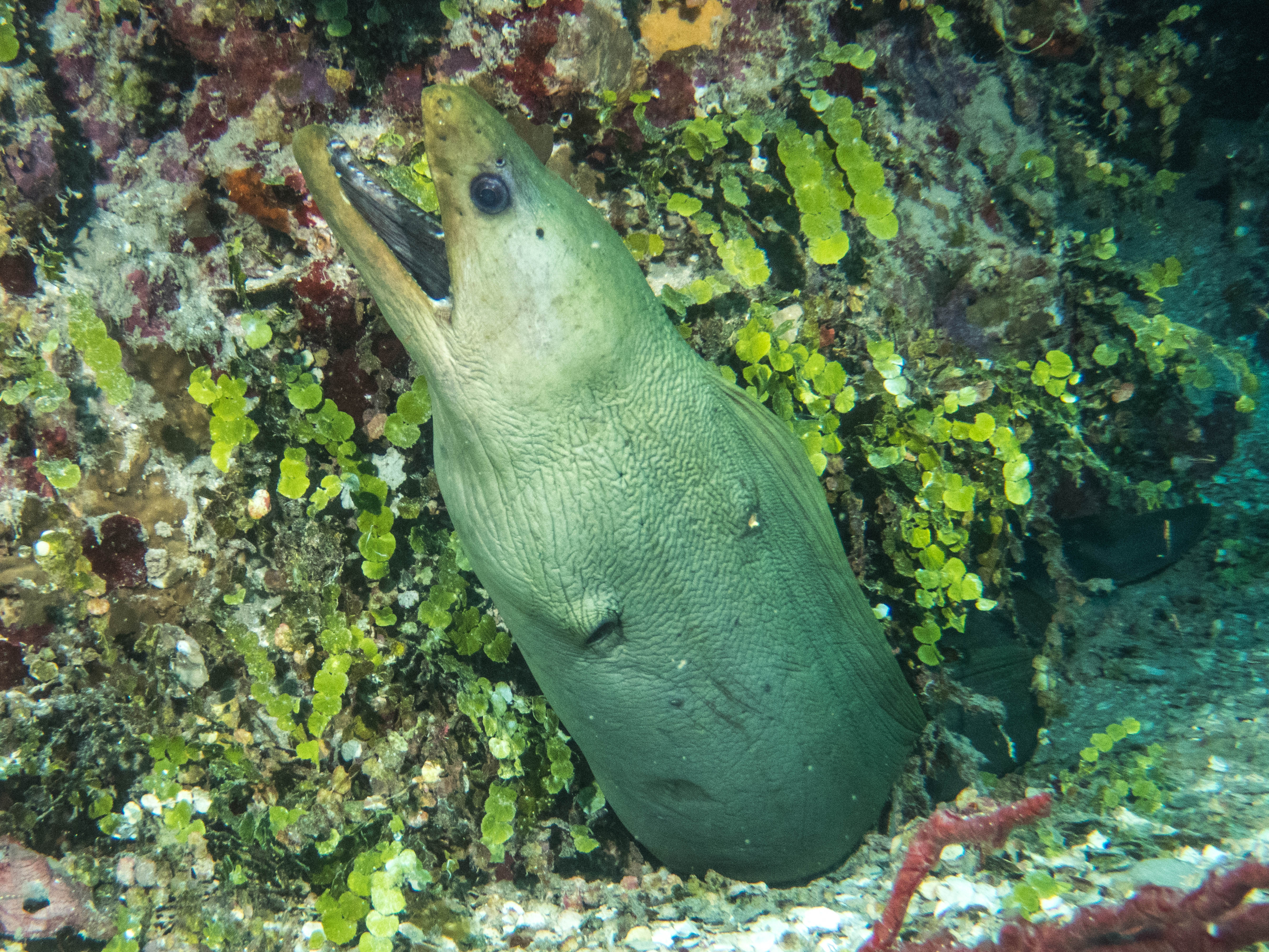
A green moray eel
I almost finished My Brilliant Friend, by Elena Ferrante, and hope American Airlines will return it so I can read the last twenty pages. I know a lot of people have enjoyed Ferrante, which made me somewhat resistant to reading her, but I shouldn’t have been. She creates a compelling world, and takes you inside a rich female consciousness.
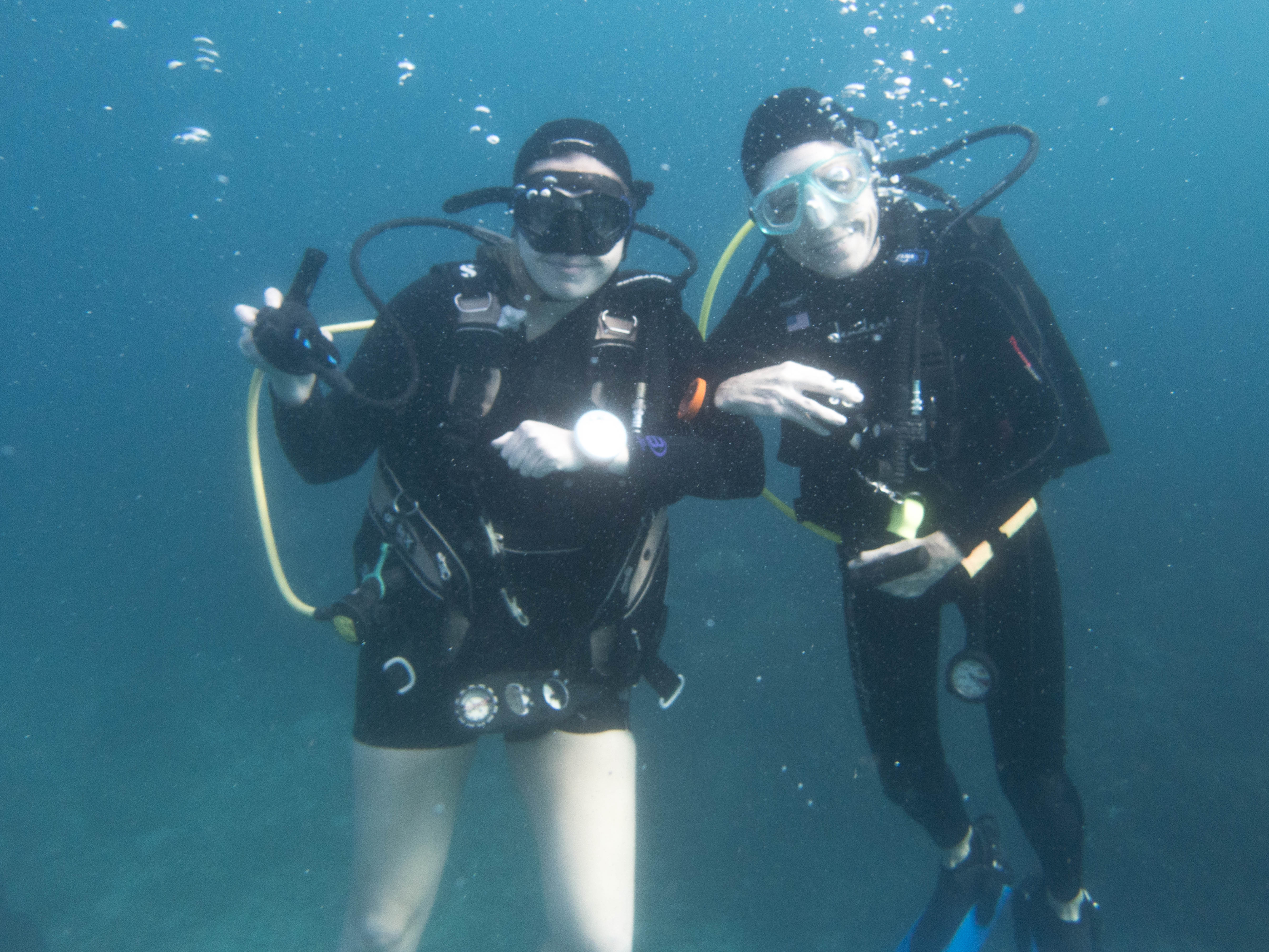
Jocelyn and Sally
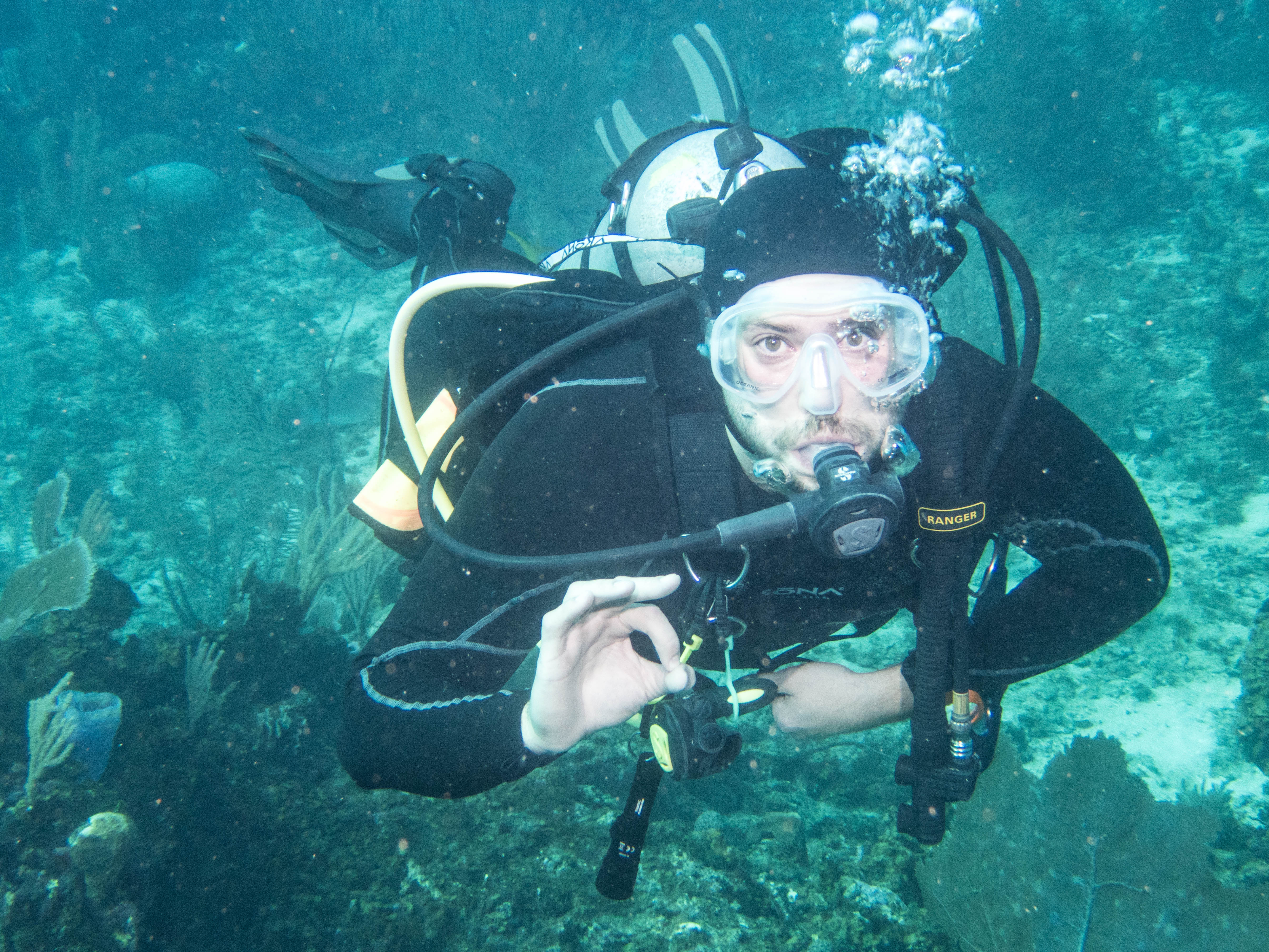
Gabe is OK
 The Casual Blog