Local birds, and Trump’s war on nature
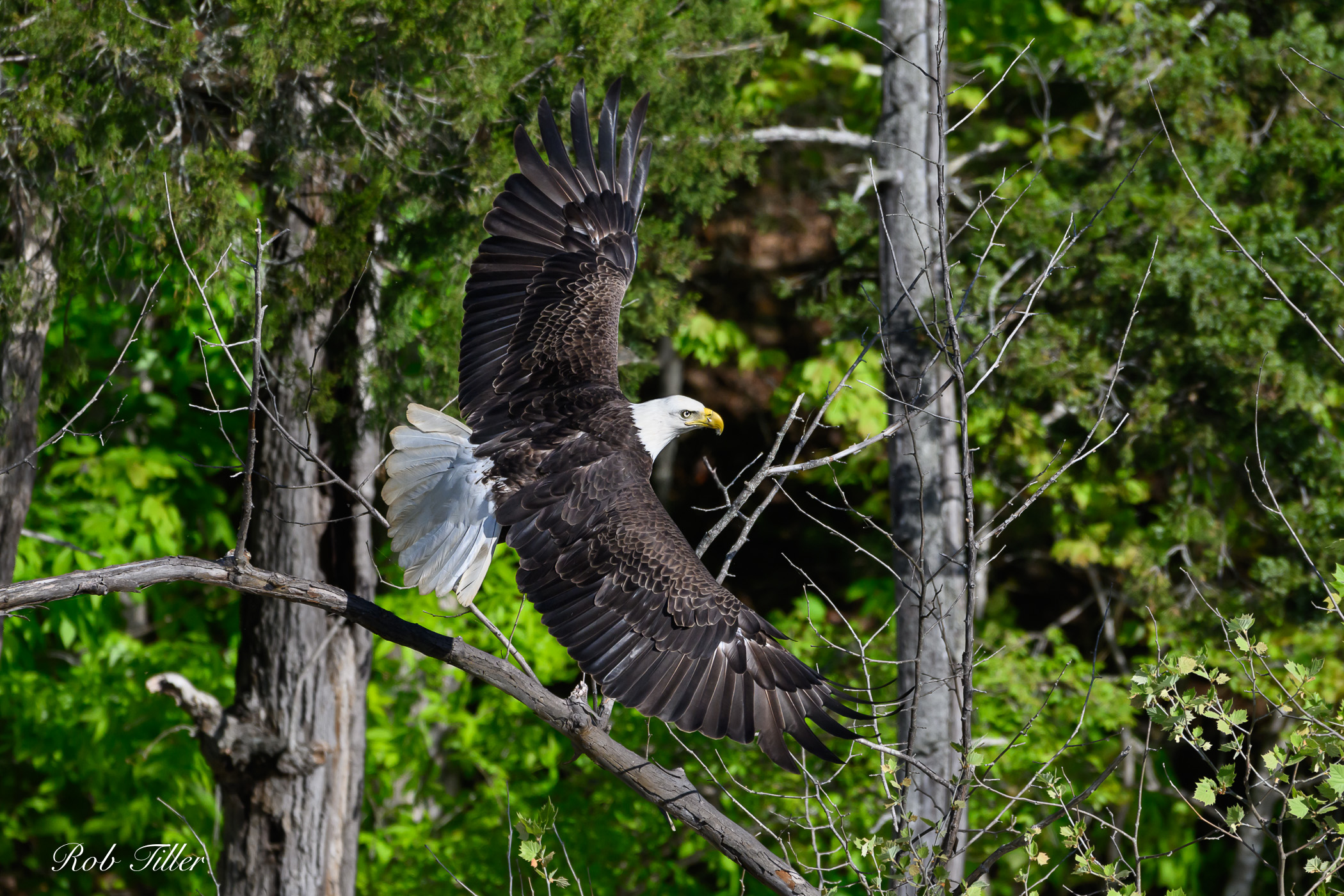
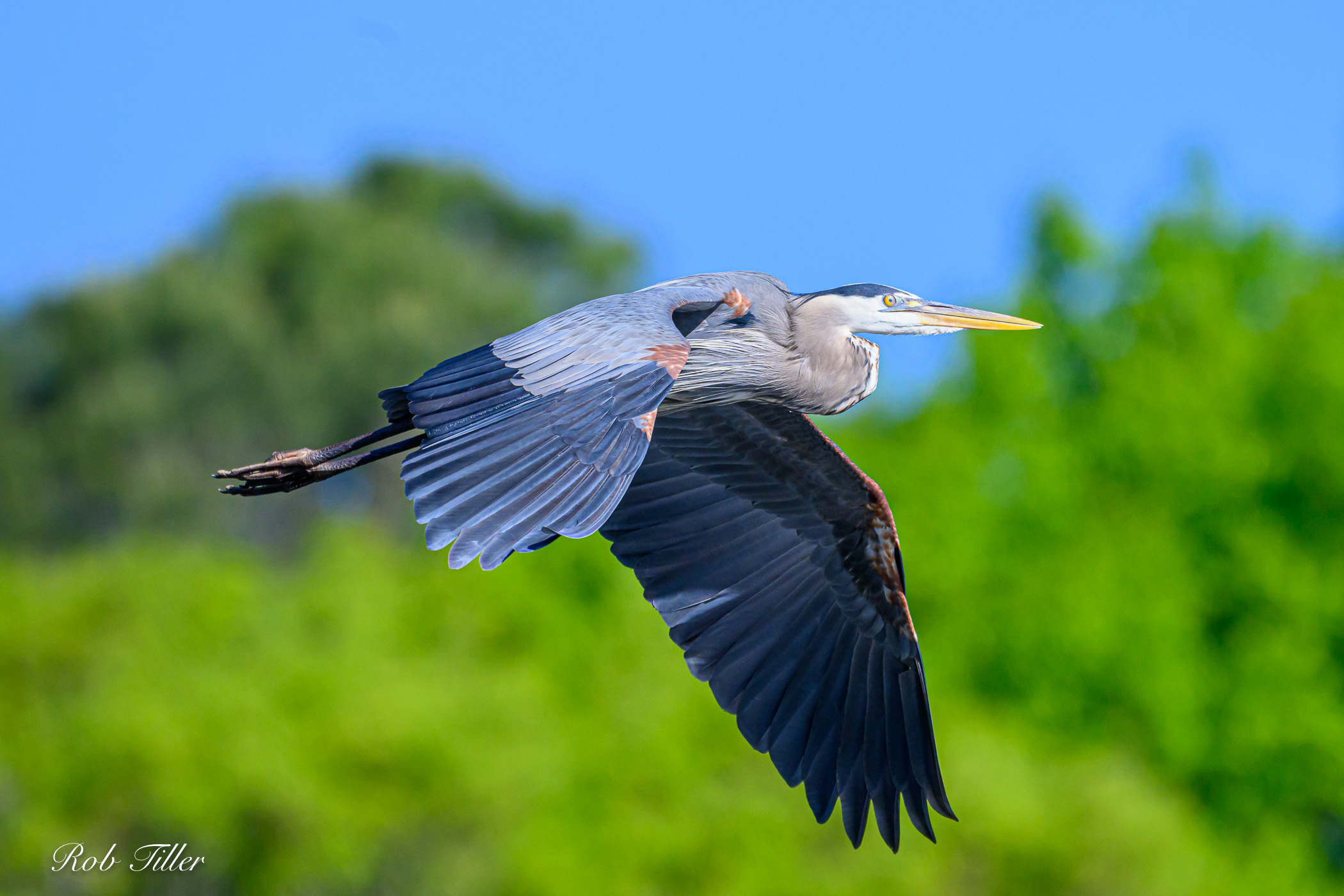
Recently I’ve taken a couple of boat trips on Jordan Lake with the Carolina Nature Photographers Association to see some of the birds that live there. According to our guide, Captain Dave, there are some forty nesting pairs of bald eagles there now, along with many ospreys, great blue herons, woodpeckers, various ducks, and many smaller birds.

There was a lot happening. We saw eagles hunting for food and battling over territory. Ospreys were incubating their eggs. Wood ducks were shy and flew away quickly. Several tree swallows had a battle royale over a strategic perch. At one point hundreds of cormorants were flying and diving together in a coordinated hunt of the local small fish.

I’ve also been enjoying listening to the springtime songs of the birds in our backyard. A few years ago I invested some energy into learning common bird songs and calls from recordings. Lately I’ve been expanding my repertoire with Merlin, a free app from the Cornell Lab of Ornithology. Listening along with Merlin to the birds from our back deck, I’ve discovered several species whose songs I didn’t know and who almost always hide behind the leaves. It’s a great little app!

With American democracy in crisis, and a wide array of related disasters in process, it isn’t surprising that bird song and nature generally are not top of mind for most people. But I find their strength and beauty inspiring, and a source of strength.
What’s more, the welfare of nature is the welfare of us all. It’s such a mistake to think that the world is all about humans, and nature is of secondary concern, or no concern. We humans are just one part of the grander scheme of nature. We can’t destroy nature without destroying ourselves.

It’s both bizarre and tragic that part of the Trump program seems aimed at just such destruction. I’ve puzzled over why this could seem like a good idea to anyone. Paul Krugman, the Nobel-prize-winning economist, offered a possible answer in a recent free email newsletter.
Krugman usually writes on economic subjects, and I’ve found him helpful in illuminating some of the leading stories coming out of Trumpworld. In writing about the tax plans now in process, he pointed out that part of the program for funding tax cuts for the rich is cutting government support for clean energy and increasing subsidies for fossil fuels.

Krugman notes that the reason surely has a lot to do with our system in which campaign contributions buy policy decisions – a system that seems to me a sort of legalized bribery. The fossil fuel industry contributes much more to Republicans. But he notes, there seems to be more than just money at stake.
Why does MAGA hate renewables? They consider them woke because they help fight climate change, which they insist is a hoax. And they’re cleaner than burning fossil fuels, which means that they aren’t manly.
It’s all kind of funny — or would be if it weren’t so tragic.

Krugman writes that the dramatic progress in renewables technology has made it possible for us to mitigate the worst effects of climate change. The price of wind and solar power has been falling quickly. But Trump has opposed these technologies and taken aim at the Democratic programs to advance them.

David Gelles of the NY Times has a good new piece on several aspects of the Trump approach to our climate crisis. He gives a pithy summary of our basic situation:
Average global temperatures last year were the hottest on record and 1.5 degrees Celsius above preindustrial levels, a threshold that nations had been working to avoid. Every fraction of a degree of additional warming raises the risk of severe effects and possibly irreversible changes to the planet. Nations must make deep and fast cuts to pollution to avoid a grim future of increasingly violent weather, deadly heat waves, drought, water scarcity and displacement . . . .
Can nothing be done? In fact, a lot can be done, as demonstrated around the world. Gelles explains that the current administration is unique among major world powers in its preposterous denial of climate change and refusal to act.
Around the world, countries are racing to adapt to a rapidly warming planet, reduce pollution and build clean energy. China, the only other superpower, has made a strategic decision to adopt clean energy and then sell it abroad, dominating the global markets for electric vehicles, solar panels and other technologies. Even Saudi Arabia, the second-largest producer of oil after the United States, is spending heavily on wind and solar power.

Here in the US, we’re taking a different approach, as Gelles explains.
The president’s proposed budget calls for eliminating funding for “the Green New Scam,” including $15 billion in cuts at the Energy Department for clean energy projects and $80 million at the Interior Department for offshore wind and other renewable energy. The administration has frozen approvals for new offshore wind farms and imposed tariffs that would raise costs for renewable energy companies. Republicans in Congress want to repeal billions of dollars in tax incentives for production and sales of solar panels, batteries, electric vehicles and other clean energy technologies.

At the same time, per Gelles,
The Environmental Protection Agency, which has been the government’s lead agency in terms of measuring and controlling greenhouse gas emissions, is being overhauled to end those functions. The administration is shredding the E.P.A.’s staff and budget and wants to revoke its two most powerful climate regulations: limits on pollution from tailpipes and smokestacks.
Mr. Trump has said that relaxing limits on pollution from automobiles wouldn’t “mean a damn bit of difference to the environment.”
But transportation is the largest single source of greenhouse gases generated by the United States and its pollution is linked to asthma, heart disease, other health problems and premature deaths.

Trump is also cutting federal disaster relief programs led by FEMA.
As human-caused global warming increases, disasters are becoming more frequent, destructive and expensive. There were just three billion-dollar disasters in the United States in 1980, but that total increased to 27 last year, according to data collected by NOAA. The agency said last week that it would no longer tally and publicly report the costs of extreme weather.

Finally, Trump is undermining the research at the foundation of past efforts to anticipate emergencies and mitigate climate change.’
Last month, the Trump administration dismissed hundreds of scientists and experts who had been working on the National Climate Assessment, a report mandated by Congress that details how global warming is affecting specific regions across the country.
In recent weeks, more than 500 people have left the National Oceanic and Atmospheric Administration, the government’s premier agency for climate and weather science. That has led the National Weather Service, an agency within NOAA, to warn of “degraded operations.”
NOAA also stopped monthly briefing calls on climate change, and the president’s proposed budget would eliminate funding for the agency’s weather and climate research. The administration has purged the phrases “climate crisis” and “climate science” from government websites.
There’s more; Gelles’s piece is worth reading in its entirety. There are a lot of reasons to stop Trumpism, but the war on the health of the planet is enough by itself. State and local officials are the next line of defense, and they need our encouragement.










 The Casual Blog