The Casual Blog

Tag: beach

A week at the beach, dogs vs pigs, and the communist menace

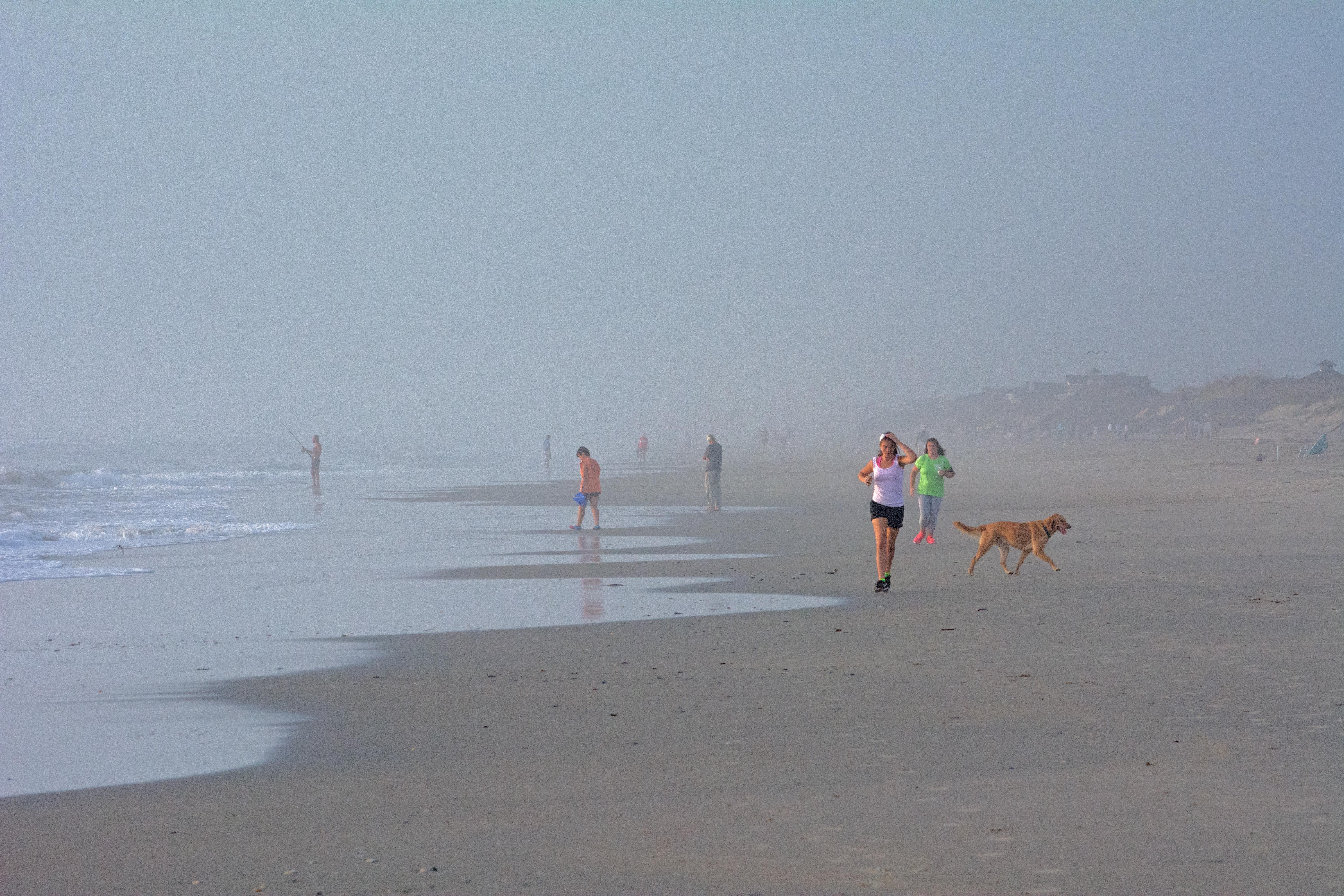
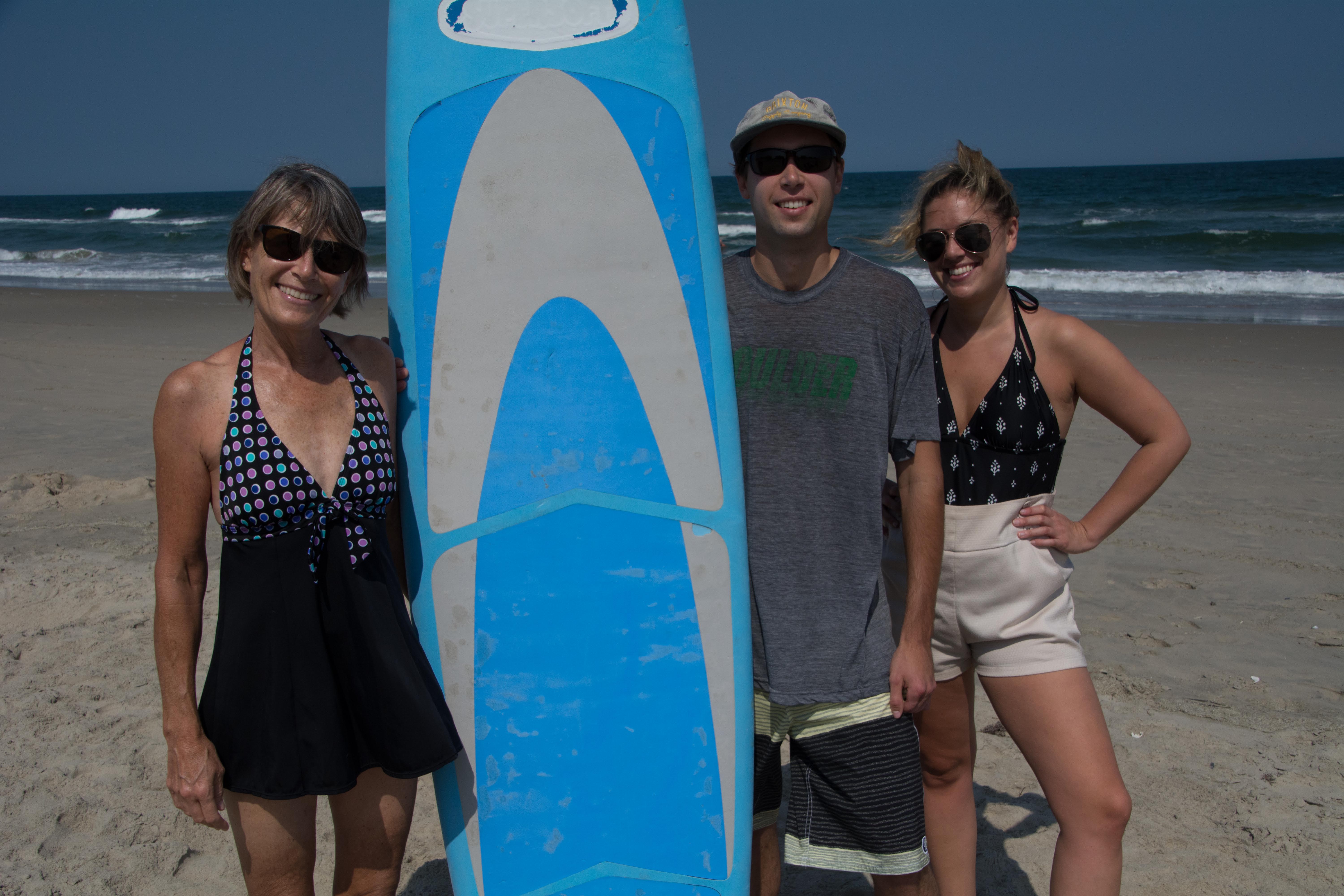
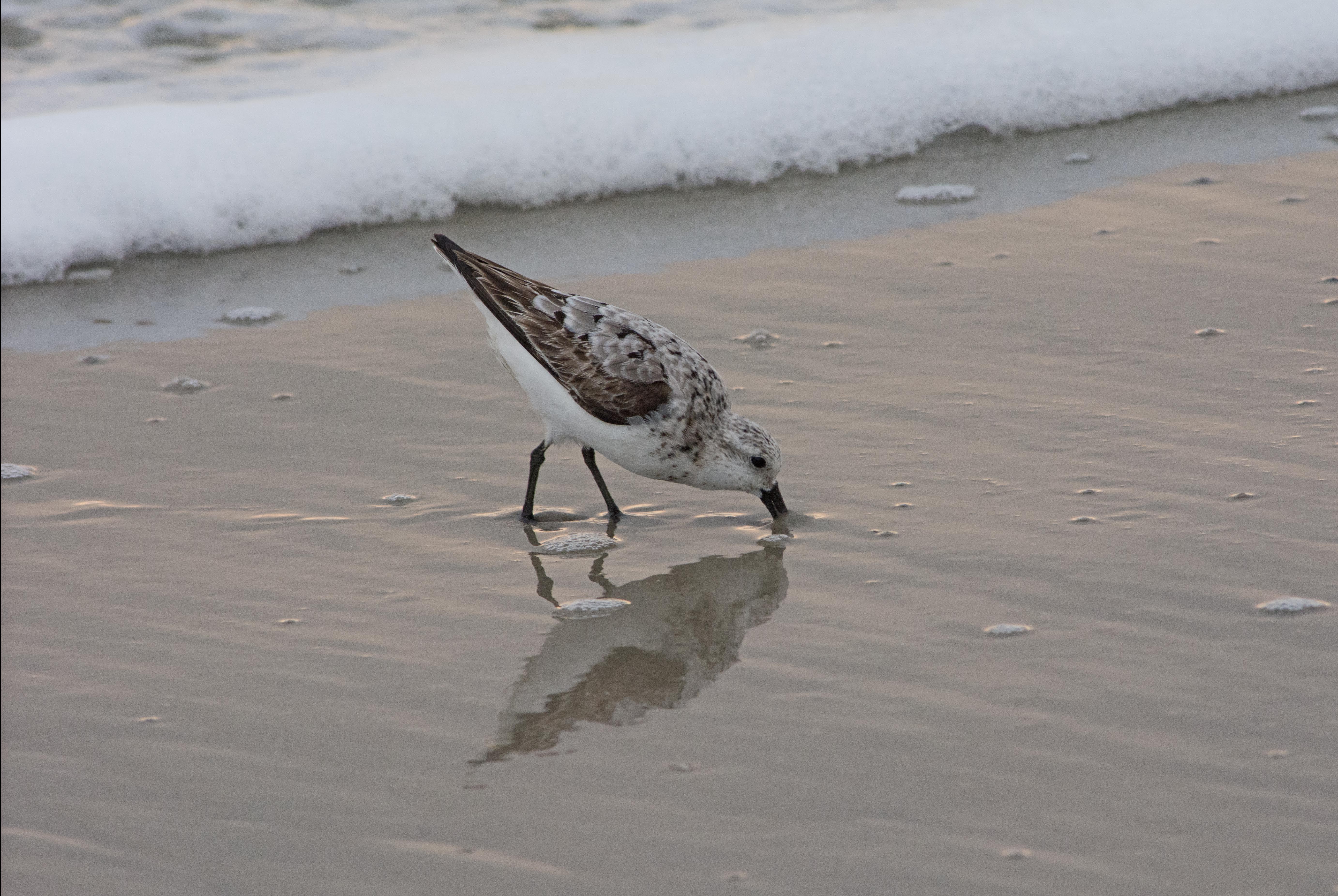
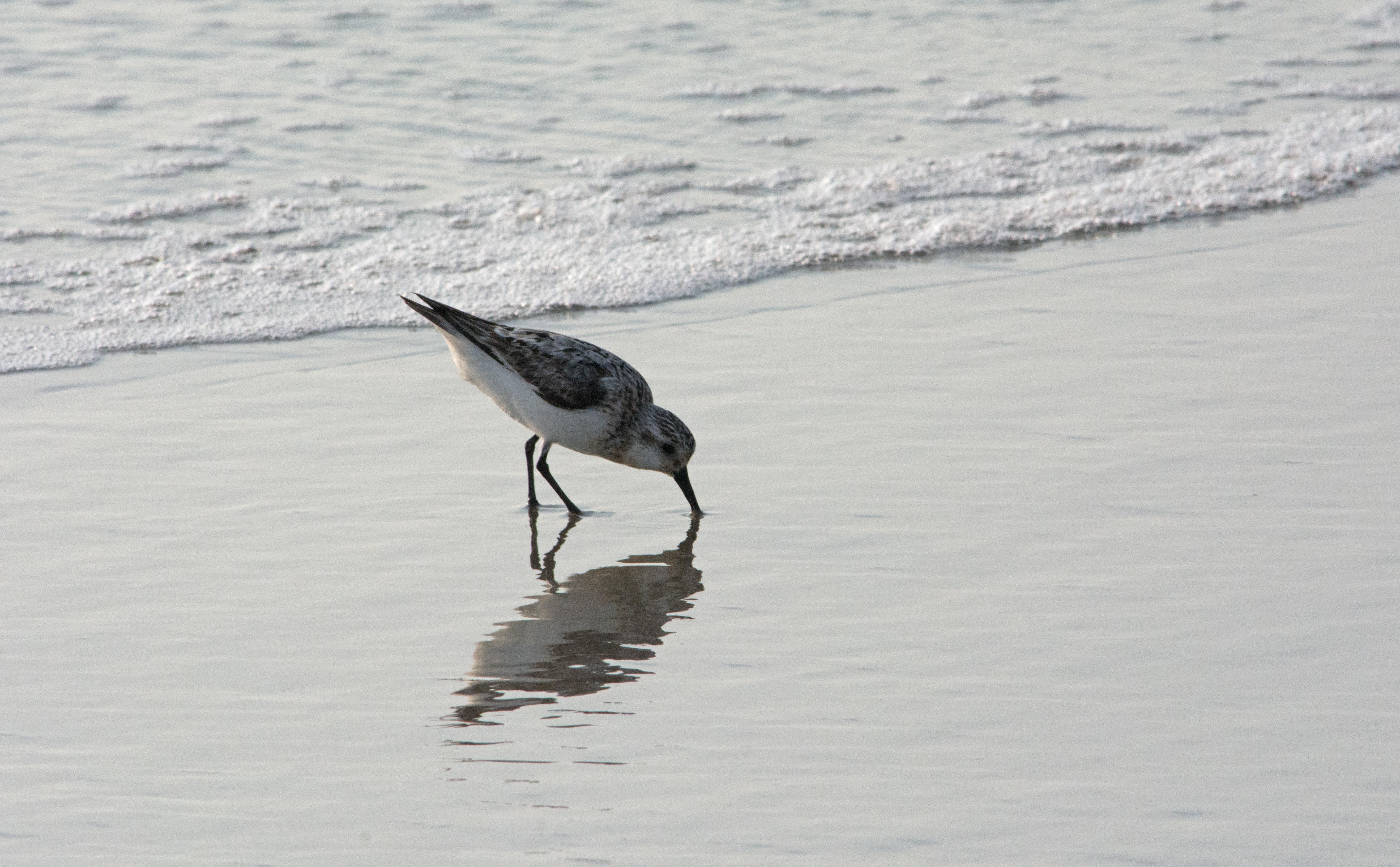
Last week we rented a house at the Outer Banks and had a family gathering.  We walked on the beach, played in the pool, rode bikes, read books, watched the Olympics, and enjoyed each other’s company.  I also took some pictures of wild horses at Carova and shore birds at Corolla, a few of which are here.

In photographing the wild horses, I generally try to catch them in natural-looking settings, and avoid showing roads and structures.  But that’s misleading, in a way.  A lot of the time the horses are grazing in front yards and walking along the sandy roads.  They’re really part of everyday human life in that part of the Outer Banks.  It was good to see most of them looking healthy, and some had new foals. 

Some mornings I walked on the Corolla beach looking for sanderlings and other shore birds.  In places there were good-sized flocks of the little sandpipers running away from the waves, then speeding back and probing for edibles with their sharp beaks.  Some of them were not at all shy of me.  But they’d fly off when a jogger got too close, or a dog came bounding toward them.  

Speaking of dogs, Nicholas Kristof had a thought-provoking column recently about dogs and pigs.  He noted how much we love our dogs, which is great, but also odd, considering how cruel we are to farm animals.  The similarities between these mammals seems pretty obvious – indeed, pigs are smarter than dogs – but somehow we’ve worked them into disconnected ethical categories.  We would never eat our dogs, but many of us are quite comfortable eating pigs.  

Kristof put it bluntly:

Just as today we wonder how people like Thomas Jefferson could have been so morally obtuse as to own and abuse slaves, our own descendants will look back at us and puzzle over how 21st-century humans could have tolerated factory farming and the systematic abuse of intelligent mammals, including hogs.


“Farmed animals are just as capable of experiencing joy, social bonds, pain, fear and suffering as the animals we share our homes with,” Leah Garcés, the president of Mercy for Animals, told me.

This is a lot more that could be said about this issue, but I’ll leave it there for now.  Except for noting, I used to think people mostly agreed on the key differences between right and wrong.  But Kristof reminds us that, at least in some important areas, such as animal rights, people differ amazingly in their basic morality.  Another example of surprising differences on basic morality concerns human rights and the rule of law. 

I used to take it for granted that almost everyone in the U.S. had high regard for our traditional constitutional rights (like privacy and freedom of speech and religion), fair elections, and equality under the law.  The various authoritarian alternatives that empower a charismatic strongman leader and silence dissent, such as fascism and Soviet-style communism, were, I assumed, generally viewed as bad.

But with the ascendance of Trump, this assumption is now highly questionable.  Trump has boldly declared his support for measures that are characteristic of authoritarian systems.  These include his intention to pervert the legal system to reward friends and punish enemies, to use the military to quash political protests, vilifying minorities, dehumanizing immigrants, otherizing gender non-typicals, and attacking women’s bodily autonomy.  

His support in the presidential election is currently around 50 percent.  I’m hopeful that some of that 50 percent have not got round to examining what he actually stands for and will reconsider their support.  But a significant portion plainly have no problem with his racism, his xenophobia, his transphobia, his rejection of fair elections, and his calls for violence.  They may be fine people in certain regards, but they have very surprising views on right and wrong.  

I just finished listening to a recent podcast series called Ultra (season 2) that puts our situation in a helpful perspective.  Produced and narrated by Rachel Maddow, it concerns the aftermath of WWII, and focuses on the rise of Joe McCarthy and his movement.  

Most of us were taught that McCarthyism was centered around an exaggerated fear of communism and false claims that communists were taking over the country.  We might know that in the mid 1950s McCarthy as a U.S. Senator rose to power by leading an effort to persecute ordinary people for sympathizing with communism, and in fact destroyed careers and lives.  But McCarthyism seemed relatively short lived.   We, or at least I, didn’t know, before listening to Ultra, that it was a mass movement that was driven in part by Nazi sympathizers and ideology, and its spirit is still with us.

McCarthy was a corrupt politician, a compulsive liar, and a remorseless bully, and his dishonesty and brutality were plain to see at the time.  But there were apparently millions who didn’t mind any of that.  They considered him a great leader and supported his looniest ideas.  Shortly before he died, a project began to move him into the presidency through subverting the election of 1956.  

Ultra doesn’t bother pointing up the parallels between McCarthy and Trump, presumably because they’re so obvious (the lies, the corruption, the sedition).  It is particularly striking that Trump and his team have been trying to label the Harris team as communists.  Alarmist and baseless name-calling is standard operating procedure in Trumpworld, and sometimes, as in McCarthy’s time, it works.  

But somehow I doubt it will work this time.  For anyone not already deeply infected with the Trump virus, any acquaintance with  Harris and Walz will put the lie to Trump’s attempt to label them as communists or otherwise wildly radical.  It remains to be seen whether the great start of their campaign will hold up.  It’s by no means clear that they will win.  But things look more hopeful than they have for a long time. 

Diving in Mozambique

Tiller4-8
Heading to Africa week before last, my dream was to dive with some really big creatures, including manta rays, whale sharks, and humpback whales. My research indicated that these and other species should all be present in October (spring) in southeastern Mozambique. The diving didn’t turn out as well as hoped, but I was not sorry we tried. We saw some amazing sights, and learned some things.

Our first dive destination was Zavorra, in Inhambane province. We stayed at Zavorra Lodge, a somewhat rustic hotel at the end of a long sandy road. It was very windy when we arrived, and we were warned that the wind was making the waters rough and murky. It was less windy when we went out early the next morning, but visibility was quite poor. And it was chilly (65 Farenheit). We saw medium and small fish, including a large group of barracudas, but no giants.

This was basically the story for the following two days – cold and dark. I had some suspicion that unregulated fishing had reduced the fish populations, based on some of the locals’ comments about government corruption and Chinese factory ships, but who knows? There could have been a lot of creatures that we didn’t see, since we didn’t often see more than 10 feet.

One afternoon we took a short walk to a nearby village, where there was a shaman who for cash purported to tell fortunes. We were surprised that most of our group of mostly Dutch tourists paid up and sat still for quite a bit of this nonsense. But it was interesting to see the local people, the grass roofed dwellings, goats, and chickens.
Tiller4-4

Our last afternoon we went horse riding on the beach. It was many years since I’d been on a horse, and my mount, a handsome white horse named Obsession, may have noticed this. We were behind Sally, and Obsession kept wanting to pass her, and I kept having to apply the brakes.

But it was lovely riding on the beach. For a bit. Then, when we were moving just inside the backwash of the waves, Obsession unexpectedly flopped onto his side. Happily, I got my bottom leg out from under him in time and didn’t get crushed, though I did get wet. Obsession went straight out into the breakers for a dip. Our guide finally got him to come out, and we found he’d lost one stirrup in the water. The guide gave me one of his, and we finished the ride.

Next we went to Tofo. This place has the widest white sand beach I’ve ever seen, and a lively little town. Here we learned how to launch a pontoon boat into the waves (push when they say push, and then hoist yourself up and in). The ride out on the little boat (30-45 minutes) was generally bumpy. Once at the dive site, we got into the water by rolling backwards on the count of three. At the end of the dive, we took off your heavy equipment and hand it up, then hoisted ourselves up into the boat.

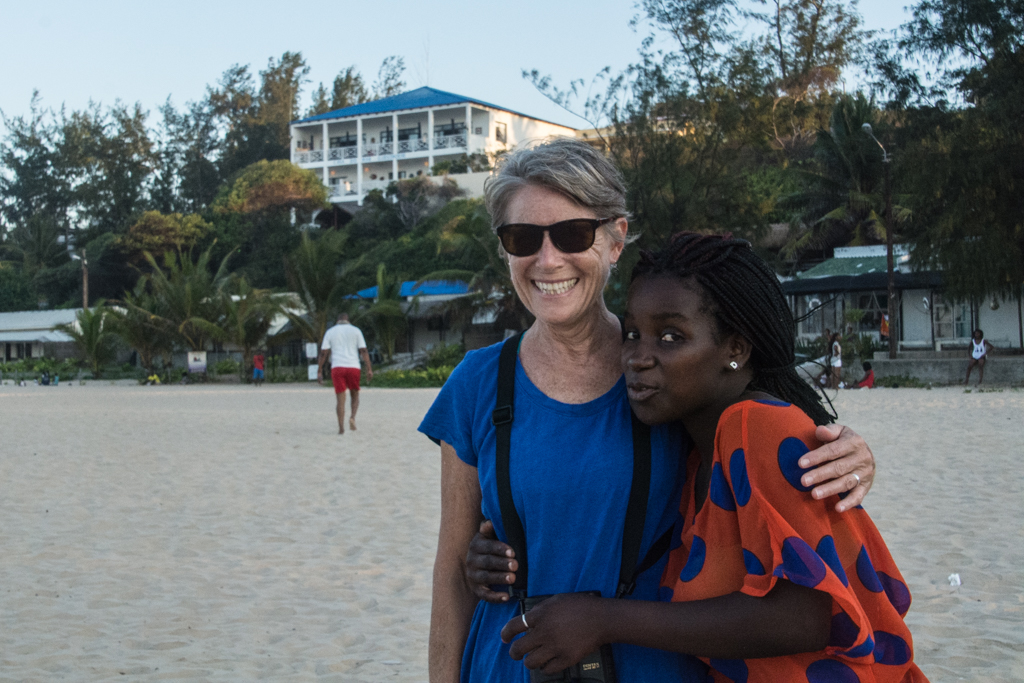
That's Caso do Mar in the background, and Sally with a young woman who rushed over to be photographed

That’s Caso do Mar in the background, and Sally with a young woman who rushed over to be photographed

Our first day out, the dive was down to about 100 feet. The current was quite strong, and we had to fight it to stay near the reef. Here, too, it was dark and chilly, with visibility less than 10 feet. We enjoyed seeing some pretty small tropicals. But this is not diving for the timid or out of shape.

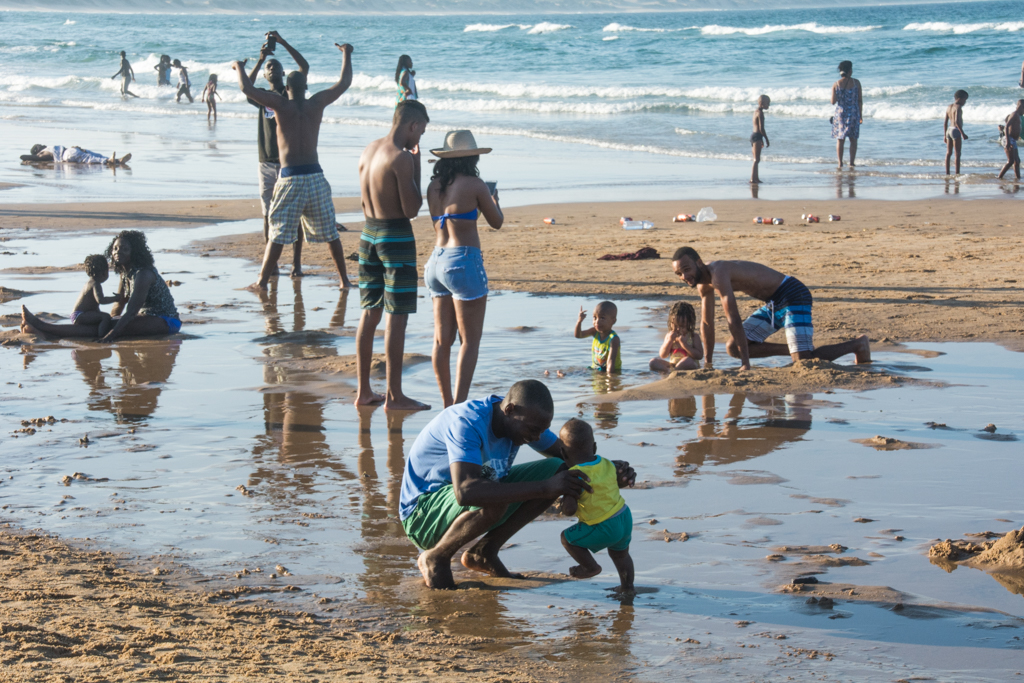
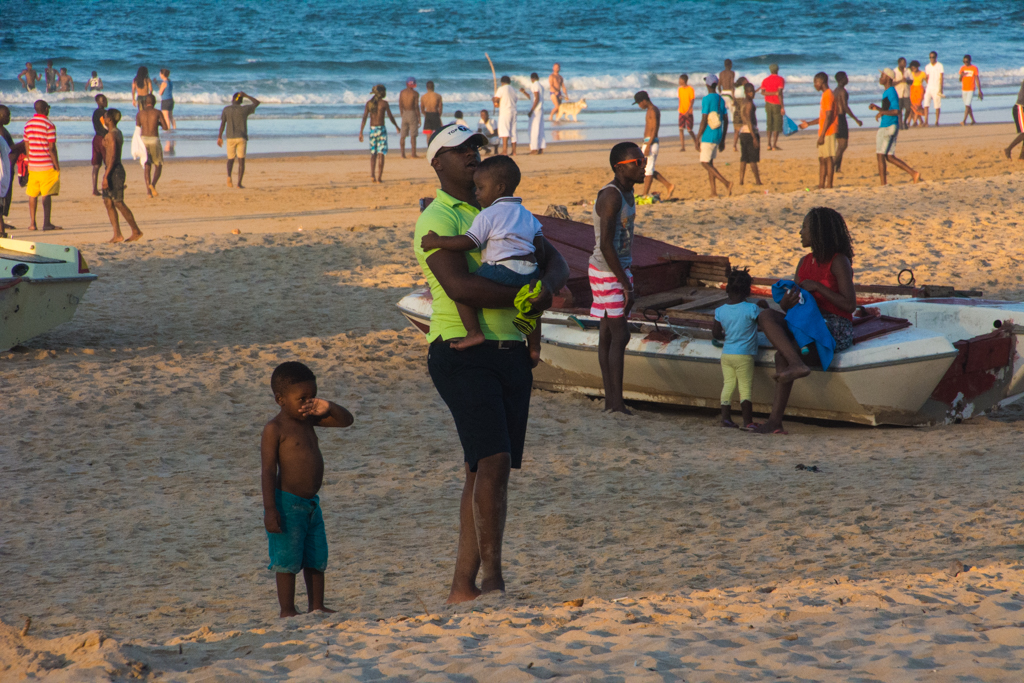
We liked our hotel, the Caso do Mar, and we liked the dive outfit, Peri Peri. Our main divemaster, Frieda, was unfailingly cheerful, and consistently safety minded. We had some good talks with her about great dives past, and ones we hoped to make. We liked walking on the beach as the young men played soccer and the young families played with their babies.
Tiller4

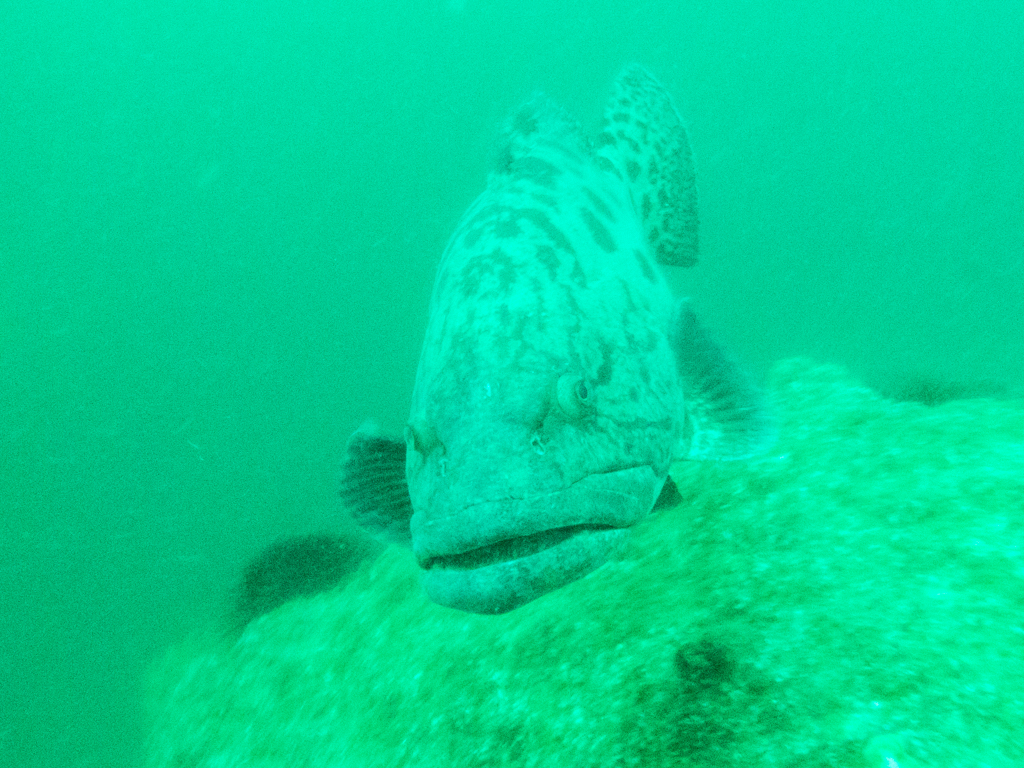
We saw a good number of humpback whales during our boat rides, and heard them singing when we were under water. We saw one white tipped shark, but no others, and a honey-combed moray eel. We never did see a manta.

But I finally realized my dream of swimming with a whale shark. Our skipper spotted the enormous animal near the surface, and we all slipped off the pontoon boat with snorkel gear. I found myself over the creature, just off its right side and perhaps 6 feet above. Even with murky water, I could see it clearly from tip to tail. My fellow snorkelers were not within view. The whale shark and I swam together for perhaps two minutes, and then it began to pull away. Soon all I could see was the tail, and then just dark water.

I spent a fair bit of money and energy getting ready to photograph the sea creatures of Mozambique, and it didn’t work out so well. There were various equipment problems (the strobes wouldn’t work, then the zoom wouldn’t work, etc.), but the biggest problem was the very limited visibility. So it goes; sometimes nature is uncooperative. I will surely be more appreciative the next time I’m in clearer waters.
Tiller4-7

Our Outer Banks holiday, with sanderlings

14 08 31_1974_edited-1
Last week my well-grown kids, Gabe and Jocelyn, came in from Colorado and New York, and we all headed to the Outer Banks for the long holiday weekend. My sister and her family put us up at their gracious place in Corolla, and made sure we ate and drank well.
14 08 30_2193

The beach at Corolla was wide, clean, and not at all crowded. The days were sunny and breezy. The water was cool at first. We tried out a surfboard, but had better success catching waves with boogie boards. I had one excellent ride of perhaps a hundred yards. On Sunday we went out about 3:30 in the afternoon, and I wrongly figured that sunblock would not be needed. Got a bit pink.

Each morning I got up around sunrise and took a long watch on the beach with my camera. I saw mostly sanderlings, hardworking little shorebirds that move with comical quickness. I took hundreds of pictures of them. Here are a few that I especially liked.
14 08 30_1789_edited-114 08 30_1795_edited-1-1
14 08 31_2049_edited-1
14 08 31_2139_edited-1
14 08 31_2141_edited-1

A beach trip, with a note on failure

For Memorial Day, we took Clara on her first road trip out to Jane and Keith’s beach place.  I enjoyed the drive.  We came over the bridge towards Nags Head just as the sun was setting.  The Outer Banks are not Monte Carlo.  It’s not about glamor.  But the area can induce serenity and happiness.  Traffic on the island moved slowly, and we sampled the local radio stations — a fundamentalist preacher, 80s rock, country, and my favorite, hip hop.  It was good at last to see Corolla again.

Keith is a grill chef extraordinaire, and for our benefit volunteered to go all vegetarian for the weekend.  Having recently mastered gluten-free cooking, he seemed to appreciate the challenge, like a high jumper who wants to go higher.  He made waffles with fruit and honey whip cream for breakfast.  Delicious!  A tomato cucumber soup with hot cheese pie for lunch.  Scrumptious!  Stuffed peppers and corn flan. Extraordinary!  He tried a rich chocolate torte, which he judged too dry and threw out.  The second effort was a great success.

We went to the beach in the afternoon,  Sally donned a wet suit and swam with my niece Kylie and nephew David.  I piloted a kite for a bit before it crashed, and I reread a bit of Endurance, by Alfred Lansing, the incredible story of Ernest Shackleton’s 1914 expedition to cross Antarctica, which was a failure in terms of its original mission, but a success in terms of its plan B — survival.  It’s nice to a frigid, desperate story and a sunny beach.

David, 10, is mad for lacrosse, and insisted while we were on the beach I learn something about it.  He let me use the shorter stick.  Under his intense coaching, I managed to make some catches and throws, and was pleased.  I also missed some catches and made some bad throws, which was less fun.  But I persisted for a while, even with little expectation of ever being any good, partly to humor David, and partly to continue road testing my theory of failure.

It’s this:  greater acceptance of failure increases the possibilities for happiness.  Part of the reason is that we learn from failure.  In any new endeavor, we start out incompetent, so we make mistakes, and if we persist we gradually work out how to make fewer mistakes.  Every significant accomplishment (apart from the occasional stroke of pure luck) is the result of many failures.

But there’s a broader reason for greater tolerance for failure.  Clearly, failure does not always lead to success.  Most of the things we could try will not turn out well, because no one can be good at everything. But if we decline to accept our own failure, we narrow our range of experience.  I might have missed lacrosse, or skiing, or Liszt.  If we give ourselves permission to fail, we can try new things, and be happier.