The Casual Blog

A juicy yoga class and other educational experiences

As much as I really love yoga, I go back and forth on Yvonne’s once-a-month Juicy Flow class at Blue Lotus. I like doing a class on Saturday mornings, and I like Yvonne, but I have the same issue the first Saturday every month.

Rather than her usual hour-and-a-half of Vinyasa (which is a lot), Juicy Flow is two hours, with a lot of fast movements. It’s eclectic. She puts a lot of thought into the music mix, which can range from goofy 80s pop to the world. In terms of movement, it’s always different, and there’s always something lively and fun. But it’s always exhausting, and tends to make me sore for a couple of days afterwards.

I was particularly hesitant about Juicy Flow this week, because I’ve been having some issues with my shoulders, and the class ordinarily stresses those parts. But I decided to give it a go. As usual, she’d come up with some demanding variations of traditional asanas, and several three-minute-long Kriya sequences of fast, big movements, including shoulder turns, squats, rolling up and down, scissoring legs, and open palm punches. There was also some free-form dancing.

Like every good yoga class, it was a learning experience — finding out some new things about what my body can and cannot do, and what the possibilities are. It was sufficiently demanding that I was not thinking about much of anything other than Yvonne’s directions. The two hours went fast. It was sweaty and exhausting, but also fun, and left me feeling amazingly calm and relaxed.

I was pleased to see news reports this week that Harvard and MIT are starting a free online education initiative called EdX. I might be interested in some courses. In fact, I’ve been auditing Michael Sandel’s Harvard course on justice (i.e. theories of ethics) through iTunes U. I usually watch Sandel or a Ted Talk in the early morning while getting my heart rate up on an exercise machine. It gets my head going.

Opening up the Ivy ivory tower strikes me as a very good thing for society in general, and I hope a lot of people will use it for continuing their education. It’s worrisome that anyone could think of college as the completion of an education. Seriously, has there ever been anyone who is reasonably well-educated after four years of college? College is kindergarten for adulthood. Getting fairly well educated takes a long time, and even then, there’s always more to explore.

Strawberries, memory flaws, driverless cars, manufacturing, massage, and Il Trovatore

The strawberries from the Raleigh farmers’ market were good this week — firm but not too much so, and fairly juicy. I put quite a few in my breakfast smoothies (together with kale and other nourishing things), and also made a point to taste them in their unprocessed state. Still, I couldn’t help thinking that the strawberries of years ago were sweeter. Are strawberries losing their taste little by little, like tomatoes before them? Or is this just memory playing tricks?

It’s unsettling to think that memory is unreliable. It is such a vital part of our interior lives, of our concepts of our ourselves. But it is highly prone to error. Thousands of Americans “remember” being abducted by aliens. Many others recall, after extensive coaching by incompetent therapists but without any confirming evidence, being sexually abused by their parents. In Mistakes Were Made (But Not by Me), social psychologists Carol Tavris and Elliot Aronson take a swing at explaining these and other social-psychological debacles involving strongly felt, but completely wrong memories.

Tavris and Aronson explain that complex memories are not a literal or objective recordings of events. There is no place in the brain where everything that happens to us is stored. Our brains hold selected vivid highlights of events, which we mix together with other knowledge or impressions to construct storylines. These storylines can, especially when repeated many times, come to feel like literal truth. The “mistakes” of the book title refers to our tendency to construct the storylines according to our own biases and tendencies towards self-justification.

Tavris and Aronson give a lively, readable account of the theory of cognitive dissonance, which drives us to reduce internal discomfort by ignoring information that conflicts with strongly held beliefs. They convinced me that there are systematic flaws in our mental functioning, even when we are healthy and operating normally. This is, as I say, unsettling, but it is worth pondering. It may be that by understanding the likelihood of certain kinds of mistakes we can lessen their likelihood.

Humans do some ridiculous things, but also amazing ones: our machines keep getting better and better. The self-driving car was in the news this week, with Google, which has been road testing its design, announcing plans to commercialize, and with Nevada becoming the first state to legalize one. What does this mean for the future of human driving? The end is near. As a person who enjoys driving, I say this with some sadness, but our AI drivers will be much more reliable and efficient than we are. There will be fewer accidents and better fuel consumption. Human driving will become like horseback riding — a noble but slightly mannered hobby allowed only in special areas.

More on amazing machines in last week’s Economist: a feature headlined The Third Industrial Revolution which gave a valuable perspective on how manufacturing is changing, and those changes are starting to transform societies. Major players include more sophisticated robots, improved software, nanotechnology and 3D printing. The new factories use significantly fewer people. The U.S. has a manufacturing output worth about the same as China’s, but uses only ten percent of the workforce used by China. Amazing, right? 3D printing is making possible product customization to a remarkable degree, and lowering costs. So it sounds like we’ll get more remarkable products cheaper, but have fewer manufacturing jobs. What are all the excess people going to do? Especially once their cars no longer need them?

I have a couple of ideas. Number one: more massage. This is a no brainer. Massage is simply wonderful, and we should all get more and give more. I saw Meredith at Hands on Health this week to get some work on my shoulders. Meredith does therapeutic massage, which is designed not to relax you but to make you healthier, and it can involve some discomfort. There were moments when I was close to my pain redline. To cope, I did deep yoga breaths, and was very proud when she told me that my breathing had been “fantastic.” Afterwards I felt great. Meredith is seven months pregnant now, and doing just fine. She’s helped me a lot, and I’ll miss her while she’s on maternity leave.

Another idea: more art. Art is something humans really like to make and share, and they’ve been doing it for millinea. I worry about our artists and artistic institutions, but they’re not dead yet, and there are still endless possibilities.

I felt particularly optimistic Friday night after the N.C. Opera’s production of Verdi’s Il Trovatore (The Troubadour). They performed the work in a “semi-staged” fashion, with no scenery, and the singers moving in front of the orchestra. Il Trovatore has great music, and the soloists were very fine. Leah Crocetto as Leonora was excellent — an exceptional voice, a sensitive musician, and an expressive actress. But gosh, she’s heavy! I’ll say no more about it, except that it detracted from her effectiveness as an artist. But I just loved her singing, and think she could go far.

I was also impressed with tenor Noah Stewart, who was a powerful and sensitive Manrico. Another cheering point: casting an African-American as a romantic lead for a North Carolina audience has become completely uncontroversial. Liam Bonner was strong as the Count de Luna, and Robynne Redmon was a marvelous Azucena. Richard Ollarsabe as Ferrando had a wonderful bass voice. I was impressed with the sensitivity of the conducting of Timothy Myers. One cavil: the male chorus was raggedy. But this was on the whole a fine production, and made me very happy to be living in Raleigh at this moment in history

Cutting wood, not fingers, trying a good new Italian restaurant, and enjoying the Carolina Ballet’s Carmina Burana, but worrying about the dancers’ low pay

On Friday afternoon a group from the Red Hat legal department worked on a Habitat for Humanity house in eastern Raleigh. It was a warm, sunny day. I managed to work up a good sweat nailing boards together, and pulling apart ones I didn’t line up properly before I nailed them.

I also spent some time cutting boards with a circular saw. My father was a passionate woodworker, and the sound of the power saw brought back childhood memories — of trying to watch TV and not being able to hear it because of the power saw. Dad was always worried that his or someone else’s children would hurt themselves with his power tools. He did not generally encourage visits to his wood shop, and managed to implant in me the idea that little fingers can be sliced off very easily. This is a particularly horrifying thought for a pianist. Thus I was probably a more deliberate sawer than most.

Afterwards, after knocking off some of the sawdust, a few of us had a beer at Sammy’s, a sports bar. We learned that Barrett is coming into the home stretch towards his wedding day, with a Caribbean honeymoon in St. Lucia to follow, and Madeline had decided that her next vacation will be in Curacao. I encouraged them to try some scuba diving. Madeline said that she had some claustrophobia issues and a dread of fish bites, and so she was not overly keen, but Barrett seemed game.

That evening Sally and I tried Tuscan Blu, a new Italian restaurant in the warehouse district. We got there at 6:20 with a view to finishing in good time for the ballet by 8:00, and were the first ones there. It was empty, but we quickly got a good vibe from the friendly staff. When we asked about wine, our server summoned the owner, a big, gray-headed, Italian guy, who, instead of discussing the matter, brought us out a bottle of Italian chardonnay that he said we would like. We did. People began to come in, and the place started buzzing. The olive oil in the salad dressing was excellent, as was the pear and ricotta fiochhi. We’ll be going back.

The Carolina Ballet featured a revival of Carmina Burana and three short new works inspired by a local exhibit of the art of Alexander Calder. This was our fourth Carmina, and I’ve liked it better each time. It is a rich, complex work. Lynn Taylor-Corbett’s choreography melds with Carl Orff’s powerful, strangely ancient-yet-modern choral music in a way that seems organic: it feels as though the music and dance were created together, instead of sixty some years apart. . The performance on Friday had a quasi-orchestra (two pianos and percussion) and the 140-voice Raleigh Chorale, well conducted by Al Sturges, made a big, pleasing sound.

The work opens with a group of male dancers in business suits with leather briefcases, which is both humorous and disconcerting. We quickly realize that it’s about our society, with a range of characters from Wall Street operators at the top to laborers at the bottom. The theme is the power of the goddess Fortuna — in other words, luck. Characters from all walks of life excitedly scratch lottery tickets, and are disappointed, and scratch again. Suddenly, one wins! And his life and the group’s is reorganized. One lover is discarded, another appears, then a child, who a moment later is a young woman. Temptations (lust, greed, etc.) arrive, and corruption develops, followed by pain and loss. The wheel keeps turning, with more rounds of the lottery, and eventually, there’s a new winner.

Yevgeny Shlapko played the Man Who Wins (the first lottery winner) with grace and maturity, and stylish athleticism, and paired well with Melissa Podcasy, who had beauty and depth as Woman Who Yearns. Their Daughter Who Dreams was played for the first time that night by Lola Cooper, who was both funny and graceful in conveying the excitement and storms of adolescence, including having a first cigarette. Marcelo Martinez was Man of Darkness, a personification of evil that was both frightening and seductive. I was very happy to see Alicia Fabry back after her injury as A Lost Soul, a role in which (against type) she projected a tragic neuroticism.

The first half of the program had works by Timour Bourtasenkov (a principal in the company), Zalman Raffael (a member of the corps), and Tyler Walters (now on the faculty at Duke). I particularly enjoyed Lindsay Purrington and Yevgeny Shlapko in Raffael’s piece, The Ghost, with music by Darius Milhaud. Walters’ I Mobile to music by Prokofiev was an intricate, modernist work that connected well to the mobile idea.

Afterwards, we met Lola at Humble Pie and caught up. She told us that there had not been much time to put together Carmina Burana, and she hadn’t had a chance to rehearse with the orchestra. She said she hadn’t tried smoking until the night before, and worried that she might have a coughing problem in performance. We talked about the problem of the extremely low salaries of the dancers, and particularly those in the corps.

This is something that has bothered me for a long time. These extremely gifted young people have spent most of their lives in sustained dedication to their art, and have overcome enormous odds to join the few who are paid professionals. They’re incredibly successful — sort of. They get the satisfaction of practicing their art at the highest level, but get paid at a level that is ridiculously low. Paying for the rent, the car payment, and groceries is difficult, or perhaps just not possible without a second job (which is very difficult to put on top of the time demands of the company) or help from parents or elsewhere. If we care about dance, we need to care about the dancers, and figure out a way to pay them a living wage.

Discovering Amsterdam

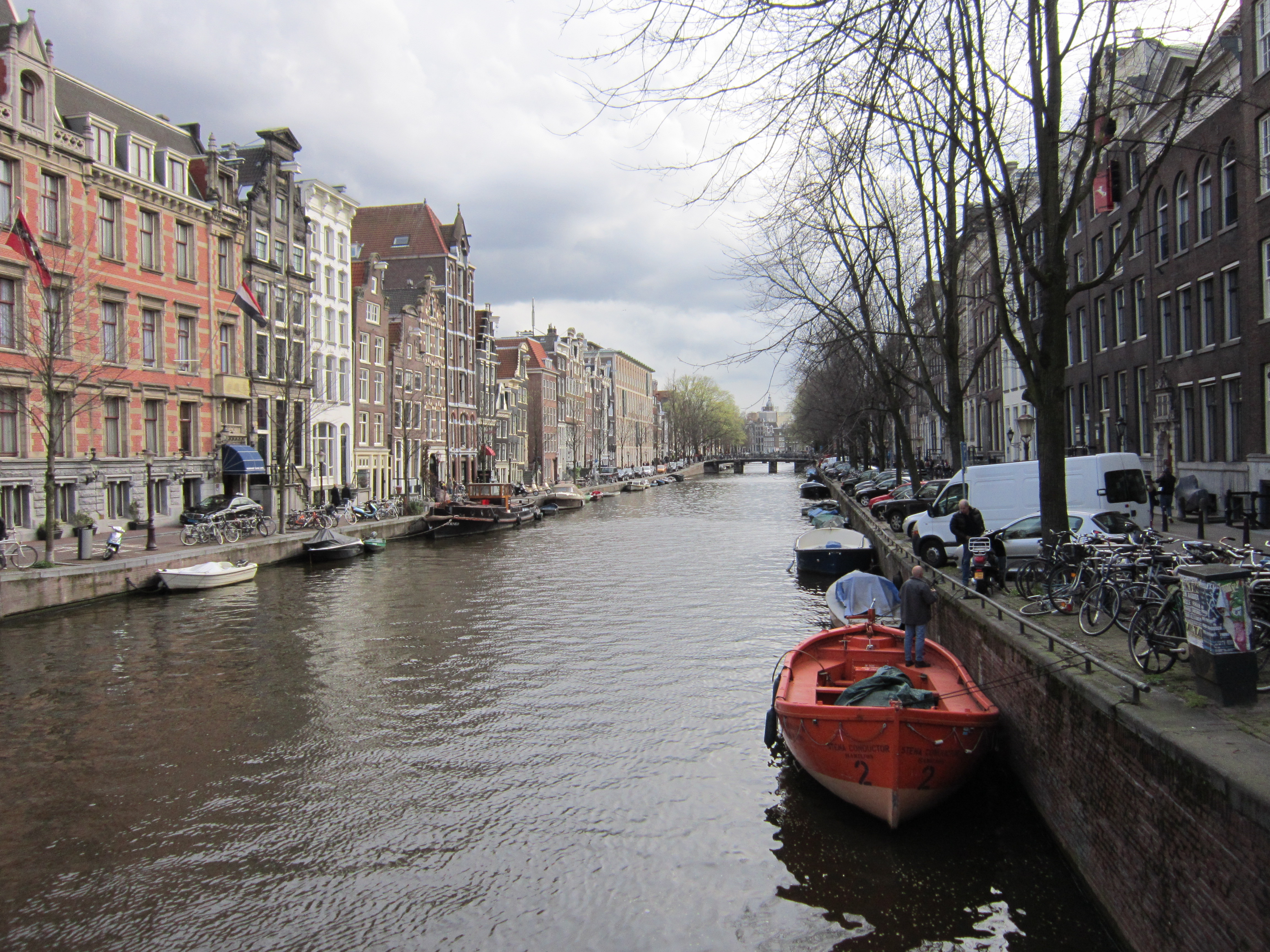
Last week I went to Amsterdam for the Free Software Foundation–Europe legal conference, and got in a bit of sightseeing as well. Sally and I stayed in the Krasnapolsky, a large, older hotel within walking distance of the railroad station, museums and several interesting neighborhoods.

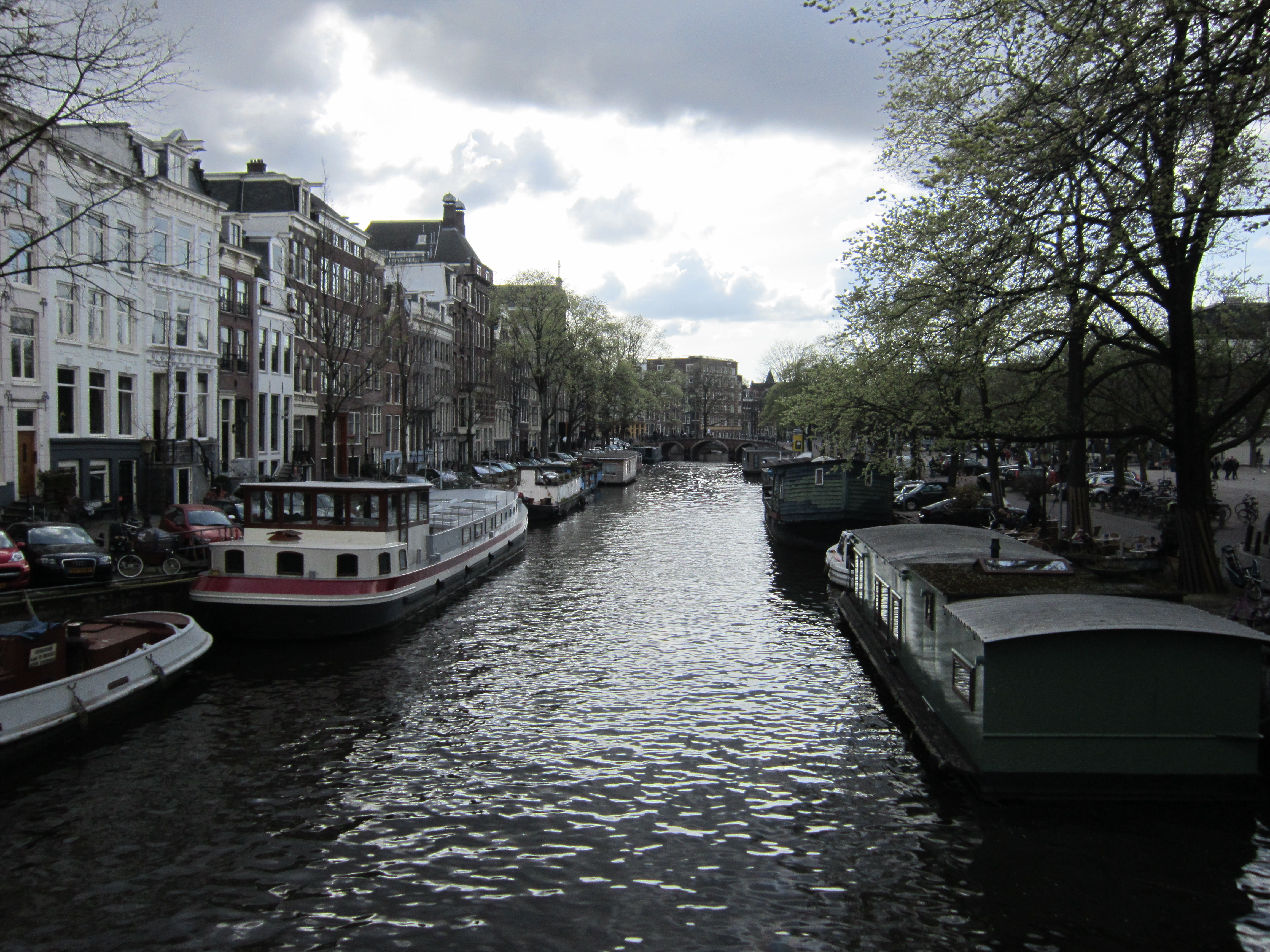
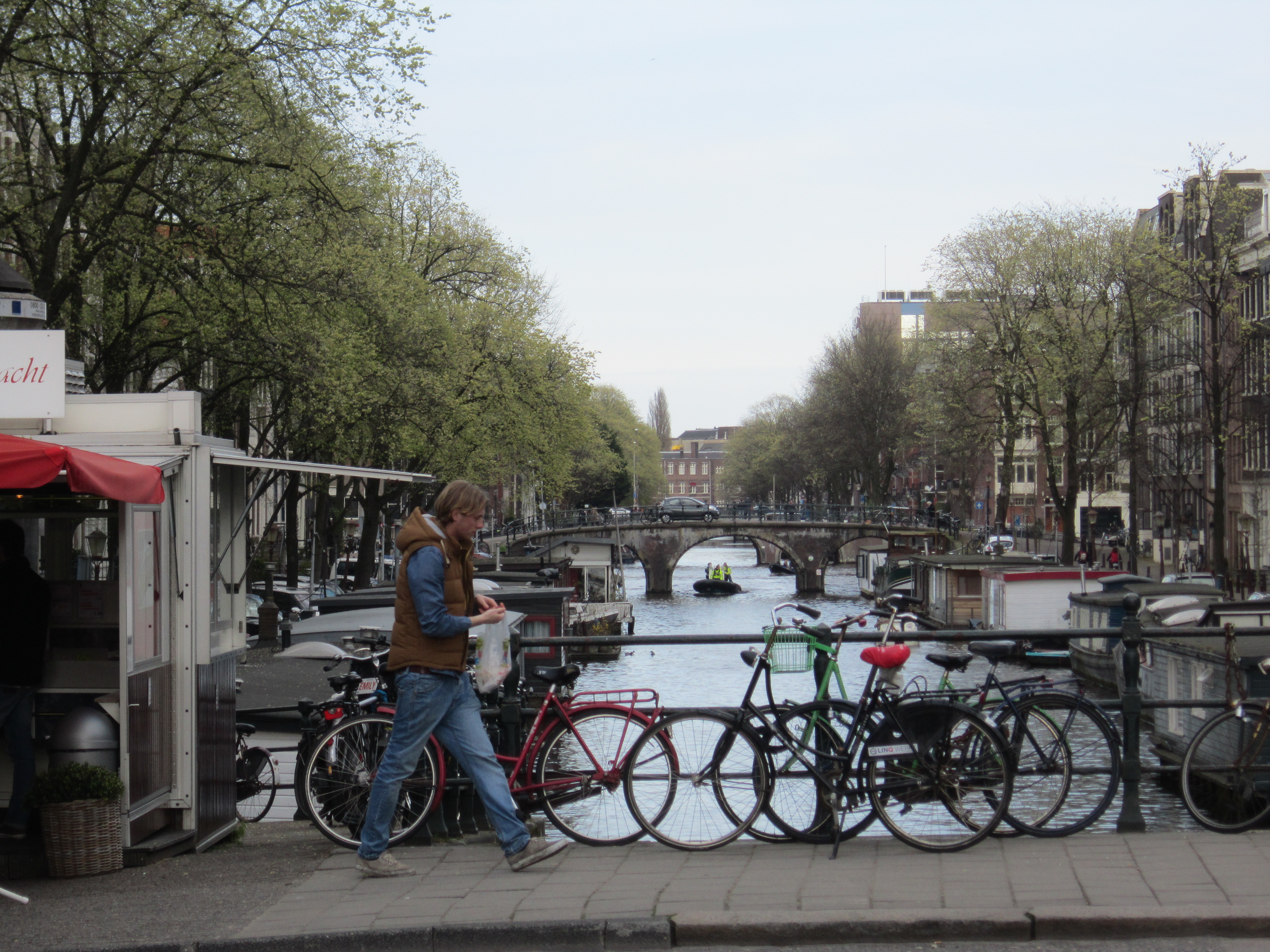
Amsterdam is lovely city. Its row houses, streets, and canals are an ensemble that suggests a real community, with shared values and history. It seems well-organized and clean. But very lively! We’d heard that there were more bikes than cars, which is true, but hadn’t realized that heavy bike traffic can be hazardous to pedestrians. We had some close calls, and I eventually began to start at tinkling bicycle bells as though they were blaring car horns.

We found the Dutch to be polite and helpful, though reserved with strangers. Almost no one asked us where we were from, which was nice, in a way. They seemed lively and affectionate with their friends. Everyone we dealt with spoke English at least adequately, and many were absolutely colloquial. Sally noted that from our street level few, there was little interest in fashionable dressing, with most dressed in a casual, comfortable way. There were fewer overweight people — perhaps because of all the bicycling.

We were particularly eager to see the Van Gogh Museum and the Rijksmuseum. The VG was quite crowded, but the collection of VVG’s art was spectacular. There were also great impressionist works by Monet, Pissaro, and others, which put VVG in context. I also enjoyed an exhibit of fin de siècle print making, which had some of the great work of Toulouse-Lautrec, one of my great favorites.

The Rijksmuseum is undergoing renovations, but fortunately there was a substantial exhibition of its masterpieces from the 17th Century. The high point for me was Vermeer’s The Milkmaid. I’d seen it three years ago as part of a traveling exhibit in New York, and was overjoyed to see it again. She’s so quiet, entirely in her own dreamlike world. Yet she and the scene are somehow full and complete.

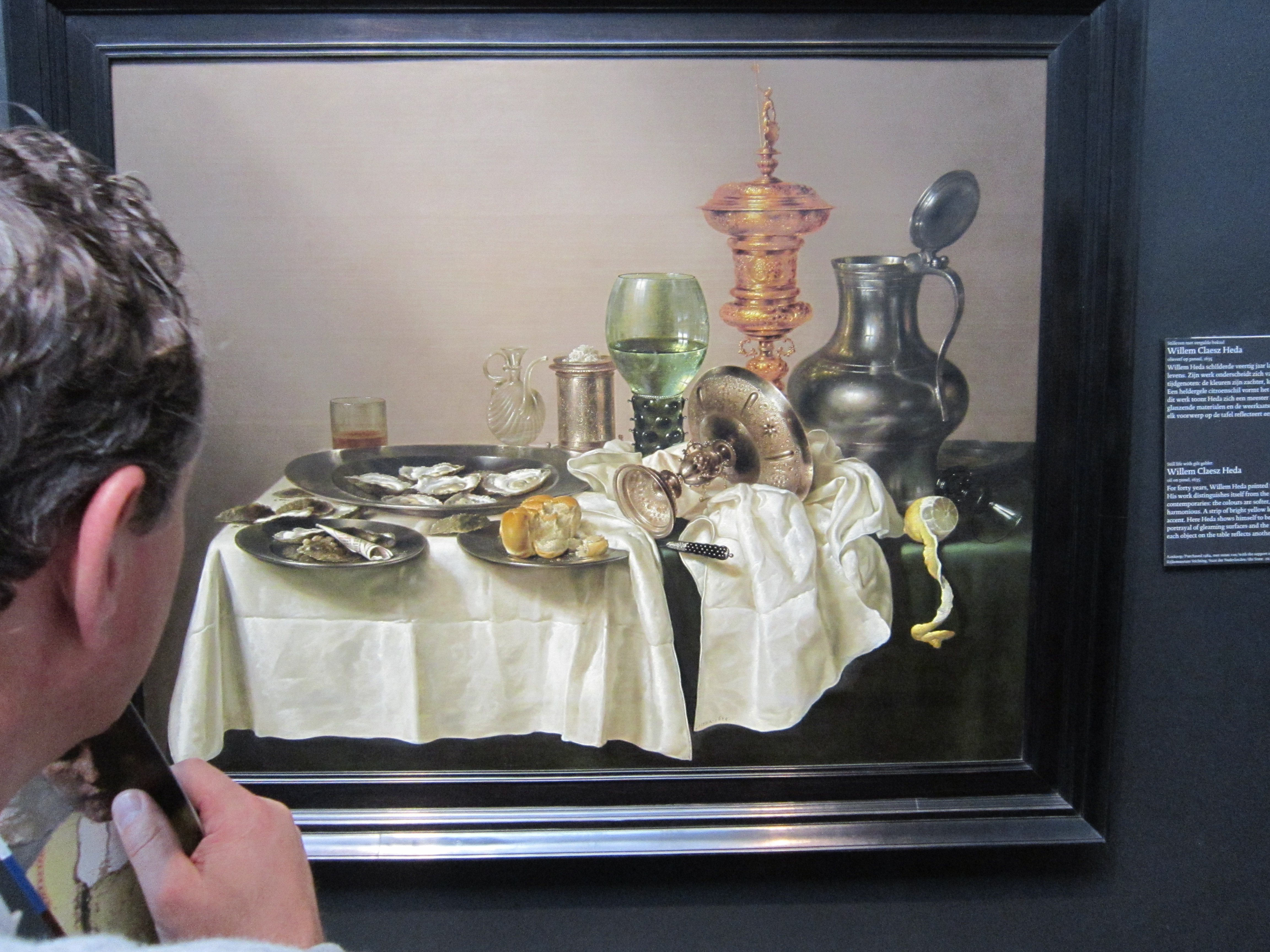
I also especially loved this still life by Willem Claesz Hedda. The realism of detail is astonishing. Looking hard at such paintings makes you wonder what you might see if you looked at everyday objects harder.

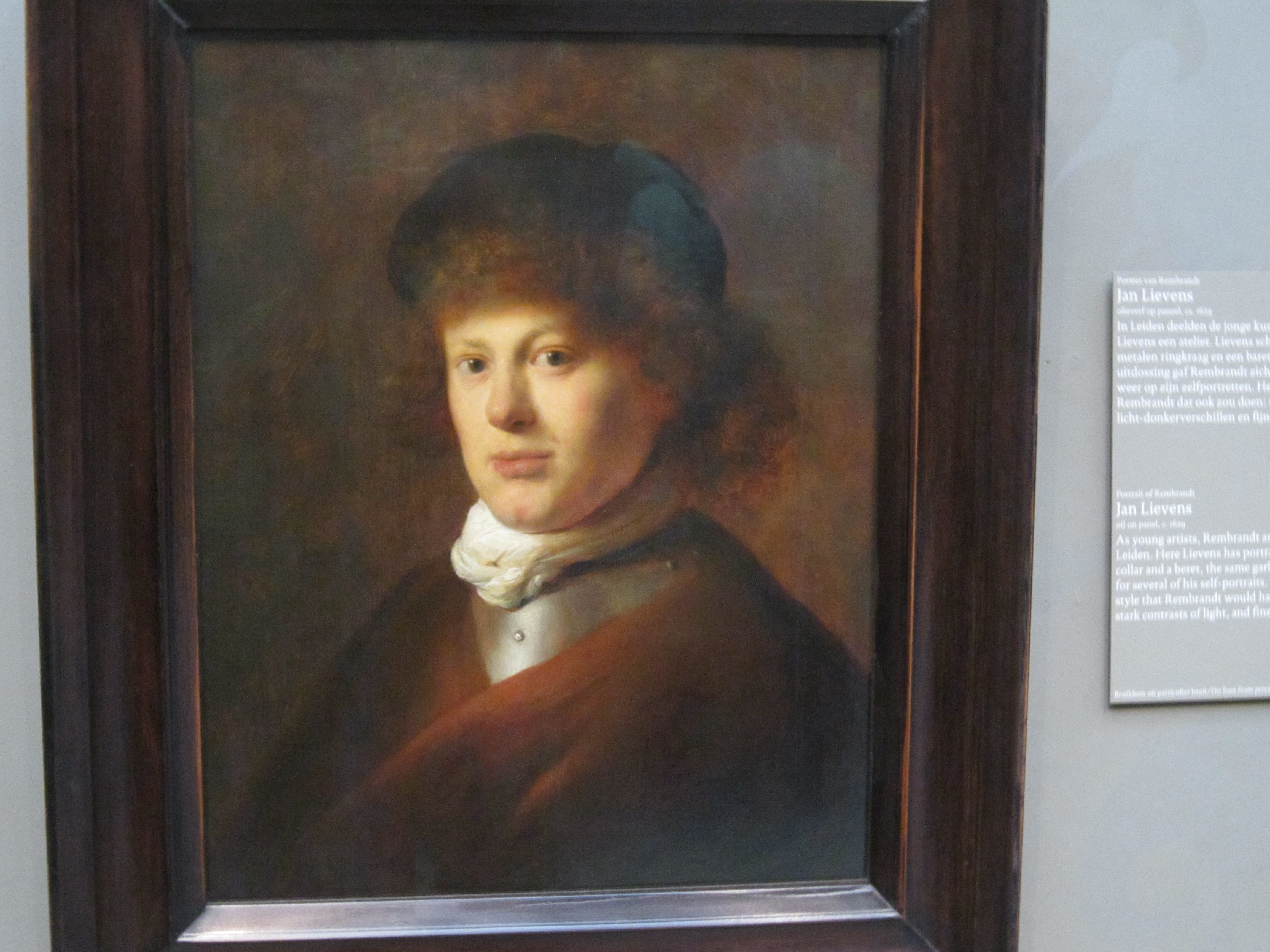
There were several great Rembrandts. Also, I was particularly moved by this portrait of a young Rembrandt by Jan Lievens, with whom he shared a studio early in his career. A youth with a bright future!

We enjoyed walking by the canals and squares, through the old Nine Streets district, the theatre district, and the Jordaan shopping area. We also had fun visiting the famous red light district. I’d imagined it would be at least a bit seamy and sinister, but not really. Yes, there were prostitutes in bikinis displayed in windows (some quite beautiful), porno theaters, and shops of sex paraphernalia, but also many cafes, bars, and restaurants. There were large crowds of cheerful people promenading. We had some delicious Thai food.

Utah skiing, a relaxing massage, and The Righteous Mind

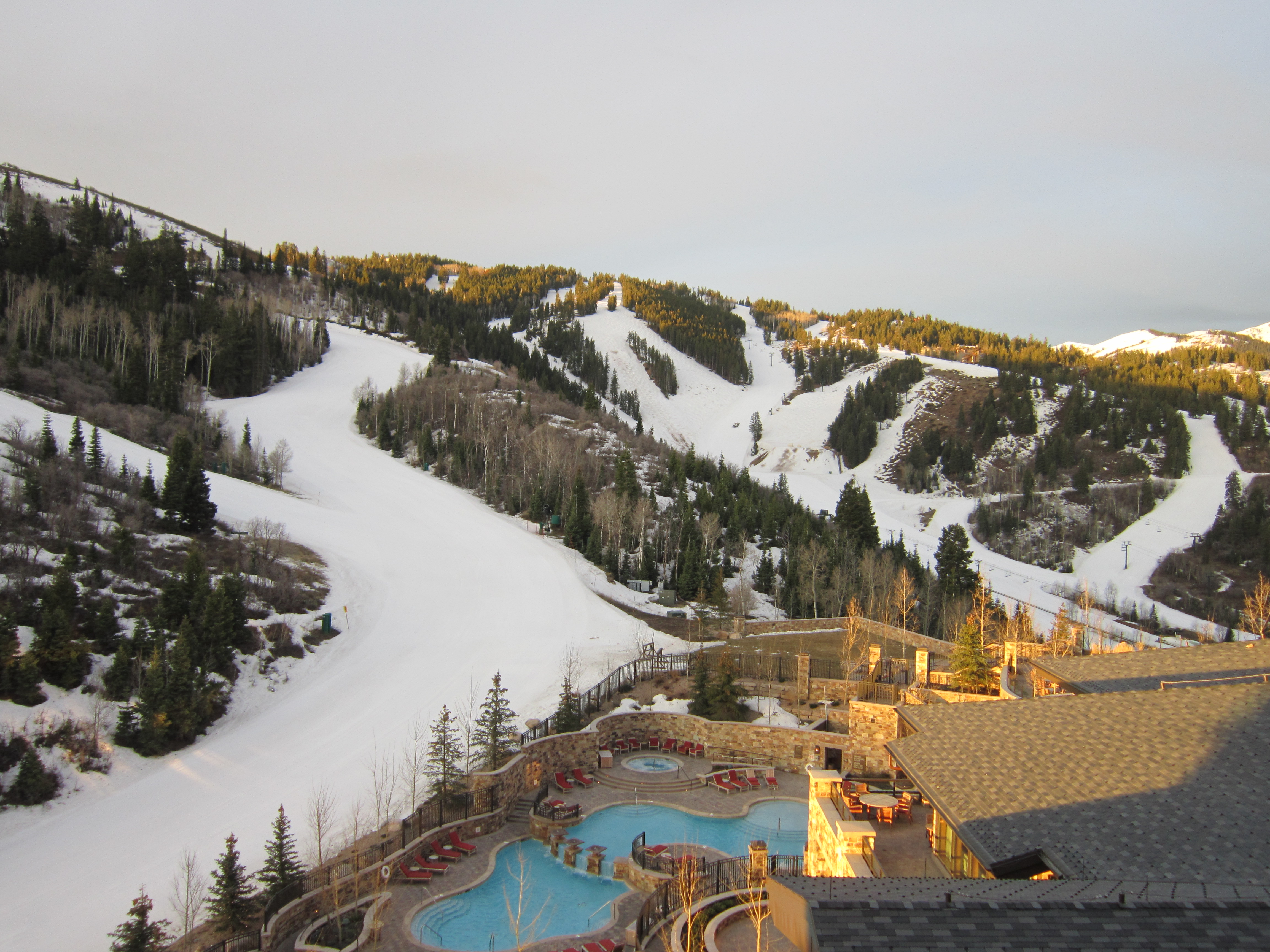
The view from room at Deer Valley, Utah

Last week I had some meetings in Deer Valley, Utah, and also managed to get in one last bout of skiing for the season. Deer Valley is famous for coddling a high-end clientele with personal service and carefully groomed slopes. This doesn’t sit well with my personal skiing value system, which is more about rugged natural beauty, self-reliance, adventure, and transcendence. But I have to say, particularly in variable spring conditions, Deer Valley was pretty sweet.

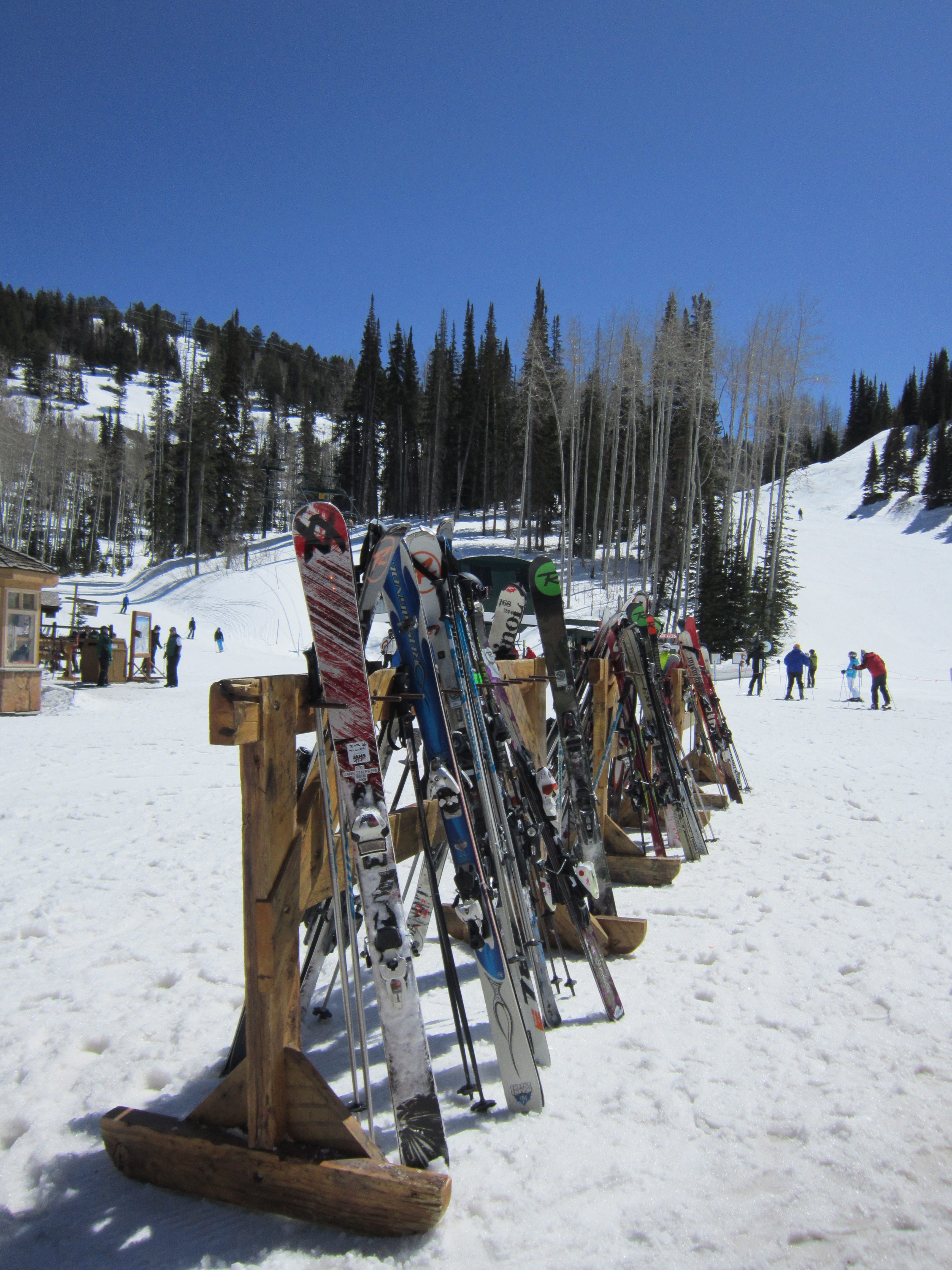
At my hotel, there was friendly, attentive service. A personable young people offered to help you get boots on and off (to which I said no thank you), and carried your skis on and off the slopes. I rented Volkyl Mantra skis, which Gabe had recommended last year. They turned out to be a good choice – a very versatile all mountain ski that performed well in powder, packed powder, crud, and mush, all of which I eventually experienced. It was reasonably quick edge to edge, stable when carving at higher speeds, and workable in bumps and trees.
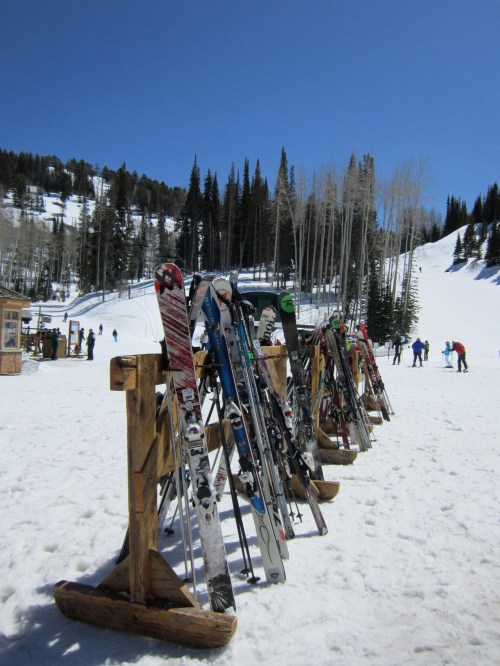
My rented Volka Mantras (the red and white ones on the end)

It’s been a disappointing year for snow over most of the U.S. Could global warming be to blame? Utah had not had snow for some time, and the mountains looked much more brown than white on the drive from the SLC airport. I had my doubts as to whether skiing would be worth the pain, but in the end, it was.

On Wednesday I skied with business friends and did mostly blue cruisers, with a few bump runs. It was a beautiful, sunny day, with temperatures in the 40s. The snow got soft and mushy in the afternoon, but it was still skiable. Spring skiing, as they say.

Thursday I had work to do, but Friday I got over to Park City to do some skiing by myself. It snowed most of the day, but only lightly, and visibility was limited. The winds were so strong in the morning that only half the lifts were operating. The only double black terrain open in the morning was off the McConkey lift. There were swatches of powder, but much of the skiable area was hard, rutted ice, or worse, ice with a deceptive thin dusting of snow – ice that looked like powder. On one lift ride, I chatted with a couple who’d lived there ten years. They wanted to apologize to visitors for the conditions, which were the worst they’d ever seen. But it got better in the afternoon. The Jupiter lift opened after lunch, and I found some fun steeps that hadn’t been skiied. The bumps were crusty. There were some interesting looking gladed areas that were, unfortunately, closed for lack of snow.
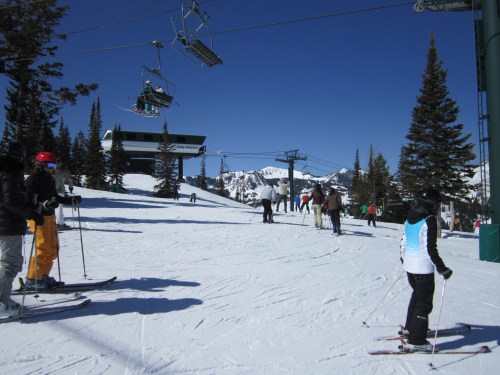
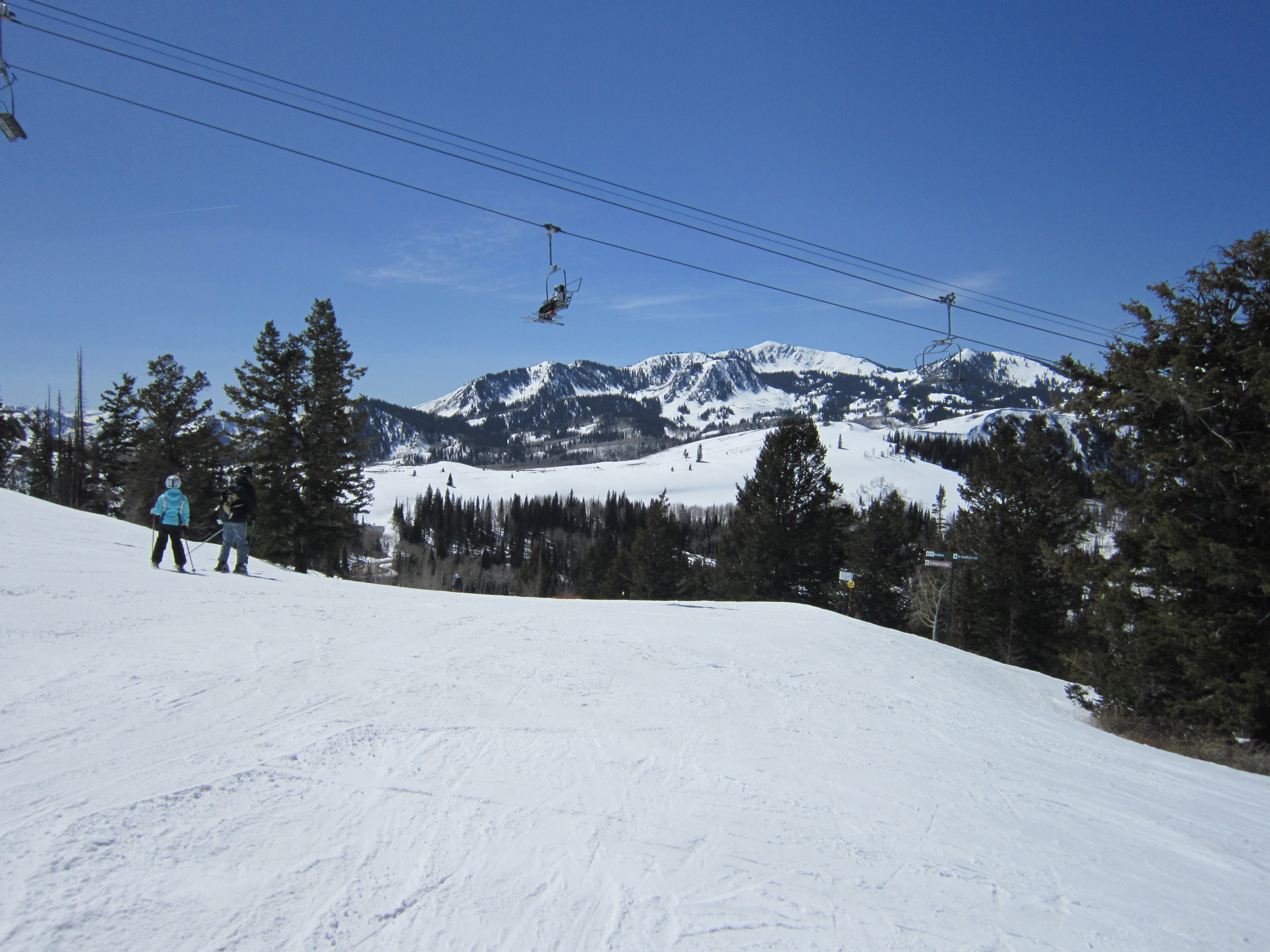
On Saturday it was another chilly bluebird day, which I spent at Deer Valley. The packed powder stayed good until mid-afternoon. I spent most of the time working the Empire and Lady Morgan lifts, both high speed quads that I generally had to myself, and listened to Mahler symphonies on my iPod. I particularly liked the Lady Morgan bowl, where I saw only a handful of other skiers. The lower part of the run is gladed, and after following the tracks of others, I began composing my own routes. It went well, except for one collision between my left ski and a pine tree.

After lunch, I did some carving on the cruisers off the Northside and Silverstrike lifts. After watching one kid catch some good air on a small jump, I tried to follow suit, but figured out a beat too late that the jump was canted to one side. I came down hard on my right hip, lost the right ski, and sprained my left thumb. It hurt! I’ve hurt that thumb the same way before, and it took a long time to heal. But I regrouped and pressed on.

Late in the afternoon, I treated myself to a massage at the Remede spa. Although I’ve become a big fan of deep tissue massage as therapy, I’ve assume that spa massage was mostly about relaxing, which is something I tend to regard as time-wasting. A sad legacy of my Calvinist heritage, no doubt, and I’m working on it. Anyhow, the Swedish massage was wonderful. It was a bit rougher in places than I expected, but also more sweet and sensual. My masseuse put hot was bags on my feet, which made no logical sense yet somehow worked. Over the course of the hour, my little fears melted away. Afterwards, I soaked for a bit in the hot tub, cooled off in the shower, and then sweated for a few minutes in the steam room. I felt a bit limp, and thoroughly relaxed.

On the way home I finished reading The Righteous Mind: Why Good People Are Divided by Politics and Religion, by Jonathan Haidt. In this new book, Haidt, a psychology professor at University of Virginia, offers a theory of the origins of morality and an explanation of the divide between liberals and conservatives. It’s ambitious, and he’s not kidding. I found it easy to accept his view that most human activity is driven primarily by emotion and intuition rather than reason. He was also persuasive in arguing that moral philosophy is primarily instrumental – a tool in service of other social goals, rather than a disinterested search for truth. He sees it as a vital instrument for human communities, and therefore for progress.

I was less persuaded, but still intrigued, by his idea that conservatives had a richer array of moral values than liberals. He argues that liberals define morality primarily in terms of reducing harm and increasing fairness, whereas conservatives also place significant weight on values such as loyalty, authority, and sacredness. That seems possible, but it doesn’t seem to connect up to the truly goofy aspects of conservative ideology, like demonization of liberals and discounting of science. I’ll go along with his idea that we need to figure out how to engage with ideas we don’t necessarily agree with if we’re to overcome our dysfunctional politics. I found the book thought provoking, and especially considering the density and breadth of the ideas, a surprisingly lively read.

A sweet but sick dog, a touching movie, and a concert of Renaissance music

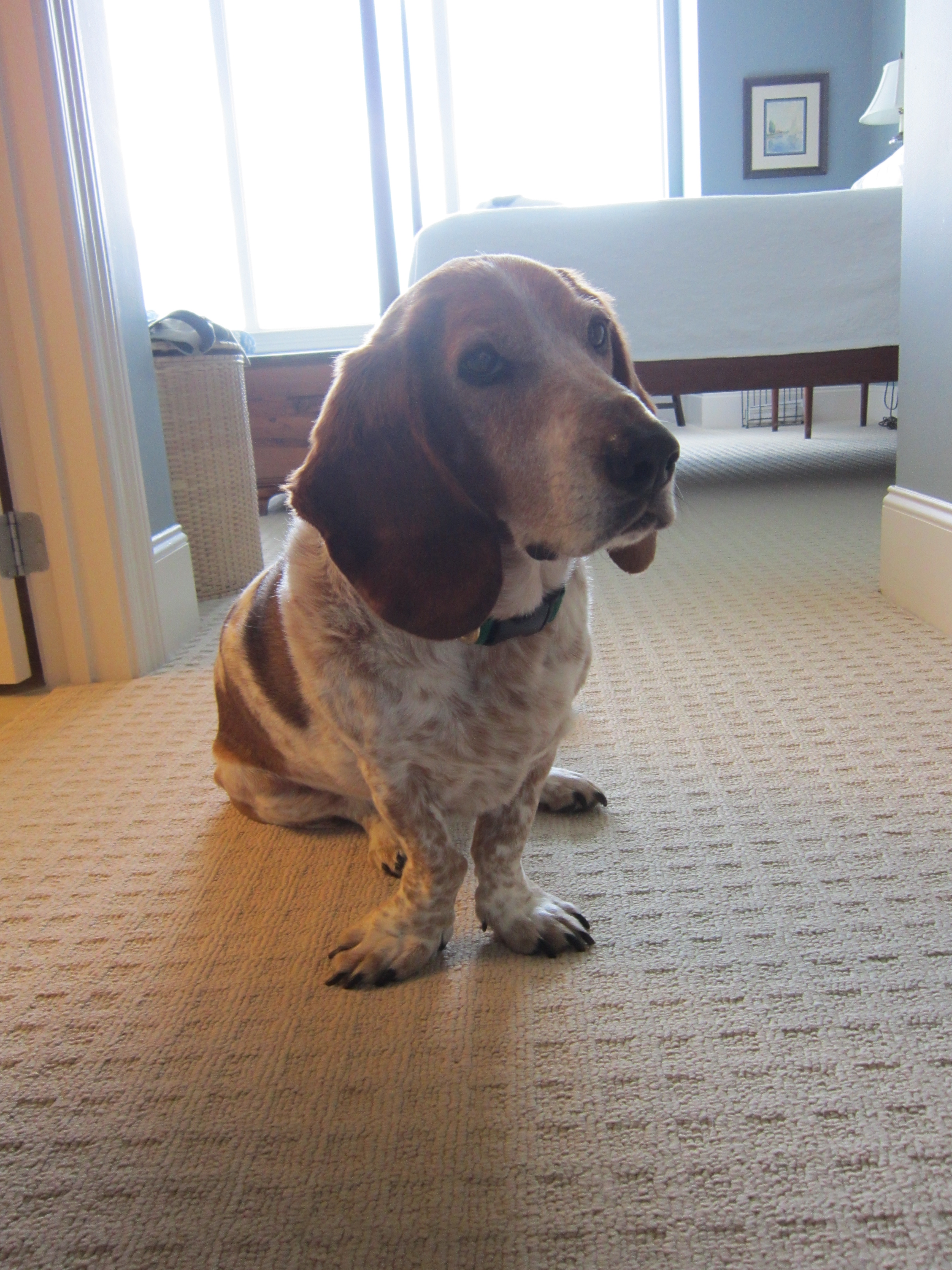
Stuart Tiller feeling better

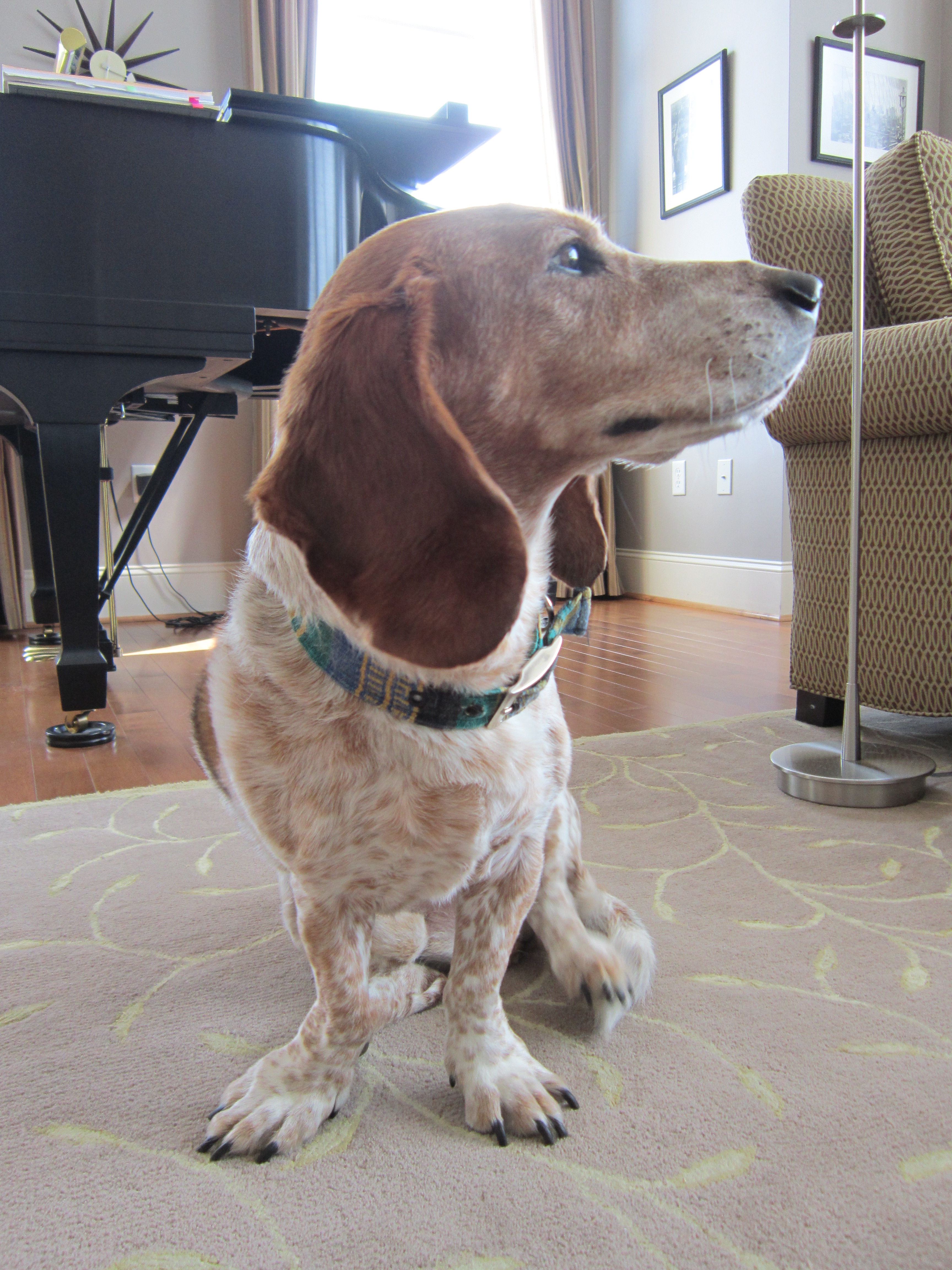
Sally believes that Stuart has the most friends of anyone in our building, and from our elevator rides down to take him out to pee, I’m certain that more people know his name than know mine. He’s a Bassett-Beagle mix, with short legs, long ears, and big brown eyes. He’s nine now, and not as athletic a leaper as he used to be, but he still has a lively step and a perpetually wagging tail. He’s a sweet, curious, affectionate little dog. His three great passions are eating, going for walks, and being petted. Yes, he’s prone to barking loudly when visitors first arrive, but nobody’s perfect.

Earlier this week Stuart got very sick. We’re familiar with bouts of digestive problems when he eats something inedible off the street, but this was different. In the afternoon, he seemed subdued, moving about very slowly with his back arched and his tail down. That night, he woke us in the wee hours with high-pitched whining — a sound he’d never made before. When I got up and knelt beside him to pet him, he suddenly let out a loud bark that sounded like a scream. He seemed to be in agony.

The sweetest dog not feeling at all well

We discussed taking him to the emergency vet and decided to wait until morning. He still seemed to be in pain when we got up, but Sally doubted that the vet would be able to easily diagnose the problem, and might cause additional discomfort from probing and testing. By that evening, he had quit whining and seemed to be out of the crisis. He seems to be most of the way back to normal now.

On the subject of caring for those less fortunate, on Friday night we watched a Netflix move — What’s Eating Gilbert Grape. Released in 1993, it stars Johnny Depp, Leonardo DiCaprio and Juliette Lewis. Depp plays Gilbert Grape, who lives a hardscrabble life in a small town with his family and is charged with caring for Arnie, his retarded younger brother played by DiCaprio. I missed it when it originally came out, when I think I thought it was about something else. It was surprisingly honest about the deceptions and indignities of small town life, and also about the hates and loves of family life.

DiCaprio, who got an Academy Award nomination, is completely believable, and somehow manages to give the younger Grape a sweetness and inherent dignity beneath the surface of unregulated id. I have a hard time putting to one side his character in Titanic, but this is a reminder that he’s a actor with considerable range.

On Sunday afternoon we went over to Durham to hear a concert by the Tallis Scholars in Duke Chapel. The outstanding group of ten singers and director Peter Phillips did a program of music of William Cornysh and Jean Mouton, court composers of Henry VIII and Francis I respectively. The monarchs met in June 1520 for political discussions and a festival that featured their finest music. In short, it was early Renaissance music. The concert was a time machine that brought to life an ancient world.

The music was gorgeous. The Scholars blended into one extremely subtle instrument. The prevailing mood was more melancholy and introspective than I expected from the description of the Henry-Francis summit, but that was OK. I was happy to hear these great musicians and this rich, almost unknown repertoire. I was also happy to see that several hundred people showed up to hear this out-of-the-mainstream entertainment.

Coping with pollen, trying Pilates, and news on how to eat to reduce cancer risks

Spring is definitely here, greener and greener and blossoms everywhere. Also here is a cloud of heavy yellow pine pollen settling on cars, including mine. The pollen surprises me every year. Last year it arrived the day after I got Clara detailed, and the pollen turned the beautiful dark blue car yellow. This year, I resolved to get the big spring car cleaning done well in advance of pine pollination, and got the full treatment from Dave of A to Z Auto Detailing. She looked great, until the pollen arrived, two days later. Pine trees, stop trying to impregnate Clara!

It was a homey week — no travel — and I got up early each day and had a work out done by 7:00 or 7:30. On Monday, I did intervals on the elliptical machine on the roof and then some weights and stretching. Tuesday I did forty minutes on the elliptical machine first, then went across the street to early bird yoga at Blue Lotus. Wednesday I went to Pullen Park pool and swam intervals and then stretched. A lifeguard complimented my stretch routine (though not, I noted, my swimming).

Friday I went to O2 gym at Seaboard Station for an hour-long RPM spinning class. Spinning means riding an exercise bike to loud music at the intensity the teacher directs, and it is much more demanding than it sounds. The teacher Friday was a substitute who was six months pregnant. At the start, I felt fairly confident that I could keep up with her, but in fact she kicked my butt. I predict her baby will be a champion.

Backing up, Thursday I had my third Pilates lesson at Evolve with Julee. What is Pilates? My friend Chuck and others had recommended it, but I found it hard to get a clear description. But I felt ready to try some new type of exercising. It’s good to shake things up from time to time. Meredith, my wonderful massage therapist, turned out to be a big Pilates fan, and she recommended Julee, whom she regarded as highly gifted.

Pilates is named for its inventor, a German named Joseph Pilates, who came up with his system early in the twentieth century. It involves various contraptions that he invented. It entails a particular way of breathing, of focusing on the core area, and of contracting various muscles. Yes, it could be yet another nutty exercise fad, but there seems to be more to it. I say this based on (1) my very limited experience trying it and (2) observing that Pilates students are exceptionally fit looking.

It seems to involve a sophisticated understanding of human biology, and as an experience it nicely balances the physical and the mental. As Julee has introduced me to the various exercises, I’ve found myself focusing hard on just one thing: the movements. I’m just starting to get my bearings on the system, but so far it seems stimulating in a healthy, fun way.

In other health news, there was an interesting news story this week on the health effects of aspirin. Two significant new British studies found that a daily dose of aspirin was associated with large reductions in cancer. One study found a 46% reduction in colon, lung, and prostate cancer, and both found large reductions in other common cancers. That’s huge!

I’d taken a baby aspirin for some time to reduce the risk of a heart attack, but quit after a recent study indicated that for healthy patients the heart benefits may not outweigh the risks. I was sufficiently impressed by the new studies to dig out my aspirin bottle and start taking the little pill again.

Also noteworthy is a NY Times report of a new study that eating red meat is associated with death from heart disease and cancer, with the risk increasing with increased consumption of meat. The study involved 121,342 men and women and data from 1980 to 2006. Each increase of meat consumption by three ounces increased the risk of death from cancer by 10 percent and death from cardiovascular disease by 16 percent. It sounds like, if the norm is six ounces of meat a day, eating no meat would reduce your cancer risk by 20 percent and cardiovascular disease by 32 percent. That’s also huge!

For some reason, the Times did not put this on the front page, or even as the lead item in the health section, but rather buried it deep in general news section. A new drug that dramatically reduced cancer and heart disease would surely have been treated as a major news event. I’d think this new study would be something most people would want to think about.

Of course, people generally don’t like hearing that their ingrained habits are unhealthy, and tune out news that causes dissonance, so I will leave the subject for now. On a more cheerful note, I will just mention that I greatly enjoyed listening to some Haydn symphonies on my iPod touch while exercising and doing other activities this week. I had sort of forgotten how wonderful they are. I was listening to numbers 100, 101, 103, and 104. Here’s the second movement of number 100. My recording, which I prefer, is by Christopher Hogwood directing the Academy of Ancient Music (on period instruments).

Sharing piano music, buying a painting, and going to a new ballet

Stuart is not overly excited about our new painting

What does art mean to life? I’ll take a strong position, and say, simply, everything.

My brother, Paul, and sister-in-law Jackie were passing through last week, and we convened for dinner at Zely and Ritz. But first, they came up to our apartment to see the view and have a cocktail. I wanted to play some piano music for them, but hesitated to propose it. Sharing serious music just isn’t something people normally do in these modern times.

I also recognize that for some people it would be an imposition. I think my playing is thoughtful and nuanced, but it isn’t perfect. Even if I were a seasoned professional concert artist, it would still be true that my nineteenth and early twentieth century repertoire would not be to the taste of everyone. Although it amazes me, I understand that some people find it bewildering or boring. I hope this is mostly because of lack of education and exposure — which is one reason I think it’s important to share it.

Fortunately, Paul and Jackie studied music in college and enjoy various genres. And so I played for them some Chopin (the Nocturnes in c-sharp minor and D flat) and Debussy (the First Arabesque). They sounded good, though maybe a little stiffer than when I play for myself alone. Playing for someone else dramatically changes the sensation of making music. Perhaps it’s from adding adrenalin. Things that seemed settled can become unsettled. Sometimes new beauty emerges, and sometimes things fall to pieces. This is one of the reasons I was happy to have these family listeners — without listeners, it’s impossible to learn how to communicate the music. Paul and Jackie seemed to enjoy it, and were very gracious.

At lunch time on Wednesday, Sally and I met at the Adam Cave gallery to look at some paintings. Sally had followed up on a review she’d read with investigation on the Internet, and come up with some works that might work for us by Byron Gin. Adam, the proprietor of the gallery, had agreed to pull together his stock of Gin works, and told us more about the artist. We both felt excited about Three Birds and a Cup, and discussed it more over a lunch at the Remedy Diner (great veggie sandwiches and rock music). The next day, we decided to take him up on his offer to take the painting home and see how it looked before committing.

Three Birds and a Cup, by Byron Gin

I think it’s a touching, slightly funny and engaging painting. The house sparrows look like quizzical house sparrows, but the space looks vibrant blue and gold paint. The yellow cup looks like a cup. The eye and mind shift back and forth between the birds and the cup, and the natural and human world. I find it nourishing and stimulating.

Friday night, we ate at Buku before going to the ballet. It was unseasonably mild, so we sat outside at dinner. Buku has increased its vegetarian offerings, and the ones we tried were good: baba ghanoush, arepas, and lentil wat. I also had the flight of three half glasses of Chilean wines, which were quite delicious.

At Fletcher Hall, we heard choreographer Lynne Taylor-Corbett speak on the new work to be performed that evening, The Little Mermaid. We’ve liked many of LTC’s works, including Carmina Burana and Carolina Jamboree. She’s a very engaging personality, and articulate and down-to-earth about what she’s trying to do.

She didn’t put it this way, but The Little Mermaid seems designed for ballet newcomers and kids. This was somewhat true of her The Ugly Duckling, but I found Duckling more elegant and touching. Jan Burkhard as the mermaid was lovely and girlish, and fun to watch, and Randi Oseteck as the sea witch was a great villain. And I particularly liked Lindsay Purrington as the sly village girl who tricks the prince. She made the part more sympathetic than the story might have suggest, so that I was sorry when she got her comeuppance. The costumes were mostly delightful. But I found the music intensely cloying, and the narration at times plodding.

The second half of the program was duets of a serious and more classical nature. I particularly enjoyed Lara O’Brien in an intensely tragic Weiss pas de deux with music by Gustav Mahler (one of the true greats). Peggy Severin-Hanson and Marcelo Martinez were powerful and delightful in Le Corsaire pas de deux. It was great to see this significant chapter in ballet history brought intensely to life.

I recently finished reading Apollo’s Angels, a history of ballet by Jennifer Homans. I found some of it heavy going, particularly the early stages, but it was worth it all for the last couple of chapters, including her writing on Balanchine, which was full of insight. It’s unfortunate that she ends the book on a sour note in which she opines that ballet is dying. From where I sit, there’s still a lot of life. I just checked the repertoire list of the Carolina Ballet, and noted that they’ve presented versions of many of the works that Homans discusses and treats as high points of the art. I’m so glad they’re here.

My latest piano lesson, a new Indian restaurant, and some good news in the Sunday Times

At home with Stuart and the Sunday New York Times

On Saturday morning I had my first piano lesson with Olga in several weeks. I played the second Scriabin prelude, Debussy’s Reverie, Chopin’s etude in c minor op. 25, no. 12, and Liszt’s Un Sospiro. We continued to talk about subtle aspects of touch and tone. In slow lyrical passages, she asked me to keep listening closely to tones as they decay all the way to the next note — a more intense kind of listening. She got me focused on my elbow as a tool in shaping a long melodic line. In the etude, she coached me on how to make it really loud and fast. After I played the Liszt for her last time, she was inspired to learn the piece, and this time she taught me some of the tricks she’d developed for the tricky places. By the end, I felt exhausted but inspired.

That night Sally and I had dinner at a new Indian restaurant in our neighborhood called Blue Mango. I usually like Indian food as food, but as a restaurant dining experience is often lackluster. Many dishes that I like arrive in the form of brown goop; the emphasis is not on the presentation. Mantra, another Indian restaurant close to us that opened a few months back, departed from this stereotype and presented food that was pleasant to look at as well as to eat. Blue Mango’s dishes were not as pretty, but the restaurant had a cool vibe, and the food was very tasty. Service was friendly but still getting the kinks out. The veggie samosas were excellent.

We ate early with a view to seeing an 8:00 movie at the Blue Ridge, a second run theatre where tickets cost $2. We who are normally so lucky were not so at the Blue Ridge. Every parking spot in the place was taken. We drove around for 10 minutes looking, and finally came home. We ended up watching Trading Places with Eddie Murphy and Dan Aykroyd, which was kind of funny.

Early Sunday morning is the time to get a paper copy of the New York Times and a cup of coffee, and start with the front page. With the sections properly sorted and ready for perusal, I find spending some time with the paper soothing, even when the news of the day involves various disasters. The Times makes mistakes, but it never gives up, and from time to time it is enlightening. Also, it is a sort of barometer of ideas that are getting solidified in public consciousness, and thus a leading indicator of possible social change.

Today I was happy to see a front-page story on solitary confinement in U.S. prisons. Erica Goode writes that the supermax prison model that has grown in the last three decades and kept prisoners in nearly complete isolation has resulted in increased prison violence, increased recidivism, and, for the prisoners, increased mental illness — all at enormous expense to the government (i.e. your and my tax dollars at work). There was an excellent piece on psychological costs of solitary confinement by Atal Gawande in the New Yorker some months back. Anyhow, Goode reports good news: several states have been reducing the numbers of prisoners in solitary confinement. The motivation appears to be more cost savings in tough budget times than humanitarian concerns, but still, progress is progress.

On the cover of the Sunday Review section is a piece by Mark Bittman on the problems of eating chickens, and alternatives to doing so. Bittman asks, “Would I rather eat cruelly raised, polluting, unhealthful chicken, or a plant product that’s nutritionally similar or superior, good enough to fool me and requires no antibiotics, butting off of heads or other nasty things?” Or putting it another way, “If you know that food won’t hurt your body or the environment and it didn’t cause any suffering to an animal, why wouldn’t you choose it?” According to the story, there are new fake chicken products that are perfectly fine. That sounds like good news for the chicken species, and for humans.

Also in the Review section, Tom Friedman writes about the greatest non-natural resource a country can have — a good education system. He cites a recent study comparing the wealth of countries according to their natural resources such as oil and metals and the education level of their citizens. More oil resources do not lead to higher levels of knowledge and skills, but knowledge and skills are tied to countries’ economic success. Friedman is surely right that education should take pride of place as a societal focus.

One story I expected to see in the Review section, but didn’t, was the report earlier in the week that the televangelist Pat Robertson had spoken in favor of legalization of marijuana. My comment on Twitter (see @robtiller) was: Pigs fly! Robertson’s positions are generally consistent with the “conservative” “Christian” “family values” camp, and I would have guessed that even if he privately concluded that prohibition was a failure, he would be the last person to speak out on the subject. But he has acknowledged that the war on drugs has failed, after enormous expenditures and a huge toll of imprisoned victims. He proposes that we treat marijuana like we treat alcohol. It pains me to say so, but for once, I strenuously agree with the man. The important question, though, is will his followers?

Skiing at Aspen

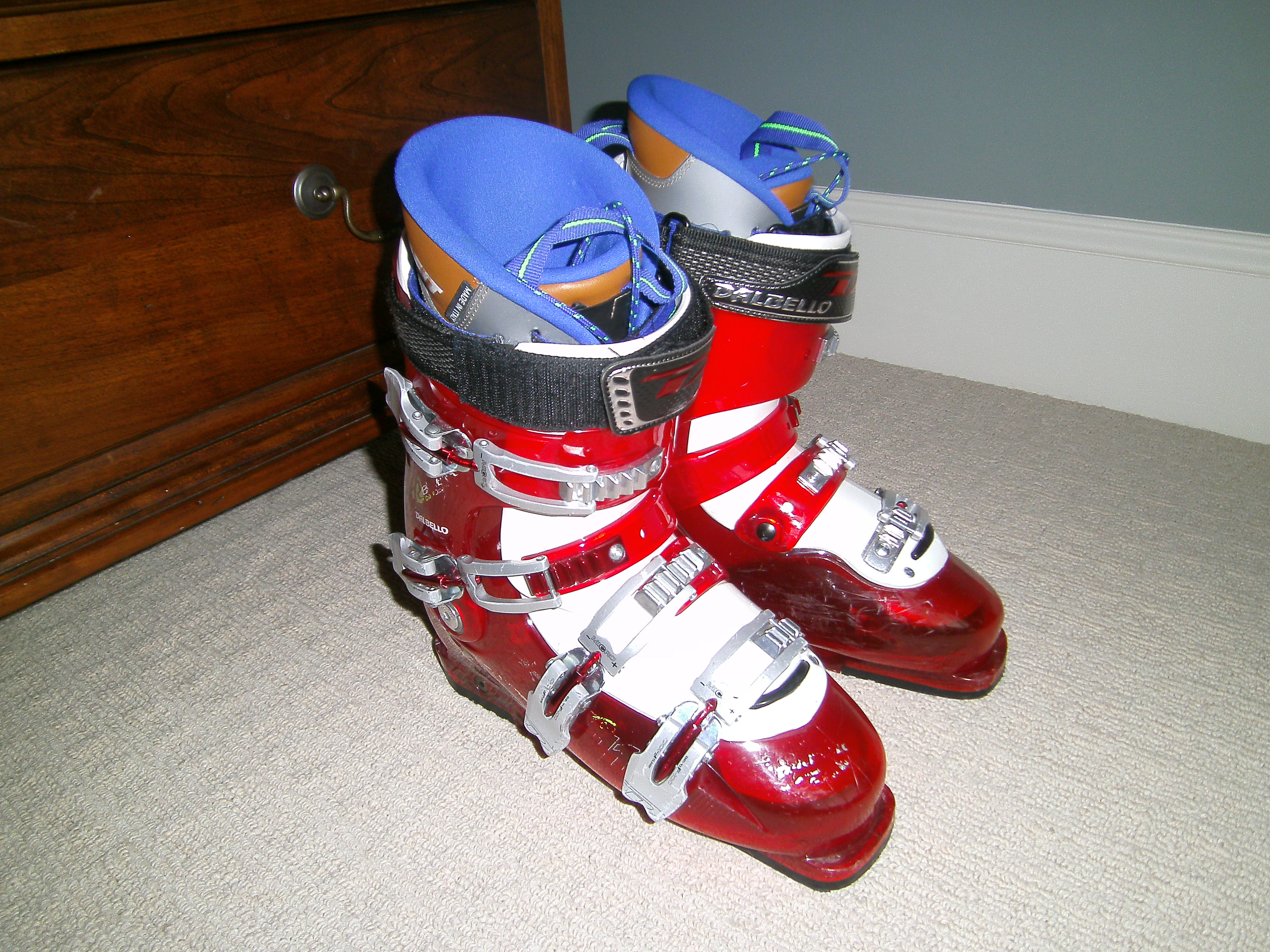
My trusty ski boots

Last Saturday I got a 6:00 a.m. flight out of Raleigh, made the connection in Houston (barely), arrived in Aspen at 10:15, checked into the hotel, rented skis, bought a lift pass, and got onto the lift at Aspen Mountain at 12:15. It was a clear, cold day, and so windy that many of the lifts were closed. I spent the afternoon working off of the A-1 lift. The snow was good. Toward the end of the afternoon, I was charging down a bump run with rhythm and confidence, right under the lift, and I had the thought: this is how mogul skiing is supposed to look and feel. After years of trying, I had finally got it! And just then, at the bottom of the run, caught an edge and crashed. As the Bible says, pride goeth before a fall.

On Sunday I met up at Aspen Highlands with a couple of friends who live in Colorado and are strong skiers. They knew the mountain well, and took me down some of the most challenging terrain. I felt a new level of confidence, and only an occasional spasm of fear. After lunch, they began referring to taking “a little hike.” I finally figured out they were talking about the hike up the ridge to Highlands Bowl — a trek that took all my strength to finish a couple of years ago. This time was difficult, but not agonizing. When we reached the summit (12,392 feet), the sky was clear, and the view of the jagged surrounding peaks was awesome.

Monday morning Gabe Tiller joined our group at Ajax. His skiing was strong, and I worked hard to keep up. But I was not pathetic! Gabe called it a day mid-afternoon, because of a bad night’s sleep, but I hung in there until the lifts closed. Chuck and I took the gondola up with a fellow who was at least 80 (he’d started out as a ski instructor in 1950) and spent much of his life at Aspen. As Chuck noted later, if we’re still skiing in our 80s, this will have been the early part of our ski career.

We ate Italian that evening at L’Hostaria, where Jocelyn and Gabe sat to my right and left. They were entertaining, and the food was excellent. Tuesday we had ten inches of fresh, slightly heavy snow at Snowmass. My demo skis were DPS Wailer 99s, which were wide and had rocker tip and tail. They floated beautifully. I was flowing, and not wearing out my legs. It had taken a long time, but with several seasons of practice and new ski technology, I was skiing powder with true joy.

Wednesday it snowed some more, and we had first tracks on the virgin snow at Highlands. It was quiet and beautiful and exhilarating.

I’m sorry to say my Sony point-and-shoot expired, presumably as a result of one of my falls that left some snow in the circuits. It was a good little camera. My Aspen photos were casualties. The picture of my trusty Dalbello boots was taken with my SeaLife DC1400, an underwater camera. The boots are now four seasons old. They are hell to get on, and hell to get off, but communicate well with my edges and ski great.