The Casual Blog

A swimming milestone, Courage-ous soccer, deconstruction in our neighborhood, gun idealists, and nuke idealists

Looking south over Capital Boulevard at downtown Raleigh.  Our building is the big one one on the upper right.

I had the last of my eight swim lessons last week, and my teacher Eric seemed pleased with my progress.  My primary objective was learning the butterfly stroke, which I did, though Eric said it looked like I still had to think about it, which was true enough.  He said the cure for that was practice.  On freestyle, we talked about gliding and breathing, and for backstroke, we focused on keeping the head and chest up.  He liked my breaststroke!  These last weeks working on better swimming have been energizing, and I look forward to many more good laps.  

On Sunday afternoon, we got out to see our N.C. Courage play the Chicago Red Stars in the semi-finals of the National Women’s Soccer League.  These ladies can play!  The Courage had more attacks, but Chicago played almost flawless defense, and the game was scoreless through 89 minutes.  In the 90th minute, a hard, low shot from the Courage’s Denise O’Sullivan  found the net.  The crowd went wild!  The Courage, in their first season here, will be playing in the championship game in Orlando against the Portland Thorns.   

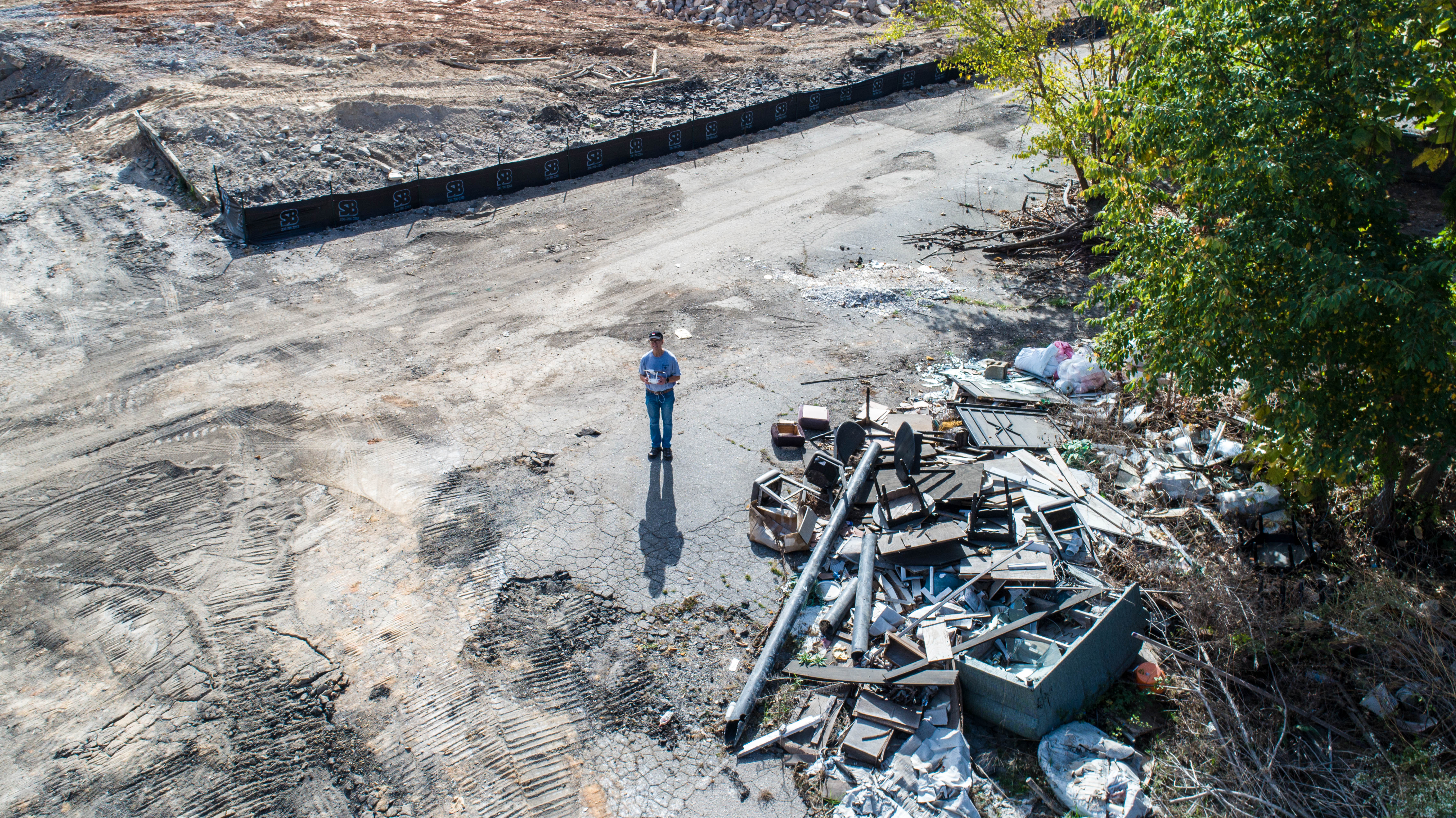
 In our neighborhood there’s a tremendous amount of construction going on, and also deconstruction.  Just a couple of blocks to the north and east, several buildings have been taken down in the last couple of weeks, including Finch’s Restaurant and my favorite photo gear and advice spot, Peace Camera (whose business is now located at Quail Corners Shopping Center).  The destroyed buildings had no particular architectural distinction, and it’s sort of exciting to see things changing and look forward to new developments, though at the moment it’s a wasteland.   I took these pictures on Saturday morning with the Tiller Quadcopter.     

The horrifying mass shooting in Las Vegas happened in front of the Luxor, where I stayed last year.  The national press mostly focused on the killer’s motivation, which remains unknown.  I read a couple of interesting pieces on the more important question of why a lot of Americans are passionate about guns and oppose all gun regulation.  Kurt Andersen’s piece in Slate is brilliant.  Andersen acknowledges that shooting guns can be a perfectly fine recreation, but also shows the powerful fantasies and fears that drive gun activists to extreme positions.  Somehow a significant number of people came to believe that they need a lot of powerful guns because they’re likely to be needed to fight the government that wants to take their guns.  

I also thought David Brooks’s latest NY Times  column on guns was thought-provoking.  Brooks views love of guns not so much as a product of fear or fantasy as of identity politics.  People who oppose gun regulation are demonstrating solidarity with a matrix of “conservative” issues, such as opposing abortion and immigration.  He suggests we need to end the culture wars if we want to address the gun issue.  That’s a tall order.  In the meantime, if we hear something that sounds like bullets, let’s be prepared to hit the deck.

Speaking of perils, I’d like to congratulate this year’s winner of the Nobel Peace Prize and the Nobel Committee for recognizing them:  the International Campaign to Abolish Nuclear Weapons (ICAN).   Don’t feel bad if you missed the announcement of this prestigious prize, which the NY Times buried on page A10.  The risk of nuclear accidents and nuclear conflicts is so enormous that it’s almost impossible to think about, and so we generally don’t.  The situation is dire, but it isn’t hopeless.  Indeed,  ratification of the new UN treaty banning nuclear weapons is in process in at least 53 nations.  Kudos to the ICAN for continuing to sound the alarm.  
A short brag, some bluegrass music, some brass, and a moving Cold Mountain opera

I’ve been trying to think of a way to share this without seeming to brag — and cannot.  So I’ll just brag:  I’ve been doing really well in my recent  spin (stationary bike) classes at Flywheel.  Their computers and software reveal how the spinners do relative to each other, which tends to make me try harder.  And I’ve come in first in the class in three of the last four Friday 6:00 a.m. classes, and number two in the fourth.  The average age of my fellow spinners was about half  my own.  My final score this Friday, 315, was not a record, but I was happy enough, and tired enough.  

It was a good start to another active arts weekend in piedmont North Carolina.  The annual IMBA bluegrass music festival took over downtown Raleigh, with pedestrians only on Fayetteville Street and connecting side streets, and several blocks worth of crafts and snacks pedlars.   After work on Friday, we had some fine Mexican food at Centro, then strolled about, and listened to music at the free venues. For me, a little of the old-school, three-chord foot-stomping-type bluegrass music goes a long way.  But we heard a couple of groups that used the traditional instruments but went well beyond that traditional model, and especially enjoyed them.  

On Saturday evening we drove over to Durham, ate some great Italian food at Mothers and Sons, and went to the first concert of the season of the Duke Chamber Series.  The performance was by the American Brass Quintet.  They did a program of mostly sixteenth century and modern works (Hillborg, Tower, Ewazen), plus some music from nineteenth century Russia.  These guys are good!  Back in college days, I played with a brass quintet, with great enjoyment of the brass sounds and the repertoire.  Hearing a chamber brass performance at this high level was a treat.

On Sunday afternoon we drove over to Chapel Hill for the N.C. Opera’s production of a new opera, Cold Mountain, with music by Jennifer Higdon and libretto by Gene Scheer.  I’ve enjoyed  Higdon’s music, but this was her first opera, and we didn’t know what to expect.  On the whole, the production was a great success.  It deftly created a universe, with quirky characters and settings, and the story was well told — highly dramatic but very human.  

The sets, lighting, and costumes all were imaginative and well executed, and the singers and orchestra sounded great.  At first I found the vocal writing a bit meandering, but in the second act it started to work for me. I found the climax very moving.  The near sell out audience gave an enthusiastic standing ovation.  It was cheering to see a large crowd come to a brand new opera with such enjoyment.  There’s still hope for the future of opera.  

Caribbean misfortunes, reconsidering Vietnam, good drug news from Portugal, and rising Carolina dancers

It’s been tough to see the devastation of the Caribbean islands by hurricanes Irma and Maria these last weeks.  I’ve got a warm connection to some of the most affected islands (Dominica, Turks and Caicos, the Virgin Islands, Key West)  from scuba trips.  I found so much beauty and joy there from both the natural world and the people.  I recently read a new history of the region,  Empire’s Crossroads, by Carrie Gibson, and discovered some unexpected complexity.  

Beginning in the late 15th century with Columbus’s voyages and extending for another three hundred some years, these islands were not vacation paradises but rather economic powerhouses for an expanding Europe.  They were  fought over repeatedly, because they produced enormous wealth, mostly from growing sugar with slave labor from Africa.  At the time of the American Revolution England and France both valued their Caribbean possessions more highly than the American colonies, and England’s need to protect those islands from the French was part of what created a power vacuum that led to the revolutionaries’ victory.  Their normally kind and beautiful exterior conceals a lot of tragedy, and they just got more.  

The people there face desperate conditions — homes and businesses destroyed, no electricity, no drinkable water.   And of course, the animals and plants there have also suffered greatly, which is seldom noted.  Our tendency as humans to forget about other species is deep seated, but not insurmountable.  It’s possible to view nature as worthy of caring and respect, rather than just something for humans to exploit.  This viewpoint makes possible a deeper engagement with nature, but it also makes natural and man-made disasters more painful.  

Speaking of painful subjects, we’ve been watching the new Burns-Novick documentary on the Vietnam war, and I highly recommend it.  It’s by no means fun, but it feels positive to get a more rounded understanding of this chapter.  There’s a lot of tension between our abiding central national narrative (we’re always on the side of good), and the death and mayhem that’s almost impossible to get our heads around (58,000 lost American lives are a lot — but we tend to forget the 3,000,000 Vietnamese ones) .  It’s amazing in a way that we’ve mostly repressed and forgotten the Vietnam experience, especially when its combination of good intentions, hubris, cynicism,  and sheer cluelessness continues to be relevant to our quagmire in Afghanistan and violence elsewhere.  

In other quagmire news, there was a relatively cheering piece by Nicholas Kristof in the NY Times today entitled How to Win a War on Drugs.  It summarizes the experience of Portugal after it decriminalized all illegal drugs fifteen years ago.  Portugal’s drug mortality rate is now the lowest in Western Europe and one-fiftieth (1/50) of that in the US.  Portugal’s rate of heroin use has dropped by seventy-five percent.  Meanwhile, deaths in the US from opioids have risen dramatically.  The core of Portugal’s approach is to devote resources to medical treatment for addiction.  Though far from perfect, this approach has been far more effective, and far less expensive, than the US’s war on drugs.  While there’s a lot we don’t understand about drug addiction, it could hardly be clearer that our war approach hasn’t worked, and that there are better alternatives.

We went to our first Carolina Ballet performance of the new season last night, and thoroughly enjoyed it.  With all the disasters in the headlines, to find a couple of hours of nourishing, energizing beauty is particularly welcome.  Some of our favorite dancers retired last season, and they’ll be missed, but the change has brought vibrant talent from the company ranks into view.  Lily Wills was a sweet and touching Ugly Duckling.  Jan Burkhard, back from maternity leave, was exquisite in Flower Festival in Genzano, a Bournonville pas de deux.  

Dialogues, the new ballet jointly choreographed by Robert Weiss and Zalman Raffael, was bold and refreshing.  The Dialogues music, Rachmaninoff’s Variations on a Theme by Chopin, was played by pianist William Wolfram, who performed with insight, power, and passion.  With his daughter, Lauren Wolfram, now part of the company, I hope we’ll get to hear this great artist again.  We also enjoyed the angularity of Les Saltimbanques, with choreography by Weiss and music by Stravinsky.  Ashley Hathaway, Amanda Babayan, and Courtney Schenberger were striking and lovely.

A collision avoided, with remarkable safety systems

Self-driving cars are getting here– not all at once, but by bits and bytes.  When I got my Mazda CX-5 a few weeks ago, one of my priorities was accident avoidance and damage minimization, and I took every safety option available.  I’ve already gotten good value.  Just a few days ago, in a dense traffic situation on Capital Boulevard, when I was looking to move to the right lane , the car ahead of me unexpectedly stopped.  My CX-5 beeped and then stopped — before I could apply   the brakes.  We were about six inches from the car ahead.  

I  checked the Mazda manual, and it does not promise such collision avoidance (the “Smart Brake Support” system claims only to minimize damages in such emergencies), but I’m telling you, it happened.  And was I happy!  No ugly crushed metal, deployed airbags, police, insurance, deductibles, or collision repairs.  Thank you, Mazda engineers!  

After this, I spent a  little time with my owner’s manual, and got clearer on various systems.  My ex, a classic sports car, was extremely fun to drive, but had relatively few creature comforts — no nine speaker Bose stereo system, no adjustable lumbar support, no dual climate controls. More important, no warnings when you veer out of your lane or when there are cars in the blind spot, no variable cruise control, and no warnings of oncoming cars when you’re starting to back out of parking spots.  This last warning feature particularly  delighted me, as the most dangerous thing I do on a daily basis is get into and out of parking decks, and you just can’t always see oncoming cars.

I’ve also been discovering other hidden talents in the CX-5.  It accepts a variety of vocal commands, such as play the radio or navigate home.  The navigation system (which I would not have opted for, but it came with other options) can receive instructions for a new destination by voice.  Also, the cost of ordinary operation is about half as much as my ex.  I admit, part of me misses my 911, but mostly I’m glad to be in a new car relationship.

Getting some lessons

On Saturday morning I had another swimming lesson with Eric and worked more on my butterfly stroke.  It’s a very different way of moving through the water, and not easy to get your head around.  It surely does get the heart rate up.  I can now do intervals of 50 meters without being disqualified or dying, which I consider an accomplishment.

While figuring out the butterfly, I’ve been working with Eric on refining my freestyle, breast stroke, and back stroke, which are all by comparison quite relaxing.  It recently came into focus that swimming has always been for me a struggle  — at bottom, a thing to do to keep from drowning.  And now, finally, through the struggle to be a butterflyer,  I’m finding it can actually be fun.  

I’m sure I couldn’t have gotten even this far without a skilled teacher helping me.  I’ve said this before, but it bears repeating:  if you want to learn a complex skill,  find a good teacher.  There’s no substitute for having a guide in difficult unknown terrain.  You may get to where you’re going without a teacher — now and again people do — but you’d have to be more-than-ordinarily lucky.   

For this reason, I’ve continued getting lessons on the golf swing from Jessica at GolfTec, and had another this weekend.  We talked about hips, shoulders, and wrists.  Jessica knows a lot about the swing, and she also has helpful technology tools — sensors, computers, and video. I’m seeing improvement, both in my measurements and in how the ball flies, and I understand a lot more about how a good golf swing works.  But it’s hard to change ingrained habits.  When you fix one problem, you may create another.  I’m starting to understand that although there is improvement, there is never perfection.

I was hoping to also have a piano lesson this weekend, but Olga said she was too busy.  With a new baby, a full teaching load, and concert commitments, that’s understandable, but I was disappointed.  Among other things, I’ve been working on Chopin’s famous Nocturne in B flat minor, Op. 9, No. 1, and I’m eager to get her take on it.  Recently I had a minor epiphany that there would never be a point when her response to my playing would be:  that’s perfect, and there’s no way it could be improved.  In the great classical tradition there are always new possibilities and new things to be explored.  

Our new floor, Liszt, and some ants

At Raulston Arboretum, September 3, 2017

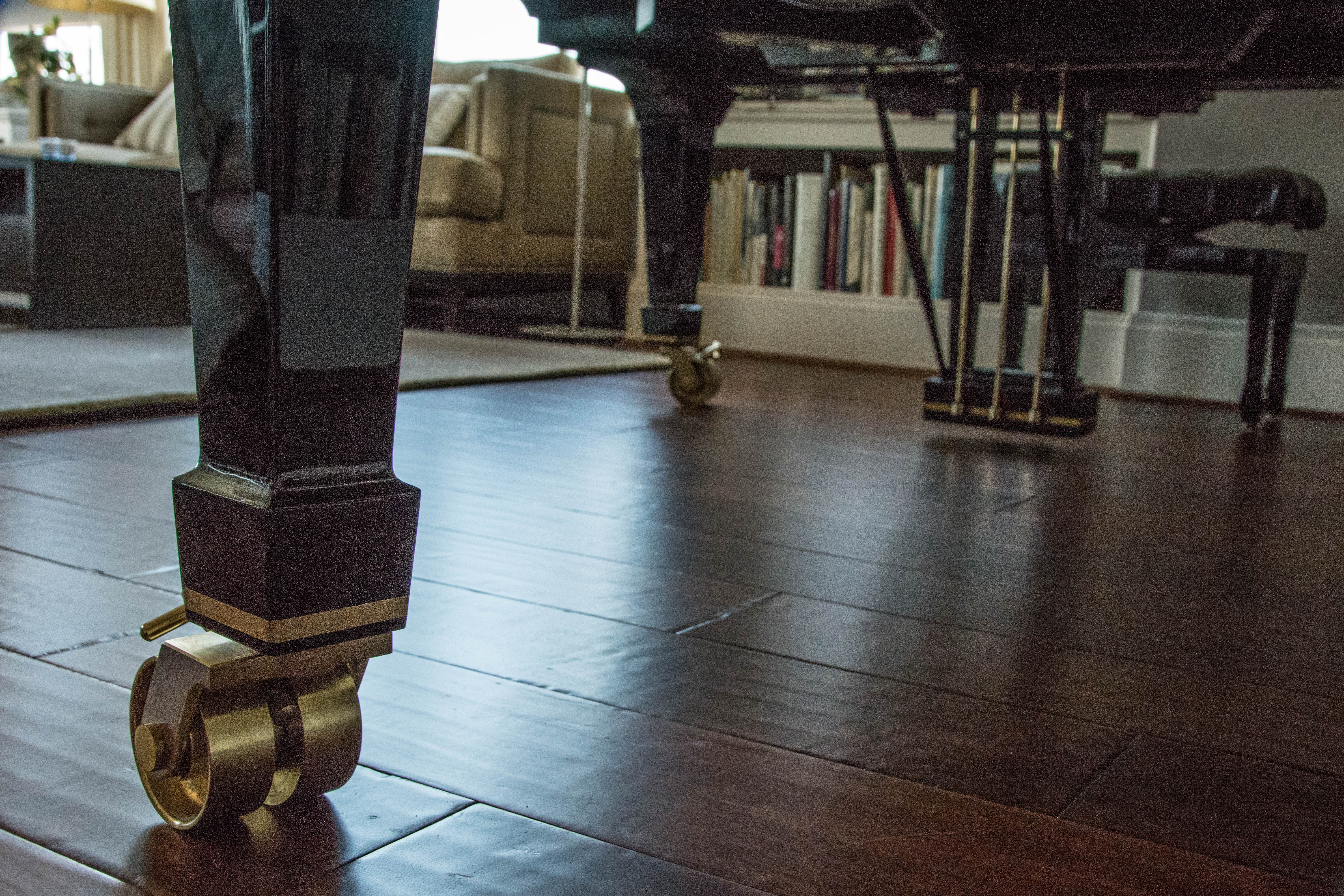
They finished installing our new wood floor, and so we said so long to the Hampton Inn and moved back home on Friday.  There’s still a lot of unpacking, reconnecting, and rearranging yet to do, but the worst is behind us.  The new flooring is American walnut in wider planks and a more textured surface, and we really like it.

We had a special sound absorbent underlayer put under the floor, in consideration of the neighbors situated under my Fazioli 228 grand piano.  The instrument can put out a lot of sound, which I hope isn’t too annoying for them.  I was very happy to be able to play it again.

The new floor under the Fazioli

Among other things, I’ve been working on one of Liszt’s songs for piano, Oh! Quand Je Dors, from the second Buch der Lieder fur Piano Allein.  It’s so beautiful!  At times it feels a bit lonely caring about Liszt, since my friends generally don’t seem to like him nearly as much as I do.  I suppose loneliness often comes along with a passion, since caring intensely about something will separate you from others.  Of course, it also connects you to others, but they may not be close by, and may even belong to generations long gone.

My teacher lent me a book by one of Liszt’s piano students, August Gollerich, which consists of diary notes of master classes Liszt conducted in 1884-86, the last two years of his life.  The format of Liszt’s master classes was just like those today, with a series of students playing works, and then getting critical comments from the master.  Liszt was very direct about what he liked and didn’t like, but he also had a sense of humor. He mixed practical instruction on tempo and volume with notes on the animating emotions, and frequently played to demonstrate his points.  How daunting and amazing it must have been to play Liszt for Liszt! For his part, the master, nearing the end, seemed happy to be surrounded by adoring students, and still passionate about music.

Speaking of lonely passions, I heard a radio interview with Eleanor Spicer Rice, an entomologist who truly loves ants.  She pointed up their under-appreciated contributions to the environment and some wonderfully quirky behaviors.  She was so sweet and excited about these tiny creatures that I ordered and started reading her book, Dr. Eleanor’s Book of Common Ants.  For each species, she writes three or four pages about their habits, customs, and talents, and her enthusiasm is infectious.

Construction work, butterflying, golfing’s promised land, and some rough rugby

Demolition work this week in downtown Raleigh

This week there was a lot going on at the site of the gigantic fire of last March.  They’ve been tearing things down and cleaning them up, and I’m guessing we’ll soon see new construction.  This operation — knocking down the almost completed parking deck — was what we saw from our balcony on Tuesday, the day before we moved out.  

Since last May, when our dishwasher overflowed and destroyed part of the hardwood floor, our condo has been in disarray —  bare concrete underfoot and furniture situated in unusable places.  It took some time to get estimates, and more time to get the insurers to step up to the plate.  Then we had to pick new flooring and get on the contractor’s schedule.  Then we (that is, Sally — thanks,  Babe!) had to pack up everything that normally sits on the floor.  It’s been a trying time.  

Meanwhile, we got a new Korean  dishwasher that does its job amazingly quietly and has a charming trick:  when it finishes, it plays a few bars of Schubert’s immortal Trout theme.  Of the thousands of engineers at Samsung, there’s at least one who’s a music lover.  

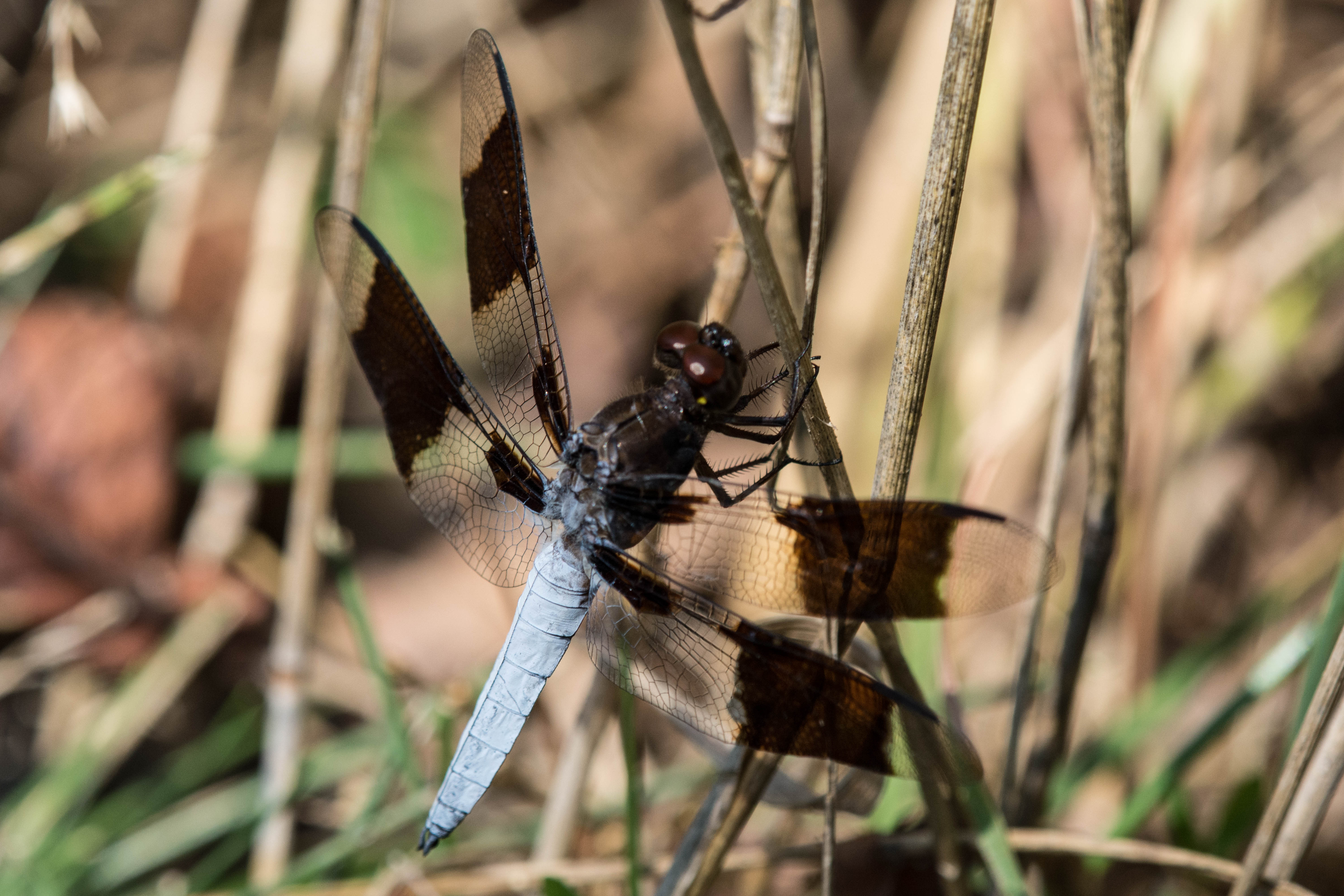
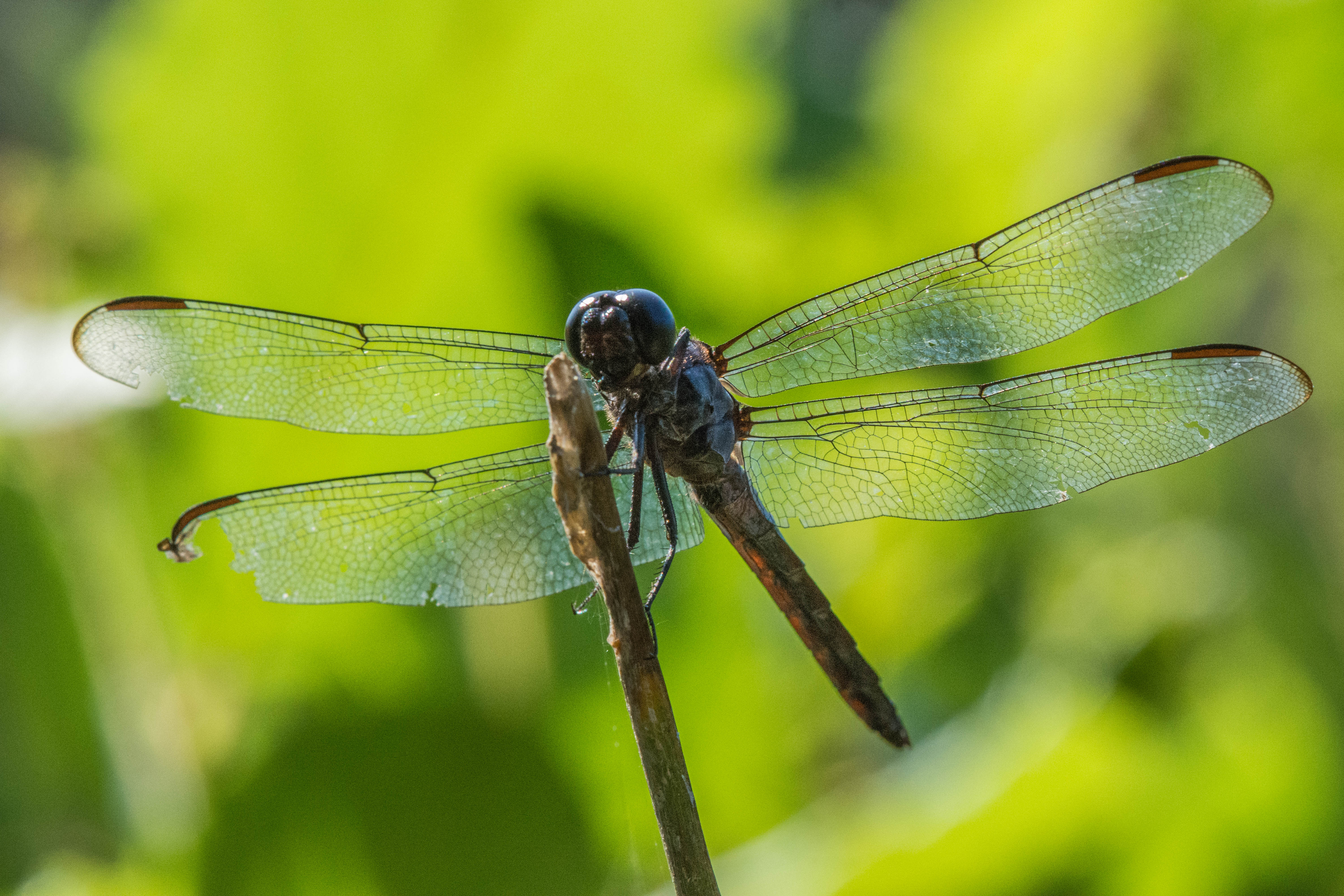
Dragonfly at the pond at the N.C. Museum of Art, August 26, 2017

Anyhow, on Wednesday we packed our bags and moved out, and the construction got started.  We’re staying at a hotel in our neighborhood. It’s fine, but we miss Rita, our cat, and there’s no good way to eat out every night and not gain unwanted pounds.  It will be nice to be back home with Rita and the new floor.

On Saturday morning I had my fourth lesson on the butterfly stroke.  I’ve been practicing diligently, and was quite pleased when my teacher gave me an 8 on a scale of 10.  He challenged me to get more power from the dolphin kicks and make it less about about the arms.  We started working on improving my breast stroke.  There’s a lot more technique involved in good swimming than I realized.  It’s challenging, but also very pleasing to discover new ways to move through the water.  

I’ve also continued my project to improve my golf swing.  Gabe has made up his mind to become a real golfer, and it’s been fun practicing as a father-son duo.  He’s advanced quickly, and is now beating me.  In my search for the perfect swing, it may be that like Moses, I won’t make it to the promised land, but I could still have the happiness of seeing him get there.

But I’m not ready to throw in the towel.  I’ve changed my swing path substantially to come from inside to out and figured out how to get my hips moving separately from my torso.  I can hit a draw.  There are still some bad shots, but more of them are flying closer to my ideal.   

Saturday night we watched the Rugby League national championship game between the New York Knights and the Atlanta Rhinos.  We’re new to rugby, but learning fast, because Kyle, Jocelyn’s boyfriend, is a key player for New York.  The game was played in Atlanta.  It was streamed online with lots of technical difficulties (periods of loud buzzes, slowed video, no video, no sound), and the color commentator seemed heavily biased in favor of Atlanta.  And despite our best fan efforts, our Knights got beat.  

But hats off to Atlanta, which, from what we could see, played a strong game with excellent defense.  And congratulations to the Knights for a great (undefeated except for this game) season.  Afterwards we went to the Mellow Mushroom for some comfort food — a veggie pizza and beer.  

Is it OK if our President supports neo-Nazis?

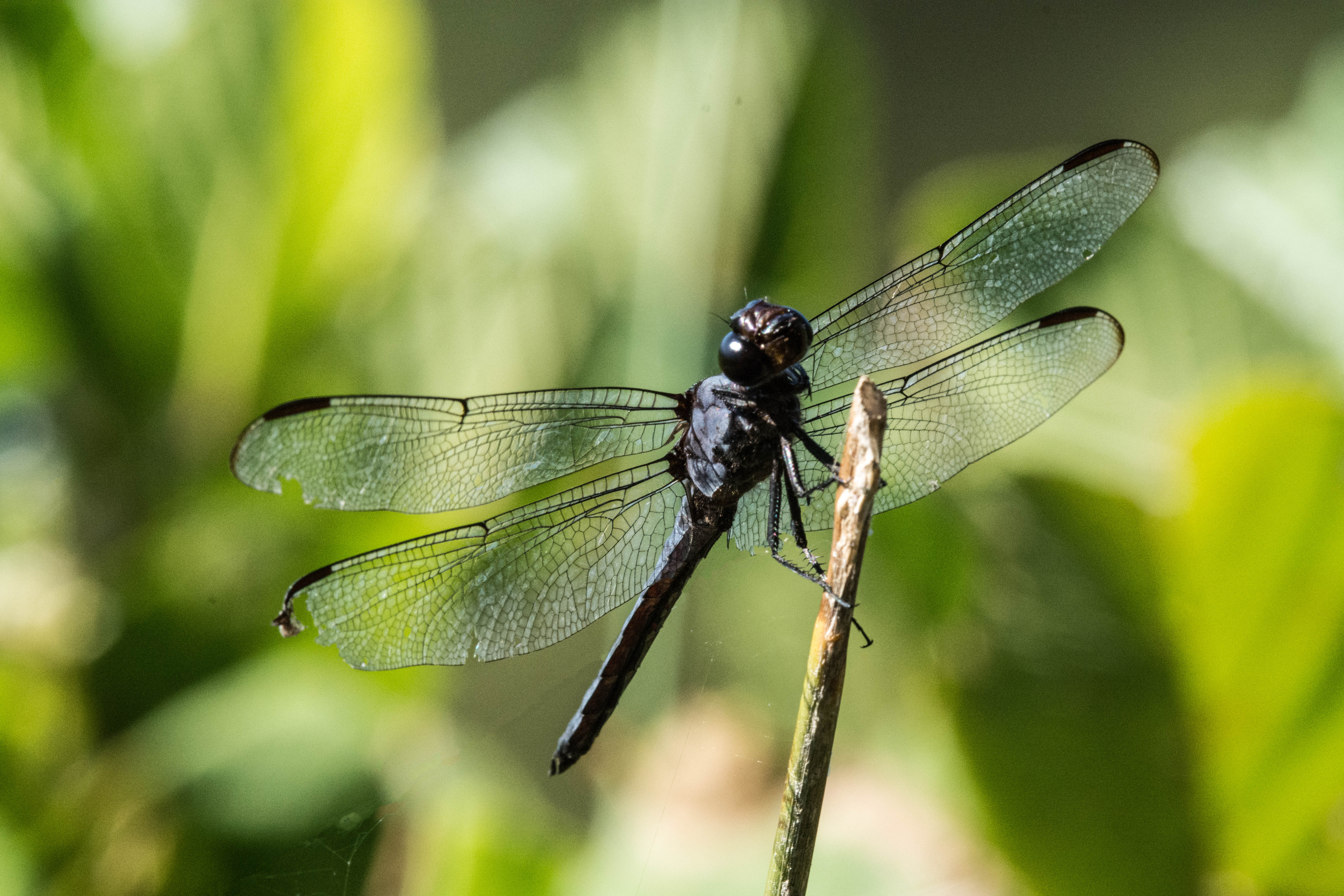
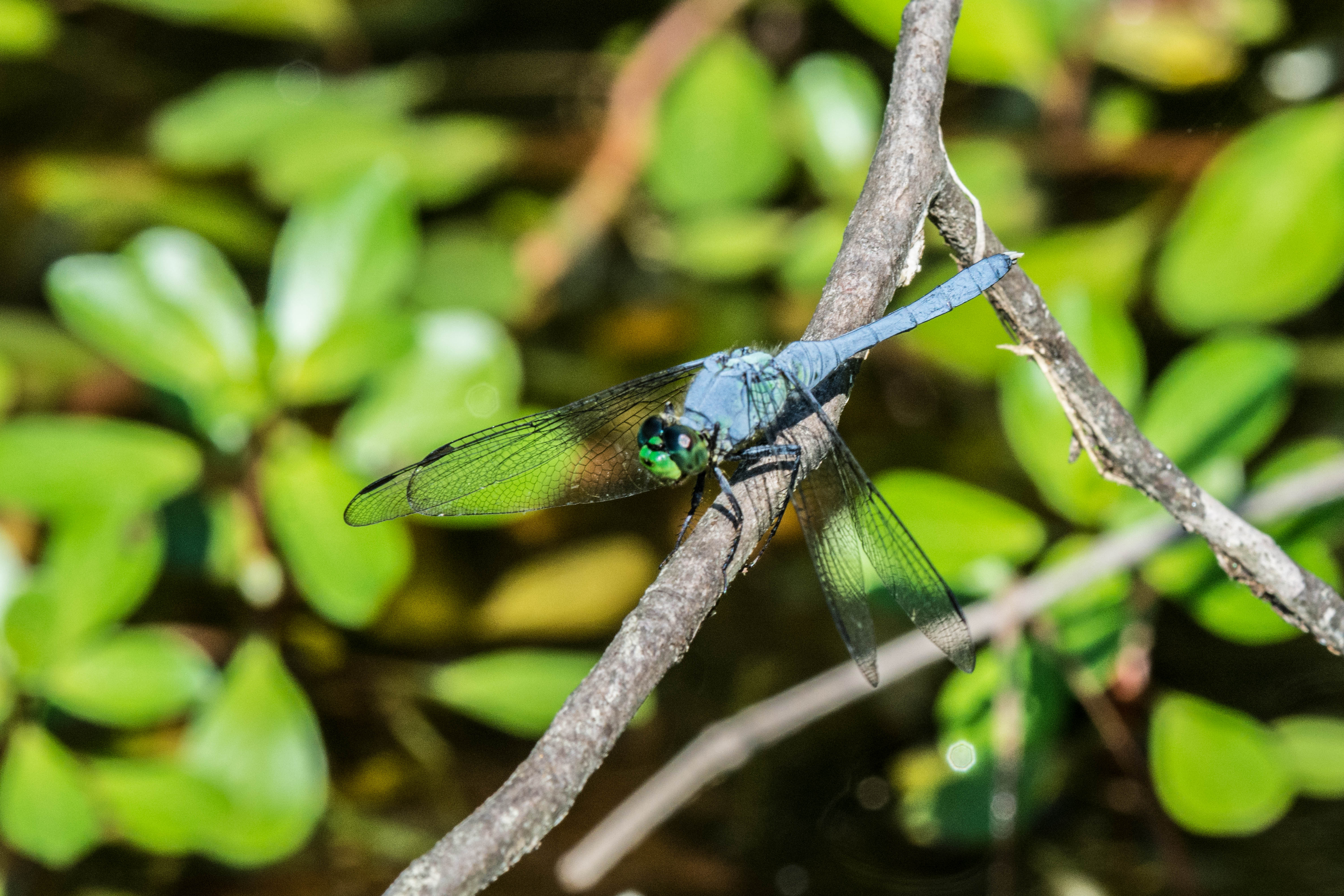
Dragonfly near Booth Amphitheater, Cary, NC, August 19, 2017

Last week it seemed like we might be ready to start a serious conversation about how to get out of our nuclear predicament, while we worried about a possible war with North Korea.  Now that all seems long ago.  Those hopes and worries were preempted by news feeds of marching, chanting, menacing neo-Nazis.  

Of course, we always knew there were such people, but we understood that they were a small minority that posed little risk beyond being disgusting and offensive.  Then the President announced that he thought neo-Nazis  were OK, or at least no worse than the people opposing the neo-Nazis.  The neo-Nazis were enraptured. 

If you haven’t already watched the short Vice News documentary on this, you should.  It brings home that these guys are real, and scary.  They are not ashamed of their racism; they’re proud of it.  And they are definitely not non-violent.  

What is the matter with these people?  There was an interesting interview on NPR last week with Christian Picciolini, who was a neo-Nazi leader as a young man.  He eventually renounced the movement and  founded a group to work for peace and help young people looking to get out of such groups.  

In his view, all people seek three things:  identity, community, and a sense of purpose.  Hate groups are good at providing these.  The young men who are vulnerable to being recruited by such groups generally have an underlying issue, such as psychological difficulties, or past trauma or abuse.  

We can all hope that these guys get their issues addressed, but in the meantime, let’s not be encouraging them to act out!  They could so easily get out of control.  It is despicable that the President has knowingly inspired them.  

On a related subject, what to do about confederate memorial sculptures, Trump’s commentary  (suggesting they’re comparable to statues of George Washington and Thomas Jefferson) is ill-informed, but raises interesting issues. These founding fathers were indeed slave owners, and that doesn’t fit well with our tradition of venerating them.  As I’ve learned more about them and their time, I’ve found my admiration for their courage and intelligence tempered by disgust for their willing participation in the slave system.  

But, obviously, individuals are complicated, and history even more so. As to the confederacy memorial statues, I didn’t learn until this past week that  most if not all of those currently being discussed do not date from the generation that experienced the Civil War.  Rather, these statues were put up decades later,  well into the shameful era of the Jim Crow, when blacks were suppressed by law, custom, and mob violence. Those statues were not put up as reminders of beloved fallen ancestors, but rather to terrorize and subjugate living black Americans.   

Maybe on the race issue, the debacle of Trump will ultimately do some good, by highlighting history that we might have preferred to forget and forcing us to grapple with unresolved problems of prejudice and inequality.  But in the meantime, we need to get past Trump.  He still has fervent supporters, including some who are not committed racists or otherwise crazy.  For them, perhaps this latest outrage will bring home that he is a national disgrace and morally unfit to be president.    

Looking on the bright side — how to fix our nuclear problem

This week Trump has been threatening to start a nuclear war against North Korea, which got me rattled.  So far, the sun has come up every morning, and with each additional day with no mushroom clouds it seems more likely that those threats are just bombast.  His continuing along on his golfing vacation is also reassuring, if ridiculous.  But how could anyone with the slightest clue as to what nuclear war would do even talk like that?  And how could anyone think it a good idea to explore what happens when you provoke a nuclearized,  paranoid dictator with threats of ultimate destruction?   

Let’s keep our fingers crossed that Kim Jong-Un is only pretending to be crazy,  Trump’s impulsivity is contained, and we survive.  Even so, the threats will have done real damage.  Markets have been roiled.  In the community of nations, our government is viewed as even more irresponsible and unpredictable.  At the personal level, my own mood has been darker than normal, tense and uncertain, and I’m surely not the only one.  Our mental health is not good.

I usually try to find the bright side of dark situations, so I’ll take a swing at it here. If we’re lucky and avoid disaster, we might finally wake up, realize we’ve long been on the edge of the nuclear precipice, and carefully back away.  Nuclear risks are not something anyone likes to think about, which in part accounts for why we are where we are.  But we can’t not think about them now, with the threat so clear and close.  We might take this as an opportunity to reconsider received ideas and correct some mistakes.    

We thought initially  that nuclear weapons could assure our safety by terrifying others into submission.  When that didn’t work, we raced to build still more weapons, with ever more destructive force, until we could in a matter of hours destroy the world several times over.  We put the weapons on hair-trigger alerts, and the risks of accidents and miscalculations increased.  

In the past decades, there have been several nuclear accidents and close calls that could have killed thousands or sparked an all-out conflagration. In  Command and Control, Eric Schlosser  recounts a number of these, and there was a quick overview last week in the HuffPost .  Our engineering is imperfect, and always will be.  Maintaining large numbers of weapons on hair-trigger alert is incredibly dangerous.   

In addition to the risk of system accidents, we live each day with the risk of human failure.  People make mistakes in the use of violence for any number of reasons — lack of knowledge, lack of sleep, intoxication, mental illness, etc.  And people’s reasoning powers are frequently overwhelmed by  powerful emotions.  It’s far from impossible that fear or anger could cause a nuclear attack that results in a counter attack and the end of the world as we know it.  

The worst possible way to manage this risk is the one we’ve adopted:  give one person with no training or qualifications complete power to launch the missiles.  The dependence on the good judgment of a single individual with no constraints is inherently dangerous.  Even the best of us from time to time make poor decisions when angered or confused.  To put it mildly, Trump is not the best of us.  

So is the situation hopeless? No.  It’s not hard to imagine international agreements that greatly reduce nuclear forces and the risk of total annihilation.  Indeed,  the START treaties accomplished a lot.  The new U.N. treaty banning nuclear weapons adopted by 120 countries shows that more is possible.  It’s not hard to imagine doing away with the hair trigger and engineering in more time for analysis before launching.  Likewise, we could put in place checks and balances on the executive, as we do in other areas.  

But we need to start with adjusting our thinking, and recognizing that the nuclear risk is intolerable.  We need to treat this problem as time-sensitive and high priority.  If we do nothing . . . well, it’s unthinkable.

The anti-Scout, and Dunkirk

Great blue heron at Apex Community Park, August 5, 2017

Being a Boy Scout was never cool, but I look back on my Scouting days with gratitude.  It was good to go camping with friends and learn to  paddle a canoe.  In fact, I learned a lot of little skills that could someday come in handy, like first aid, basket weaving, and wood carving.  

As a grown up, I’ve had issues with some of the Scouting lessons, like uncritical obedience, and I’ve been disappointed when Scouting’s leadership has been intolerant of minorities.  But I’ve always valued the core  lessons of integrity, decency, and caring for others.  

And so  I was dismayed when  Trump addressed the Boy Scouts at the annual national jamboree.  The surprise was not the content, since his once shocking dishonesty, ignorance, and vulgarity are now depressingly familiar.  Rather, it’s hard to see how any responsible adult would think it appropriate to put Trump in front of Scouts.  Trump is the anti-Scout, with a lifetime record of the exact opposite of Scouting ideals — not trustworthy, not loyal, not helpful, not kind, etc.  

It looked like Trump had a good time giving the campaign-type speech.  Perhaps his handlers and the Scouts viewed the performance as less likely to do harm than letting him sit around tweeting out attacks on the press and unexpected major policy changes.  Maybe in the aftermath some Scouts and others will examine more deeply Scouting values, and their relation to political life.  

Bravery of the heroic sort is not something one sees often in ordinary life, but it does exist.  I was reminded of this when we saw Dunkirk this weekend.  The movie was stunning.  It managed to communicate some of the terror of warfare, like the possibility of dying at any moment from bombing and artillery, and the reality of death.  But there were inspiring moments, like the bravery of the small boat crews and the fighter pilots.  When the last fighter plane ran out of gas, I got a little misty.