The Casual Blog

Category: Uncategorized

Opera, cocaine, yoga, fighting the power, and soccer

I seriously considered driving down to South Carolina this weekend to drive Clara on the Carolina Motorsports track, but decided the trip would probably create more stress than it would relieve. I needed to get some work done this weekend, and wanted to do some other fun things and take a few deep breaths.

On Friday evening Sally and I had dinner downtown at Buku, which had added some tasty and interesting vegetarian options, and went to the NC Opera’s production of Carmen. Carmen was first performed in 1875 shortly before Bizet died at age 36, and its first performance was a failure. Although it is full of wonderful melodies, it isn’t too hard to imagine why audiences initially had trouble with it. It celebrates freedom over responsibility, and its uninhibited sensuality is even today a little shocking.

When I saw the Metropolitan Opera’s production in New York last Thanksgiving, I was intoxicated. Elina Garanca as Carmen was sensational: beautiful in every way, and very sexy. The production was edgy, beginning with an initial scene that did more than casually suggest a gang rape by soldiers of Micaela. The acting was as good as the singing, and the settings were spectacular. My brain’s pleasure centers went into overdrive — dopamine city. Great opera is unquestionably better than cocaine. A possible solution to the drug/drug war problem: provide music and opera education (it is an acquired taste, and education is necessary), and great opera for everyone.

I gave some money recently to the NC Opera, because I really do want the art to survive and thrive, and I’m happy we have at least some live opera here in Raleigh. And I enjoyed Carmen on Friday night. As Carmen, Leann Sandel-Pantaleo sang beautifully, as did the other principals. The orchestra under the baton of Timothy Myers sounded good. But Carmen is more than just music. As drama, the production was flaccid. Instead of threats of violence and passion, we had too much sweetness. There’s not much to say about the sets; there wasn’t much to them. But it was still better than cocaine.

I got some deep breathing in at a Vinyasa yoga class with Yvonne at Blue Lotus on Saturday morning. Her 1.5 hour classes are always different, with a varying playlist of eastern plus western pop music and variations on classical poses. But they are always intense. I’ve learned that I need to take along some water and a towel, because I will be sweating. At times I’ve felt something close to desperation as to whether something uncomfortable is beyond endurance. But there are moments of sweet transcendence. And I always feel great afterwards. It isn’t just a physical thing. My mind feels more peaceful.

In the afternoon I took Diane (Sally’s mom) to North Hills to see the Metropolitan Opera’s simulcast of Donizetti’s Anna Bolena. It occurred to me that this might be too much cocaine for one weekend, but I wanted to see the new Met production. Seeing the HD simulcast isn’t the same as being at the Met in person, but seeing the live production has more electricity than seeing the same thing when rebroadcast. We learned at the beginning that people were watching in theatres all over the world, including, for the first time, Russia. It was good to share the experience with people in the theatre and around the globe.

In the production, there are 70 are so performers on stage, probably an equivalent number in the orchestra, and dozens behind the scenes. All performing difficult feats — walking a highwire without a net. It seems impossible that mere mortals could pull this off. But they did. It was stupendous. Anna Netrebko as the doomed bride of Henry VIII is compelling and heartbreaking. A great musician and a great actor. Yes, she needs to drop some weight. But I forgot that during the performance. It was truly intoxicating. Some of us in the theatre had to clap, even though she couldn’t hear us.

After I dropped Diane off, I drove by the old state capitol building and saw a couple of hundred people doing the Raleigh version of the Occupy Wall Street protest. I learned from the newspaper that 19 of them later got arrested for staying past their permitted time. Public protesting has always been problematic for me, because I can’t completely endorse any bumper-sticker-size slogan, and although I realize simplification can be politically useful and even necessary, it still bothers me.

But I’m glad that there are people who like demonstrations, and are prepared to make some public statements. The greed, ignorance, and indifference of the economic and political elites in the face of the long and continuing crisis in the economy should not be accepted calmly. Instead of going to jail, the worst malefactors of the economic meltdown are still earning multi-million dollar bonuses. Instead of instituting dramatic new regulatory structures, our politicians are doing nothing, or worse, promoting more deregulation. We’re on the edge of an economic cliff, and our leaders aren’t leading. We should be mad about these things, and gravely concerned about other existential threats (global warming, overpopulation, and nuclear weapons among them). And after we blow off some steam, we should get organized and work for change. Perhaps the Occupy Wall Street movement will spark something new.

Saturday night we went out to Cary for some minor league soccer. Our team, the Carolina Railhawks, had to beat the Minnesota Stars by 2 goals to advance in the playoffs. It was a beautiful, mild evening, and there was a large crowd out for the game. The Railhawks came from behind to win the initial game 4-3 — not enough to close out the series. They then played two 15 minute periods, which ended without further scoring. So the series was decided by a shootout. We lost 6-4. It was sort of a painful ending to a good season.

Hitting balls at the country club and watching chimney swifts

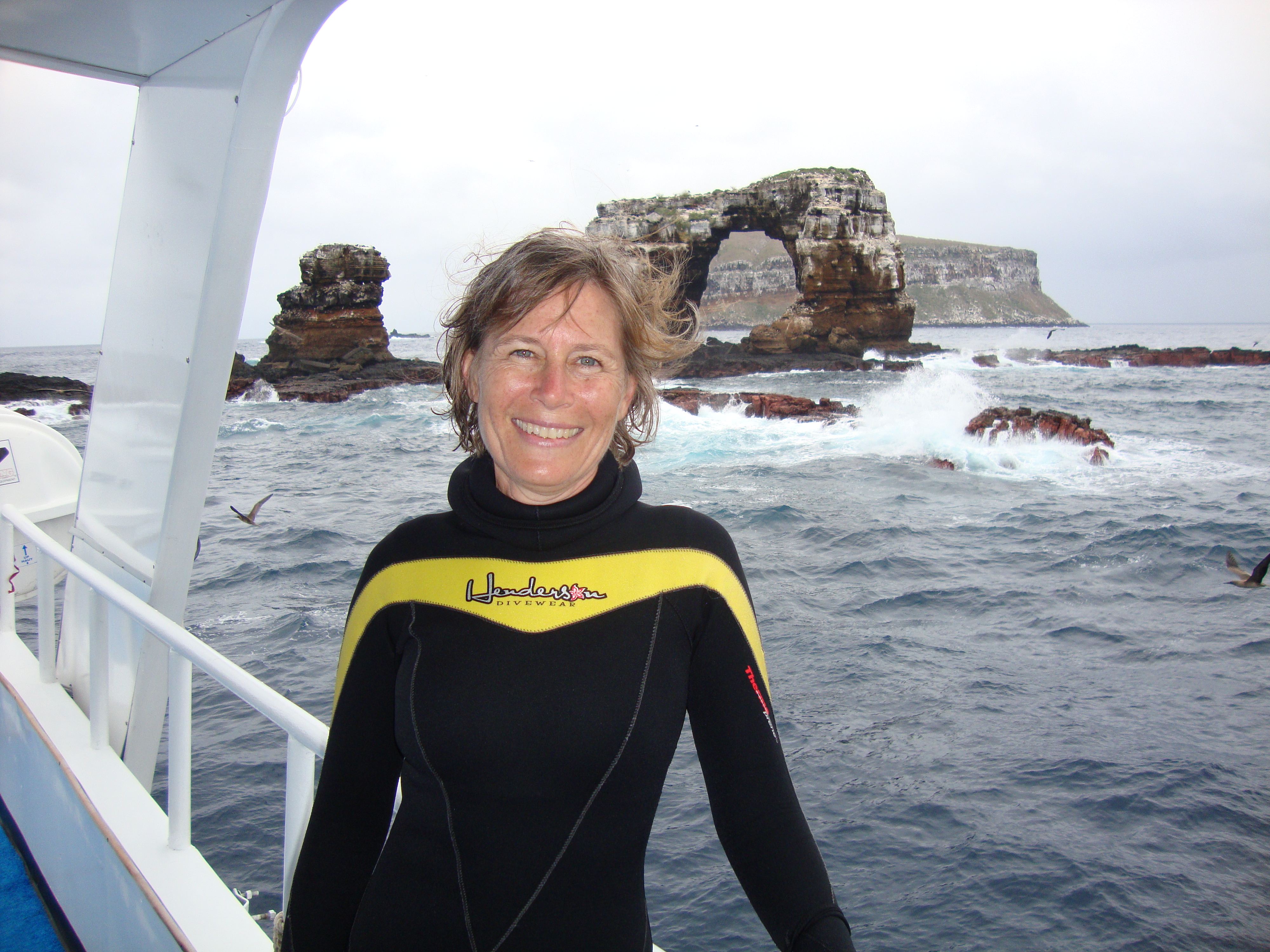
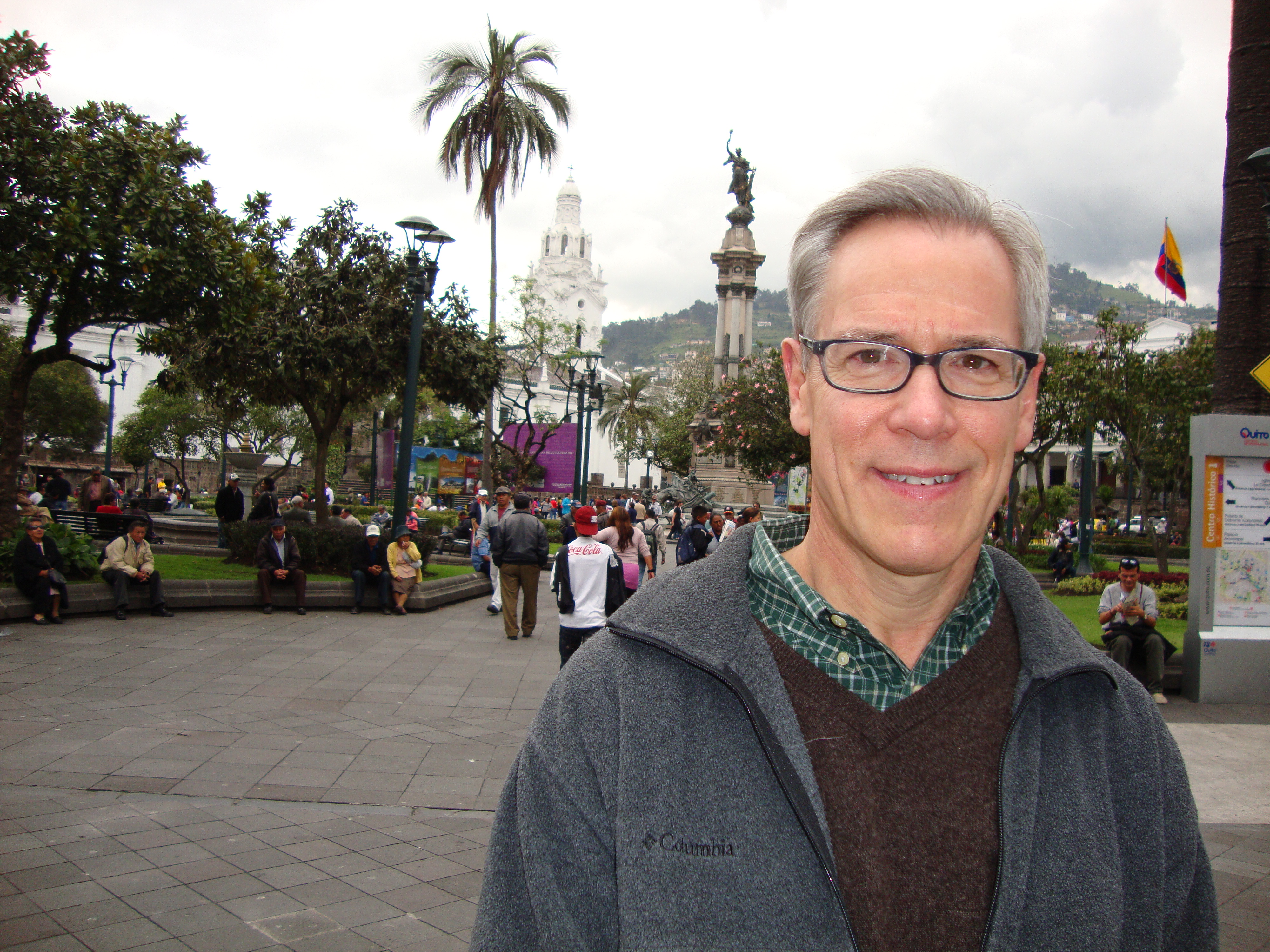
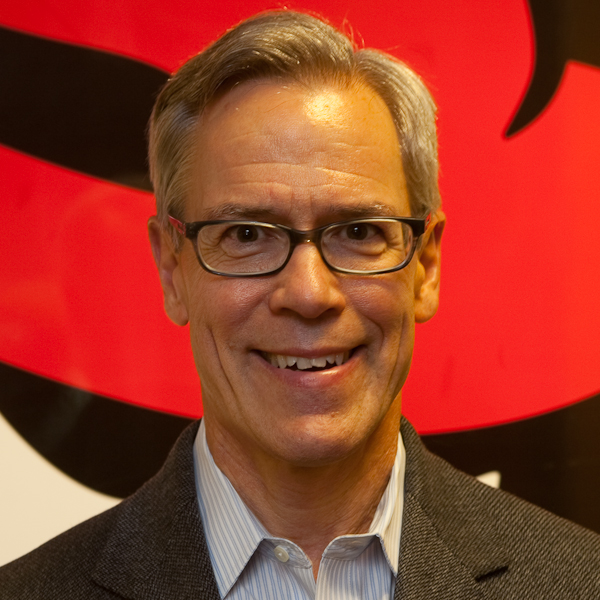
On Friday one of my Red Hat colleagues took some pictures of me for our website. In recent years I’ve got over some of the awkward self-consciousness of being peered into by a camera, though it is still slightly embarrassing. Anyhow, here is one of the pictures.

After work, I went over to Raleigh Country Club to practice at the driving range. I became a member at RCC a few weeks back. This is primarily a wonderful thing for which I am deeply grateful, but at the same time I have some cognitive dissonance. I do not come from a country club background. As a kid, I had friends who belonged and ones who didn’t, and didn’t see any systematic differences. But at some point I formed a view of country clubs as islands of unearned privilege, and of country clubbers as shallow, selfish snobs — people whose main political driver was paying less in taxes. Over time, I’ve known plenty of people who put the lie to that stereotype, but I still had trouble picturing myself wanting to join (to paraphrase Groucho Marx) any club that would have me as a member.

What changed? The most important thing was a deepening appreciation of golf. And the golf course at RCC is special. It’s the last course of Donald Ross, the legendary Scottish designer. The land rises and falls in a pleasing rhythm, with lakes and streams and bunkers, and mature trees, bushes, and flowers. It is beautiful, and also quite challenging. And it is less than 10 minutes from my apartment.

The staff has been really welcoming and friendly, as have most of the members. I really enjoy hitting balls on the driving range. When I hit a bad one, I just tee up another. I am playing with the concept that a more beautiful swing makes a more beautiful ball flight, and some of mine are flying well. But every now and again, I have an anxious moment when I feel out-of-place, and wonder if someone is about to quietly ask me to leave.

After hitting my quota at the range, I drove downtown and met Sally at the corner of Salisbury and Hargett Streets. She’d seen a story in the News and Observer about chimney swifts roosting in the Oddfellows Building there. We climbed the stairs of a parking garage across the street and looked upward.

Shortly before 7:00 pm, we saw the first few swifts appear from the northwest, and then there were more. Ultimately there were hundreds and hundreds, swarms of chimney swifts. They fluttered and veered, catching insects and making a high-pitched chatter. It was amazing. There was a kestrel that perched on the logo sign at the top of the Wachovia Building and occasionally swooped down, but the flock would counterattack. We’d hoped to see the swifts go down the Oddfellows Building chimney, but did not have a good angle to view the chimney. Finally it got dark, and we walked a couple of blocks to Dos Taquitos for dinner.

Post-Enlightenment thinking and Michelle Bachmann

Is there any question that science, logic, and reason are excellent tools for problem solving? OK, these systems aren’t perfect, and they don’t apply to every problem. But can any thoughtful person fail to recognize their power to transform civilization and improve lives?

The answer is yes. Some people rely primarily on myth and magic as thought systems. But I normally think of these people as a not-very-significant minority. It may be, though, that that minority is getting more significant.

A column in the NY Times today by Neal Gabler posits that we live in a post-Enlightenment society that has gone backward intellectually to a method that does not employ rational thought. Gabler takes this as settled, and argues that it’s even worse: that we are moving into a post-idea world, where thinking is simply no longer done. Instead, we exchange undigested facts. As evidence, he cites social media such as Twitter and Facebook.

I’m not persuaded that social media is killing ideas, or even that the post-Enlightenment has arrived. But anti-rationalism is alive and well. Exhibit A: Michelle Bachmann. Yesterday Bachmann won the Iowa straw poll. In this week’s New Yorker, Ryan Lizza discusses the ideas that shaped her thinking.

Bachmann comes out of a tradition that believes the Bible is the literal, infallible, and unerring word of God. She claims to have a personal relationship with Jesus Christ, and believes that he controls her life. She’s also been influenced by various fundamentalist thinkers who have some disturbing notions, including a revisionist view of slavery that holds that it was not all that bad.

It strikes me as implausible that Bachmann could be a serious contender for the presidency, but her style of thinking is having an impact on public policy. It’s hard to understand how the Tea Partiers could refuse to discuss the issue of tax rates, and be prepared to insist on this point at the cost of economic catastrophe. But if you believe that your ideas are coming directly from God, how could you question them? Why would you care to listen to opposing views? Why would you consider compromise? Thus usually harmless nonsensical beliefs become dangerous.

Celebrating a wedding and a birthday

Sally and I went to Virginia Beach last weekend for the wedding of my niece Lauren. We were looking forward to seeing my siblings and their families, but there was also a slight feeling of dread. We were from a different tribe from most of this community, which is largely evangelical Christian Republican. We always wonder how we’ll deal with our deep differences, but we always finesse it. Despite our different political and other beliefs, there are a lot of things we have in common, and we focus on those.

I used to find weddings (except for mine) slightly strange, but as the years go by, I find them more and more moving. Young people bravely pressing into the unknown, full of hope and optimism, full of love. Lauren was a beautiful bride, and bouncing with excitement. Dustin, her betrothed, seemed sweet and committed. The ceremony contained various religious elements which meant nothing to me, but the uniting of these young people meant much. And afterwards, I loved seeing all their friends dancing and having fun.

After the wedding, my brother Paul took us out on the Chesapeake in his 30 foot power boat. I took the helm for an hour or so, and found that keeping on course in choppy water was more work than I thought. It was sufficiently rough that there was some seasickness, and we aborted the longer journey we’d planned. But we found a group of at least a dozen dolphins, and got close to watch them play. We also cruised through the inlets and looked at the impressive homes and boats, and had some wine.

Lauren’s wedding day was also my 56th birthday. I don’t like making a big production out of birthdays, and was happy to have something to celebrate other than getting older. But over the weekend, I found myself thinking about this milestone, and how different it was from what I would have imagined. From the vantage point of Lauren (23 years old), I’d have assumed this would be a time of painful decline. But far from it. I feel full of life, full of passion, full of curiosity. There are so many things that I’ve just begun! So much beauty! So many possibilities!

A bird walk

It’s spring in Raleigh. The redbuds, forsythia, and pear trees are blooming, and the hardwoods are budding. With sunny skies and temperatures in the 70s, I had a powerful yen to get outside yesterday, but stayed hunkered down in my office dealing with a series of conference calls. But today is Saturday! I celebrated with a walk in the woods at Swift Creek Bluffs.

I haven’t been birding for a while, even before the winter doldrums, and had almost forgotten how pleasant it can be at sunrise on a beautiful day. The cardinals were particularly vocal this morning, perhaps still working out their spring pairings. Most of the birds I saw and heard were typical NC residents, but I was happy to get a good view of a magnificent Pileated woodpecker. I got some of the rust off my binocular skills in preparation for the arrival of the spring migratory birds.

But leaving aside the birds, it was good being out in the woods, walking along the path by the creek. It was enlivening but also peaceful.

Piano lesson

One door closes, and another one opens. My piano teacher for the last four years, Randy Love, left for a sabbatical in China last month. Our piano lessons, at intervals of once a month or so, have taken me a long way along the path of the great western piano music tradition. The tradition is based on written texts, but much of it is unwritten, transmitted from teacher to student. Randy has transmitted much, and been an excellent master and a good friend.

During that time, I’ve enjoyed gaining fluency at the keyboard, but I don’t view increased technical mastery as the most valuable accomplishment. Much more important, and also much harder to express, is a change in the experience of the music. “Music is feeling, not sound,” according to Wallace Stevens (in Peter Quince at the Clavier). Stevens was on to something, although music is, obviously, sound. There’s a type of emotional energy stored in written musical texts and released and renewed with each performance. And there are many levels to that emotional experience.

So I went in search of a new master, and found myself yesterday at the music building at N.C. State in the studio of Olga Kleiankina. She’s a Russian with degrees from schools in Moldova and Romania, a masters from Bowling Green and a doctorate from University of Michigan, and joined the NCSU faculty last years as head of the piano program. She’s got an impressive amount of performance experience, and is an active concert artist. She was friendly but focussed. Straight away, she invited me to try out her two pianos, and after playing a bit of Chopin on each, I settled on the Mason and Hamlin over the Yamaha. Then she asked me what I’d brought to play for her. I played the first half of Chopin’s nocturne in D flat, Op. 27, No. 2, one of Chopin’s most beautiful, lyrical pieces, very like an operatic aria, with a broad emotional range. I played it rather well, with real feeling, I thought.

Olga was polite, but wasted no time with compliments. She said she could help me with my technique, and plunged in. It was quite bracing. We worked hard on weight transfer, activating the back and arm and relaxing the wrist. She showed me different ways of positioning the fingers on the keys for different sounds. She also talked about the shape of the gestures of the hand as it related to the flow of the music. She demonstrated this in various ways, including taking my hand and guiding it. I’ve usually thought of the physical aspect of piano playing as supporting but separate from the musical part, but Olga seemed to view the two as unified. Beautiful movements make beautiful sounds. She also demonstrated a level of attention to detail that was inspiring, and daunting.

At the end of the lesson, I felt like I could be at the foot of a new mountain. There’s a long way to go to reconfigure my playing along the dimension Olga pointed to. It will be challenging, and maybe transformative.

So long, Krispy Kreme, and hello health

It was bittersweet to learn last week that the Krispy Kreme store in downtown Raleigh was closing due to lack of business. When a business fails, individuals suffer hardships. As a downtown Raleigh resident, I’m particularly eager to see businesses here succeed.

And Krispy Kreme and I go way back. As a boy I was a patron of the first Krispy Kreme store, in Winston-Salem. There you could sit at the counter and eat hot glazed doughnuts while watching more fresh ones coming off the conveyer belt. It was one of the few places in town open 24 hours. After finishing my paper route at 5:30 a.m., I’d sometimes stop in there for a delicious sugary treat. It was also a favorite late night spot for teenage munchie runs. Good times.

But in recent years I’ve come to associate Krispy Kreme doughnuts and similar sweet products with less cheerful things, like obesity, diabetes, heart disease, and death. The products are more like cigarettes than food. The nutritional content is minimal, and the high sugar and fat content are unhealthy. This is not exactly big news. In a sense, everyone knows that too much fat and sugar are bad for you. But it continues to be a difficult fact for people to face and do something about. That much is obvious from our obesity epidemic.

We’ve made slow but meaningful progress in the last 50 years addressing the deadly public health effects of smoking. We’ve substantially reduced smoking rates, and therefore smoking deaths. The basic facts about smoking and cancer are now common knowledge, as a result of government requirements for warnings on cigarette labeling and restrictions on cigarette advertising. We have not done anything like this with risky sweet food products that kill people.

If anything, we’ve headed in the opposite direction. Information about nutrition is obscured by industry and federal agencies. Our government transfers our tax dollars to agribusinesses as large subsidies for production of excess corn, which is processed into high fructose corn syrup and added to many common food items. Thus healthy unprocessed food seems unusual and, by comparison, expensive. Thousands of advertisements have convinced us that sweet, fatty food products produce good feelings of love and fun.

Sure, it’s possible to get sound nutrition information and it’s possible to eat in a healthy way, but our culture makes it quite challenging. People who make a point of trying to avoid unhealthy food are viewed with puzzlement and sometimes anger. It’s no fun being ridiculed as a food nut. It’s easier to go along with the crowd.

Lifetime Fitness gym recently published an article by Pilar Gerasimo titled “Being Healthy is a Revolutionary Act,” That’s putting it too strongly, but it is certainly an act that defies settled conventions. The related web site does a good job of putting in bumper-sticker form some home truths about health and nutrition. http://revolutionaryact.com/ The first home truth gets down to business: “The Way We are Live Is Crazy,” based on our rates of obesity and chronic illness. But, it says, we can change.

Maybe so. If Krispy Kreme is doing less business, it probably isn’t because their doughnuts don’t taste good. They taste too good! It’s possible that more people are facing the fact that we can’t go on eating like this.

Good wine food and a note on spinning

Last night Sally and I tried a new “wine restaurant” in Cameron Village called Cafe Caturra. I wasn’t entirely sure what a wine restaurant was, but they pulled off the neat trick of creating (at least for me) a natural, comfortable new category. A young waitress greeted us and told us we could sit anywhere (it wasn’t crowded) and order food, but we might first want to stop by the bar and choose a glass of wine.

The bar was tended by a tall, friendly guy who showed the wine-by-the-glass choices — ten or so whites and as many reds. As soon as we expressed interest in one of the Chardonnays, he produced a taste of the wine, which was buttery and delightful, and we happily ordered a glass. Then we found a table and ordered — a veggie panini for me and a little pizza for Sally. These were simple, hearty, and delicious. I liked the servers and the artsy bistro look of the place. I wasn’t crazy about the background music — hard rock, my least favorite genre — but it wasn’t overwhelming.

The music was several times louder at my two spinning classes at Rapid Fitness earlier in the week. Sally asked me how I liked it, and I told her that I liked the second one better, when I knew to bring ear plugs. These were my first ever spinning experiences, and I was a little anxious going in, as with anything new. The only thing I knew about spinning was that it involved riding a stationary bike, which seemed like such a simple idea that I had trouble believing people would give it a particular name or do it together. Since it had a name and a following, I figured there were also rules and norms, and of these I knew nothing. Was it possible to screw up spinning? I didn’t know, and since this was a group activity, I worried just a little.

Fortunately I managed to get to class a few minutes before the 6 am start time and have a brief orientation chat with Paul, the teacher. He showed me how to set up the bike adjustments and gave me the lowdown on bike shorts and shoes. He also recommended that I pick a bike near the fan, because we were going to be sweating. He suggested that since I was new, I might find at points that I needed to gear back a little from his recommended intensity. I thought this was both mildly insulting and probably wrong, since I couldn’t see hnow a stationary bike could be all that serious a fitness challenge. But boy, was he right.

A few minutes later a group of eight or so had assembled. Paul put on a microphone, fired up the dance music, and told us to get going. For the next hour he combined straightforward coaching (“now, crank it up”), cheerleading (“you’re doing great!”), and a story line about a bike ride over three mountains (“the group ahead is looking back and sees you’re gaining on them”). After twenty minutes my heart was pounding, I was drenched in sweat and considering the real possibility that I would not make it through a full hour. Following Paul’s tip, I eased back a little, then found some more energy, and ramped back up. At the end of the class, even my shoes were soaked. As my heart rate got back to normal, I noticed an unusual mellow, light feeling — the endorphins of happiness. I did a few minutes of yoga breathing and stretching, and felt really good.

So, spinning turned out to be a kick-butt workout and more fun than expected. I considered whether my well-settled idea that I was not the sort of person who likes exercise classes might be simply wrong. At any rate I was happy to find a new activity to vary the mix of my morning exercising. It’s good to change things up.

Driving on the left

When we rented a car in St. Croix last weekend, the Hertz agent informed me that they drive on the left.  The guard at the airport exit reminded me again to drive on the left.  As did a policewoman at a drunk driver check point.  And with good reason:  it’s hard!  I’m guessing a lot of American tourists have accidents or narrowly avoid them.  The rule that one drives on the right gets deeply grooved into the brain.  The first two days, I consciously reminded myself repeatedly that left was right.  But by the third day left was starting to feel natural.  Then we came back to Raleigh, USA.  The first day I found myself hesitating — left or right?

That minor culture shock quickly receded in the face of the everyday challenges of work etc.  I did have a couple of days, though, where it seemed that every leaf on the trees I saw on my commute to work was distinct and clear.  The short Caribbean adventure transformed things just a bit.

Greetings from St. Croix

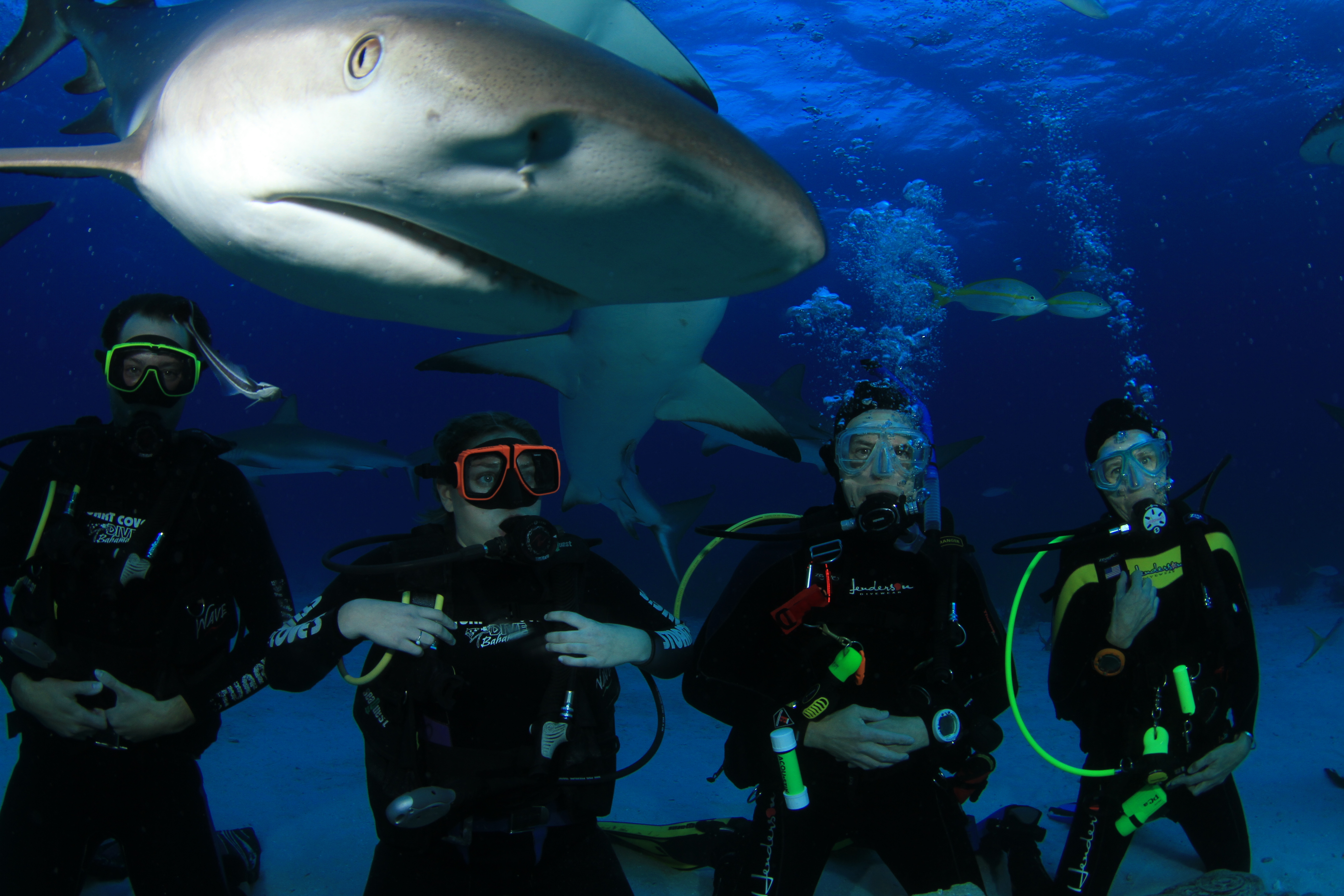
Last July 4 weekend Sally and I decided to burn a vacation day to make a four-day  trip to St. Croix.  The main objective was to dive some of the largest coral reefs in the hemisphere.  We were eager to try out some new diving equipment and see some exotic flora and fauna.  The program we settled on involved a night dive, four daytime dives, and a snorkeling trip.

The diving was rewarding.  The reefs were reasonably healthy, and there were luminous tropical fish in abundance.  We saw our first spotted eagle ray, a magnificent and haunting creature.  We had our first see horses, first spotted moray eel, and first rock beauty.  We saw two large sea turtles and barracuda. Especially on the night dive, we saw many bizarre critters whose names we didn’t know.  It’s hard to do justice to the beauty of  reef diving.  The visibility was not great by Caribbean standards – around 40 feet most of the time – but we could see a lot.   So much life, in so many shapes and colors, some shy, some friendly, some intimidating.

Along with the diving, we had several unusually rewarding talks with various travel companions.  On the flight down, we met a 22-year-old guy working on Wall Street with a hedge fund.  One of our divemasters was a guy from Indianapolis, another from New Zealand, and another from northern Virginia.  They all had interesting personal stories.

I’ve been thinking recently about the way we each create and embody stories.  Constructing them is part of the work of being human, and communicating them is a defining characteristic of our species.  That is, to be complete, actualized humans, we need to tell our stories to each other.  On this theory, I’ve been more conscious of encouraging people to tell their stories, particularly if it seems they might be at all interesting.  I’m usually not disappointed.  Often stories that I expected to be ordinary turn out to be unusual and absorbing.

I used to have an aversion to the clichéd expressions of small talk, but fortunately I got over that. I’m now convinced that these clichés serve a very important purpose as tools for encouraging story telling.  “Where are you from?” is an invitation to begin a narrative.   The same goes for “How are you doing?”  From there, the story can go in any direction.

We had our setbacks and frustrations.  My regulator malfunctioned when we first tried a night dive at the Fredricksted pier, so we had to scrub that attempt.  The next night we made the intimidating jump from the pier to the dark water below, but got separated halfway through the dive.  The travel home involved painfully slow gate agents and customs agents, and a connection in Miami that was too close for comfort.  But we made it, and it was worth the trouble.