The Casual Blog

Category: sports

A post-drive neck massage

The road trip last weekend was great fun, but the many miles of sport driving left me with a stiff neck. It was difficult to turn my head enough to back Clara out of her parking space. After three days, it was not much better. I got to early bird yoga early to ask Suzanne if she had a recommendation for a massage therapist. She did, and also was so kind as to take the class through some neck and shoulder stretches.

The next day I got the first appointment of the day with Meredith at Hands on Health. I was impressed with the professional atmosphere. The place seemed like a PT’s office, with a reception area, waiting room, and offices for several massage specialist. Meredith seemed friendly and chipper, and turned out to know a lot about neck problems.

She worked on my shoulders and lower back as well as my neck. In spite of her friendliness, she was not all sweetness and light. Parts of the work were amazingly painful. This was deep tissue work. She located muscular knots, and spent time digging into them. She’d given me permission to ask her to stop, but I wanted to get results. But it was a struggle. I worked on breathing deeply.

But afterwards I felt much better. Massage, like yoga, is a thing that I used to consider somewhat bogus, and have gradually come to think of as a wonderful gift.

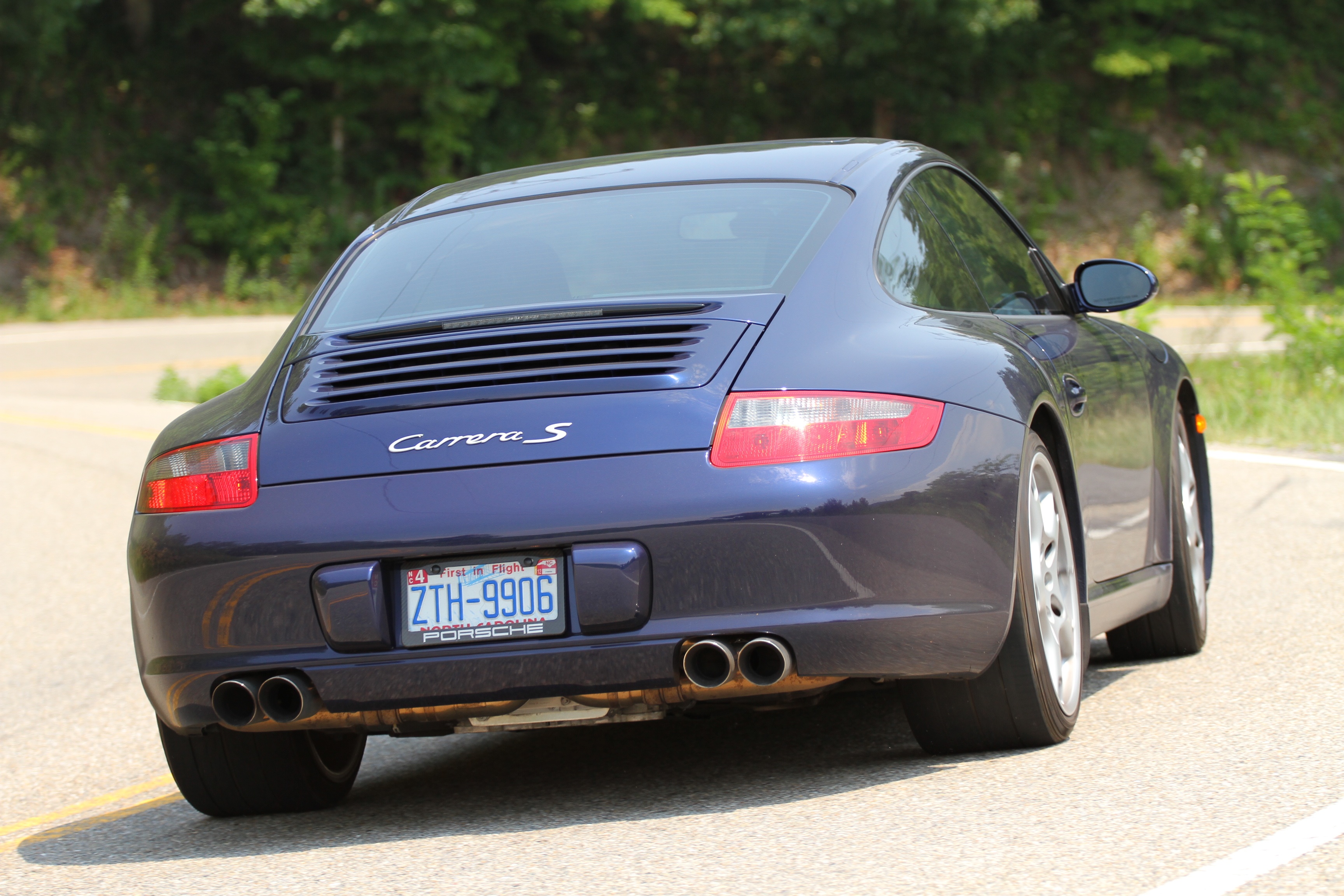
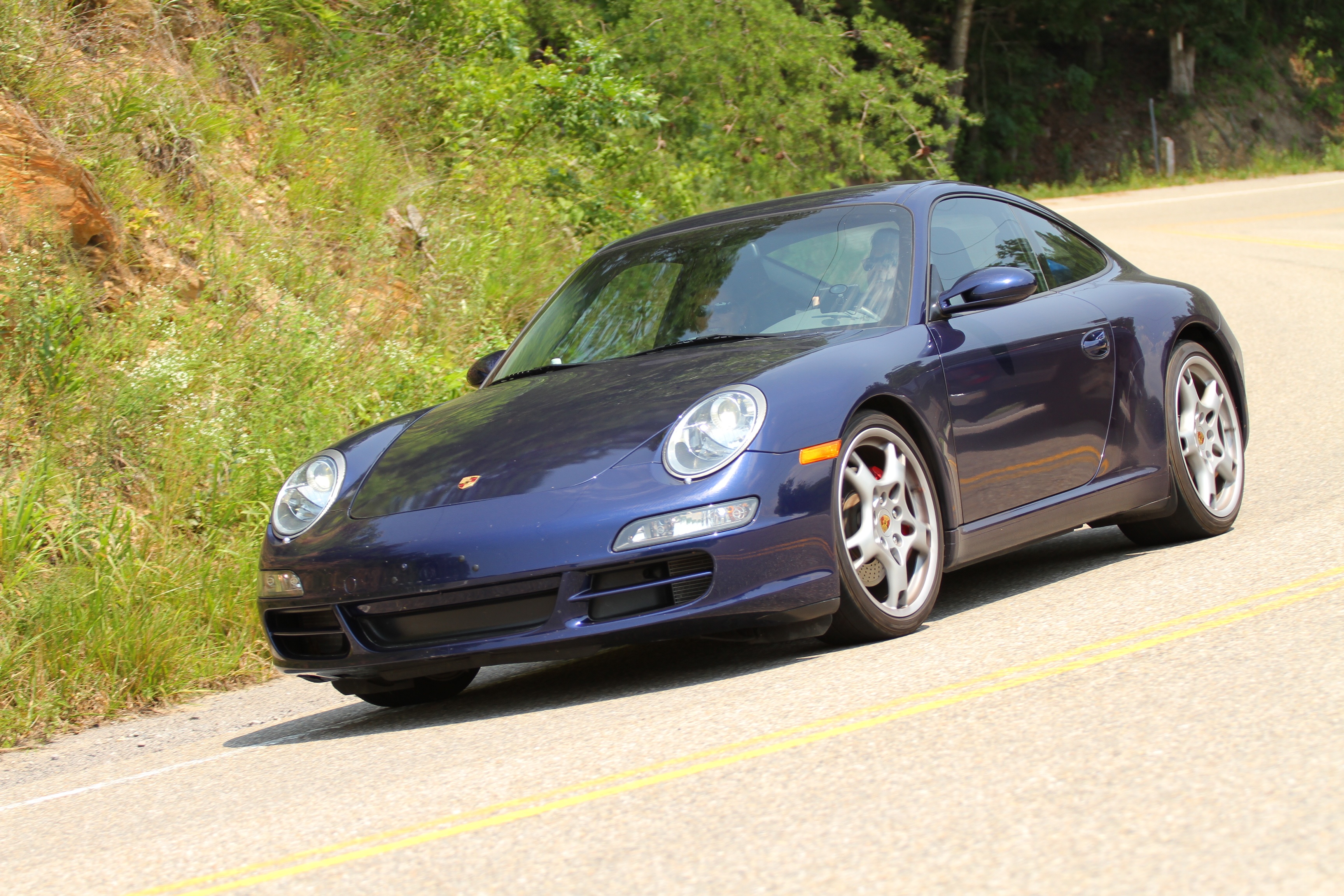
Thanks to killboy.com for the pictures of Clara on US 129, the Tail of the Dragon, on July 3, 2011.

Caribbean diving in Honduras

Yesterday Sally and I returned to Raleigh after a week of scuba diving in Roatan, Honduras. We explored the second longest barrier reef in the world and were overcome by the incredible beauty under the water. It was intoxicating: thousands of luminous fish, enormous sea turtles, exquisite sea horses, exotic invertebrates, and vast coral structures in rainbow colors, I highly recommend it, though I hope not too many people go, particularly if they’re careless divers. The reef is ancient but fragile, still teeming with life, but threatened by human activity.

We stayed at CoCo View Resort, an establishment designed for divers. There’s no casino, no television, and little in the way of shopping or other entertainment. The focus is scuba. The hotel is on a small island that’s a short swim from the edge of the reef, and a number if prime locations are within a ten-minute boat ride. They have convenient, well-organized lockers a few steps from the boat docks, and the boats are well set up for diving. Our captain, known as Gringo, and divemaster, Mark, were friendly, knowledgeable, and hard-working. They took us on four boat dives a day, and most nights we went on an additional dive off the shore. My total of dives for the week was 24, while Sally did 21. This meant that most of our time was either preparing to dive, diving, and preparing to dive again, with short intervals for eating and sleeping. I did manage to sneak in a bit of reading and a couple of naps in the hammock on our balcony that overlooked the bright green water of the bay.

Personal highlights included ten sea turtles in one day, including one that I spotted while swimming in for a close look at a pair of queen angelfish. We saw almost as many sea horses in one day, several scorpion fish, and four species of eels. On one night dive we saw three octopuses, including one that we watched for several minutes as it changed colors and shapes in a brilliant attempt to camouflage itself against various backgrounds. On our last day we saw our first ever squids, a pair that hovered near us for a couple of minutes, than swam almost close enough to touch.

There were also, unfortunately, lionfish in greater abundance than we’ve previously seen. This fast-multiplying invasive species is disrupting reef ecosystems across the Caribbean. Mark had a license to kill these destructive predators, and at one point executed six in two minutes. Another time, after an execution, he offered the remains to a spotted eel, which emerged from its hole for the snack. Mark confirmed that the lionfish seemed to have cut into the populations of other creatures. I wondered if the lack of sharks and rays (we saw only one southern sting ray) was a consequence.

We went with a group of about a dozen other divers organized by Dan P. and Down Under Surf and Scuba. Most of the other divers were very experienced. We learned more about diving and new species from them, and enjoyed their company. The vibe was friendly and relaxed.

It was fantastic to swim with large schools of small, brightly colored fish, and also to hunt for hidden treasures — well camouflaged and bizarre creatures. As the week went on, I found it more and more satisfying to focus directly on the coral. The variety of structures was remarkable. There were species that resembled various plants and ones that looked like rocky organisms. Late in the trip, I used my flashlight to inspect the coral at 70 feet, and discovered that species I’d first taken to be dull gray or brown were quite colorful — burgundy, lime, mauve.

And as I spent more hours underwater, I felt more peaceful, less distracted, more focussed. There were only a couple of painful moments. I got stung by fire coral on my hand, which felt like a burn, and stung by an unseen creature on my lip, which felt like a wasp. But mostly I felt deeply happy. I wondered, as we prepared to leave, whether, with more time, I’d keep getting better at looking at tiny things, and enjoy them even more.

A spring baseball game and a crazy yoga class

In early spring, it is most pleasant to go to a minor league baseball game. On Friday night, Sally and I went over to Durham to see our first Bulls game of the season, where they played Syracuse. Just as we got to the stadium parking, it began to rain, and just as we got to the gate to hand over our home-printed ticket, it started to pour — so much so that the scanner had trouble reading our tickets. So we got wet, and it continued to rain for most of the next hour. But the sky kept getting brighter, and we had pizza and beer, talked, and looked at the types in the crowd.

When the rain finally stopped, we watched the stadium crew roll up the giant tarps that covered the infield and sweep the baselines. We watched the Syracuse pitcher warm up, throwing gently at first, then harder and harder. We’d bought tickets four rows back from the field halfway down the third base line, but after some quick soul-searching decided to award ourselves a free upgrade to empty seats in the area immediately behind home plate. I used my jacket to dry the seats as best I could (i.e. not completely), which Sally supplemented with paper napkins, and we sat down.

Both pitchers were throwing fastballs around 91 MPH, which doesn’t look amazing on TV, but from behind home plate is fairly impressive. The batters on deck warmed up directly in front of us, and I studied their mechanics with the thought of improving my golf swing. These were strong young guys. And the game unfolded slowly but distinctly, as baseball games will. The first Bulls batter hit a home run on the first pitch, and there was no further scoring for several innings. Yet there were jabs of excitement here and there — a close play at first, a double, a stolen base, an out at home plate, a double play. Between innings there were mascot antics, T-shirt giveaways, and contests for little kids. We never quite got dry, though, and as it got cooler we felt chilly. We packed it in after six innings. The Bulls eventually won 3-1.

I was disdainful of baseball for part of my youth and generally indifferent to it for many years. I still don’t find it very engaging on television, but a live game is something else. It isn’t so much the drama, but something else. The combination of genes and training that makes a ball move quickly from pitcher to batter, from batter to shortstop, and shortstop to first is awesome. The green grass, the red clay, and the white baselines are beautiful.

The next morning I did a two-hour yoga class at Blue Lotus with Yvonne aptly named Juicy Flow yoga. Yvonne likes to push herself and her classes to their limits, and her normal Saturday classes of an hour and a half are not for sissies. Her longer Juicy Flow class is about moving with music, sometimes rapidly for several minutes, in unfamiliar ways. The music is an eclectic mix of east and west, soul, disco, rock, and other. It’s lively fun, at least at first. I sweated a ton, and my mat got so wet it was difficult to do a down dog. I pushed hard for an hour and a half, then suddenly hit the wall and felt like I might get sick. I noted with some alarm that my upper body strength, which is usually good, was gone; I couldn’t hold my arms over my head. Never was I more relieved to lie on my back in shavasana for a few minutes, just breathing.

Birther psychology, lacrosse, and another call to end the war on drugs

Some of the nicest people I know are Republicans, so I say this with all due respect: how is it that 45% of Republicans are birthers? That’s a lot of Republicans! As the NY Times noted this week, not for the first time, there’s overwhelming evidence that the President is a natural born citizen, and so a birther is almost by definition someone resistant to considering evidence and applying reason. The Times got opinions from various academics and pundits about this odd phenomenon, and one by David Redlawske struck me as particularly thoughtful. He observed that feelings often trump facts:

We are all somewhat impervious to new information, preferring the beliefs in which we are already invested. We often ignore new contradictory information, actively argue against it or discount its source, all in an effort to maintain existing evaluations. Reasoning away contradictions this way is psychologically easier than revising our feelings. In this sense, our emotions color how we perceive “facts.”

This isn’t groundbreaking, of course, but it’s easy to forget how fragile and subject to failure rationality is, and how hard it is for the reason to overcome prejudice. Major political issues can get invented, distorted, or ignored based on likes and dislikes, without regard to evidence or analysis. We all do this to some extent, but some more than others. And our dysfunctional political process is a result of this resistance to evidence and reason.

Friday night Sally, Diane (Sally’s Mom), and I went over to Durham to see some lacrosse — Duke and Virginia in the ACC championship semifinals. Diane has developed an unlikely passion for lacrosse, and with her encouragement we’ve been to a couple of games this season. It’s a great sport, with some of the speed and fury of hockey and the strategy and finesse of soccer. The evening was cool and drizzly, and we were damp and shivering by the end. The Dukies had their way with the UVa, 19-10.

On the way back, I asked Diane about her views on the war on drugs. She wasn’t familiar with the term. Diane reads the NY Times every day and is extremely well-informed on current events, so her lack of knowledge on this subject worried me. I suspect that a lot of bright people filter out news on the drug issue, because the news is confusing and frequently painful. The drug war is costing billions of dollars, exhausting the capacities of our courts and prisons, destroying lives, financing organized crime, and destabilizing entire countries (Mexico, Afghanistan, Honduras, Nicuragua, El Salvador etc.).

But some good news: there are more and more people ready to talk about our failed drug policy and what to do about it. According to a reliable sounding blog in the Huffington Post (how’s that for sourcing?), the Obama administration invited questions for various “town meetings,” and the most frequently raised topic was drug legalization. Unfortunately the President avoided the issue. But the political tide is moving, and may be turning.

So what’s the problem? Almost everyone knows that many people like mood and perception altering substances. That was true of our remote ancestors, and it’s true of us. But too much media coverage of the drug issue is alarmist fear mongering, which creates fearful beliefs that make it difficult to proceed with reasoned discourse. Thus we’ve had the rise and fall of the crack epidemic — a drug originally reported to be so addictive that no one could use it responsibly and so powerful that it was going to destroy our cities. This was plainly a huge exaggeration. Before that were such stories as the tendency of LSD to induce psychosis (huge exaggeration), and of pot to cause bizarre criminal behavior (Reefer Madness) (a complete fabrication). The fact in plain view that was ignored, and is still ignored: most people that use illegal recreational drugs are functioning just fine.

I say this not to encourage illegal drug use. It’s been many moons since I myself used an illegal drug. I avoid them because I think they’re too risky, both in terms of criminal liability and otherwise. Some people (you? me?) are prone to addiction, which is a serious health problem with multiple dimensions. Also, there is no particular reason to trust an unknown unregulated chemist, and no reason to be confident that his chemical product will not cause either immediate or long-term physical harm. There are plainly many degrees of risk, and individual preferences for risk taking vary. Some people like to jump out of airplanes, and some people like to try new designer drugs. Others, like me, are uncomfortable with such levels of risk.

But as a matter of ethics, there’s just no distinction between most of the intoxicating substances that we’ve legalized and those that we put people in jail for. Alcoholic beverages for most people are pleasant diversions, and for an unfortunate minority they are career-destroying, family-destroying, health-destroying addictions. The same is true of cocaine, and the same is true of recreational use of legal pharmaceuticals. The Times reported this week that Oxycontin abuse is widespread in Ohio, and resulting in addiction and deadly overdoses. These health problems should be recognized and addressed, but not exaggerated. We need to confront fears and assumptions with evidence, and figure out how to make an orderly withdrawal from the war on drugs.

Golfing at Pinehurst and Paradise Lost

This week I finished reading Paradise Lost and played a round of golf on the storied Pinehurst Number 2. Both were challenging, and at times vexing. And both were, in the end, unique and beautiful.

The experiences actually tie together more than I expected. The beautiful garden of Eden from which the poem derives its name is a feast for the senses, like Number 2, and most every golf course — they’re special purpose gardens. And the work of Adam and Eve is, before the fall, uncomplicated, playful, and fulfilling, which is, at times, like golf. Needless to say, things in paradise changed dramatically, after Satin tempted the happy couple, and the human condition grew complicated in painful ways. So it sometimes goes with golf.

In recent years, I’ve generally abandoned books when the enjoyment quotient dipped into negative territory. Paradise Lost was certainly no walk in the park, but I decided to stay with it. Like most modern humans, I do not typically read syllable by syllable, savoring the language, and I’ve never attempted to do so on the epic scale of Milton’s great work. But I did get better at it as I went along. At the end, I experienced a deep, long, powerful aesthetic shiver.

Finishing Number 2 was not as dramatic, but was also deeply satisfying. I was the happy beneficiary of a business golf outing, with a caddie who knew the course and the game well. We walked, which is the proper way to play. The course has recently been restored to reflect its original design, which involves more native species and waste areas in place of rough. I found it much more playable than formerly. I made enough good shots to keep me hopeful, and did not lose a single ball.

A difficult but ultimately satisfying swim, beautiful blossoms, and some good news regarding veggie burgers

It seems that the greater the struggle to swim some laps, the better I feel afterwards. At 6:00 a.m. this morning, I got to the pool with a plan to swim 40 lengths of freestyle (more than half a mile), and felt my heart racing uncomfortably after the first 4. But I struggled along, finished the 40, and then did 8 kickboard laps, 8 backstroke, and 8 breaststroke, and then 15 minutes of yoga. The endorphins were excellent! Driving home, I just couldn’t get over how beautiful everything looked! Blossoming dogwoods and cherry trees, blooming azaleas, and thousands of dewy green buds.

For breakfast I made myself a green smoothy in the blender with rainbow chard, apple, and banana, with some orange juice and soy milk. It tasted earthy — not delicious, exactly, but satisfying as a kindness to the body. And, reading the NY Times, along with frightening and disturbing news (nuclear plant catastrophe in Japan, mayhem in Libya), I found a cheery story: veggie burgers are getting better and more popular. http://tiny.cc/p97hm Admittedly, veggie burgers have a checkered history, but the ones in the Times story sounded delicious. According to the story, there was a 26 percent increase in menu items labeled vegetarian or vegan between the late 2008 and late 2010. That’s a remarkable increase.

I’ve been a committed plant food eater for about 15 years now, and my personal experiment has been highly successful in this respect: I feel happier and healthier than I did 15 (or even 30) years ago. But as a social matter, the veggie life has been a challenge. My non-veggie friends don’t get the point, and there’s way too much friction in figuring out ways to eat out together. It’s cheering to think that help may be on the way, in terms of increasing numbers of veggie menu items. Cheering also to think more people are eating plant-based diets that will help them be healthier.

Watson, human games, and the twilight of the gods

Sally and I flew out to Telluride, CO yesterday for a late winter ski adventure. On the flight from Raleigh were our good friend Charles and Chuck, and we looked forward to meeting up with Gabe and Jocelyn. The flights took off on time and progressed in an orderly way. I made some progress getting through back issues of The New Yorker, Scientific American and Golf Digest, listened to Mozart and Debussy. And as often happens when I travel at 35,000 feet, I found myself in a contemplative mood. As Garrison Keillor says of his private eye character: one man’s still trying to find the answer to life’s eternal questions.

What is the meaning of play? When humans have taken care of the essentials — food, clothing, shelter, sex — it is a large part of what they do. I suspect the same is true of all animals, based on the birds, squirrels, fish, cats, dogs, and other creatures I’ve observed. They all love to play. Children love to play. Put a random group of four-year olds together and a game will almost always develop.

The games people play vary widely according to their age, traditions, fitness, intelligence, financial resources, and moxy. Some like skiing, some prefer bowing. Some go for chess, and others like checkers. The arts are unquestionably a form of play; we even refer to musical activity as playing music. A lot of our verbal activity has little to do with survival and qualifies as mostly play.

Smarter-than-normal people tend to like games requiring a good memory and a quick tongue, and to view success in those games as a badge of honor. Before this week, we mostly felt confident that, whatever our weaknesses and failings, we were superior to all other known beings at such activities. After Watson’s triumphant performance at Jeopardy this week, that’s over.

I didn’t see the entire three Jeopardy sessions, but I saw enough to get the idea. The gifted engineers at IBM have taken artificial intelligence to a whole new level. (By the way, congratulations, guys.) Watson has incredible facility with language and memory. The humans never had a chance. I was reminded of the song about John Henry, the great swinger of the hammer, who drove himself to death but couldn’t beat the machine. (Bruce Springstein does a great high-energy version of the song.). Admittedly, Watson’s abilities don’t extend to the entire range of human intelligence. For example, it isn’t good at creative reasoning — yet. But the day when it will be considered hopelessly romantic to think that humans could be more intelligent than machines is well within view.

So where does that leave us as a species? Consciously or subconsciously, we justify a lot of atrocities on the theory that we’re superior as a species to all others, Could Watson make us just a bit more humble? Could it inspire a bit of self-examination? If intelligence isn’t our greatest achievement, if compared to our computers we’re not really very bright, perhaps we’ll come to view our most important defining characteristics as other human qualities, like love and kindness. What if we consciously cultivated those qualities?

New Year’s skiing in Telluride

To ring out the old year, I flew to Telluride CO to see Gabe and Jocelyn and do some skiing. Sally could not be persuaded to go; she said it was too much travel for her after our Bonaire trip. It was in fact a tough journey, with multiple cancelled or delayed flights, and ended up taking 22 hours. I got my wish for heavy snow (so much so that I worried whether we’d make a landing in Colorado), and the mountains were well covered with a 49-inch base when I arrived. I slept for 3 hours, and then got up in hopes of getting first tracks with Gabe and his girlfriend Lindsey.

It was still snowing lightly that morning as I went out to find some rental skis. I found my way to Bob at the Boot Doctor, who seemed to know everything about skis and proposed several options. I wanted to try a hybrid rocker all mountain ski, and Bob set me up with K2 Aftershocks. I ended up liking them a lot. They turned easily and handled well in the heavy stuff.

Gabe and Lindsey made the considerable sacrifice of missing a couple of early runs while I completed my preparations, and were of good cheer when we met at the gondola in Mountain Village. I had not met Lindsey before, and had a little trouble spotting Gabe, because he and most everyone else had covered up their faces against the brutal cold. The reported high for the day was 9, but I’d wager it never reached 0 on the mountain. Lindsey, who’d experienced plenty of cold days skiing in her native New Hampshire, got the shivers after the first couple of runs. We took a hot chocolate break at Giuseppe’s, and she decided to head home.

Plenty of others made the same reasonable decision — which left the mountain largely unpopulated for us diehards. I reminded Gabe that it was my first day going from 300 feet above sea level to 12,000 or so, and my first day of the season on skis. He acknowledged these challenges and proceeded to take me down some of the toughest double-black terrain on the mountain. I suspect he wanted to show off his new skiing prowess, and I was impressed with his accomplishments, as a proud parent should be. I held my own for a few runs, but leg fatigue eventually caught up with me. We skied the last part of the day mostly on groomers.

That evening to celebrate New Year’s, I took Gabe, Lindsey, and Jocelyn to Excelsior’s, an Italian restaurant. It turned out that Lindsey had worked there as a server and knew everyone. We got the royal treatment.

The next morning I felt like I’d gone 16 rounds with the champ — sore from top to bottom. I took a megadose of Advil and headed to my ski lesson with some doubts as to my ability to make it through. Once again, the cold was harsh. But my soreness somehow abated once I got to the top of the mountain. My teacher, Jim Schwartz, was an affable guy of roughly my vintage with a lot of teaching experience. He had some interesting ideas that were new to me, such as focusing on the little toe. We spent the last part of the lesson working on mogul technique. I skied by myself in the afternoon with new confidence and joy.

During one lift ride, Jim opined that people skied for 3 main reasons. Some are excitement junkies that are only happy if they can scare themselves on steep rugged terrain. Others love the alpine beauty. Still others love the kinetic fun of dodging and swooping at speed in a kind of dance. I thought he was generally right. However, I’d add that it’s possible to cross categories. For me, the pleasure is some of all three — excitement, beauty, and grace.

A scuba Xmas in Bonaire

Bonaire is a small island is in the southern Caribbean about 60 miles north of Venezuela. It does not have pretty beaches or glitzy nightlife. It does, however, have a thing that make it world famous among scuba divers — fantastic coral reefs. Sally and I spent Xmas doing lots of diving there, and I can affirm, the coral is healthy and gorgeous.

This is no small thing. Coral all over the world is under stress from global warming with rising ocean temperatures and acidification, as well as pollution, industrial fishing, and various poorly understood diseases. At the same time, a significant percentage of creatures in the ocean life depend directly or indirectly on the reefs for food and shelter. They are the rainforests of the ocean. From a human perspective, they have an additional important attribute — incredible beauty.

It is hard to believe that simple, tiny animals do what coral do. Over long periods they form large structures of great complexity, with each new generation building on top of its predecessors, layer upon layer. The structures have many colors, textures, and shapes. They may resemble cacti, ferns, mushrooms, pillars, antlers, flowers, bowls, or giant brains. In Bonaire, there is a band of coral reefs around the entire island that starts in water about 20 feet deep and goes down below 100 feet.

The reefs of Bonaire are teeming with thousands upon thousands of tropical fish and other creatures. From time to time, we were engulfed in enormous schools. We brought along our copy of Reef Fish Identification, and identified a number of species new to us. Many of them are not at all shy, and some are actually interested in examining humans. On one of our night dives, there were five tarpon that followed us about like large, curious dogs, circling and gliding up from behind close enough to touch.

Close encounters with so much exuberant life was inspiring, though not without some drama. We did some dives from boats run by the operation at our hotel, Divi Flamingo, which generally were delightful. The water was a pleasant 81-82 degrees, and visibility around 60 feet. This visibility is not especially good by Bonaire standards, but we were not complaining.

We had more drama on the shore dives, for which Bonaire is famous in dive circles. Sally and I served as our own guides and safety checks for these, and generally there were no other divers nearby. I enjoyed the solitude, but it also increased the risk level. The reefs are generally only a short swim from shore. However, getting to the water over the uneven volcanic rock with heavy dive equipment can be difficult. At times the ocean surge makes entry and exit dangerous. We got stung by jellyfish and fire coral and sustained minor bruises, cuts, and scrapes from being tossed about on the shallow rocks. Once we made a navigation error because of a strong current, got lost, and I ran uncomfortably low on air. But it was all worth it for the amazing beauty.

Out of the water, we saw flamingos, magnificent frigatebirds, parrots, and various warblers. There were also wild donkeys. The predominant European language of the island is Dutch, followed by Spanish and English. The vibe of the island residents had a strong dose of Dutch reserve along with the Caribbean relaxedness. We were sometimes surprised at the slowness of restaurant and hotel service, and equally surprised that the dive boats always left on schedule, or earlier. Among the tourists the Dutch were predominant. They seemed unusually handsome as a group, though unfortunately a surprising number of them smoked cigarettes.

Bonaire has character and charm, and, as I say, those incredible coral reefs. We’ll likely go back, but I hope next time we can find direct flights. Getting there went smoothly, but getting home ended up taking 31 hours, rather than 9 we’d expected. The customs process in Curacao was amazingly slow, and so we missed our flight to Miami. So, stuck on Curacao, we found a cheap hotel near the airport, took a cab into Willemstad for a walkabout, and ate a good meal. The next day we finally made it back to Raleigh to find snow on the ground.
Diving Key Largo

Sally and I just got back from a four-day mini-vacation diving out of Key Largo. I’m a bit battered. My hands got sliced in several places from razor clams, my wrists itch from some sort of bites, my neck got stung by fire coral, I bruised my thigh climbing into the boat in rough water, and something took a slice of skin off my left ankle. I had a low air/decompression scare (apparently a computer malfunction). We spent quite a few hours moving fast on small boats in up to three-foot seas, and early on I had a couple of bouts of sea sickness. But it was fantastic.

I did thirteen dives (only four without Sally), including two deepish wrecks (the Spiegel Grove and the Duane), a night dive (at the Benwood), and a lot of shallow coral reefs (including Molasses Reef, Elbow Reef, North Dry Rocks, Eagle Ray Alley, North North Dry Rocks, Christ of the Abyss, and Horseshoe Reef). I got certified on nitrox the week before, and used it for the first time on several dives. The trip included my fiftieth logged dive.

The reefs were really beautiful. There were thousands of reef fish, including quite a few new to me. Among many other fish, we saw several schools of barracuda, a goliath grouper, a nurse shark, green and spotted morays, and such exquisite creatures as gray and queen angelfish. The coral and plant life were also incredibly varied and amazing. It was really cheering to see the reef looking healthy.

We had our moments of anxiety (wondering, where are we, and where’s the boat?). At times there was current or surges to contend with. Visibility was not always great. But most of the time it was so peaceful. Floating weightless. And more and more, my body seems to know how to maneuver in the water with very little effort. There’s a feeling of wonderful freedom.

We went with a group of sixteen or so other divers organized by Dan P. and Down Under Scuba. The price was amazingly cheap, and it was great not to have to worry about the flights, hotels, and such. It was also good to spend some time with experienced divers, who were generally good folks who shared interesting tips. Dan was an inspiration, as a diver and a person, and we’ll look forward diving with him again.