The Casual Blog

Category: skiing

Skiing at Aspen

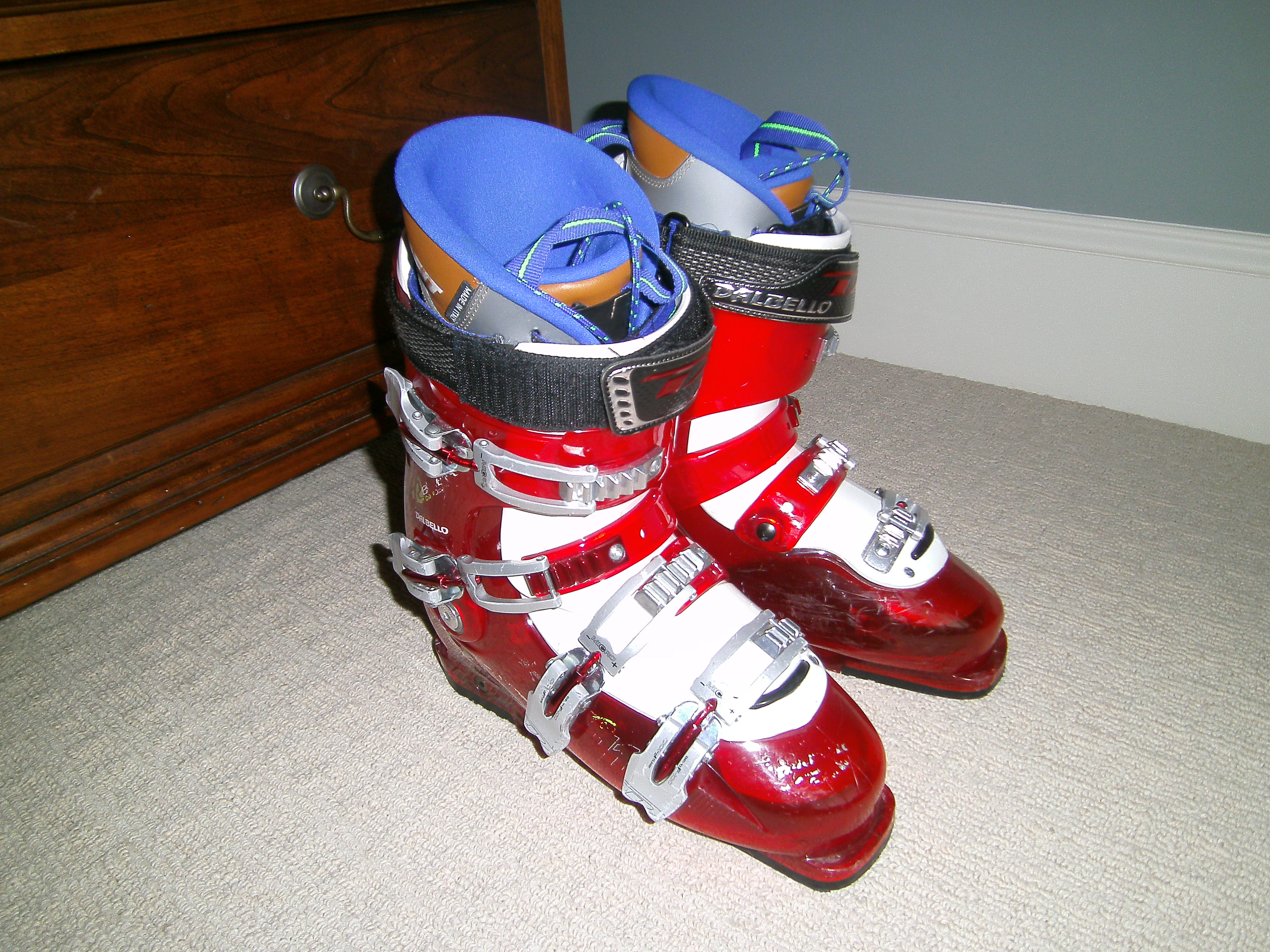
My trusty ski boots

Last Saturday I got a 6:00 a.m. flight out of Raleigh, made the connection in Houston (barely), arrived in Aspen at 10:15, checked into the hotel, rented skis, bought a lift pass, and got onto the lift at Aspen Mountain at 12:15. It was a clear, cold day, and so windy that many of the lifts were closed. I spent the afternoon working off of the A-1 lift. The snow was good. Toward the end of the afternoon, I was charging down a bump run with rhythm and confidence, right under the lift, and I had the thought: this is how mogul skiing is supposed to look and feel. After years of trying, I had finally got it! And just then, at the bottom of the run, caught an edge and crashed. As the Bible says, pride goeth before a fall.

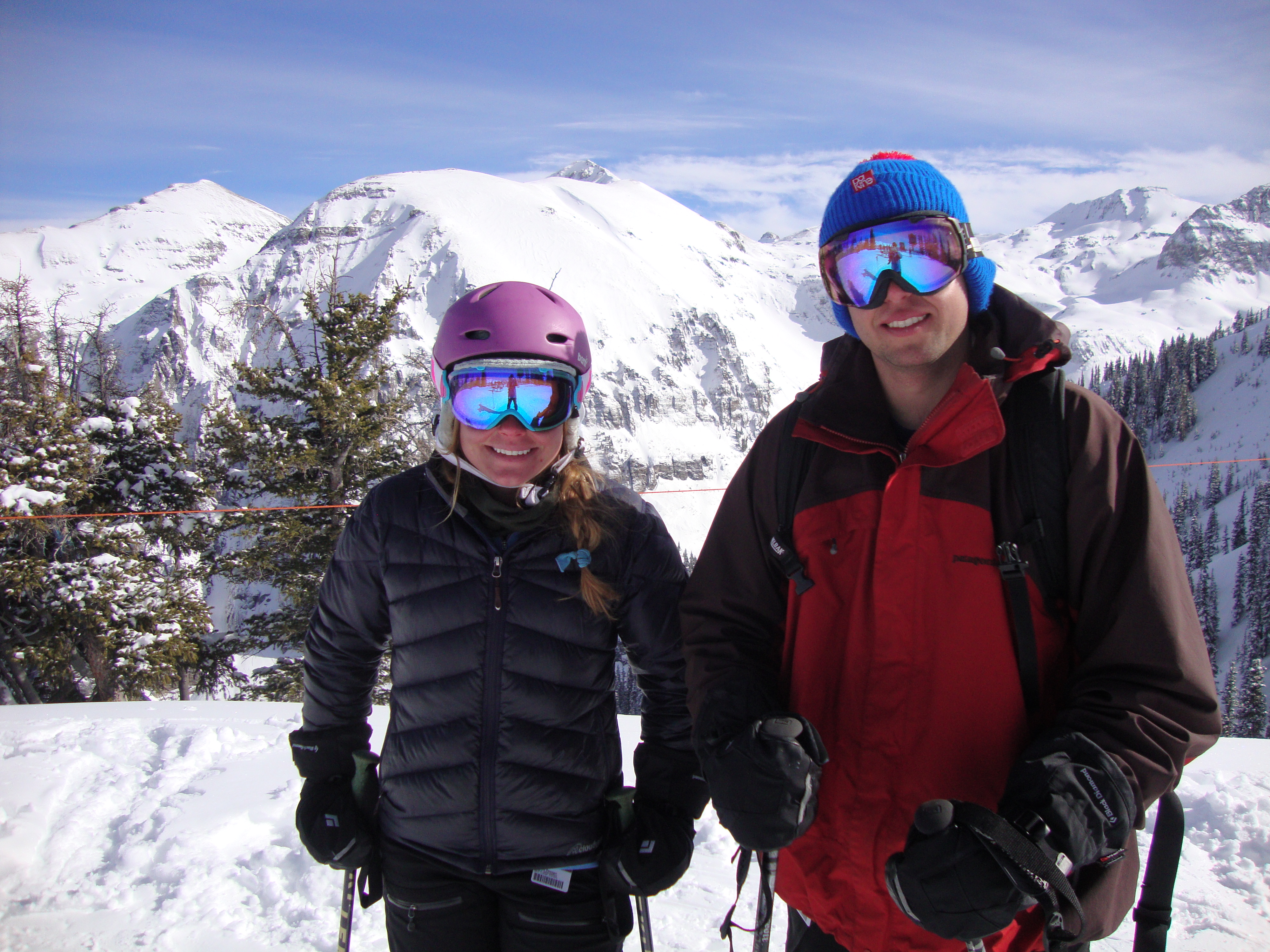
On Sunday I met up at Aspen Highlands with a couple of friends who live in Colorado and are strong skiers. They knew the mountain well, and took me down some of the most challenging terrain. I felt a new level of confidence, and only an occasional spasm of fear. After lunch, they began referring to taking “a little hike.” I finally figured out they were talking about the hike up the ridge to Highlands Bowl — a trek that took all my strength to finish a couple of years ago. This time was difficult, but not agonizing. When we reached the summit (12,392 feet), the sky was clear, and the view of the jagged surrounding peaks was awesome.

Monday morning Gabe Tiller joined our group at Ajax. His skiing was strong, and I worked hard to keep up. But I was not pathetic! Gabe called it a day mid-afternoon, because of a bad night’s sleep, but I hung in there until the lifts closed. Chuck and I took the gondola up with a fellow who was at least 80 (he’d started out as a ski instructor in 1950) and spent much of his life at Aspen. As Chuck noted later, if we’re still skiing in our 80s, this will have been the early part of our ski career.

We ate Italian that evening at L’Hostaria, where Jocelyn and Gabe sat to my right and left. They were entertaining, and the food was excellent. Tuesday we had ten inches of fresh, slightly heavy snow at Snowmass. My demo skis were DPS Wailer 99s, which were wide and had rocker tip and tail. They floated beautifully. I was flowing, and not wearing out my legs. It had taken a long time, but with several seasons of practice and new ski technology, I was skiing powder with true joy.

Wednesday it snowed some more, and we had first tracks on the virgin snow at Highlands. It was quiet and beautiful and exhilarating.

I’m sorry to say my Sony point-and-shoot expired, presumably as a result of one of my falls that left some snow in the circuits. It was a good little camera. My Aspen photos were casualties. The picture of my trusty Dalbello boots was taken with my SeaLife DC1400, an underwater camera. The boots are now four seasons old. They are hell to get on, and hell to get off, but communicate well with my edges and ski great.
How to keep lost weight from coming back

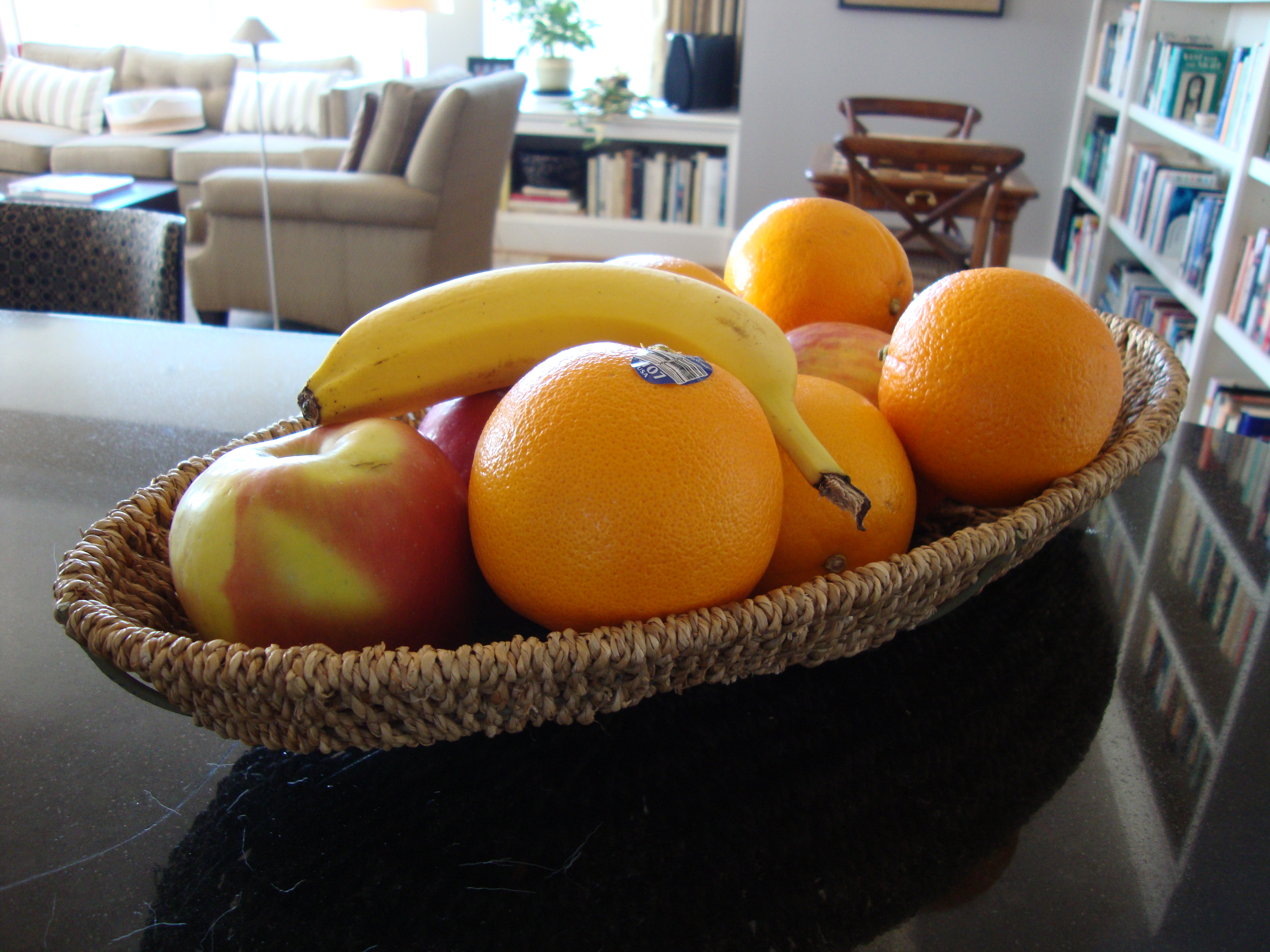
Healthy snacks on the counter at Casa Tiller

Returning from travels over the holiday break, I stepped on the scales to find myself three pounds heavier. It always happens! I swear, though there were temptations aplenty, I was reasonably moderate in my eating and drinking. How amazing that the body can accumulate mass so quickly! Also, a little scary.

In recent years, I’ve not been much concerned with losing weight, but I’ve been working hard not to add it. This basically means being careful about eating and diligent about exercising. That sounds — so — boring! Even if you do it, who wants to hear about it!

Thus, I was interested to read the NY Times magazine piece titled The Fat Trap: Do You Have to Be Superhuman to Lose Weight? by Tara Parker-Pope. According to the article, sustaining a healthy weight after losing a lot of pounds is not just unusual — it’s extraordinary. Those who do it are a “tiny percentage.”

That’s a bummer, both for the individuals who struggle with their weight and for our health as a society. Scientists are trying to figure out why people usually gain back weight after losing it and what can be done about it. Meanwhile, as a member of the fortunate “tiny percentage”, I may have something helpful to contribute. I’ve previously posted about losing 50 pounds, but here are some additional thoughts specifically related to how I’ve kept that weight off for several years.

It isn’t easy, but it also isn’t impossible — obviously! In fact, the methodology is basically the same as any worthwhile achievement that takes sustained effort. If you’ve learned to play the piano, speak a foreign language, play golf, or whatever, you’ve probably already employed most of the same methods you need for ongoing weight control. You need to find your motivation, keep it simple, be empirical, and have fun.

1. Find your motivation. Actors talk about needing to find a character’s motivation to bring the character to life. Try it: ask yourself what you really want, and why. For anything that’s going to take a long, sustained effort, you’ll need a motive that carries real meaning for you — something that’s more important than simply feeling good right now. It helps to articulate it clearly. My own guiding motivation has to do with the battle with father time. More concretely, I’m working today to be able to ski the deep snow in the big mountains of Colorado and Utah when I’m in my eighties. The snow on the mountains is beautiful. I sometimes think of this in the very early morning when it’s still dark and I’m making myself go to the gym.

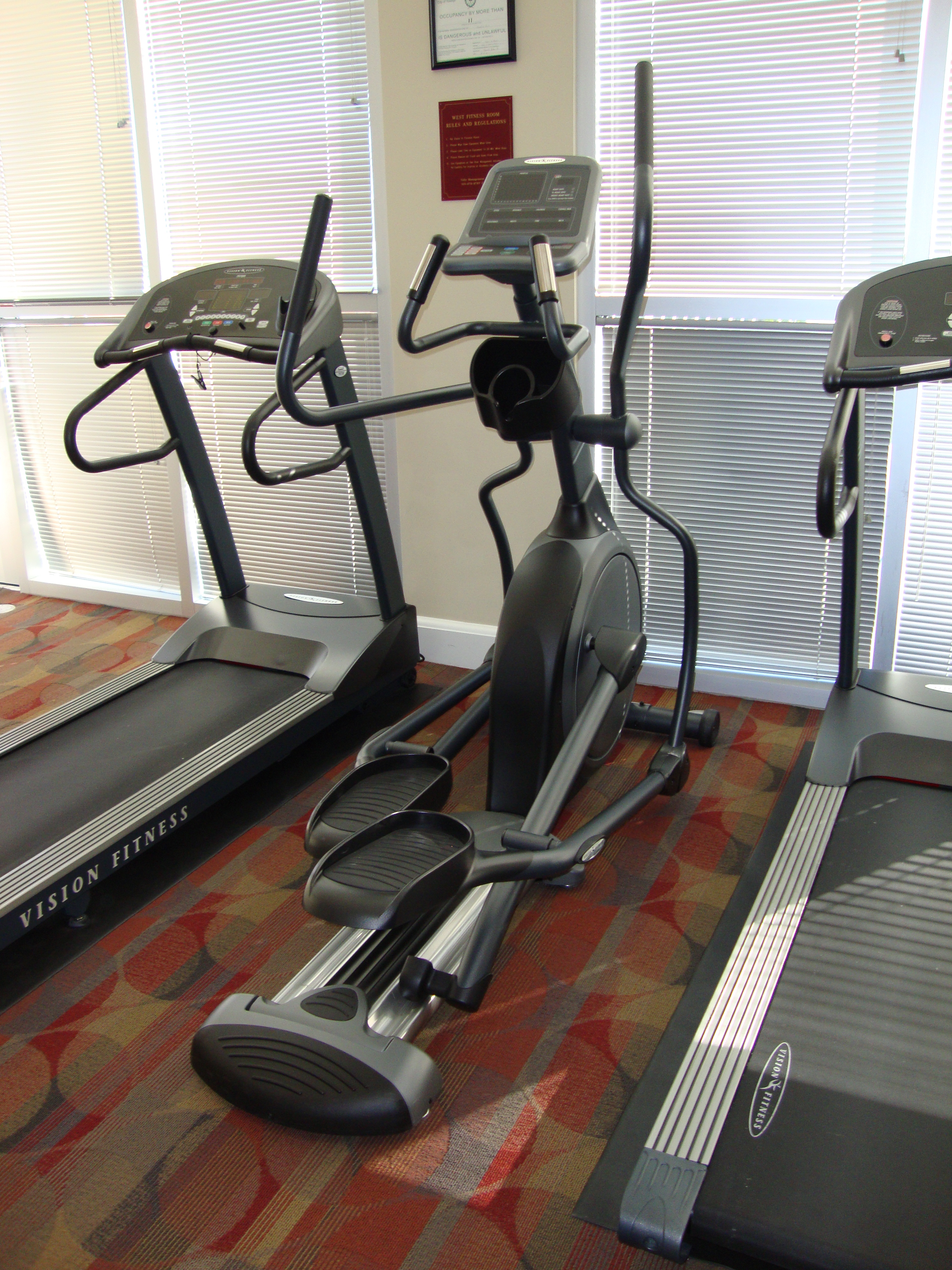
My friend in the gym on the roof -- the elliptical machine

2. Keep it simple. If a system is too complicated, it will not be sustainable. A good system is one you don’t have to think about very much once it’s in place. It involves turning good intentions into good habits. For myself, I have some simple rules that help in avoiding bad eating decisions, such as: no chips, no sodas, and no candy bars. For snacks, I put in place simple and nutritious substitutes, like apples, bananas, and baby carrots. If you are considering going vegetarian, I’ll note that one of its many benefits is helping to simplify the challenge of eating a healthy, less fattening diet. Anyhow, these types of snack choices have gradually become habitual for me, and as habits they don’t take much mental energy. Of course, there’s the countervailing powerful force of other lifelong personal habits, customs, traditions, and advertising tempting you to make bad eating choices. There will be slip ups — and hello, there’s three new pounds. Then you refocus, and move on.

3. Be empirical. Look at the available data, and consciously monitor how you feel. I bought a digital bathroom scale and use it every day. I watch food portions carefully, and notice whether I’m feeling too hungry or unenergetic. I have not adopted a single off-the-shelf theory of eating and exercise, because I think every body has somewhat different needs. What works for you may not work for me. You need to be experimental. If an approach isn’t working, chuck it, and try something else. If you test a healthy snack or an exercise approach that seems to work for you, try it again and see if it still works.

4. Be creative and playful. We’re talking about a long-term approach here, and if it is no fun, you will eventually give it up. Simple repetition is boring. Try out interesting new healthy foods and new exercises and sports. When traveling, I make it a little game in airports to find the least unhealthy meal, and to find something interesting to do in the little hotel gym. I vary activities over the course of a normal week, so that at the moment I alternate among the elliptical machine, the stationary bike, and swimming, and various types of resistance training. For more fun, I enjoy listening to music and reading while doing the elliptical. I’ve found that classes liven up the cycling experience. Every so often, I change the mix of activities and try something new.

So there you are, for whatever it’s worth. Having said all that, I’ll note again, sustaining weight loss isn’t easy. It takes conscious work every day and every meal. But it doesn’t have to be white-knuckle misery or boredom. The guidelines of motivation, simplicity, empiricism, and playfulness help. And developing skill with the guidelines could lead to other good things. They can be applied to any rewarding long-term objective, like learning a sport or a musical instrument.

Twenty-seven, headed down hill fast, and a note on healthy eating

Gabe Tiller at Telluride (February 9, 2011)

Gabe turned twenty-seven this week. I called to wish him a happy birthday, and felt more than usually happy myself. How wonderful to be twenty-seven! Particularly if you’re healthy, bright, athletic, good-looking, agreeable, upstanding, and employed, what could be more wonderful? Of course, that’s leaving aside all fears, insecurities, and uncertainties, of which there could be any number. But still, how marvelous to have traversed the perils of childhood and the agonies of adolescence, and stand no longer on the verge of adulthood, but actually there, strong, in your prime.

I told Gabe that it’s all down hill from here, but I was kidding. His first twenty-seven are, of course, my last twenty-seven, and I have to say that in many ways I feel healthier, more energetic, and happier than when he was born. How stressful it was to be a new parent. Also to be a grizzled veteran parent. And now, all that stress is gone! After all those years of parental anxiety and self-doubt, now he inspires me.

The picture above (which is Sally’s screen saver) reminds me of some of our skiing together the last couple of years. Even more vivid is his first POV ski video made at Telluride last March, which is exciting but I’m sure not nearly as hair-raising as the reality (such as that narrow chute). Seeing these images reminds me that I need to stay in really good shape so we can share more adventures next winter. As I mentioned to him this week, I’m thinking we should try heli-skiing (accessing backcountry powder by helicopter). He was definitely up for it.

The possibility of new adventures helps keep me focused with my continuing project to take good care of myself and eat healthy as much as reasonably possible. I’m trying to approach everyday eating in the spirit of doing a good, nourishing thing for my body — an act of kindness to my physical self. I’m steering clear of junk food, fast food, soda, and most processed food. It’s going pretty well.

Most days for breakfast I make a smoothie with dark green leafy plants (such as spinach, kale, collards, swiss chard, dandelion greens, etc.) and fruit (such as bananas and strawberries, or, this week, fresh pineapple and blueberries). In fact, I recently wore out our blender pitcher, which started leaking just outside the one-year warranty. Here’s a shout out to the good folks at Kitchen Aid, who did the right thing and agreed to replace it anyway! My smoothies are different every day and are mostly tasty (though sometimes less so — the mustard greens did not work for me) and always very green.

I’ve organized a system for addressing hunger pangs with healthy snacks such as unsalted cashews and almonds, apples, bananas, oranges, low-fat soy yogurt, and celery with peanut butter. For lunch, I typically have something like a microwave vegetarian Indian meal (Amy’s organic is good). And most nights Sally cooks a delicious vegetarian dinner, which just this week including Thai noodles with tofu (with whole wheat noodles) and Mom’s zucchini pie. She and I have gotten in the habit of having smaller portions. So my diet is mostly organic plant food of many types. I enjoy it very much.

Technology, new art forms, food, and ballet

I’m fortunate to have a ring side seat as information technology is transforming the world, but it doesn’t always look pretty. It makes me wonder, at times, whether, as machines get smarter, humans on average are becoming more and more like the race depicted in the wonderful animated picture Wall-E: fatter, lazier, and dumber. But I haven’t given up all hope, and there are some signs pointing the other direction.

A case in point: this week when my son Gabe (pictured here at Alta last week) sent along his first self-produced short video, which is here. He shot it with a tiny body cam over the course of 3 days skiing in Telluride, CO. The finished product reminded me strongly of some of the beautiful skiing we did together. It’s hard to describe the complex sensations and emotions of skiing far from away from the crowd when its steep and deep, but Gabe managed to convey some of it. The flamenco score heightens the sense of edginess — wild joy with stabs of fear.

Good skiing sometimes seems like art, almost like dance, but the work is seldom shared with other humans by the skier-creator. Until recently, filming the experience was a costly and difficult undertaking. In the past couple of years, though, video cameras have gotten much cheaper as well as tinier, and easier to use, and the software for recording and editing has become highly accessible. The tools for communicating the work instantly and almost cost-free over the internet now exist. The learning curve for use of all this technology is short. And so a new class of artist is being born — the skier-auteur. Technology advances are likewise enabling new types of musical expression, and undoubtedly many other artistic expressions. Perhaps the day will come when everyone will be an artist.

Is food art? I argued about this years ago with my friend Tom, a gourmand who took a strong position that great chefs were artists. Over the years, I’ve moved closer to his position. A great restaurant is a multi-media experience, with sets, lighting, sound, and actors, and also smells and tastes.

Last night Sally and I tried a new Thai restaurant off of Moore Square — Fai Thai. It has replaced the Duck & Dumpling, an Asian fusion spot that was one of our favorites, and that we were sad to see close. The emphasis is less on standard Thai fare than on local ingredients and variety. The decor changes involved colorful parasols and lanterns, which were engaging. The menu had fewer vegetarian options than we hoped, but enough to get started. We found the three dishes we tried each quite different and delicious. The spiciness hit the Goldilocks point — not too much, not too little. Our waiter was friendly and attentive, and the manager took some time to talk to us about the aspirations of the place. He appeared to take on board our suggestions for more attention to vegetarians. Thai food fans should try it.

After dinner, we saw the Carolina Ballet perform Carmen. This is the third time we’ve seen the company do Weiss’s ballet, which is one of our favorites in the repertory. Bizet’s music is unforgettable, and the story is sort of perfect for ballet — love, jealousy, death. For all my admiration of Peggy Severin-Hansen’s great talent, I had my doubts about her as Carmen, who is a sensual, cynical heartbreaker. Peggy’s long suit is purity and innocence — the perfect Firebird. Her Carmen was sweeter than normal, not completely cynical, but this turned out to give the tragedy a new bit of bite — more tragic in a way. Richard Krusch as the Toreador was highly serious, and convincing. He’s a fine dancer who keeps getting better. As always, the story ended with a violent shock, but the production was wonderful.

Ups and downs in Telluride

My life is full of technology and intense mental activity, and I’m glad of it, but from time to time I crave an interlude of pure natural beauty and physical activity. And so for a long President’s Day weekend, we skied Telluride, Colorado, where the San Juan mountains look something like the Alps — jagged and imposing, yet peaceful in a way.

Set a human body sliding down the snowy slopes, and interesting things happen. Exhilaration at the speed, microbursts of fear, quick happy recoveries, or minor disasters. I had my most dramatic fall on Bushwacker, reportedly the steepest groomed run in America, where I’d got off the groomed terrain and into the bumps. Tips crossed, I launched over the top of my skis, which came off the boots as designed, but rather than stopping I then found myself sliding fast downhill headfirst and accelerating. I eventually managed to flip over, spin around, and dig my boot heels into the snow to brake. By this time, one ski was 200 yards below me and one pole was 50 yards above (a classic yard sale). I am always happy to rely on the kindness of strangers, and gratefully accepted assistance of one who picked up my pole and another who helped me resituate on one ski. Then I lowered myself inelegantly down the slope to retrieve the other.

A couple of my colleagues at Red Hat have written about failing fast and often as a means to success, which in skiing translates as falling fast and often. It entails some moments of embarrassment. But by golly, I’ve really improved this year. I took on steep, deep powder runs, glades, and double black moguls, as well as carving on high-speed cruisers, all with great joy (and occasional terror).

We had fresh snow falling our first day and night, and a classic powder day the second day. I insisted that our group (Sally, Charles, Chuck, and later David and Kimberlie) move out early to try for first tracks. We found lots of beautiful light snow and varied terrain. Those first two days I stayed well within my comfort zone and had great fun. Each night we ate in good restaurants, (Excelsior, Rustico, Honga’s, and Siam), and one night had delicious pizza served by my sweet Jocelyn at the Brown Dog. The group included old familiar friends and lively new ones, and there was good conversation and laughter.

On day three the skies had cleared, and Gabe and Lindsey, who live in Telluride, had days off and came out to play. They knew the mountains well, and managed to locate pockets of non-skied-out powder. For the first time I felt reasonably comfortable on steep gladed runs. I was inspired by their beautiful skiing, and proud that I could more or less keep up with them. Riding up the long chair lifts, we caught up on things in general, considered the state of the world, and got to be better friends.

New Year’s skiing in Telluride

To ring out the old year, I flew to Telluride CO to see Gabe and Jocelyn and do some skiing. Sally could not be persuaded to go; she said it was too much travel for her after our Bonaire trip. It was in fact a tough journey, with multiple cancelled or delayed flights, and ended up taking 22 hours. I got my wish for heavy snow (so much so that I worried whether we’d make a landing in Colorado), and the mountains were well covered with a 49-inch base when I arrived. I slept for 3 hours, and then got up in hopes of getting first tracks with Gabe and his girlfriend Lindsey.

It was still snowing lightly that morning as I went out to find some rental skis. I found my way to Bob at the Boot Doctor, who seemed to know everything about skis and proposed several options. I wanted to try a hybrid rocker all mountain ski, and Bob set me up with K2 Aftershocks. I ended up liking them a lot. They turned easily and handled well in the heavy stuff.

Gabe and Lindsey made the considerable sacrifice of missing a couple of early runs while I completed my preparations, and were of good cheer when we met at the gondola in Mountain Village. I had not met Lindsey before, and had a little trouble spotting Gabe, because he and most everyone else had covered up their faces against the brutal cold. The reported high for the day was 9, but I’d wager it never reached 0 on the mountain. Lindsey, who’d experienced plenty of cold days skiing in her native New Hampshire, got the shivers after the first couple of runs. We took a hot chocolate break at Giuseppe’s, and she decided to head home.

Plenty of others made the same reasonable decision — which left the mountain largely unpopulated for us diehards. I reminded Gabe that it was my first day going from 300 feet above sea level to 12,000 or so, and my first day of the season on skis. He acknowledged these challenges and proceeded to take me down some of the toughest double-black terrain on the mountain. I suspect he wanted to show off his new skiing prowess, and I was impressed with his accomplishments, as a proud parent should be. I held my own for a few runs, but leg fatigue eventually caught up with me. We skied the last part of the day mostly on groomers.

That evening to celebrate New Year’s, I took Gabe, Lindsey, and Jocelyn to Excelsior’s, an Italian restaurant. It turned out that Lindsey had worked there as a server and knew everyone. We got the royal treatment.

The next morning I felt like I’d gone 16 rounds with the champ — sore from top to bottom. I took a megadose of Advil and headed to my ski lesson with some doubts as to my ability to make it through. Once again, the cold was harsh. But my soreness somehow abated once I got to the top of the mountain. My teacher, Jim Schwartz, was an affable guy of roughly my vintage with a lot of teaching experience. He had some interesting ideas that were new to me, such as focusing on the little toe. We spent the last part of the lesson working on mogul technique. I skied by myself in the afternoon with new confidence and joy.

During one lift ride, Jim opined that people skied for 3 main reasons. Some are excitement junkies that are only happy if they can scare themselves on steep rugged terrain. Others love the alpine beauty. Still others love the kinetic fun of dodging and swooping at speed in a kind of dance. I thought he was generally right. However, I’d add that it’s possible to cross categories. For me, the pleasure is some of all three — excitement, beauty, and grace.

Lost and found

It is such a bummer to find after you’ve checked out of a hotel that you’ve left something significant behind. Earlier this week when I was in New York I left my copy of Super Sad True Love Story by Gary Shteyngart at the hotel. I liked his book Absurdistan, and I liked this one even better. It’s funny as well as sad. A fortyish hipster falls absurdly in love with a twentyish college grad in a not-far-in-the-future-world where corporations have pretty much taken over governmental functions, people are tightly tethered to their electronic devices, and reading literature is a sign of decrepitude.

I had about 60 pages of Shteyngart’s book left, which I’d planned to finish on the flight home. It doesn’t make sense to buy a new copy. I can live without the ending — I think. Still, after being deep in Shteyngart’s dystopia, I’ve got this sensation of interruptus.

I heard from Gabe that a lot of snow is falling in Telluride, which is vital news, since I’ll be skiing there in a couple of weeks. It will be my first chance to meet his girlfriend, who has gotten rave reviews. They recently decided to move in together, so things are moving along. It could be serious.

Relationships are always changing, though they do so at widely varying speeds. How they work is mostly invisible, which is one of the reasons we still need good fiction: it sometimes brings that hidden interpersonal world to light. I feel so lucky to have a really good marriage, but for a variety of reasons I am not inclined to delve into the details. I think the need for privacy is often exaggerated, but there are some things that lose their essential nature if they aren’t kept safely out of sight. And a strong, loving relationship is the most valuable thing in the world.

There was a really interesting essay last Sunday in the NY Times style section about what happens when one spouse cheats on another. http://tiny.cc/bquj8 The essay by Wendy Plump posits that misery will be created in a highly predictable way. The cheating spouse will be pulled back and forth between two worlds, of responsibility and pleasure, in a way that causes him or her extreme stress and discontentment in both worlds. The other spouse will eventually find out and feel traumatized. The cheating spouse will make true-but-hackneyed excuses (about needs not being met, losing the spark, and the like). The net is a destruction of trust and quite possibly the end of a relationship. The predictability of this course of events is hard to prove, but the essay gives personal examples that resonate.

The importance of honesty and commitment in relationships is something everybody knows, but the same may be said of the importance of eating healthy food. We all know a good deal about what’s healthy and not, but just knowing is not enough to affect our behavior. We need the ideas to become more concrete and vivid. I think I’d arrived at most of the ideas in Wendy Plump’s essay, but I’m glad she organized it in an interesting, touching way and made me keep thinking about them.

Starting the weekend with some exercise and music

Late Friday afternoon I returned some phone calls, cleaned out my e-mail queue, checked my to-do list one last time, jammed some weekend work in my book bag, and did the short drive home. Sally had left for a tennis tournament, but had first fed the animals, so they were sleepy. I played the piano for a few minutes and moved to a different mind zone — a Chopin nocturne (D flat major), a Debussy prelude (La cathedrale engloutie), Liszt’s Sonneto del Petrarca 47. I also played J. Strauss’s Blue Danube waltzes in honor of the poor Danube, currently under assault by toxic sludge. I filled a small plate with some leftover pepper casserole and brown rice, warmed it in the microwave, poured a glass of pinot gris, and had a quiet, delicious dinner.

Then I walked over to hear the N.C. Symphony do the first fall concert of our series. It was a lovely fall evening, mild and clear, and I savored the walk. This is one of the pleasant things about living in downtown Raleigh. There were two new buildings going up along the way, and people on Fayetteville Street eating dinner at sidewalk tables or walking about.

I had an unusually strong sense of physical well being. It was a good week for exercising — no travel or serious time crunches at work — so I’d gotten up at 5:30 a.m. every day to either swim a freestyle mile (2x), do a yoga class, or take a spinning class (2x). Spinning is still new to me, and I’m still enthusiastic — it’s an amazing aerobic workout. The basic idea of stationary bike plus music, rhythmic movement, group activity, and a cheerleading coach previously struck me as not at all my style, but it is remarkably effective in (a) raising my heartrate, (b) making me sweat, and (c) leaving me feeling pleasantly endorphinized.

With fall in the air, I’m looking forward to winter, and skiing in Colorado, and I’m using ski thoughts for extra workout motivation. Last year the hour-long climb in the snow at over 12,000 feet up the narrow ridge to Highlands Bowl at Aspen Highlands taught my body a brutal lesson it won’t soon forget. I was, in truth, too whipped to attack the long double black diamond run from the top, but there was no alternative way down. I survived, but next year I hope to do more than merely survive such situations — to exult! That may be too much to hope for. It will always be difficult to go from a few hundred feet above sea level one day to vigorous activity at several thousand feet the next, but I’m looking to be in better shape next season and bettering my odds.

At a leisurely pace, it took 23 minutes to walk to the concert hall. (Afterwards I picked up the pace and got home in under 20.) I was interested to hear Rachmaninoff’s first piano concerto. The composer was still a student when he made it, but it has the seeds of the more familiar and almost too gorgeous second concerto. It is certainly a virtuoso showpiece, and Jean-Philippe Collard played it with power and authority. I was mainly interested in the second half of the concert, a performance of Sibelius’s Fifth Symphony, a piece I was not familiar with. It was strange and beautiful, with novel and varied textures, and diverging moods. It approached the richness of Mahler. There were good loud places, where the brass expressed themselves fully, and a fine solo for the bassoon. I plan to get a recording and listen to it some more.

Ski adventures at Aspen

Why would a sensible person take up skiing?  The negatives are many.  It’s expensive.  The logistics are complicated.  It’s difficult to do well.  It’s physically arduous.  There is an element of danger and an element of fear.

But the transcendent beauty and wealth of sensations overwhelms all logic.  I had three ski days based in Aspen last week with Charles, Chuck, David, Emily, Steve, and Beau, in a small condo situated a block from the Ajax gondola.  We did Ajax on day one, and Gabe drove up from Telluride and joined us for days two and three.

As we started our day at Snowmass, Gabe declared that his primary interest was finding challenging terrain.  I quickly learned that he was not kidding.  He led David and me for most of the day in several long runs with many bumps, steeps, and glades.  It snowed heavily throughout the day with an eventual accumulation of about eight new inches.  With lots of powder, I quickly logged at least double my previous lifetime experience of tree skiing.

There were, of course, mishaps.  During aggressive mogul skiing I had four or five tumbles.  (I blame my bindings for releasing too soon on a couple.)  Falling in deep powder usually does not hurt, and I had only one minor injury (a sprained thumb).  But getting back into the skis in the steep and deep stuff is hard.  Once I had to ascend a good ways to retrieve a ski.  I stand by my theory that more falls correlate positively with improvement, and that if I’m not falling at all, I’m probably not trying hard enough.  At any rate, it wasn’t always pretty, but I skied with heart and integrity.

After lunch with the whole group at  Ulrhoff,  Gabe persuaded me to come with him to the famed Cirque headwall.  We started up the T-bar in heavy snow conditions, and it got worse and worse.  At the top, we found a total whiteout.  I couldn’t see enough of the snow to tell up from down, and at first had the odd sensation of skiing upwards.  The terrain was rated double black diamond EX, but it was impossible to see either threats or safety.  The only distinguishable features were orange marker disks, and we decided to follow those.  We turned, then turned, then turned.  A few hundred yards down, visibility improved, and we made our way into and out of some glades.

On my last day we went to Aspen Highlands, where we looked for and found fresh powder.   We had a few fine bump runs before we met the group for lunch at Merry Go Round.  Gabe then declared he wanted to go to Highlands Bowl, with the summit at 12,500 feet.  This involved riding to the top of the highest chair, taking a snow cat ride, and then hiking another several hundred feet up.  David and I agreed to have a go.  I bought a strap ($8) to put my skis on my back, and we headed up.

The hike was along a narrow ridge that at places was barely wide enough for one person.   It ascended sharply enough that most of the way felt like walking up stairs.  And it turned out to be incredibly arduous for those not well-acclimated to the altitude.  It was difficult to breathe, and eventually became difficult to place one foot in front of the other.  At one point, I proposed to David that we ski down without completing the route.  He told me he’d heard from another pilgrim that we were most of the way there.  It turned out that his informant had said we were not halfway there, which was wrong; we were in fact two-thirds finished.   A lucky call.  After almost an hour, David and I reached the summit, where Gabe had been waiting for fifteen minutes.  I was drenched in sweat and had a serious cramp in my left leg.  Such happiness!

We won the lottery, ate, and were transformed by the ballet

I was terribly embarrassed to forget about lunch on Wednesday with my good friend Jay B.  After dealing with a series of absorbing if not gut wrenching legal puzzles through that morning, I paused around 12:15 to check the headlines in the NYT.  At that moment Jay called to ask where I was. I remembered instantly that I was supposed to be with him at noon at the Remedy Diner.  I also remembered I had put the meeting on my electronic calendar when we scheduled it, but somehow it was not on the calendar now.  After fifteen minutes of rushing and apologizing profusely, I was in my seat at the Remedy and catching up with Jay.

It’s always fun to hear about Jay’s doings, but he had a particularly fascinating story this time:  he had arrived in Haiti on January 12 five hours before it was hit by the mother of all earthquakes.  He and daughter Kate were there to do some charitable work in a village some distance from Port au Prince, and got close up view of the incredible devastation heaped on a country already unimaginably poor and broken.  The contrast between the Haitian experience and ours is indescribable.  As I said to Jay, everyone in this country has won a huge lottery prize just by being born here.

But we can’t either celebrate or feel guilty all the time, and we get on with the challenges of our daily lives.  My work Friday was a series of intense meetings with lawyers from all over the country interested in doing business with Red Hat, punctuated by numerous phone calls, emails, and pop-in office questions.  It was almost nonstop activity, but I did manage to take a call from sweet Jocelyn.  She was thrilled with her first powder skiing experience at Telluride, and feeling excited about her increasing skill as a skier.  She also told me about hanging out in a Telluride bar with Ed Helms, a successful actor in The Office.  As I told her, I’d knew from the Oberlin magazine he went to Oberlin, and she confirmed that fact.  Indeed, she told him I went there, too!  It sounded like he was very friendly and quite taken with her but did not attempt anything ungentlemanly.

That night Sally and I ate at Bu.ku, a new restaurant that replaced Fins.  We had liked the food at Fins, but found the place a bit formal and cold.  Bu.ku is warm and interesting, based on the theme of street food from around the world.  The service was very good (thanks, Turner!), and so was the masaman curry.  We’ll go back.

We saw the Carolina Ballet do a Weiss’s Cinderella and several short Balanchine works.  I didn’t love everything equally, but forget the nits.  I still found the experience transporting.  After many hours of computer interactions, talking, and thinking about business and legal problems, the dancers and the dance opened doors to another world — a human world.  They use a vocabulary of movement refined for a couple of centuries to get at a particular kind of truth — emotional truth.  There’s a remarkable purity about it.  The form involves beautiful young dancers, but somehow it isn’t particularly sexy.  Cinderella, in particular, movingly expressed the old chivalric vision of romantic love, and it seemed completely real.  For me, the ultimate test is teary eyes and goosebumps, and it passed.