The Wild Swans at Pungo
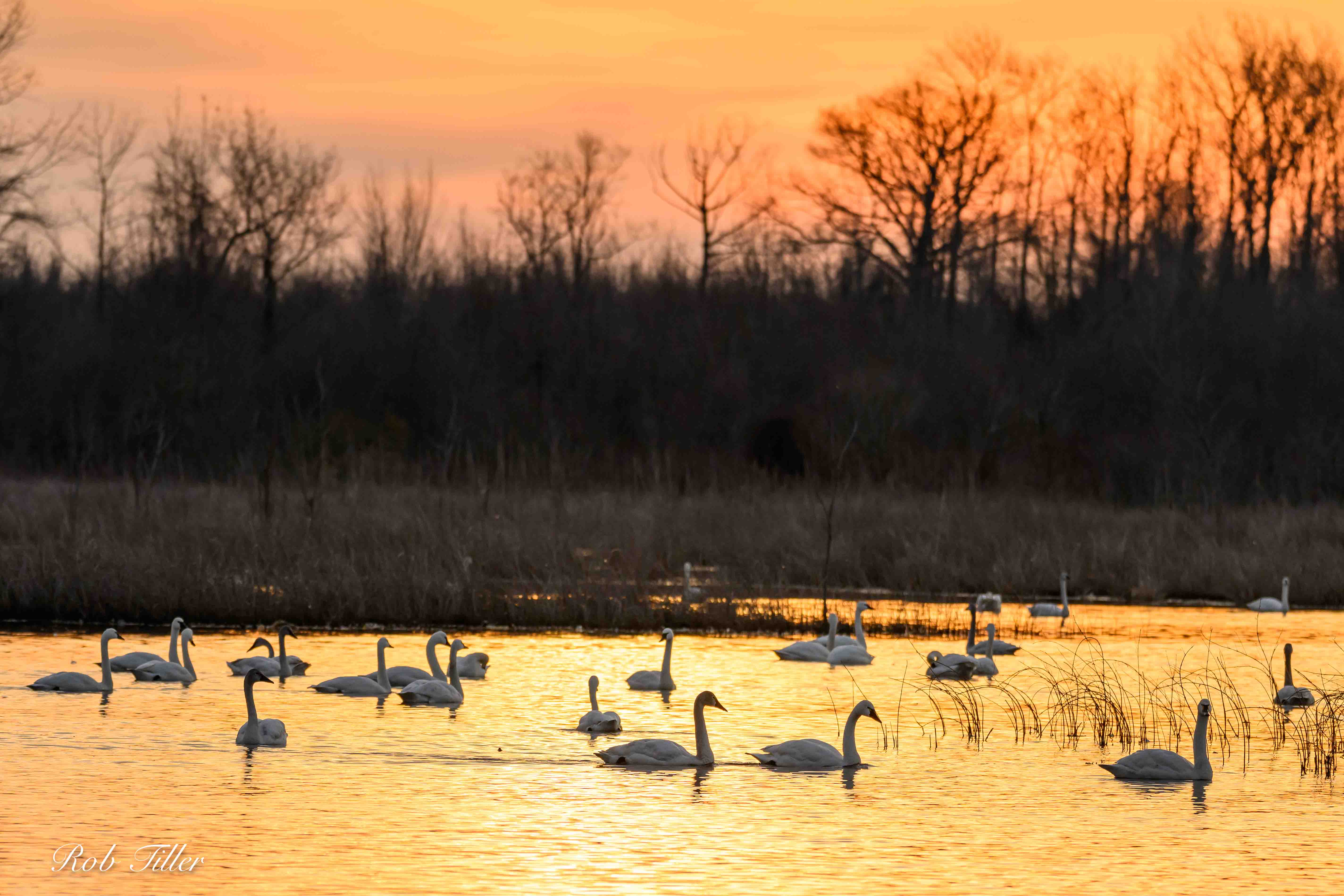
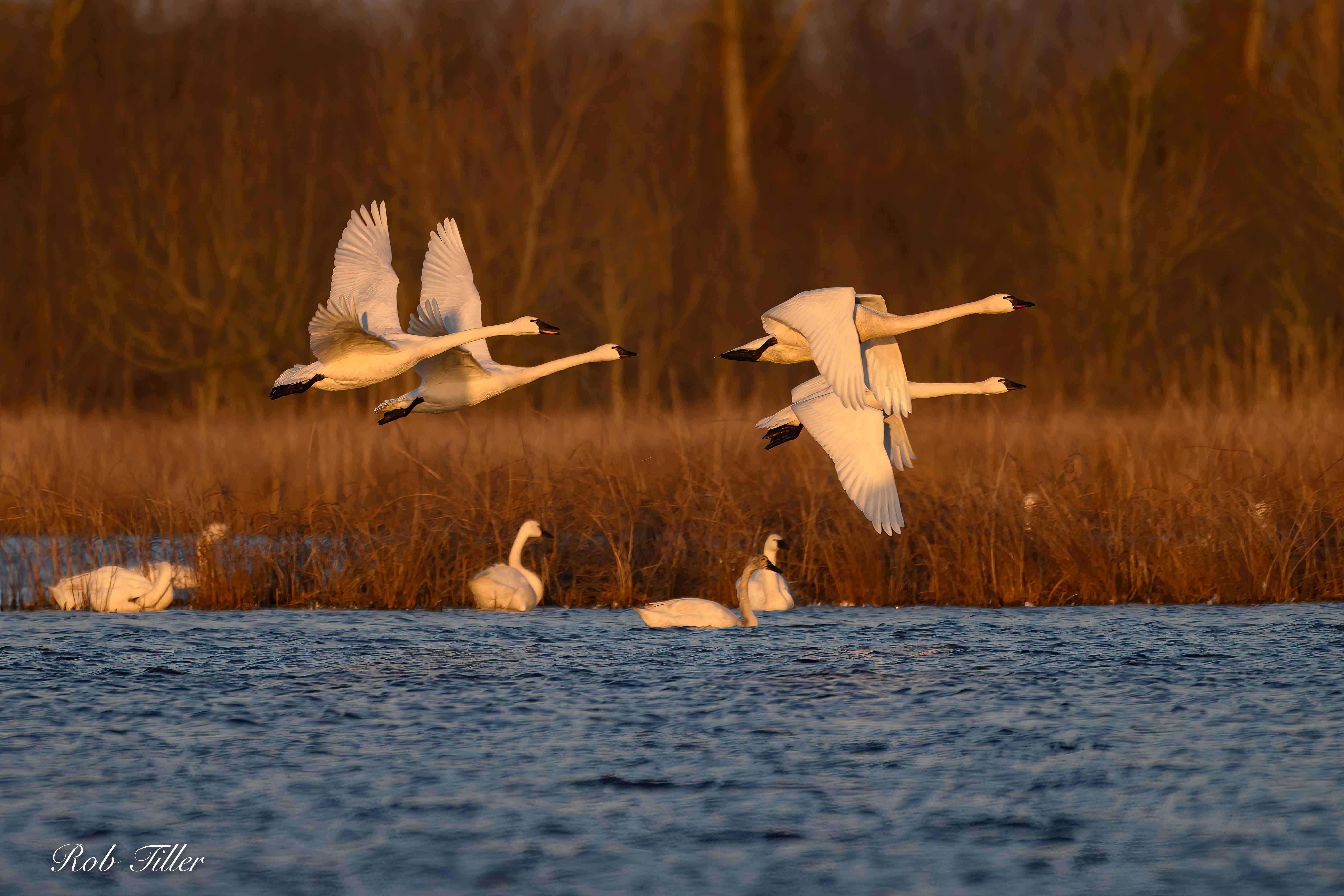
Last week I drove to the Pungo Lake area of the Pocosin Lakes National Wildlife Refuge to look for tundra swans and other birds. In the last couple of years I didn’t see too many swans there, but this time, there were a lot!
Tundra swans are big birds (think 6 foot wingspans, 20 pounds) that migrate thousands of miles every year between their breeding grounds in the Arctic and points south, of which eastern North Carolina is a major one. They are sociable creatures that can form flocks of hundreds or thousands. They’re very vocal, calling each other with loud honks, and large groups can sound like a stadium full of football fans.
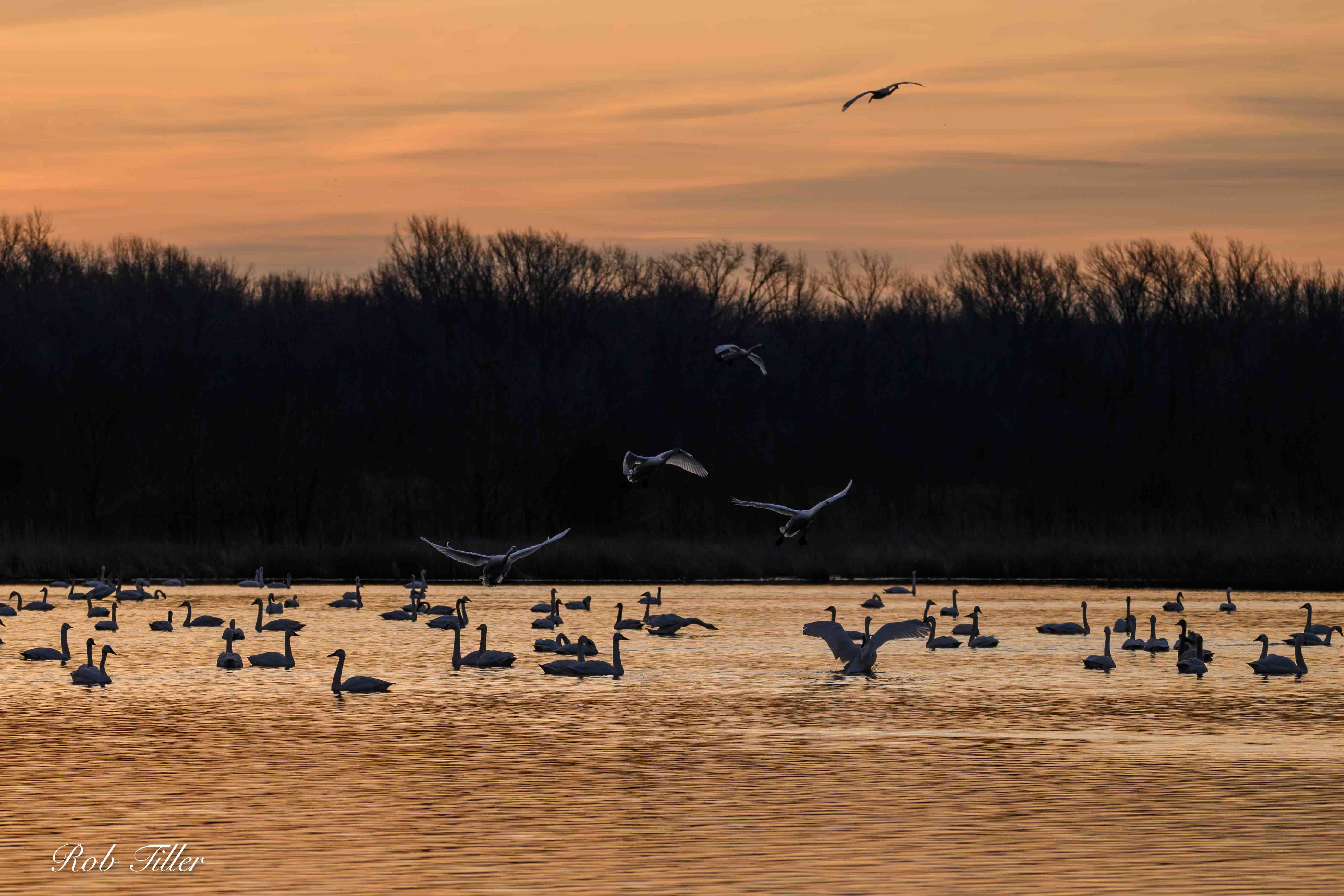
The basic family unit includes a cob (male) and a pen (female) that mate for life. Cygnets (the kids) may stay with their parents for up to a year. The cygnets go through a brownish phase before getting their white adult plumage.
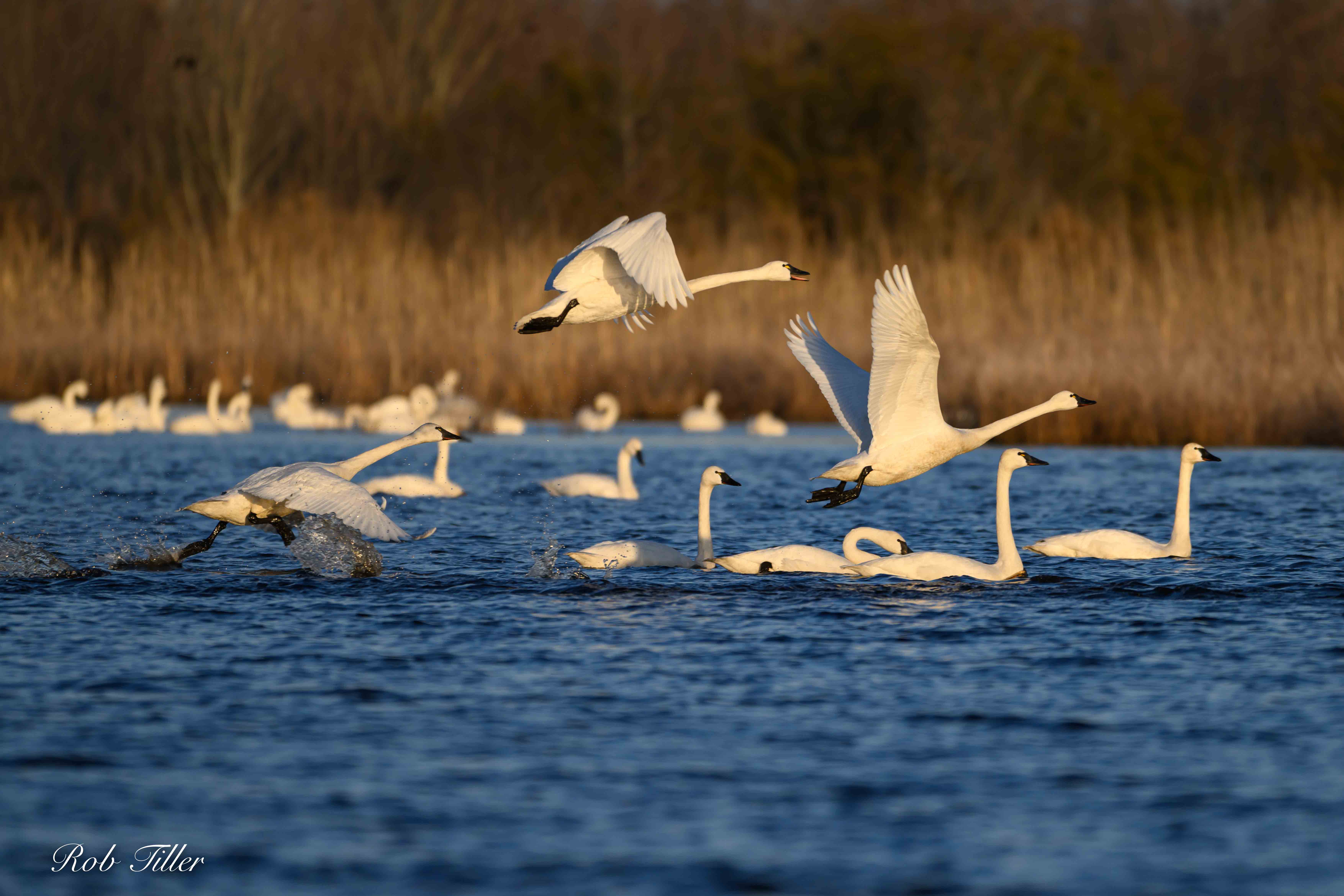
The swans are strong, graceful flyers, and calm, stately swimmers. But they have to work hard to get airborne! From a seat on the water, they flap vigorously while running along the surface.
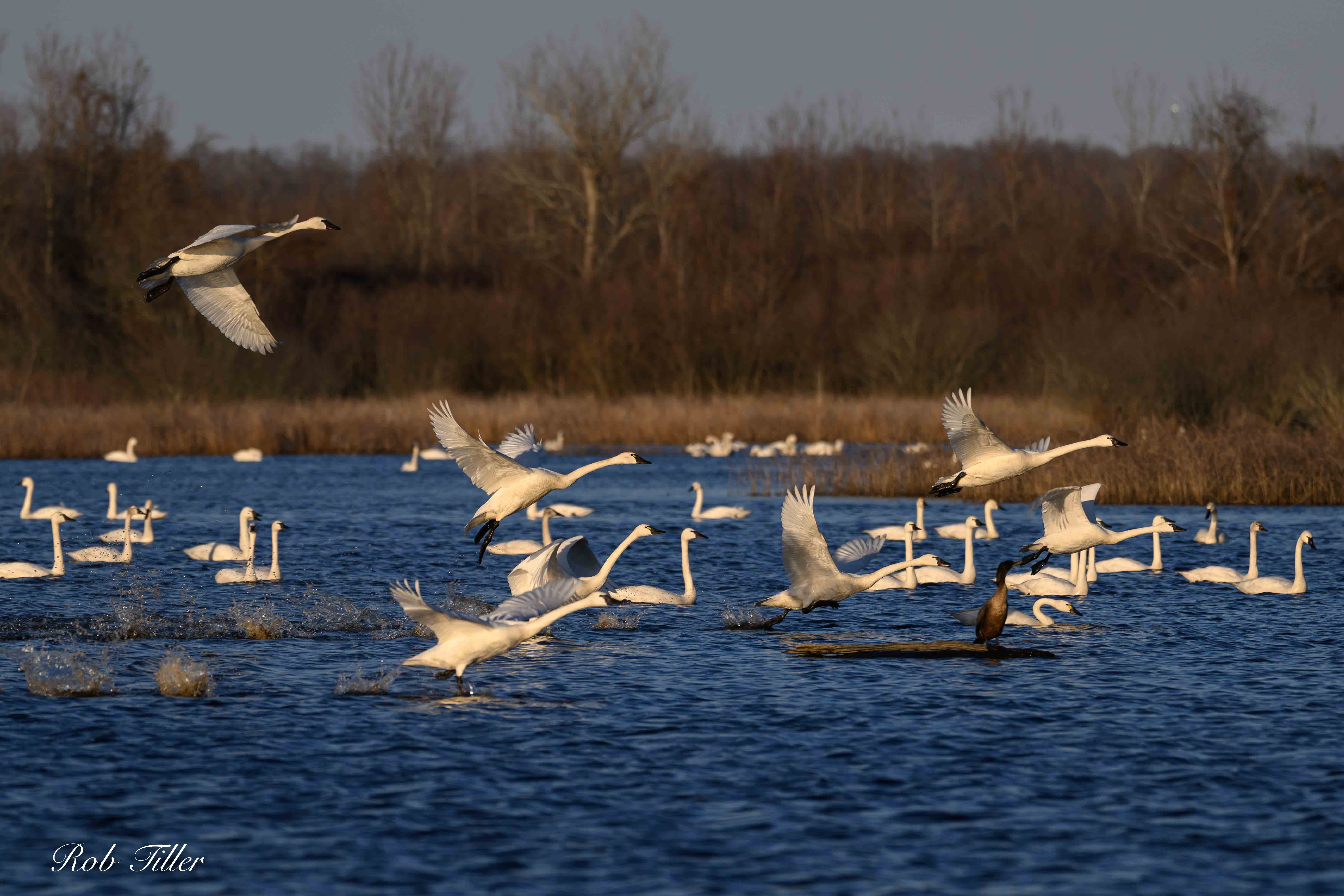
One afternoon I watched and listened as dozens of them did this maneuver. There were only a couple of other folks on the shore of the pond, who like me were trying to take pictures. It was a little chilly, but sunny, and peaceful, at least for those of us who didn’t need to take off.
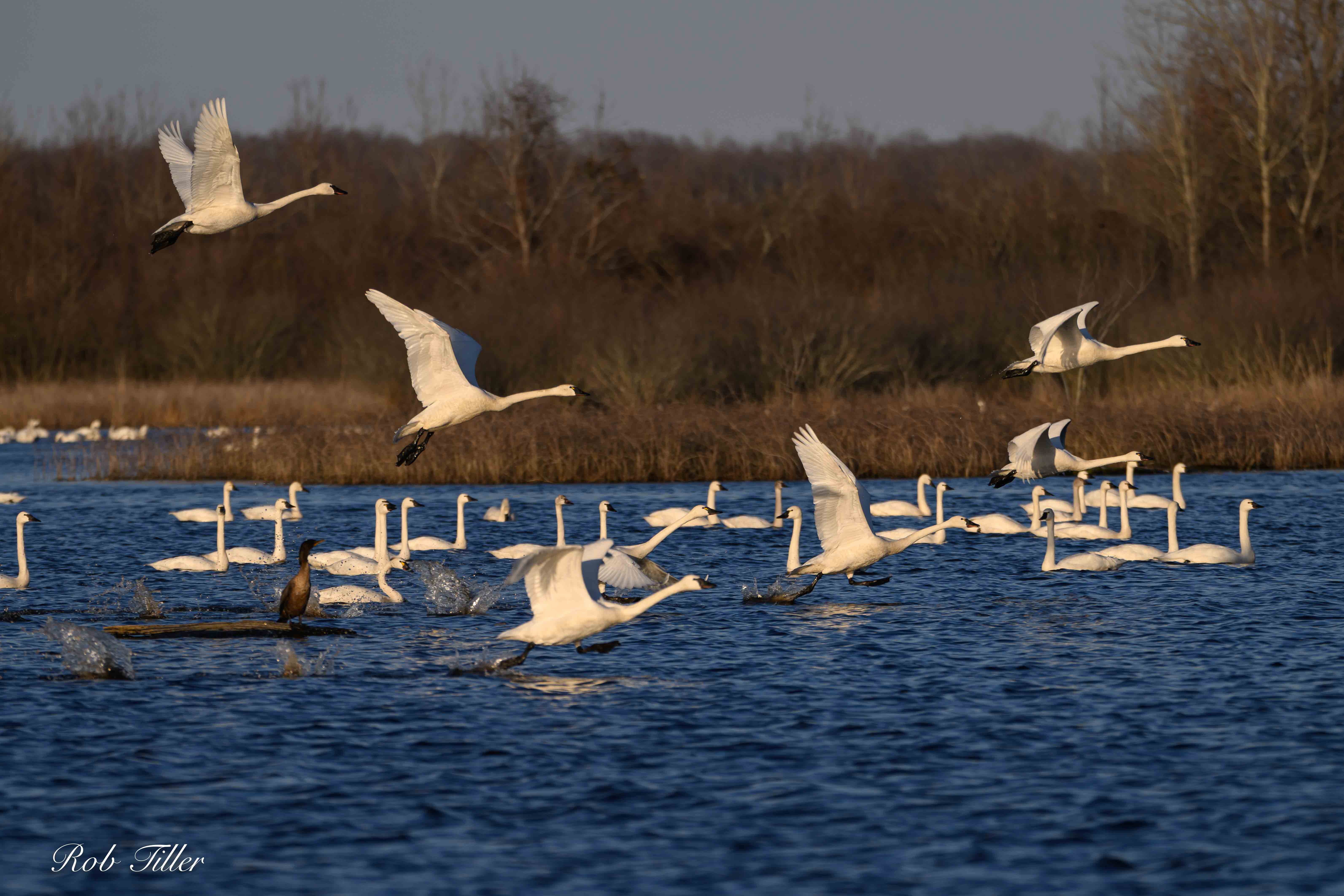
“Their clamorous wings” as they climbed put me in mind of Yeats’s wonderful poem The Wild Swans at Coole. It’s a meditation on aging and mortality, together with the consolation of nature’s lasting vigor. Yeats lauds the beauty of the birds, and their independence from us, with their own passions and conquests.

Speaking of mortality and the lessons animals teach us, I was saddened to hear today of the death at 73 of Steven Wise, a pioneering crusader for animal rights. The NY Times obit is here.
Wise brought lawsuits on behalf of chimpanzees and other animals arguing that they were legal persons entitled to certain rights. His legal work, writing, and teaching brought increasing attention to the question of how we should treat non-human animals. Although his approach seemed to me problematic, since it was centered on arguments about certain animals’ human-like abilities, I greatly admired his intelligence, courage, and passion.

I finished a new book directed at the question of whether humans have free will: Free Agents: How Evolution Gave Us Free Will, by Kevin J. Mitchell. Mitchell is a professor of genetics and neuroscience at Trinity College Dublin. His book addresses deep questions around the meaning of life with a lot of information about the workings of the brain.
Mitchell has an answer for determinists like Robert Sapolsky, who hold that all our behavior is predetermined by physics, and that our impression of mental independence is an illusion. Starting with the simplest forms of microbial life, Mitchell applies Darwin’s theory of evolution and argues that agency and purpose are fundamental characteristics of life.
I didn’t get all Mitchell’s explanations of brain cell biology, but I think I got the basic ideas. Animals evolve to survive, which requires that they learn to respond to an ever-changing environment. The most complicated brains we know of (our own) not only make top down decisions related to survival, but are capable of changing our own more basic processes and thinking about our own thoughts.
Mitchell notes that there are various ways of thinking about freedom, and every being is constrained by its environment, biology, inherited traits, memories, etc. But within those constraints, Mitchell contends we make meaningful choices. This makes sense.

In addition to providing a persuasive framework for thinking about free will, Mitchell’s account emphasizes the interconnectedness of the world. He suggests that we are not independent objects, but a large set of processes that are acted upon, and act upon, everything else. The book is an encouraging integration of science and spirit.

 The Casual Blog