Encountering polar bears
by Rob Tiller

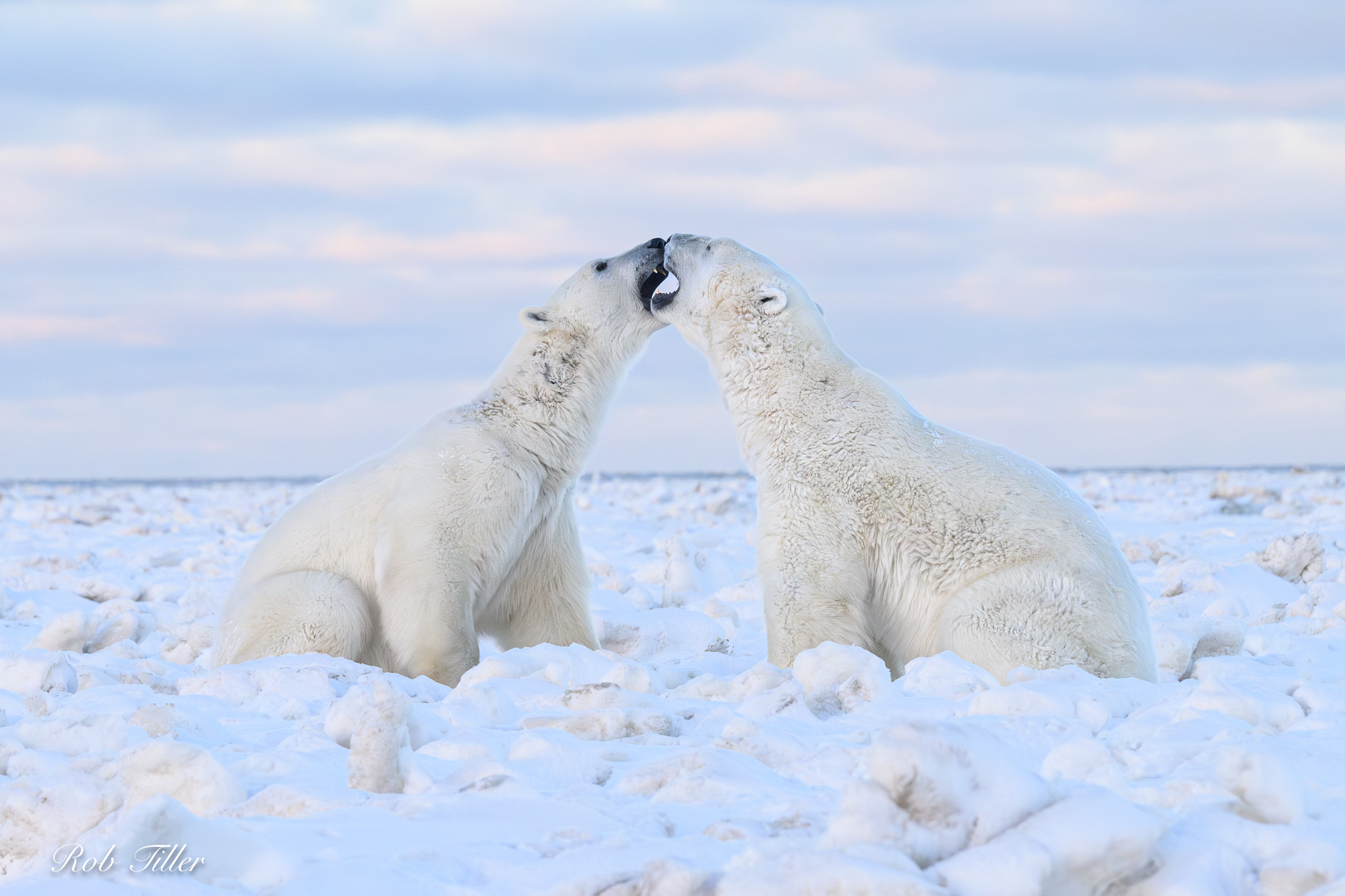
In the first half of November I went to northern Manitoba to see some Arctic creatures, including especially polar bears. It was a huge thrill to spend some time with these amazing animals. I’m still sorting through the thousands of photographs I took, but the ones here are some of my favorites so far.
Polar bears are Earth’s largest land-based carnivores. An average adult weighs around a thousand pounds and stands about eight feet tall. There aren’t a lot of them left in the world – about 25,000. About two-thirds of these are in Canada, and the southern Hudson Bay population that I visited is Canada’s largest.

Polar bears’ primary food is seals, which they capture on the ice. When I was there, the bears were waiting for the Hudson Bay to freeze, which was a bit behind schedule, with warmer temperatures than normal. The bears hadn’t eaten a substantial meal for some months, but most of them looked healthy.

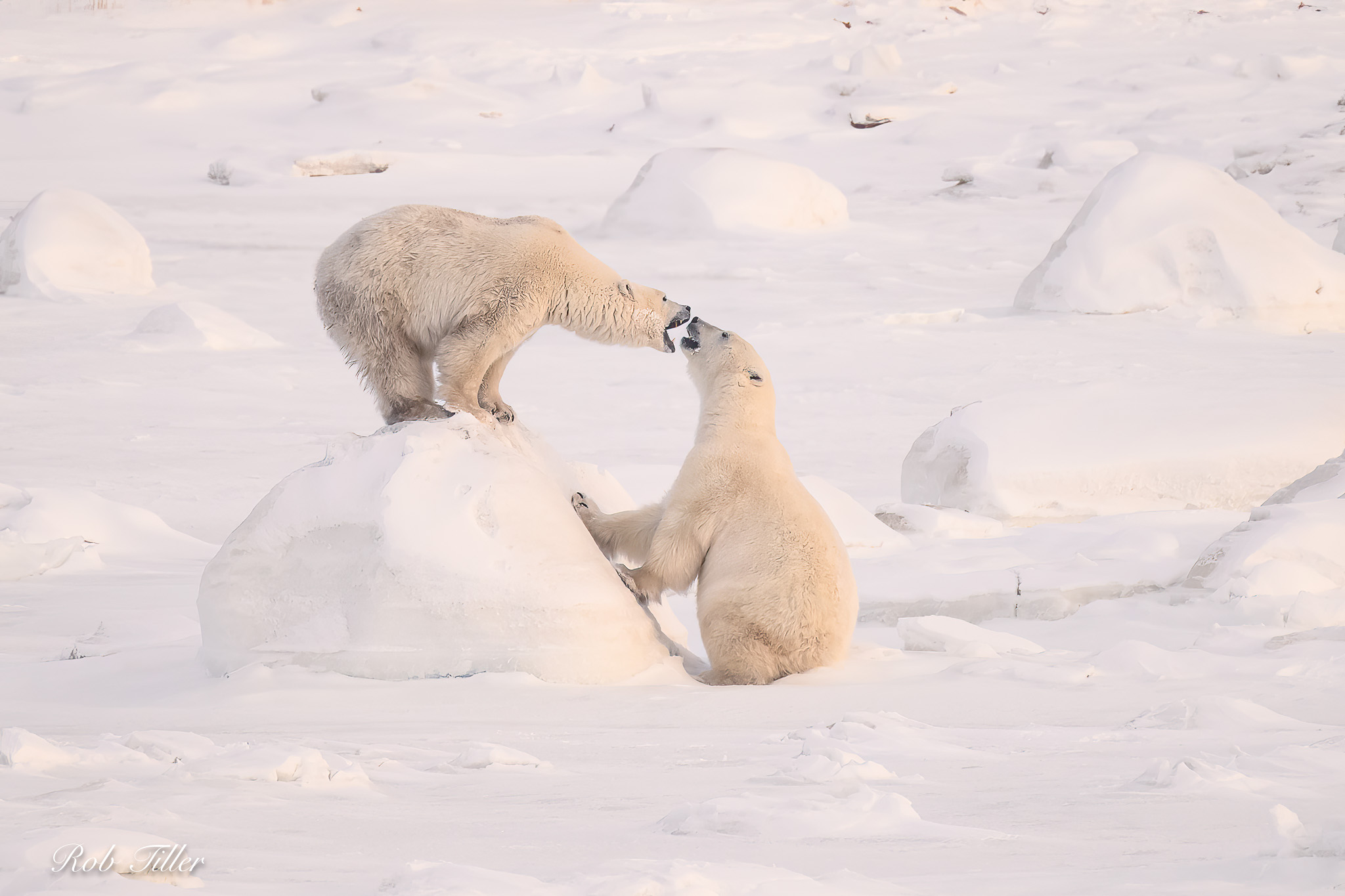
Although the bears are usually solitary, we saw a few pairs of them playing and sparring. They paused and seemed to think carefully when they encountered us. Of course, they can be very dangerous, though the ones we saw usually seemed curious, rather than threatening.
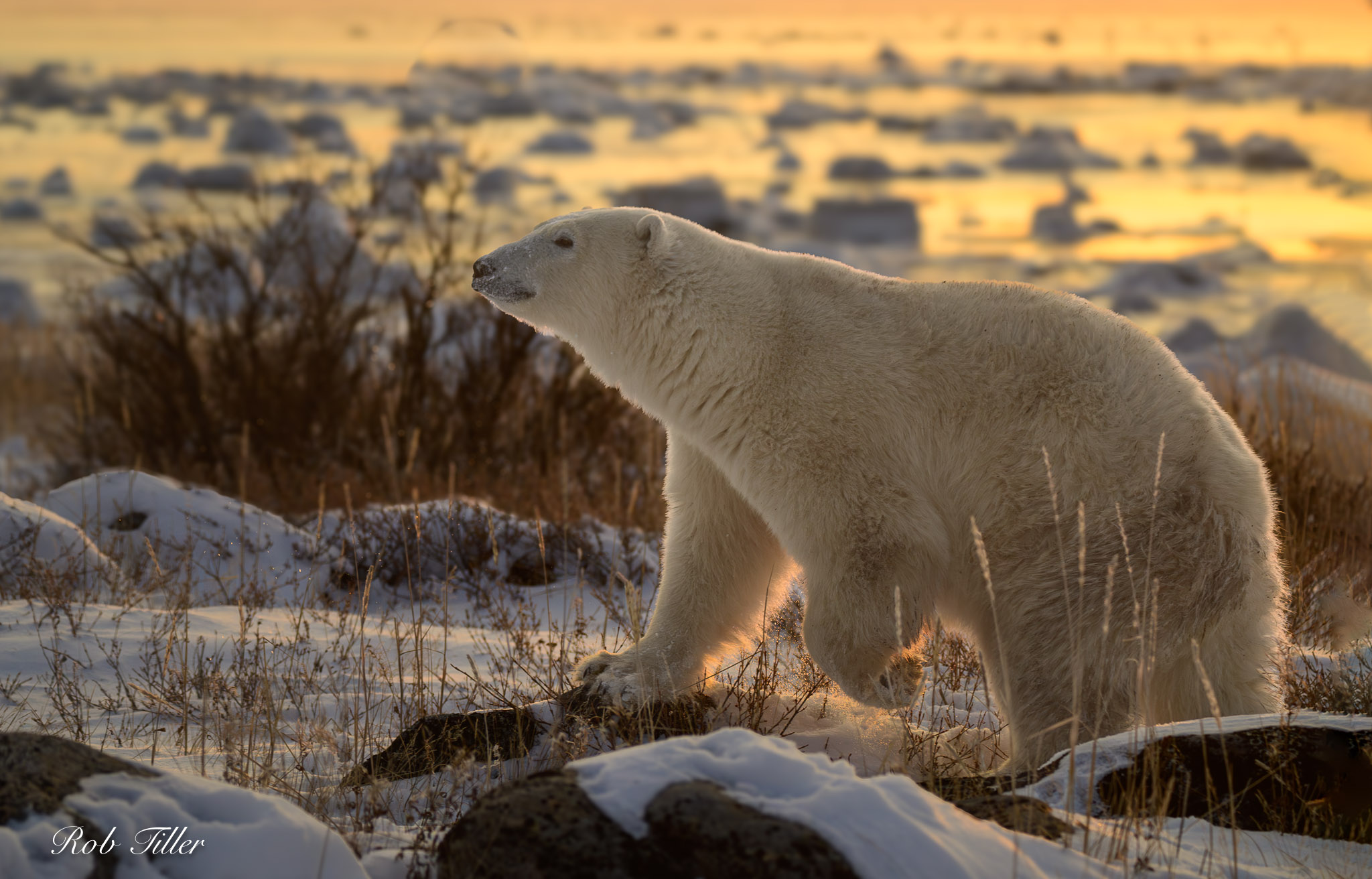
Of course, it’s hard to be sure; maybe they want us to think that. There’s a lot about them that we don’t know, since they spend most of their lives in a harsh environment far from humans. We do know they are very strong, and very stealthy. They are well insulated against the arctic cold, and good swimmers. Their sense of smell is orders of magnitude better than ours, and they use it to detect prey from great distances. They are superbly adapted for their environment.
Global warming is particularly bad news for polar bears, whose seal-hunting livelihood depends on cold and ice. I was glad to hear that the southern Hudson Bay population is holding steady for now, though elsewhere the bears are seriously threatened by warming and habitat loss. These unique creatures are another good reason we need to get more serious about getting off fossil fuels and mitigating climate change.
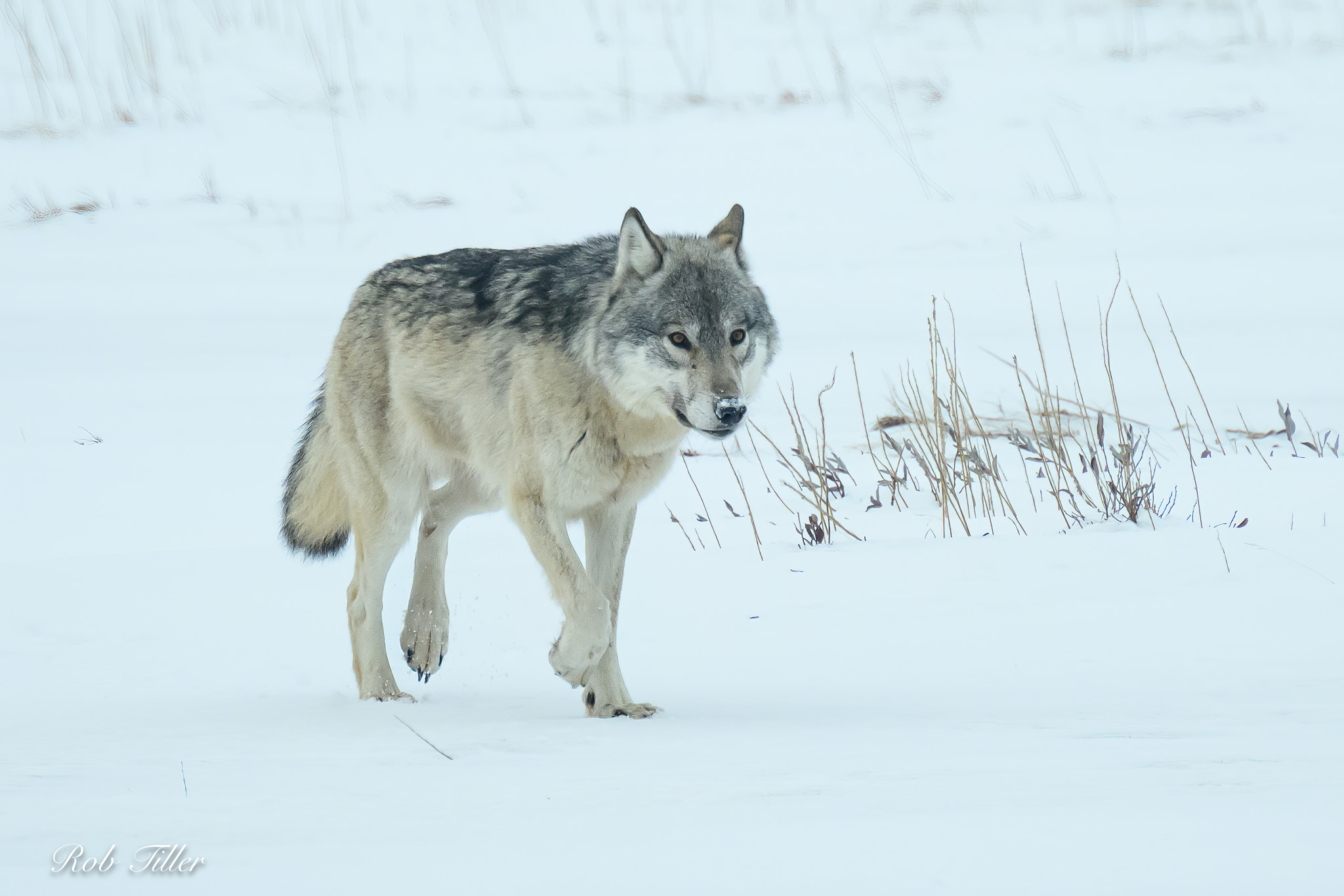
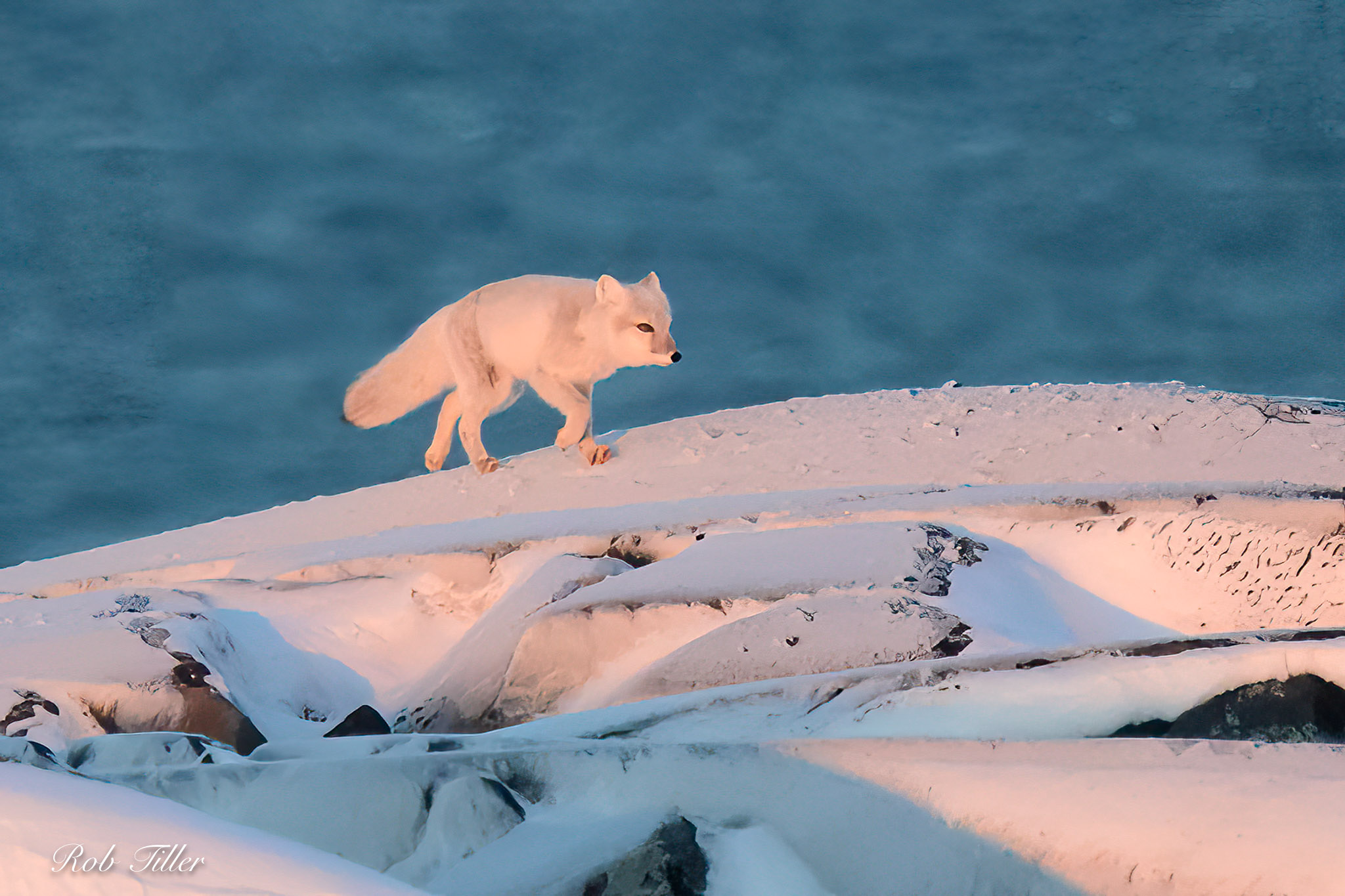
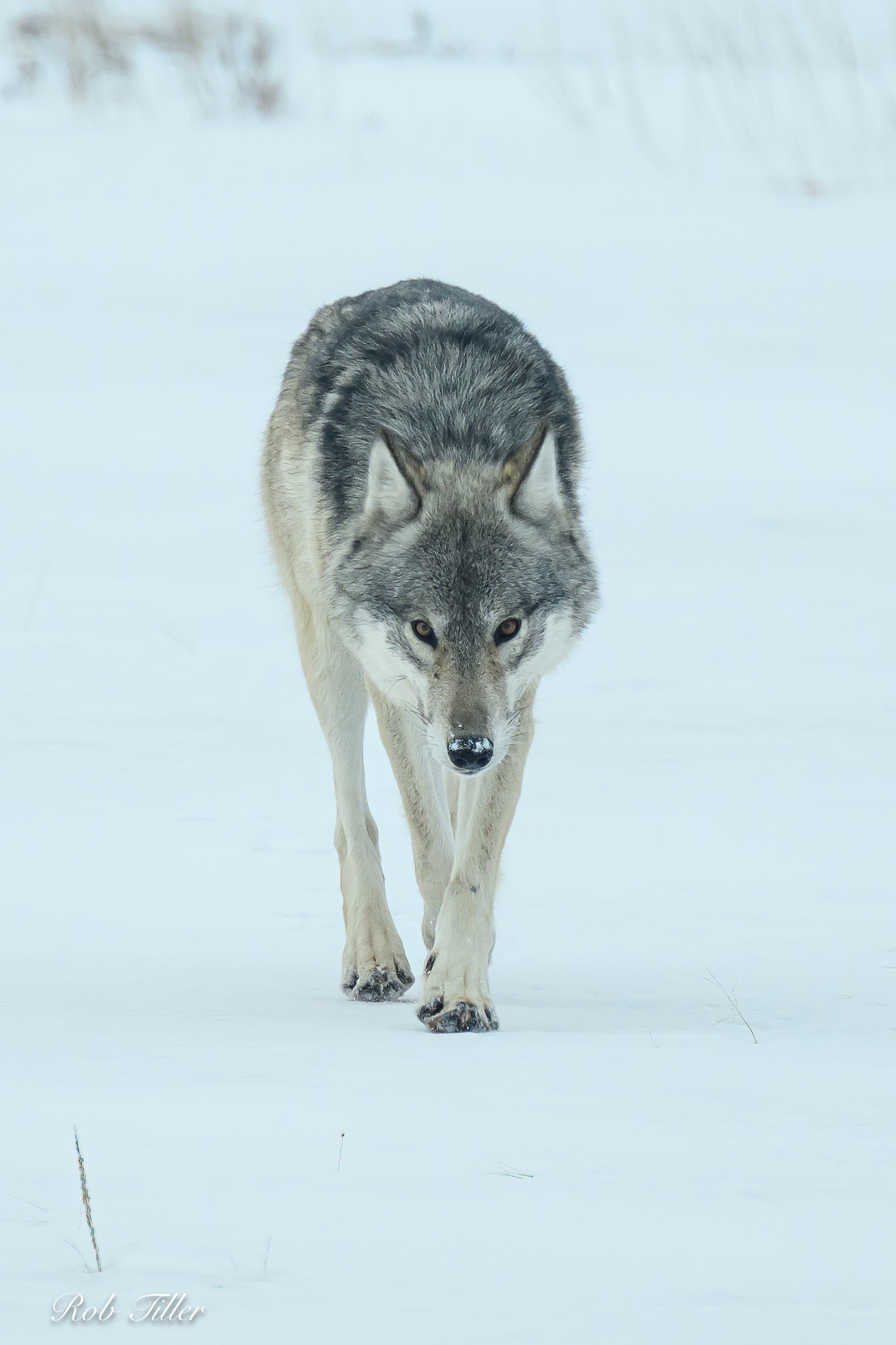
The southern Hudson Bay is also home to other iconic creatures, including wolves. These usually keep well clear of humans, but we were privileged to have a couple of close encounters. We also saw an Arctic fox in Churchill.
The trip was organized and led by Chas Glatzer, a master wildlife photographer and gifted teacher. We stayed at two lodges on the Hudson Bay that we reached by small plane from Churchill – Seal River and Nanuk – run by Churchill Wild. Both lodges were comfy and served delicious food, including options for the plant-based eaters like me.
Our guides at Seal River were Jess, Boomer, and Marco, and at Nanuk we had Michael, Emri, and Adam. All of them were experienced, and had amazing talents, like spotting a polar bear asleep on the ice half a mile away and talking with them.
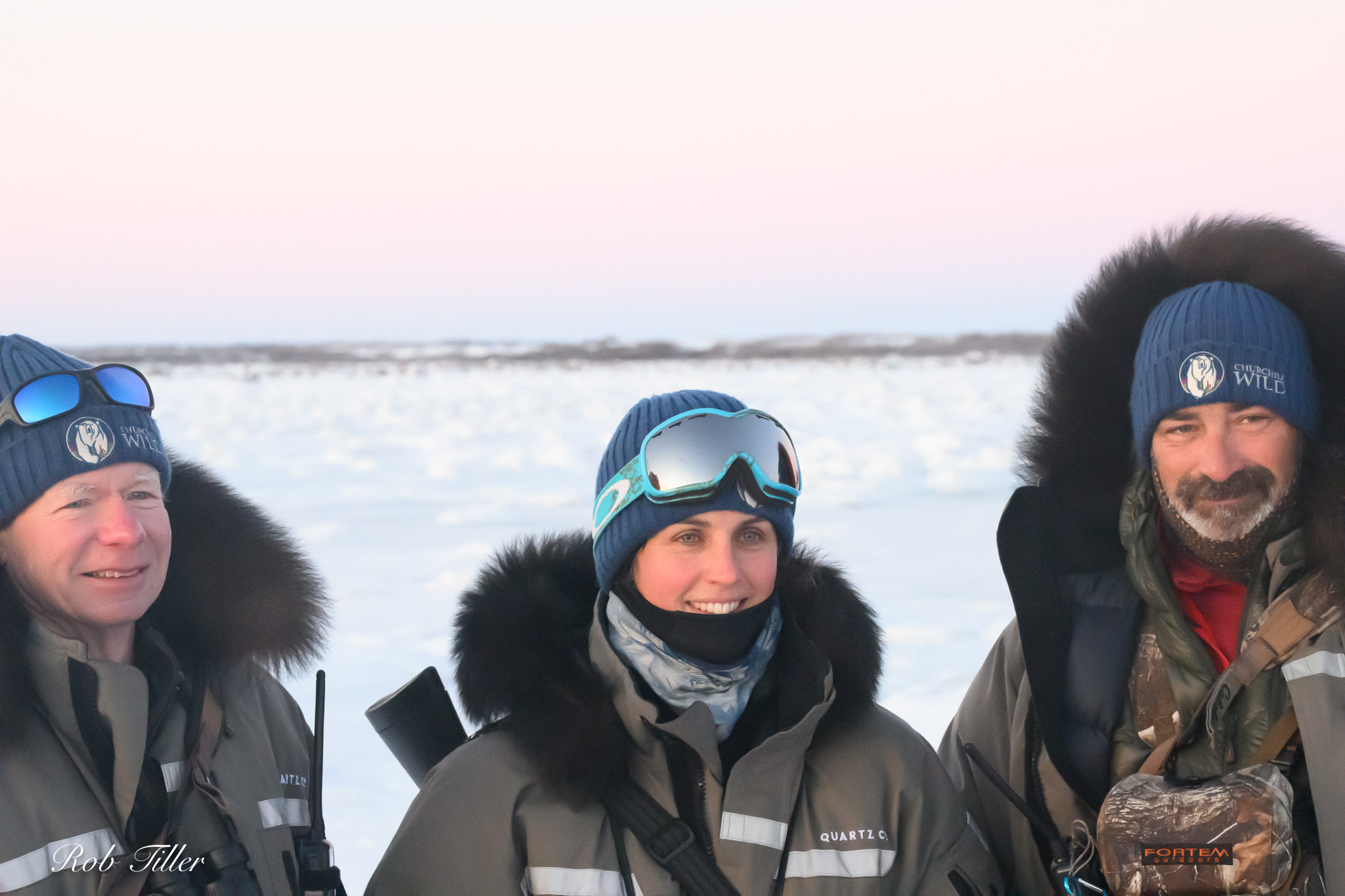
At Seal River the guides explained the safety procedures for walking in bear territory, which included staying close together so as to present ourselves as a bigger creature. When bears approached us too closely, the guides would speak firmly to them, and usually quickly persuaded them to turn around.
A couple of times they had to escalate by throwing a rock, which got the bears headed the other way. If the rocks hadn’t worked, they had louder noises to make, including a starter pistol. If all else failed, they had shotguns, though happily none of them had ever had to shoot a bear.
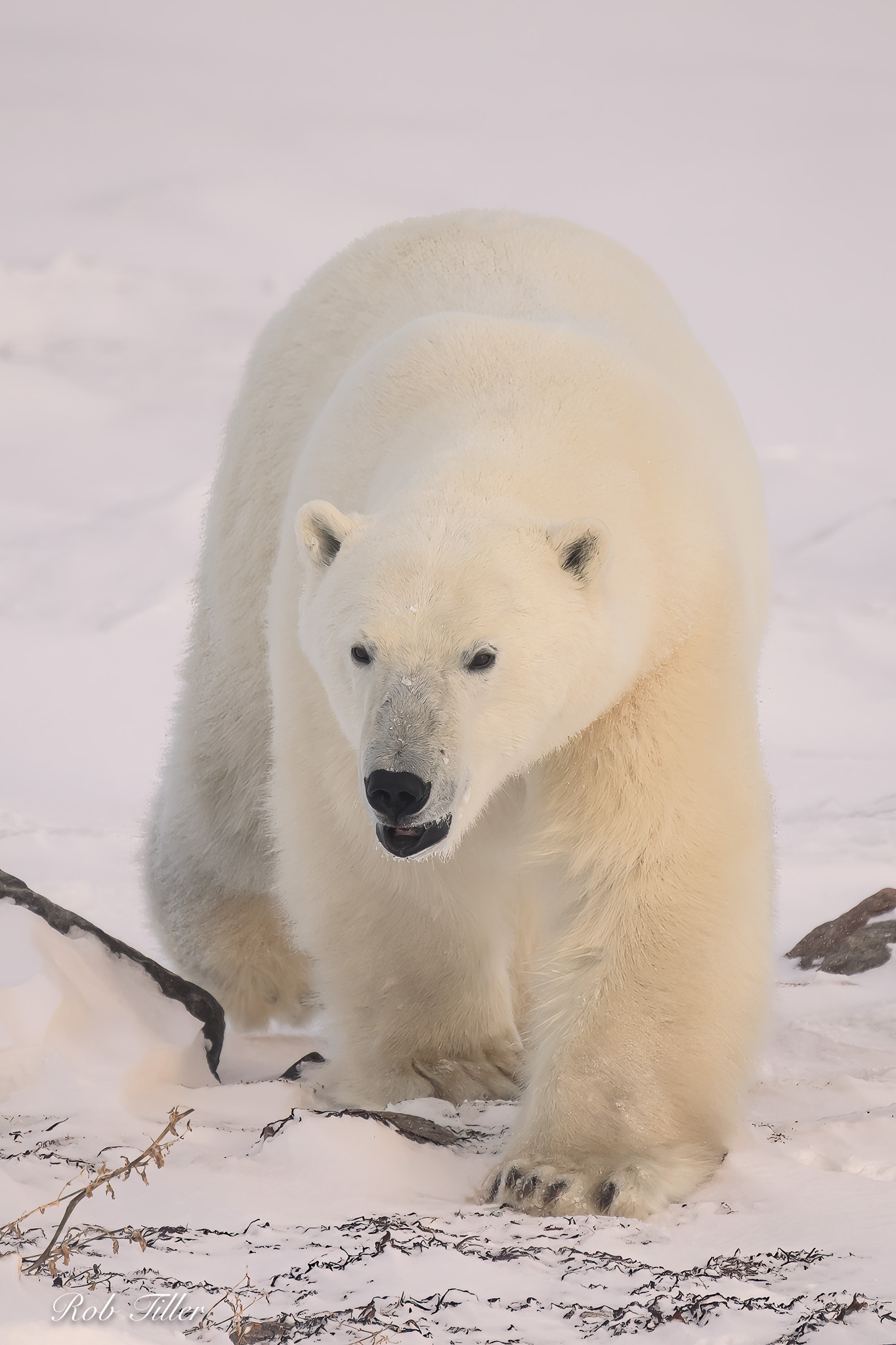
Throughout our stay, bears frequently came right up to the fence around the lodges. The guides spoke firmly to discourage them from chewing on the fence wire. They also spoke firmly to us about not standing right next to the fence when we had bear visitors.
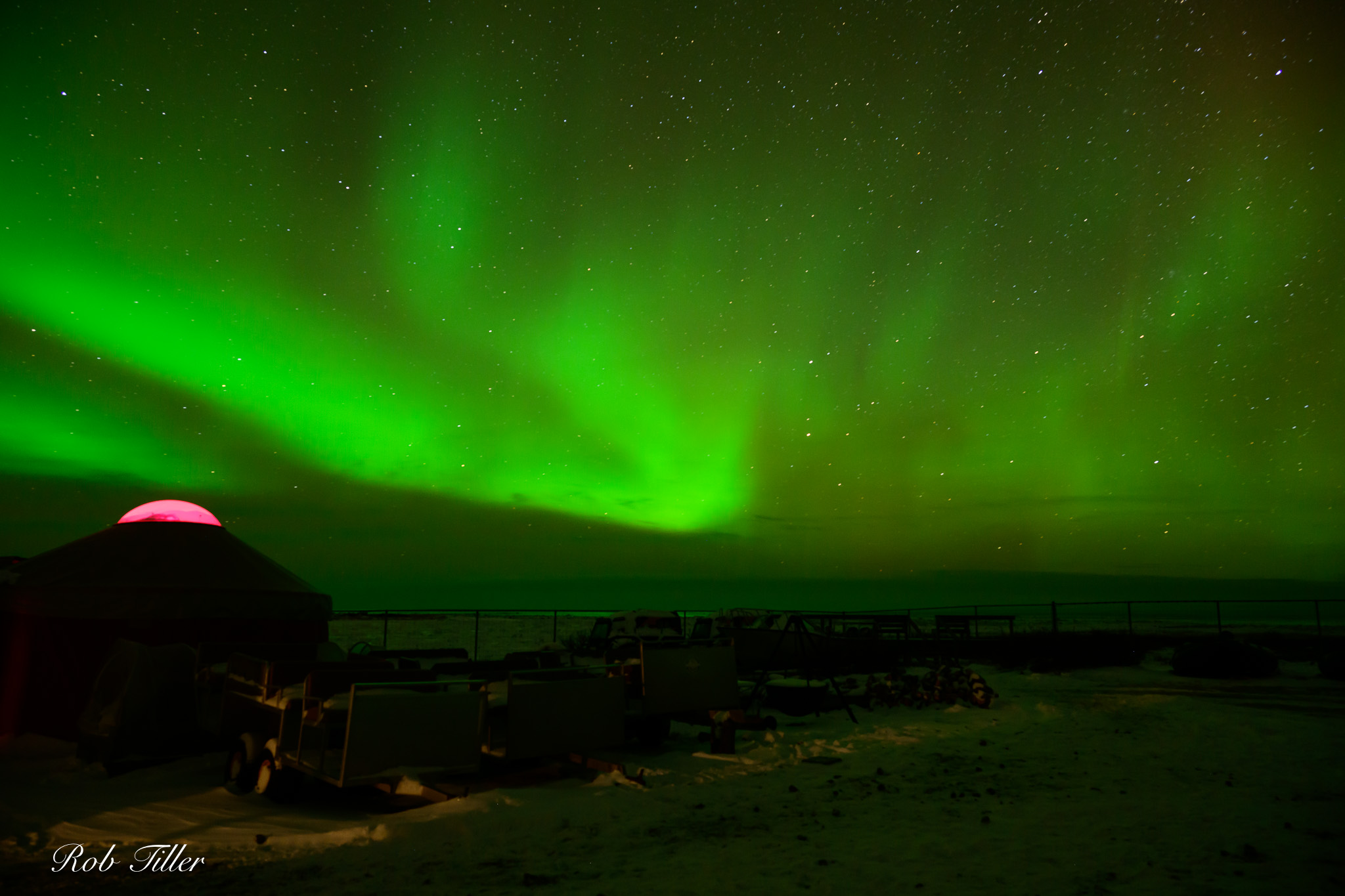
I’d looked forward to seeing the northern lights for the first time. It was cloudy most nights, but we did have a couple of mostly clear nights, and I got to see what they were about. They were not strong enough to excite the locals, but I was still happy.
My main anxiety ahead of the trip was the possibility of frostbite, since I need good nerves in my fingers for piano playing. Churchill Wild furnished me with a very warm parka, insulated pants, and boots, and my own Heat gloves-inside-mittons combo, with a chemical hand warmer, worked well. On windy days, I wore a balaclava mask and ski goggles to protect my face.
I also dreaded the commercial flights, though they mostly went smoothly. (The low flying small-plane segments were fun.) The only serious glitch was on our flight out of Churchill, which, after loading us up, had an equipment problem, and had to unload us. We had to stay an extra night in Churchill and get new plane tickets.
I booked my new flight with Delta, which had only one possibility for me – Winnipeg to Atlanta, and Atlanta to Raleigh. The connection in Atlanta was 46 minutes, which I expected would be impossible to make in that large airport. We arrived 20 minutes behind schedule, in Terminal A, and my Raleigh flight was boarding in far off Terminal D.
I rushed down Terminal D to the train, and up the length of A as fast as I could, but the gate for the Raleigh flight had closed when I got there. I could see that the plane had not departed, but things did not look good. I knew the usual rule was, once the gate closes, it doesn’t open again.
This time, though, the gate agent, observing it was the holiday season, opened this one up and sent me aboard. A flight attendant, seeing my heavy camera backpack, suggested I put it in an open overhead bin in first class! As I prepared to wedge in a center seat in row 32, another flight attendant said she had an open aisle seat I was welcome to! Wow! Thanks a lot to that kind and helpful Delta crew.
 The Casual Blog